10-Minute Spicy Kimchi Fried Rice
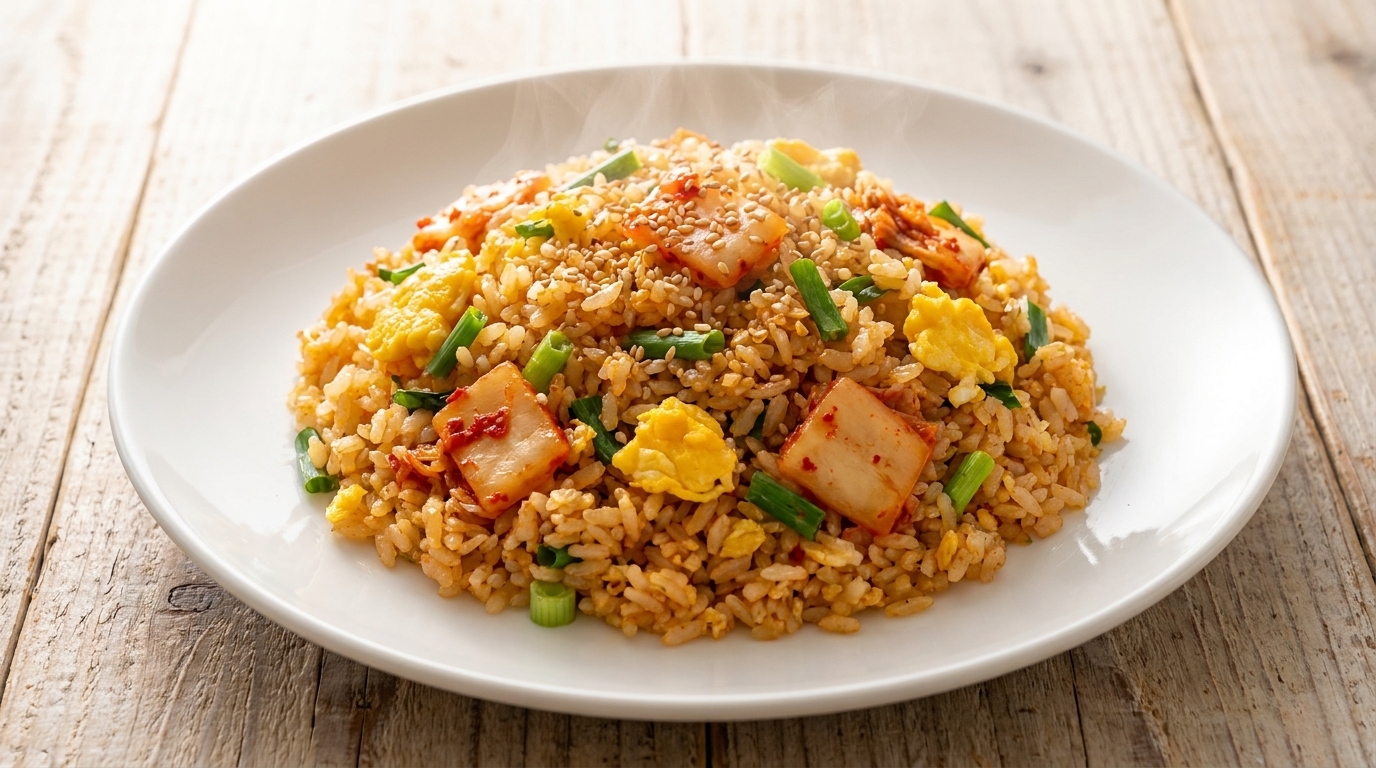
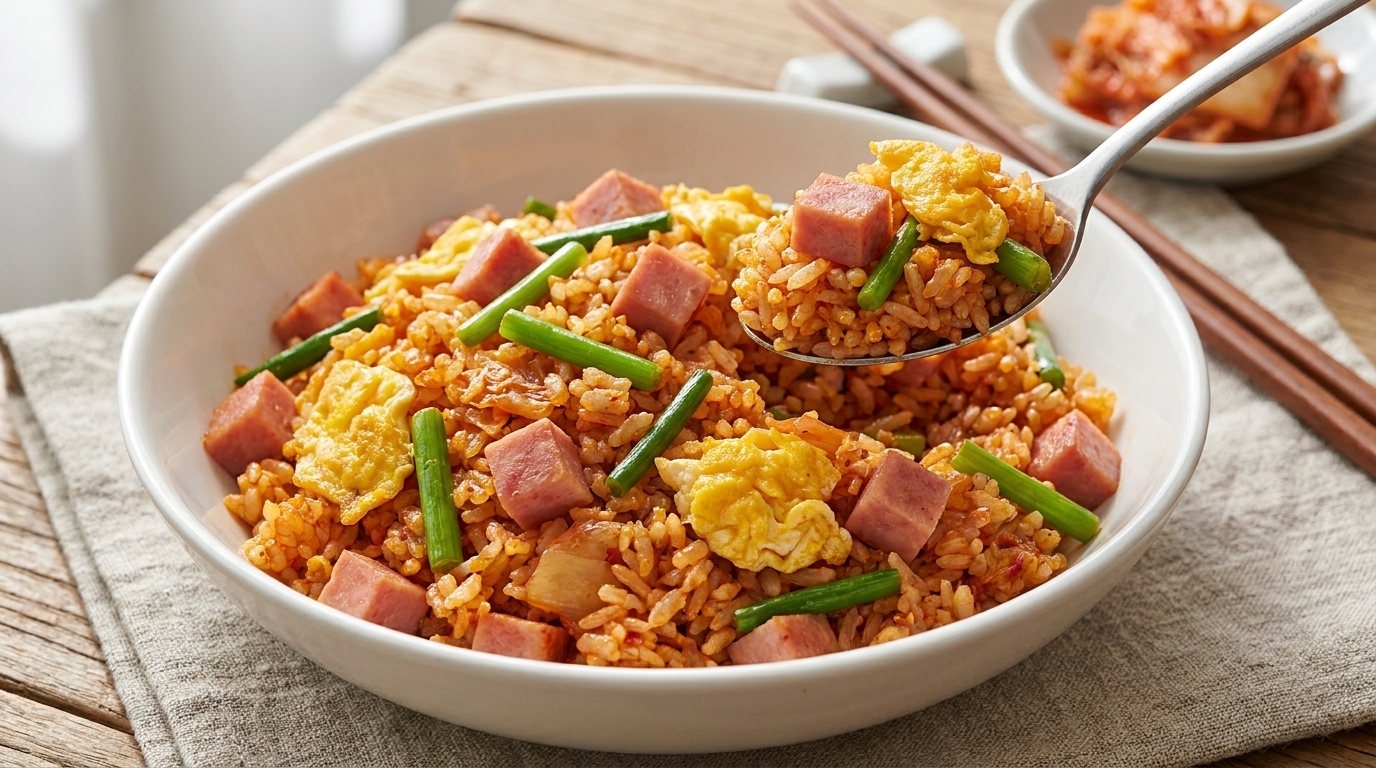
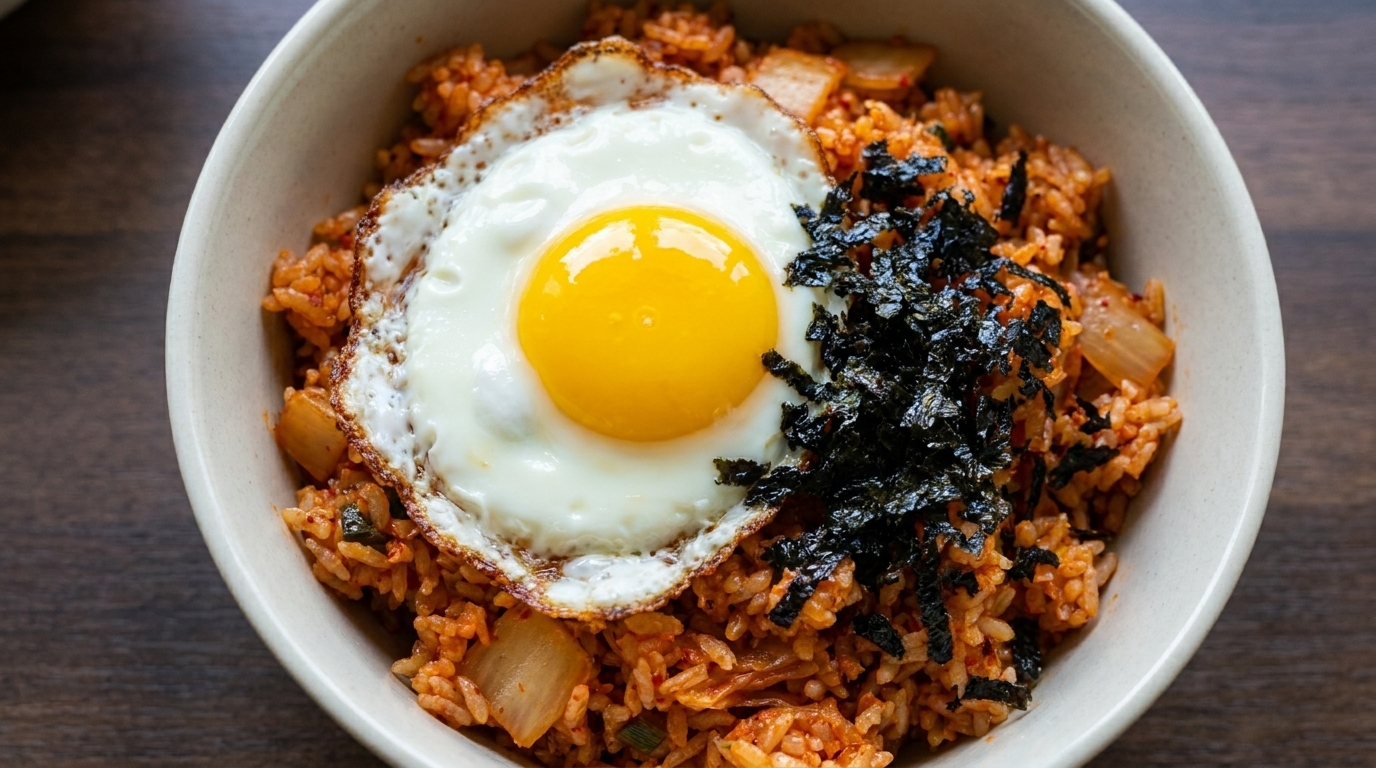
Turn leftover rice into a vibrant, savory masterpiece. This quick Korean-style kimchi fried rice balances spicy tang with a perfectly crispy fried egg.
Kimchi fried rice, or kimchi bokkeumbap, is a beloved Korean staple known for transforming humble leftovers into a flavor-packed meal. By stir-frying aged kimchi, you mellow its acidity while concentrating its deep, umami-rich character. It is the ultimate fast dinner, bringing together bold, savory, and slightly spicy notes in a single hot pan.
Ingredients
- 2 cups cooked white rice, cold
- 1 cup kimchi, chopped
- 1 sausage link
- 2 green onions
- 1 egg
- 1 tbsp gochujang (Korean chili paste)
- 1 tsp soy sauce
- 1 tsp sesame oil
- 1/2 tsp sugar
- 1 tbsp vegetable oil
- 1 tbsp dried seaweed flakes, optional
Instructions
- 1Slice the sausage
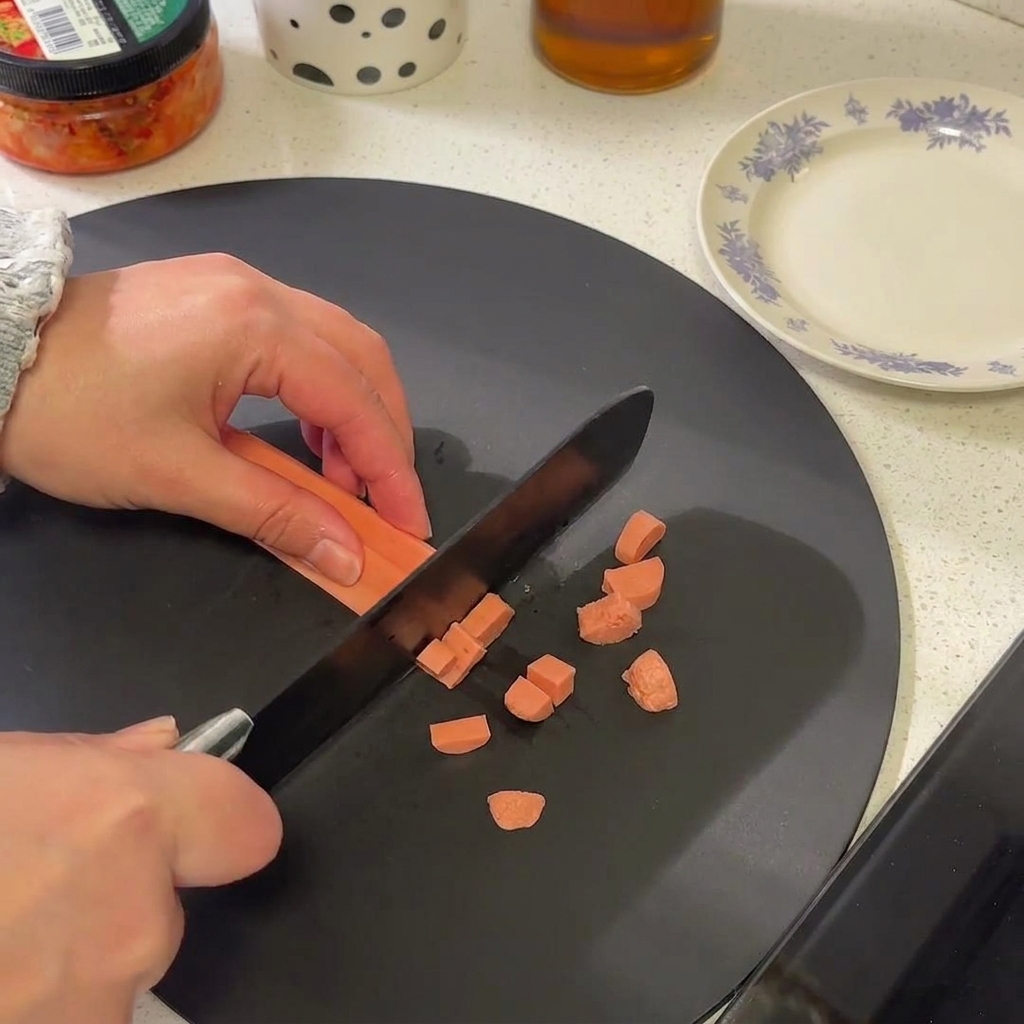
Take the sausage link and carefully slice it into small, uniform circular pieces on a clean cutting board. This ensures even cooking and perfect texture for your fried rice.
Tip: Use a sharp knife for clean cuts; if the sausage is very soft, chilling it for ten minutes beforehand can make slicing easier. - 2Chop the green onions
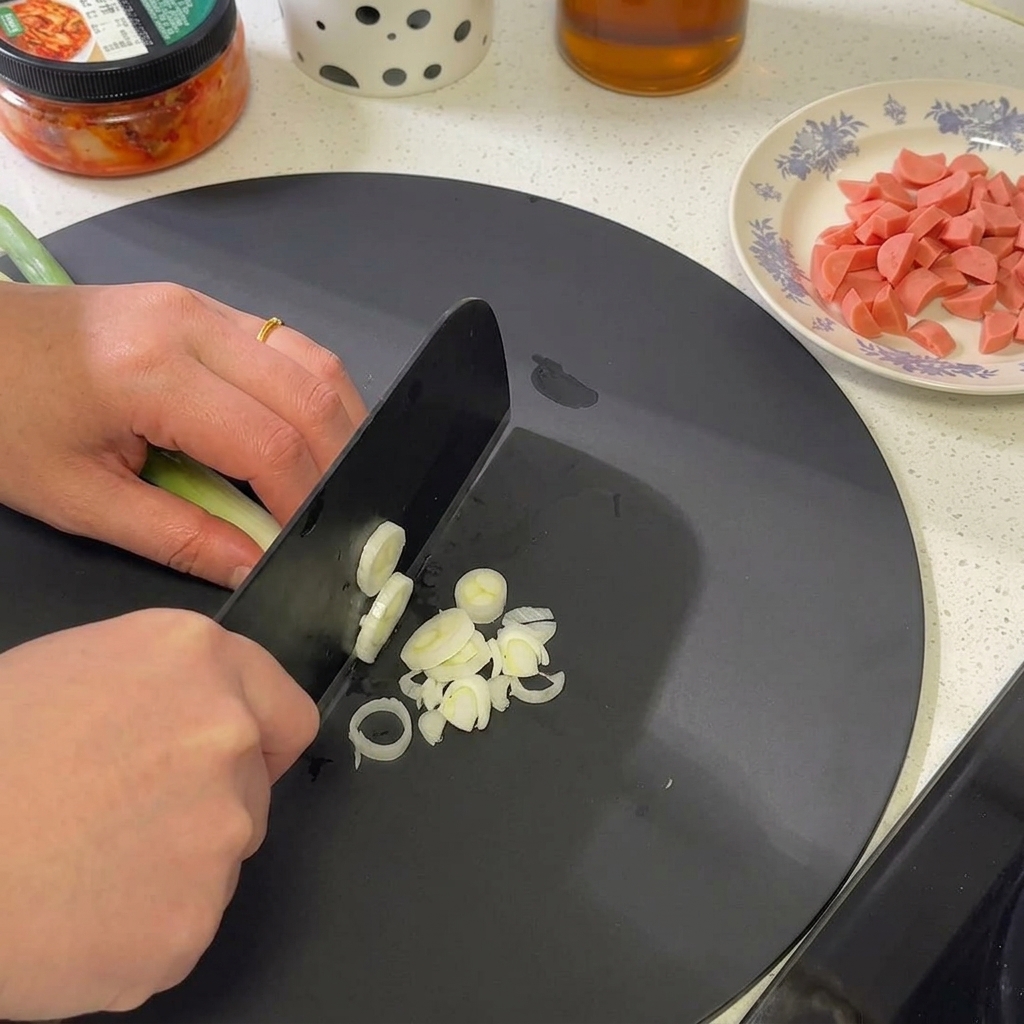
Take the green onions and finely chop the white parts into small, thin rounds. These will provide a delicious aromatic base for your stir-fry.
Tip: Keep your fingers curled inward while chopping to safely get thin, even pieces. - 3Fry the egg
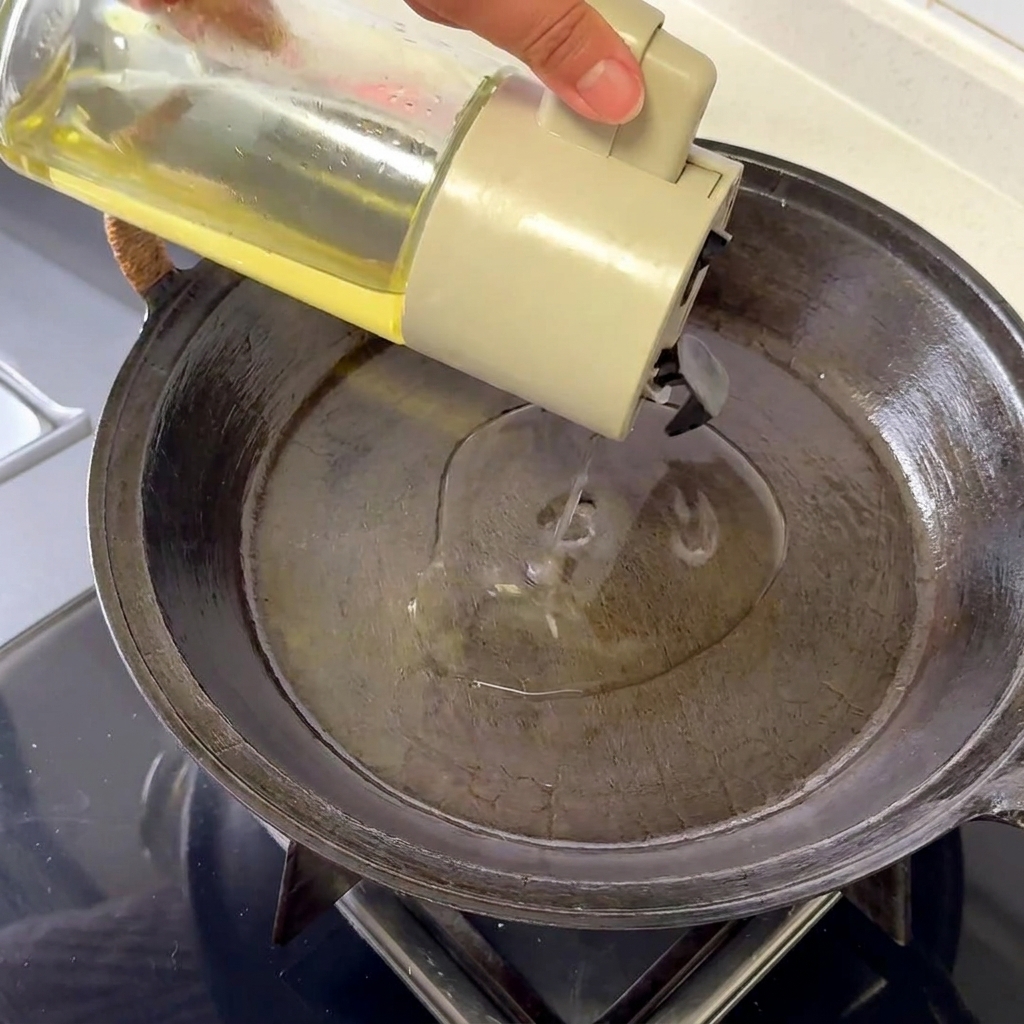
Crack an egg directly into a hot, oiled pan. Fry it until the edges become golden and crispy while the yolk remains cooked to your liking.
Tip: Maintain high heat to get that signature crispy edge quickly without overcooking the center. - 4Sauté sausage and onions
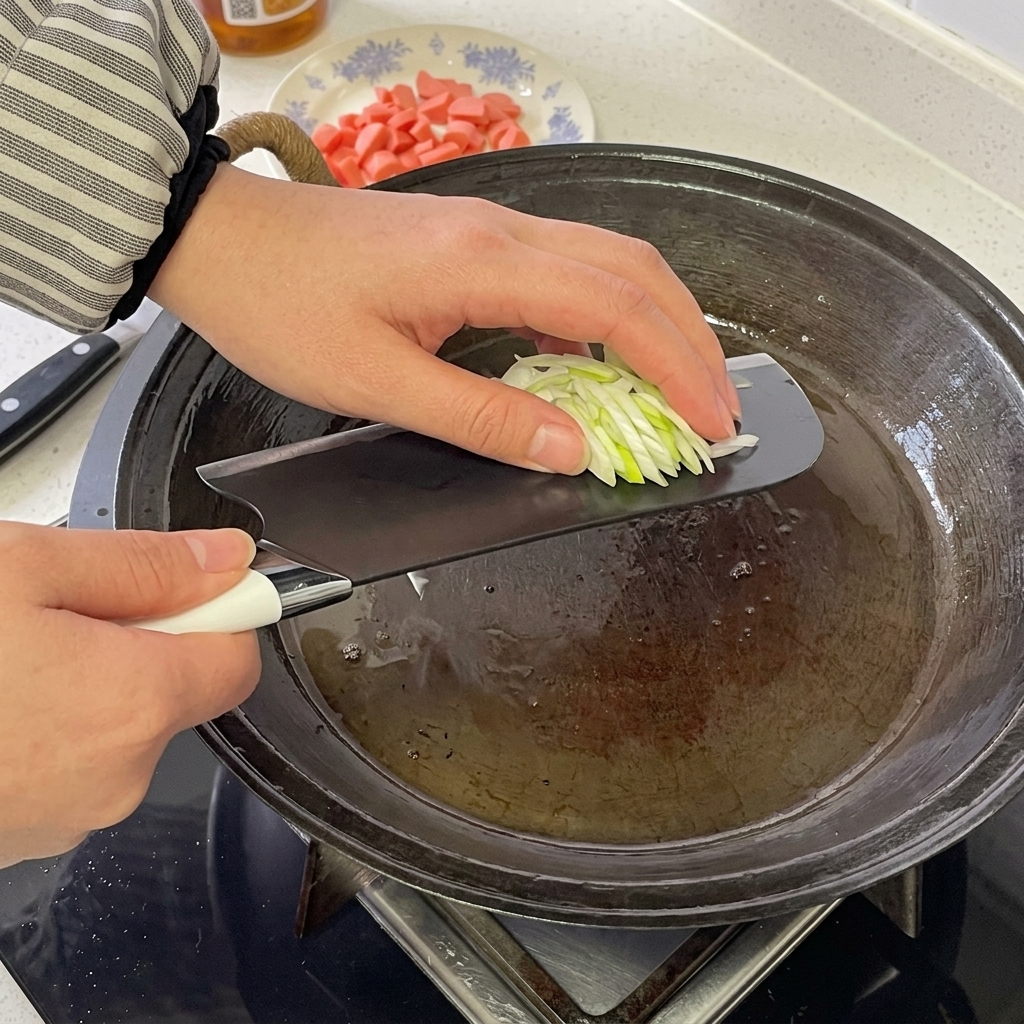
Add the prepared sausage slices and chopped green onions into the hot pan. Stir-fry them together until the sausage is browned and fragrant.
Tip: Keep the ingredients moving in the pan to ensure the sausage browns evenly without burning the onions. - 5Stir-fry the kimchi
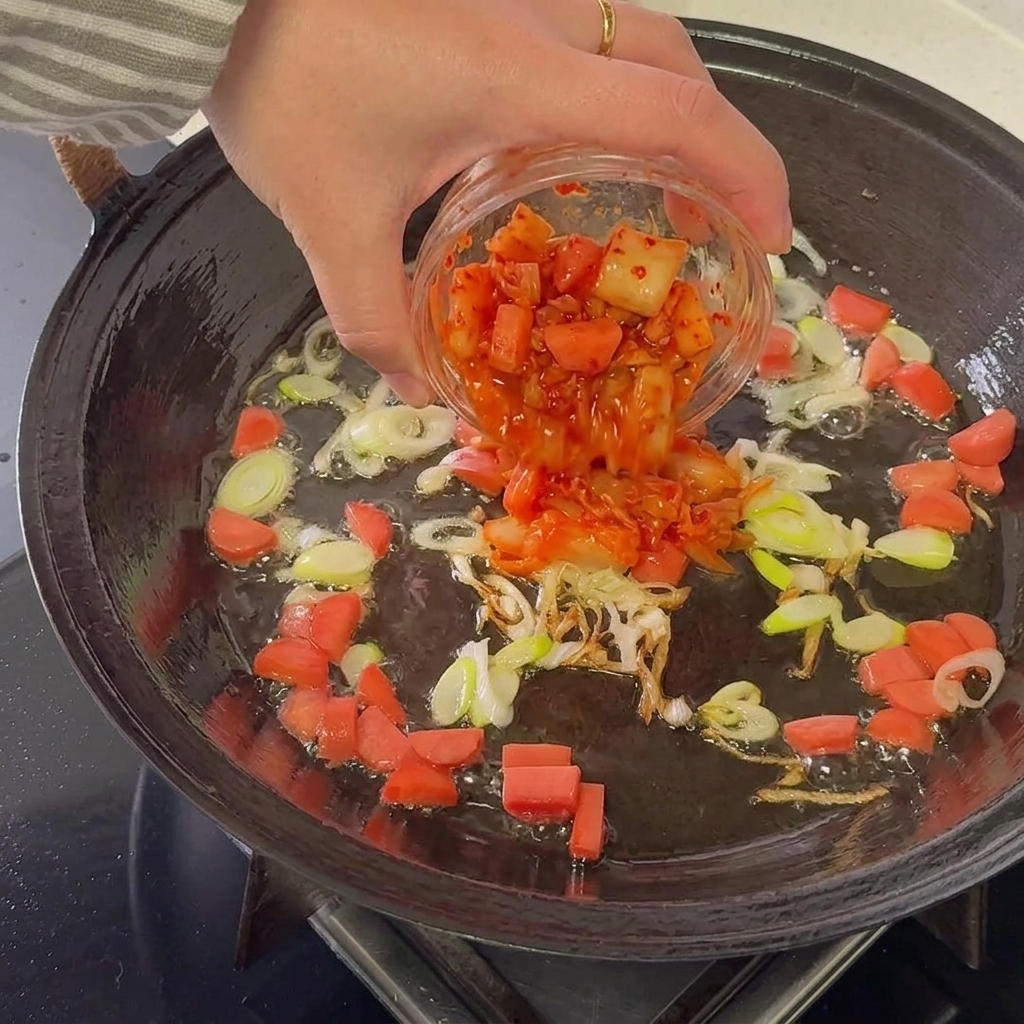
Add a generous amount of kimchi to the pan with the sausage and onions. Continue to stir-fry everything together, allowing the kimchi to soften and release its juices.
Tip: Stir-frying the kimchi helps mellow its acidity and concentrates the savory umami flavor. - 6Incorporate the rice
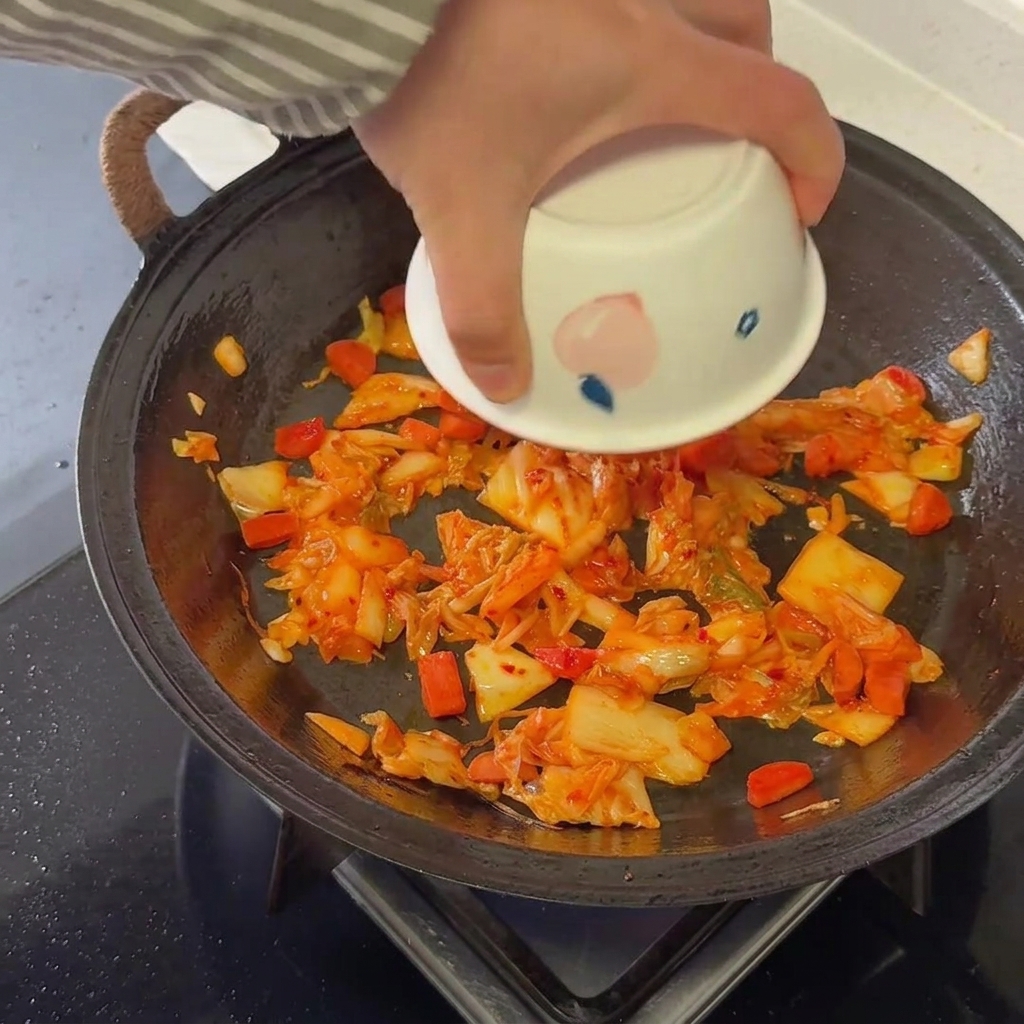
Add your leftover rice to the pan. Use a spatula to break up any clumps and mix the rice thoroughly with the kimchi, sausage, and onion base until every grain is coated and heated through.
Tip: Use cold, day-old rice for the best texture; it holds up better during stir-frying and prevents the dish from becoming mushy. - 7Season the fried rice
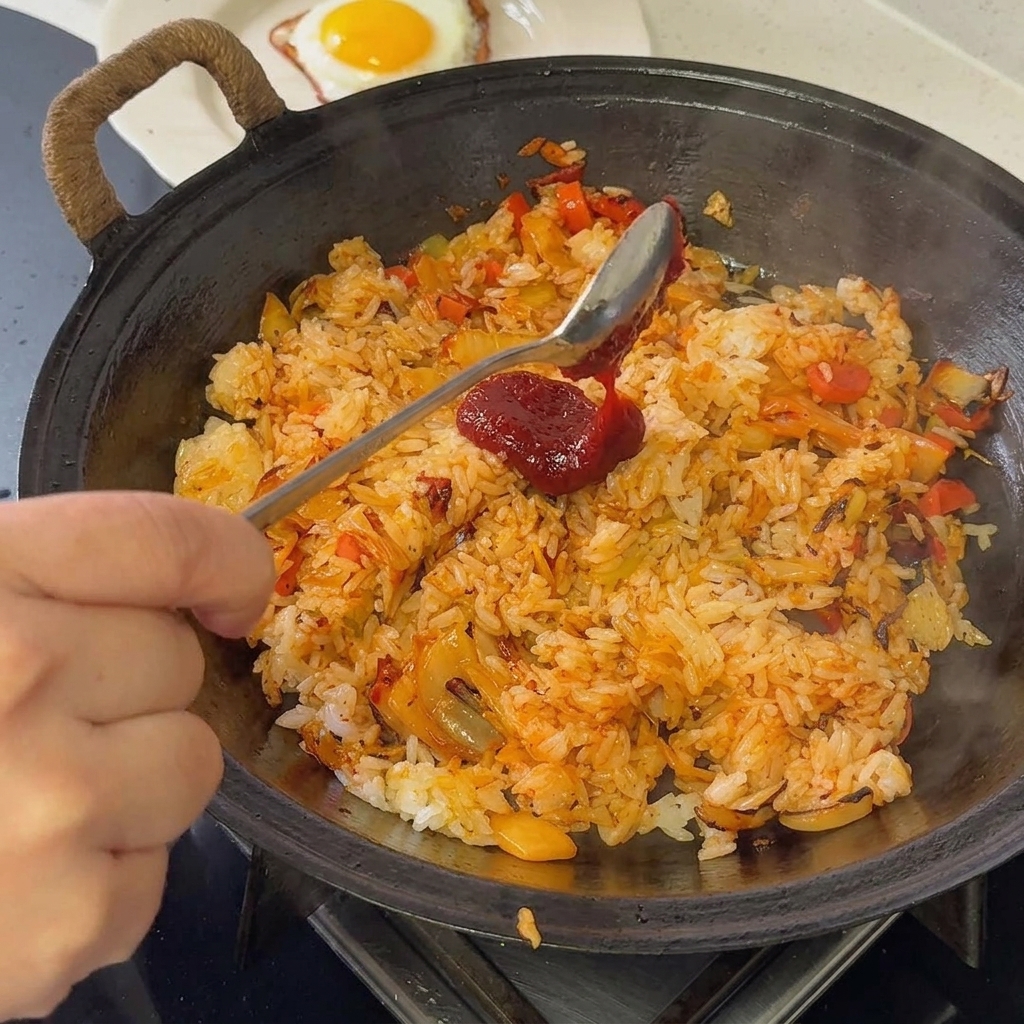
Add the Korean chili paste (gochujang), soy sauce, a pinch of sugar, and a drizzle of sesame oil directly onto the rice mixture in the pan. These ingredients provide the essential savory, spicy, and slightly sweet flavor profile that defines classic kimchi fried rice.
Tip: If the gochujang is very thick, stir it slightly with the rice and a splash of water to help it dissolve and coat every grain evenly. - 8Stir-fry until combined
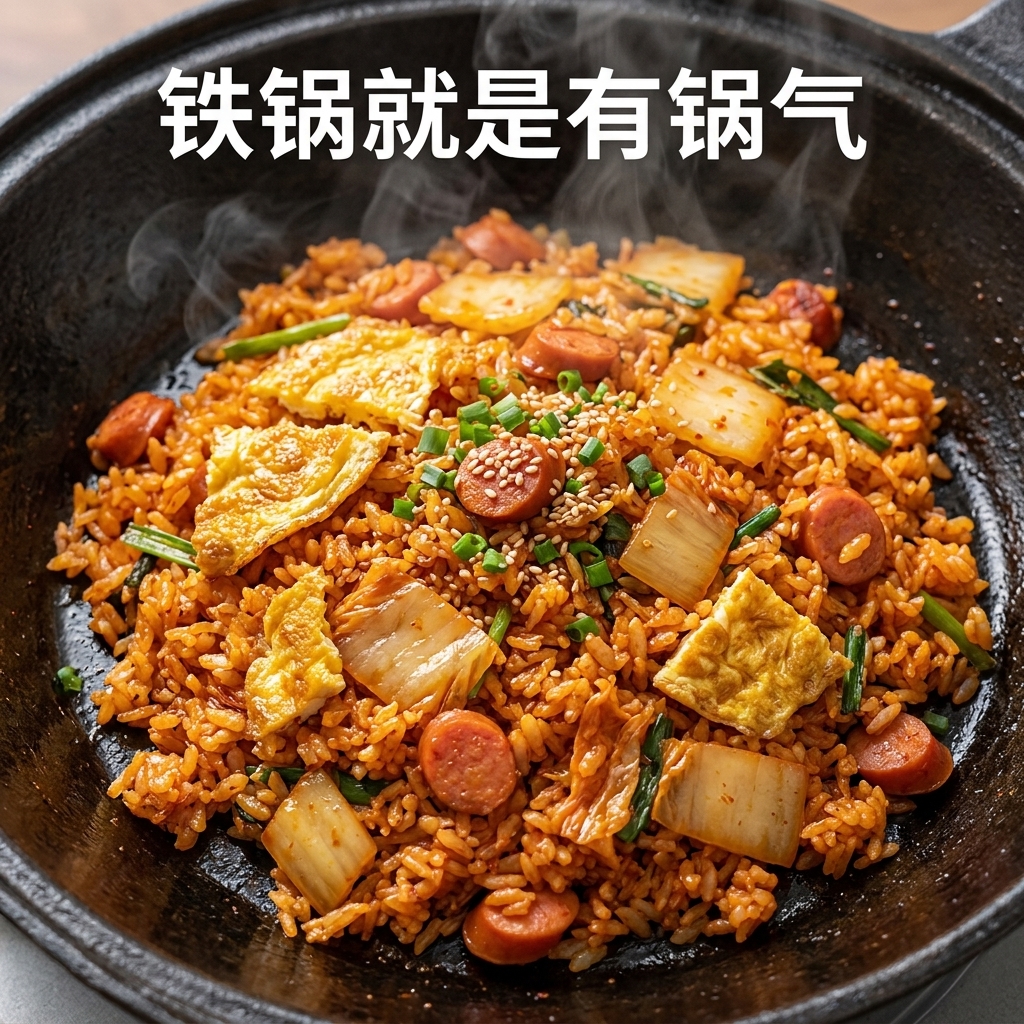
Using a spatula, stir the rice mixture vigorously in the hot pan. Ensure all the sauce, rice, and kimchi are thoroughly mixed and heated through, allowing the flavors to meld together and achieving a slightly toasted texture from the pan.
Tip: Keep the heat high and stir constantly to get that smoky wok hei flavor that makes the dish taste like it came from a professional kitchen.