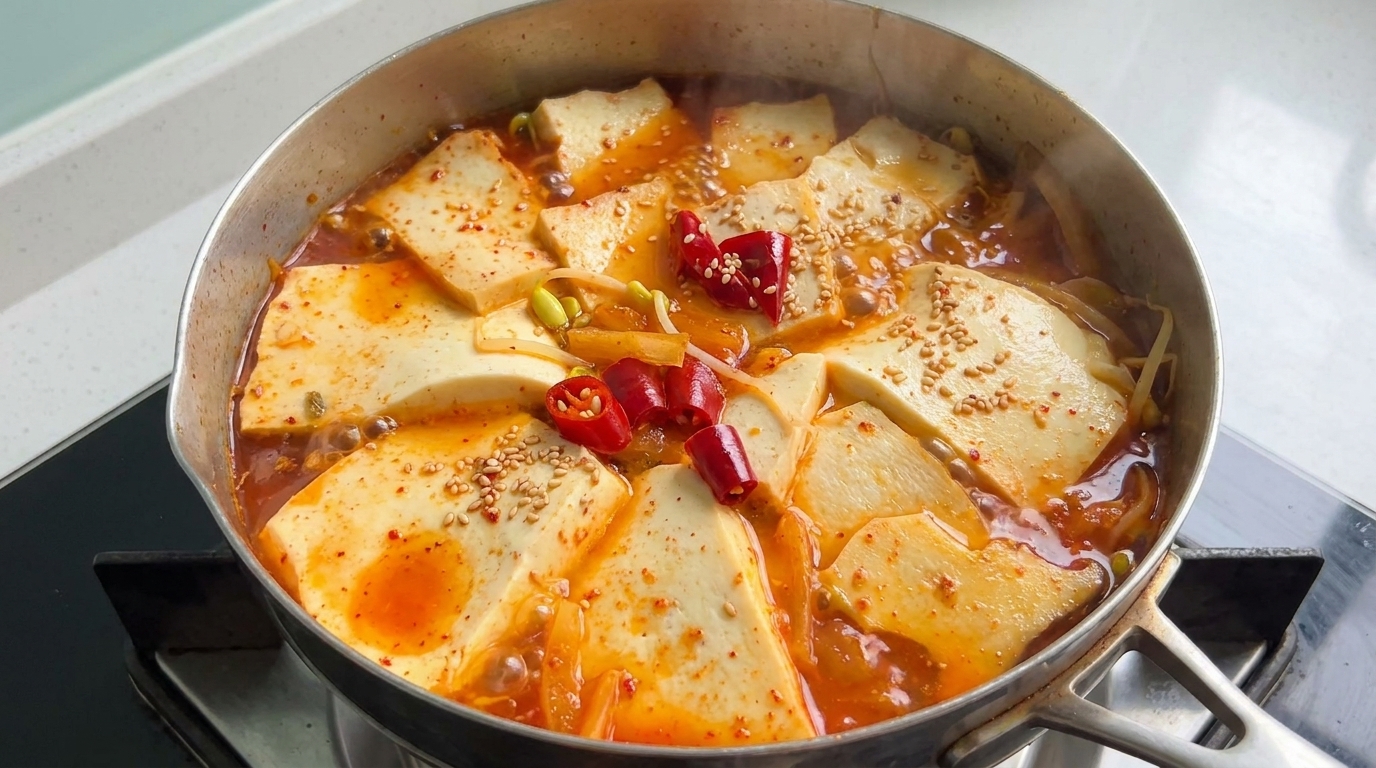
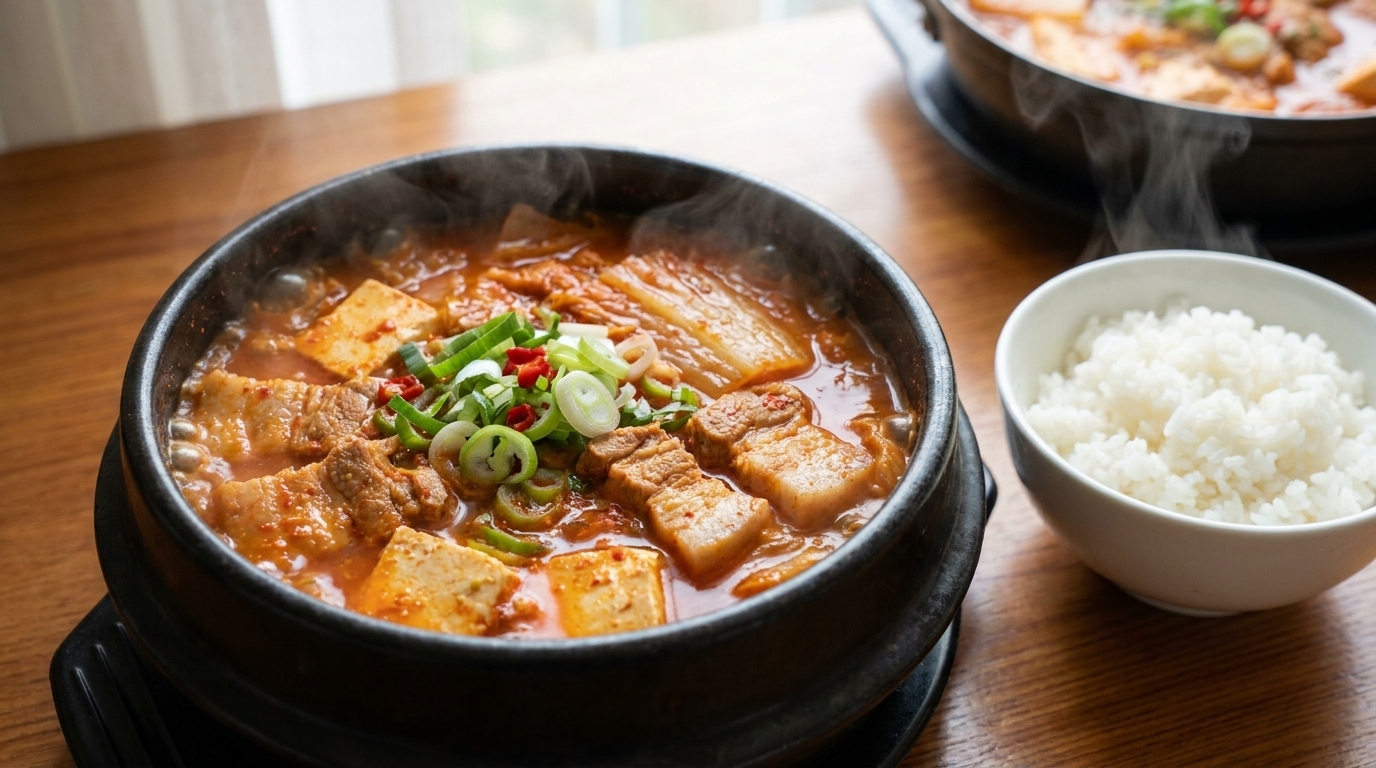
Classic Kimchi Stew (Kimchi-jjigae)
A hearty, comforting Korean classic featuring aged kimchi, tender pork, and silken tofu, simmered to perfection in a deeply savory, spicy broth.
Kimchi-jjigae is a staple of Korean home cooking, prized for its ability to transform simple pantry ingredients into a soul-warming meal. The secret lies in using well-fermented, sour kimchi, which provides the complex, tangy foundation for the stew. It is a humble yet deeply satisfying dish that pairs perfectly with a warm bowl of rice.

Ingredients
- 200 g aged kimchi
- 100 g ground pork
- 1 tbsp sesame oil
- 1 tbsp red chili paste (gochujang)
- 1 tbsp soybean paste (doenjang)
- 1 tsp sugar
- 500 ml hot water
- 1 tsp oyster sauce
- 100 g enoki mushrooms
- 200 g silken tofu
- 1 egg
- 2 stalks green onions
- 1 chili pepper
Instructions
- 1Heat the sesame oil

Begin by heating a black earthenware pot over the stove. Pour in a generous drizzle of sesame oil, ensuring it coats the bottom of the pot, to create a fragrant base for the stew.
Tip: Using a preheated earthenware pot helps maintain the temperature and enhances the depth of flavor. - 2Stir-fry the ground pork
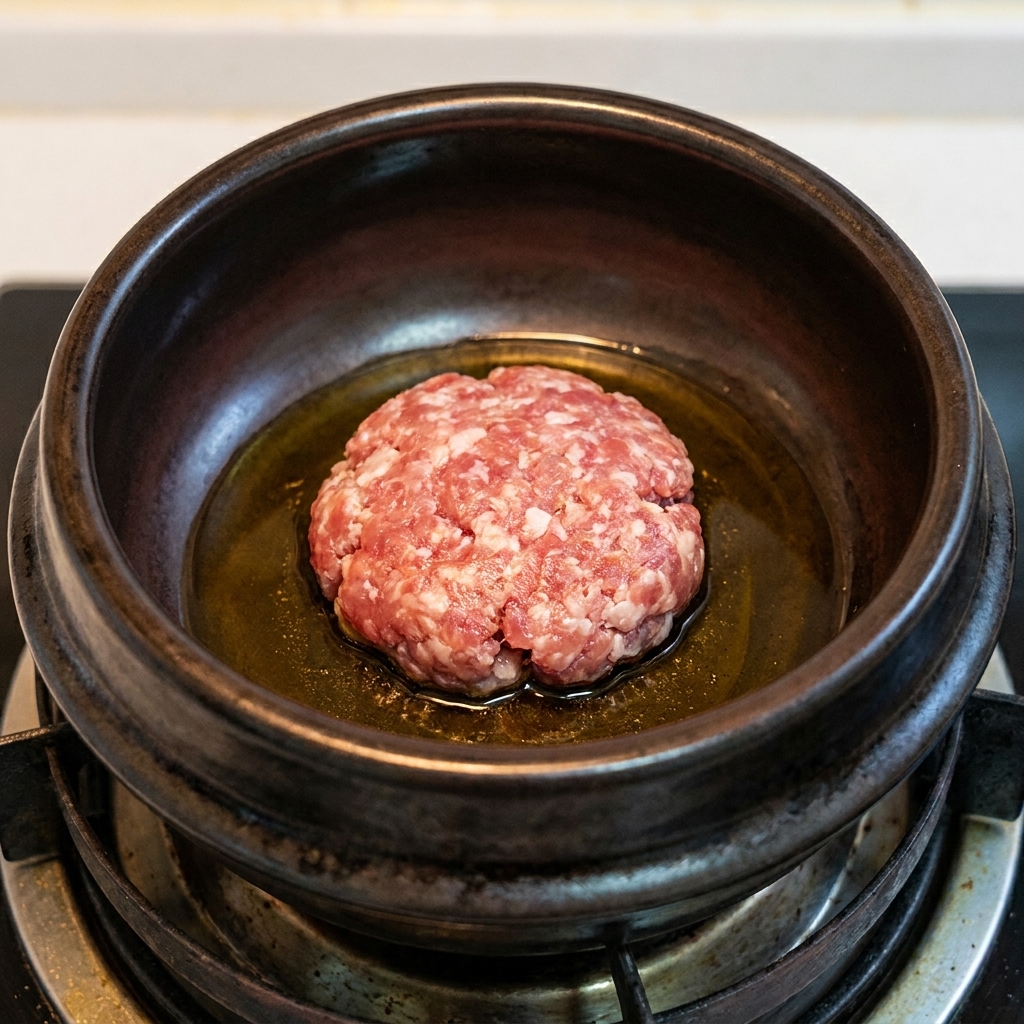
Add a spoonful of ground pork directly into the pot with the hot sesame oil. Stir-fry the pork until it is browned and cooked through, which will provide a hearty flavor foundation for the kimchi stew.
Tip: You can add the pork while it is still slightly frozen if you are in a rush; it will cook through quickly in the hot oil. - 3Sauté the kimchi
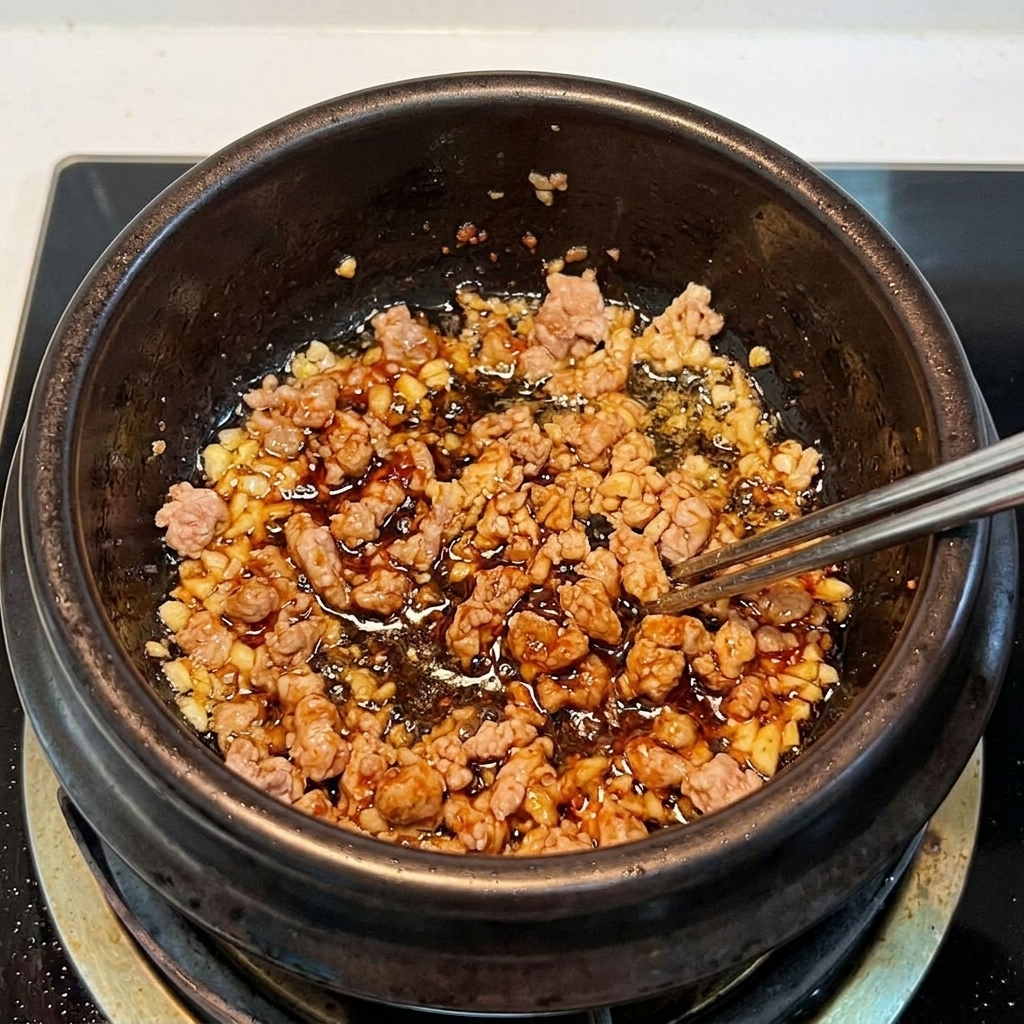
Add the sliced kimchi to the pot along with the browned pork. Stir everything together and continue to sauté until the kimchi is relatively dry and has developed a rich, caramelized appearance.
Tip: Using well-fermented, sour kimchi is the secret to a more flavorful and traditional-tasting stew. - 4Season with sugar
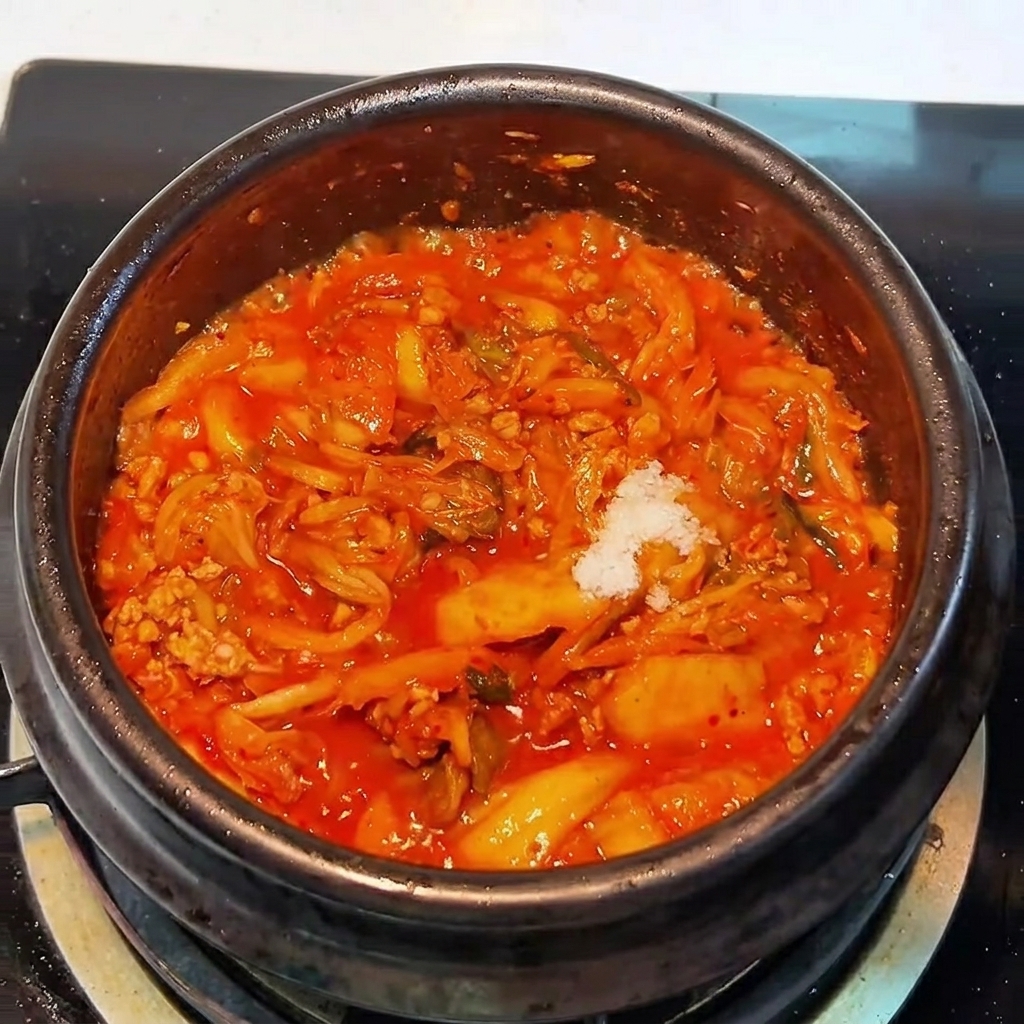
Sprinkle a small amount of sugar over the kimchi and pork mixture. This helps to balance the acidity of the fermented kimchi and enhances the overall savory profile of the dish.
Tip: The sugar also helps to mellow out the sourness if your kimchi is very well-fermented. - 5Add hot water
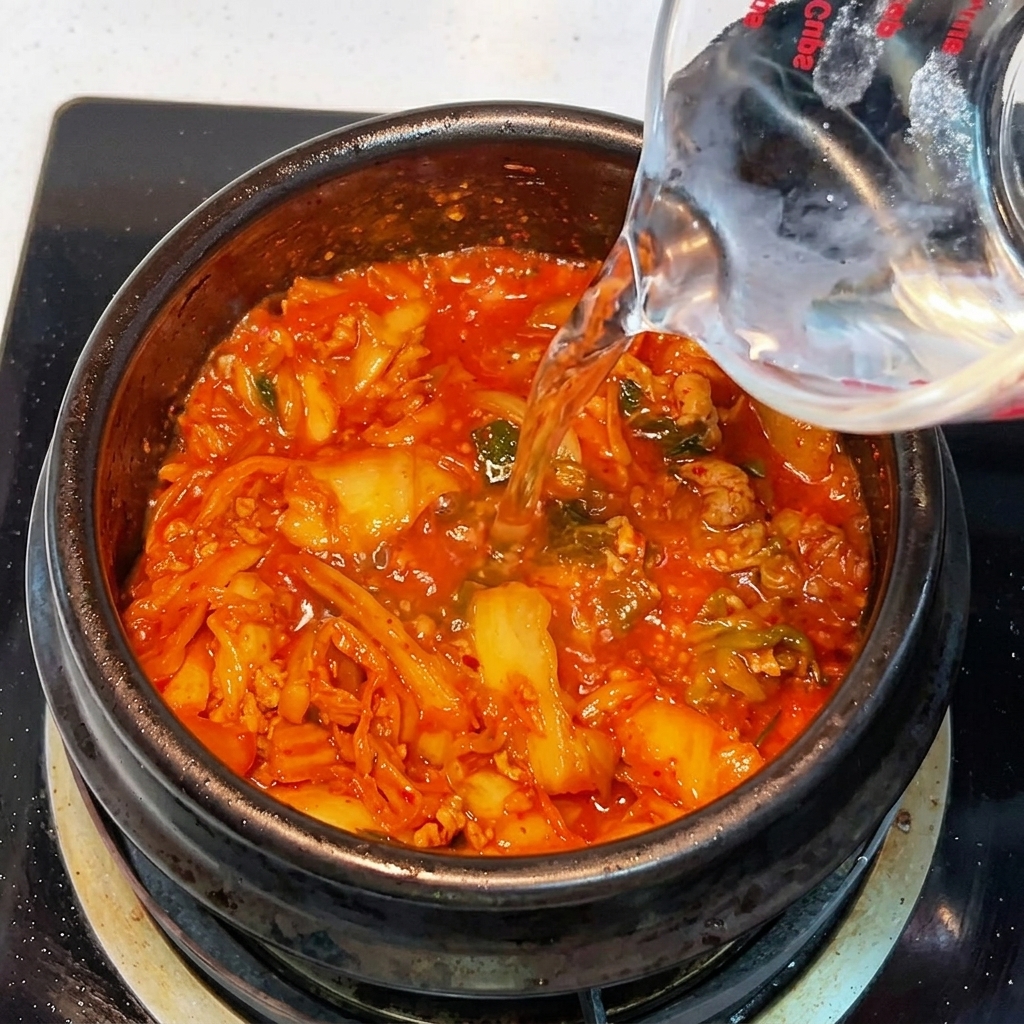
Pour purified hot water into the pot to cover the ingredients. Using hot water rather than cold will bring the stew to a boil much faster, saving time during the cooking process.
Tip: Ensure you have enough liquid to submerge all the ingredients so they cook evenly. - 6Add the enoki mushrooms
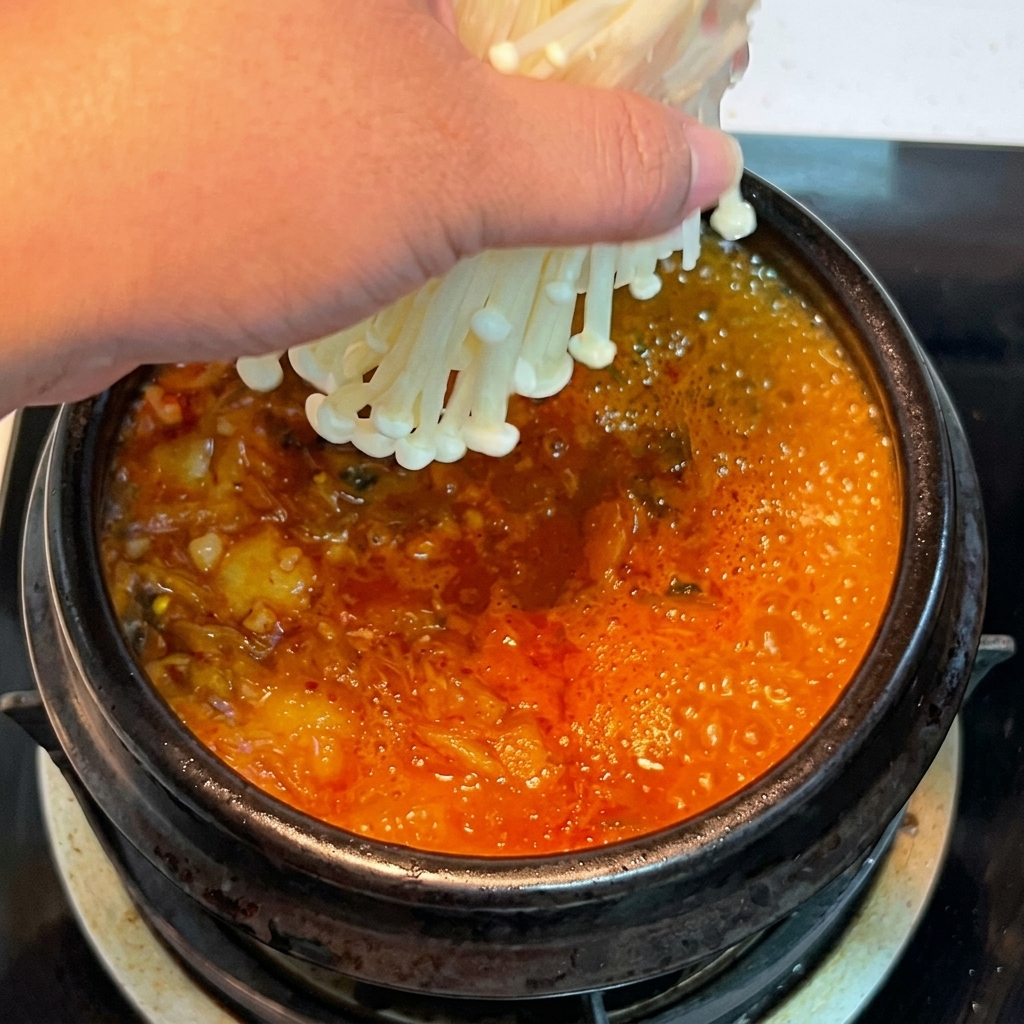
Once the stew is bubbling, add your preferred vegetables, such as enoki mushrooms. Gently submerge them into the liquid and allow the stew to continue simmering until the mushrooms are tender and flavorful.
Tip: Enoki mushrooms cook very quickly, so add them towards the end of the simmering process to maintain their texture. - 7Add the silken tofu
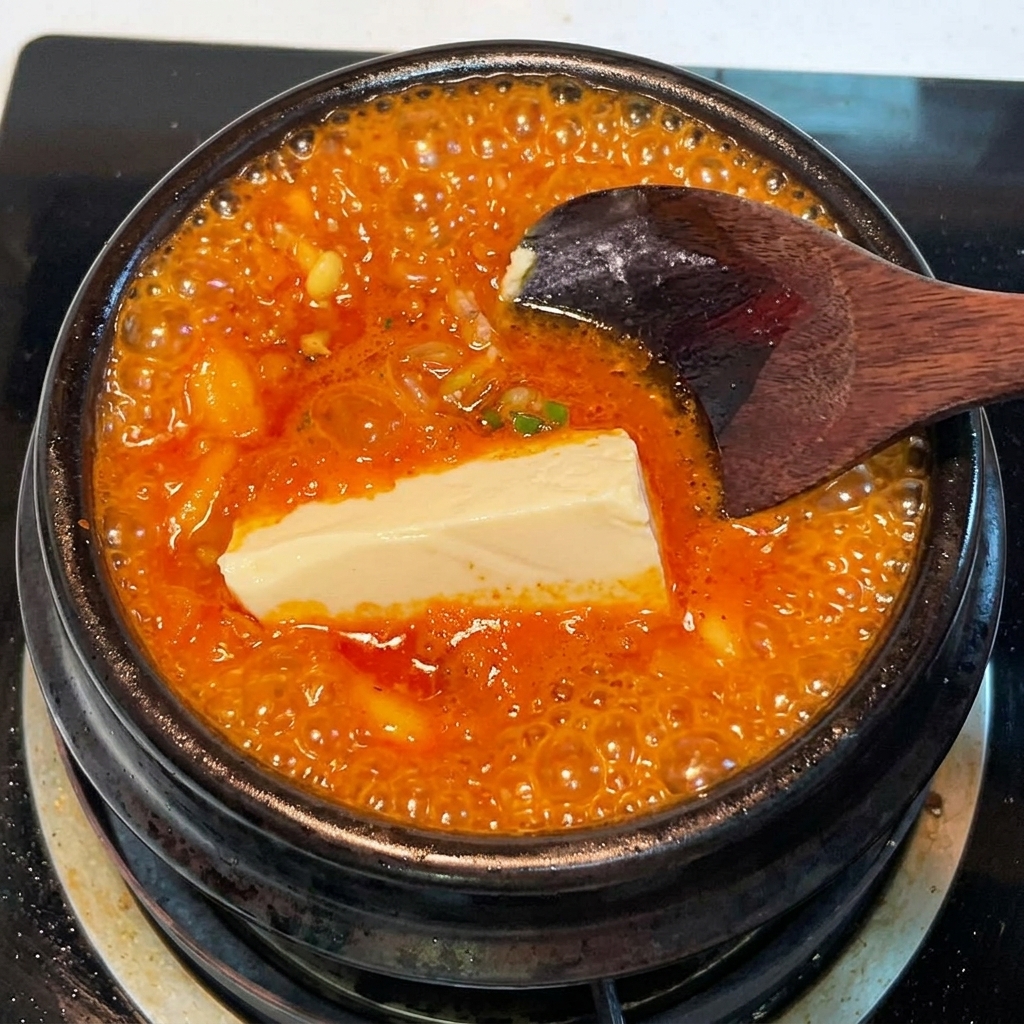
Gently add half a block of silken tofu into the bubbling kimchi stew. The soft, delicate texture of the tofu pairs perfectly with the spicy, fermented flavors, making the dish hearty and satisfying.
Tip: Handle the silken tofu gently to prevent it from breaking apart into small crumbles in the pot. - 8Garnish with green onions
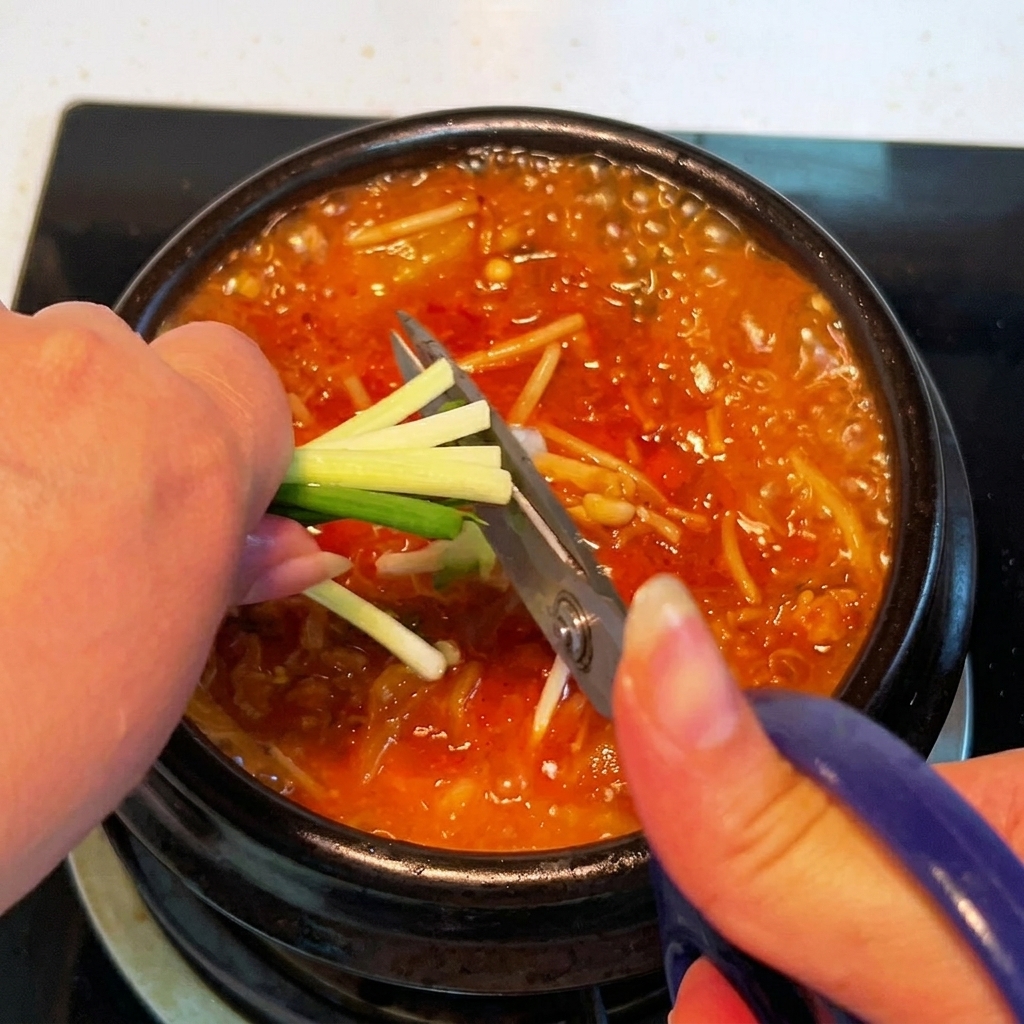
Using kitchen scissors, slice green onions directly into the simmering stew. Adding them at this stage ensures a fresh, aromatic flavor that complements the richness of the broth.
Tip: If you dont have a cutting board handy, kitchen scissors are an efficient way to prep green onions or scallions quickly. - 9Add pastes and continue to sauté
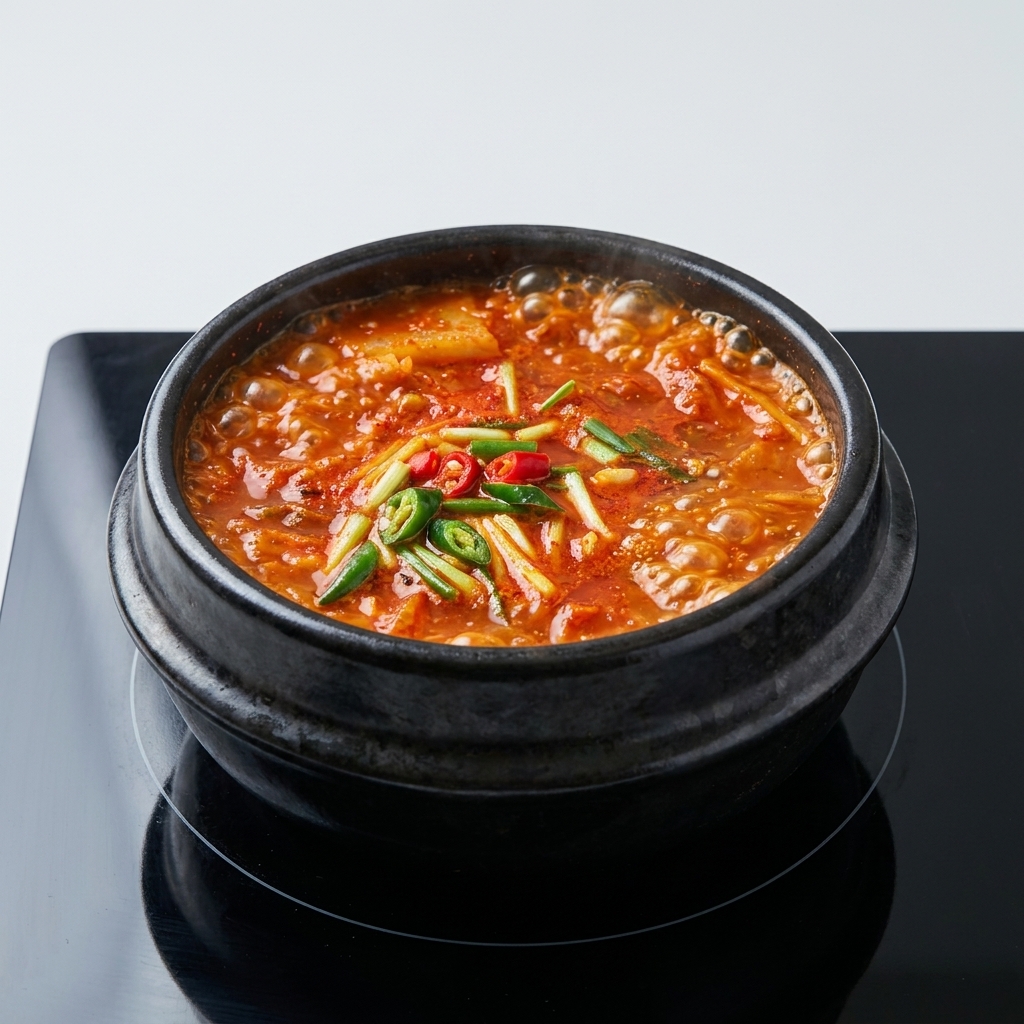
Add one spoonful of red chili paste and one spoonful of soybean paste to the stir-fried kimchi and pork mixture. Continue to stir-fry the ingredients together until well combined and the kimchi appears relatively dry, which helps develop a deep, concentrated flavor base.
Tip: Stir-frying the kimchi until it is relatively dry before adding liquid ensures a more concentrated and savory flavor base for your stew.