Classic Korean Kimchi Soup (Kimchi Jjigae)
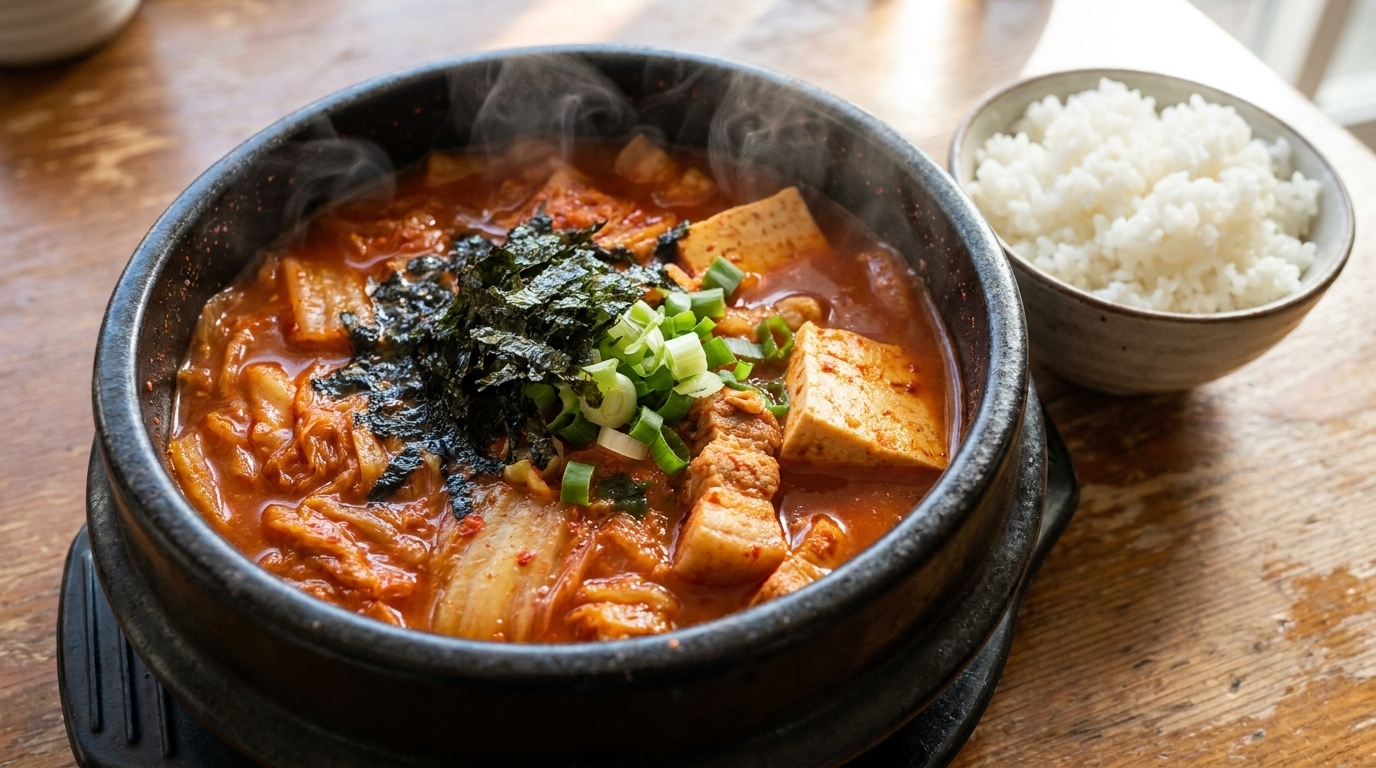
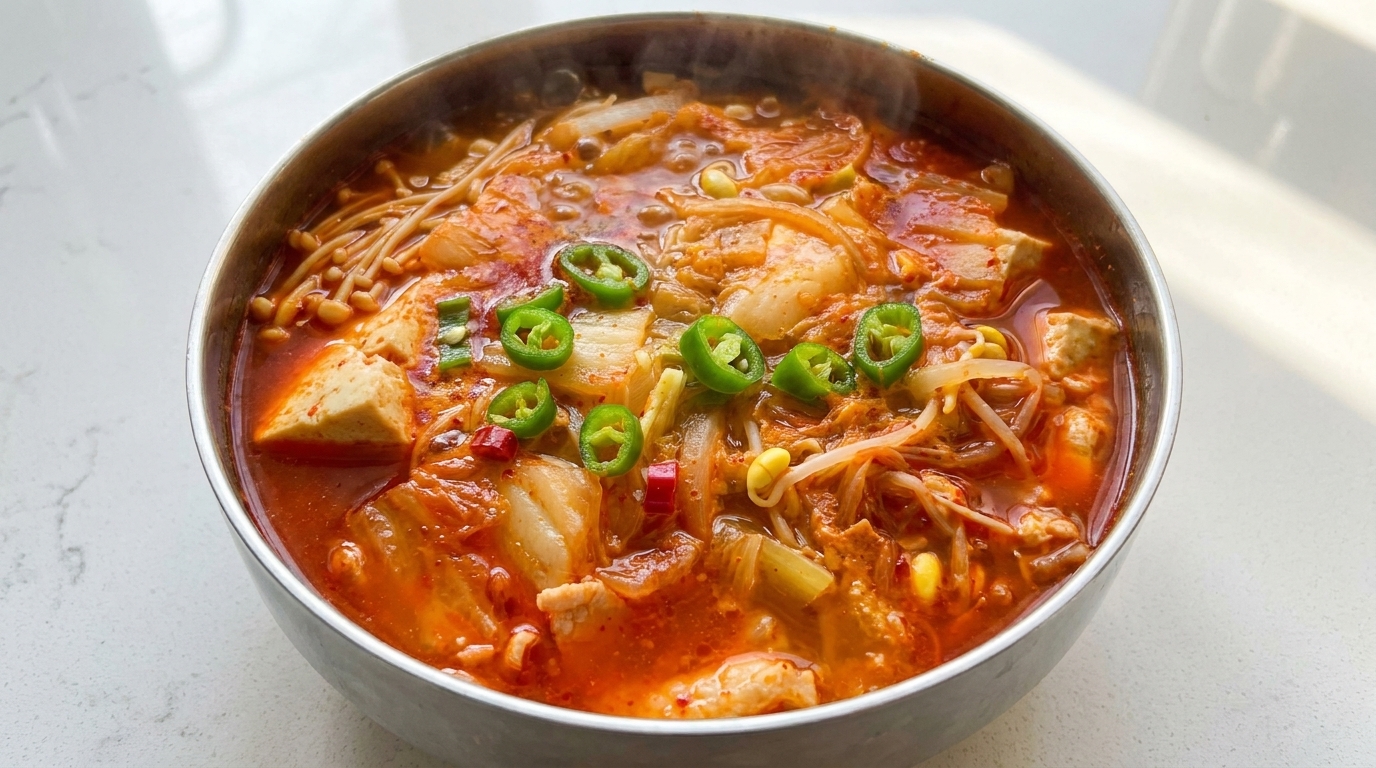
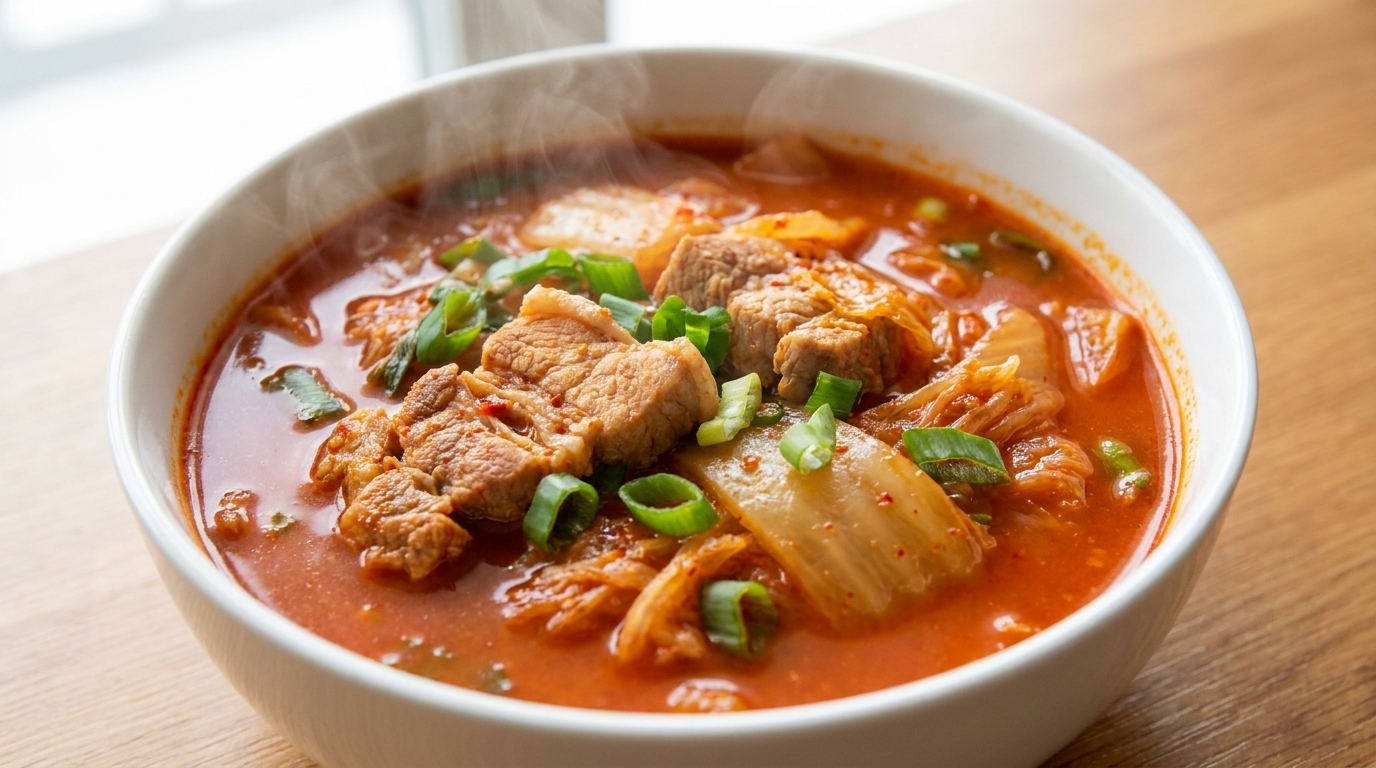
A comforting, spicy Korean staple made with aged kimchi, tender pork, and silken tofu. This hearty soup is ready in under 30 minutes for a perfect meal.
Kimchi Jjigae is one of the most beloved comfort foods in Korea, valued for its deep, complex flavors and restorative heat. The secret to an authentic bowl lies in using well-fermented, sour kimchi, which provides the characteristic tang that balances the rich, savory pork base. It is a humble, robust soup that brings warmth to any table.
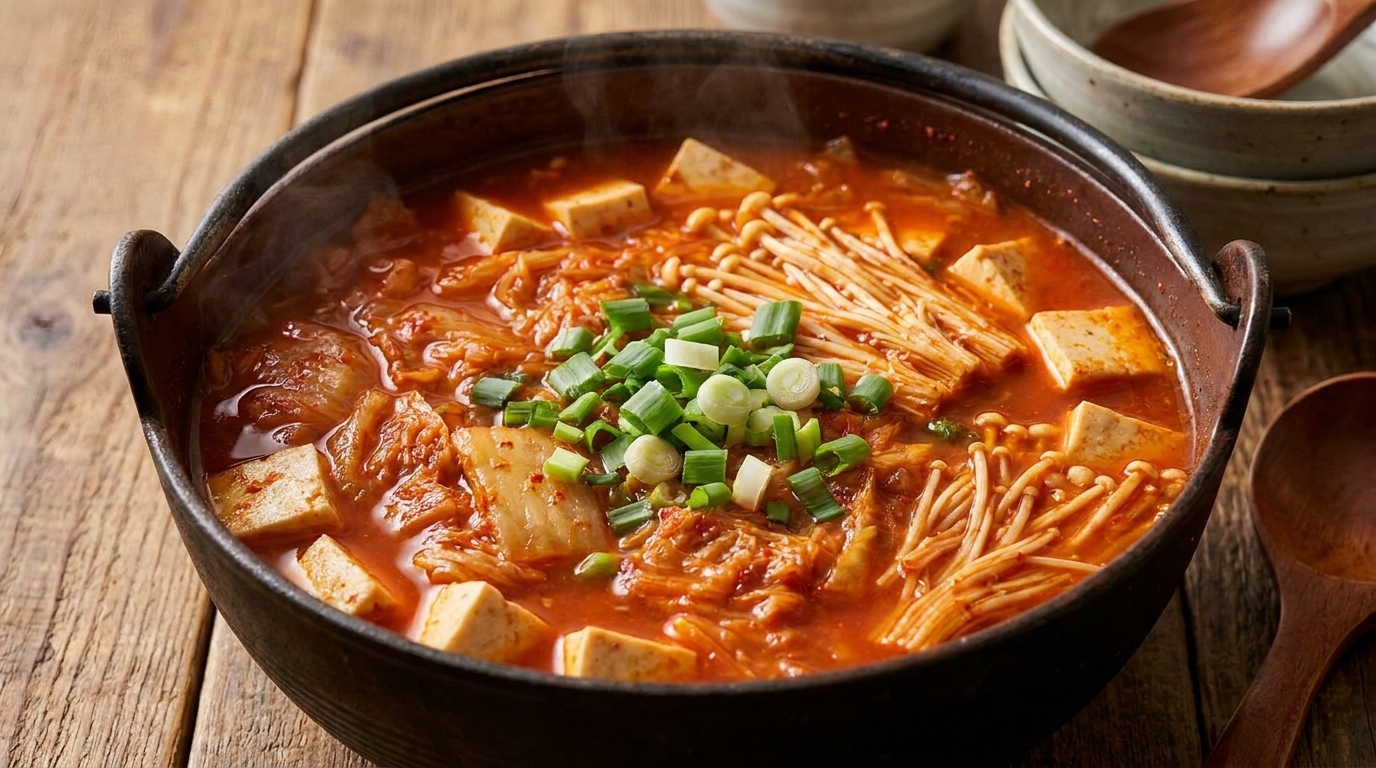
Ingredients
- 200 g aged kimchi
- 150 g pork belly or shoulder
- 1/2 white onion
- 1 stalk green onion
- 150 g tofu
- 100 g enoki mushrooms
- 1 tbsp garlic, minced
- 1 tbsp gochujang
- 1 tsp gochugaru
- 1 tbsp soy sauce
- 1 tsp fish sauce
- 1/2 tsp sugar
- 500 ml water
- to taste pork fat or oil
Instructions
- 1Prepare the sauce
In a small bowl, combine the minced garlic, Korean chili paste (gochujang), Korean chili powder (gochugaru), soy sauce, fish sauce, and a pinch of sugar. Stir the mixture thoroughly until all the ingredients are well incorporated into a uniform sauce.
Tip: Adjust the amount of chili powder to your preferred spice level. - 2Sauté the pork and aromatics
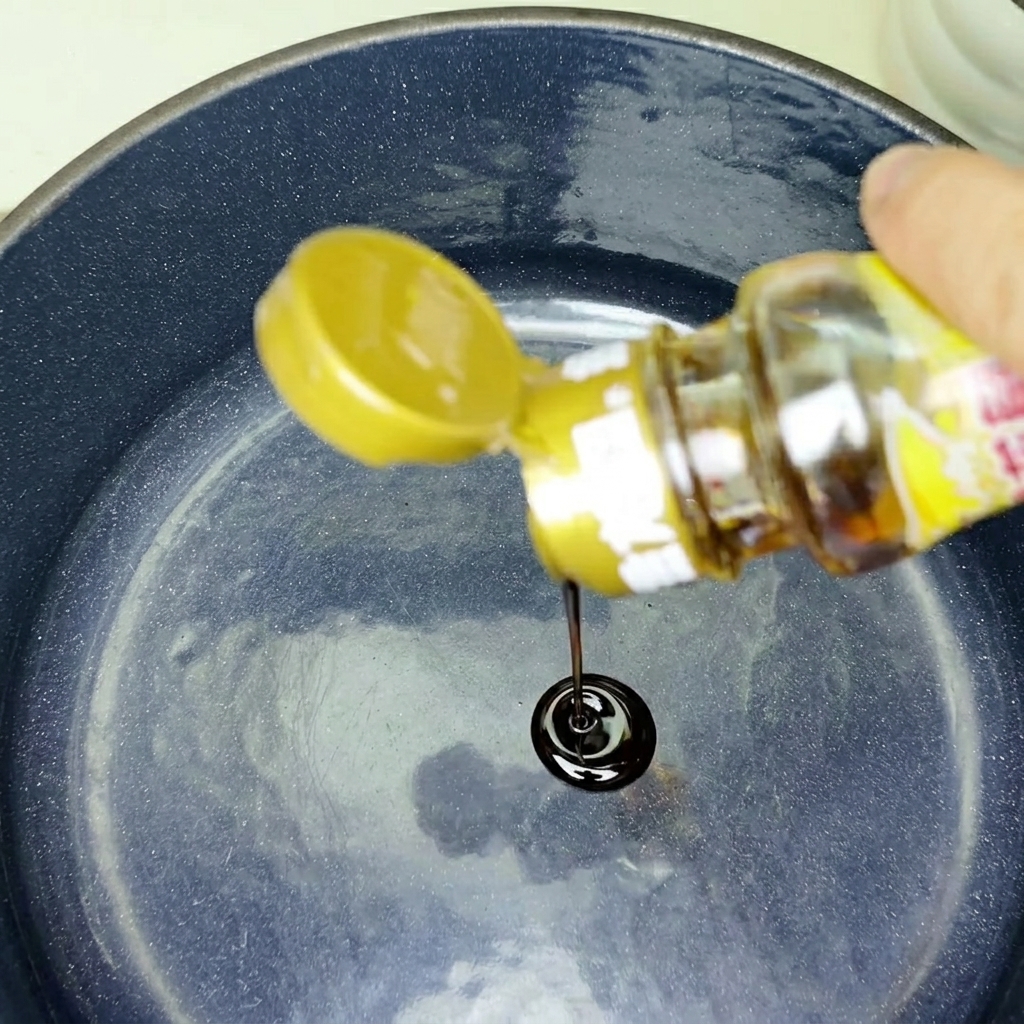
Add a splash of soy sauce and pork fat to the pot, then incorporate the pork pieces, white onion, and green onion. Stir-fry these ingredients over medium-high heat until the pork is browned and the aromatics are fragrant.
Tip: Make sure your pan is hot before adding the pork to get a nice sear for better flavor. - 3Add kimchi
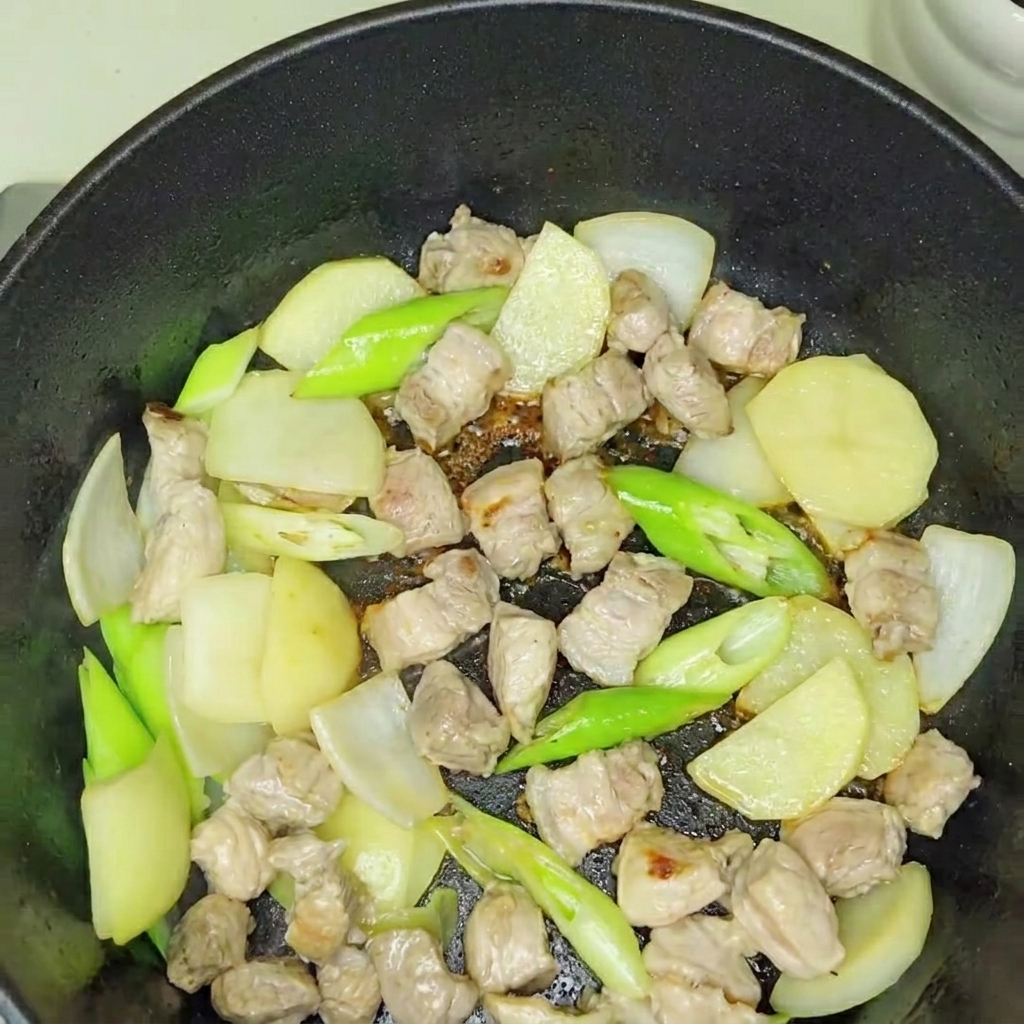
Once the pork and vegetables are fragrant, add the kimchi to the pot. Sauté briefly with the pork mixture to allow the flavors to meld together before adding the liquid components.
Tip: Use aged, sour kimchi for a deeper, more authentic flavor in your soup. - 4Add the sauce
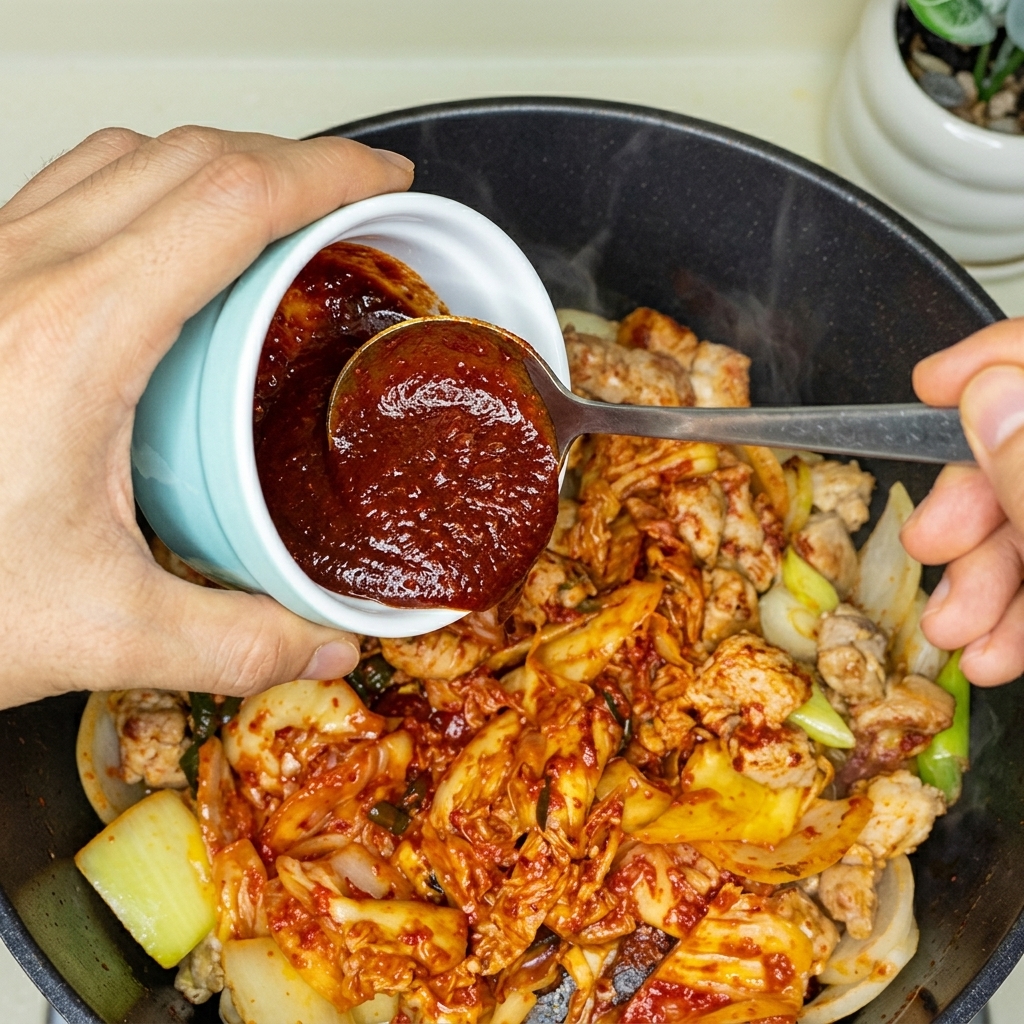
Pour your prepared sauce mixture—containing garlic, Korean chili paste (gochujang), Korean chili powder (gochugaru), soy sauce, fish sauce, and sugar—directly into the pot over the kimchi and pork. Stir well to coat everything evenly.
Tip: Ensure the chili paste is fully dissolved into the mixture for a consistent base. - 5Simmer the base
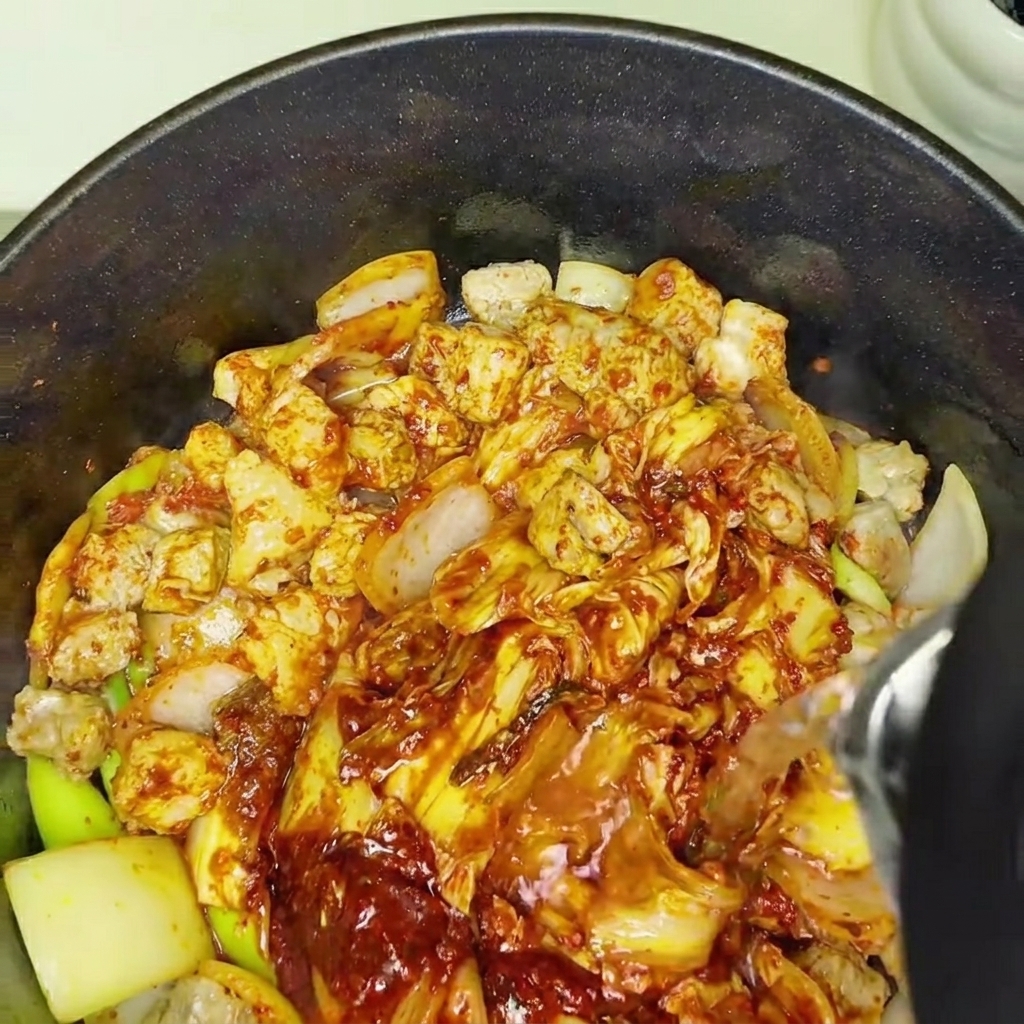
Pour in enough water to cover the ingredients in the pot. Bring the mixture to a gentle boil, then reduce the heat and let it simmer for 15 minutes to allow the flavors to develop into a rich, spicy broth.
Tip: Cover the pot while simmering to keep the heat consistent and prevent evaporation. - 6Add tofu and mushrooms
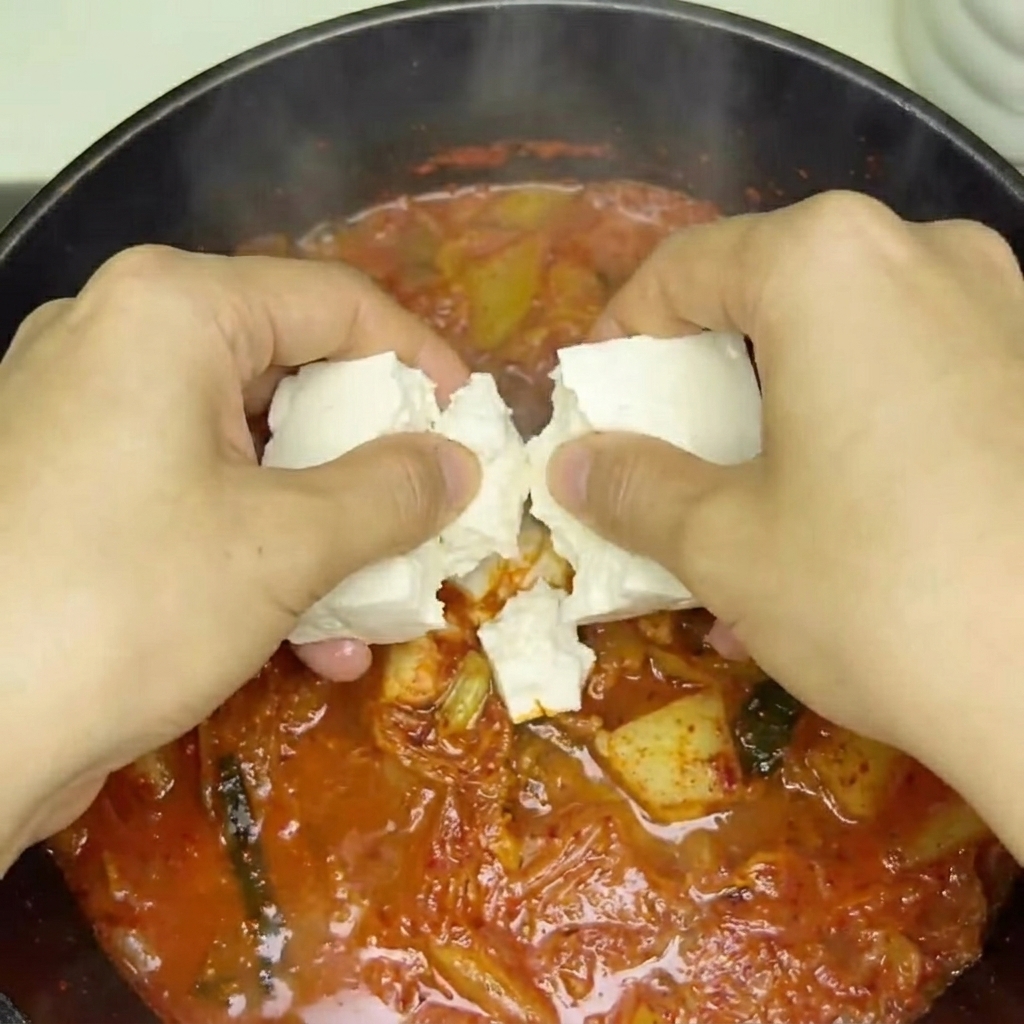
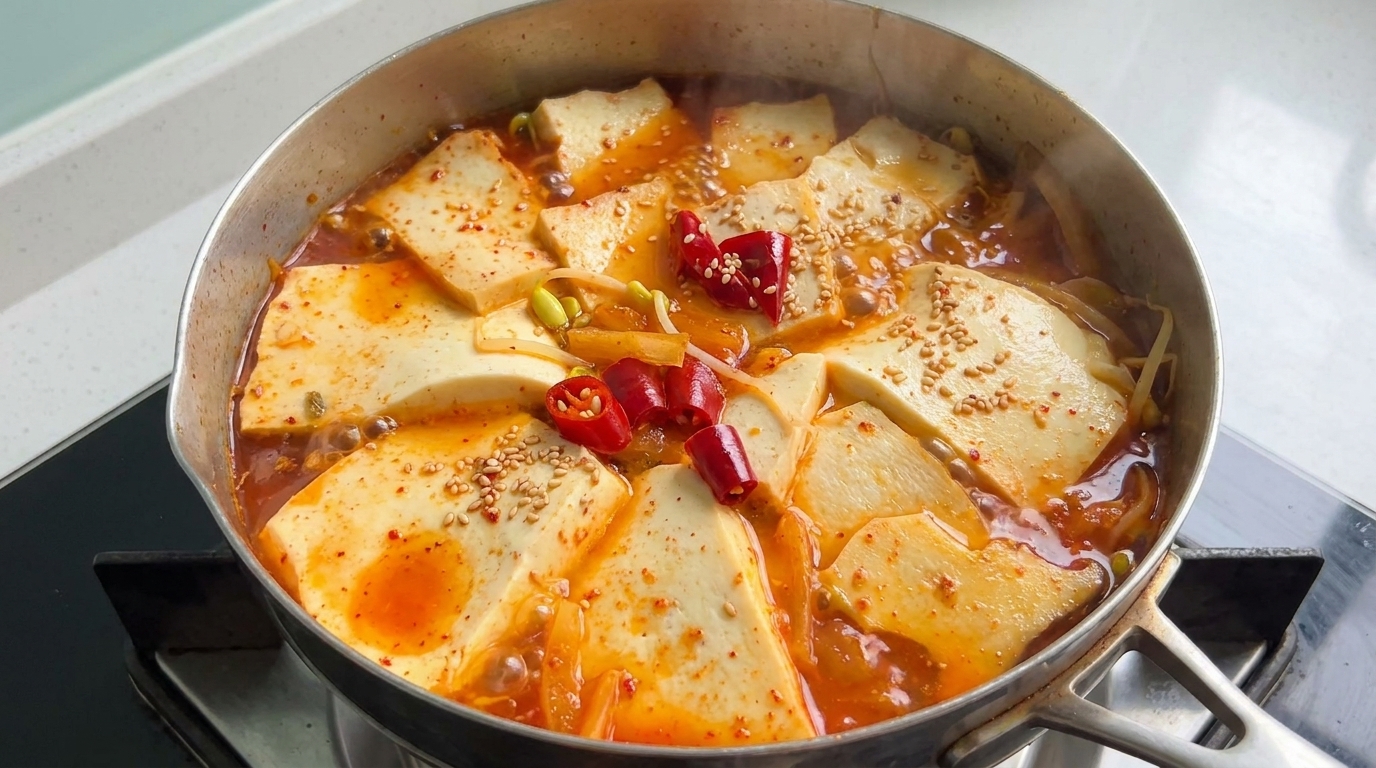
After the initial simmer, add the tofu cubes and enoki mushrooms into the pot. Continue to simmer for another 5 minutes until the tofu is heated through and the mushrooms are tender.
Tip: Add the tofu gently so it doesnt break apart while cooking.