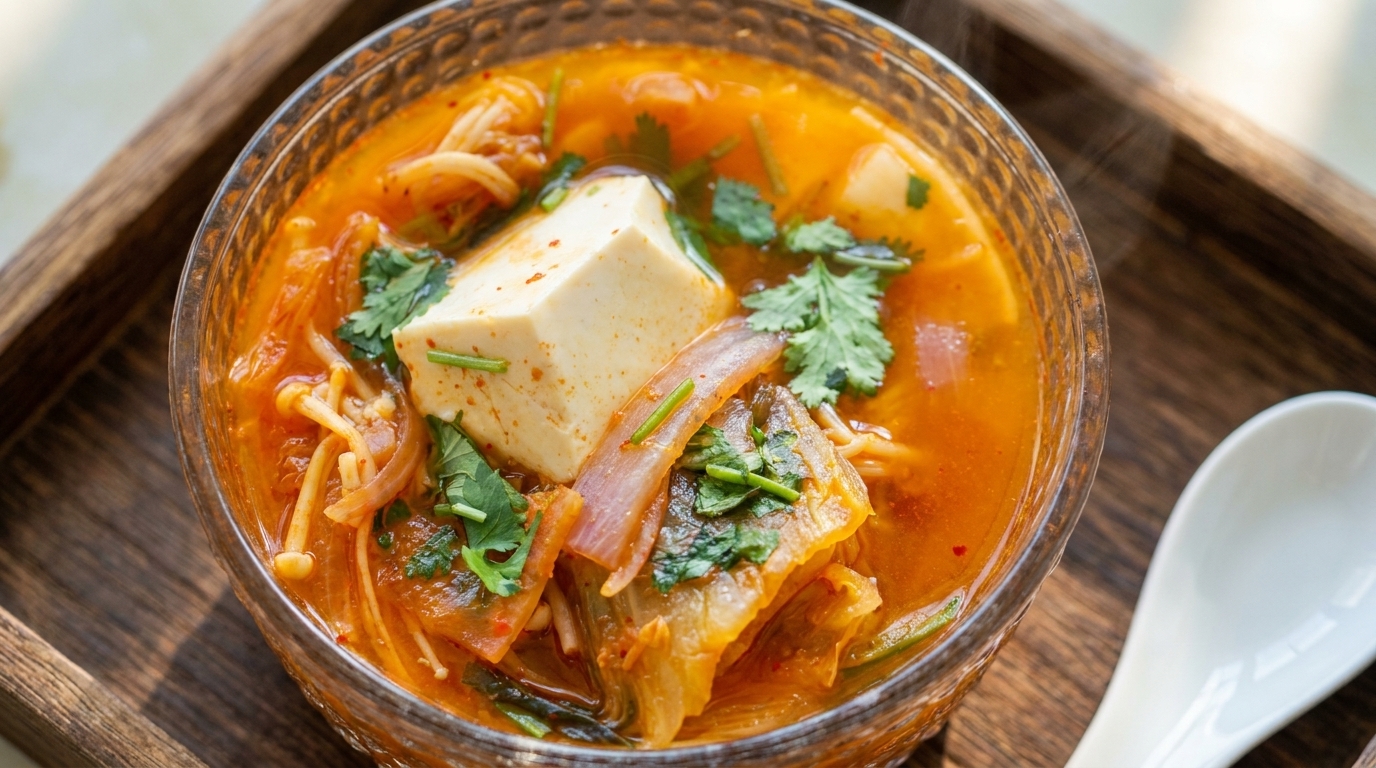
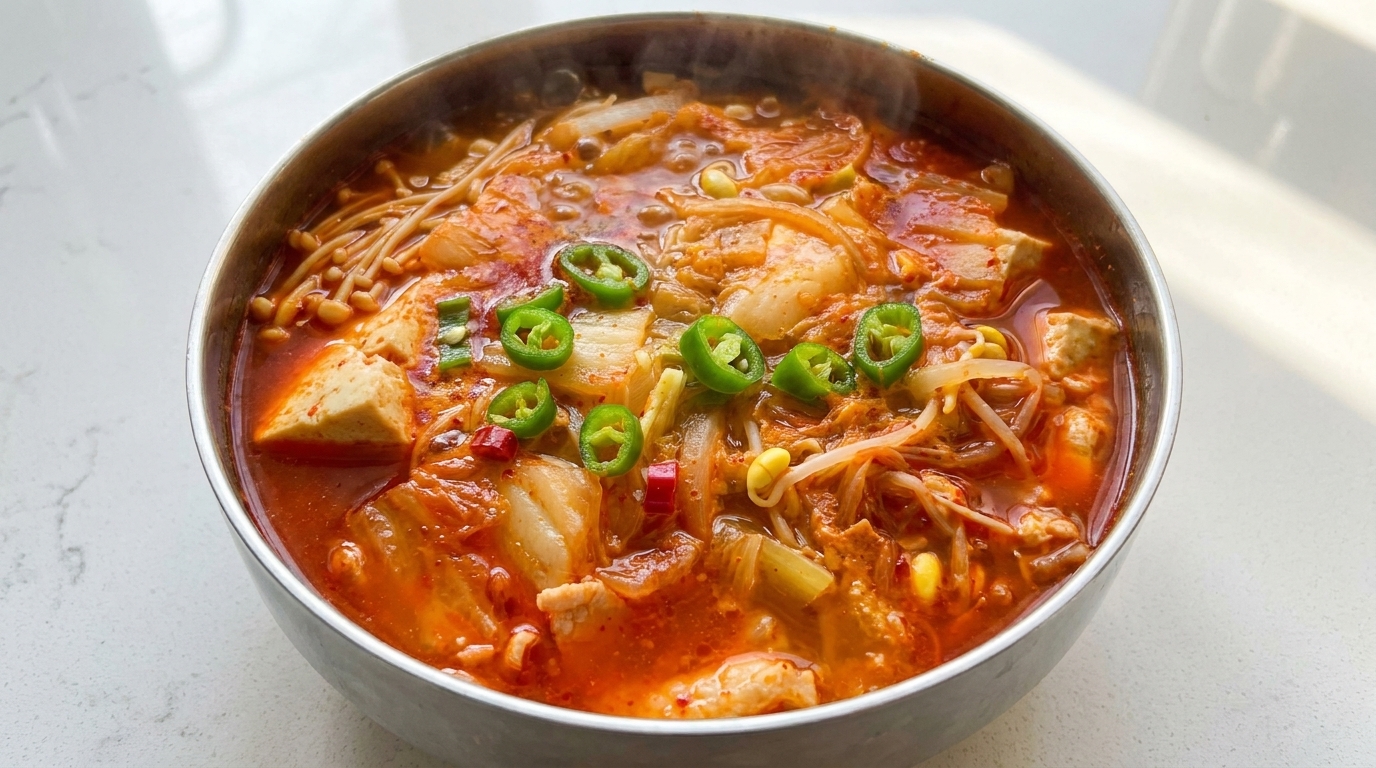
Spicy Korean Kimchi Jjigae (Kimchi Stew)
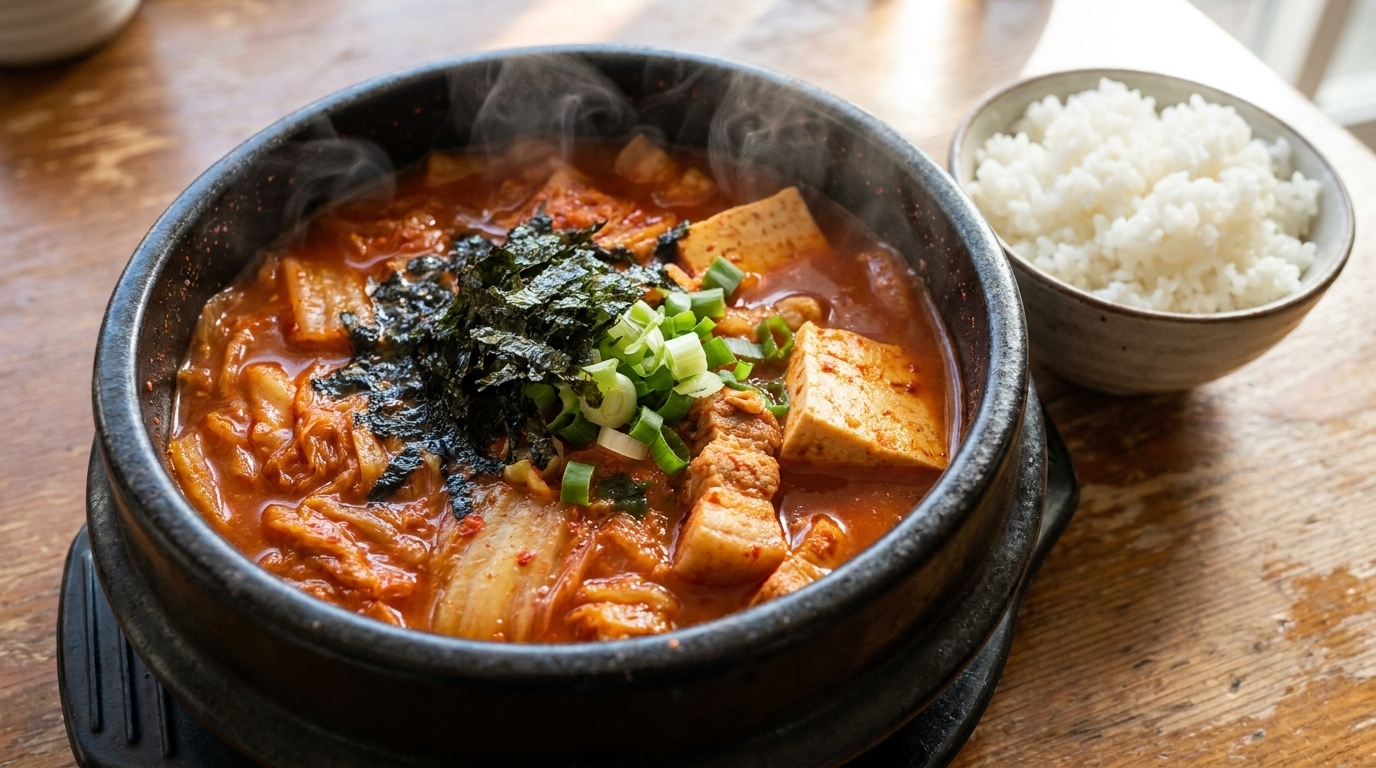
A comforting, spicy, and sour Korean staple. This robust kimchi stew is built with fermented kimchi, tender pork, and silken tofu, perfect for any rainy day.
Kimchi Jjigae is more than just a soup; it is the ultimate Korean comfort food. This dish relies on the deep, tangy flavor of well-fermented kimchi, which mellows and sweetens as it simmers in a savory, spicy broth. It is a humble, soulful meal that feels just as satisfying on a cool, rainy afternoon as it does at a bustling family dinner table.
Ingredients
- 300 g well-fermented kimchi
- 150 g pork belly, thinly sliced
- 200 g firm tofu, sliced
- 1 bundle enoki mushrooms
- 2 large eggs
- 1 tbsp red chili sauce
- 2 cloves garlic, minced
- 1/2 white onion, sliced
- 1 fresh red chili, sliced
- 250 ml kimchi brine
- to taste shredded dried seaweed
- to taste green onions, chopped
Instructions
- 1Prepare the flavor base

Place a black clay pot on the stove over medium heat. Add a spoonful of red chili sauce as the foundation for the stews depth and color.
Tip: Using a clay pot helps retain heat, keeping your stew bubbling long after it is served. - 2Sauté the aromatics

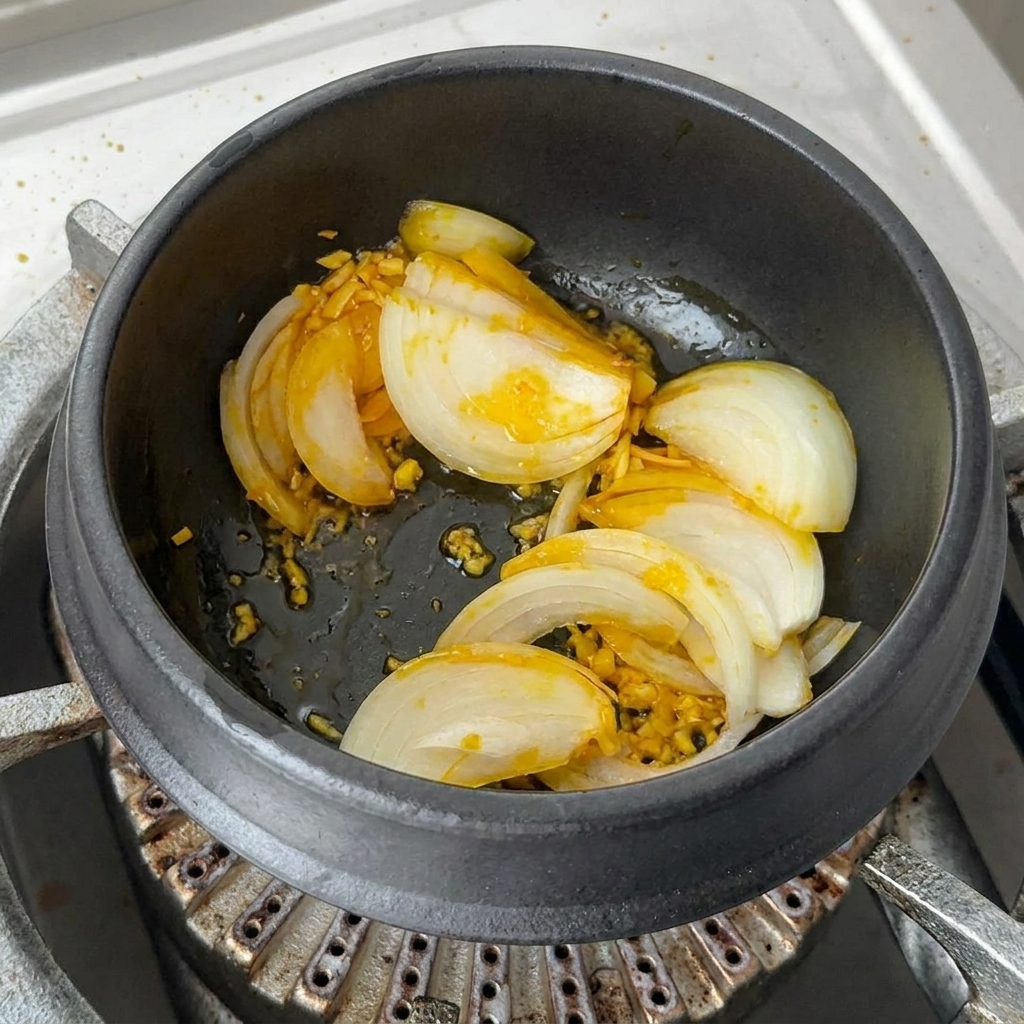
Add minced garlic and sliced onions into the pot with the chili sauce and oil. Sauté these aromatics until they are fragrant and the onions begin to soften.
Tip: Sautéing the aromatics in the base oil first releases their full flavor into the stew. - 3Add the kimchi
Stir in a generous amount of your chopped kimchi and sliced red peppers. Mix them thoroughly with the sautéed base to ensure every piece is coated in flavor.
Tip: Use well-fermented, sour kimchi for the best flavor in your jjigae. - 4Pour in the broth
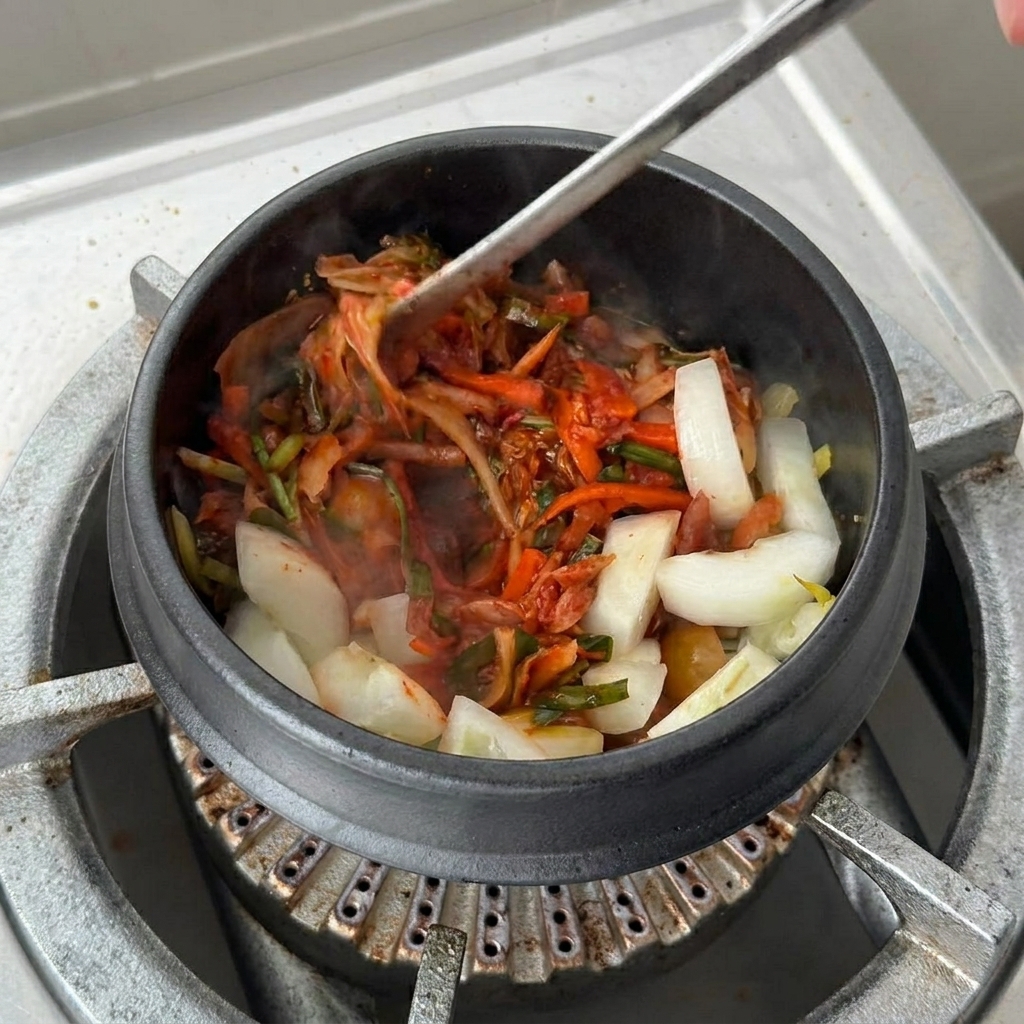
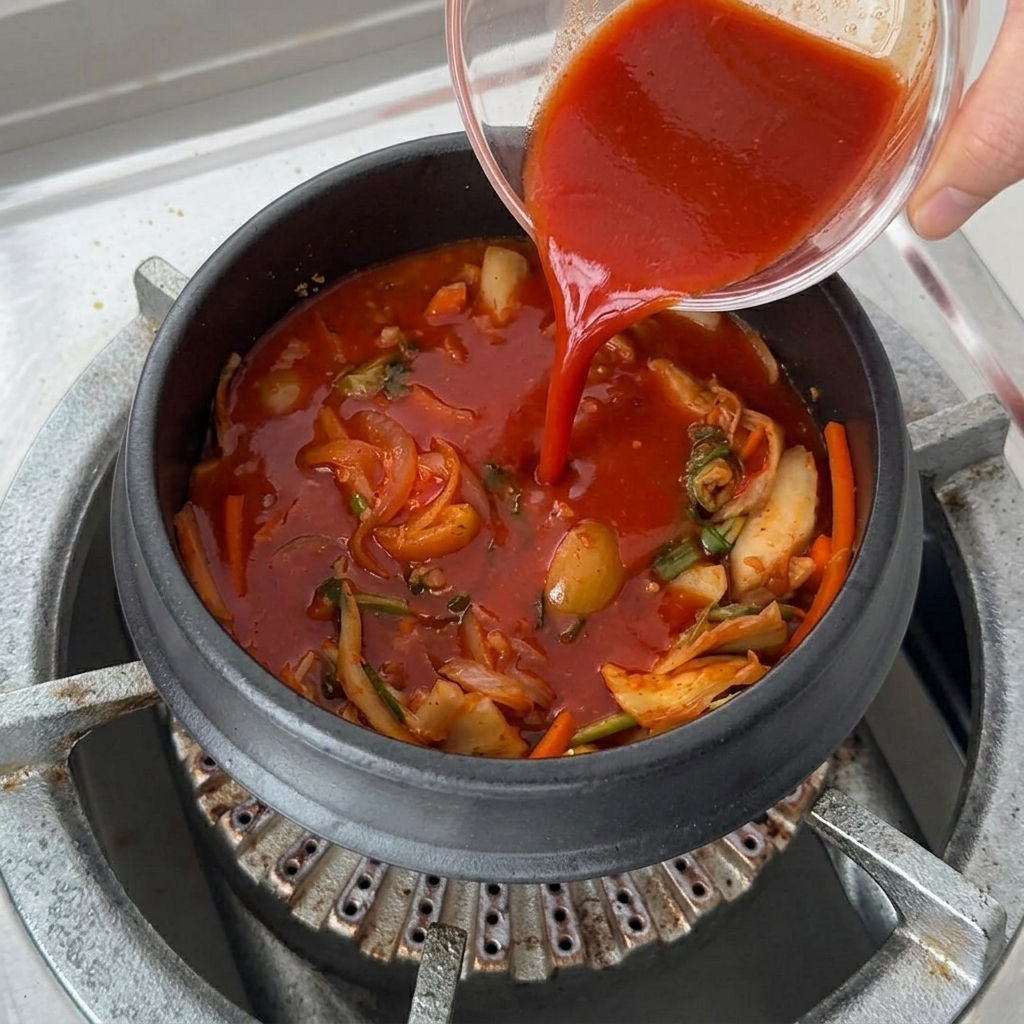
Pour a large cup of kimchi soup base into the pot. This liquid will bring all the ingredients together and create the flavorful, spicy broth.
Tip: If you dont have enough kimchi brine, you can supplement with a little anchovy broth or water. - 5Add tofu and mushrooms
Carefully arrange slices of firm tofu and a fresh bundle of enoki mushrooms into the bubbling broth. Allow them to simmer until the tofu is heated through.
Tip: Do not stir too aggressively after adding the tofu to prevent it from breaking apart. - 6Add the pork
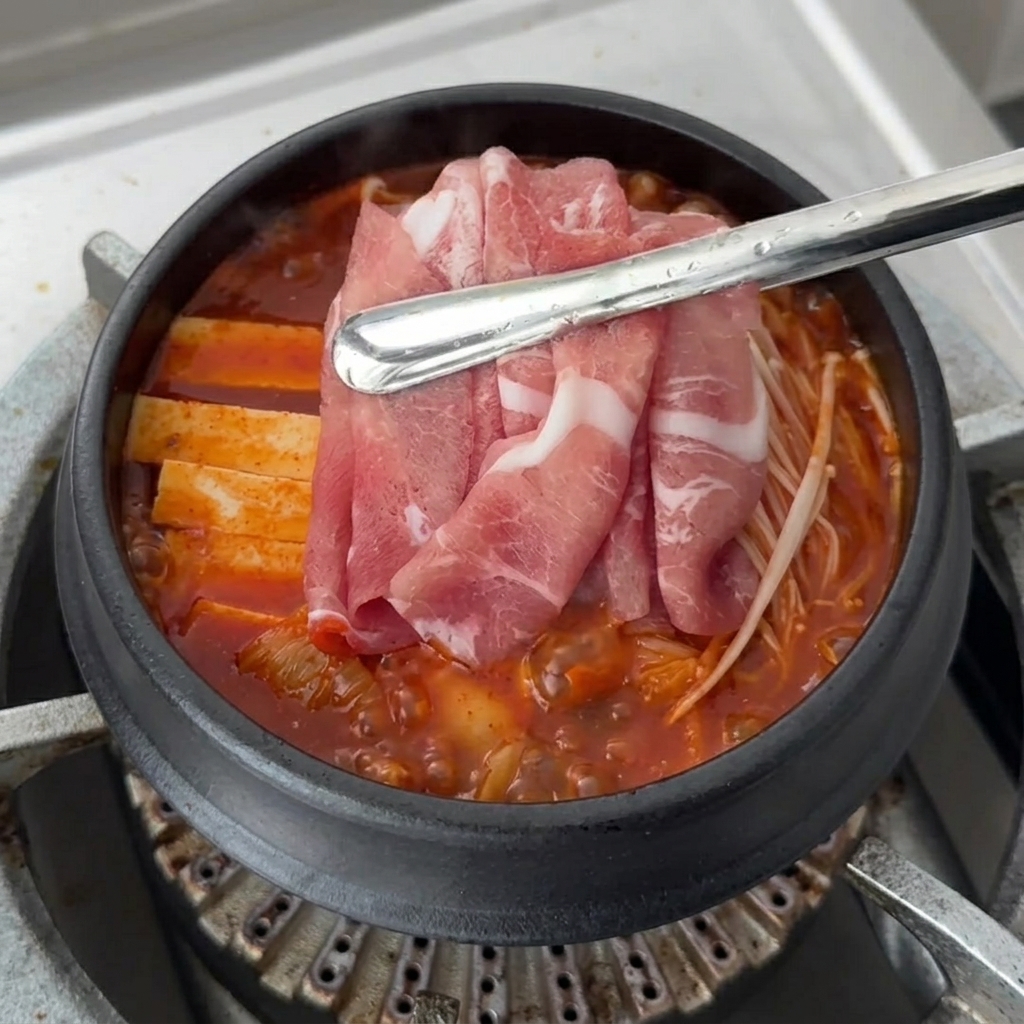
Place the slices of fresh pork on top of the tofu and enoki mushrooms in the bubbling stew. The heat from the broth will gently poach the meat as it simmers.
Tip: Thinly sliced pork cooks quickly and absorbs the spicy, sour kimchi flavors perfectly. - 7Crack in the eggs
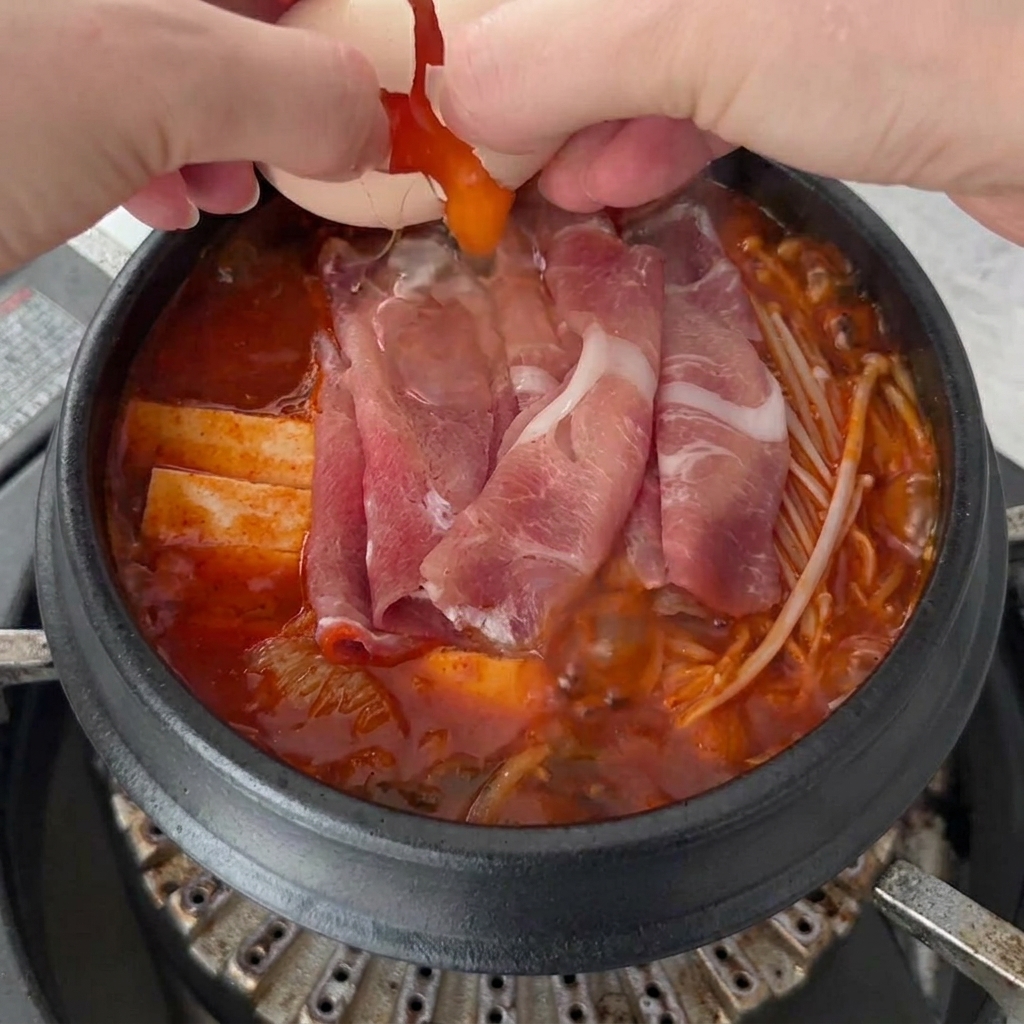
Carefully crack two fresh eggs directly onto the surface of the simmering stew. Allow them to cook in the hot broth until the whites are set but the yolks remain soft and runny.
Tip: The eggs add a rich, velvety texture to the spicy soup, balancing the sourness of the kimchi.