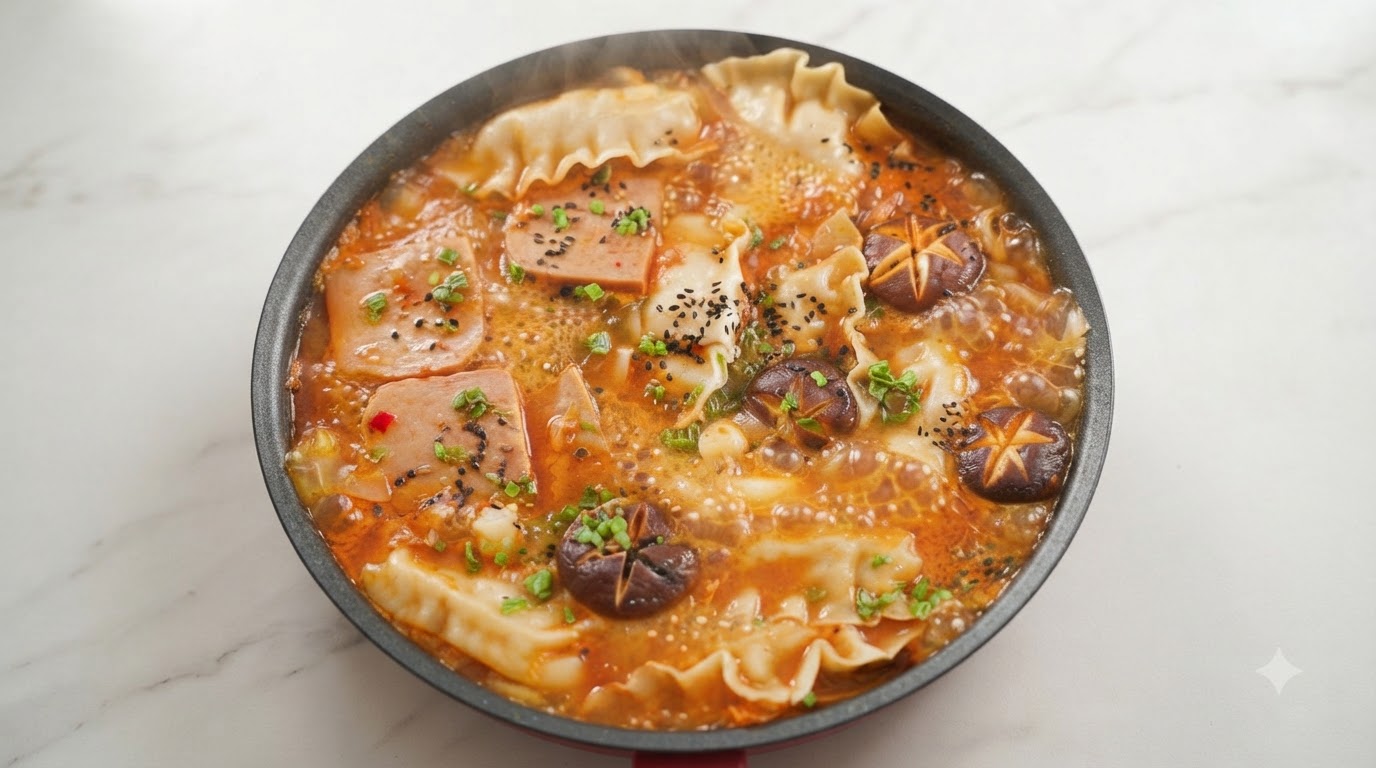
Korean Kimchi Rice Cake Dumpling Soup (Tteok-mandu-guk)
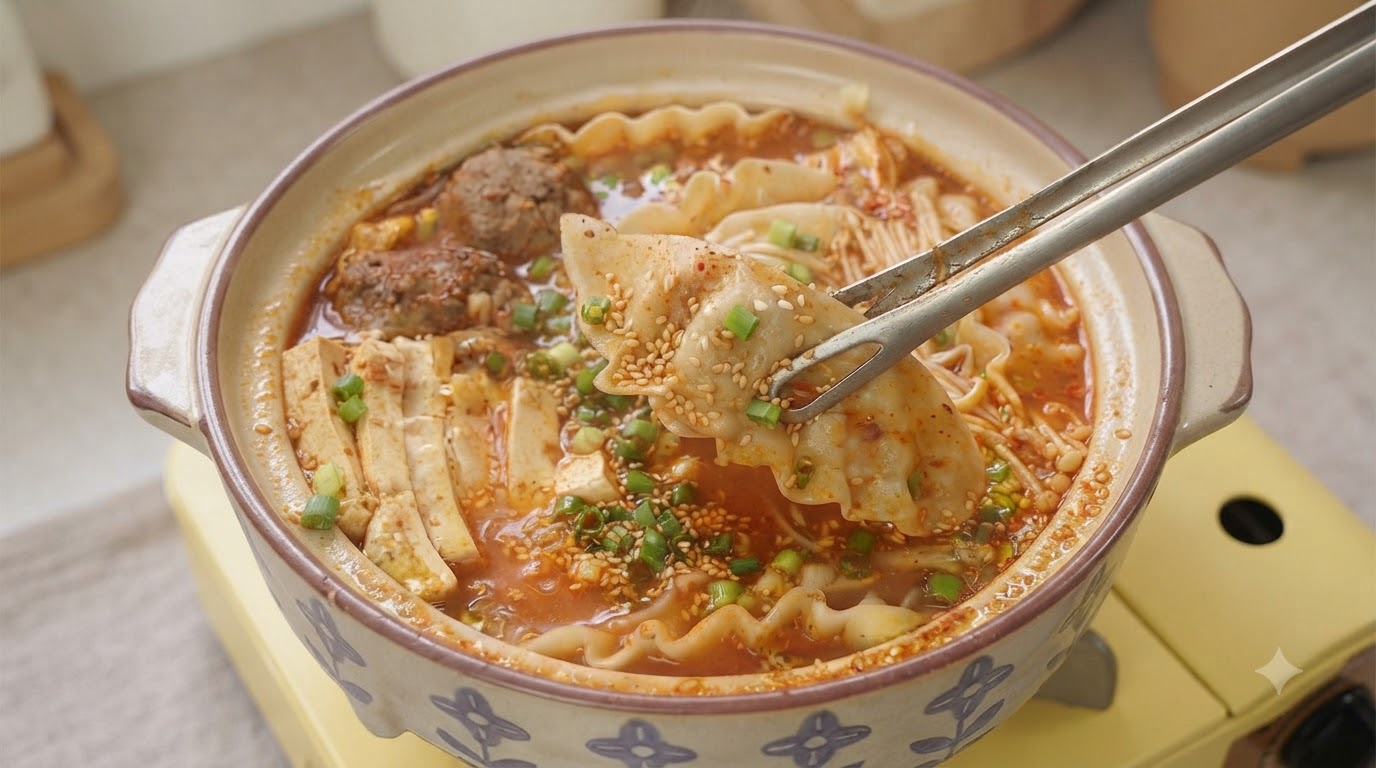
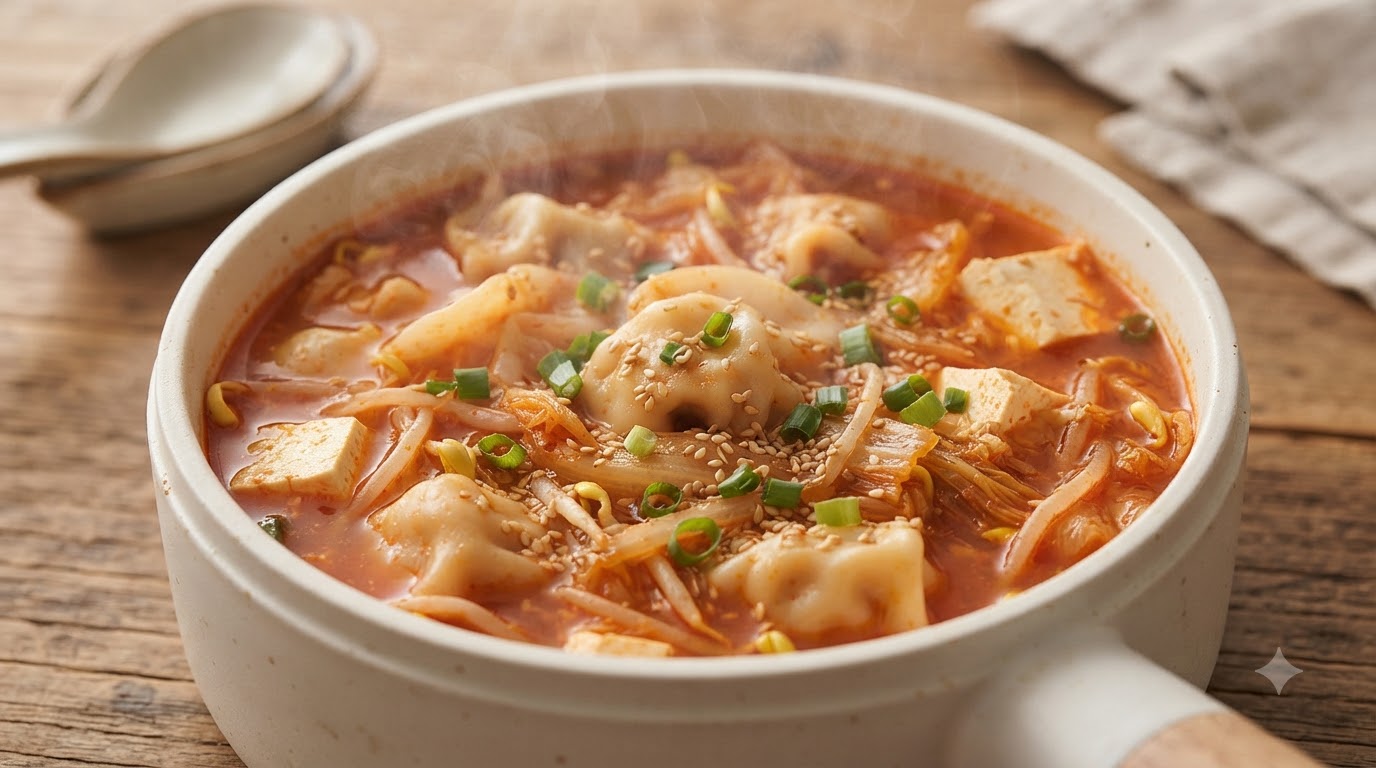
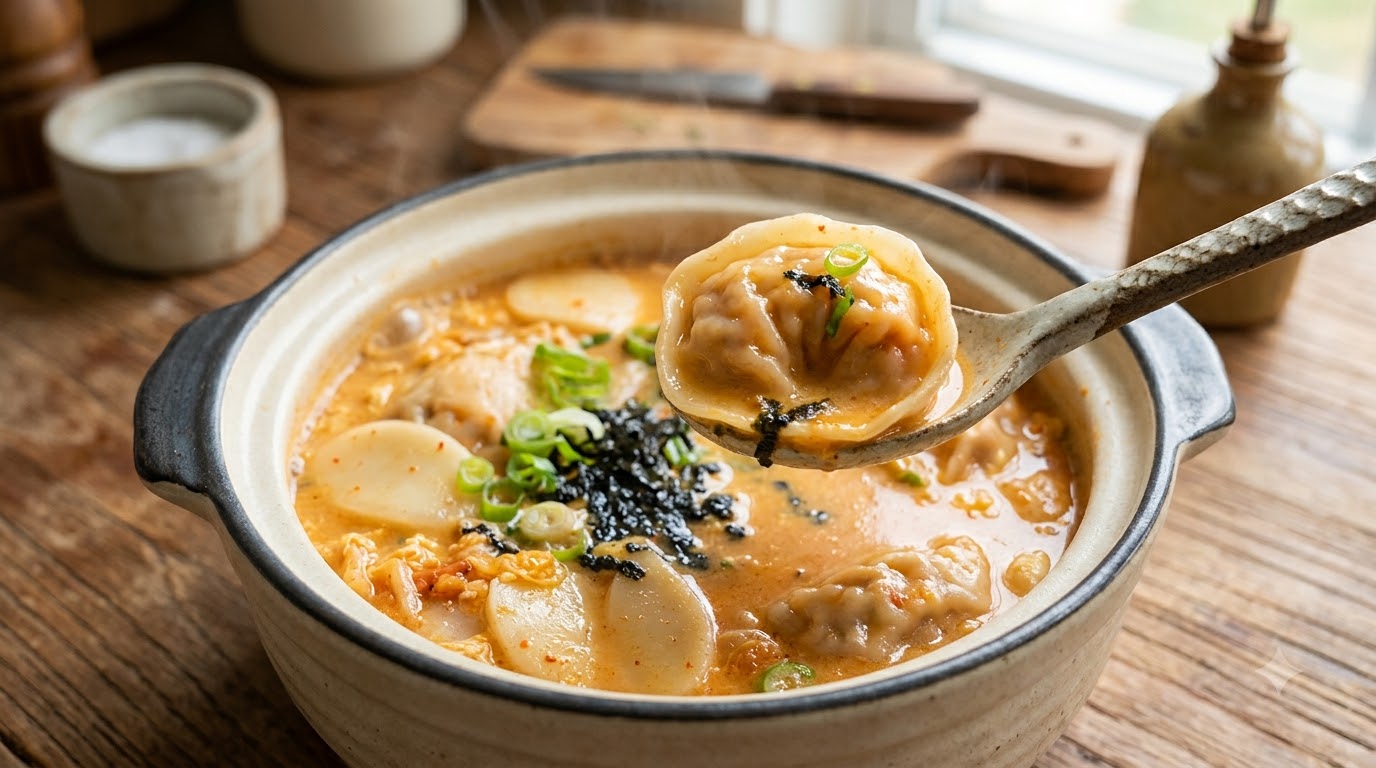
A hearty, spicy Korean one-pot comfort meal combining chewy rice cakes, plump kimchi king dumplings, savory luncheon meat, and shiitake mushrooms in a rich kimchi broth.
Kimchi dumpling and rice cake soup is a beloved staple of Korean home cooking, blending deeply comforting textures with a fiery, tangy punch from fermented kimchi. Perfect for quick breakfasts or cozy weeknight dinners, this dish brings together pantry staples and freezer favorites into a deeply satisfying, cohesive meal.
Ingredients
- 200 g rice cakes
- 200 g Korean kimchi
- 4 pieces Korean kimchi dumplings
- 100 g luncheon meat
- 4 pieces shiitake mushrooms
- 1/2 red onion
- 2 stalks green onion
- 1/2 tbsp white sugar
- 1 tbsp light soy sauce
- 1 tbsp sesame oil
- 1 tbsp Korean hot sauce
- to taste salt
- as needed cooking oil
- as needed water
- to taste sesame seeds
Instructions
- 1Boil the rice cakes
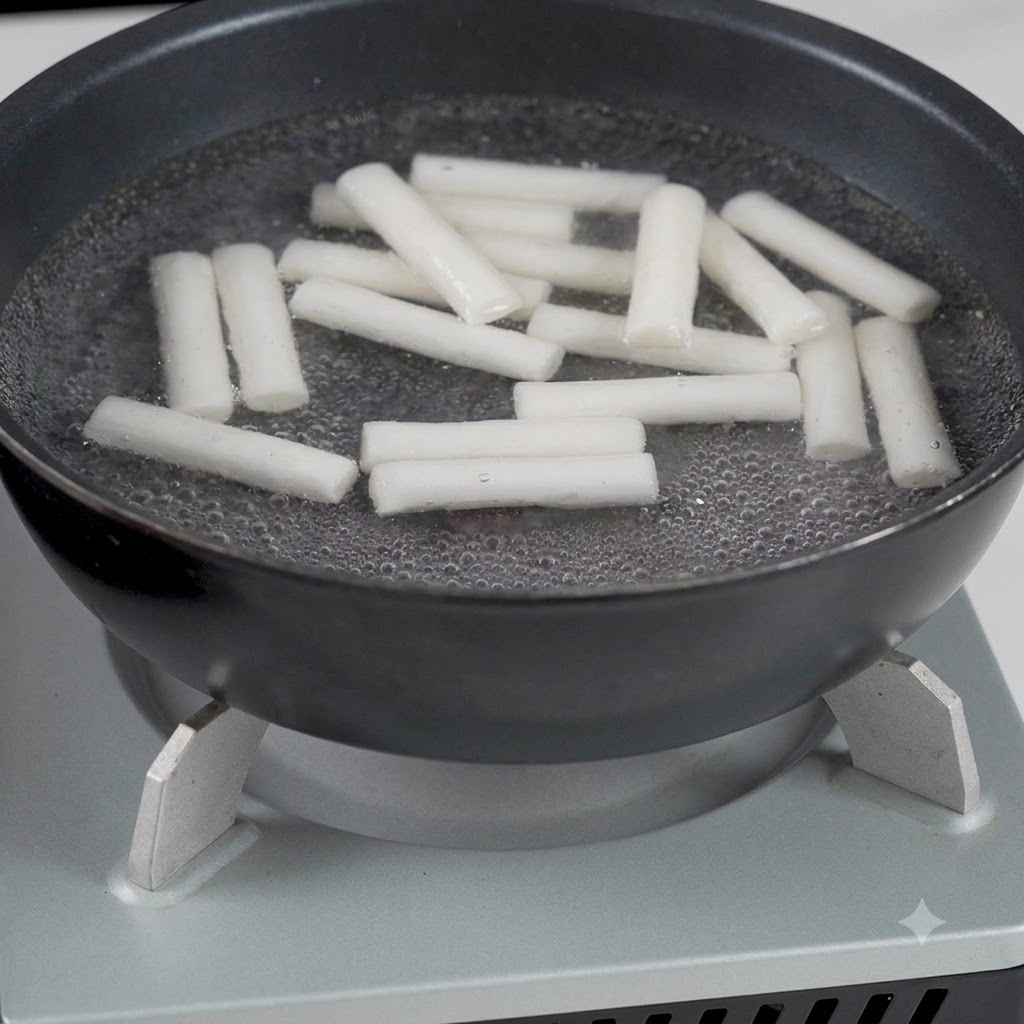
Pour water into a pan, add a little salt and oil, and bring to a boil. Place the rice cakes into the boiling water and cook them until they float to the surface before removing them.
Tip: Adding a little oil and salt prevents the rice cakes from sticking together and seasons them slightly. - 2Slice the red onion
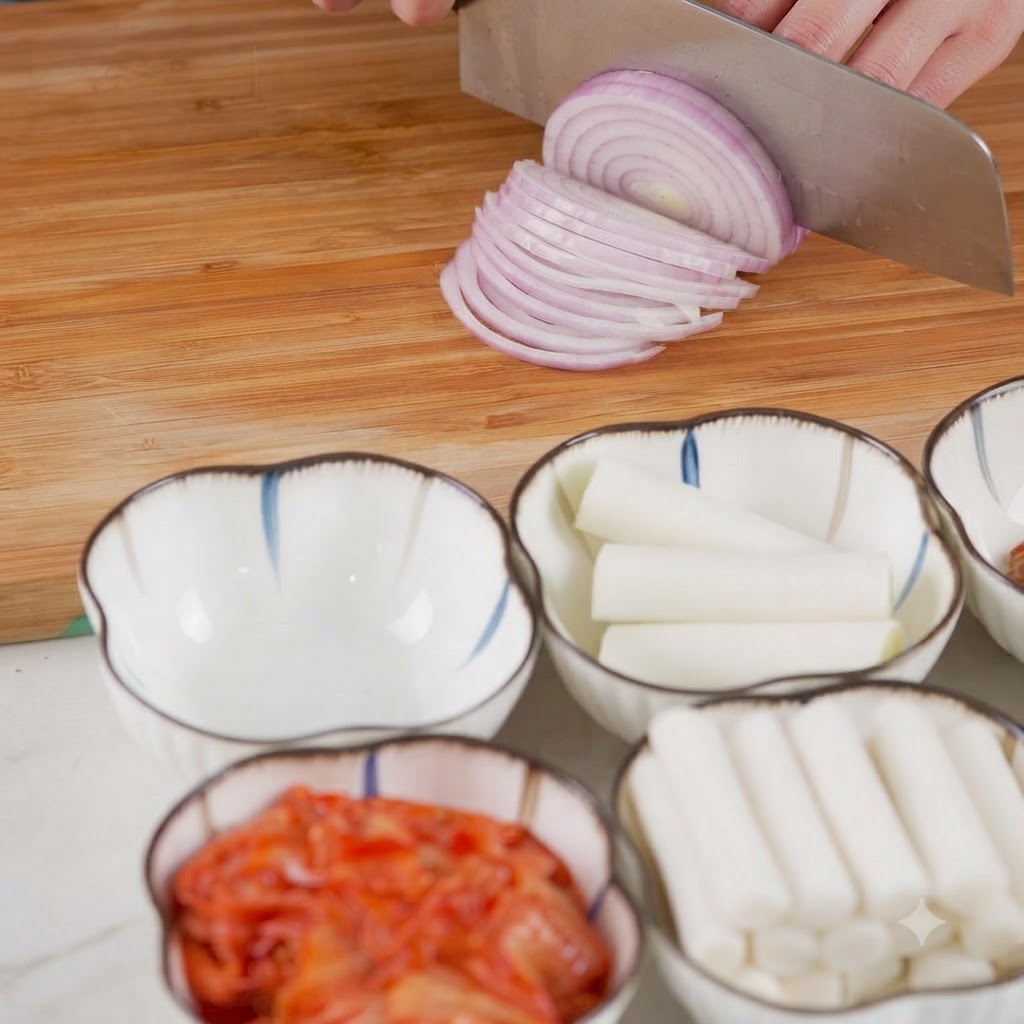
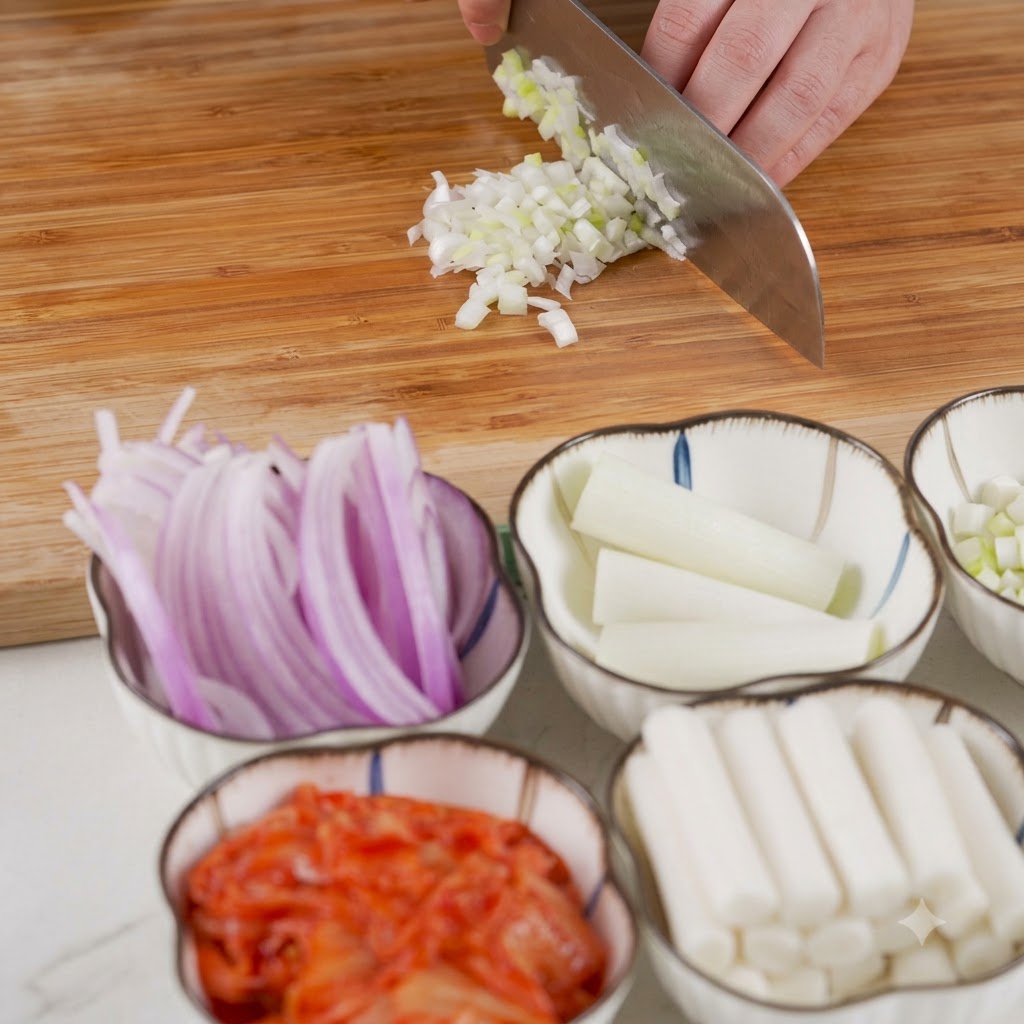
Take a red onion and slice it into thin, even strips on a wooden cutting board next to the prepared bowls of ingredients.
Tip: Slice uniformly so the onions cook evenly when sautéed. - 3Chop the green onion
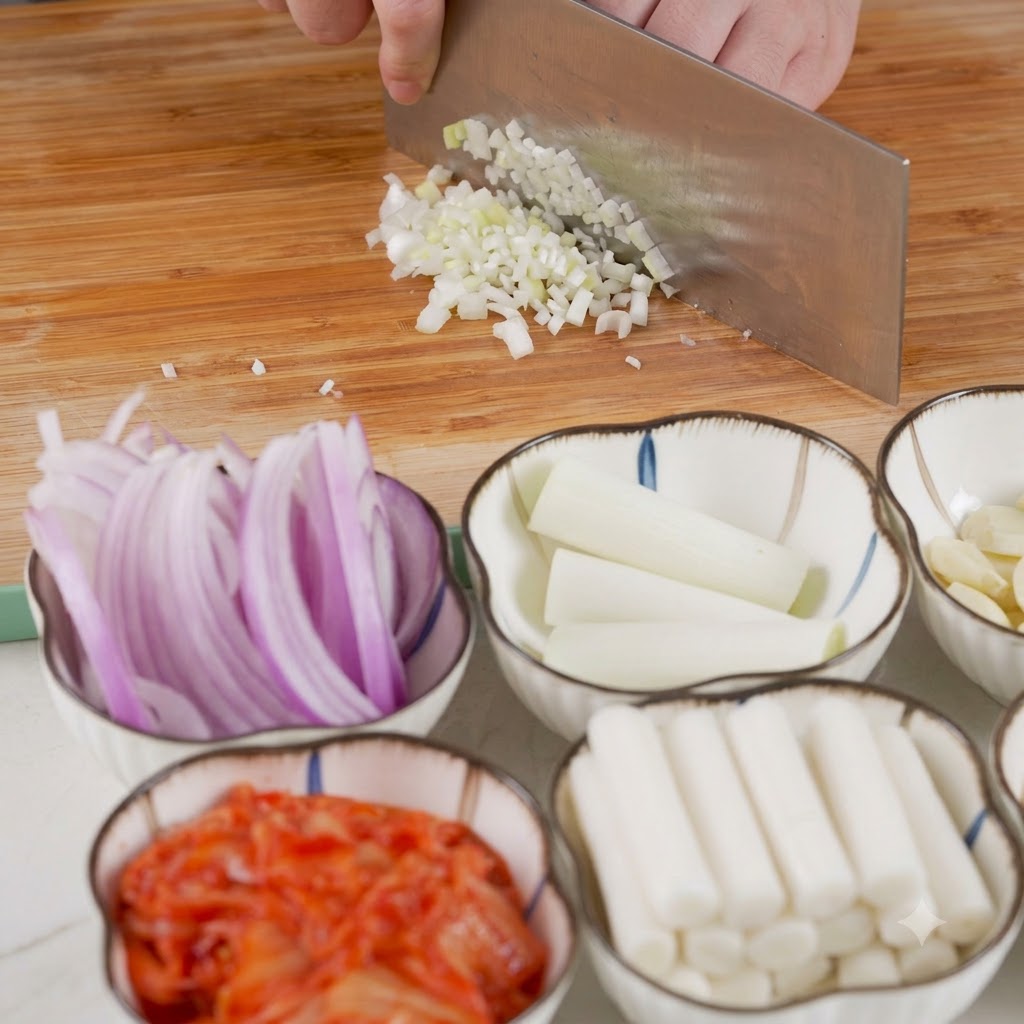
Take the green onion and chop it into small pieces on the wooden cutting board.
Tip: Keep the pieces fine to distribute the onion flavor evenly throughout the dish. - 4Oil the pan
Use a cooking brush to apply oil evenly across the entire inner surface of the pan.
Tip: Ensure a thin, even coat of oil to prevent ingredients from sticking. - 5Sauté the onions
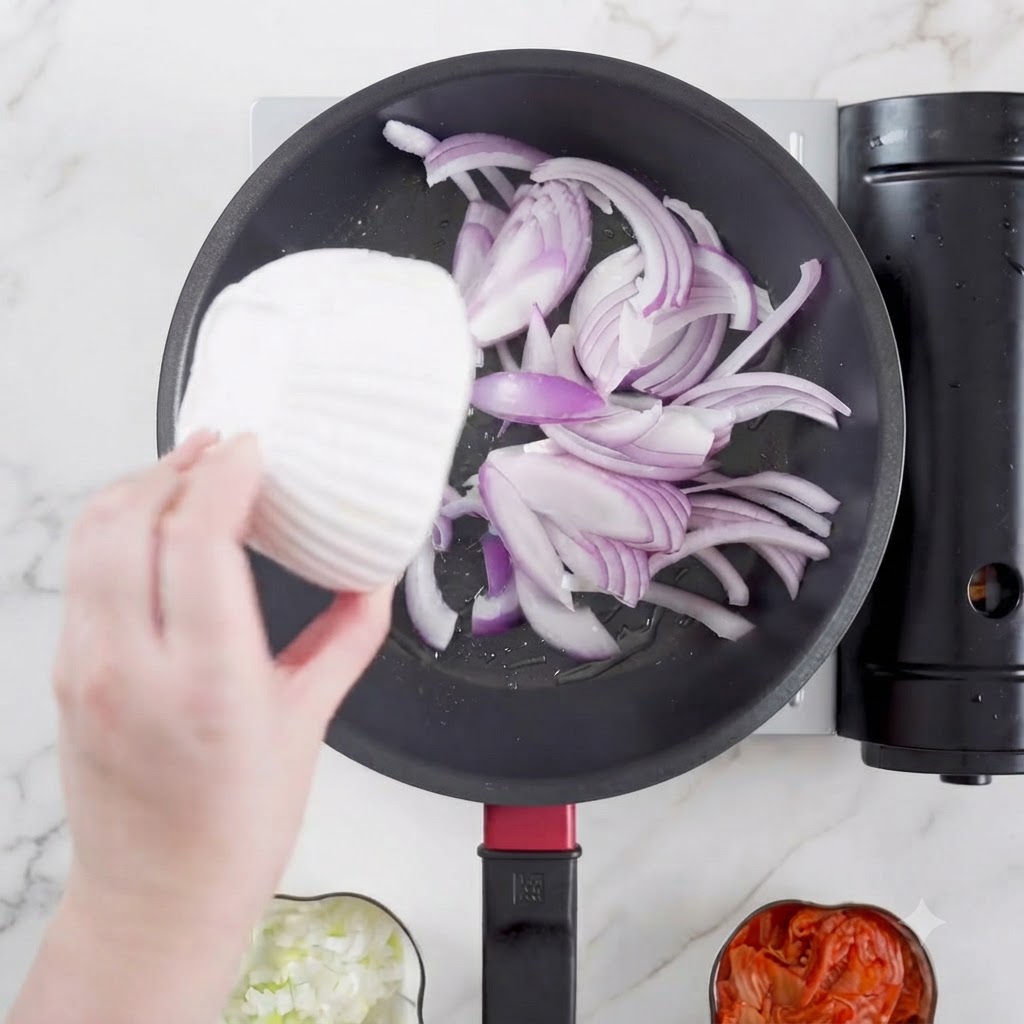
Transfer the sliced red onion and chopped green onion into the oiled pan and stir-fry them until they become fragrant.
Tip: Sauté on medium heat to release the aroma without burning the onions. - 6Add Korean kimchi
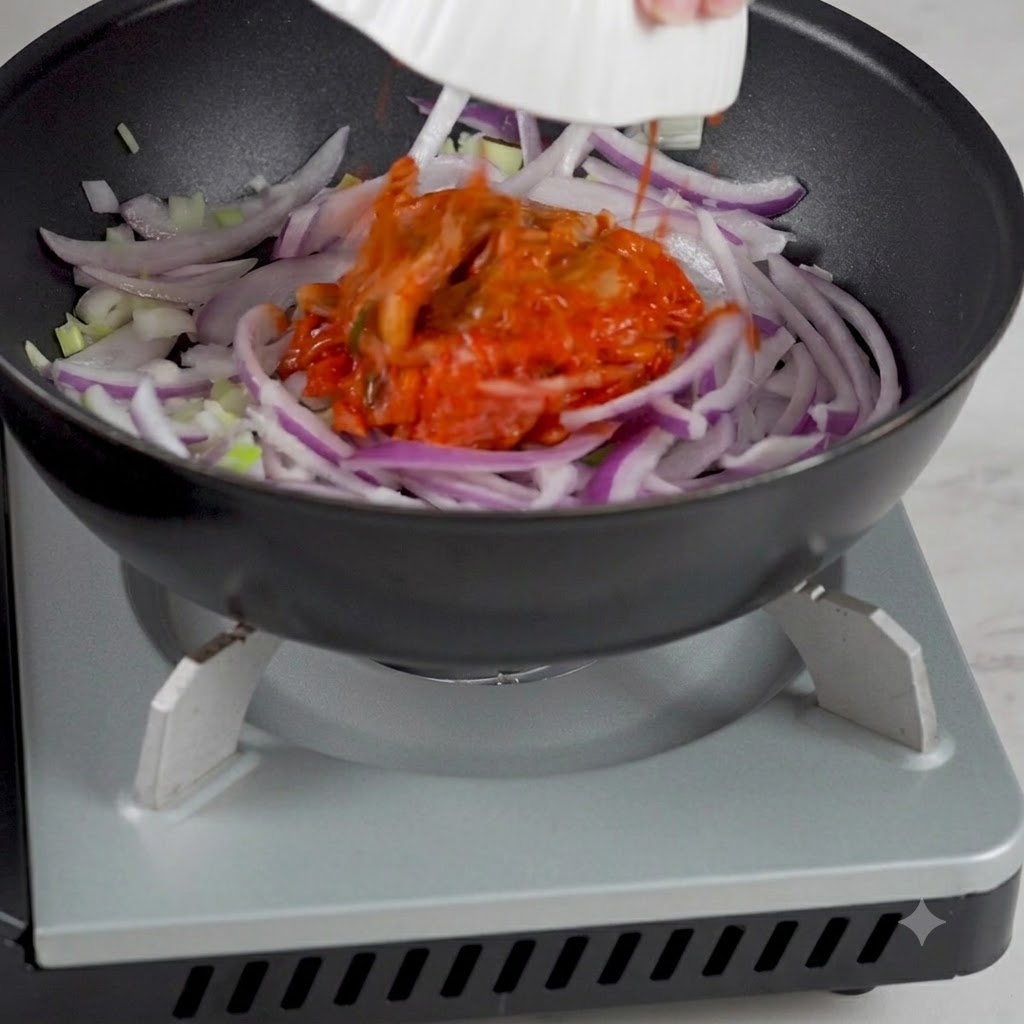
Add Korean kimchi into the pan with the sautéed onions and mix them together well.
Tip: Stir-fry the kimchi briefly with the onions to enhance its flavor before adding liquids. - 7Pour water into the pan
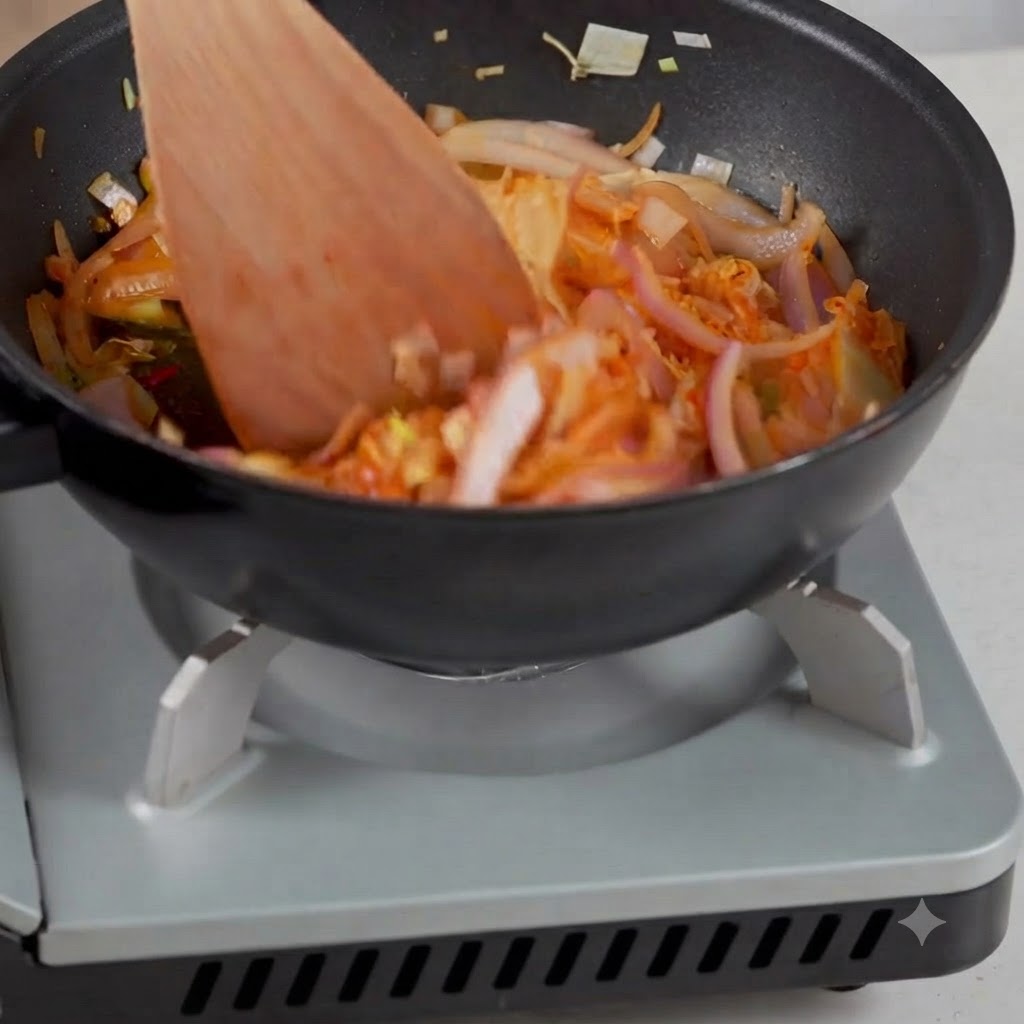
Pour an appropriate amount of clean water into the pan containing the stir-fried kimchi and onions to build the base for the soup.
Tip: Ensure the water level is enough to submerge the other ingredients you will add later. - 8Add white sugar
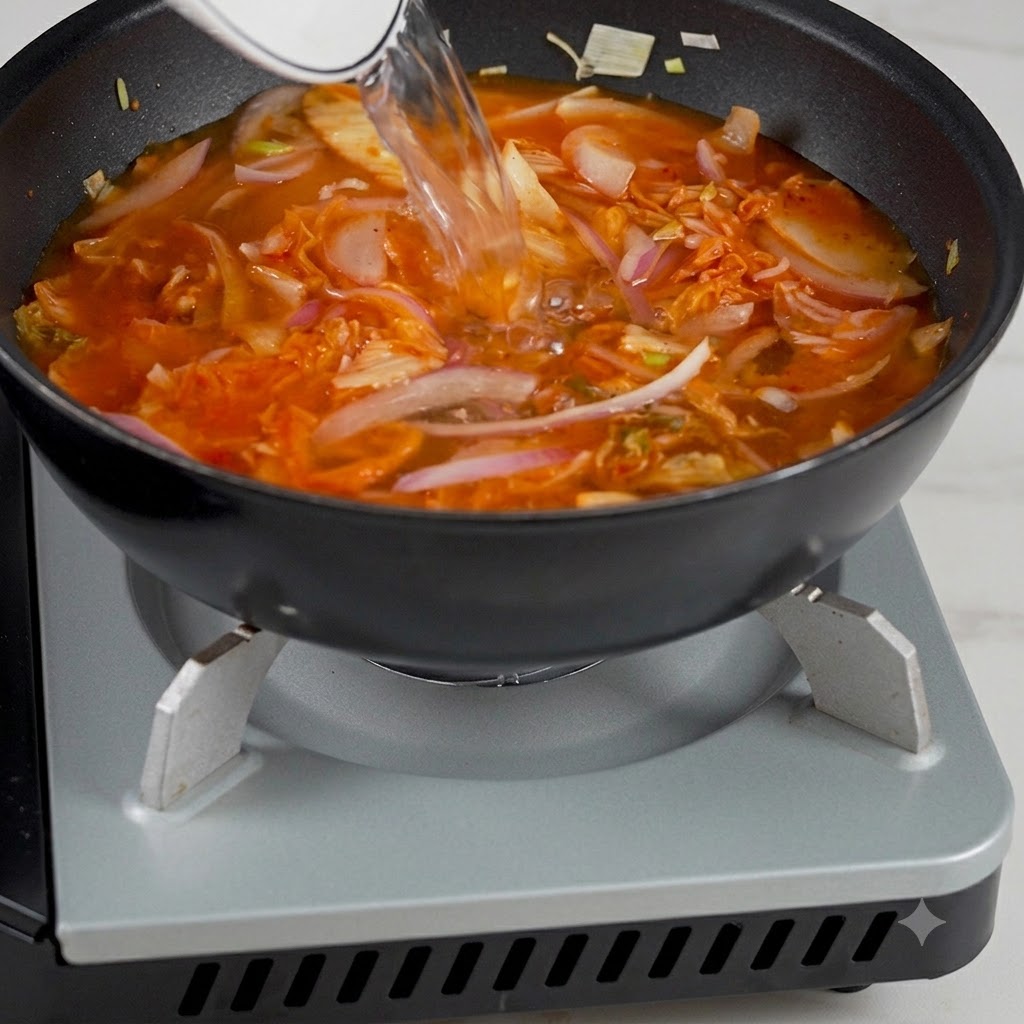
Add half a spoon of white sugar directly into the boiling soup mixture to balance the acidity and enhance the overall flavor profile of the broth.
Tip: Sugar helps cut the harsh sourness of aged kimchi, creating a more well-rounded and savory soup base. - 9Add light soy sauce
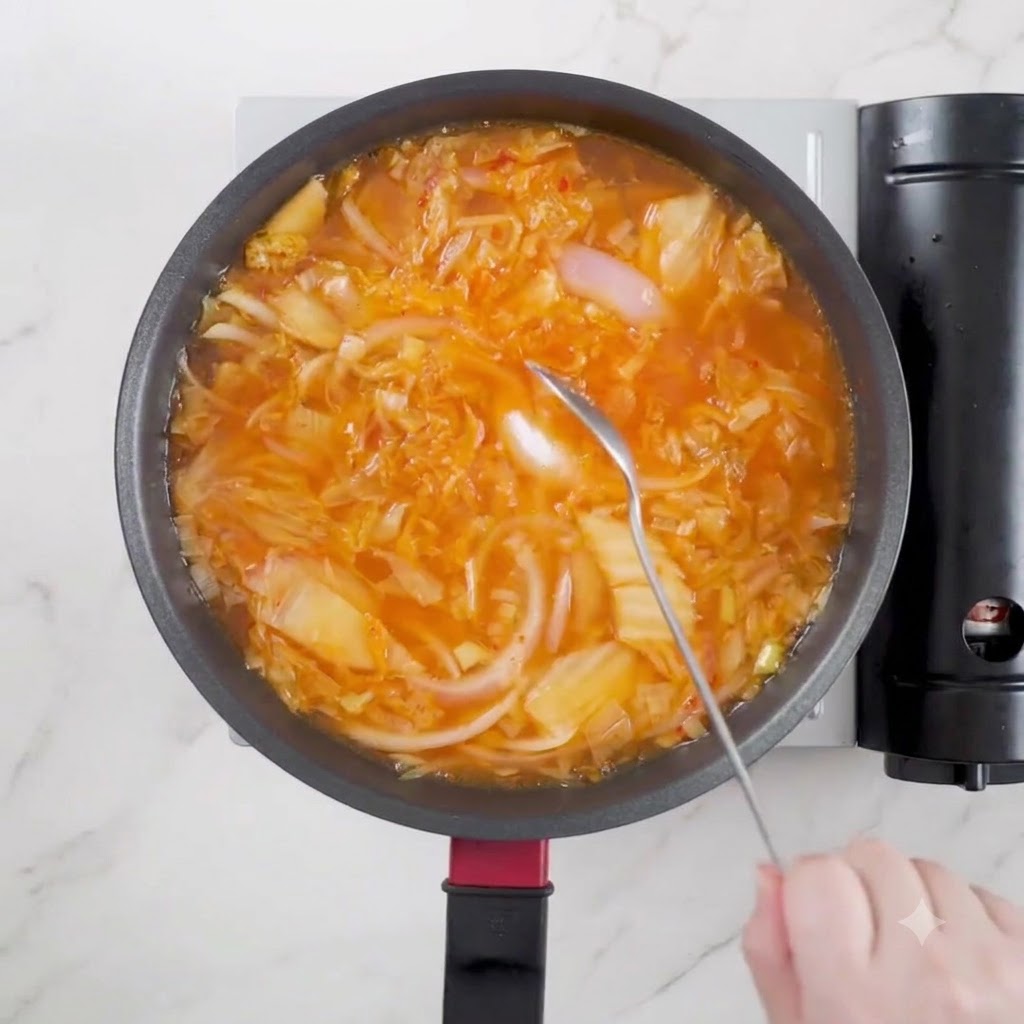
Pour one spoon of light soy sauce into the simmering soup to introduce depth and savory umami notes to the broth.
Tip: Light soy sauce adds a clean saltiness without darkening the soup excessively. - 10Add sesame oil
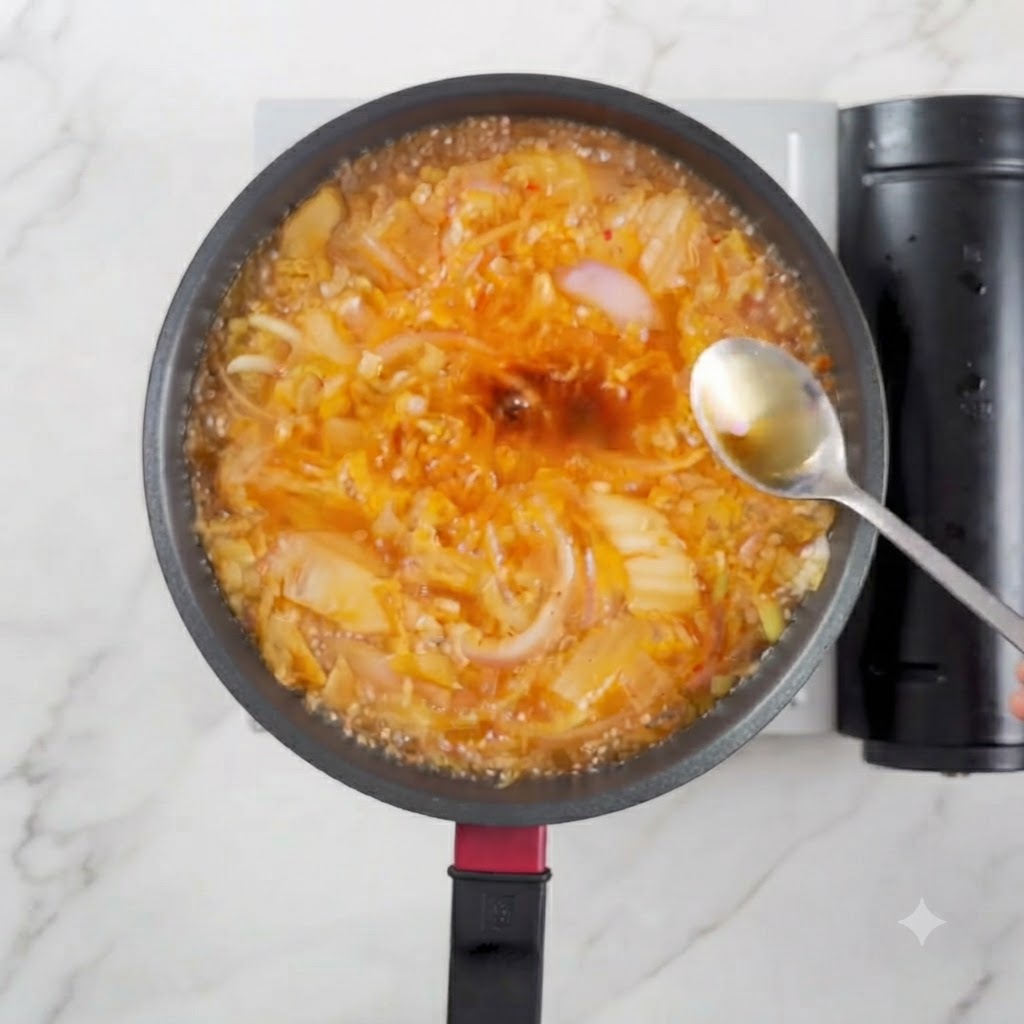
Add one spoon of sesame oil directly into the simmering pot to enhance the rich aroma and flavor of the soup broth.
Tip: Add sesame oil toward the middle of cooking to preserve its aromatic properties. - 11Add Korean hot paste
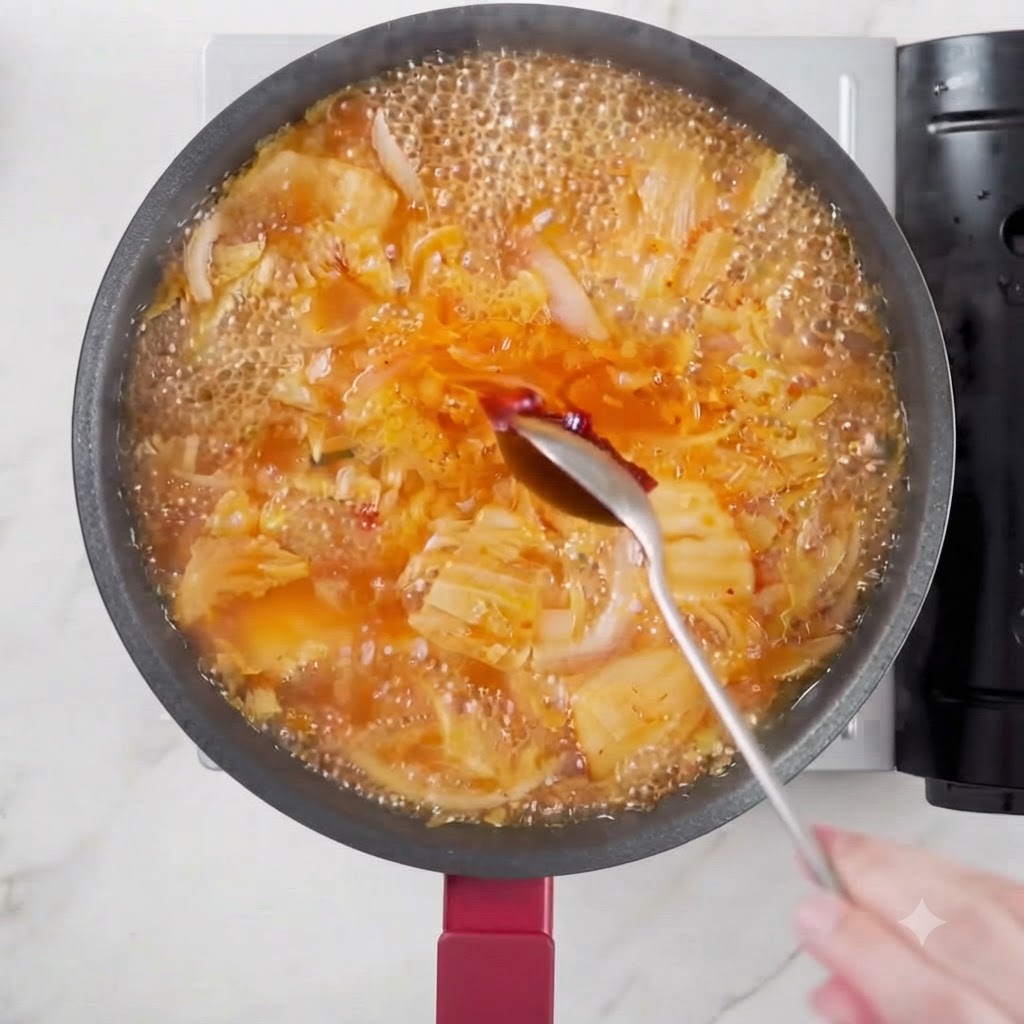
Spoon one portion of Korean hot paste (gochujang) into the simmering broth and mix it thoroughly to give the soup its signature spicy depth and color.
Tip: Dissolve the paste well into the liquid so it doesnt clump at the bottom of the pan. - 12Stir the soup ingredients
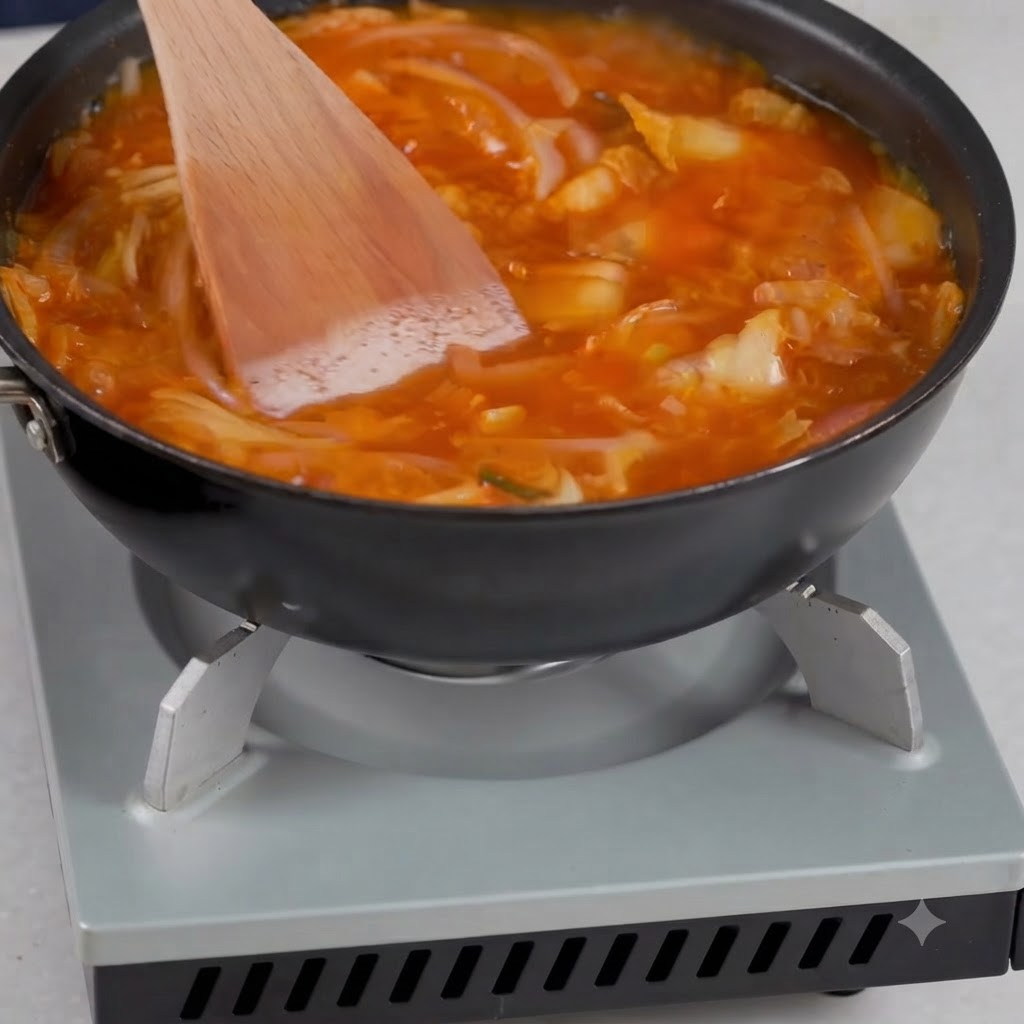
Use a wooden spatula to thoroughly stir the soup ingredients and added seasonings, ensuring everything is well combined and evenly distributed throughout the broth.
Tip: Stir gently to avoid breaking apart the softer ingredients while making sure the seasonings dissolve completely. - 13Add Boiled Rice Cakes to Soup
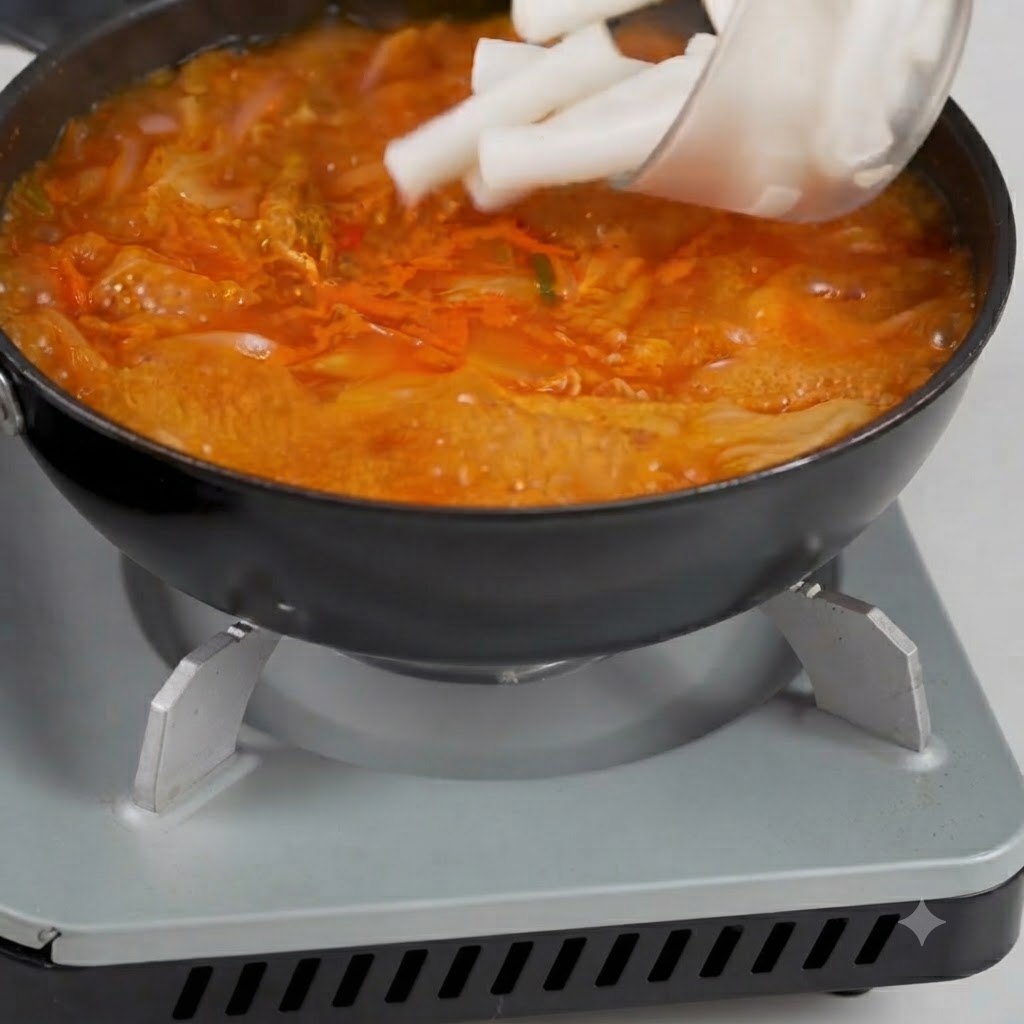
Take the pre-boiled rice cakes and carefully drop them into the bubbling kimchi soup. Allow them to cook in the flavorful broth so they absorb the savory and spicy flavors.
Tip: Boiling the rice cakes beforehand ensures they become wonderfully soft and chewy without breaking apart too quickly in the soup. - 14Add kimchi dumplings
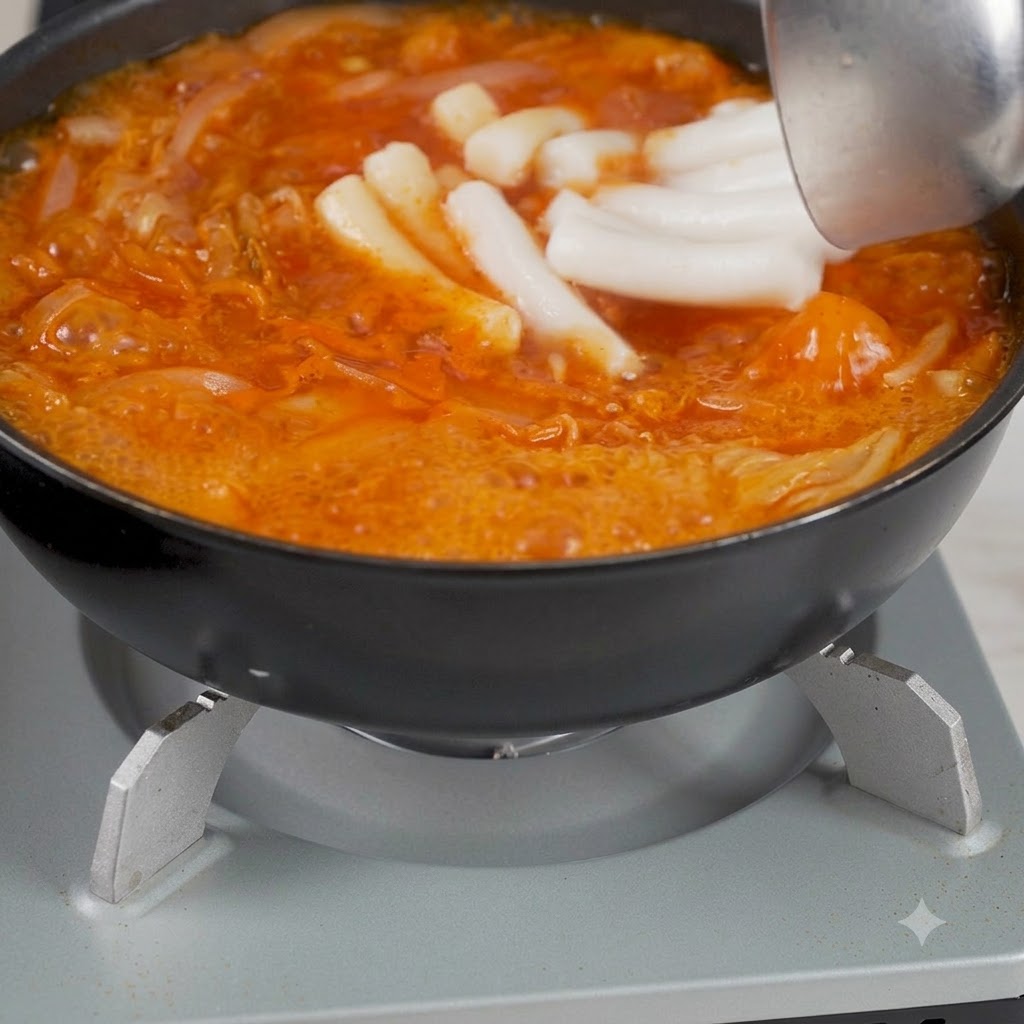
Carefully place Korean kimchi king dumplings one by one into the simmering soup using a ladle or spoon.
Tip: Add dumplings gently to avoid splashing hot broth or breaking their wrappers. - 15Arrange shiitake mushrooms
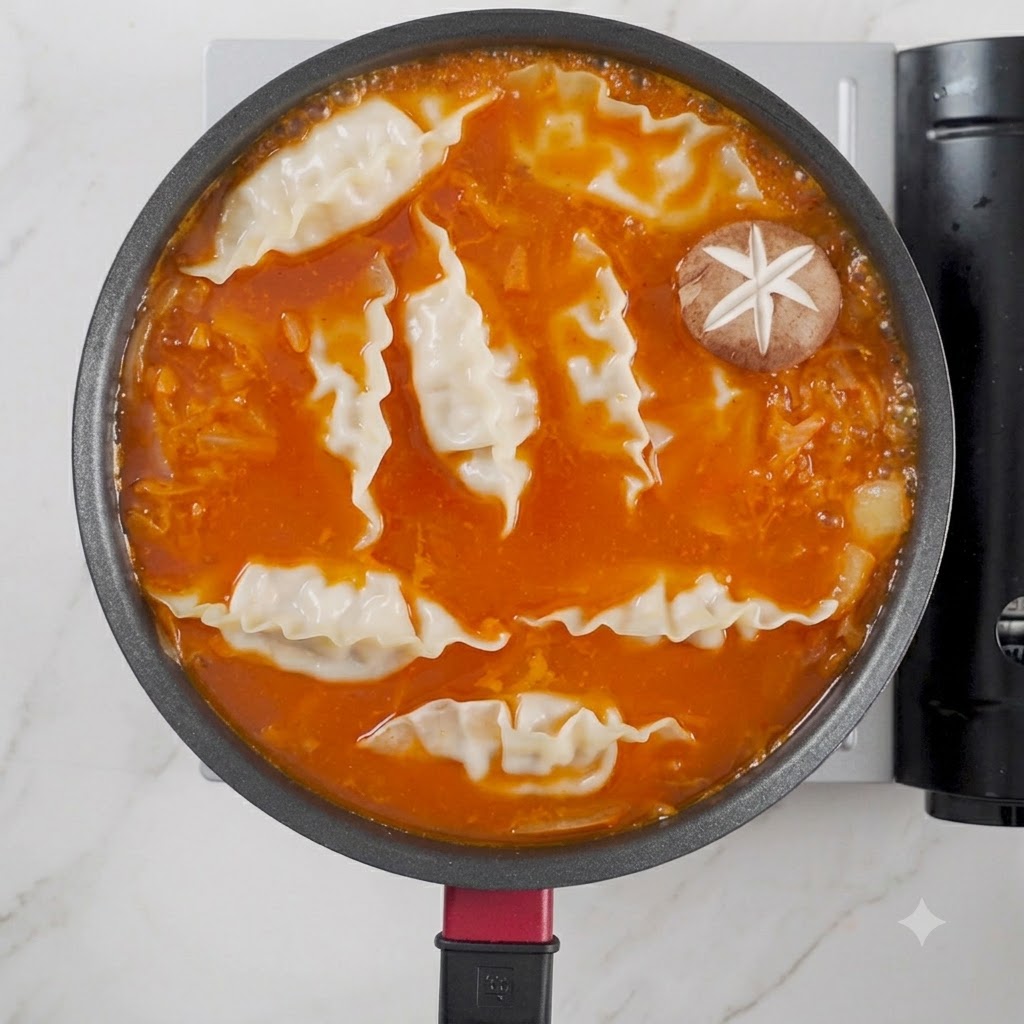
Place prepared shiitake mushrooms on top of the other cooking ingredients in the pot to simmer and absorb the rich soup flavors.
Tip: Score the top of the shiitake mushrooms for a more decorative presentation. - 16Add Luncheon Meat, Dumplings, and Mushrooms
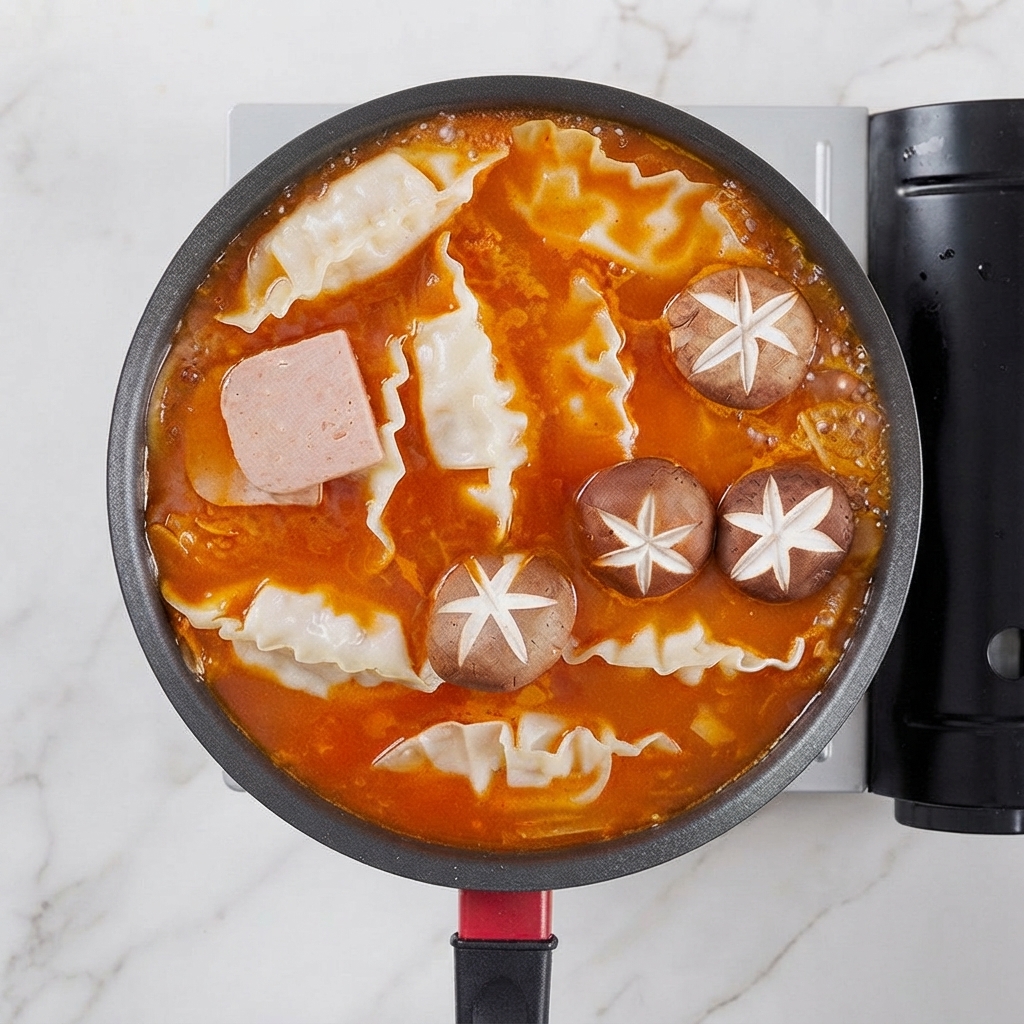
Arrange the dumplings, sliced luncheon meat, and shiitake mushrooms neatly on top of the bubbling kimchi and rice cake soup.
Tip: Place the ingredients carefully so they cook evenly in the flavorful broth. - 17Garnish with Sesame Seeds and Green Onions
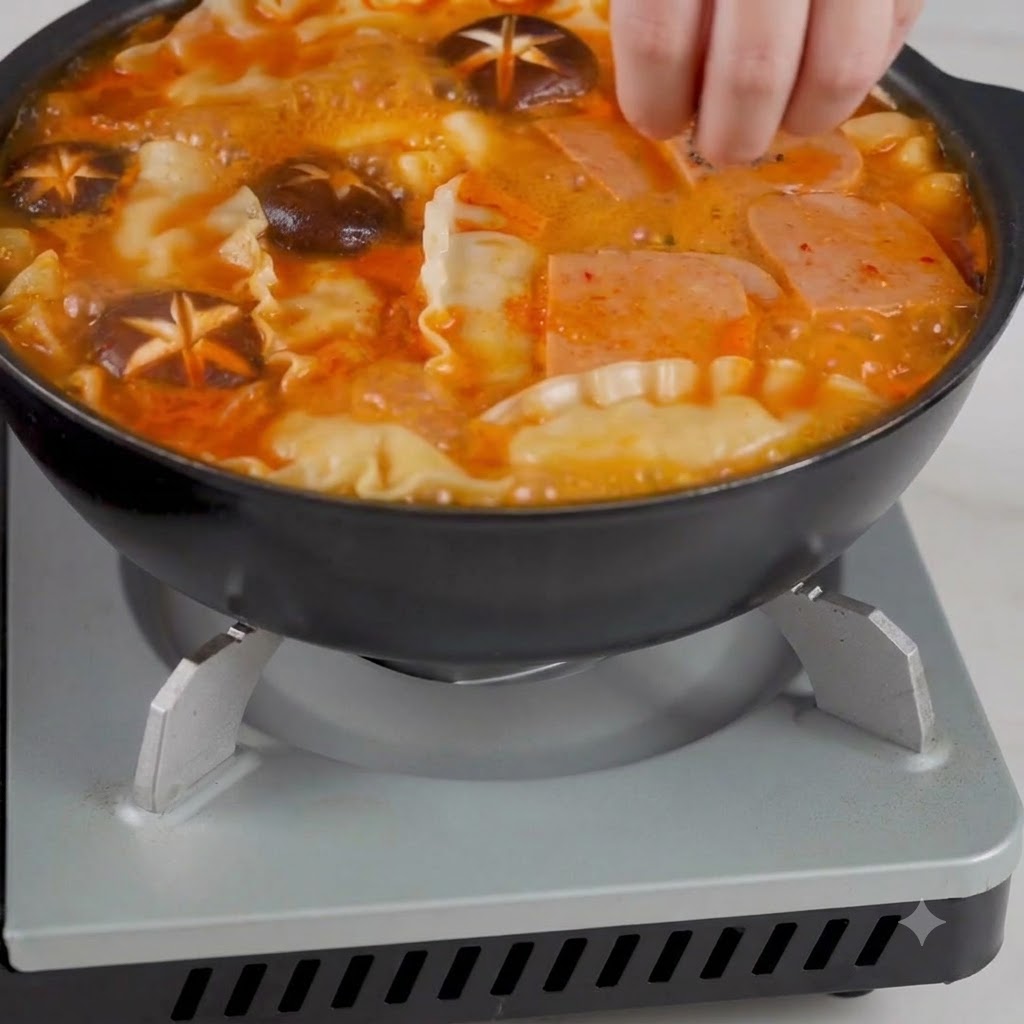
Sprinkle sesame seeds and freshly chopped green onions over the boiling soup to enhance the aroma and finish the dish.
Tip: Add the green onions right before serving to maintain their vibrant color and fresh taste.