Authentic Japanese Miso Ramen
Savory Broth
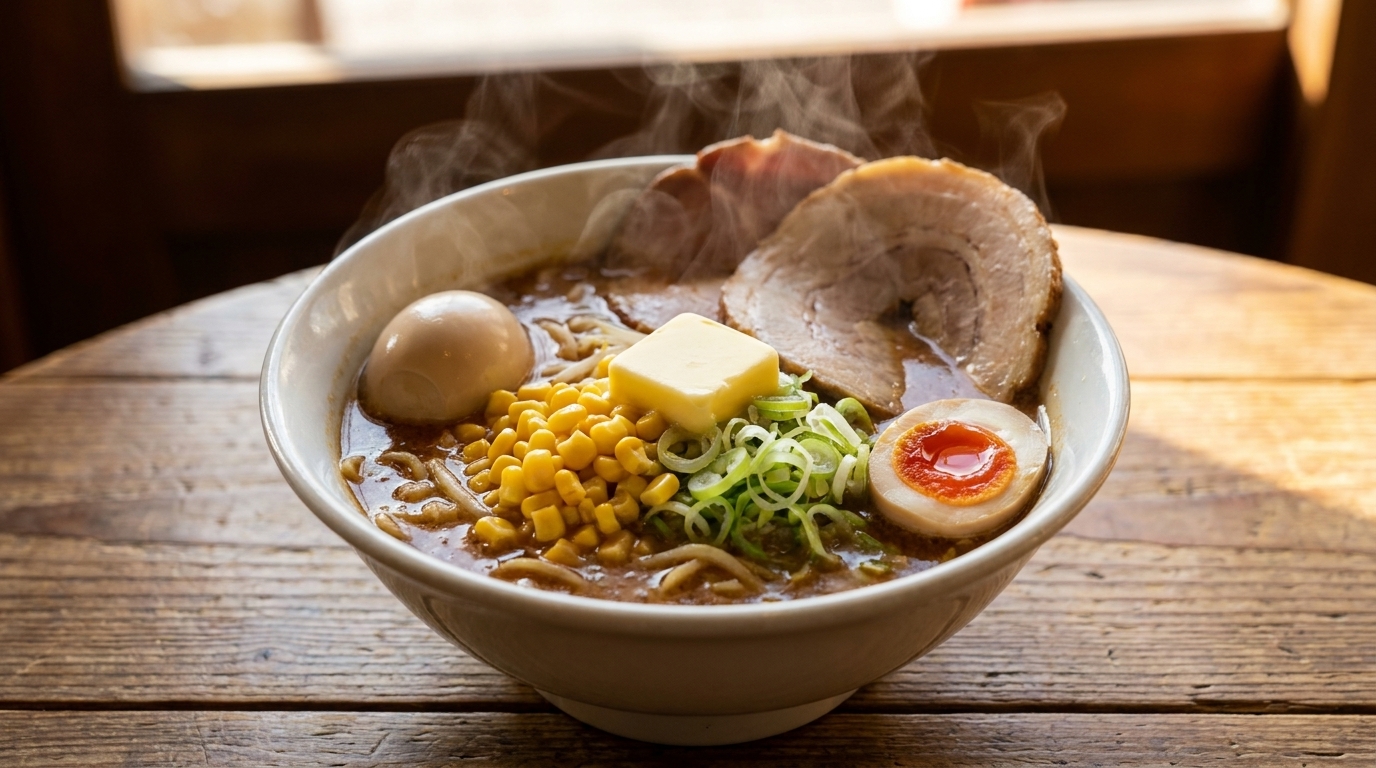
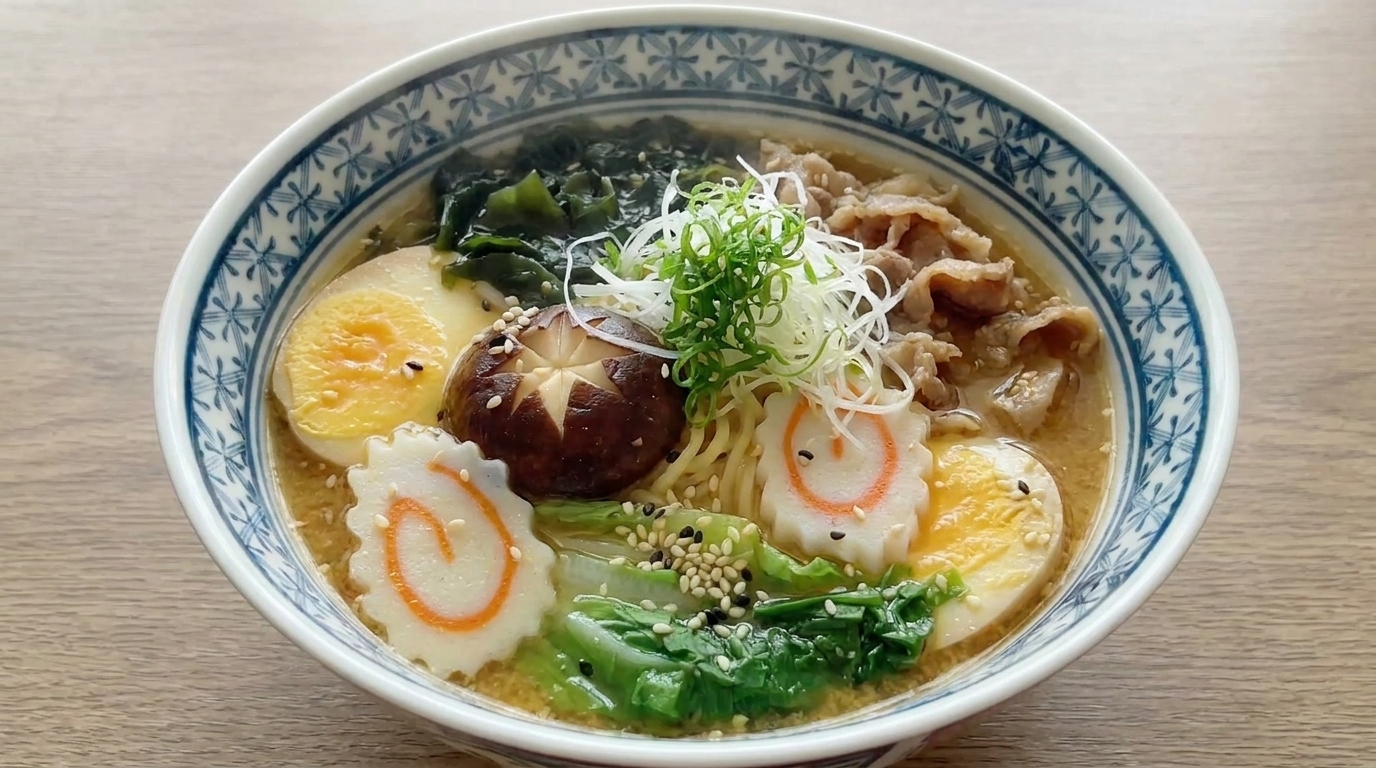
Master the art of this Hokkaido classic using a signature ratio for a rich and savory broth topped with tender beef and a perfect soft boiled egg.
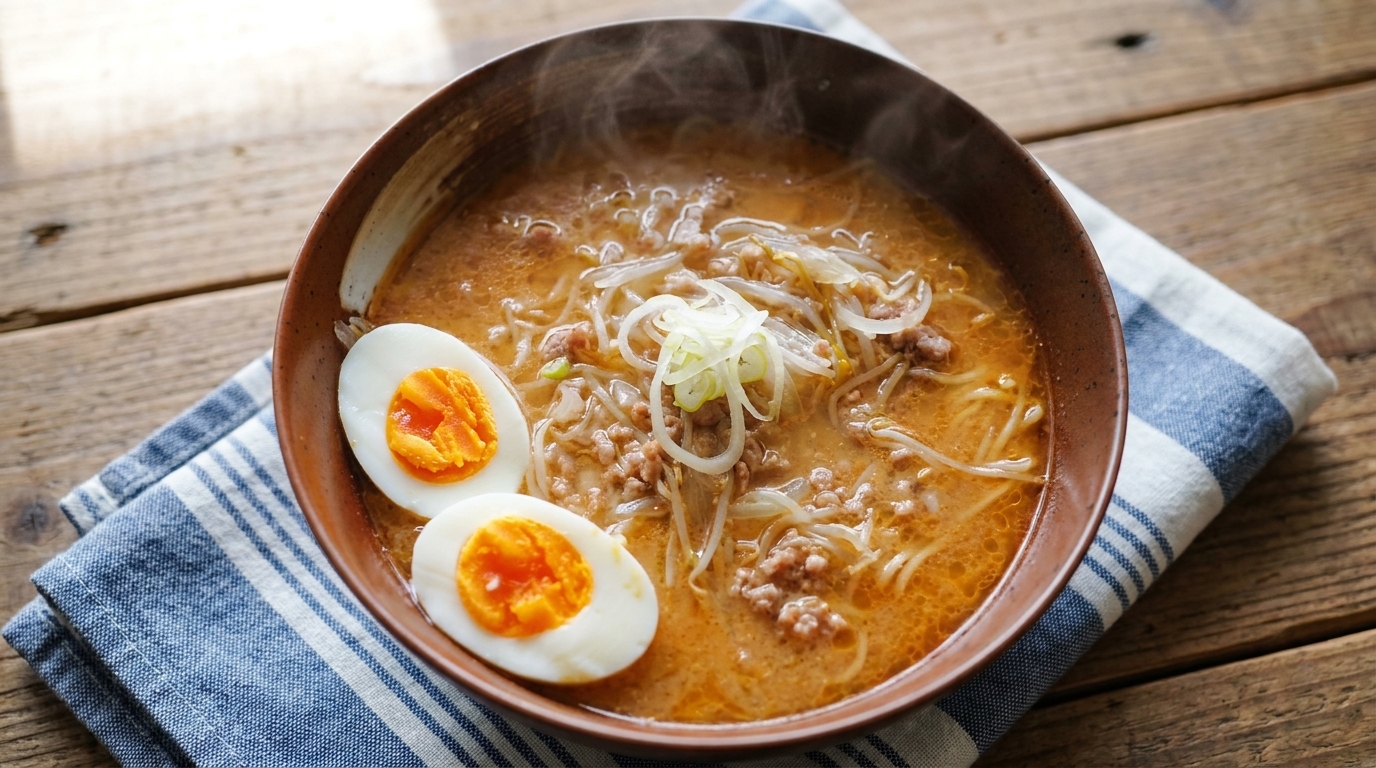
This Hokkaido classic is celebrated for a hearty and warming soul. Unlike lighter shoyu varieties, this version relies on a complex seasoning paste known as miso tare that creates a deep and creamy opaque broth. This recipe provides a precise balance of fermented soybean paste and aromatics to deliver a restaurant quality bowl in your own kitchen.
Ingredients
- 80 g brown miso paste
- 10 g ginger paste
- 10 g garlic paste
- 10 g salad oil
- 3 g chicken bouillon
- 3 g MSG
- 5 g mirin
- 400 ml water
- 1 bundle ramen noodles
- to taste wakame seaweed
- 12 soft-boiled egg
- to taste cooked beef slices
- 1 piece shiitake mushroom
- 2 slices narutomaki fish cake
- to taste cooked green vegetables
- to taste shredded scallions
- to taste bean sprouts
- to taste toasted sesame seeds
Instructions
- 1Add miso paste to the bowl
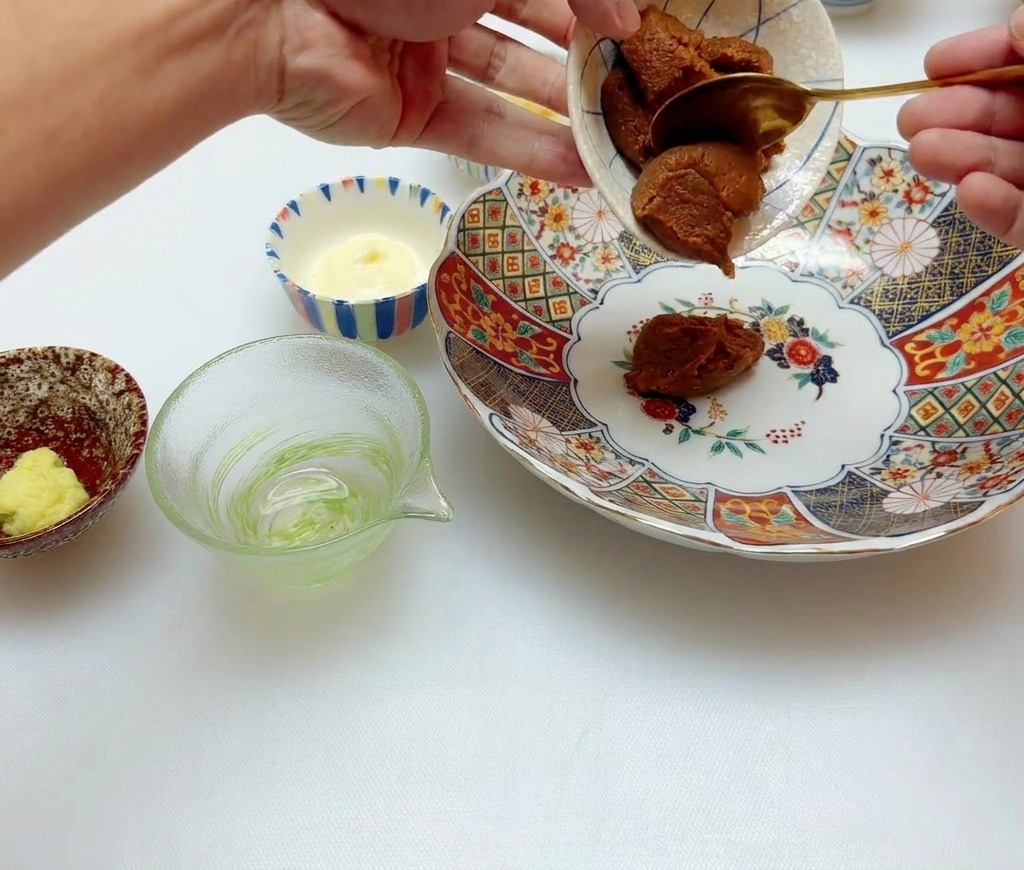
Start your sauce by placing 80 grams of brown miso paste into a large decorative ceramic mixing bowl. This paste serves as the savory fermented foundation for the seasoning base.
Tip: Brown miso provides a more intense and robust flavor than white miso making it the ideal choice for a traditional broth. - 2Incorporate aromatics
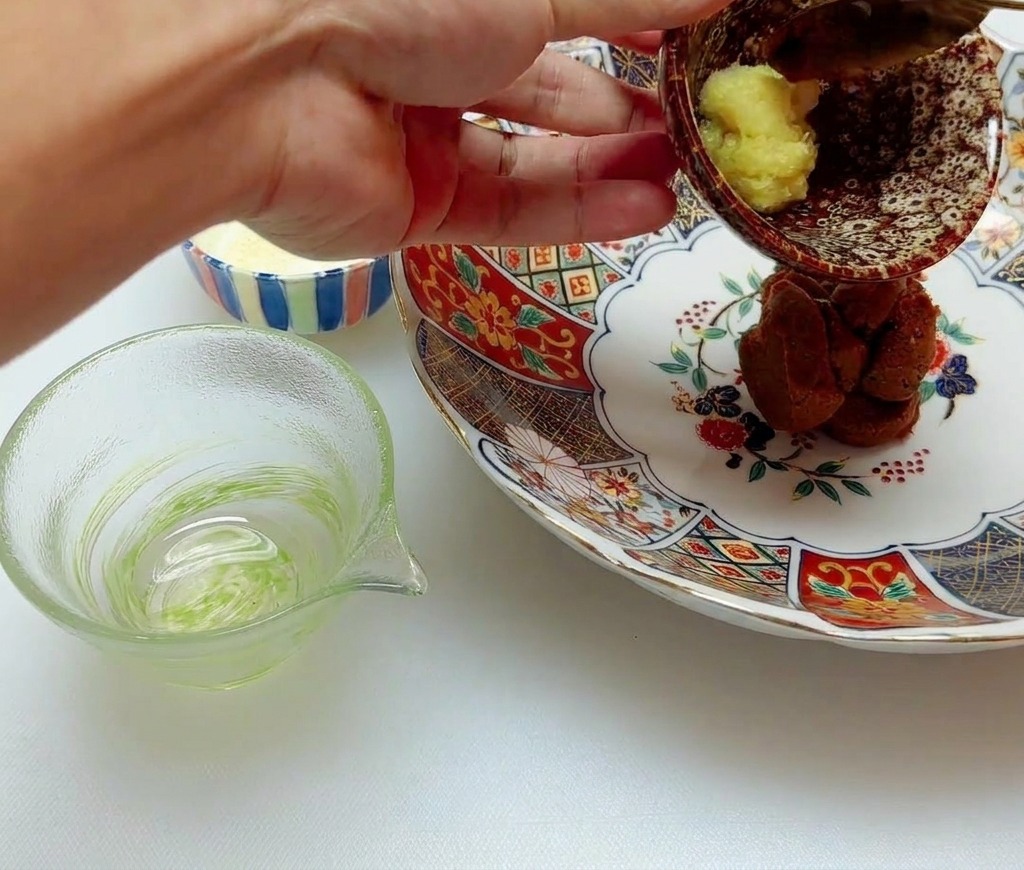
Add 10 grams of finely minced ginger paste and 10 grams of garlic paste to the miso. These aromatics are essential for adding a punchy heat and depth of flavor that balances the richness of the miso.
Tip: Using a paste instead of chopped pieces ensures the aromatics meld perfectly into the liquid soup base later on. - 3Pour in salad oil
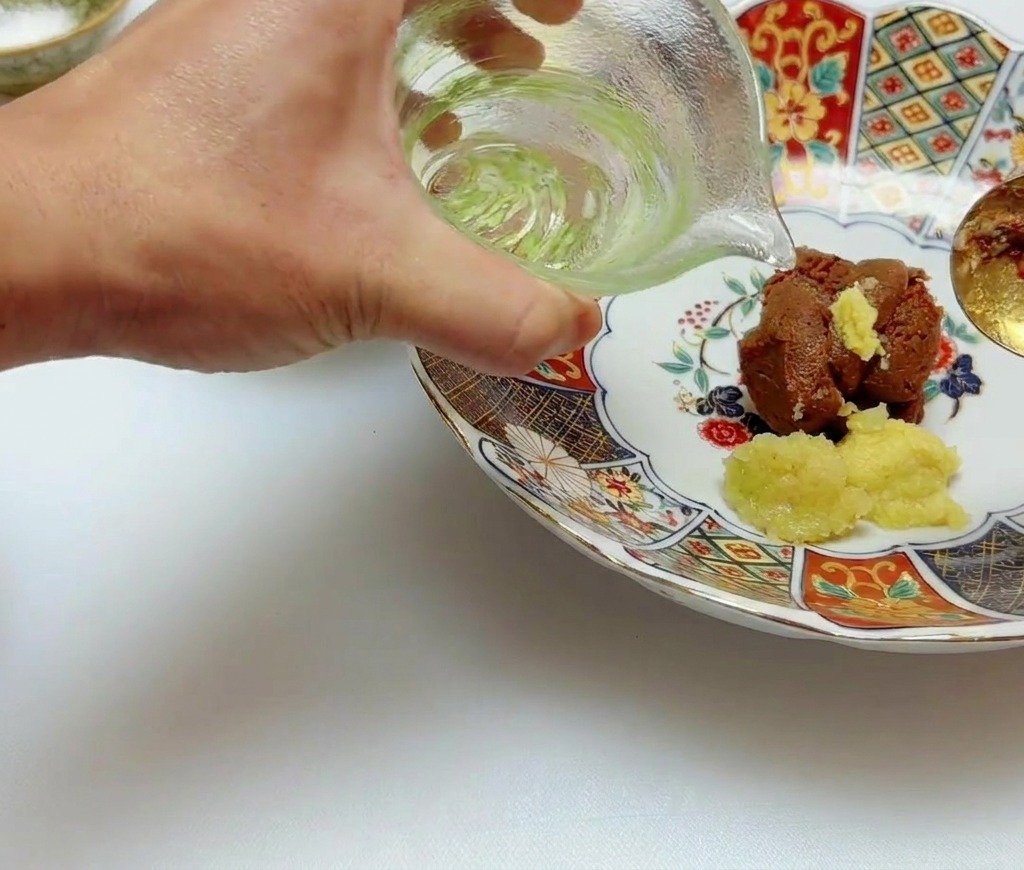
Slowly pour 10 grams of clear salad oil over the mixture. The oil helps emulsify the sauce ingredients and adds a smooth, glossy finish to the final ramen soup.
Tip: Choose a neutral oil such as vegetable or canola oil so that the flavor of the miso remains the primary focus. - 4Mix the seasoning sauce
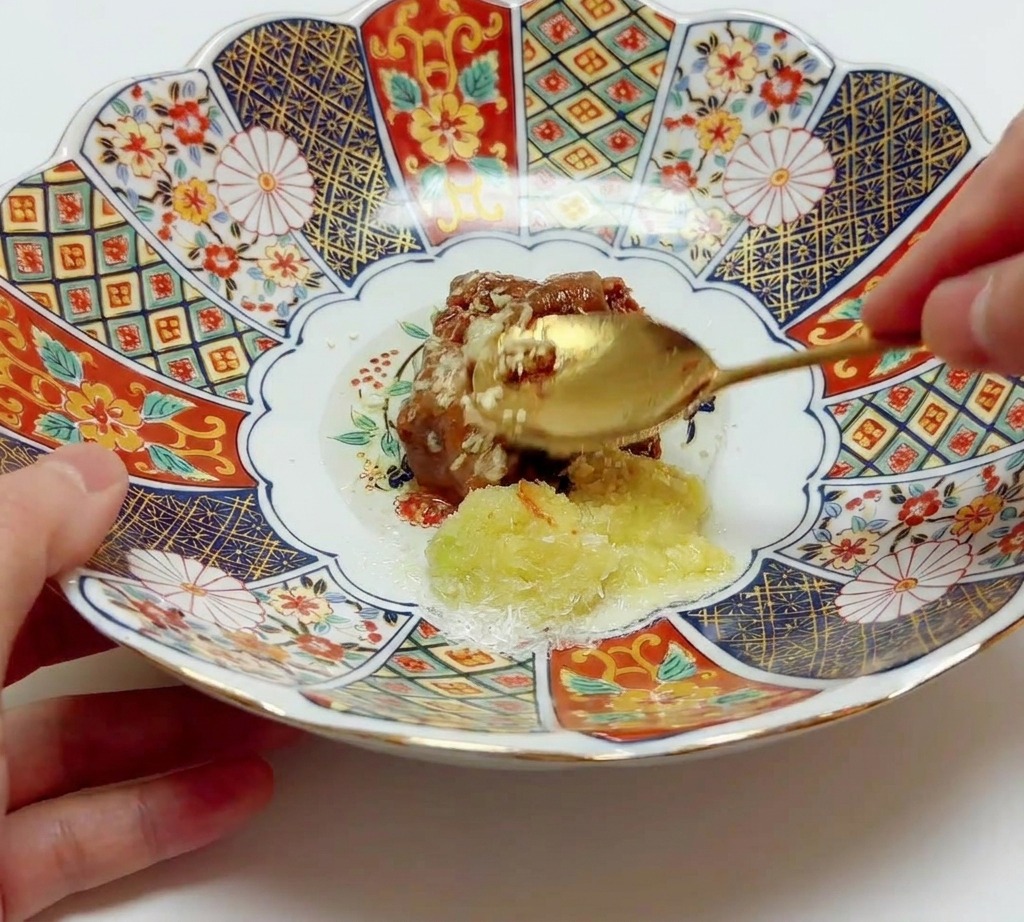
Combine the miso, oil, and aromatics—along with the chicken bouillon, MSG, and mirin—using a spoon. Stir vigorously until all ingredients are fully integrated into a smooth, uniform seasoning sauce.
Tip: Ensure the mixture is completely homogeneous to guarantee a consistent flavor profile in every spoonful of soup. - 5Combine sauce with water
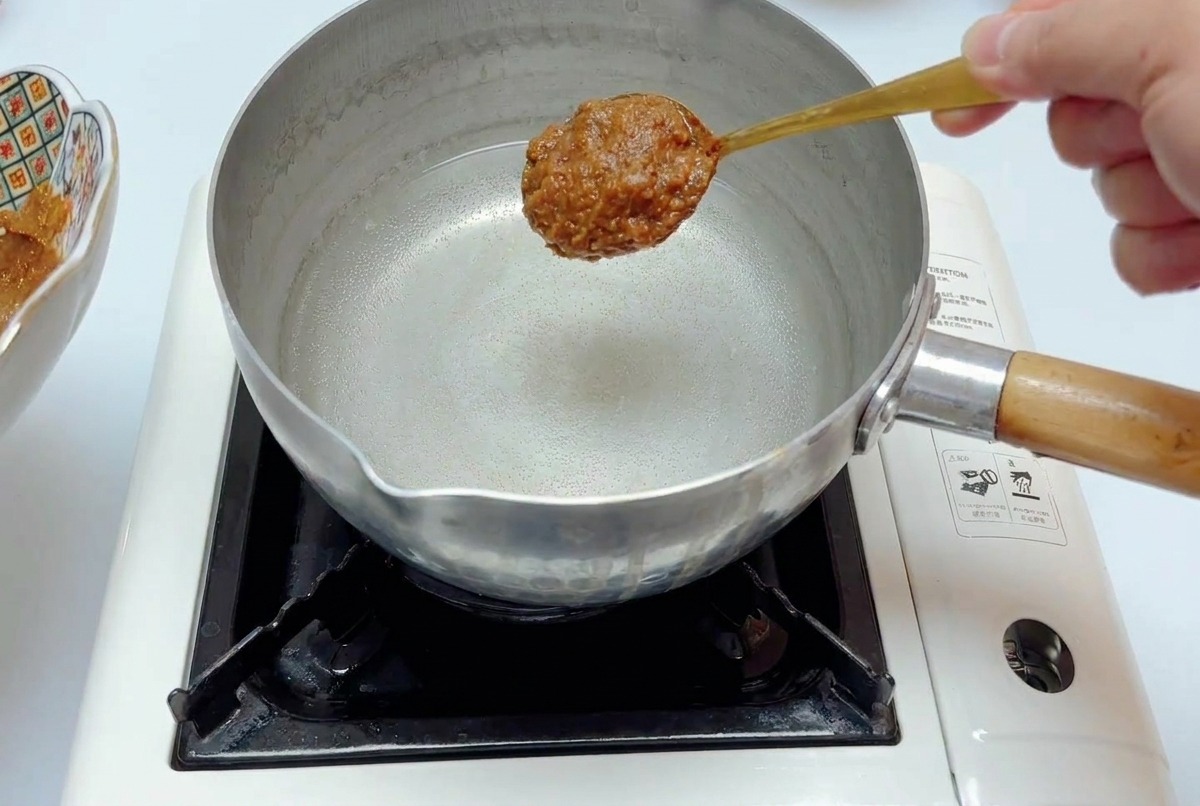
Fill a pot with 400ml of water and place it on a burner. Add approximately 40 grams of your freshly prepared miso seasoning sauce into the water to begin creating the soup base.
Tip: Starting with cold or room temperature water allows the miso sauce to dissolve more evenly as the water heats up. - 6Whisk until smooth
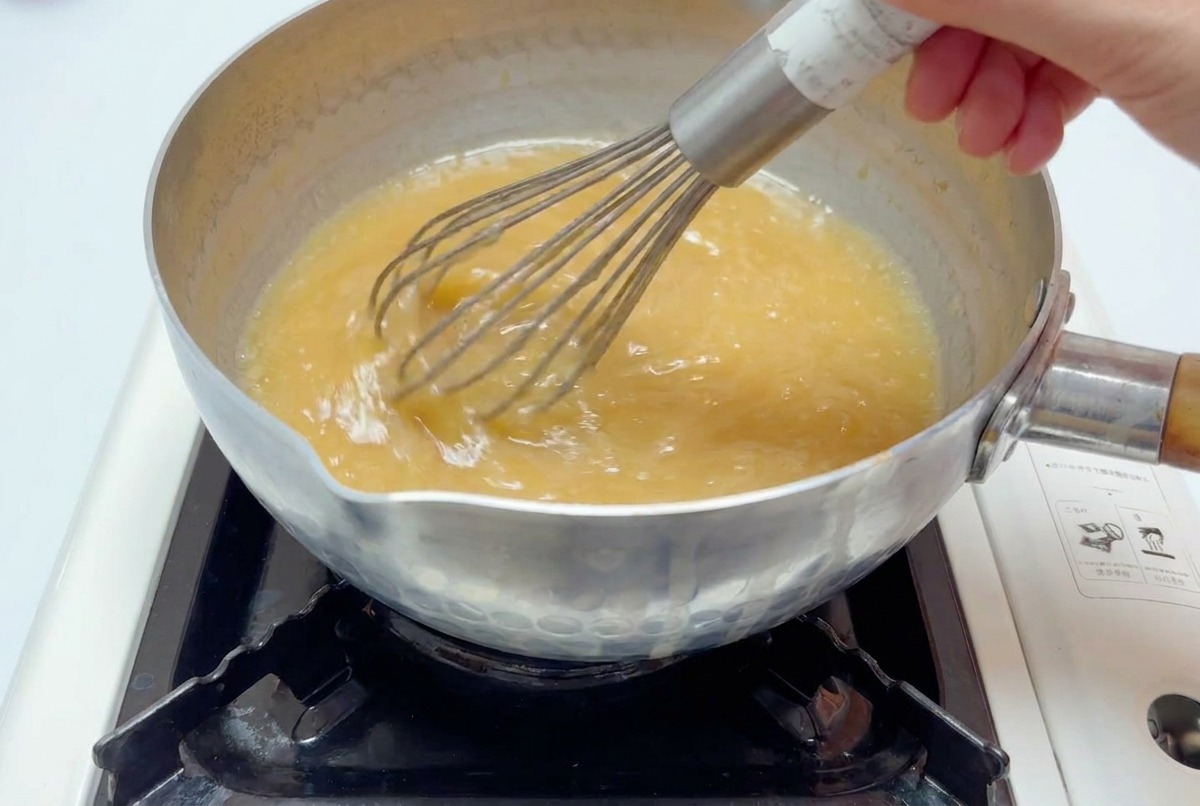
As the water heats up, use a wire whisk to stir the miso sauce. Continue whisking until the sauce is completely dissolved and the liquid becomes a smooth, opaque miso soup base.
Tip: Whisking effectively prevents any clumps of miso from settling at the bottom, ensuring a silky texture. - 7Boil the ramen noodles
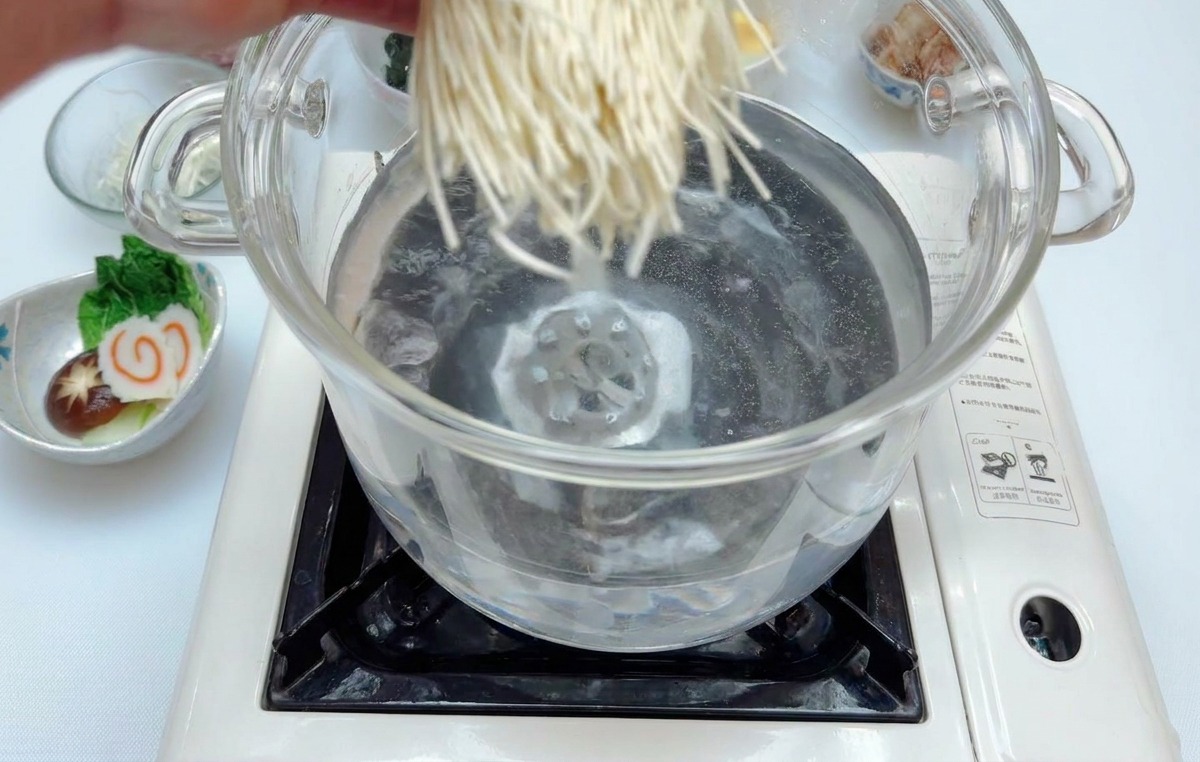
Bring a pot of clear water to a rolling boil over medium-high heat. Carefully add a bundle of raw ramen noodles to the pot. Allow the noodles to cook for about four minutes, or until they reach your preferred level of tenderness.
Tip: Stir the noodles gently immediately after adding them to the boiling water to prevent them from sticking together or to the bottom of the pot. - 8Transfer the cooked noodles
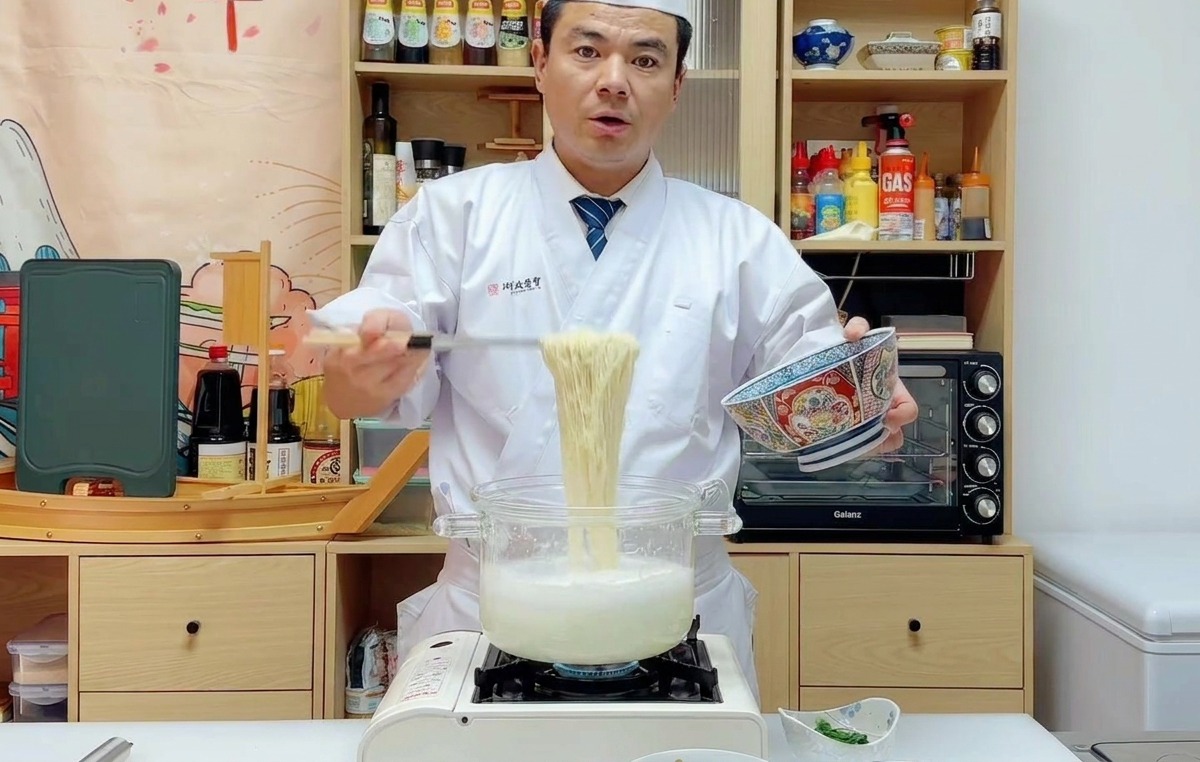
Once the ramen noodles have finished boiling for about four minutes, use a strainer or chopsticks to lift them from the pot. Drain the excess water thoroughly to prevent the soup base from being diluted, then carefully place the noodles into the center of your serving bowl.
Tip: Vigorously shaking the noodles in the strainer removes extra starch and water, which helps the miso broth adhere better to each strand. - 9Add the miso soup base
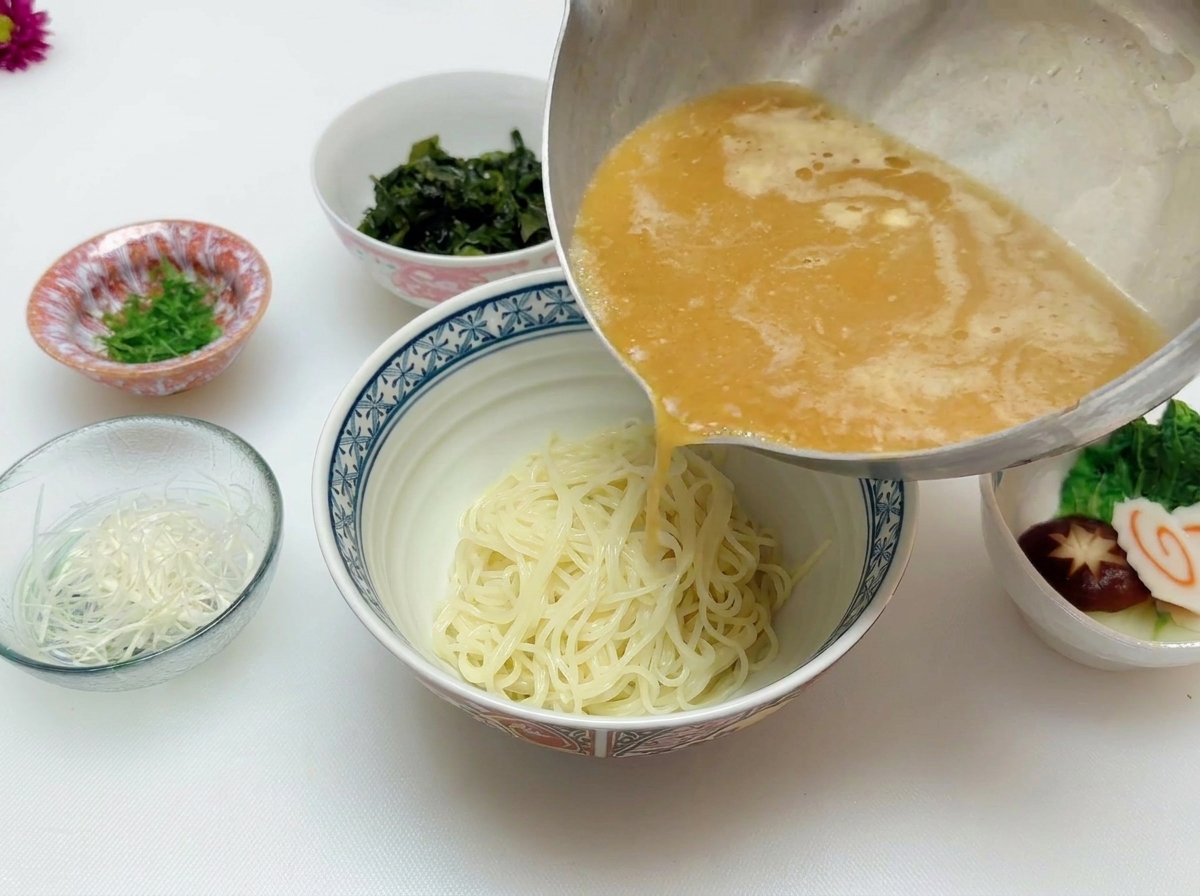
Bring the prepared miso soup base to a rolling boil one last time to ensure it is piping hot. Carefully pour the savory broth from the pot directly into the bowl over the noodles, ensuring they are well-submerged.
Tip: Pouring the hot soup directly over the noodles helps to loosen any strands that may have started sticking together while sitting in the bowl. - 10Center the noodles
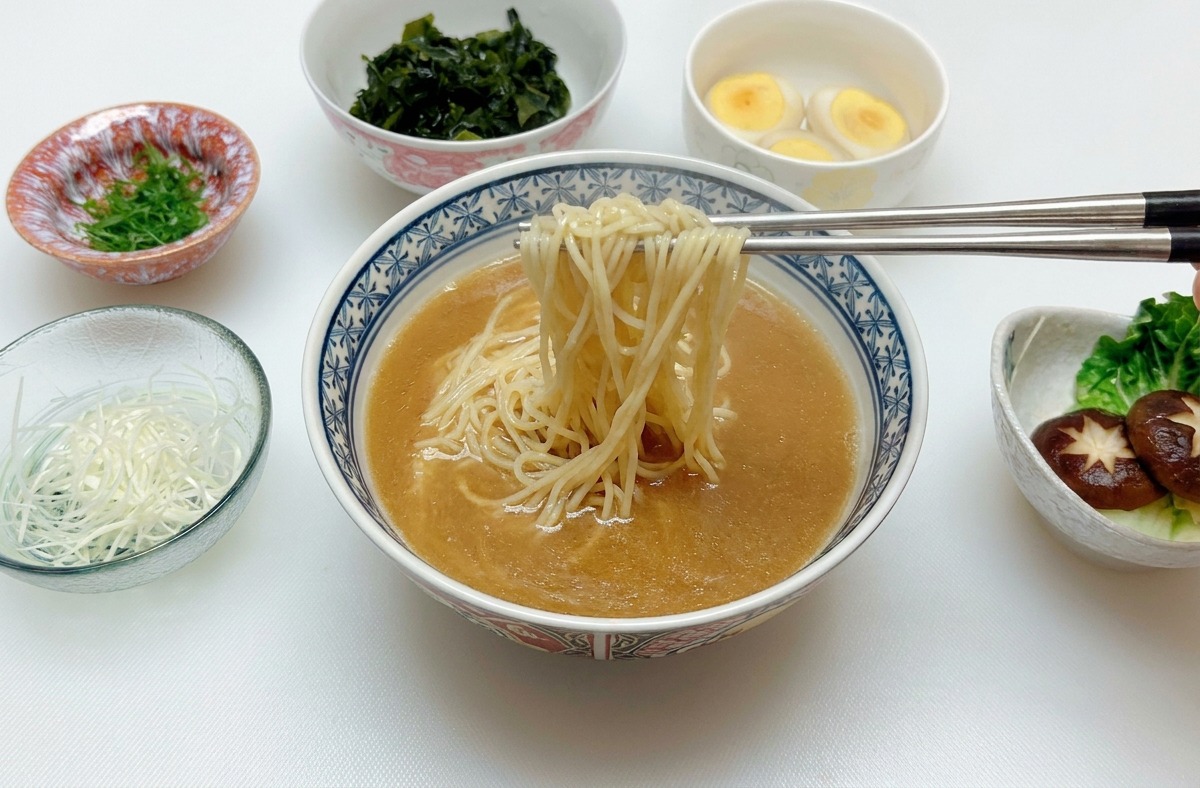
Use a pair of chopsticks to gently lift and adjust the ramen noodles in the bowl. Center the noodles to create an even, organized base for the toppings, ensuring the dish looks professional and the ingredients are well-distributed.
Tip: Lifting the noodles slightly before adding garnishes prevents the toppings from sinking and getting lost in the broth. - 11Add egg and beef slices
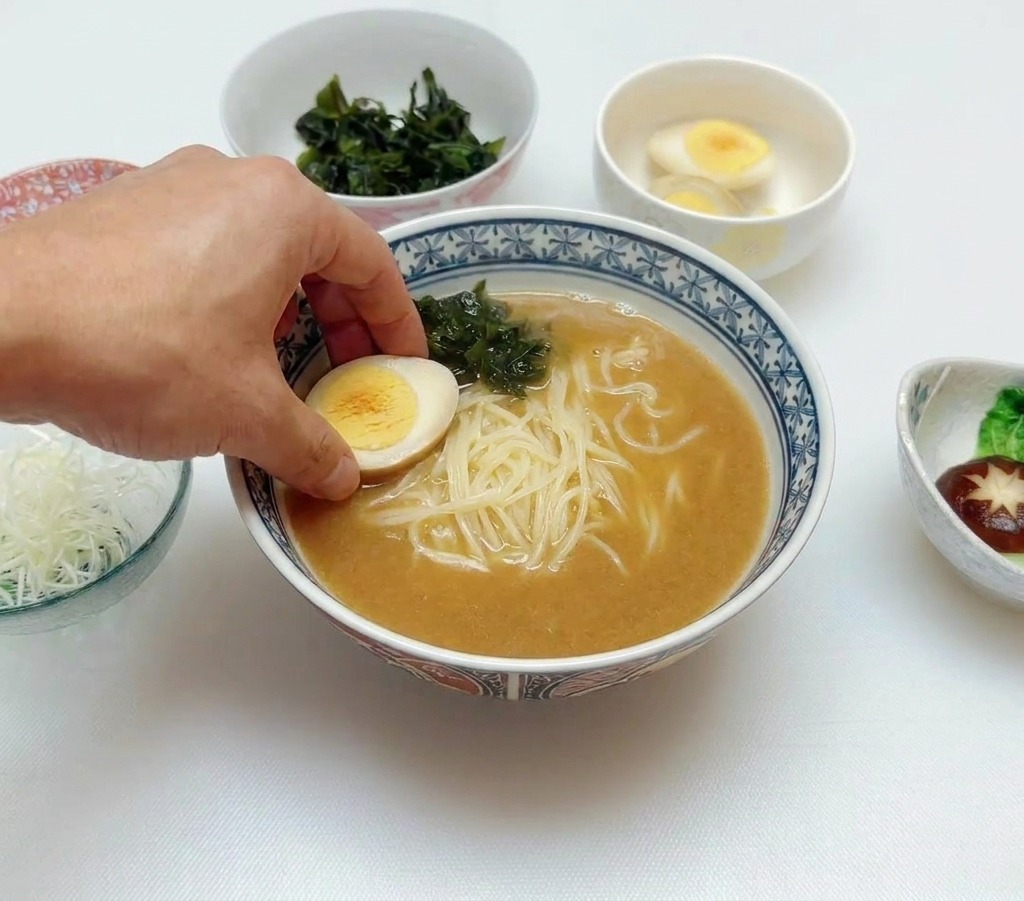
Begin garnishing the ramen by placing a half soft-boiled egg, slices of cooked beef, and a portion of wakame seaweed onto the noodles. Arrange them neatly to ensure the colors pop against the rich broth.
Tip: For the best flavor and texture, use a soft-boiled egg with a jammy yolk and thinly sliced beef. - 12Garnish with mushroom and fish cake
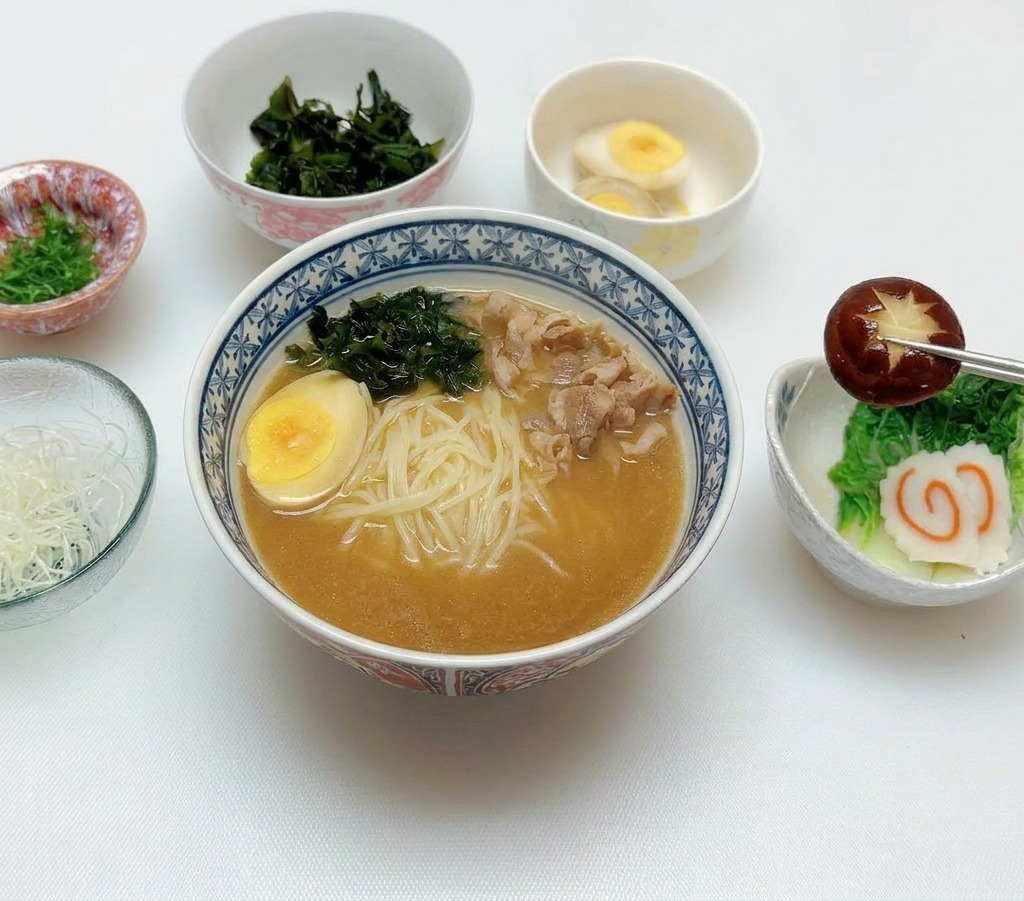
Add a decorative scored shiitake mushroom and two slices of narutomaki fish cake to the bowl. These ingredients add visual contrast and variety to the flavor profile of the miso ramen.
Tip: Scoring the mushroom not only adds a professional touch but also allows it to absorb more of the flavorful miso soup. - 13Garnish with fresh vegetables
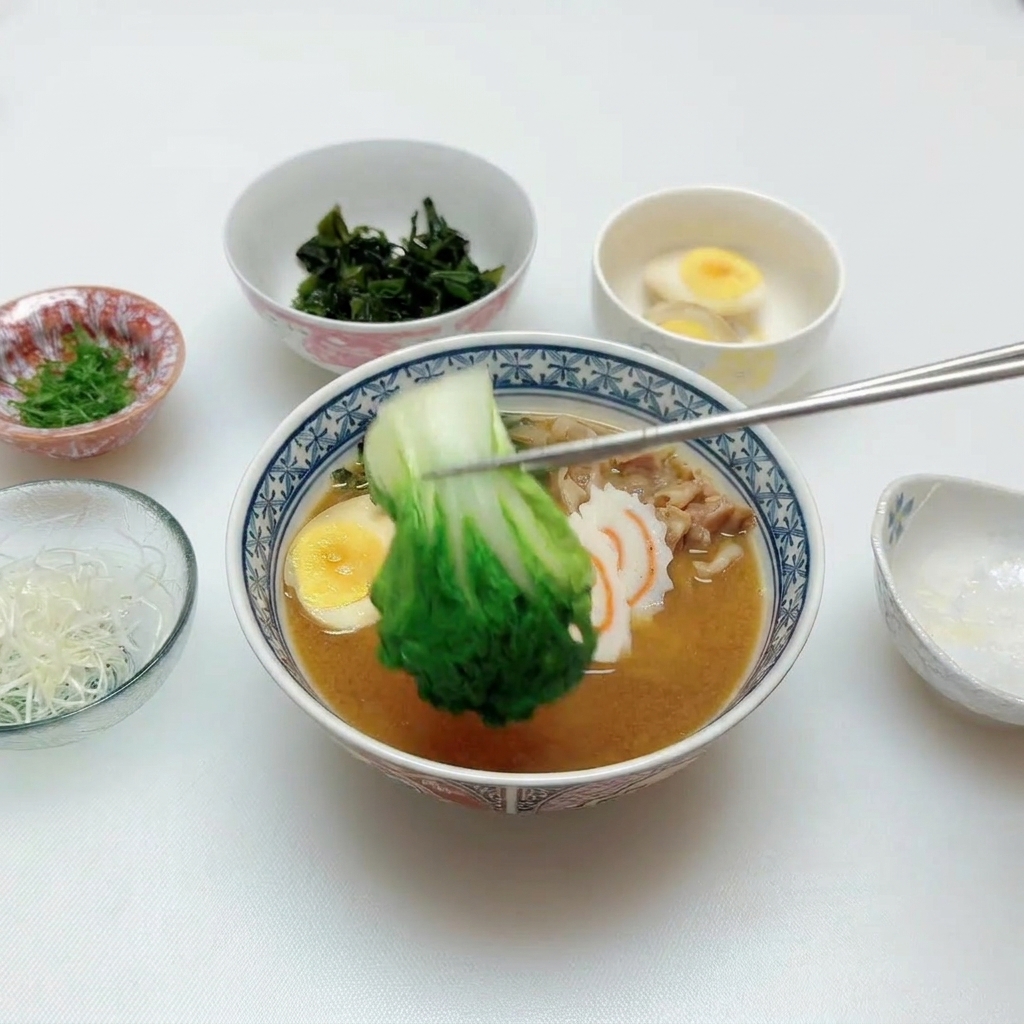
Arrange the blanched green vegetables, shredded scallions, and fresh sprouts on top. Finish the dish with a final sprinkle of toasted sesame seeds to add a nutty aroma and a professional aesthetic.
Tip: Grouping your toppings in distinct sections around the perimeter of the bowl makes for a professional and organized presentation.