Neapolitan Marinara Pizza
Anchovies (Sailor's Pizza)
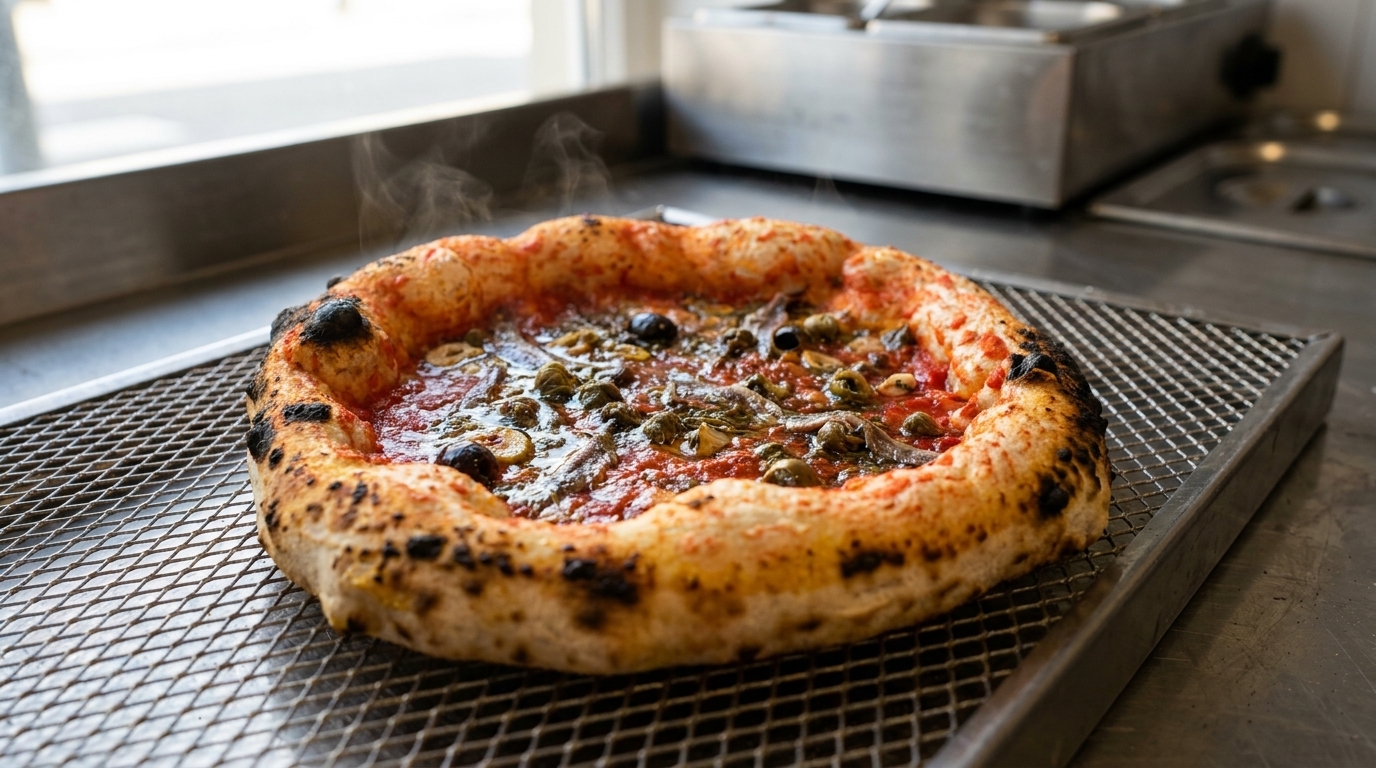
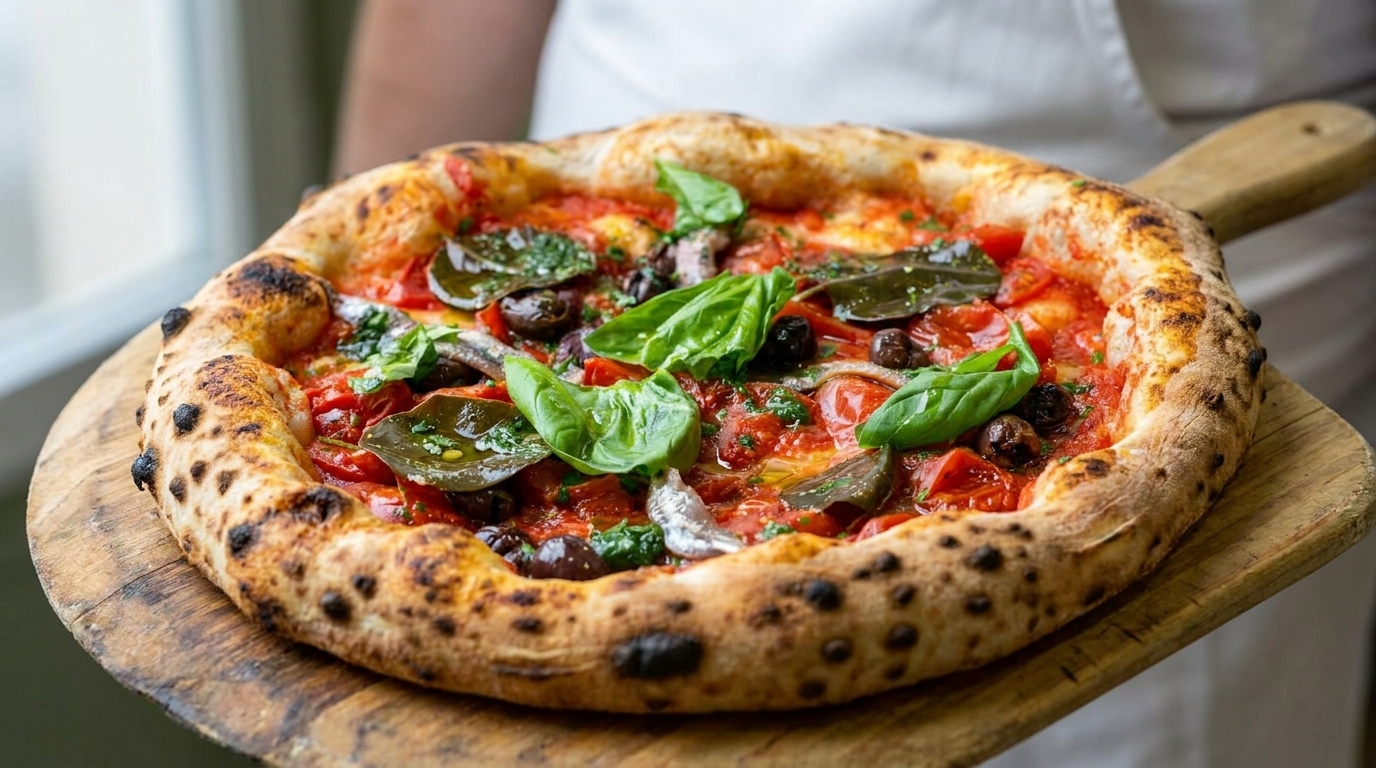
A sophisticated dairy free Marinara pizza from Naples topped with black olives premium Sicilian anchovies and unique pickled bay leaves. Rapidly baked for a perfect blistered leopard spotted crust.
Pizza Marinara also known as sailors pizza is a cornerstone of Neapolitan cuisine historically popular due to simple dairy free ingredients that sailors could preserve on long sea voyages. While traditional this version demonstrates how premium ingredients like Sicilian anchovies and pickled bay leaves can create a perfect sophisticated Mediterranean flavor profile from simple components.
Ingredients
- 1 portion pizza dough (24-hour fermented)
- 4–5 tbsp tomato sauce (smooth base)
- 1 cup crushed tomato pulp
- 20 whole black olives
- 4 pickled bay leaves
- 4–6 fillets Sicilian anchovies (in oil)
- 2 cloves garlic
- 2 tbsp fresh parsley
- to taste fresh basil
- 2 tbsp extra virgin olive oil
Instructions
- 1Spread the tomato sauce
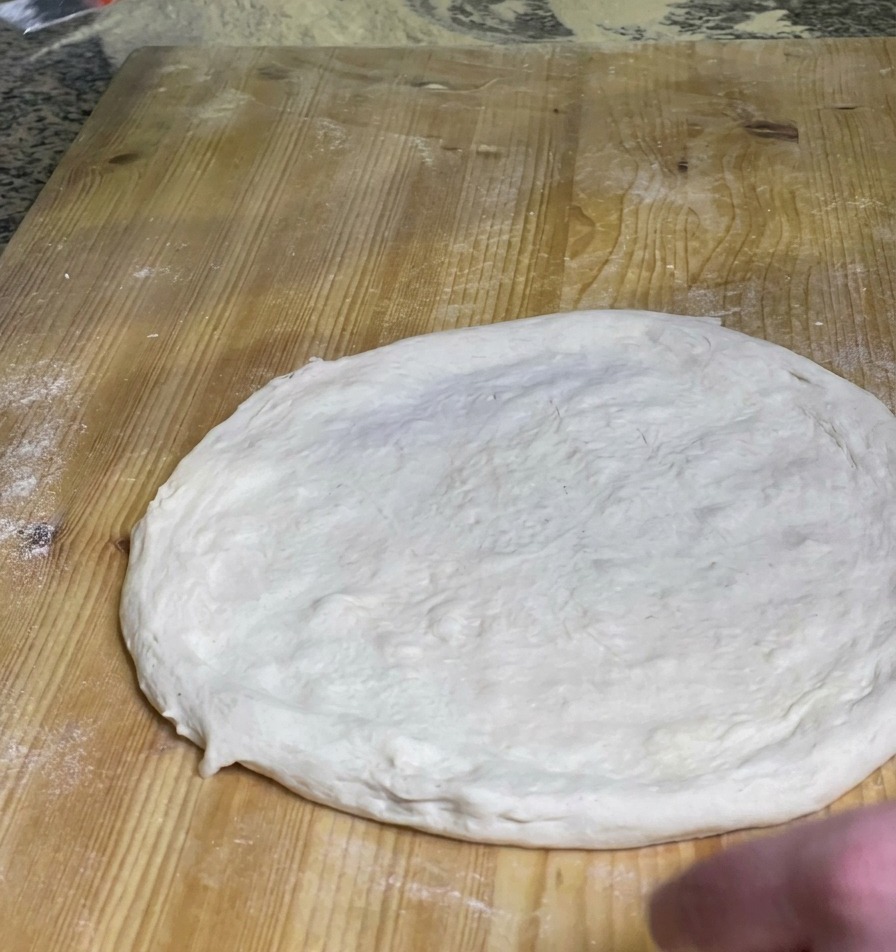
Begin by placing a generous spoonful of tomato sauce in the center of your stretched pizza dough. Using the back of the spoon spread the sauce in a circular motion moving outward while leaving about an inch of space for the crust to rise and puff up.
Tip: Do not over sauce the base; a thin even layer ensures the dough cooks through and stays crispy instead of becoming soggy. - 2Add crushed tomato pulp
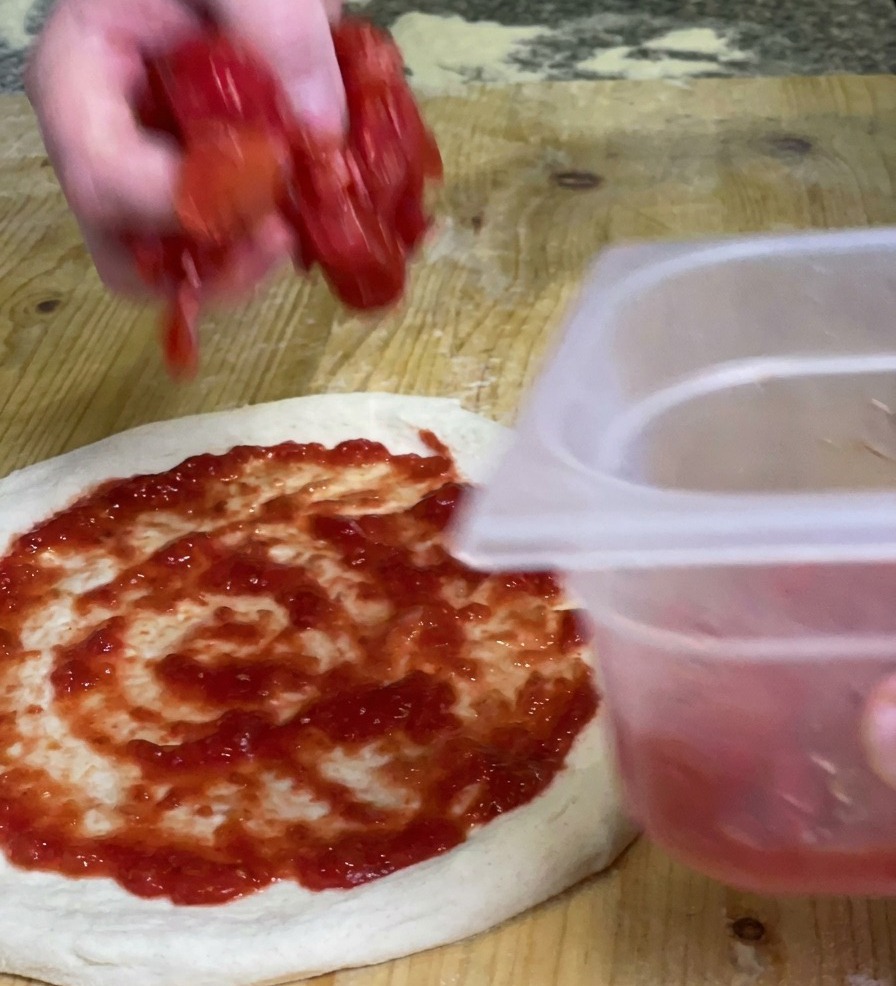
Scatter chunks of crushed tomato pulp over the sauce base. This adds a rustic texture and a fresh, concentrated tomato flavor that defines a traditional Marinara or Margherita pizza.
Tip: Hand-crushing canned whole peeled tomatoes provides the best texture for this step. - 3Top with black olives
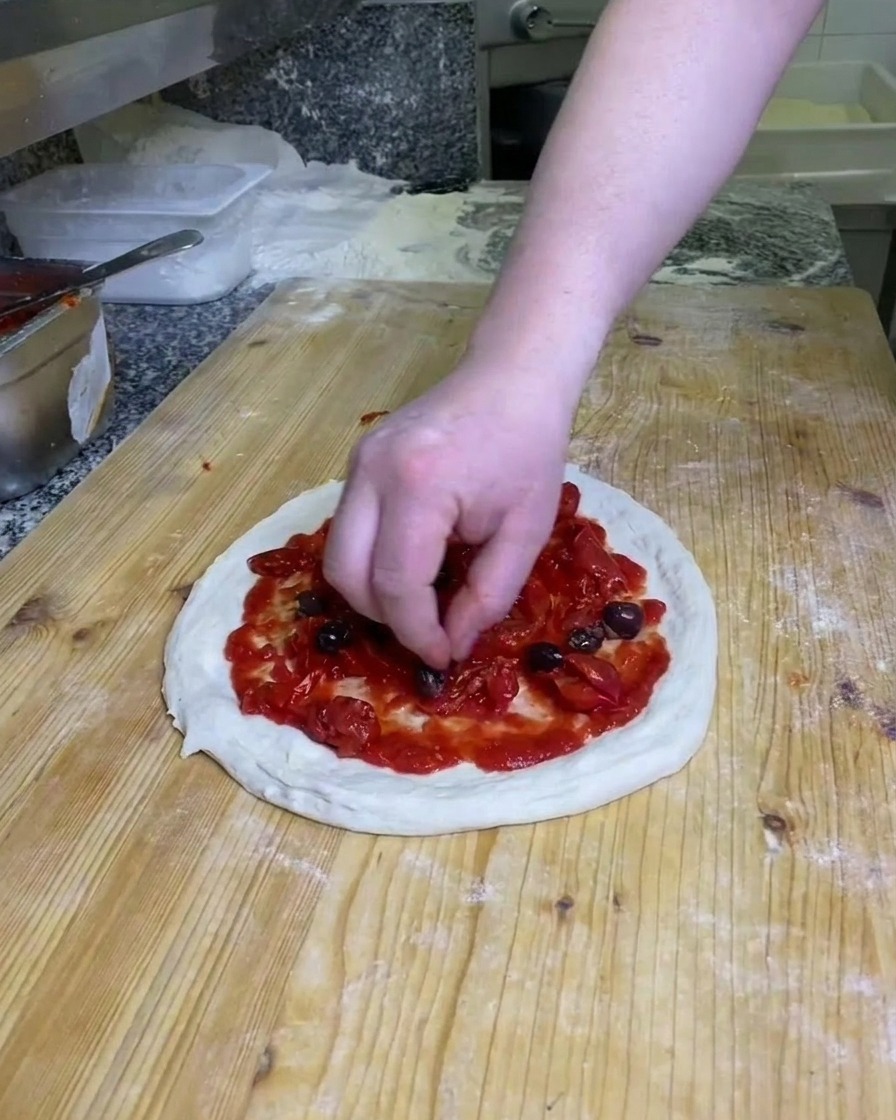
Evenly distribute whole black olives across the surface of the pizza. These olives will roast slightly in the high heat of the oven, releasing their briny oils and adding a salty punch to every slice.
Tip: Ensure the olives are well-drained so they dont release excess moisture onto the dough during baking. - 4Transfer to the pizza peel
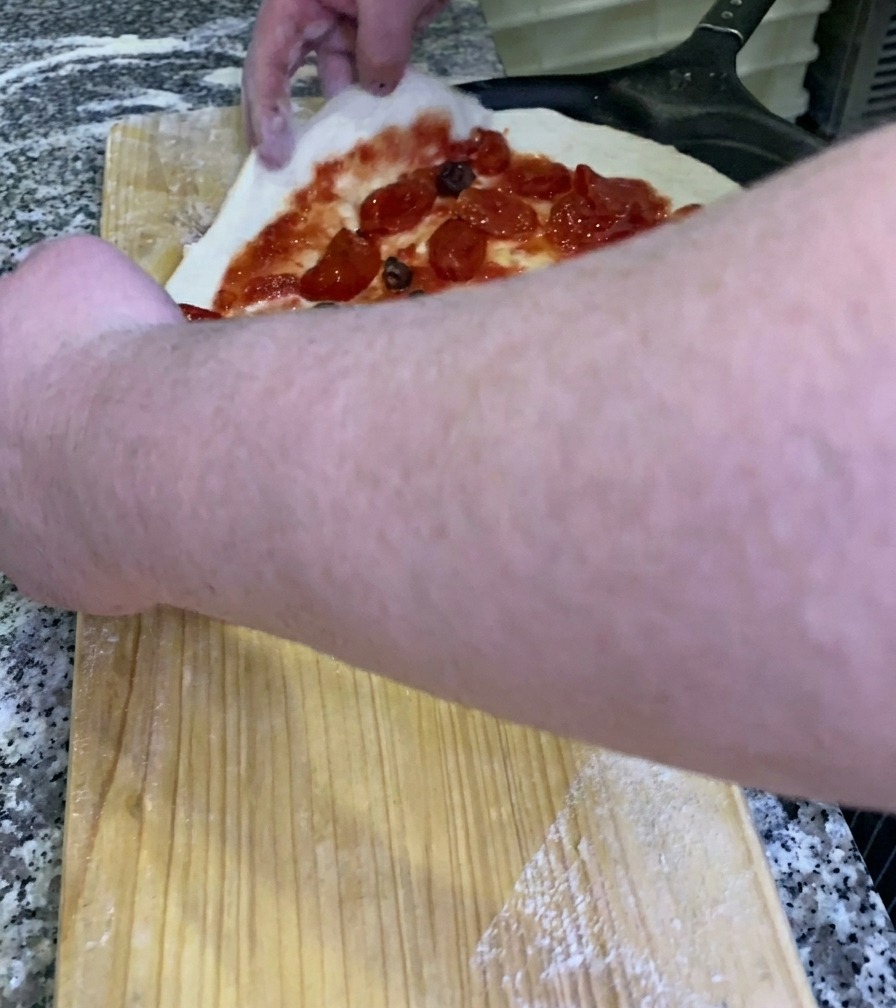
With the pizza fully dressed, carefully slide it onto a floured pizza peel. Use a quick, confident motion to pull the dough onto the peel, ensuring it doesnt fold or lose its shape.
Tip: Dust the peel with a little semolina flour; its coarse texture acts like ball bearings to help the pizza slide off easily. - 5Bake in a wood fired oven
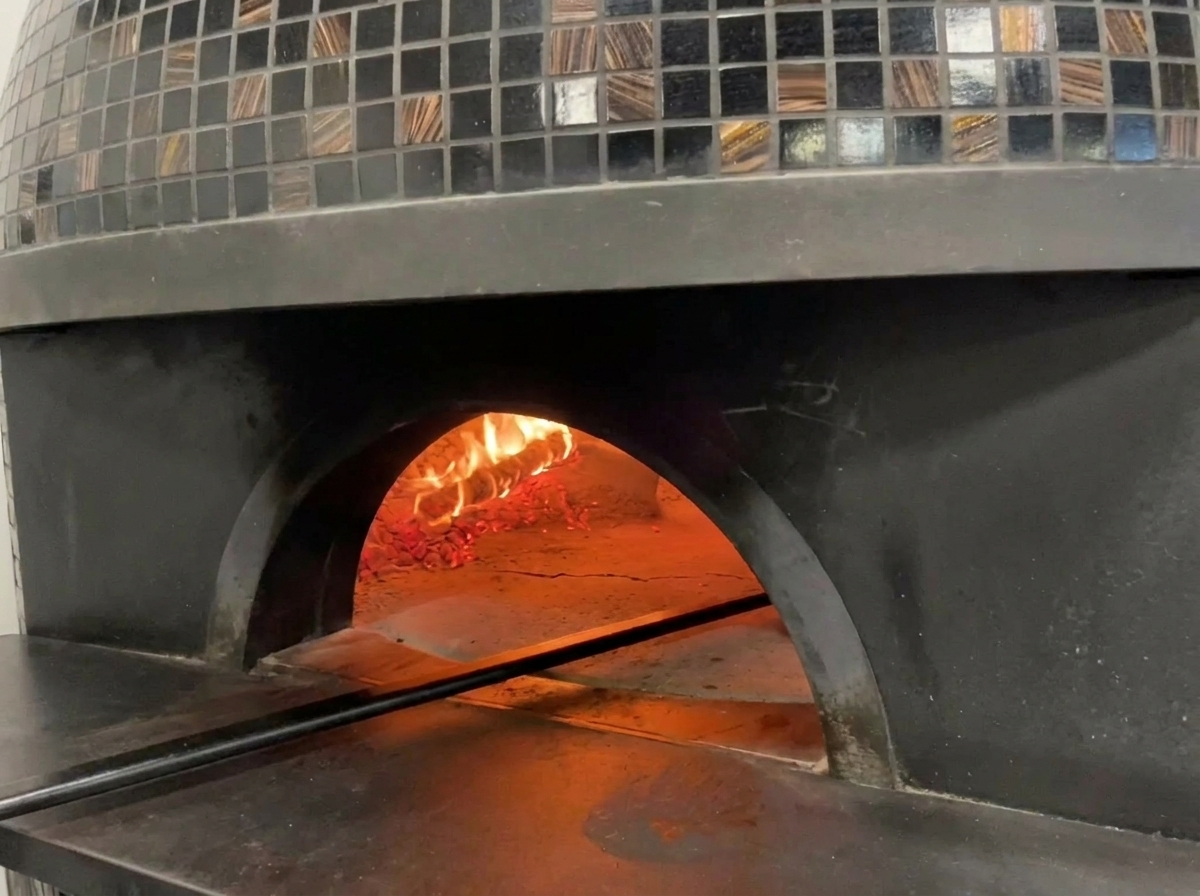
Launch the pizza into a preheated wood fired oven. At high temperatures around 412 degrees Celsius the pizza will bake very quickly usually in about 90 seconds. The intense heat creates the characteristic leopard spotting on the crust.
Tip: Keep an eye on the side closest to the fire; use the peel to rotate the pizza halfway through for an even bake. - 6Check the crust for doneness
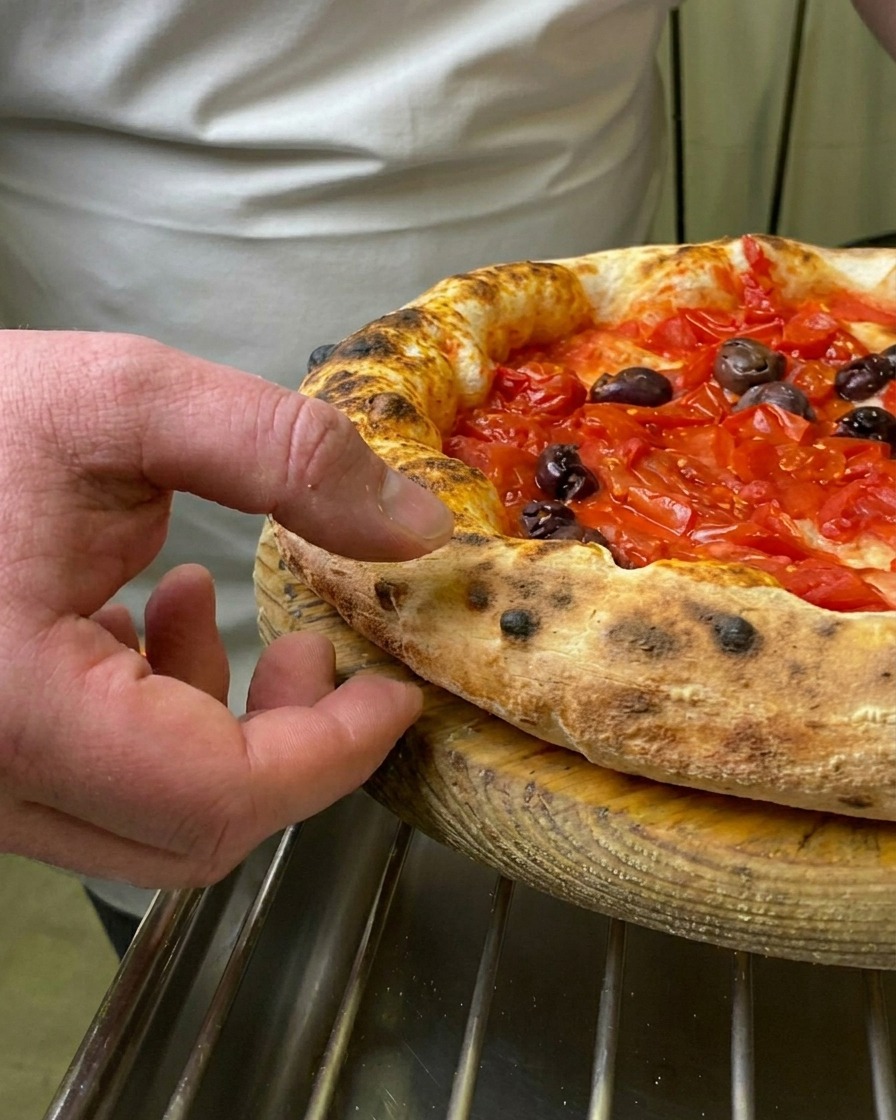
Once the crust is puffed and golden-brown, remove the pizza from the oven. Test the doneness by gently pressing the edge of the crust; it should feel airy and spring back immediately, indicating the dough is fully cooked and light.
Tip: A perfectly baked Neapolitan-style crust should be soft, foldable, and light, not hard or cracker-like. - 7Add pickled bay leaves
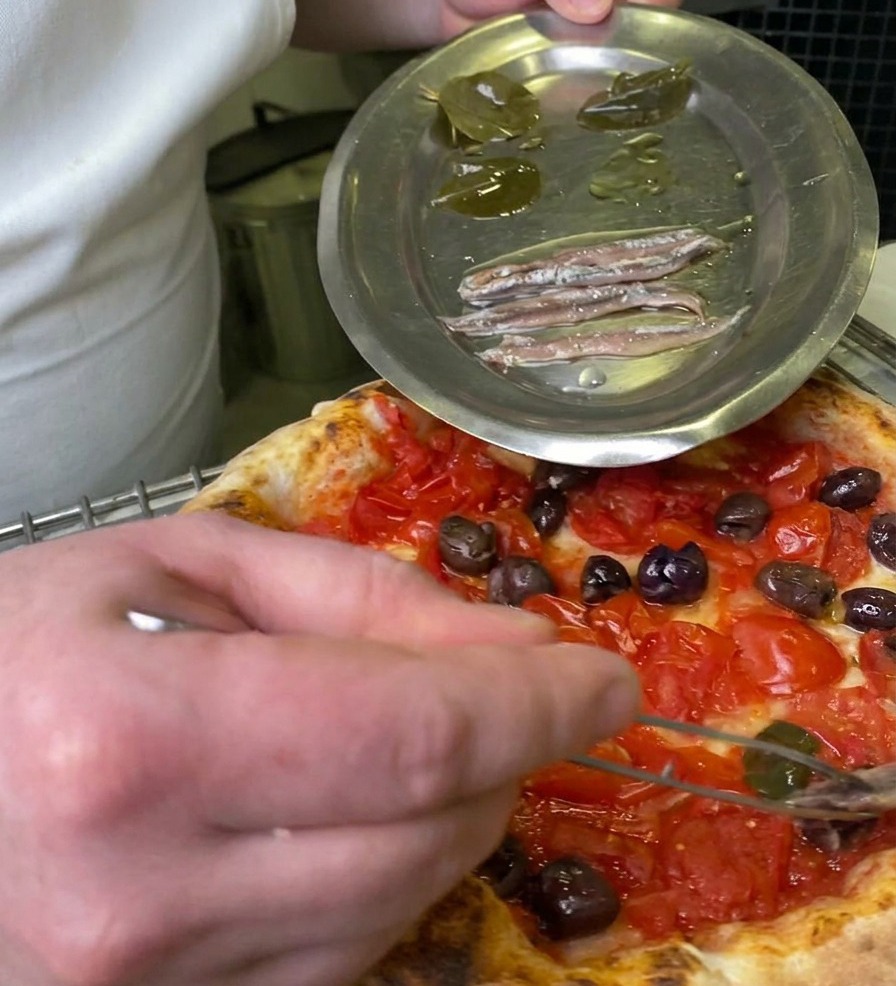
Use metal tweezers to carefully place pickled bay leaves onto the hot pizza. These leaves offer a balanced sour and bitter note that perfectly complements the rich tomato base and savory olives, providing a sophisticated Mediterranean flavor profile.
Tip: Pickling the bay leaves before using them softens the tough leaf texture and introduces a bright acidity to the dish. - 8Top with Sicilian anchovies
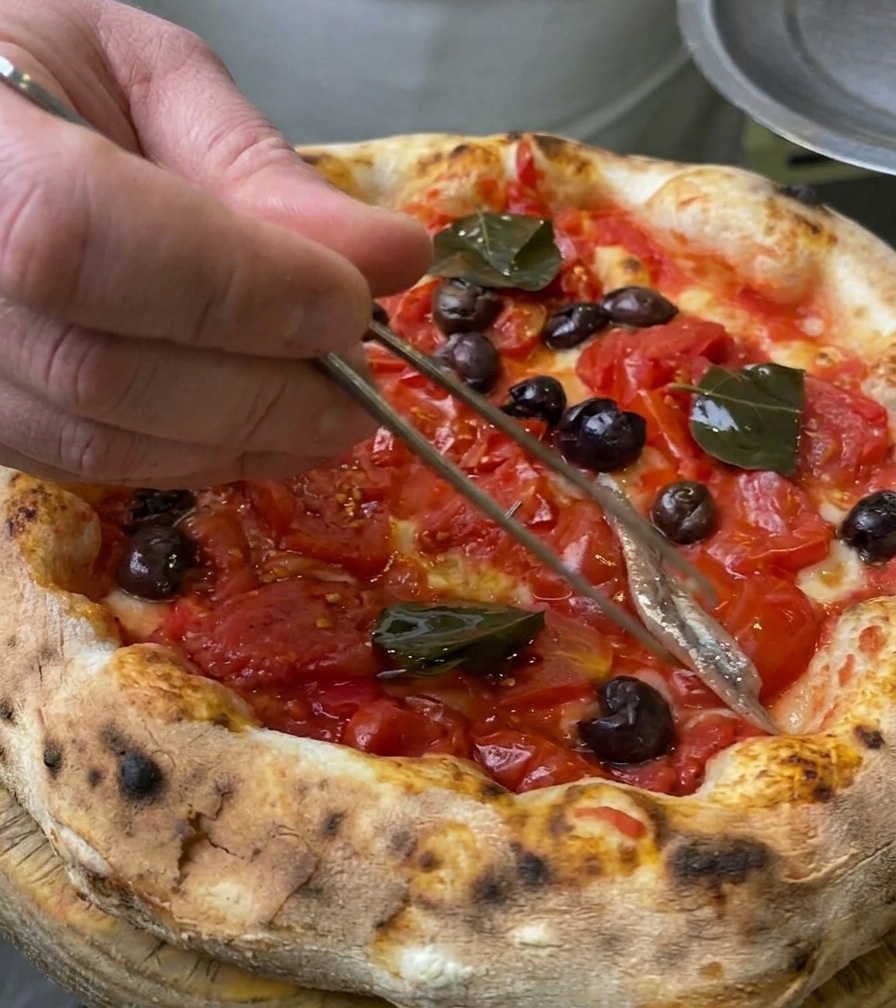
Lay premium Sicilian anchovy fillets across the pizza. These anchovies provide an intense umami punch and a salty depth that is characteristic of a traditional Marinara pizza, making every bite savory and rich.
Tip: Ensure the anchovies are high quality and packed in oil; their silkiness is key to the texture of the finished pizza. - 9Drizzle the garlic-parsley sauce
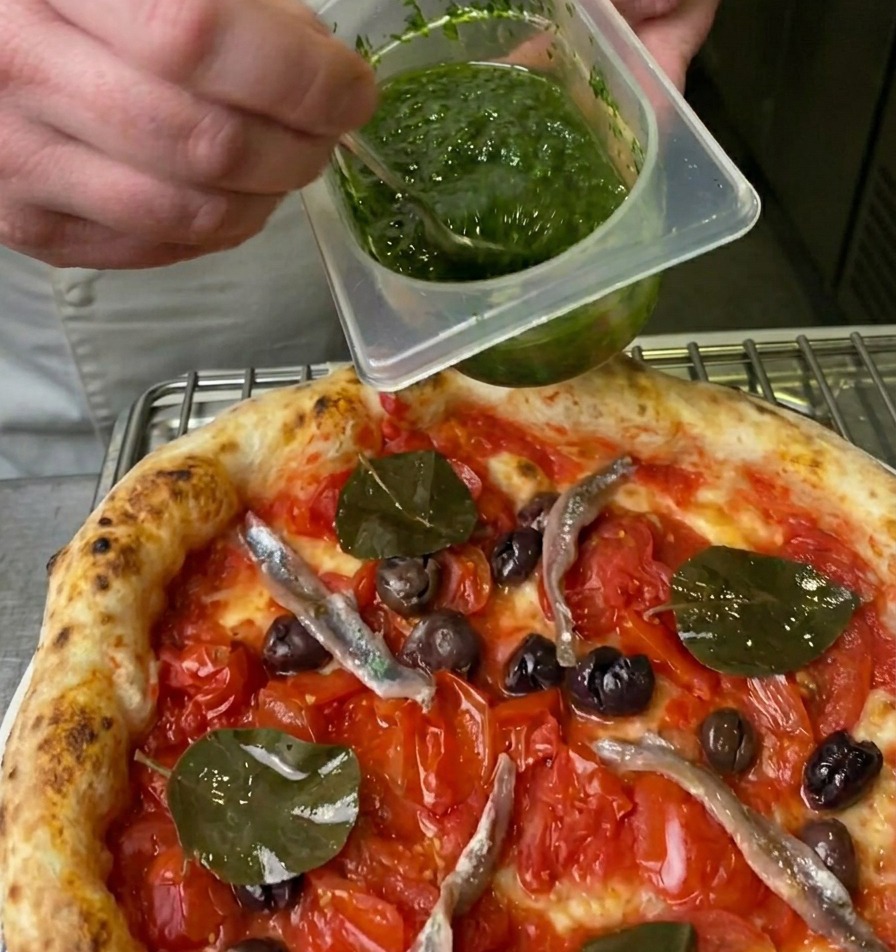
Drizzle a vibrant green sauce made from a blend of minced garlic and fresh parsley over the pizza. This sauce adds a layer of freshness and a pungent aromatic kick that elevates the simple ingredients.
Tip: Apply the sauce in small dollops or thin streams to ensure a balanced distribution of the strong garlic flavor. - 10Garnish with fresh basil
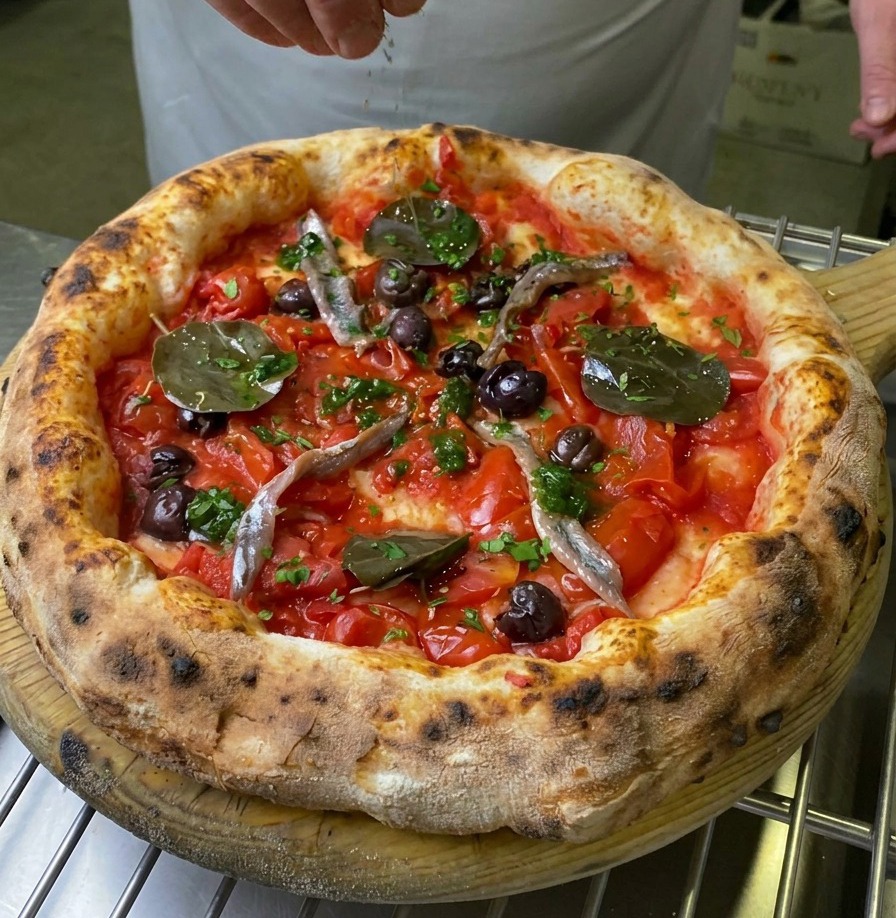
Add fresh basil leaves to the center of the pizza. The residual heat from the crust will gently warm the leaves, releasing their sweet, peppery aroma and providing a beautiful pop of color to the final presentation.
Tip: Always add fresh basil as the final garnish just before serving to keep the leaves vibrant and prevent them from wilting too much. - 11Finish with olive oil
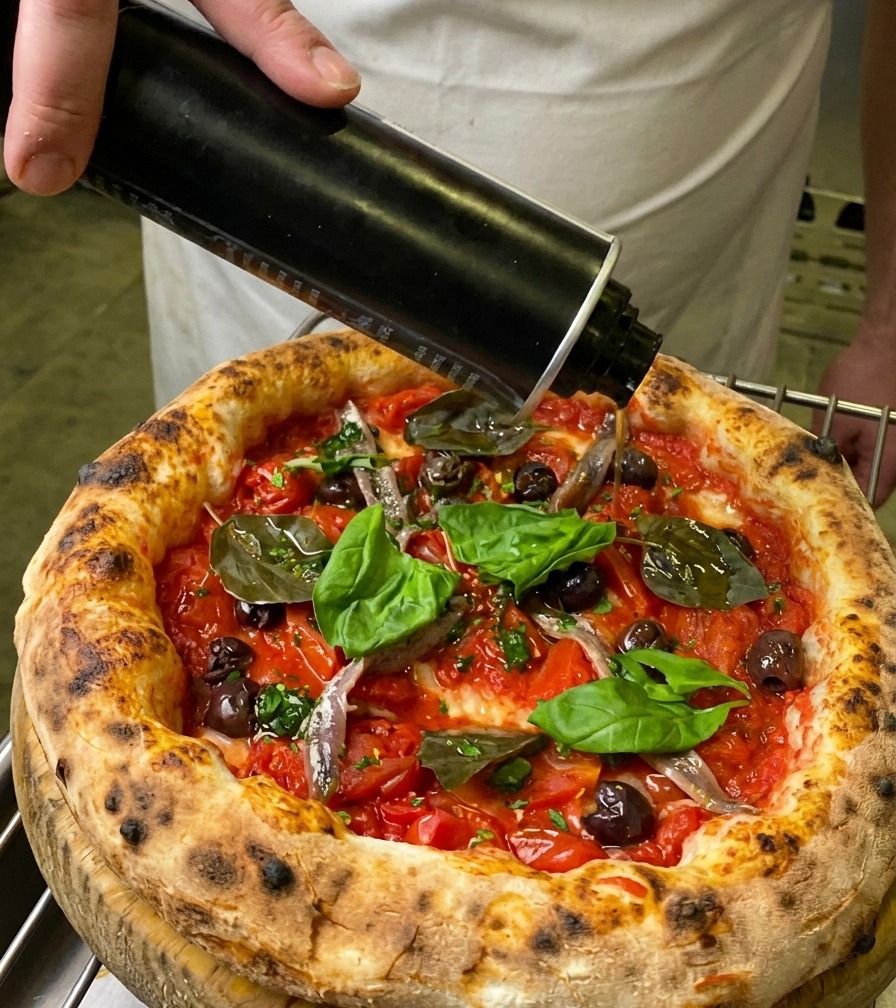
Complete the pizza by pouring a thin, steady stream of extra virgin olive oil over the top. Use a traditional metal oil tin to ensure precision and to provide a rich, smooth finish that ties all the Mediterranean flavors together.
Tip: Use a high-quality finishing oil with a slightly peppery profile to enhance the bitterness of the bay leaves and the heat of the garlic.