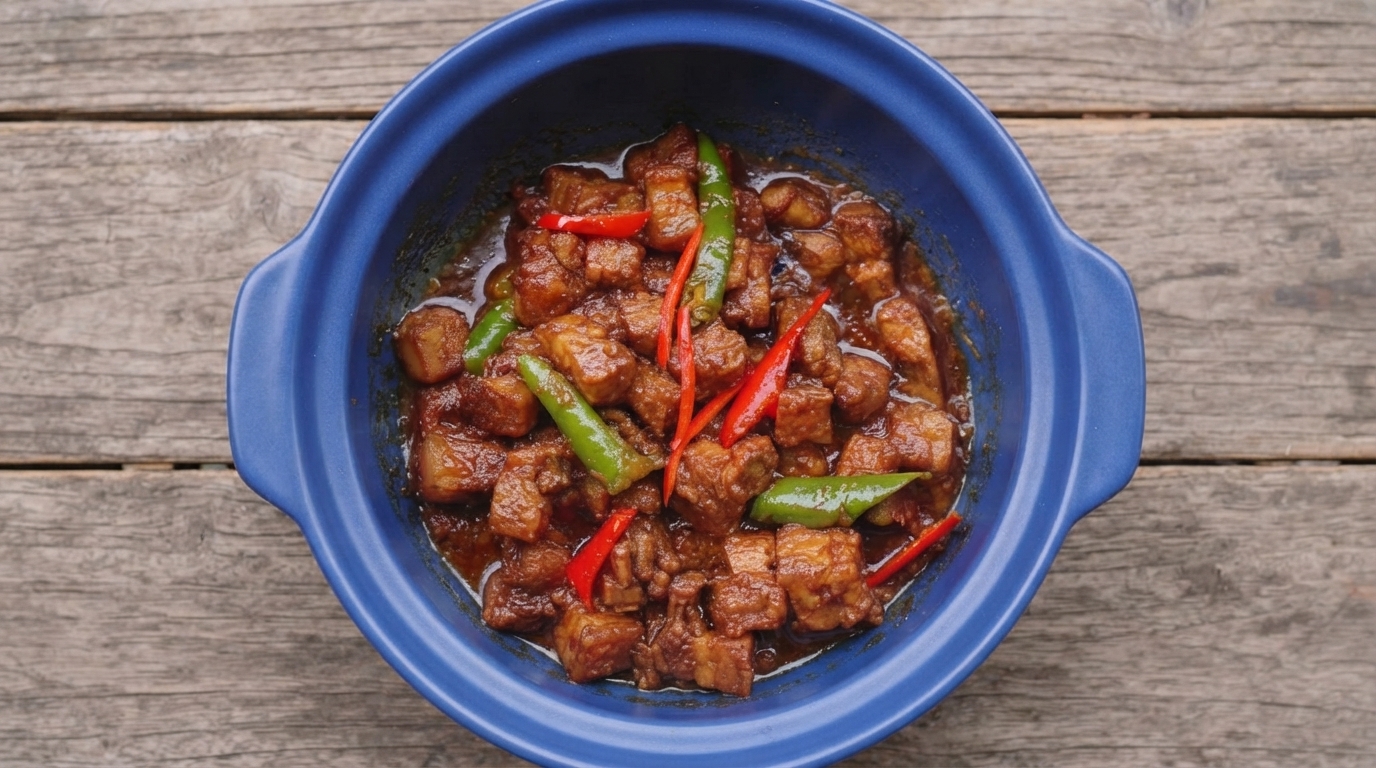
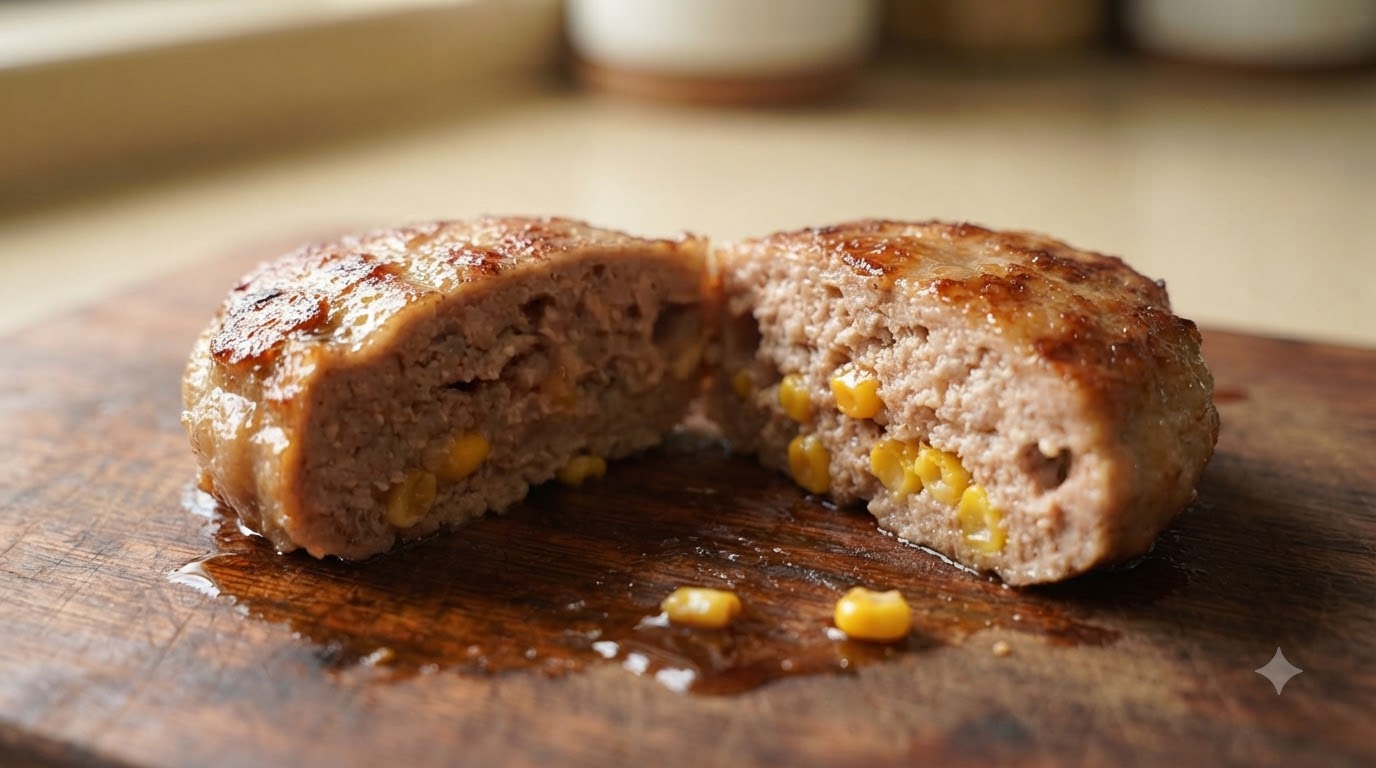
Pan-Seared Pork Chop
Summer Succotash
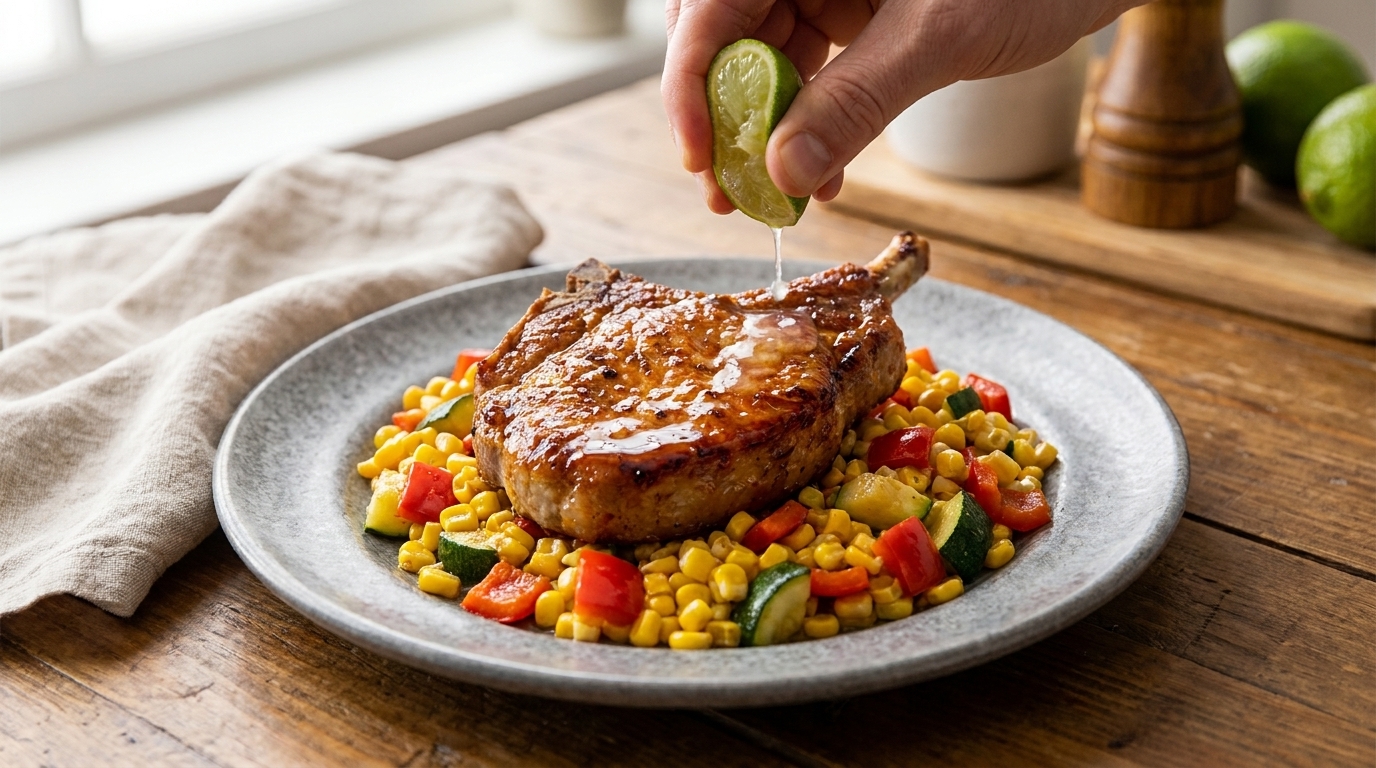
A juicy, spice-rubbed pan-seared pork chop served over a vibrant, charred corn and butternut squash succotash with a bright squeeze of fresh lime.
Succotash is a classic American side dish traditionally built on corn and beans, but this modern interpretation leans into sweet summer corn, grated butternut squash, peppers, and zucchini. Paired with a thick, spice-crusted pork chop cooked with butter, thyme, and stock, it balances rich, savory warmth with fresh, bright acidity.
Ingredients
- 1 thick pork chop with backstrap
- 1 tbsp olive oil
- 1/2 tsp smoked paprika
- 1/2 tsp ancho chili powder
- 2 tbsp butter
- 2 sprigs fresh thyme
- 2 tbsp liquid stock
- 1 ear sweet corn
- 1/2 red onion
- 1 cup butternut squash
- 1 red bell pepper
- 1 yellow bell pepper
- 1 zucchini
- 1 tsp minced garlic
- 1 jalapeño
- 1/4 cup fresh cilantro
- 1 lime
- to taste salt and black pepper
Instructions
- 1Trim the Backstrap
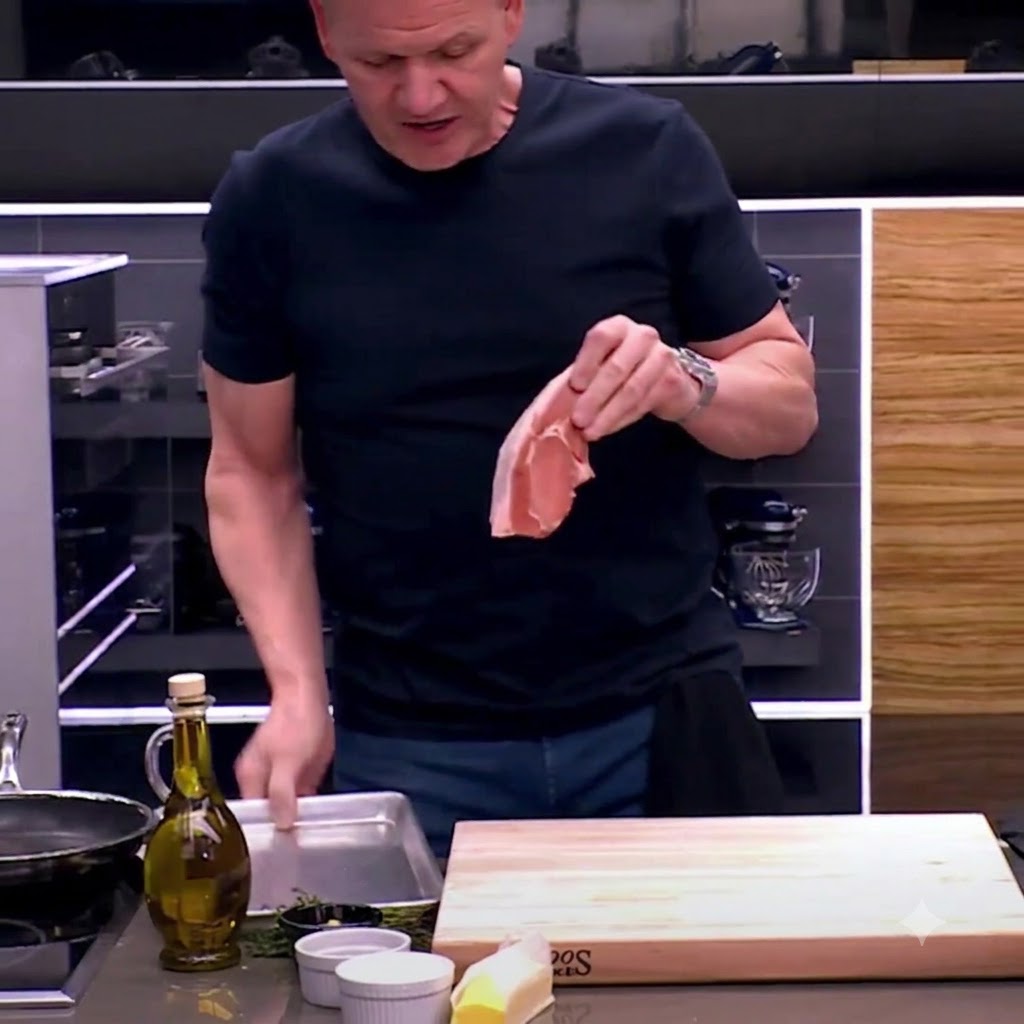
Use kitchen shears to carefully cut small strands of fat from the pork chop backstrap on a wooden cutting board to prepare it for cooking.
Tip: Trimming excess fat helps prevent flare-ups and ensures even cooking. - 2Season with Salt and Pepper
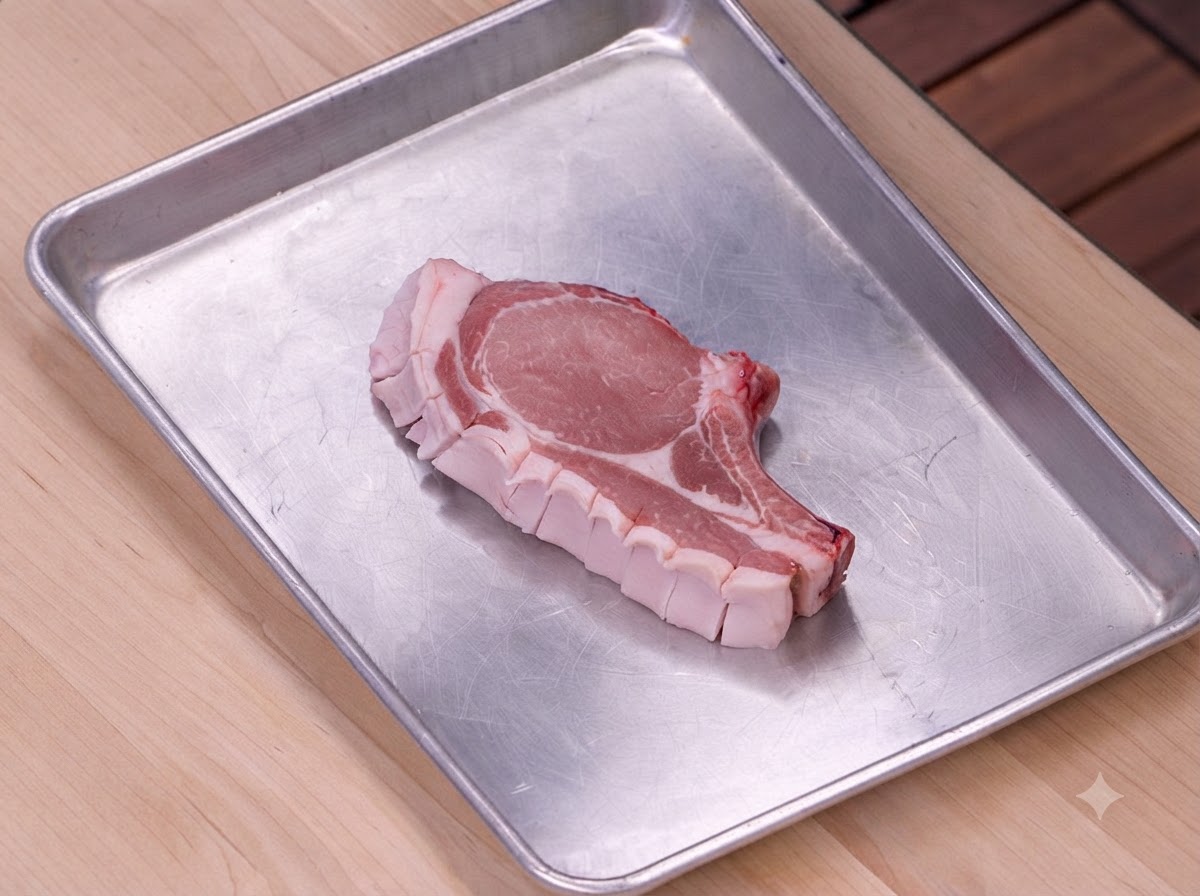
Place the prepared raw pork chop on a metal baking tray and season it generously with salt and black pepper.
Tip: Seasoning the meat beforehand allows the flavors to penetrate the surface. - 3Add Spices and Oil
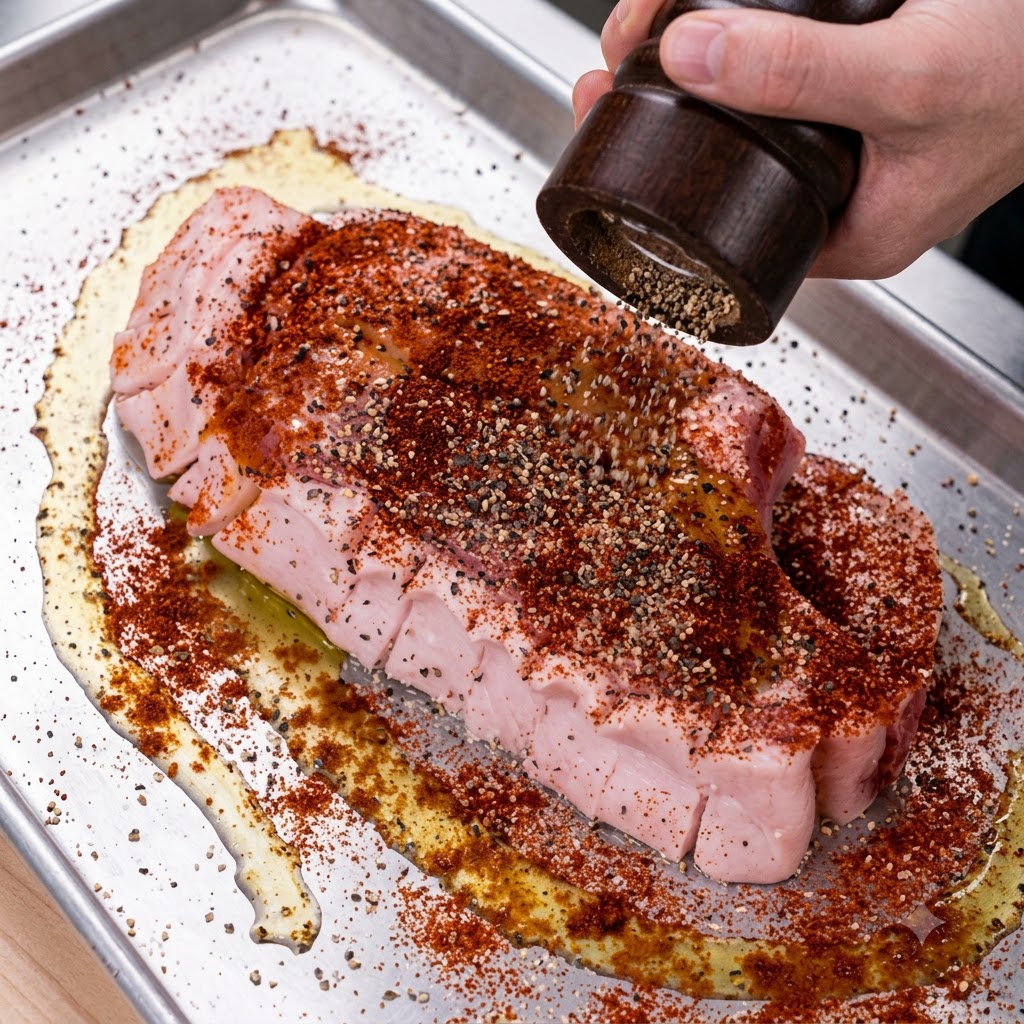
Drizzle olive oil and sprinkle smoked paprika and ancho chili powder directly onto the seasoned pork chop.
Tip: Smoked paprika and ancho chili powder give the meat a rich, smoky color and depth of flavor. - 4Rub the Flavor
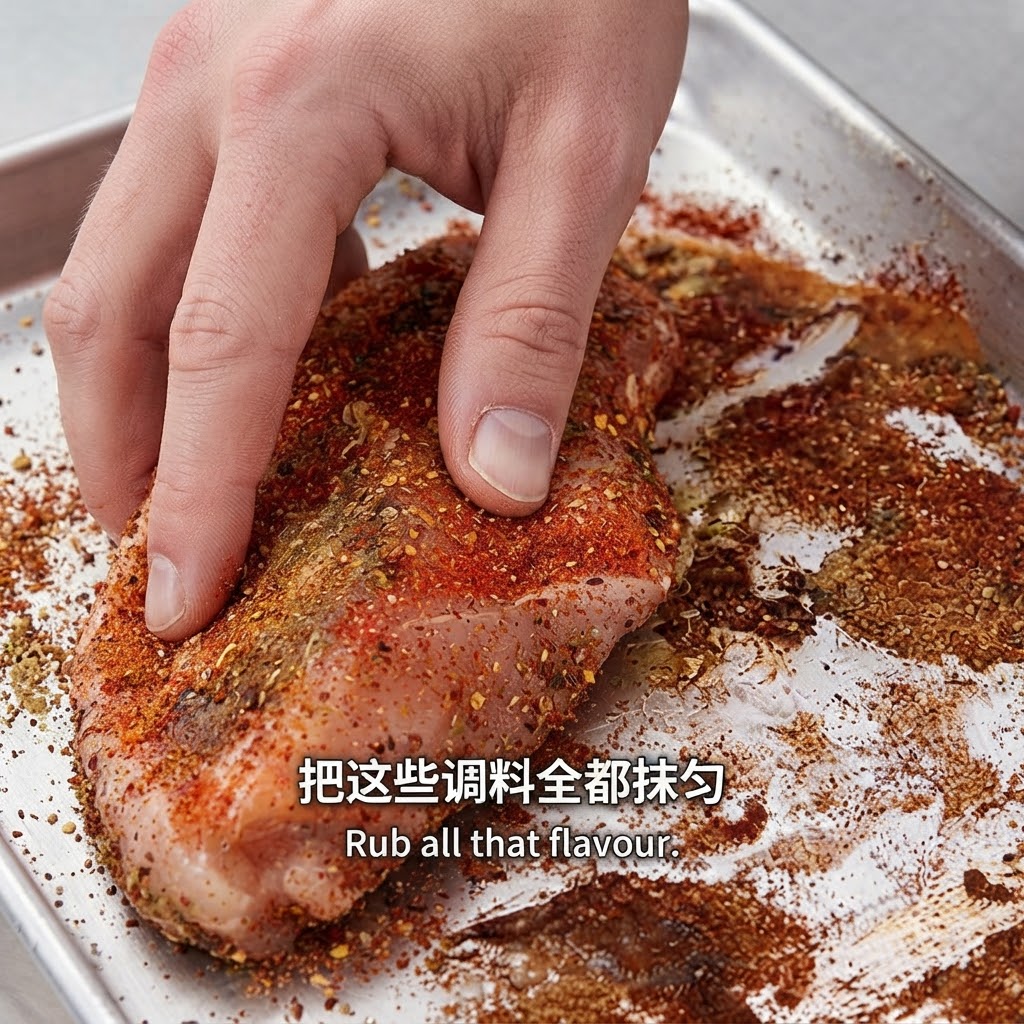
Use your hand to thoroughly rub the oil and spices into all surfaces of the pork chop to lock in the flavor.
Tip: Ensure every part of the meat is evenly coated with the spice mixture. - 5Heat the Cast Iron Pan
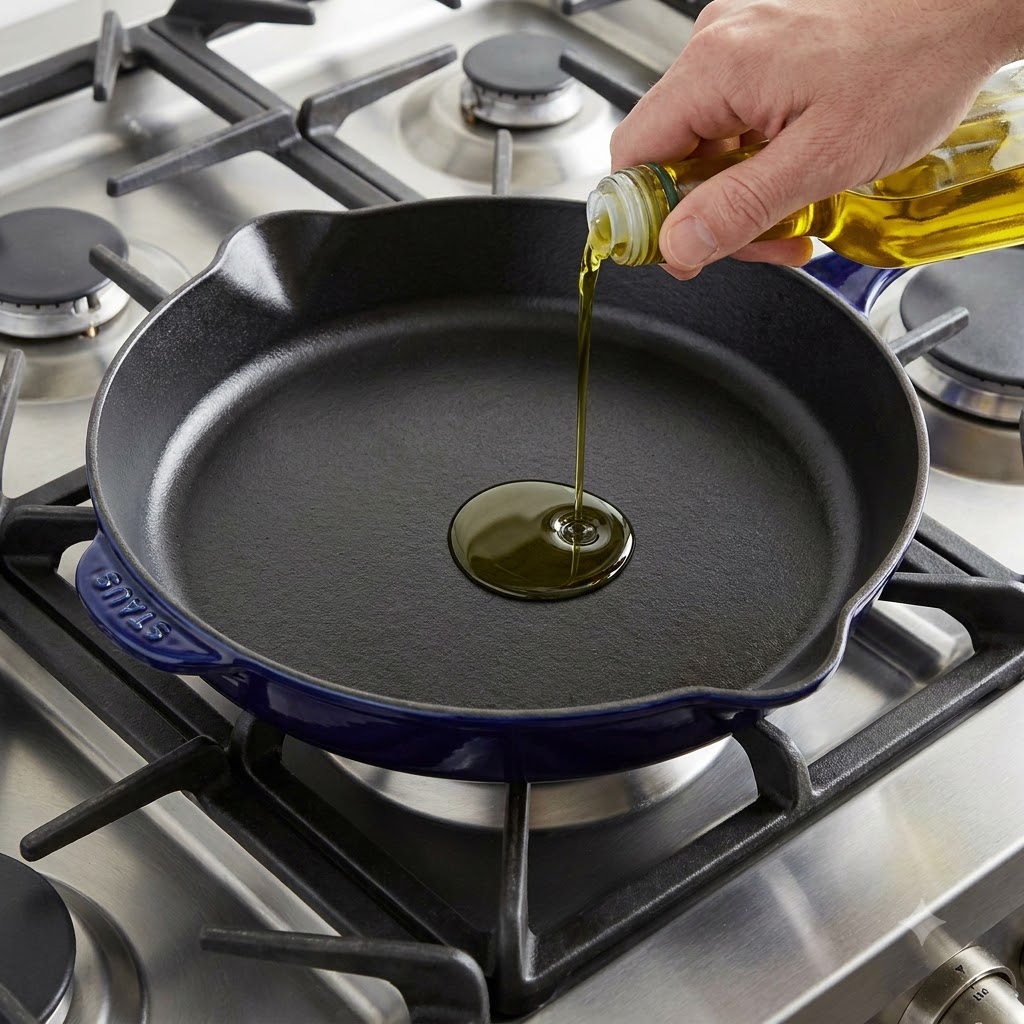
Pour a touch of olive oil into a cast iron skillet over heat, then place the spiced pork chop into the hot pan.
Tip: Make sure the cast iron pan is hot before adding the oil and meat to get a proper sear. - 6Add Butter and Thyme
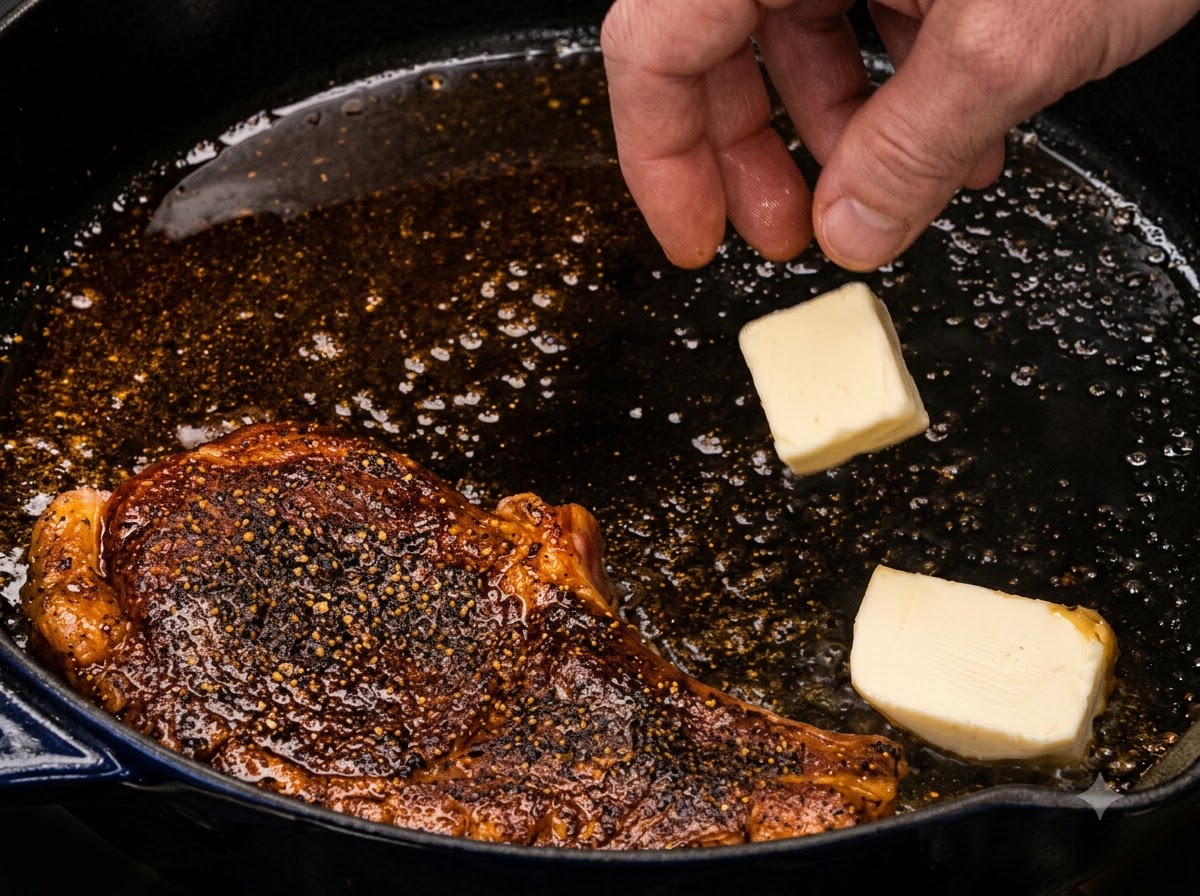
Drop chunks of butter and fresh sprigs of thyme into the pan alongside the searing pork chop to enrich the flavor and prevent burning.
Tip: Adding butter and herbs during the sear infuses the meat with a rich, aromatic taste. - 7Deglaze with stock
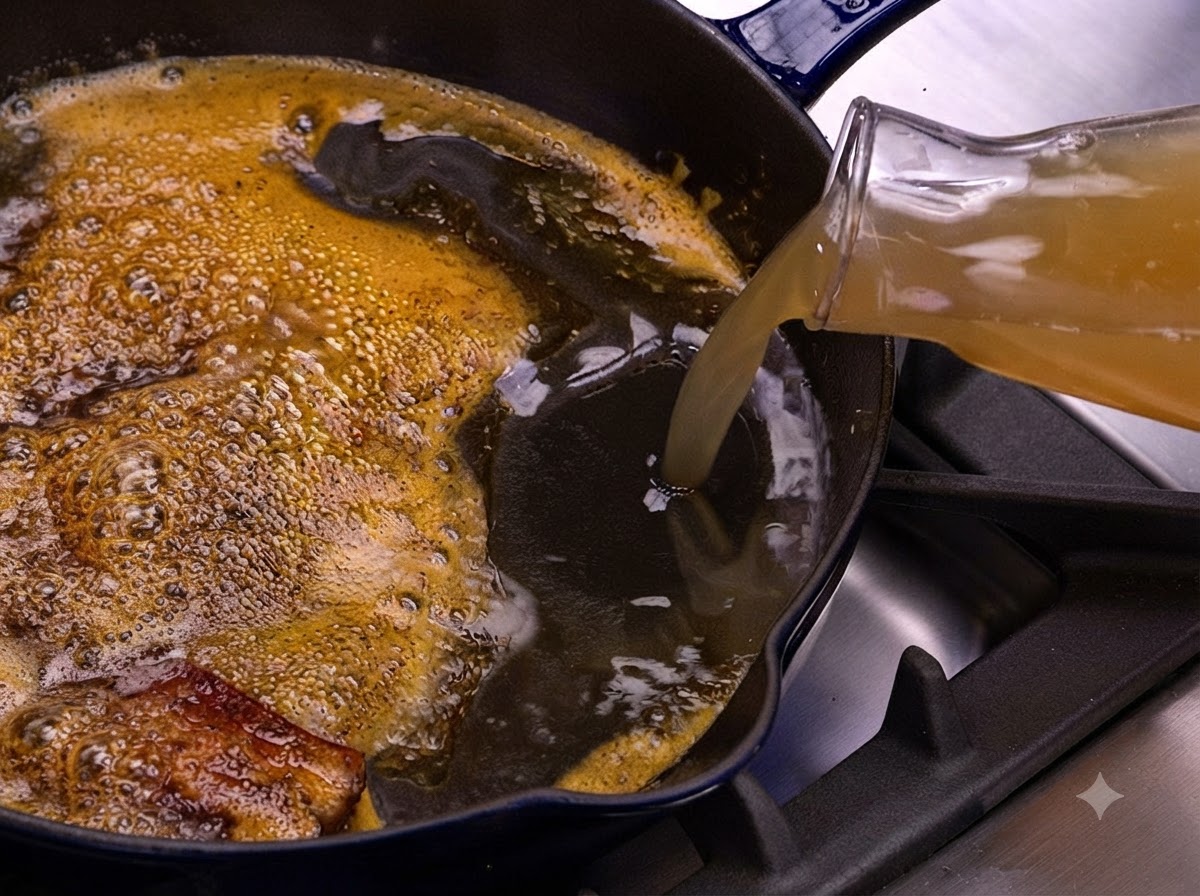
Once the pork chop has developed a rich, caramelized crust and the spices have bloomed in the pan, pour a small splash of liquid stock directly into the hot skillet. The liquid will instantly deglaze the pan, lifting all the flavourful browned bits from the bottom and preventing the spices from burning.
Tip: Pour the stock gently down the side of the pan rather than directly onto the meat so you dont wash away the beautiful crust. - 8Cover and simmer
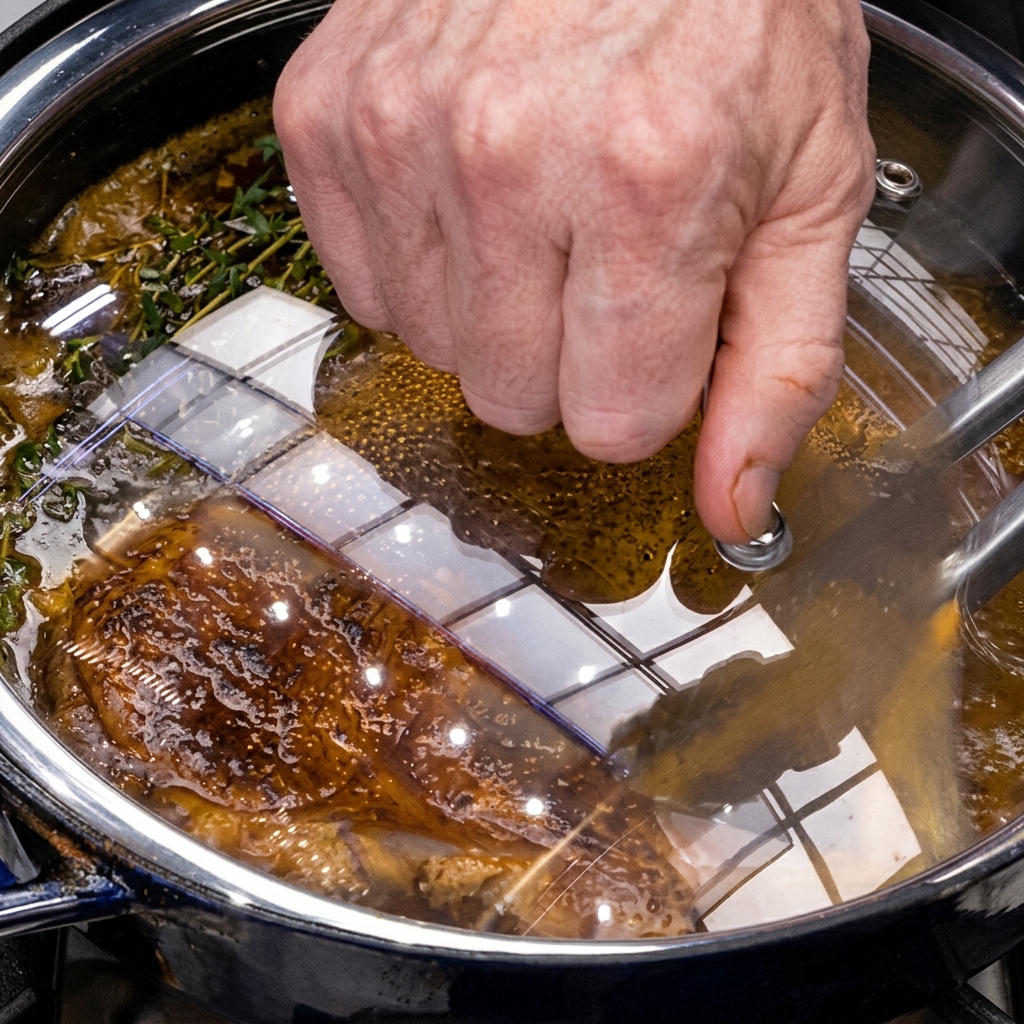
Immediately place a tight-fitting glass lid over the cast iron pan to trap the steam and heat. Lower the temperature and allow the pork chop to sit and cook slowly in the gentle heat of the stock and pan juices, ensuring the center cooks through while keeping the meat incredibly moist and tender.
Tip: Using a clear glass lid allows you to keep an eye on the liquid level without opening the pan and releasing the trapped steam. - 9Season the corn
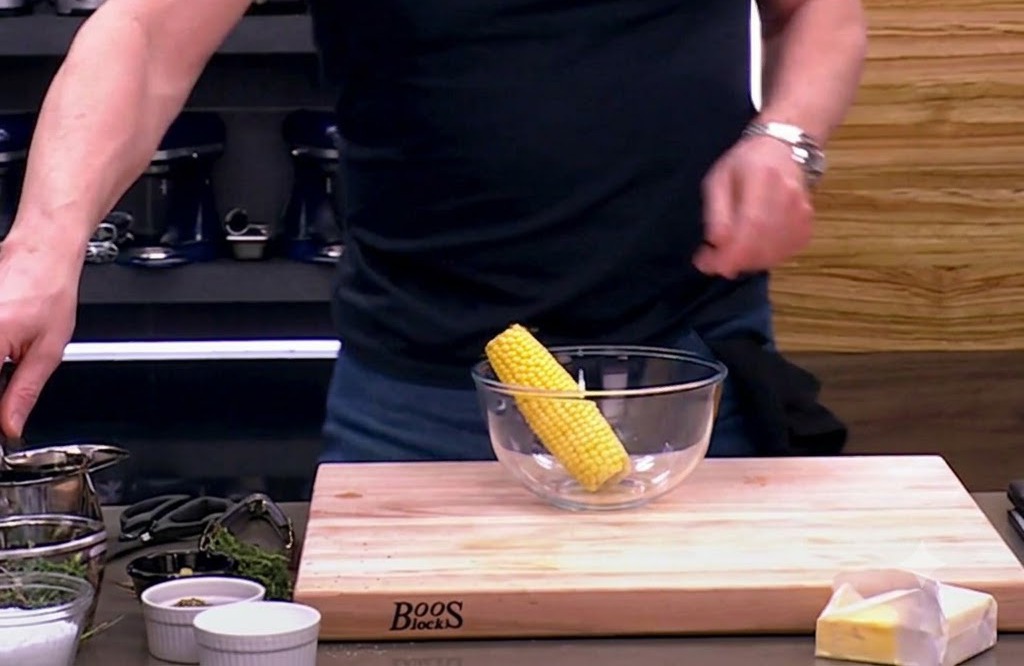
Place a whole, husked ear of sweet corn into a glass mixing bowl. Generously drizzle the corn with olive oil and season well with salt and freshly cracked black pepper. Ensure the kernels are thoroughly coated so they toast properly when heat is applied.
Tip: Use your hands to rub the oil and seasonings evenly into all the crevices between the corn kernels. - 10Roast the corn cob
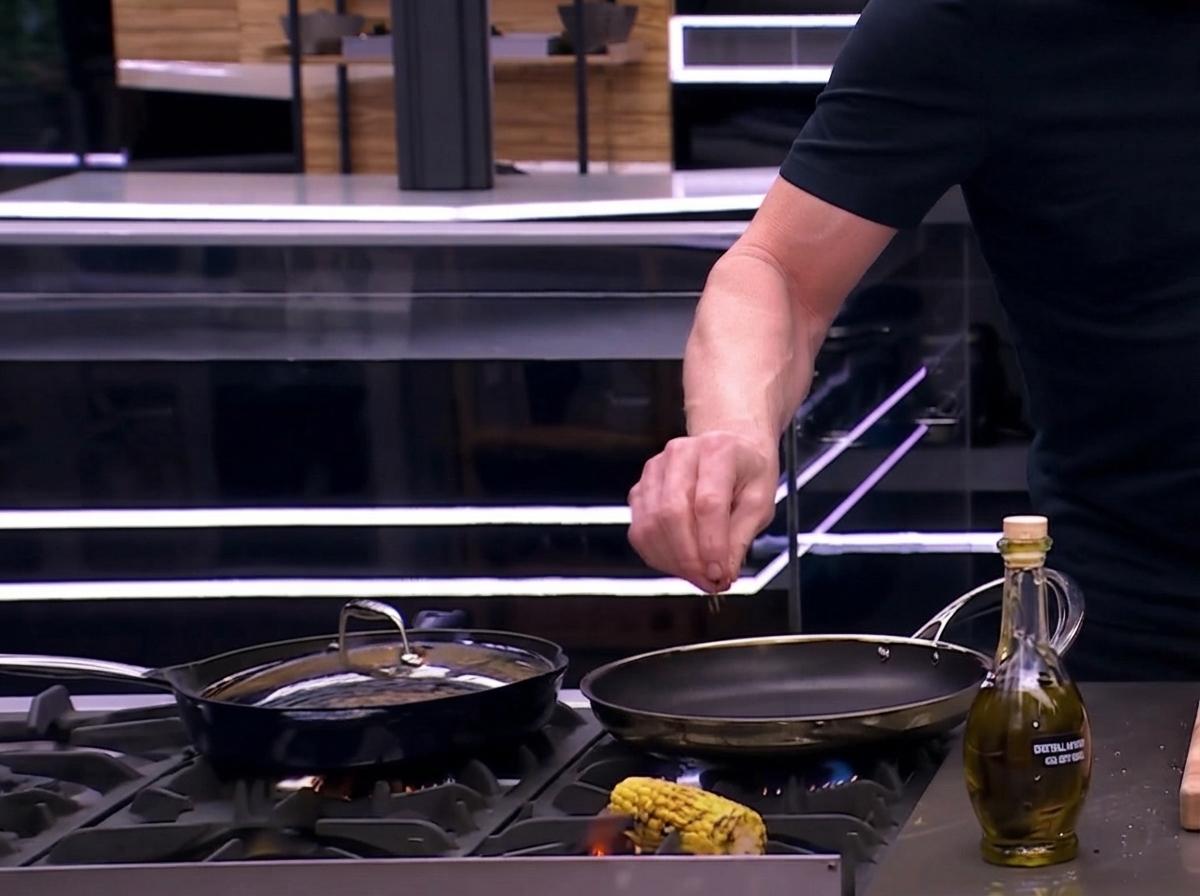
Take the seasoned corn cob, coated with olive oil, salt, and pepper, and place it directly over an open gas stove flame to char the kernels and develop a smoky flavor.
Tip: Rotate the corn evenly over the flame to achieve a nice, consistent char on all sides. - 11Sauté the red onions
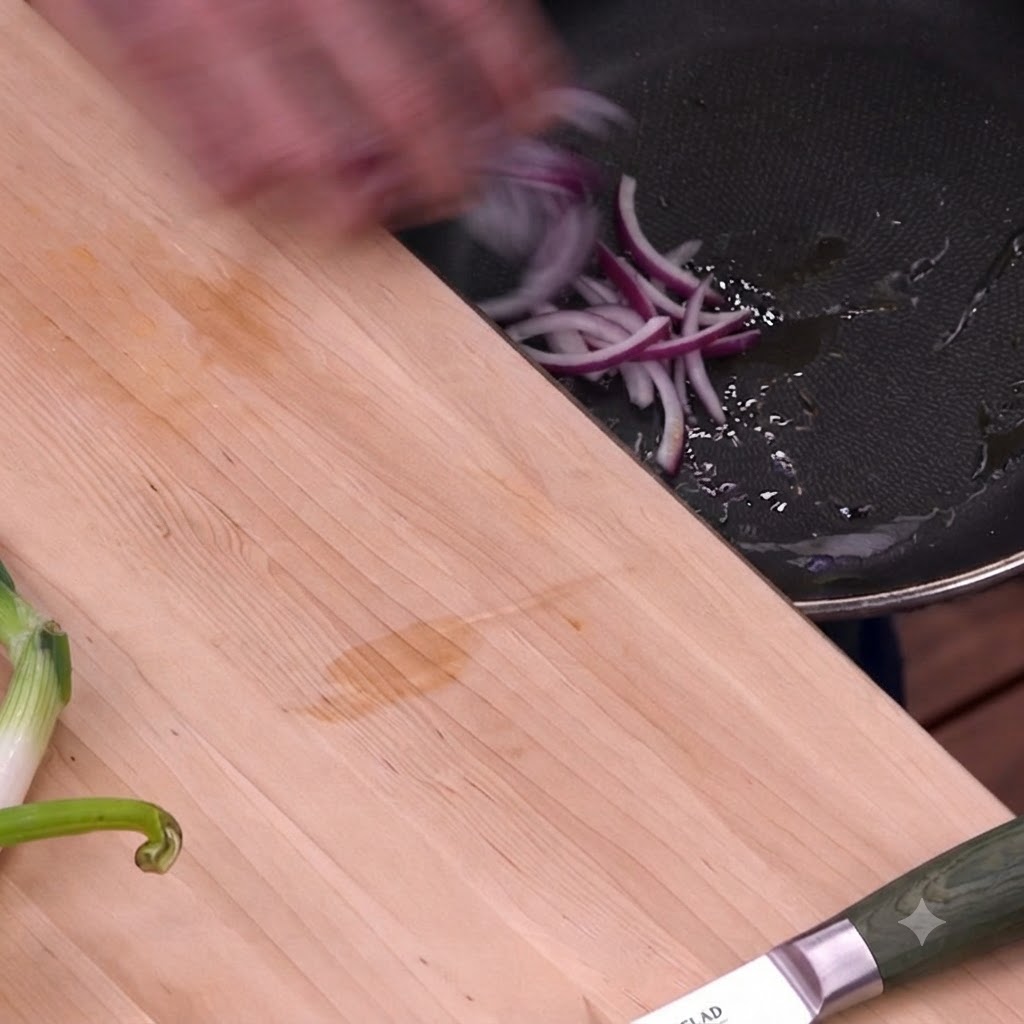
Heat a small amount of olive oil in a hot frying pan over medium-high heat. Slide the thinly sliced red onions off your cutting board directly into the pan. You want to hear them sizzle immediately as they hit the oil, starting the cooking process for the vibrant succotash.
Tip: Make sure your pan is adequately preheated before adding the onions; if the pan is too cold, the onions will sweat and turn mushy rather than frying. - 12Grate the squash
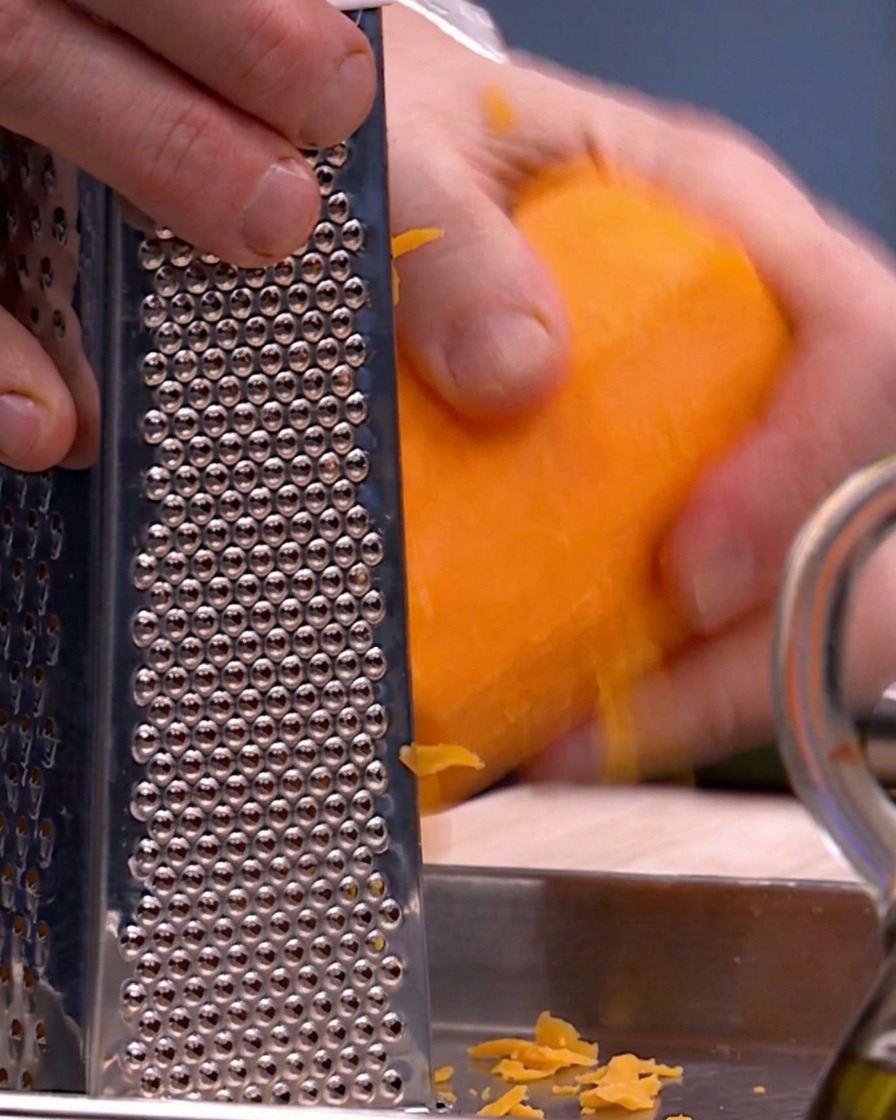
Using the large holes of a metal box grater, firmly grate a peeled section of butternut squash onto a small tray or cutting board. Grating the squash instead of dicing it is a brilliant trick that allows it to cook through very quickly when added to the succotash mixture.
Tip: Hold the squash firmly and grate in one downward direction to get uniform, beautiful strands. - 13Add grated butternut squash
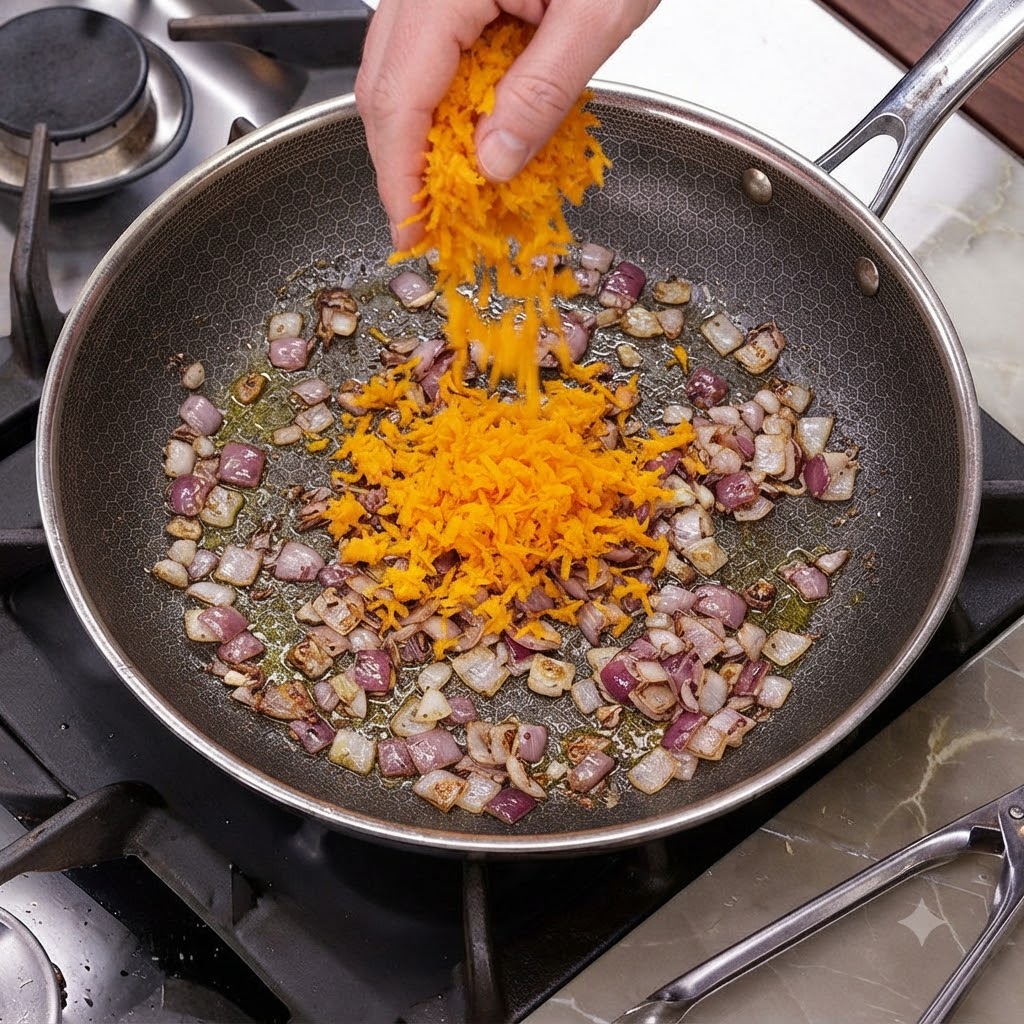
Take the grated butternut squash and sprinkle it directly into the frying pan containing the sautéed onions and oil, allowing it to cook down very quickly.
Tip: Grating the butternut squash helps it cook down much faster compared to cubing it. - 14Add diced peppers
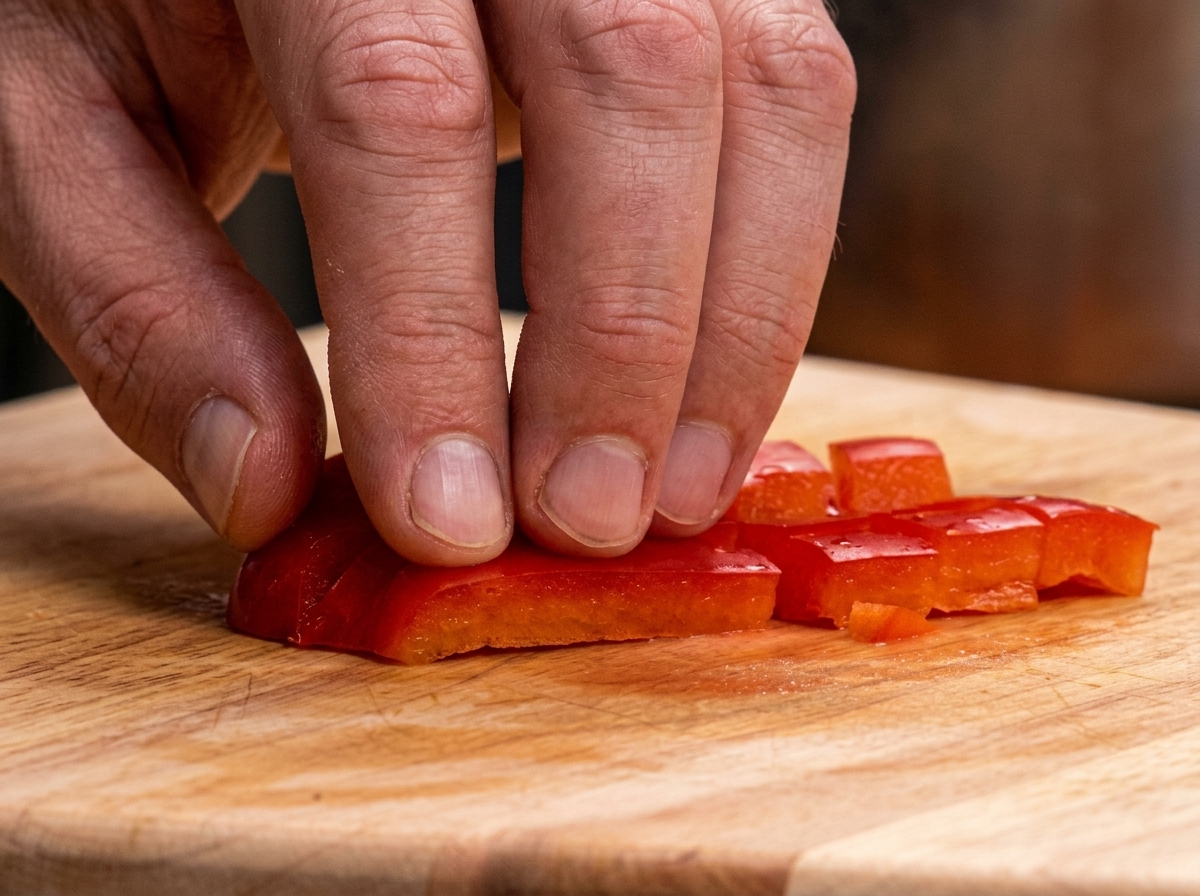
Chop the red and yellow bell peppers into a nice large dice and add them into the vegetable mixture in the pan to build the succotash.
Tip: Keep the dice uniform so the peppers cook evenly along with the other vegetables.