Authentic Korean Braised Pork Belly
Kimchi (Kimchi Jjim)
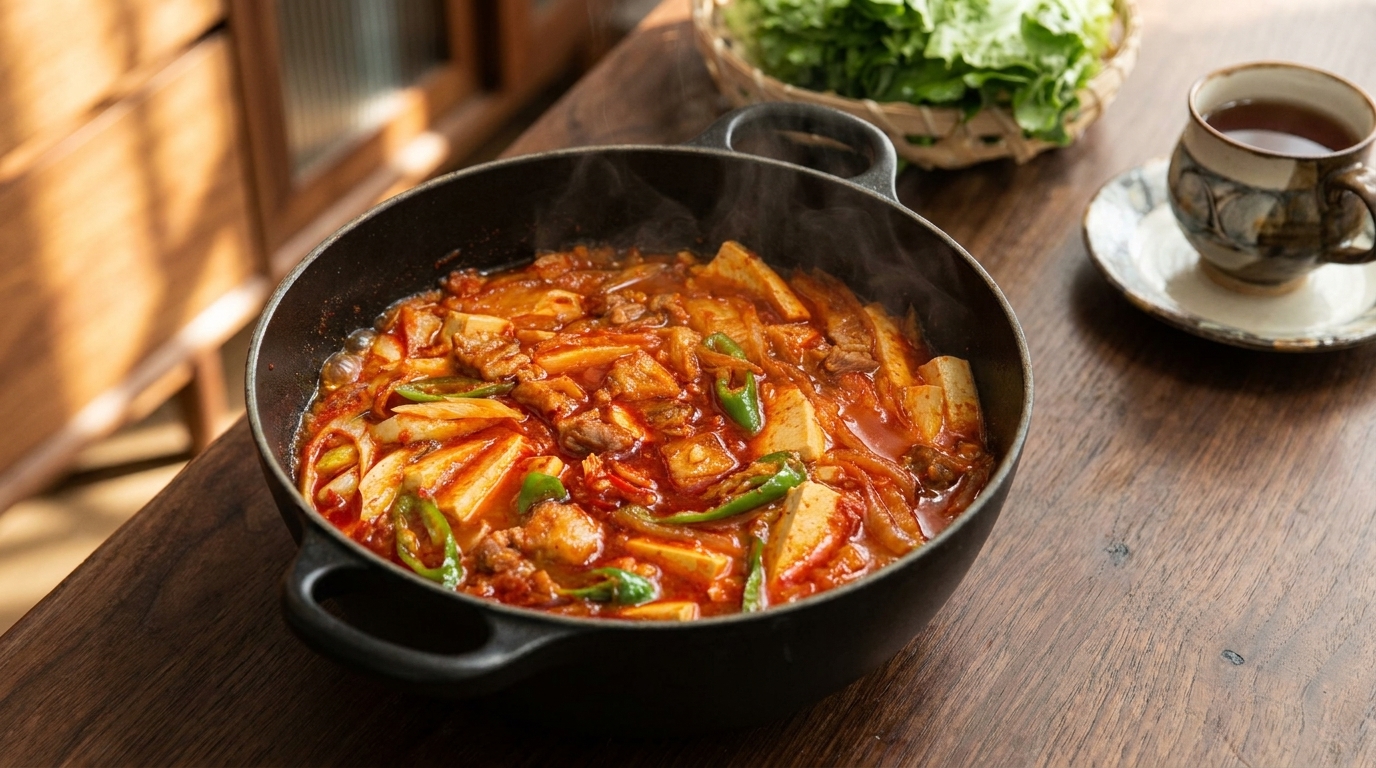
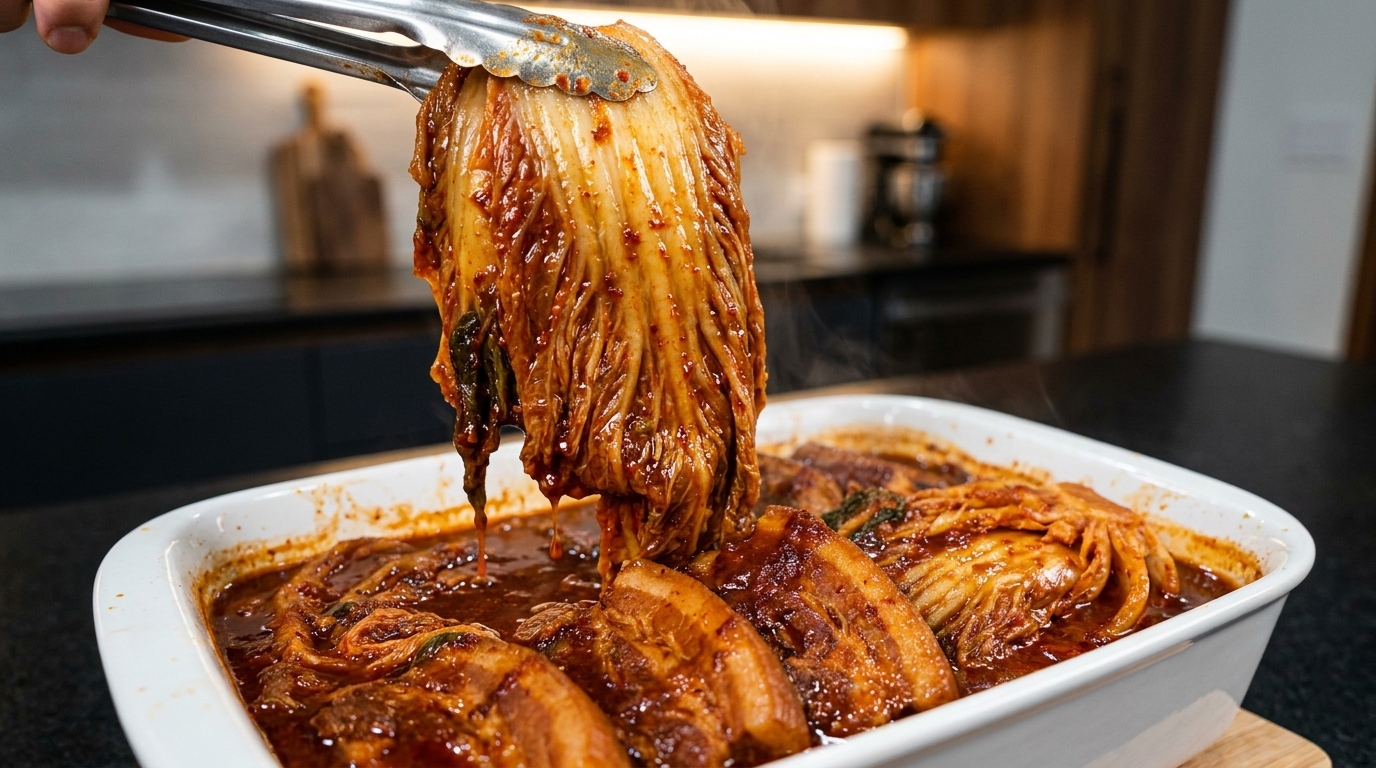
A slow-braised masterpiece featuring tender whole pork belly and sour aged kimchi simmered to perfection in a rich, savory chili broth.
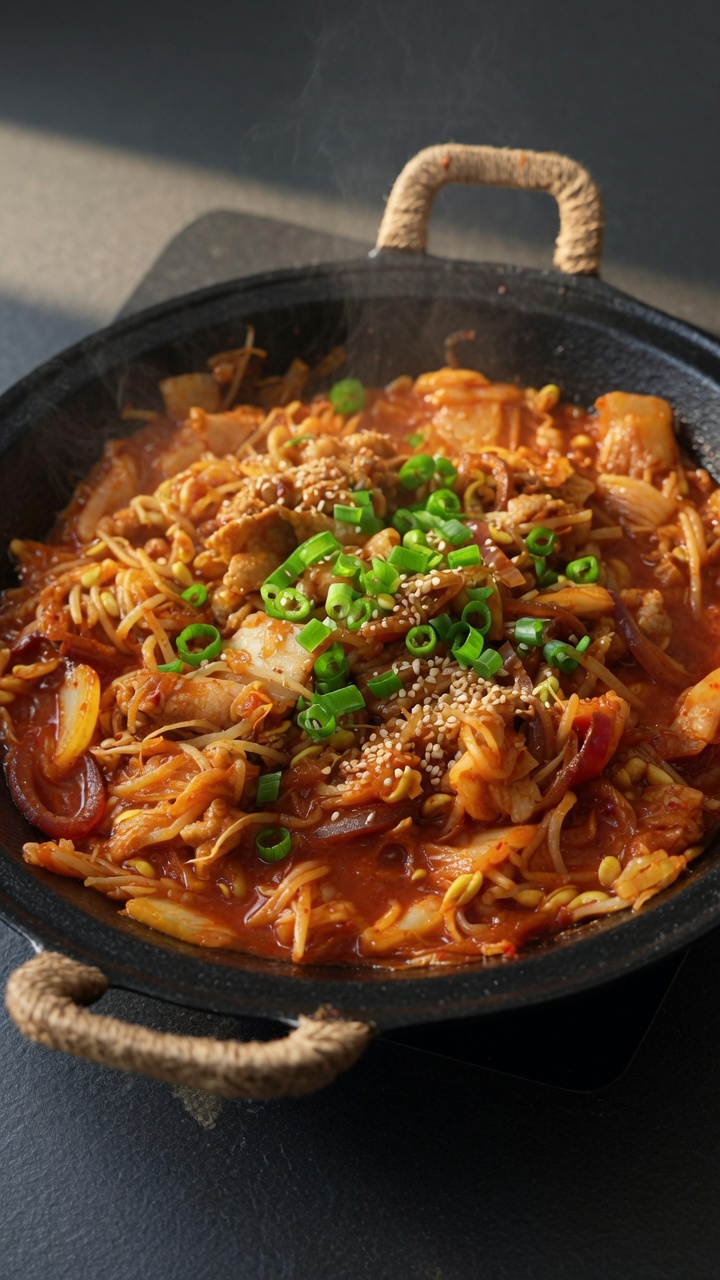
Korean braised kimchi with pork belly, or Kimchi Jjim, is a soul-warming dish that transforms humble pantry staples into a complex, flavor-packed meal. By braising a large, whole piece of sour kimchi alongside thick-cut pork belly for nearly an hour, the meat becomes exceptionally tender and absorbs the deep, fermented acidity of the kimchi. This dish offers a more concentrated, savory experience than traditional kimchi stew, making it a beloved comfort food perfect for long, slow dinners.
Ingredients
- 600 g pork belly, 2.5cm thick slices
- 600 g sour napa cabbage kimchi
- 100 g kimchi juice
- 500 ml water
- 0.5 large green onion
- 0.5 onion
- 5 tbsp mirin
- 2 tbsp fish sauce
- 2 tbsp tuna fish sauce
- 1.5 tbsp chili powder
- 1 tbsp sesame oil
- 1 tbsp perilla oil
- optional beef bouillon powder
Instructions
- 1Prepare the pork belly
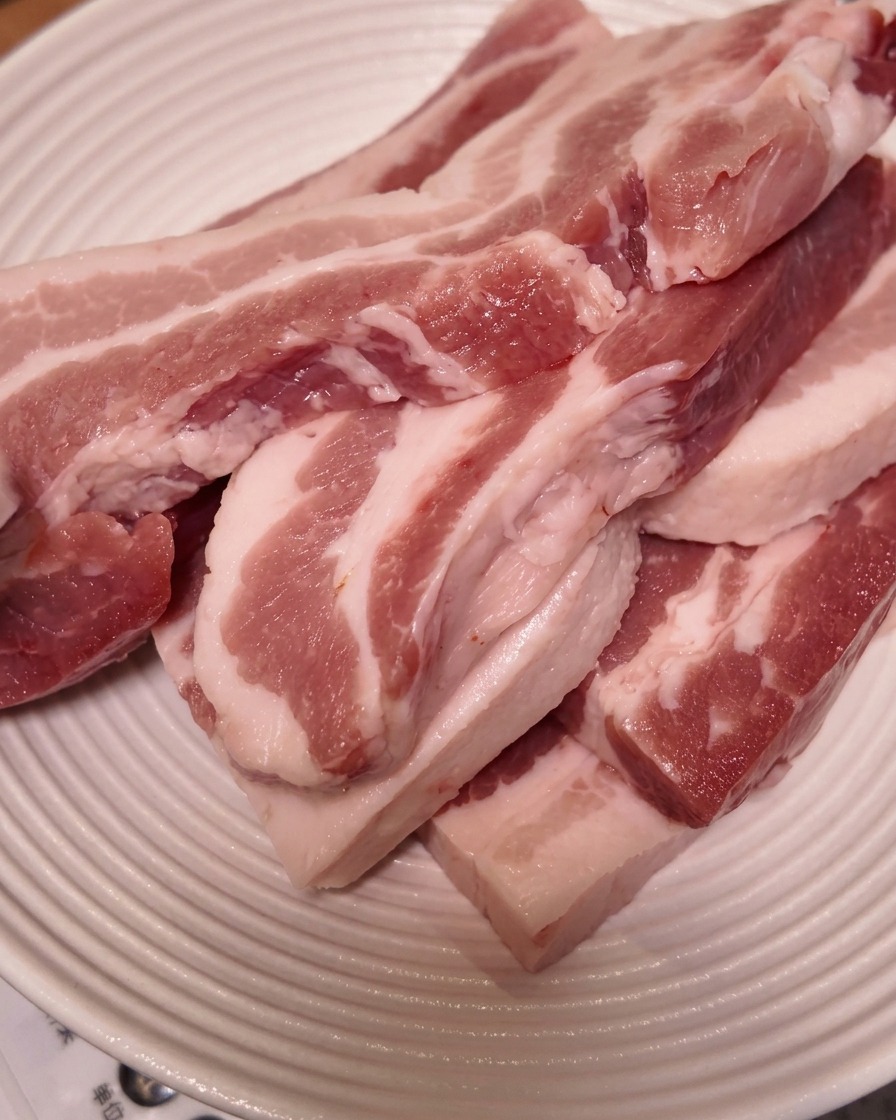
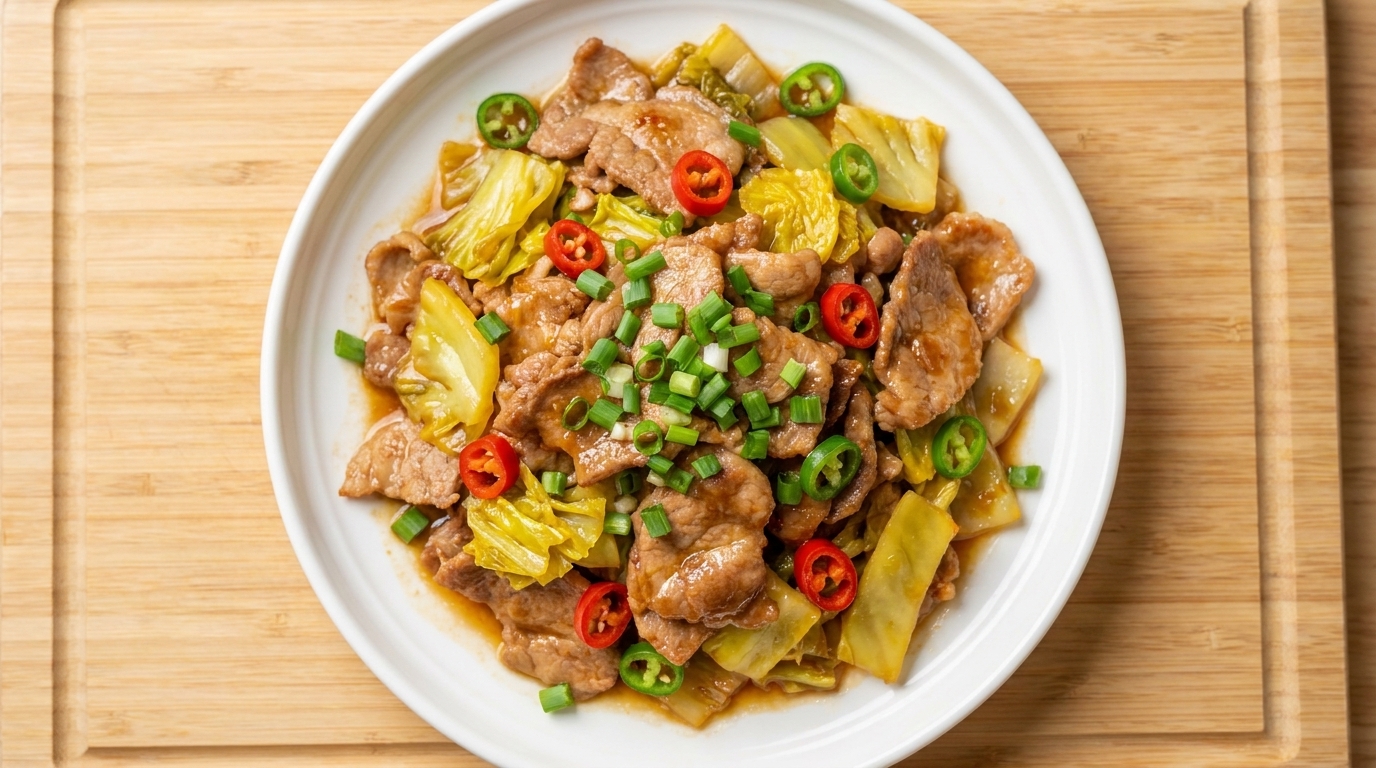
Start by preparing 600 grams of fresh pork belly. Ensure the pork belly is cut into thick slices, about 2.5 centimeters thick. Leaving the meat in thick slabs will allow it to remain tender and juicy during the long braising process.
Tip: Choosing a cut with a good balance of fat and lean meat is crucial for a rich and flavorful braise. - 2Prepare the whole kimchi
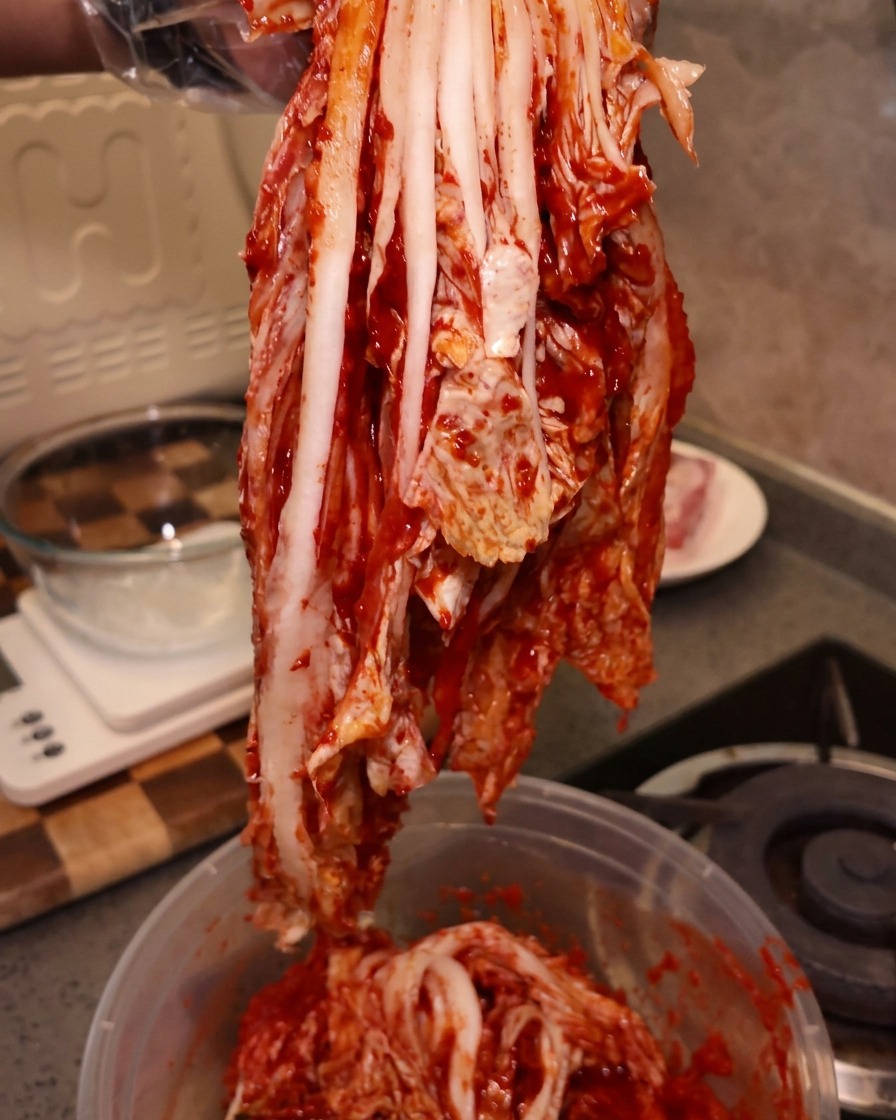
Prepare 600 grams of sour napa cabbage kimchi. Do not cut the kimchi; leave it as a large, whole piece for the braise. Be sure to save the kimchi juice, as you will need the kimchi and the juice to total about 700 grams.
Tip: Well-fermented, sour kimchi is essential for this dish, as the strong acidity perfectly balances the richness of the pork belly. - 3Pan-fry the pork belly
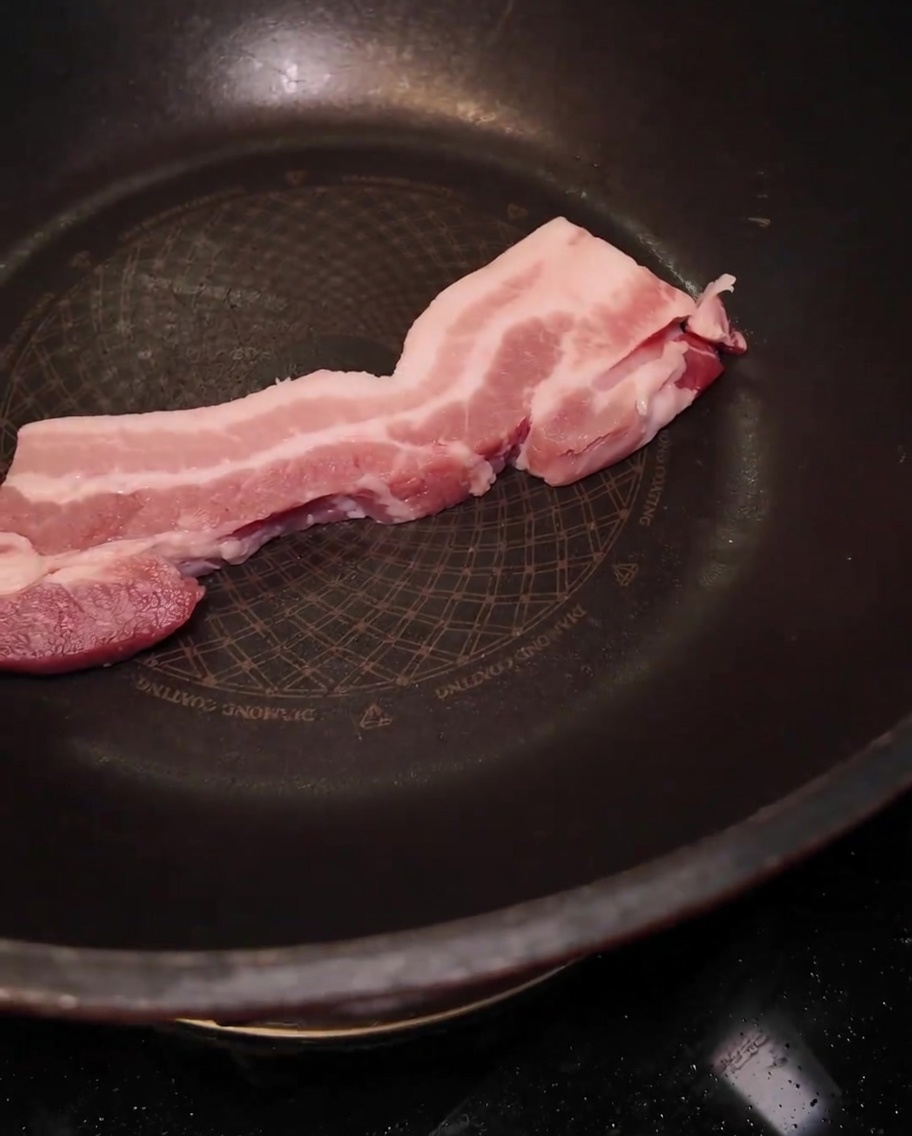
Prepare a large pot or pan with a lid. Place the thick slices of raw pork belly directly into the pan to begin frying them over the heat.
Tip: You dont need to add any extra cooking oil to the pan initially, as the pork belly will naturally release its own fat as it heats up. - 4Sear until browned
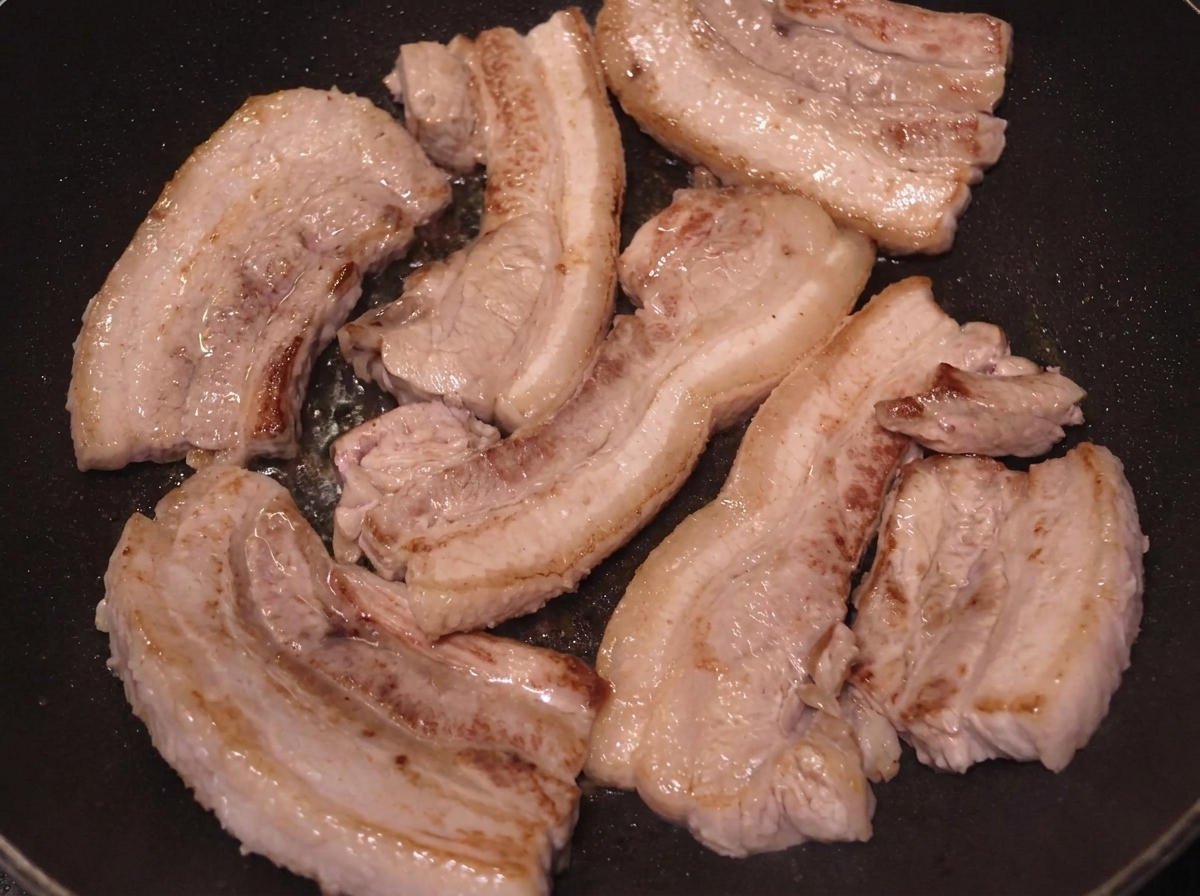
Fry the pork belly slices, flipping them as needed, until both sides are fully browned and a good amount of the pork fat has rendered out into the pan.
Tip: Rendering the fat properly at this stage ensures the final dish isnt overly greasy and adds a rich, savory crust to the exterior of the meat. - 5Add the onions
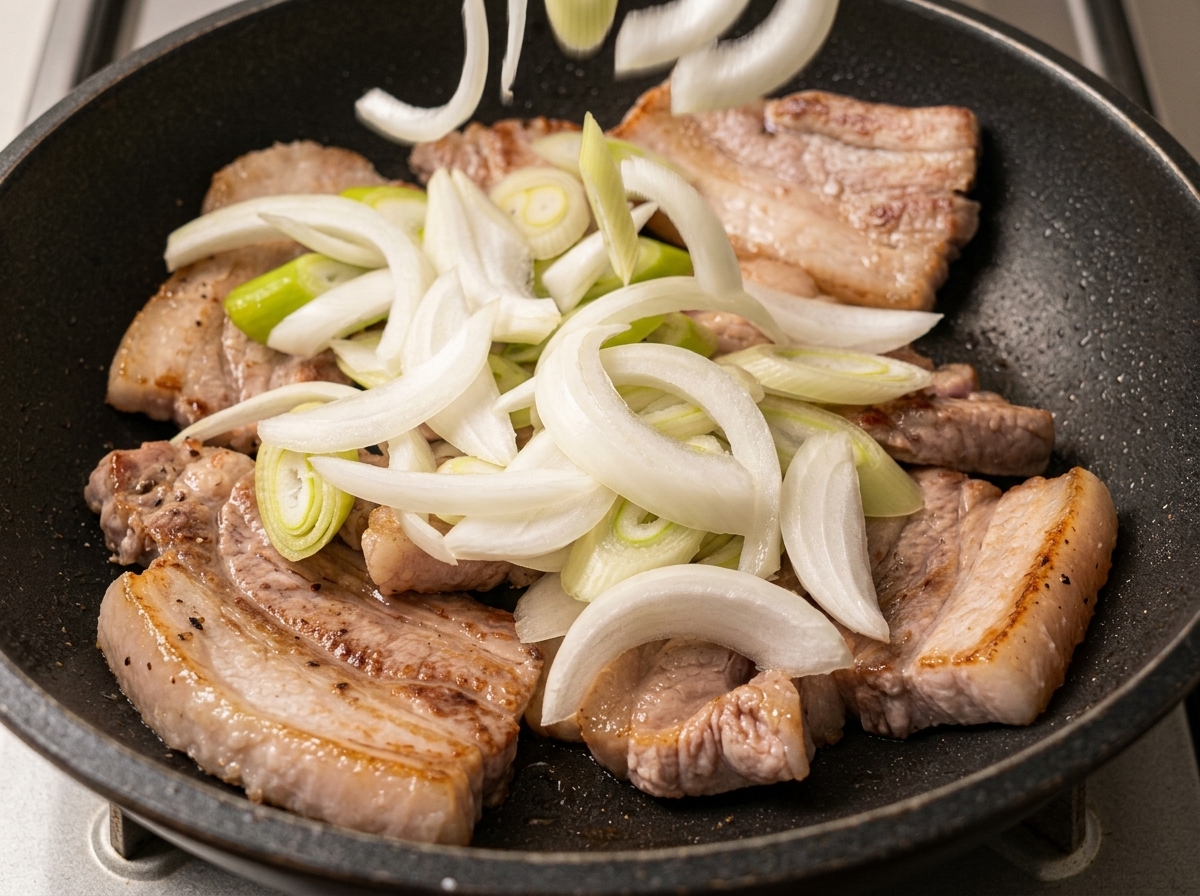
Once the pork belly is nicely browned and the fat has rendered, add half of a sliced large green onion and half of a sliced white onion into the pan. Fry everything together for about two minutes.
Tip: Frying the onions directly in the rendered pork fat will soften them and build a deeply aromatic base for the braise. - 6Add the whole kimchi
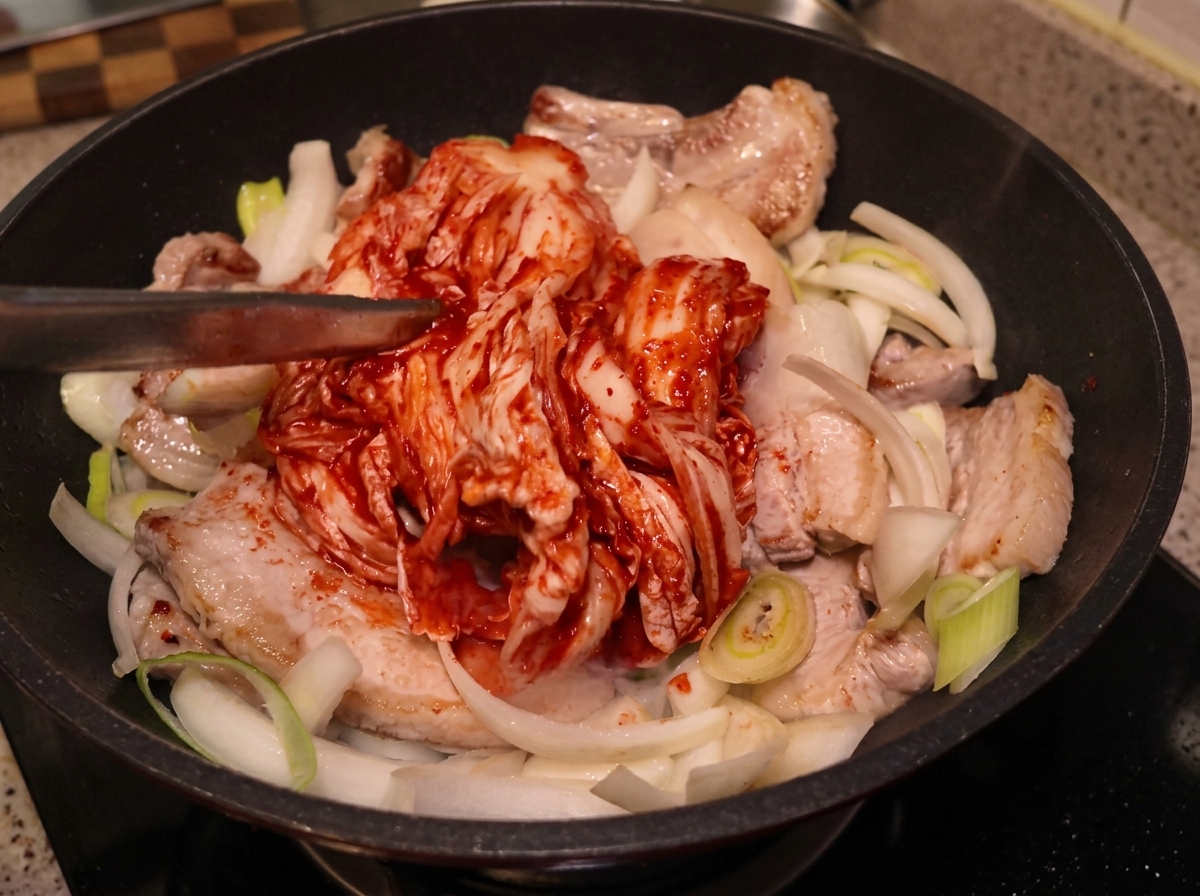
Place the large, whole piece of sour kimchi directly on top of the seared pork belly and onions in the pan. Pour in the reserved kimchi juice to incorporate all the sour and savory flavors.
Tip: Keeping the kimchi whole during the cooking process helps it retain its texture and look visually appealing when served. - 7Add water to the pot
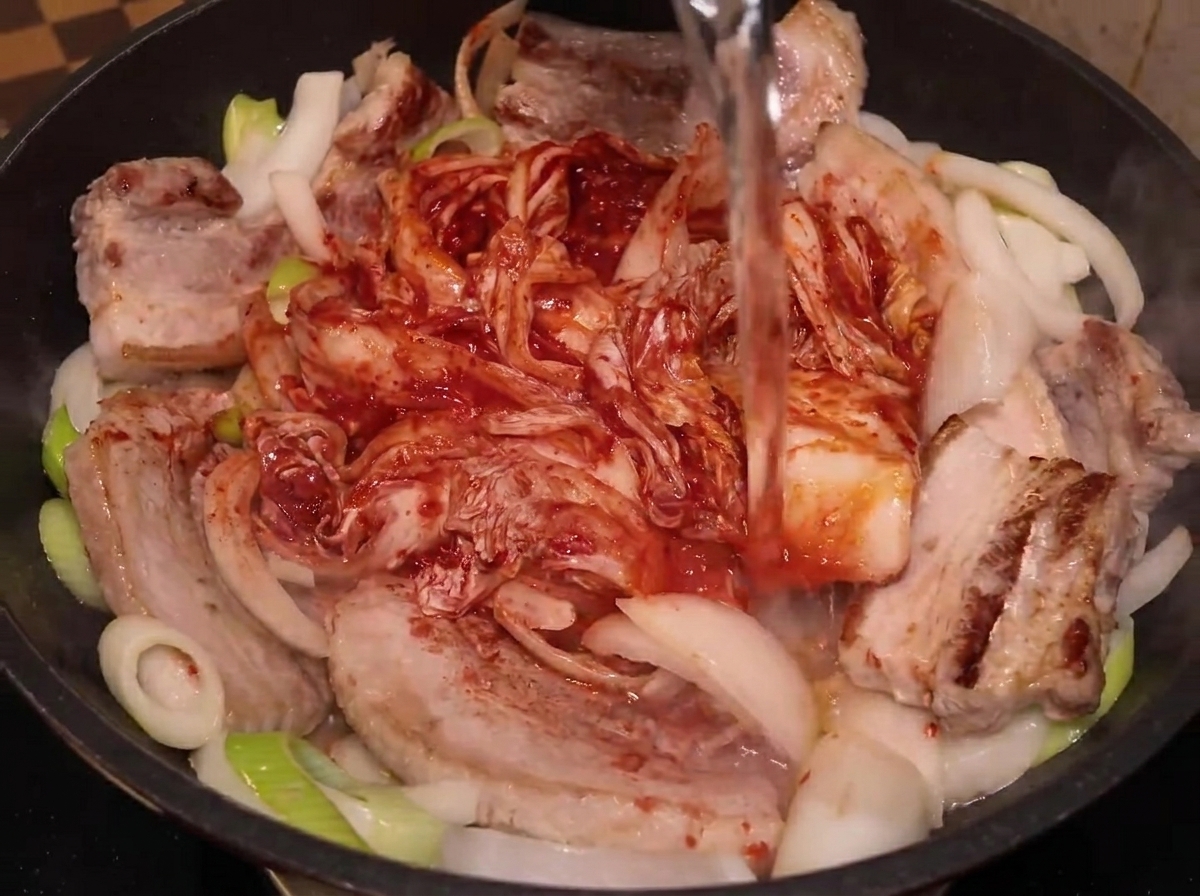
Pour 500 milliliters of water into the pan over the pan-fried pork belly, onions, and the large piece of whole kimchi.
Tip: Ensure the water covers the ingredients sufficiently for braising. - 8Season the broth
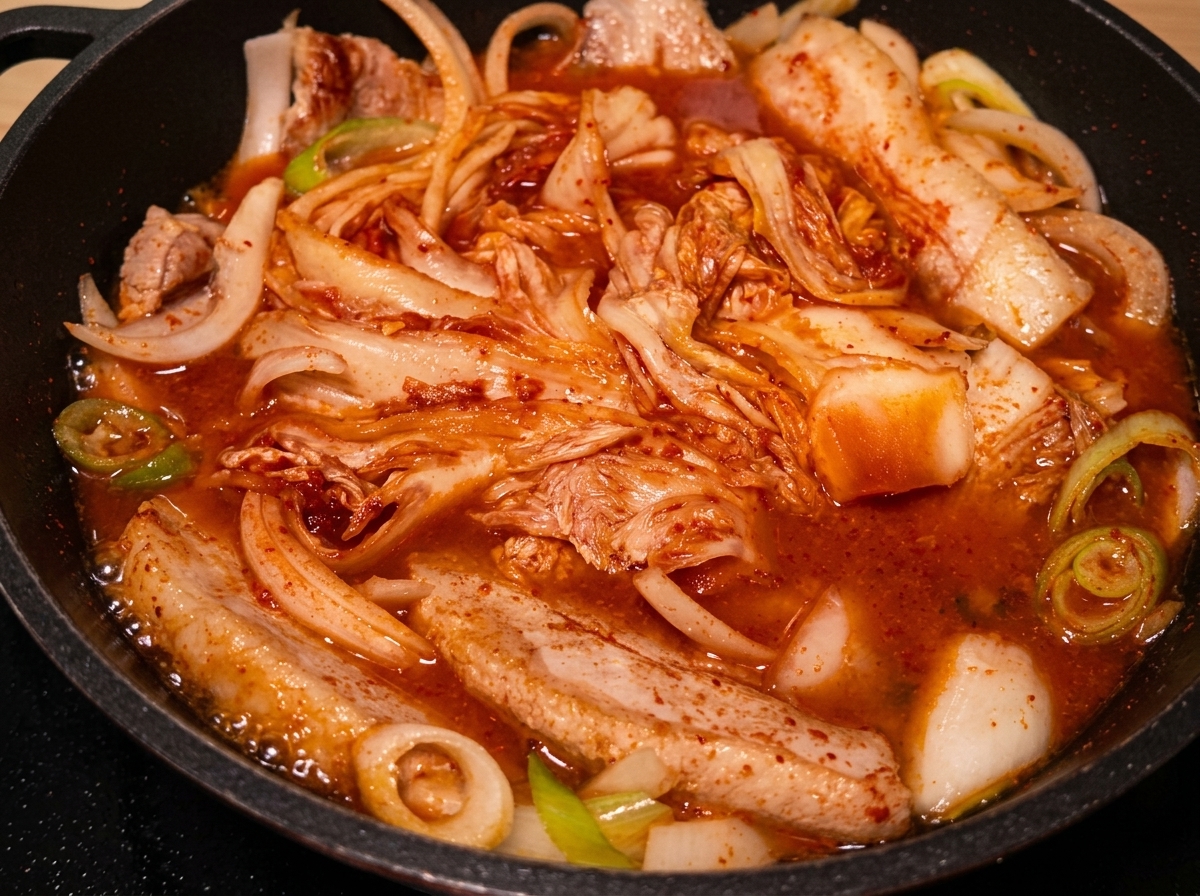
Add the liquid seasonings to the pot: 5 spoons of mirin, 2 spoons of fish sauce, and 2 spoons of tuna fish sauce. If you do not have tuna fish sauce, beef bouillon powder is a suitable substitute.
Tip: Tuna fish sauce provides the best depth of flavor for this dish. - 9Add chili powder
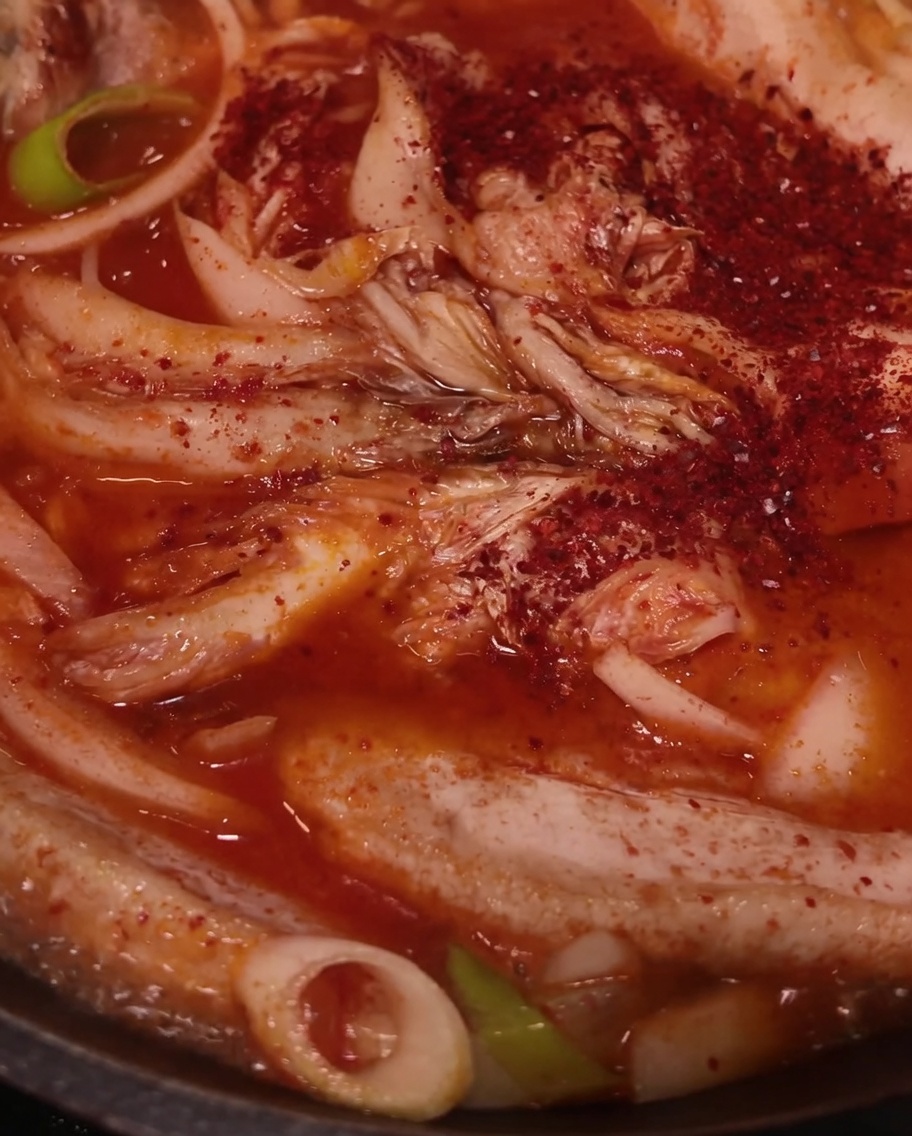
Sprinkle 1.5 spoons of chili powder over the ingredients in the pan to add spice and color to the braising liquid.
Tip: Adjust the amount of chili powder based on your preference for heat. - 10Simmer and stir
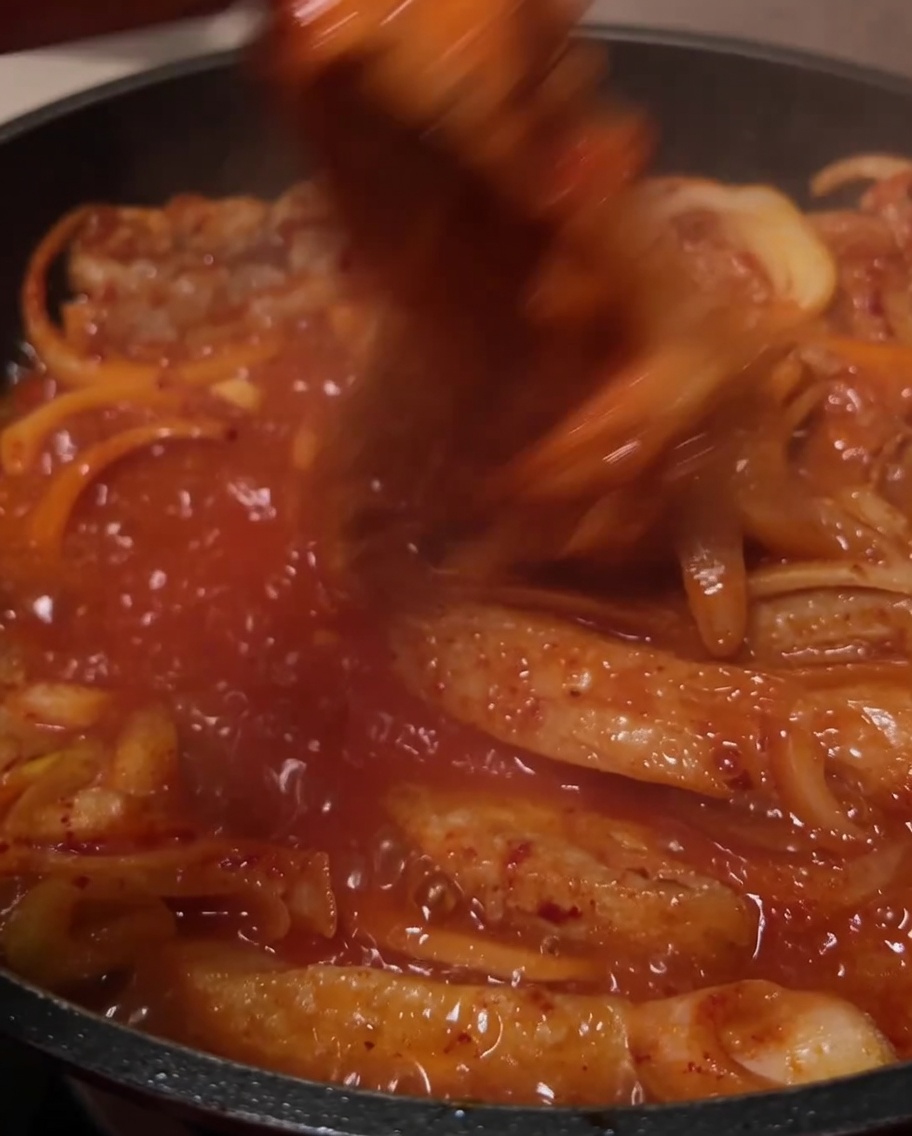
Cover the pot and simmer on high heat for 20 minutes. After the first 10 minutes, open the lid and stir the pork, onions, and kimchi to ensure even cooking and flavor distribution.
Tip: Stirring halfway through helps the meat absorb the flavors of the kimchi and seasonings. - 11Finish with oils
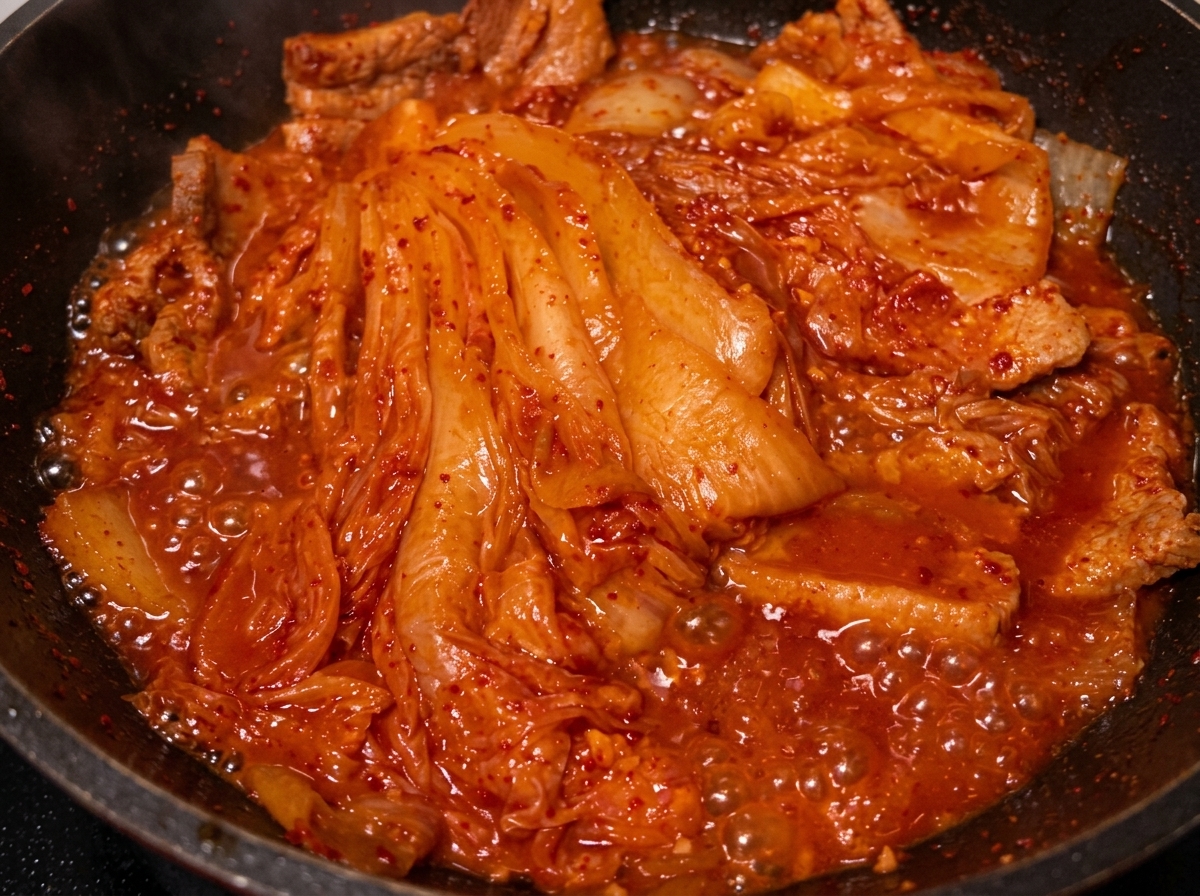
After simmering for 10 minutes on low heat, add one spoon of sesame oil and one spoon of perilla oil to the pan. If the sauce has reduced too much, add a little water.
Tip: Adding the oils at the end enhances the fragrance of the dish. - 12Rest the dish
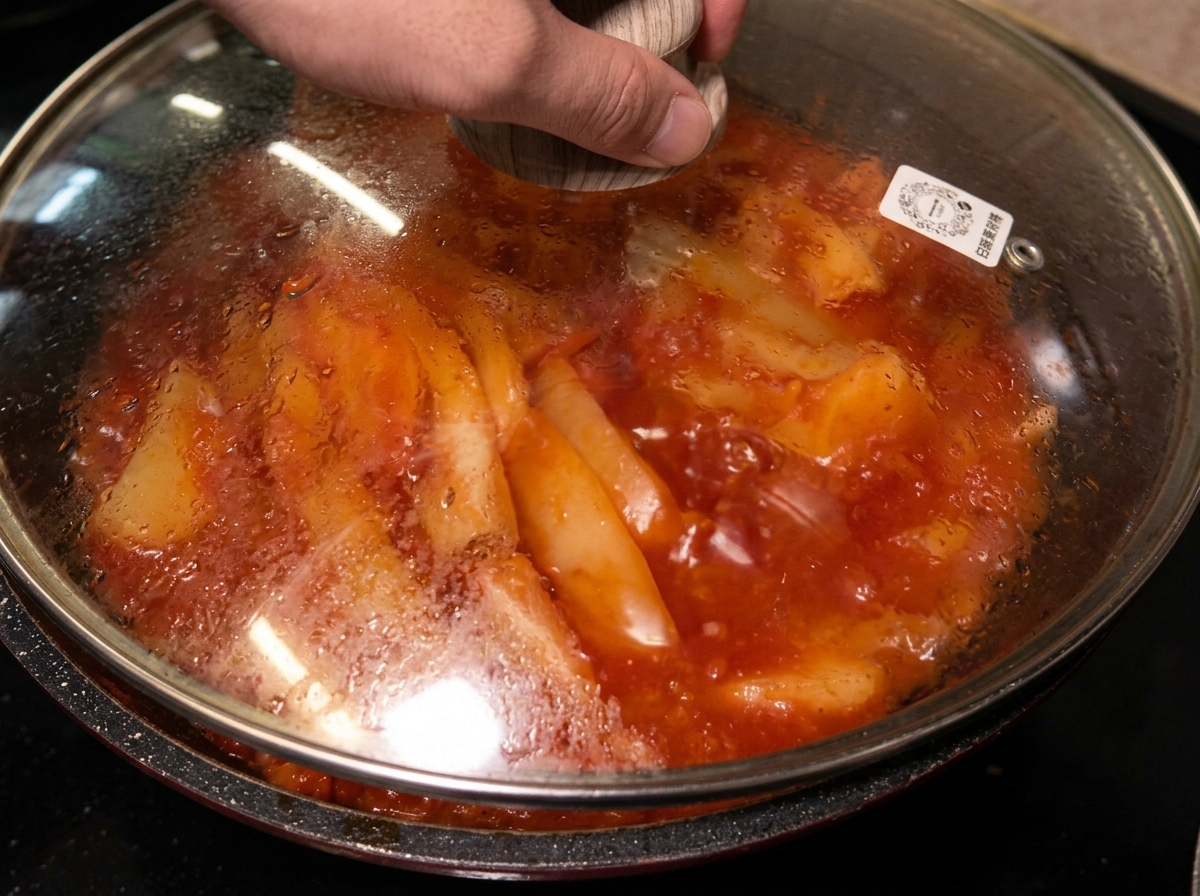
After the final 20 minutes of simmering, turn off the heat. Keep the lid on and do not open it. Let the dish rest for 10 minutes to allow the meat to become tender.
Tip: Resting is the most important step to achieve perfectly tender meat.