Pickled Cabbage Stir-fried
Pork
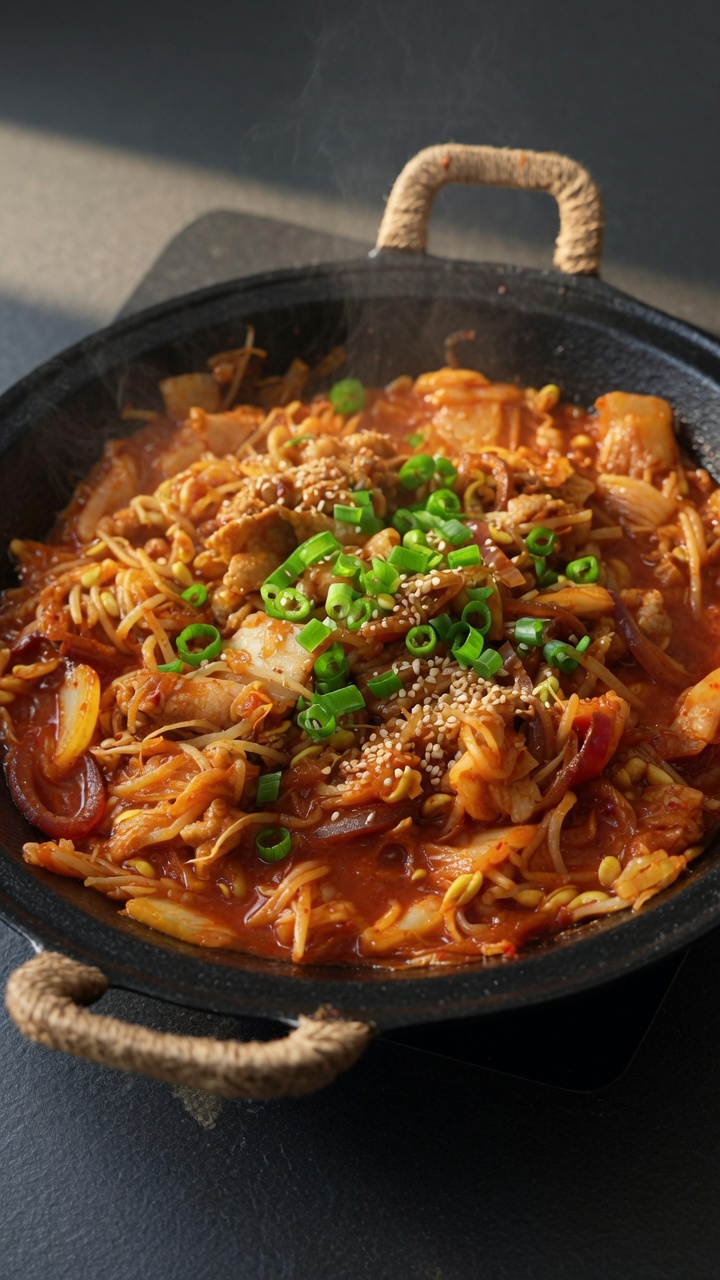
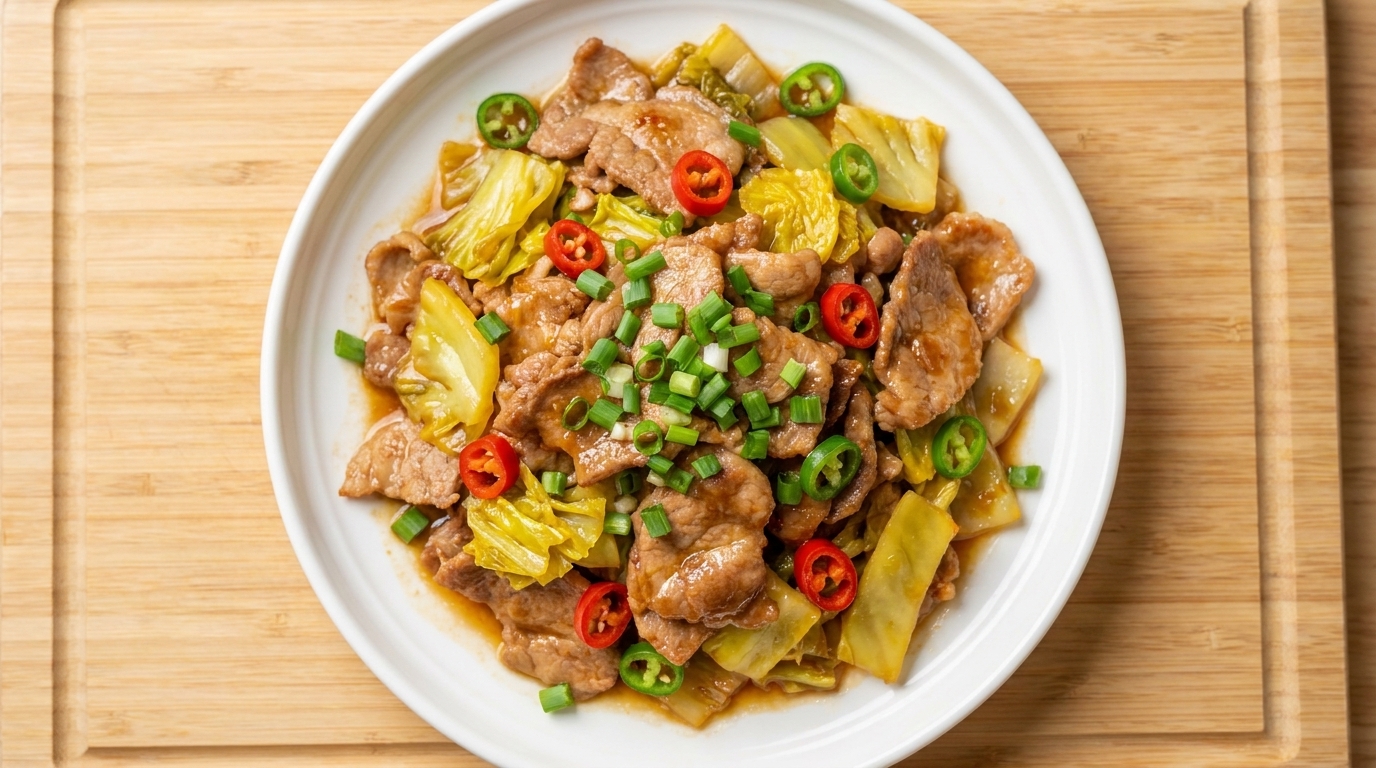
A perfect blend of savory pork and tangy pickled cabbage, this stir-fry is a masterclass in balancing flavors. Wok-seared for that signature smoky aroma.
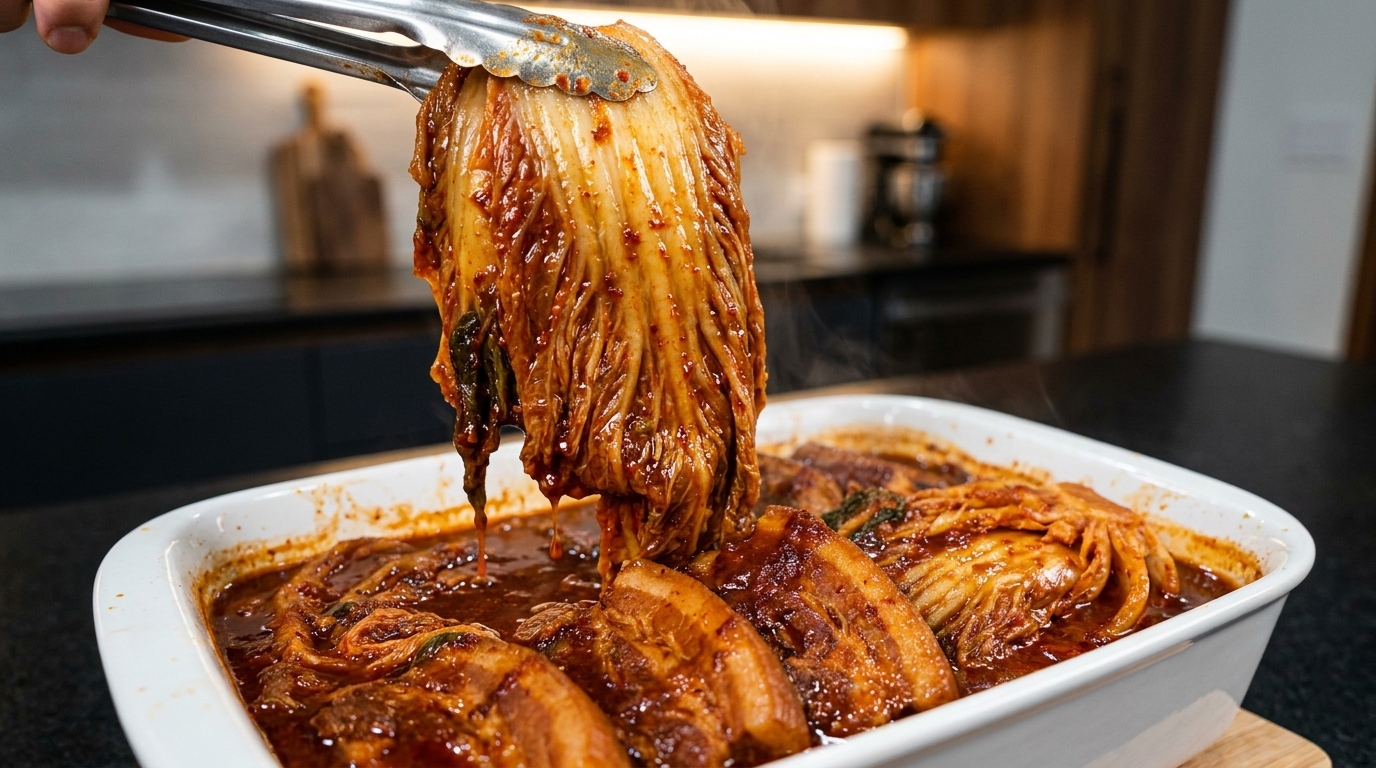
Pickled cabbage stir-fried with pork is a quintessential home-cooked dish that perfectly balances savory, sour, and spicy notes. By first dry-frying the pickled cabbage to remove excess moisture and intensify its flavor, then pairing it with succulent pork belly, you create a dish that is incredibly appetizing and pairs perfectly with steamed white rice.
Ingredients
- 300 g pickled cabbage
- 150 g pork belly
- 100 g marinated lean pork
- 3 fresh red chilies
- 3 fresh green chilies
- 3 garlic cloves
- 2 tbsp light soy sauce
- 1/2 tsp black pepper powder
- 1 tbsp cooking oil
- 1 pinch salt
- 2 stalks green onions
Instructions
- 1Slice the pickled cabbage
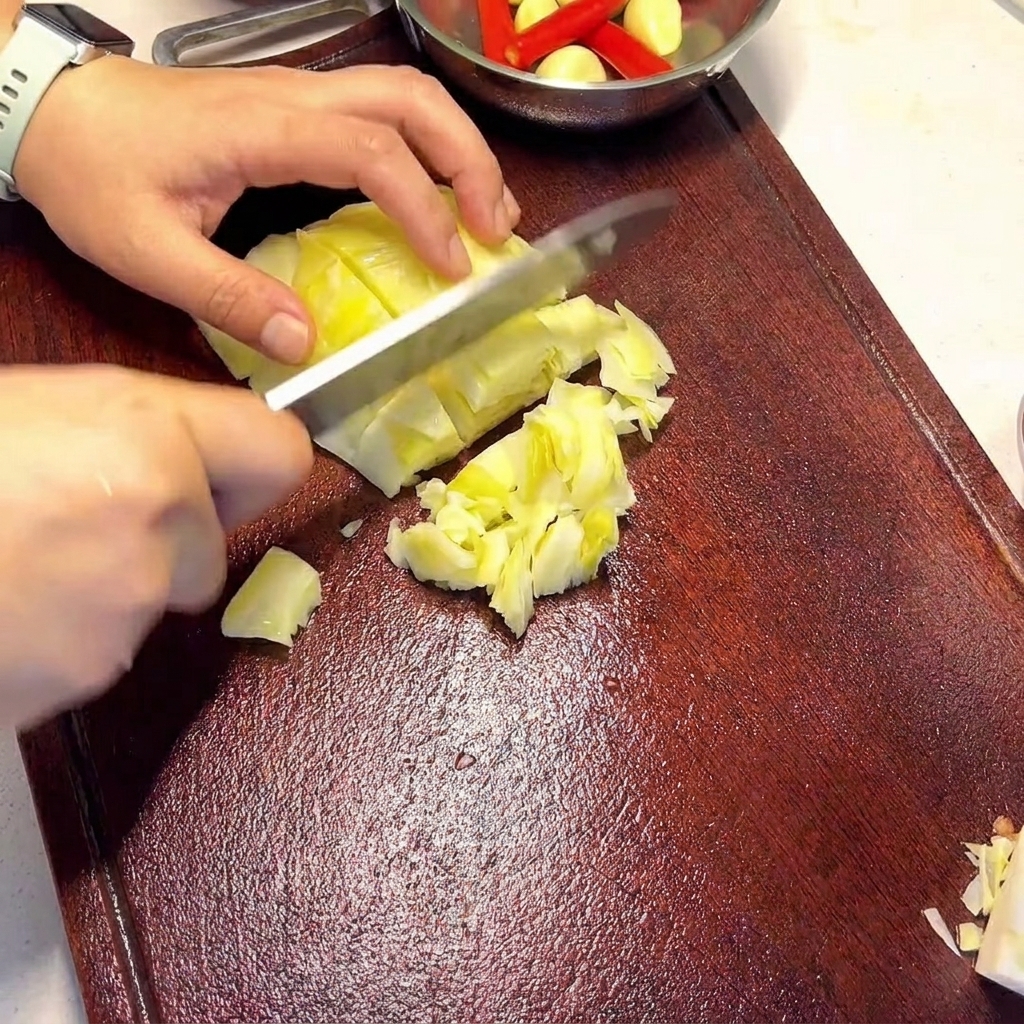
Place the homemade pickled cabbage on a cutting board and slice it into bite-sized pieces or your desired shape. Proper sizing ensures the cabbage cooks evenly and absorbs the flavors from the meat and aromatics quickly.
Tip: If the pickled cabbage is overly salty or sour, you can give it a quick rinse and squeeze out the excess moisture before chopping. - 2Chop the red chilies
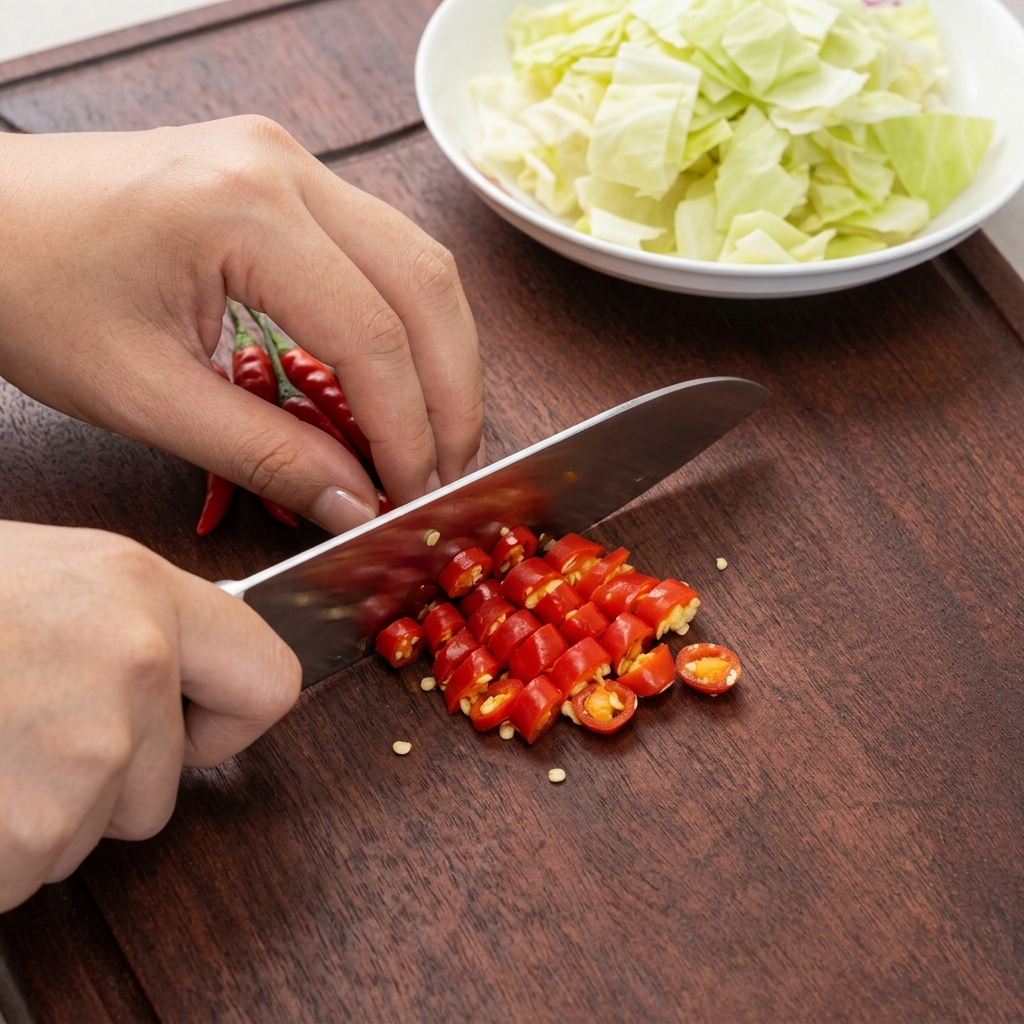
Take fresh red chilies and chop them into small, uniform rings. These chilies will add a bright pop of color and a spicy kick to balance the sourness and cut through the richness of the pork belly.
Tip: Leave the seeds in for extra heat, or scrape them out if you prefer a milder dish. - 3Slice the garlic
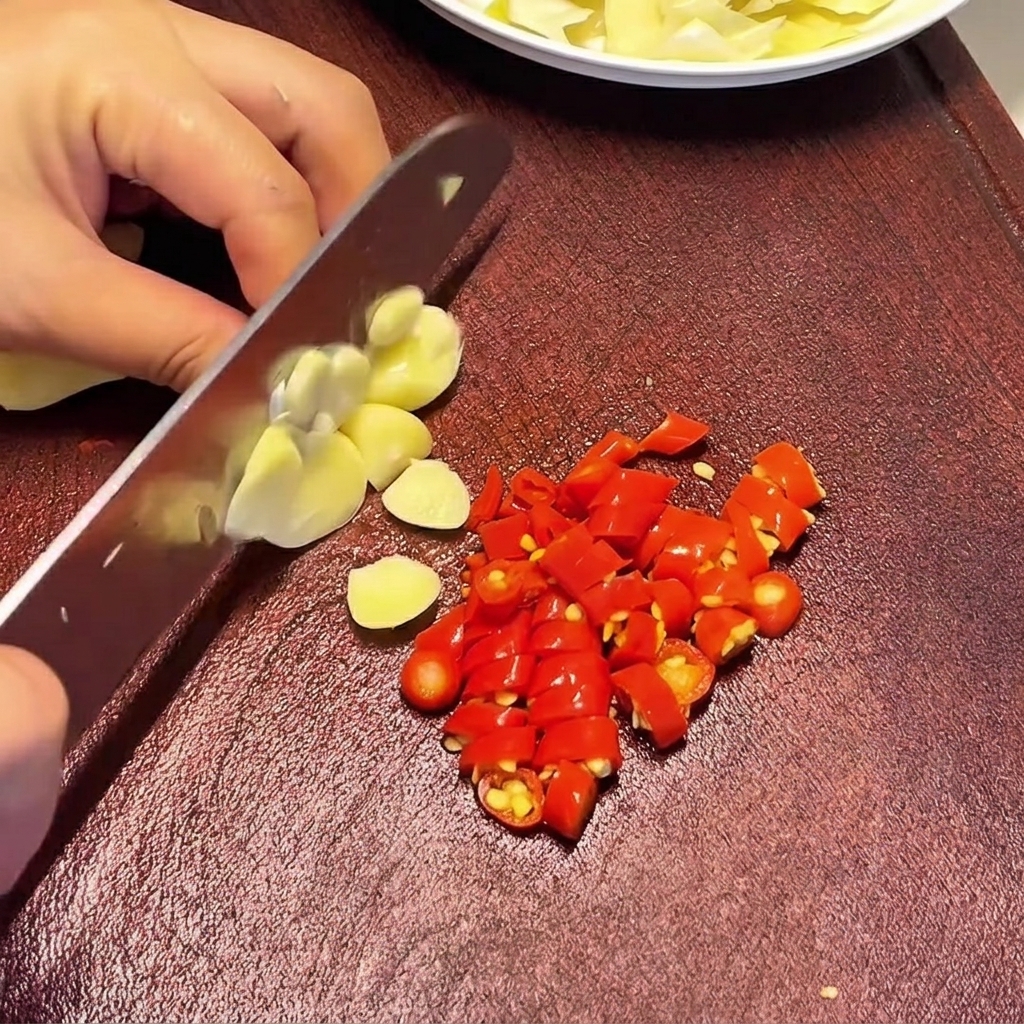
Peel the fresh garlic cloves and slice them thinly. The garlic will release its essential aromatic oils when stir-fried, greatly enhancing the overall savory flavor profile of the dish.
Tip: Freshly sliced garlic provides a stronger, sharper aroma compared to pre-minced options, which is perfect for this robust stir-fry. - 4Prepare the green chilies
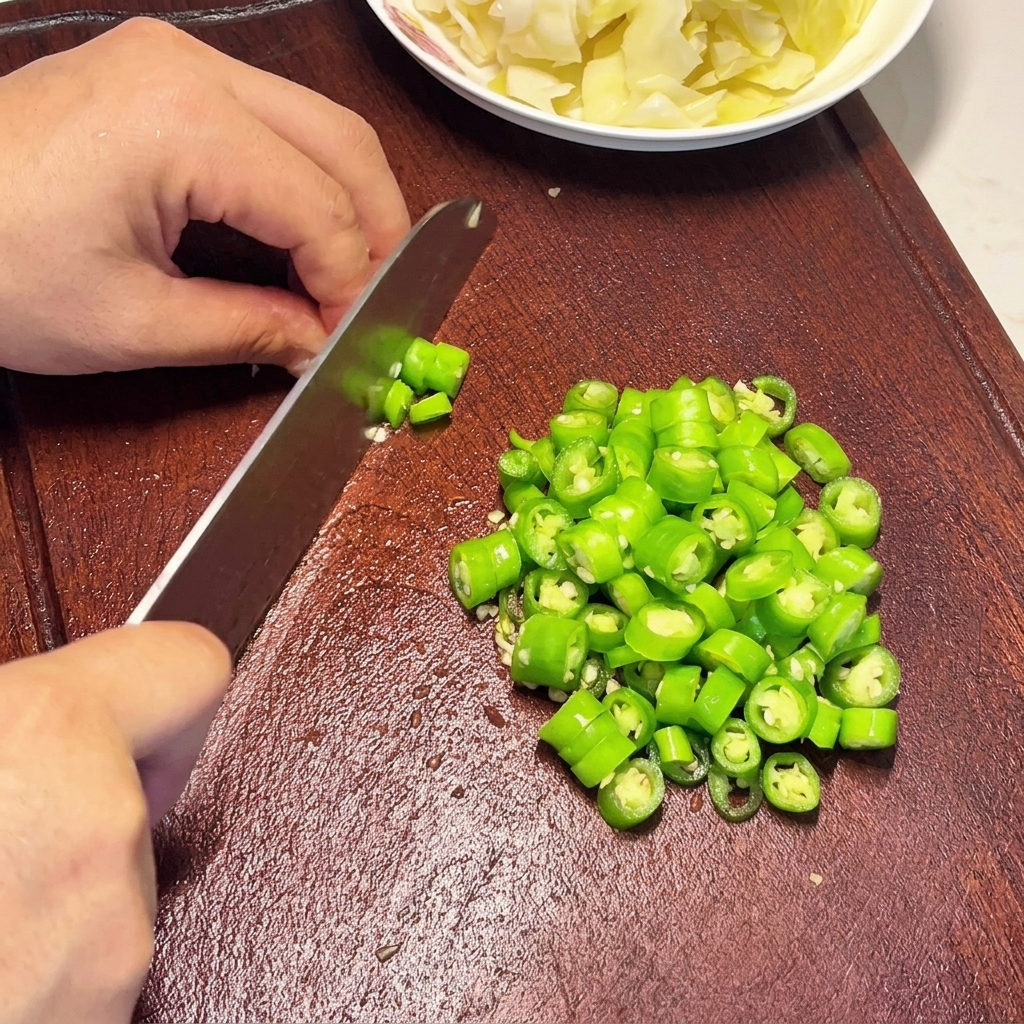
Chop the green chilies into small rings, similar to the red chilies. The combination of both green and red chilies creates a vibrant, appetizing look and provides a well-rounded, layered heat.
Tip: Wash your hands thoroughly with soap after handling the hot chilies to avoid accidentally irritating your eyes. - 5Add the cabbage to the pan
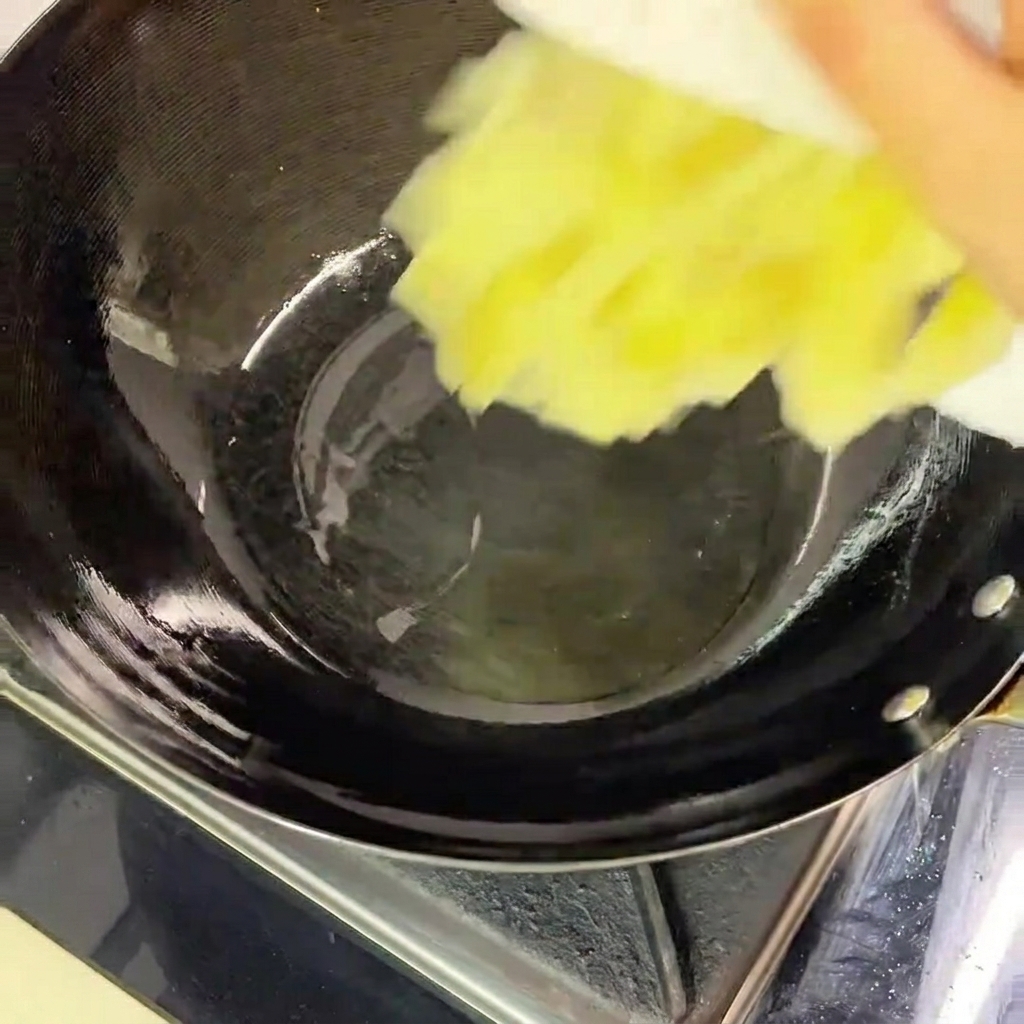
Heat a wok or large pan and add a small amount of oil along with a pinch of salt. Carefully slide the chopped pickled cabbage into the hot pan to begin the initial cooking process.
Tip: Make sure the pan is properly preheated so the cabbage begins to sear immediately rather than steaming. - 6Stir-fry to remove moisture
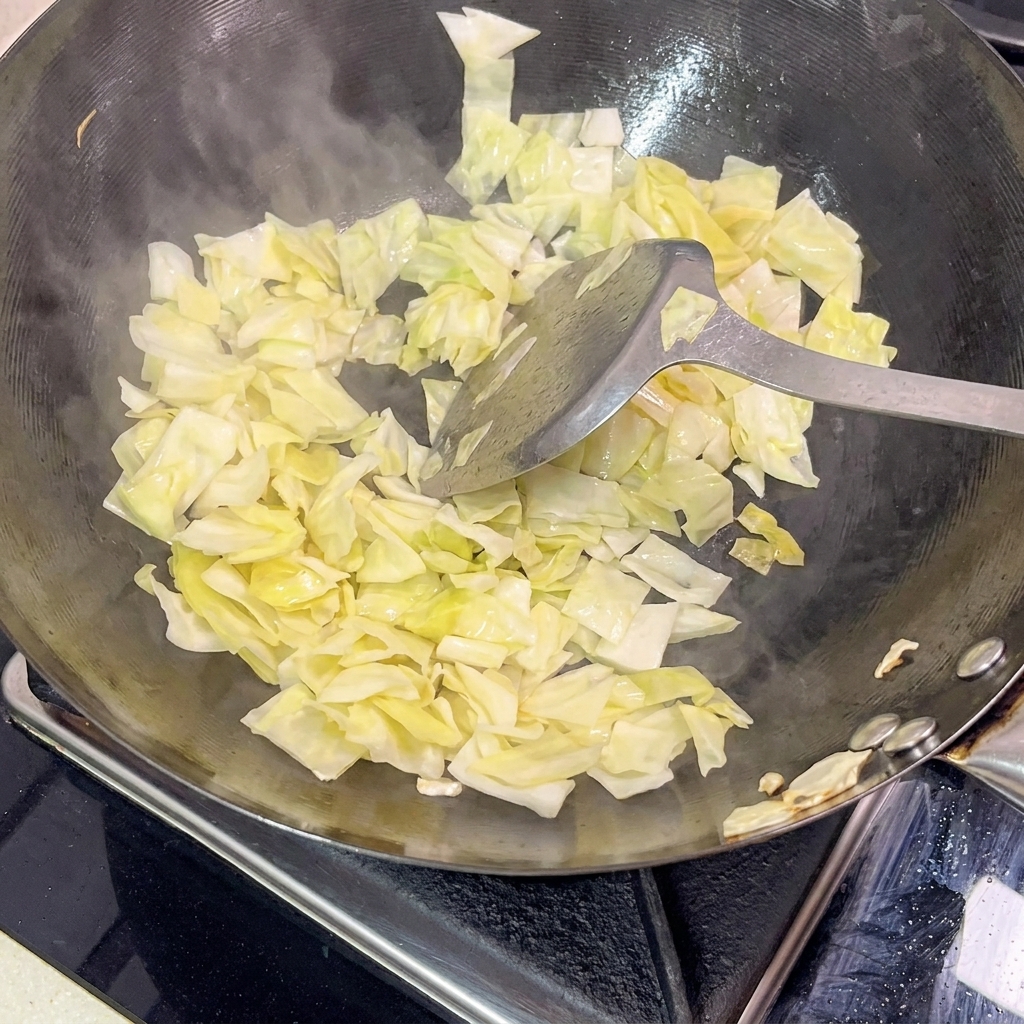
Stir-fry the pickled cabbage over heat to cook out its excess moisture. Keep tossing until the edges become slightly charred and fragrant. Once it reaches this state, remove it from the pan and set it aside on a plate for later.
Tip: Removing the moisture concentrates the flavor of the cabbage and prevents the final stir-fry from becoming watery. - 7Remove the cabbage
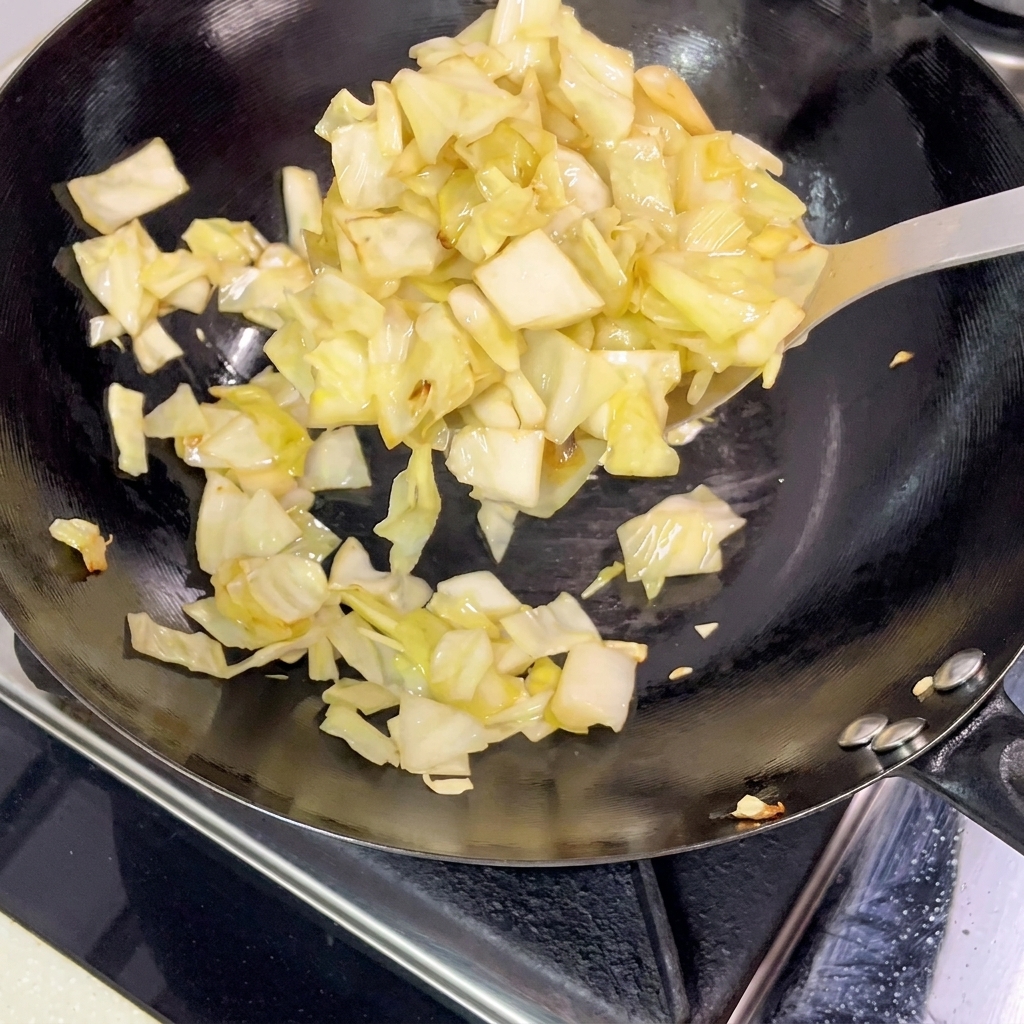
Once the pickled cabbage is stir-fried until slightly charred and the excess moisture has evaporated, remove it from the wok and place it onto a clean plate. Set this aside to be combined with the meat later.
Tip: Stir-frying the cabbage first helps to concentrate its flavor and achieve a better texture before mixing it with other ingredients. - 8Add pork belly
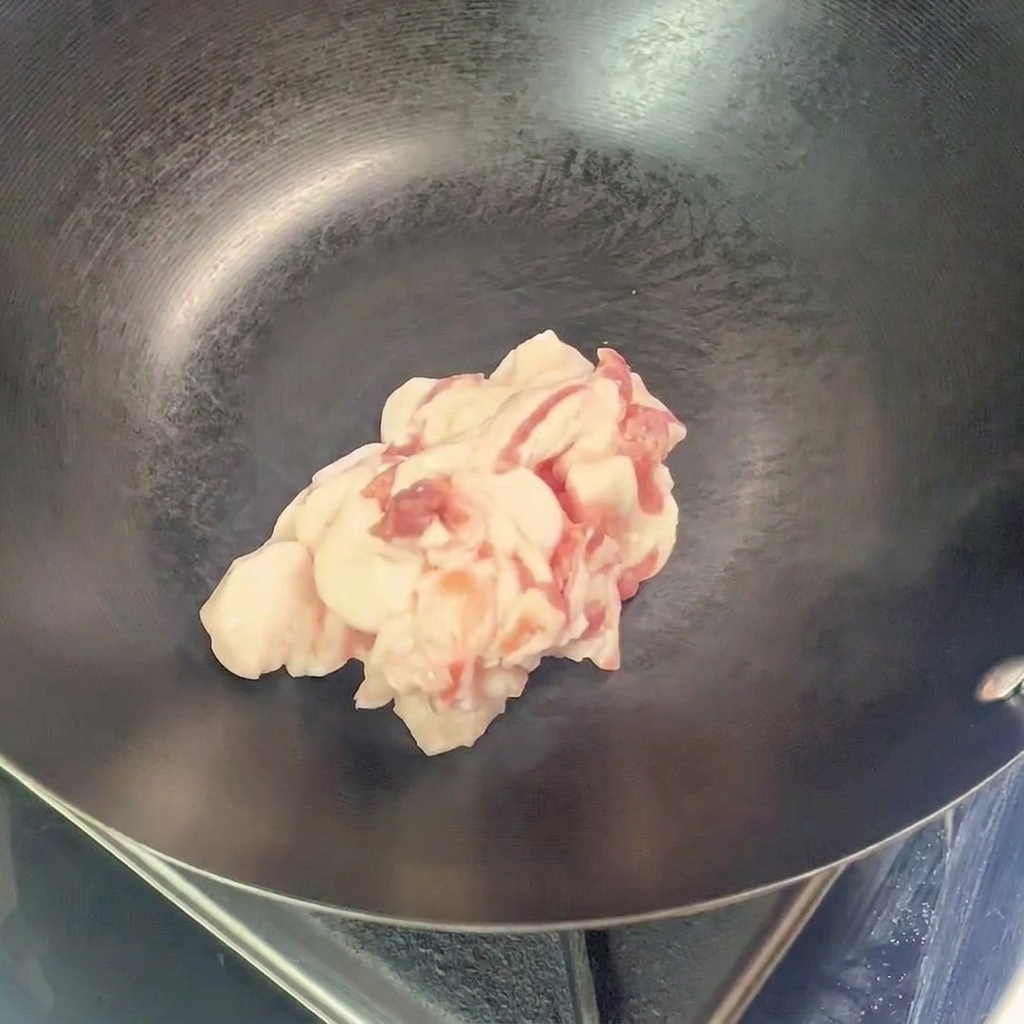
In the same hot wok, add the raw pork belly pieces. Stir-fry the pork over medium heat to begin rendering out the fat, which adds significant fragrance to the dish.
Tip: Ensure the wok is sufficiently hot before adding the pork belly to prevent it from sticking and to encourage quick rendering. - 9Render the pork fat
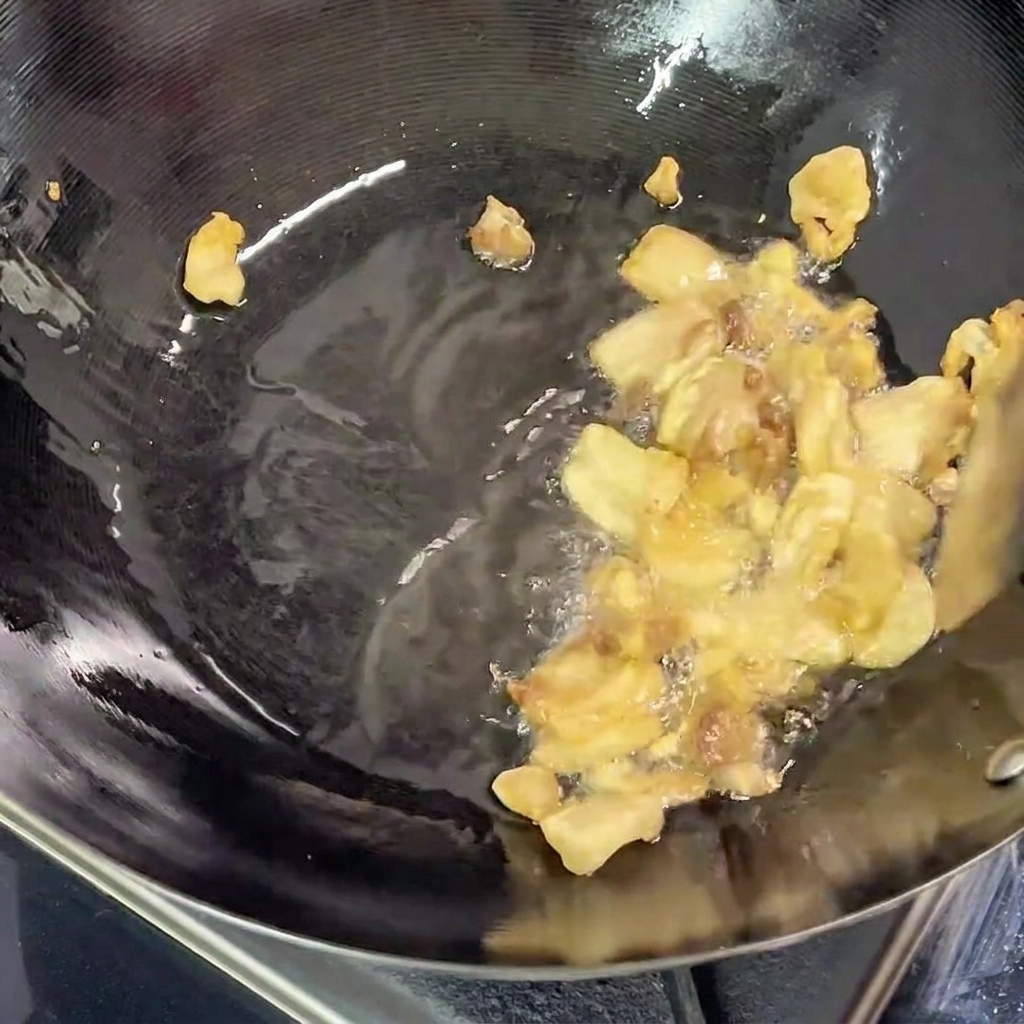
Continue frying the pork belly pieces in the wok, allowing the fat to render out completely. This process builds the aromatic base for the rest of the ingredients.
Tip: Keep the heat consistent so the pork belly renders its fat without burning the meat. - 10Add marinated lean meat
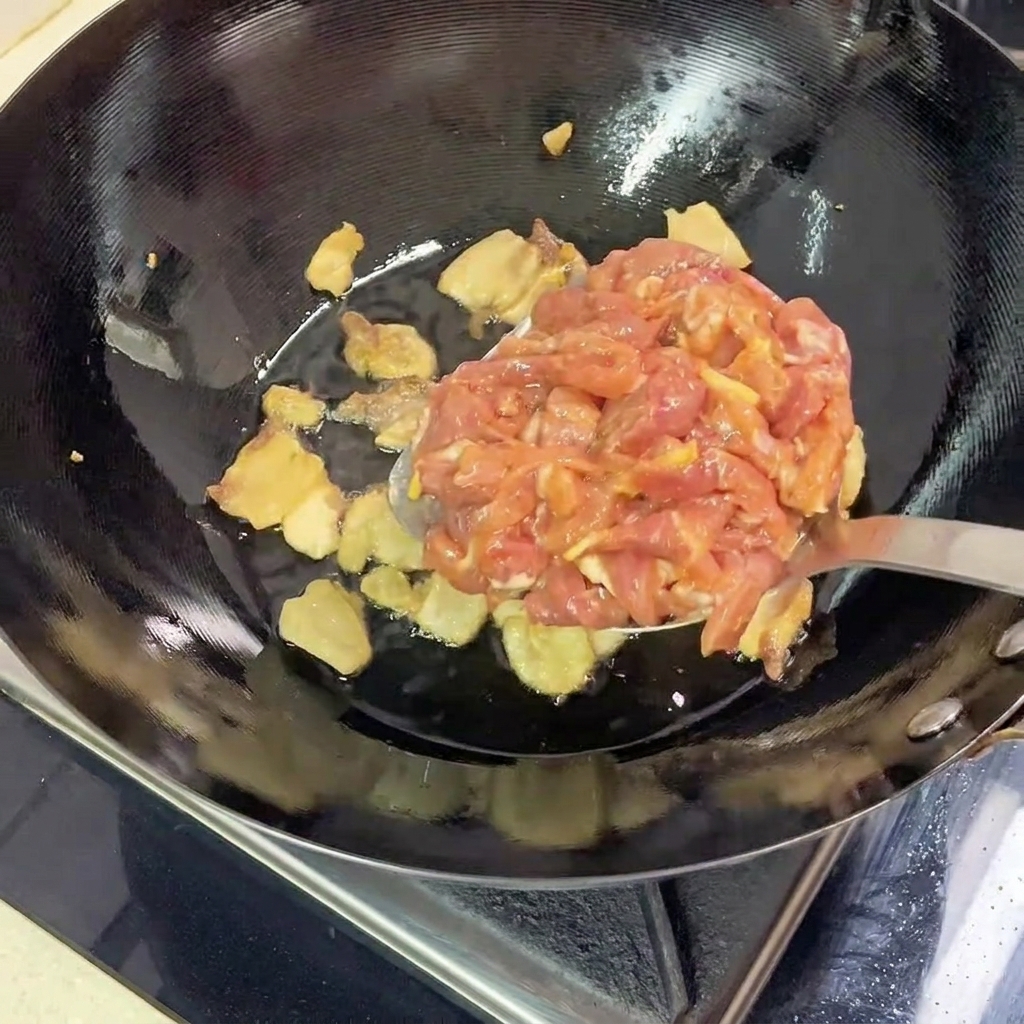
Add the marinated lean meat strips into the wok along with the rendered pork belly. Stir-fry quickly to combine and cook until the meat changes color.
Tip: Stir-fry on high heat to ensure the meat stays tender and absorbs the flavors quickly. - 11Cook the pork
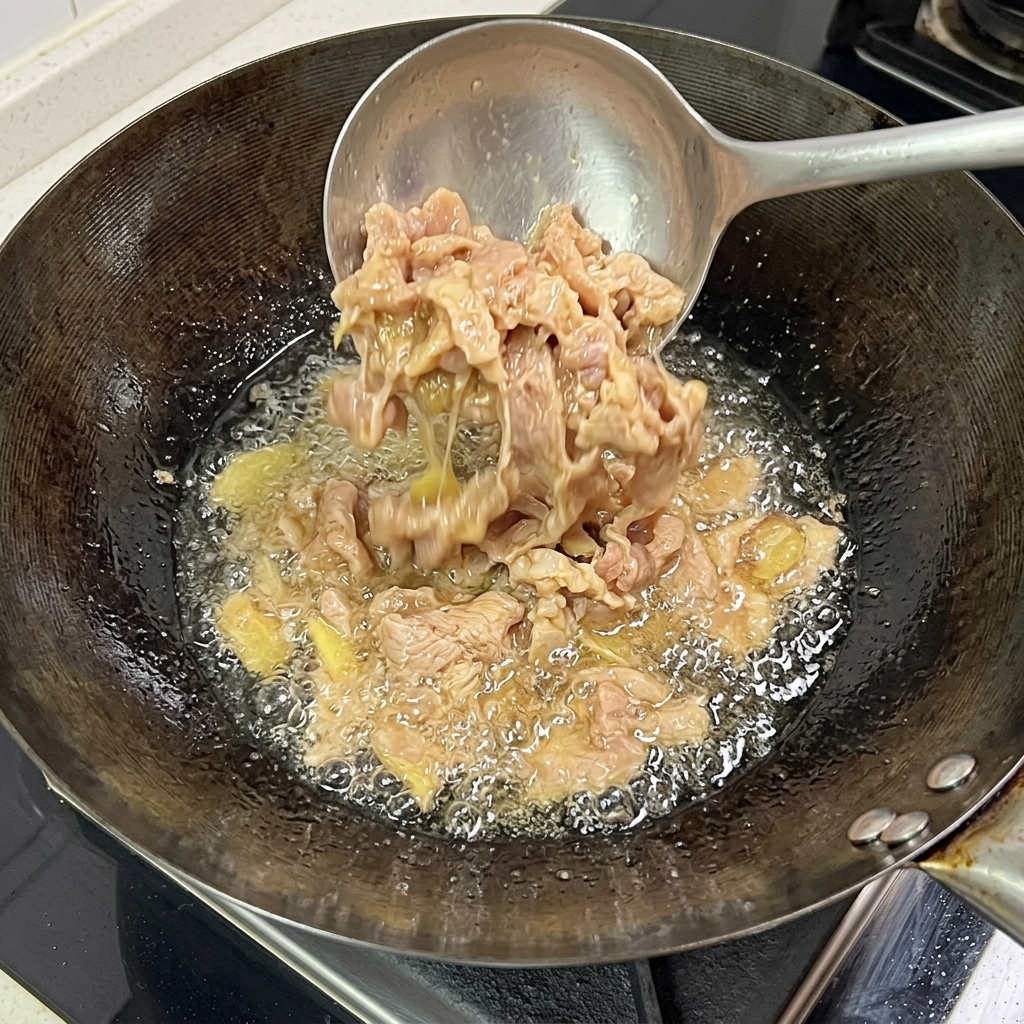
Stir-fry the mixture of pork belly and lean meat over high heat. Continue until all pieces are opaque and the surface appears browned, ensuring the meat is fully cooked.
Tip: Moving the meat constantly prevents it from overcooking and ensures even browning. - 12Add aromatics
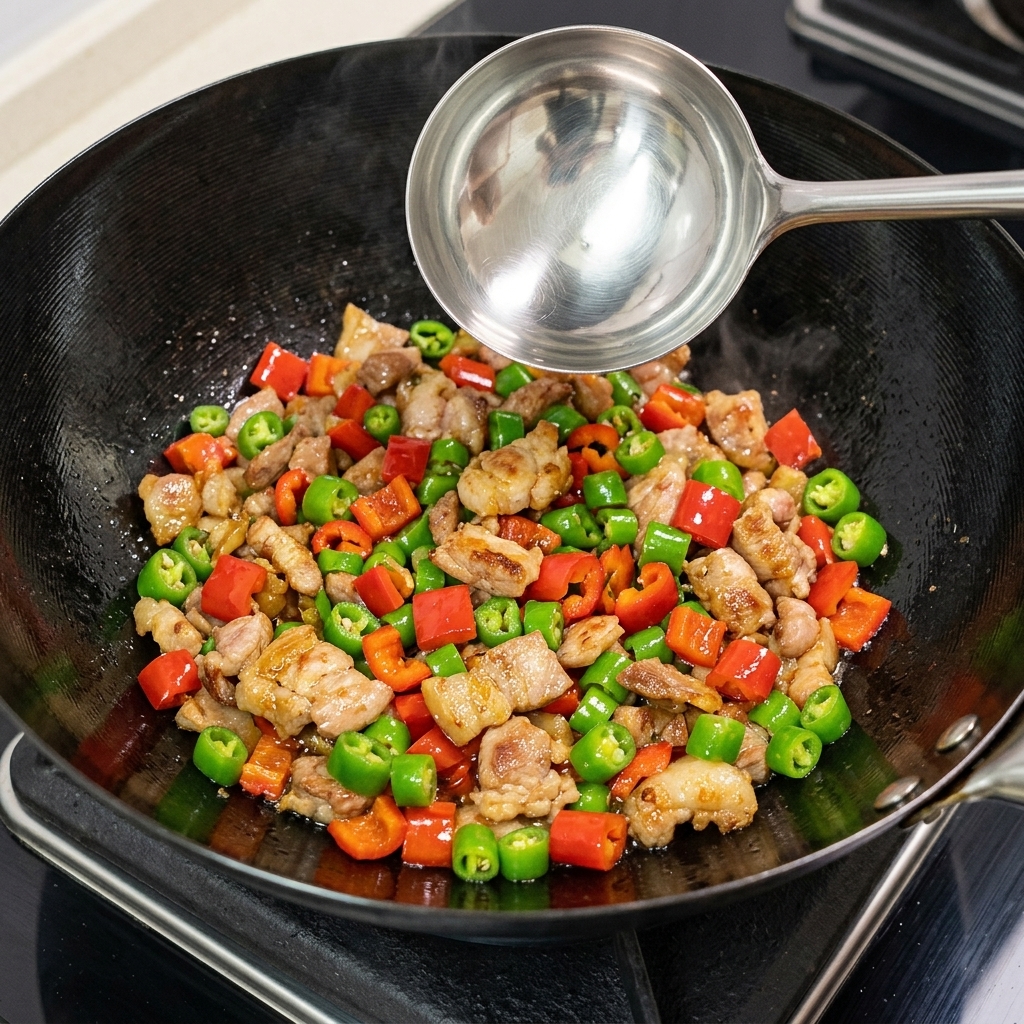
Add the chopped red and green chilies along with the garlic into the wok with the cooked pork. Stir-fry briefly to release their spicy and pungent aromas into the meat mixture.
Tip: Adding the chilies and garlic after the meat ensures they toast in the rendered fat without burning. - 13Add soy sauce
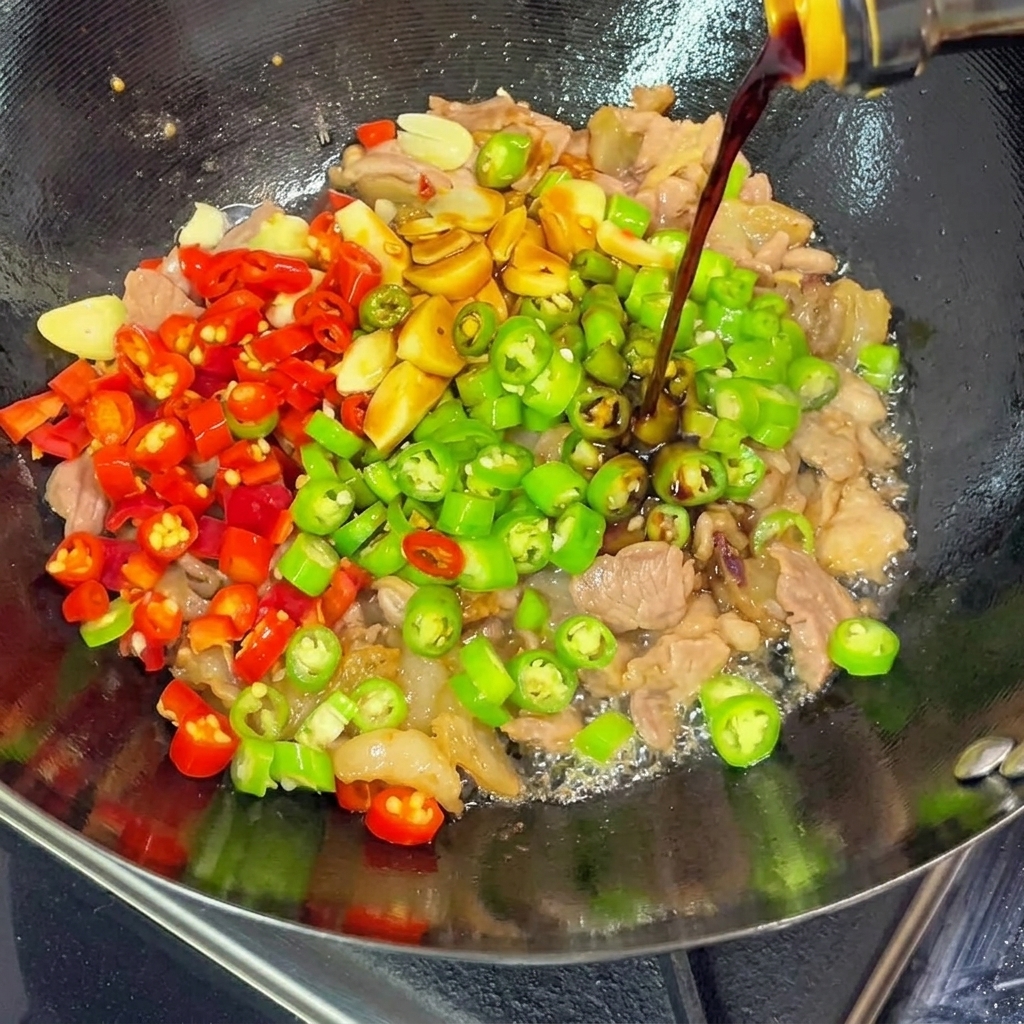
With the pork and aromatic vegetables lightly browned, pour an appropriate amount of light soy sauce directly over the ingredients in the wok to build the savory flavor base.
Tip: Pour the soy sauce along the hot edges of the wok rather than directly on the meat to maximize its aromatic release. - 14Season with pepper
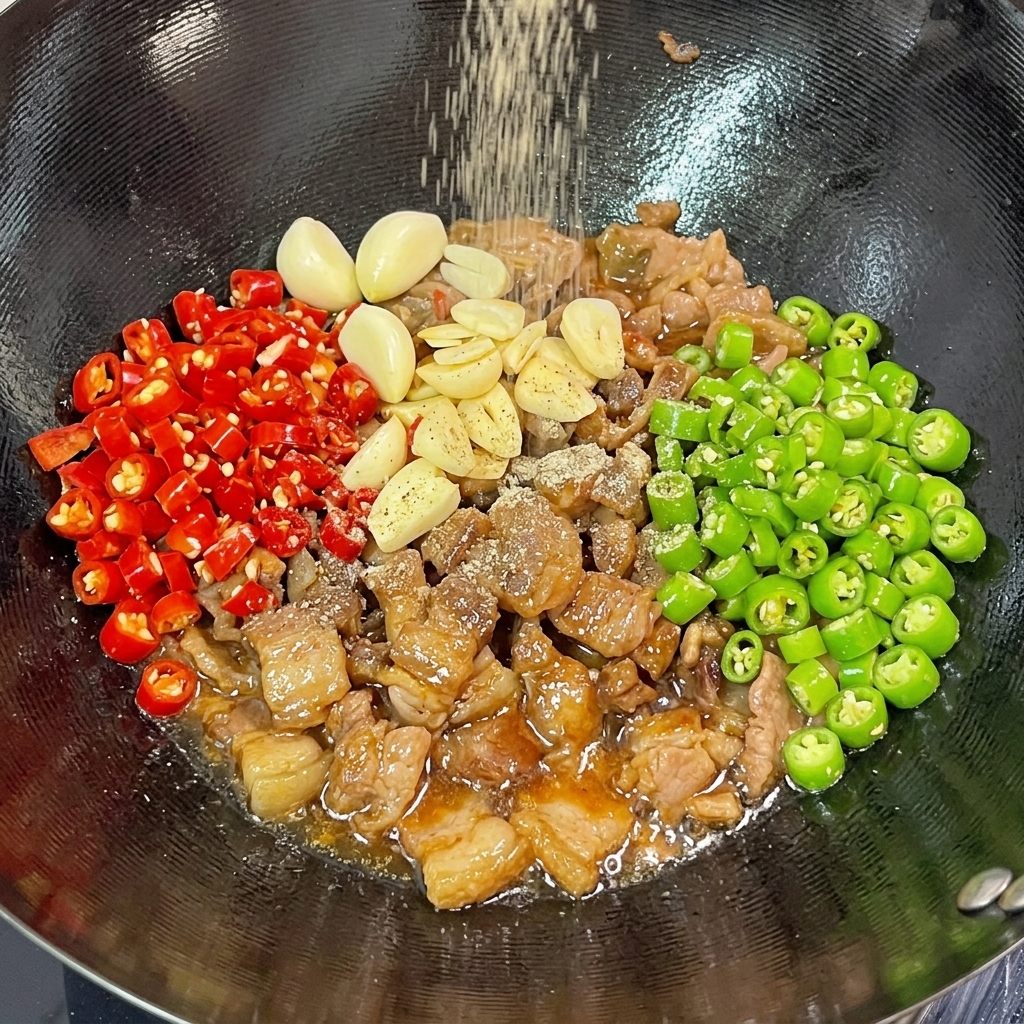
Sprinkle black pepper powder evenly over the meat and chilies. The earthy spice of the pepper complements the fresh heat of the chilies and the richness of the pork belly.
Tip: Adjust the amount of black pepper according to your preference and how spicy the fresh chilies are. - 15Return cabbage to the wok
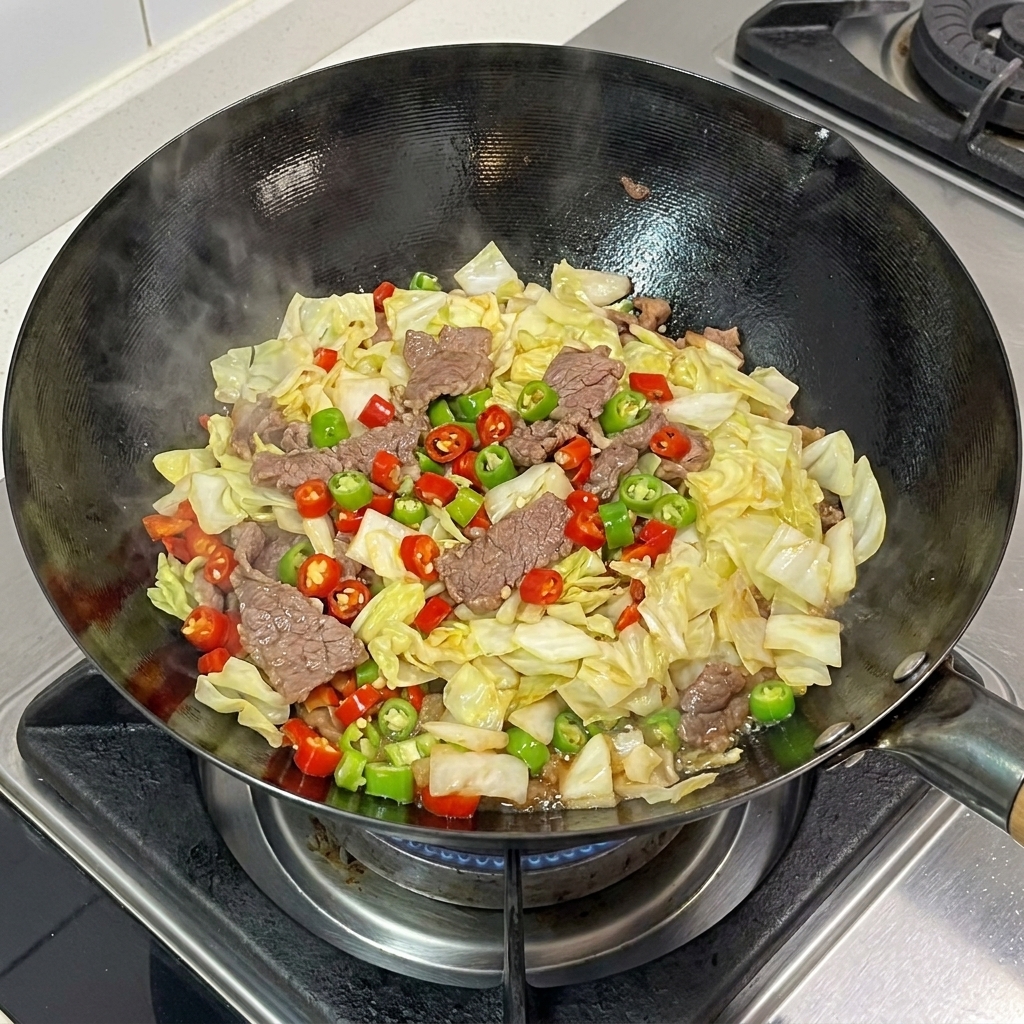
Introduce the pre-cooked pickled cabbage back into the wok. The sour tang of the cabbage will begin to meld with the savory, spicy notes of the pork and vegetables.
Tip: Ensure the pickled cabbage was properly dry-fried in the earlier step; removing excess moisture keeps the stir-fry crisp and concentrated in flavor. - 16Stir-fry over high heat
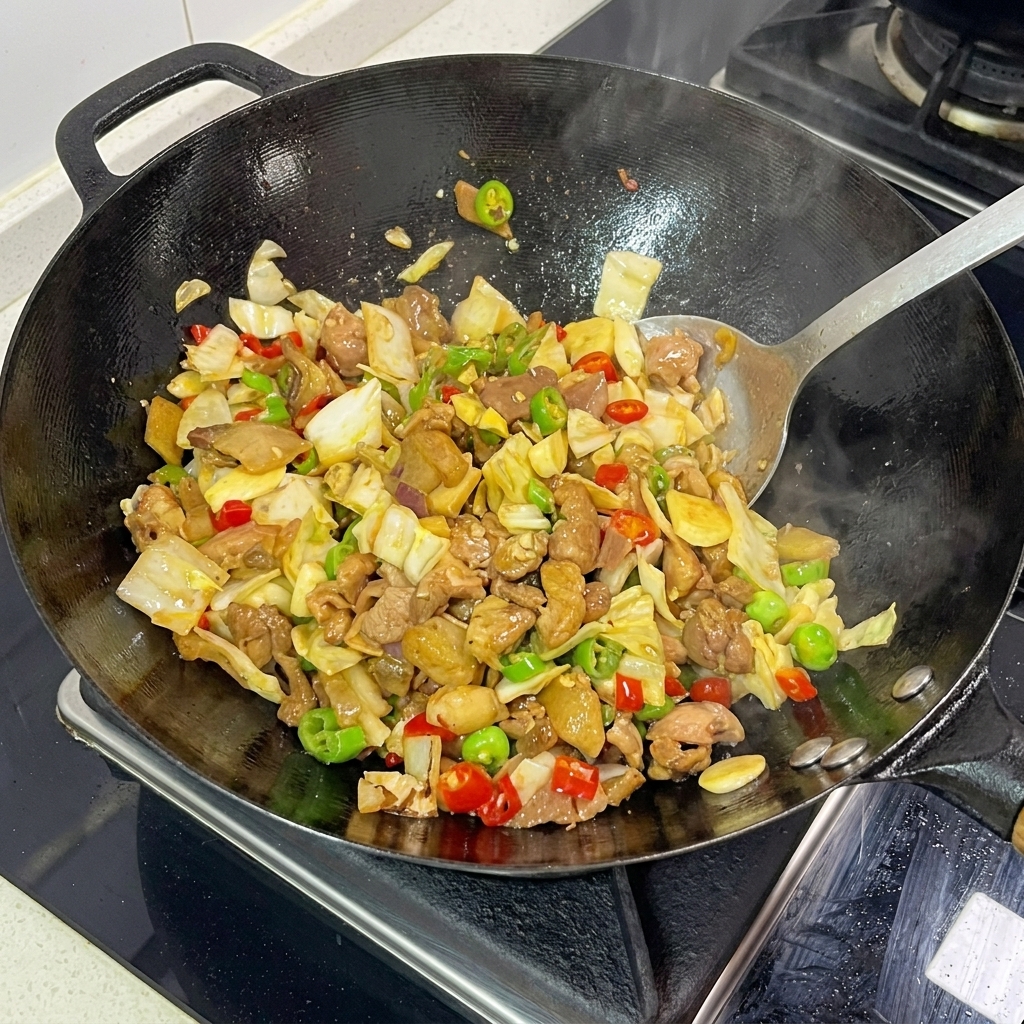
Use a spatula to quickly toss and stir-fry all the ingredients together over high heat. This crucial step releases the sauces aroma and imparts wok hei, ensuring every piece is evenly coated.
Tip: Keep the ingredients moving continuously so the cabbage absorbs the seasoned oil without burning. - 17Garnish with green onions
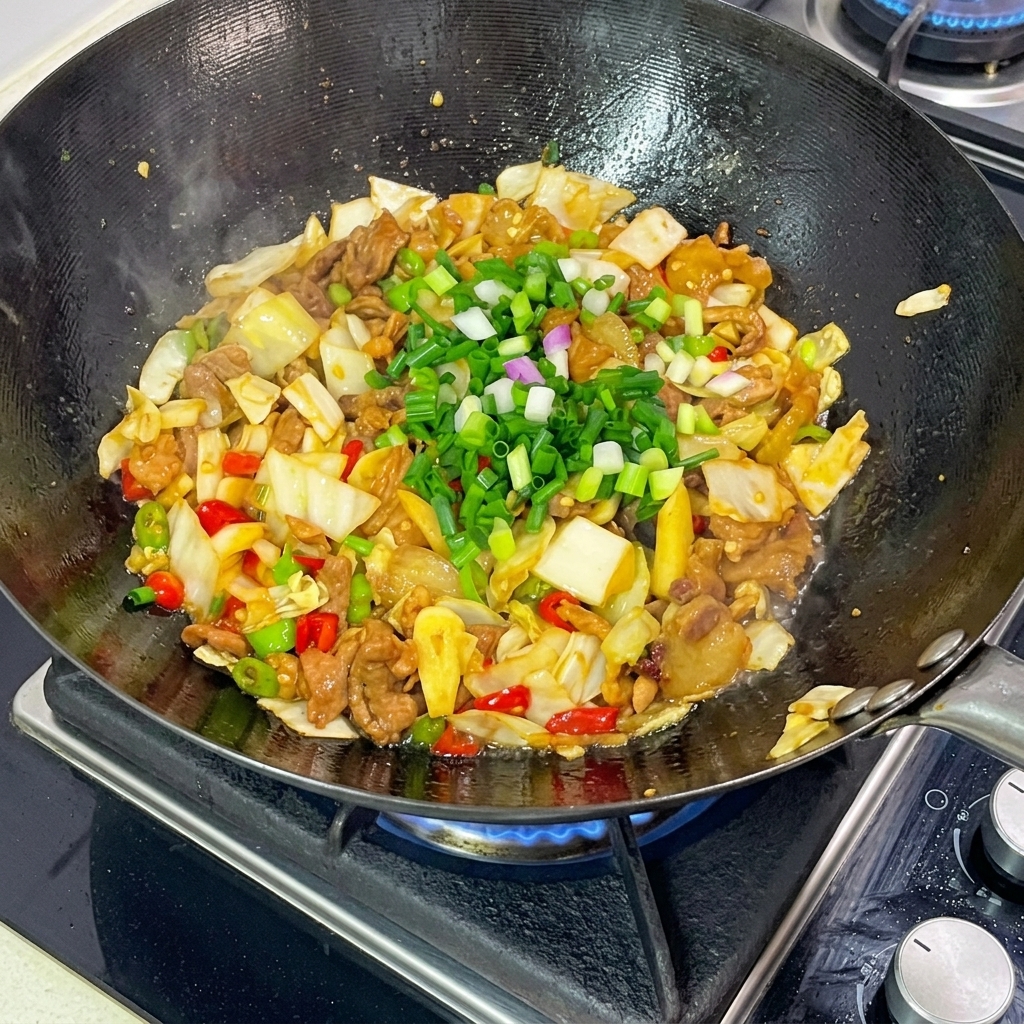
Finish the dish by scattering a handful of freshly chopped green onions over the hot stir-fry. Toss everything briefly to distribute the onions and release their vibrant aroma before turning off the heat.
Tip: Adding the green onions at the very end ensures they keep their bright color and slightly crisp texture. - 18Plate the stir-fry
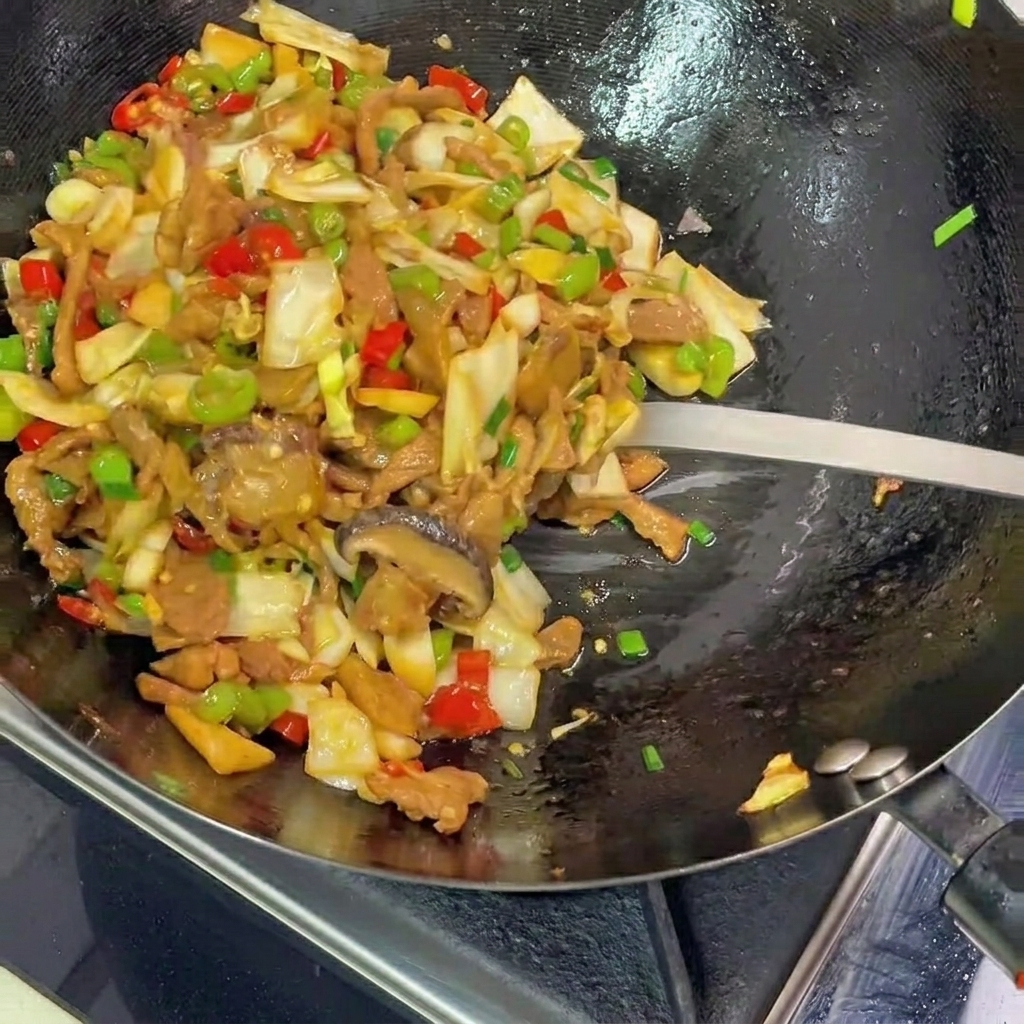
Carefully scoop the freshly stir-fried pickled cabbage and meat directly from the wok onto a serving plate. Ensure all the fragrant ingredients, including the chili, garlic, and scallions, are transferred to keep the dish visually appealing and flavorful.
Tip: Serve immediately while hot to maintain the wok hei and the crisp texture of the pickled cabbage.