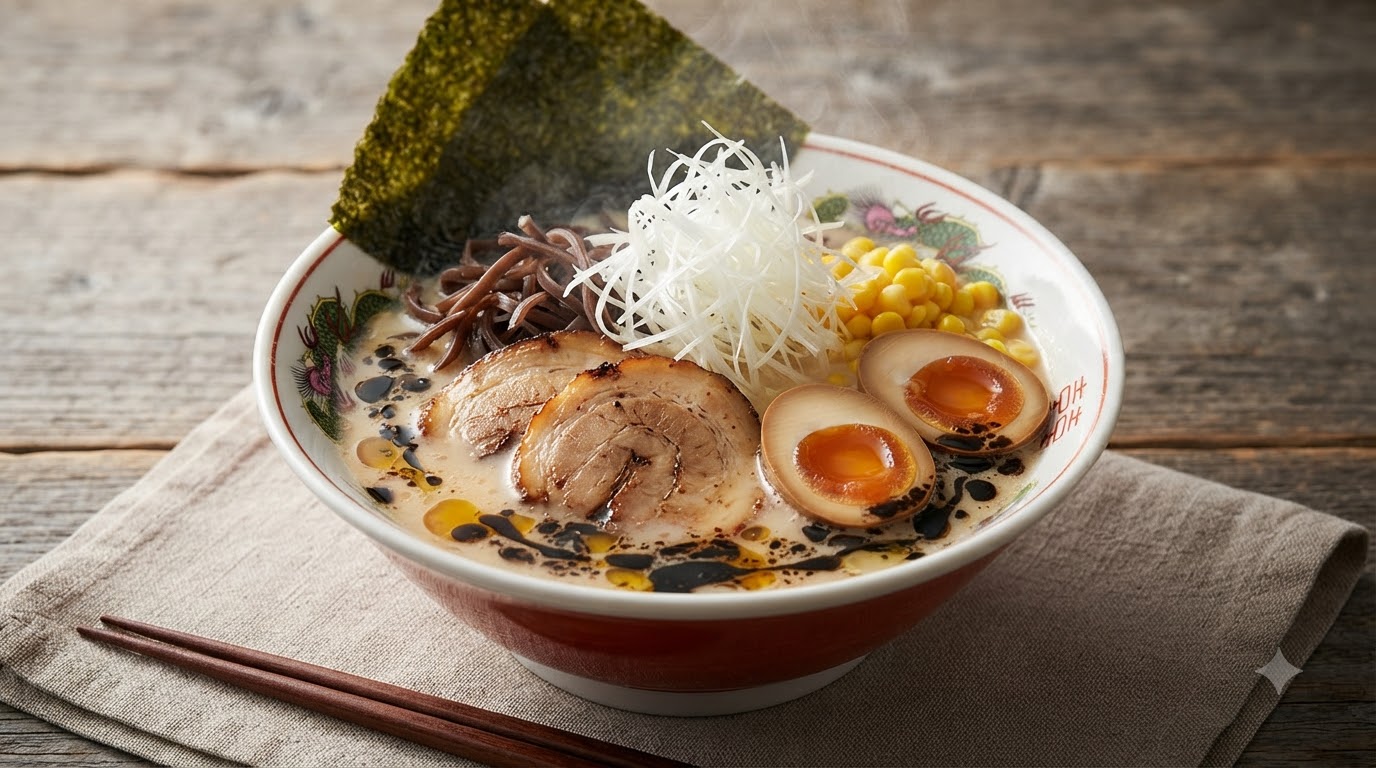
Authentic Japanese Tonkotsu Ramen
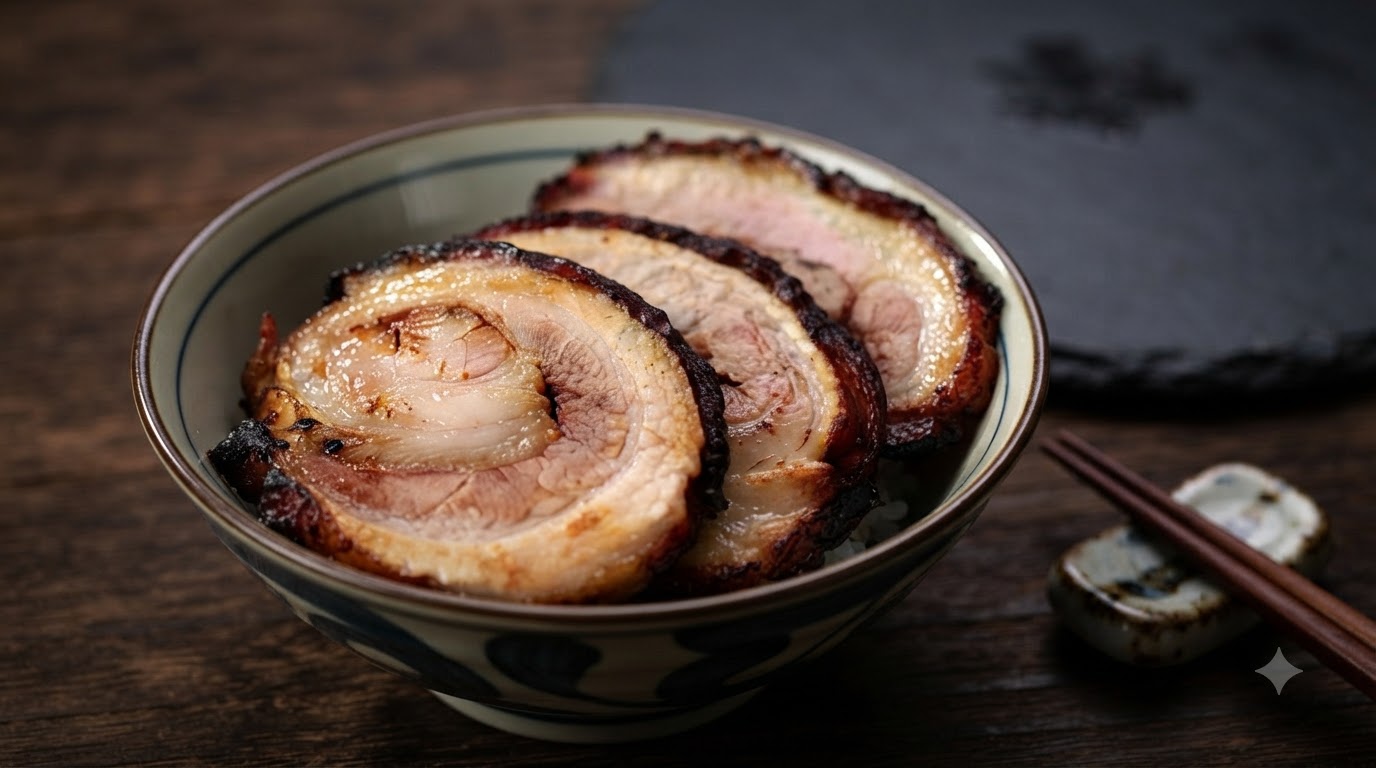
Chashu Rice
Master the art of rich, creamy tonkotsu pork bone broth and melt-in-your-mouth braised chashu pork with this ultimate homemade Japanese ramen and rice bowl duo.
Tonkotsu ramen originates from Fukuoka, Japan, celebrated for its deeply savory, cloudy pork bone broth that takes hours of rolling simmer to achieve. Paired with a comforting bowl of chashu rice—a clever way to enjoy the tender braised pork belly and its sweet, soy-infused juices—this meal is a true labor of love that brings the authentic ramen shop experience right into your home kitchen.
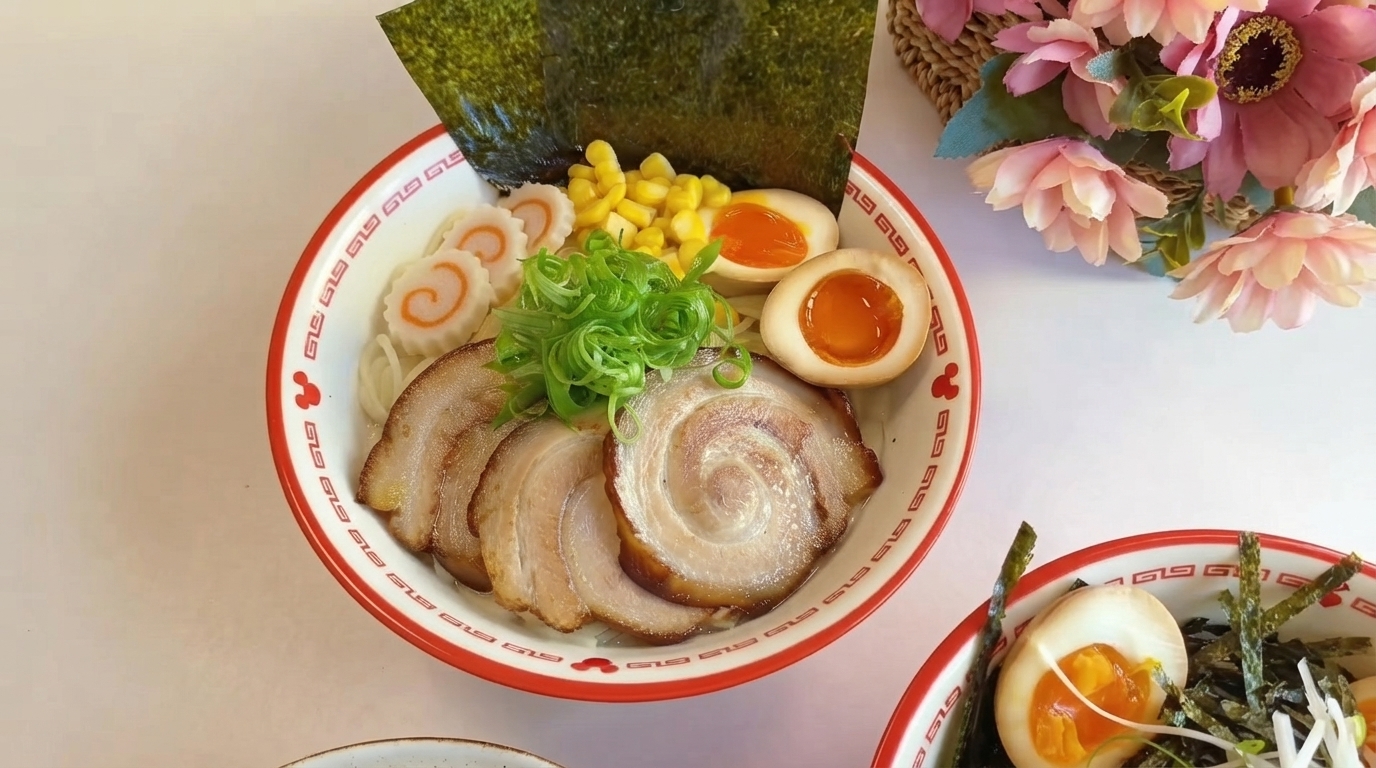
Ingredients
- 1.5 kg pork bones
- 1 kg pork belly
- 4 whole eggs
- 2 portions fresh ramen noodles
- 2 bowls cooked white rice
- 100 ml cooking wine
- 100 ml mirin
- 150 ml light soy sauce
- 50 ml dark soy sauce
- 2 tbsp white sugar
- 4 stalks scallions
- 1 knob fresh ginger
- 6 cloves garlic
- 4 tbsp sweet corn kernels
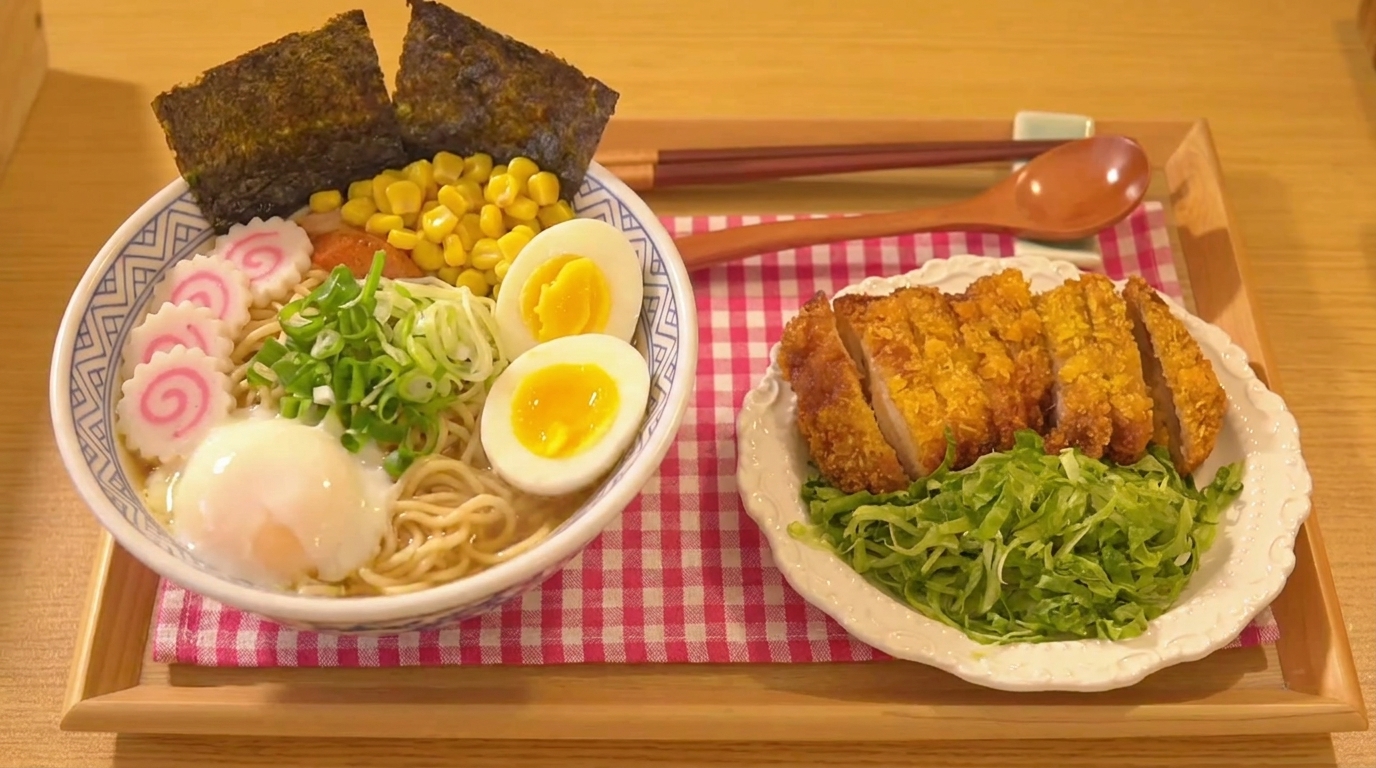
- 6 slices naruto maki
- 4 sheets nori
Instructions
- 1Roll and tie the pork belly
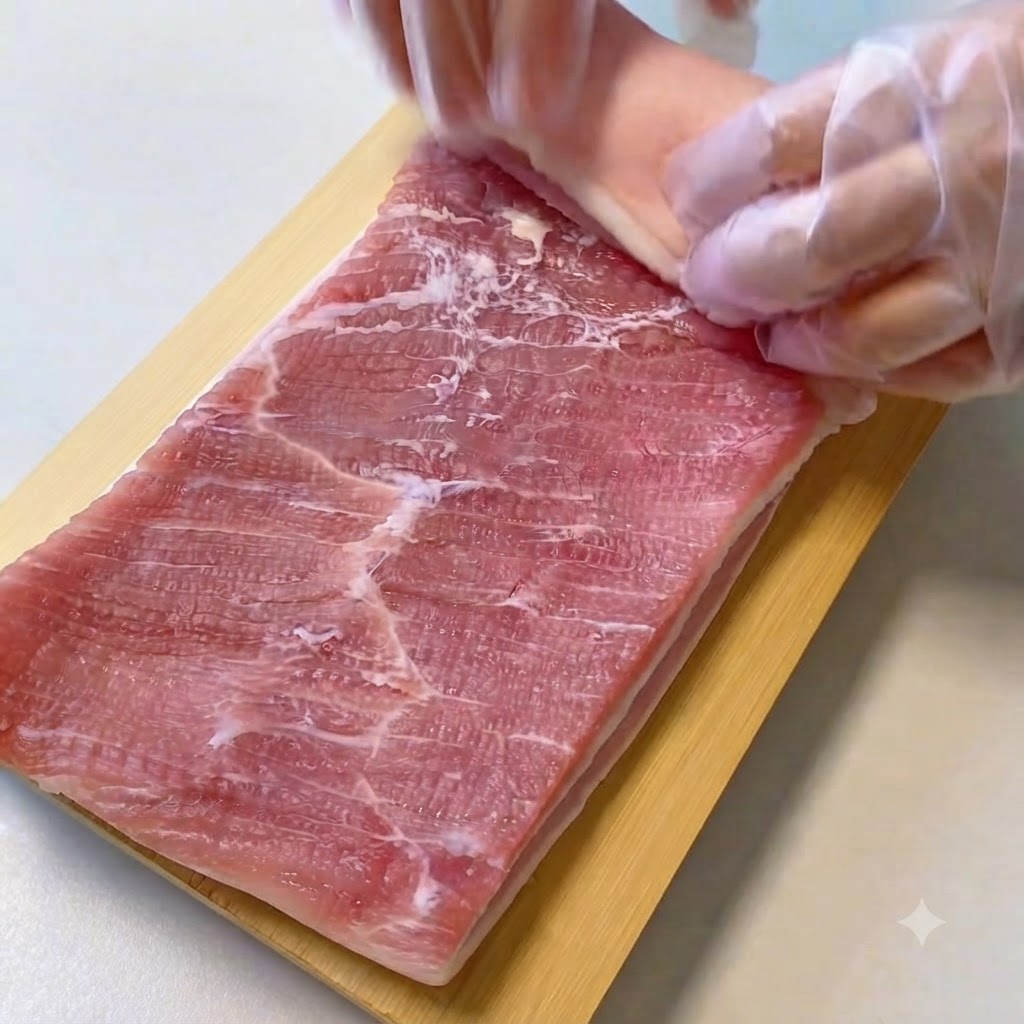
Take a cut of raw pork belly and roll it up tightly into a cylindrical log shape using hands wearing clear protective gloves.
Tip: Roll the pork belly as tightly as possible to ensure it holds its shape well during braising. - 2Secure the pork roll with twine
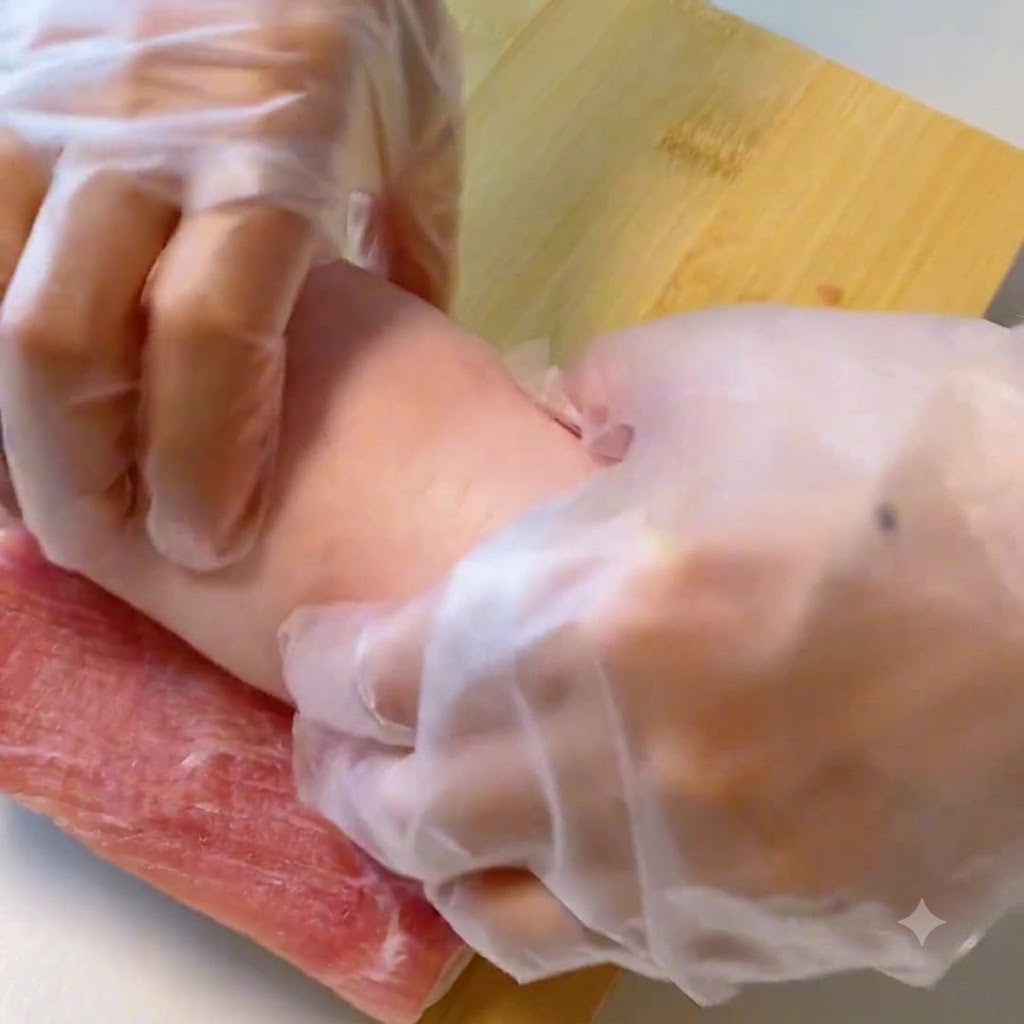
Use butchers twine to securely tie and bind the rolled pork belly at even intervals along its length on a wooden cutting board.
Tip: Tie knots firmly so the roll does not unravel when seared or braised. - 3Sear the pork belly roll
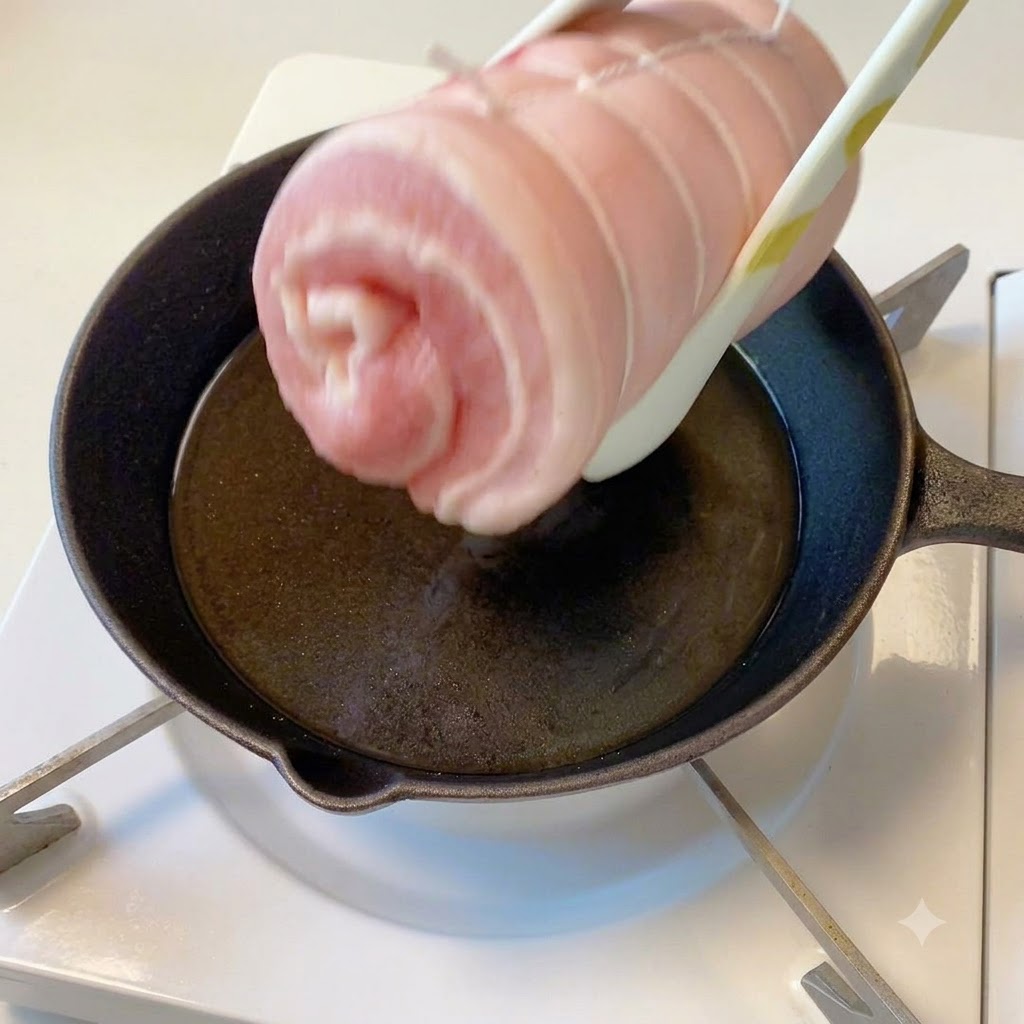
Place the tied pork belly roll into a hot pan and sear it on all sides until the exterior is evenly browned.
Tip: Searing locks in the juices and creates a rich, caramelized flavor base for the braising liquid. - 4Add liquids and sauces
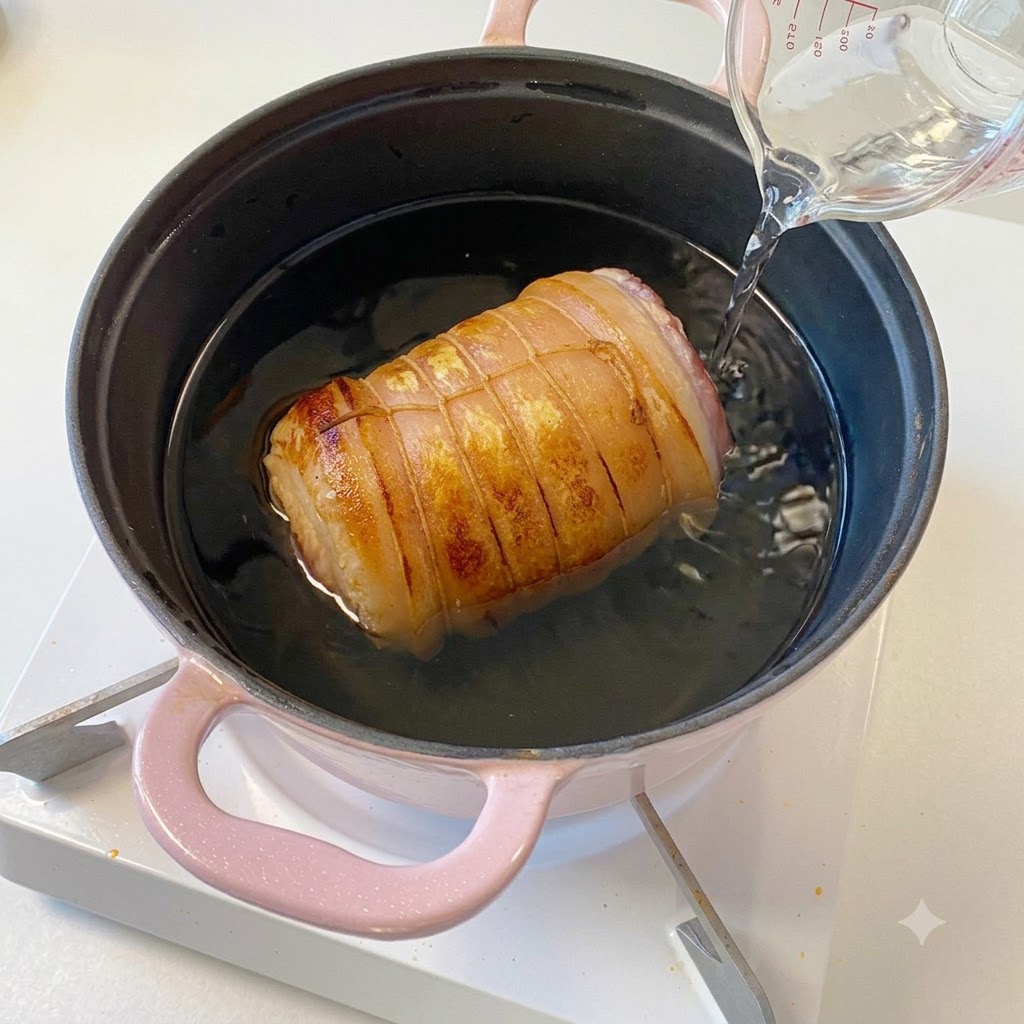
Transfer the seared pork belly into a pink pot and pour water, cooking wine, mirin, light soy sauce, and dark soy sauce over it.
Tip: Ensure the liquid level partially submerges the pork roll for even braising flavor distribution. - 5Add sugar to the braise
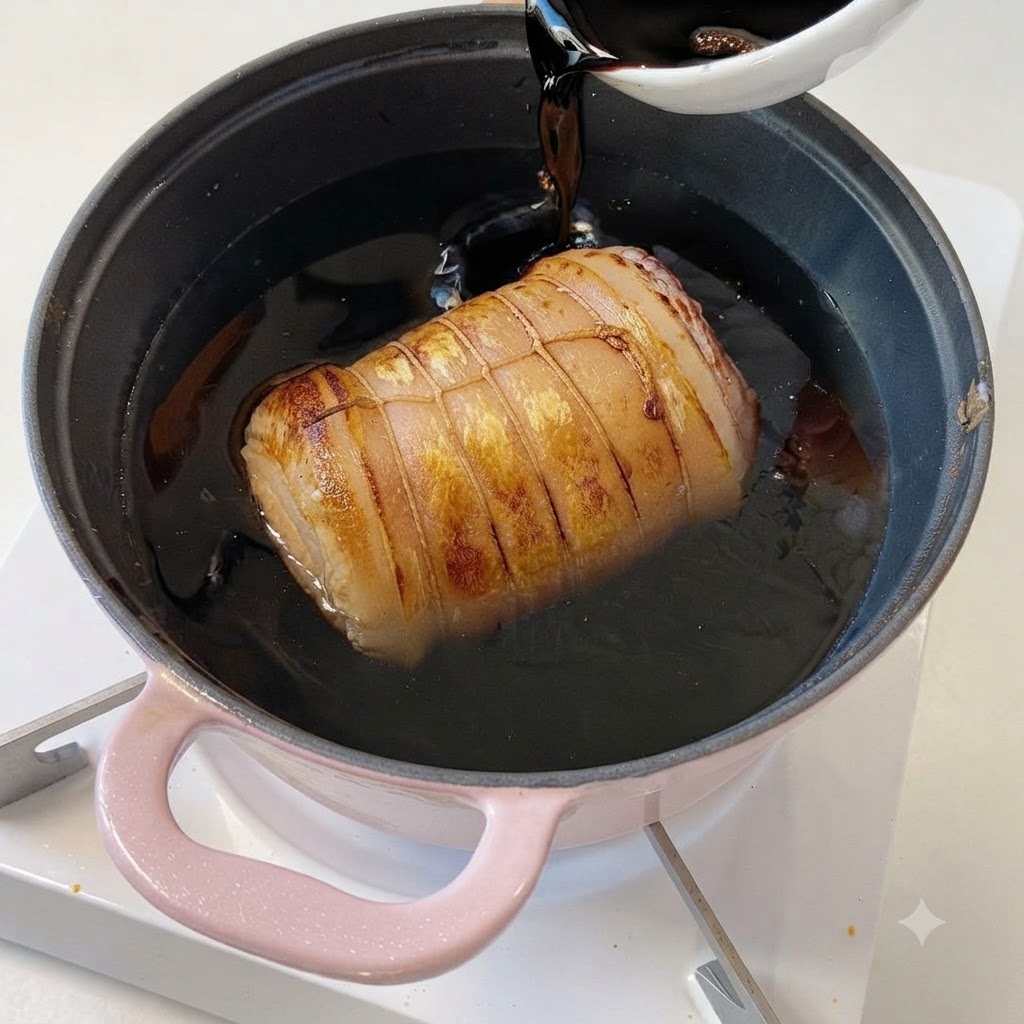
Add white sugar into the pot containing the pork belly and the dark braising liquid to balance the savory notes.
Tip: Sugar helps caramelize the outer layers of the pork further as it simmers down. - 6Add aromatics
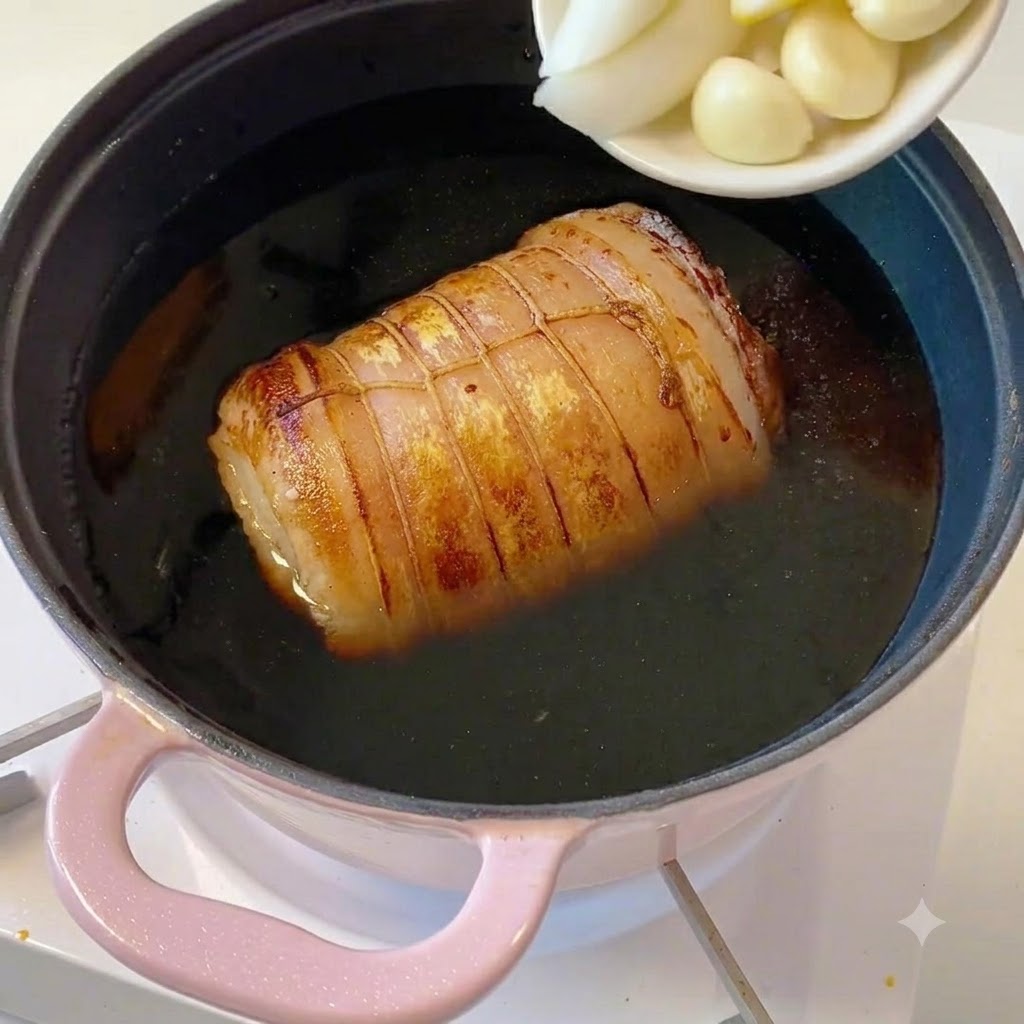
Add sliced scallions, fresh ginger slices, and peeled garlic cloves directly into the pot alongside the pork belly and braising liquid.
Tip: Aromatics eliminate any gamey odor and infuse the broth with deep, aromatic undertones. - 7Boil the eggs
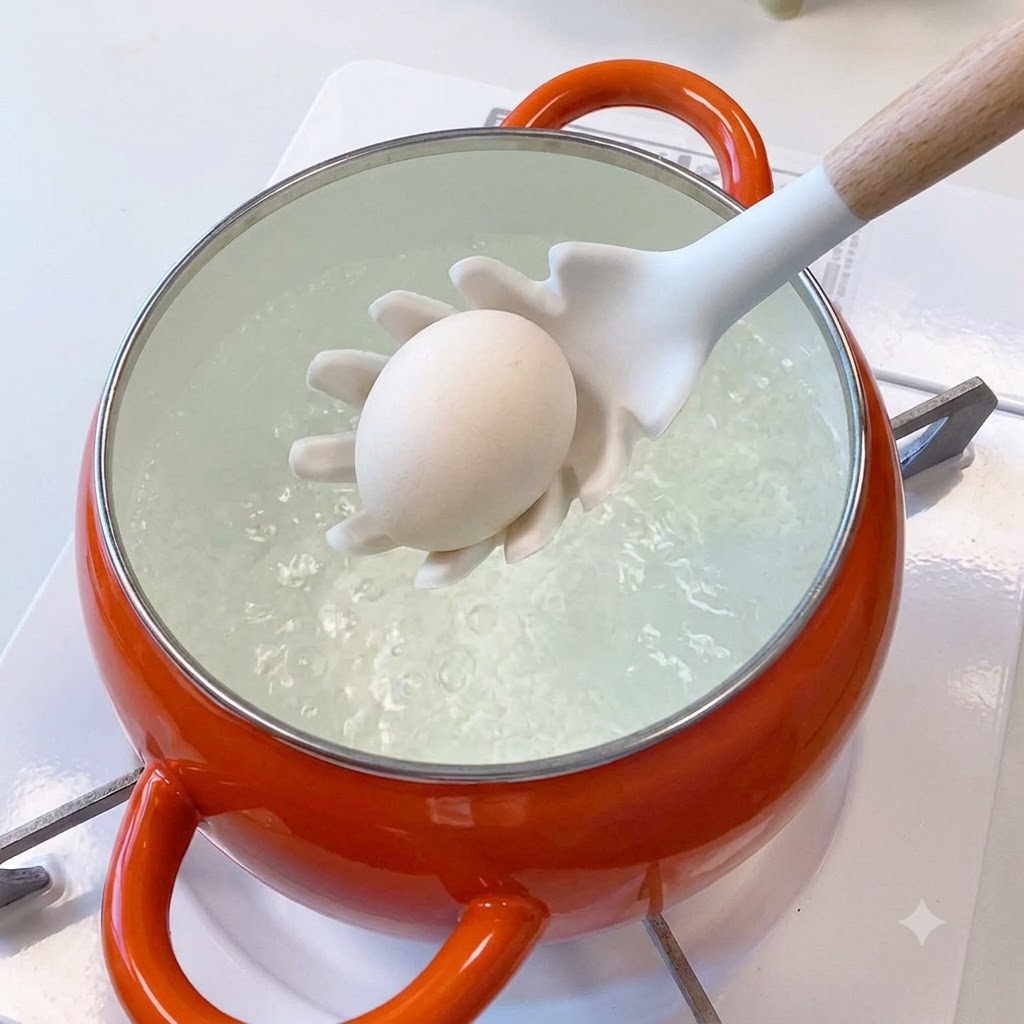
Lower the eggs gently into a pot of boiling water using a spoon to cook them for exactly six and a half minutes.
Tip: Keep the boiling water at a steady bubble to ensure consistent cooking times for soft-boiled yolks. - 8Cool the cooked eggs
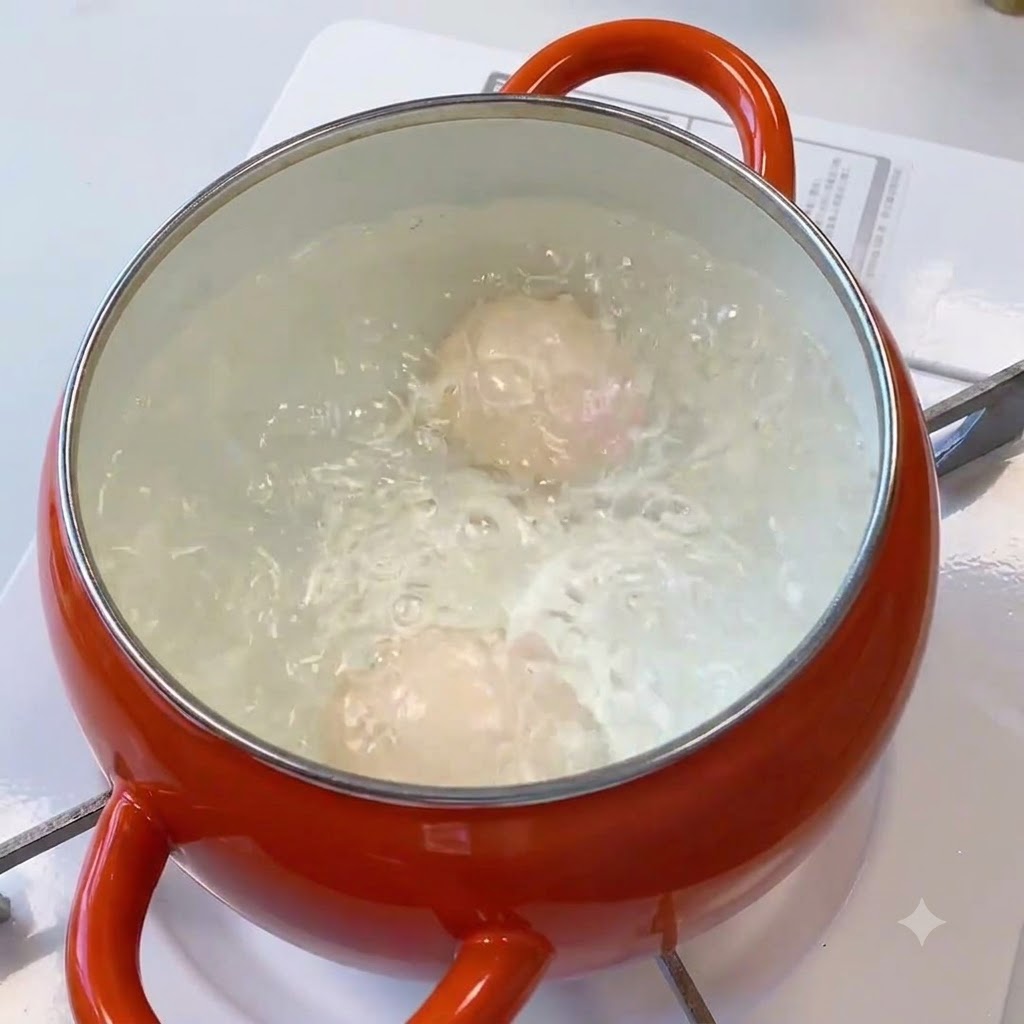
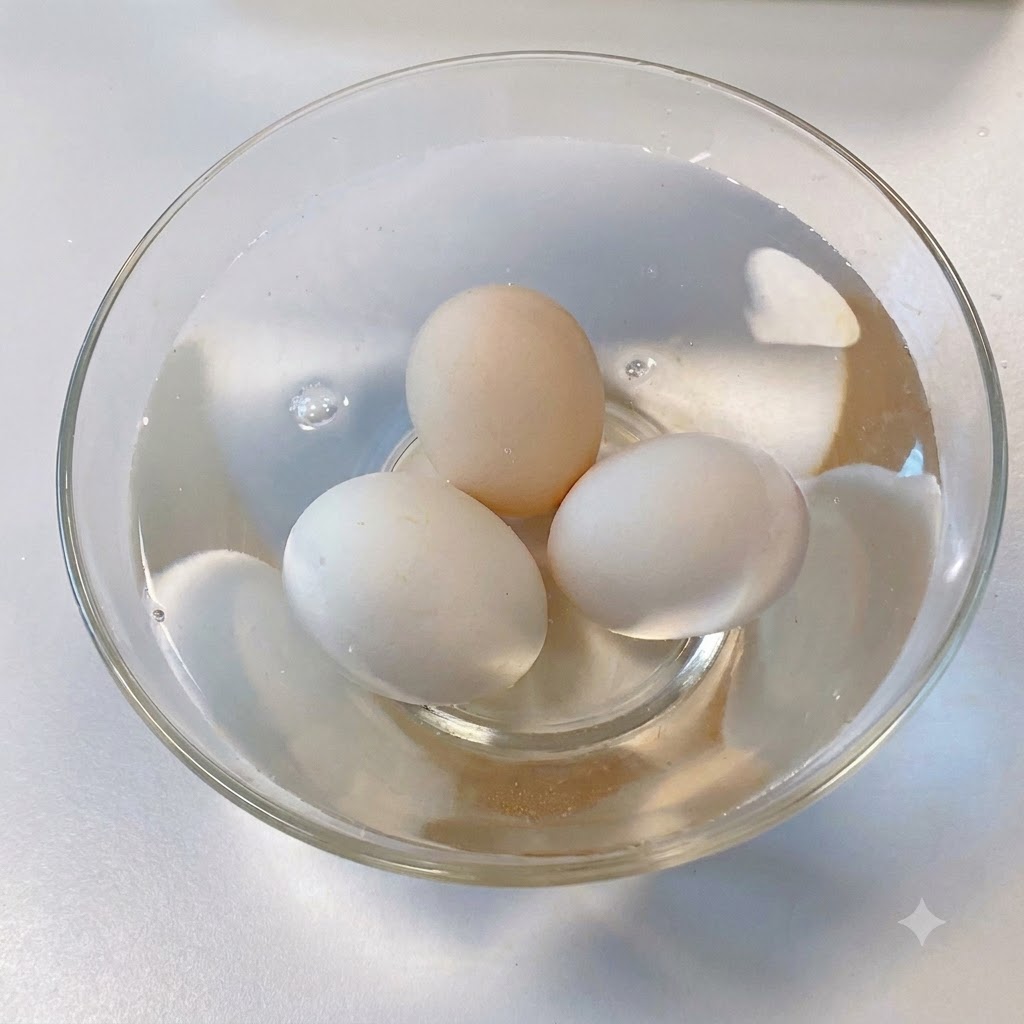
Transfer the freshly boiled eggs directly into a bowl filled with cold water to stop the cooking process and cool them down completely before peeling.
Tip: Using ice-cold water helps shrink the egg slightly inside the shell, making it much easier to peel cleanly. - 9Soak the eggs in broth
Submerge the peeled boiled eggs into the savory liquid so they absorb the rich flavors and take on a dark, savory exterior.
Tip: Let them soak for several hours or overnight for deeply flavored, beautiful ramen eggs. - 10Prepare the pork bone broth
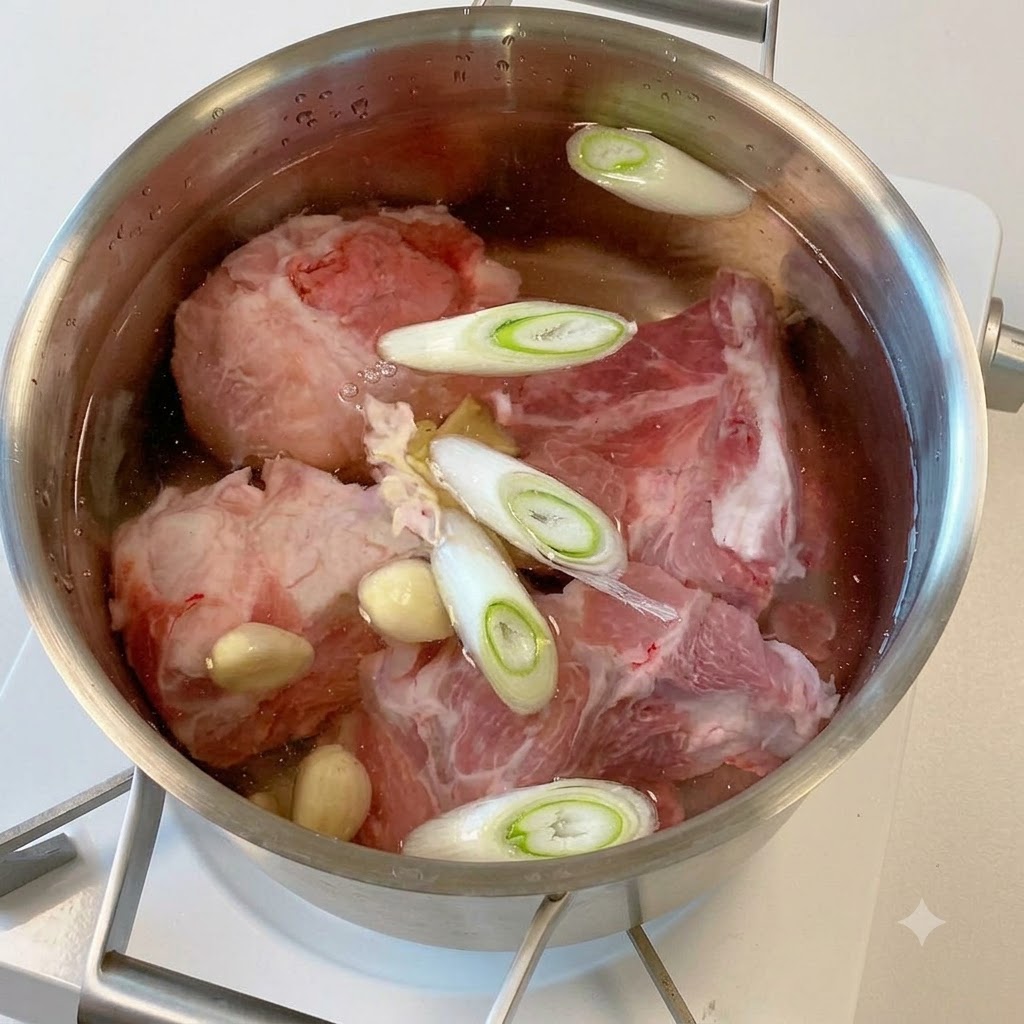
Arrange pork bones, sliced scallions, ginger, and garlic in a pot with water, bringing them to a simmer to extract maximum flavor and richness.
Tip: Make sure to clean the bones well and skim initial impurities for a clean, sweet tasting broth base. - 11Simmer for creamy milky broth
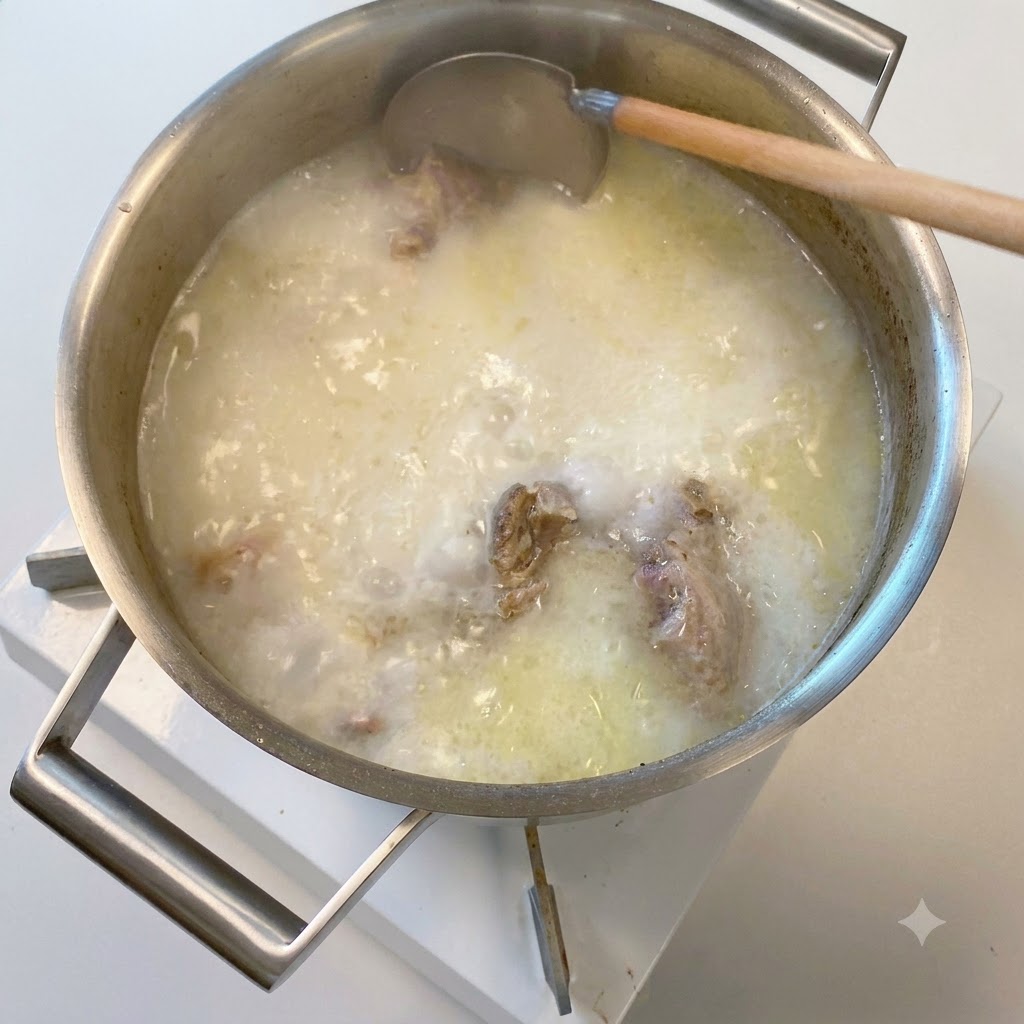
Simmer the pork bones continuously for four hours over medium-high heat, allowing the collagen and fats to emulsify into a rich, milky white broth.
Tip: Stir occasionally and maintain a steady rolling simmer to help break down the connective tissues into the liquid. - 12Remove twine from chashu
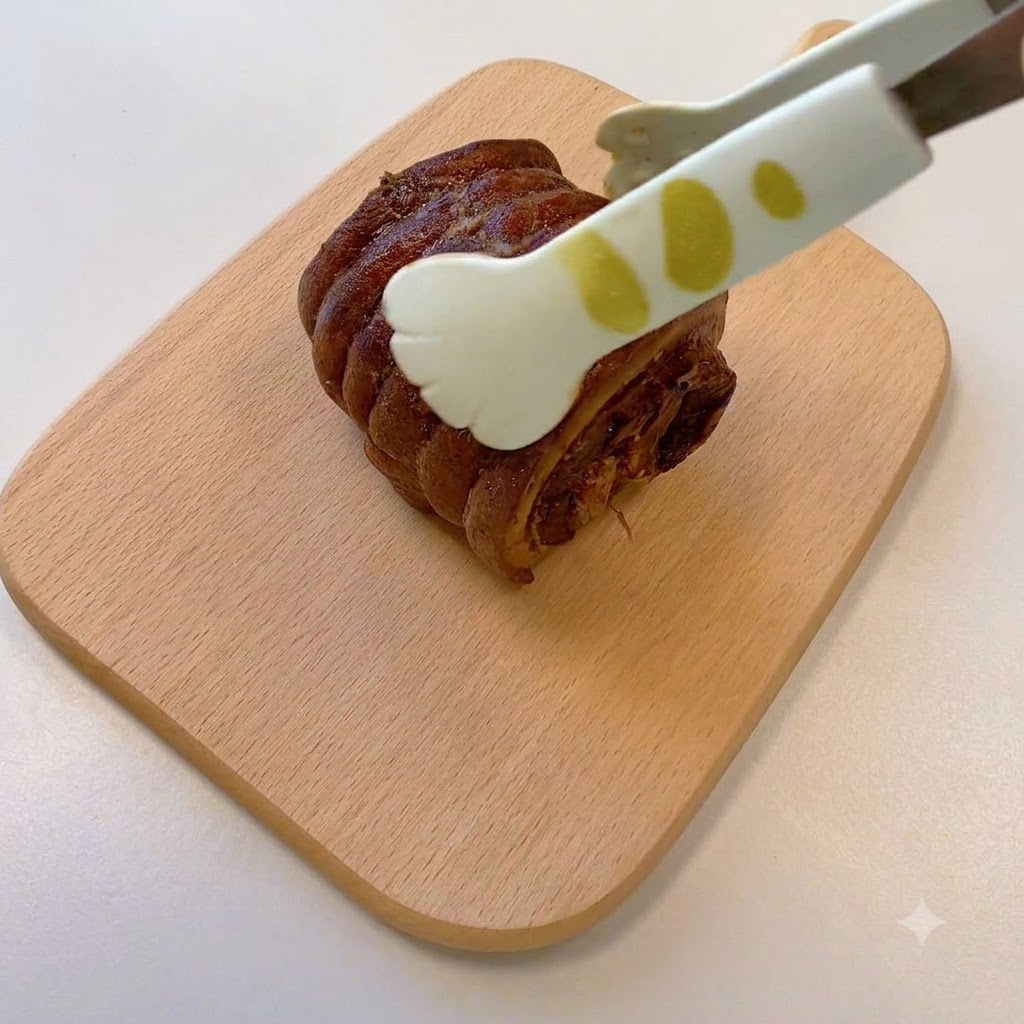
Place the fully braised chashu pork roll onto a cutting board and carefully cut away and remove the butchers twine.
Tip: Allow the pork roll to cool slightly before removing the string so it holds its compact cylinder shape. - 13Slice the chilled chashu pork
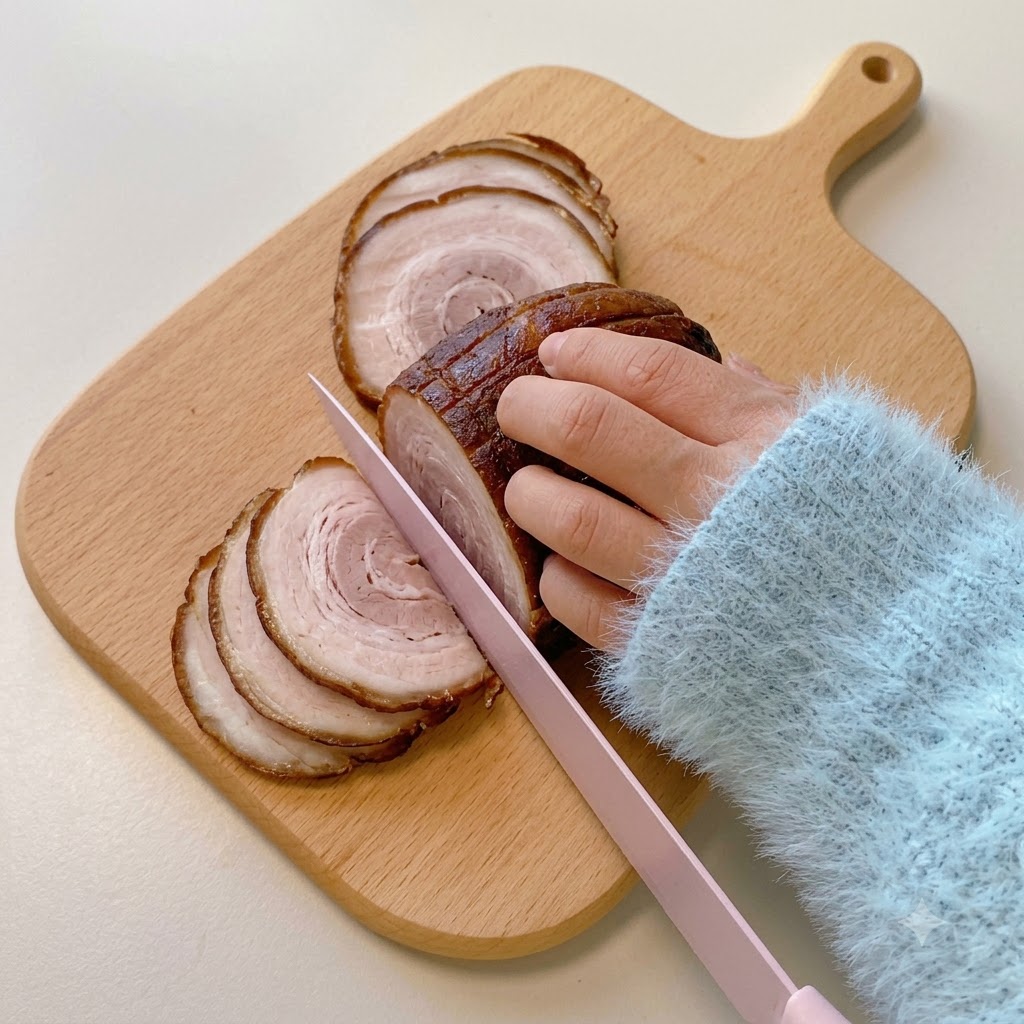
Place the fully chilled, braised chashu pork roll on a cutting board and use a sharp knife to slice it into neat, uniform rounds that clearly reveal the tender layers of rolled meat.
Tip: Chilling the pork roll thoroughly before slicing helps it hold its shape and prevents it from falling apart. - 14Cut the marinated eggs
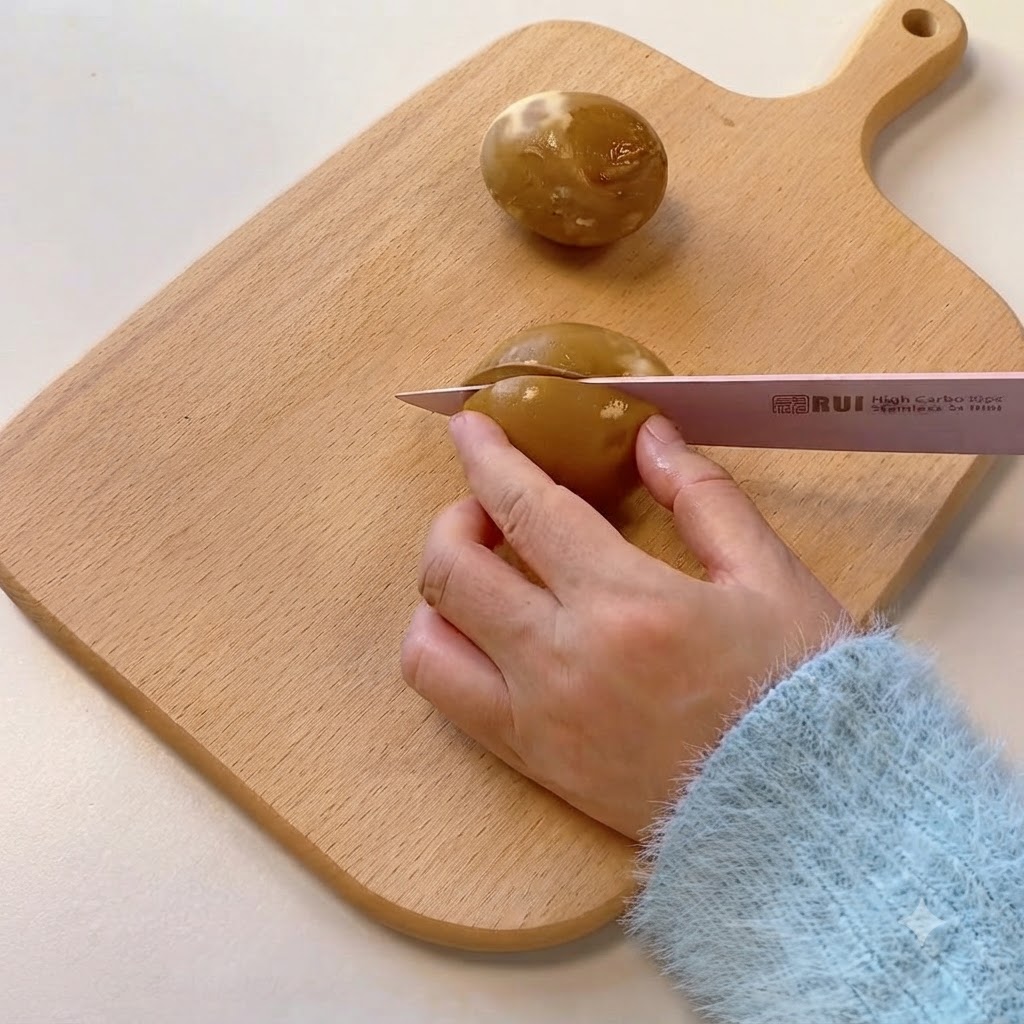
Take the peeled, soy-marinated soft-boiled eggs and cut them in half lengthwise using a knife. This reveals the rich, dark exterior and the soft, jammy yellow yolk inside.
Tip: Wipe the knife blade with a damp paper towel between cuts to keep the yolk clean and prevent it from smearing. - 15Torch the chashu slice
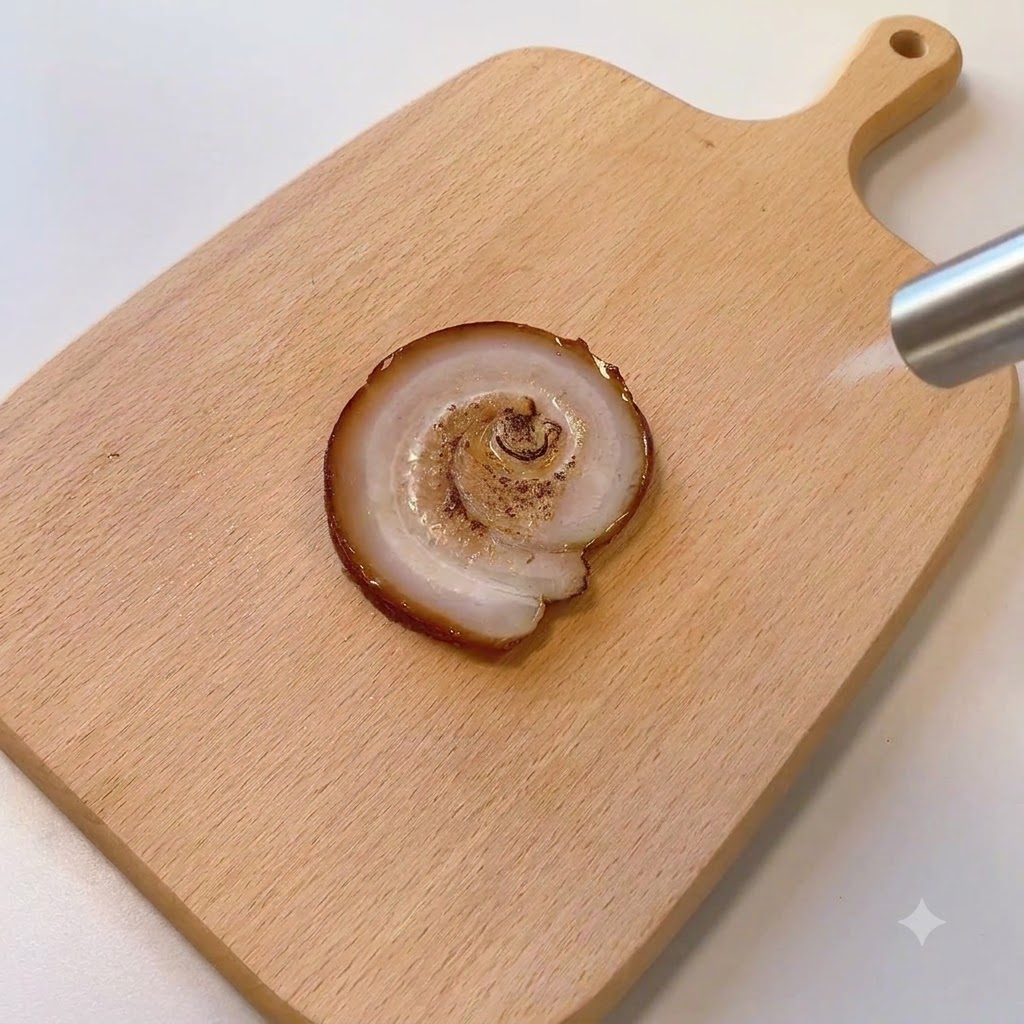
Place a single slice of chashu pork on a clean surface and use a culinary blowtorch to gently sear and char the surface. This melts the fat slightly and imparts a smoky, grilled aroma.
Tip: Keep the torch moving back and forth to evenly caramelize the surface without burning it. - 16Season the rice bowl
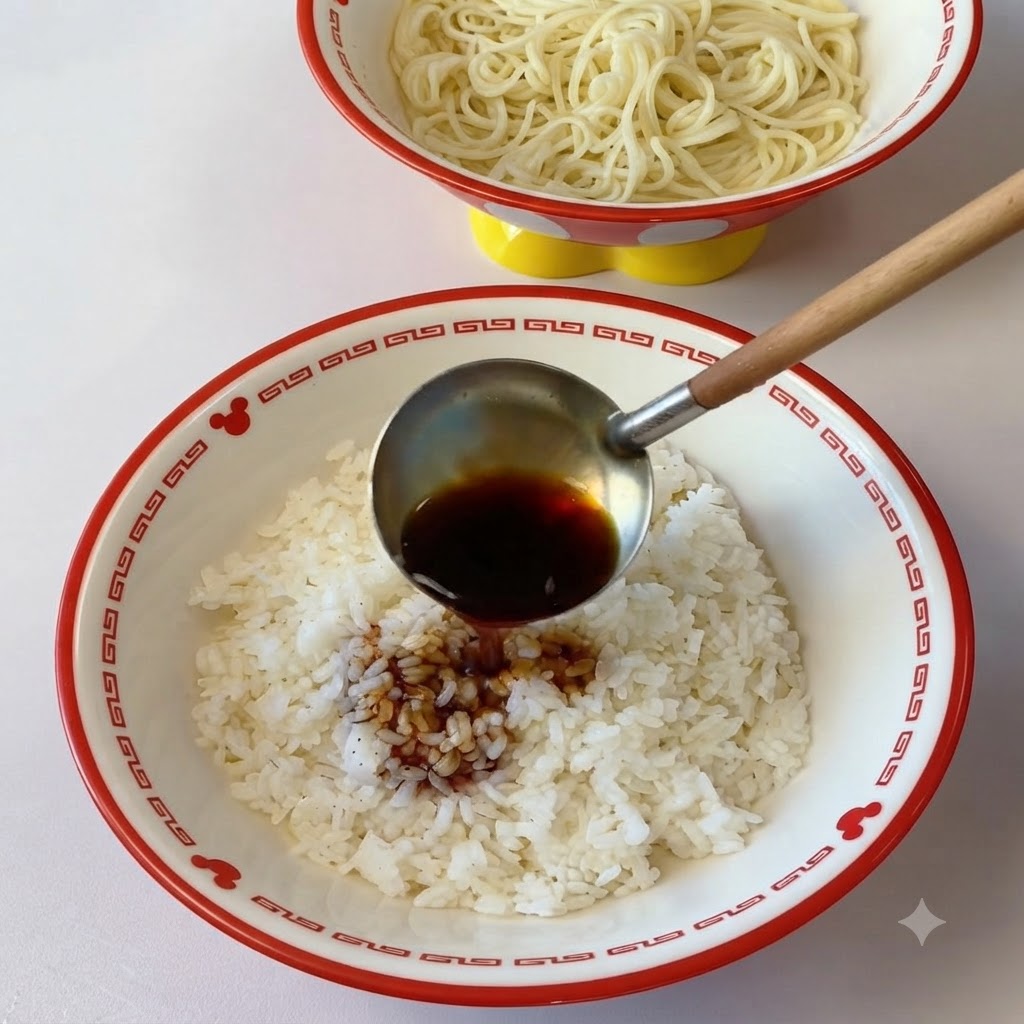
Use a ladle to scoop up a portion of flavorful seasoning sauce and savory meat broth, then pour it directly over a bowl of freshly cooked white rice. This infuses the rice with rich, savory flavor.
Tip: Add the sauce gradually so you can control the saltiness and ensure the rice is evenly coated. - 17Arrange the chashu over rice
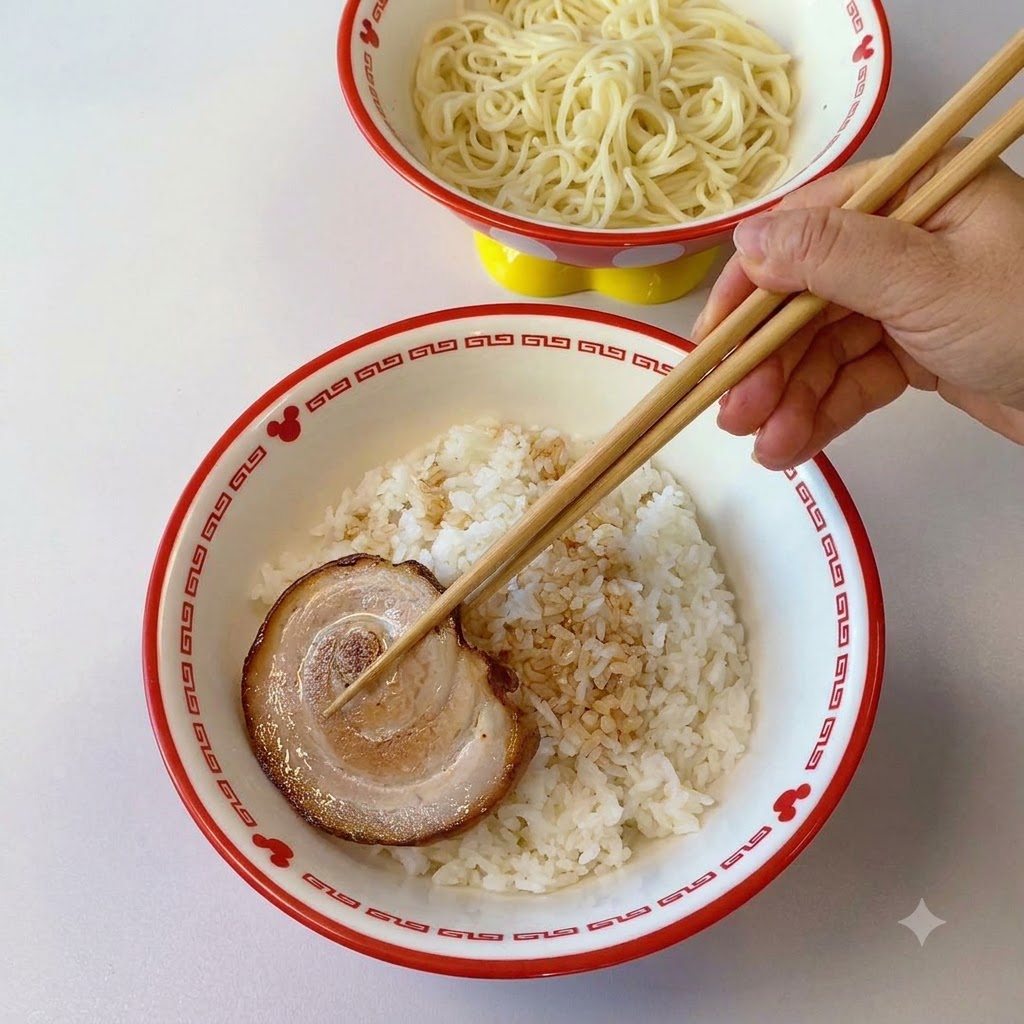
Using a pair of chopsticks, pick up a slice of prepared chashu pork and place it carefully over the seasoned rice bowl, setting it neatly against the side or center.
Tip: Overlap the slices slightly if you are adding multiple pieces to create an appealing presentation. - 18Add the soft-boiled egg
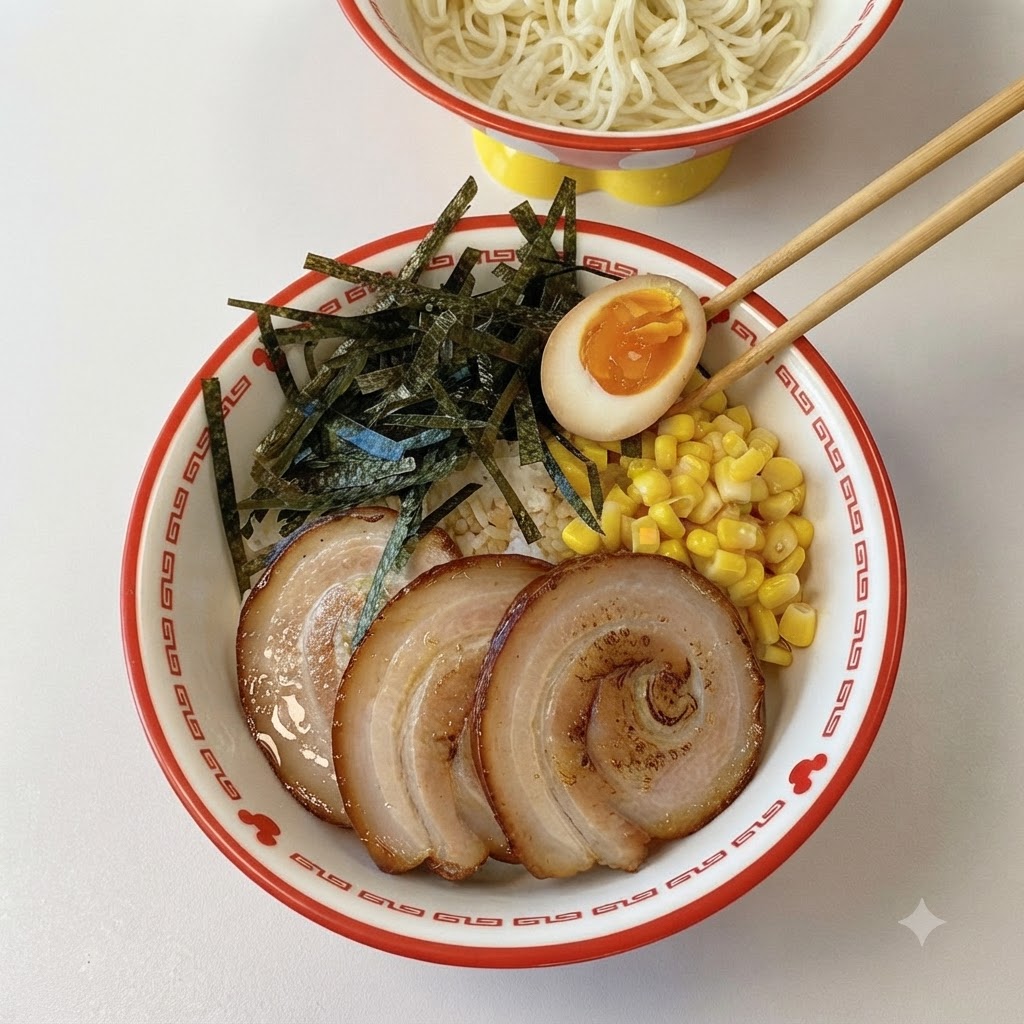
Carefully place the halved soft-boiled eggs onto the assembled bowl using chopsticks. The creamy, runny yolk adds a rich and comforting texture that perfectly complements the savory chashu.
Tip: For a perfectly clean cut without tearing the delicate egg white or smearing the yolk, slice the eggs using a piece of fishing line or unflavored dental floss.