Korean Spicy Seafood Noodle Soup (Jjambbong)
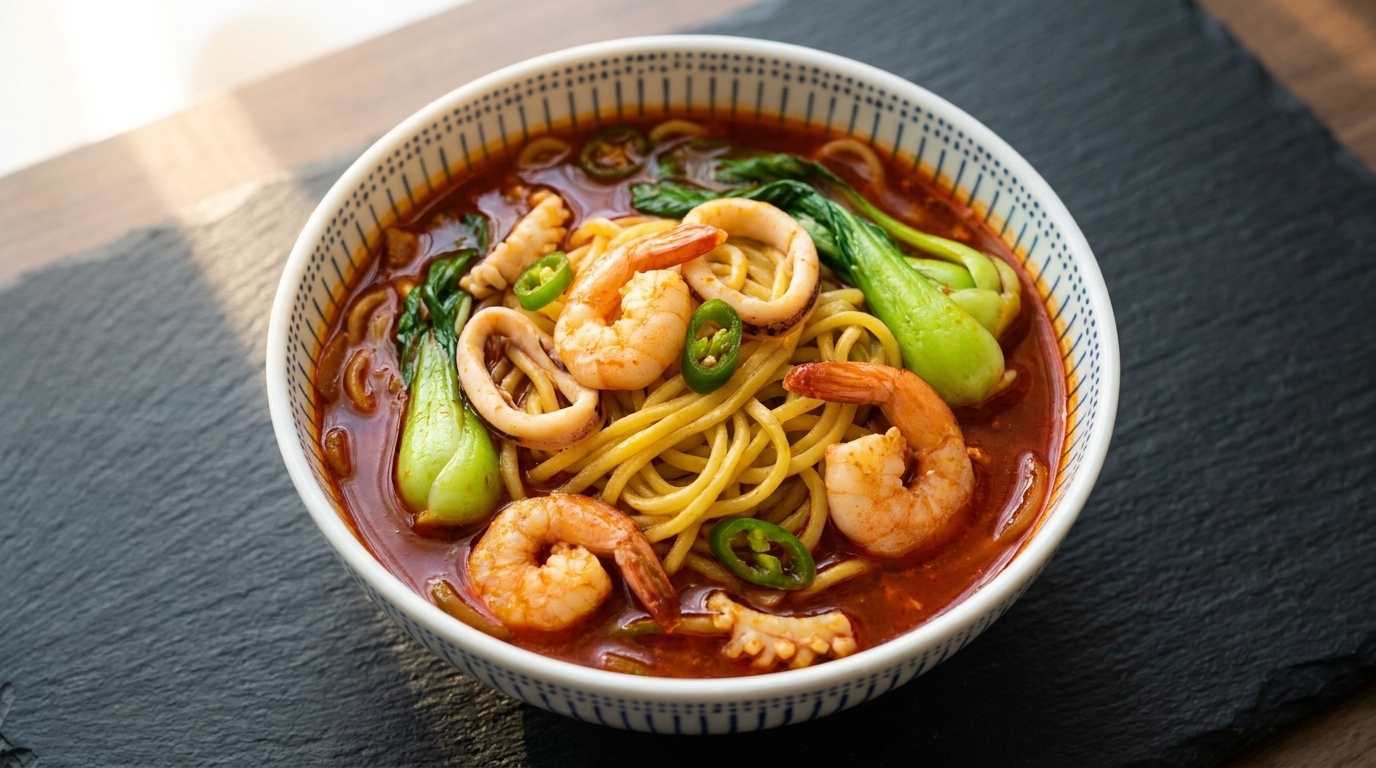
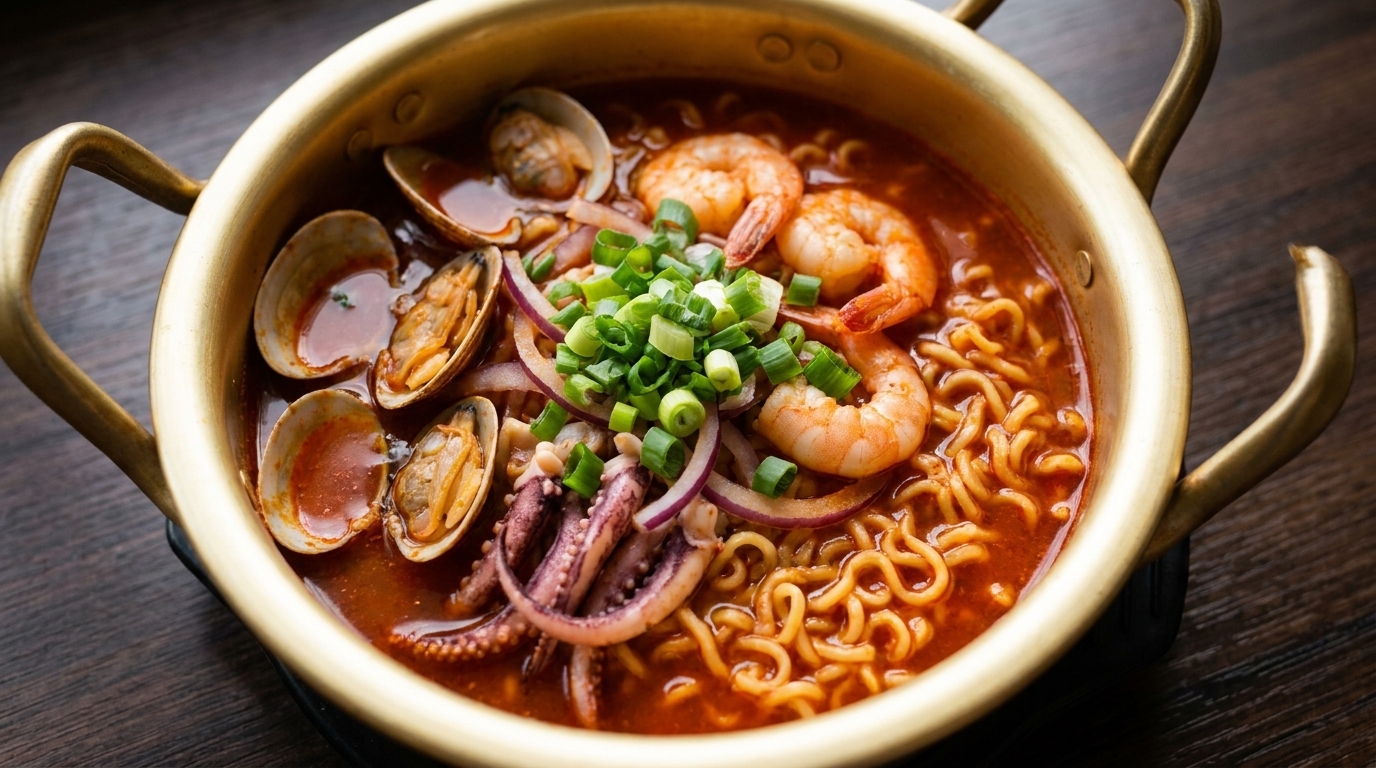
A smoky and fiery Korean noodle classic featuring a rich, chili-infused broth packed with fresh mussels, shrimp, and pork over chewy wheat noodles.
Jjambbong is a beloved staple of Korean-Chinese cuisine, known for its signature bul-mat or smoky fire flavor. Traditionally served in a deep red, spicy broth, it perfectly balances the sweetness of sautéed vegetables with the briny freshness of a diverse seafood medley.
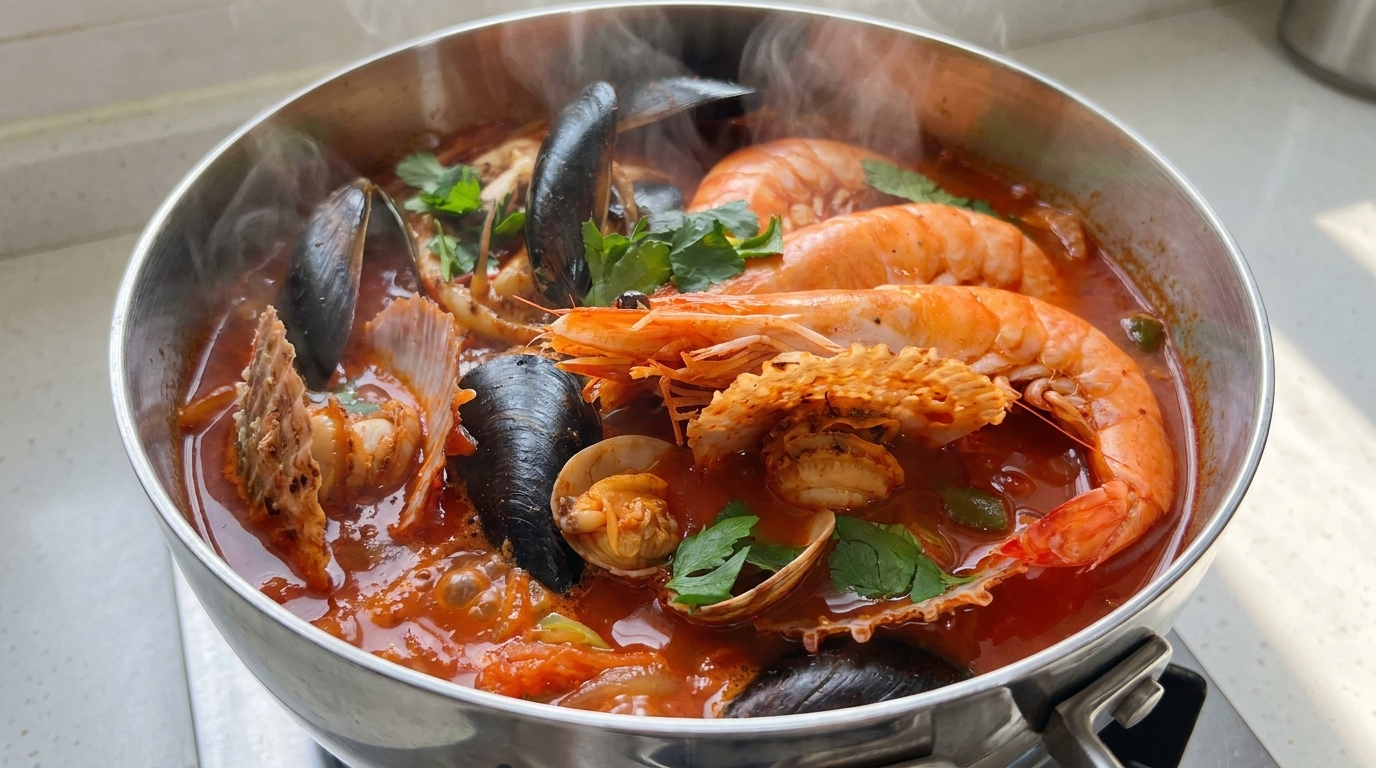
Ingredients
- 2 tbsp cooking oil
- 1 tbsp sesame oil
- 1 tbsp minced garlic
- 2 stalks chopped scallions
- 150 g pork slices
- 1 medium onion, sliced
- 1 medium carrot, sliced
- 1 small zucchini, cut into batons
- 14 head cabbage, chopped
- 4 shiitake mushrooms, sliced
- 3 tbsp Korean chili powder (Gochugaru)
- 1 tbsp Korean chili paste (Gochujang)
- 3 tbsp soy sauce
- 2 tsp sugar
- 1.5 l water
- 1 tbsp beef bouillon powder
- 200 g mixed clams, mussels, and scallops
- 100 g squid rings
- 4 large king prawns
- 2 green chilies, sliced
- 400 g thick wheat noodles
- optional fresh cilantro for garnish
Instructions
- 1Heat the cooking oils
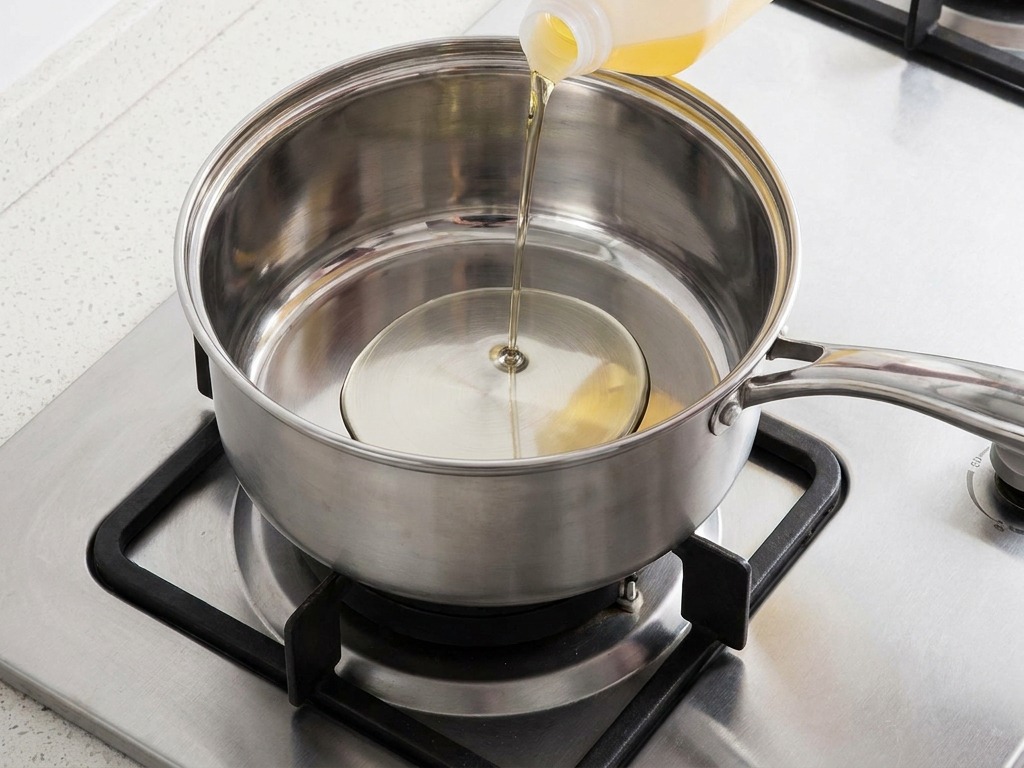
Place a large stainless steel pot on the stove over medium heat. Pour in two tablespoons of cooking oil and one tablespoon of sesame oil to create a fragrant and flavorful base for the stir-fry.
Tip: Combining sesame oil with neutral cooking oil prevents it from burning while still providing that essential nutty aroma. - 2Sauté the aromatics
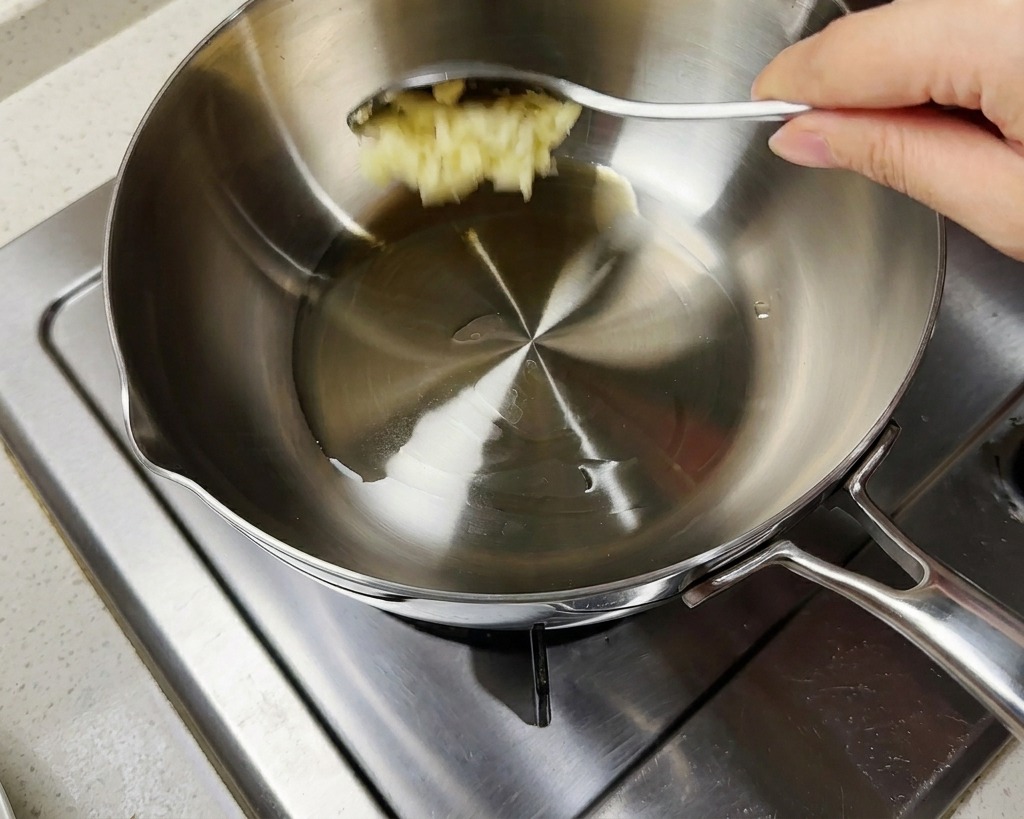
Add the minced garlic and chopped scallions to the heated oil. Sauté them briefly, stirring constantly, until they release their fragrance and the scallions begin to soften.
Tip: Keep a close eye on the garlic; you want it to be fragrant and soft, not browned or burnt, which can turn bitter. - 3Stir-fry the pork meat
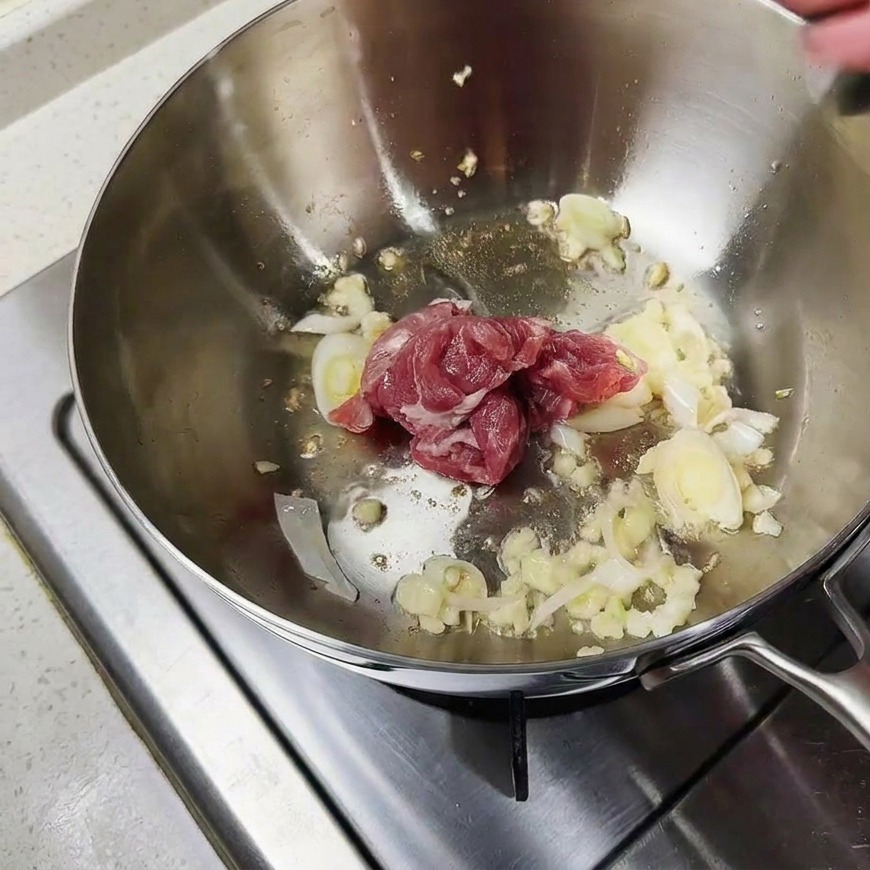
Add the raw pork slices to the pot with the sautéed garlic and scallions. Stir-fry the meat over medium-high heat until it changes color and is no longer pink on the outside.
Tip: Thinly sliced pork cooks very quickly and will stay tender if you stir-fry it just until the color changes before adding the vegetables. - 4Add the base vegetables
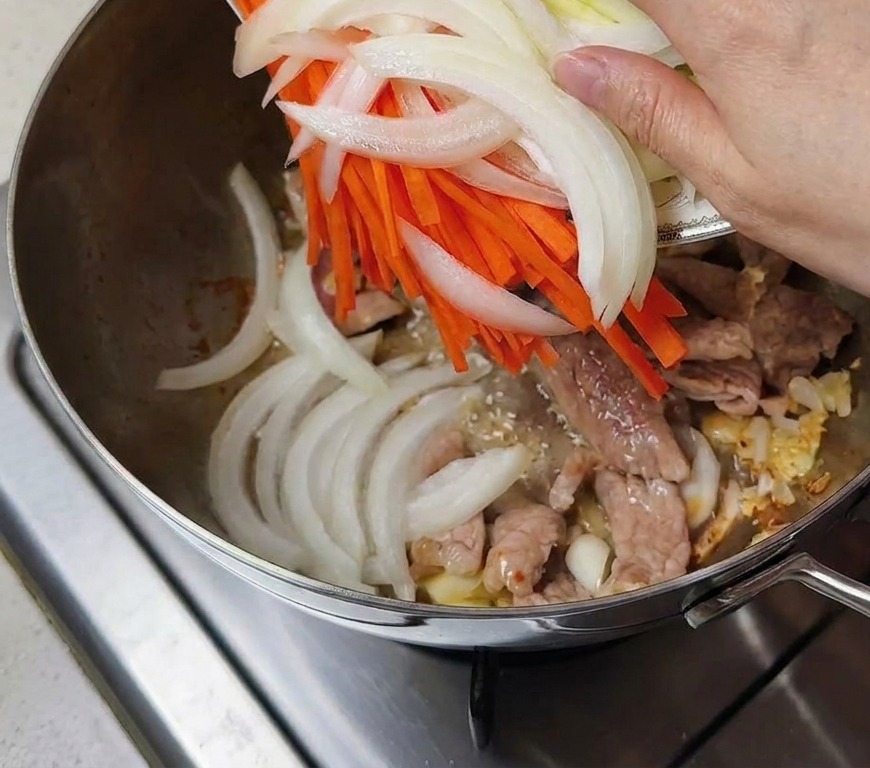
Toss in the sliced onions, carrots, and zucchini batons. Continue to stir-fry these vegetables with the pork for a few minutes until they begin to slightly soften and absorb the flavors in the pot.
Tip: Cutting your vegetables into uniform baton shapes ensures they cook at the same rate and gives the dish a professional look. - 5Mix in cabbage and mushrooms
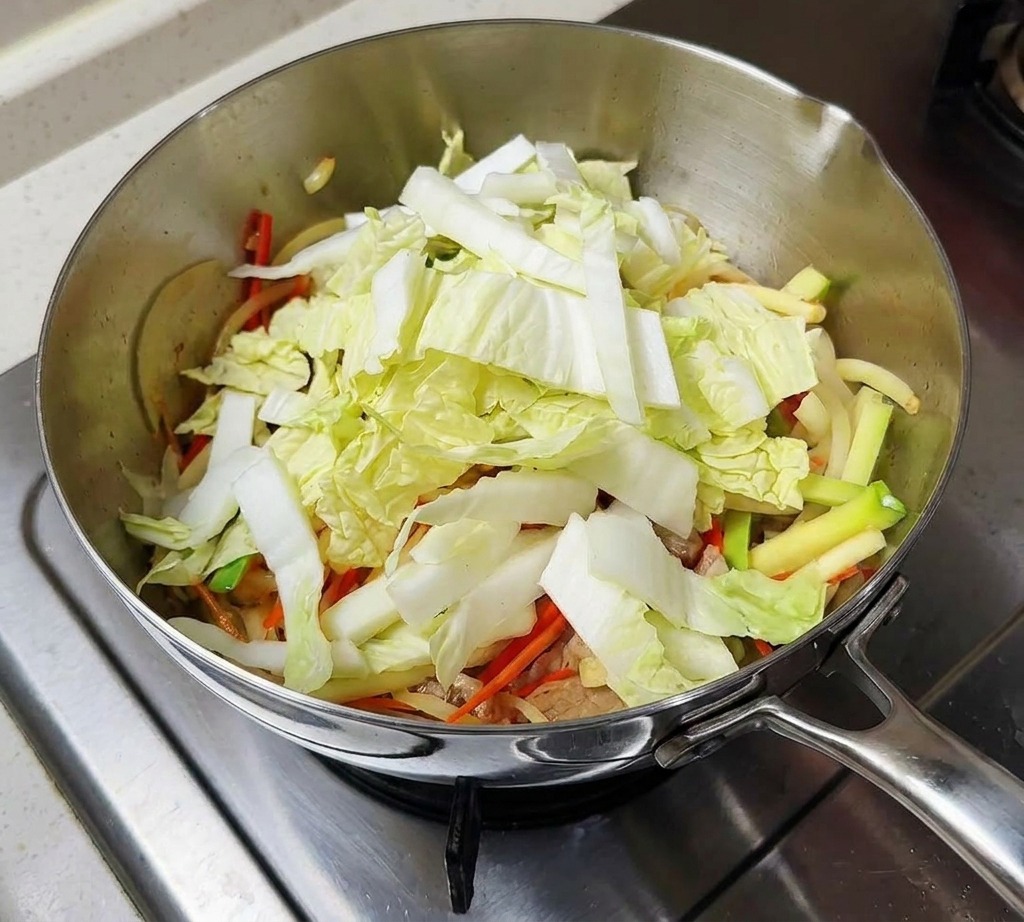
Add the chopped cabbage and sliced shiitake mushrooms to the pot. Stir everything together thoroughly to combine the new ingredients with the sautéed meat and vegetables.
Tip: Shiitake mushrooms provide a deep umami flavor that perfectly complements the seafood you will add later in the recipe. - 6Season with Korean chili powder
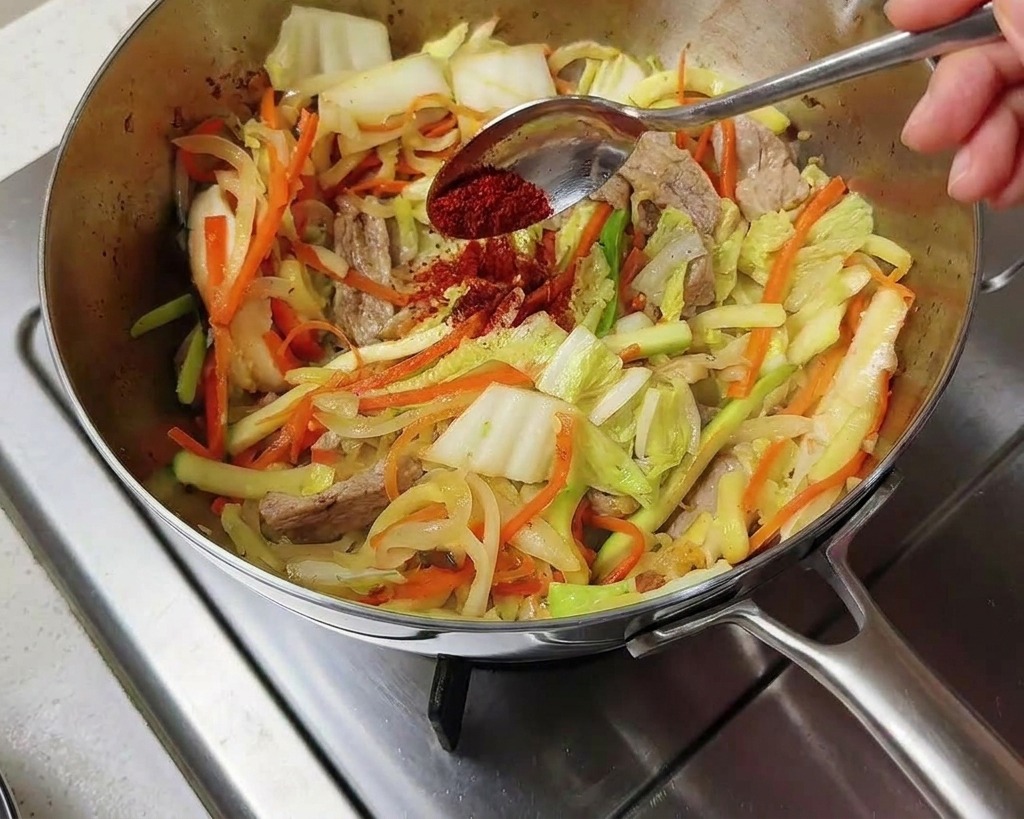
Sprinkle three spoons of red Korean chili powder over the stir-fried mixture. Stir well to coat all the ingredients evenly, which will define the spice level and the vibrant color of the soup.
Tip: Toasting the chili powder slightly in the oil for 30 seconds before adding liquids helps to deepen its flavor and brighten its red hue. - 7Add the Korean chili paste
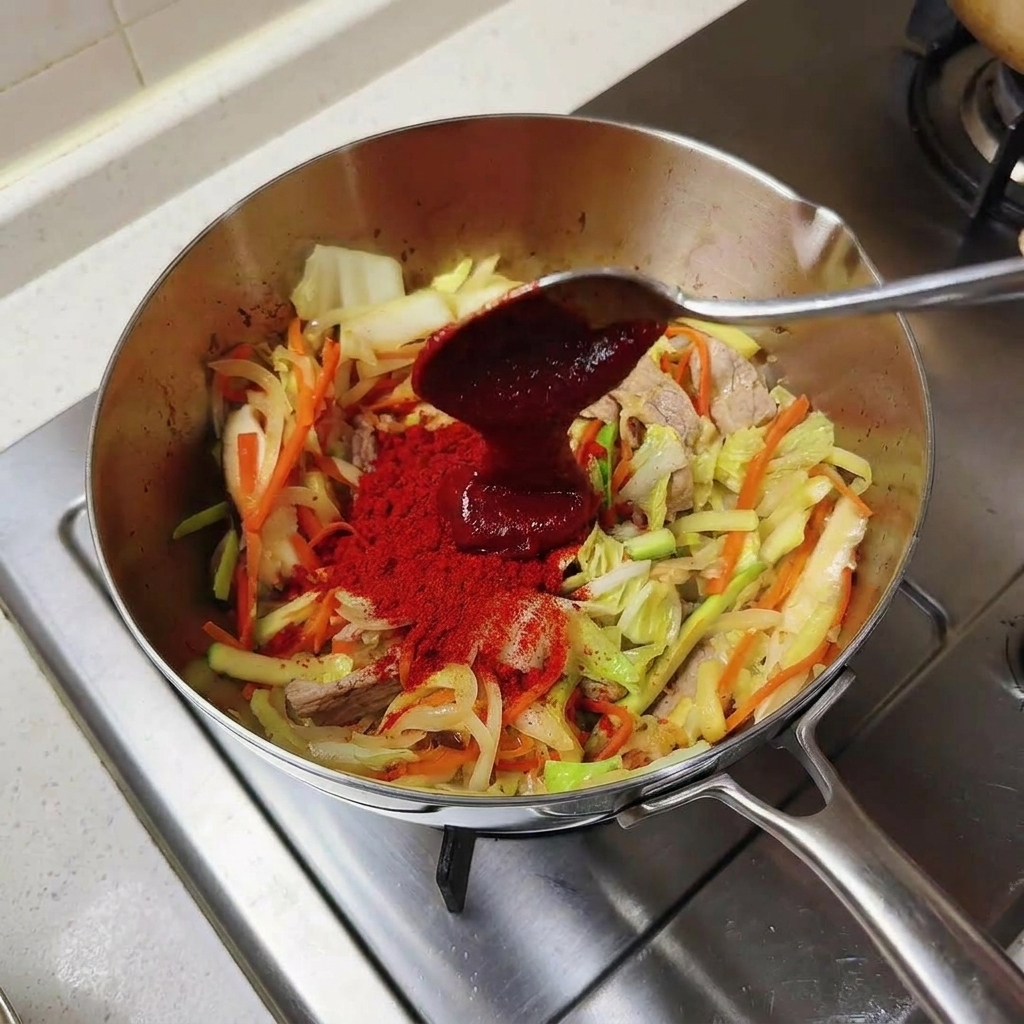
Add one tablespoon of thick Korean red chili paste Gochujang to the pot. Stir fry the paste briefly with the meat and vegetables to integrate the flavors before adding liquids.
Tip: Stir frying the paste briefly helps to develop a deeper and more savory umami flavor in the final broth. - 8Season with soy sauce and sugar
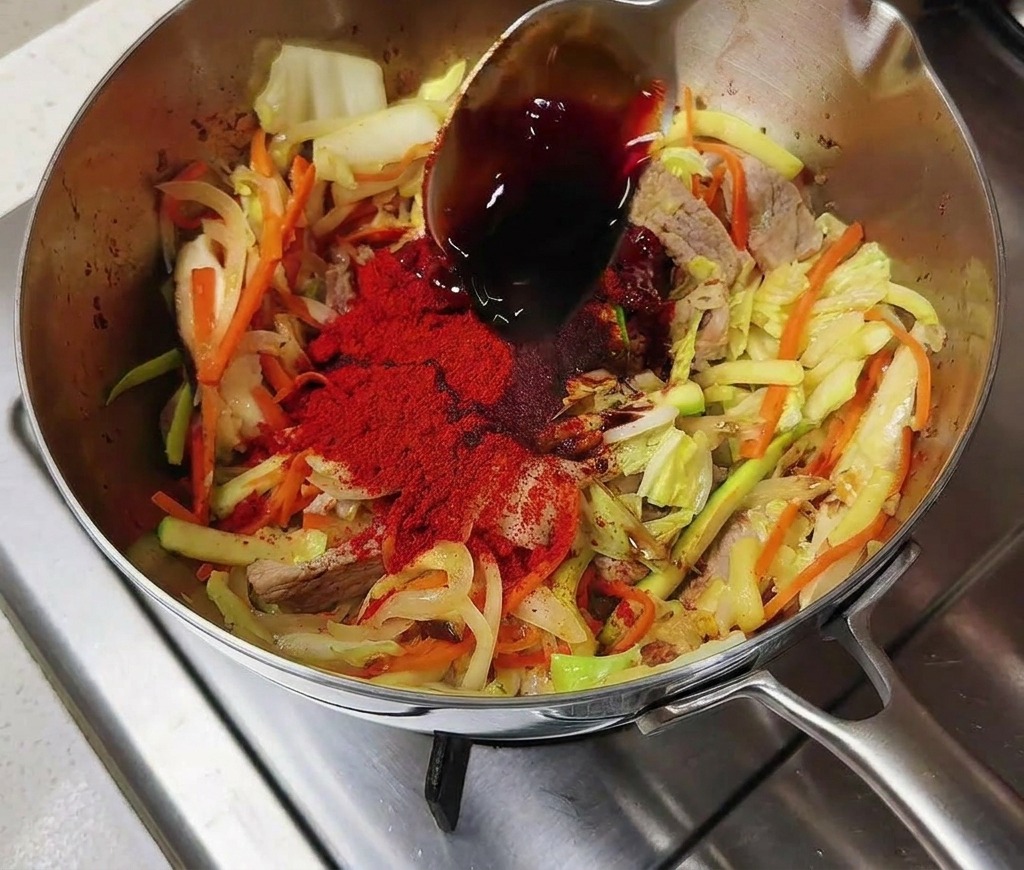
Pour three tablespoons of soy sauce and two teaspoons of sugar over the mixture of vegetables, meat, and chili powder. These seasonings provide the essential salty and sweet notes needed to balance the intense heat and create a complex flavor profile.
Tip: You can adjust the amount of sugar to your preference; a little extra can help mellow out the spiciness if the chili powder is particularly hot. - 9Stir-fry to meld the seasonings
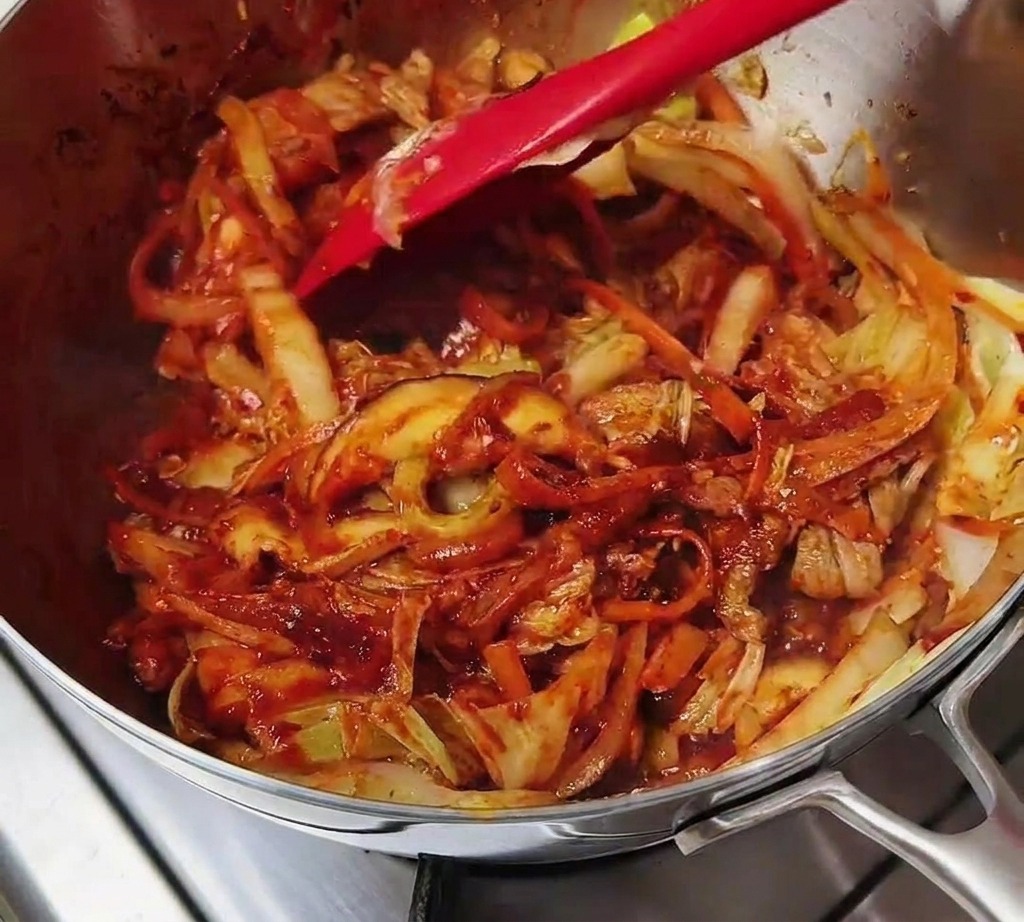
Continue stir-frying the mixture until everything is thoroughly coated in the red spice paste. This process toasts the chili slightly, intensifying the smoky aroma and deepening the color.
Tip: Be careful not to let the spices burn on the bottom of the pot, as burnt chili powder will introduce a bitter taste to the soup. - 10Add water for the soup base
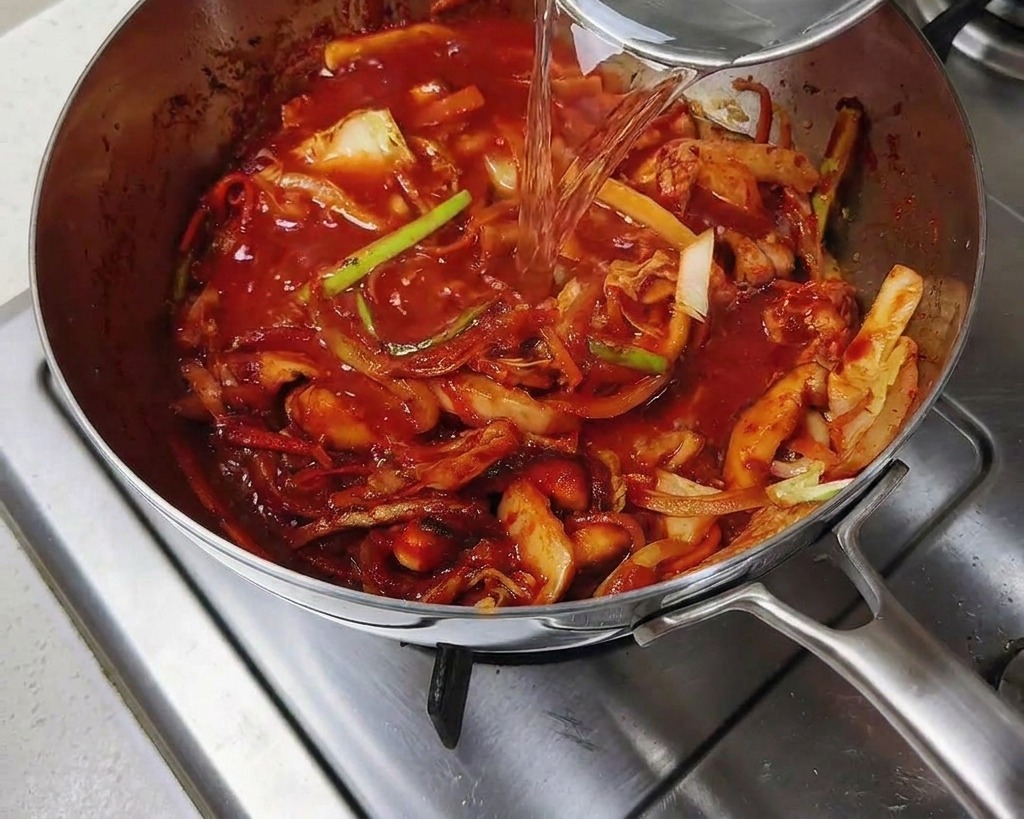
Carefully pour fresh water into the pot with the sautéed ingredients to begin forming the spicy broth. The water will immediately take on a deep red hue as it integrates with the seasoned vegetables and meat.
Tip: Using warm water instead of cold can help the pot return to a boil more quickly, saving time in the cooking process. - 11Enhance with beef bouillon
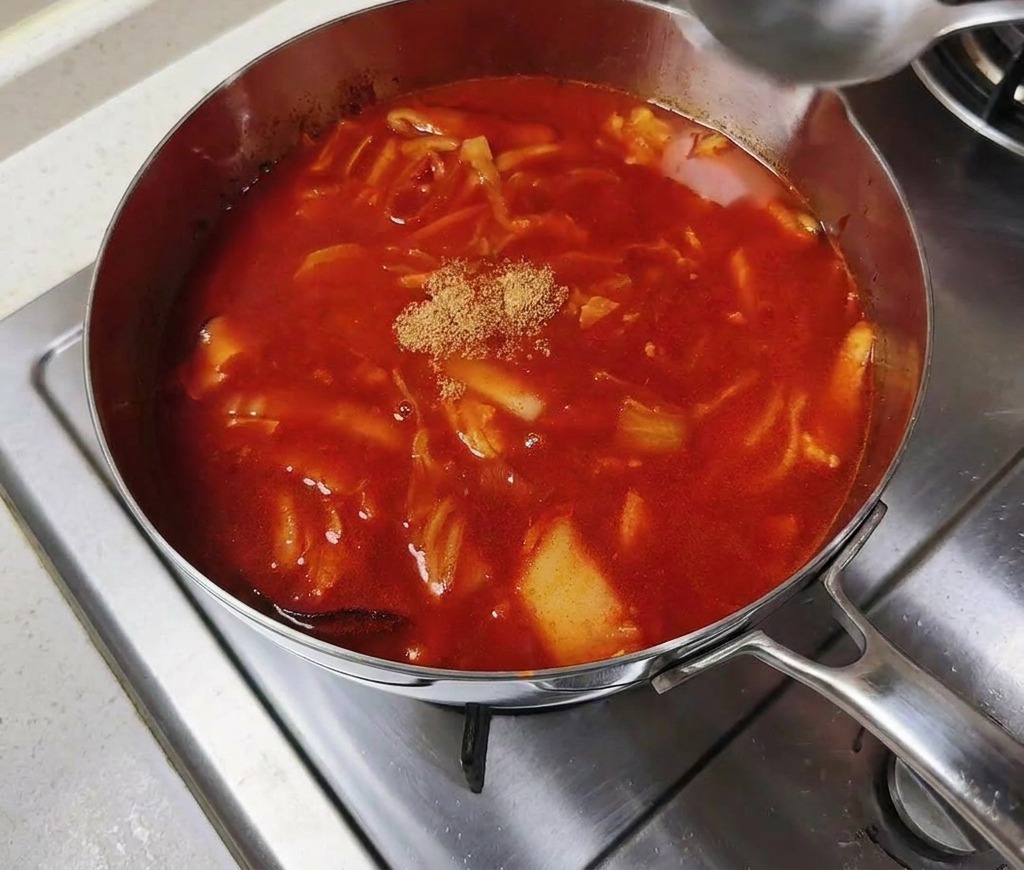
Add a spoonful of beef bouillon powder to the simmering red liquid. This provides an immediate boost of savory umami, creating the rich, deep flavor characteristic of authentic Korean seafood noodle soup.
Tip: If you prefer a lighter taste, you can substitute the beef powder with chicken or mushroom bouillon for a different savory profile. - 12Add the fresh seafood
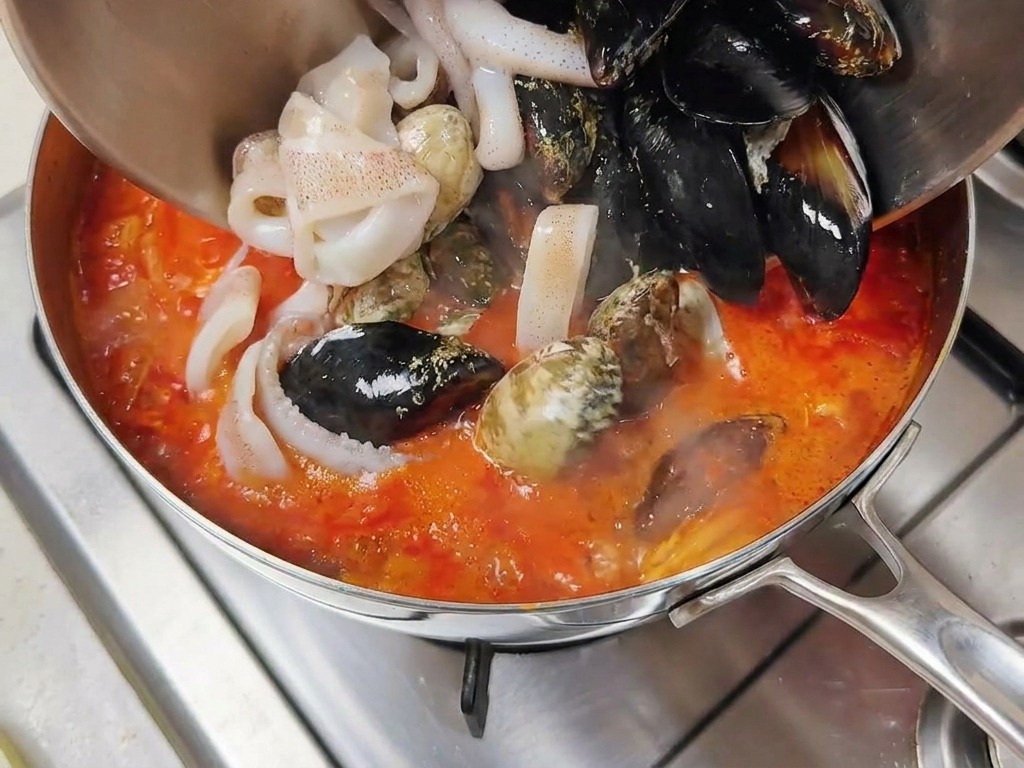
Once the broth reaches a vigorous boil, add the prepared mix of clams, squid, mussels, and scallops. Cook the seafood just until the shells open and the meat is tender and opaque.
Tip: Seafood cooks very quickly; keep a close eye on the pot and remove it from the heat as soon as the mussels and clams have opened to prevent toughening. - 13Add fresh shrimp to the broth
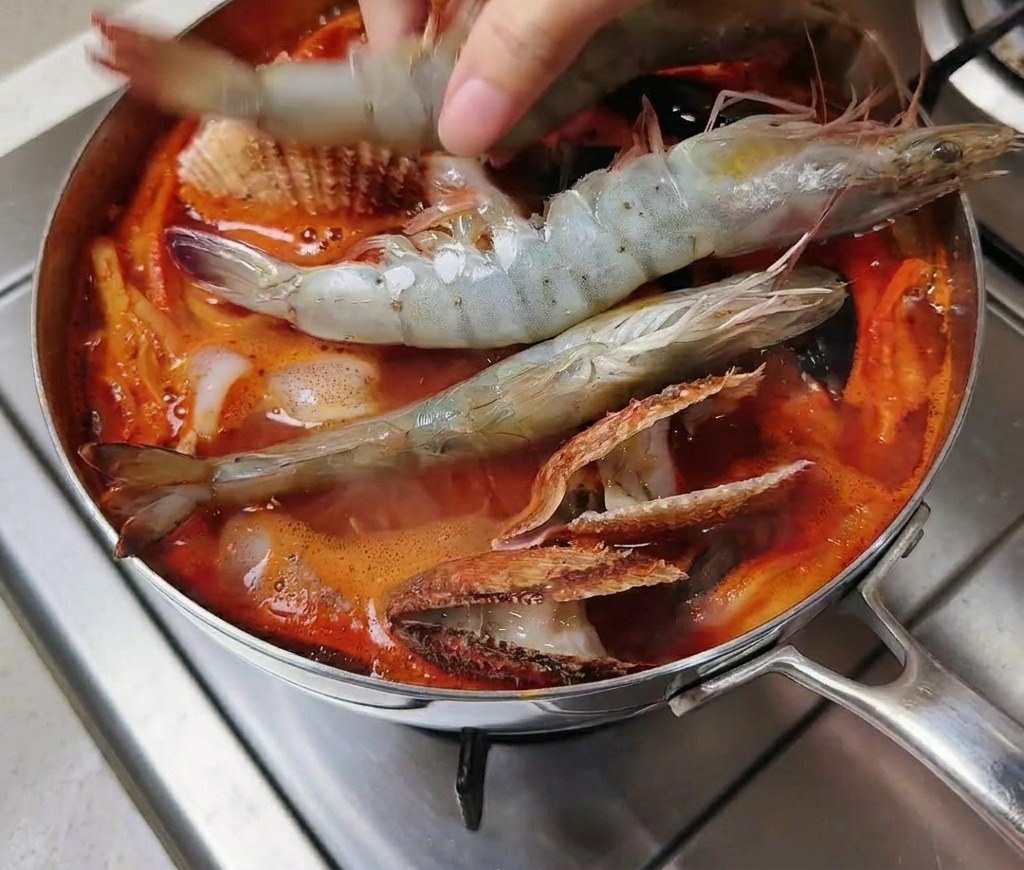
Carefully place the large whole raw shrimp into the simmering red broth alongside the other seafood like clams and mussels. Add the shrimp toward the end of the cooking process to ensure they stay tender and avoid overcooking.
Tip: Leave the shells on the shrimp while cooking to provide extra depth and sweetness to the seafood stock. - 14Garnish with green chilies
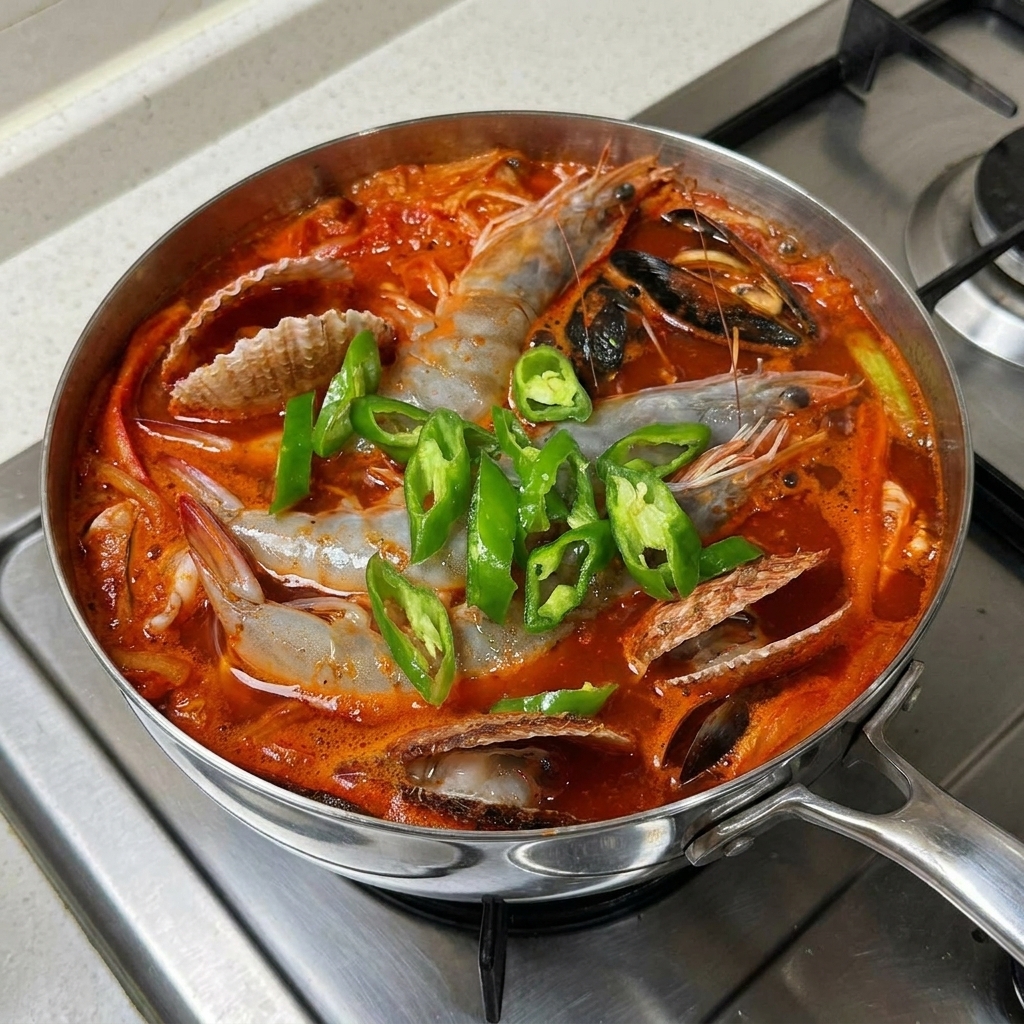
Scatter a handful of sliced green chili peppers over the top of the simmering seafood. These chilies add a fresh, sharp heat that balances the rich, savory flavors of the spicy broth. Continue to cook for just a minute or two until the seafood is fully done.
Tip: Adjust the amount of green chili to your preference; you can also use red chilies for extra color and heat. - 15Serve over noodles
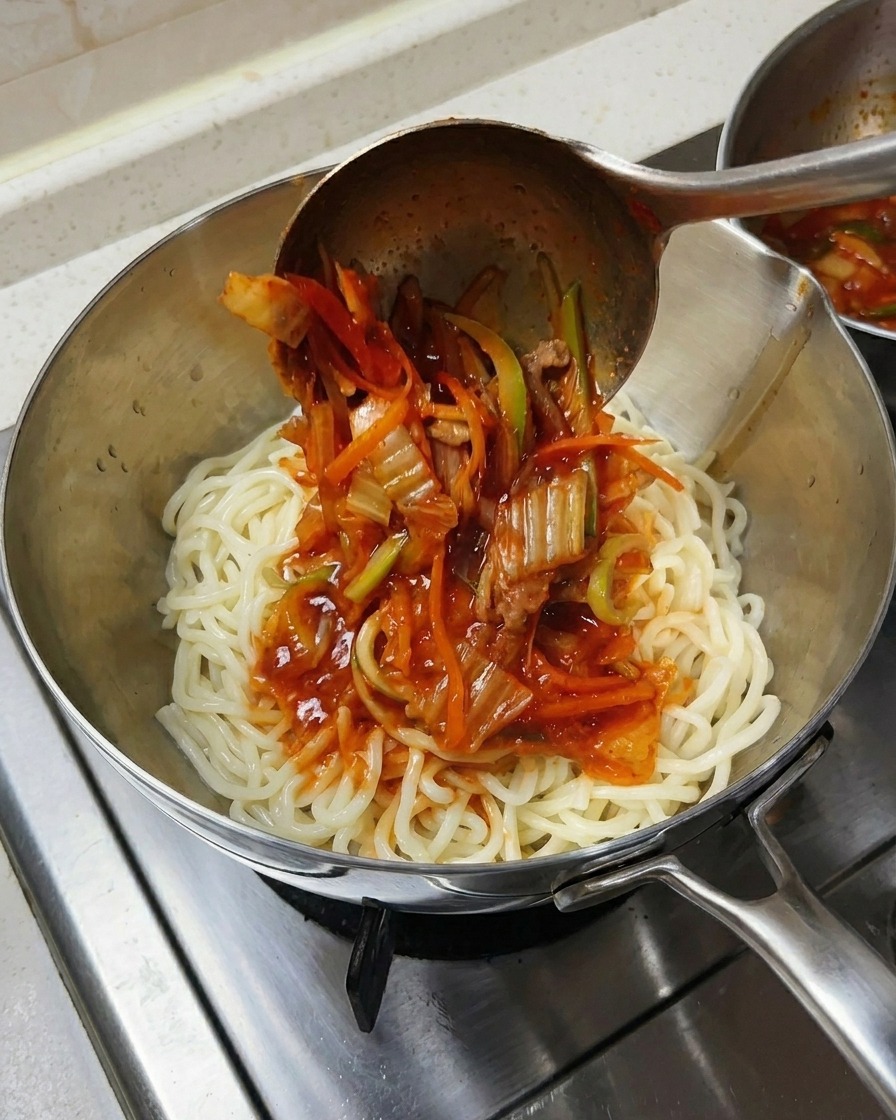
Prepare a bowl of thick, cooked white noodles. Use a large ladle to pour the hot, spicy seafood soup and all its ingredients—including the shrimp, shellfish, and vegetables—generously over the noodles. The dish is now ready to be enjoyed while hot.
Tip: Make sure the noodles are well-drained before adding the soup to prevent diluting the flavorful broth.