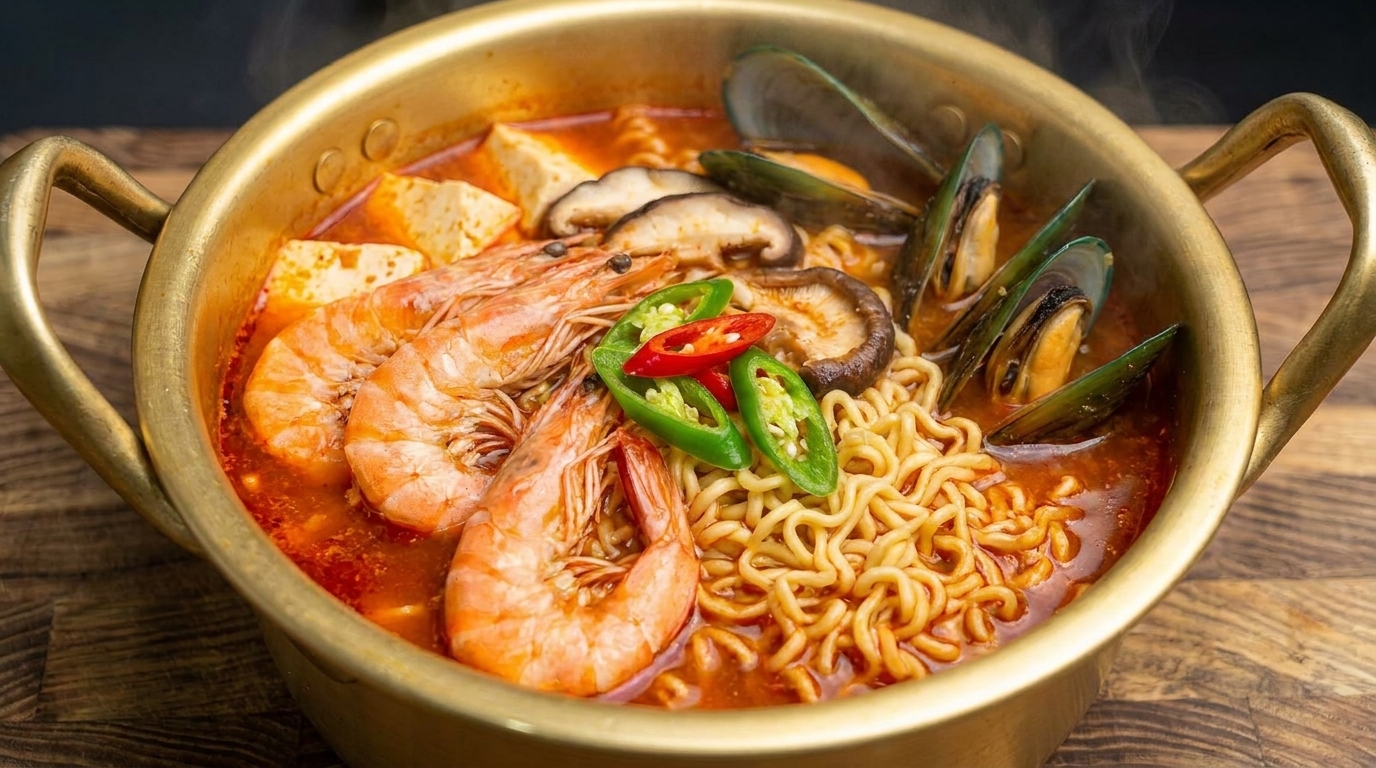
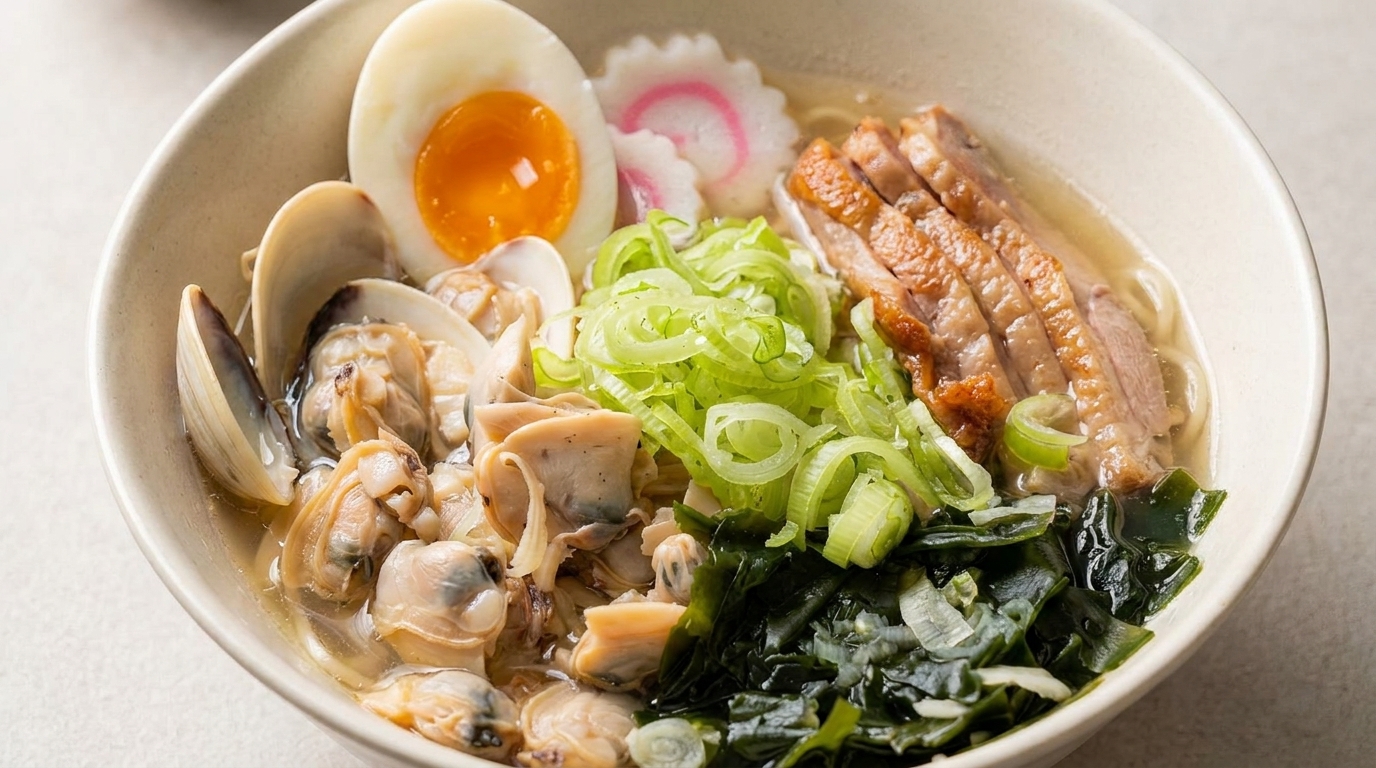
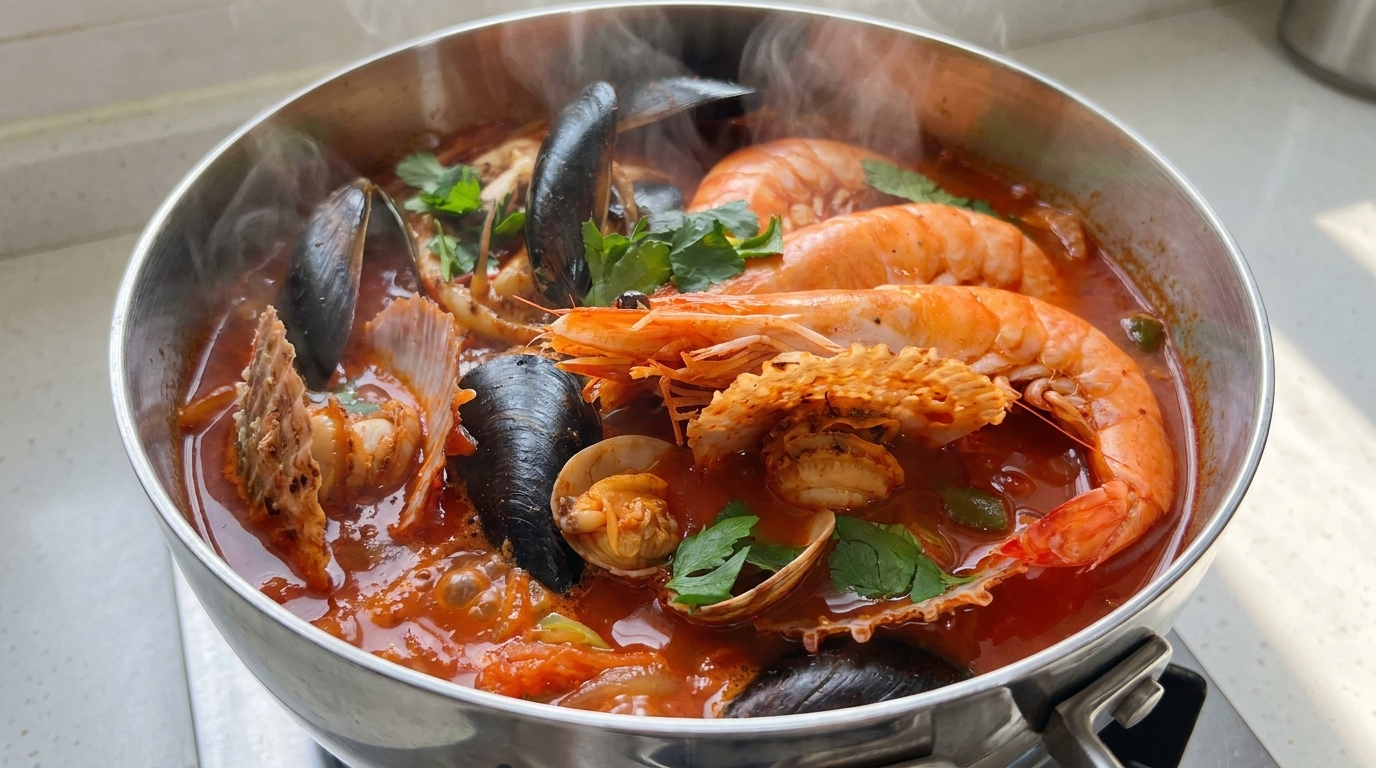
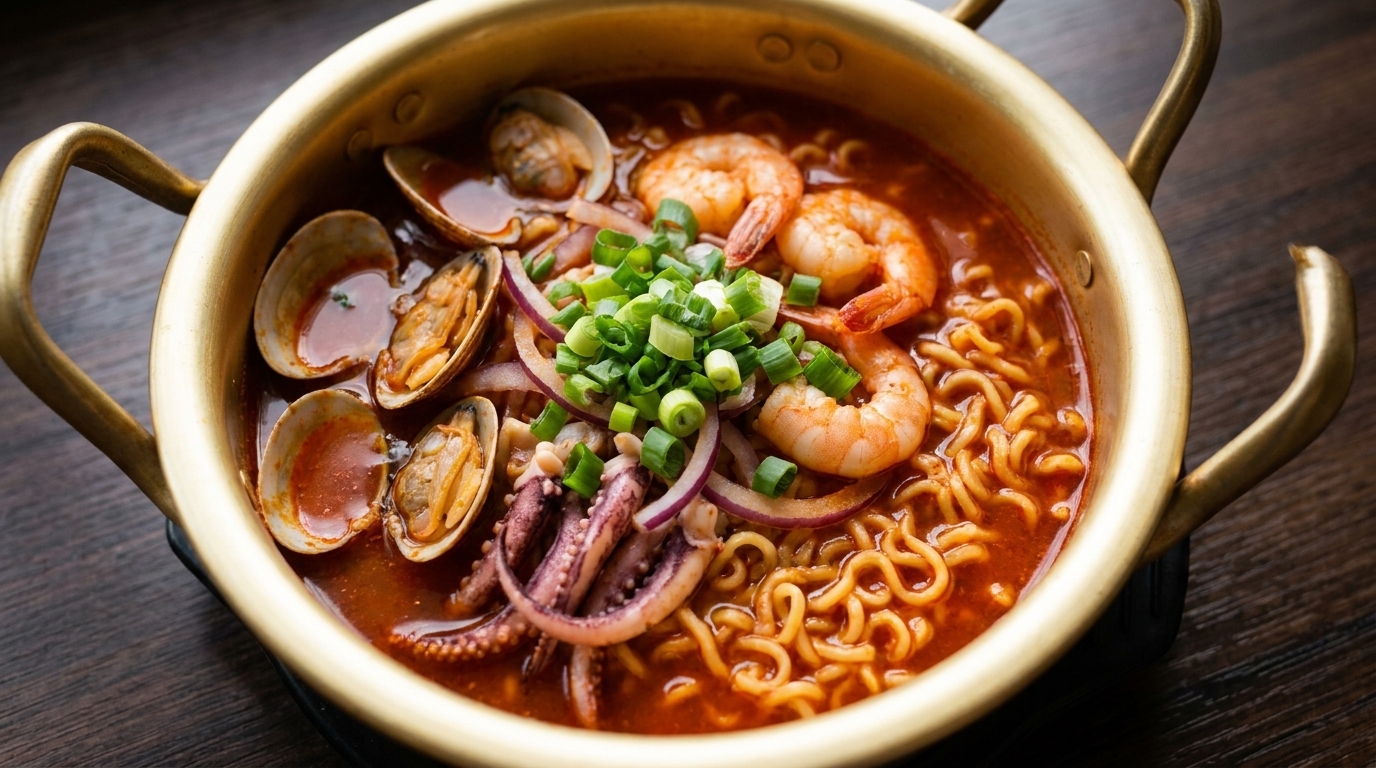
Jjamppong (Korean Spicy Seafood Noodle Soup)
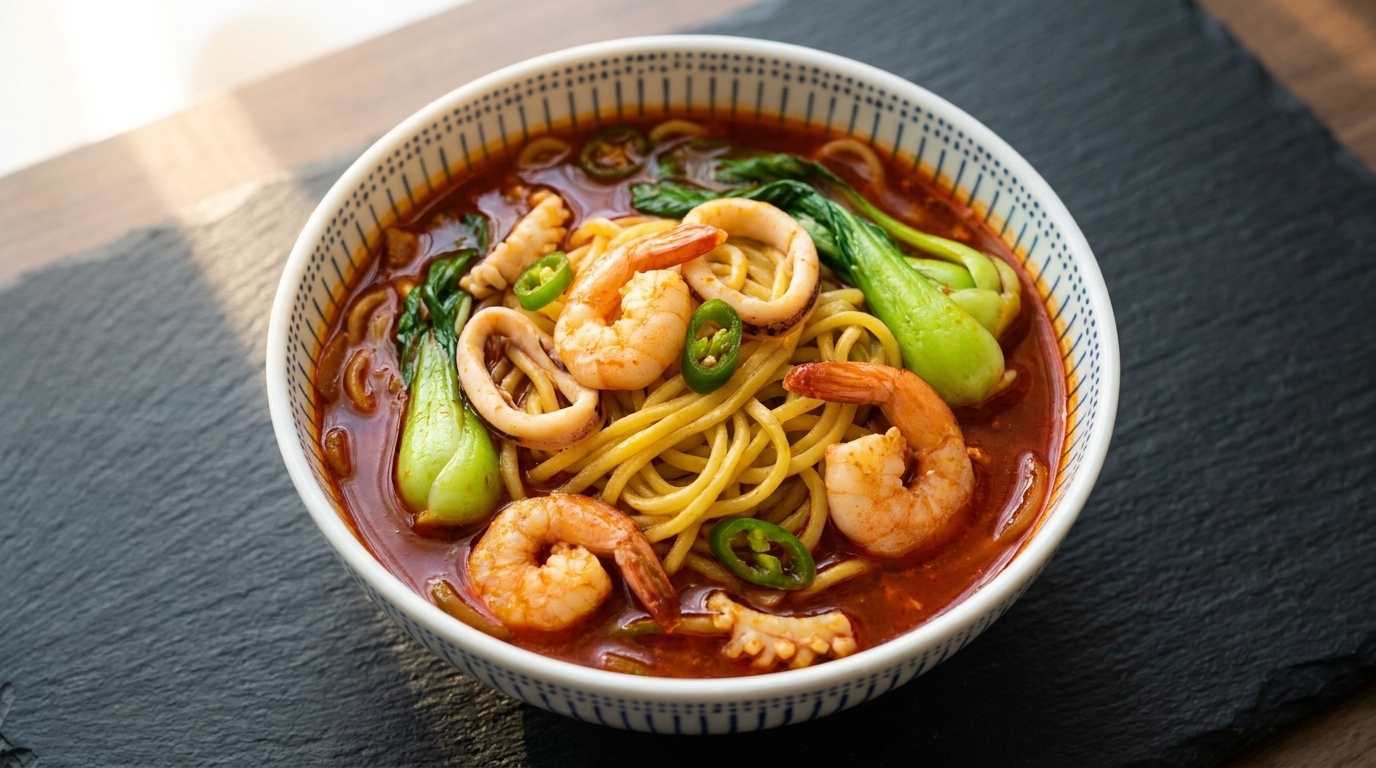
Achieve restaurant-quality Jjamppong at home with this recipe featuring a secret thickening technique, a fiery red broth, and a bounty of fresh seafood and pork belly.
This celebrated crown jewel of Korean Chinese cuisine is famous for its smoky, spicy broth and generous helpings of seafood. While home kitchens often struggle to replicate the heavy body of restaurant soups due to lower heat, this version utilizes a clever flour based thickener to create a soul satisfying and professional grade consistency.
Ingredients
- 500 g pork belly, sliced
- 200 g squid, sliced
- 150 g shrimp, cleaned
- 400 g onions, sliced
- 150 g napa cabbage, shredded
- 100 g green onions, chopped
- 100 g bok choy, sliced
- 200 g zucchini, sliced
- 25 g Cheongyang chili peppers, chopped
- 8 tbsp fine Korean chili powder (gochugaru)
- 2 tbsp minced garlic
- 7 g minced ginger
- 2 tbsp oyster sauce
- 3 tbsp salt
- 1 tbsp MSG
- 2 tbsp cooking oil
- 1 tbsp all-purpose flour
- 1.7 l water
- to taste black pepper
- 4 servings fresh wheat noodles
Instructions
- 1Prepare the flour thickener
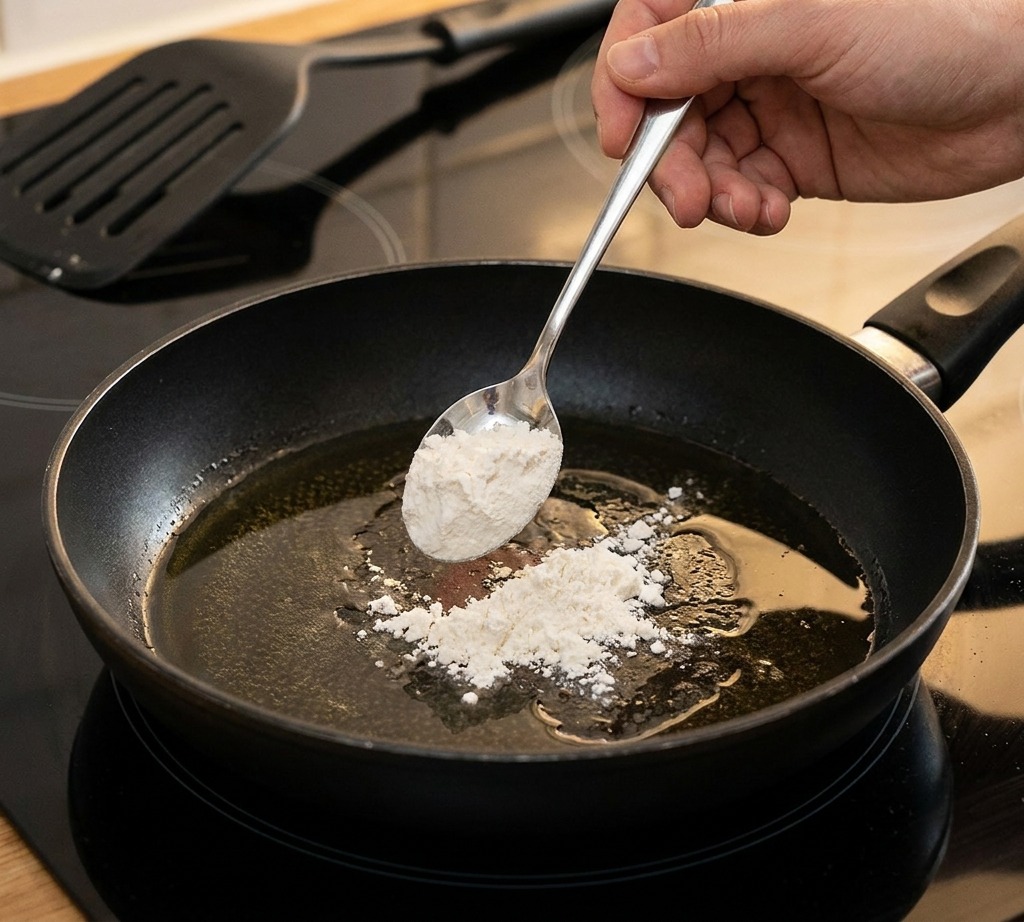
In a small frying pan, combine two tablespoons of cooking oil with one tablespoon of white flour. Stir fry the mixture briefly over low heat to create a smooth roux. This step is the secret to achieving the thick, heavy broth consistency found in professional Jjamppong restaurants.
Tip: Keep the heat low and stir fry only until combined. You want to maintain a light color for the thickener so it does not alter the final look of the red soup. - 2Prepare the thickening base
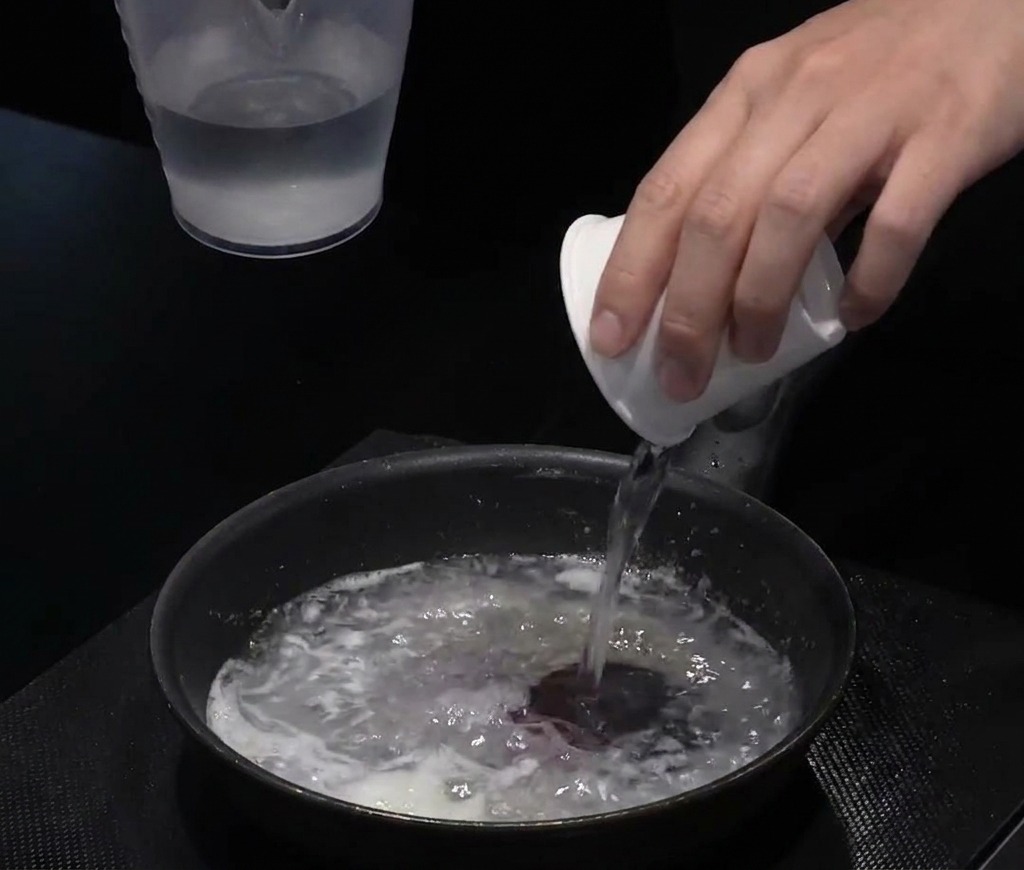
Pour one cup of water into the stir-fried flour and oil mixture. Stir continuously to dissolve the flour and create a smooth, white liquid. This mixture serves as the secret thickener that will eventually give the Jjamppong broth a rich, restaurant-quality consistency.
Tip: Add the water slowly and stir vigorously to ensure no flour lumps remain in the mixture. - 3Render the pork fat
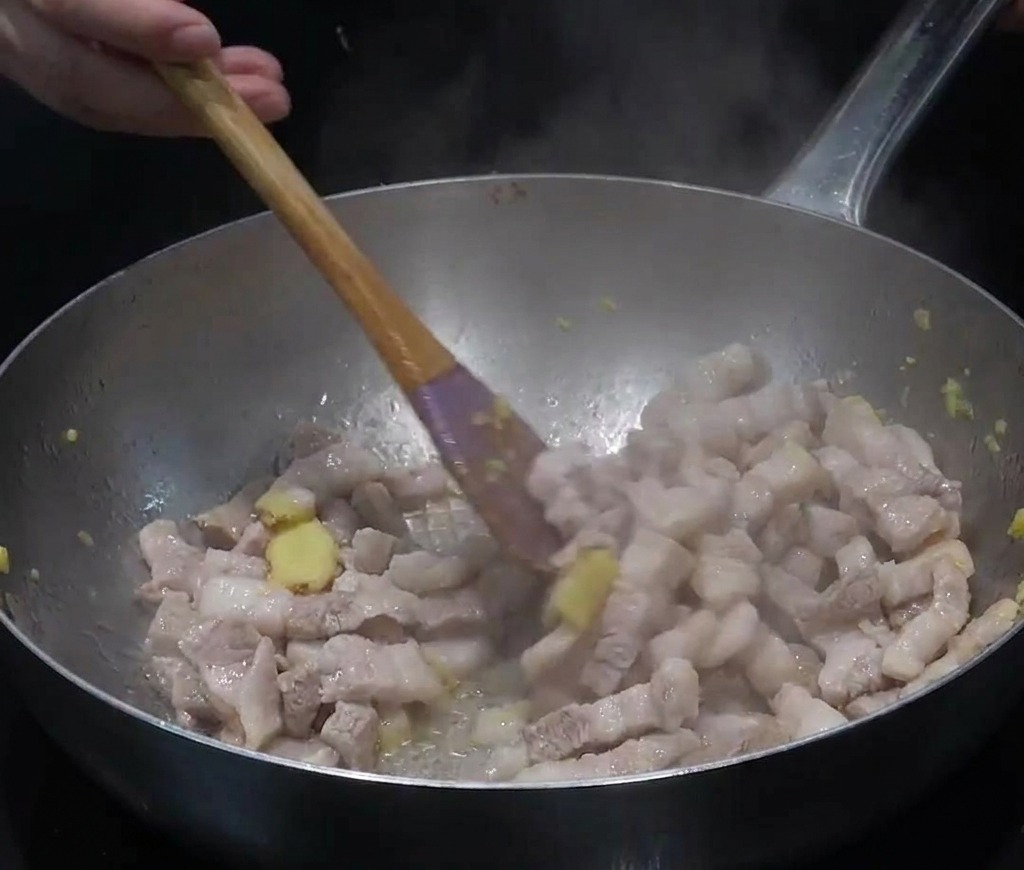
Place 500g of sliced pork belly and 7g of minced ginger into a large stainless steel pan. Stir-fry the meat until the natural pork fat begins to render out. Using this rendered fat instead of regular oil adds a rich, savory depth of flavor to the entire dish.
Tip: Allow the pork to brown slightly to maximize the flavor of the rendered fat before adding the vegetables. - 4Sauté the vegetables
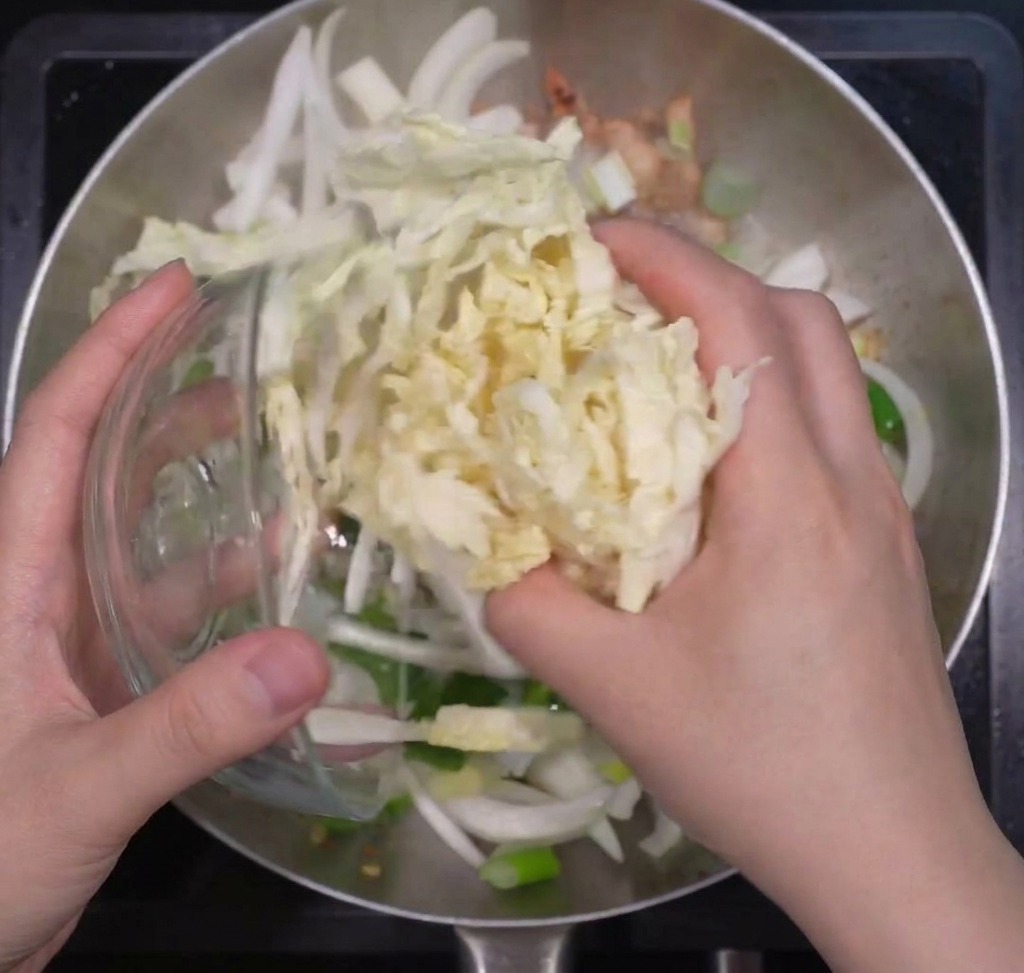
Add 400g of sliced onions, 100g of green onions, 150g of napa cabbage, and 100g of bok choy to the pan with the pork. Stir fry the mixture together until the vegetables begin to soften and become coated in the flavorful pork fat and ginger.
Tip: If the pan feels too full, do not worry as the vegetables will wilt and reduce in volume significantly as they cook. - 5Create the spicy base
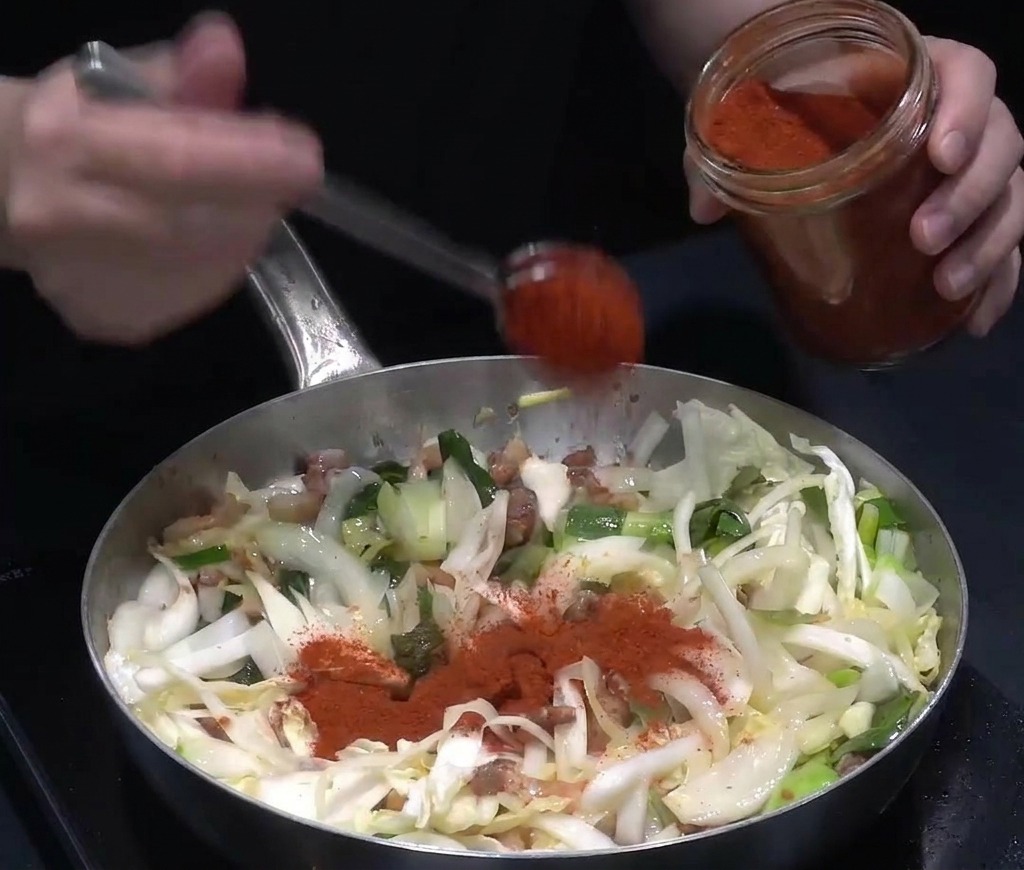
Add 8 tablespoons of fine chili powder to the sautéed meat and vegetables. Stir-fry the mixture thoroughly to toast the chili powder. This process releases the vibrant red color and spicy aroma that forms the characteristic soul of the Jjamppong broth.
Tip: Be careful not to burn the chili powder; stir it quickly to incorporate and proceed to adding liquid as soon as it becomes fragrant. - 6Thicken the spicy broth
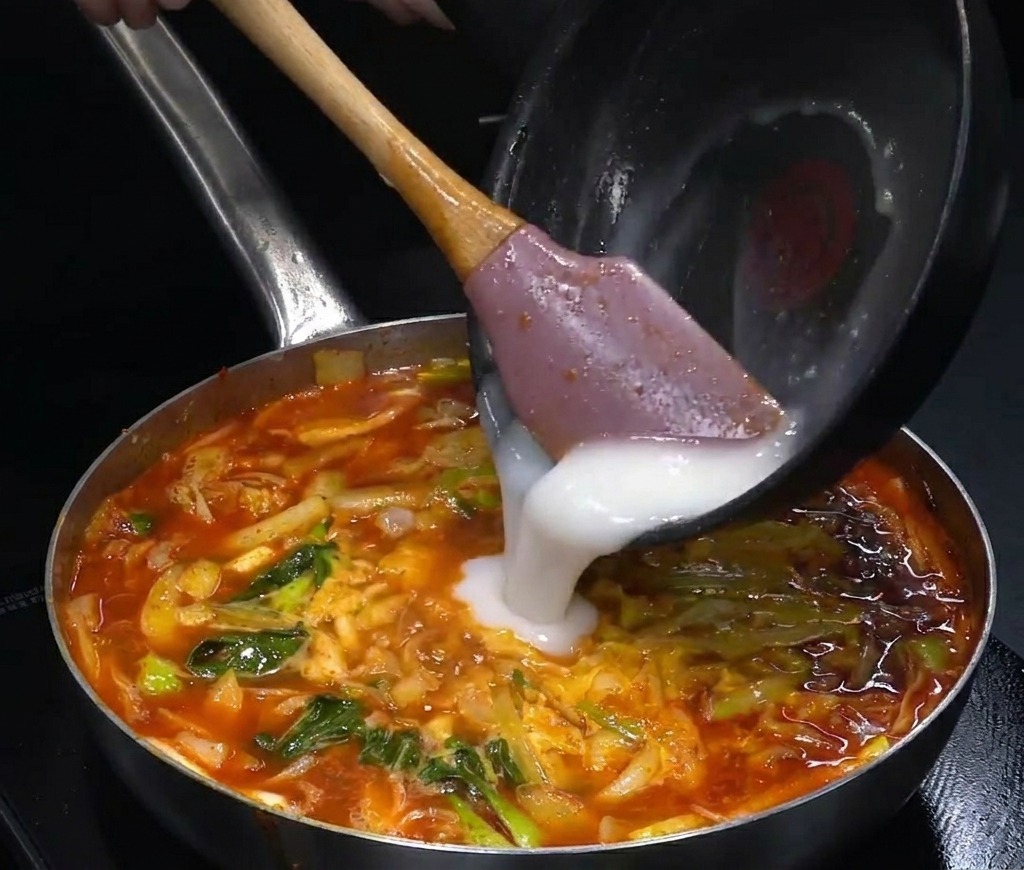
After pouring 1.5 liters of water into the spicy vegetable and meat base, pour in the prepared white flour thickener. Stir the soup immediately to integrate the thickener, which will give the broth its signature heavy and restaurant-quality mouthfeel.
Tip: Whisk or stir vigorously while pouring the thickener to ensure a perfectly smooth consistency without any lumps. - 7Season the red broth
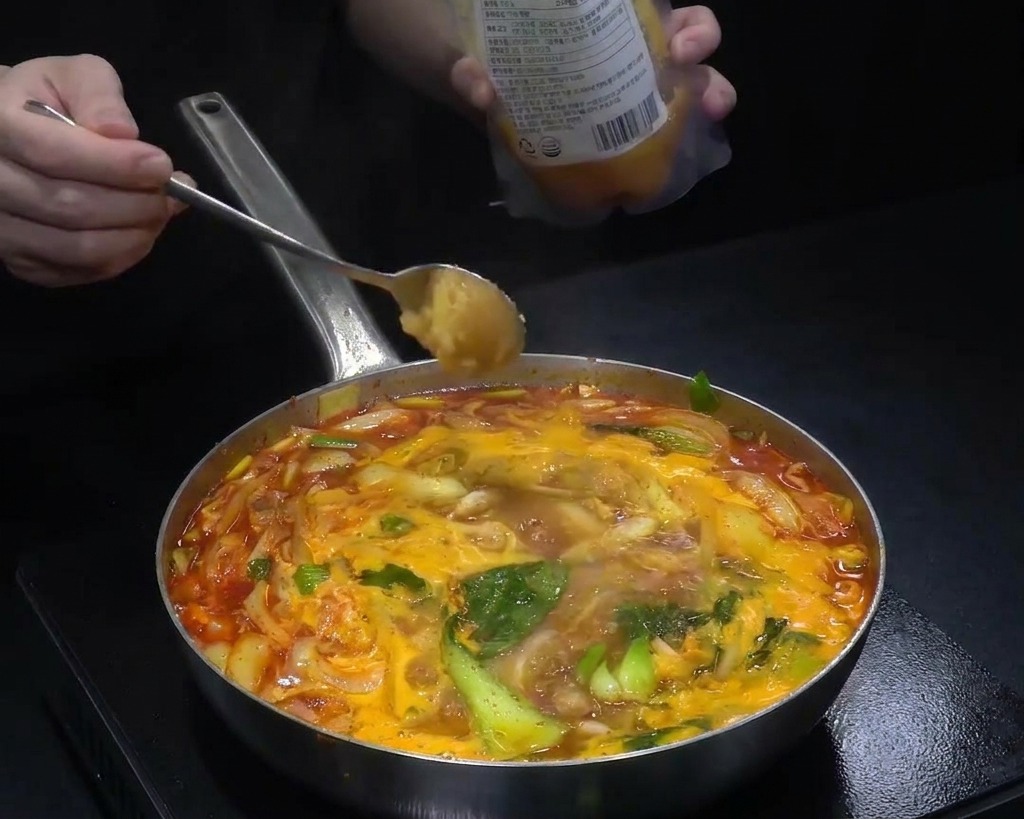
With the broth now a vibrant red and bubbling, add the minced garlic, salt, oyster sauce, and a pinch of MSG. These seasonings build the savory depth and umami essential for a traditional spicy seafood soup.
Tip: You can adjust the salt level at the very end after the seafood has released its natural saltiness. - 8Incorporate the sliced squid
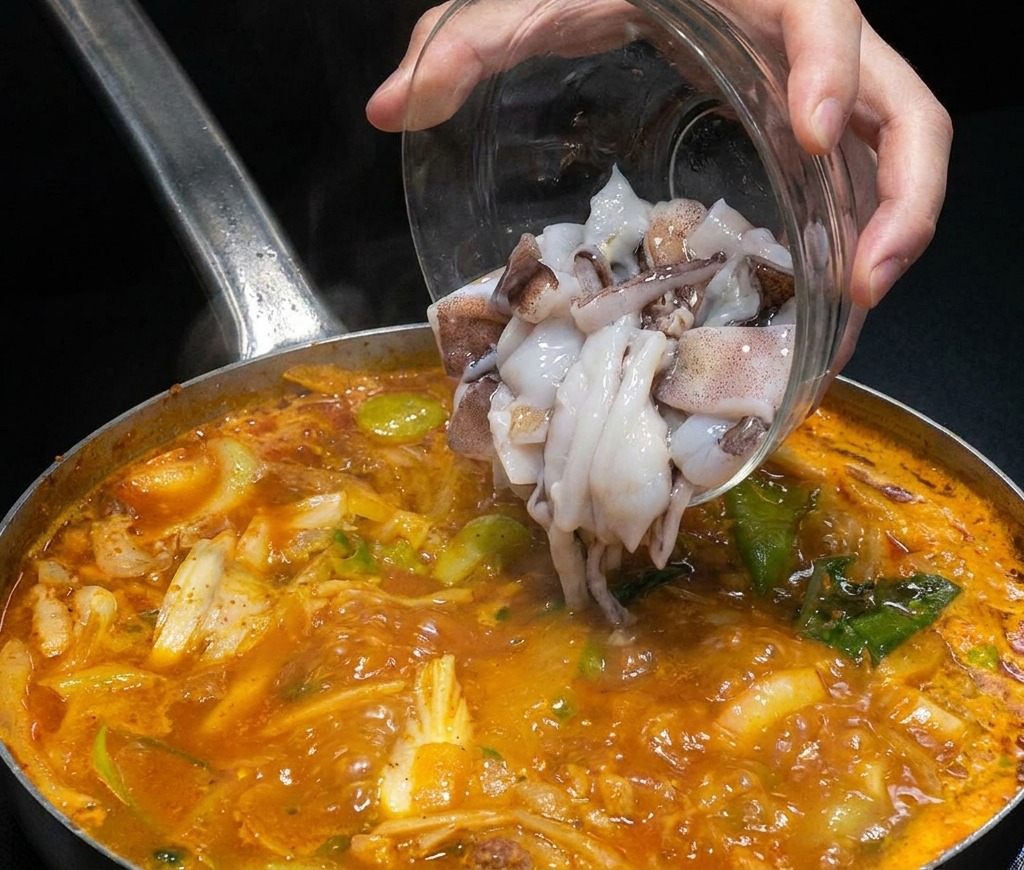
Add the raw sliced squid pieces directly into the boiling soup. Seafood cooks very quickly, so adding it toward the end of the process ensures the texture remains tender and succulent rather than becoming tough.
Tip: Ensure the squid is cleaned and sliced into uniform pieces so it cooks evenly with the other ingredients. - 9Add the fresh shrimp
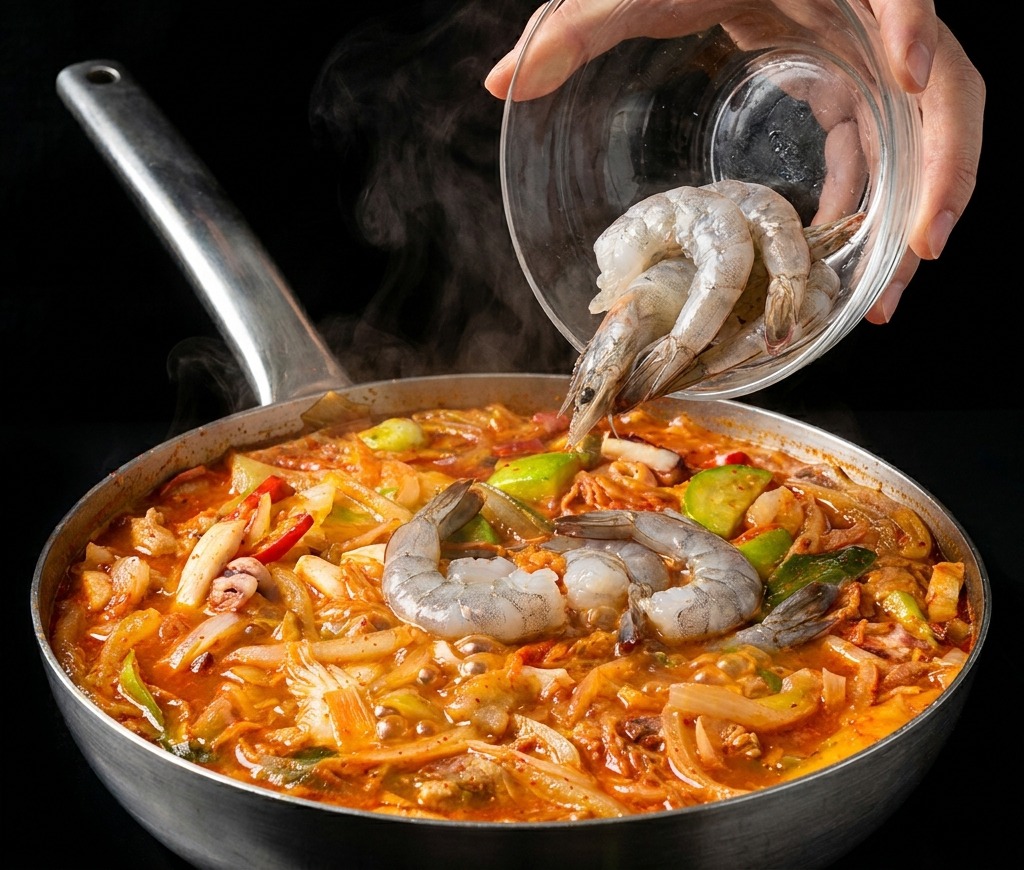
Carefully add the fresh raw shrimp to the pot. The shrimp will quickly turn opaque and pink as they absorb the spicy flavors of the broth, adding a sweet seafood profile and visual appeal to the dish.
Tip: Leaving the shells on can add more depth to the broth, but you can peel them beforehand for easier eating if preferred. - 10Final simmer with vegetables
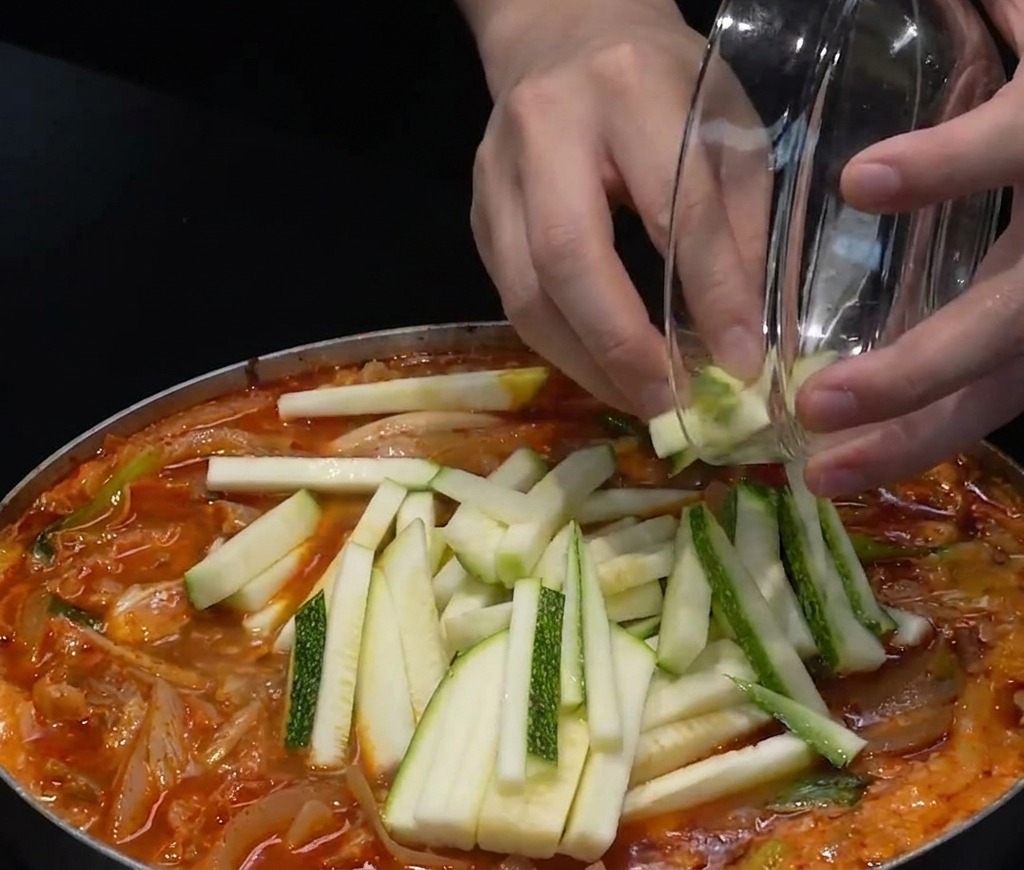
Finish the dish by adding the sliced zucchini and chopped Cheongyang chili peppers for a fresh crunch and sharp kick. Let the soup simmer for a final 5 minutes to allow the seafood flavors to fully meld into the thickened broth before serving over fresh noodles.
Tip: If you prefer less heat, you can reduce the amount of chopped chilies or remove the seeds.