Seafood Ramen
Shrimp Oil & Chicken Paitan
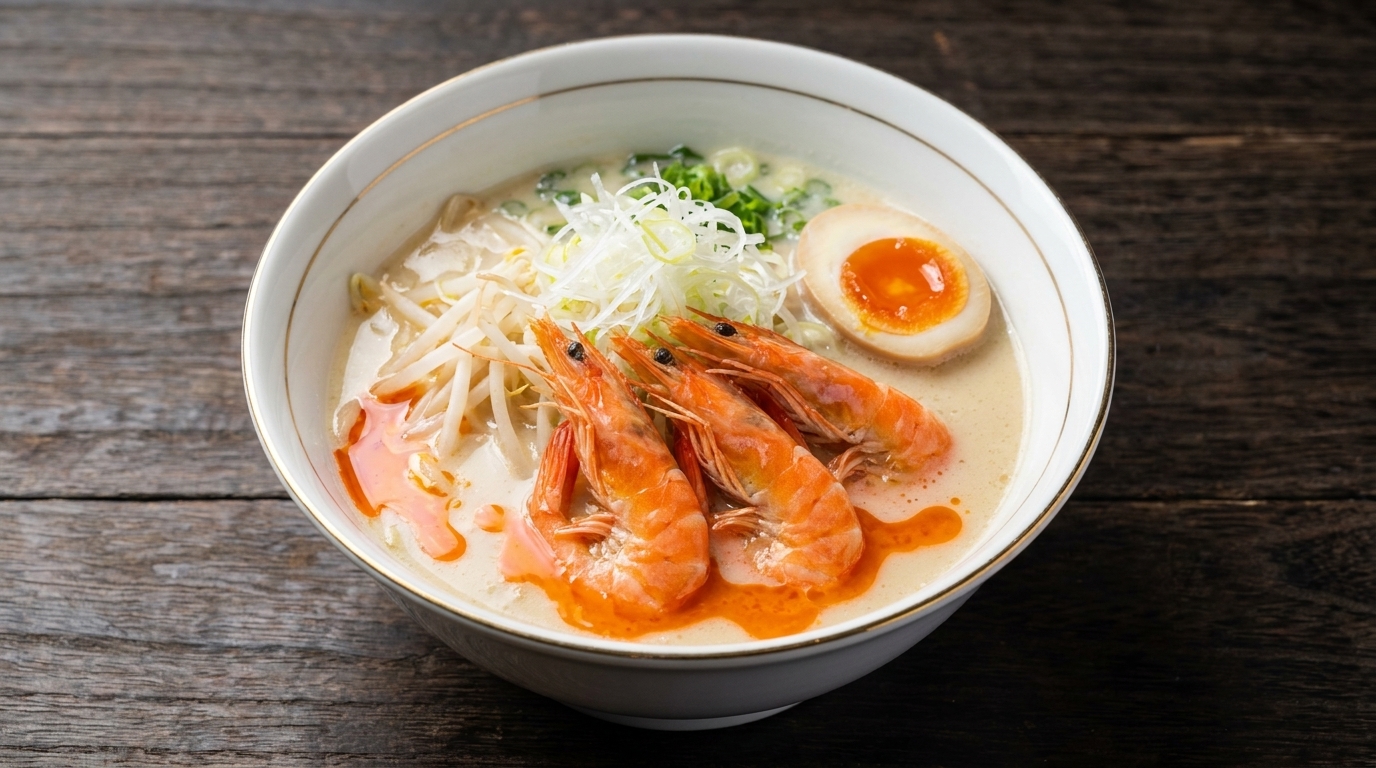
Indulge in a creamy chicken paitan ramen infused with fragrant shrimp oil. Topped with succulent shrimp and a jammy egg for a rich, layered flavor experience.
Chicken paitan, or white soup, is the creamy poultry-based cousin to the more common pork-heavy tonkotsu. While traditionally rich on its own, this version elevates the broth with an infusion of shrimp oil, a technique often used in modern ramen shops to add layers of umami and color. It represents the evolving landscape of Japanese ramen, where traditional bone-broth mastery meets creative seafood-driven aromatics.
Ingredients
- 1 serving ramen noodles
- 500 ml chicken paitan broth
- 2 tbsp shrimp oil
- 2 tbsp salt tare seasoning
- 3 pieces fresh whole shrimp
- 12 cup bean sprouts
- 1 piece soft-boiled egg
- to taste shredded scallions
- optional spinach or wood ear mushrooms
Instructions
- 1Blanch the ramen noodles
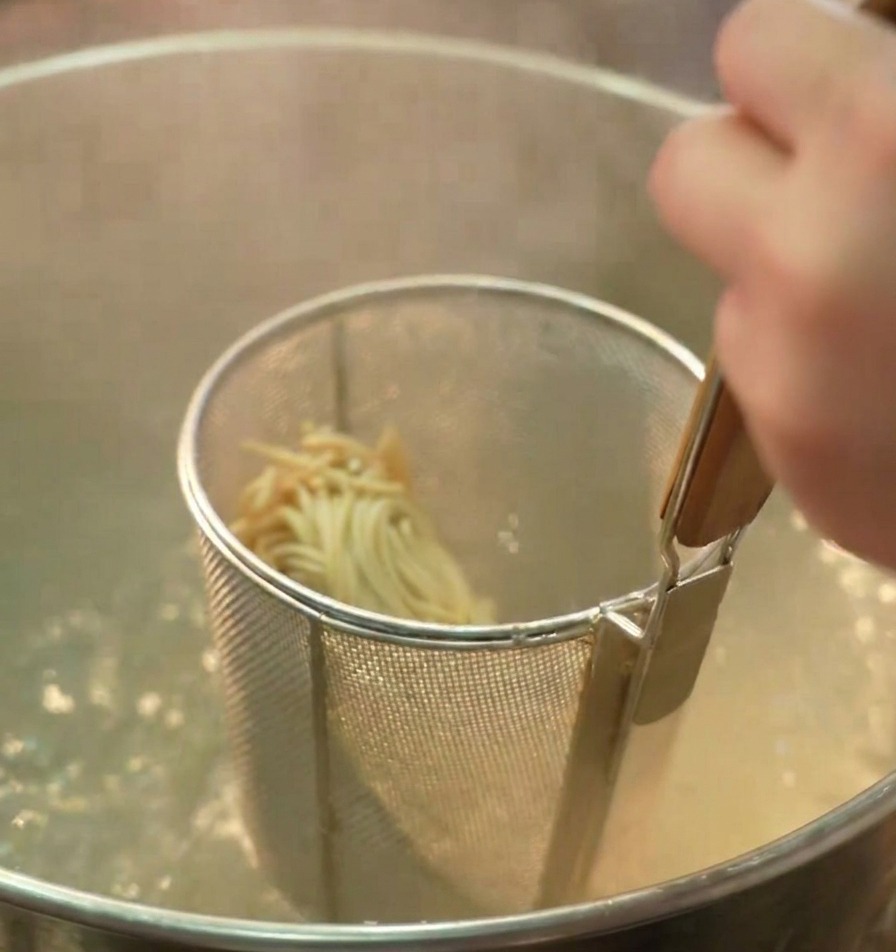
Place the ramen noodles into a mesh strainer and submerge them in a large pot of boiling water. Blanch the noodles until they are cooked through but still retain a firm bite. This ensures the noodles have the perfect texture before being added to the rich soup base.
Tip: Shake the strainer occasionally while boiling to ensure the noodles dont clump together. - 2Transfer broth for reheating
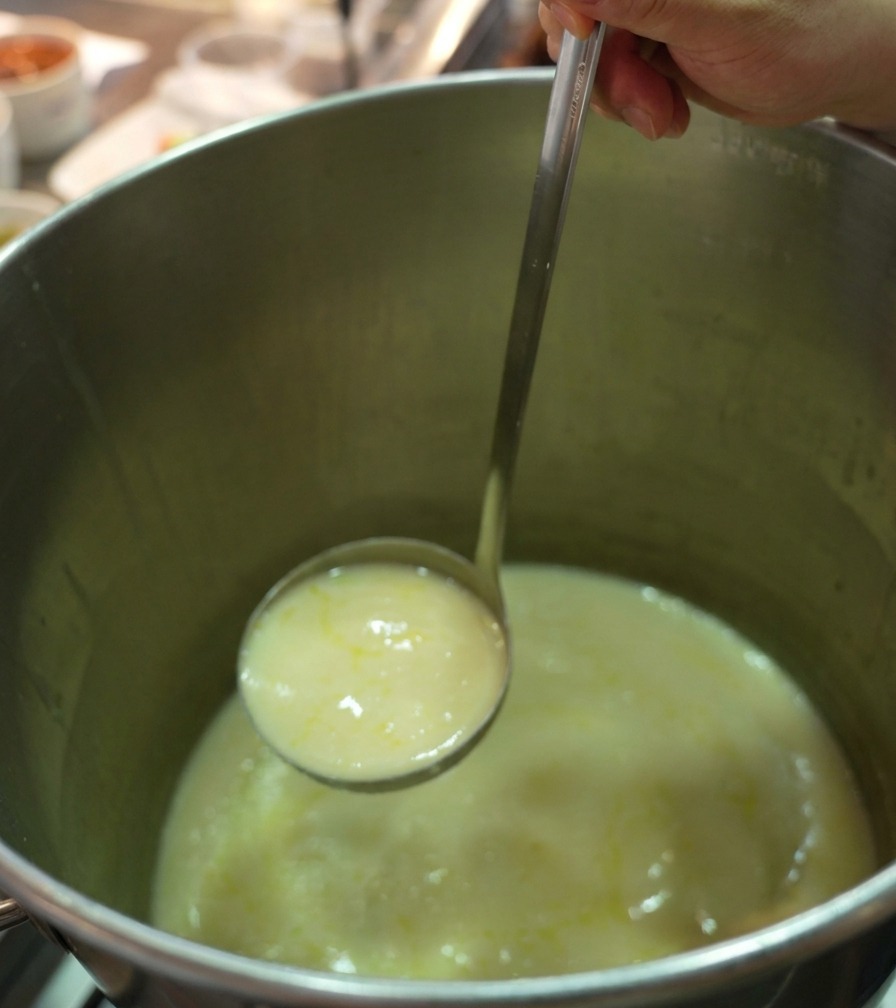
Use a large ladle to scoop the creamy, golden chicken paitan broth from the main stockpot into a smaller saucepan. Reheating the broth in smaller batches allows for better temperature control and ensures each bowl of ramen is served piping hot.
Tip: Avoid boiling the broth too vigorously during reheating to prevent the delicate fats from separating. - 3Add aromatic shrimp oil
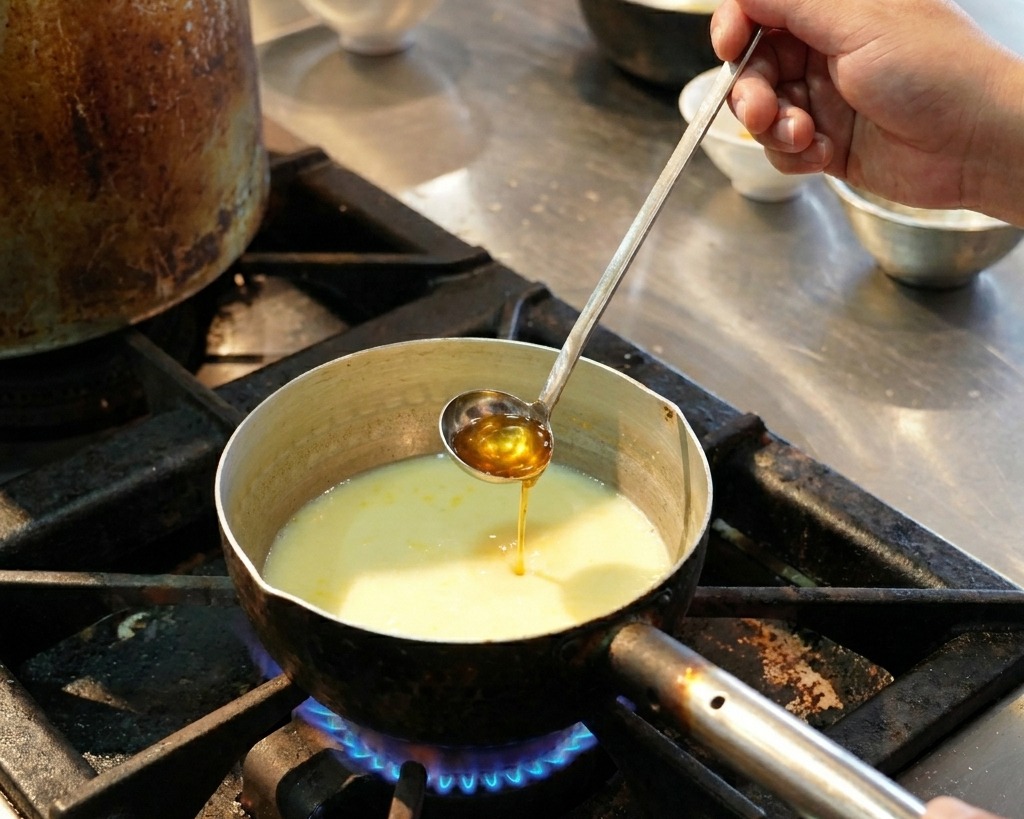
Drizzle a spoonful of bright reddish-orange shrimp oil into the simmering chicken broth. The heat of the broth will help the oils intense seafood essence infuse the paitan, adding a layer of savory richness and a beautiful golden hue to the soup.
Tip: Shrimp oil is very potent; start with one spoonful and adjust to your taste preference for a stronger or milder seafood profile. - 4Add the salt tare base
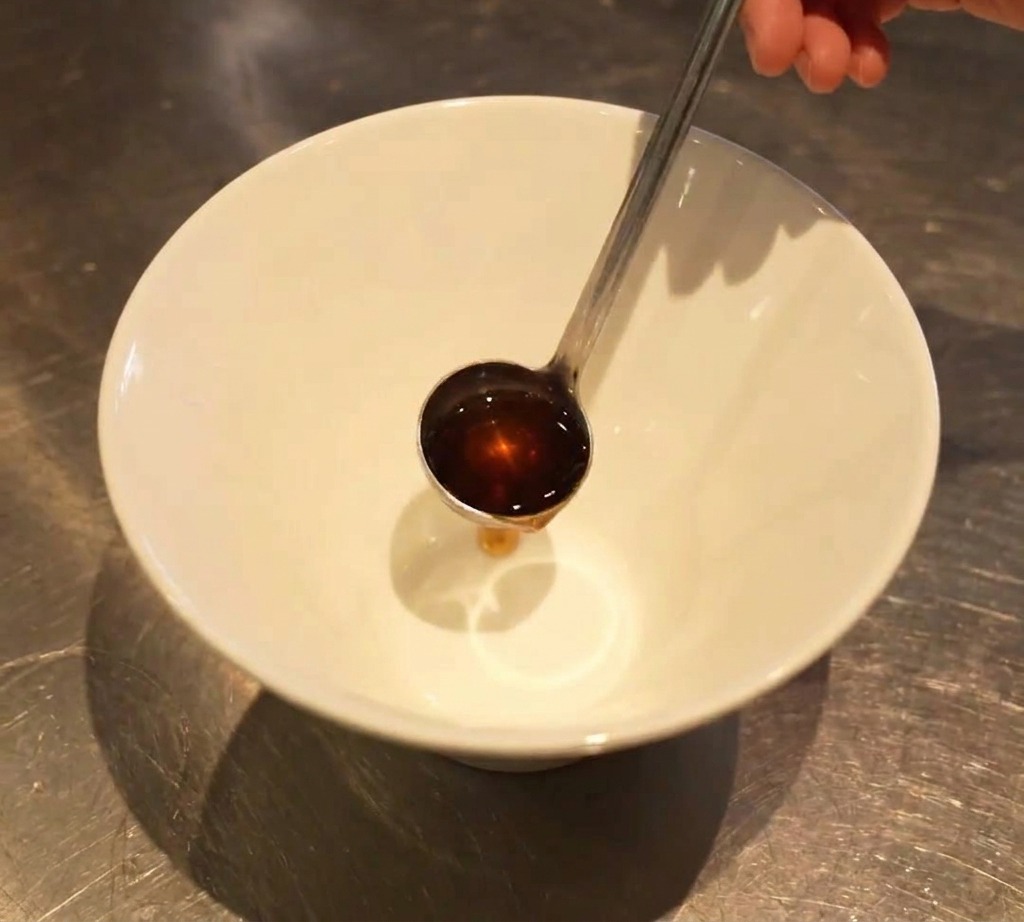
Pour a measured amount of dark salt tare seasoning into the bottom of a white ceramic ramen bowl. This concentrated seasoning blend acts as the flavor anchor, providing the necessary salinity and complexity once the hot broth is added.
Tip: Warming the bowl slightly before adding the tare helps keep the final ramen hot for a longer period. - 5Emulsify the soup base
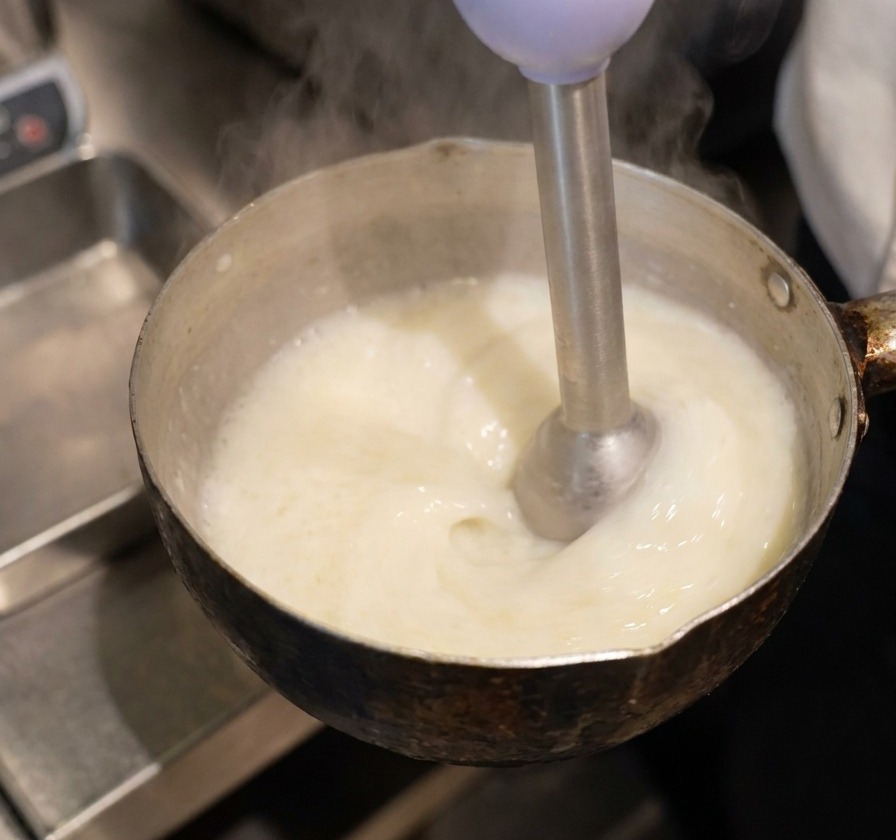
Use an immersion blender to mix the hot chicken broth and shrimp oil until they are fully emulsified. The broth should transform into a frothy, milky white liquid with a creamy texture, ensuring the shrimp oil is perfectly integrated into every spoonful.
Tip: Hold the blender at a slight angle to incorporate more air and create a thicker, more luxurious foam. - 6Combine the broth and tare
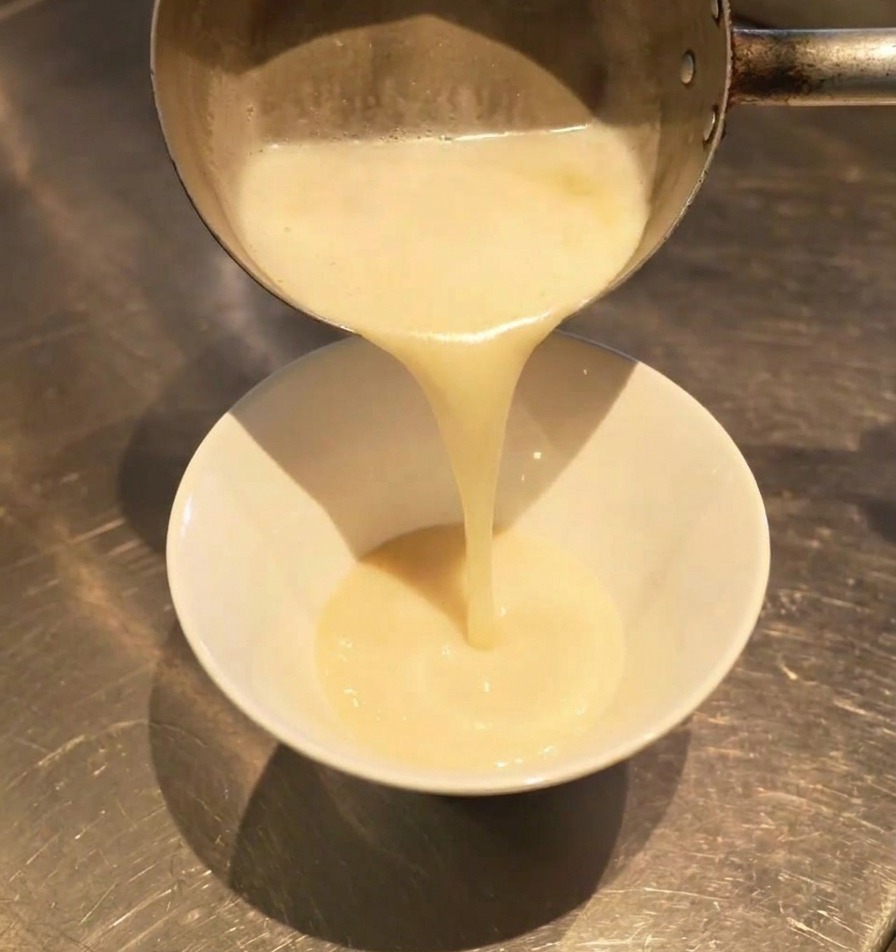
Slowly pour the frothy, emulsified milky white broth into the ramen bowl over the salt tare. The swirling motion of the pour will naturally combine the broth and seasoning, creating a harmonious and flavorful soup ready for the noodles.
Tip: Pour the broth gently to maintain the light, airy foam created during the emulsification process. - 7Shake and drain the noodles
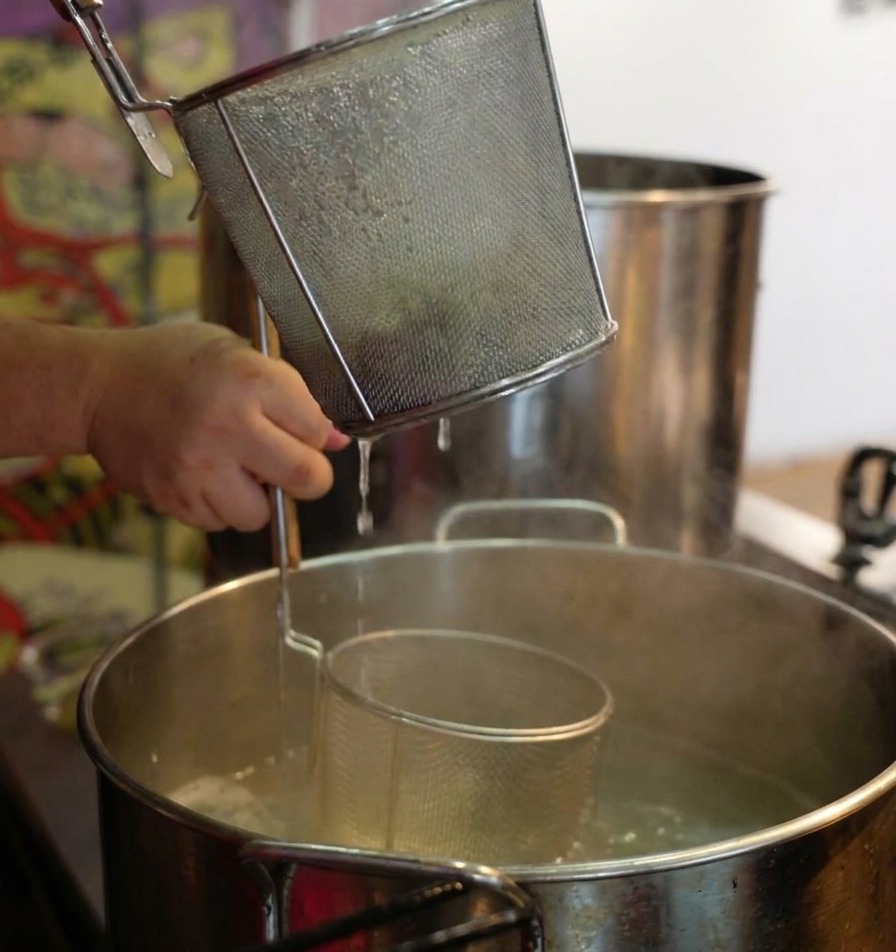
After boiling the ramen noodles until they are cooked through, lift the mesh strainer and shake it vigorously over the pot. This crucial step removes excess water and starch, ensuring that the noodles dont dilute the rich flavor of the broth once added to the bowl.
Tip: Use a firm, vertical shaking motion to ensure water trapped between the noodle strands is fully discharged. - 8Place the noodles into the broth
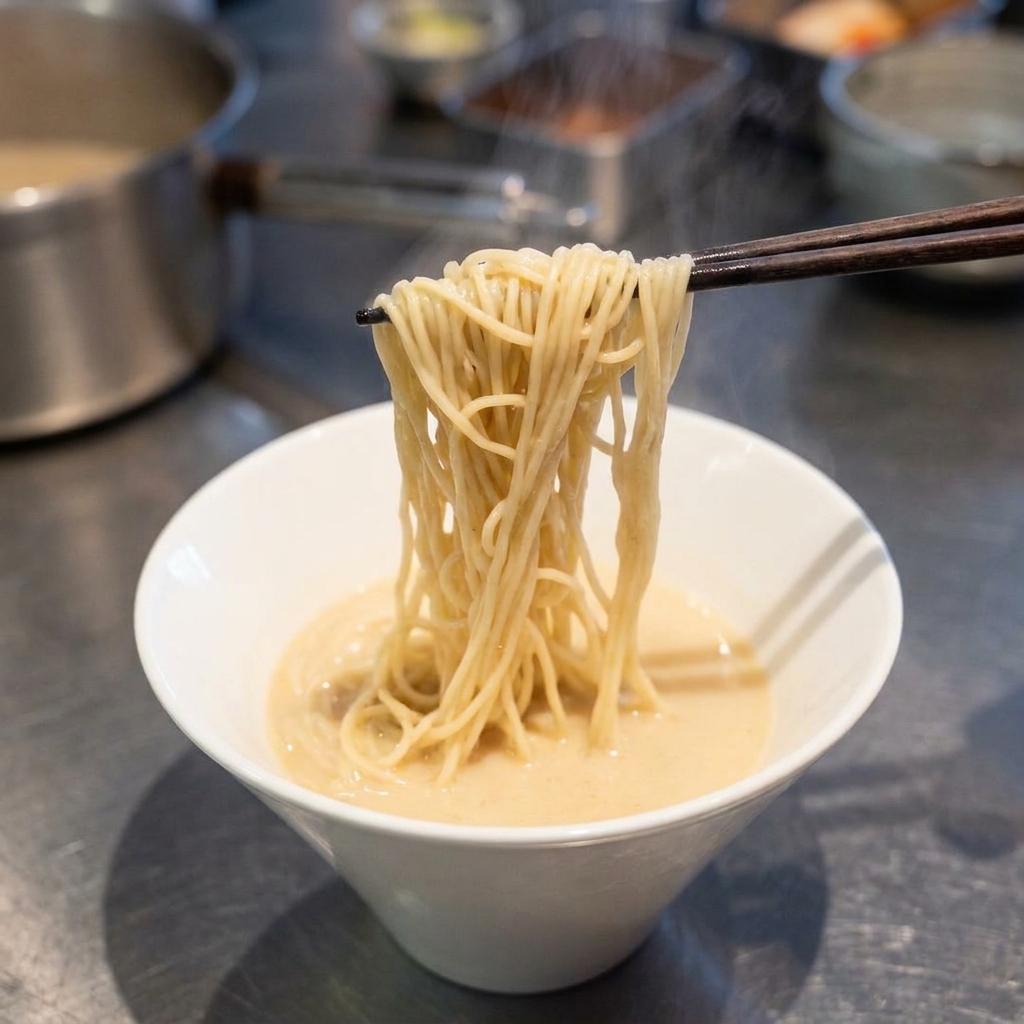
Transfer the well-drained noodles into the bowl prepared with hot chicken paitan broth and salt tare. Use chopsticks to gently lift and adjust the position of the noodles so they sit evenly in the soup, creating a neat foundation for the upcoming toppings.
Tip: Folding the noodles slightly as you place them helps them hold their shape and stay organized within the bowl. - 9Add a base layer of bean sprouts
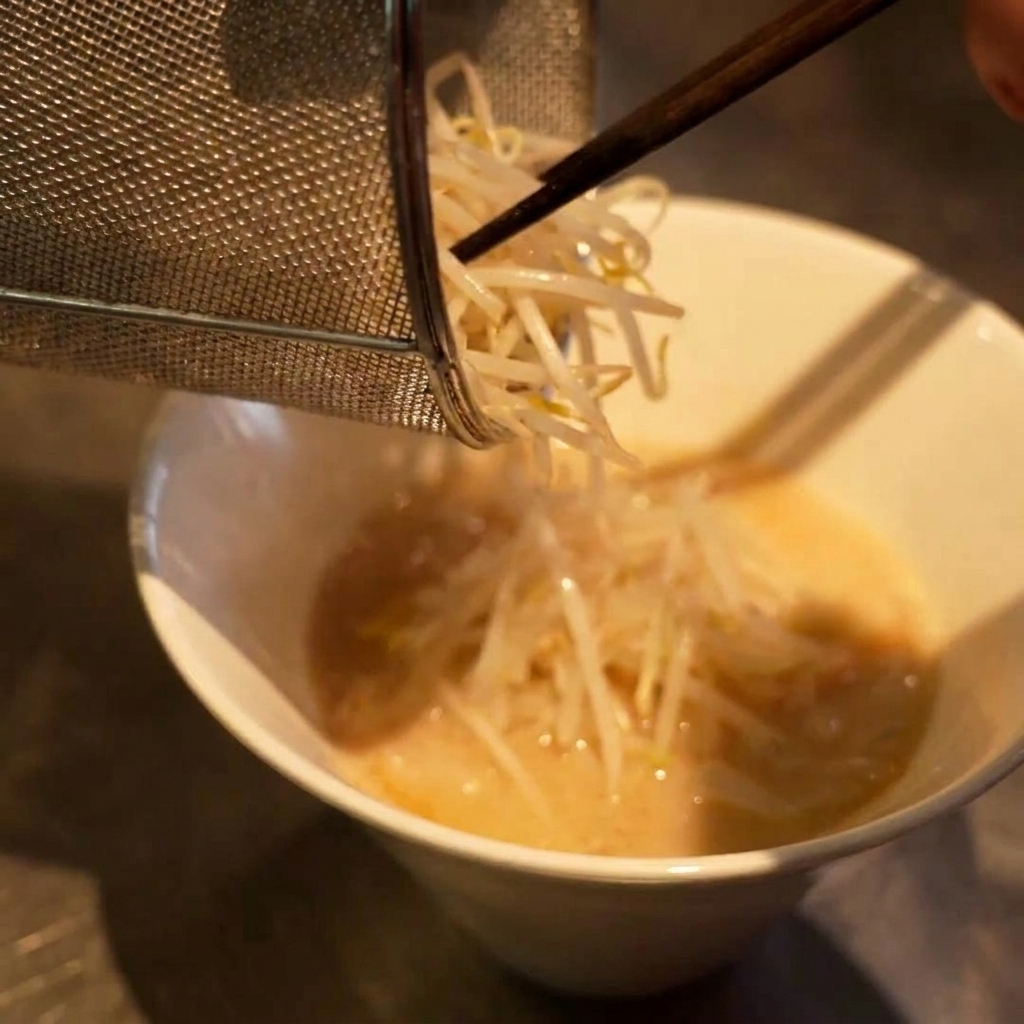
Carefully place a generous layer of blanched bean sprouts directly onto the surface of the noodles. The sprouts provide a refreshing, crunchy contrast to the velvety texture of the soup and the soft ramen noodles.
Tip: Ensure the sprouts are thoroughly blanched but still retain their snap for the best texture. - 10Garnish with green vegetables
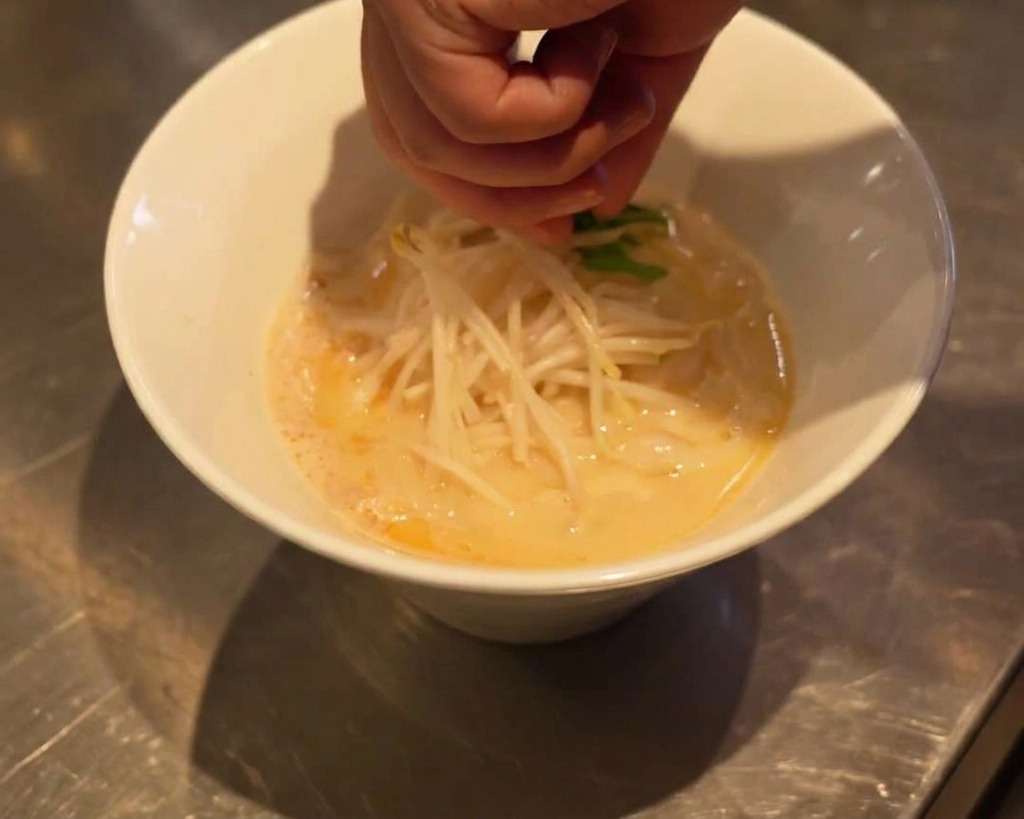
Add a selection of green vegetable garnishes, such as blanched spinach or wood ear mushrooms, on top of the bean sprouts. These additions contribute a vibrant color and earthy notes that balance the richness of the shrimp-infused broth.
Tip: Distribute the greens evenly to ensure a balanced flavor profile in every spoonful of the ramen. - 11Boil the fresh shrimp
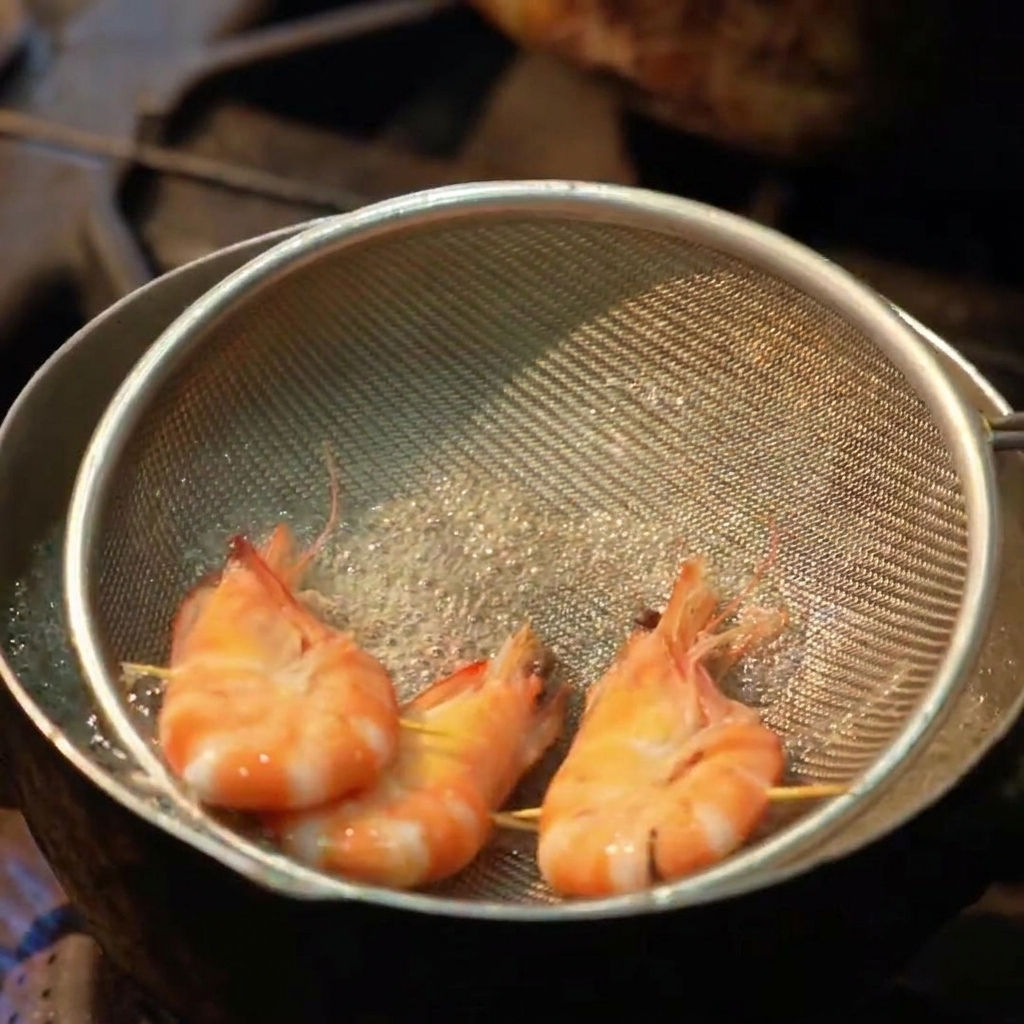
Place three fresh, whole shrimp into a flat strainer and submerge them in a pot of boiling water. Let them cook for approximately two minutes until they turn a bright, opaque orange, indicating they are perfectly cooked and juicy.
Tip: Keep a close eye on the clock; overcooking shrimp can make them tough and rubbery rather than tender. - 12Rinse the shrimp with cold water
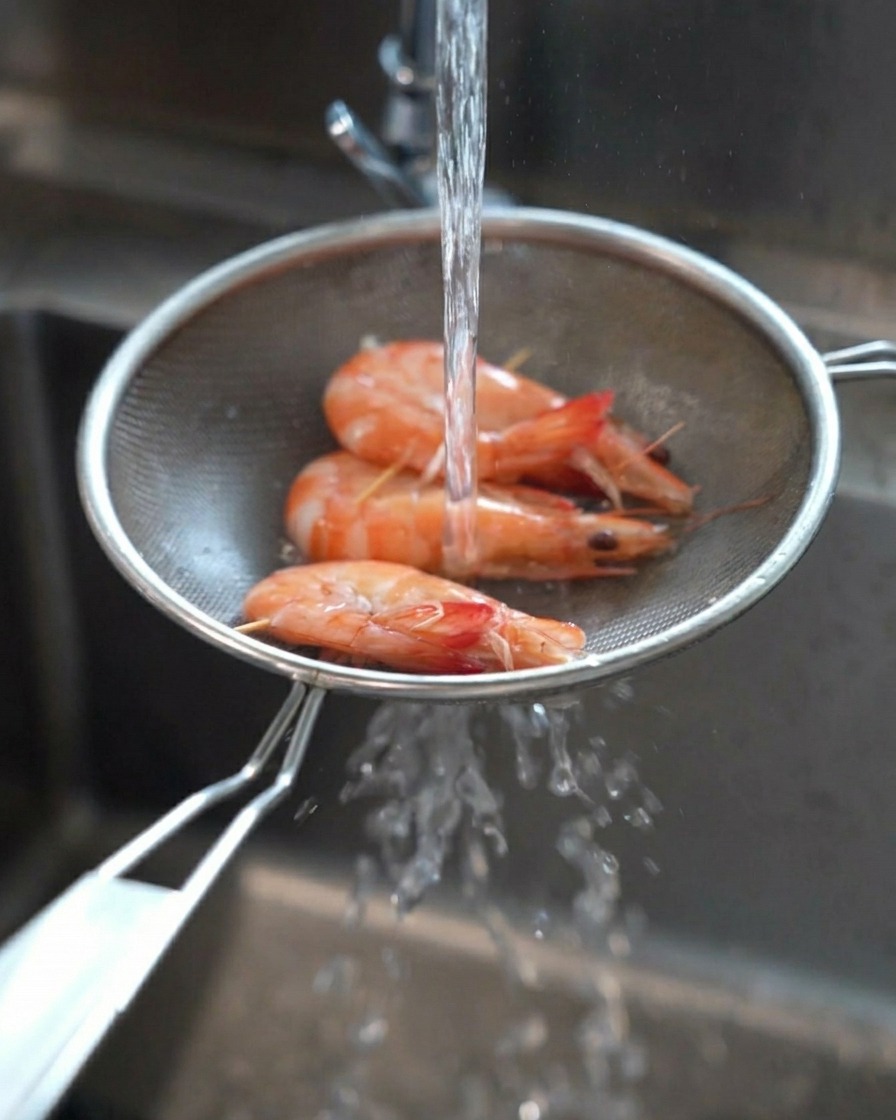
Immediately after boiling, move the strainer containing the shrimp under cold running water. This rinsing process quickly chills the shrimp, stopping the residual heat from cooking them further and ensuring the meat remains firm and bouncy.
Tip: The cold water also helps the shrimp shells contract slightly, making them easier to peel if desired. - 13Arrange the cooked shrimp
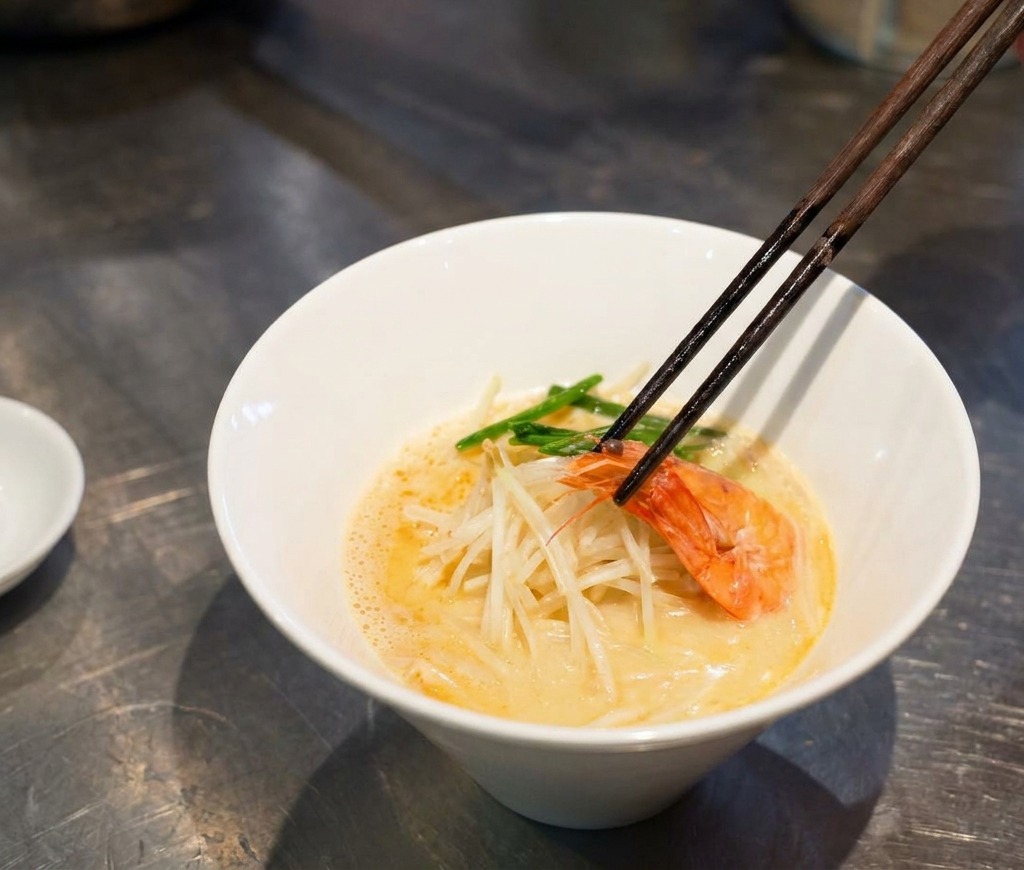
Using chopsticks, carefully place the blanched shrimp onto the bed of noodles and bean sprouts. Arrange them side-by-side to create an organized and professional presentation. The shrimp should be firm and opaque, indicating they are perfectly cooked and ready to eat.
Tip: For the best texture, ensure the shrimp have been quickly chilled in cold water after boiling; this keeps the meat snappy and prevents it from becoming rubbery. - 14Garnish with shredded scallions
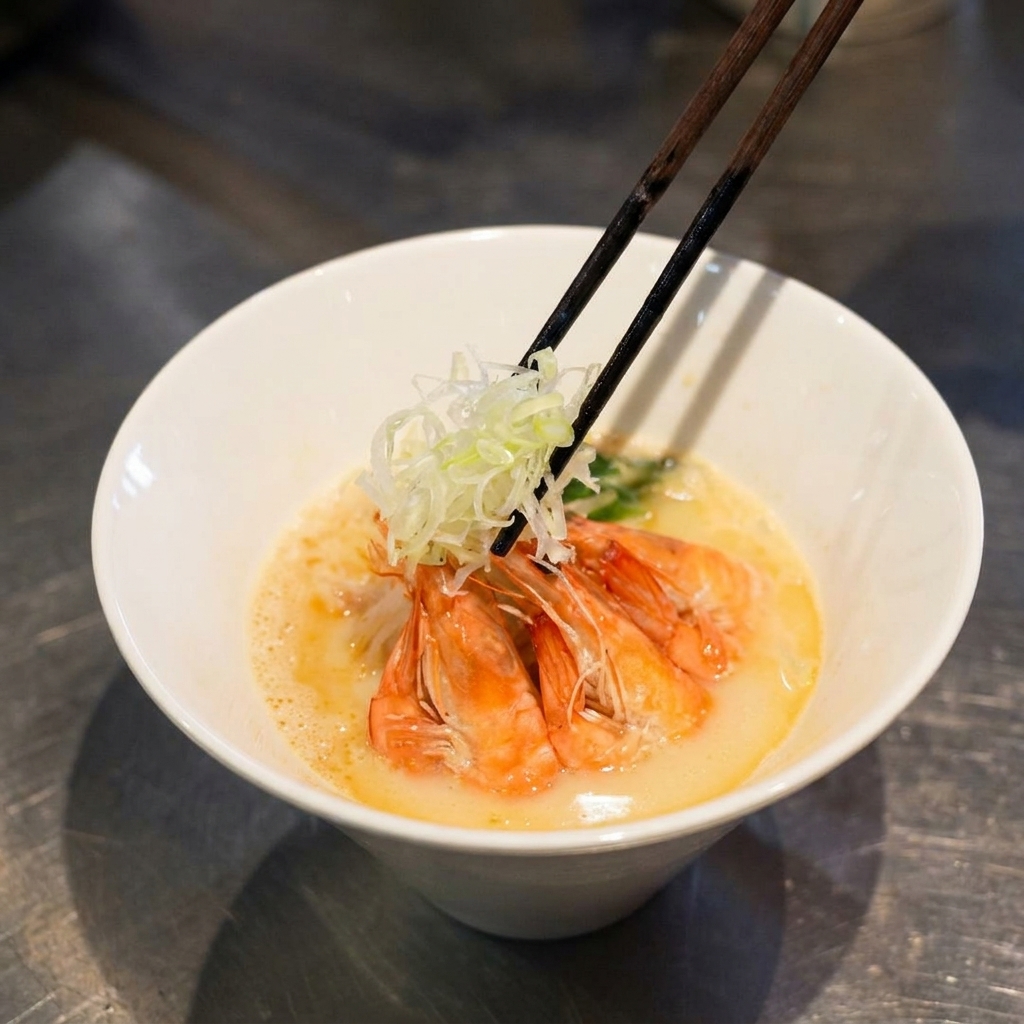
Add a generous pile of finely shredded white scallions directly on top of the arranged shrimp. These scallions provide a delicate crunch and a mild, onion-like aroma that enhances the savory depth of the paitan broth without overpowering the shrimp.
Tip: If you want the scallion shreds to curl beautifully, soak them in a bowl of ice water for five minutes before using them as a garnish. - 15Add the soft-boiled egg
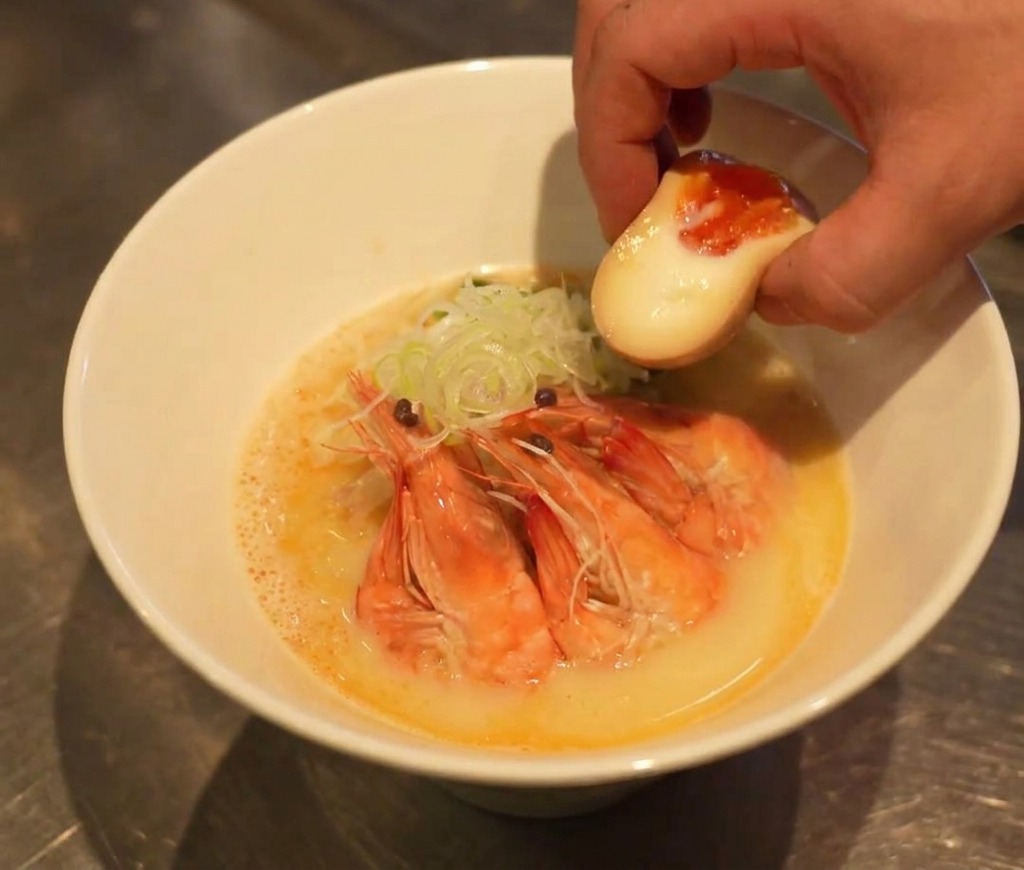
Place half of a soft-boiled egg into the bowl, nestled beside the shrimp and scallions. The jammy, dark orange yolk adds a rich, creamy texture to the meal and creates a stunning visual contrast against the pale paitan broth.
Tip: Use a thin wire or a very sharp, wet knife to cut the soft-boiled egg to ensure the yolk stays intact and the cut is perfectly clean. - 16Final shrimp oil drizzle
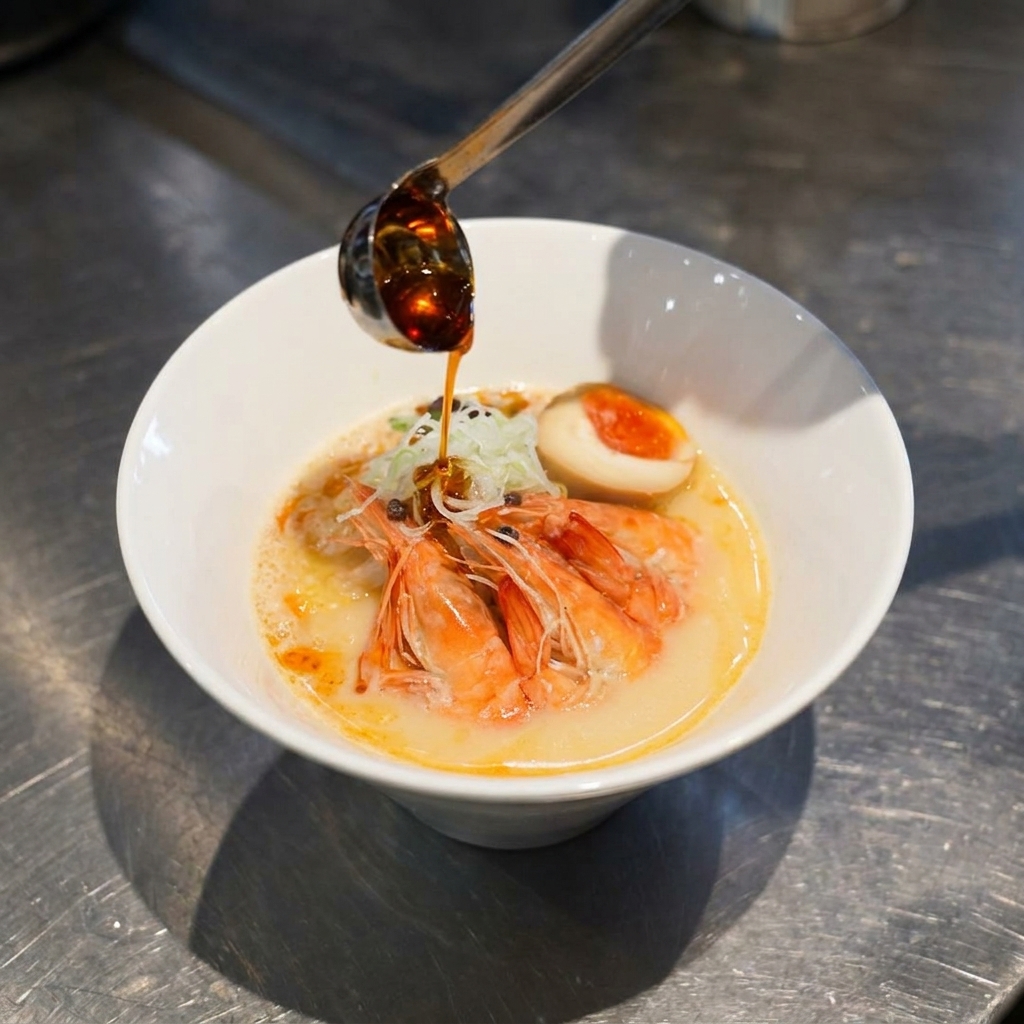
Finish the dish by drizzling a final spoonful of the vibrant red shrimp oil over the surface of the ramen. This step infuses the entire bowl with a concentrated seafood aroma and adds a beautiful, glossy red sheen to the milky white broth.
Tip: Drizzle the oil in a circular motion around the toppings to ensure every spoonful of broth carries the fragrant essence of the shrimp oil.