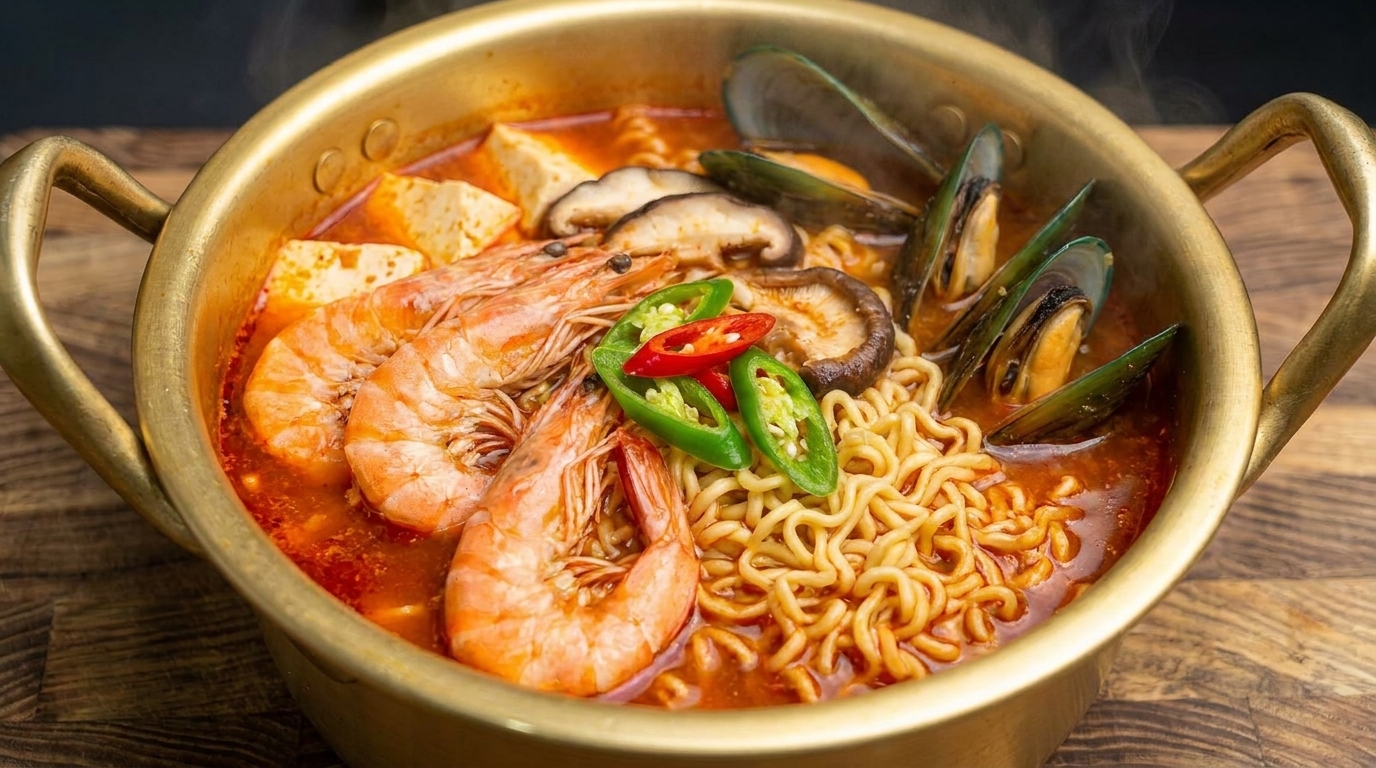
Korean Spicy Seafood Ramen (Jjamppong-style)
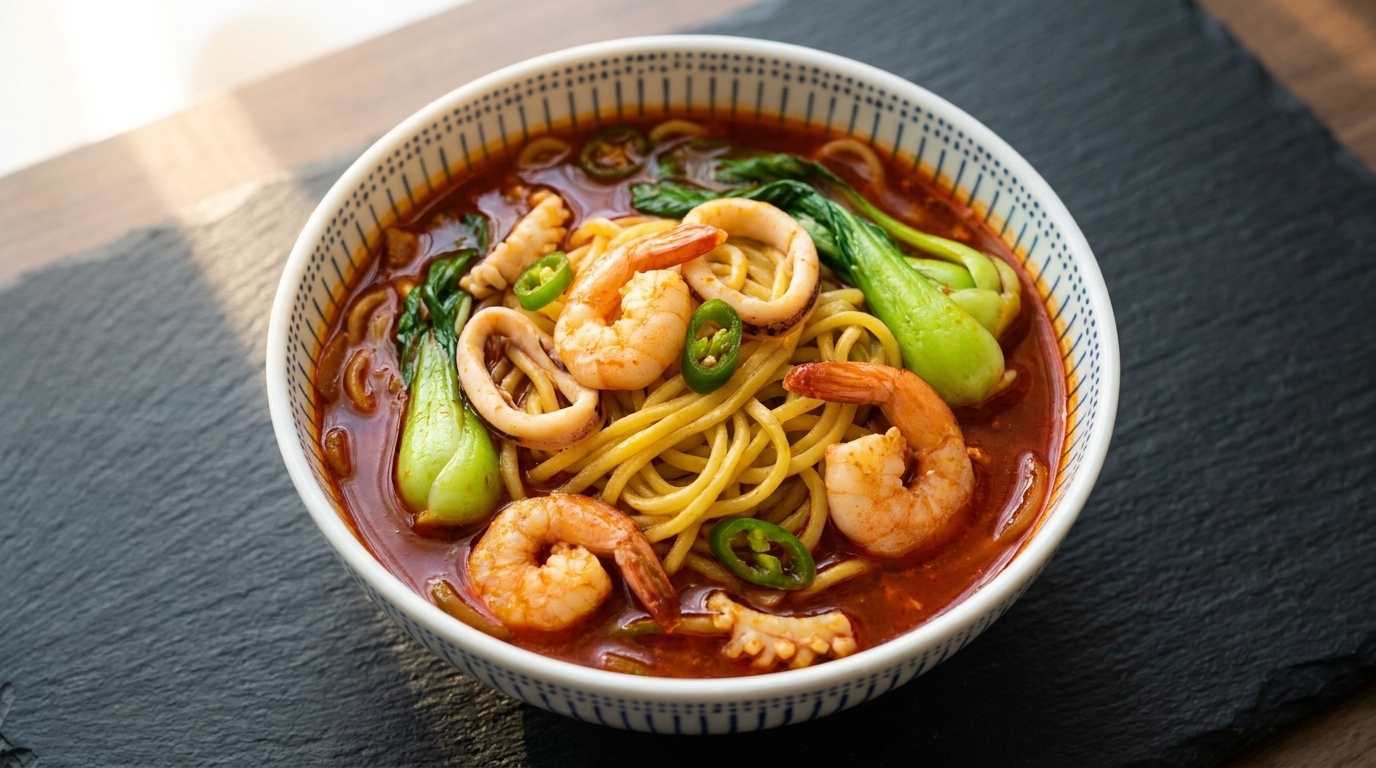
A restaurant-quality seafood ramen featuring a smoky pork and garlic base, rich bibimbap sauce, and a bounty of fresh mussels and shrimp in a fiery broth.
This dish is a home-style take on Jjamppong, the beloved Korean-Chinese spicy noodle soup. By sautéing aromatics with minced pork and authentic bibimbap sauce, you create a deep wok-hei inspired flavor that elevates simple instant noodles into a luxurious seafood feast.
Ingredients
- 1 pack Korean instant noodles
- 500 ml water
- 80 g minced pork
- 70 g Korean bibimbap sauce
- 50 g soft tofu
- 20 g scallions
- 20 g sliced onions
- 6 g minced garlic
- 2 shiitake mushrooms
- 30 g enoki mushrooms
- 3 large shrimp
- 3 mussels
- 1 tbsp peanut oil
- 1 tsp sesame oil
- 2 g salt
- optional red and green chili peppers
Instructions
- 1Heat the oils
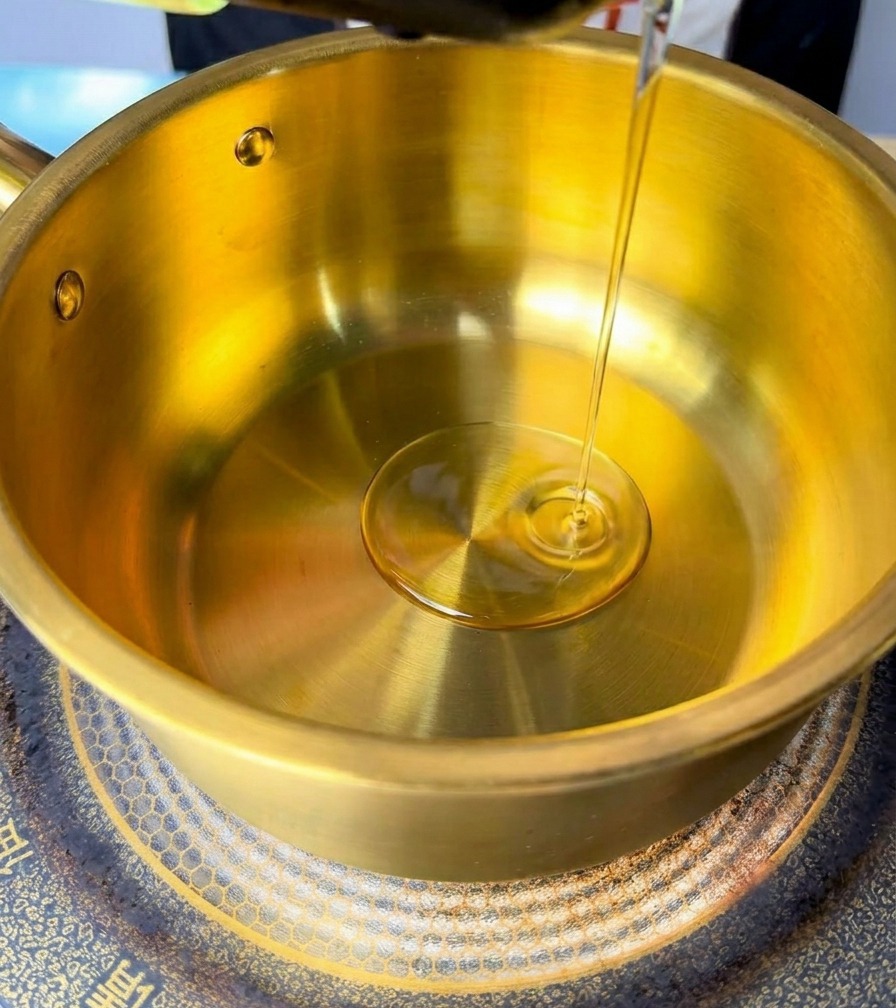
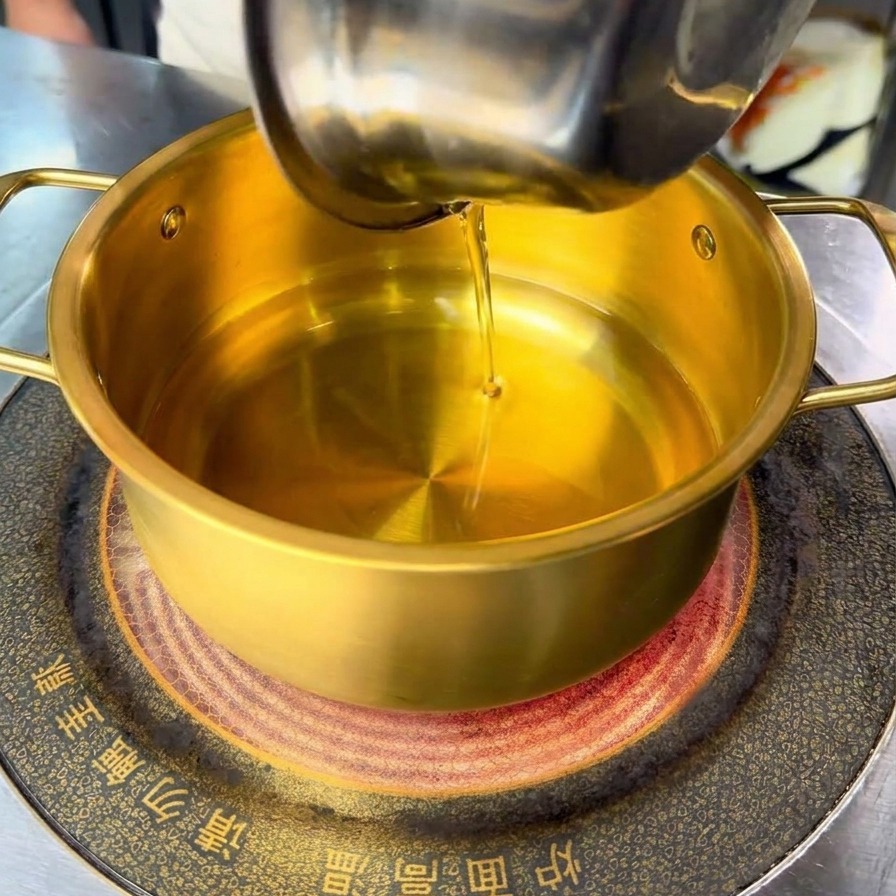
Begin by heating a golden brass pot over medium heat. Carefully pour in a small amount of peanut oil followed by sesame oil, creating a fragrant base for sautéing the aromatics.
Tip: Mixing peanut oil with sesame oil provides a higher smoke point while maintaining that signature nutty aroma. - 2Sauté the aromatics
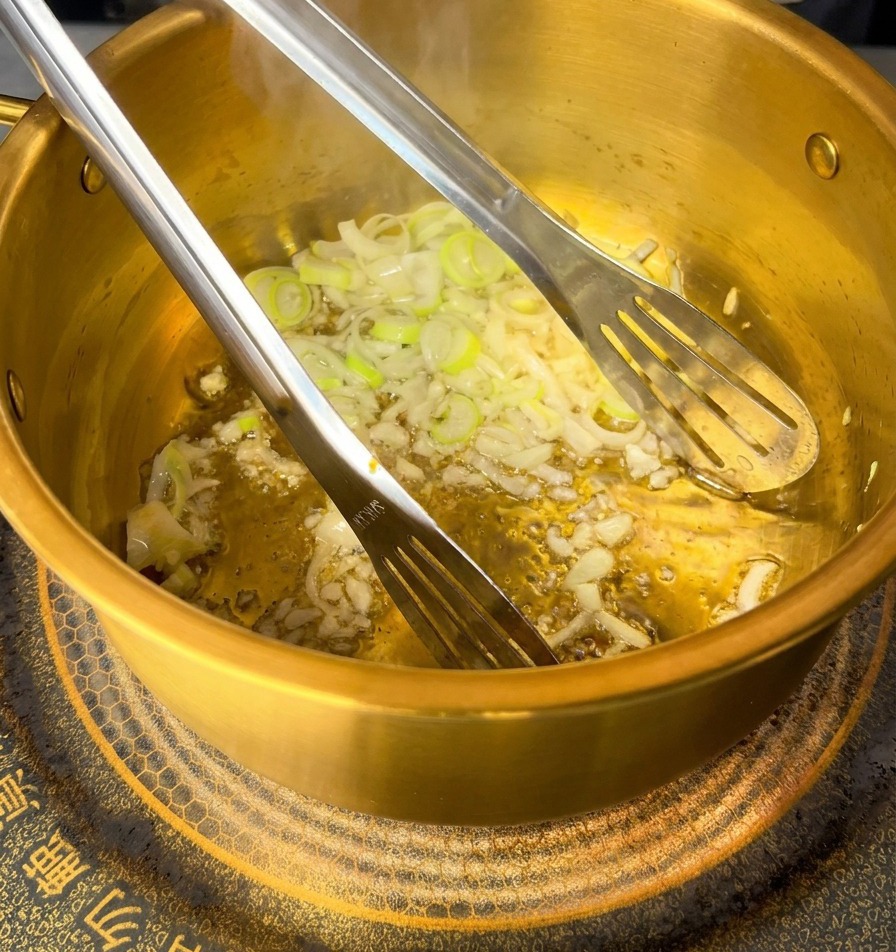
Add 20 grams of chopped scallions and 6 grams of minced garlic into the hot oil. Stir them continuously until they become fragrant and lightly translucent, ensuring they dont burn.
Tip: Keep the heat at medium to slowly draw out the flavors of the garlic and scallions without browning them too quickly. - 3Brown the pork
Add 80 grams of minced pork to the pot. Stir-fry thoroughly, breaking the meat into small bits with your spatula until it is fully cooked and starts to brown.
Tip: Breaking the pork into smaller crumbles allows it to absorb more of the garlic and scallion flavors. - 4Add sliced onions
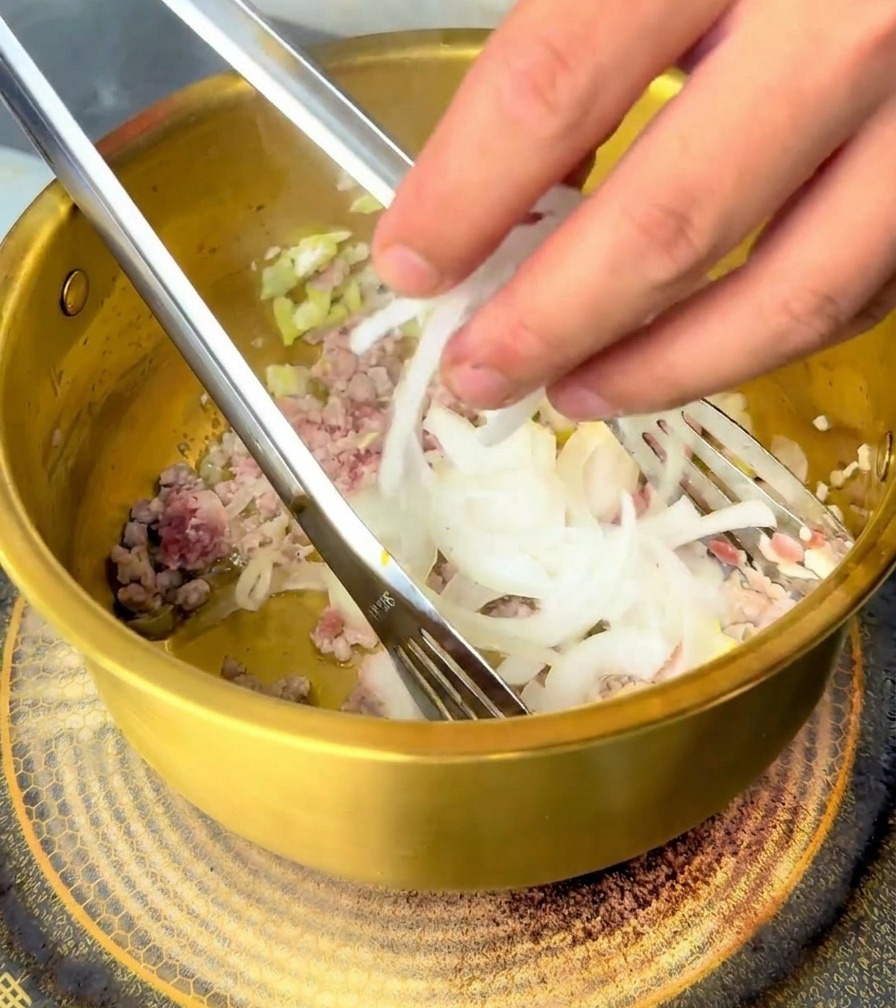
Add 20 grams of thinly sliced white onions to the mixture of browned pork and aromatics. Continue to stir-fry for a minute until the onions begin to soften and become fragrant.
Tip: Slicing the onions thinly ensures they cook quickly and blend well with the texture of the minced meat. - 5Mix in the bibimbap sauce
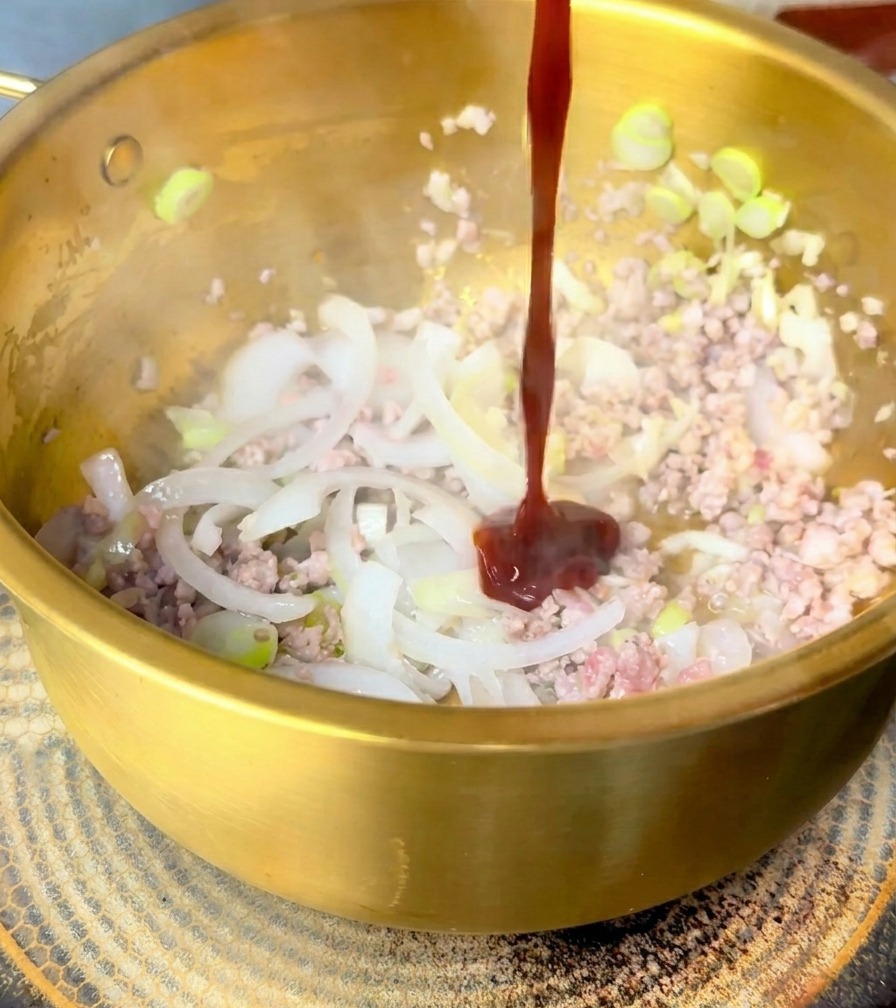
Squeeze 70 grams of thick red Korean bibimbap sauce into the pot. Stir well to ensure the pork and vegetables are thoroughly coated in the sauce, creating a rich, spicy base for the soup.
Tip: Bibimbap sauce contains gochujang and other seasonings, providing a complex depth of flavor beyond just heat. - 6Create the soup base
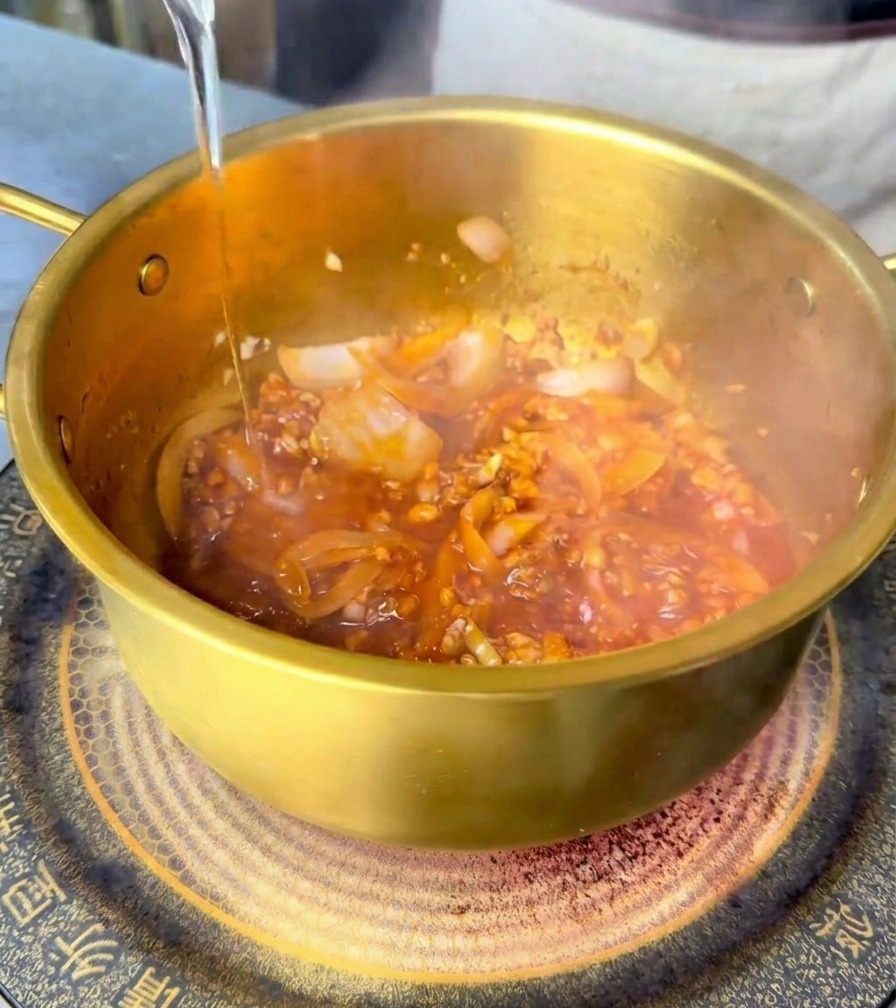
Pour 500 milliliters of fresh water into the pot. Stir the mixture to dissolve the sauce into the water, then cover the pot and bring the liquid to a steady boil.
Tip: Using room temperature or warm water helps the pot come to a boil faster than using cold water. - 7Add the instant noodles
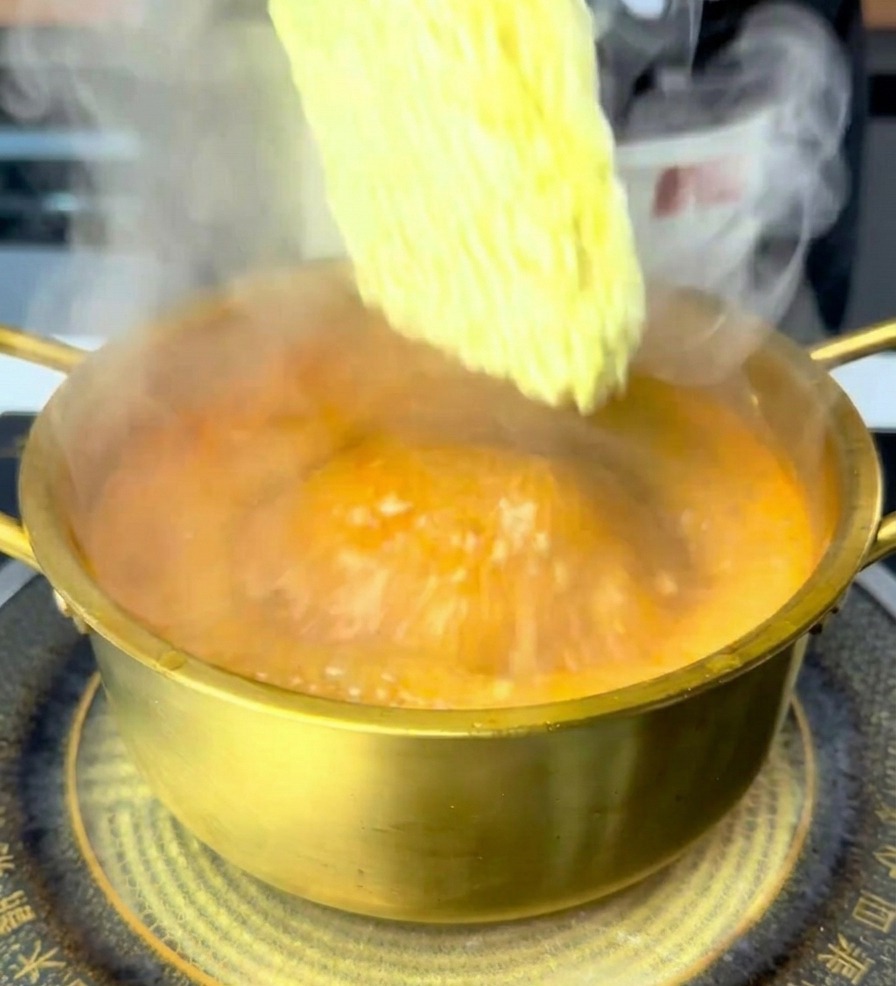
Once the spicy soup base has reached a rolling boil, carefully place the block of dried Korean instant noodles into the pot. Let the noodles sit in the bubbling broth for a few moments to soften slightly before adding the remaining fresh ingredients.
Tip: Avoid breaking the noodle block if you prefer long, bouncy strands. The boiling broth will naturally loosen the noodles as they cook. - 8Add the mushrooms
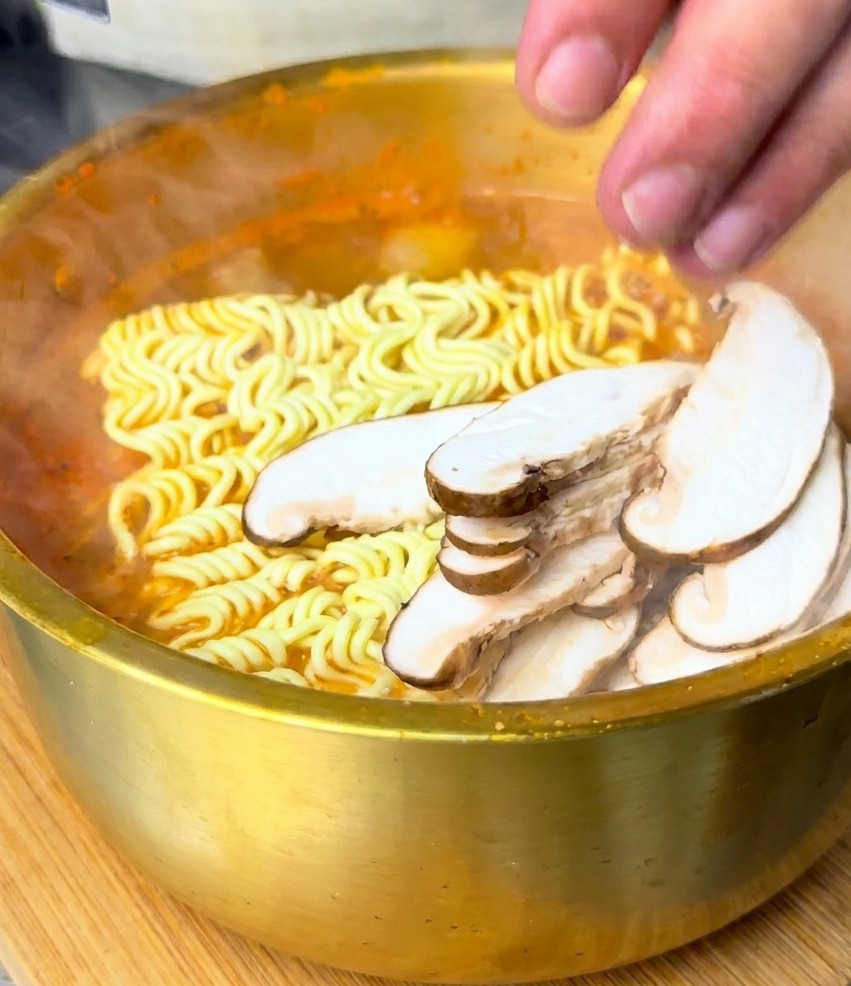
Once the noodles have been added to the boiling broth, carefully place sliced shiitake mushrooms and fresh enoki mushrooms on top. These mushrooms will soften quickly and absorb the spicy, savory flavors of the Korean soup base.
Tip: For the best presentation, arrange the mushrooms in a neat cluster rather than scattering them, which leaves room for the seafood in the next step. - 9Add the seafood
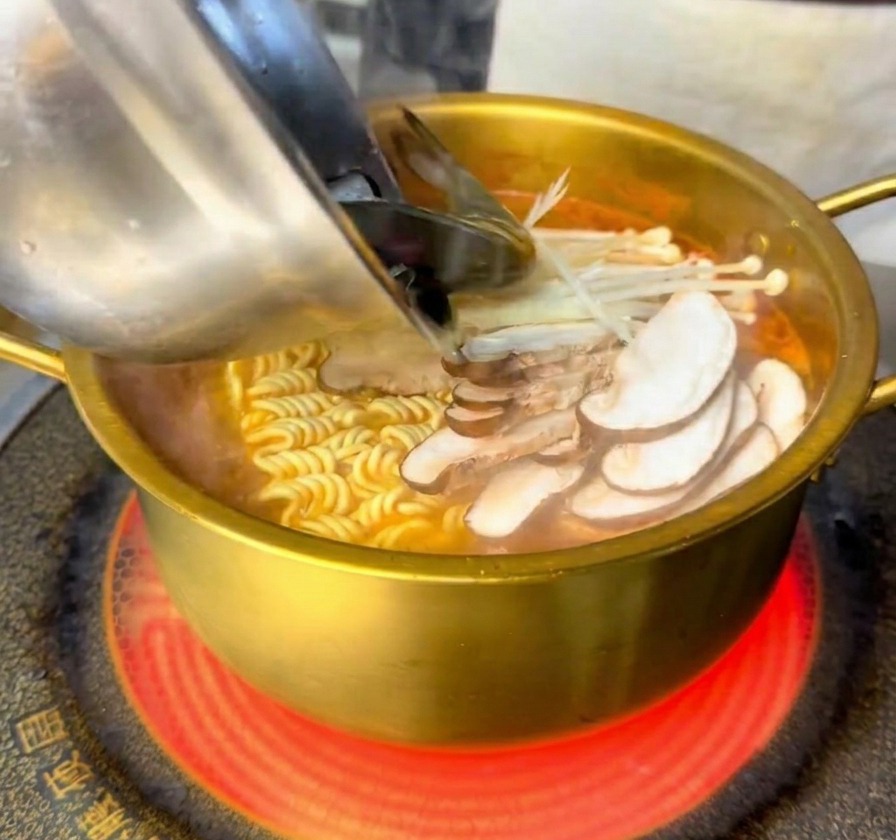
Gently place the shrimp and mussels into the bubbling broth. These cook quickly, so ensure they are submerged to poach evenly alongside the mushrooms.
Tip: Keep a close eye on the seafood; shrimp and mussels cook very quickly in boiling broth and should be removed from the heat as soon as they become opaque and tender. - 10Garnish and serve
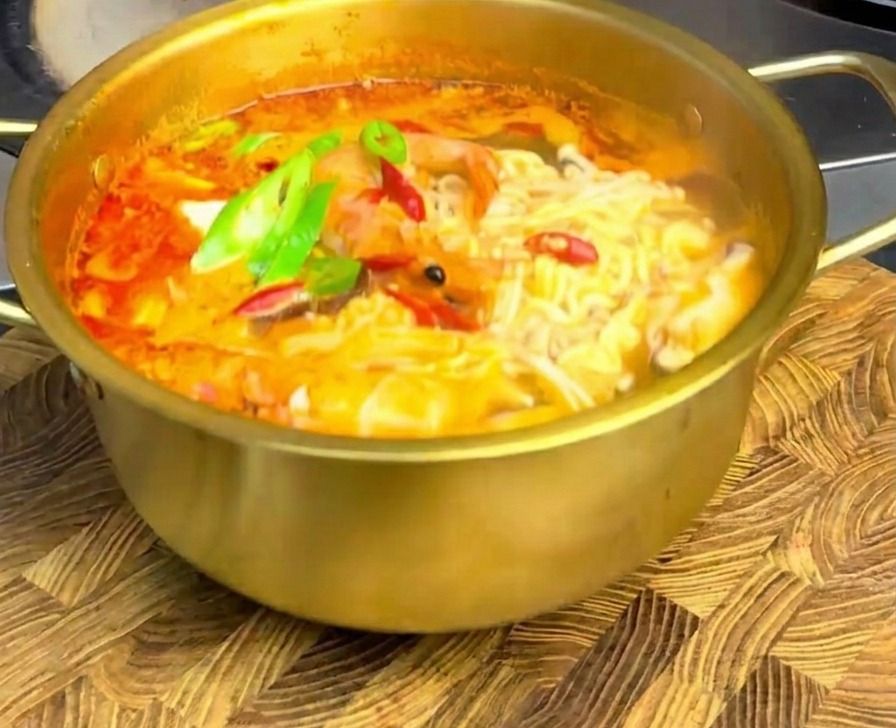
Finish the dish by adding diagonal slices of red and green chili peppers. This adds a fresh bite and vibrant color. Serve immediately in the pot while still steaming.
Tip: If you prefer a milder soup, remove the seeds from the chili peppers before slicing them to reduce the intense heat.