Hearty Chinese Dumpling Soup
Meatballs and Tofu
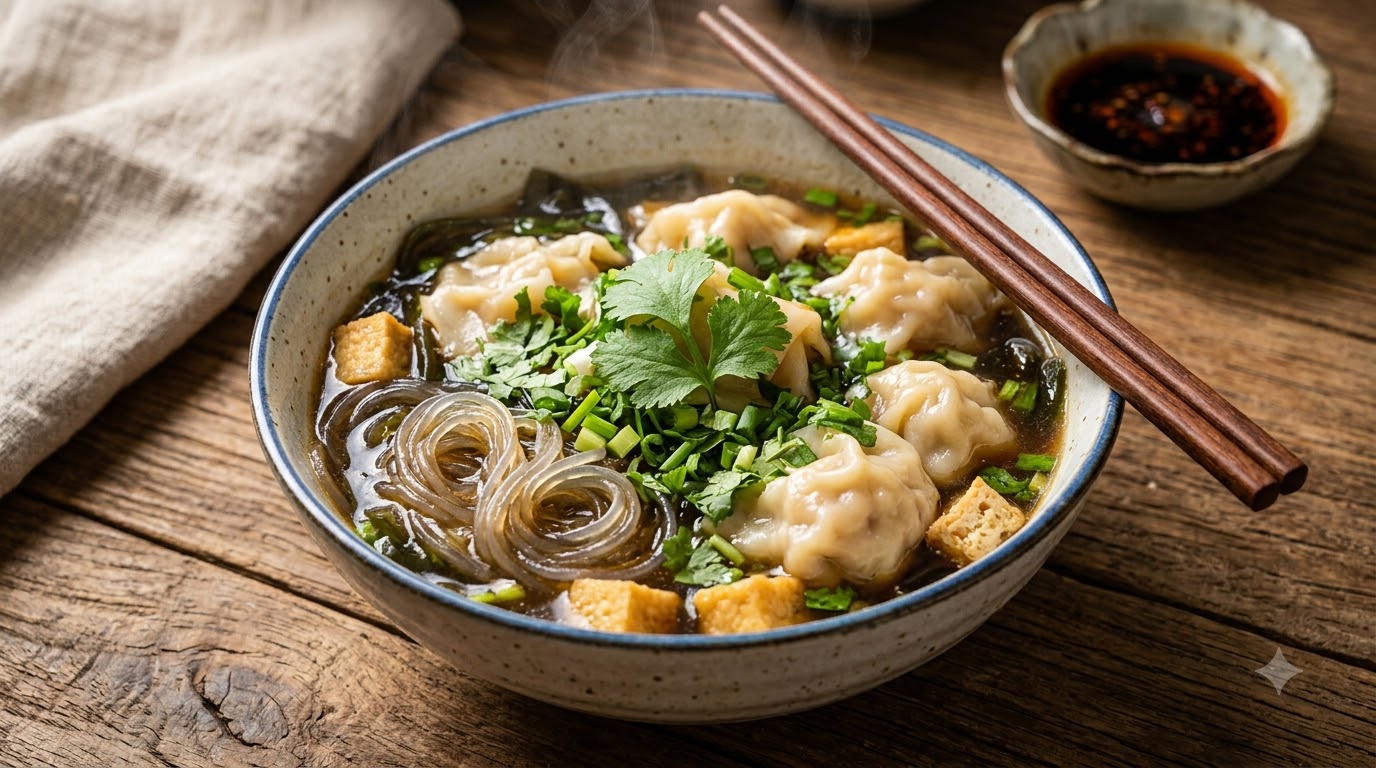
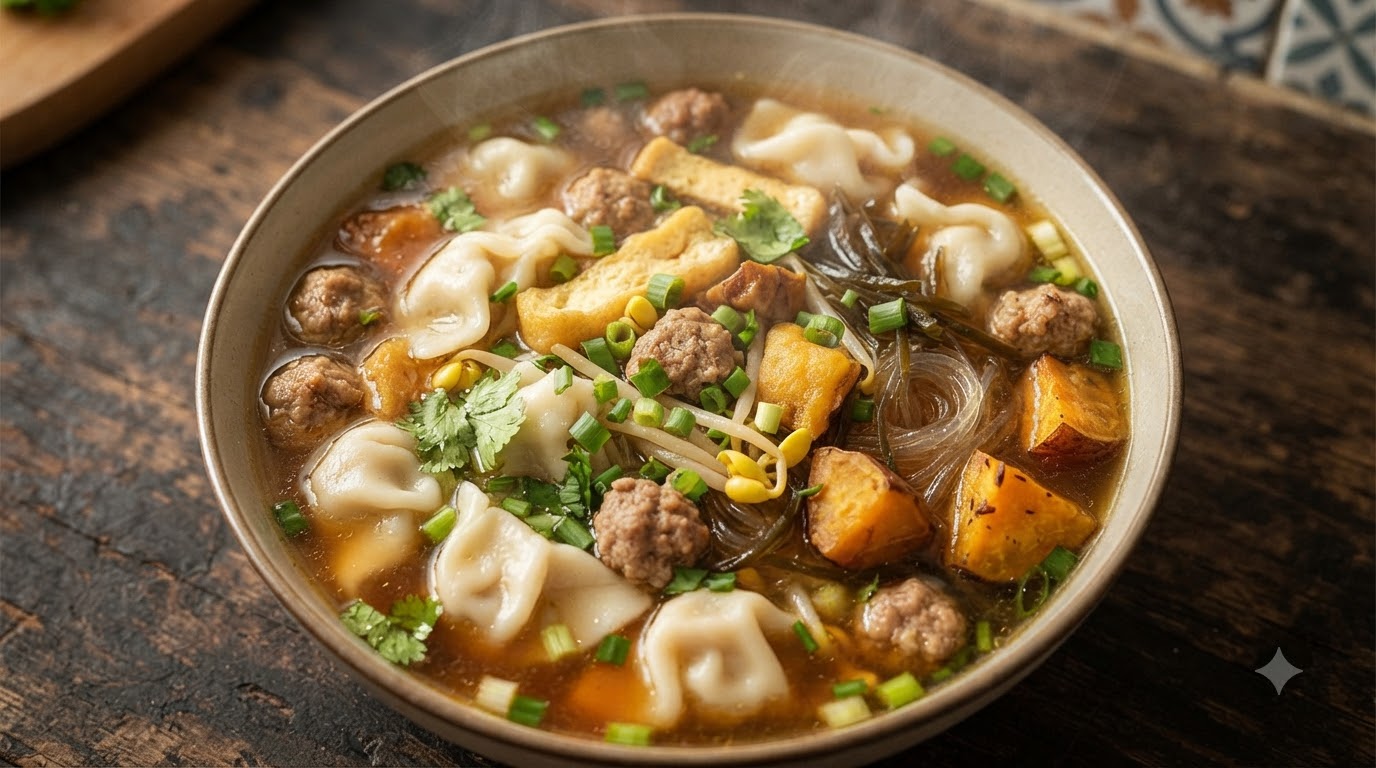
A comforting, richly textured Chinese dumpling soup loaded with juicy meatballs, fried and fresh tofu, bean sprouts, sweet potatoes, glass noodles, and a fragrant hot oil finish.
This rustic dumpling soup is a masterclass in layering textures and savory depths, combining plump dumplings with protein-rich meatballs and a double-tofu element. The broth builds complexity through dark and light soy sauces, fragrant Sichuan peppercorn-star anise infusion, and a final sizzle of scallion-garlic hot oil. Balanced by fresh bean sprouts, kelp, and sweet potatoes, it makes for a deeply satisfying and complete one-pot meal.
Ingredients
- 2 lbs dumplings
- 300 g meatballs
- 150 g fried tofu
- 150 g fresh white tofu
- 100 g yellow bean sprouts
- 200 g fried sweet potatoes
- 30 g shredded kelp
- 50 g glass noodles
- 2 tbsp light soy sauce
- 1 tbsp dark soy sauce
- 1 tsp salt
- 1 cup Sichuan peppercorn and star anise water
- 30 g dried daylilies
- 3 cloves garlic
- 2 stalks scallions
- 3 tbsp cooking oil
- 1 tbsp aged vinegar
- 1 tsp sesame oil
- 1 tsp chicken bouillon
- to taste fresh cilantro
- to taste green onions
Instructions
- 1Boil the dumplings
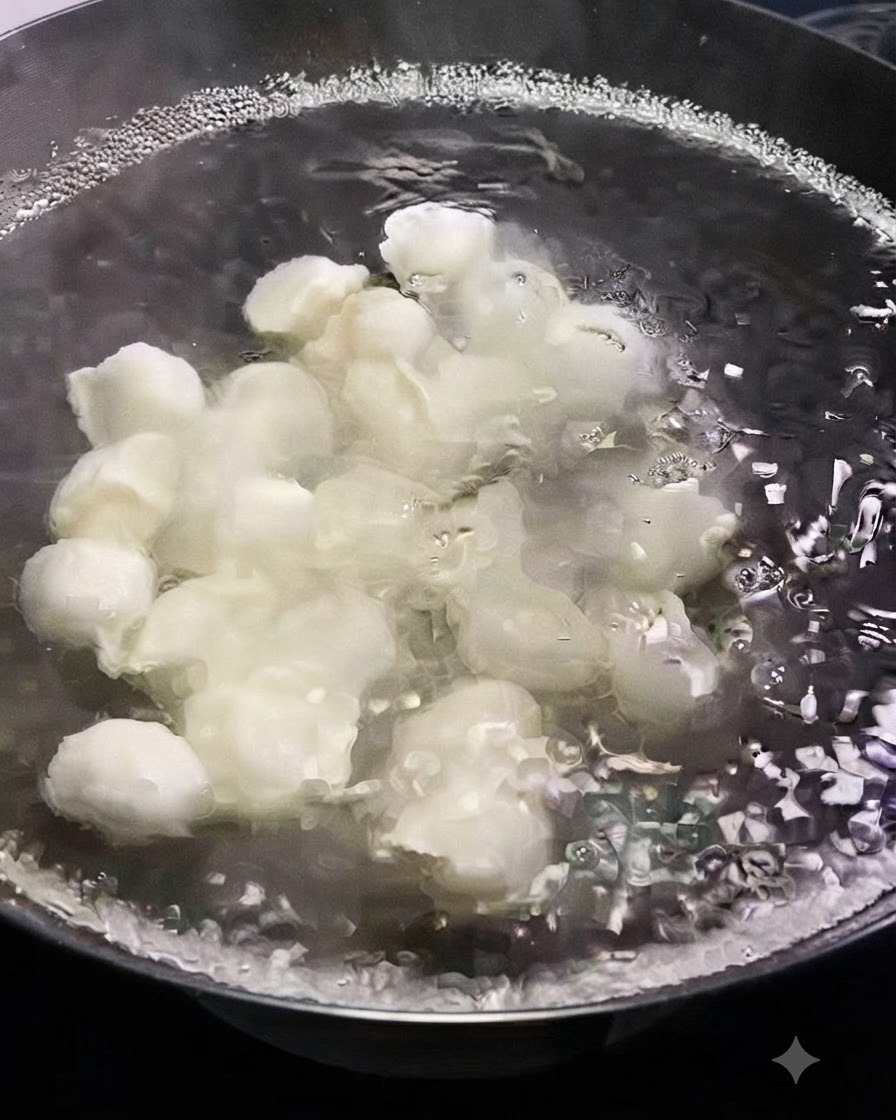
Bring a large pot of water to a rolling boil and carefully drop in two pounds of raw white dumplings. Allow them to cook in the bubbling water until they are nearly fully cooked before introducing the remaining ingredients.
Tip: Give the dumplings a gentle stir immediately after adding them to the water to ensure they dont stick to the bottom of the pot. - 2Incorporate the meatballs
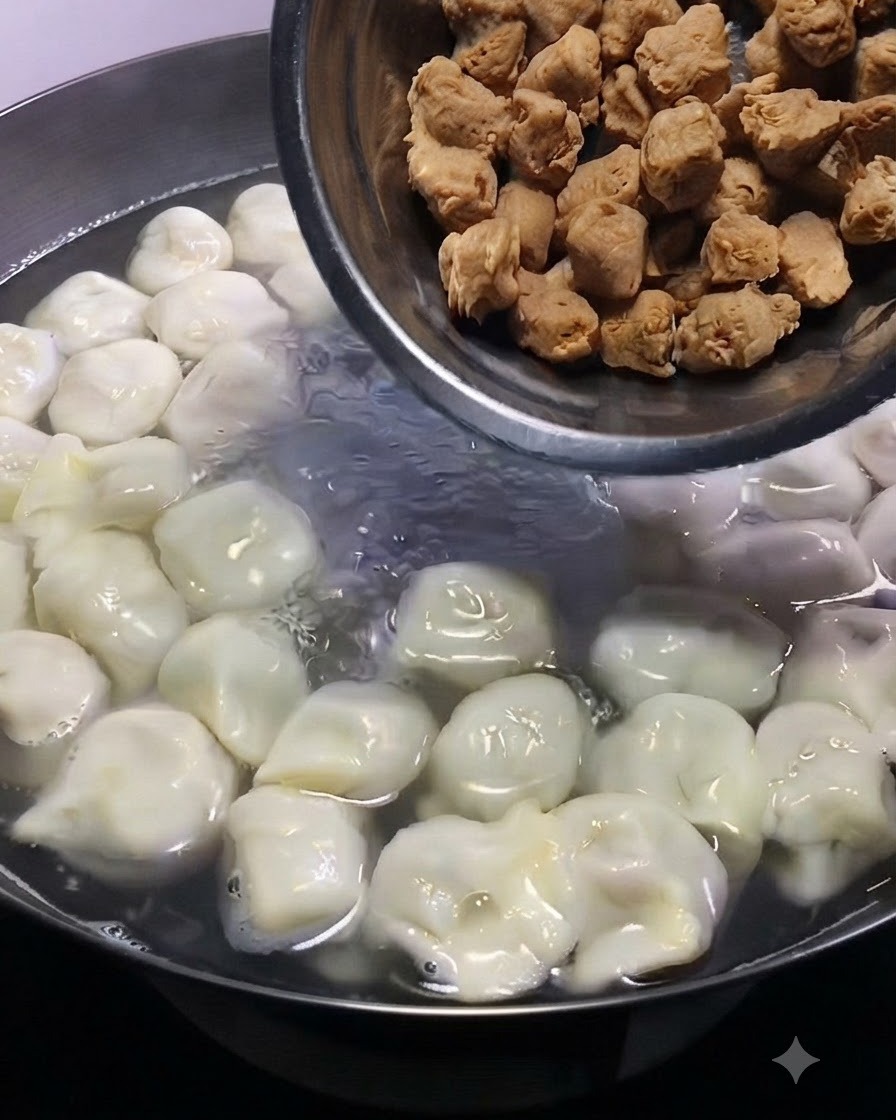
Once the dumplings are almost ready, pour the small brown meatballs directly into the hot, boiling broth to heat through and meld their flavors with the soup.
Tip: If using frozen meatballs, ensure the broth returns to a steady boil after adding them so the cooking temperature remains consistent. - 3Mix in fried tofu
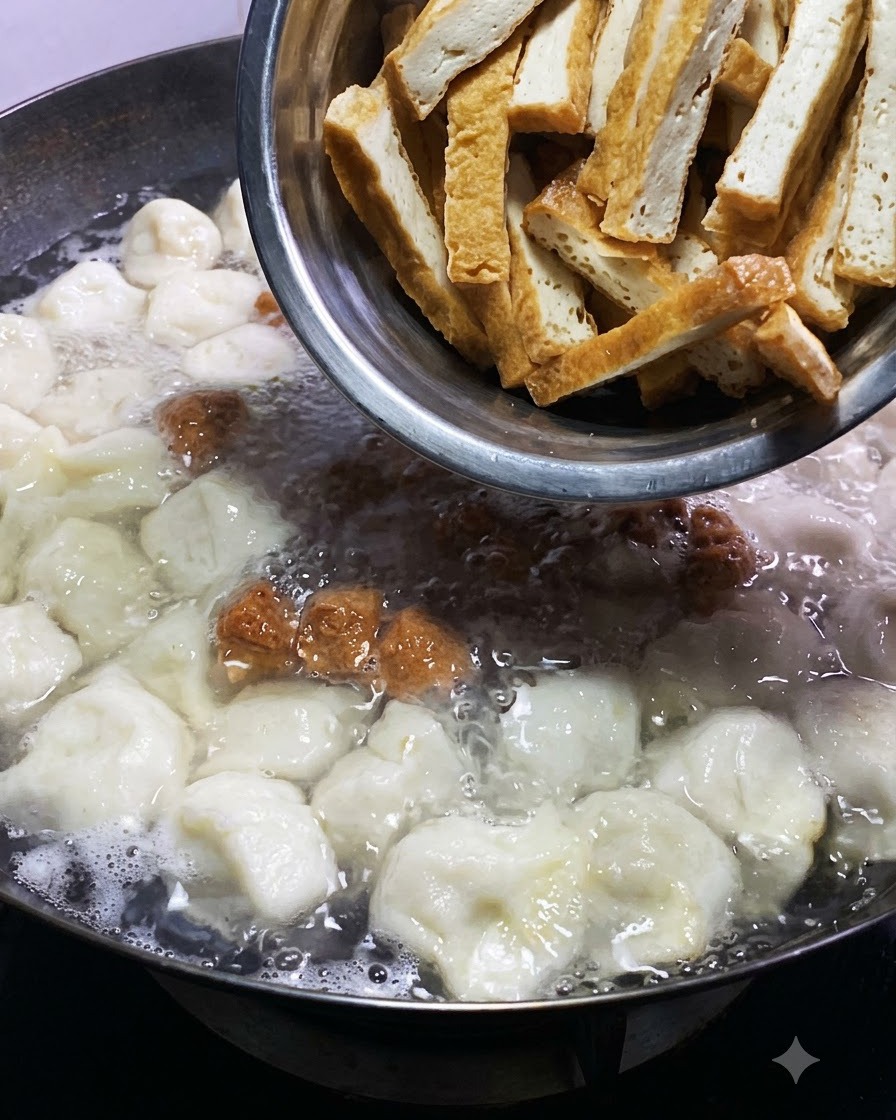
Follow the meatballs by adding in the sliced fried tofu. The spongy texture of the fried tofu is excellent for soaking up the rich, savory broth as it simmers.
Tip: Slicing the fried tofu into thin strips maximizes its surface area, allowing it to absorb liquid quickly and thoroughly. - 4Add fresh white tofu
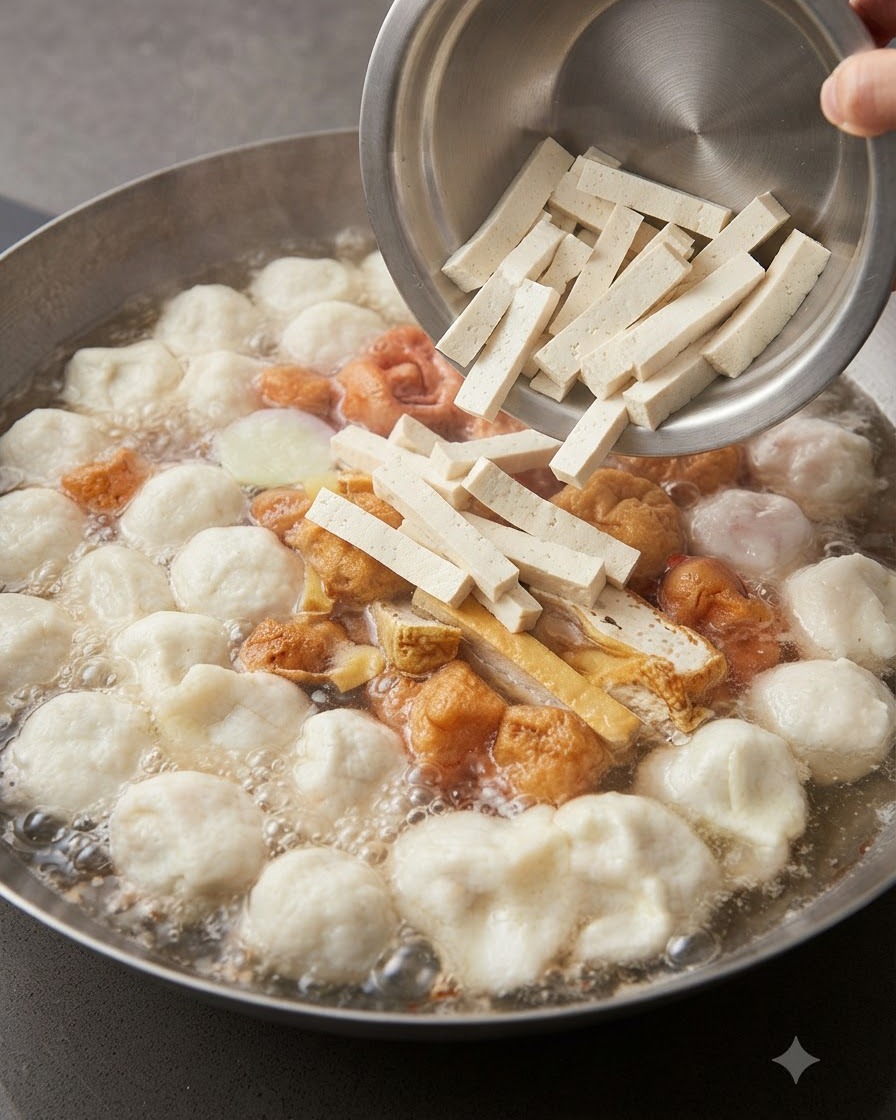
Gently place the pieces of fresh white tofu into the soup mixture. From this point forward, handle the soup delicately to prevent the fragile fresh tofu from breaking apart into small pieces.
Tip: Using both fried and fresh tofu in the same dish creates a wonderful contrast in textures, combining chewy and silky bites. - 5Introduce the bean sprouts
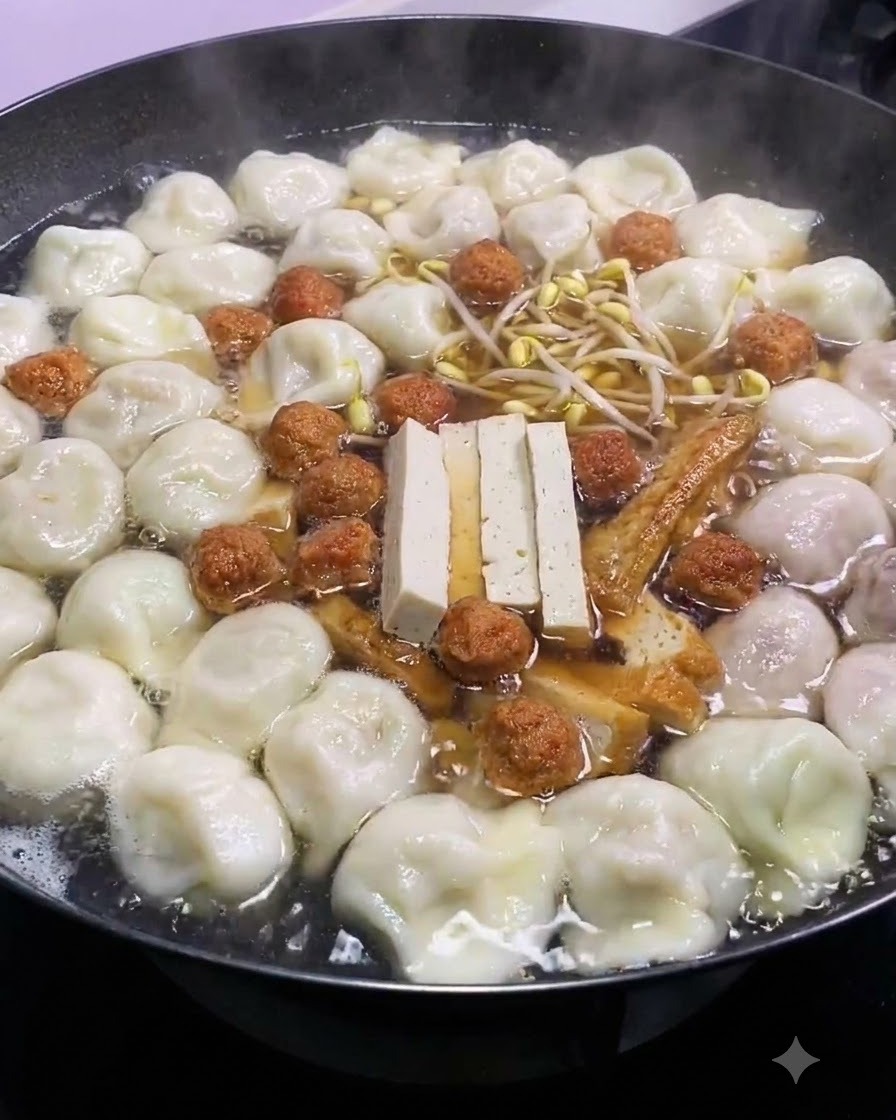
Toss in a generous handful of yellow bean sprouts. The sprouts will add a refreshing, earthy note and a satisfying crunch that cuts through the heavier elements of the dish.
Tip: Add the bean sprouts relatively late in the cooking process so they maintain their crisp texture and vibrant color. - 6Layer in sweet potatoes
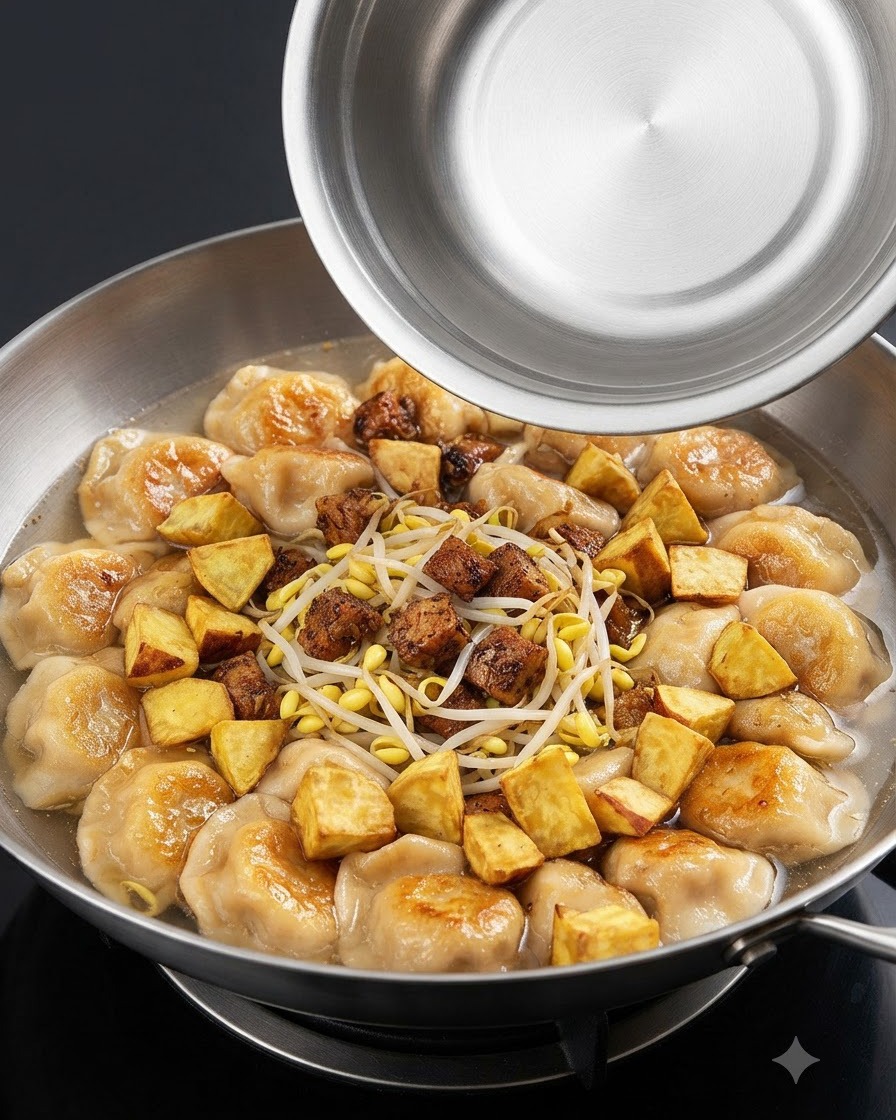
Add the chunks of fried sweet potato to the pot. Their natural, caramelized sweetness will beautifully complement and elevate the deeply savory flavors of the broth and proteins.
Tip: Pre-frying the sweet potatoes before adding them to the soup gives them a protective crust, preventing them from turning to mush in the liquid. - 7Add glass noodles and kelp
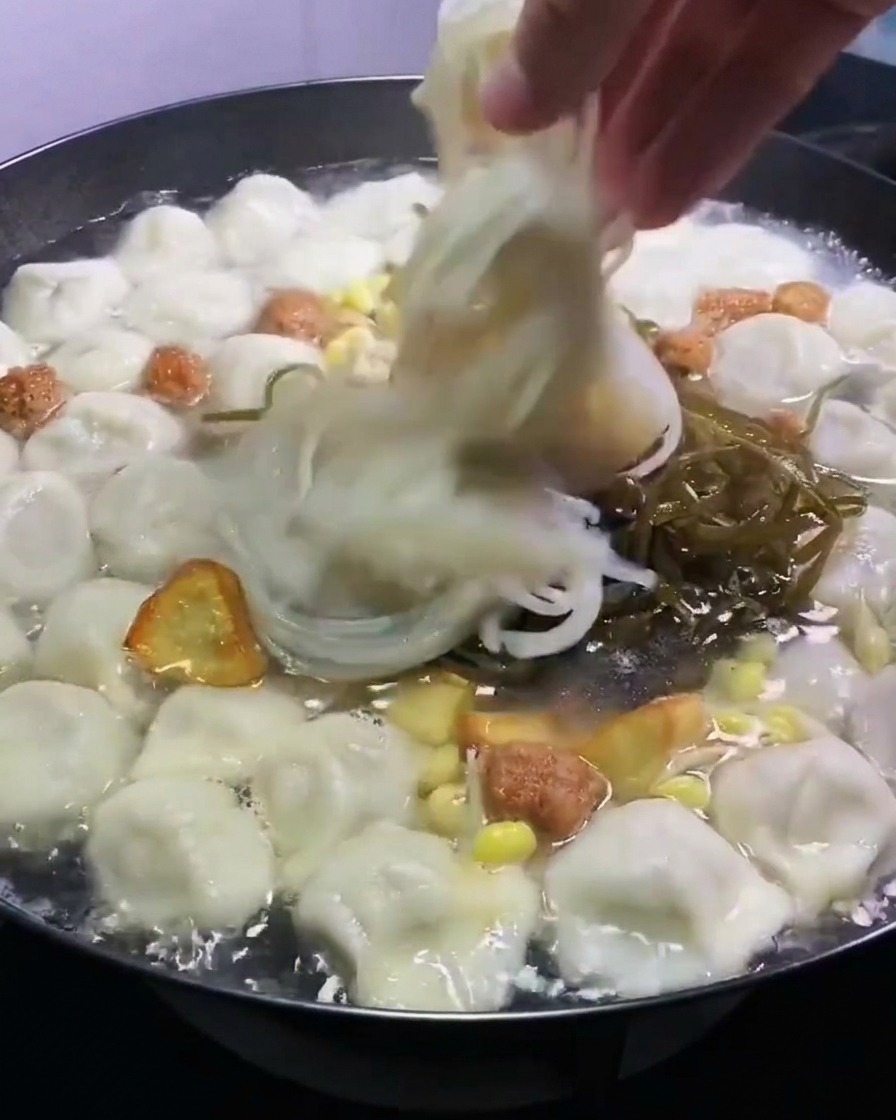
Carefully place a handful of shredded kelp and glass noodles into the simmering broth. Submerge them gently so they soften and absorb the rich flavors of the soup.
Tip: Soaking the glass noodles in warm water beforehand reduces their cooking time and prevents them from soaking up too much broth. - 8Pour Light Soy Sauce
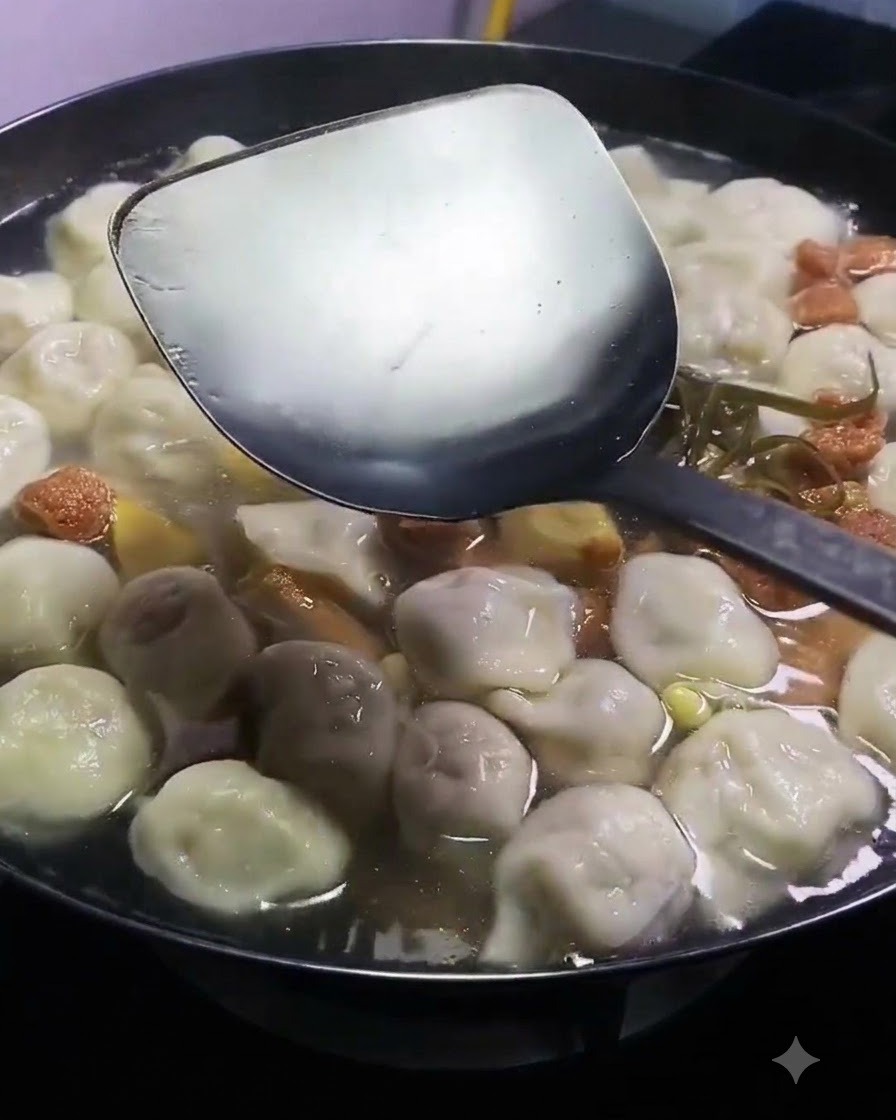
Pour light soy sauce into the simmering pot of dumplings and assorted ingredients using a ladle to add savory flavor and seasoning to the soup base.
Tip: Pour gradually so you can adjust the salinity to your taste preference. - 9Add Dark Soy Sauce
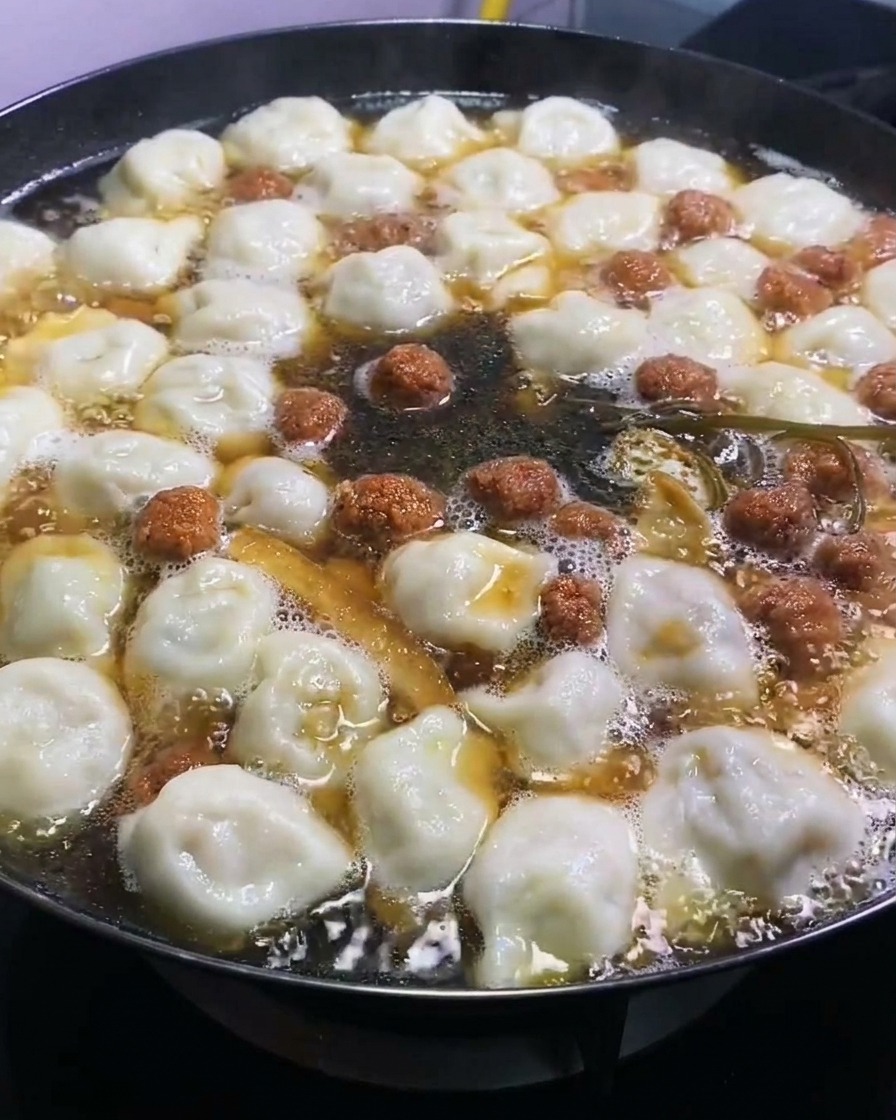
Add dark soy sauce into the bubbling broth to enhance the deep color and rich background flavor of the soup.
Tip: Dark soy sauce is primarily for color, so use it carefully to avoid making the broth overly dark. - 10Season with Salt
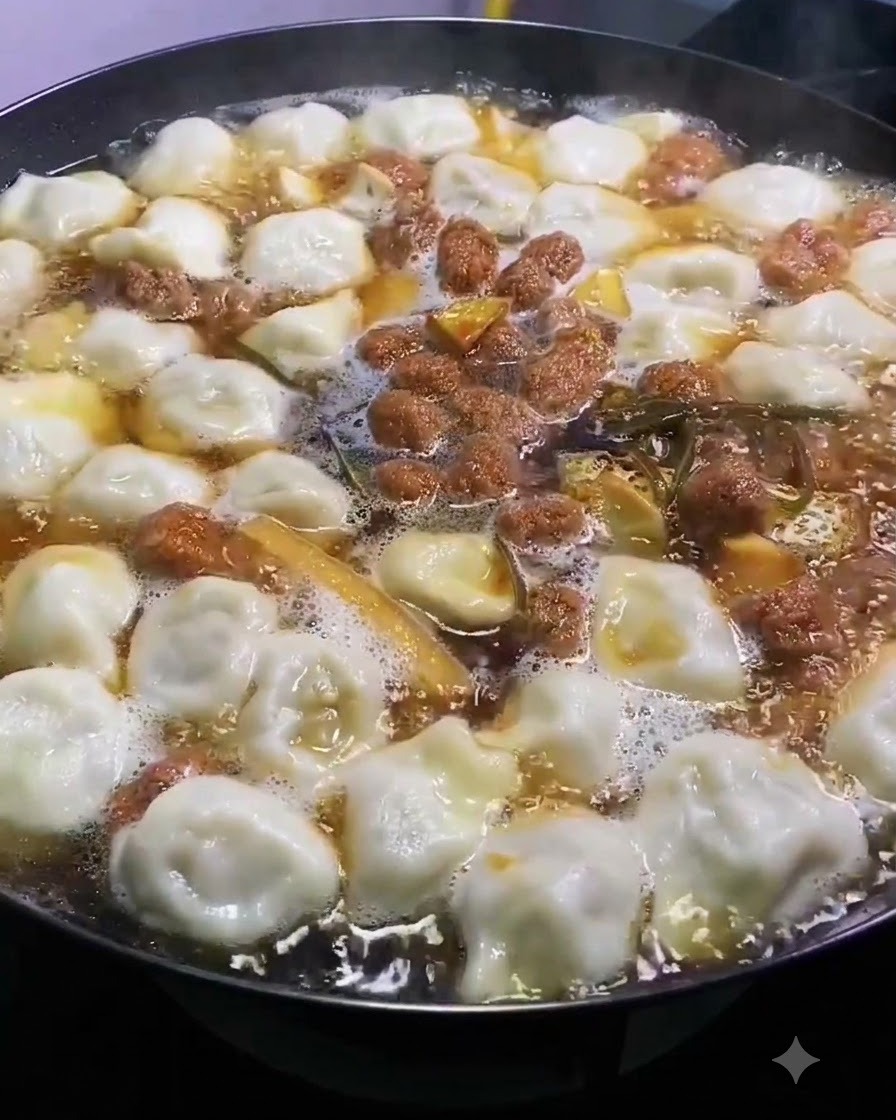
Sprinkle salt evenly across the simmering mixture of dumplings, meatballs, and various ingredients to balance the overall seasoning.
Tip: Distribute the salt evenly to ensure the flavor is well incorporated into the large batch of soup. - 11Strain Spiced Water
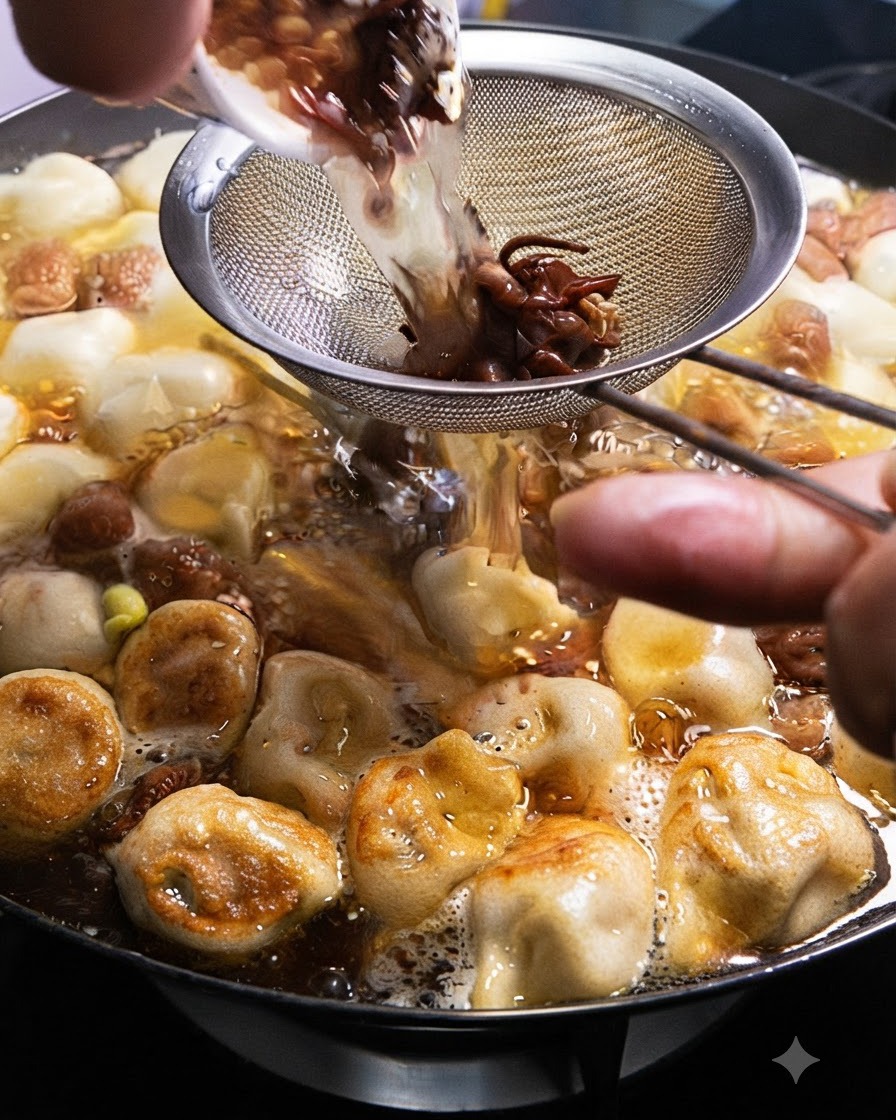
Pour the infused liquid from soaked Sichuan peppercorns and star anise through a mesh strainer directly into the pot, filtering out the solid spices.
Tip: Straining ensures that no whole spices or grit fall into the soup while imparting a wonderful aromatic warmth. - 12Add Dried Daylilies
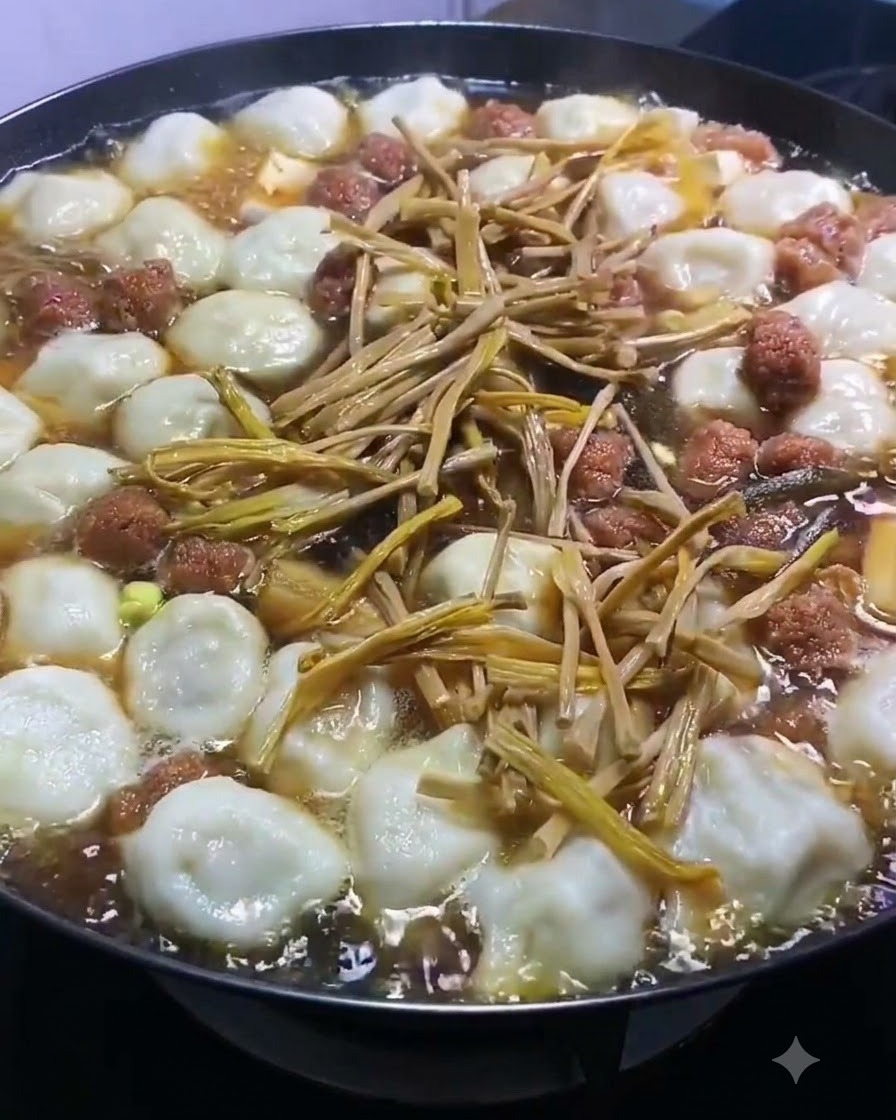
Scatter dried daylilies evenly across the surface of the simmering soup so they rehydrate and absorb the rich flavors of the broth.
Tip: Ensure the daylilies are fully submerged in the hot liquid to soften properly. - 13Pour Hot Oil with Scallions and Garlic
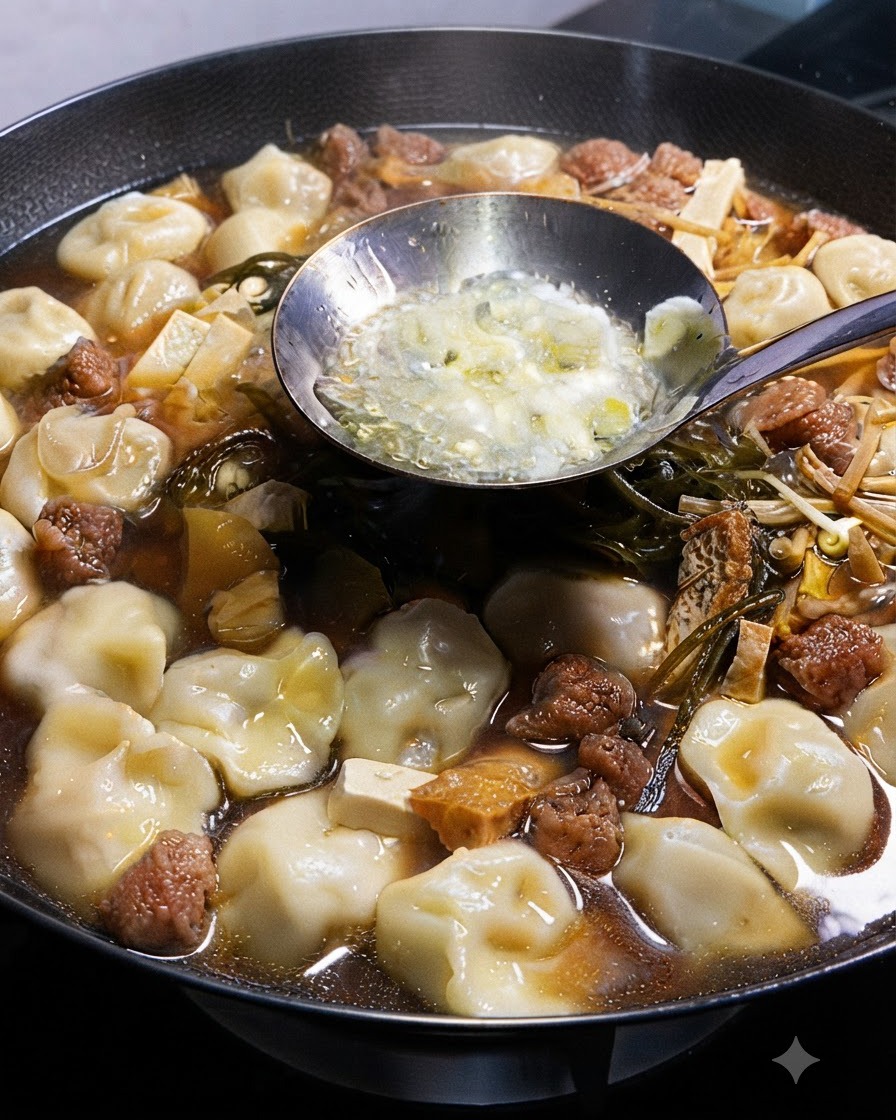
Pour a ladle of sizzling hot oil infused with chopped scallions and garlic directly into the broth to release an aromatic burst of flavor.
Tip: The hot oil will sizzle upon contact with the broth, locking in the pungent and fragrant aromas of the garlic and scallions. - 14Add Fresh Garnish
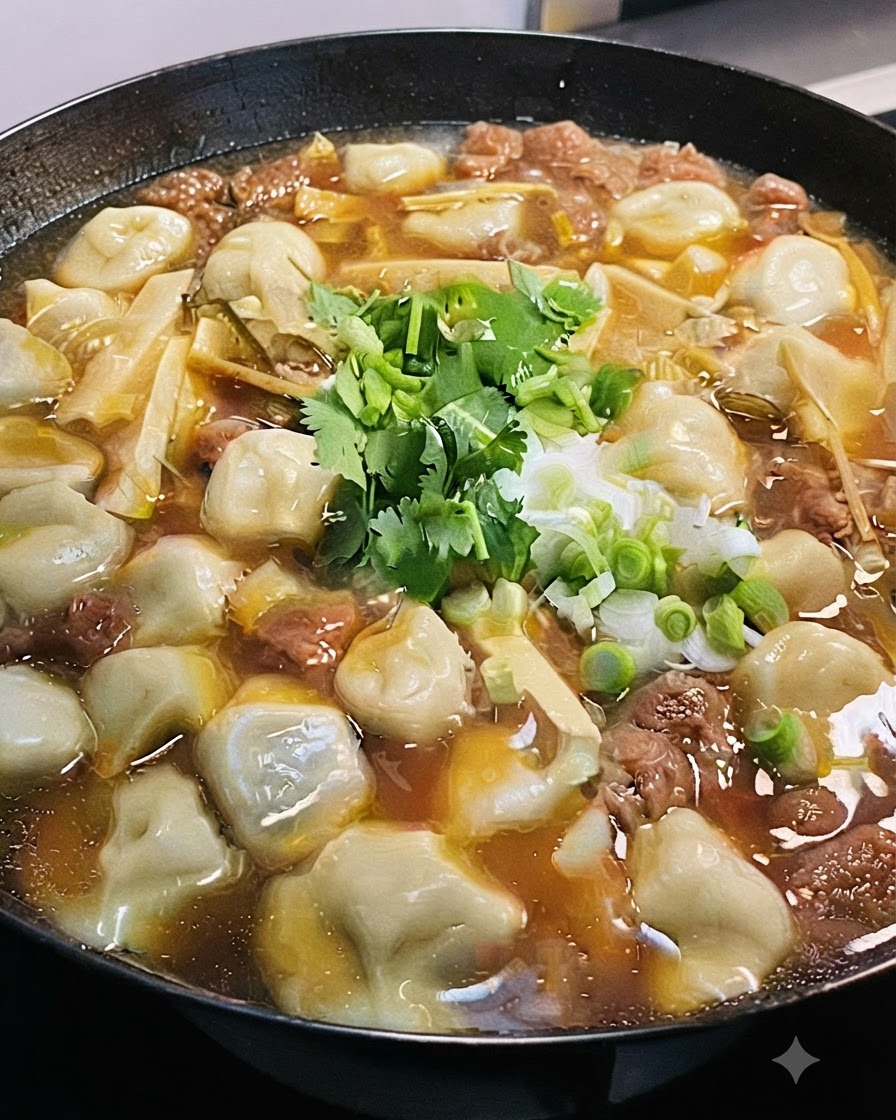
Sprinkle freshly chopped cilantro and green onions over the cooked ingredients in the wok to add a vibrant pop of color and fresh aroma.
Tip: Add greens right before serving to maintain their bright color and fresh bite. - 15Pour in Aged Vinegar
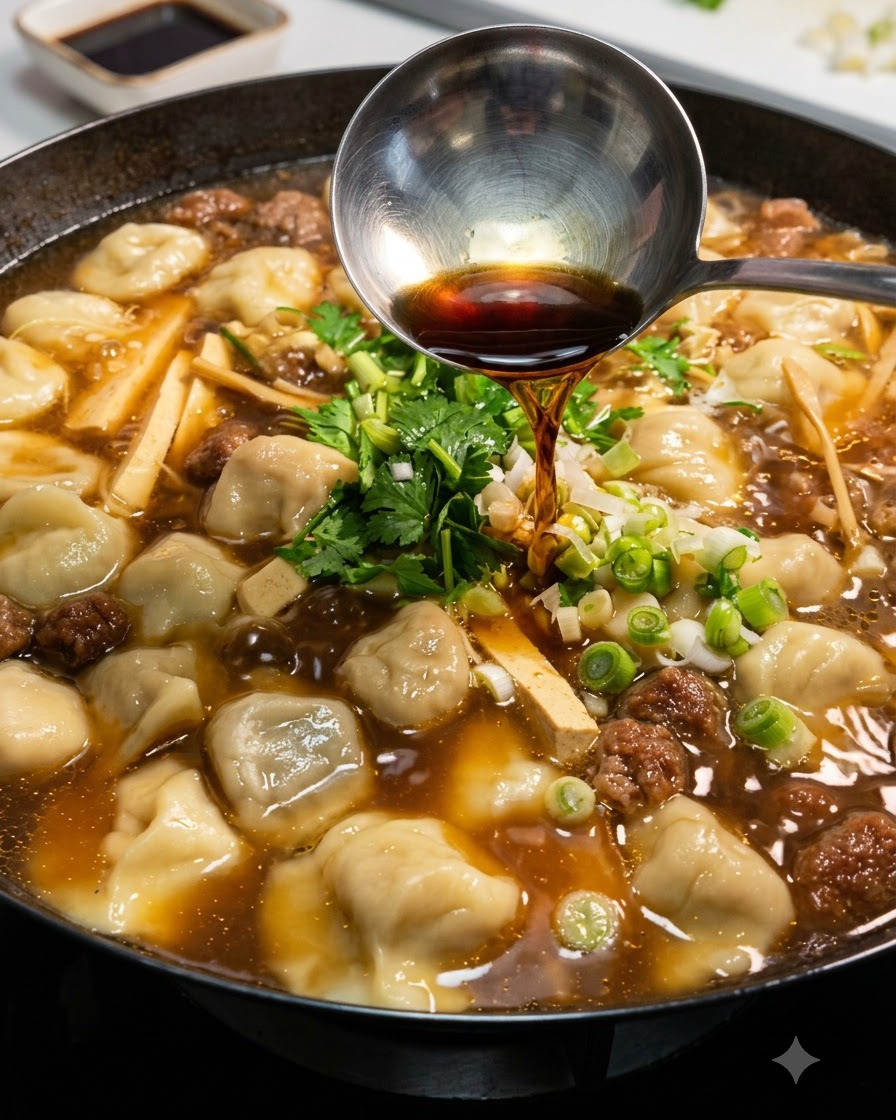
Pour dark aged vinegar from a ladle evenly over the mixture to bring a pleasant tang that cuts through the rich flavors.
Tip: Add vinegar towards the very end so the delicate acidity does not boil away. - 16Drizzle Sesame Oil
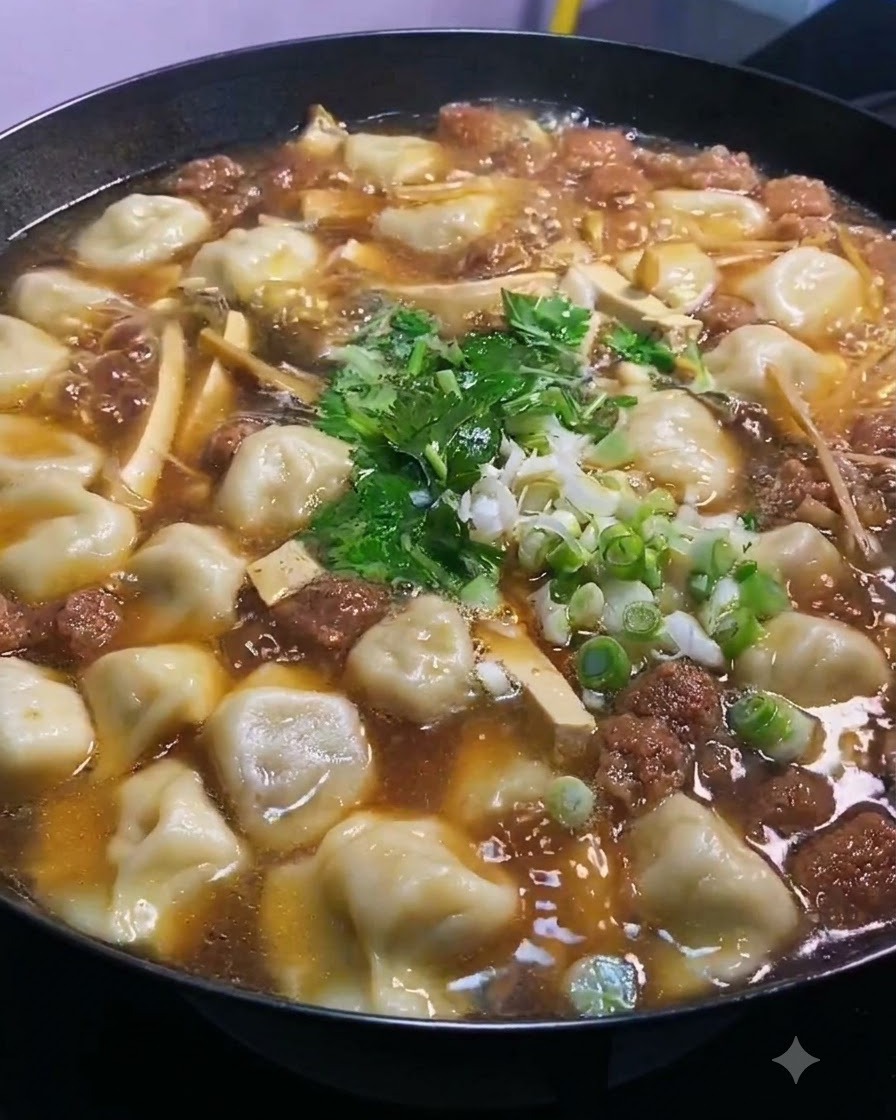
Drizzle a few drops of aromatic sesame oil over the soup to give it a glossy finish and an inviting nutty scent.
Tip: Use toasted sesame oil for the best aromatic payoff. - 17Finish Seasoning with Bouillon
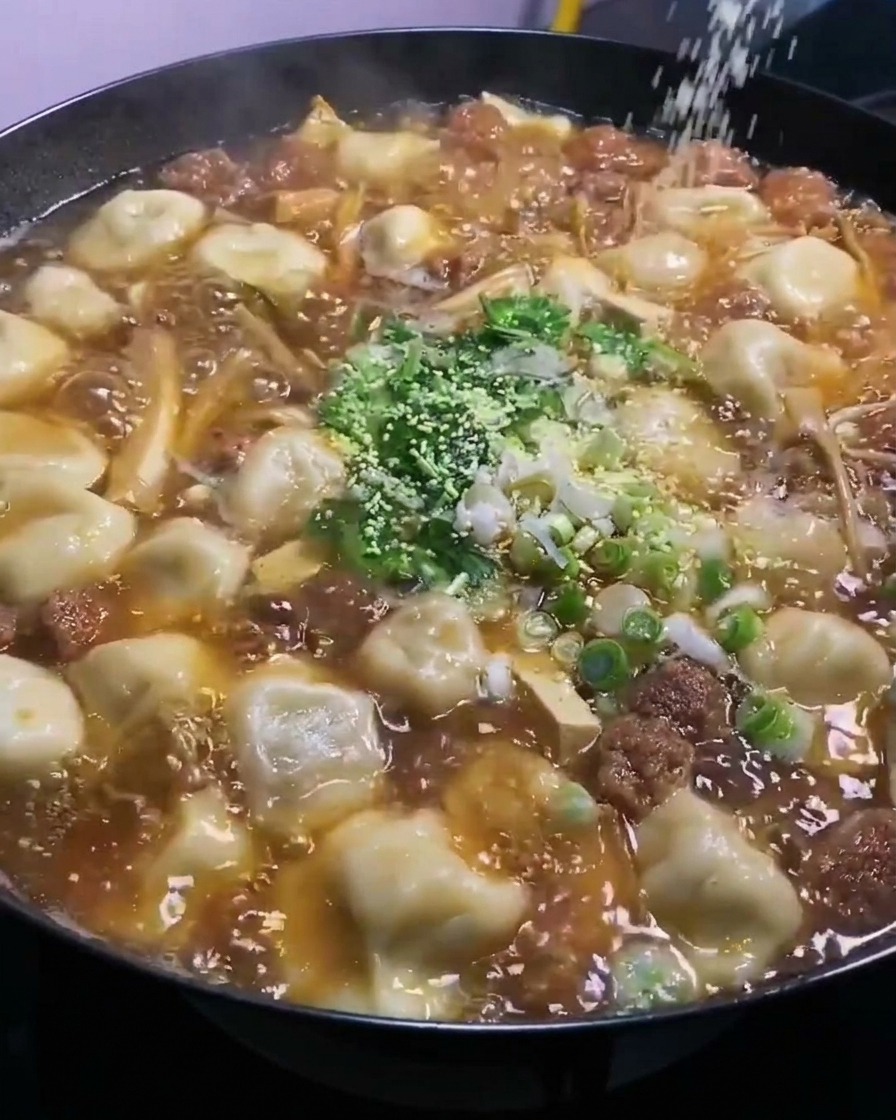
Sprinkle a pinch of chicken bouillon powder evenly over the contents to round out the savory depth of the soup.
Tip: Adjust the amount carefully since soy sauce and other seasonings are already present. - 18Stir Gently and Serve
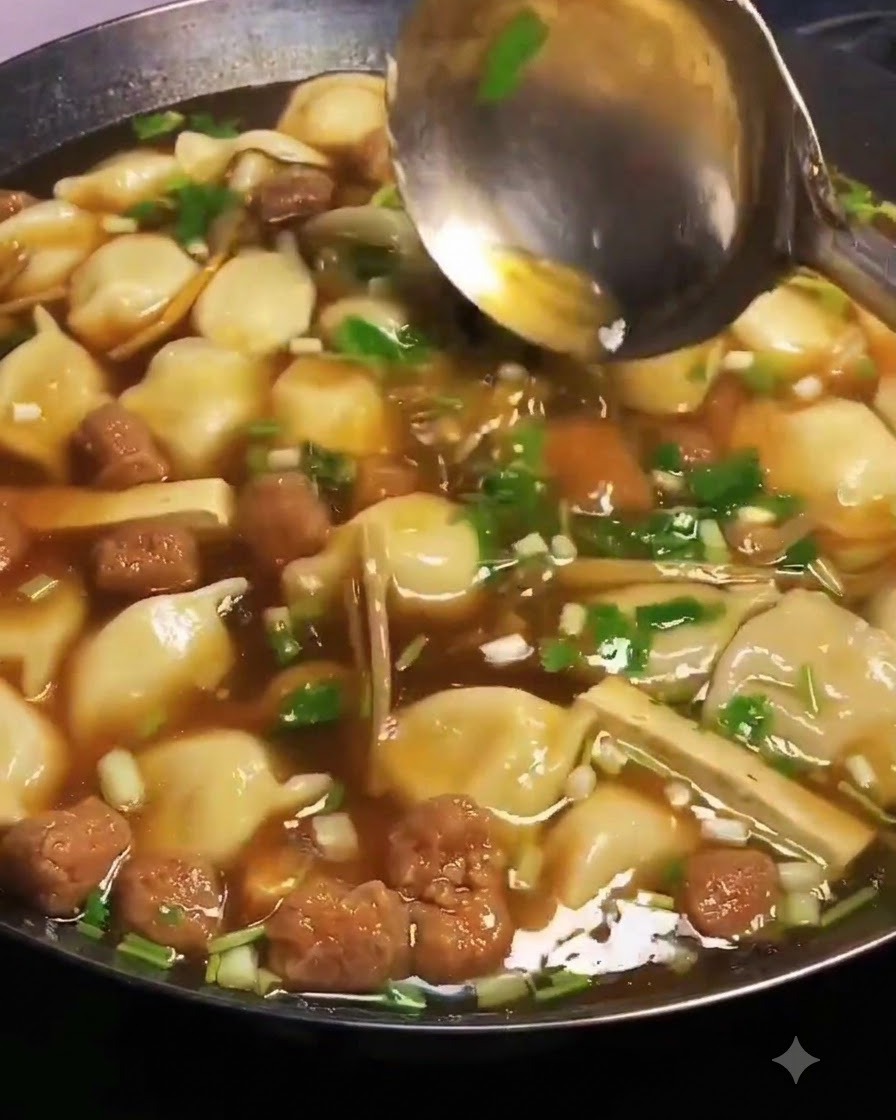
Gently stir all the ingredients together in the wok using a large ladle to distribute the flavors evenly before transferring to a serving bowl.
Tip: Stir gently to avoid breaking the delicate dumplings and tofu.