Hot Tofu Kimchi Pork Soup
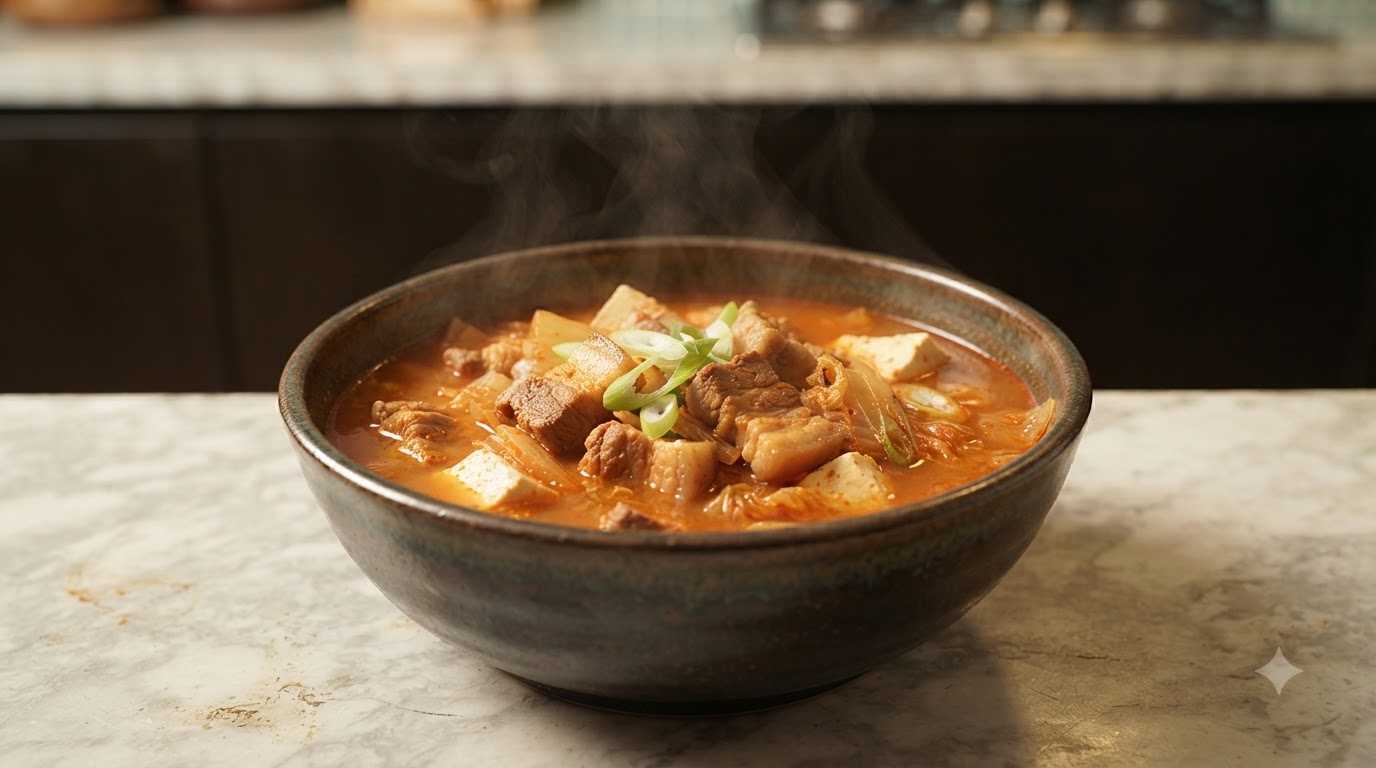
A comforting, home-style Korean soup featuring pork belly, bacon, and silken tofu simmered in a rich, savory broth with kimchi and gochugaru.
This comforting home-style hot soup is specially designed to warm you up from head to toe on a cold or rainy day. Built with a rich base of pork belly, smoky bacon, and flavorful kimchi sautéed in sesame oil and butter, it delivers deep layers of savory and spicy flavor in under 20 minutes.
Ingredients
- 200 g pork belly
- 100 g bacon
- 1 block silken tofu
- 1 cup kimchi
- 1 white onion
- 3 cloves garlic
- 1 tbsp sesame oil
- 1 small piece butter
- 1 tbsp chili powder
- 2 stalks green onion
- 1 tbsp soy sauce
- 1 tsp fish sauce
- 1 tsp sugar
- 2 cups water
Instructions
- 1Slice the bacon
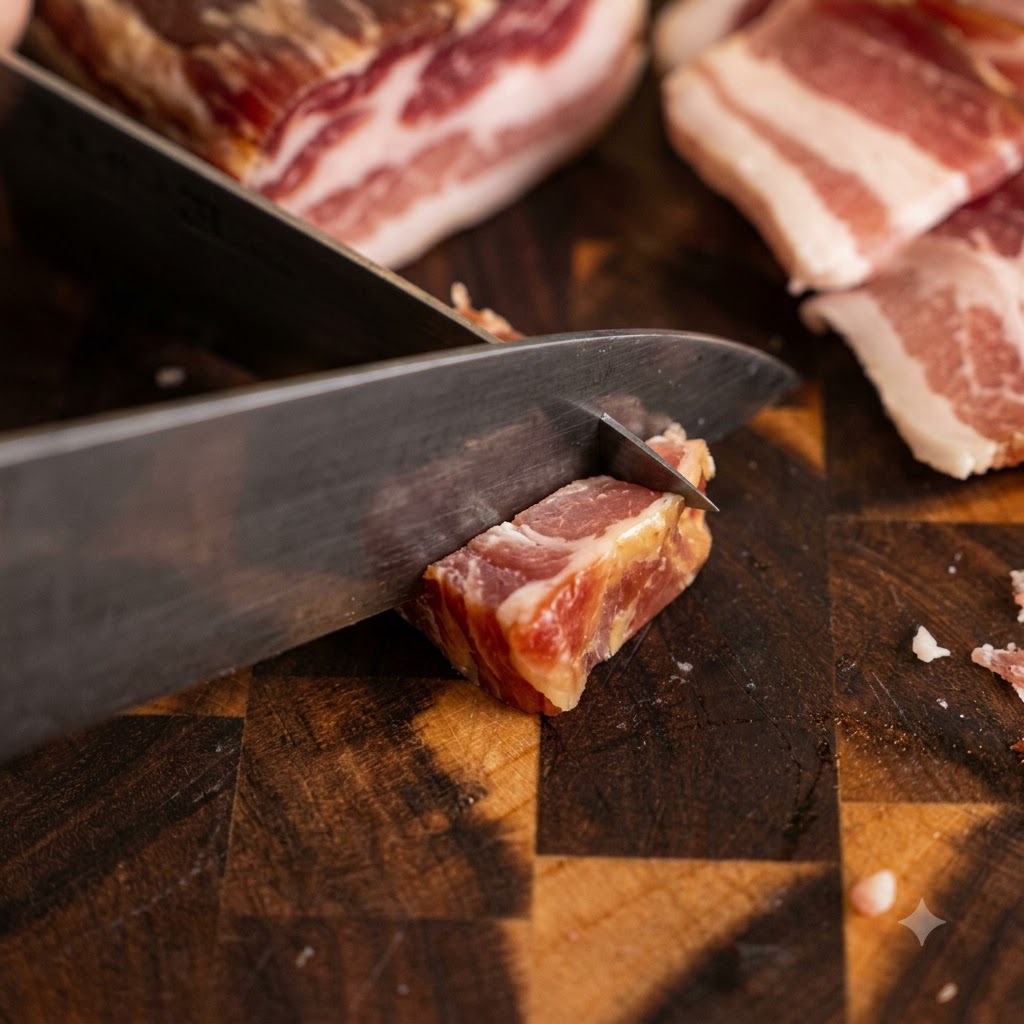
Slice the bacon into strips to prepare it for the soup base. The bacon will introduce a savory and slightly smoky flavor that makes the broth taste warmer and richer, perfectly complementing the pork belly.
Tip: There is no need to marinate the bacon; its natural smoky, salty flavors are exactly what this comforting soup needs. - 2Slice the pork belly
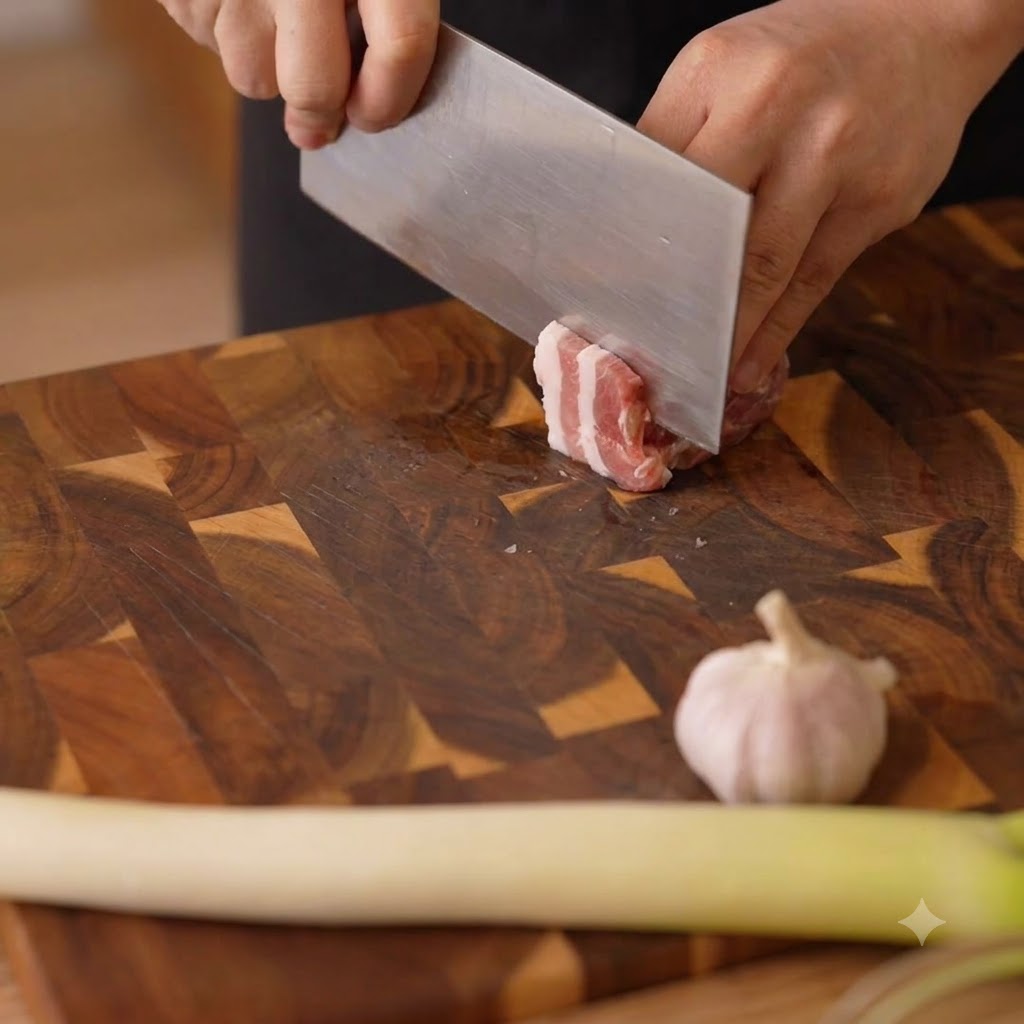
Cut the unmarinated pork belly into thin slices. Together with the bacon, the pork belly will be slowly sautéed to render its fat and build a hearty, meaty foundation for the hot kimchi soup.
Tip: If the pork belly is too soft and difficult to cut evenly, place it in the freezer for about 20 minutes to firm it up before slicing. - 3Cube the tofu
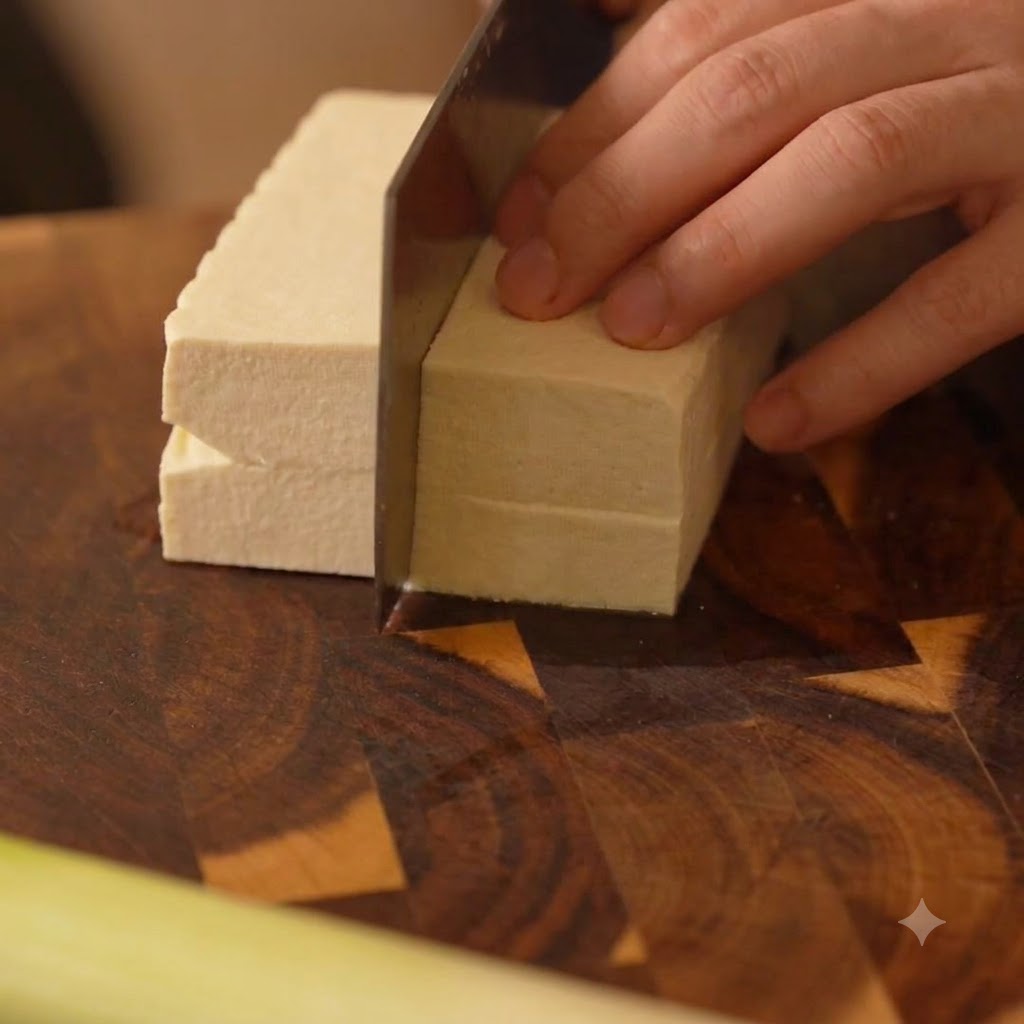
Take your preferred tofu—such as silken or slightly firmer tofu—and cut it into small, uniform cubes. These soft cubes will be added near the end of the cooking process to provide a comforting texture that absorbs the spicy broth.
Tip: Handle the tofu very gently when cutting and transferring it to ensure the cubes retain their shape and do not break apart. - 4Slice the white onion
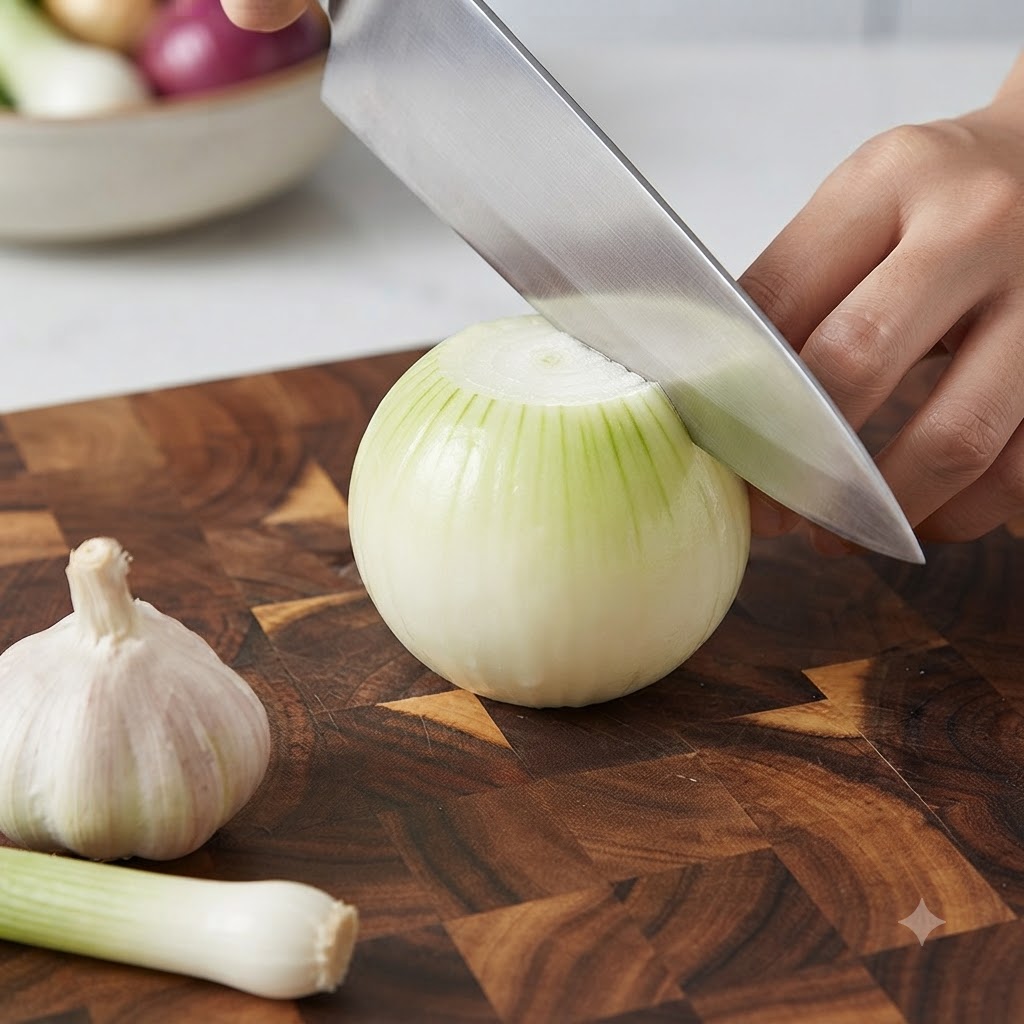
Slice the white onion into wedges or rough pieces. The onion does not need to be cut too finely, as it will soften and break down slightly while simmering, adding fragrance and helping to eliminate any gamey flavor from the meat.
Tip: Leaving the onion pieces slightly larger ensures they maintain a bit of texture and release their natural sweetness into the soup. - 5Mince Garlic and Onions
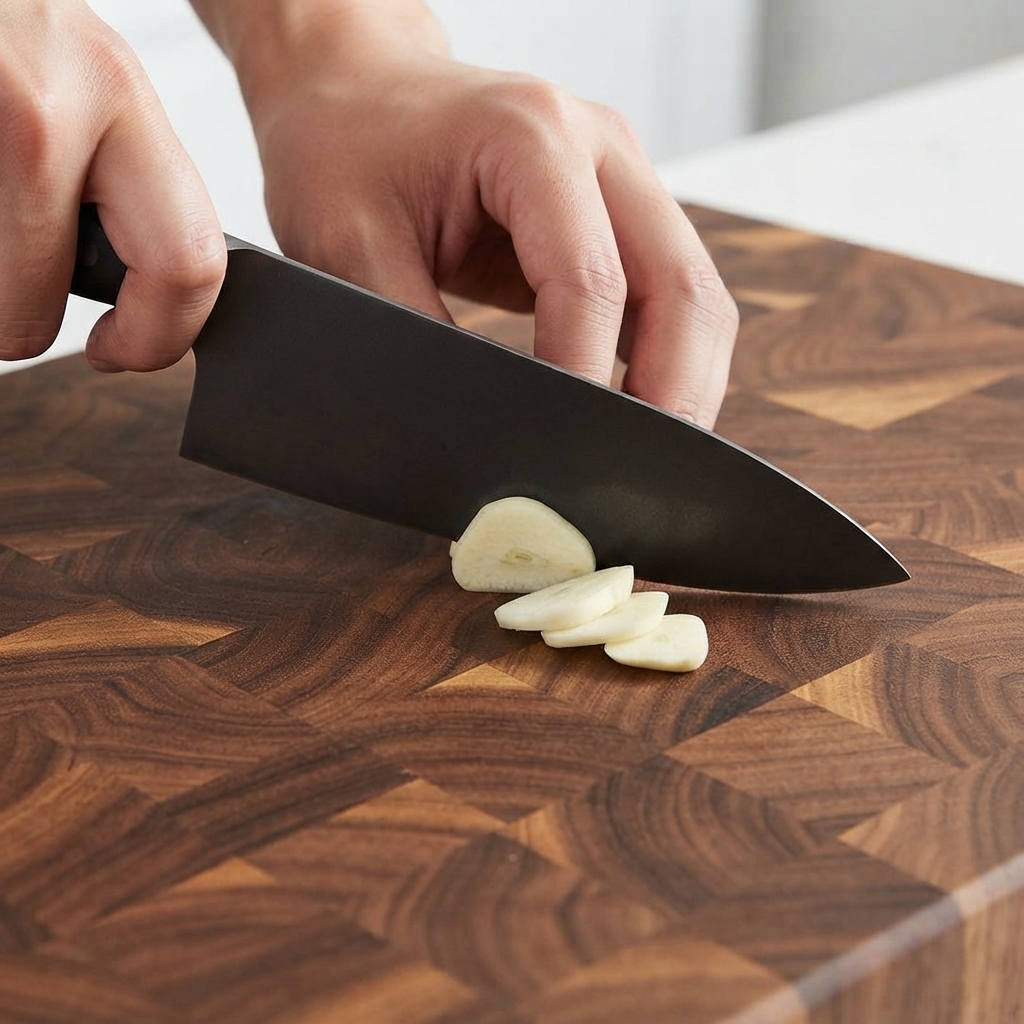
Prepare the aromatics by chopping the garlic and white onion. They do not need to be cut too finely, as they will be sautéed to build a rich base flavor for the soup.
Tip: Keep the pieces slightly chunky so they release flavor slowly without burning during the sautéing process. - 6Add Butter to the Pot
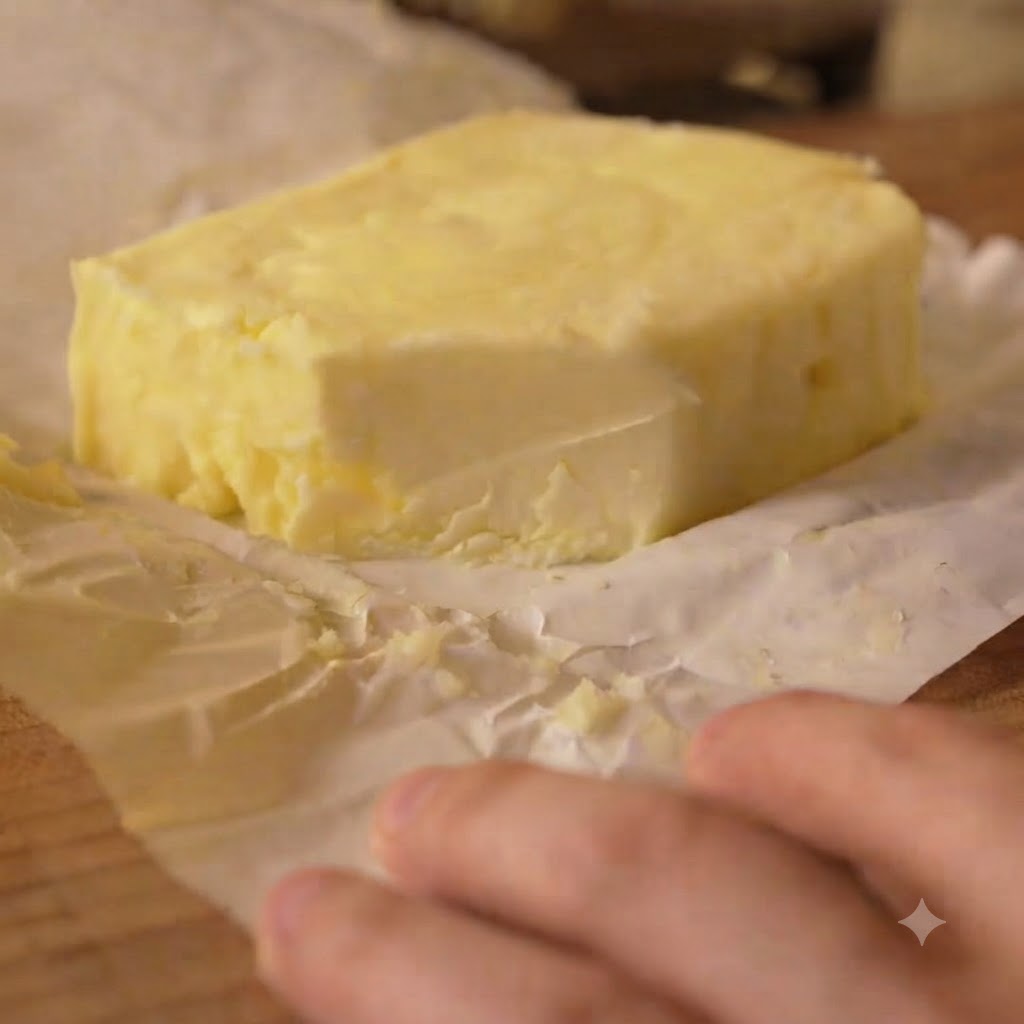
Add a small piece of butter into the white pot along with the sesame oil. The butter helps soften the texture and adds richness to the soup base.
Tip: Keep the heat moderate because sesame oil and butter are not very heat-resistant. - 7Fry Pork Belly and Bacon
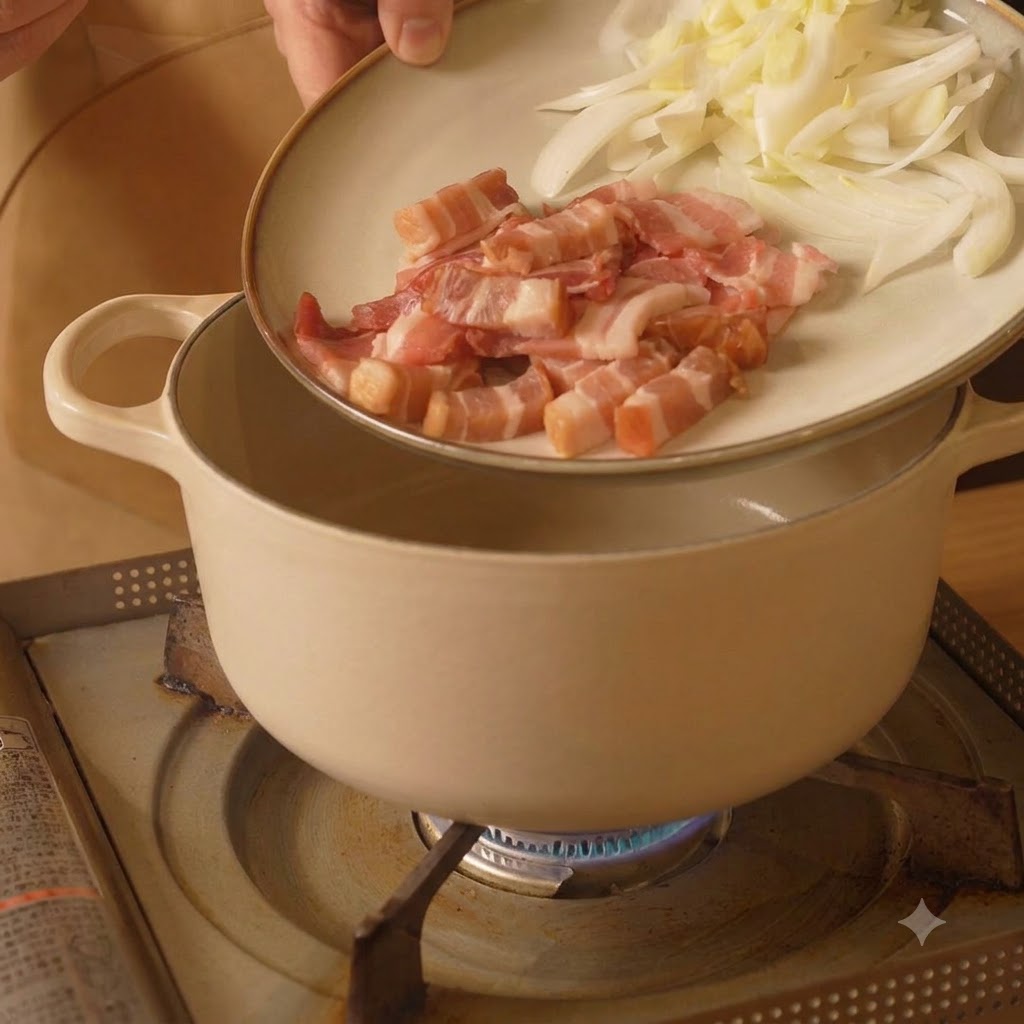
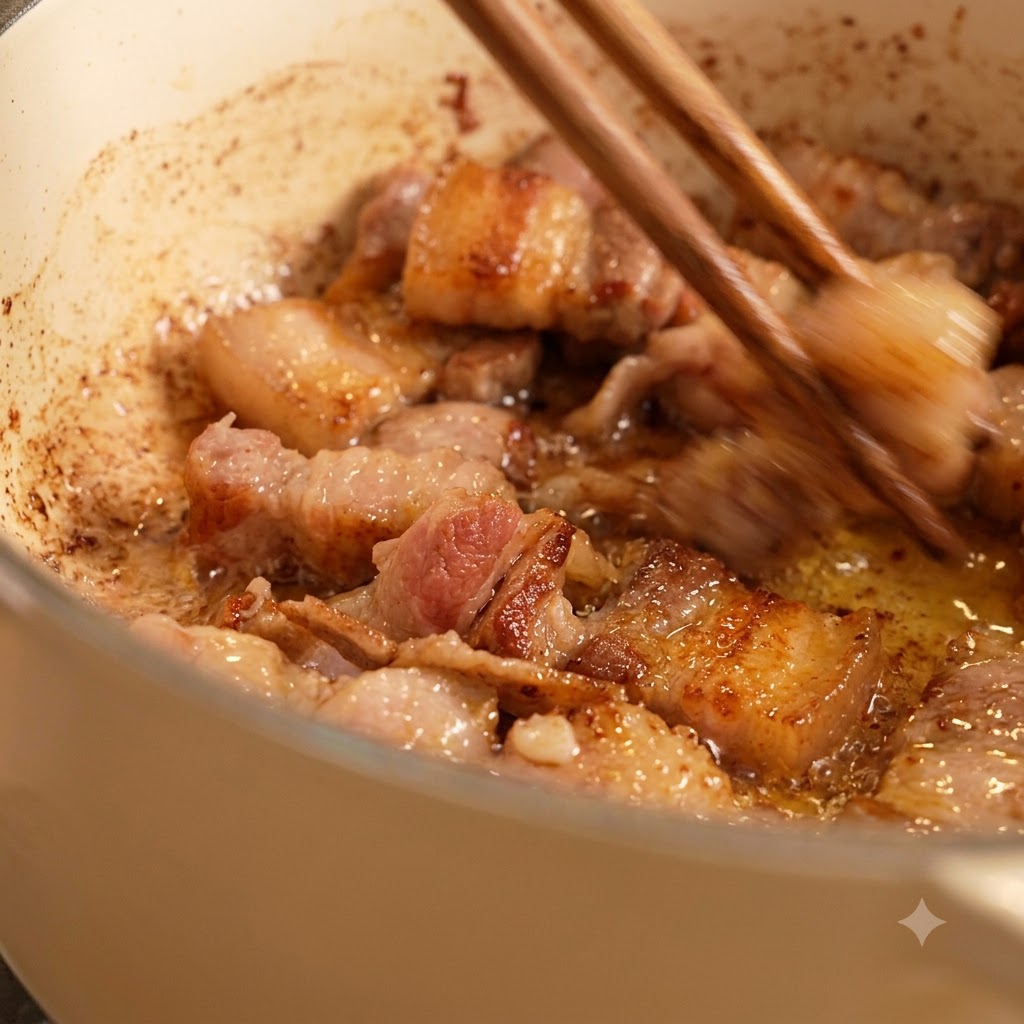
Add the unmarinated sliced pork belly and bacon strips into the pot to fry. Sauté patiently on moderate heat until all the moisture in the pot evaporates and the meat develops a nice color.
Tip: Patiently sautéing the pork and ingredients until fragrant before adding water makes the soup much more flavorful and rich. - 8Sauté Aromatics
Add the sliced white onions and garlic into the pot with the browned meat and stir-fry until fragrant. This ensures the soup has a rich, aromatic flavor rather than a gamey taste.
Tip: Cut the white onions and garlic coarsely without needing to chop them too finely. - 9Add Chili Powder and Kimchi

Add appropriate amounts of chili powder and kimchi according to your personal taste into the pot. Stir-fry them thoroughly with the sautéed meat and aromatics.
Tip: Adjust the amount of chili powder depending on your preferred level of spiciness. - 10Pour Water and Simmer
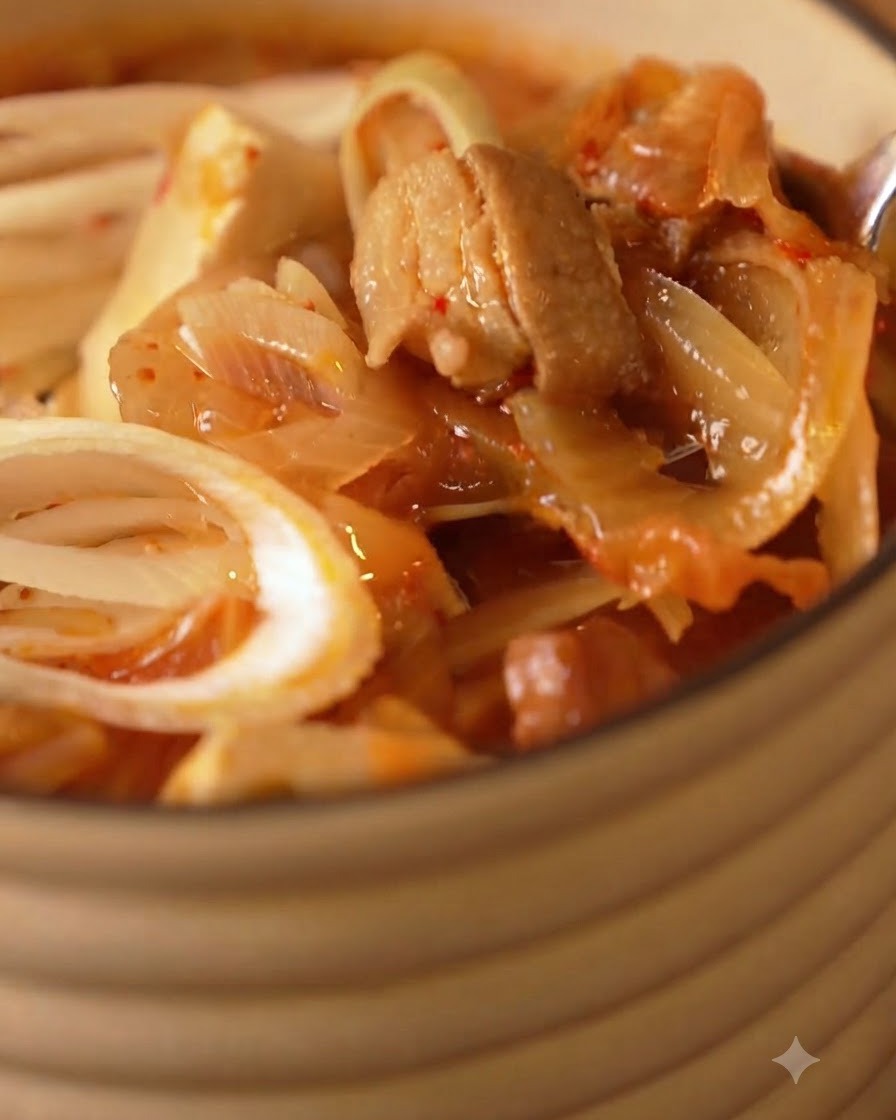
Pour water into the pot to create the soup base and bring it to a boil. Add thick green onion sections and let the soup simmer on low heat for about 5 minutes.
Tip: Add silken tofu cubes near the end of the simmering process since they cook very quickly.