Black Garlic Oil Thick-Cut Chashu Ramen (Kuro Mayu Ramen)
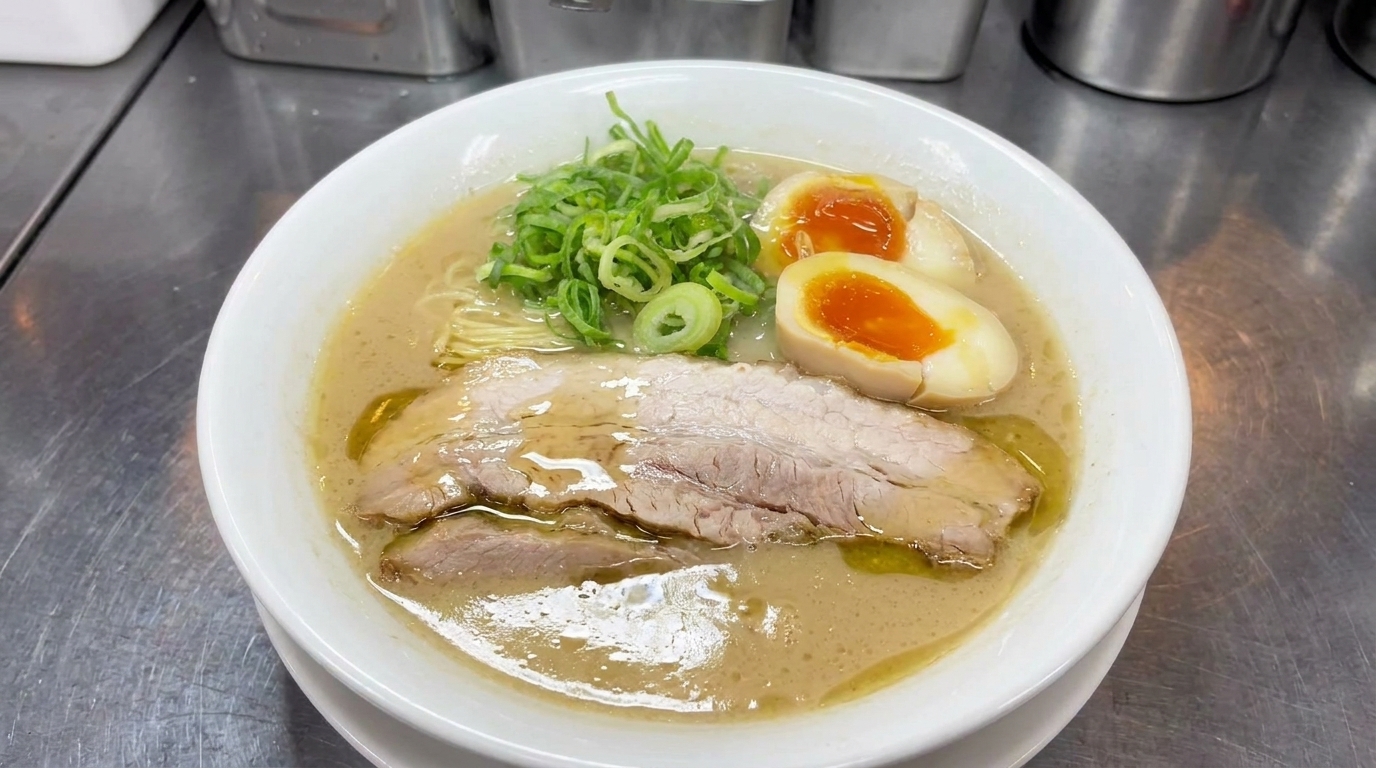
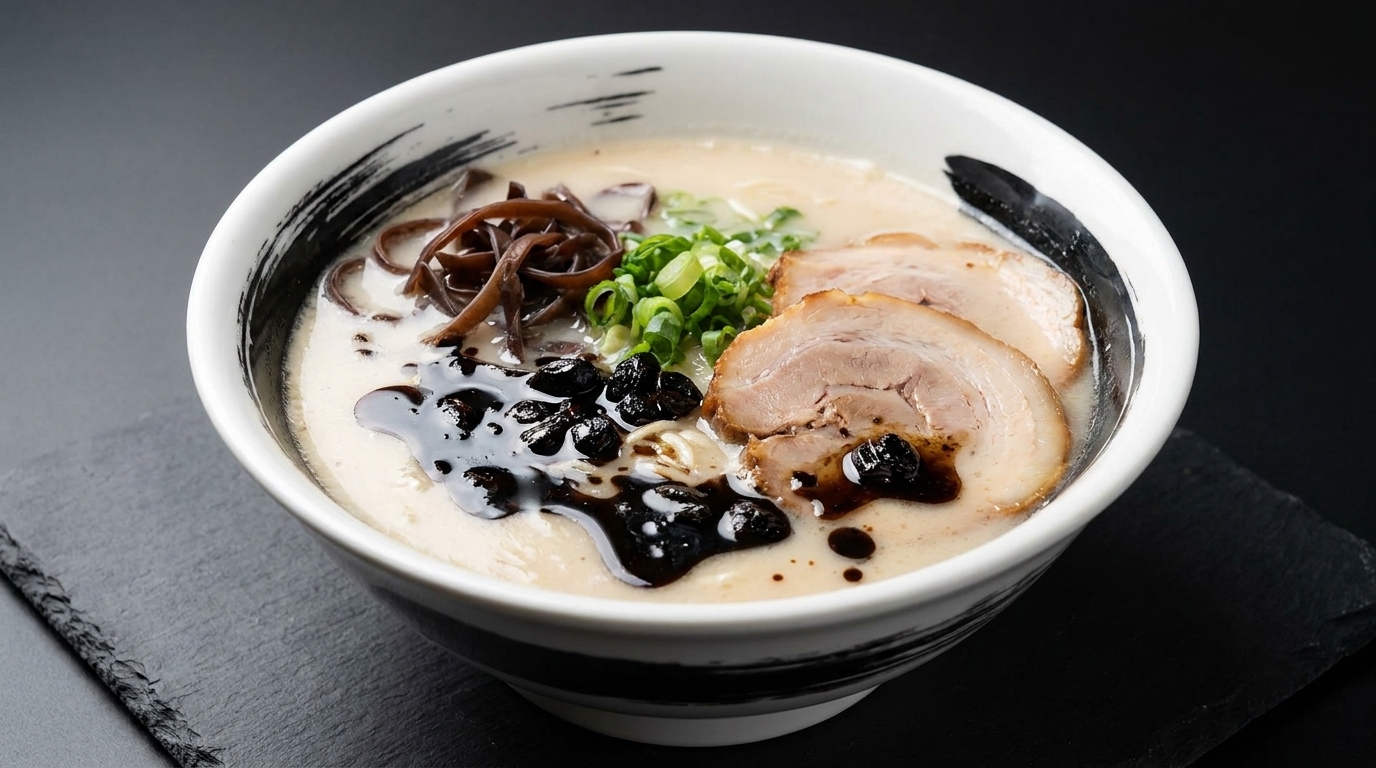
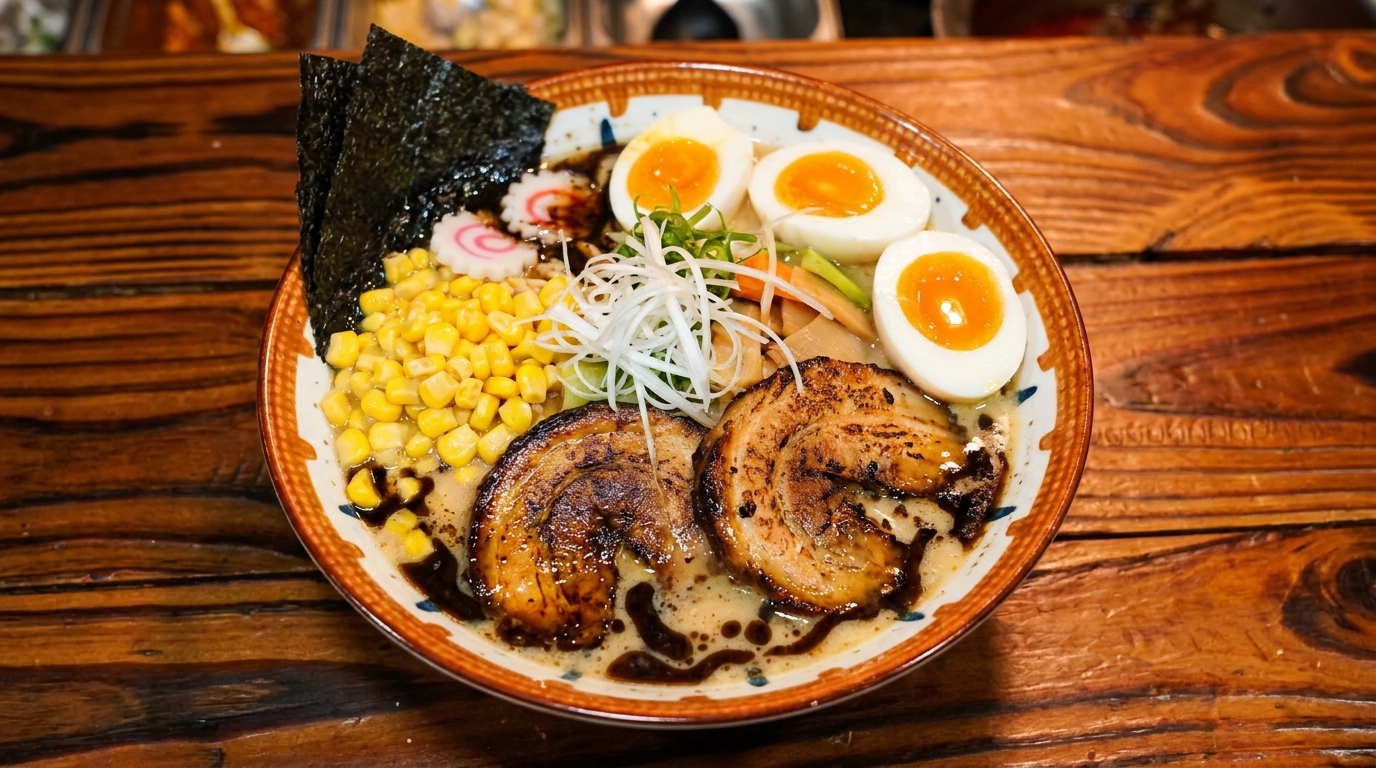
Indulge in a rich, 8-hour tonkotsu-style broth elevated by smoky black garlic oil and melt-in-your-mouth torched chashu pork. A masterclass in savory depth.
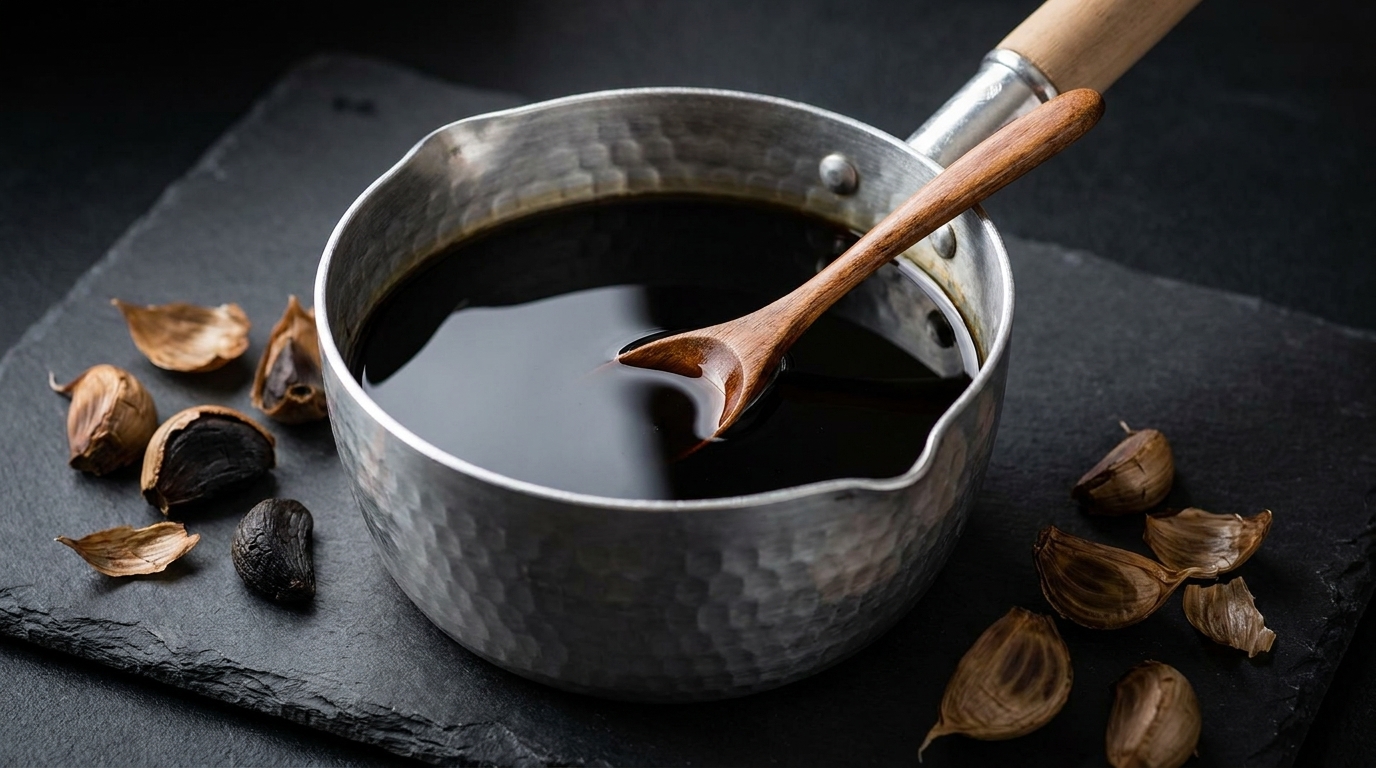
Kuro Mayu, or black garlic oil, is the hallmark of Kumamoto-style ramen, providing a deep, charred aroma that perfectly cuts through a rich, creamy pork broth. This version features thick-cut chashu seared with a kitchen torch to achieve a smoky finish that mirrors the oil complexity. Accompanied by a variety of textures from sweet corn to crunchy nori, it is a soul-warming bowl that rewards the patience of a slow-simmered bone broth.
Ingredients
- 1 portion ramen noodles
- 500 ml pork and chicken bone broth
- 2 thick slices pork chashu
- 1 tbsp scallion oil
- 2 tbsp golden soy sauce
- 1 tbsp black garlic oil
- 1 soft-boiled egg
- 1 sheet nori seaweed
- 2 tbsp sweet corn
- 14 cup bamboo shoots
- 1 piece narutomaki
- 1 piece crab stick
- 1 leaf cabbage
- to taste shredded scallion
Instructions
- 1Boil the noodles
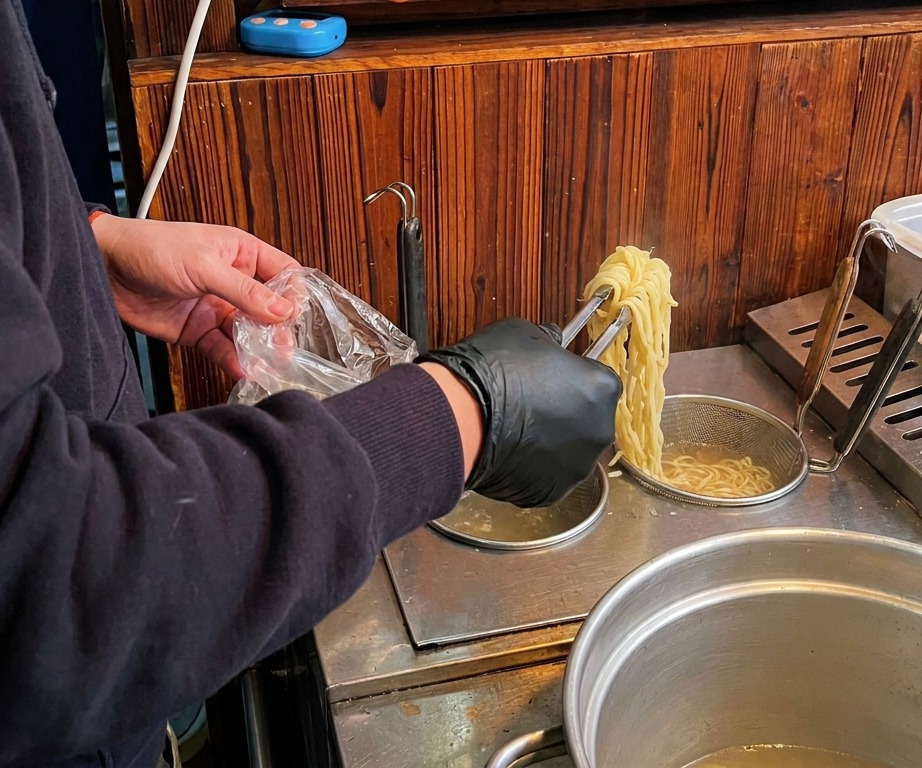
Carefully place a portion of raw ramen noodles into a pot of rapidly boiling water. Cook for two and a half minutes to ensure they reach the perfect al dente texture.
Tip: Shake the noodles vigorously to remove excess water so the flavor of the bone broth remains concentrated. - 2Add the hot bone broth
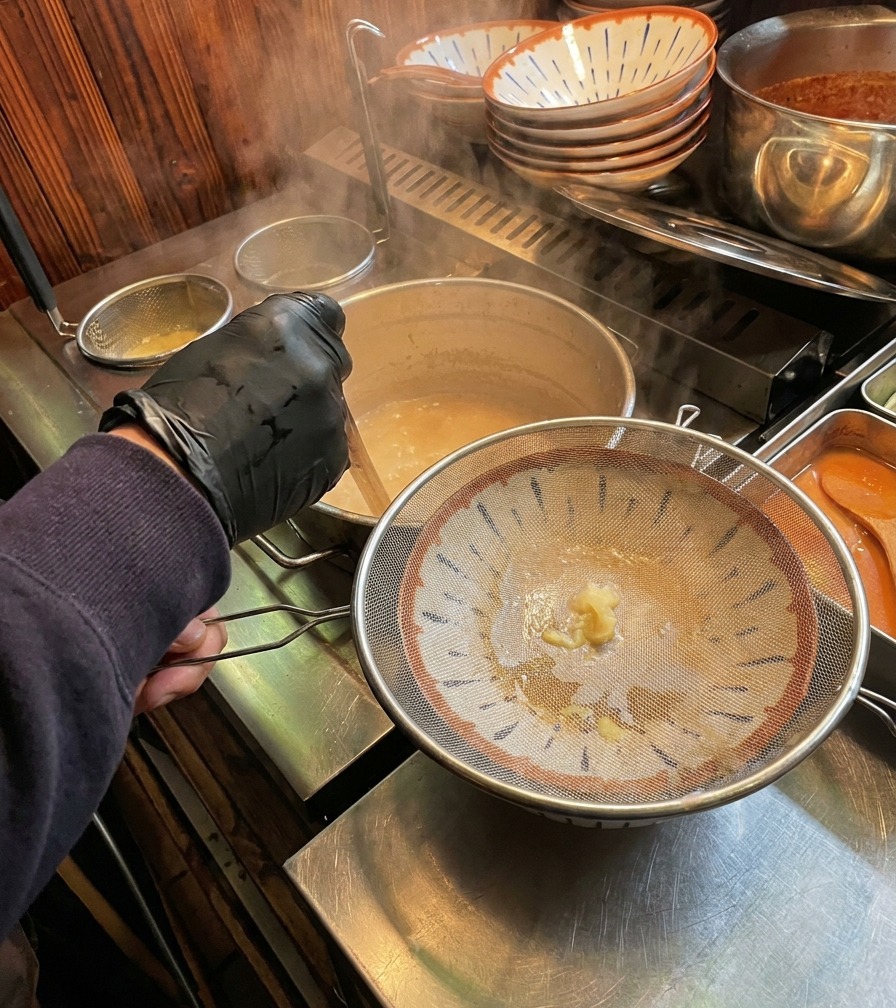
Take the fresh pork and chicken bone broth that has been simmered for eight hours and pour it into the bowl. Use a fine metal mesh strainer to filter the liquid as it is poured, which catches any small bone fragments and ensures a smooth, velvety soup texture.
Tip: Straining the broth is the secret to achieving the professional and clean mouthfeel found in traditional ramen shops. - 3Torch the pork chashu
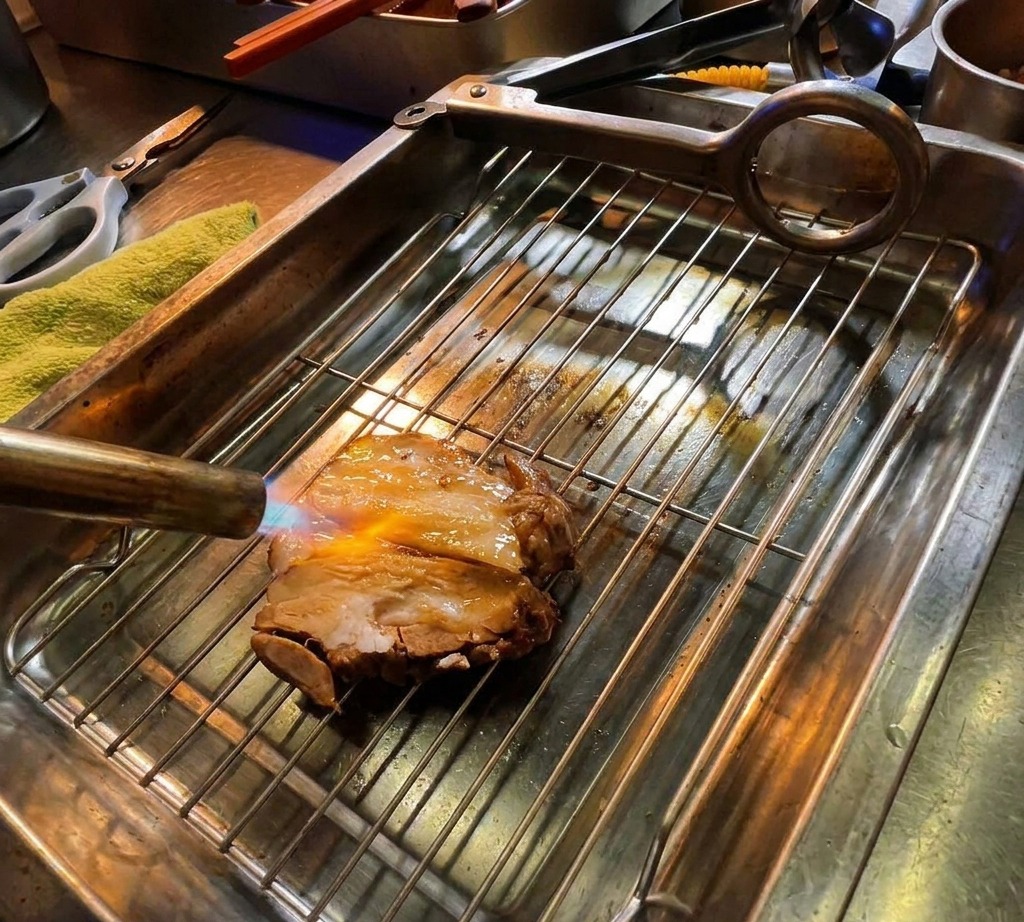
Place two thick slices of pre-cooked pork chashu on a metal wire rack. Use a kitchen blowtorch to sear the surface of the meat until it develops a deep brown char and releases a smoky, roasted aroma that will enhance the final dish.
Tip: Torch both sides of the meat to ensure it is heated through and the fat is slightly rendered for a better texture. - 4Transfer and fold the noodles
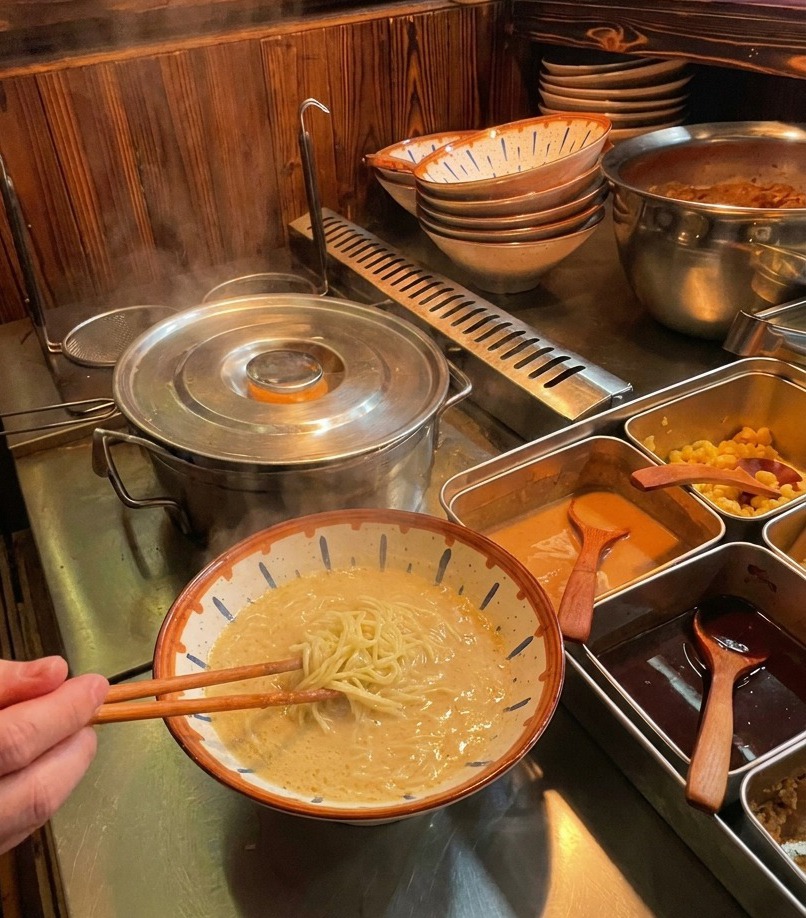
Use chopsticks to lift the cooked ramen noodles from the boiling water, allowing them to drain briefly. Carefully place them into the bowl of hot broth and fold them neatly to create a stable foundation for the toppings.
Tip: Folding the noodles instead of just dropping them ensures the toppings stay on the surface and improves the final presentation. - 5Arrange the ramen toppings
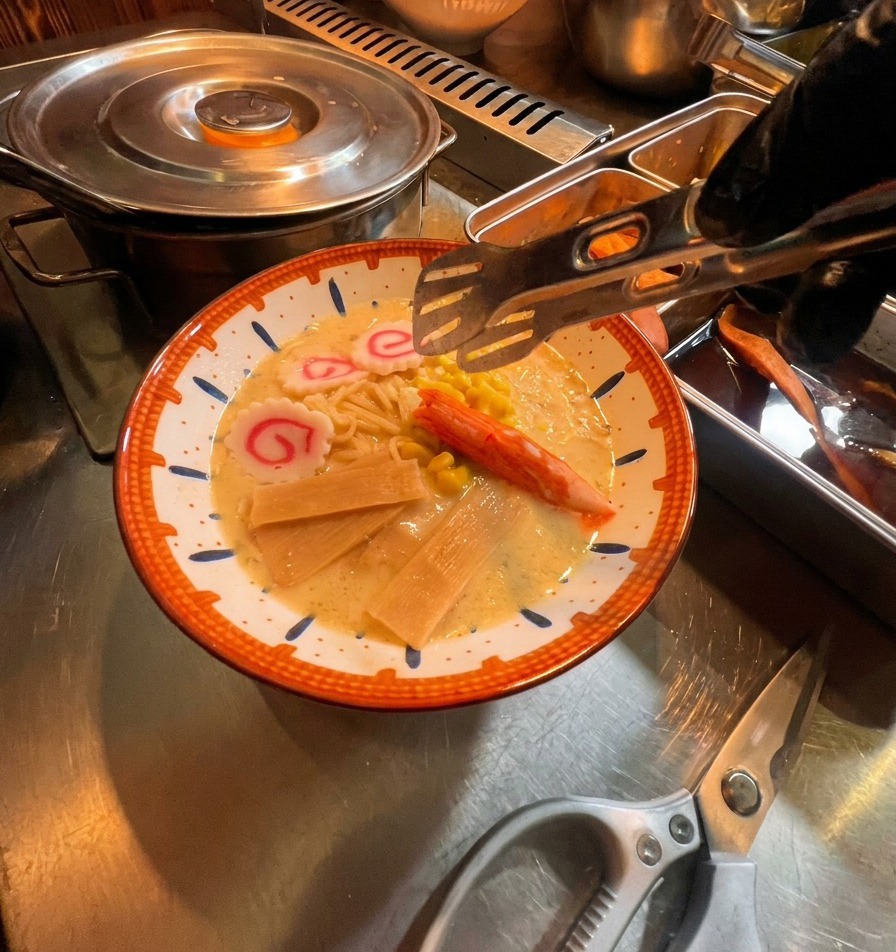
Begin assembling the toppings on top of the noodles. Use tongs to place sweet corn, bamboo shoots, sliced narutomaki fish cakes, and the crab stick in an organized manner. Add a fresh cabbage leaf to provide a variety of colors and textures in the bowl.
Tip: Place the toppings gently so they sit on top of the noodles rather than sinking into the soup base. - 6Plate the torched chashu
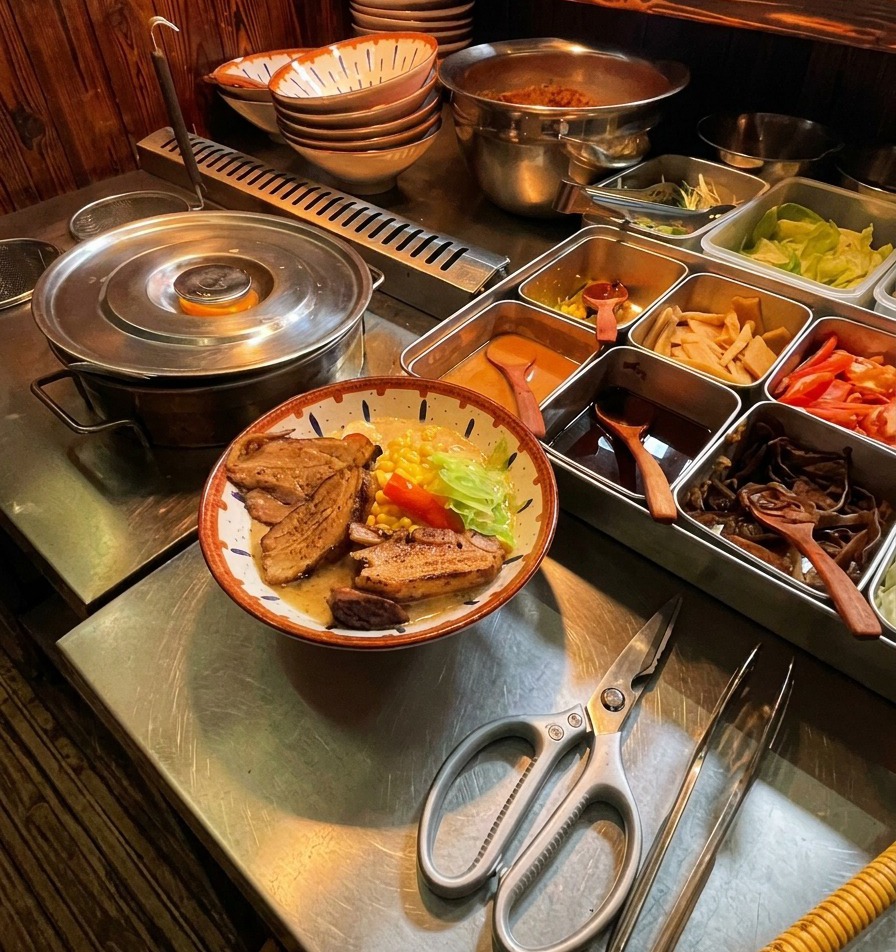
Carefully lift the freshly torched, thick-cut slices of pork chashu and place them onto the noodles. These flavorful slices of meat serve as the centerpiece of the ramen bowl, adding both visual appeal and a rich, smoky taste.
Tip: Position the meat slightly to one side to leave space for the final garnishes like eggs and seaweed. - 7Add eggs, nori, and garlic oil
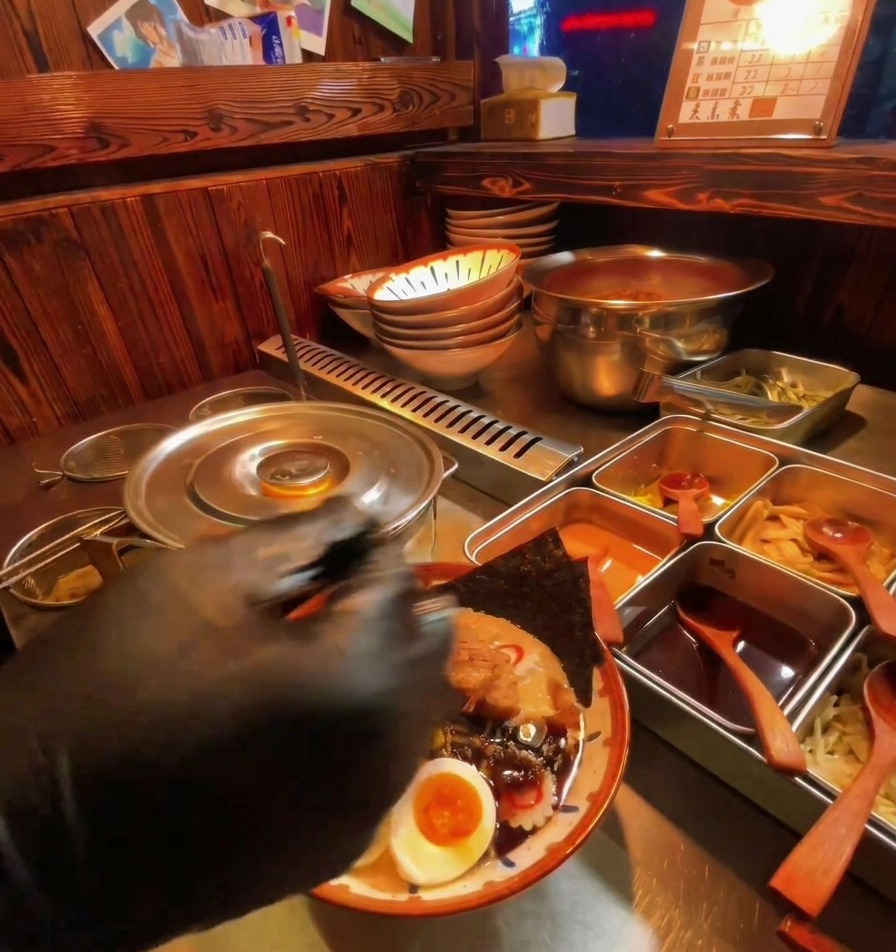
Gently place the soft-boiled egg halves into the bowl with the yolks facing up, tuck a crisp sheet of nori seaweed against the side, and drizzle the aromatic black garlic oil over the surface.
Tip: Focus the oil around the toppings to let it naturally swirl into the broth without overwhelming the entire surface immediately. - 8Garnish with scallions
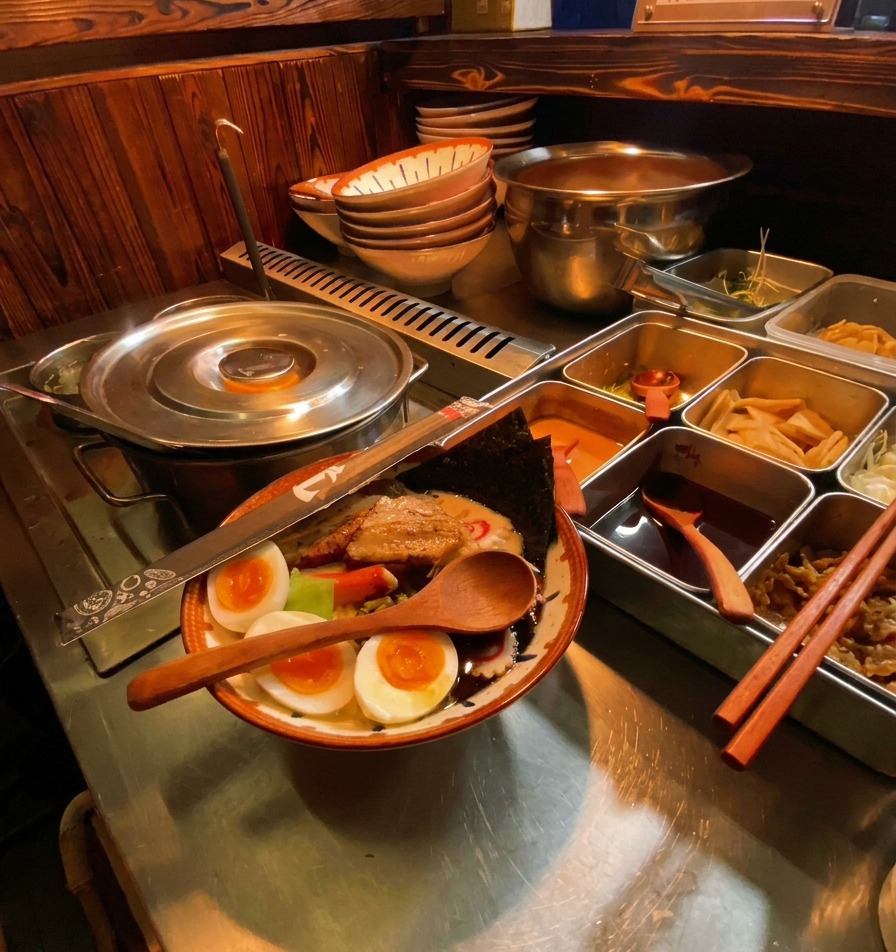
Use tongs to arrange a small mound of shredded white scallions in the center of the bowl as a final fresh garnish to contrast the rich broth.
Tip: The fresh scallions provide a sharp bite that cuts through the intensity of the pork and chicken bone broth.