Lazy Person's 'Heretical' Tonkotsu Ramen
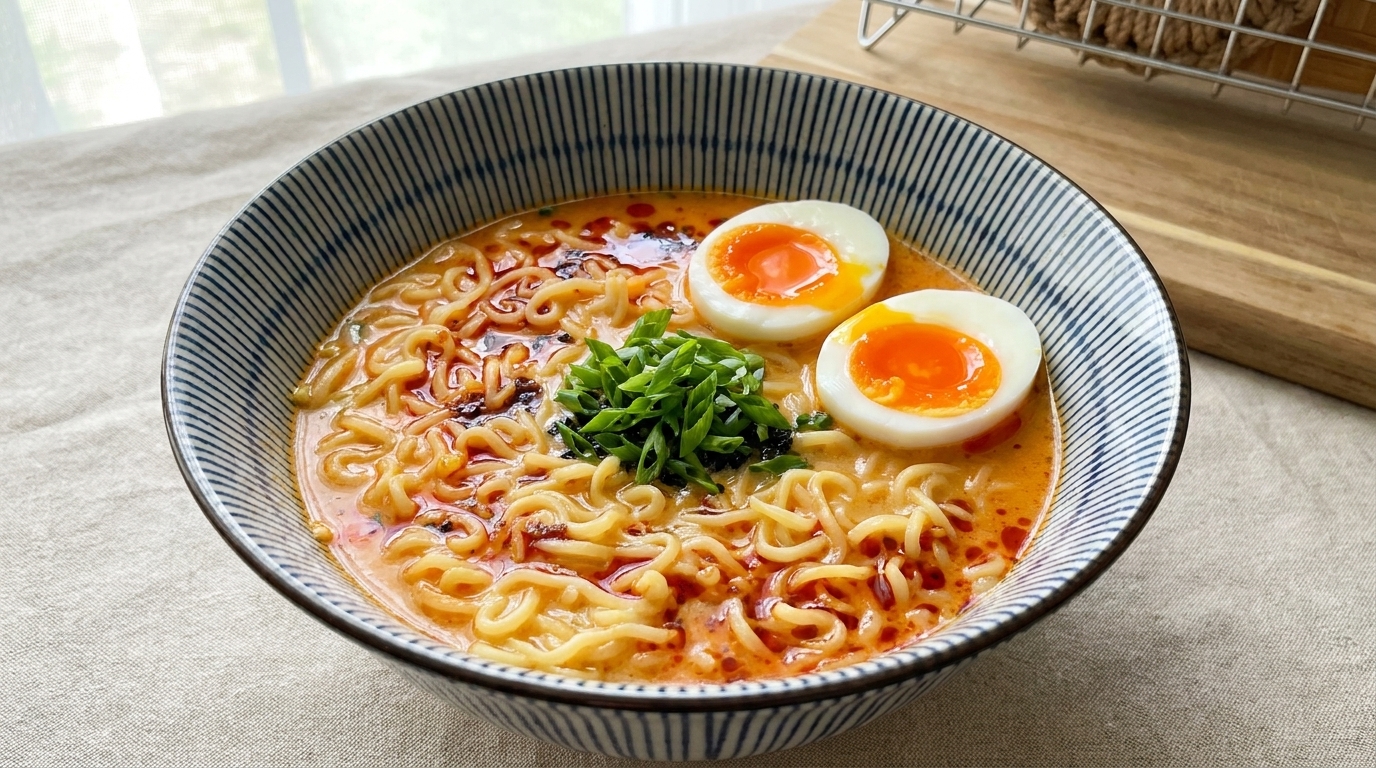
Create a restaurant quality tonkotsu broth in minutes using a clever hack of egg yolk and mayonnaise topped with seared luncheon meat and a jammy egg
While traditional Tonkotsu broth requires hours of simmering pork bones, this heretical version uses a culinary shortcut to achieve that signature creamy richness. By emulsifying an egg yolk with mayonnaise and hot noodle water, you create a velvety soup base that rivals authentic ramen shops. It is the ultimate comfort meal for busy weeknights when you crave deep flavor without the wait.
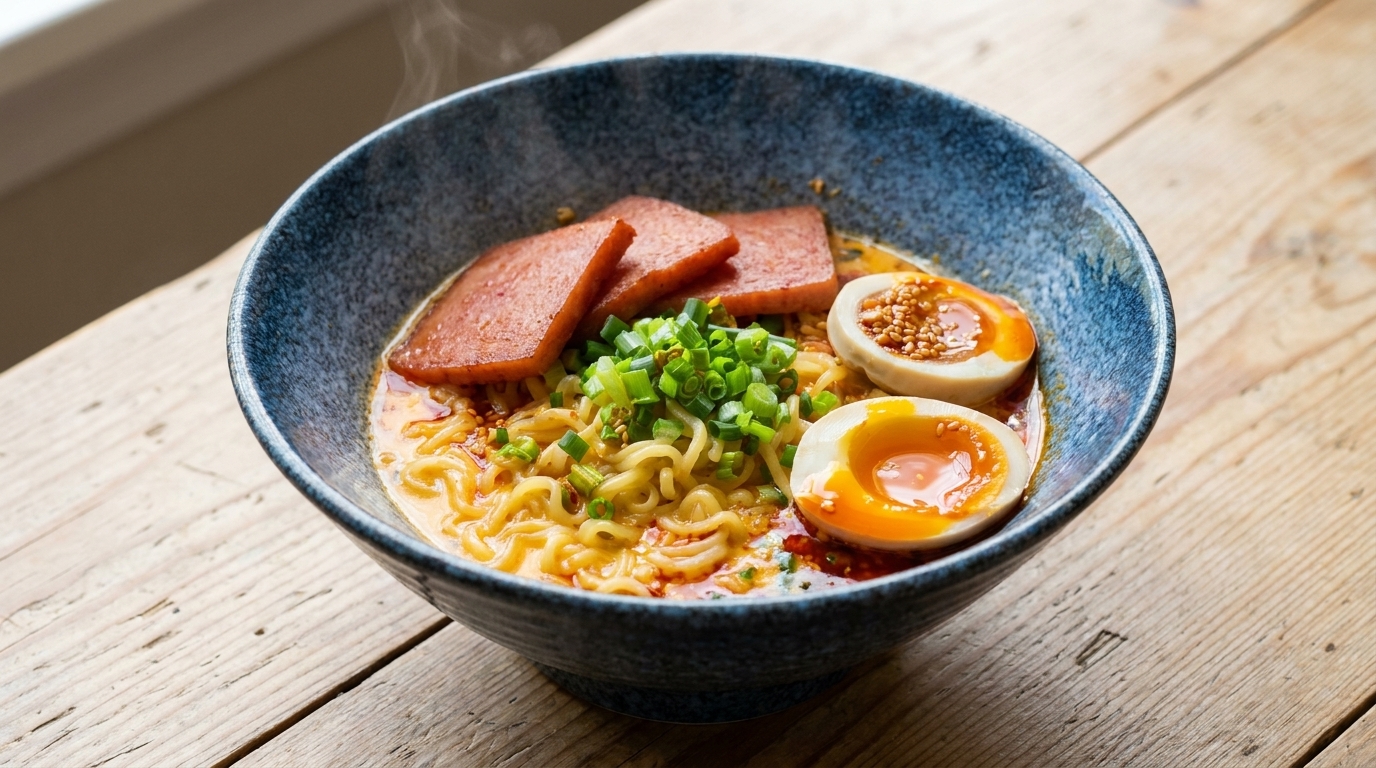
Ingredients
- 1 block instant noodles
- 1 sterile egg yolk
- 1 tbsp mayonnaise
- 0.5 packet spicy ramen seasoning
- 1 tsp minced garlic
- 1 tbsp chopped green onions
- 2 eggs
- 3 slices luncheon meat
- to taste chili oil
- to taste toasted sesame seeds
Instructions
- 1Slice the luncheon meat
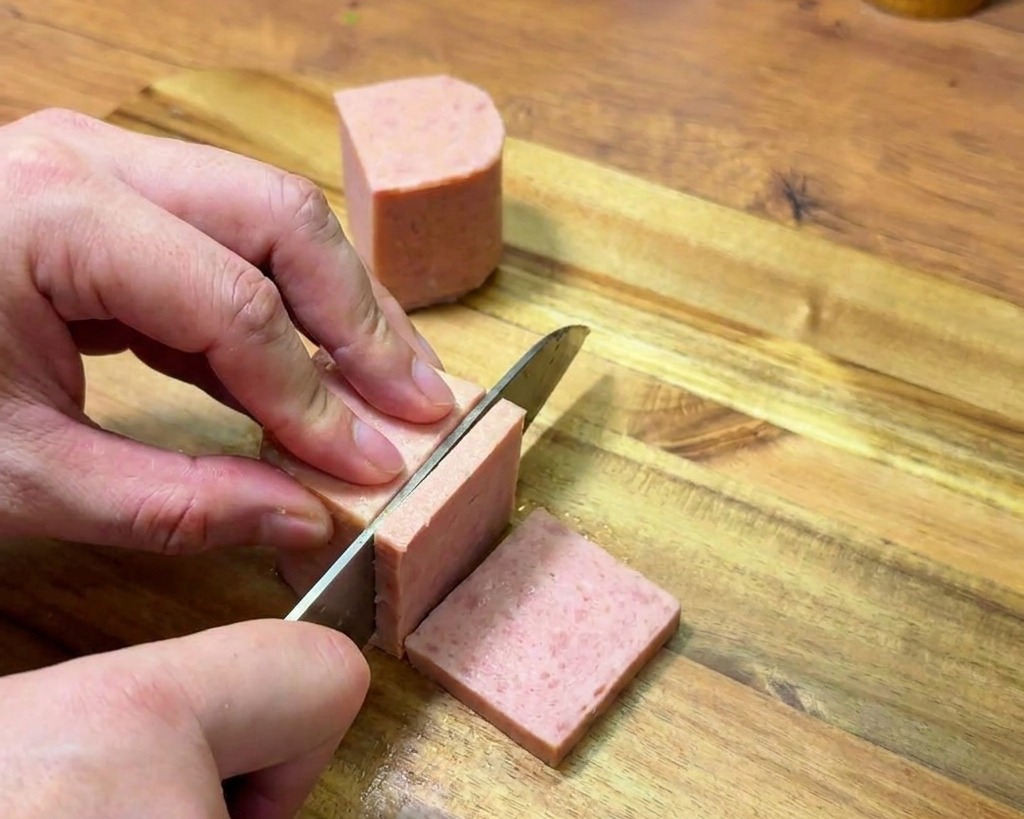
Place a block of luncheon meat on a clean wooden cutting board. Use a sharp knife to carefully slice the meat into thick, uniform rectangular pieces. These slices will provide a savory, protein-rich topping for your ramen once they are seared.
Tip: For cleaner slices, you can lightly oil your knife blade before cutting through the luncheon meat. - 2Pan-fry until charred
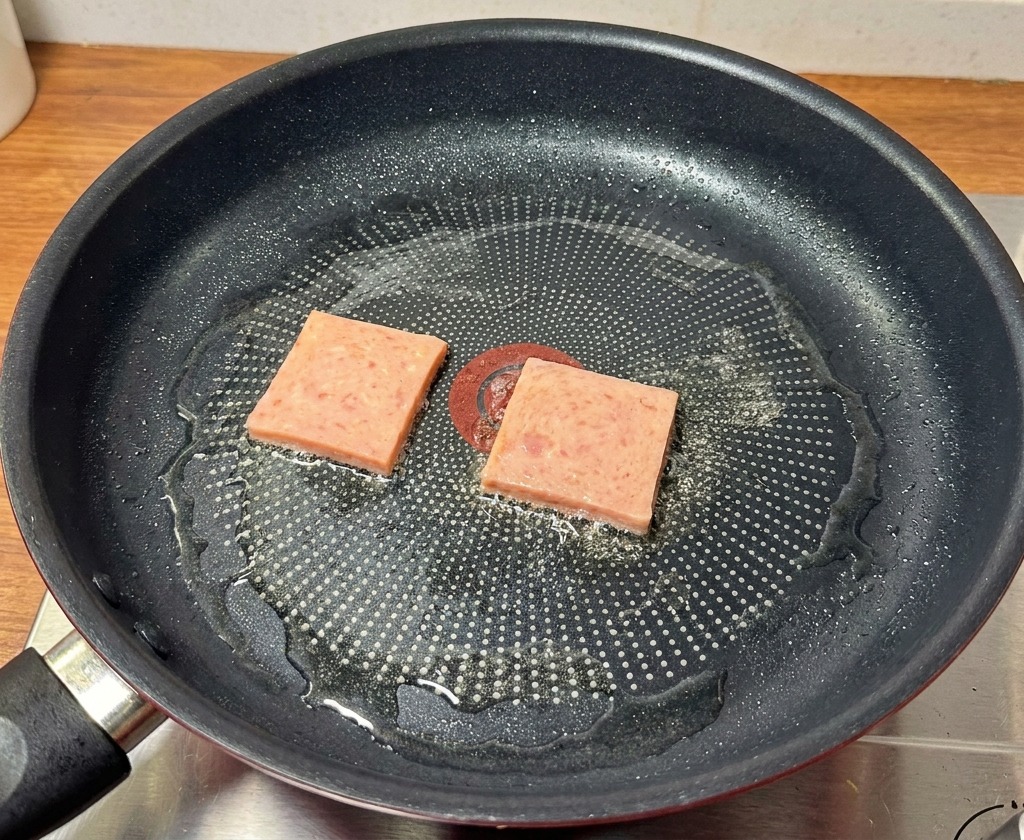
Heat a non-stick pan over medium heat and add the luncheon meat slices. Fry them until the surfaces are golden brown and develop a slightly charred edge. This step enhances the aroma and adds a satisfying crispy texture to the meat.
Tip: Luncheon meat has a high fat content, so you typically dont need to add any oil to the pan for frying. - 3Prepare the Soul Seasoning Paste
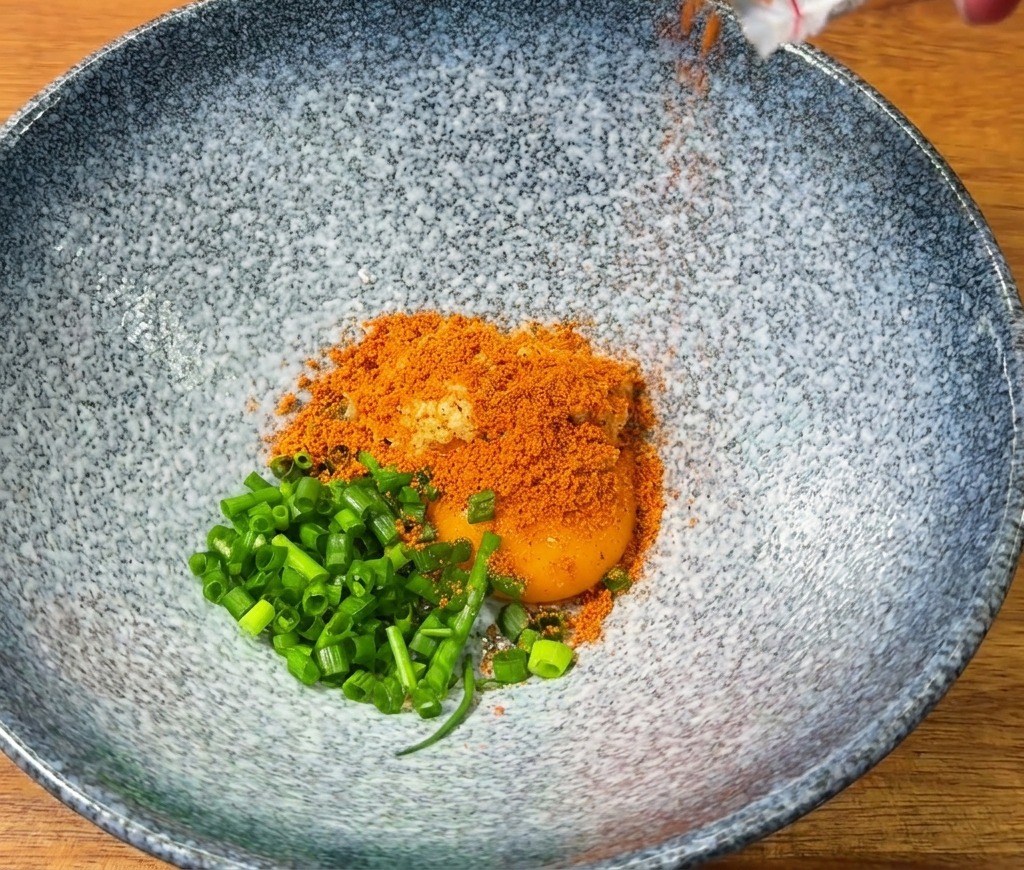
In a serving bowl, add one fresh egg yolk, a spoonful of chopped green onions, and minced garlic. Follow this with half a packet of spicy ramen seasoning powder. This combination of fresh aromatics and seasoning creates the soulful flavor profile of the broth.
Tip: Use a sterile high quality egg yolk since it will be tempered by hot water rather than fully cooked on a stove. - 4Mix into a smooth paste
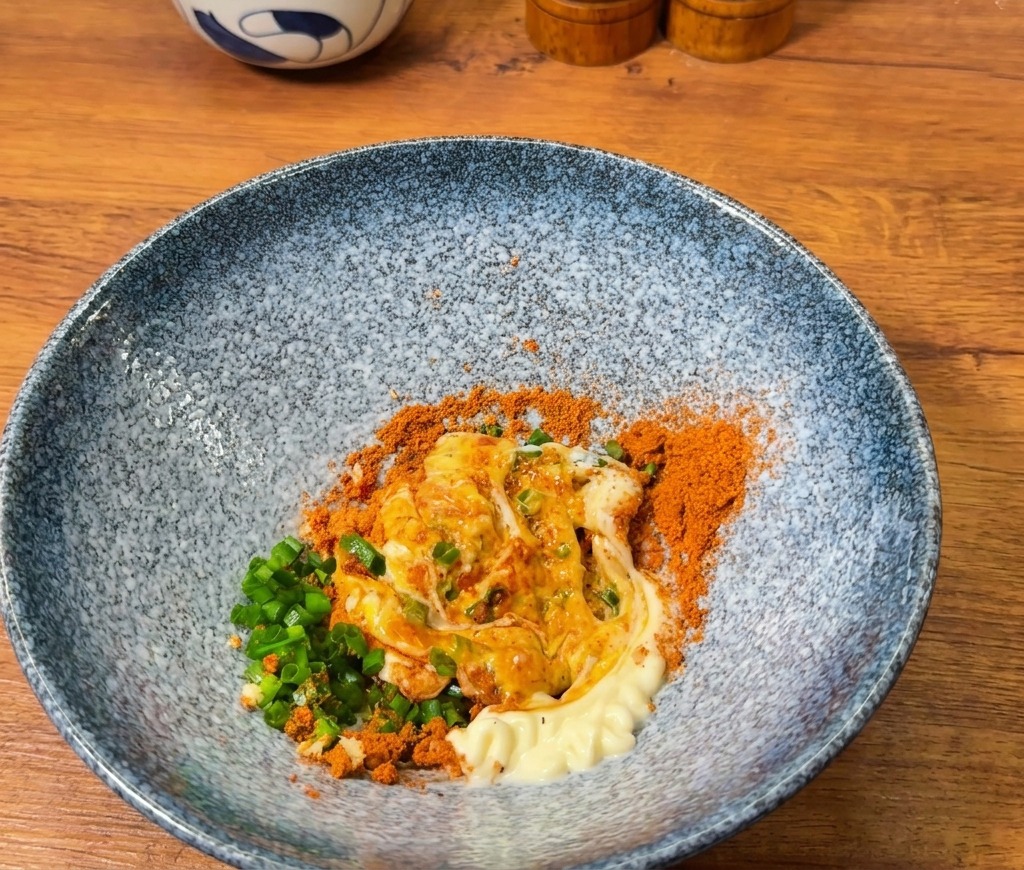
Add a dollop of mayonnaise to the ingredients in the bowl. Use chopsticks or a small whisk to mix everything together until it forms a thick, consistent orange paste. Ensuring the paste is well-blended now will result in a much creamier final broth.
Tip: If the paste feels too thick, you can add a tiny drop of water to help the ingredients emulsify more easily. - 5Create the creamy tonkotsu broth
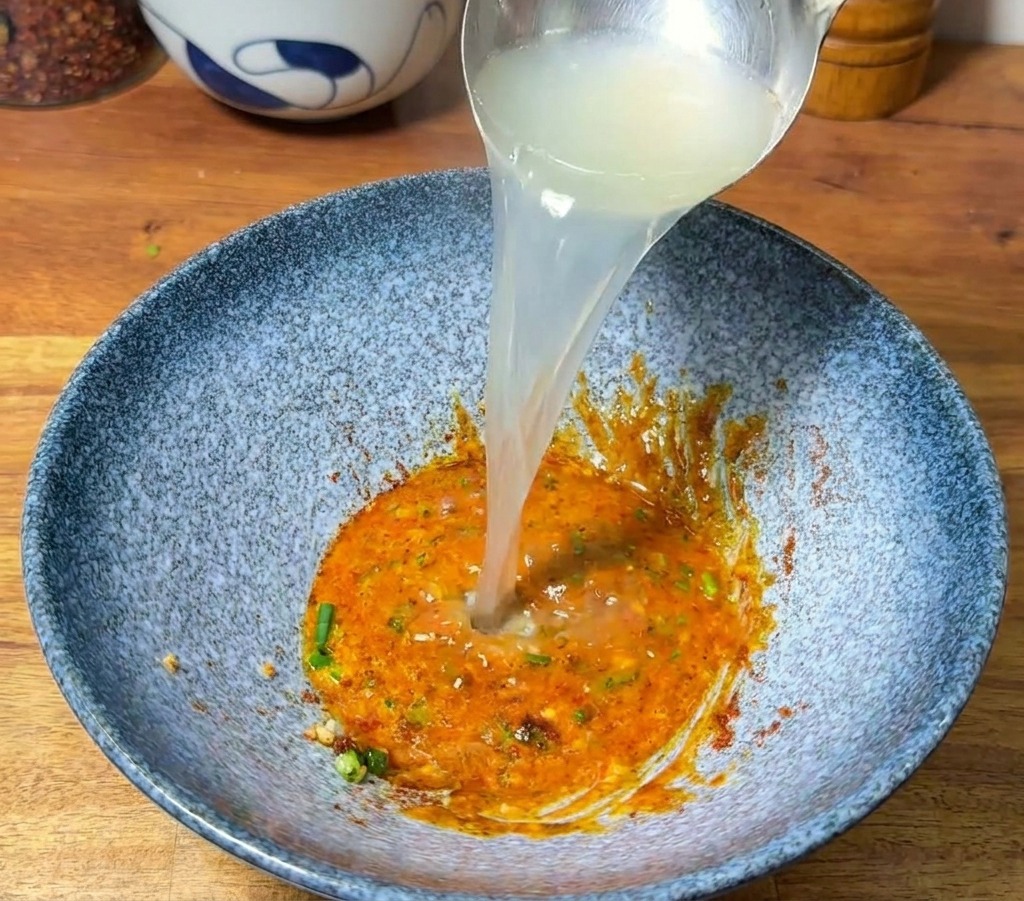
Carefully pour hot noodle cooking water into the bowl over the seasoning paste. Stir continuously as you pour; the heat will temper the egg yolk and mayonnaise, transforming the mixture into a rich, opaque, and creamy tonkotsu style soup base.
Tip: Pour the hot water slowly in a steady stream to prevent the egg yolk from scrambling, ensuring a silky smooth texture. - 6Remove the soft-boiled eggs
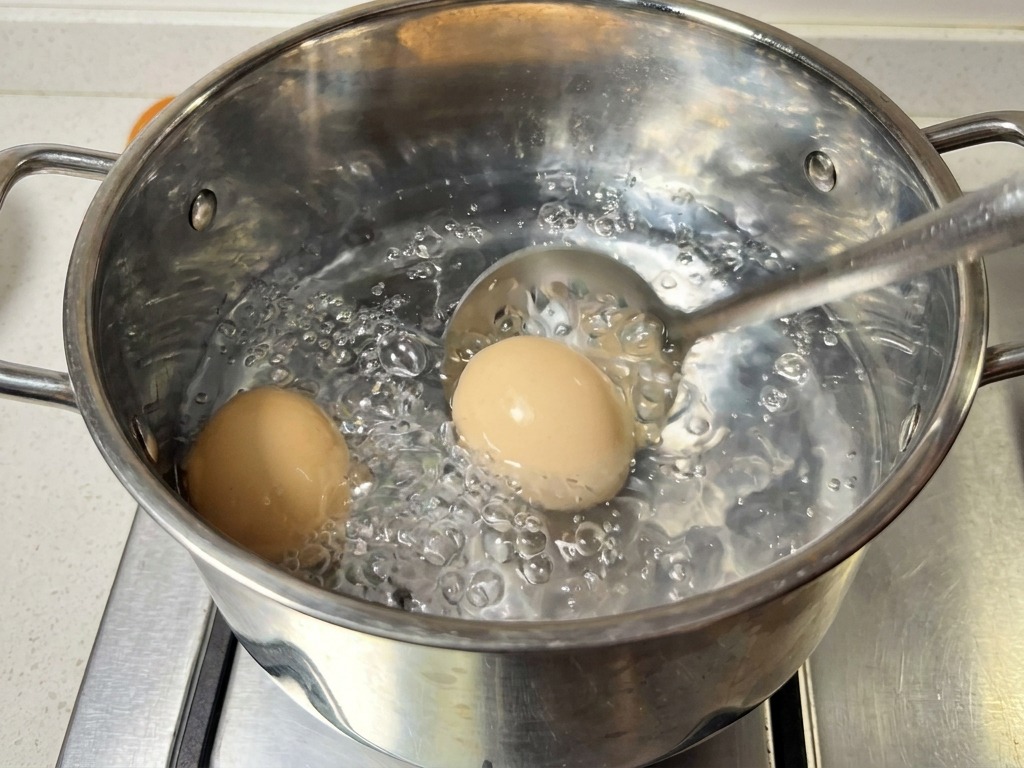
After boiling the eggs for exactly six minutes, use a metal slotted spoon to carefully lift them from the bubbling water. Immediately transfer the eggs into a bowl of cold or ice water to stop the cooking process, which ensures the yolks remain perfectly soft and jammy.
Tip: Plunging the eggs into cold water not only stops the cooking but also causes the egg to slightly contract, making the shell much easier to peel without damaging the white. - 7Cook the ramen noodles
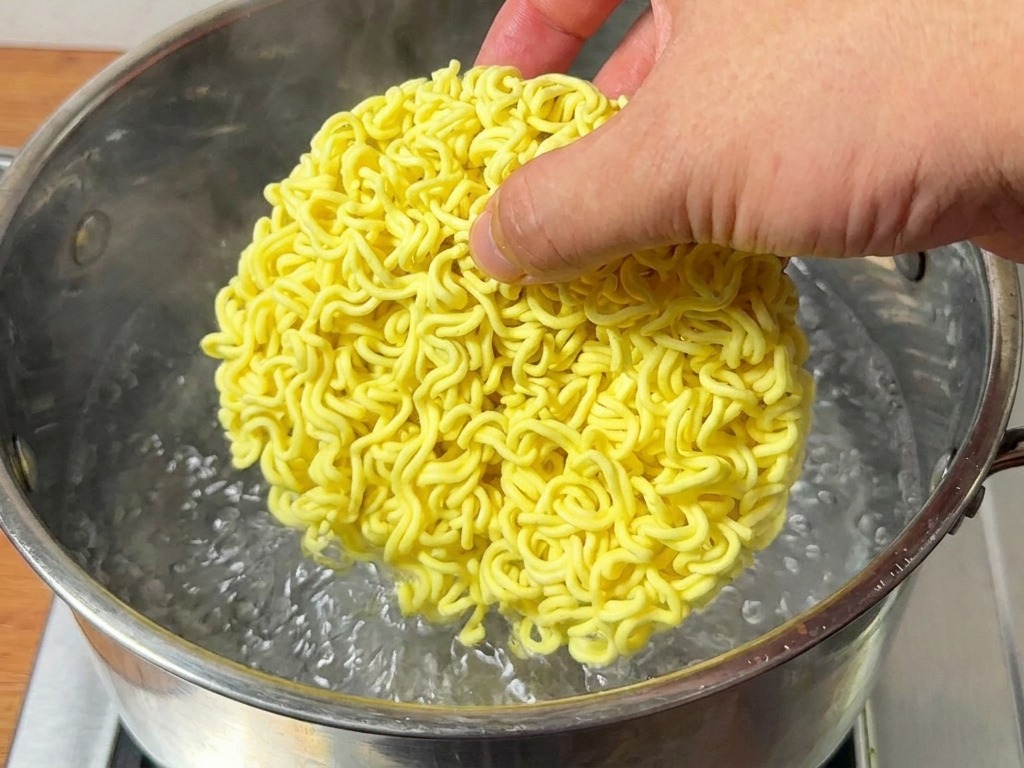
Place the round block of dry instant noodles into the same pot of boiling water. Cook the noodles until they are tender and wavy, typically taking about 2 to 3 minutes. Stir the noodles occasionally with chopsticks to ensure they separate and cook evenly.
Tip: Avoid overcooking the noodles; they should be slightly firm or al dente as they will continue to soften once they are added to the hot soup base. - 8Incorporate the noodles
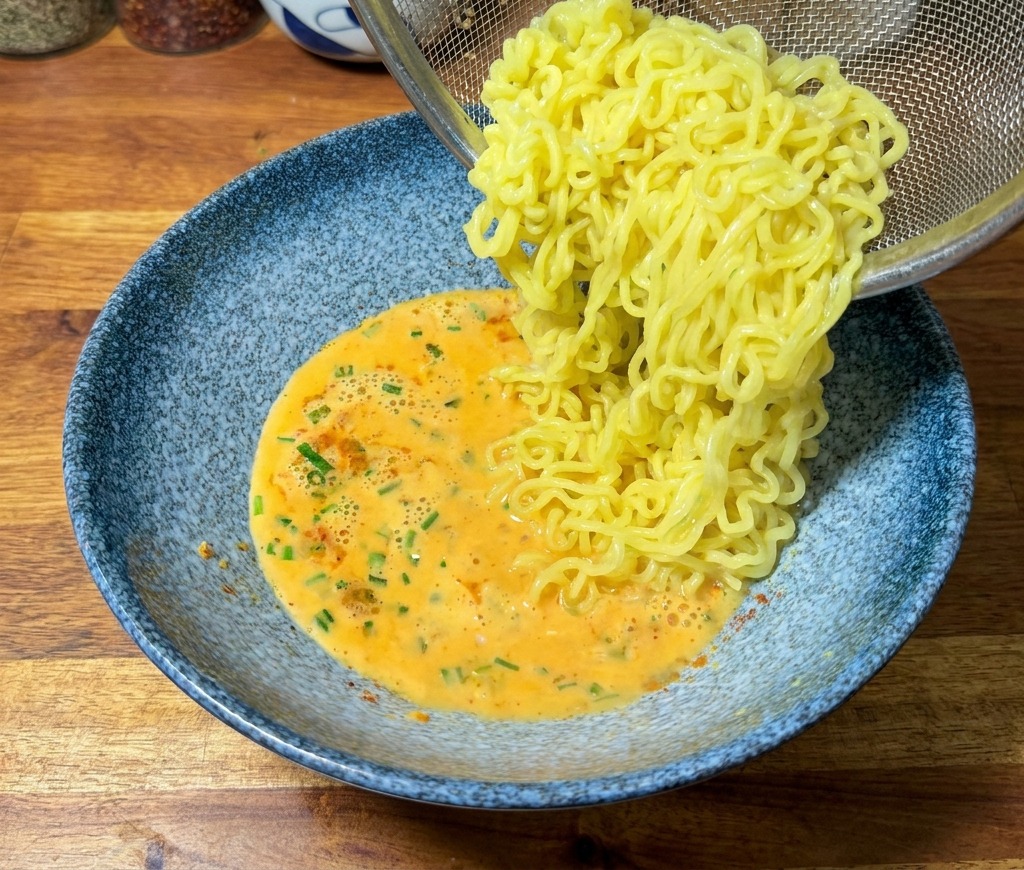
Once the noodles reach your desired texture, drain them thoroughly using a mesh strainer. Transfer the hot, wavy noodles into the bowl containing the prepared creamy tonkotsu soup base, making sure they are well submerged in the flavorful broth.
Tip: Give the strainer a few vigorous shakes to remove as much excess water as possible, ensuring the rich and creamy soup base isnt diluted. - 9Garnish with green onions
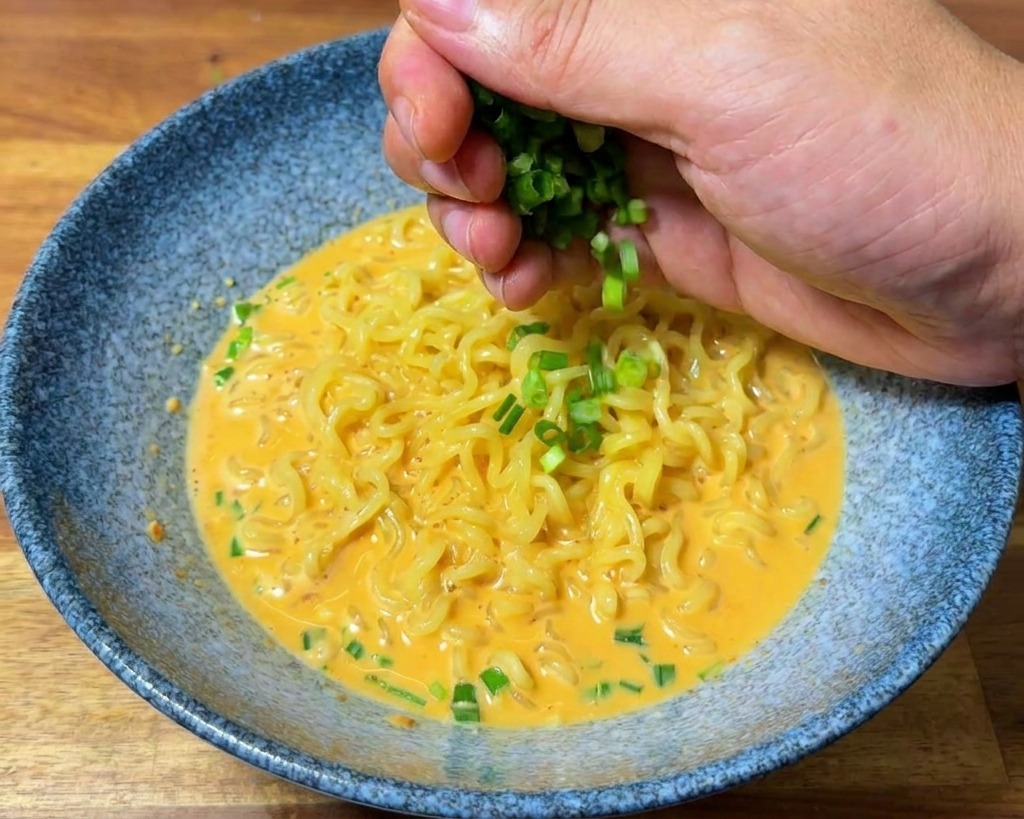
Take a generous handful of freshly chopped green onions and sprinkle them directly over the center of the noodles. The bright green color adds a fresh aesthetic, while the sharp flavor provides a nice balance to the richness of the creamy broth.
Tip: Use both the white and green parts of the scallions for a mix of crunch and mild onion flavor. - 10Drizzle with chili oil
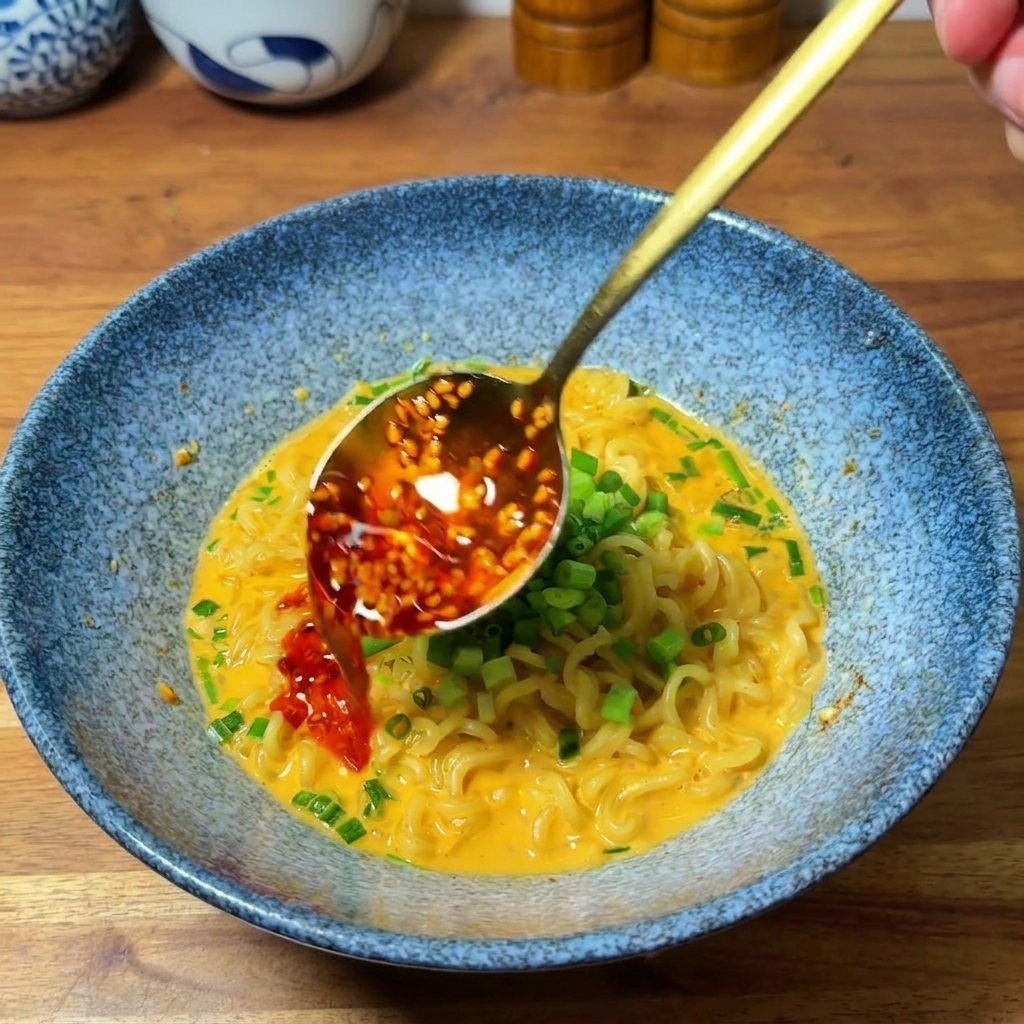
Pour a spoonful of red chili oil, complete with toasted sesame seeds, over the top of the ramen. This final aromatic addition provides a bright pop of color and a spicy contrast to the creamy tonkotsu style broth.
Tip: If you prefer a milder bowl, you can adjust the amount of chili oil or substitute it with a toasted garlic oil for a savory, non-spicy alternative. - 11Add the soft-boiled egg topping
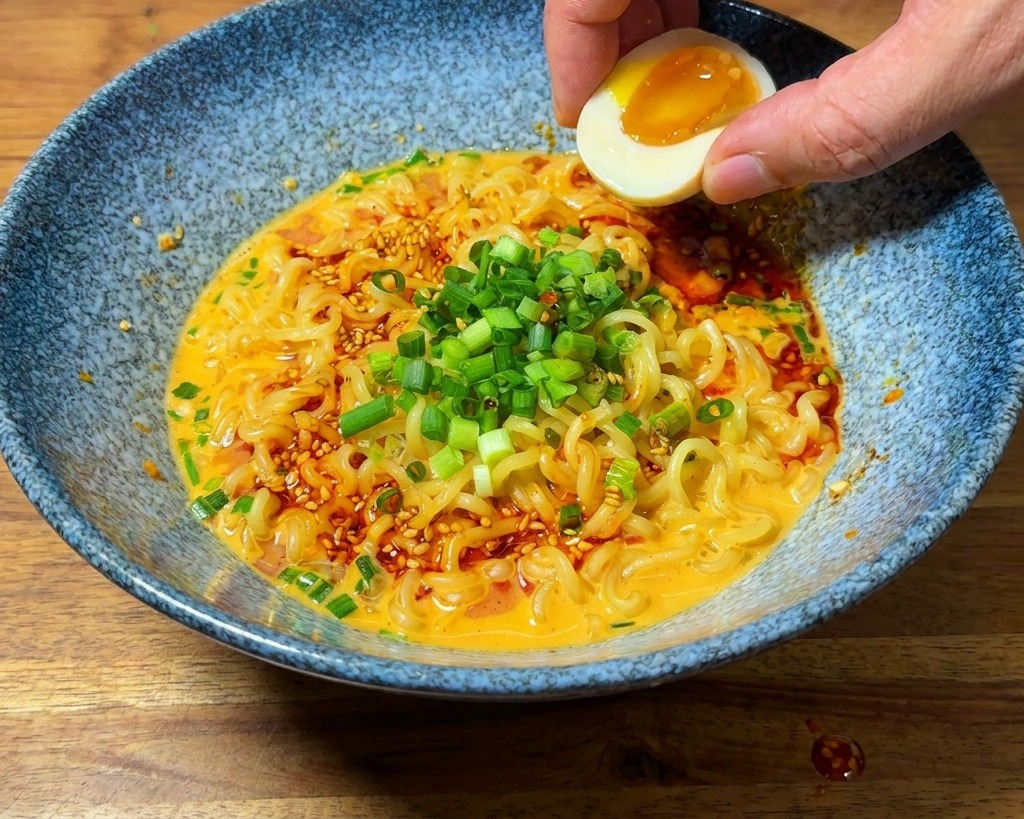
Carefully peel the soft-boiled eggs and slice them in half lengthwise. Place the two halves onto the top of the ramen, ensuring the bright orange, runny yolks are facing upward to create a professional and appetizing presentation.
Tip: To get a perfectly clean slice through the jammy yolk, use a piece of unflavored dental floss or a very sharp, thin-bladed knife dipped in warm water. - 12Add the final toppings
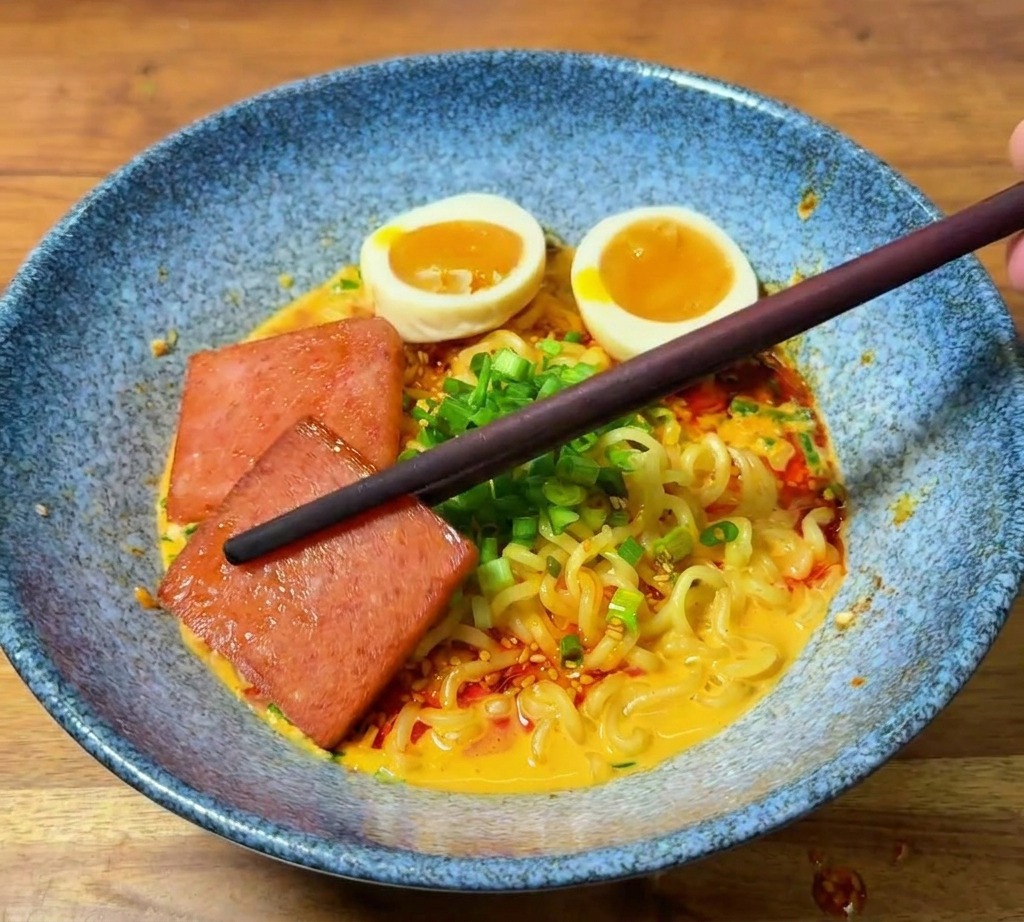
Using chopsticks, carefully arrange the seared slices of luncheon meat along the edge of the bowl. Position them so they lean against the side, keeping them partially above the broth to ensure the edges remain crispy and savory.
Tip: To maintain the texture of the meat, lean the slices against the side of the bowl so they stay partially above the broth and remain slightly crispy.