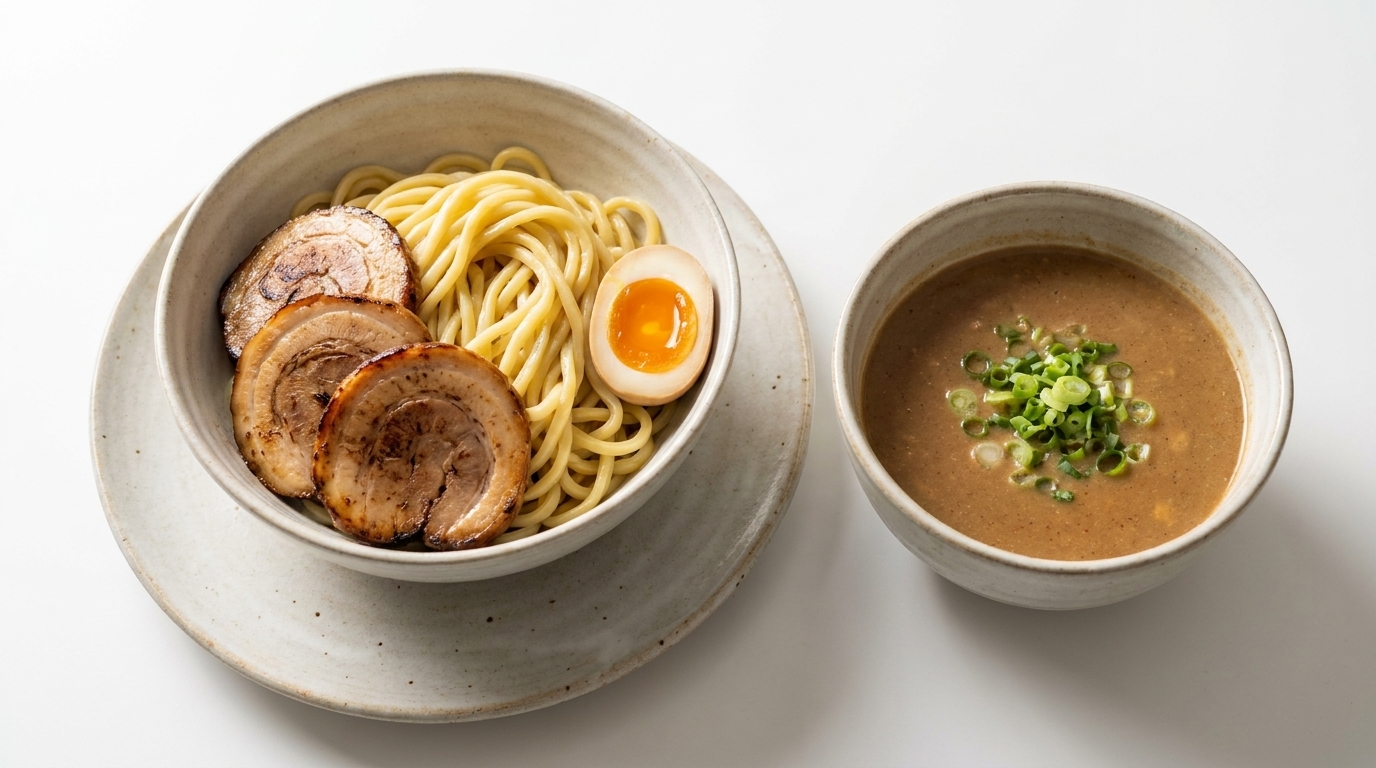
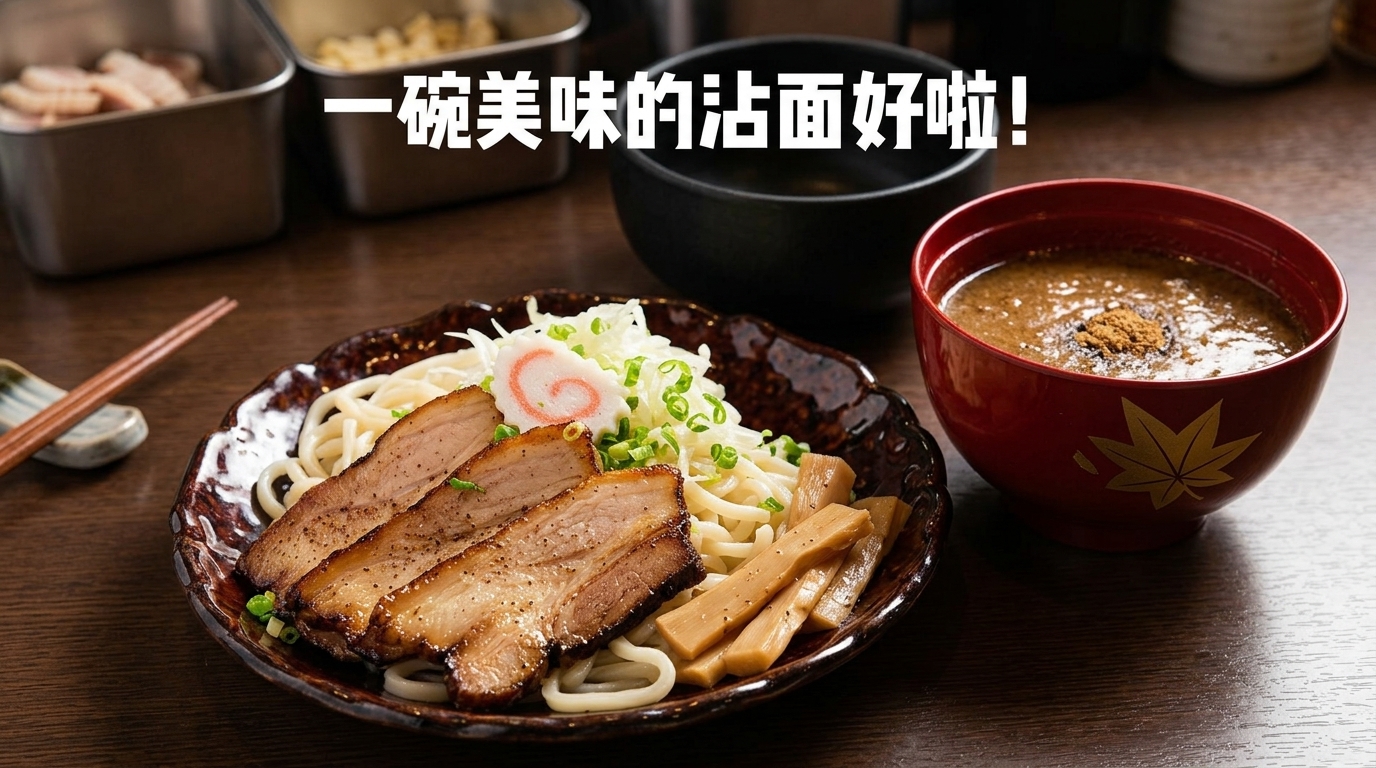
Creamy Japanese Tonkotsu Pork Bone Broth (Soup Base)
Master the soul of Japanese ramen with this milky-white Tonkotsu broth. A rich, velvet-smooth pork bone base achieved through pressure cooking and marrow extraction.
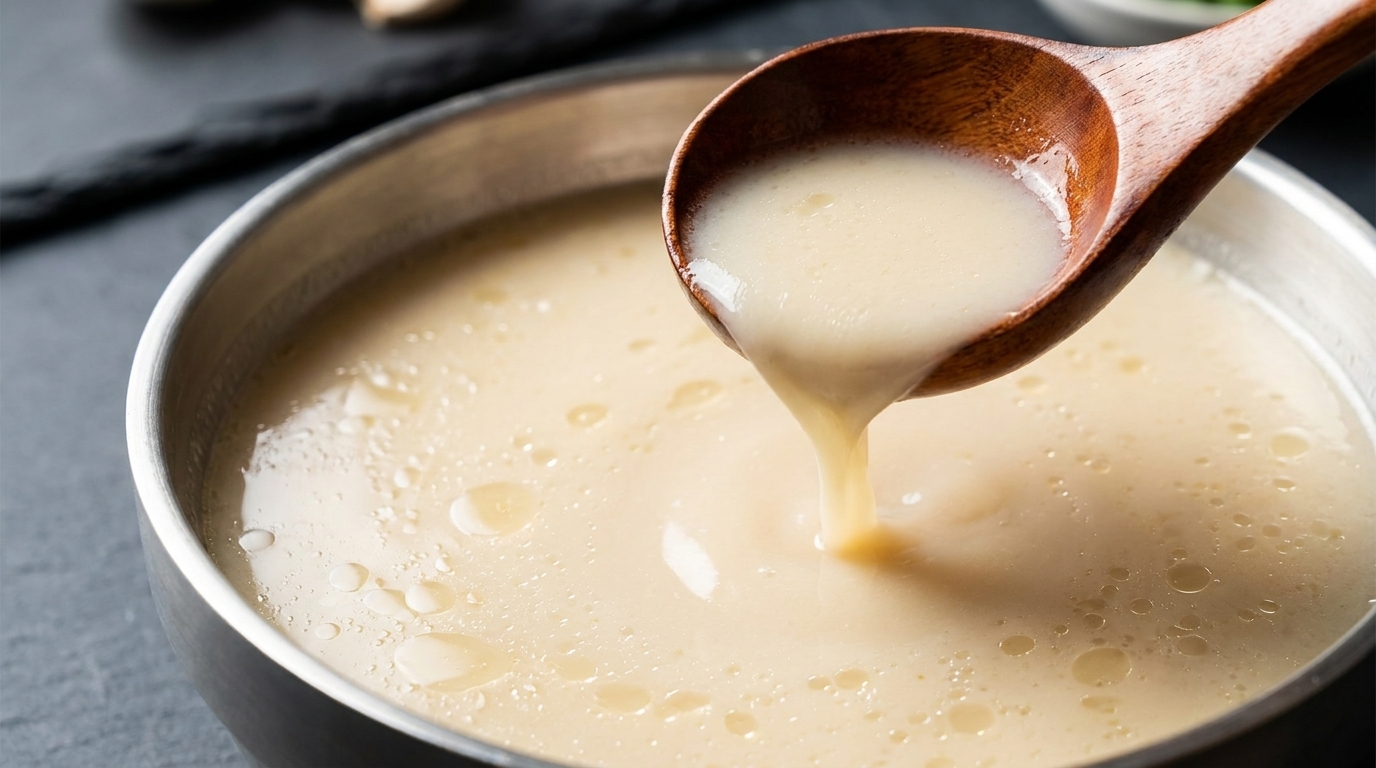
Tonkotsu, meaning pork bones in Japanese, is the crown jewel of ramen culture. Unlike clear shio or shoyu broths, Tonkotsu is a dense emulsion of fat and collagen, boiled vigorously to achieve its signature ivory color and creamy mouthfeel. This palace-grade version uses pig trotters and chicken feet to ensure a broth so rich it perfectly coats the palate.
Ingredients
- 0.5 piece pigs trotter (cleaned)
- 1 large pork marrow bone
- 15 pieces chicken feet
- 2–3 stalks green scallions
- 3–4 slices fresh ginger
- 2 tbsp white wine or sake
- as needed water
Instructions
- 1Prepare the meat foundation
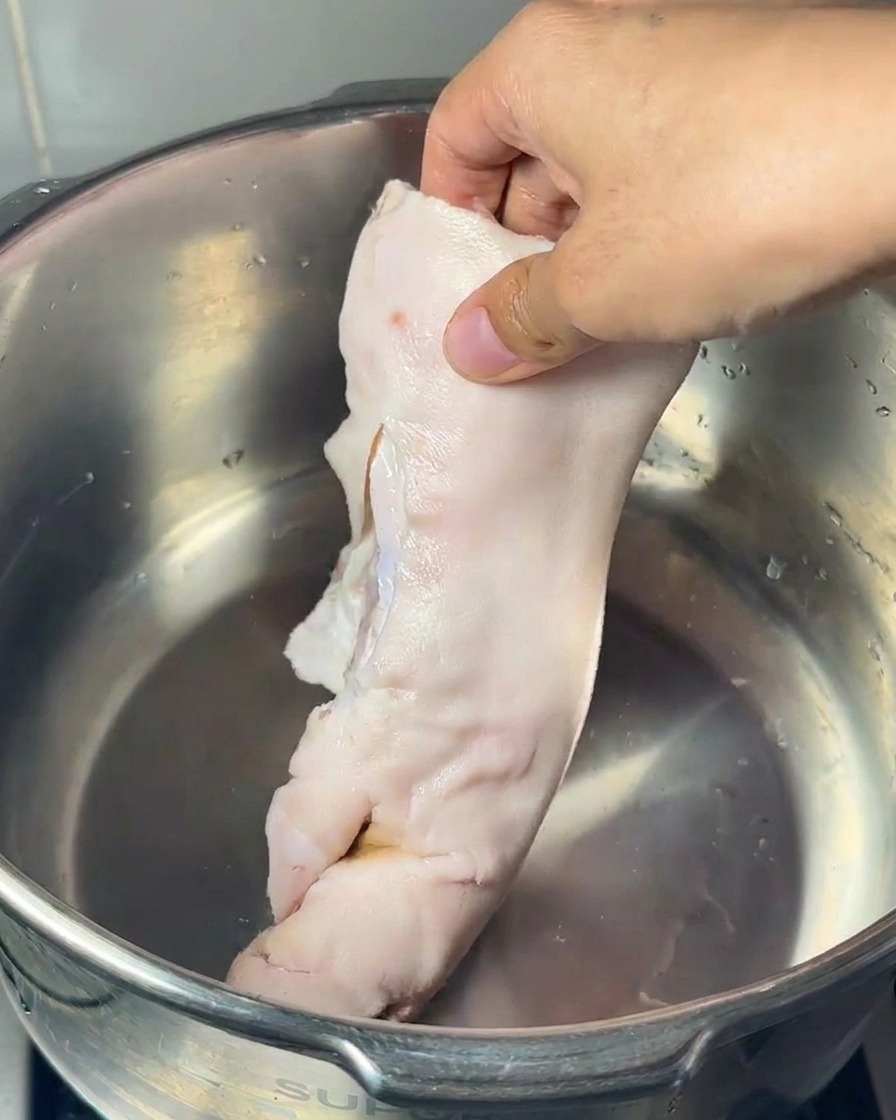
Place half a cleaned pigs trotter, one large pork marrow bone, and fifteen chicken feet into a deep stainless steel pressure cooker. These collagen-rich ingredients are the essential foundation for creating the thick, soul-satisfying body of a classic Japanese soup base.
Tip: Ensure the pigs trotter is thoroughly cleaned and all hair is removed to maintain a pure flavor and smooth texture in the final broth. - 2Submerge with clear water
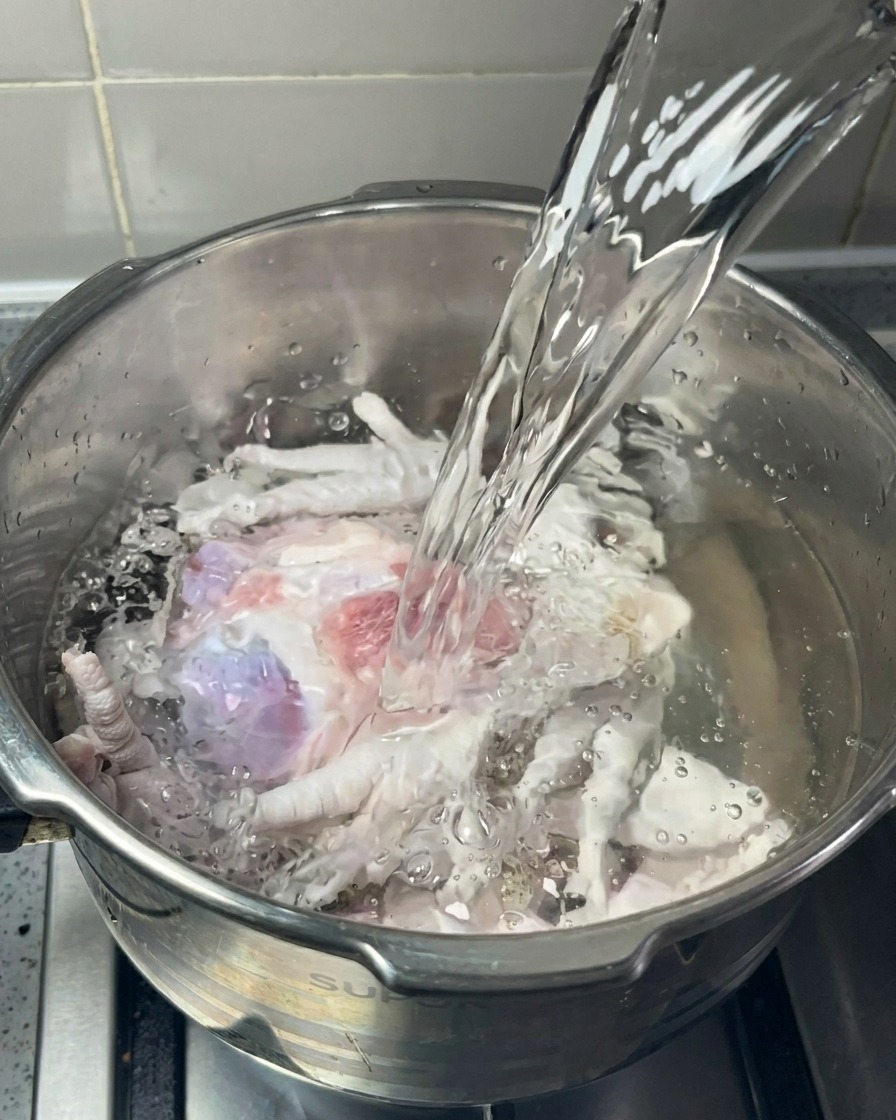
Pour enough clear water into the pot to completely submerge all the raw meats and bones. Starting with cold water is a key technique that allows for a gradual extraction of flavor and marrow as the temperature rises.
Tip: Using filtered water can help ensure the cleanest flavor for your broth base. - 3Add fresh aromatics
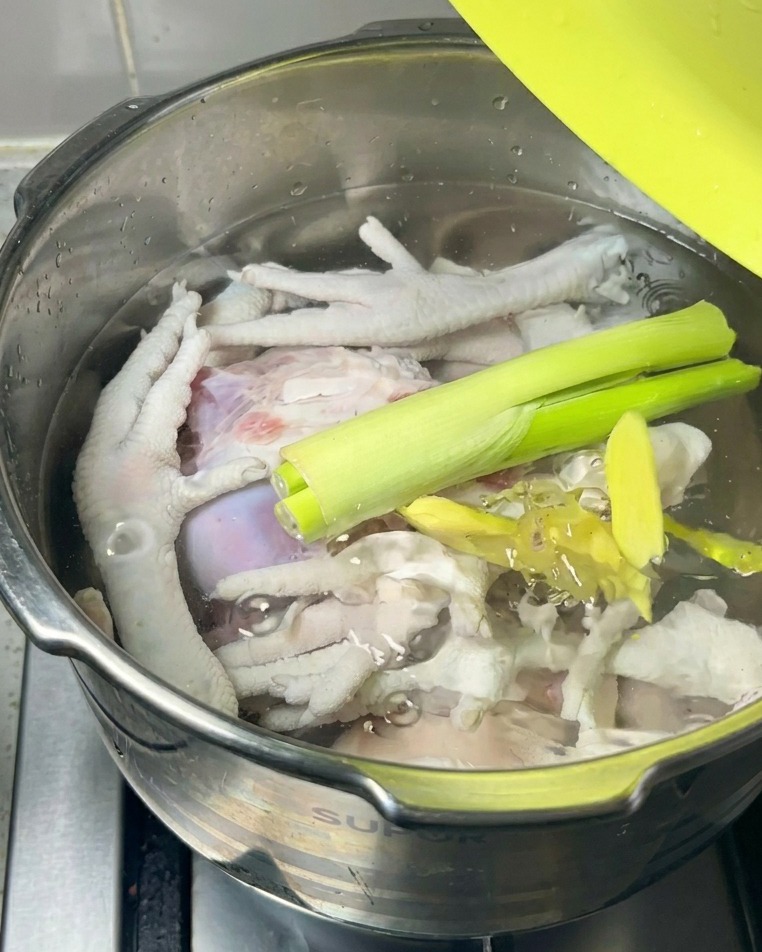
Add fresh green scallion stalks and thick slices of ginger to the pot. These aromatics are crucial for neutralizing any gamey odors from the pork and chicken while adding a subtle, refreshing depth to the savory broth.
Tip: You can lightly bruise the scallions and ginger before adding them to help release their natural essential oils more effectively. - 4Add white wine to deodorize
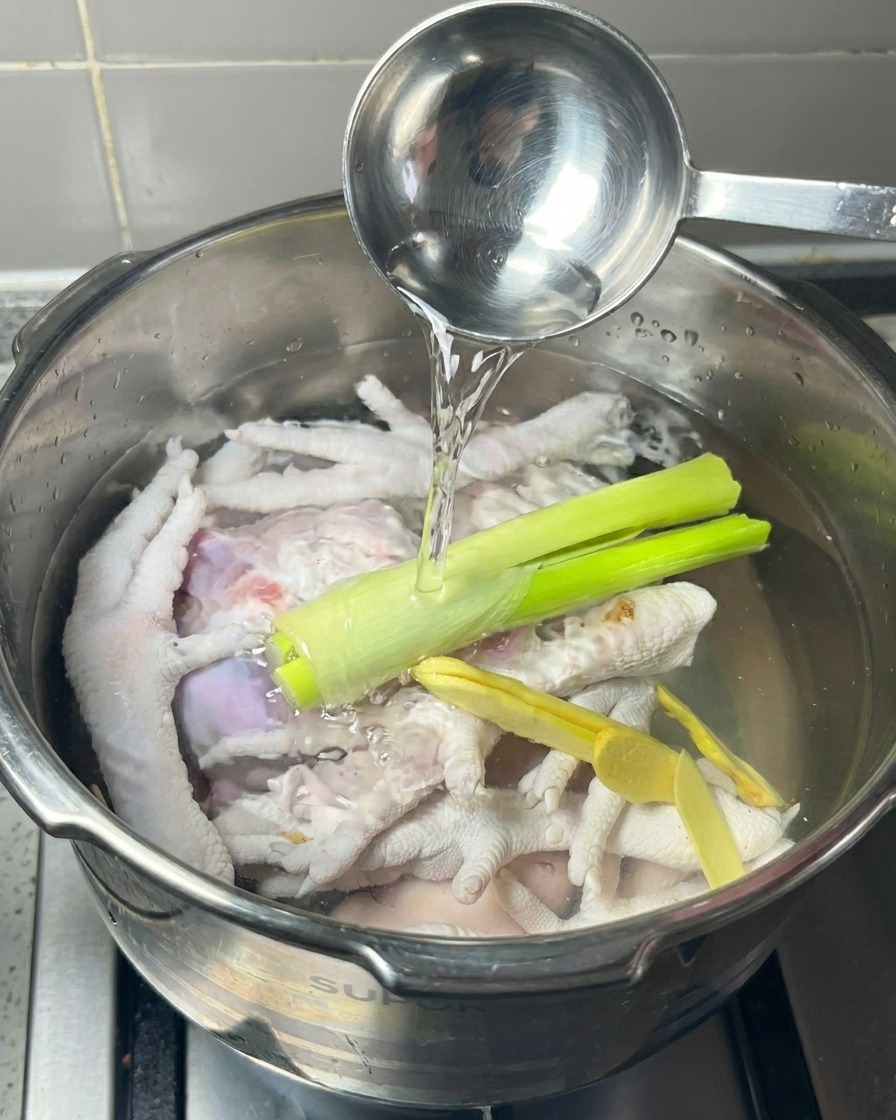
Add two spoons of white wine to the pressure cooker. This acid component is essential for neutralizing gamey odors and brightening the heavy flavor profile of the pork and chicken marrow.
Tip: If you dont have white wine, a dry cooking wine or sake can also work effectively to neutralize odors. - 5Skim off the impurities
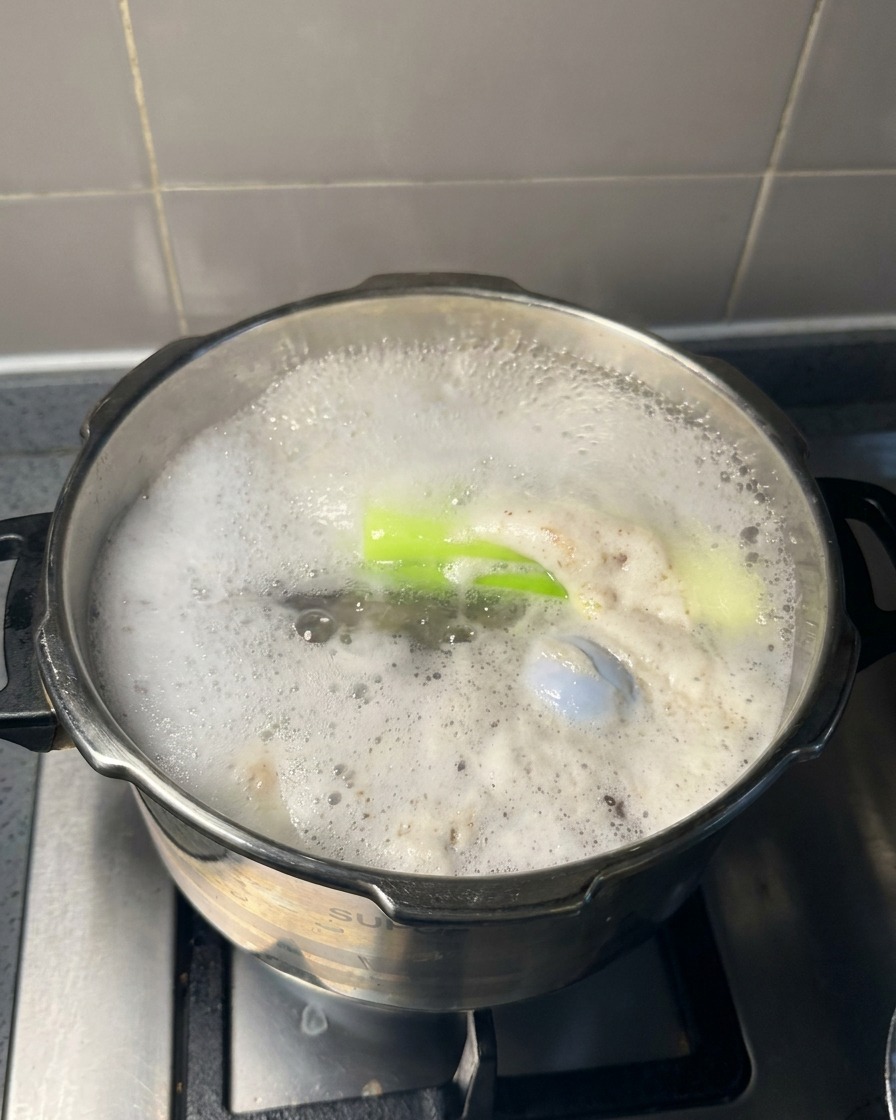
Once the water comes to a boil, use a large metal spoon to carefully skim off the grey foam and impurities that rise to the surface. This process is vital for achieving a clean, milky white soup base without any bitter off-flavors.
Tip: Be diligent with this step; continuous skimming during the initial boil leads to a much more refined and professional result. - 6Top up with boiling water
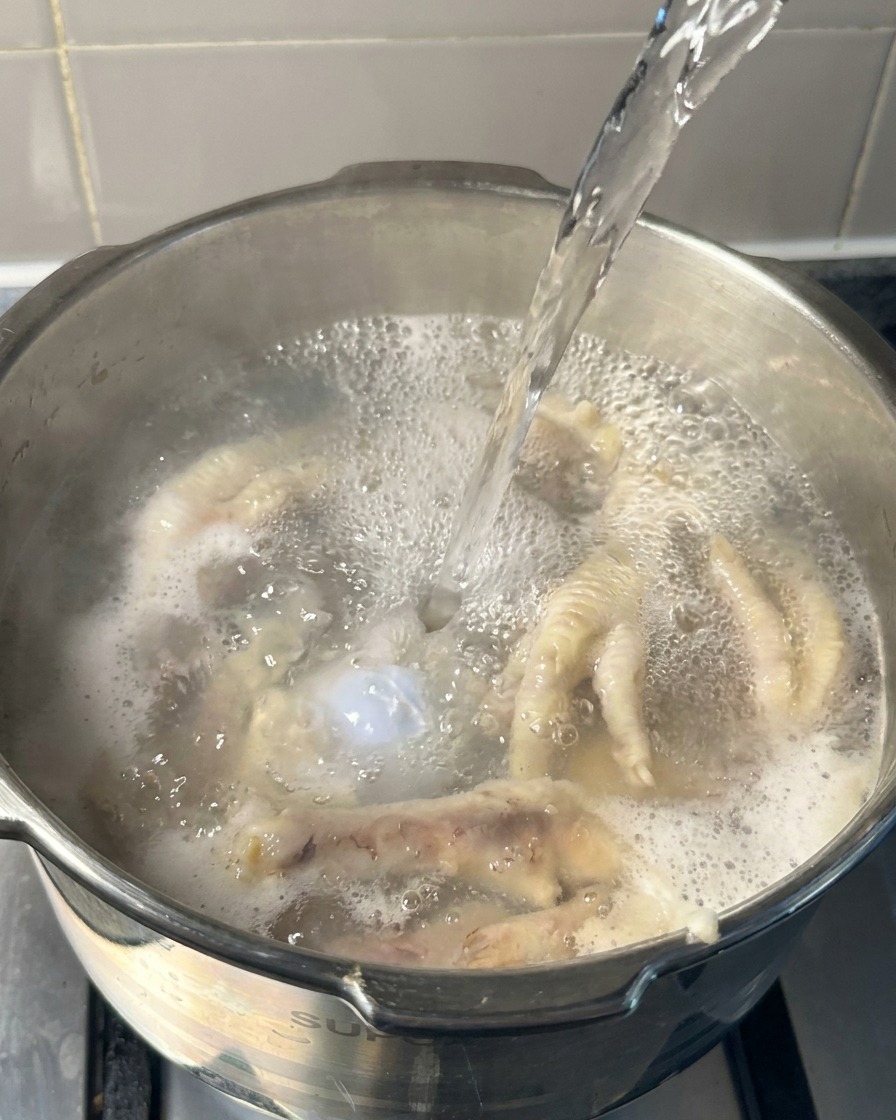
If the water level has decreased after the skimming process, top up the pot with fresh boiling water. Maintaining a consistent liquid level is necessary to ensure the meat and bones stay fully submerged for even extraction.
Tip: Always use boiling water for topping up to maintain the internal temperature of the pot and avoid stalling the cooking process. - 7Remove cooked meat and bones
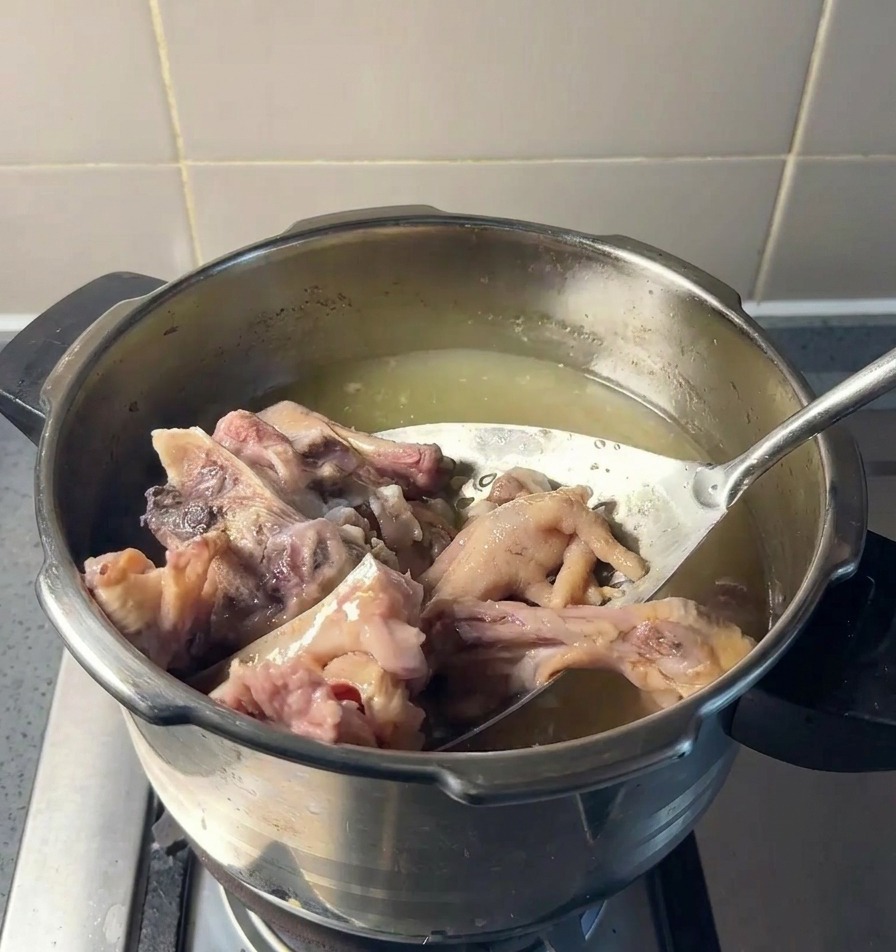
Once the pressure cooking cycle is complete and the meat is tender enough to fall off the bone, use a large slotted strainer to carefully lift the pigs trotter, pork bones, and chicken feet out of the broth. Reserve the clear liquid in the pot for later.
Tip: Let the ingredients drain for a second over the pot so you dont lose any of that flavorful concentrated liquid. - 8Separate meat from bones
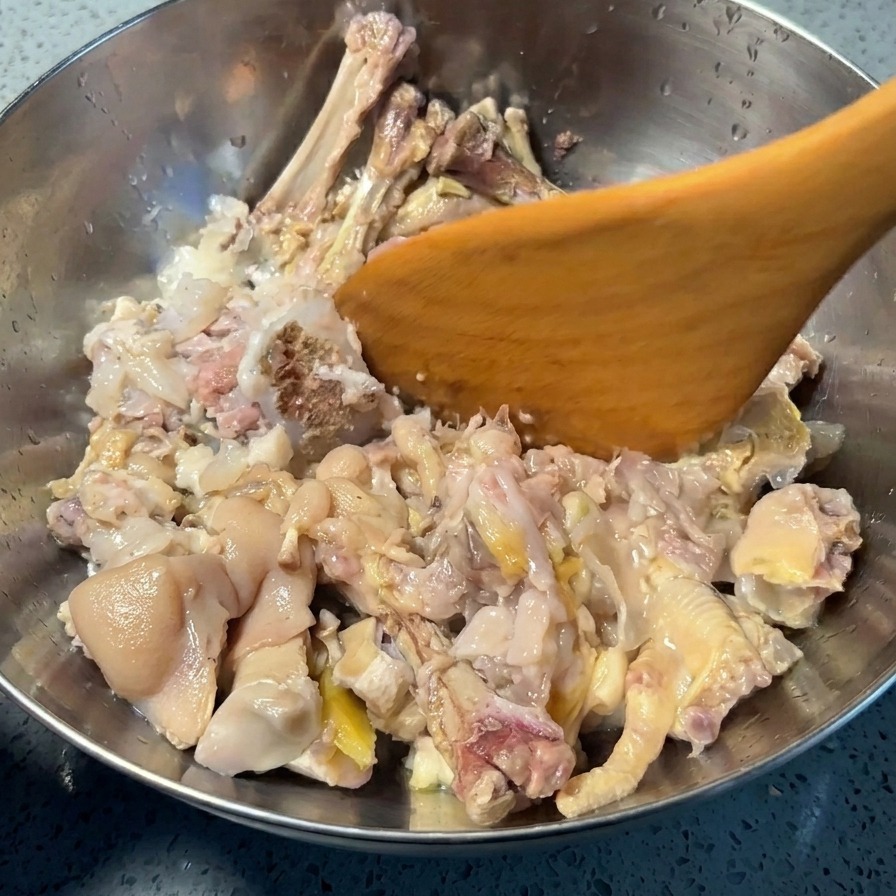
Transfer the cooked meat and bones to a large stainless steel bowl. Use a wooden spatula or spoon to firmly press down on the softened ingredients, separating the tender meat, skin, and connective tissue from the hard bone structures.
Tip: The meat should be extremely tender at this point, making it easy to slide off the bones with very little effort. - 9Mash meat into a paste
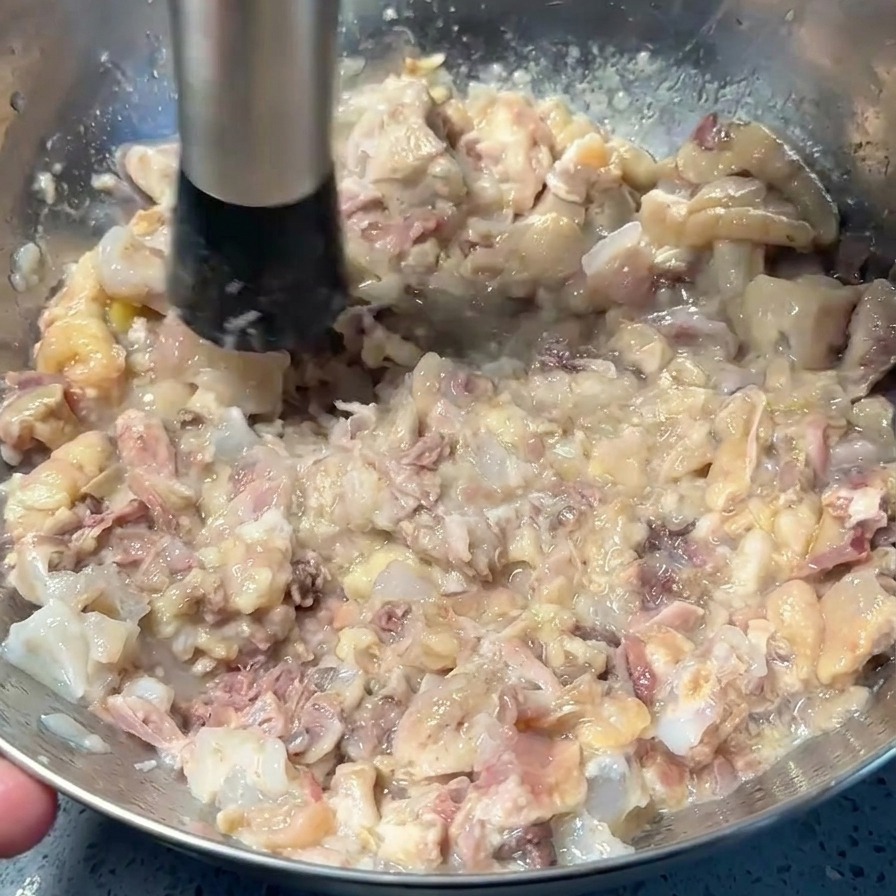
Discard the large, hard bones and keep only the tender meat and soft tissue. Use a metal kitchen masher to thoroughly crush the meat into small bits or a fine paste. This increases the surface area, allowing the flavors and gelatin to emulsify into the soup more effectively.
Tip: Mashing the meat creates a much richer mouthfeel and that signature creamy texture of high-quality Tsukemen broth. - 10Return mashed meat to the pot
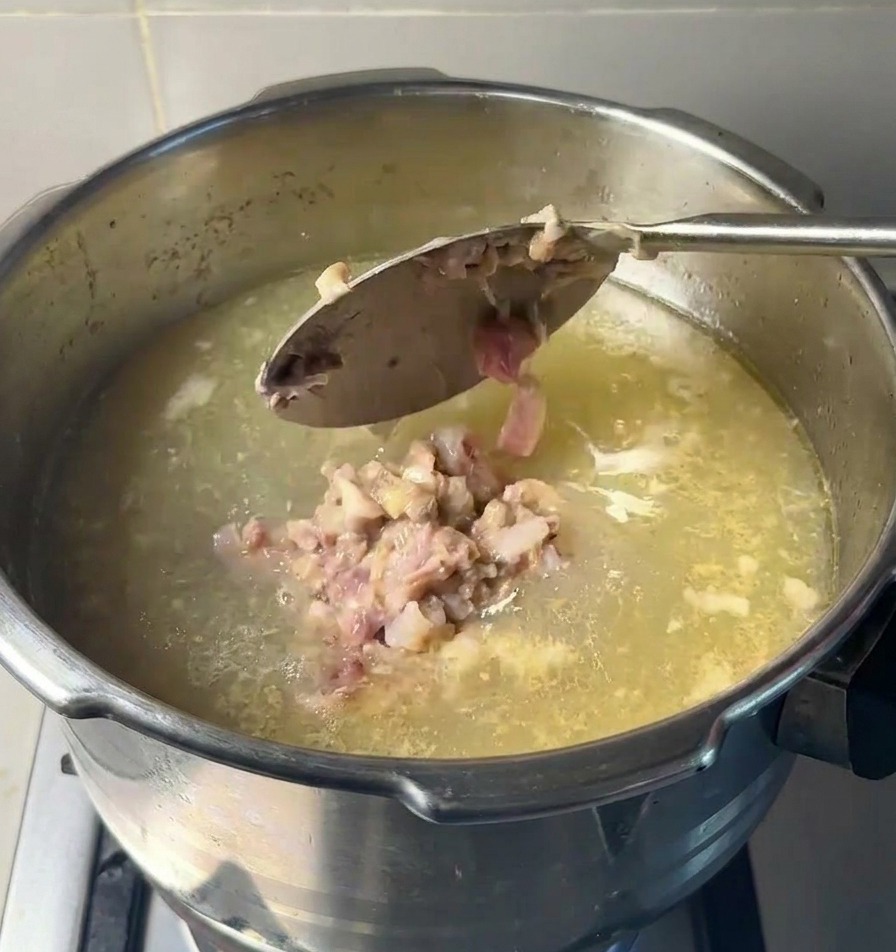
Carefully slide all the mashed meat, soft marrow bits, and skin back into the pot containing the original broth. These concentrated flavors are the secret to a palace-grade soup base that is both fragrant and deeply savory.
Tip: Make sure to scrape every bit of the mashed paste into the pot; thats where all the collagen and flavor live! - 11Simmer until milky white
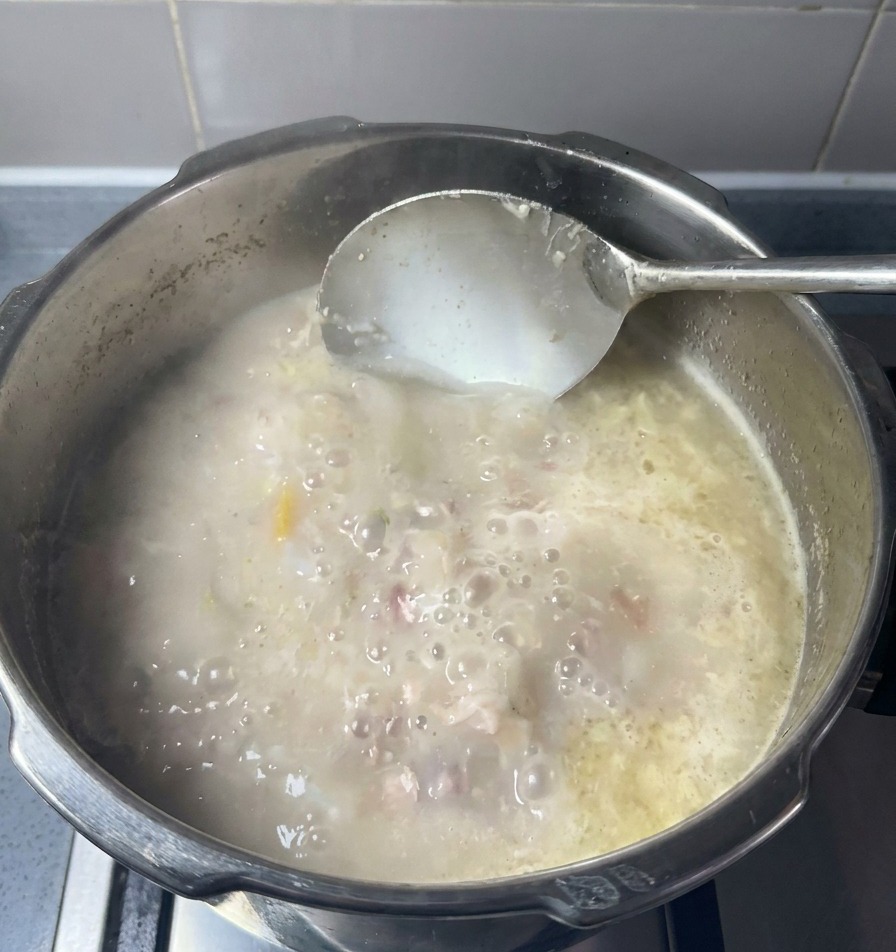
Simmer the broth uncovered for an hour, allowing the fats to emulsify into a milky white liquid. In the final 10 minutes, increase the heat to high to further thicken the consistency for a truly professional finish.
Tip: Keep the pot uncovered during this stage to allow the soup to reduce and intensify in flavor. - 12Strain the broth
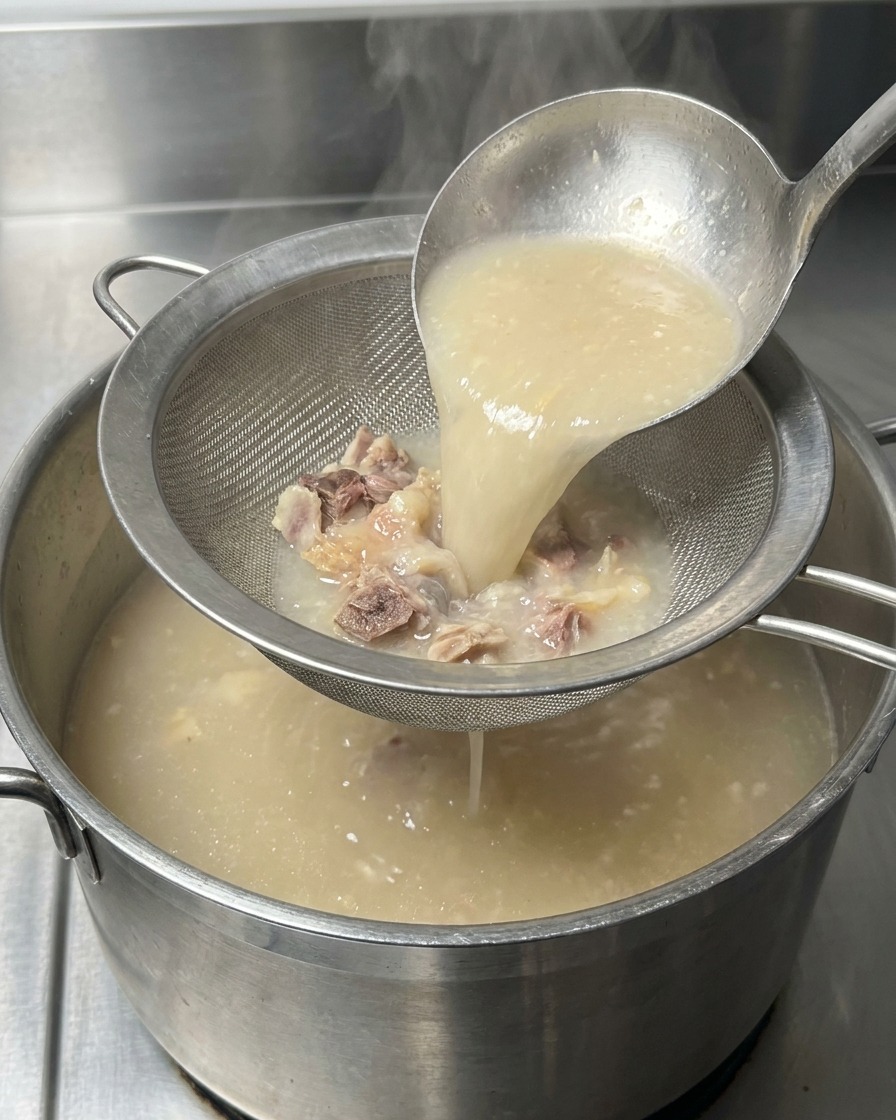
After the soup has simmered and reached a rich, milky white consistency, pour it through a fine mesh sieve into a clean pot or bowl. This filters out the mashed meat and bone residue, leaving you with a perfectly smooth and velvety soup base.
Tip: Keep the meat residue! You can add more water and boil it again to create a lighter second stock for other recipes. - 13Remove the solidified fat
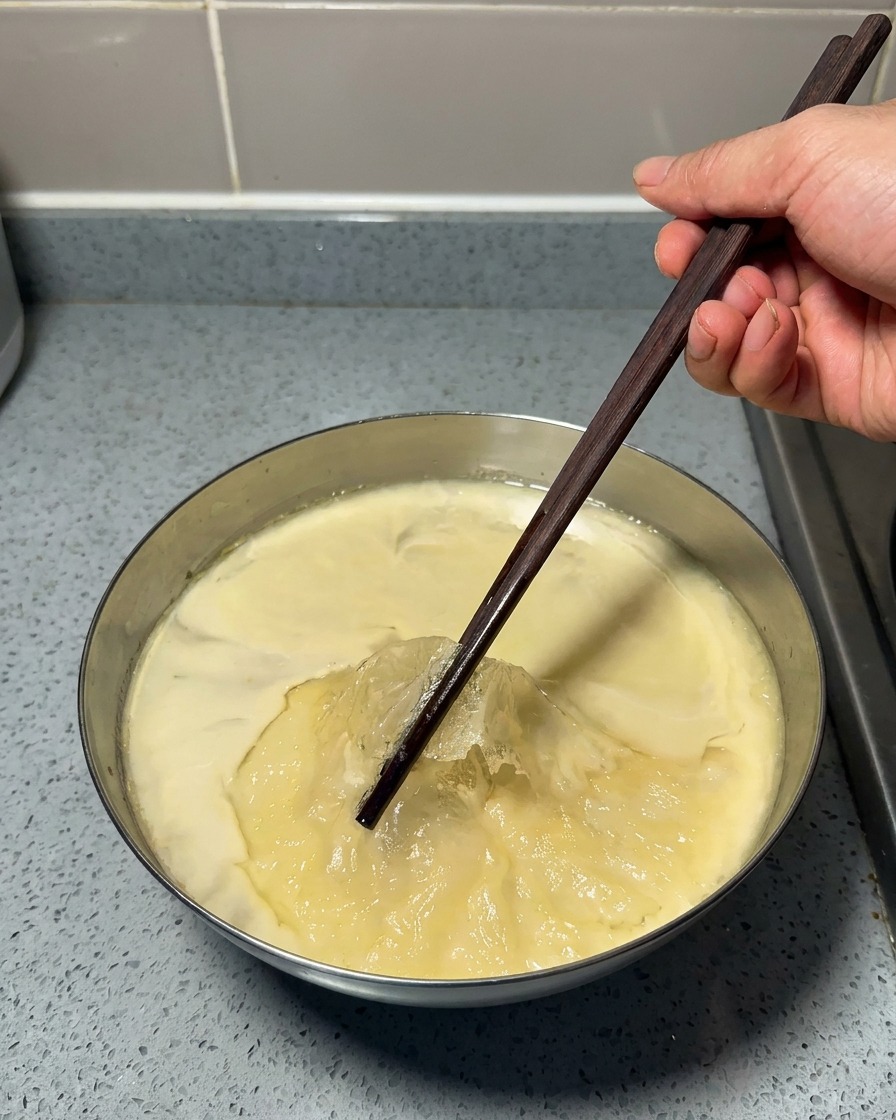
Allow the broth to cool until it sets into a firm, gelatinous state. A layer of yellow fat will rise and solidify on the surface; use chopsticks or a spoon to gently lift and skim this layer off. This ensures the final broth is mellow and savory without being greasy.
Tip: Removing this fat significantly improves the mouthfeel, making the broth feel rich rather than oily.