Japanese Curry Dipping Noodles (Tsukemen)
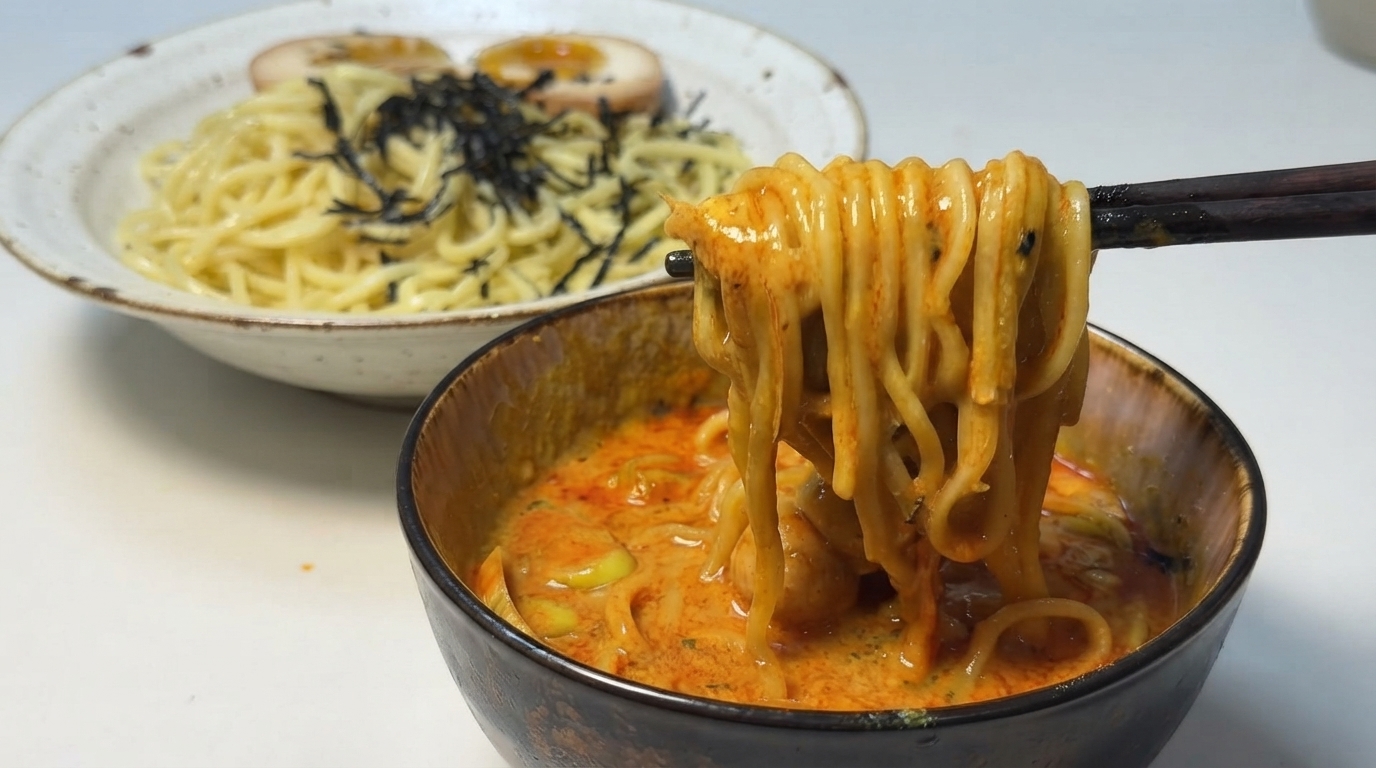
A fusion-style Japanese tsukemen featuring thick ramen noodles dipped in a rich, savory, and slightly spicy curry sauce loaded with minced pork.
Japanese curry dipping noodles bring a wonderful twist to traditional tsukemen by combining thick ramen with a deeply comforting, spiced curry and milk broth. The method of dipping cold or room-temperature noodles into a piping hot, concentrated sauce lets you control the richness of every single bite. Enhanced with aromatics, miso paste, and a soft-boiled egg, it makes for a deeply satisfying meal.
Ingredients
- 200 g Japanese ramen noodles
- 100 g minced pork
- 2 blocks Japanese curry cubes
- 250 ml milk
- 1 small bowl water
- 2 spoons minced garlic
- 1 spoon miso paste
- 2 spoons soy sauce
- 2 rings sesame oil
- 1 pinch chili powder
- to taste shredded seaweed
- 1 soft-boiled egg
- to taste green onions
Instructions
- 1Add chili powder and minced garlic
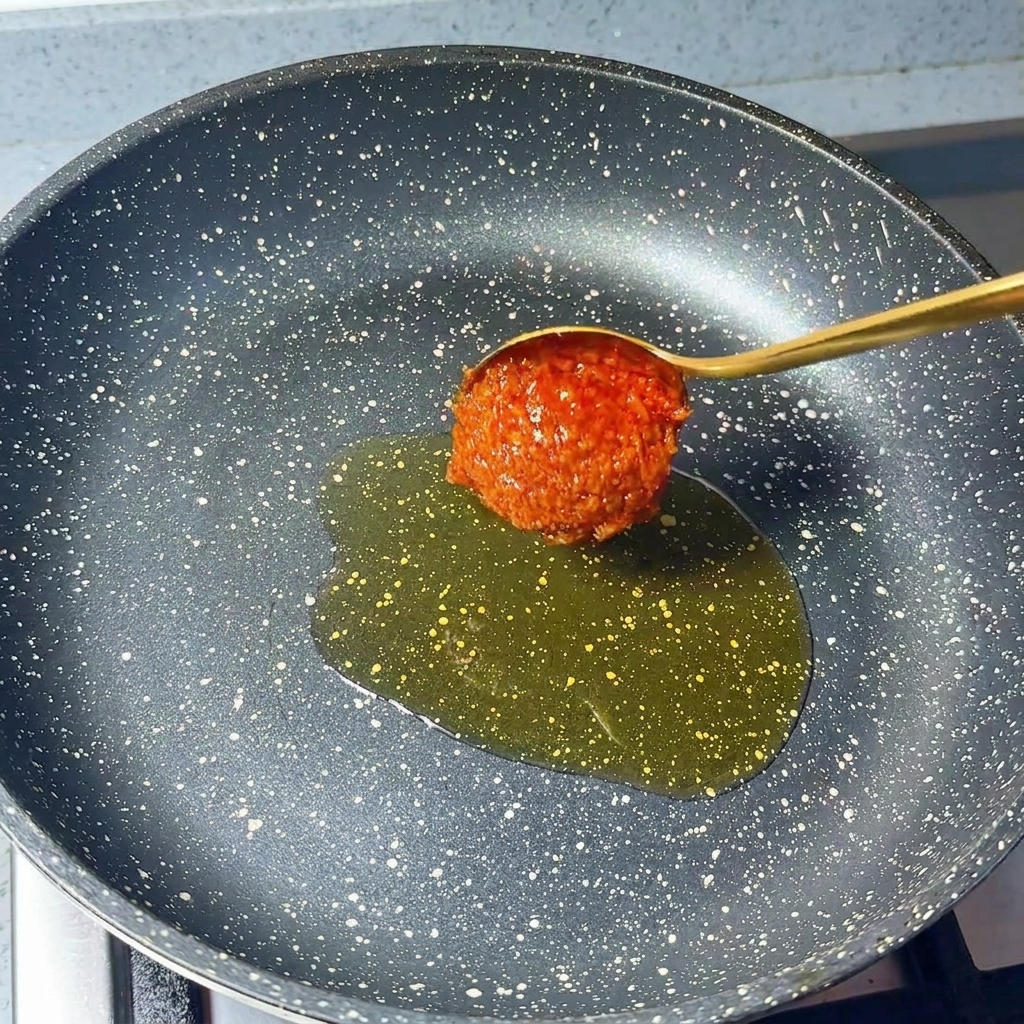
Add chili powder and two spoons of minced garlic into the pan with the sesame oil, and stir-fry until fragrant.
Tip: Stir continuously so the garlic browns evenly without burning. - 2Stir-fry the aromatics
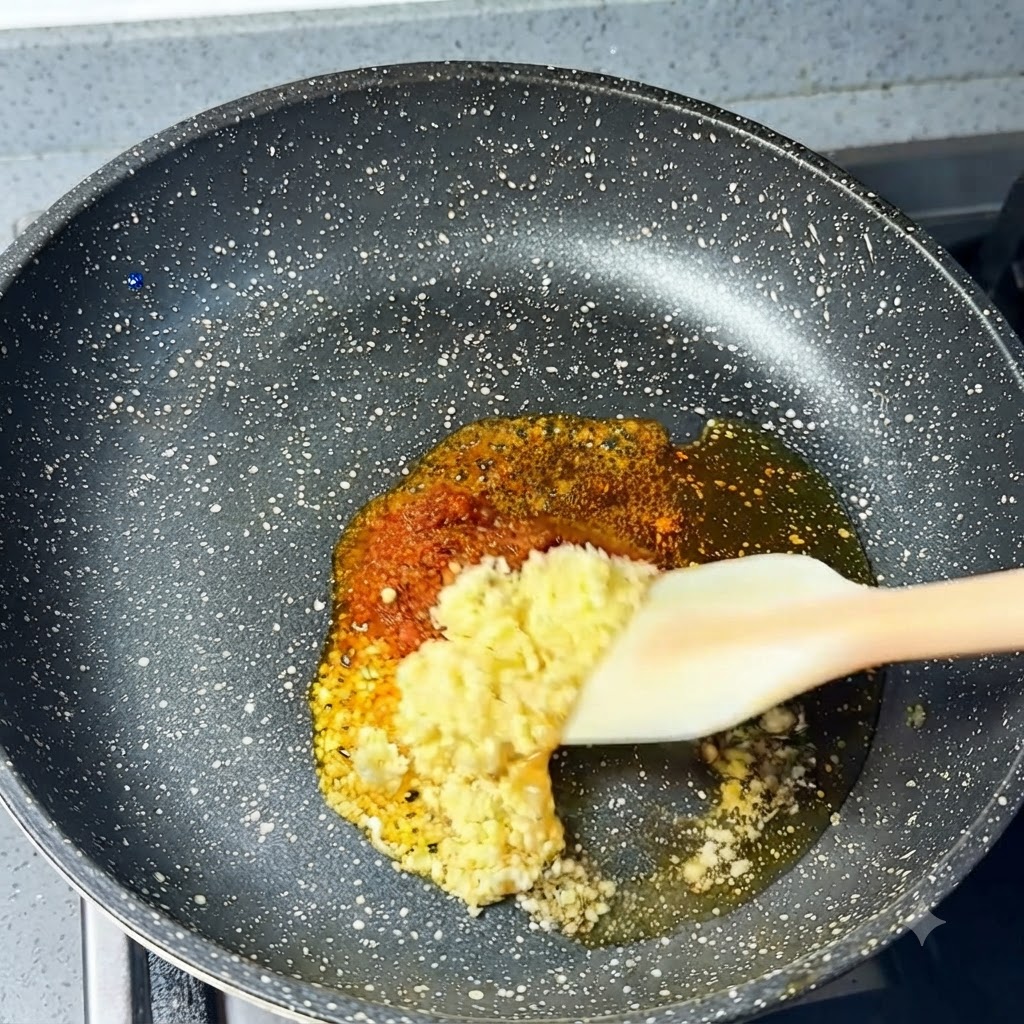
Continue to stir-fry the chili powder and minced garlic in the pan until fragrant.
Tip: Keep the heat moderate to release the aroma without scorching the garlic. - 3Add minced pork
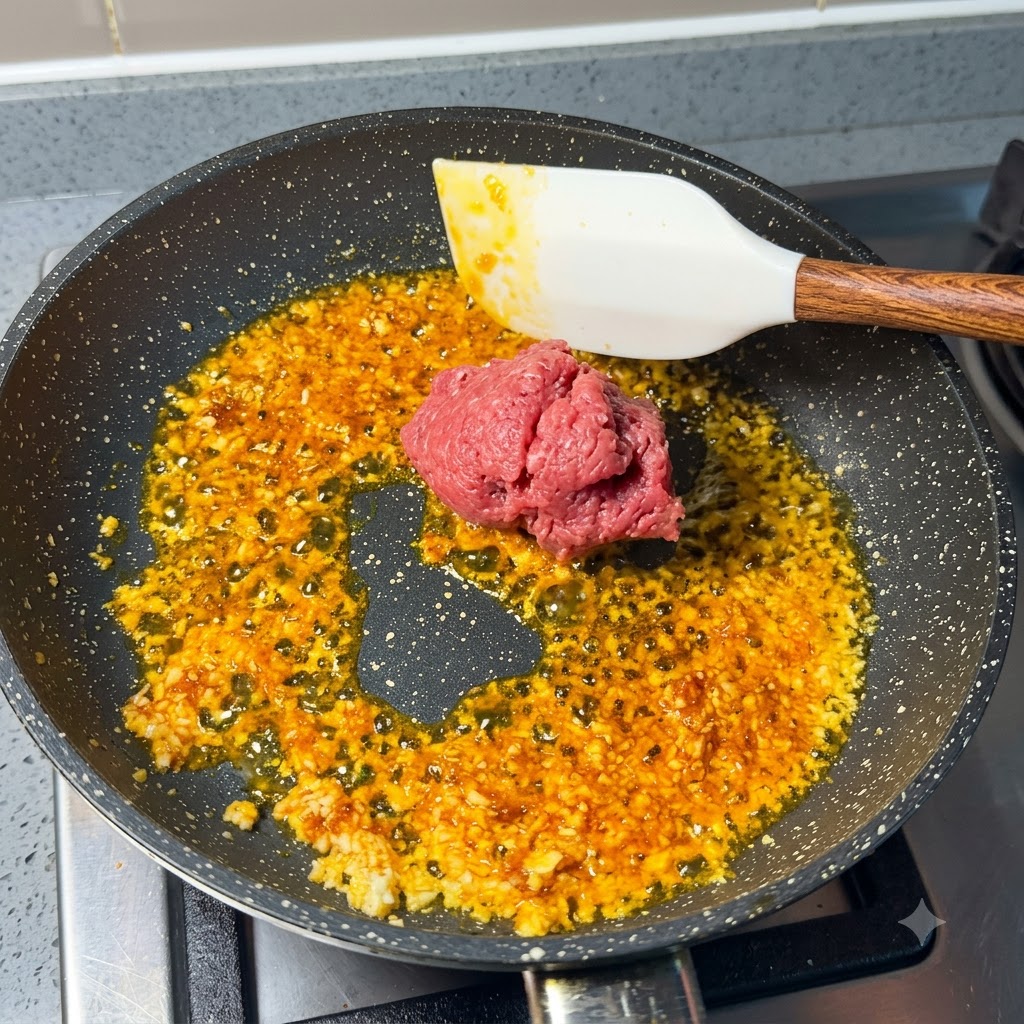
Add 100 grams of minced pork into the pan with the aromatic mixture.
Tip: Ensure the pan is hot enough when adding the meat to get a good sear. - 4Stir-fry the minced pork

Stir-fry the minced pork until the color changes and it is thoroughly cooked.
Tip: Break up any large clumps of meat with a spatula for even cooking. - 5Add miso paste
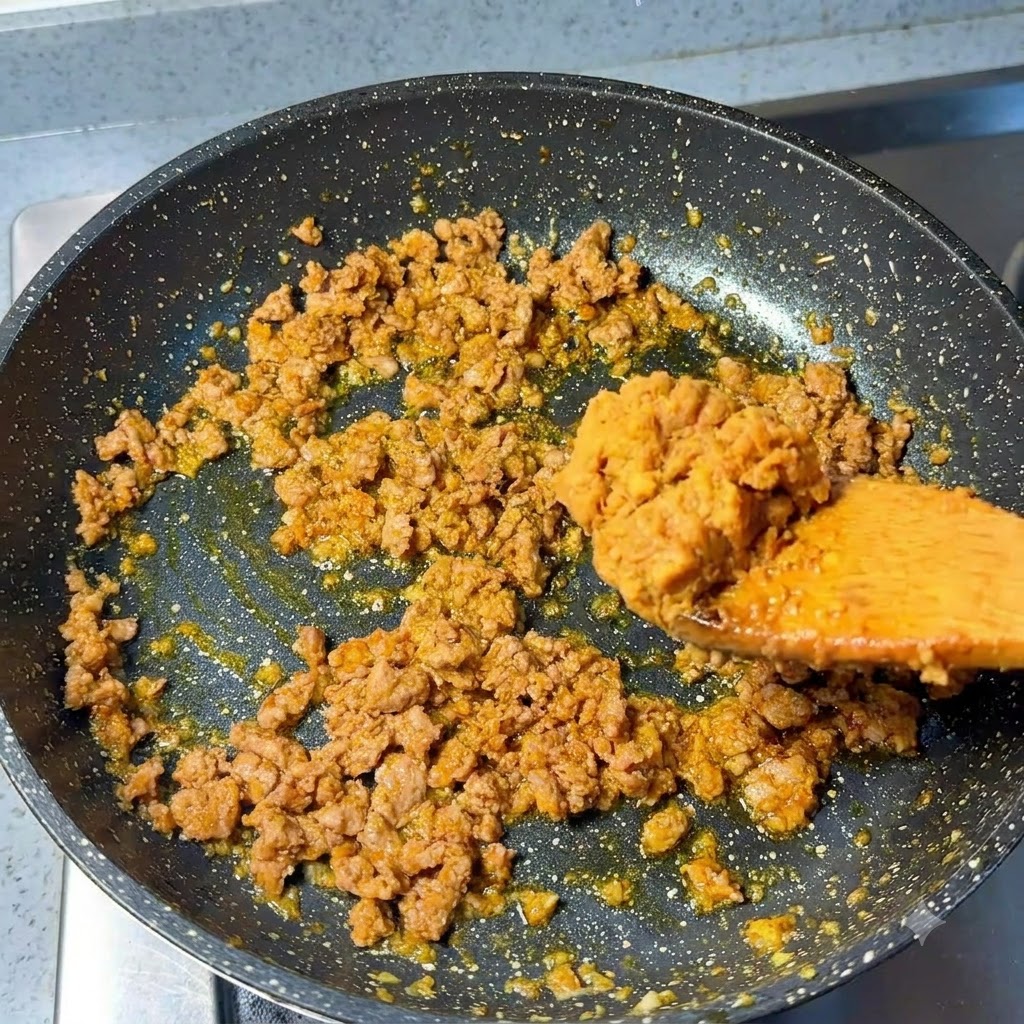
Add one spoon of miso paste to the cooked minced meat and stir well.
Tip: Mix the miso thoroughly into the meat to distribute the savory flavor. - 6Pour in the milk

Pour 250 milliliters of milk directly into the pan over the cooked minced pork mixture.
Tip: Pour the milk in a steady stream to blend smoothly with the seasoned meat. - 7Stir the milk and meat

Use a wooden spatula to stir the milk and minced meat together until well combined and evenly colored.
Tip: Stir gently to prevent splashing while ensuring the liquid incorporates with the meat. - 8Add curry cubes
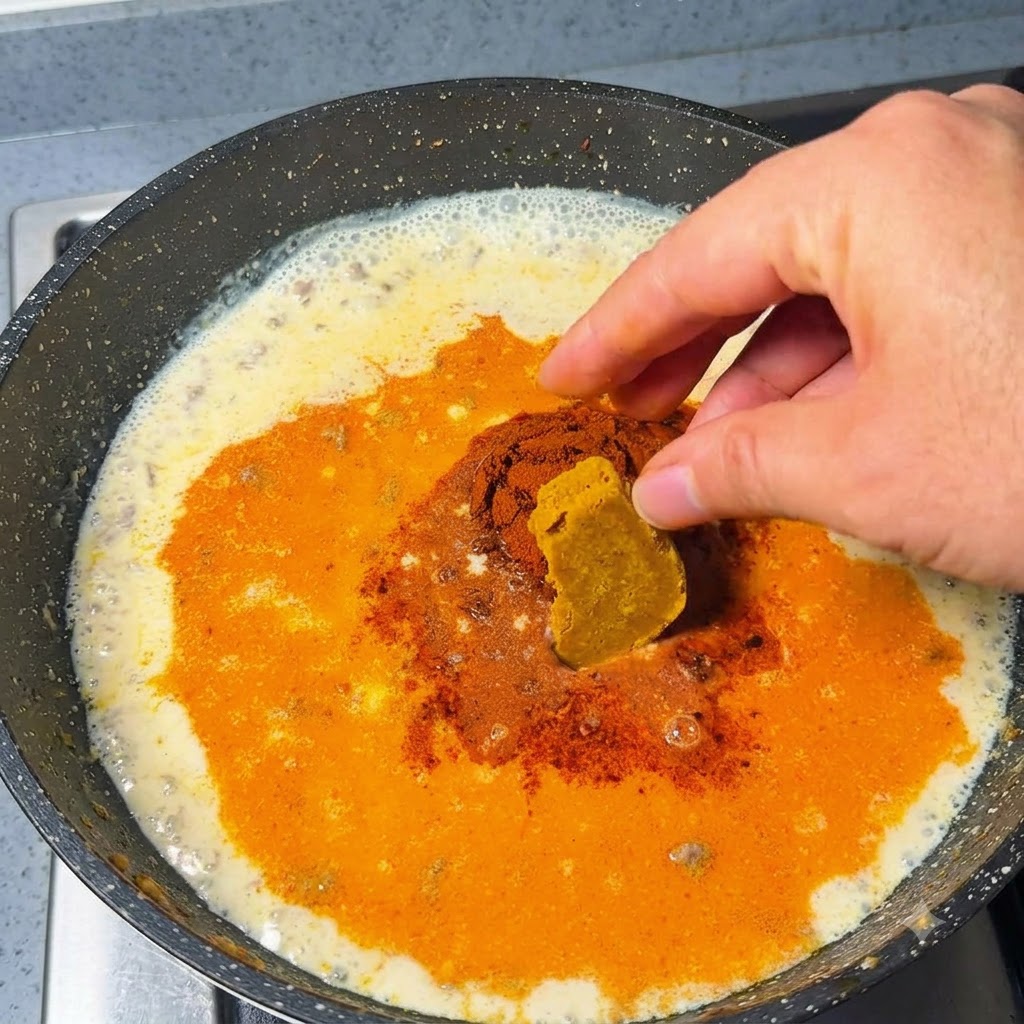
Add two blocks of Japanese curry cubes into the bubbling milk and meat mixture in the pan.
Tip: Make sure the liquid is hot enough so the curry cubes begin to melt down easily. - 9Pour in water
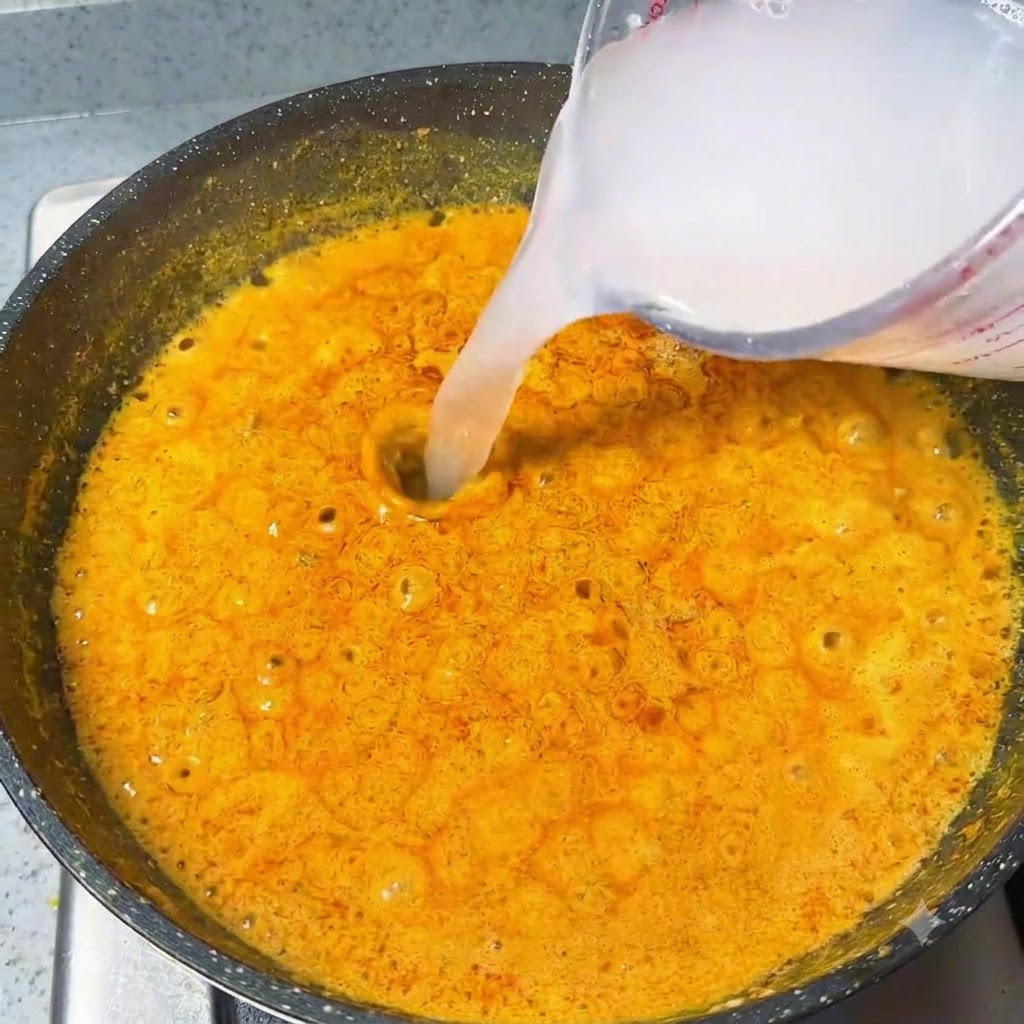
Pour a small bowl of water into the bubbling curry mixture to adjust the consistency of the sauce.
Tip: Add water gradually while stirring to keep the sauce smooth and well-blended. - 10Season with soy sauce
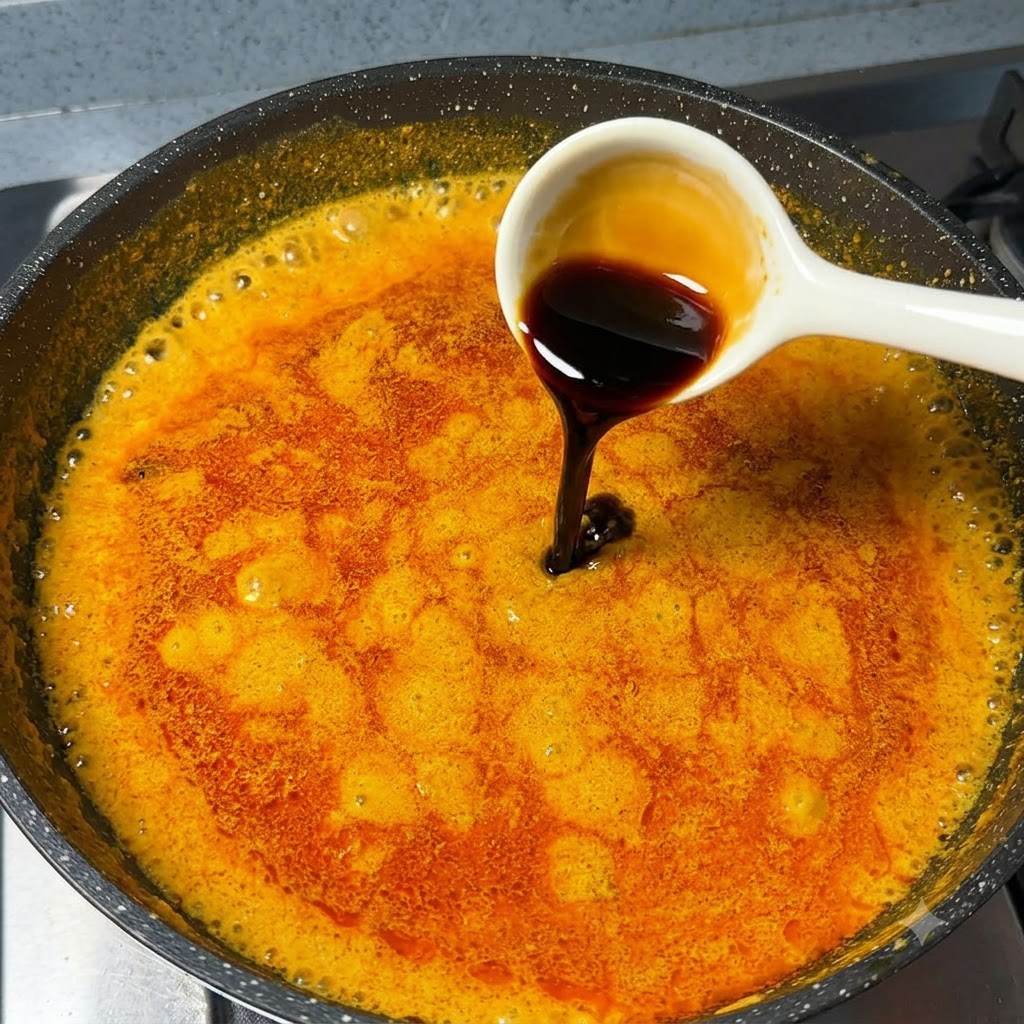
Add two spoons of soy sauce into the simmering curry sauce for enhanced seasoning and depth of flavor.
Tip: Stir immediately after pouring the soy sauce to distribute the color and taste evenly. - 11Simmer and thicken the curry sauce
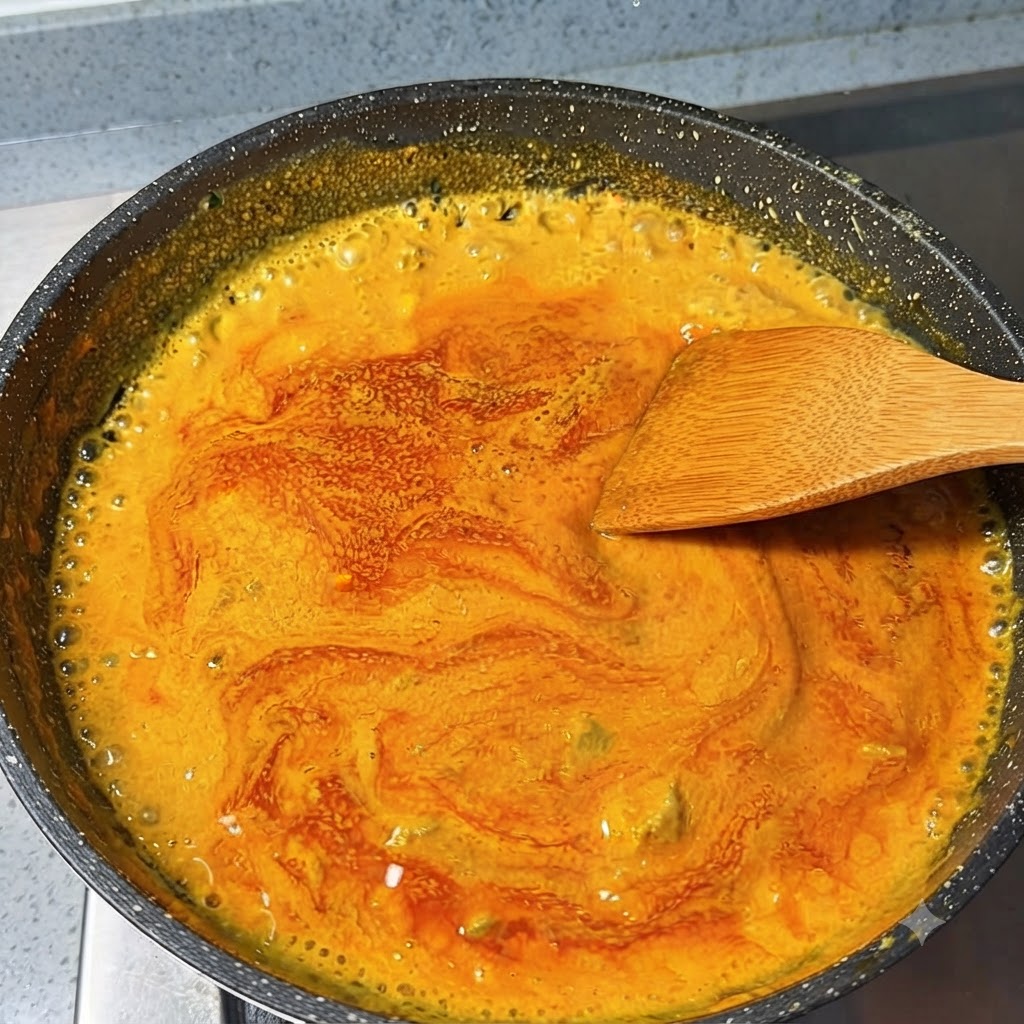
Add two blocks of curry cubes along with a small bowl of water and two spoons of soy sauce to the pan. Stir evenly and cook continuously over medium heat until the sauce thickens into a rich, cohesive consistency ready for dipping.
Tip: Stir frequently after adding the curry cubes to prevent them from sticking to the bottom and burning. - 12Boil the Japanese ramen noodles
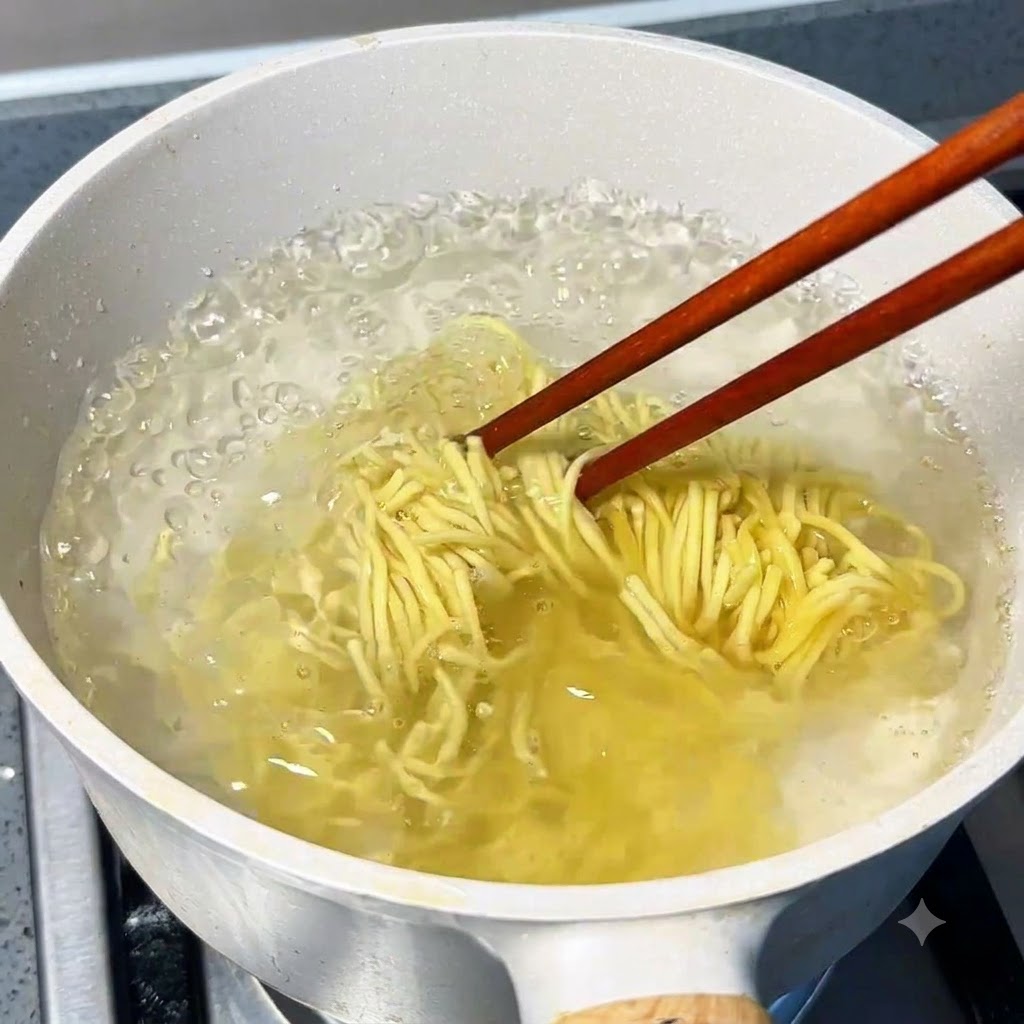
Bring a pot of water to a rolling boil and add your Japanese ramen noodles. Cook them until they reach your desired tenderness, stirring occasionally with chopsticks to separate the strands.
Tip: Do not overcook the noodles, as they will continue to soften slightly when combined with the toppings. - 13Transfer the cooked noodles to a bowl
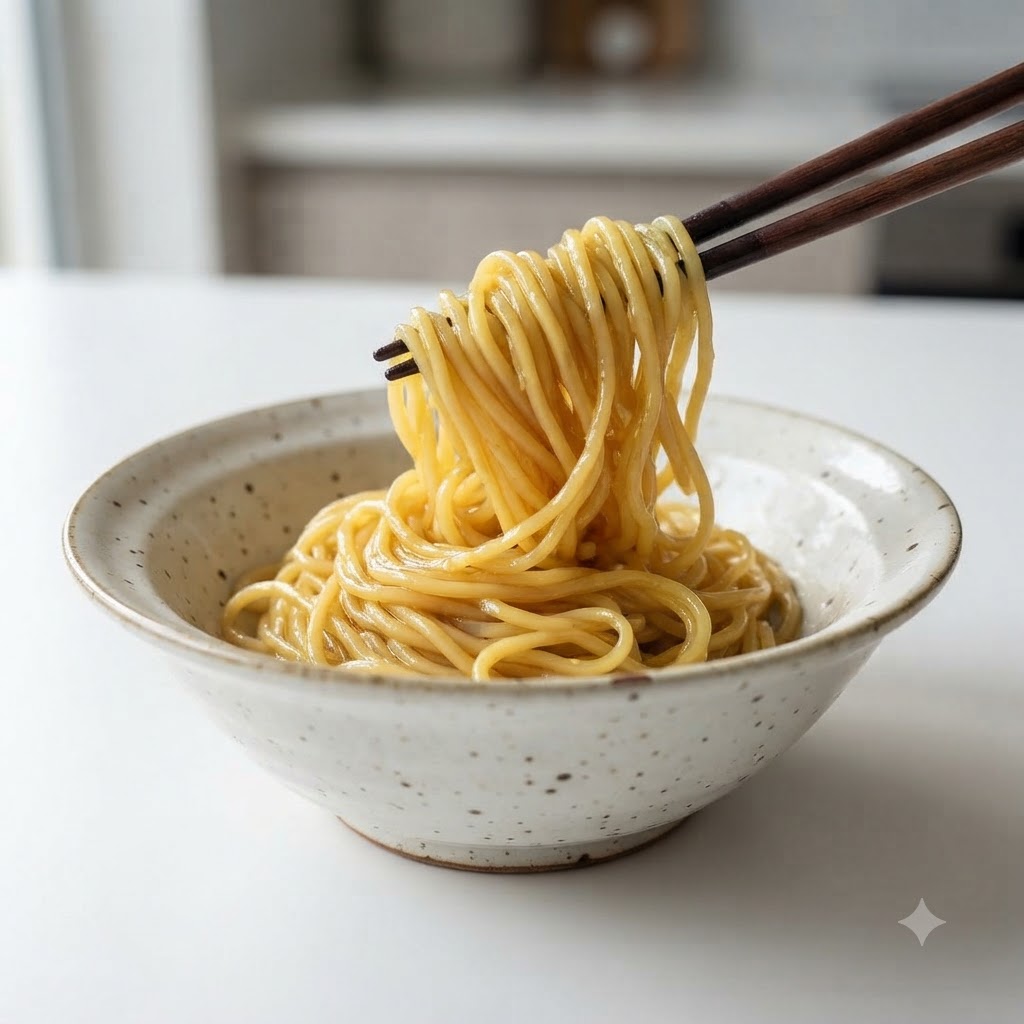
Once the ramen noodles are done boiling, drain them thoroughly and place the cooked noodles neatly into a clean serving bowl.
Tip: Toss the noodles gently with a tiny bit of sesame oil if desired to prevent them from sticking together before garnishing. - 14Add shredded seaweed
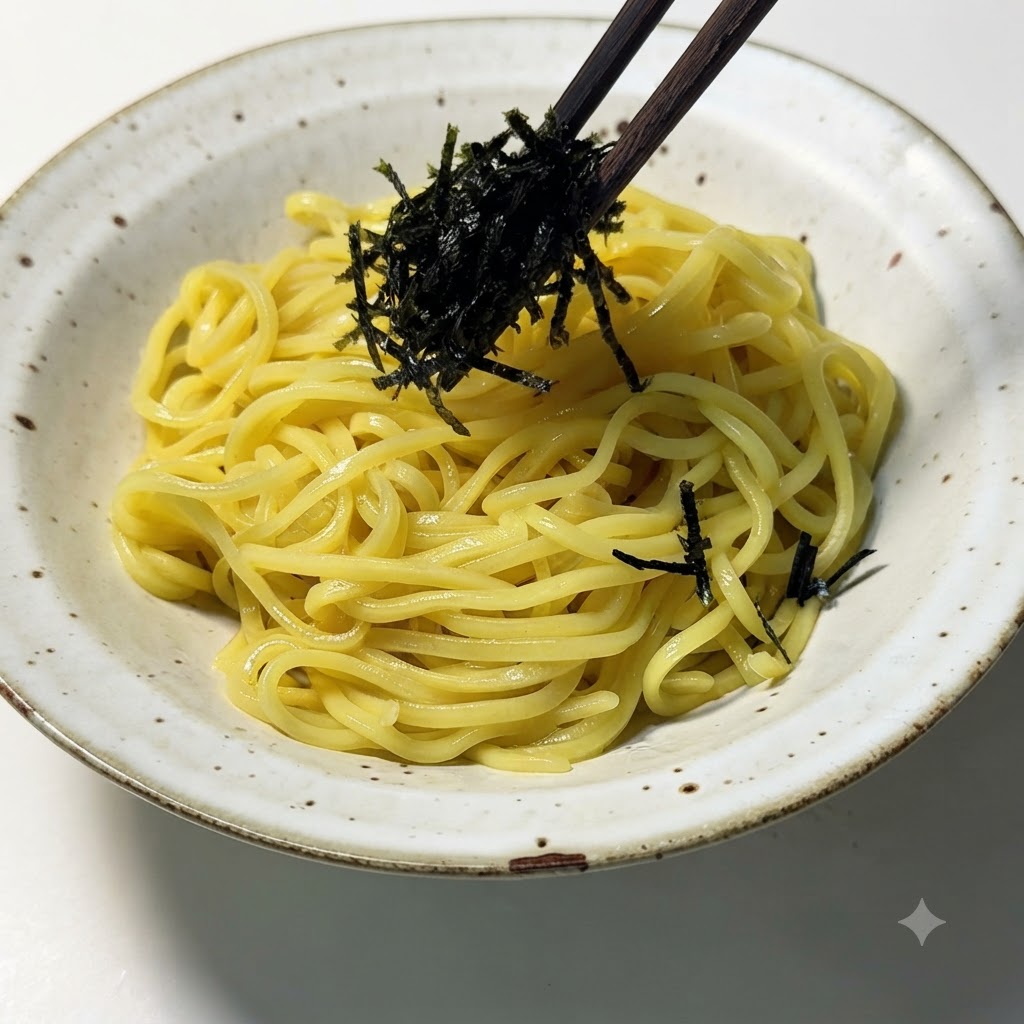
Take a portion of shredded seaweed and carefully add it right on top of the bed of cooked ramen noodles in the serving bowl.
Tip: Add the seaweed just before serving so it retains its texture and does not get soggy too quickly. - 15Top with a soft-boiled egg
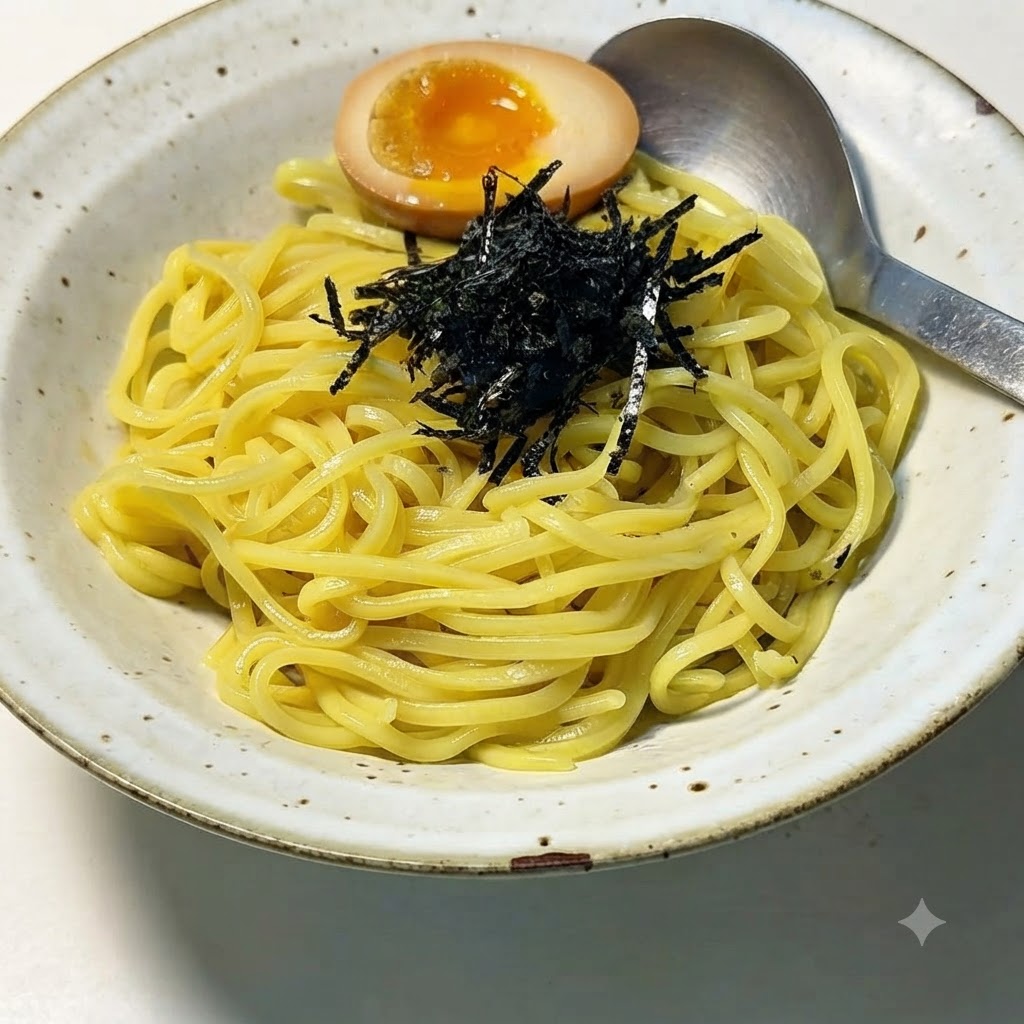
Carefully place a soft-boiled egg, halved or whole, on top of the noodles alongside the seaweed garnish.
Tip: Slice the soft-boiled egg right down the middle with a sharp knife or thread to showcase the creamy, runny yolk. - 16Add sliced green onions
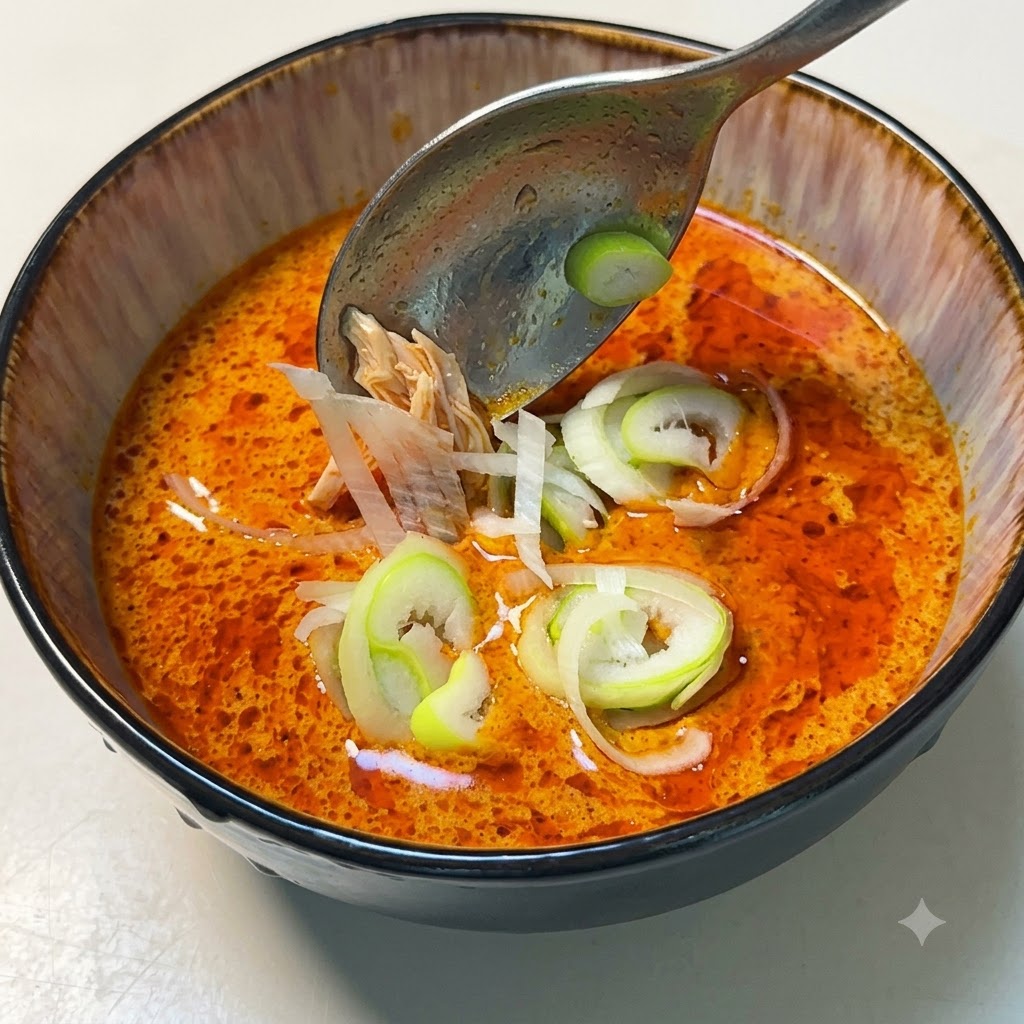
Place sliced green onions into the prepared bowl of rich curry sauce to finish the dish before serving.
Tip: Add the green onions right before eating to maintain a fresh crunch and vibrant color.