Authentic Korean Army Stew (Budae Jjigae)
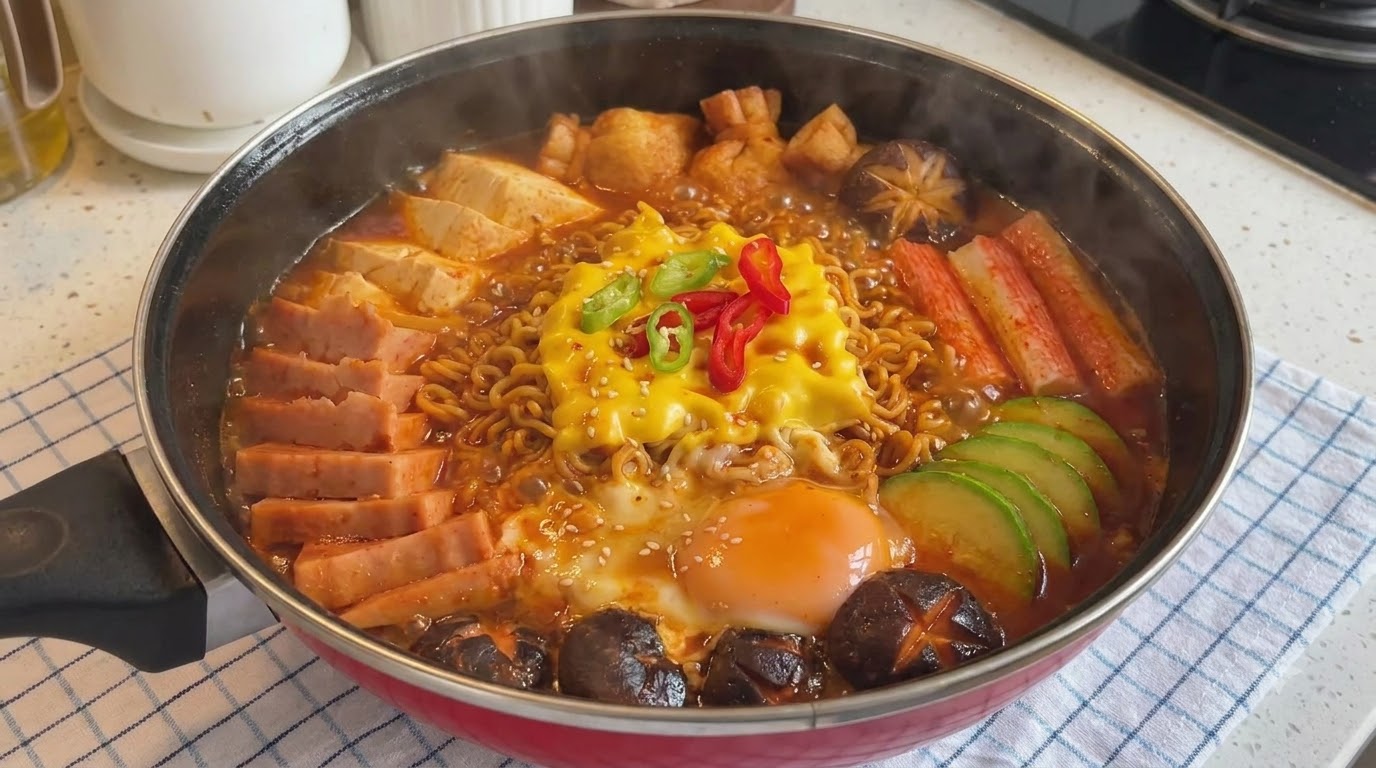
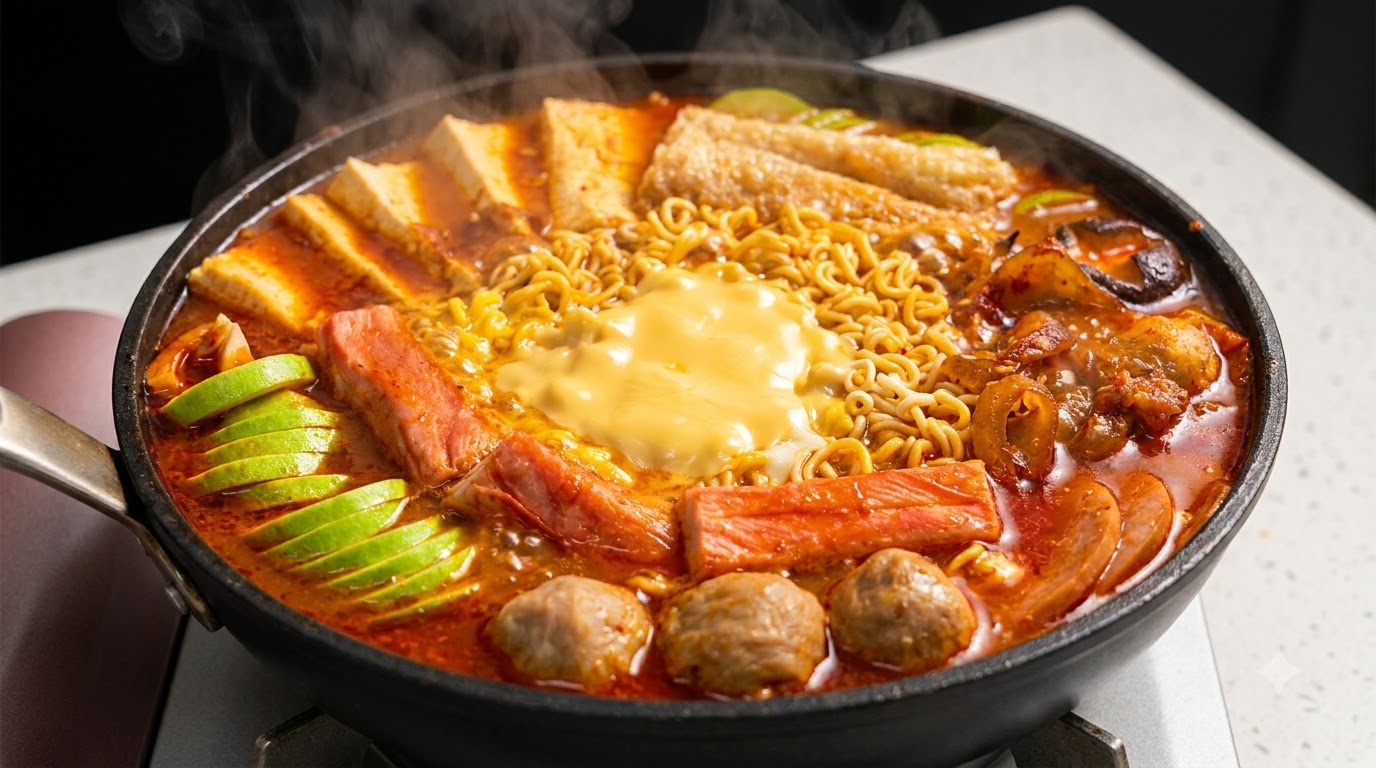
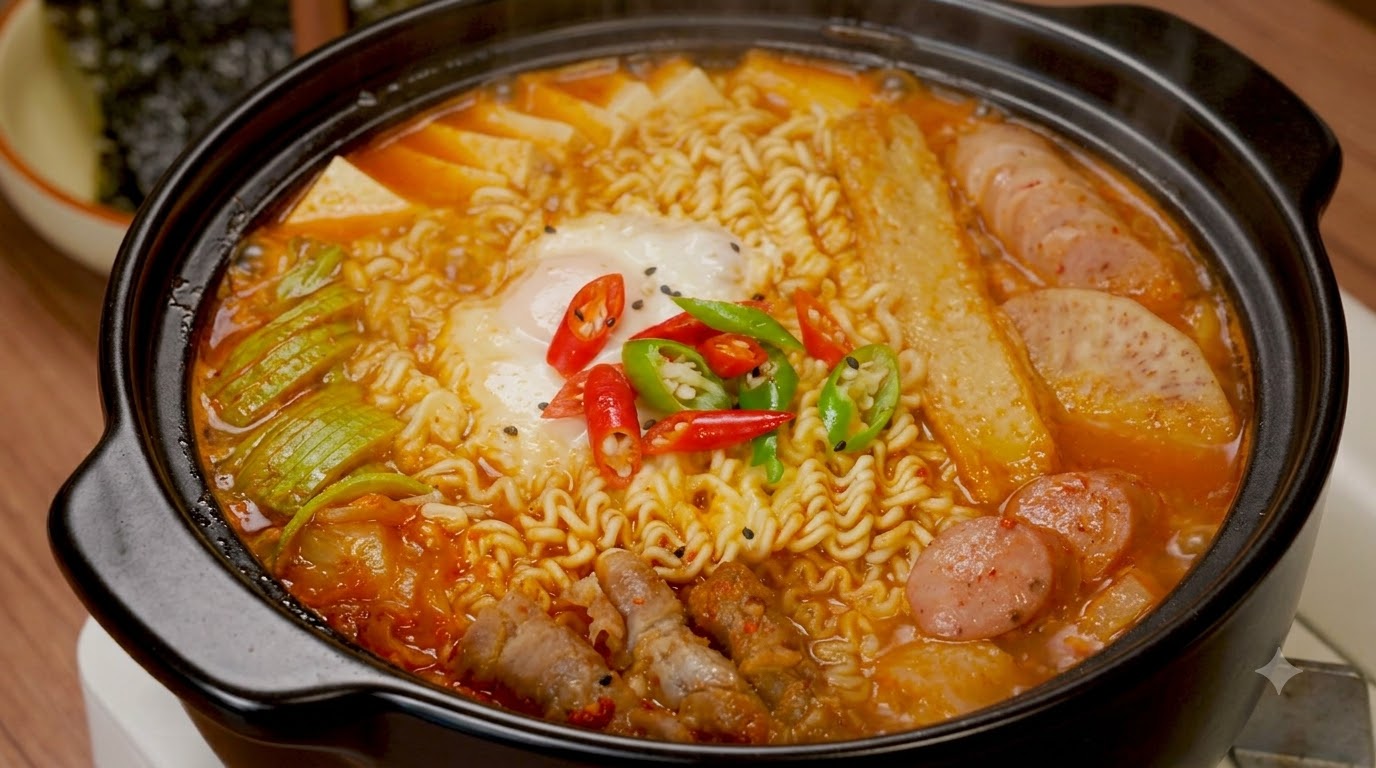
A rich, bubbling Korean army stew packed with ramen noodles, sliced sausages, tofu, and kimchi in a savory, spiced red broth.
Budae jjigae, or Korean army stew, originated during the post-war period by combining surplus Western canned meats like Spam and sausages with traditional Korean ingredients like kimchi and gochujang. Today, it remains a beloved, comforting hot pot dish known for its deeply savory flavor and diverse array of textures.
Ingredients
- 2 tbsp Korean chili paste
- 1 tbsp chili powder
- 1 tbsp sugar
- 1 tsp sesame oil
- 1 tbsp oyster sauce
- 2 tbsp soy sauce
- 1 tbsp cooking oil
- 1/2 cup sliced red onions
- 1 cup baby napa cabbage
- 100 g enoki mushrooms
- 1/2 zucchini
- 150 g soft tofu
- 4 pieces fish cakes
- 4 pieces crab sticks
- 1/2 cup chopped kimchi
- 150 g beef rolls
- 4 small sausages
- 400 ml water
- 1 block instant ramen noodles
- 1 slice processed cheese
- 1 egg
- to taste red and green chili peppers
- to taste black sesame seeds
Instructions
- 1Mix the sauce base

In a small glass bowl, combine the Korean chili paste, chili powder, sugar, sesame oil, oyster sauce, soy sauce, and a splash of water. Mix the ingredients together thoroughly to create the concentrated flavor base for the stew.
Tip: You can adjust the amount of chili paste and chili powder depending on how spicy you want the final broth to be. - 2Prepare the pot base
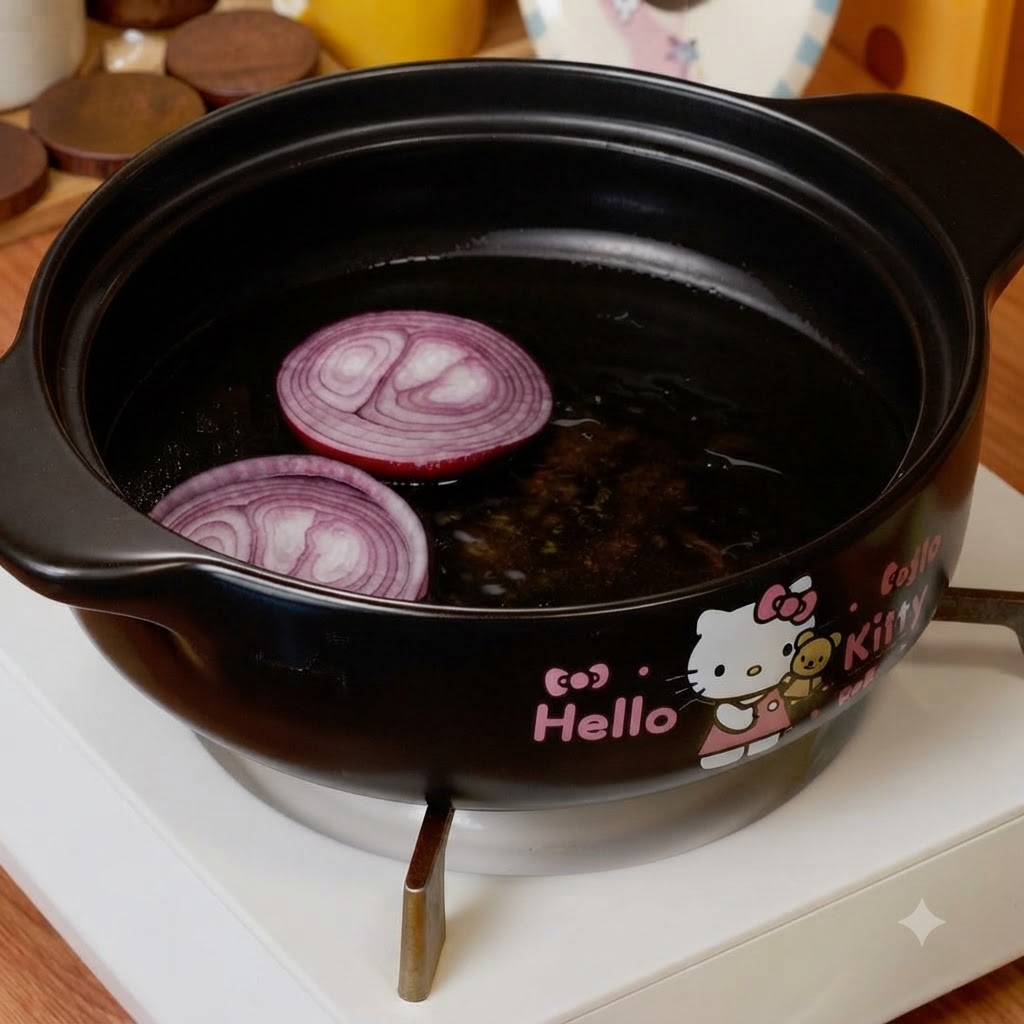
Add a layer of cooking oil to the bottom of a wide cooking pot. Place the sliced red onions directly into the oil to form an aromatic foundation for the stew.
Tip: Laying the onions at the bottom helps flavor the broth and prevents the other ingredients from sticking to the pot during simmering. - 3Layer the vegetables and tofu
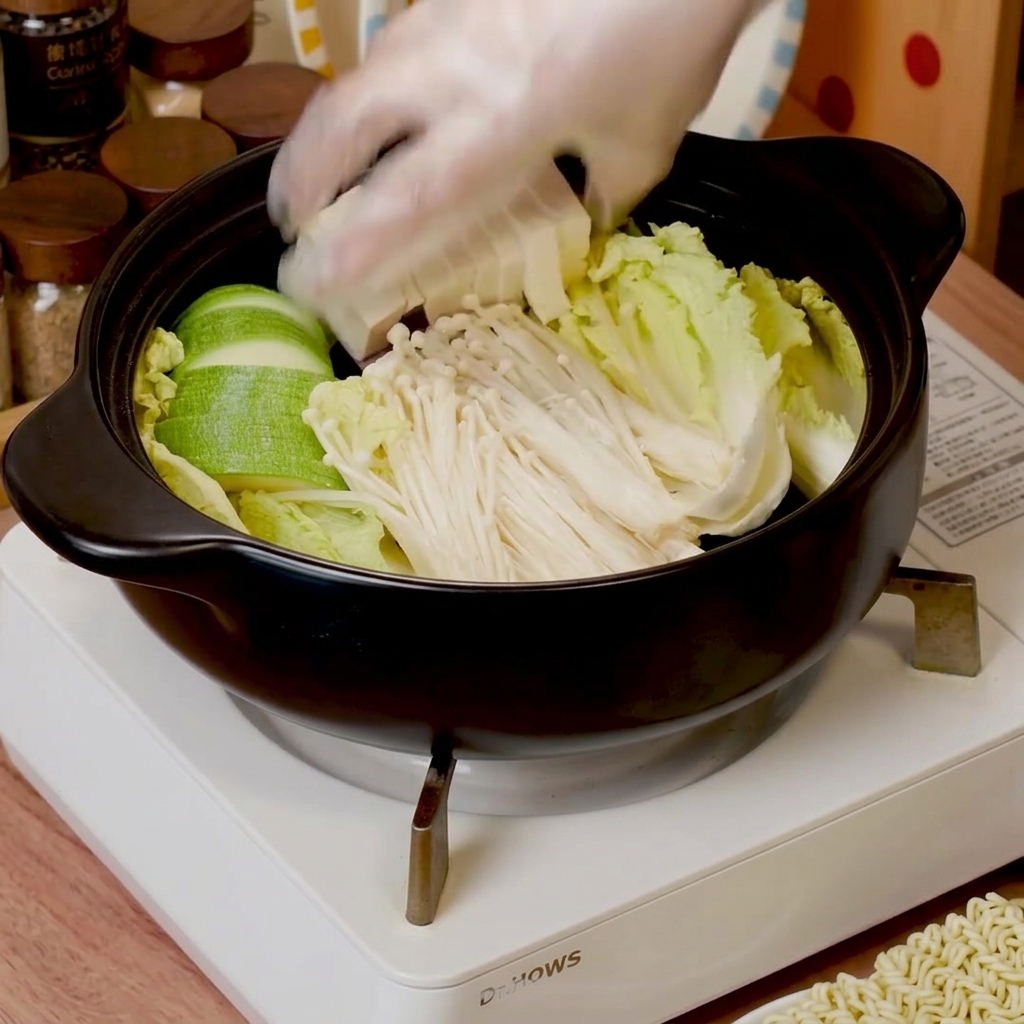
Carefully arrange slices of fresh baby napa cabbage, enoki mushrooms, sliced zucchini, and blocks of soft tofu directly over the sautéed onions in the cooking pot.
Tip: Pack the ingredients neatly to leave space for the remaining meats and sauce. - 4Assemble the stew ingredients
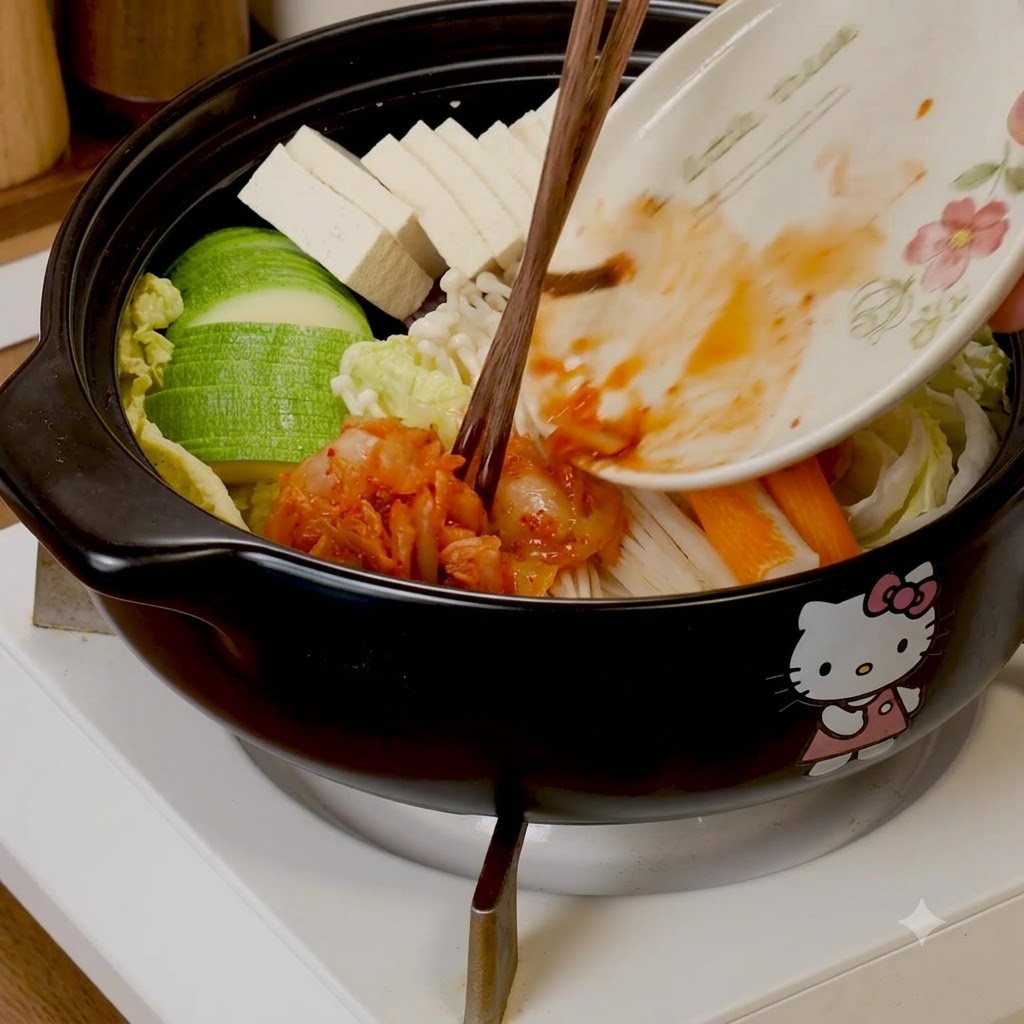
Carefully arrange the crab sticks, chopped kimchi, and remaining ingredients over the vegetable base in the pot. Grouping similar ingredients together in sections creates a visually appealing presentation.
Tip: Pack the ingredients tightly so they stay in place once the liquid is added to the pot. - 5Score the sausages
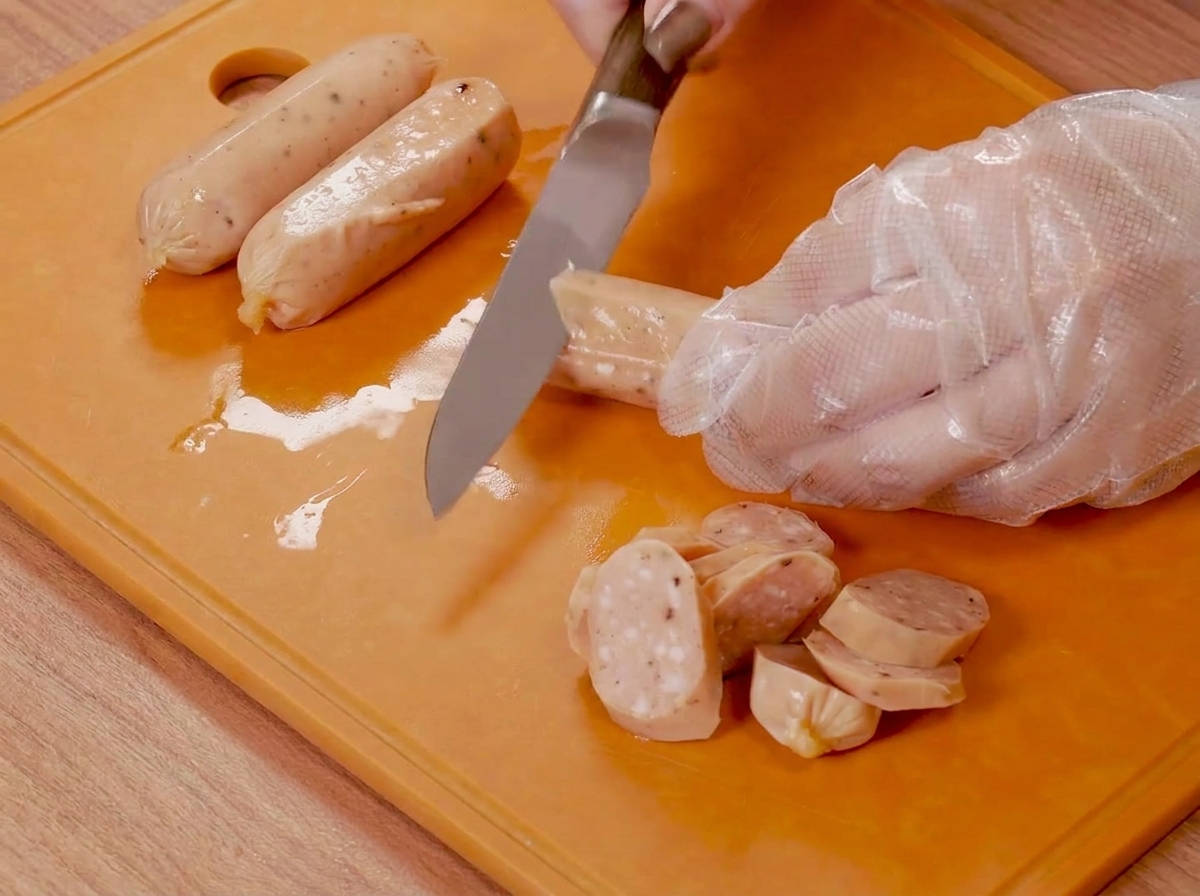
Place the sausages on a cutting board and use a knife to make shallow, diagonal cuts across their surface. This scoring helps the sausages absorb the flavorful broth and gives them a nice texture as they cook.
Tip: Be careful not to cut all the way through the sausages; the slits should only pierce the outer casing. - 6Pan-fry the sausages
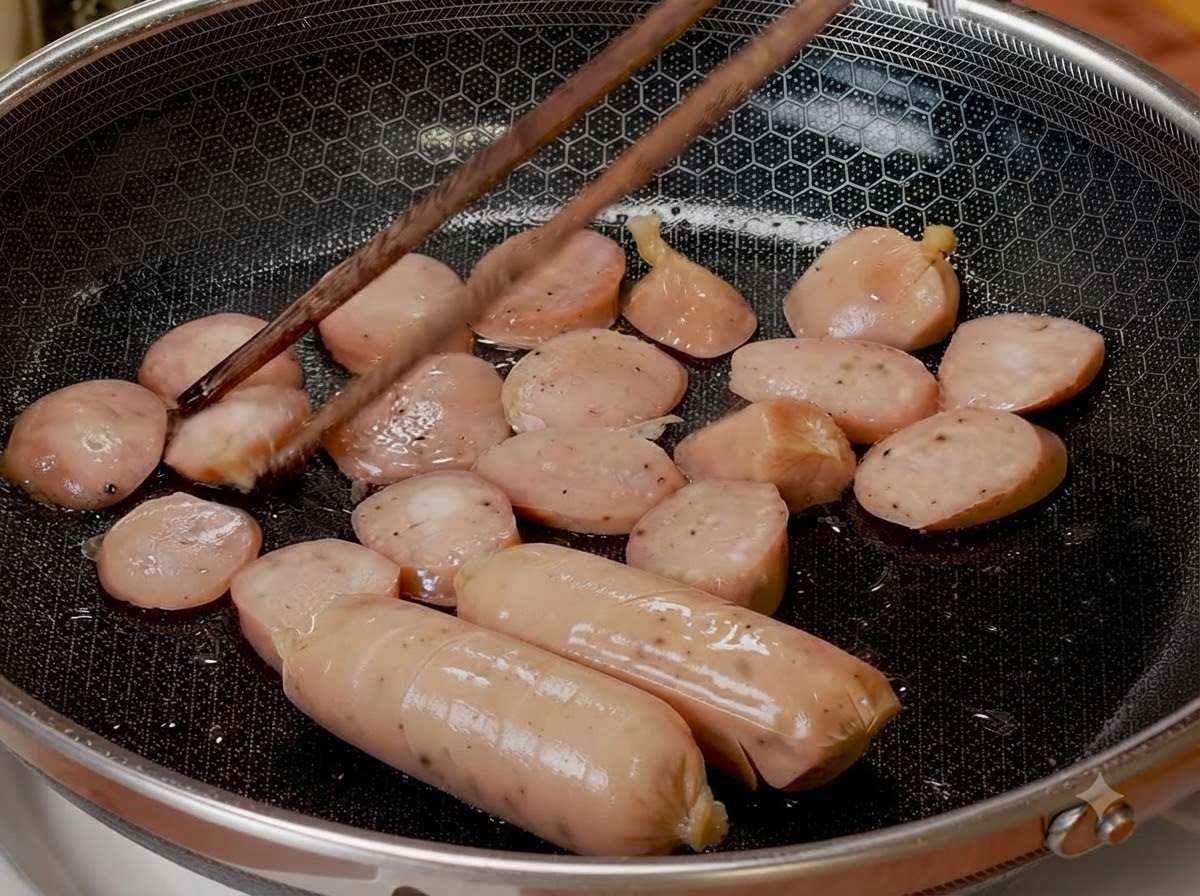
Heat a skillet and pan-fry the scored sausages until they are lightly browned. The heat will cause the scored edges to open up and blister, adding a rich, roasted flavor to the meat before it goes into the stew.
Tip: Pan-frying the sausages beforehand renders out some of the excess fat, preventing the stew from becoming too greasy. - 7Add pan-fried sausages
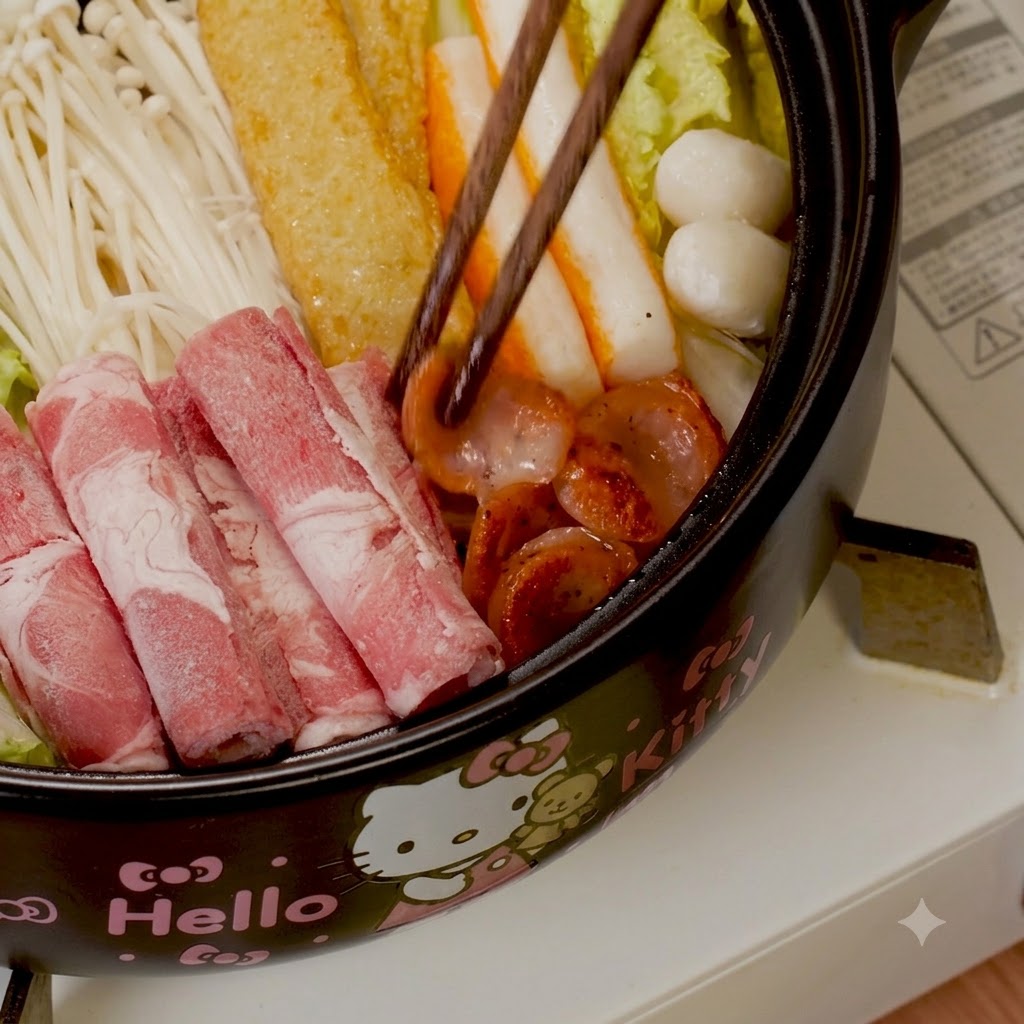
Using chopsticks, place the pre-pan-fried sliced sausages into the pot alongside the raw vegetables, fish cakes, and rolled beef slices.
Tip: Pan-frying the sausages beforehand adds a richer flavor and better texture to the stew. - 8Pour in the spicy sauce and water
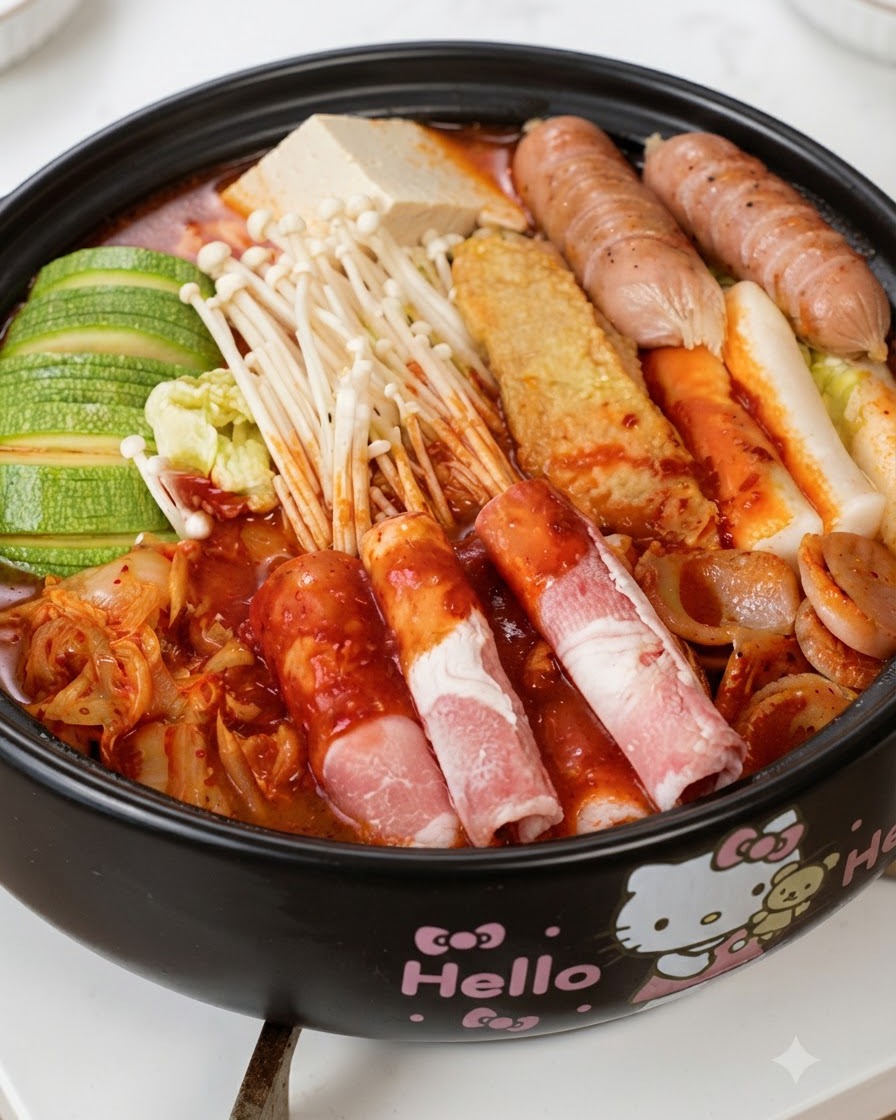
Pour the mixed red chili sauce and an adequate amount of water evenly over all the assembled ingredients in the pot.
Tip: Ensure the water level is enough to submerge the ingredients and cook the instant ramen later. - 9Add instant ramen and cheese
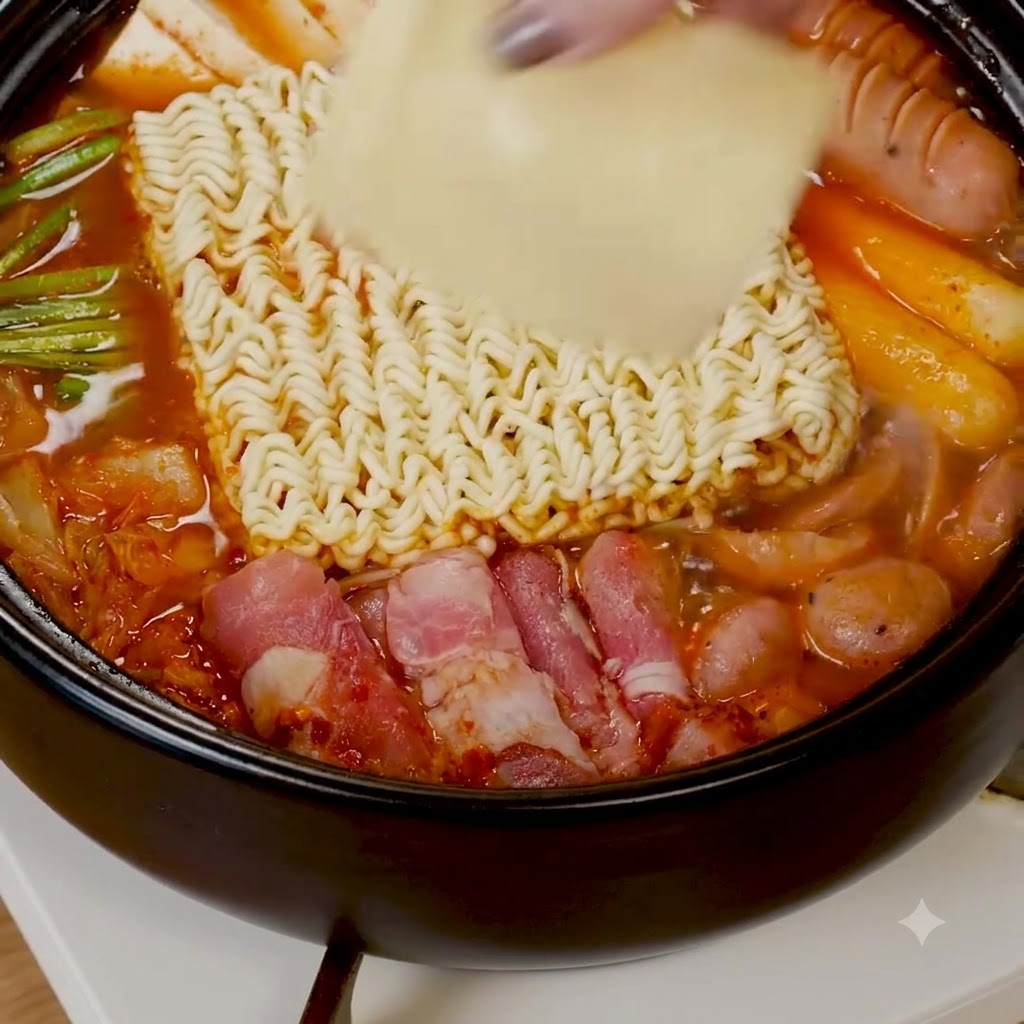
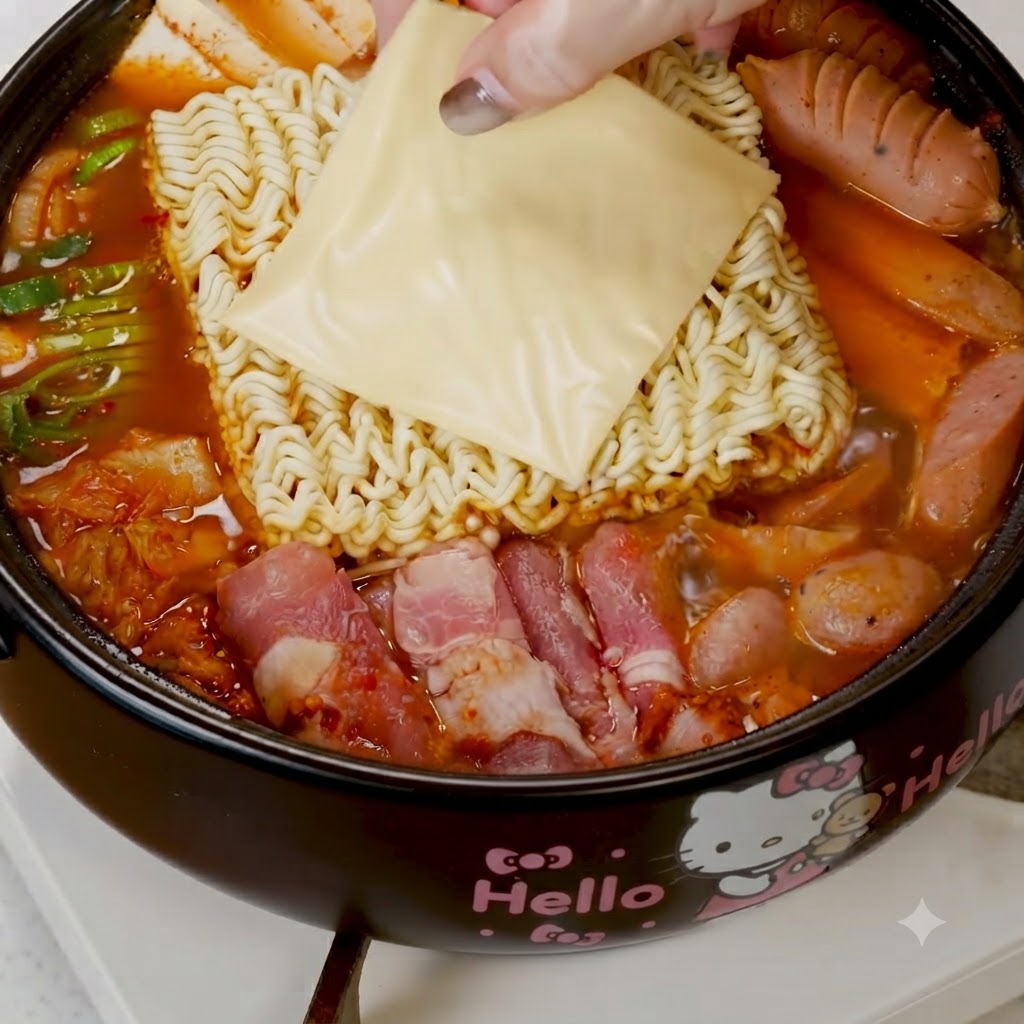
Place a block of dry instant ramen noodles right into the center of the pot, and top it with a square slice of processed cheese.
Tip: The melting cheese helps thicken and enrich the spicy broth. - 10Crack an egg on top
Crack a raw egg directly over the center of the instant ramen noodles and melting cheese.
Tip: Cover the pot with a lid after adding the egg to let it poach gently in the simmering broth. - 11Garnish with chili peppers
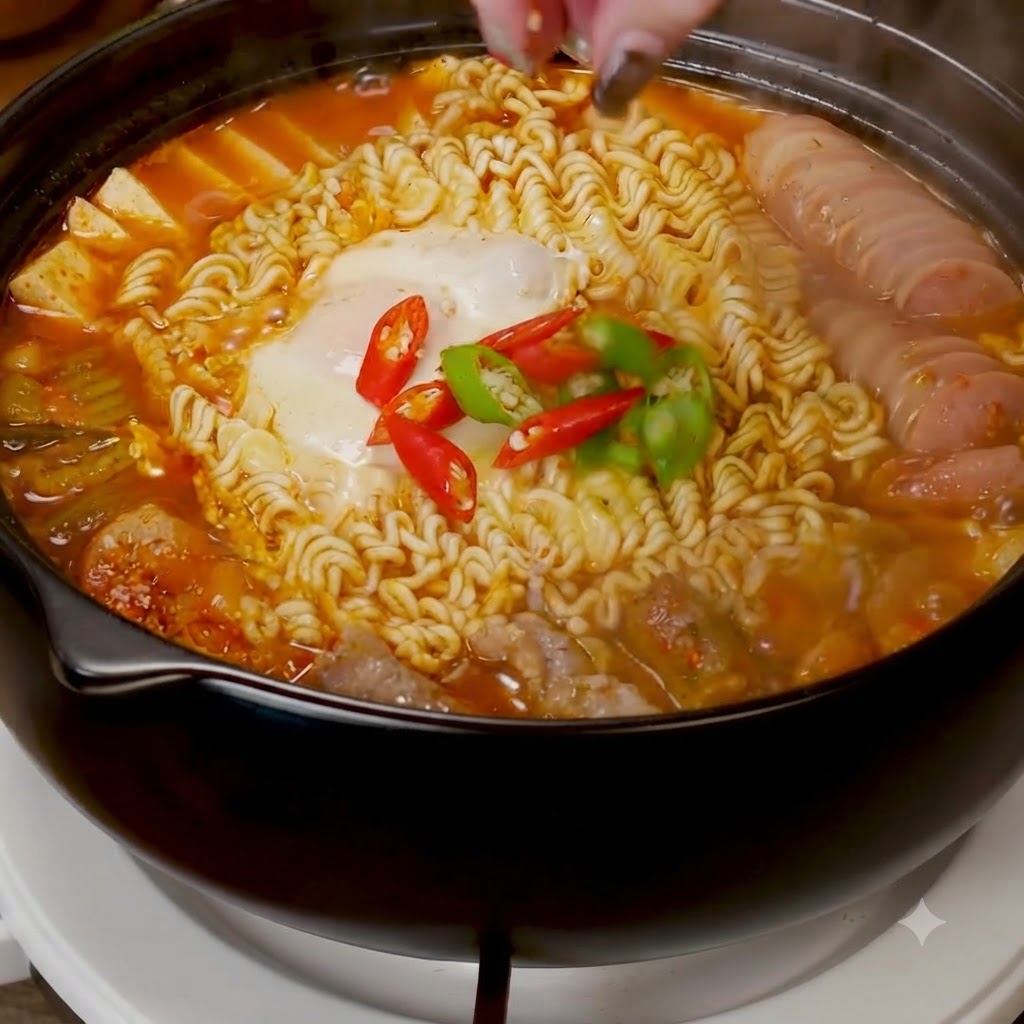
Sprinkle freshly sliced red and green chili peppers over the simmering egg and noodles to add a final touch of heat and color.
Tip: Adjust the amount of chili peppers according to your personal spice preference.