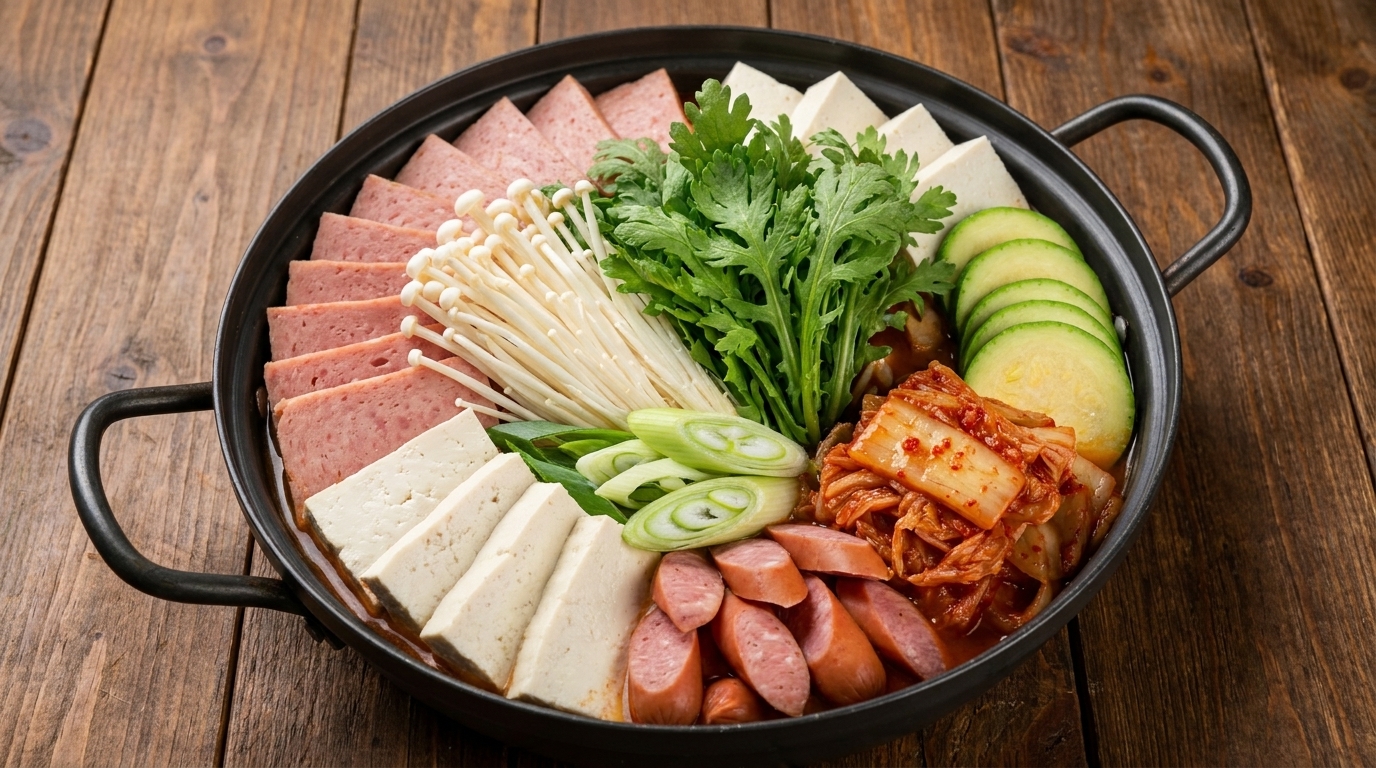
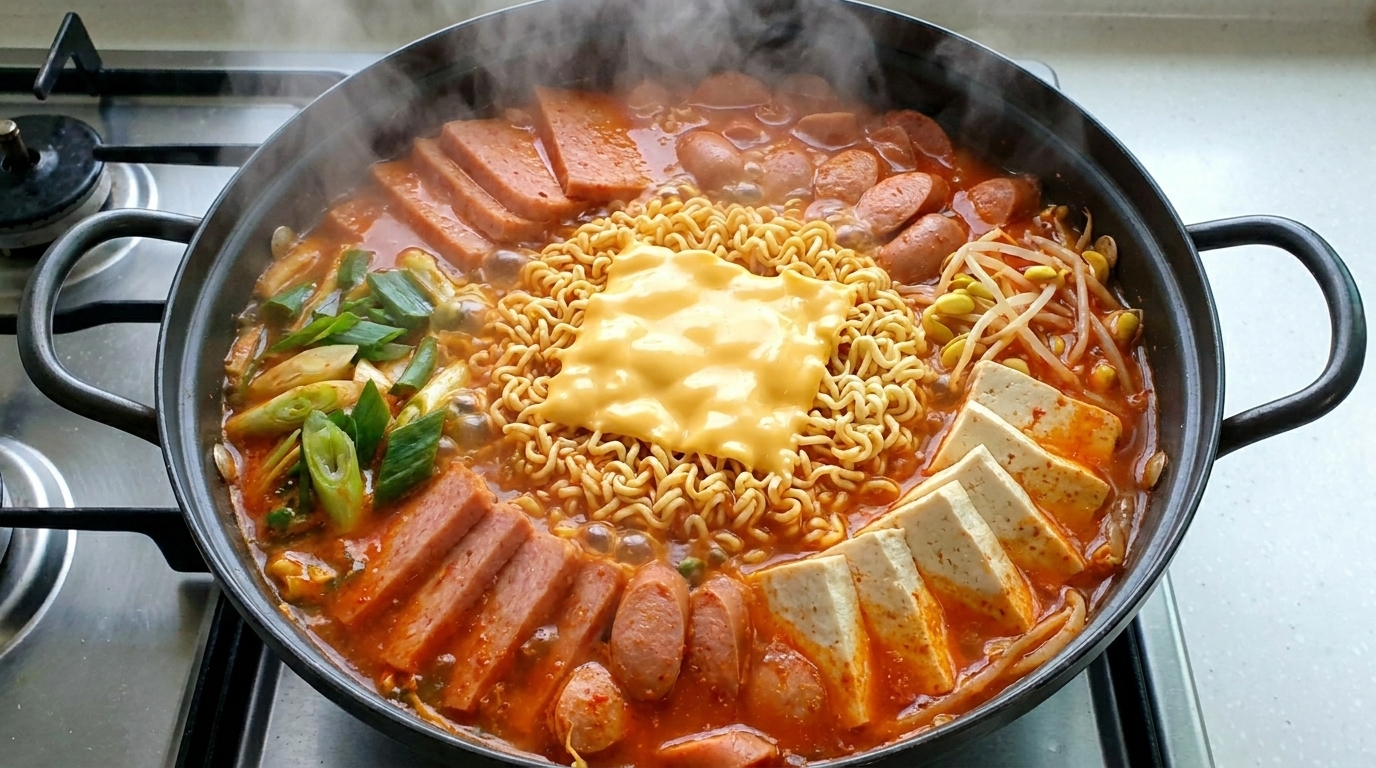
Classic Korean Army Stew (Budae-jjigae)
A hearty fusion favorite, this Korean Army Stew combines savory Spam, sausages, and instant noodles in a rich, spicy kimchi-based broth for the ultimate comfort meal.
Born from necessity in the aftermath of the Korean War, Budae-jjigae, or Army Stew, is a testament to Korean culinary ingenuity. Residents repurposed surplus ingredients like canned meats and cheese from U.S. military bases, pairing them with traditional kimchi and gochujang. Today, it has evolved into a beloved national comfort dish that brings friends and family together over a bubbling pot.
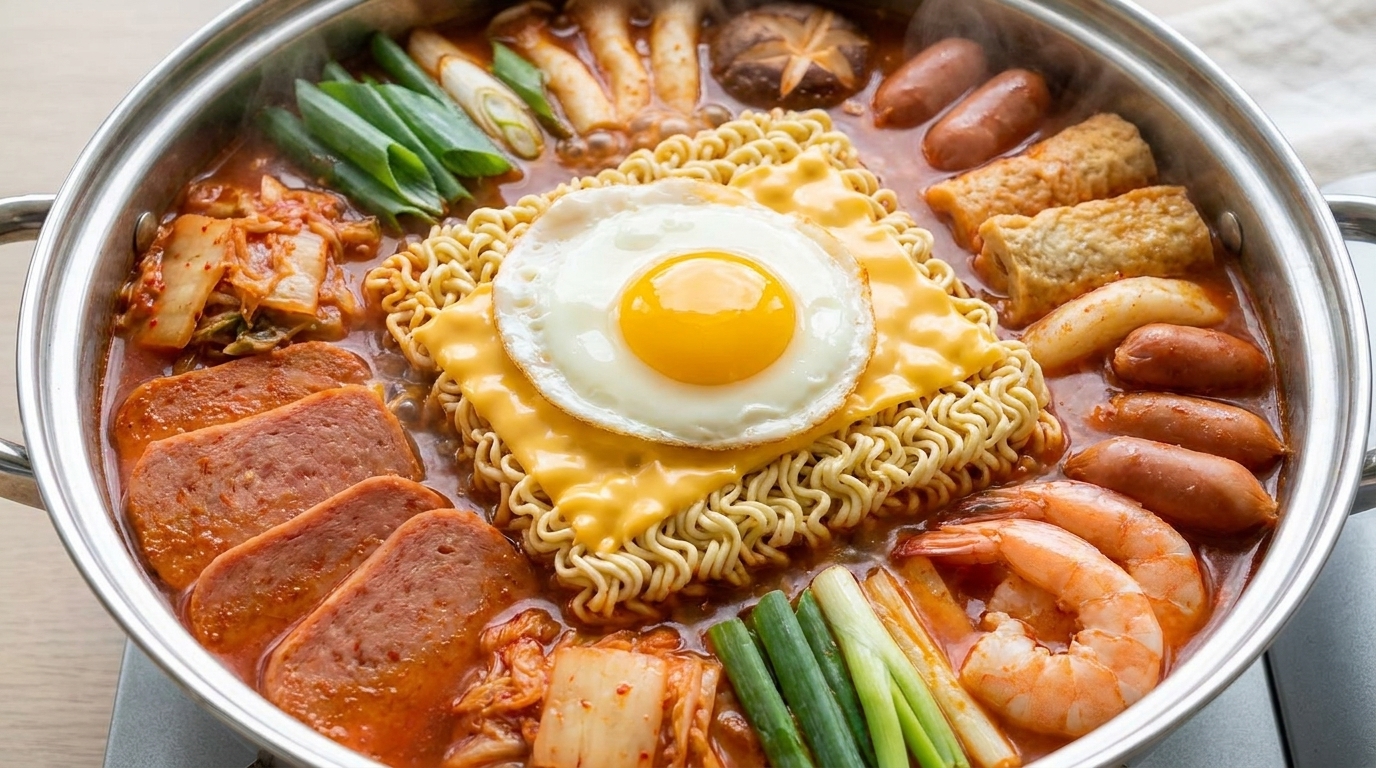
Ingredients
- 2 tbsp Korean chili paste (gochujang)
- 2 tbsp granulated sugar
- 1 packet Shin Ramyun seasoning powder
- 2 tbsp light soy sauce
- 1 onion
- 100 g brown shimeji mushrooms
- 100 g cauliflower florets
- 100 g cabbage
- 100 g rice cakes
- 100 g Spam
- 100 g sausages
- 50 g cooked beef
- 50 g fish cakes
- 4 shrimp
- 1 block instant noodles
- 2 slices processed cheese
- 1 egg
- 2 tbsp sweet corn
- 1 stalk green onion
Instructions
- 1Prepare the sauce base
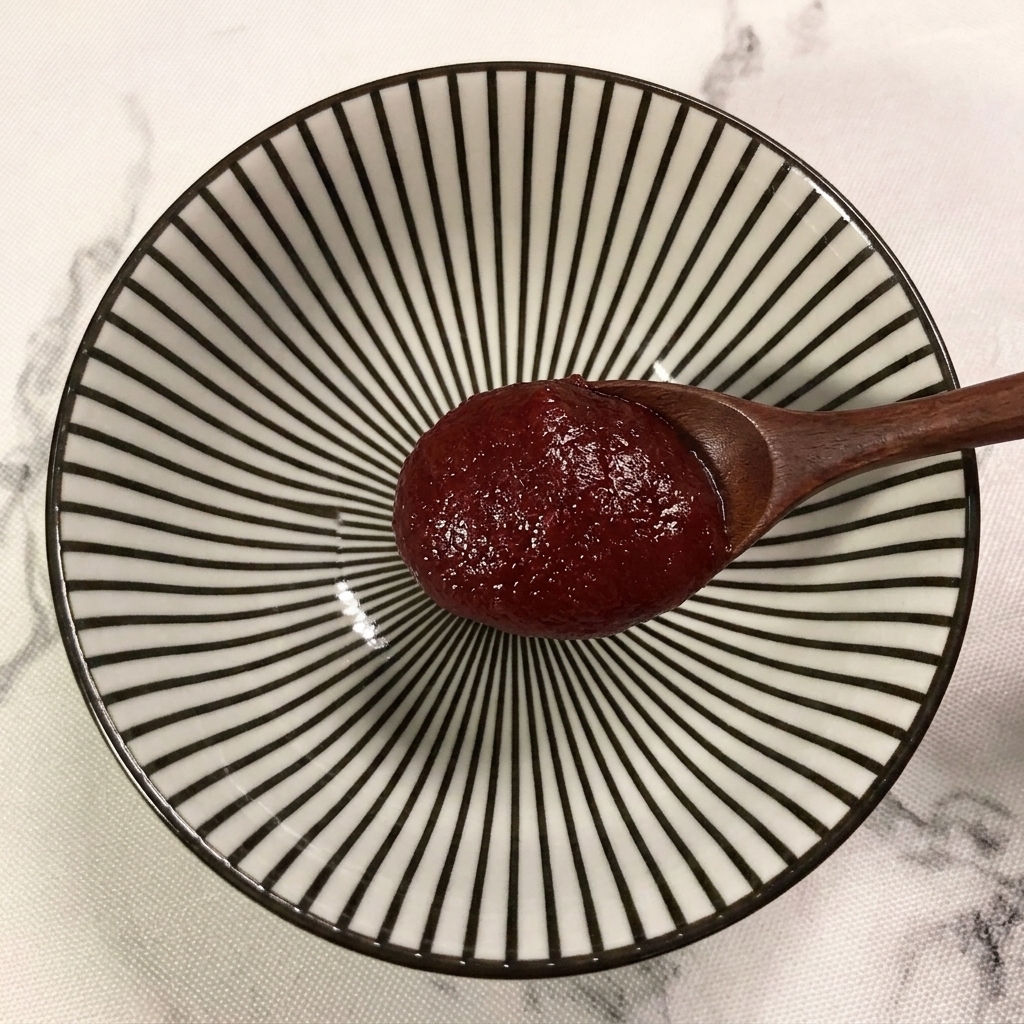
Add two spoonfuls of Korean chili paste (gochujang) into a small mixing bowl. This paste provides the essential spicy and savory foundation for the Army Stew broth.
Tip: If you prefer a milder flavor, adjust the amount of chili paste accordingly. - 2Balance with sweetness
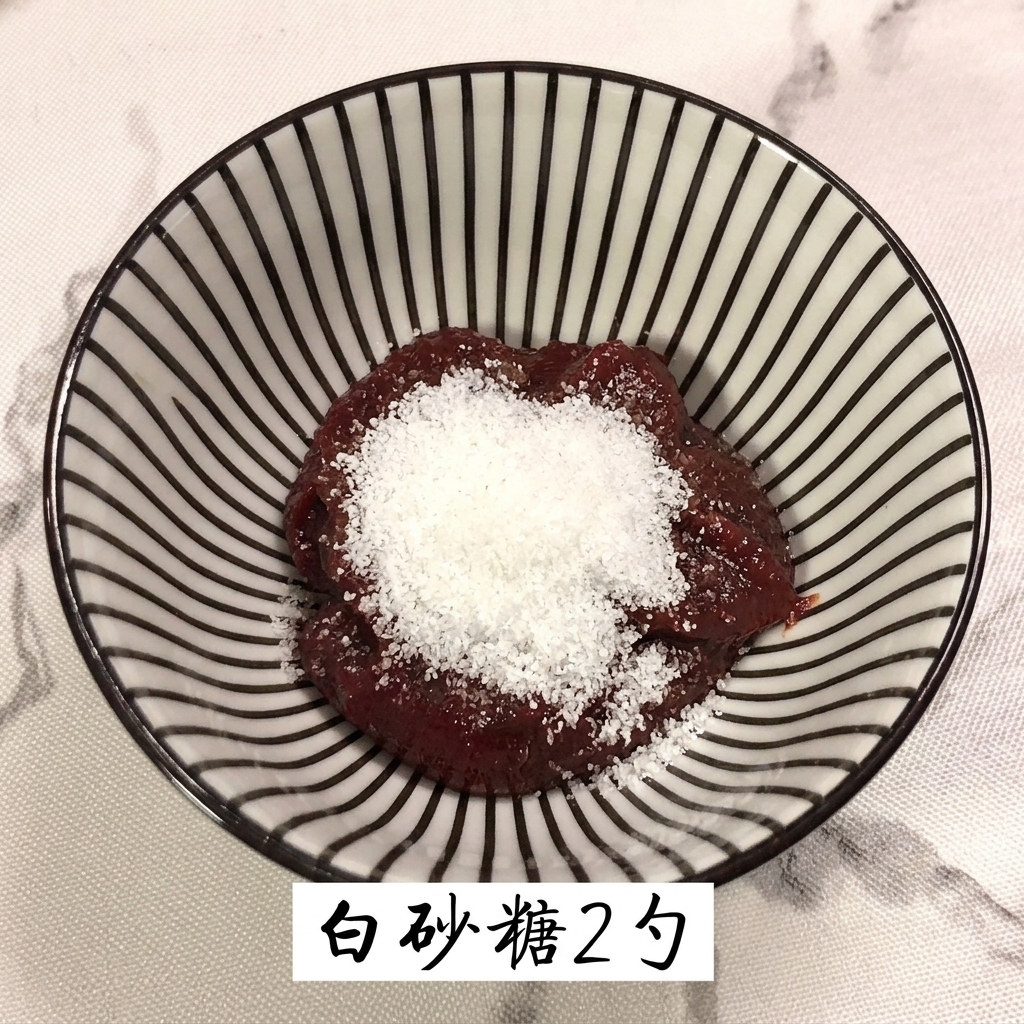
Add two spoonfuls of white granulated sugar to the bowl containing the chili paste. The sugar helps to balance the heat and adds depth to the overall sauce profile.
Tip: Ensure the sugar is mixed in well to avoid any grainy texture. - 3Add seasoning powder
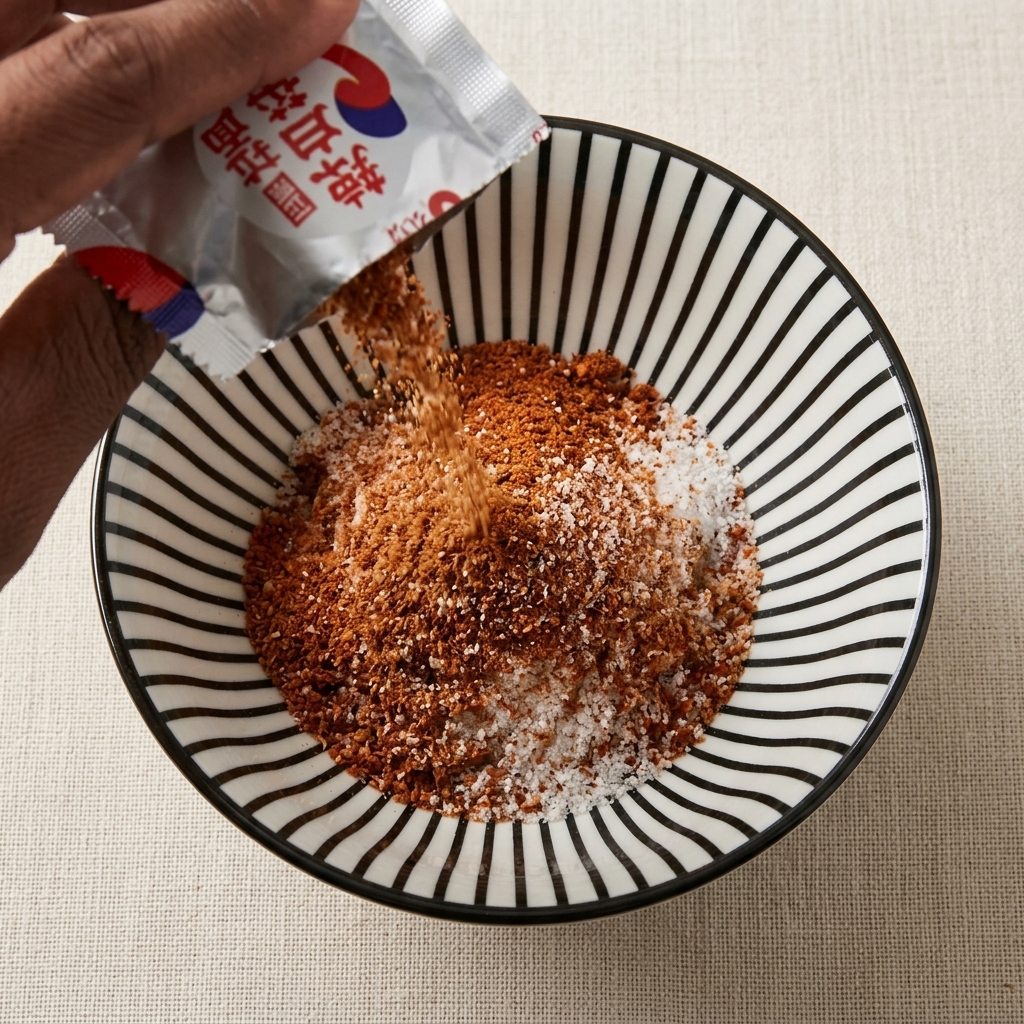
Incorporate the contents of a Shin Ramyun seasoning powder packet into the bowl. This adds an extra layer of savory, umami-rich flavor characteristic of the popular instant noodle broth.
Tip: You can save the dried vegetable packet from the noodles to add directly to the pot later. - 4Add soy sauce
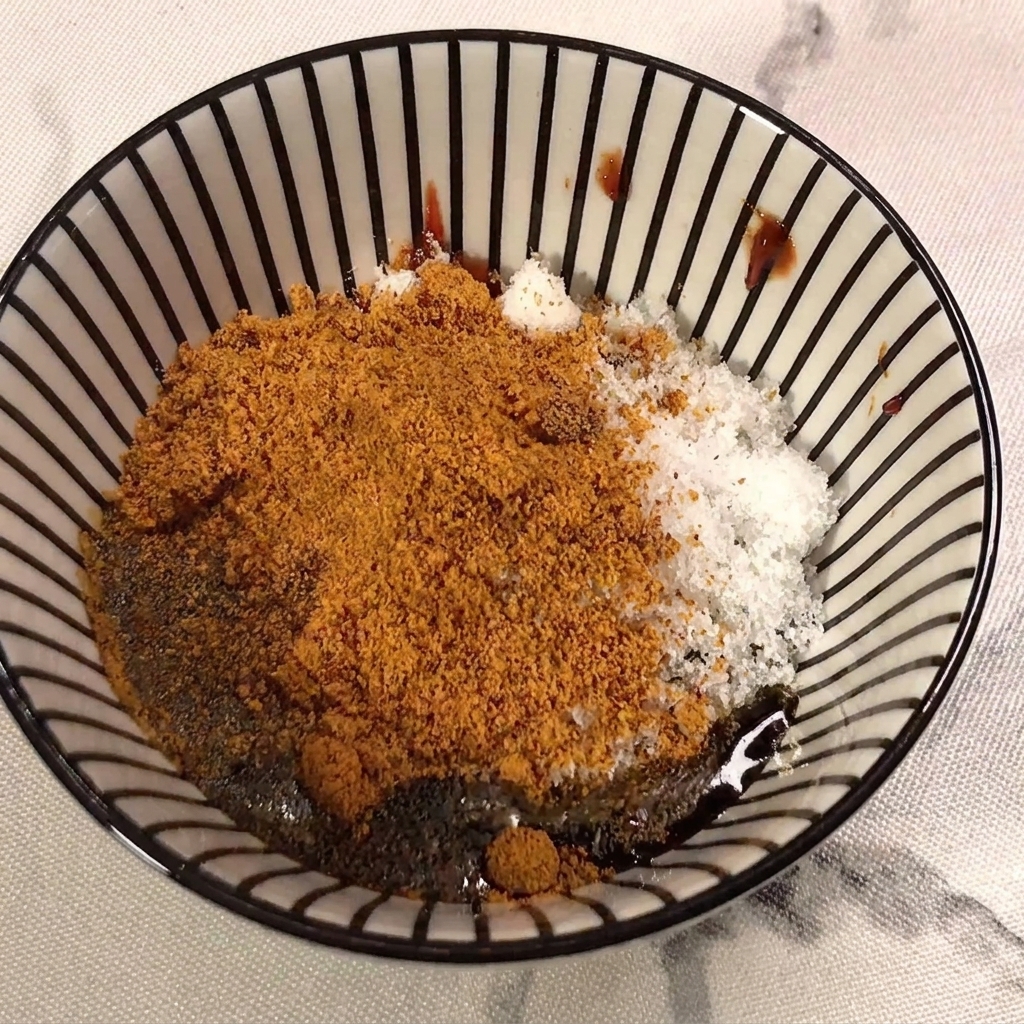
Pour two spoonfuls of light soy sauce into the mixture. This adds a salty, savory note that complements the chili paste and sugar.
Tip: Use a light soy sauce for a cleaner, more balanced flavor. - 5Whisk the sauce
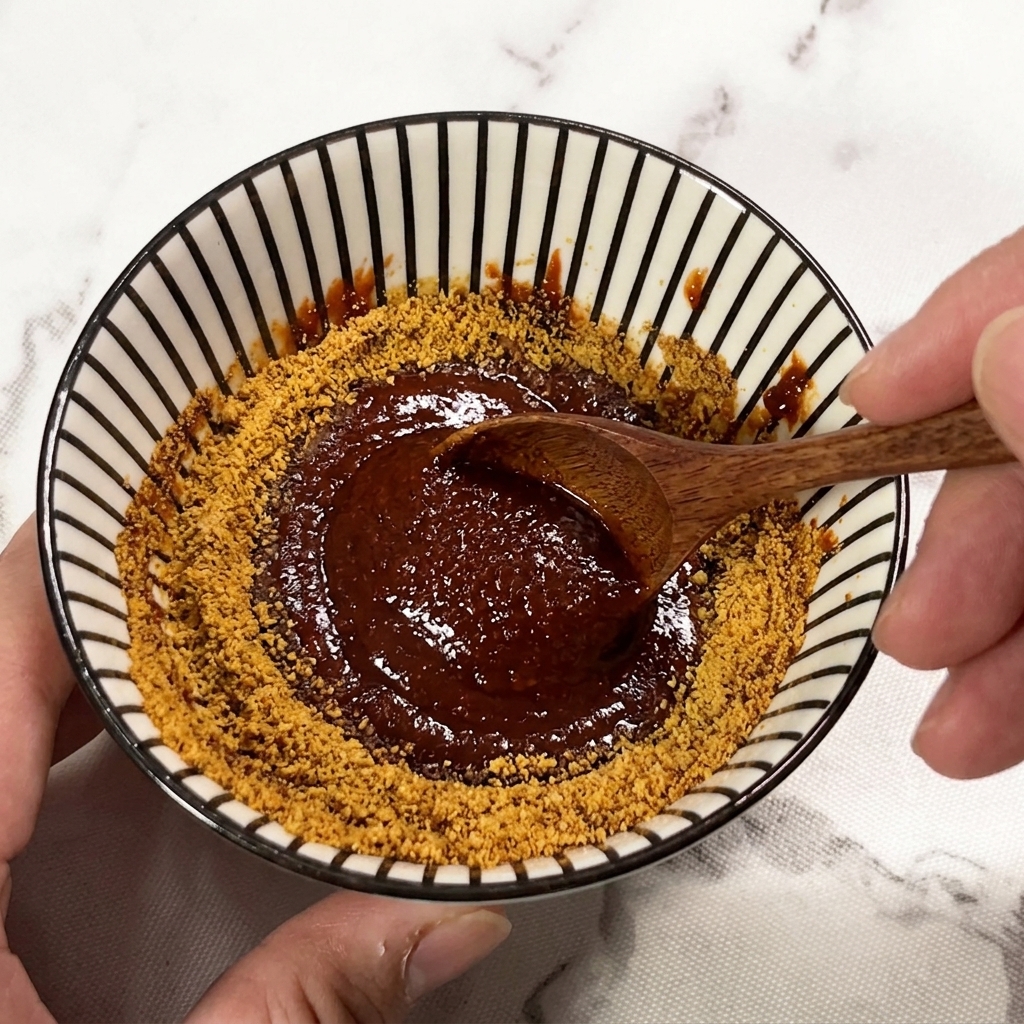
Using a wooden spoon, stir all the ingredients together in the bowl until they are thoroughly combined into a smooth, thick sauce paste.
Tip: Make sure no dry seasoning pockets remain. - 6Layer the aromatics
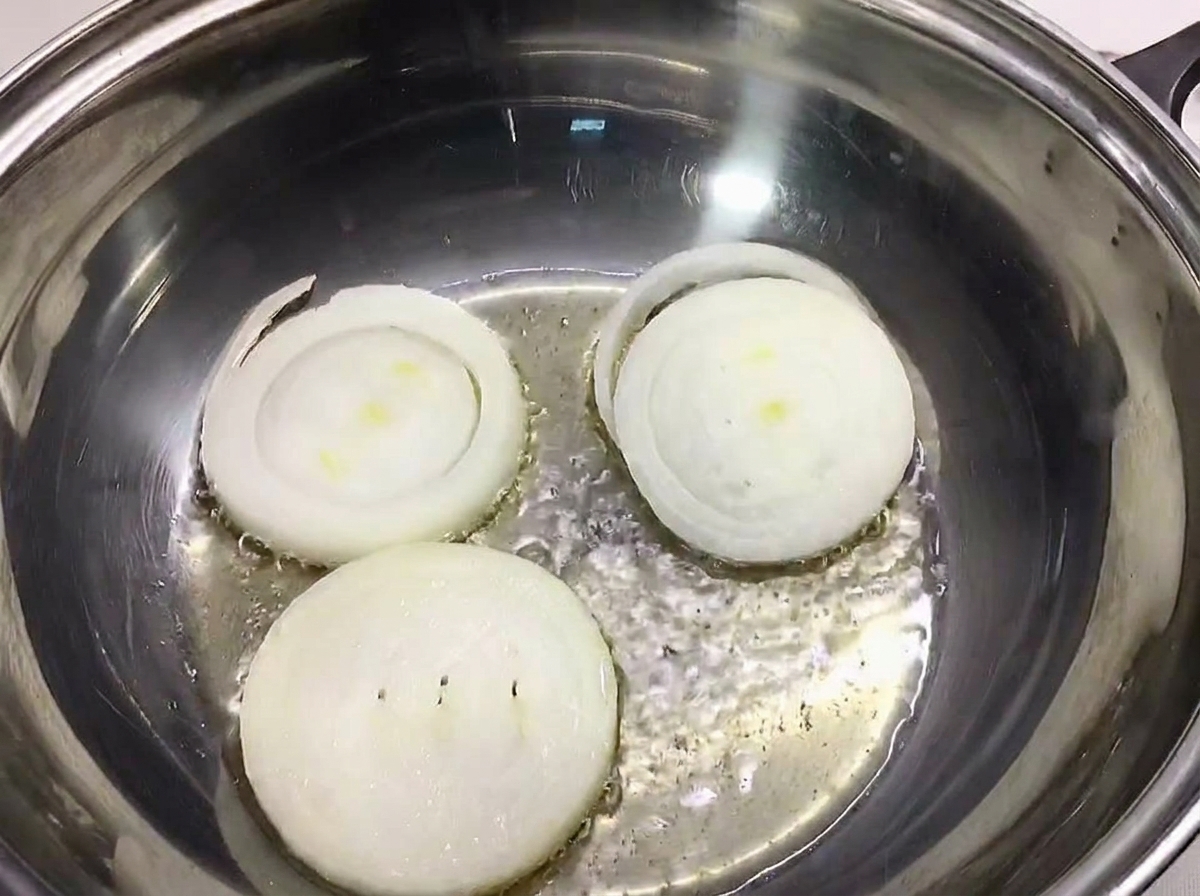
Arrange slices of onion at the base of the pot. These will act as a flavorful, fragrant foundation as the stew simmers.
Tip: Distribute the onion slices evenly to ensure the flavor permeates the entire broth. - 7Add mushrooms and cauliflower
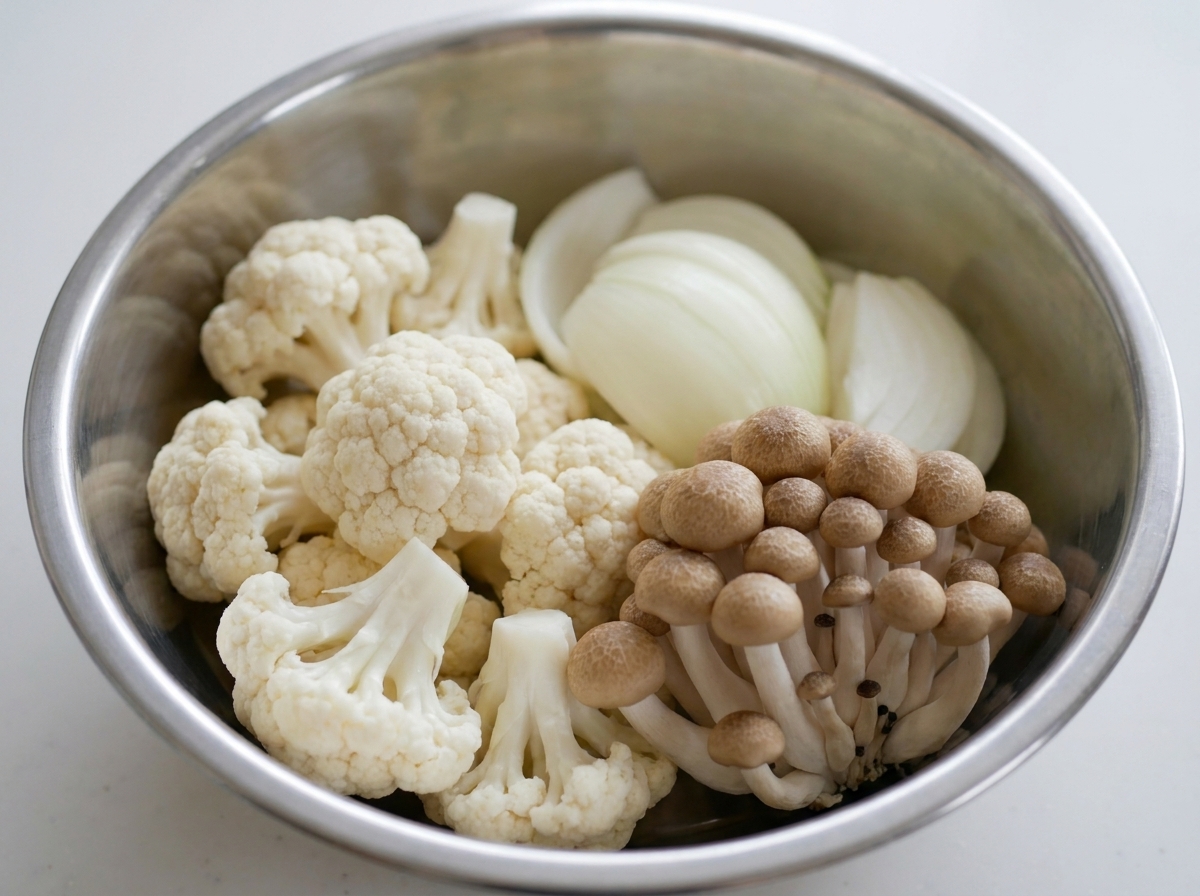
Place the fresh cauliflower florets and brown shimeji mushrooms into the pot. These vegetables will provide a nice crunch and earthy flavor, absorbing the savory broth as they simmer.
Tip: Make sure to wash and trim the vegetables properly before adding them to the pot. - 8Add cabbage and rice cakes
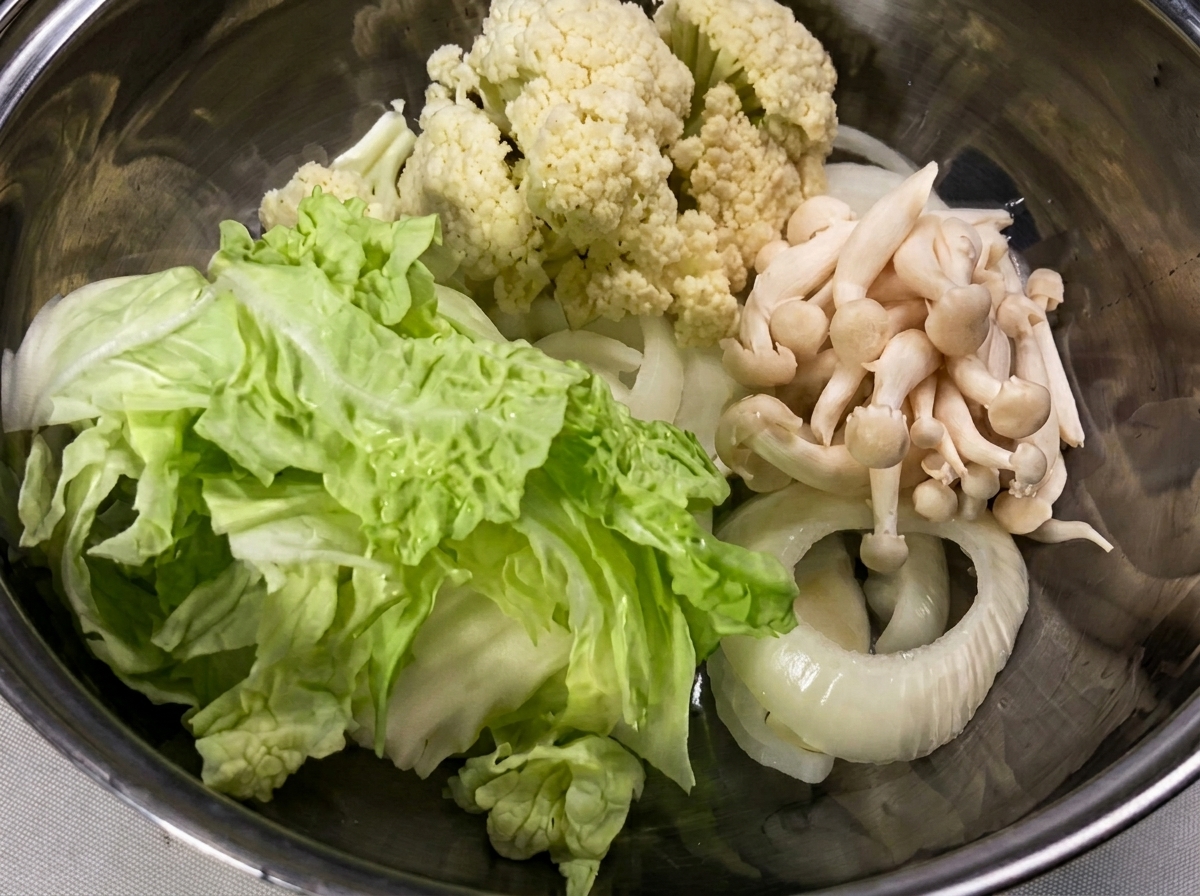
Layer fresh cabbage leaves and chewy rice cakes into the pot. The cabbage will soften and become sweet in the broth, while the rice cakes add a satisfying, chewy texture.
Tip: If the rice cakes are frozen, thaw them slightly before adding to ensure they cook evenly. - 9Arrange meat and Spam
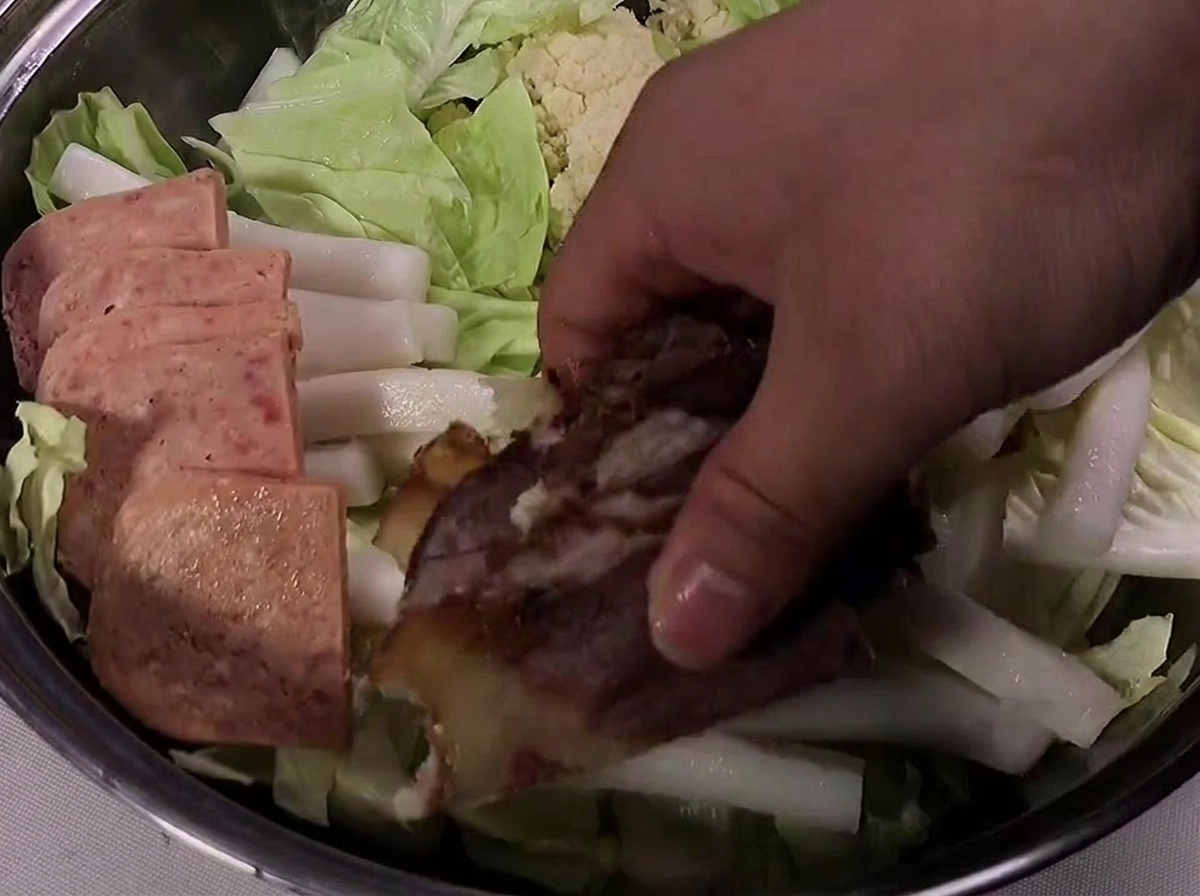
Place sliced Spam, beef, and sausages around the perimeter of the pot. Arranging these ingredients neatly makes the final presentation more appealing and ensures they cook uniformly in the broth.
Tip: Cut the Spam and sausages into uniform slices so they look professional and cook at the same rate. - 10Add fish cakes and shrimp
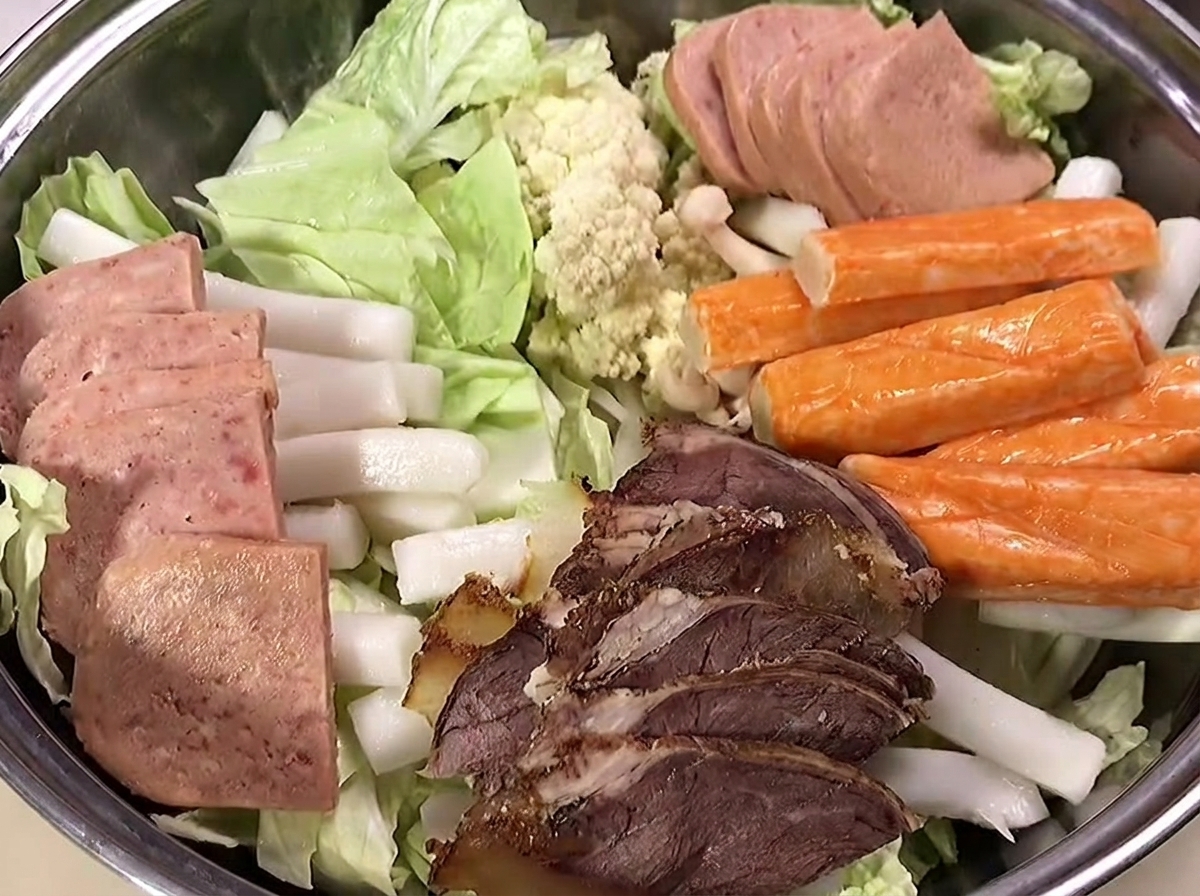
Incorporate fish cakes and fresh shrimp into the pot. Seafood adds a delicate sweetness to the Army Stew, balancing the savory and spicy flavors of the broth.
Tip: Add the shrimp towards the end of the layering process so they dont overcook before serving. - 11Add broth base
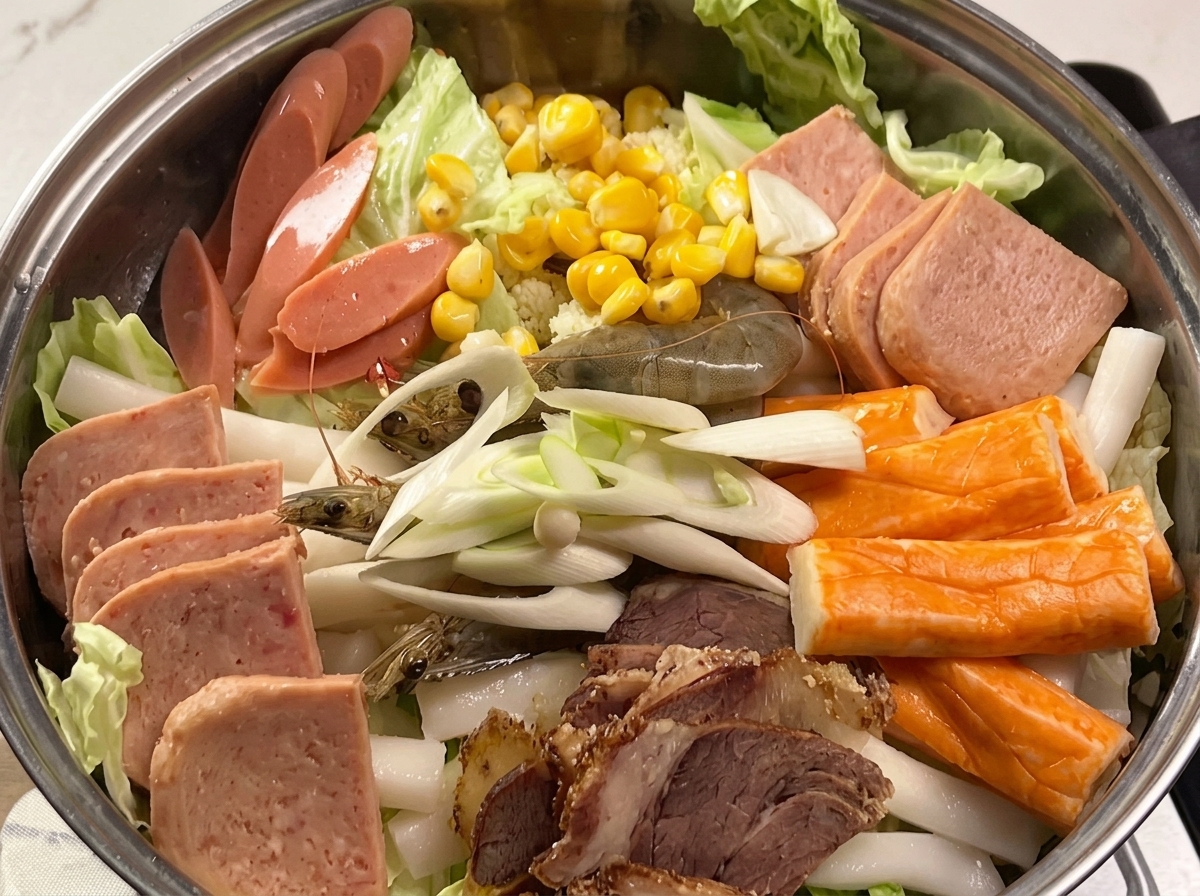
Pour water into the pot until the ingredients are mostly covered. This forms the base of your Army Stew, which will intensify in flavor as it simmers with the kimchi and sauces.
Tip: You can use vegetable or chicken stock instead of water for an even richer, deeper flavor. - 12Add spicy sauce
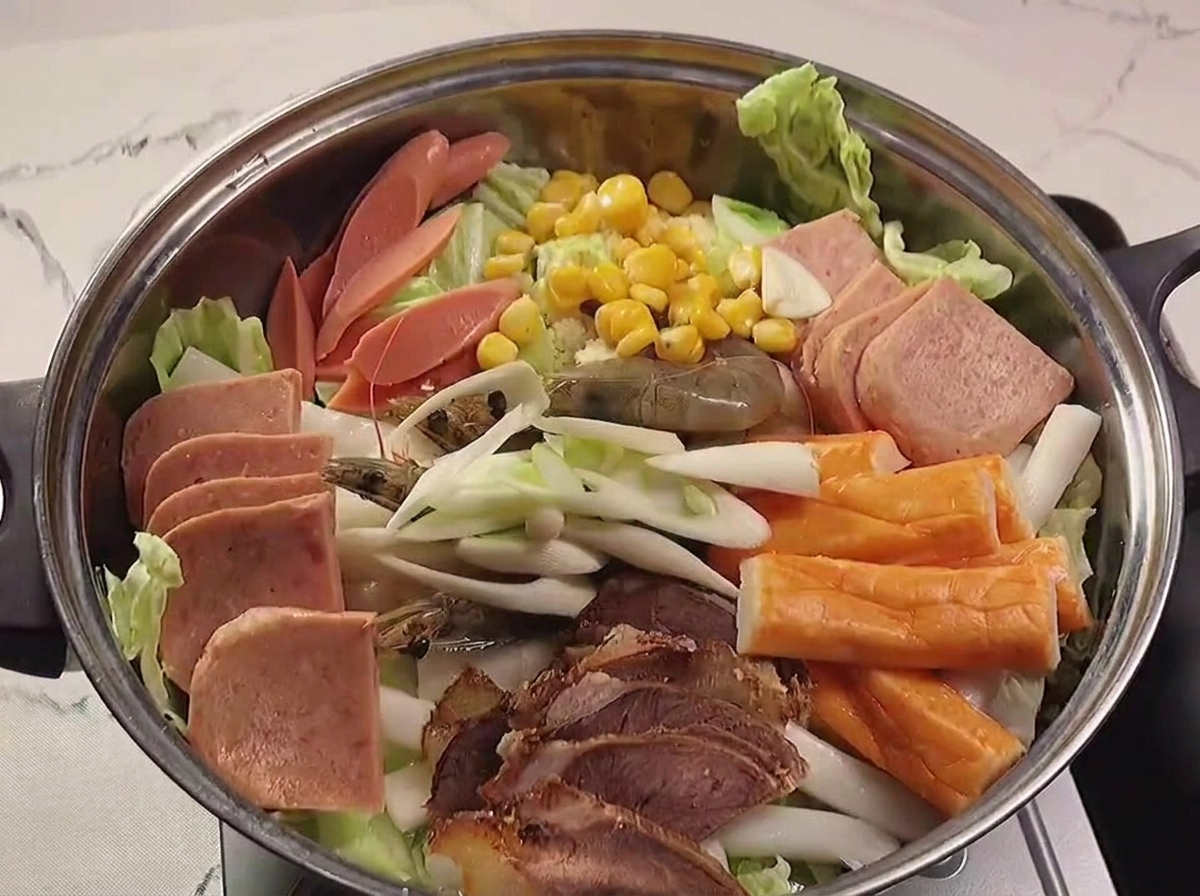
Evenly spread the prepared spicy sauce over the top of the arranged ingredients. As the pot heats up, this sauce will melt into the broth, seasoning everything with its signature Korean spicy, savory profile.
Tip: Adjust the amount of sauce to your preference if you prefer a milder or spicier stew. - 13Add instant noodles
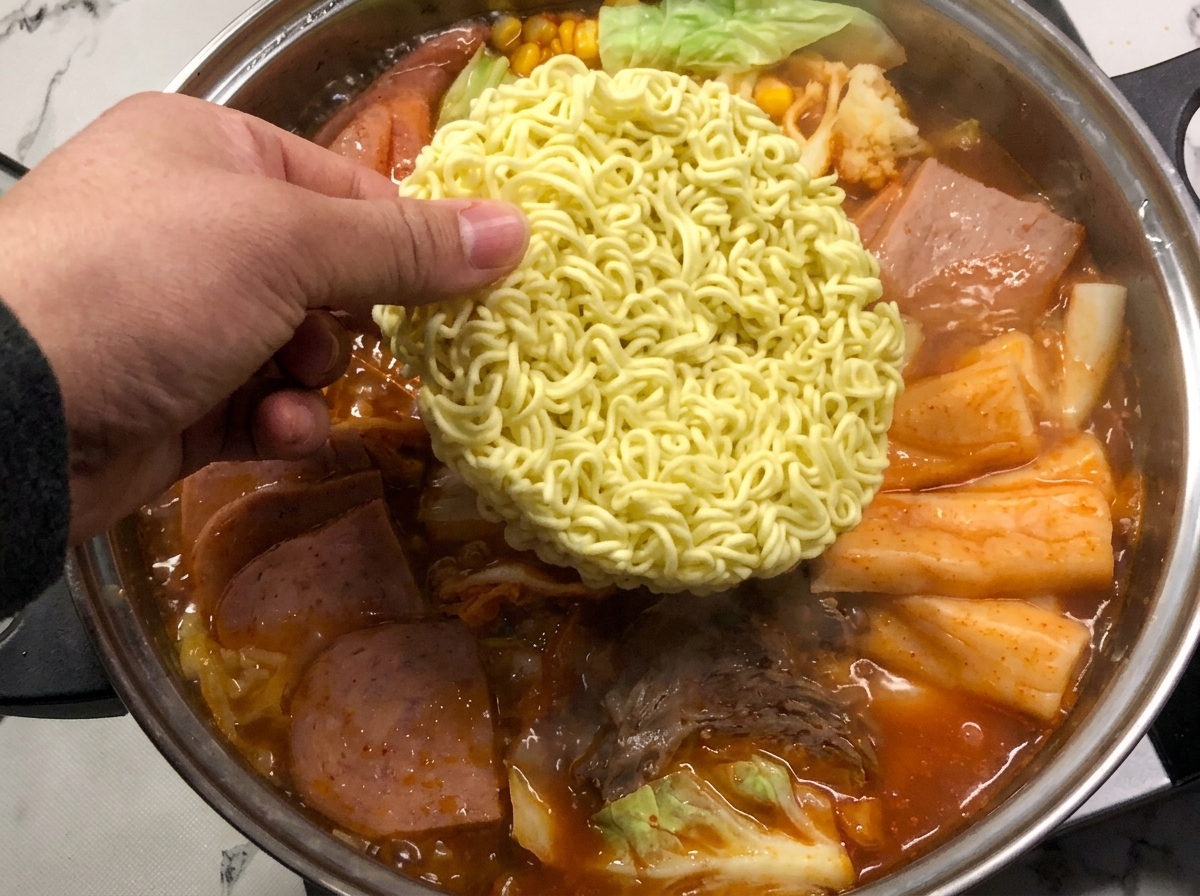
Place a block of instant noodles into the simmering broth, allowing them to soften and absorb the savory flavors of the stew.
Tip: Keep the heat at a steady simmer so the noodles cook evenly without becoming mushy. - 14Top with cheese
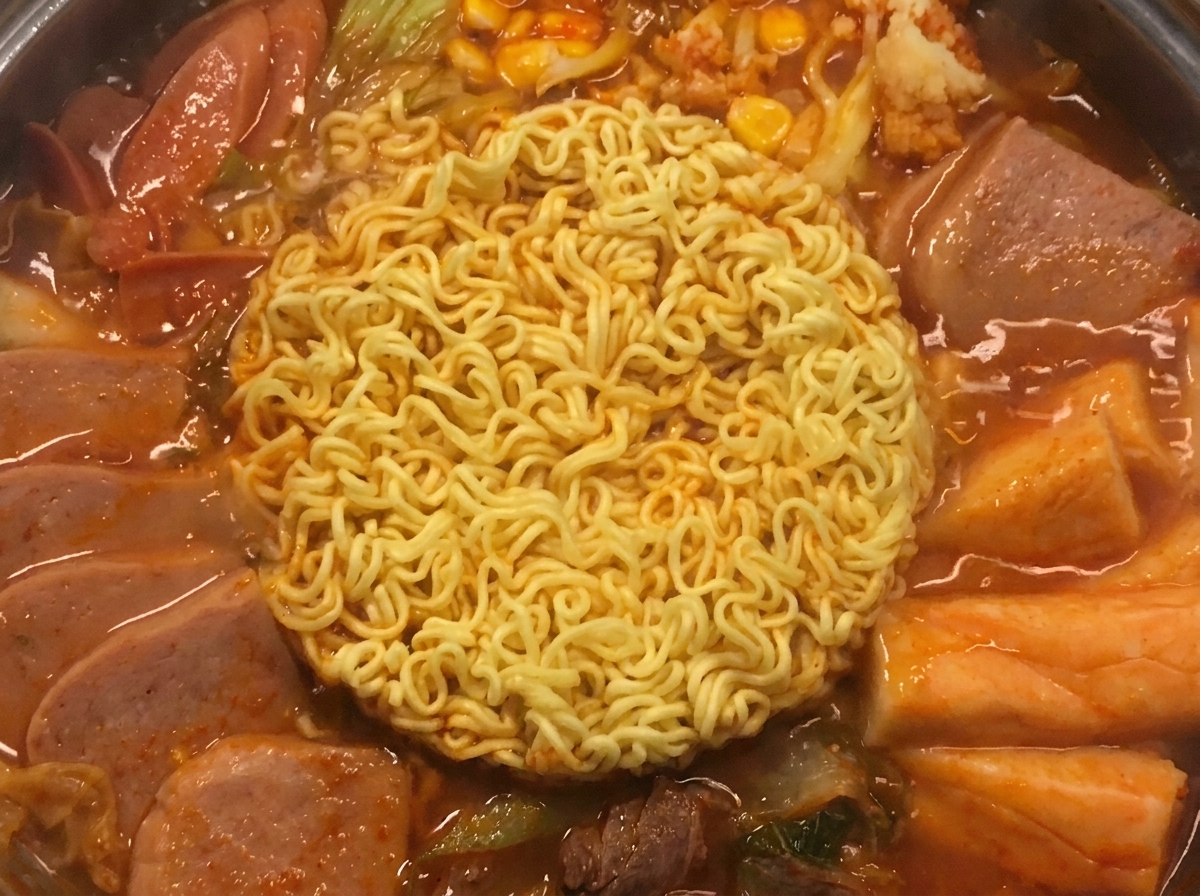
Place two slices of processed cheese directly onto the hot noodles. The cheese will melt into the broth, creating a creamy and rich texture.
Tip: Do not stir the cheese in immediately; let it melt naturally over the heat to create a beautiful creamy layer. - 15Add an egg
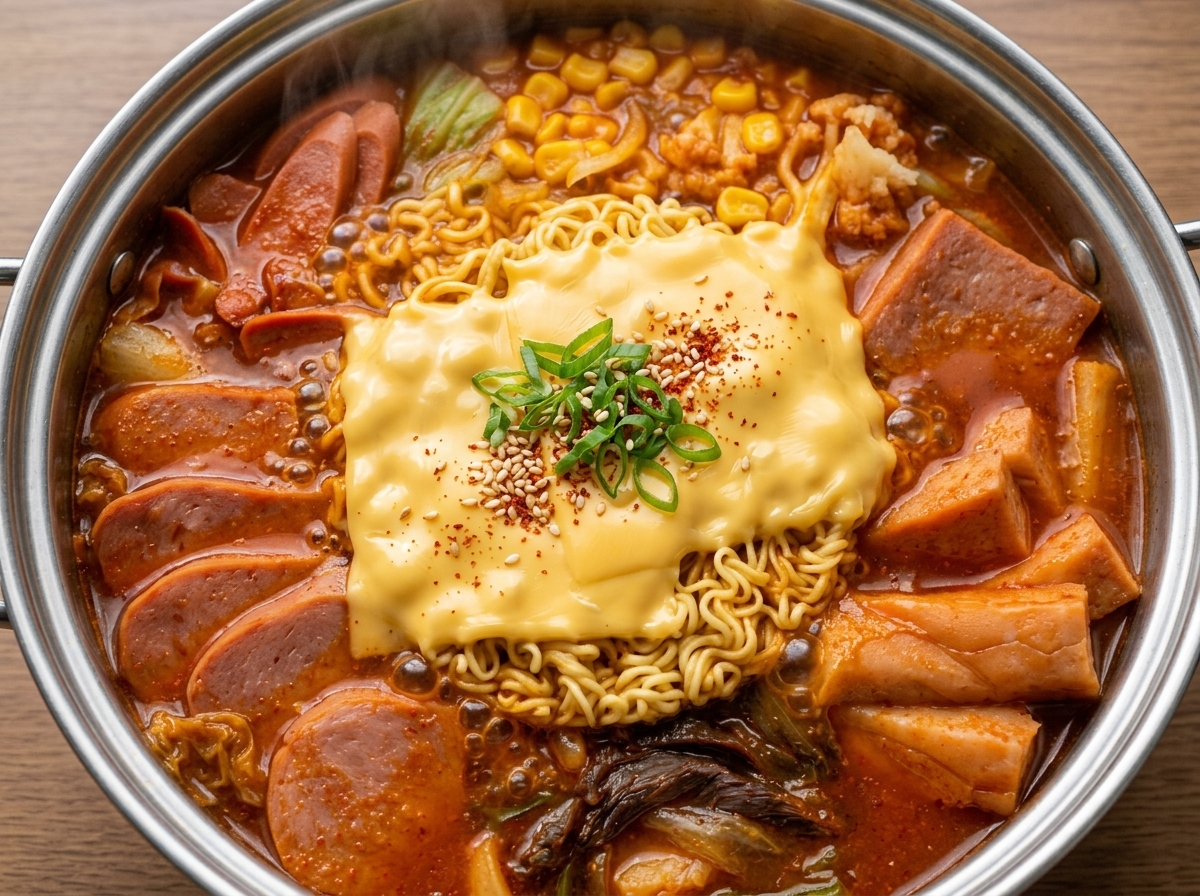
Carefully crack a fresh egg into the center of the pot, directly onto the melting cheese and noodles. Cover the pot and simmer for a few minutes until the egg white is set but the yolk remains runny.
Tip: If you prefer a firmer yolk, leave the egg to cook for an additional minute. - 16Garnish with corn and onions
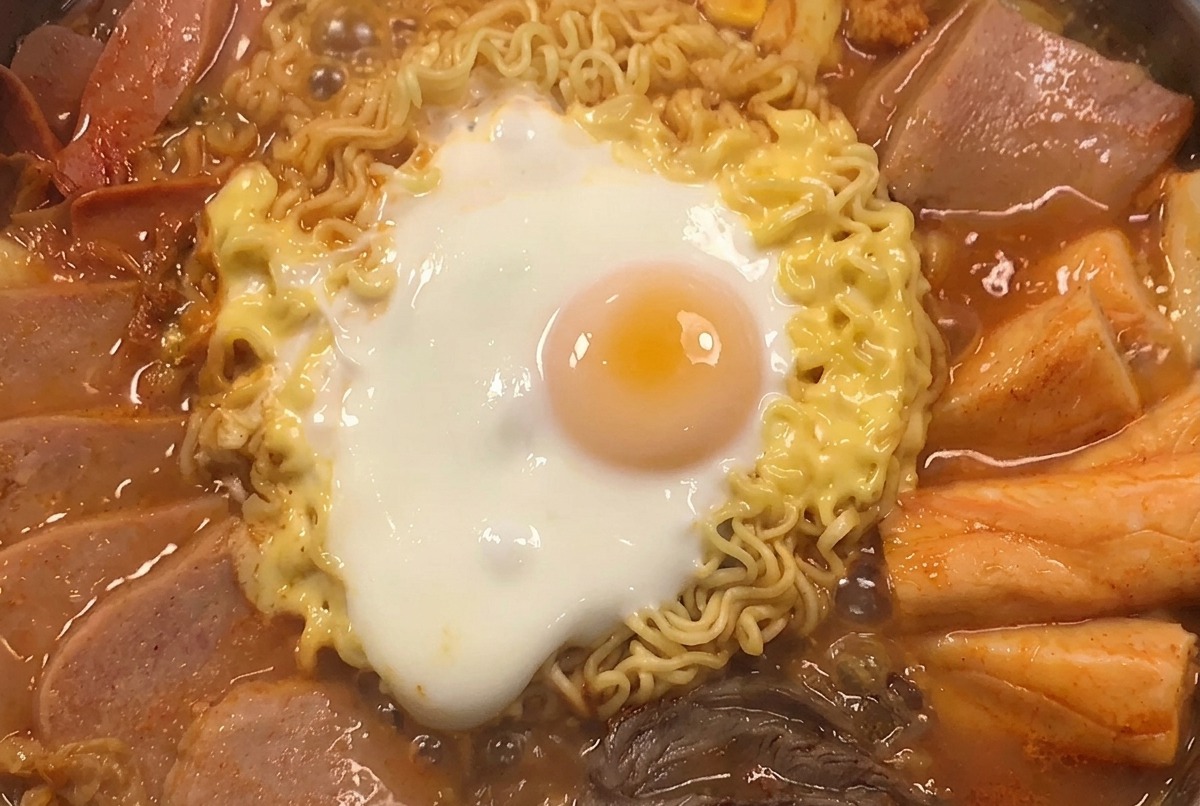
Finish the stew by sprinkling a handful of sweet corn and freshly sliced green onions over the center. This adds a pop of color and a fresh, crunchy texture to the hearty dish.
Tip: Add the green onions at the very last moment to maintain their vibrant green color and crispness.