Classic Korean Army Stew (Budae Jjigae)
A flavorful and comforting fusion stew born from post-war necessity, featuring savory meats, tofu, and kimchi in a spicy, rich broth topped with melted cheese.
Korean Army Stew, or Budae Jjigae, is a beloved example of culinary resilience and fusion. Originally created in the aftermath of the Korean War using surplus ingredients like luncheon meat and sausages combined with traditional Korean staples like kimchi and chili paste, this stew has evolved into a popular comfort food. It is best enjoyed bubbling in the center of the table, where the melty cheese ties the spicy, savory elements together into a hearty, communal feast.

Ingredients
- 200 g luncheon meat
- 150 g mini sausages
- 250 g tofu
- 200 g king oyster mushrooms
- 6 fish cakes
- 1 slice cheddar cheese
- 200 g napa cabbage
- 100 g kimchi
- 4 sticks crab sticks
- 1 bunch green onion
- 1 bunch leek
- 1 bunch cilantro
- 1 L chicken soup stock base
- 2 tbsp minced garlic
- 2 tbsp Korean chili powder
- 2 tbsp cooking wine
- 1 tbsp soy sauce
- 0.5 tbsp sugar
- 0.5 tbsp Korean chili paste
- 1 pinch black pepper
Instructions
- 1Prepare the luncheon meat

Place the luncheon meat on a clean cutting board and carefully slice it into uniform pieces. These pieces will be added to the stew to provide a savory, classic Army Stew flavor.
Tip: Keep the slices consistent in thickness so they cook evenly throughout the stew. - 2Wash the napa cabbage
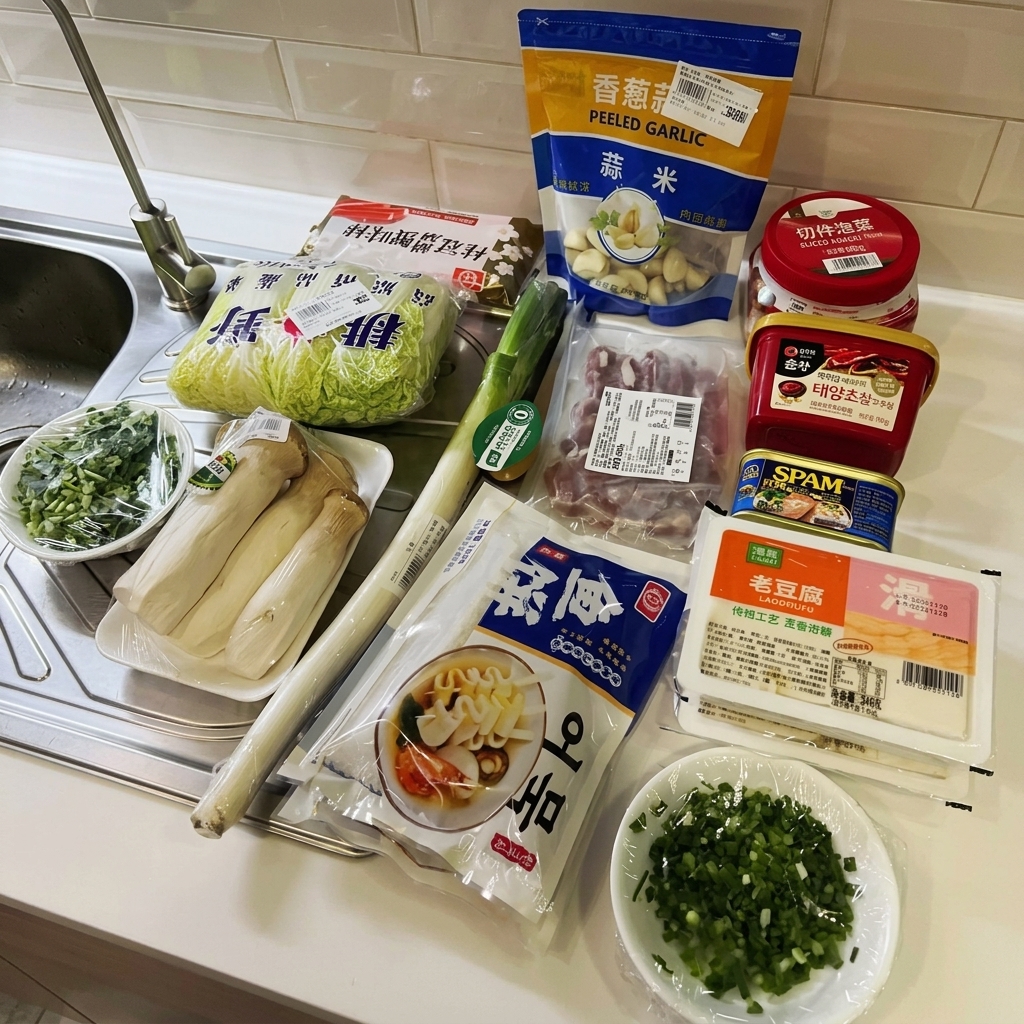
Thoroughly rinse the fresh napa cabbage leaves under cool running water in the sink. Ensure all dirt is removed from the base of the leaves to ensure your stew remains clean and fresh.
Tip: Pat the cabbage dry after washing to prevent diluting the flavor of the broth. - 3Defrost the fish cakes and sausages

Place the fish cakes and mini sausages in a bowl filled with water to gently defrost them. This prepares the ingredients to absorb the rich flavors of the stew broth.
Tip: Change the water once if the ingredients are very frozen to speed up the process. - 4Mince the garlic
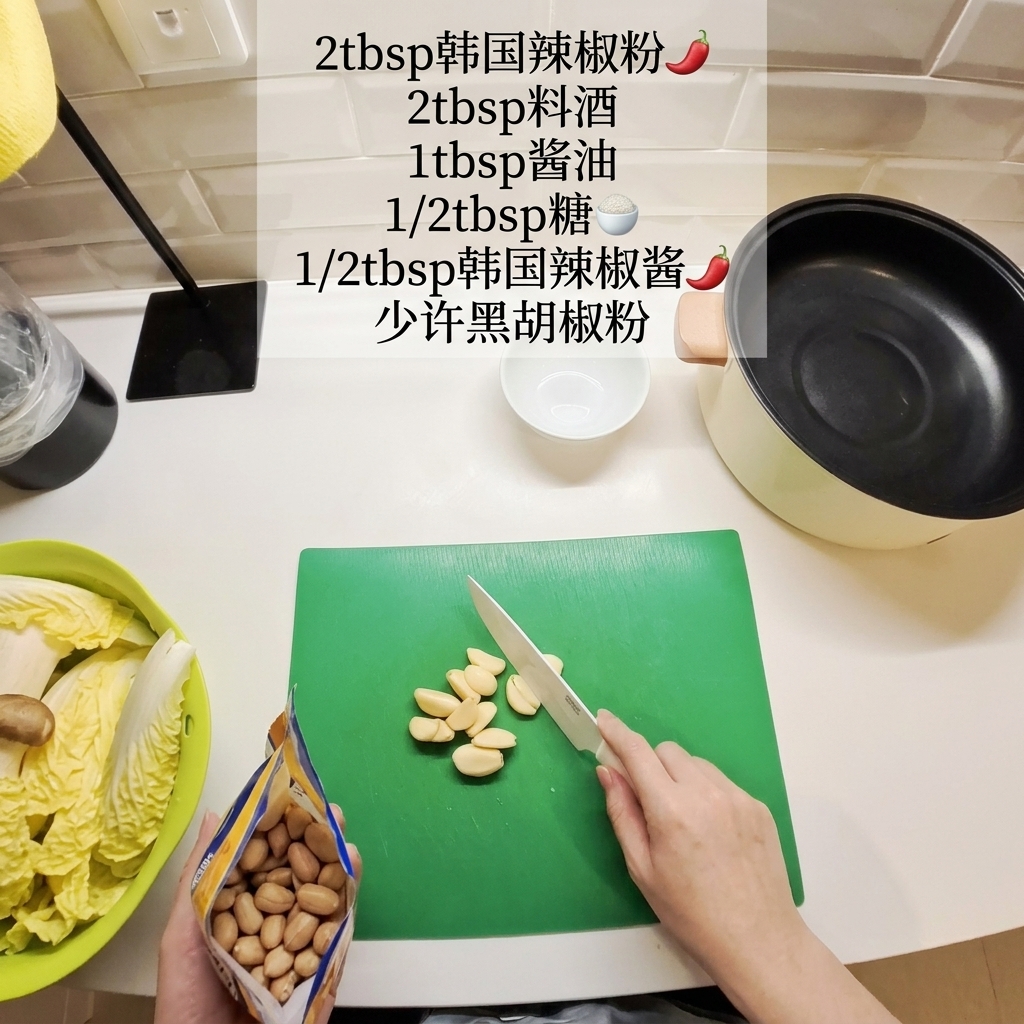
Using a sharp knife, finely mince the garlic cloves on your cutting board. This creates the aromatic base needed for the spicy Korean sauce.
Tip: Crush the cloves with the side of your knife first to make peeling and mincing much easier. - 5Mix the sauce ingredients
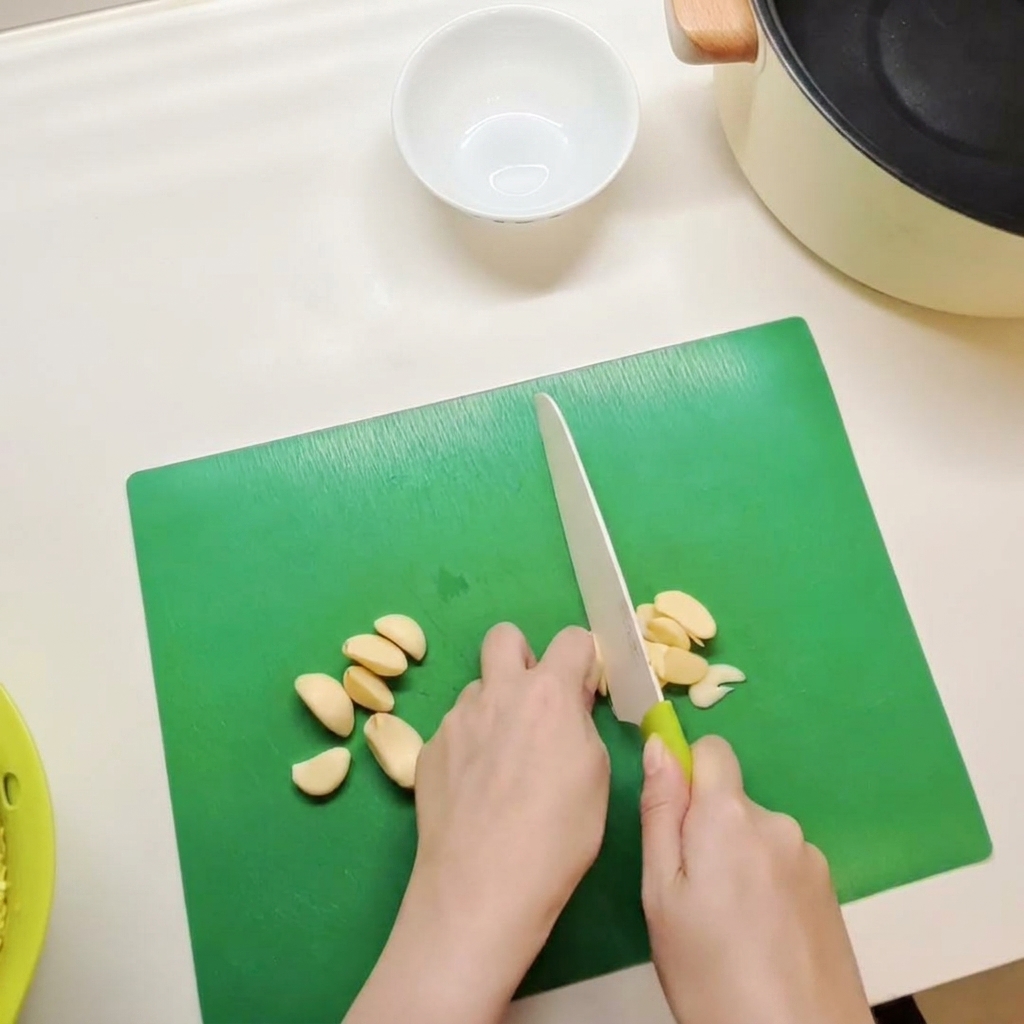
In a small mixing bowl, combine the minced garlic, Korean chili powder, cooking wine, soy sauce, sugar, and Korean chili paste. Stir well until the sugar is dissolved and the paste is smooth.
Tip: Add a pinch of black pepper at the end for an extra layer of warmth. - 6Prepare vegetables for the pot
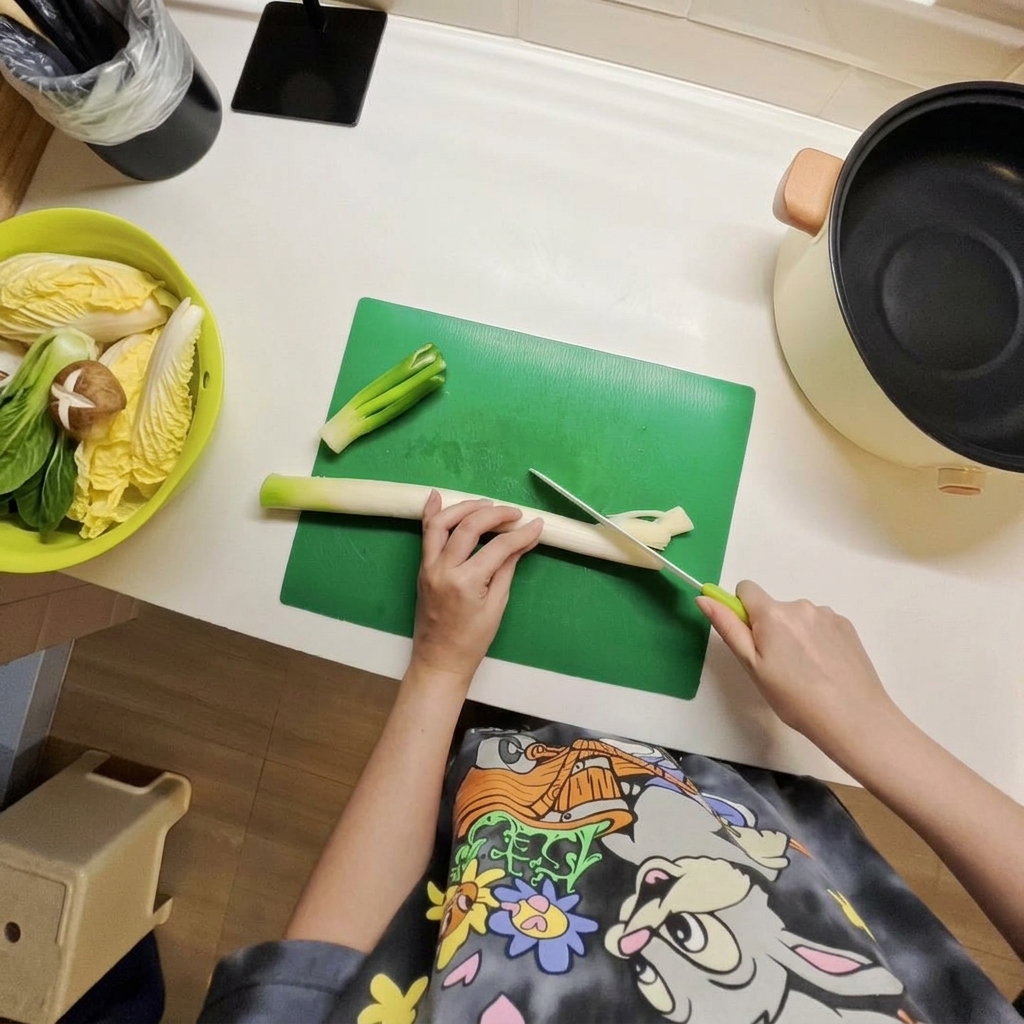
Chop the leek and napa cabbage into bite-sized pieces, then layer them into the electric pot. These vegetables will form the foundation of your Army Stew.
Tip: Place the harder stalks of the cabbage at the bottom so they cook thoroughly in the broth. - 7Prepare the tofu
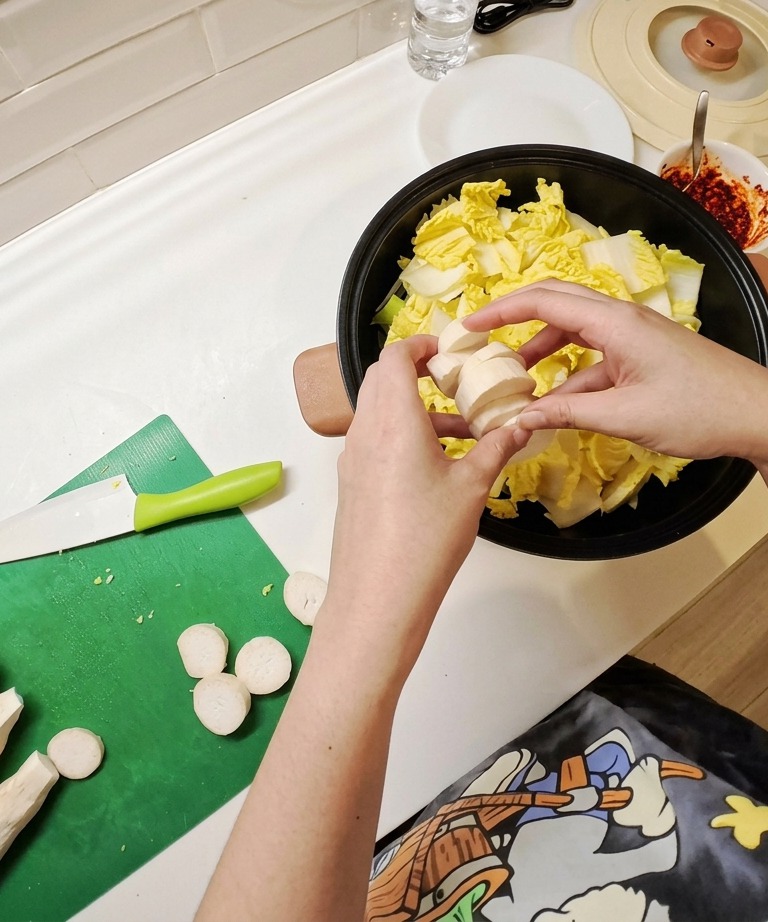
Take the firm tofu and slice it into uniform pieces on your cutting board. These pieces will be arranged in the stew pot to soak up the flavorful broth during cooking.
Tip: Keep the slices consistent in thickness so they cook evenly throughout. - 8Slice the protein
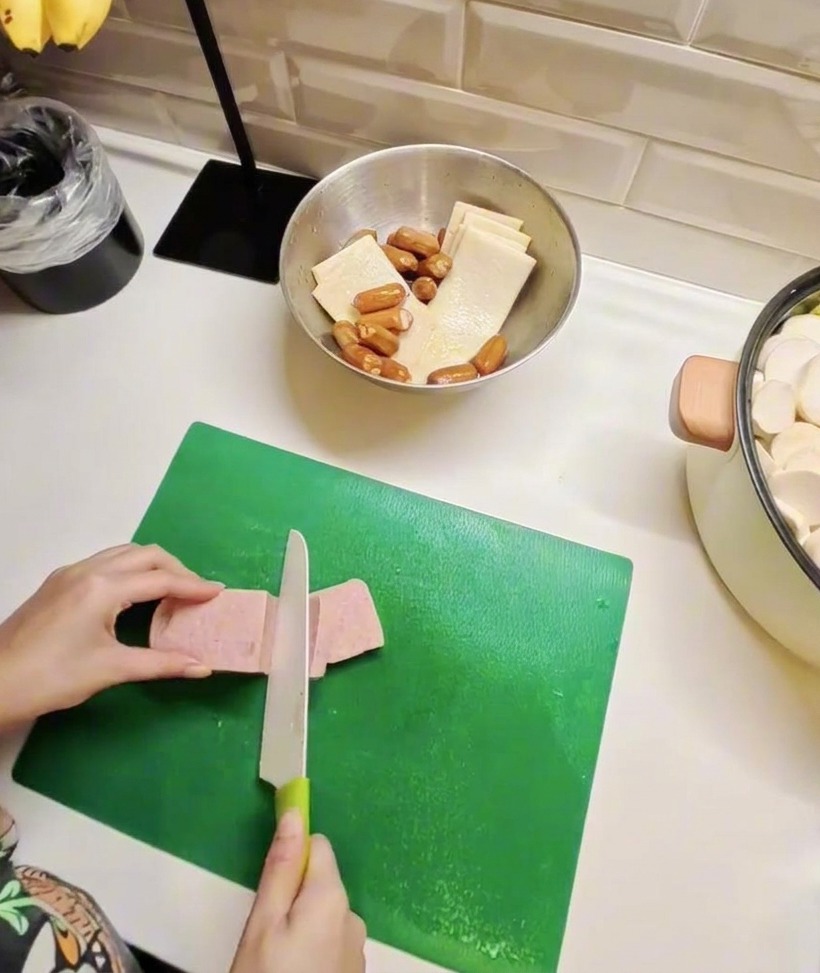
Slice the luncheon meat and fish cakes into bite-sized rectangular pieces. These processed meats are essential components that give Korean Army Stew its signature savory profile.
Tip: If the luncheon meat is too soft, chill it briefly in the fridge before slicing for cleaner, more defined edges. - 9Assemble the stew pot
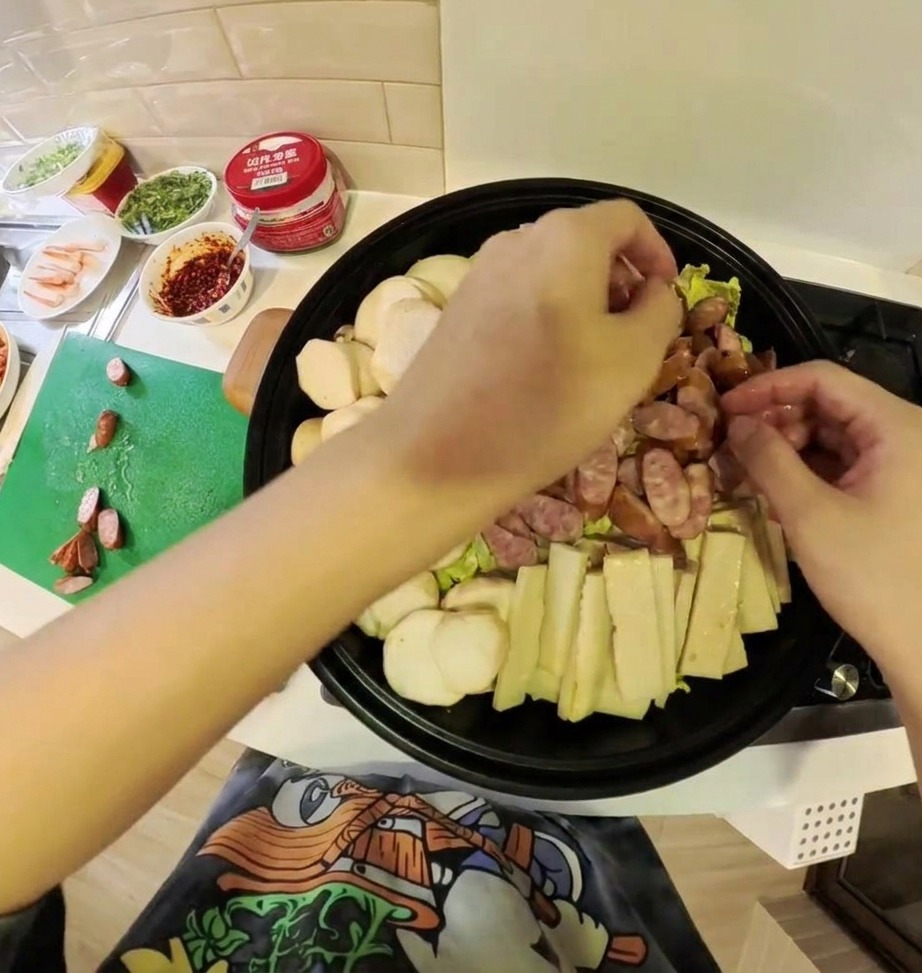
Begin layering your prepared ingredients into the stew pot. Add the chopped napa cabbage, sliced tofu, luncheon meat, fish cakes, sausages, and a generous portion of kimchi. Arrange everything neatly for a visually appealing presentation before adding the broth.
Tip: Arranging ingredients in circular sections around the pot makes it easier to serve and looks more authentic. - 10Add the spicy sauce
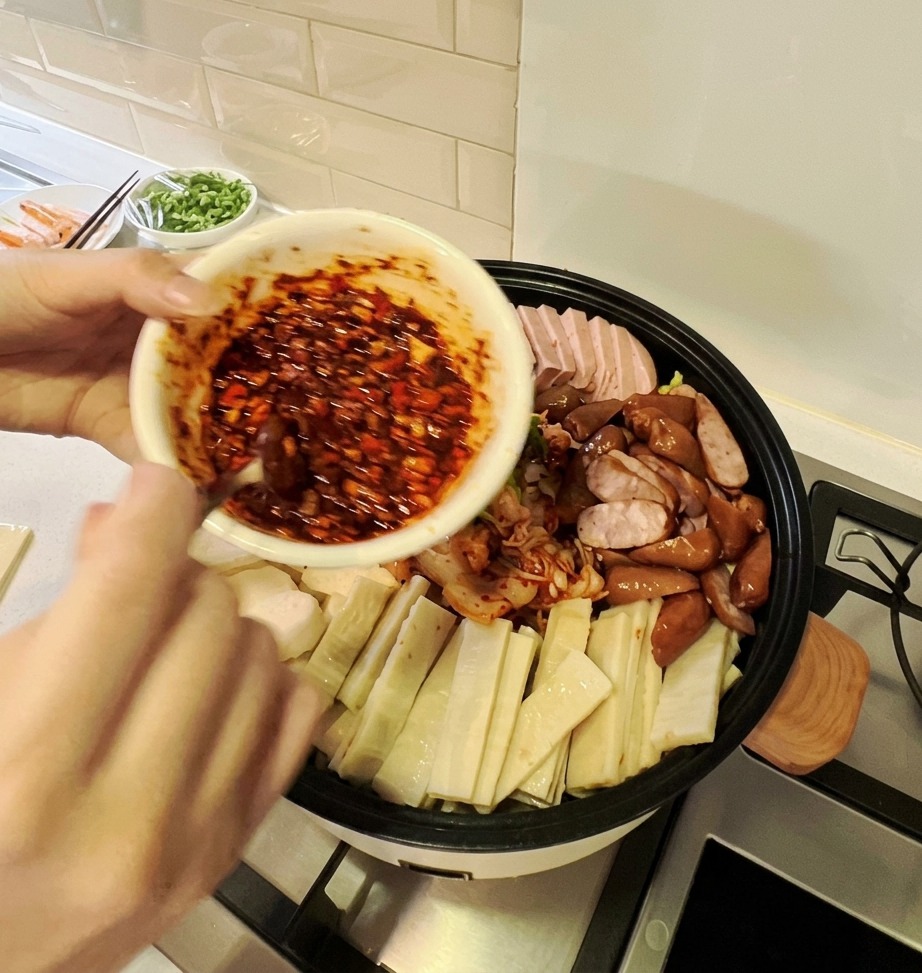
Pour your pre-mixed spicy sauce evenly over the top of the assembled ingredients in the pot. The sauce, made from garlic, Korean chili powder, soy sauce, and other seasonings, will infuse the dish with heat and depth as it simmers.
Tip: Pour the sauce slowly to ensure it coats all the vegetables and meats thoroughly, creating a balanced flavor profile in every bite.