Simplified Korean Army Stew (Budae Jjigae)
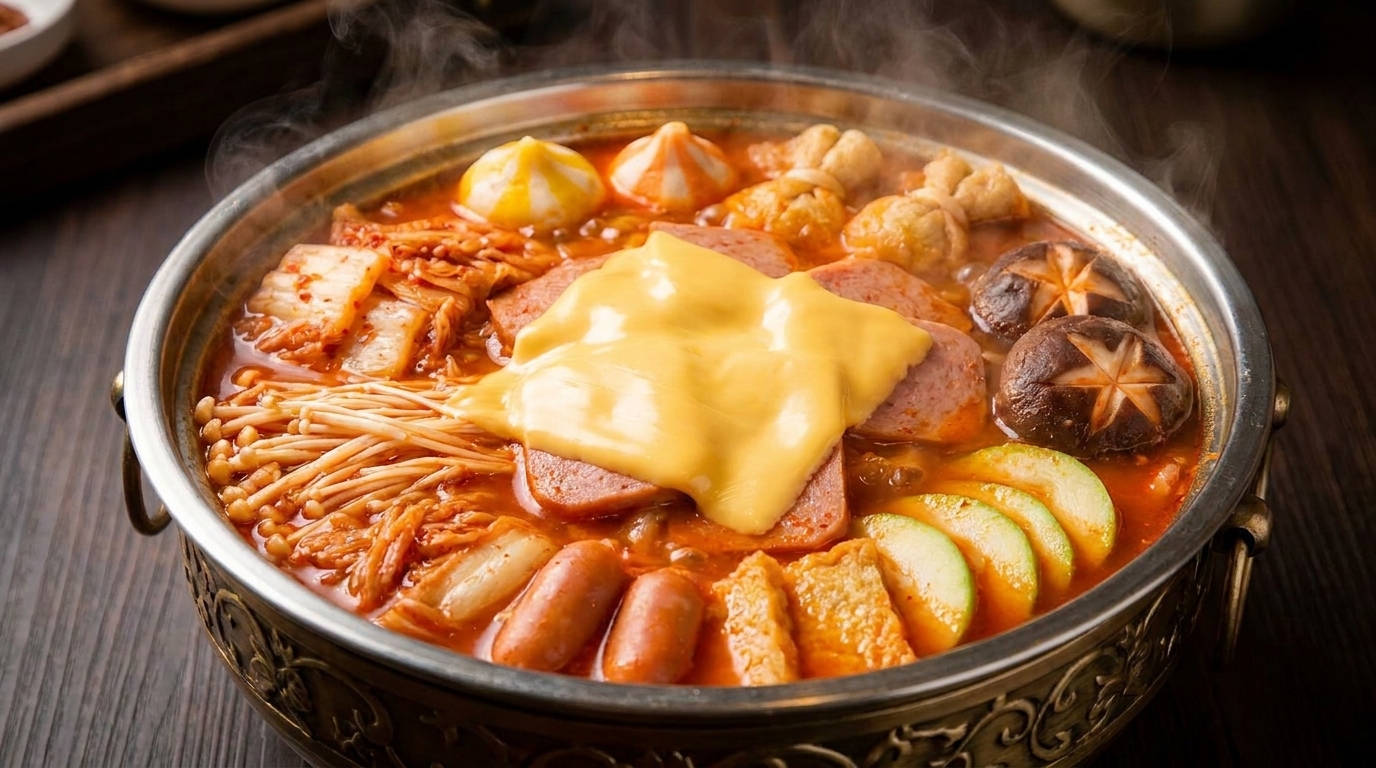
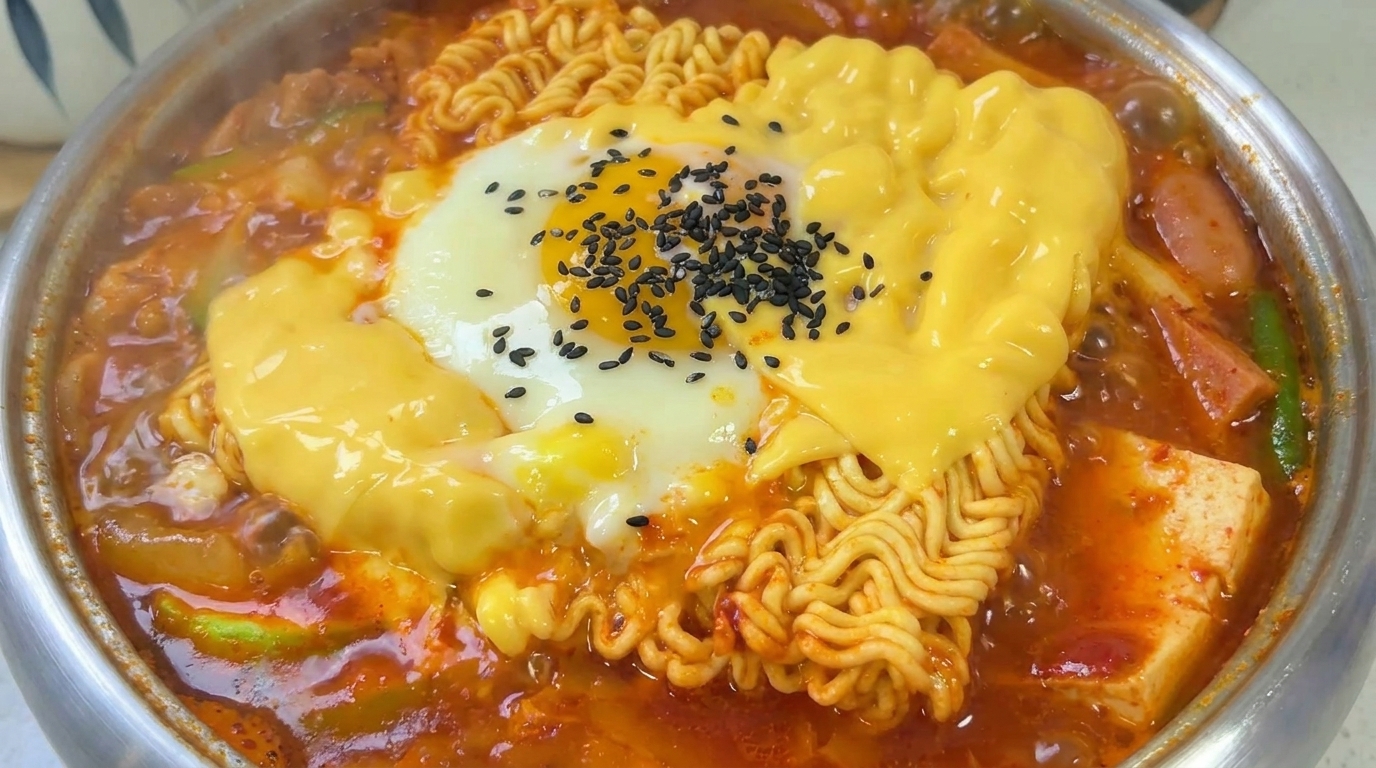
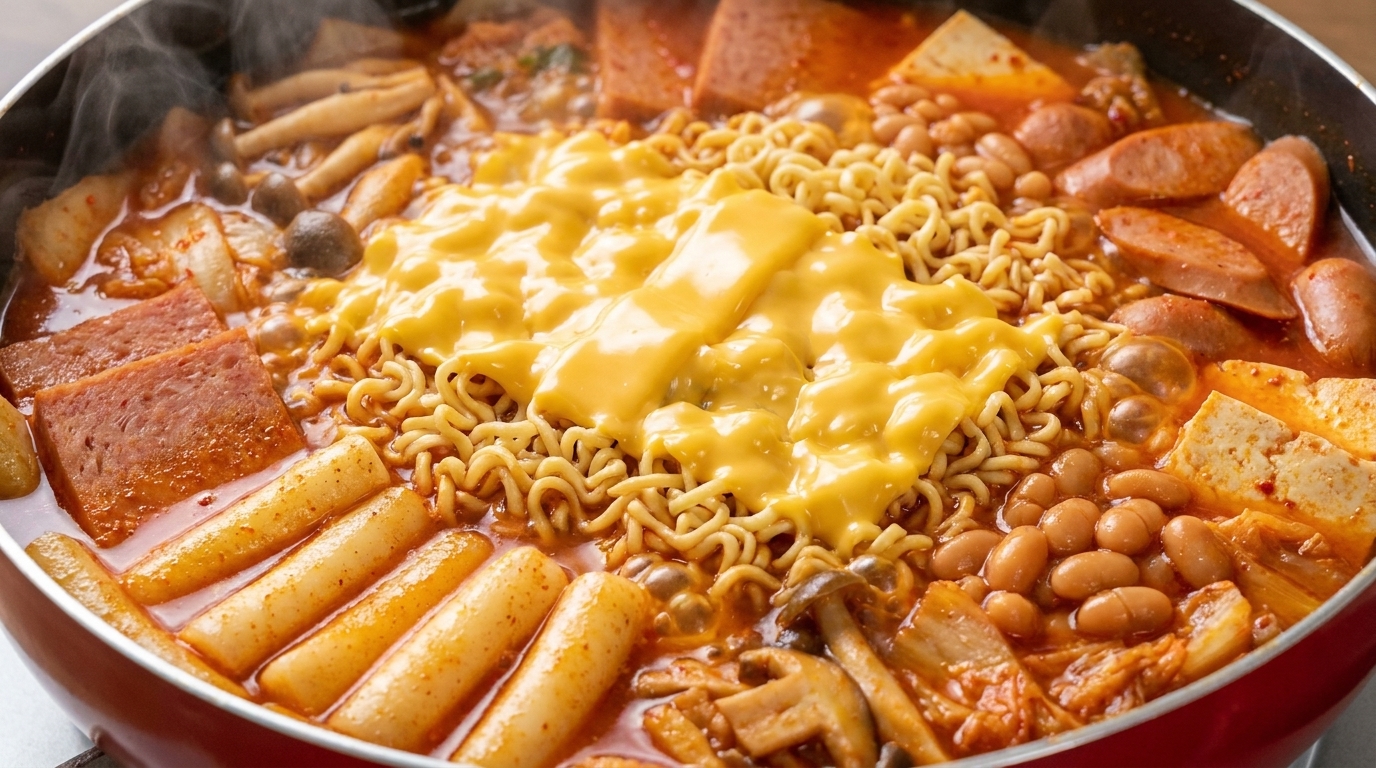
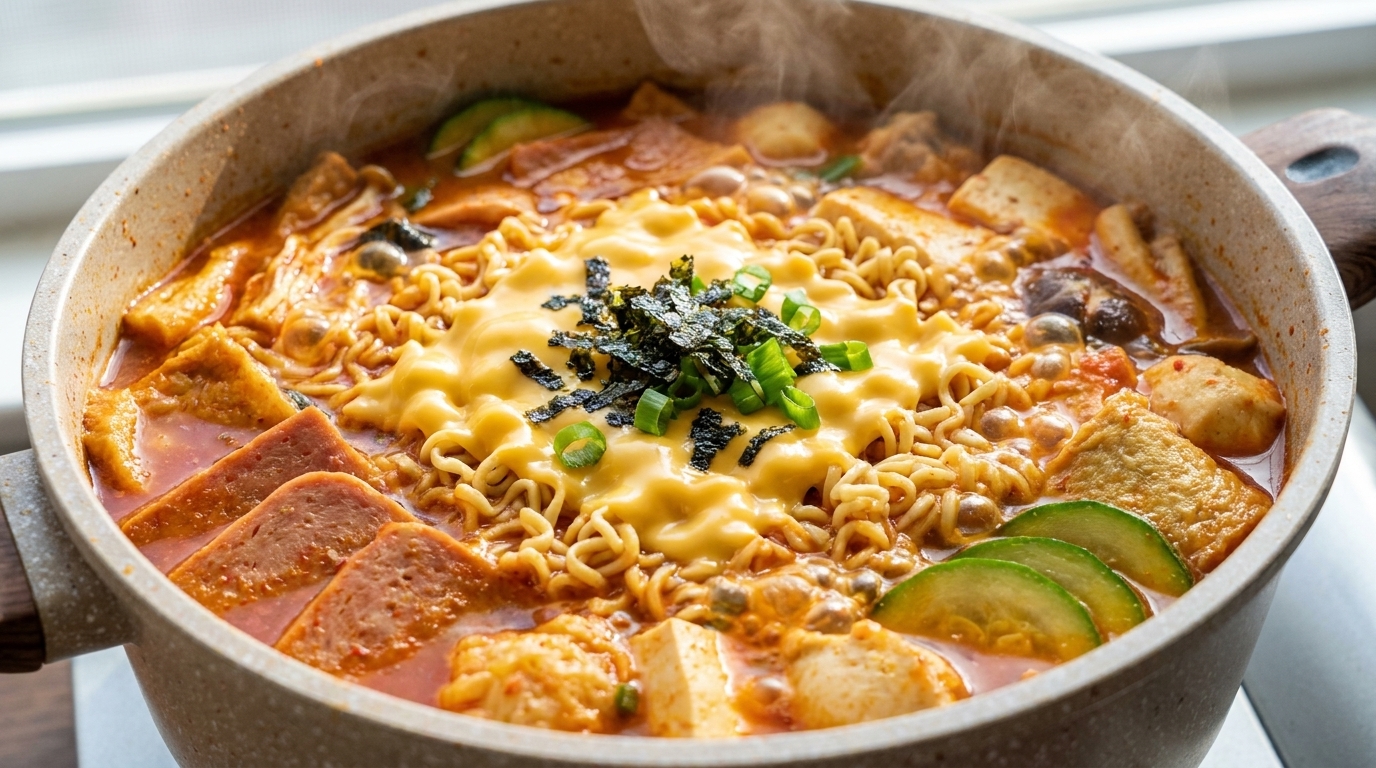
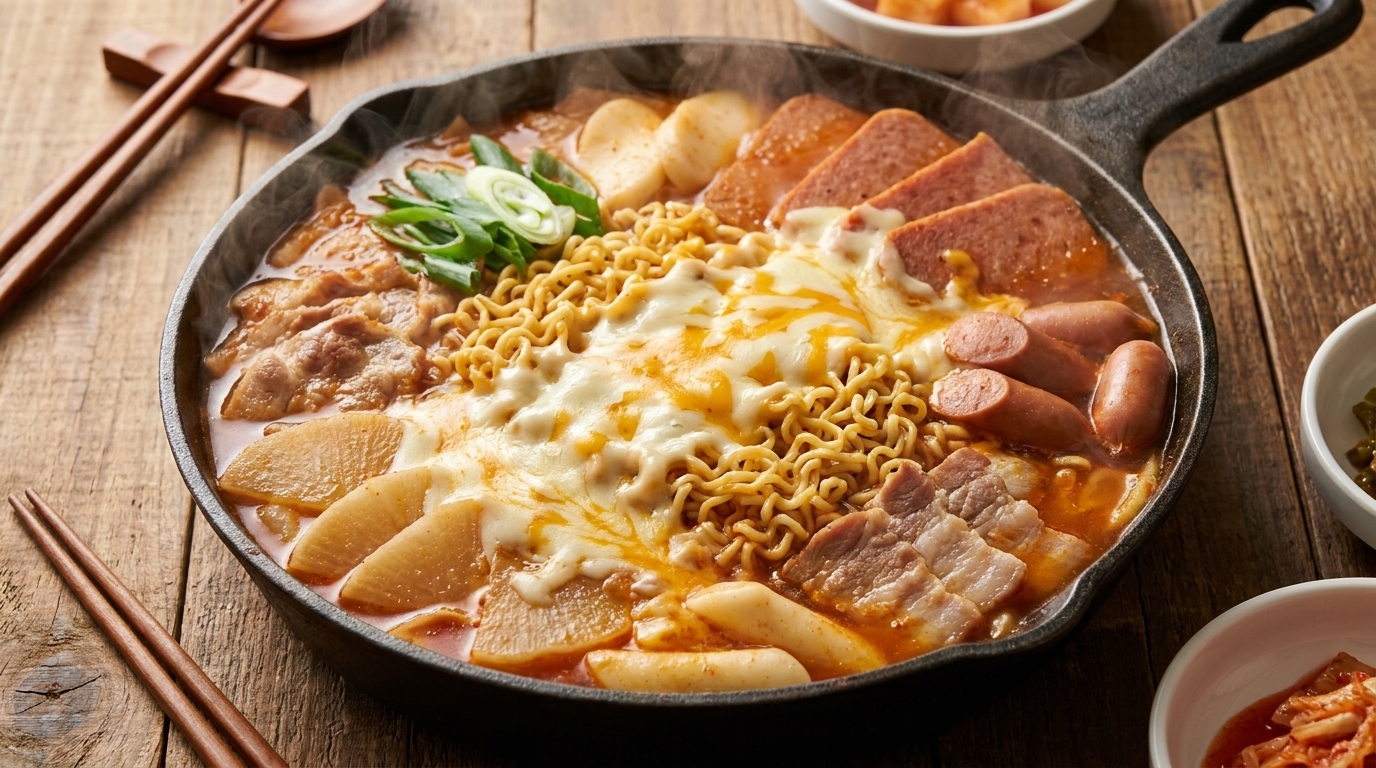
A quick and savory fusion stew combining pork, sausages, and instant noodles in a spiced, cheesy broth. Perfect for a cozy, fuss-free midnight meal.
Budae Jjigae, or Army Stew, is a beloved Korean fusion dish with a fascinating history born from necessity, blending traditional Korean ingredients with canned goods. This simplified version captures the essence of the original with a rich, savory broth and the comfort of instant noodles. It is a fantastic option for a midnight snack or a relaxed family dinner that is as fun to prepare as it is to eat.
Ingredients
- 150 g pork slices
- 200 g sausages
- 1 pack instant noodles
- 1 tbsp gochujang
- 1 tbsp miso paste
- 1 tsp garlic paste
- 100 g bean sprouts
- 2 stalks green onions
- 50 g rice cakes
- 20 g chives
- 100 g shredded cheese
- to taste instant noodle seasoning packet
Instructions
- 1Prepare the aromatics
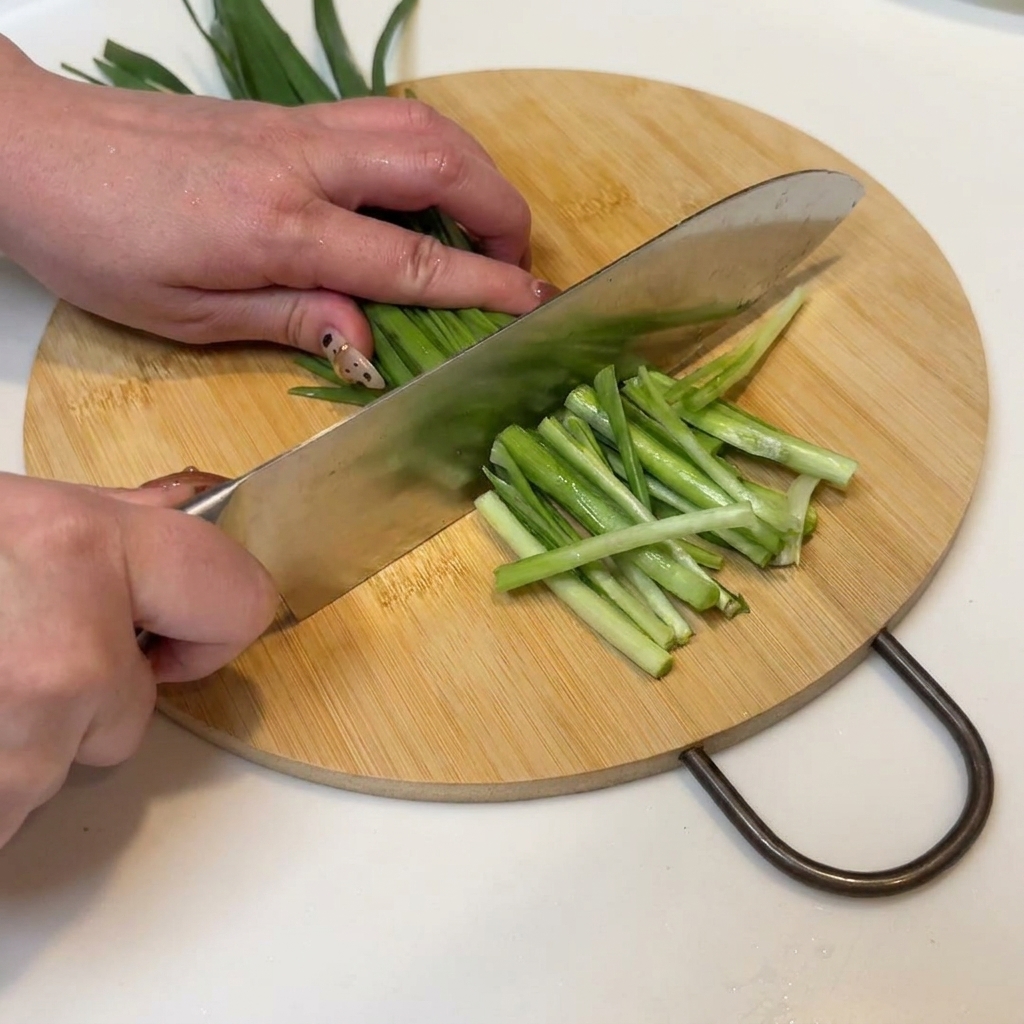
Carefully slice the green onions and chives on a wooden cutting board. These aromatics will add a fresh, pungent flavor to the base of your stew.
Tip: Use a sharp chefs knife for clean cuts without bruising the delicate herbs. - 2Slice the sausages
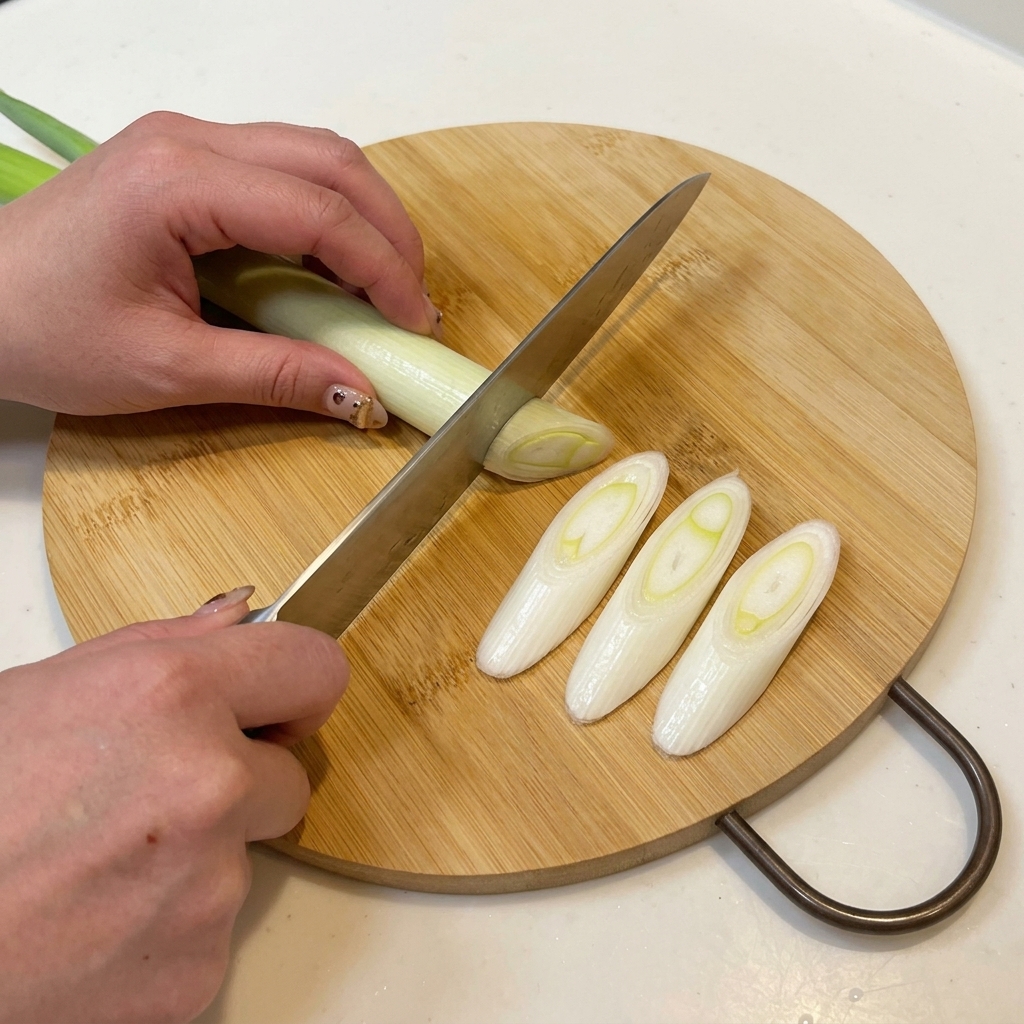
Take your preferred sausages and slice them into bite-sized rounds on your cutting board. The sausages are a signature element of this simplified Korean Army Stew.
Tip: Aim for uniform thickness so the sausages cook evenly in the broth. - 3Stir-fry the meat
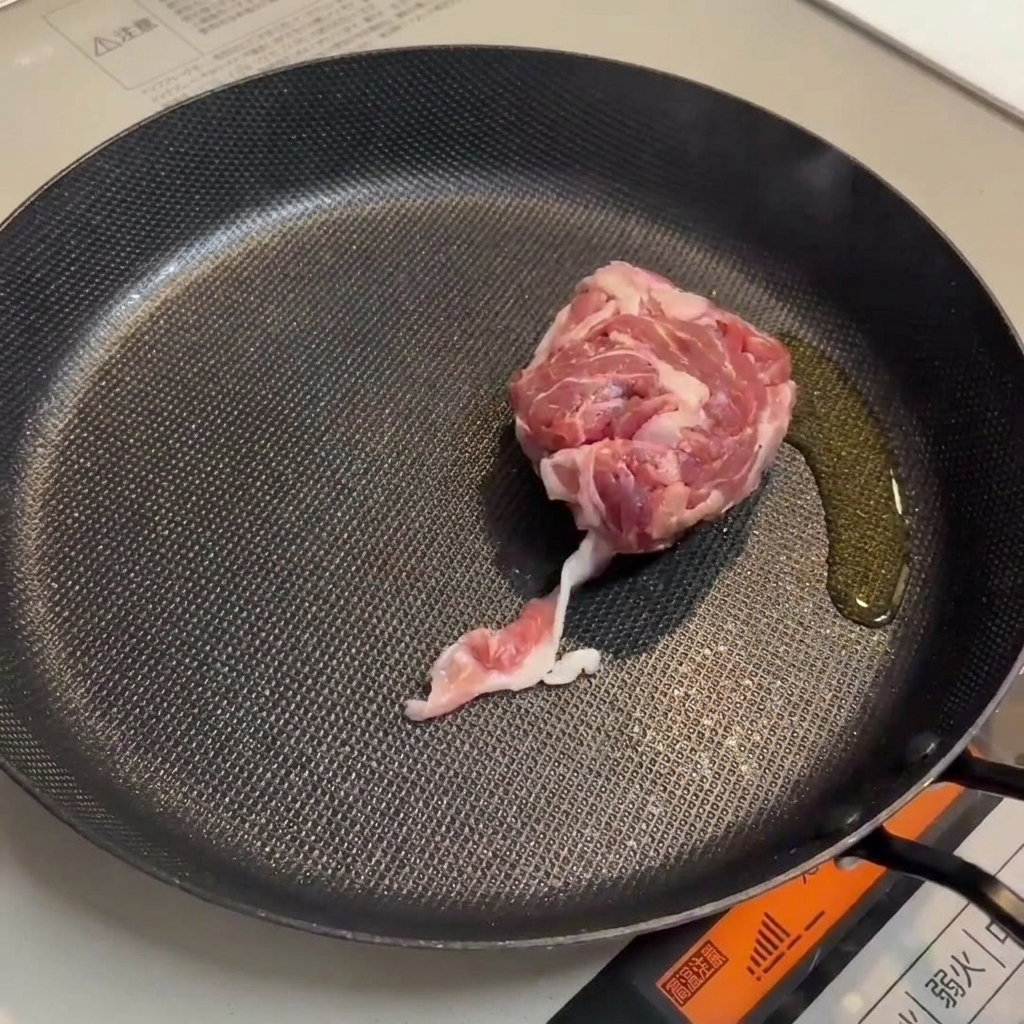
In a frying pan set over an induction cooktop, stir-fry the pork slices along with the sliced sausages. Cook until they are lightly browned and fragrant to develop the foundation of the dish.
Tip: Use a medium heat to render the fat from the pork and sausages for extra depth. - 4Add water
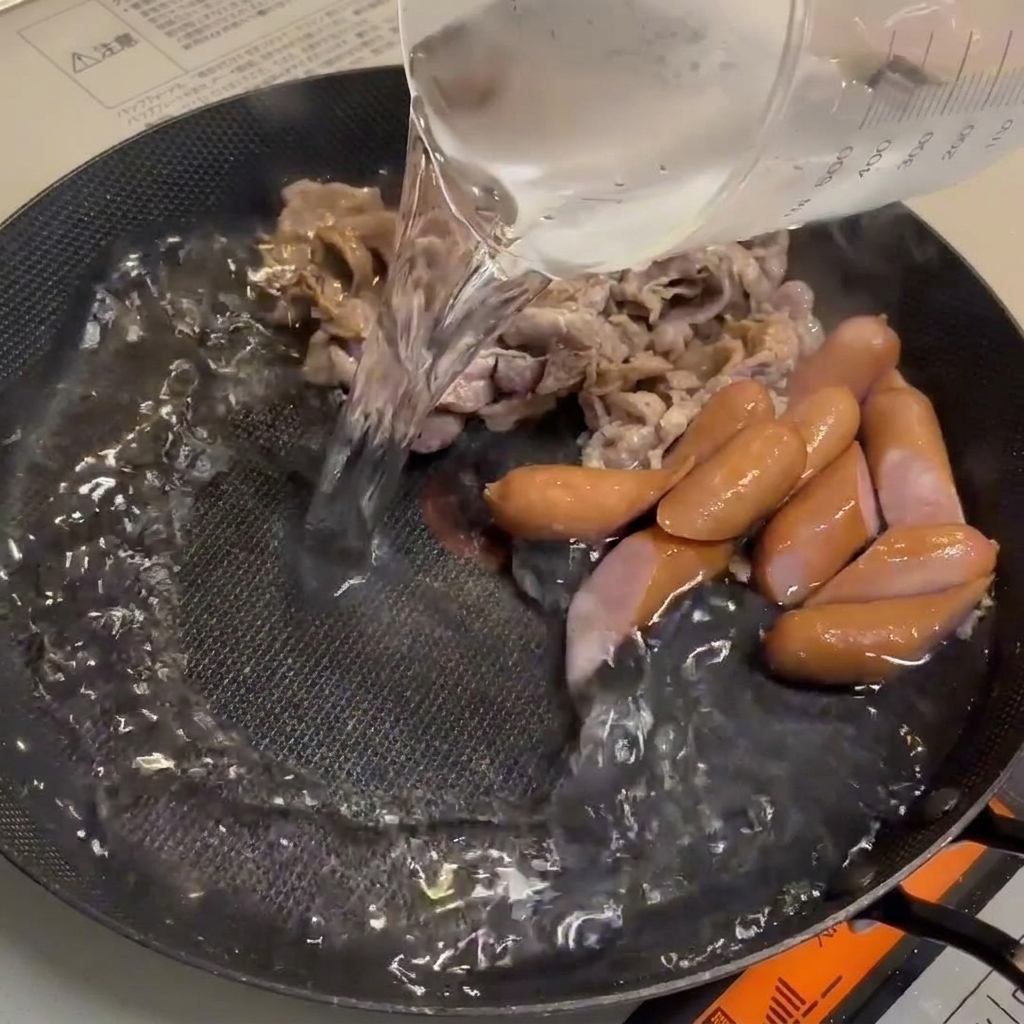
Pour fresh water directly into the pan over the fried pork and sausages. This will form the savory broth that ties all the ingredients together.
Tip: Ensure you deglaze the bottom of the pan while pouring to incorporate all the flavorful browned bits. - 5Season the broth
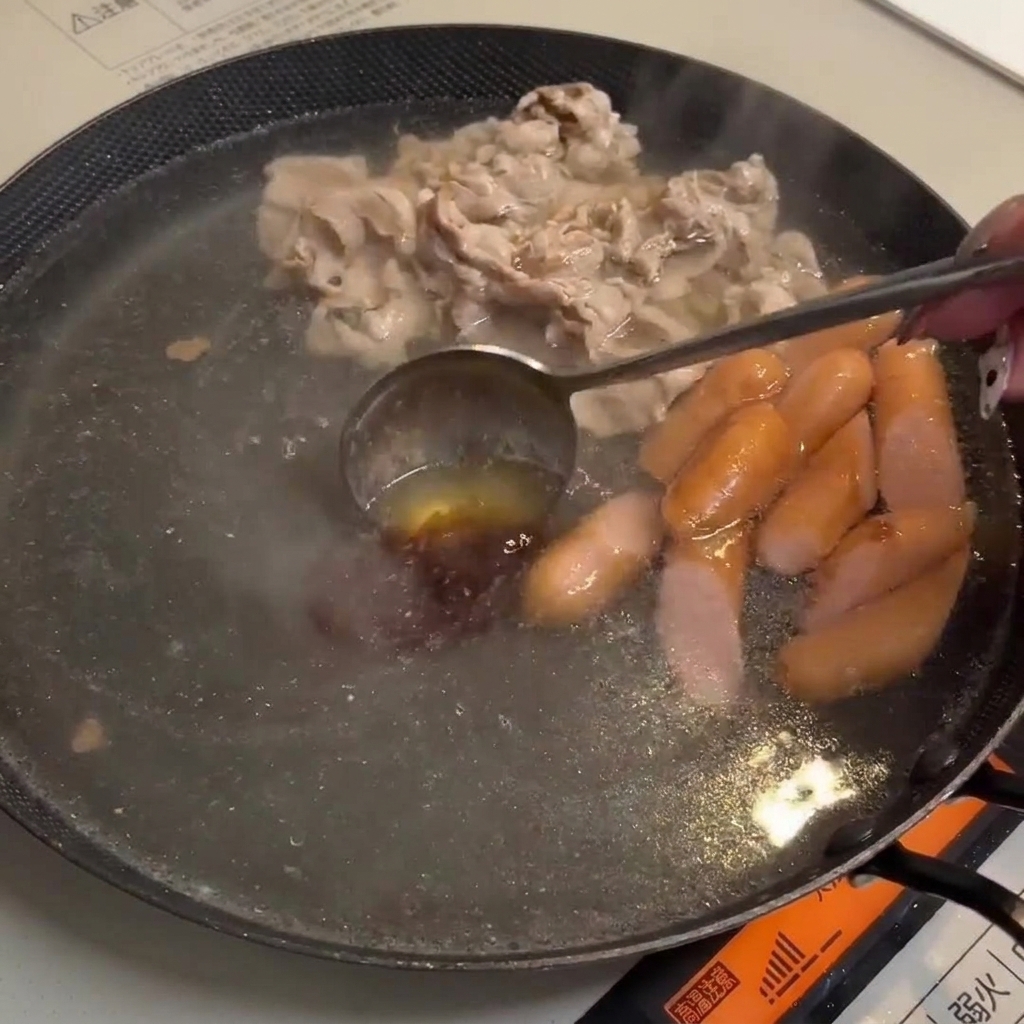
Add a spoonful of gochujang (Korean chili paste) and miso paste into the boiling water in your pan. Stir well until the pastes are fully dissolved into the broth.
Tip: Whisk thoroughly to ensure a smooth, well-blended broth without any clumps of paste. - 6Add garlic
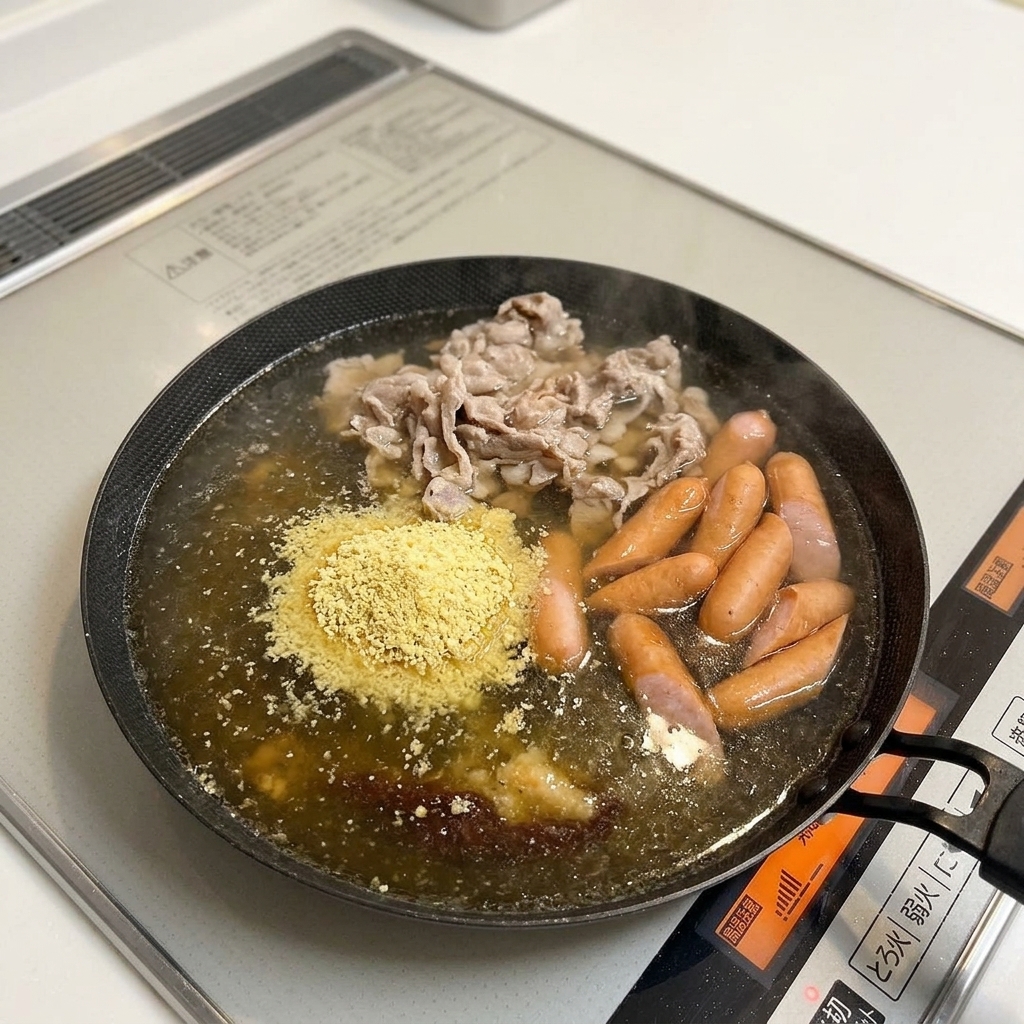
Squeeze fresh garlic paste into the pan to enhance the savory aroma of the broth. The garlic pairs perfectly with the spicy gochujang and earthy miso.
Tip: Freshly crushed or squeezed garlic provides the most vibrant flavor for the soup. - 7Add vegetables to the broth
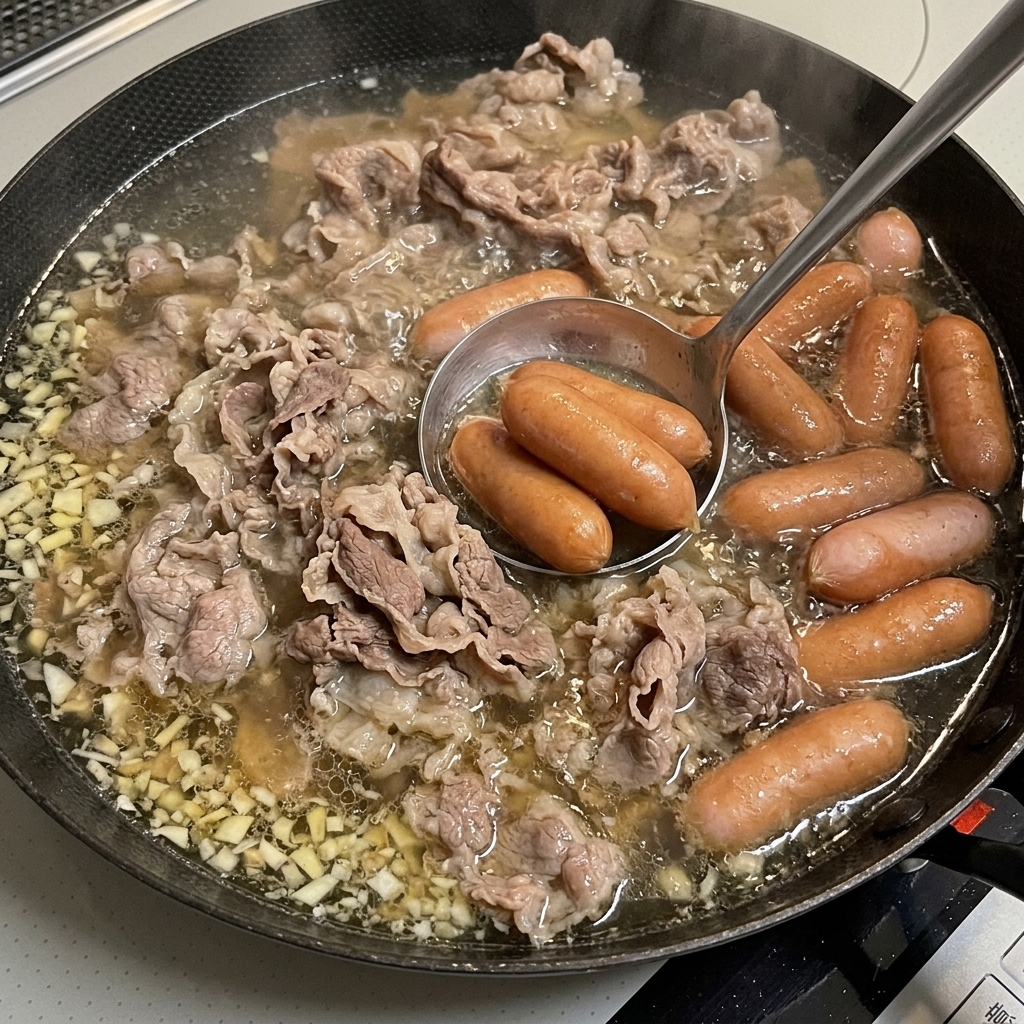
Add your favorite vegetables to the seasoned broth, starting with the bean sprouts and green onions. Ensure they are distributed evenly so they soften and infuse their flavor into the stew.
Tip: Adding bean sprouts early helps them absorb the savory broth, adding texture to the dish. - 8Season the broth
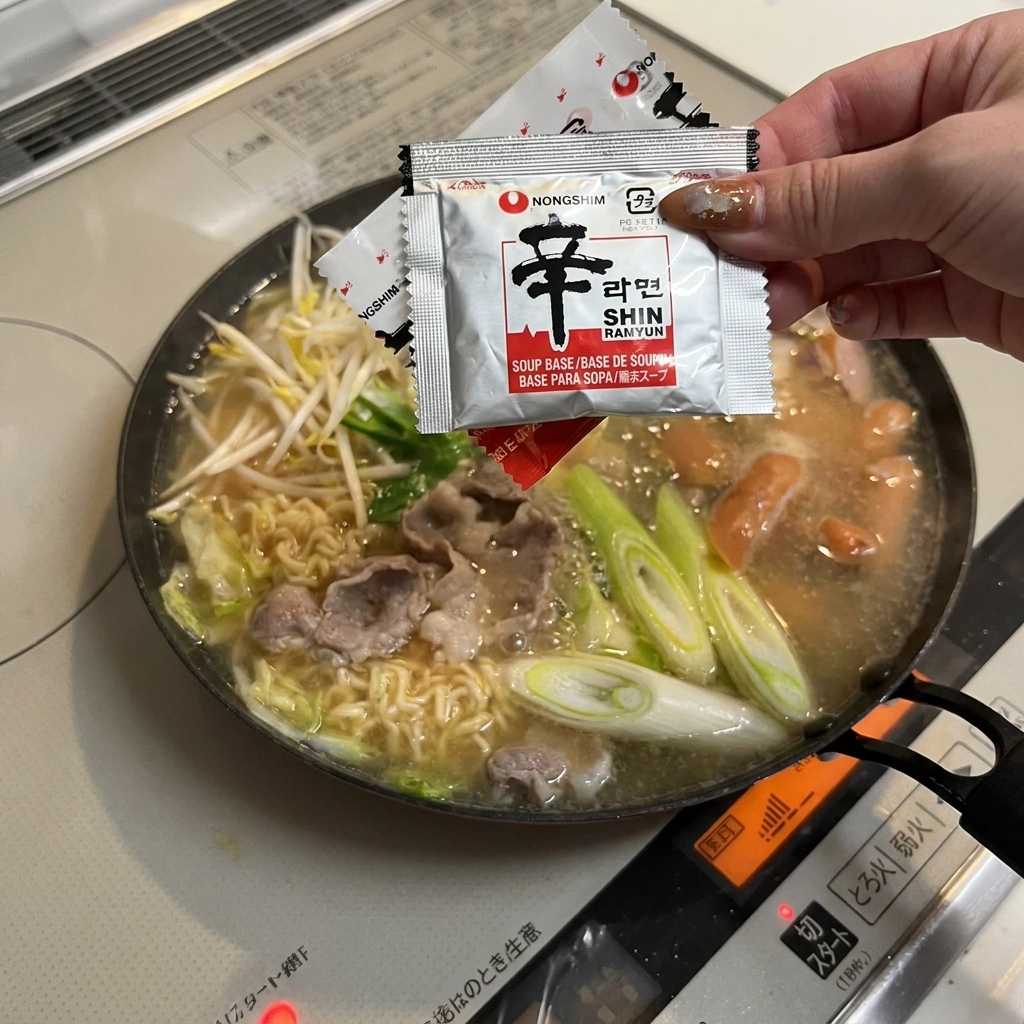
Dont forget to add the seasoning packet from your instant noodles into the pan. Stir everything well to incorporate the flavors into the soup base.
Tip: The noodle seasoning packet is essential for that signature instant noodle flavor profile in this simplified army stew. - 9Add noodles and rice cakes
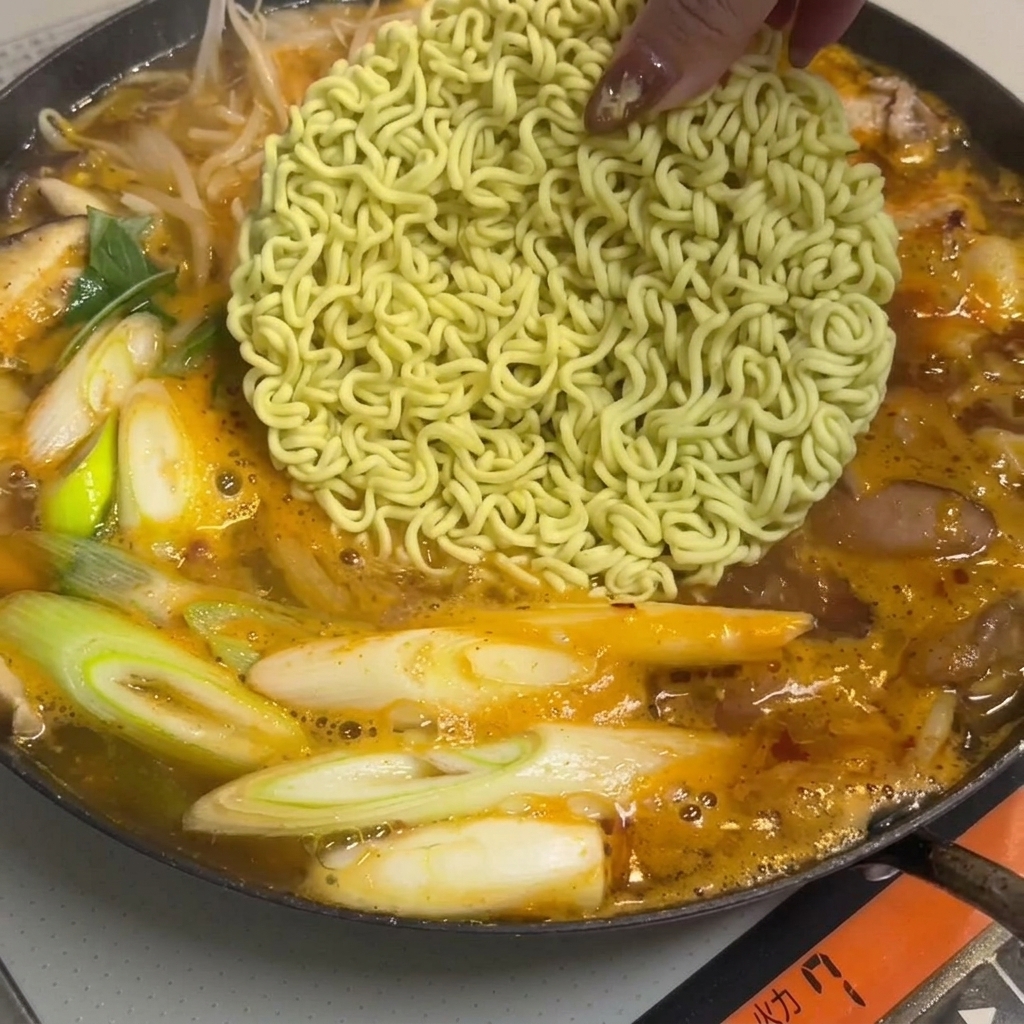
Once the base is ready, place the instant noodle block and the sliced rice cakes into the simmering broth. Submerge them slightly so they begin to soften.
Tip: Keep an eye on the rice cakes, as they can become very chewy or stick to the bottom if cooked too long. - 10Add fresh chives
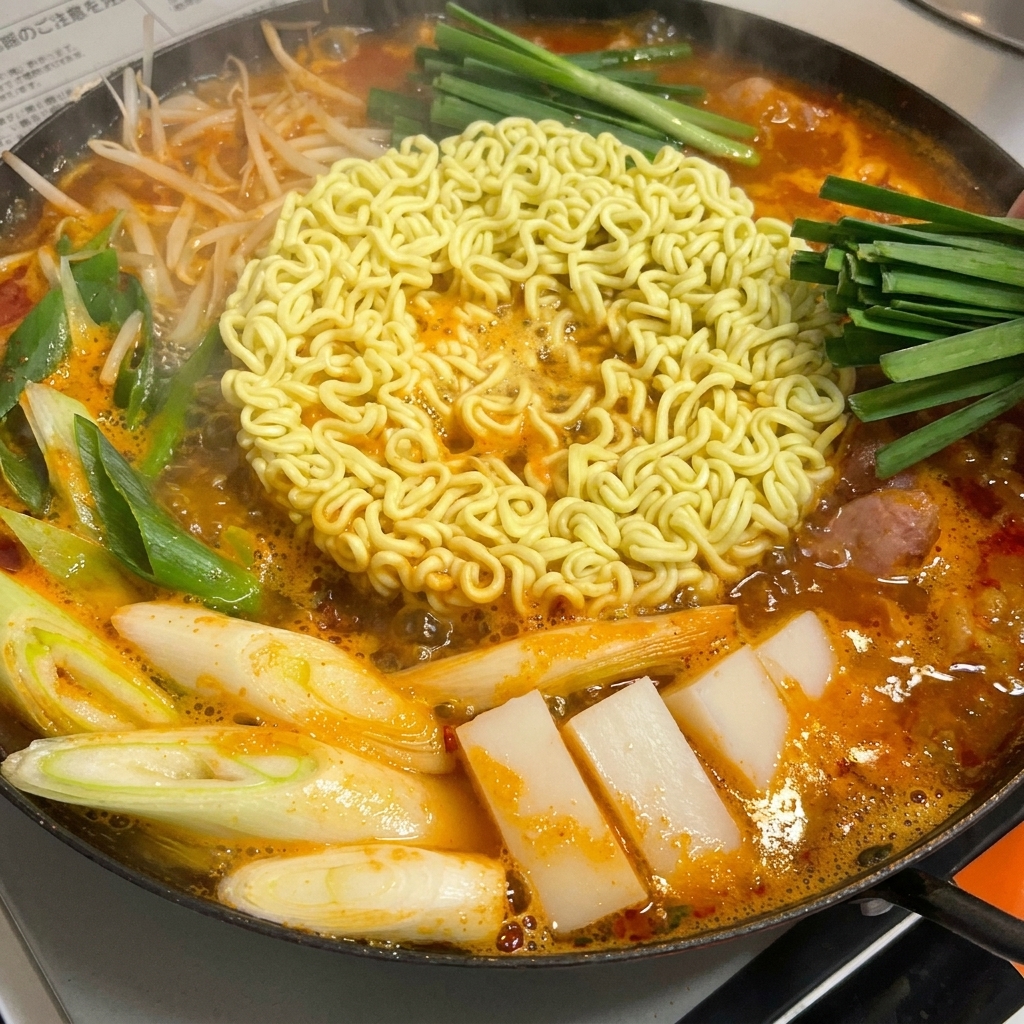
Scatter a handful of freshly chopped chives over the top of the noodles. This adds a fresh, aromatic finish to the rich stew.
Tip: Add the chives toward the end to ensure they stay vibrant and retain their mild onion flavor. - 11Top with cheese
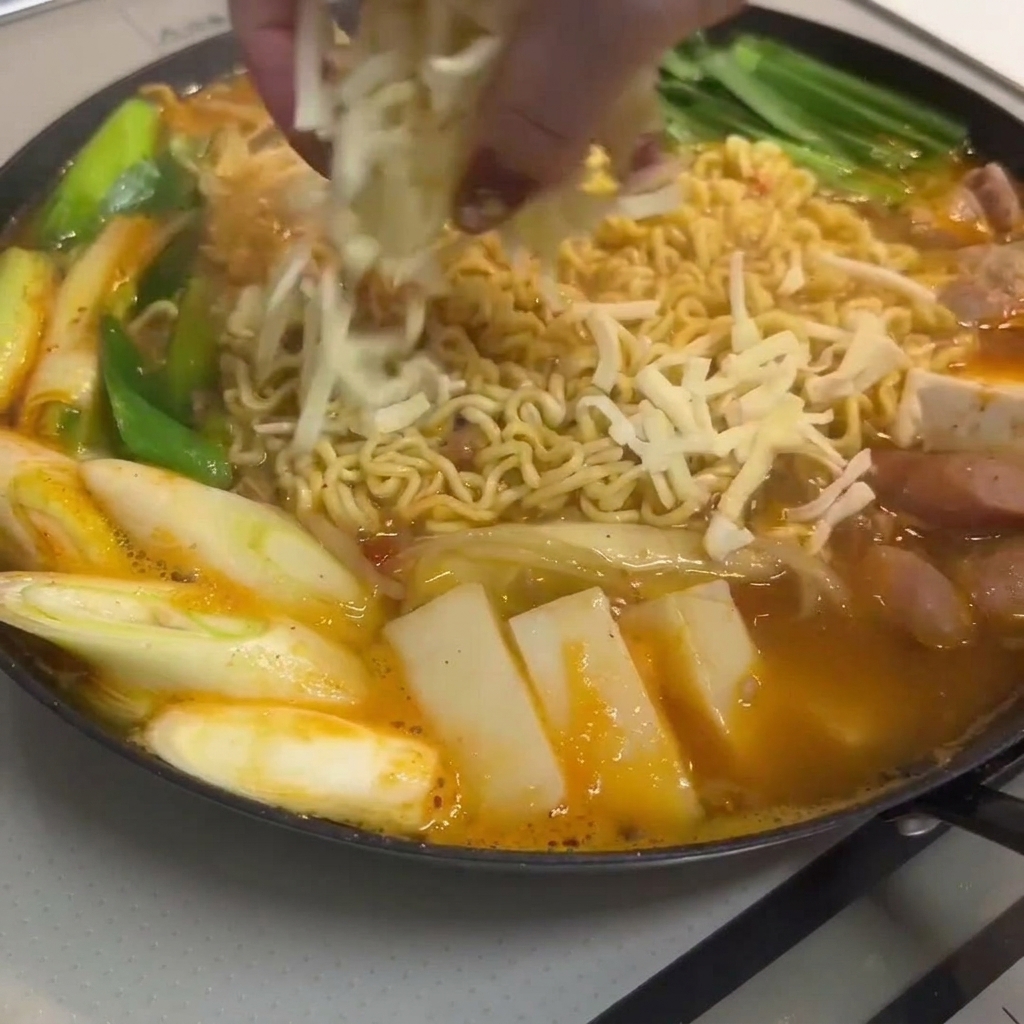
Finally, sprinkle a generous amount of shredded cheese over the cooked noodles and other ingredients. Allow it to melt into the hot broth before serving your midnight feast.
Tip: Using plenty of cheese makes the broth creamier and perfectly complements the spicy flavor of the noodles.