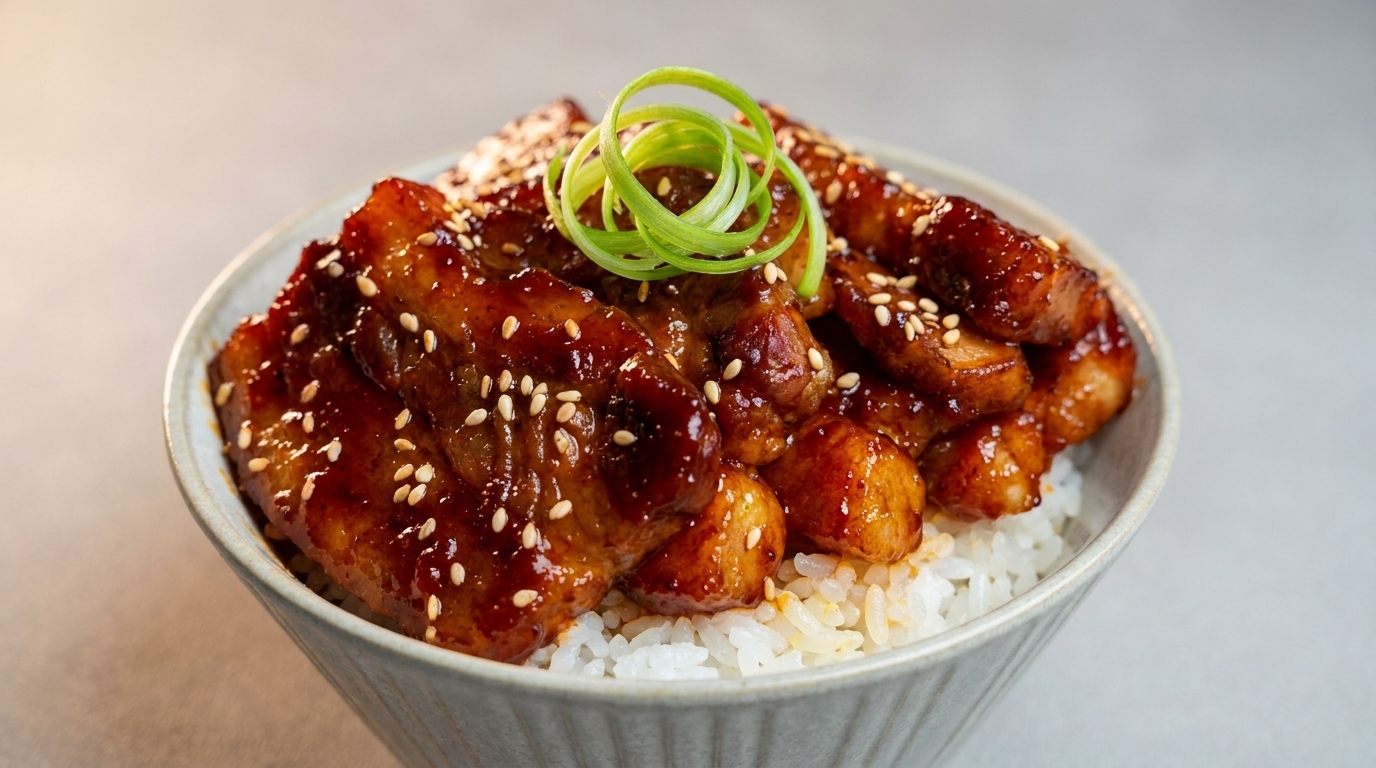
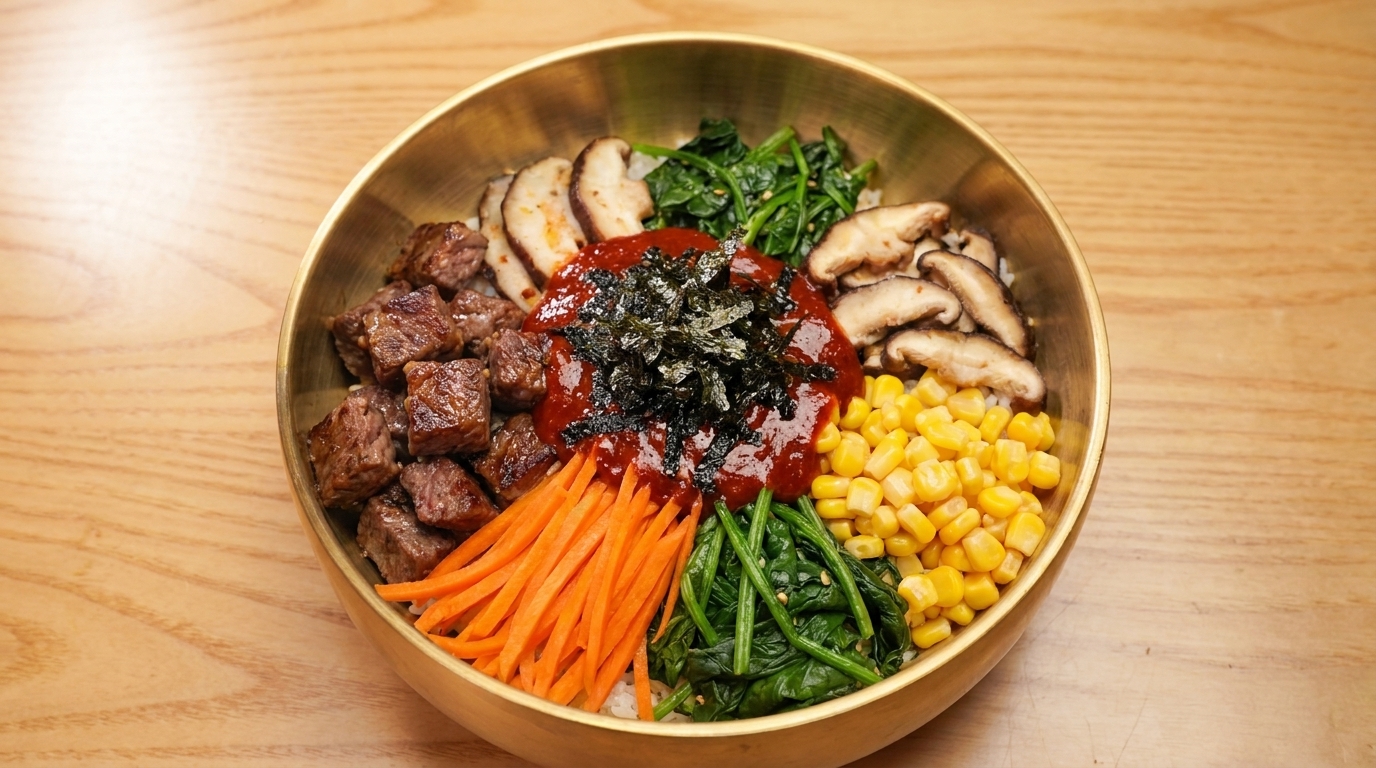
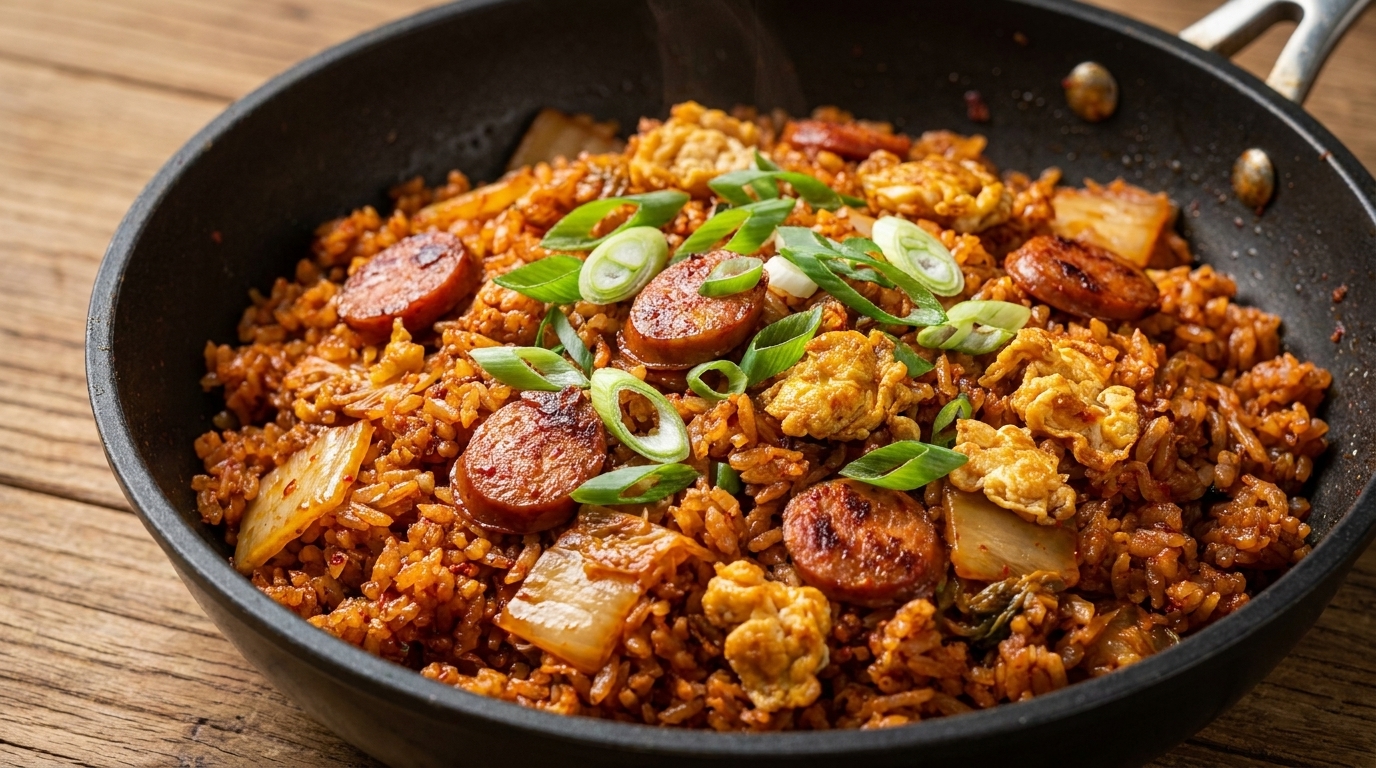
Korean-Style BBQ Bibimbap Stir-Fry
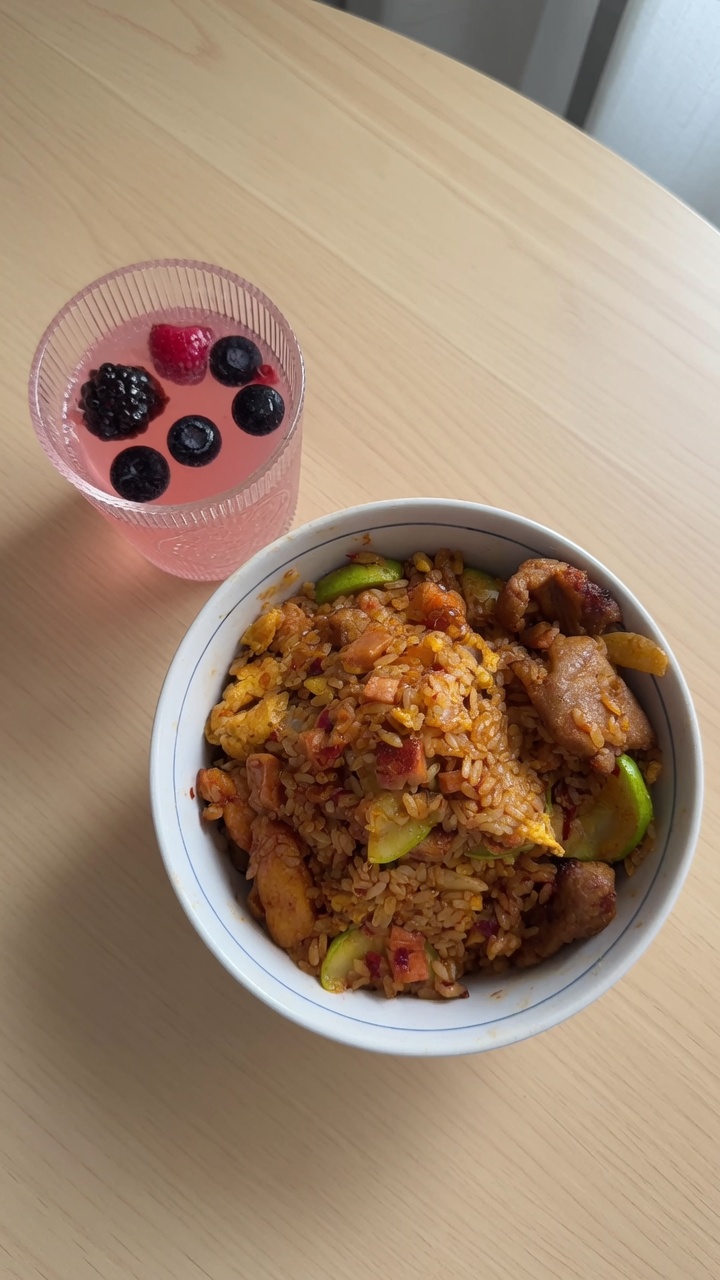
A simplified, delicious take on classic Korean Bibimbap, combining savory luncheon meat, crisp zucchini, and fluffy rice in a rich, spicy sauce.
Bibimbap is traditionally a bowl of warm rice topped with sautéed vegetables, meat, and a dollop of spicy gochujang. This version streamlines the process by stir-frying all the components together, creating a harmonious, flavorful meal thats perfect for a quick dinner. The addition of beaten eggs adds a velvety richness that ties the spicy sauce, savory meat, and fresh vegetables together perfectly.
Ingredients
- 1 bowl cooked white rice
- 1 whole zucchini
- 1 can luncheon meat
- 2 tbsp Korean bibimbap sauce
- 1 tbsp chili sauce
- 0.5 tbsp sugar
- 1 tbsp light soy sauce
- 0.5 tbsp dark soy sauce
- 2 whole eggs, beaten
- 1 portion pre-cooked meat pieces
- 2 stalks scallions
- 2 cloves garlic
- to taste water
Instructions
- 1Slice the zucchini
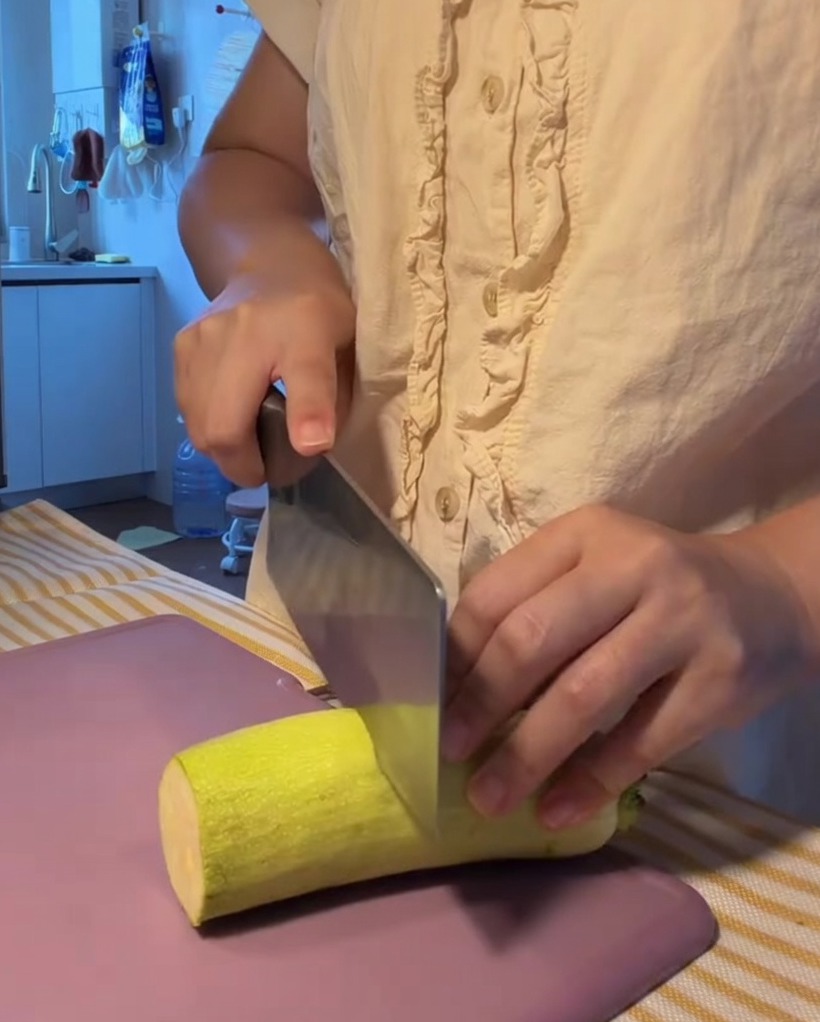
Place the fresh zucchini on a cutting board and slice it into uniform semi-circular pieces. These slices will be stir-fried later to provide a fresh, vegetable component to the Bibimbap.
Tip: Keep the slices consistent in thickness to ensure they cook evenly in the pan. - 2Prepare the luncheon meat
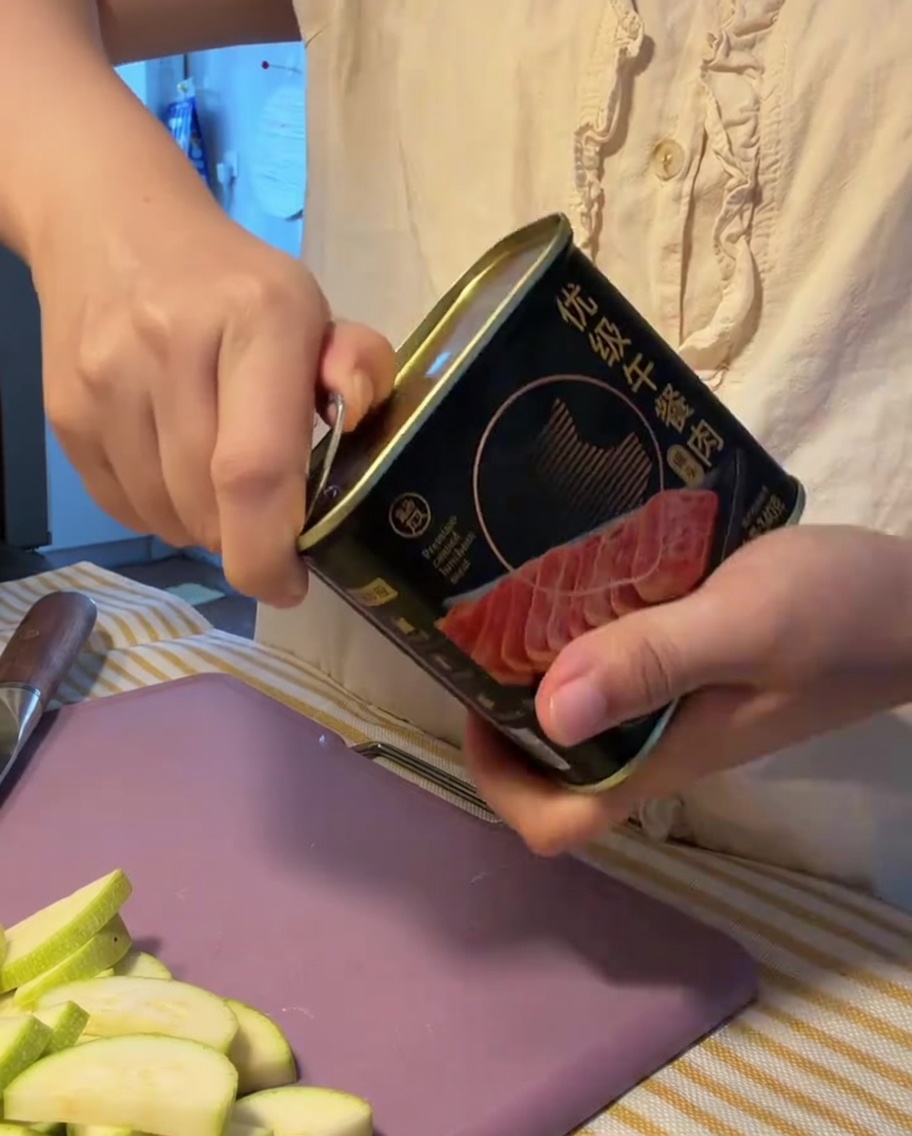
Open the metal can of luncheon meat and carefully remove the entire block of meat. This will be cut into cubes to add savory texture to the dish.
Tip: Run a knife along the inside edge of the can if the meat is difficult to remove. - 3Cube the luncheon meat
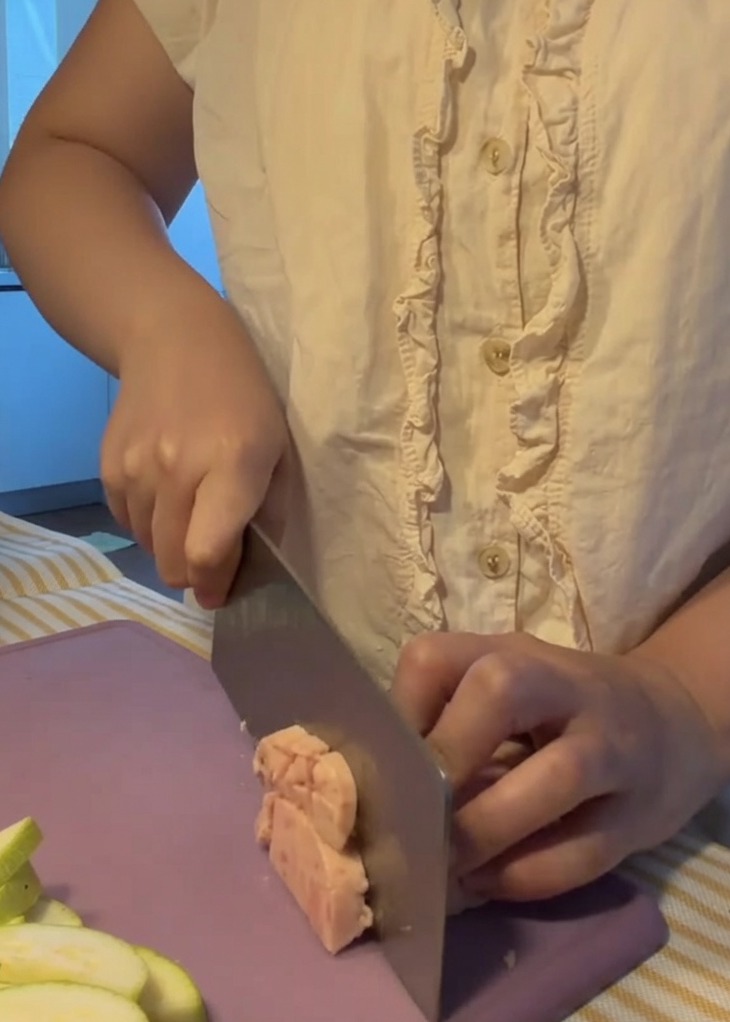
Place the block of luncheon meat on the cutting board and cut it into uniform, small cubes. These cubes are perfect for stir-frying and will hold up well when mixed with the rice and sauce.
Tip: Aim for cubes that are roughly the same size as the zucchini slices for a balanced bite. - 4Prepare the sauce

In a small bowl, combine two spoonfuls of Korean bibimbap sauce, one spoonful of chili sauce, half a spoonful of sugar, one spoonful of light soy sauce, half a spoonful of dark soy sauce, and a splash of water. Whisk the mixture until the ingredients are well incorporated and the sauce is smooth.
Tip: Adjust the chili sauce amount based on your preference for heat. - 5Stir-fry ingredients
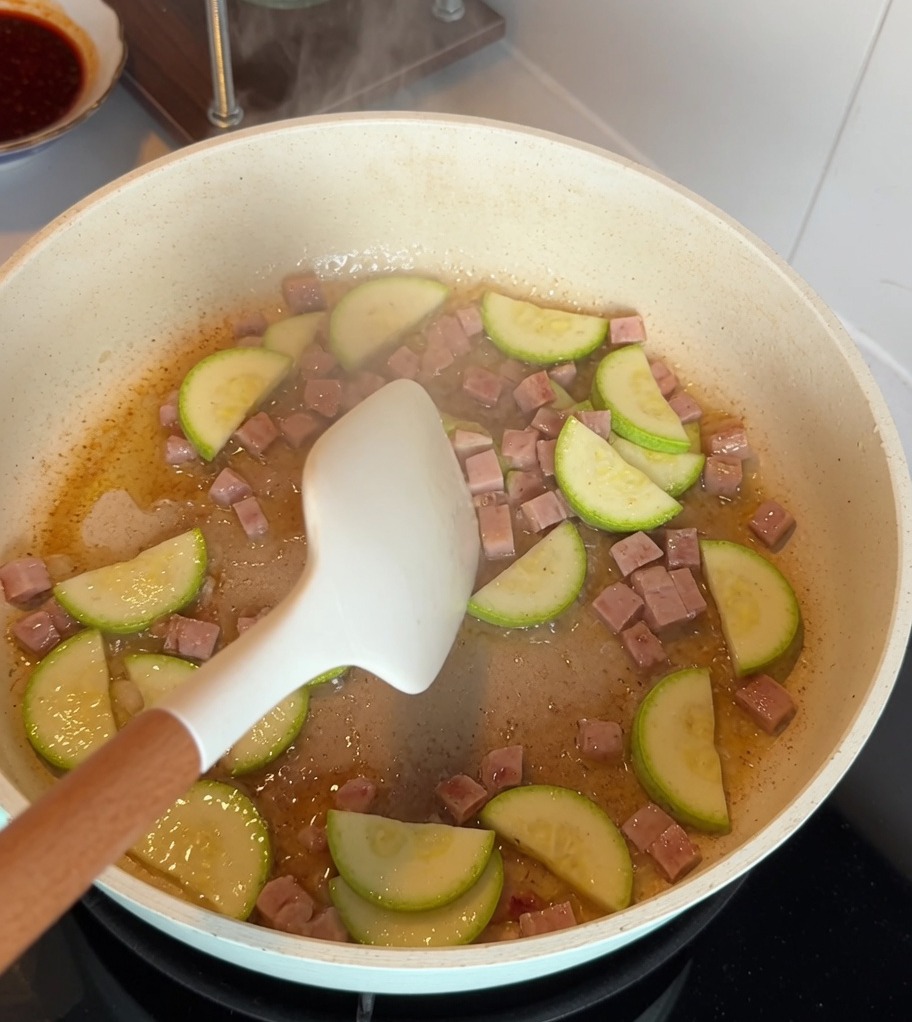
Heat a pan over medium heat and add the zucchini slices and cubed luncheon meat. Stir-fry them together until the zucchini is tender and the meat begins to brown lightly.
Tip: Cook until the zucchini is just tender to keep a slight crunch in the final dish. - 6Add aromatics and extra meat
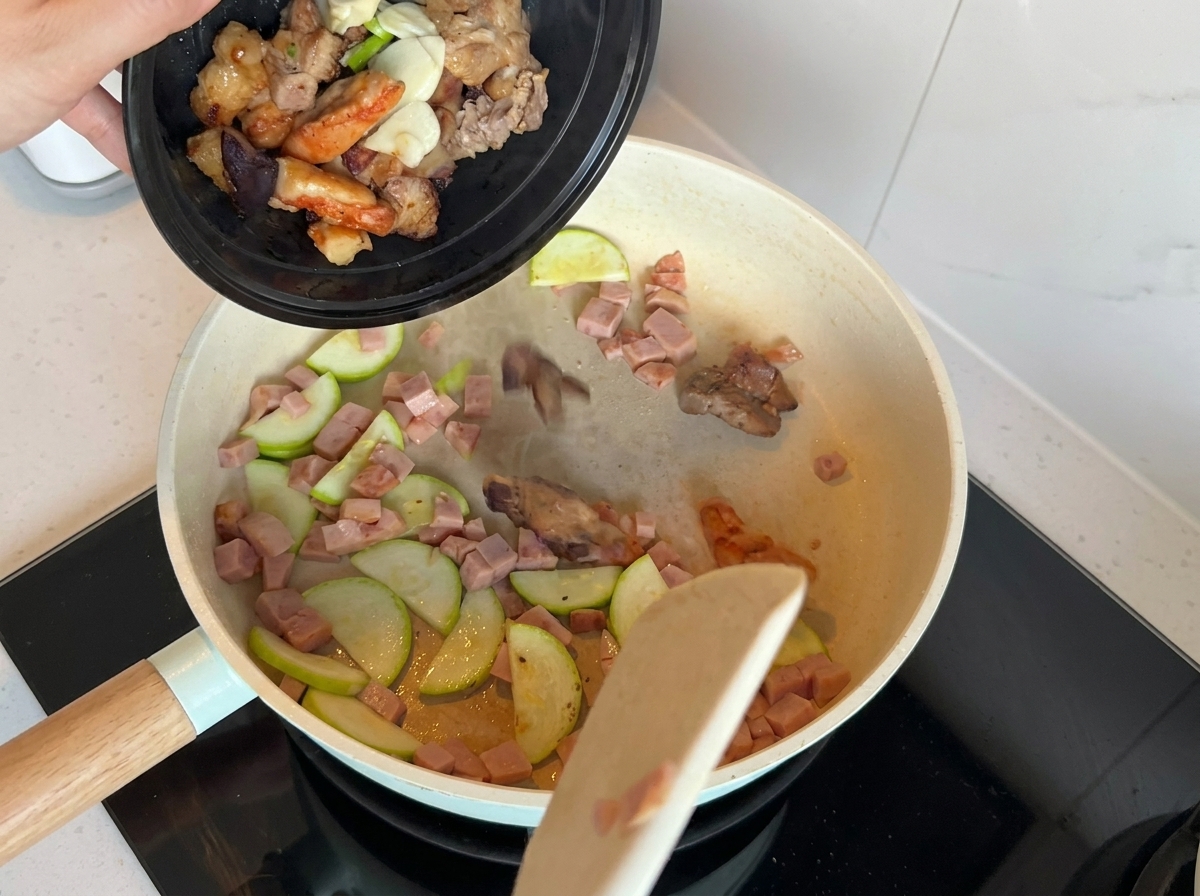
Add the pre-cooked meat pieces along with freshly sliced scallions and minced garlic to the pan. Continue stir-frying to infuse the dish with these aromatic flavors.
Tip: Adding the aromatics later in the process prevents the garlic from burning. - 7Scramble the eggs
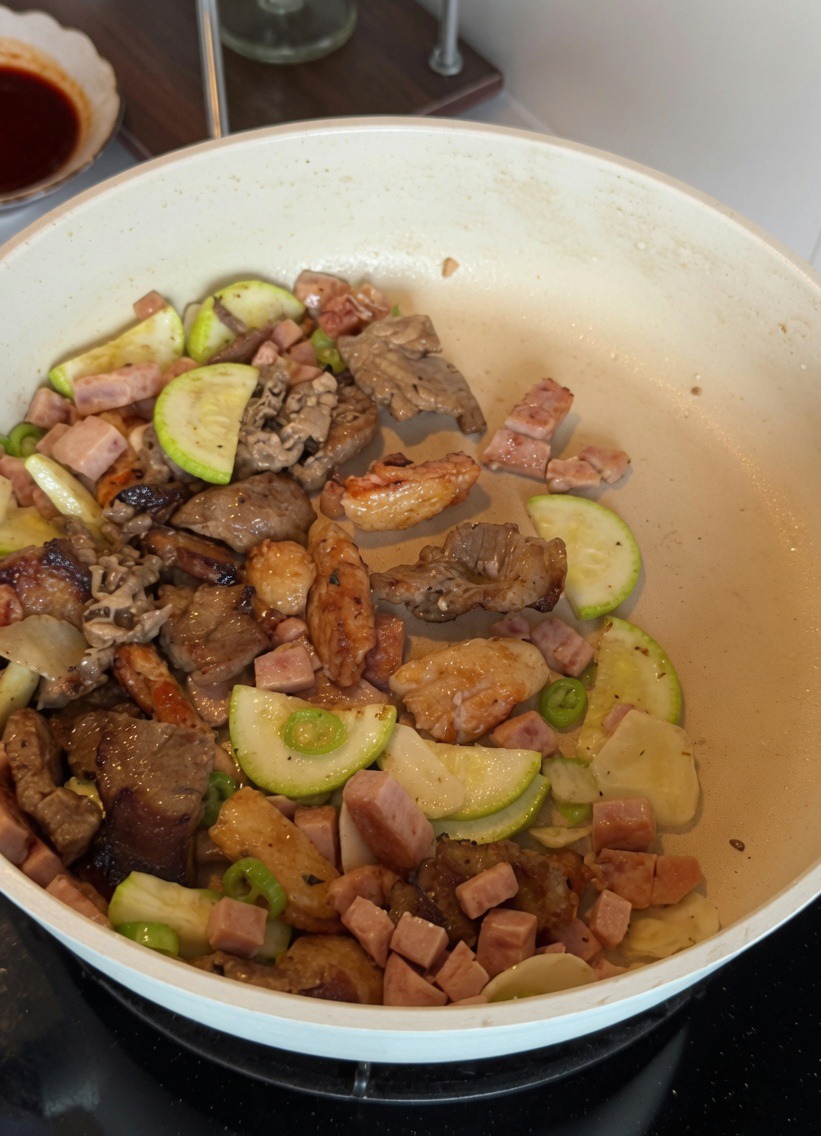
Pour the beaten egg mixture directly into the pan with the zucchini, luncheon meat, and other stir-fried ingredients. Gently scramble the eggs using a spatula so they coat the ingredients, creating a soft and creamy texture that helps bind the dish together.
Tip: Keep the heat medium to ensure the eggs remain soft and creamy rather than becoming rubbery. - 8Add the cooked rice
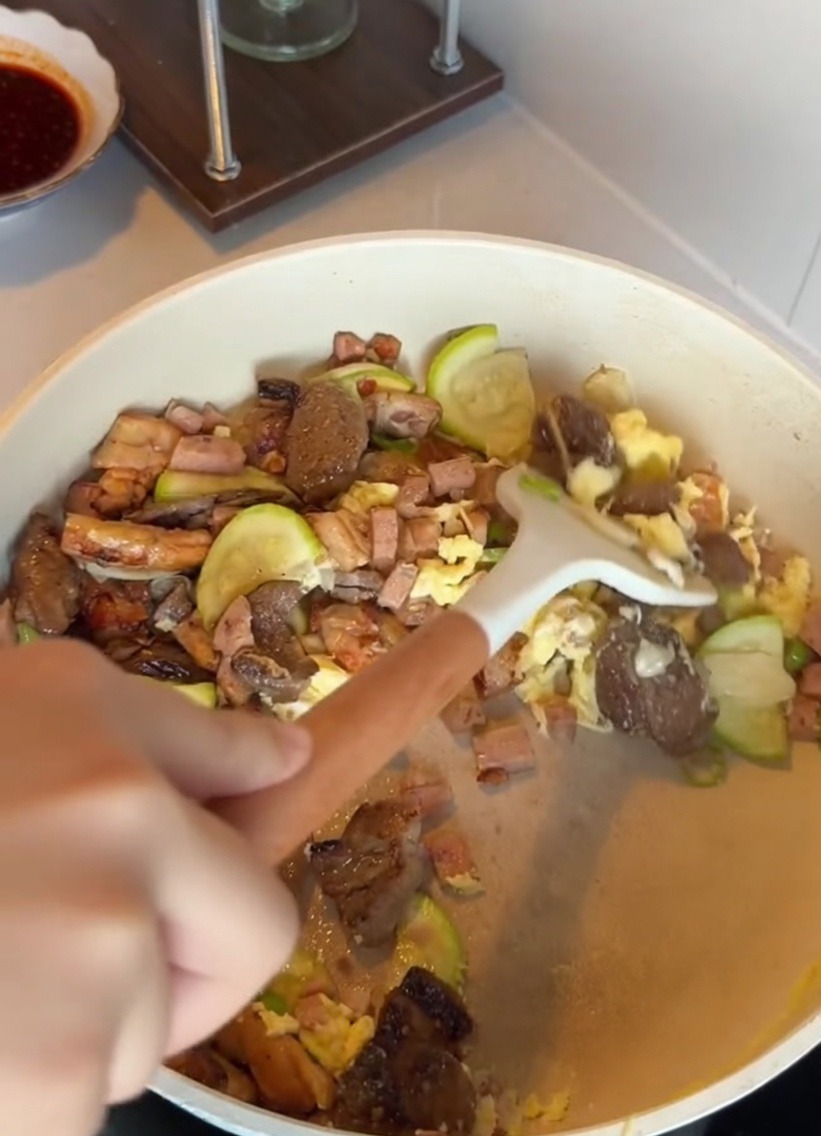
Once the eggs are soft and semi-cooked, add the freshly cooked white rice into the pan. Use your spatula to break up any large clumps of rice, ensuring it is evenly distributed among the other ingredients.
Tip: Using slightly cooled or day-old rice can sometimes help achieve a better texture in stir-fries, but freshly cooked rice works well here too. - 9Season with bibimbap sauce
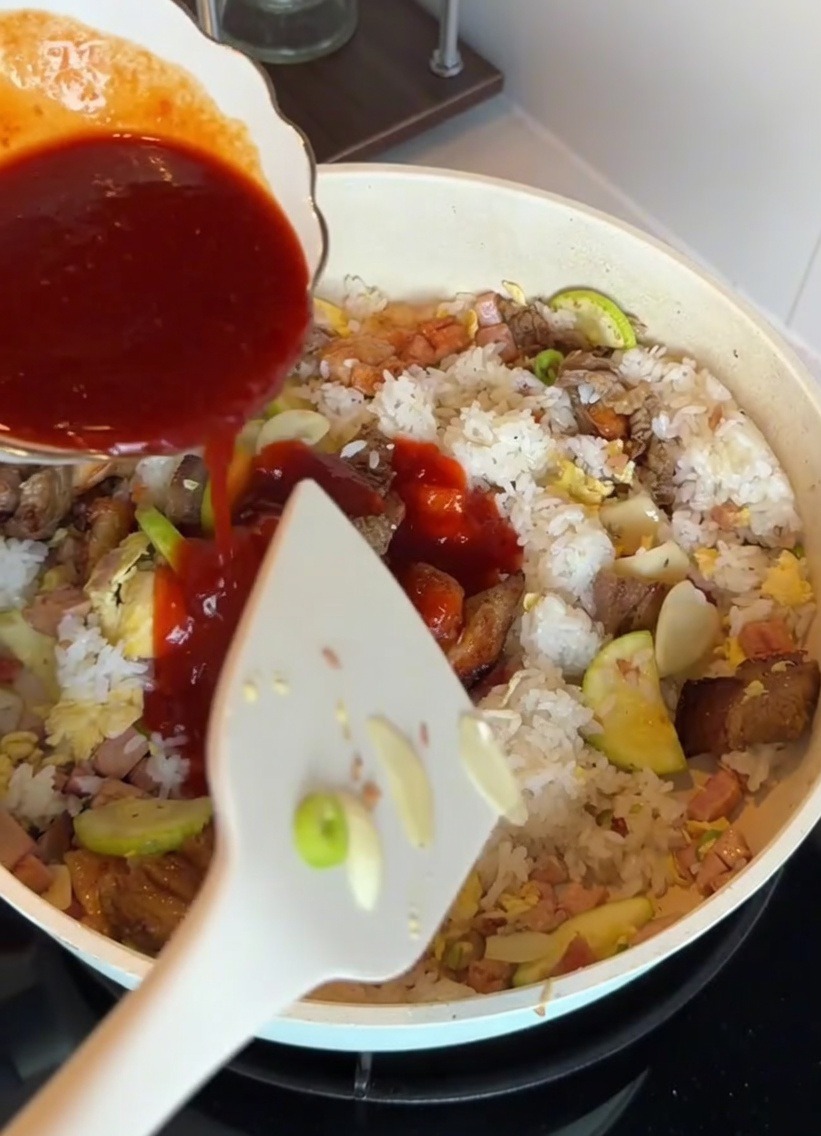
Pour the prepared sauce mixture (containing Korean bibimbap sauce, chili sauce, sugar, light soy sauce, dark soy sauce, and a little water) over the rice and ingredients. Stir-fry everything thoroughly until the rice is evenly coated and well-combined with the sauce and other components.
Tip: Make sure to scrape the bottom of the pan to incorporate all the sauce and prevent any sticking.