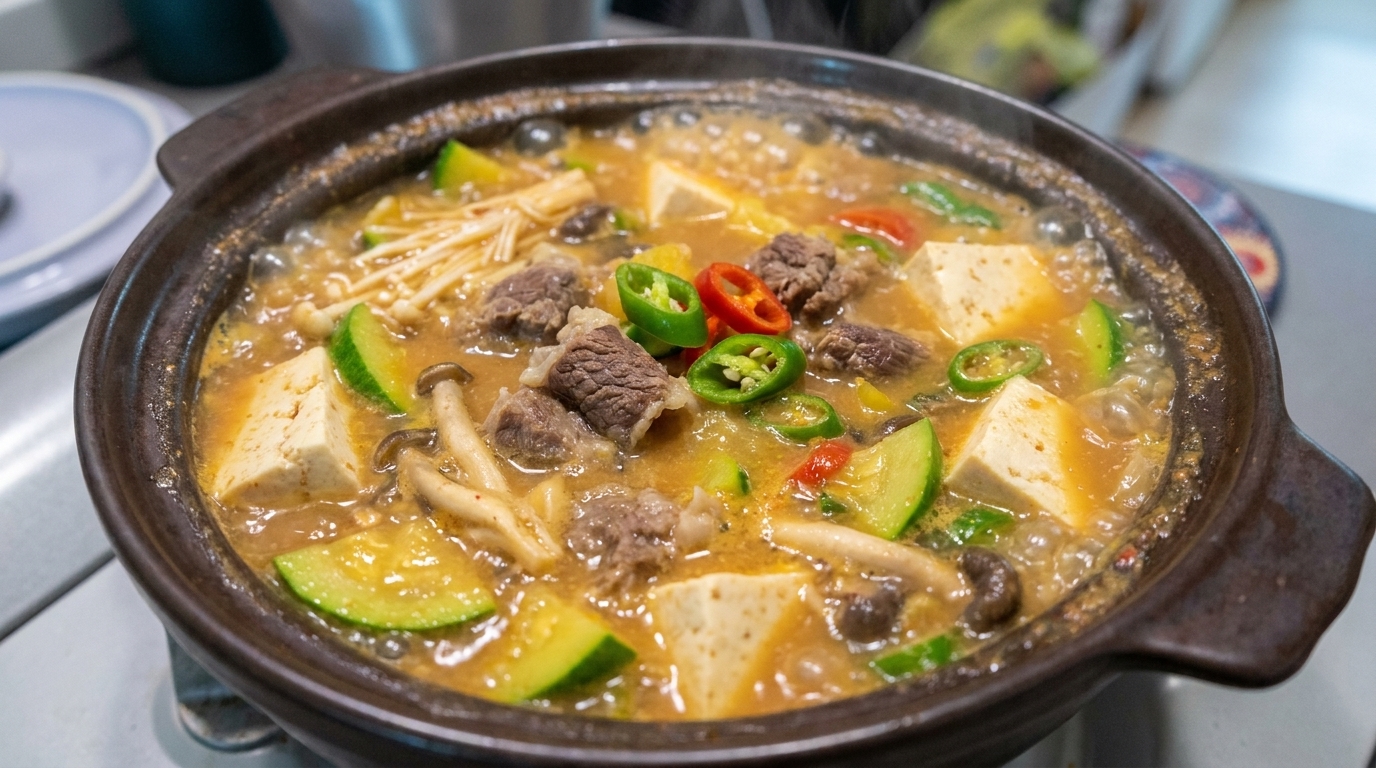
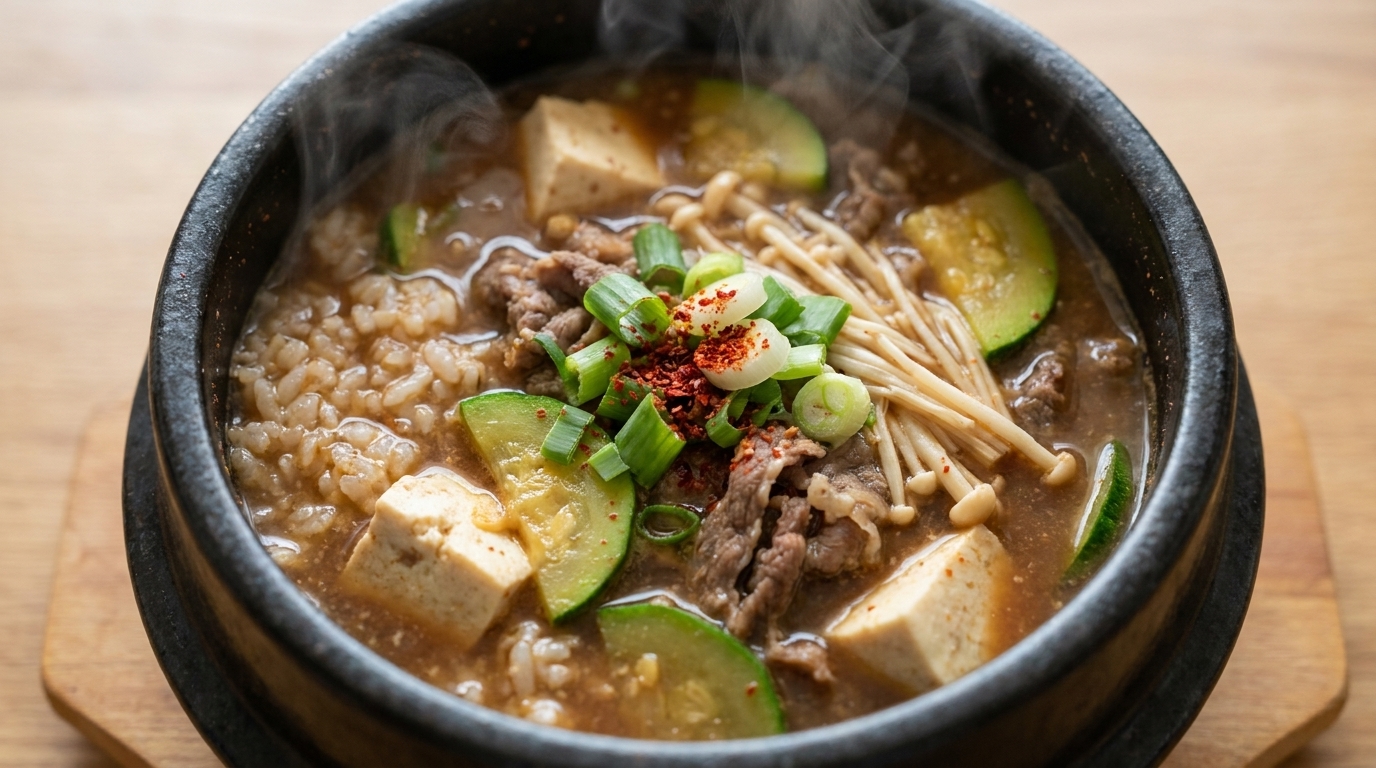
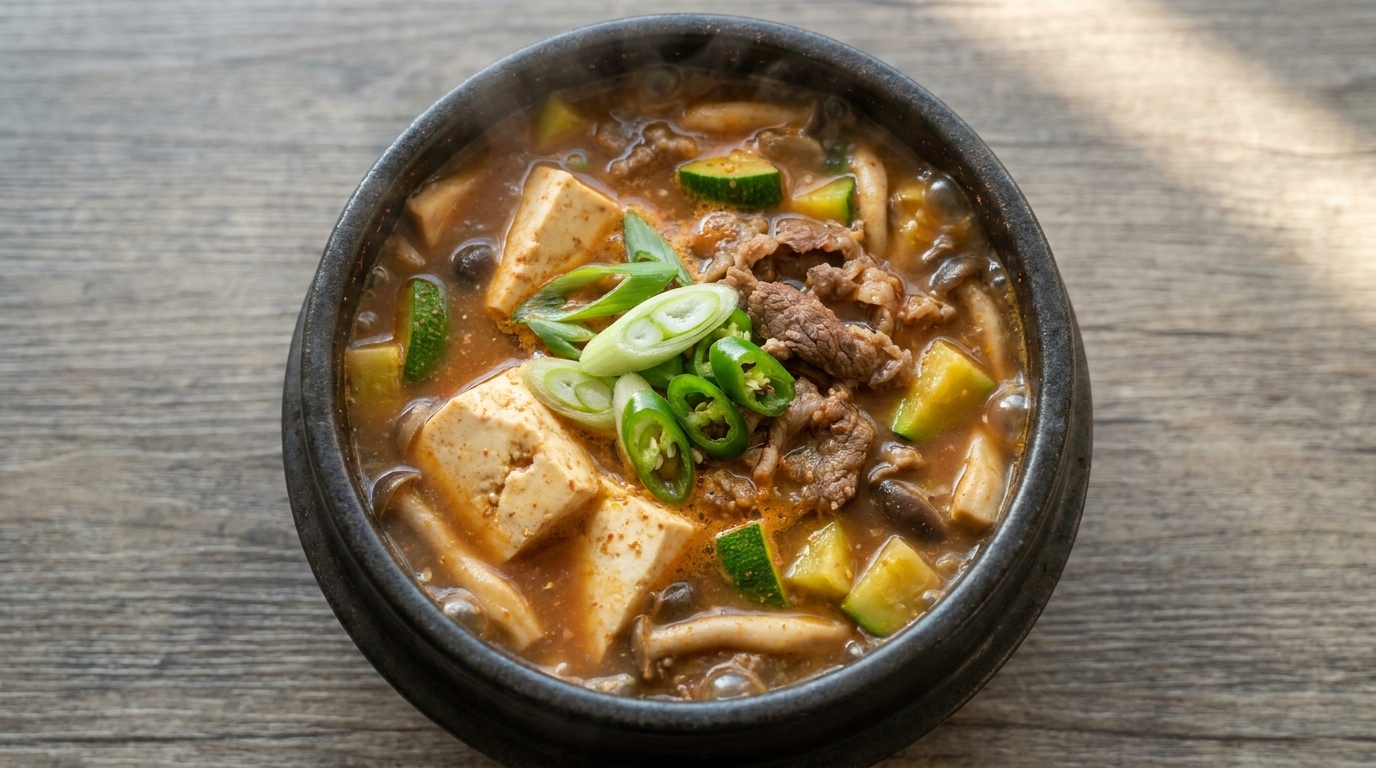
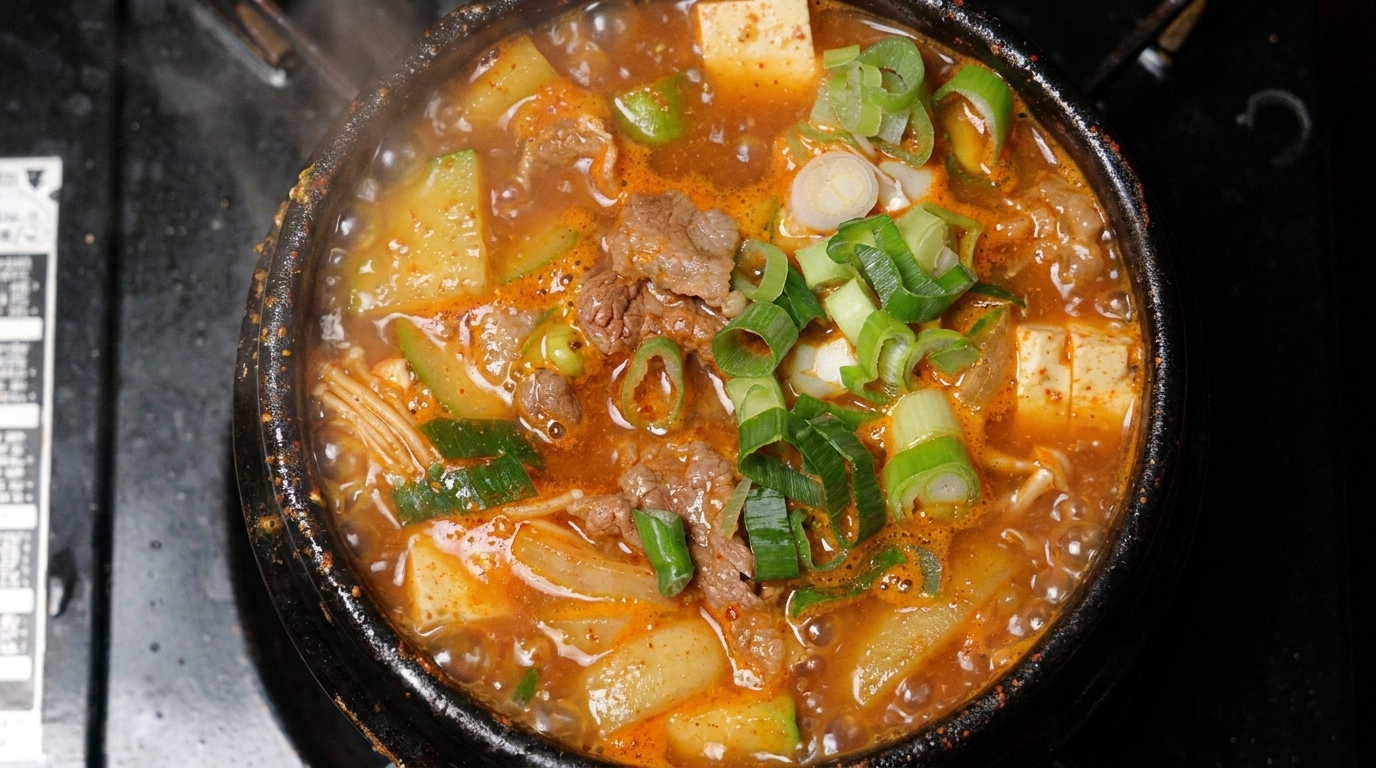
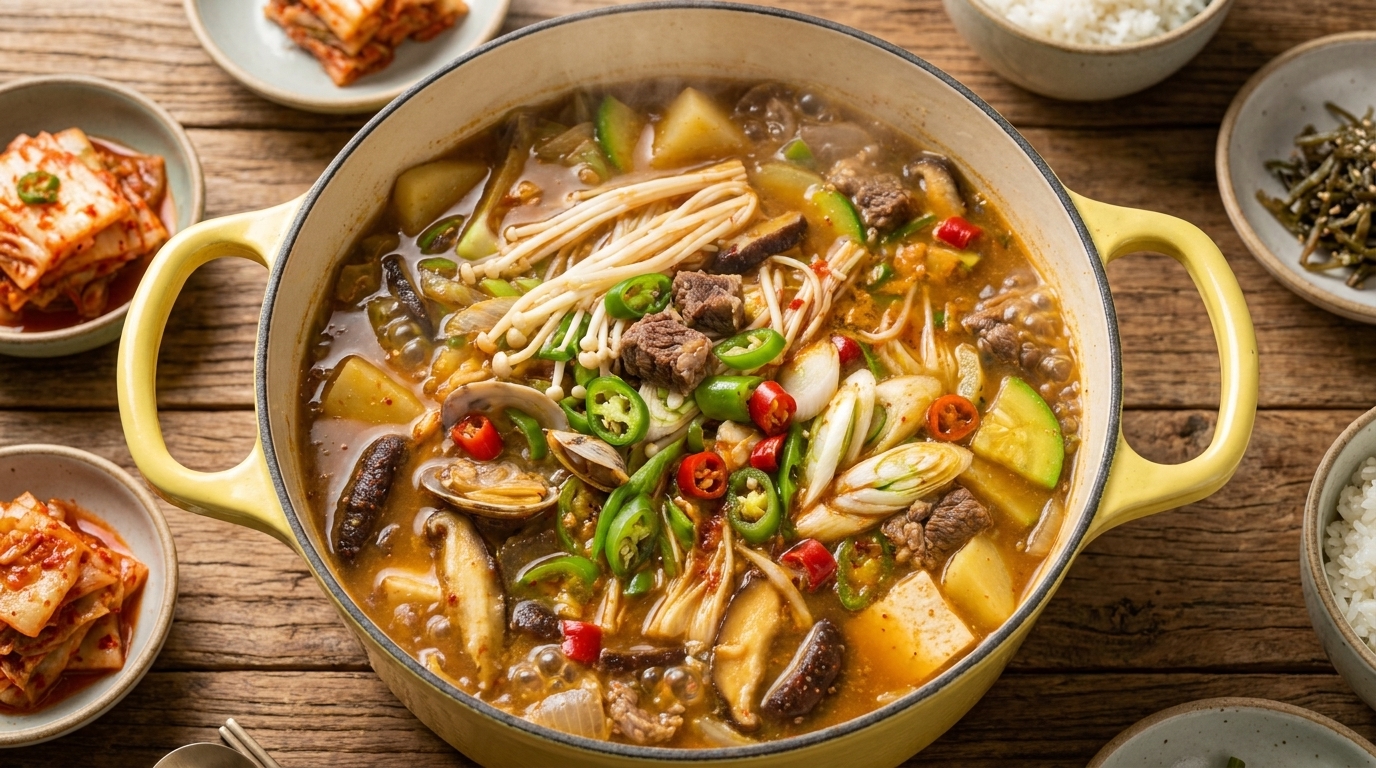
Hearty Beef Soybean Paste Stew (Doenjang-jjigae)
A deep, savory Korean comfort dish featuring tender beef, earthy soybean paste, and a bounty of fresh vegetables for a perfect, warm meal over rice.
Doenjang-jjigae is a cornerstone of Korean home cooking, prized for its probiotic-rich fermented soybean paste and ability to transform simple pantry staples into a robust stew. This version elevates the classic recipe by first searing beef to create a rich, savory flavor base, pairing the final dish with pan-fried yellow croaker fish for a balanced, traditional meal experience.
Ingredients
- 200 g thinly sliced beef
- 1/2 white radish
- 1 onion
- 3 shiitake mushrooms
- 1 zucchini
- 1 potato
- 1 handful clams
- 3 tbsp Korean soybean paste
- 1 tbsp red pepper powder
- 1 tbsp minced garlic
- 1 tsp minced ginger
- 1 tsp beef seasoning powder
- 1 packet enoki mushrooms
- 2 stalks green onions
- 2 green chili peppers
- 1 red chili pepper
Instructions
- 1Prepare the Radish
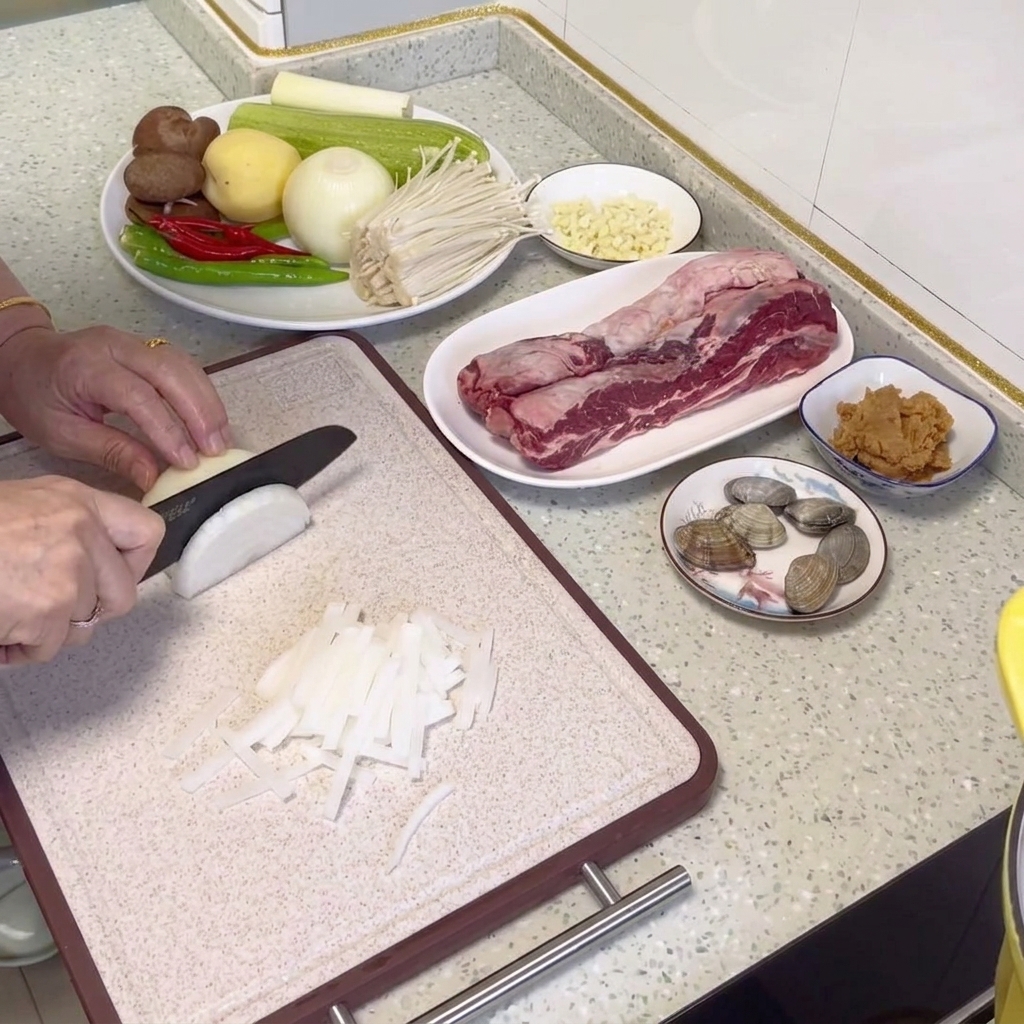
Place the radish on a cutting board and slice it into thin, uniform strips. This preparation ensures that the radish cooks evenly and absorbs the flavors of the soybean paste stew effectively.
Tip: Keep the strips consistent in size to ensure they cook at the same rate as the other vegetables. - 2Slice the Beef
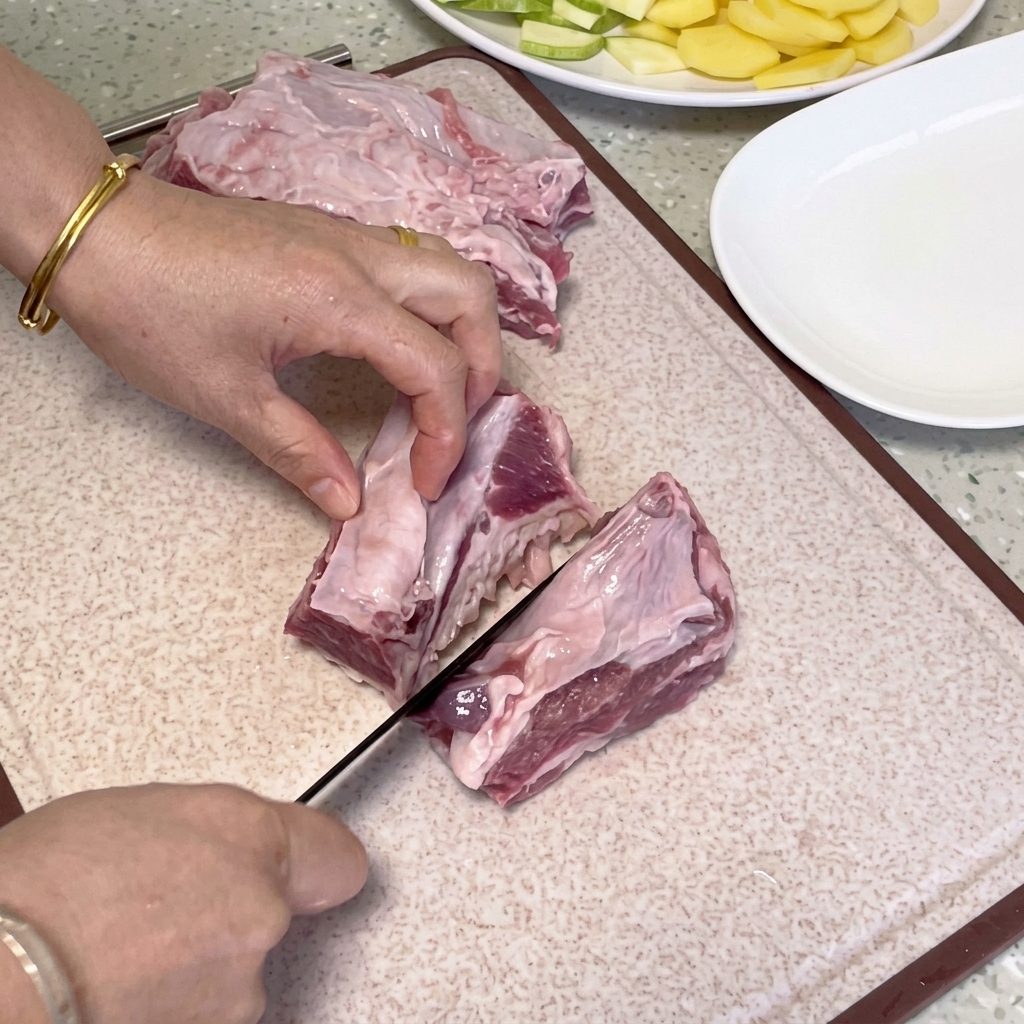
Using a sharp knife, carefully cut the beef into thin, bite-sized slices. Thin slices cook quickly and become tender when simmered in the stew.
Tip: Slicing against the grain can help make the beef even more tender. - 3Sear the Beef
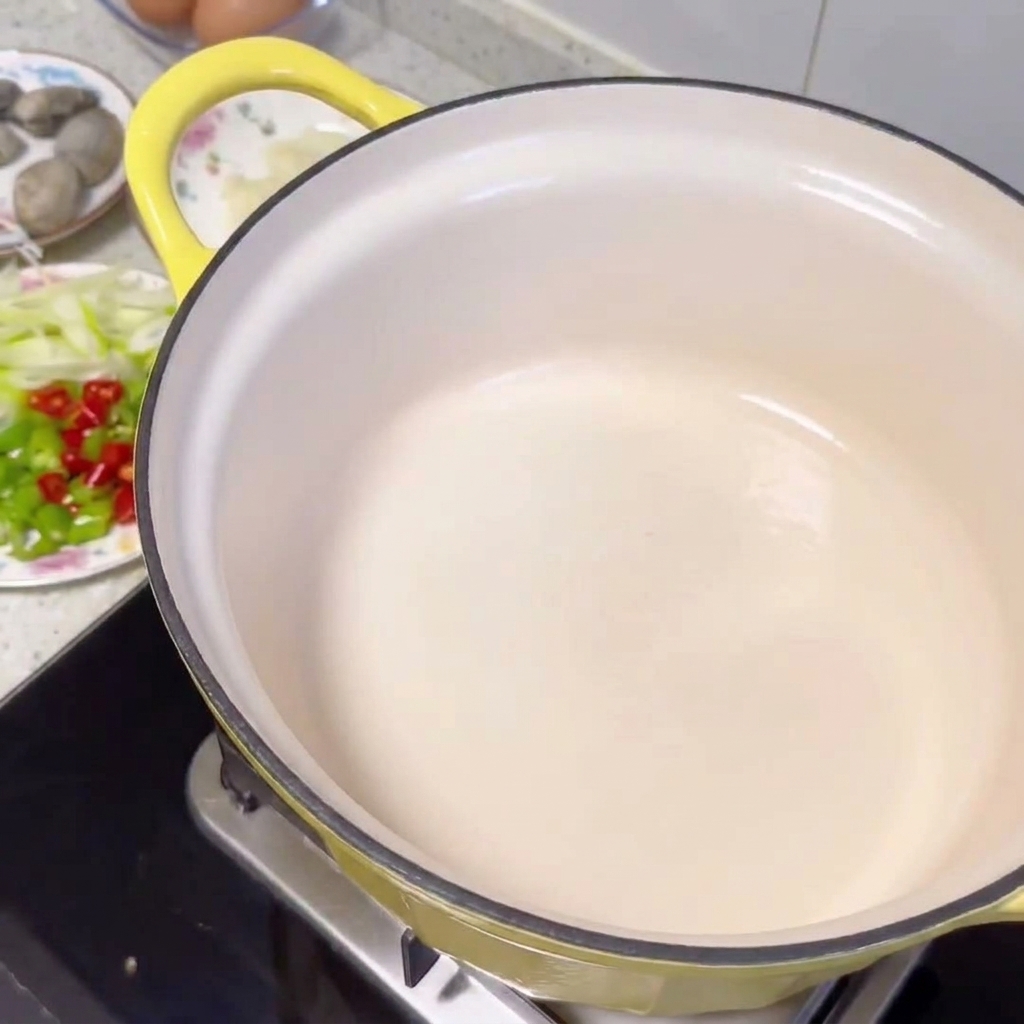
Add the sliced beef directly into a hot pot without any oil. Stir-fry the beef for about five minutes until it is cooked through and browned.
Tip: Cooking the beef first without oil allows it to release its natural fats and develop a deep flavor base. - 4Add Radish
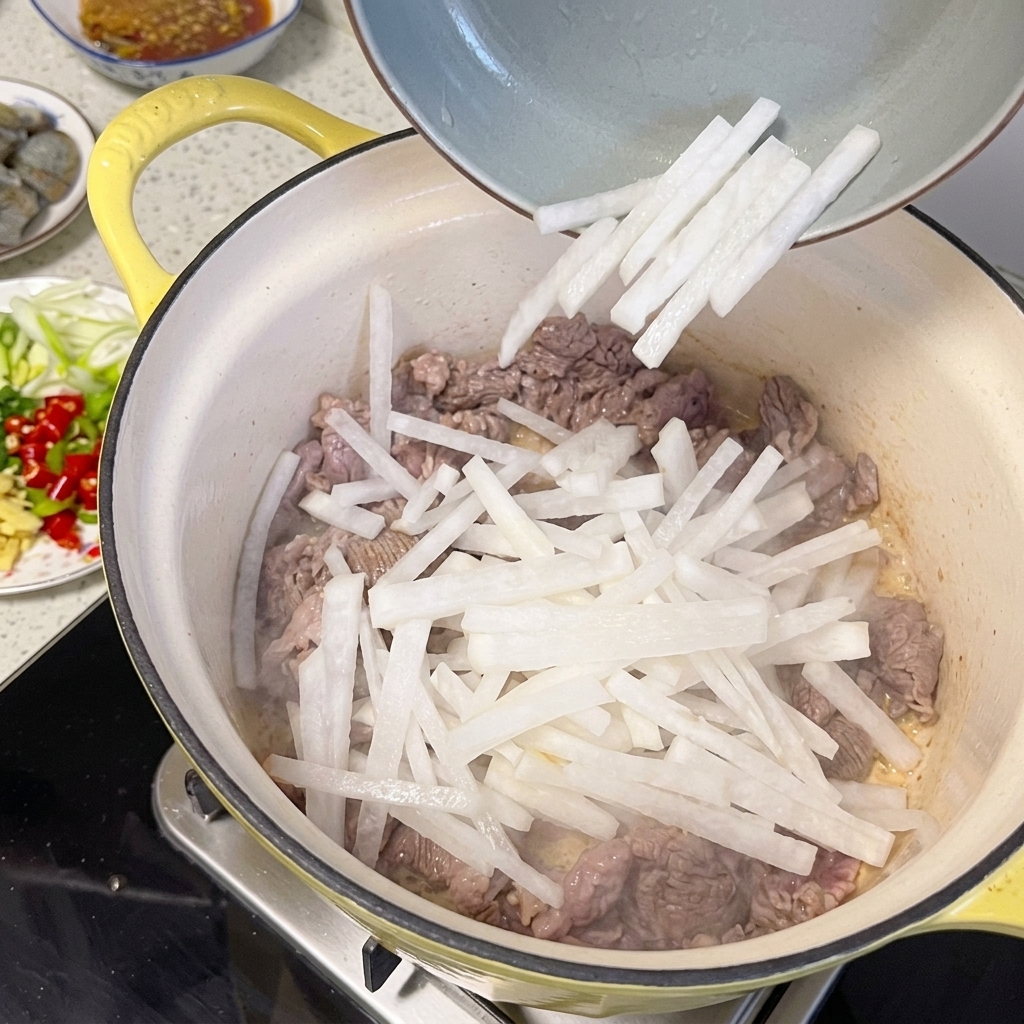
Add the sliced radish into the pot with the browned beef. Stir-fry them together to allow the radish to start softening and picking up the savory beef flavors.
Tip: Adding the radish now allows it to become translucent and tender as the soup base develops. - 5Season with Pepper Powder
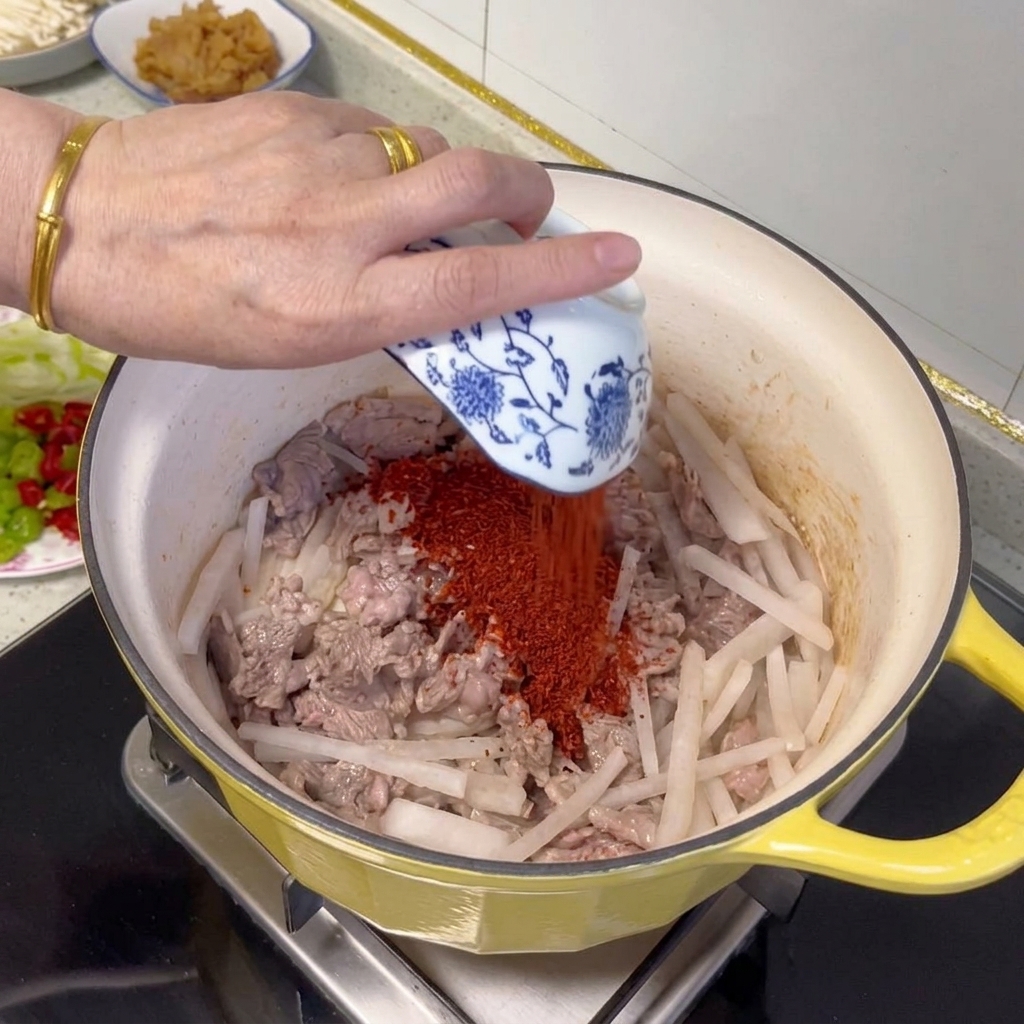
Sprinkle the red pepper powder over the beef and radish. Stir thoroughly so that all ingredients are evenly coated, creating a vibrant base for the stew.
Tip: Adjust the amount of red pepper powder to your preferred level of spiciness. - 6Add Aromatics
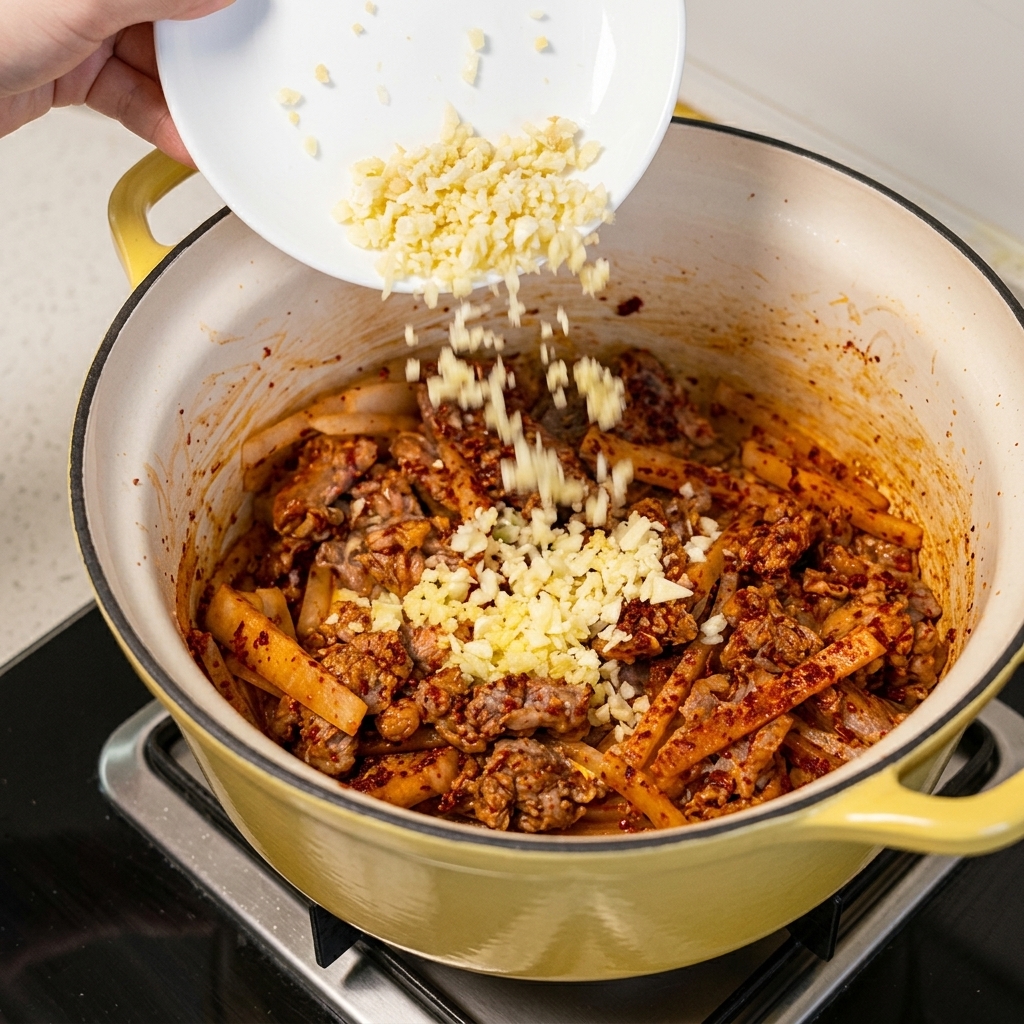
Add the minced garlic and ginger to the pot. Continue to stir-fry until the aromatics are fragrant and well incorporated with the beef and radish.
Tip: Do not burn the garlic; stir constantly until fragrant, usually within a minute. - 7Add water and boil
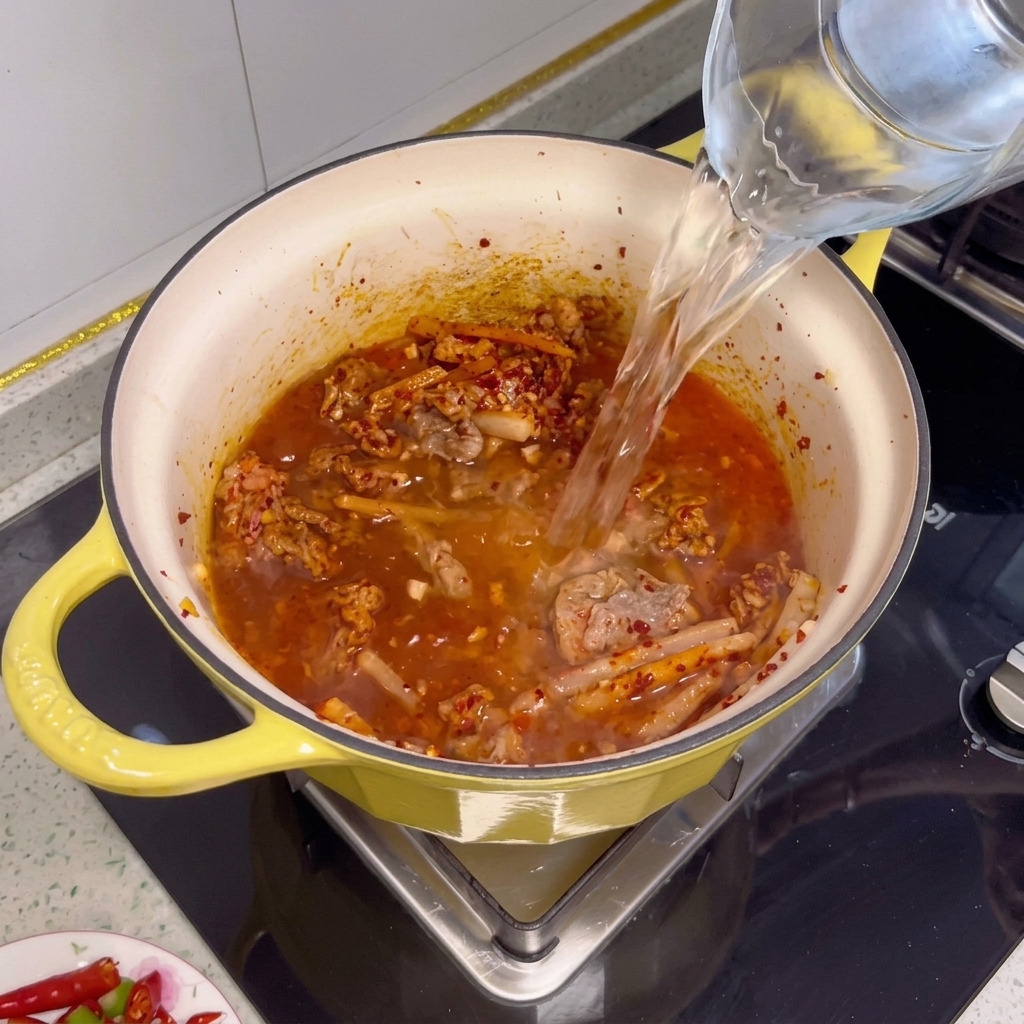
Pour water into the pot with the stir-fried beef and aromatics. Bring the mixture to a boil to create a flavorful broth base for the stew.
Tip: Adding water after stir-frying the meat helps deglaze the pot, incorporating all the browned bits into the broth for deeper flavor. - 8Add soybean paste
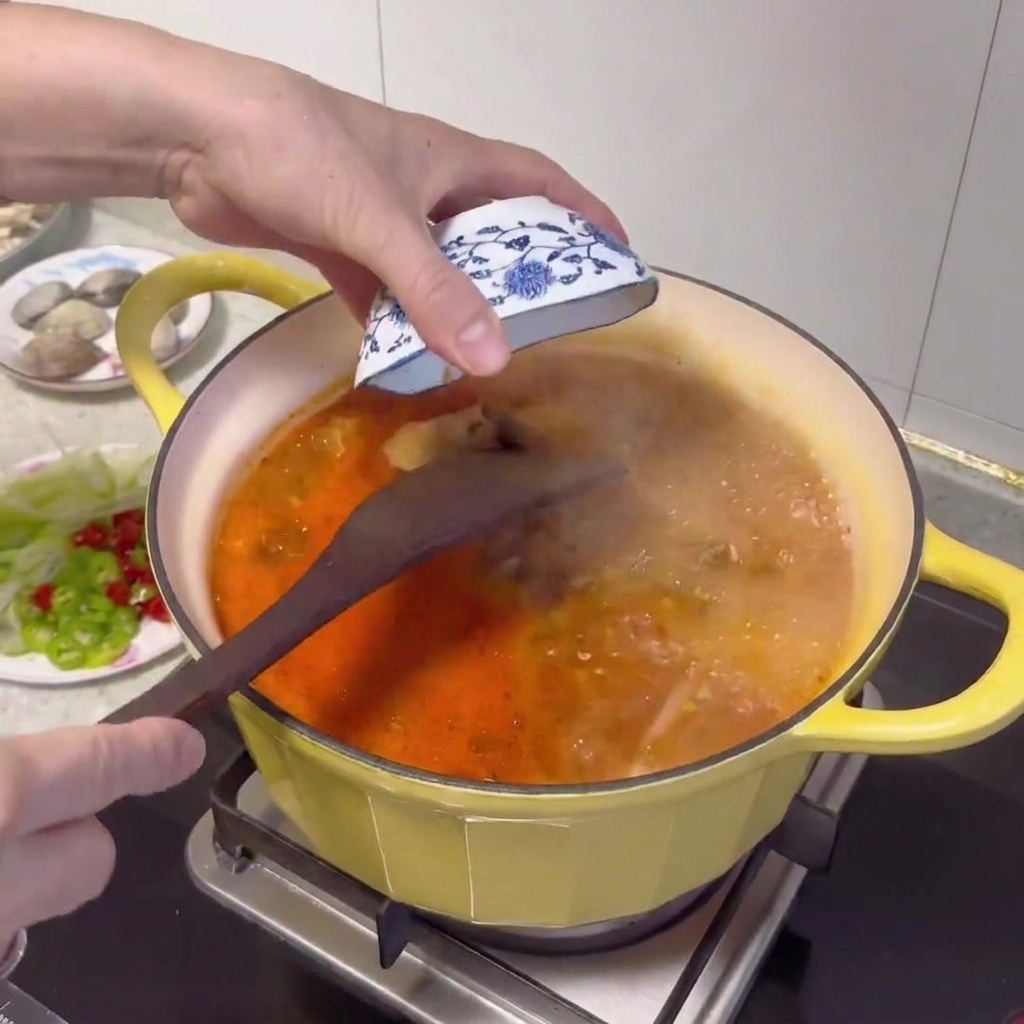
Once the water is boiling, add the Korean soybean paste. Stir well to ensure the paste dissolves completely into the broth.
Tip: If the soybean paste is thick, you can dissolve it in a small amount of warm water first to ensure it mixes easily into the pot. - 9Add vegetables and clams
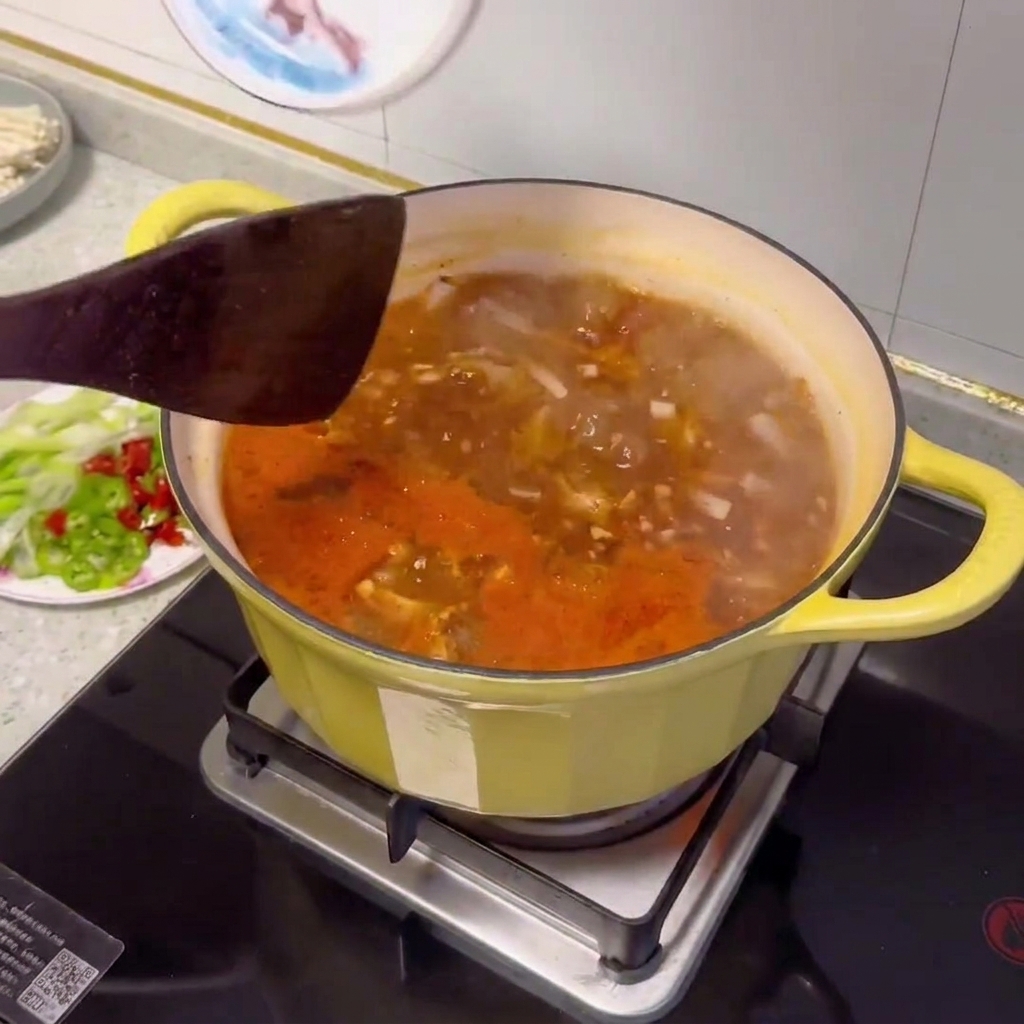
Add the prepared clams, sliced zucchini, potatoes, onions, and mushrooms to the boiling stew. Continue cooking until all ingredients are tender and cooked through.
Tip: Adding the vegetables in this order ensures that the hardier vegetables cook through while the clams remain tender. - 10Final garnish
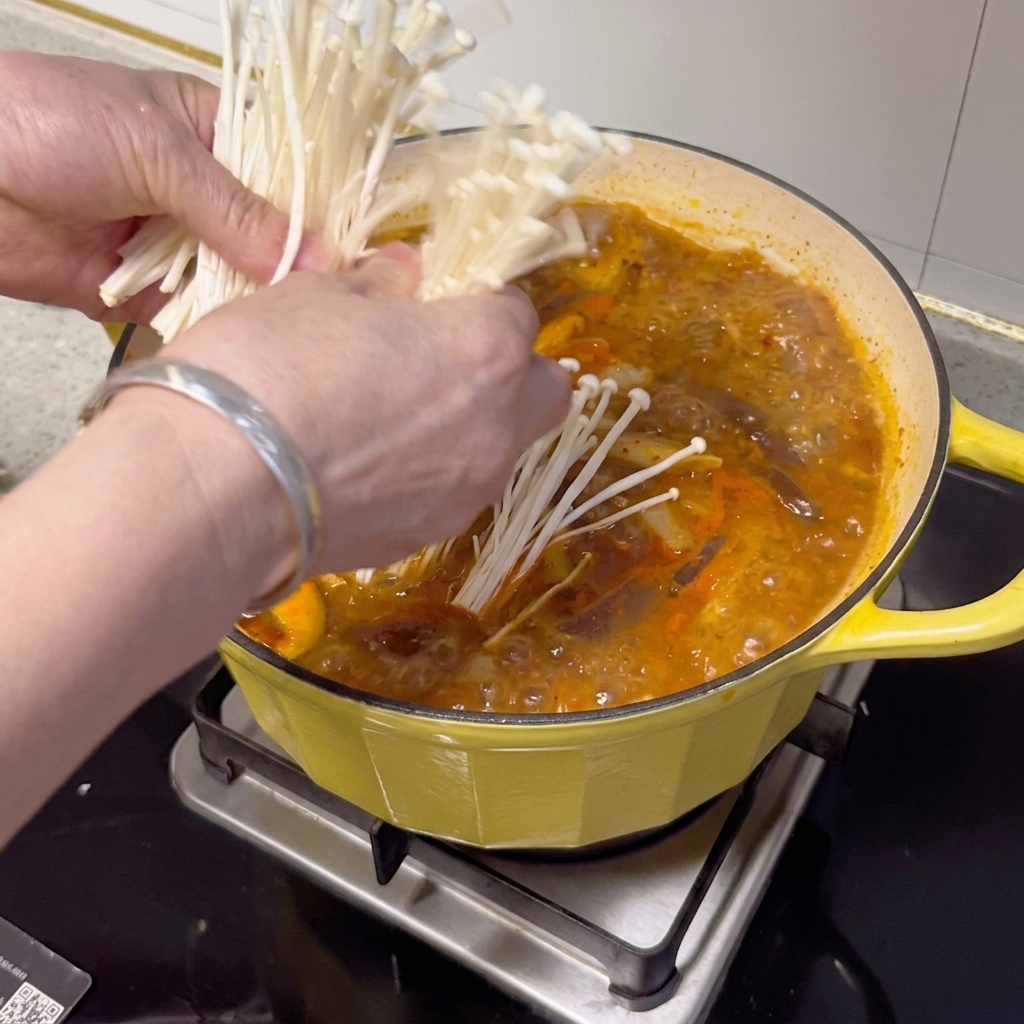
Top the cooked stew with enoki mushrooms, sliced green onions, and fresh slices of green and red chili peppers for a vibrant finish.
Tip: Add the garnishes right before serving so the enoki mushrooms and chili peppers retain their fresh texture and bright color.