Korean Soybean Paste Stew
Rice (Doenjang-jjigae Bap)
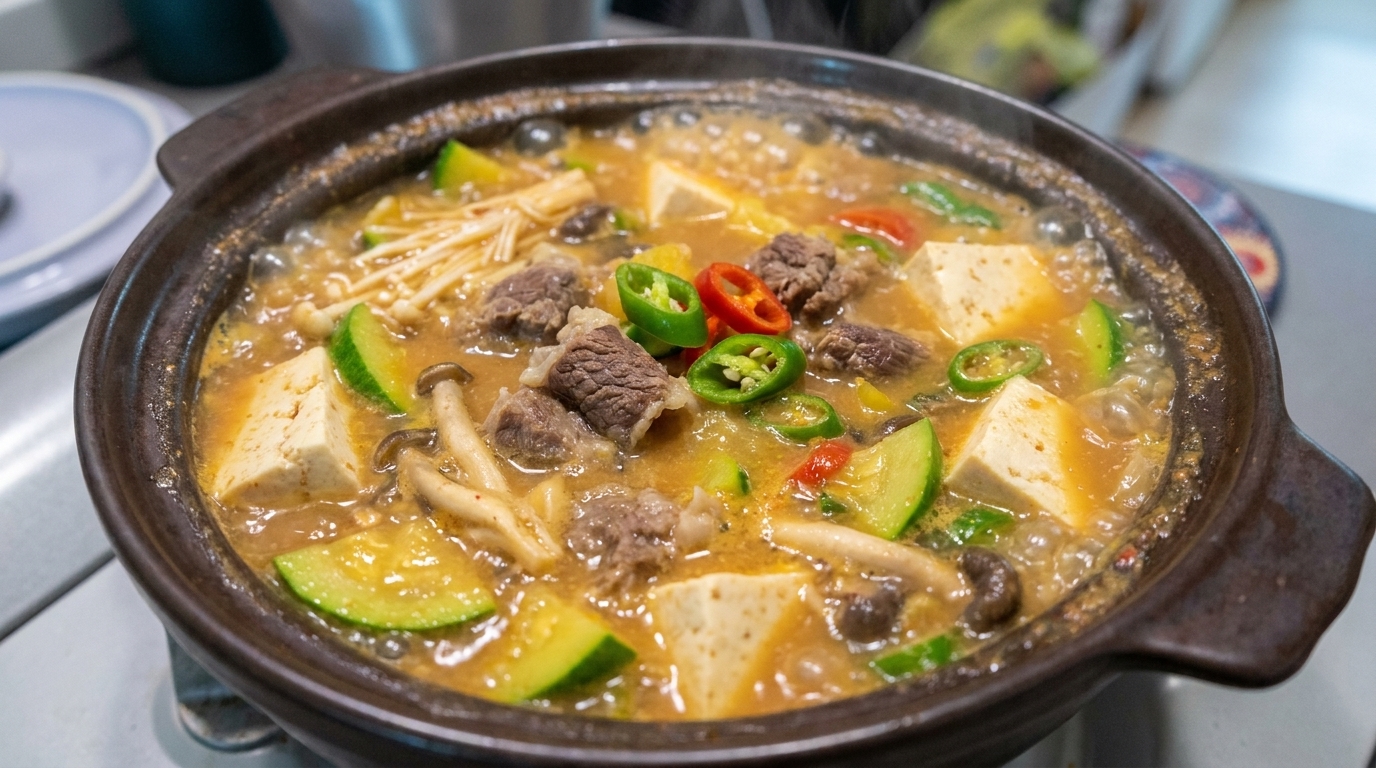
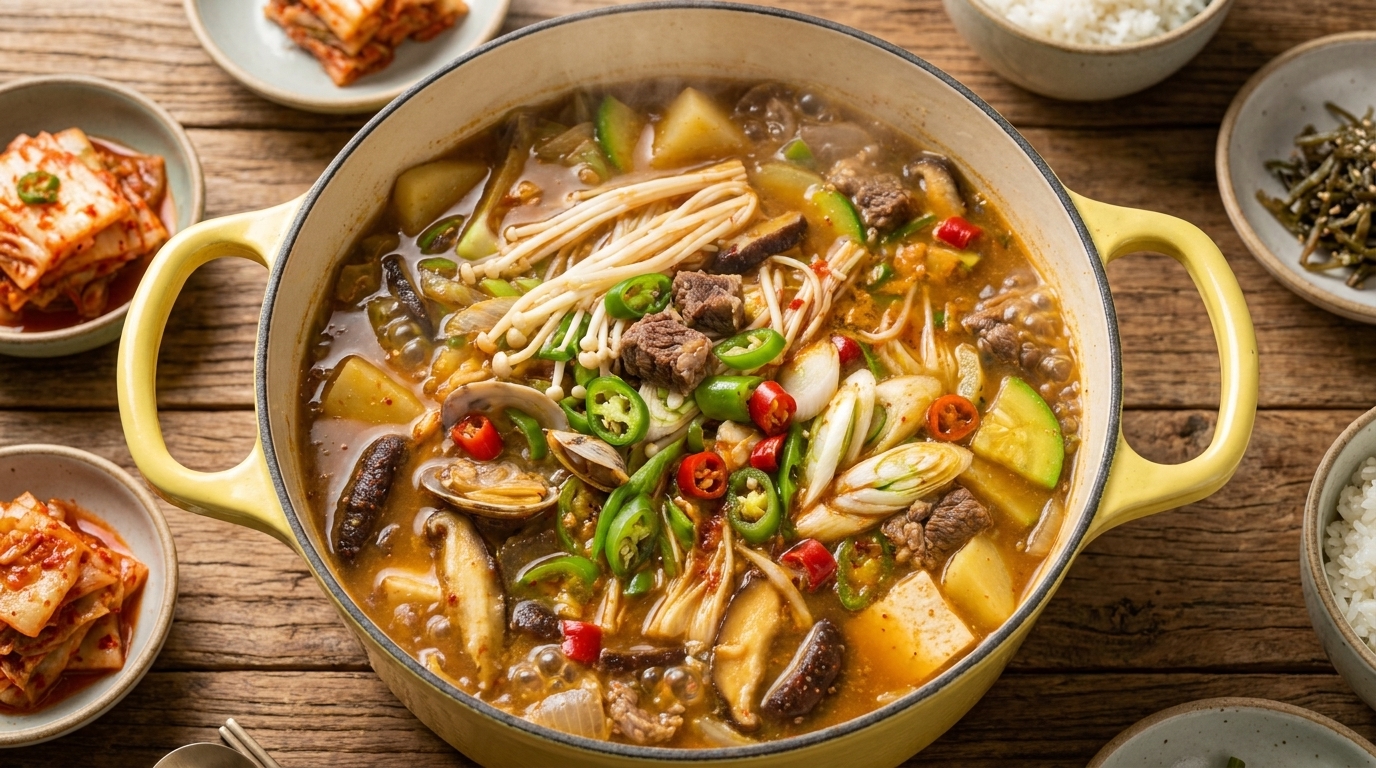
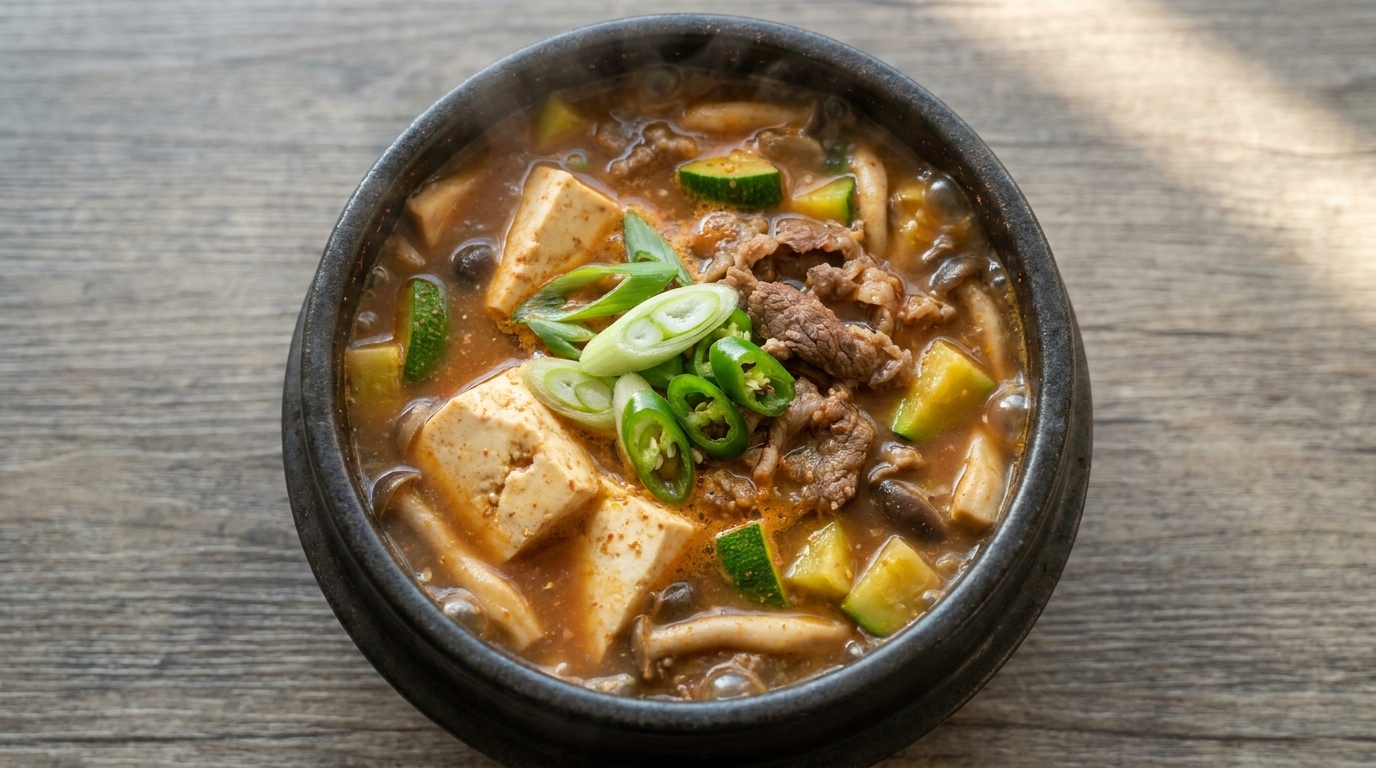
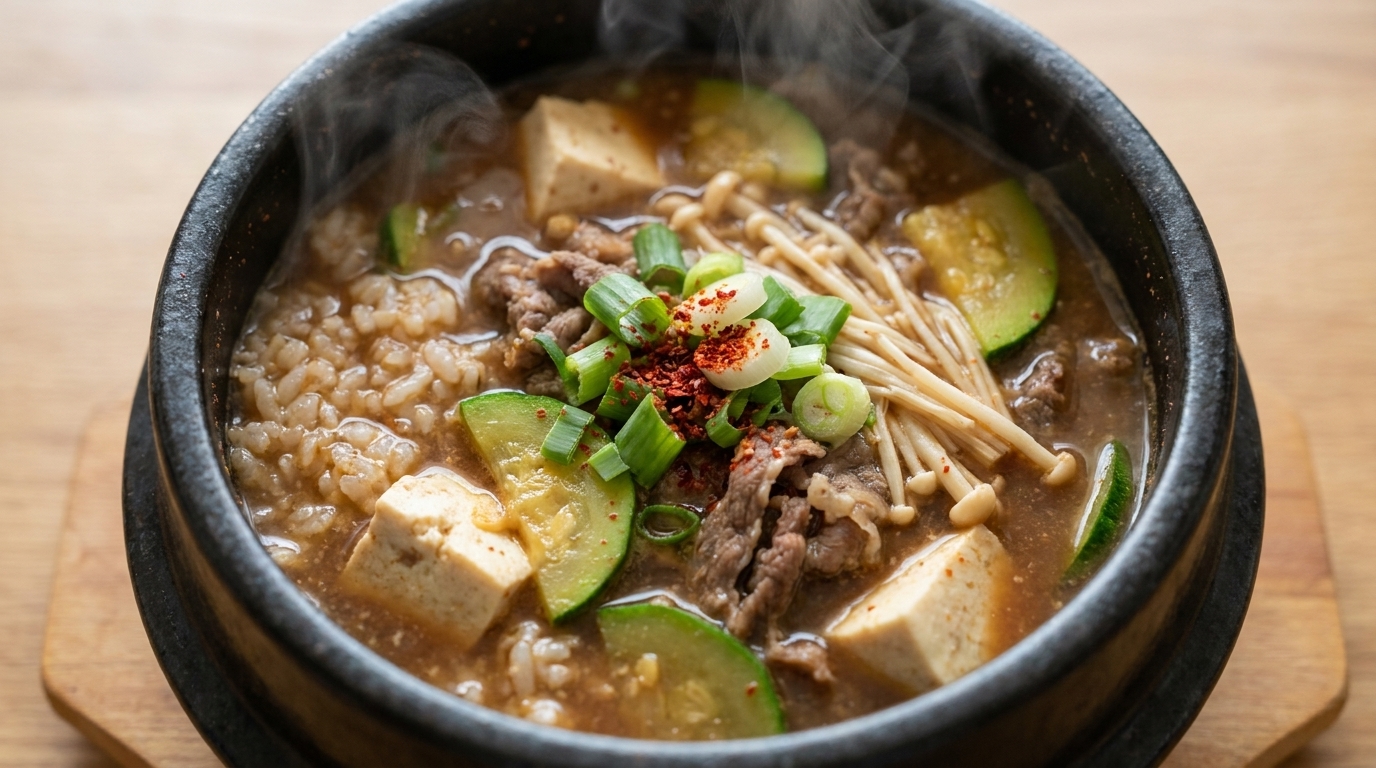
Recreate the comforting, savory Korean BBQ restaurant-style soybean paste stew right at home. This hearty one-pot meal features tender beef, fresh vegetables, and rice soaked in a rich, bubbling broth.
Doenjang-jjigae is a cornerstone of Korean comfort food, often served at the end of a satisfying Korean BBQ meal to cleanse the palate and warm the stomach. This specific variation, known as Doenjang-jjigae Bap, mixes the rice directly into the bubbling stew. As the rice absorbs the deeply savory and slightly spicy broth, it thickens into an incredibly comforting, porridge-like consistency.
Ingredients
- 1/4 onion
- 1/4 zucchini
- 1/2 pack enoki mushrooms
- 1 stalk green onion
- 150 g thinly sliced beef brisket or fatty beef rolls
- 1 tbsp minced garlic
- 1 tbsp Korean soybean paste (doenjang)
- 1/2 tbsp Korean chili paste (gochujang)
- 400 ml water
- 1/2 block soft tofu
- 1 tsp beef seasoning powder
- 1 bowl cooked white rice
- to taste soy sauce
- to taste Korean chili powder (gochugaru)
Instructions
- 1Prep the aromatics
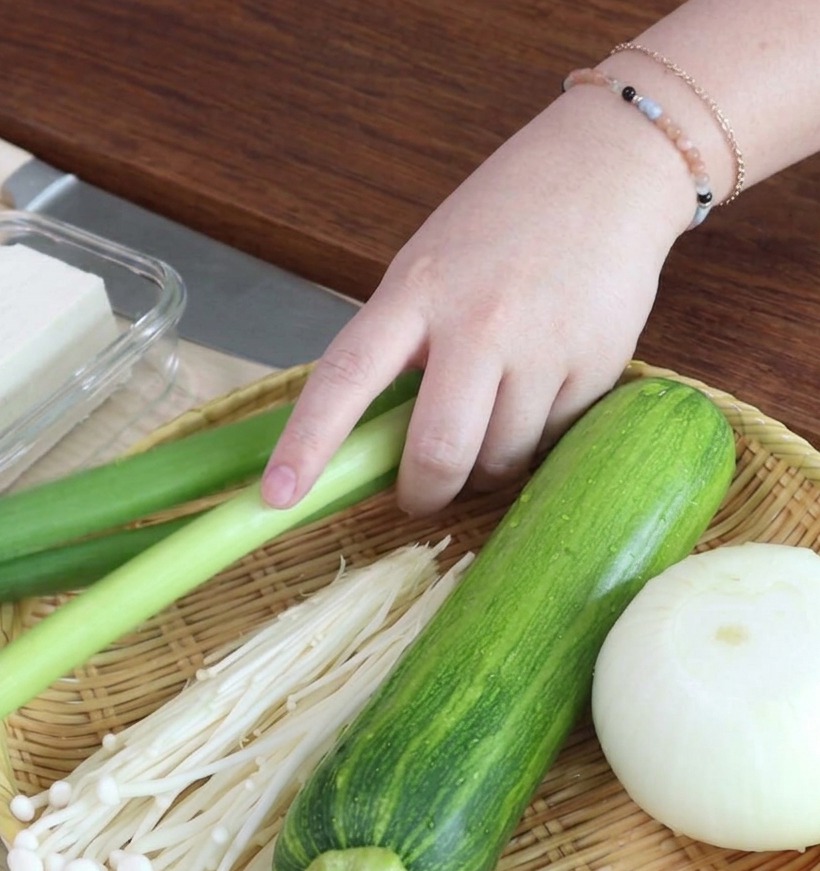
Begin by washing your green onions and chopping them into small, even rings on a clean cutting board. These will be used later to build a flavorful base for the stew.
Tip: Keep the green onion rings uniform so they cook evenly when stir-fried later. - 2Prepare the onions

Take a quarter of an onion and dice it into small, bite-sized pieces. These onions will add natural sweetness to the savory soybean paste broth.
Tip: Dicing the onions into consistent sizes ensures they soften nicely in the stew. - 3Slice the zucchini
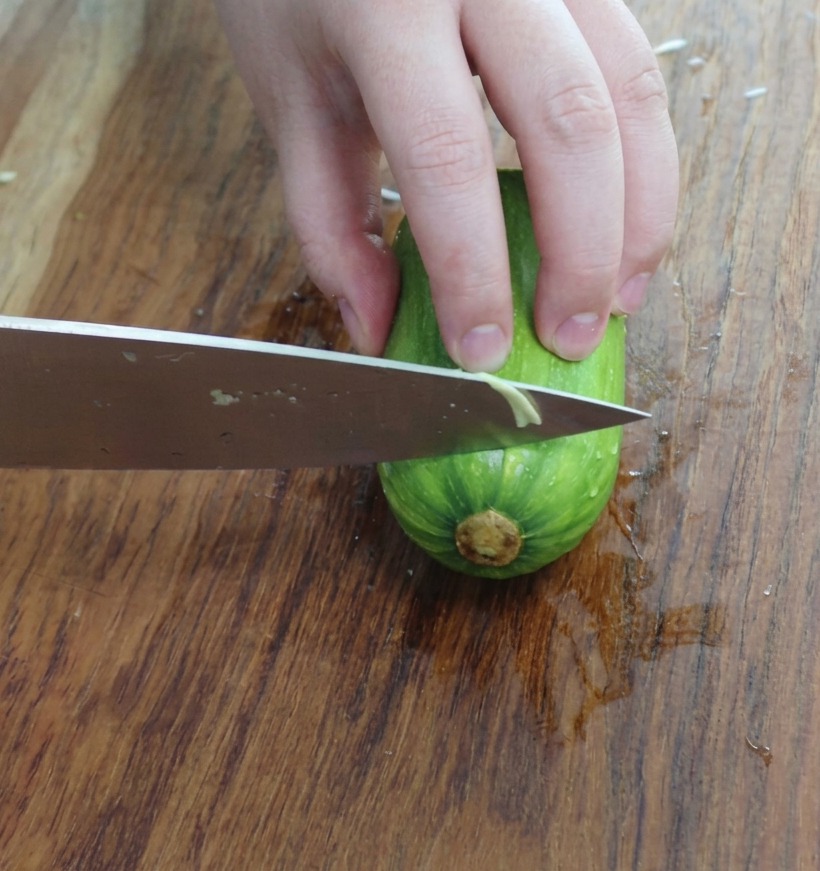
Slice your zucchini into small, triangular pieces. The zucchini adds a fresh texture and absorbs the flavors of the soybean paste as it cooks.
Tip: Cut the zucchini pieces similar in size to the onions so they cook at the same rate. - 4Trim the enoki mushrooms
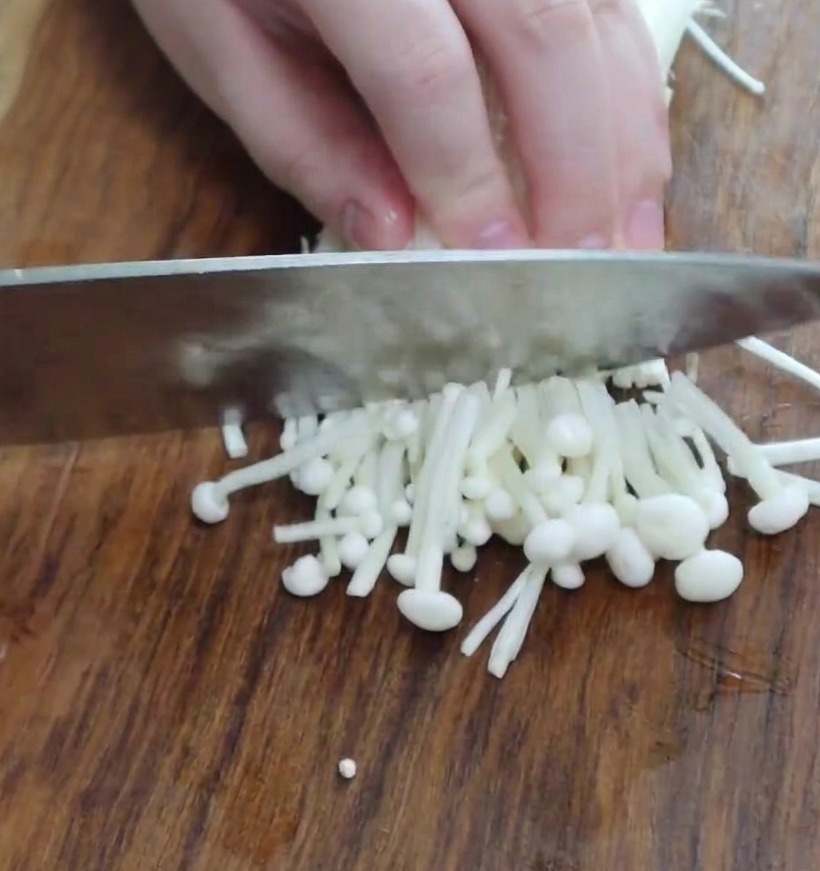
Trim the base of the enoki mushrooms and cut the bundles into smaller, manageable sections. These mushrooms provide a lovely delicate texture to the final stew.
Tip: Gently rinse the mushrooms before cutting to remove any debris from the roots. - 5Sear the beef
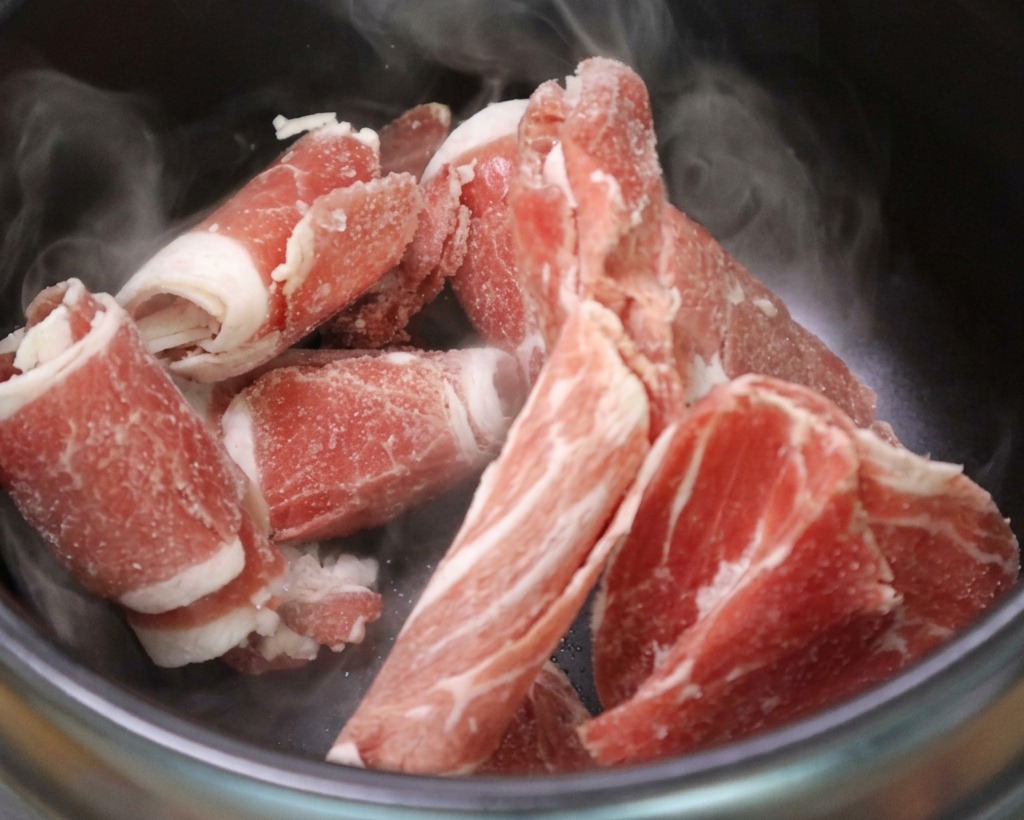
Heat your stone pot over medium heat. Place the thin beef brisket slices directly into the pot without adding any oil. Let the meat cook in its own rendered fat for maximum flavor.
Tip: Using beef brisket or fatty pork belly is key to getting that rich, restaurant-style base. - 6Aromatize the meat
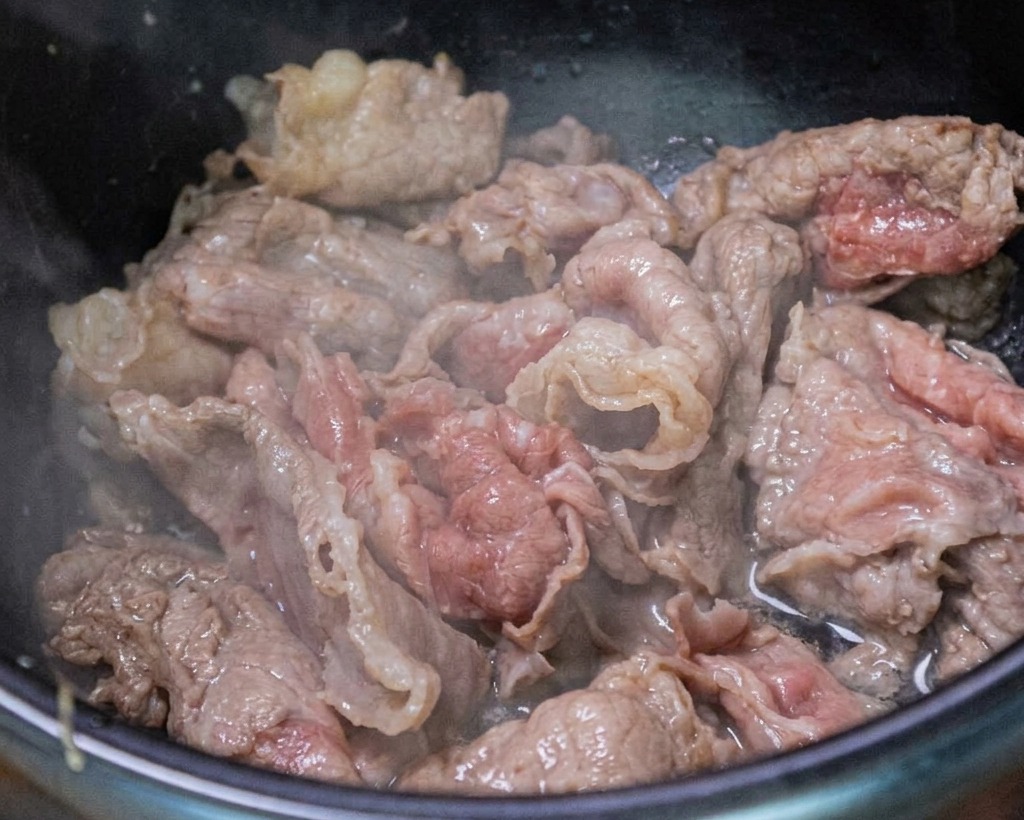
Once the beef is browned, add a spoonful of minced garlic and your chopped green onions into the pot. Stir-fry these with the beef until the aroma is released and fragrant.
Tip: Dont rush this step—letting the garlic and onions soften in the beef fat builds the foundation of the dish. - 7Season with soybean and chili paste
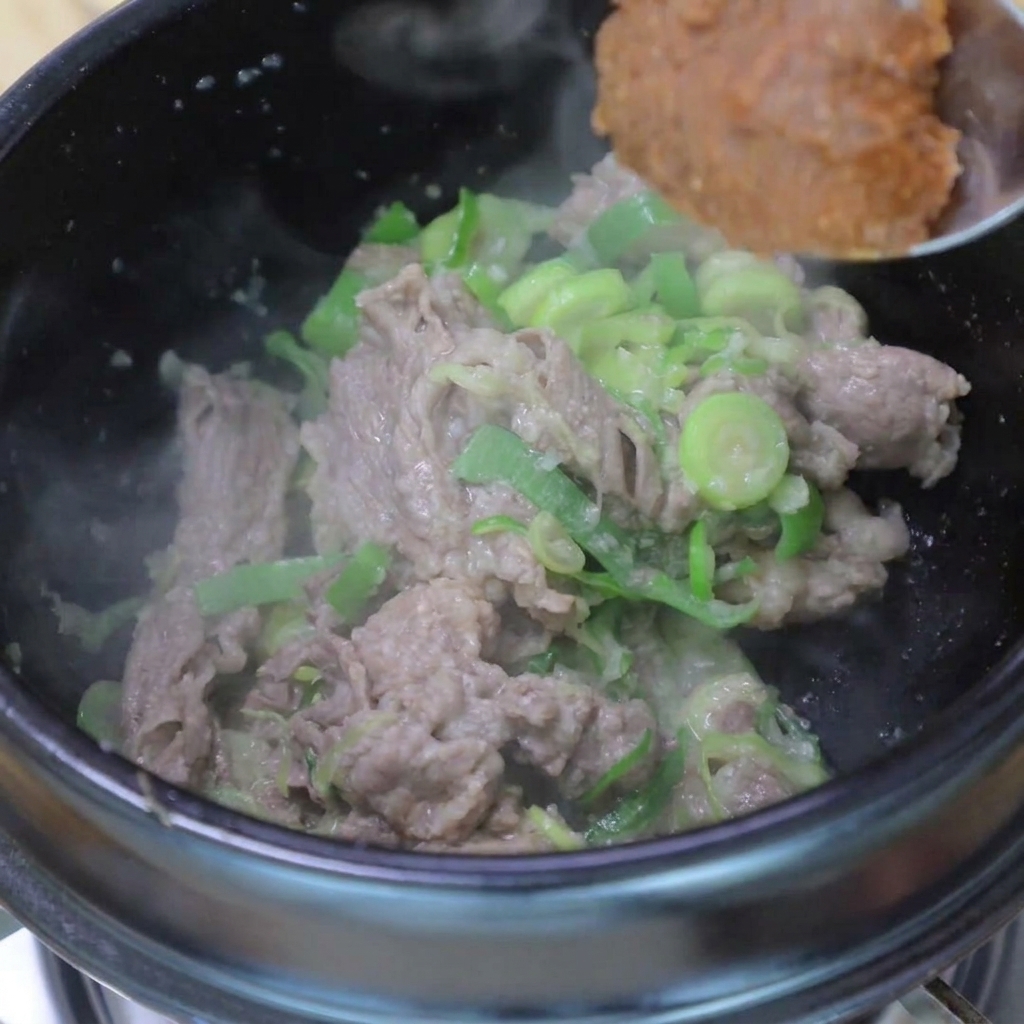
Add a spoonful of Korean soybean paste and half a spoonful of chili paste to the browned meat, garlic, and green onions. Stir-fry the paste thoroughly with the ingredients until fragrant before adding the water.
Tip: Stir-frying the pastes briefly before adding liquid helps to deepen the aroma and richness of the stew. - 8Add water and vegetables
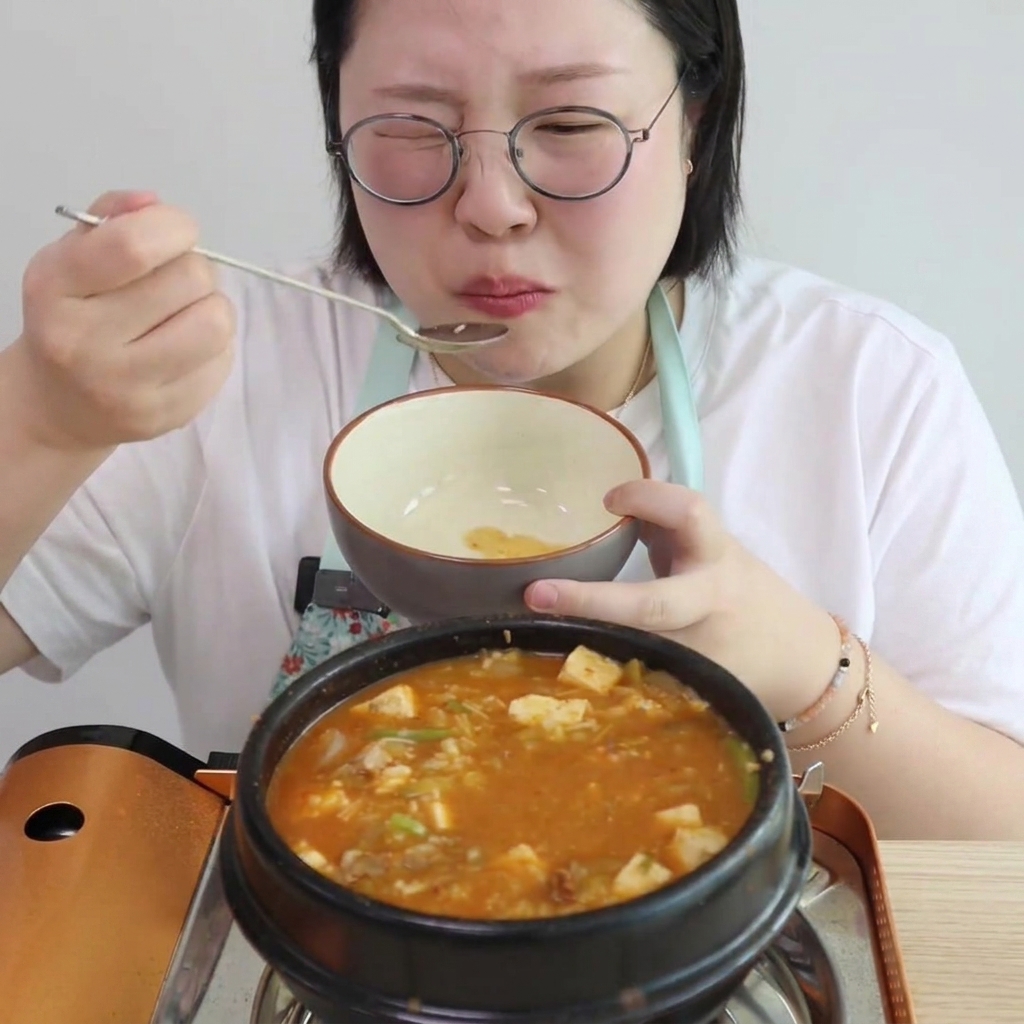
Pour water into the pot to create the broth. Once the liquid reaches a boil, add the sliced onions and zucchini. Cook the vegetables until they become slightly translucent, providing the base for the stews texture.
Tip: Adding the hardier vegetables first ensures they are tender by the time the stew is finished. - 9Add tofu and mushrooms
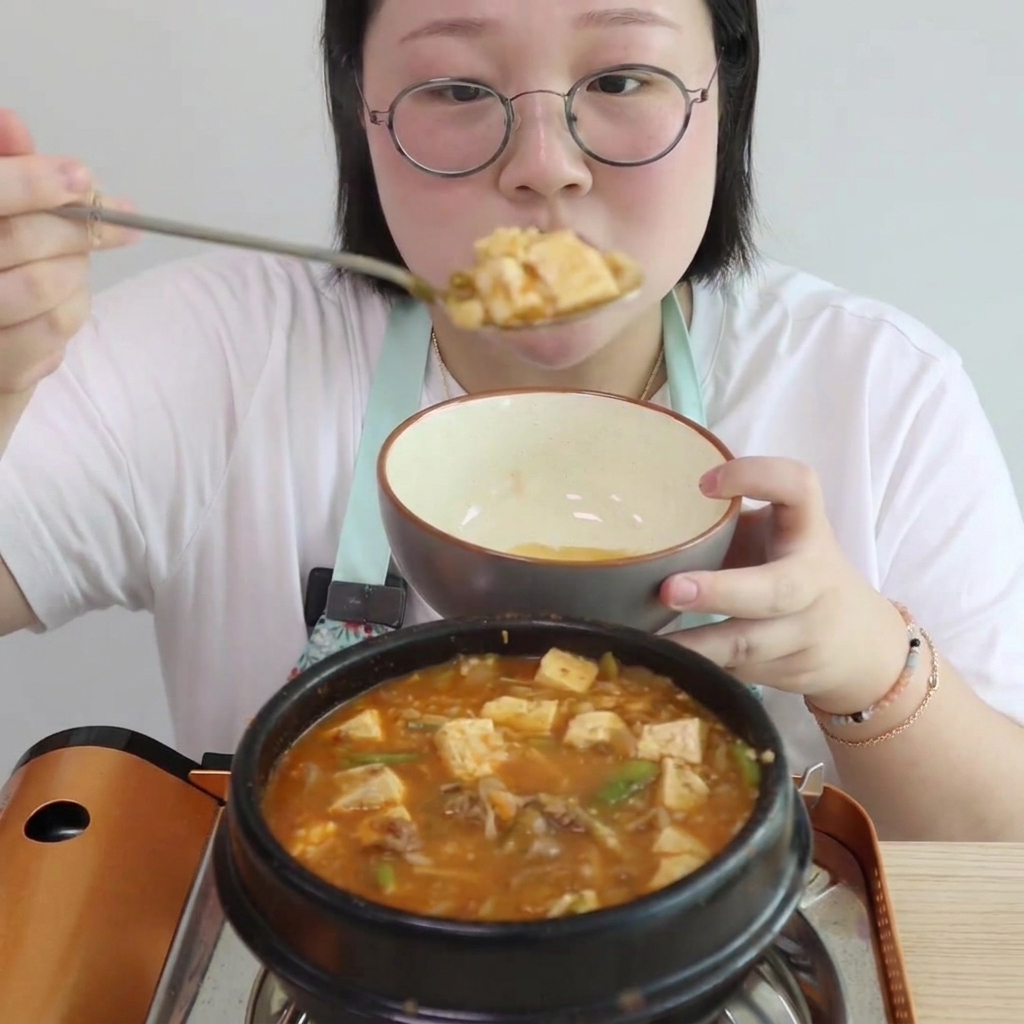
Gently add the cubed tofu and the sections of enoki mushrooms into the pot. These delicate ingredients only need to simmer for a short time to absorb the flavors.
Tip: Be gentle when stirring after adding the tofu to prevent it from breaking apart. - 10Season the broth
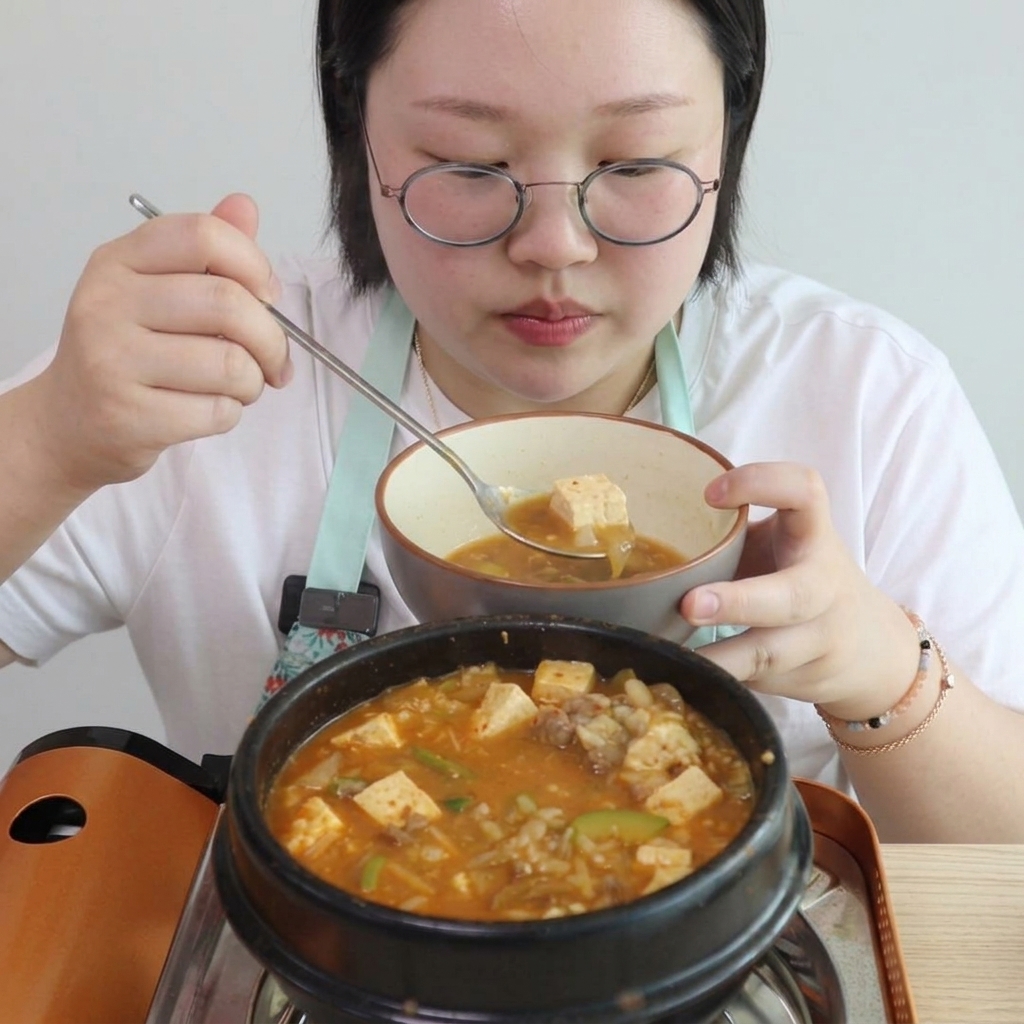
Enhance the savory profile of the stew by adding a spoonful of beef seasoning powder. If the flavor requires more depth, adjust by adding a small amount of soy sauce to taste.
Tip: Beef seasoning powder adds that signature restaurant-style flavor, but add it gradually to avoid over-seasoning. - 11Incorporate rice
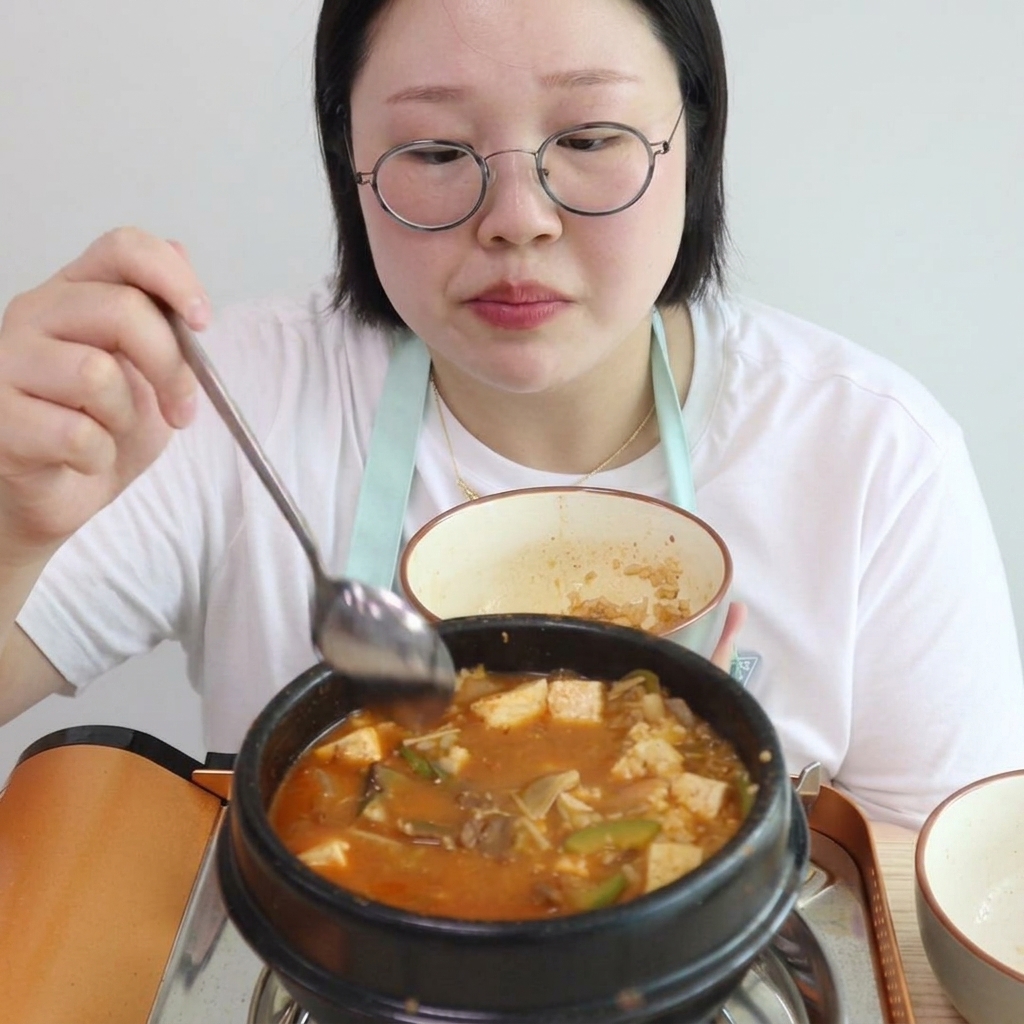
Add cooked white rice directly into the bubbling stew. Mix thoroughly with a wooden spoon until the rice has absorbed the savory soup, creating a thick and hearty consistency.
Tip: The rice will act as a thickener, turning the soup into a rich, spoonable consistency characteristic of this BBQ restaurant-style dish.