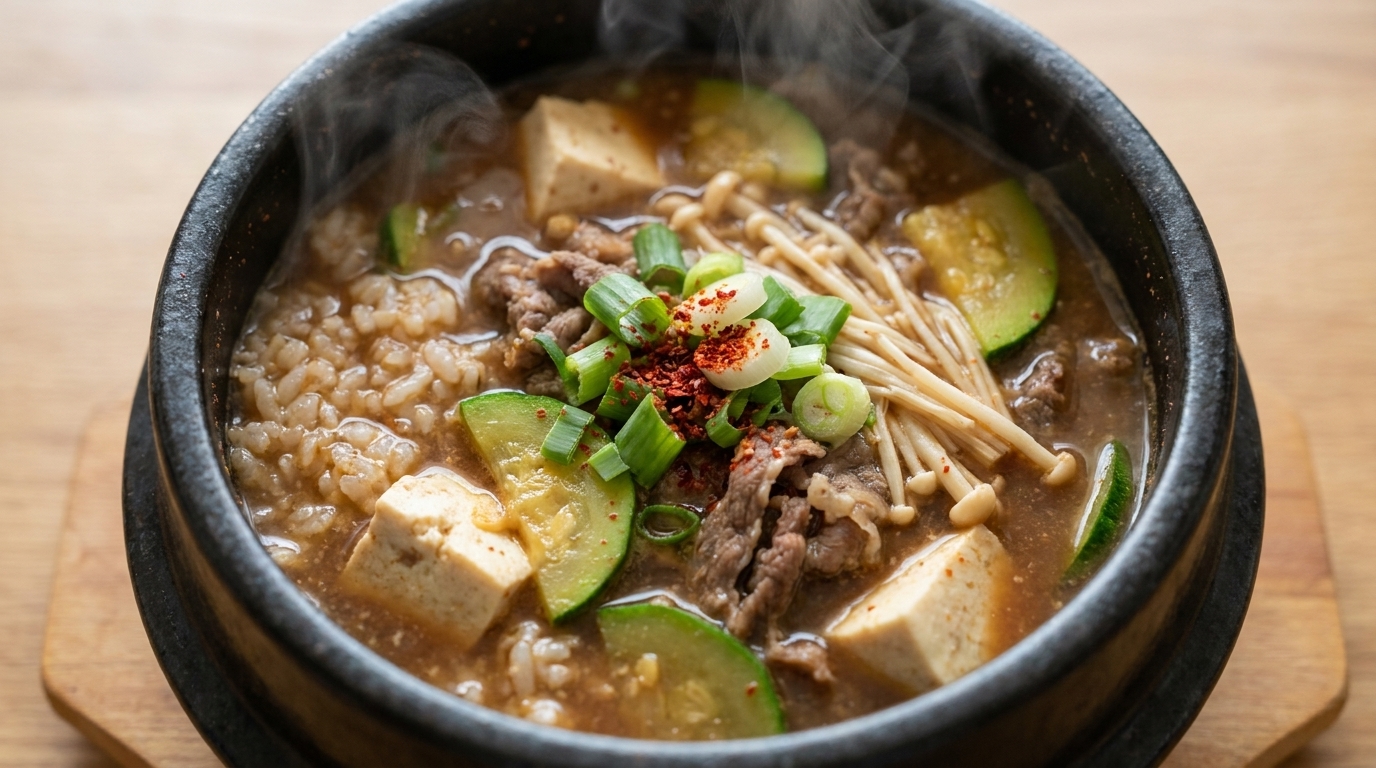
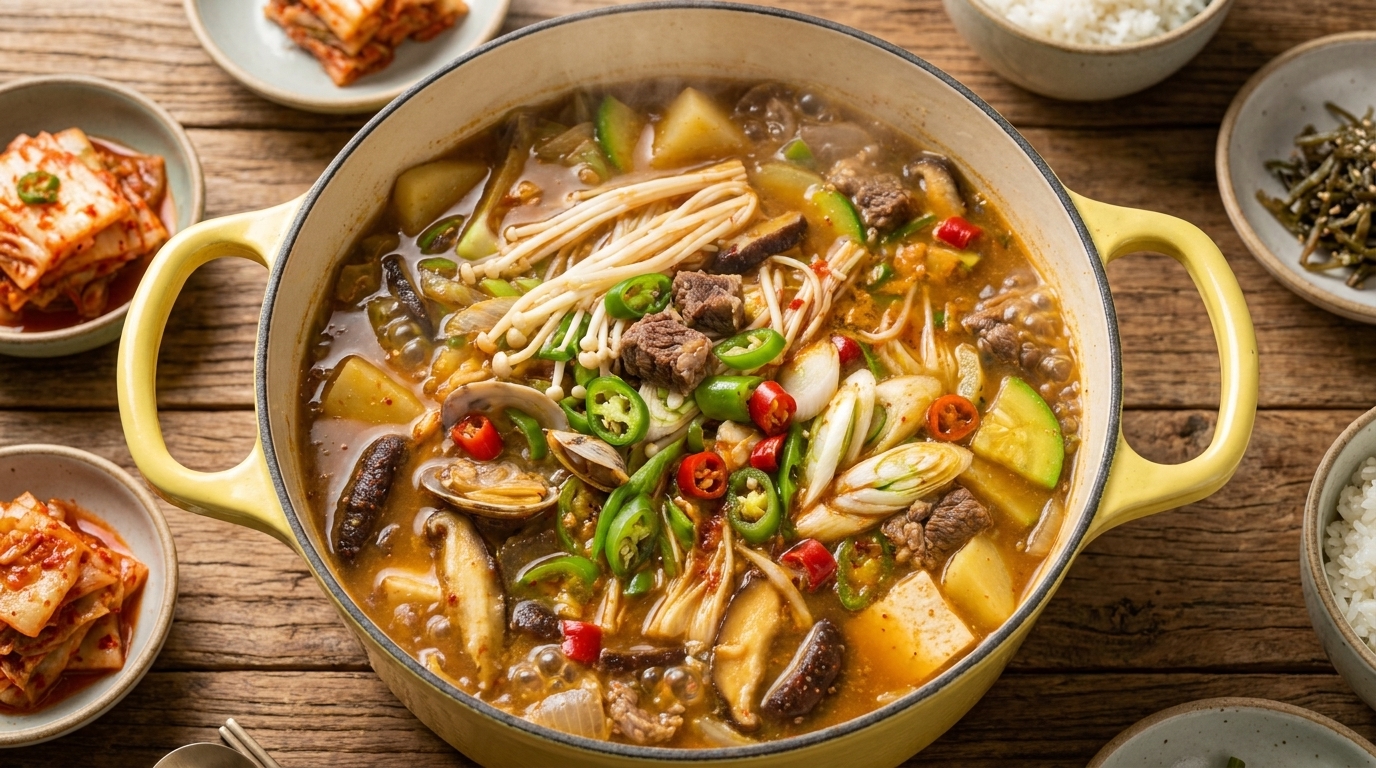
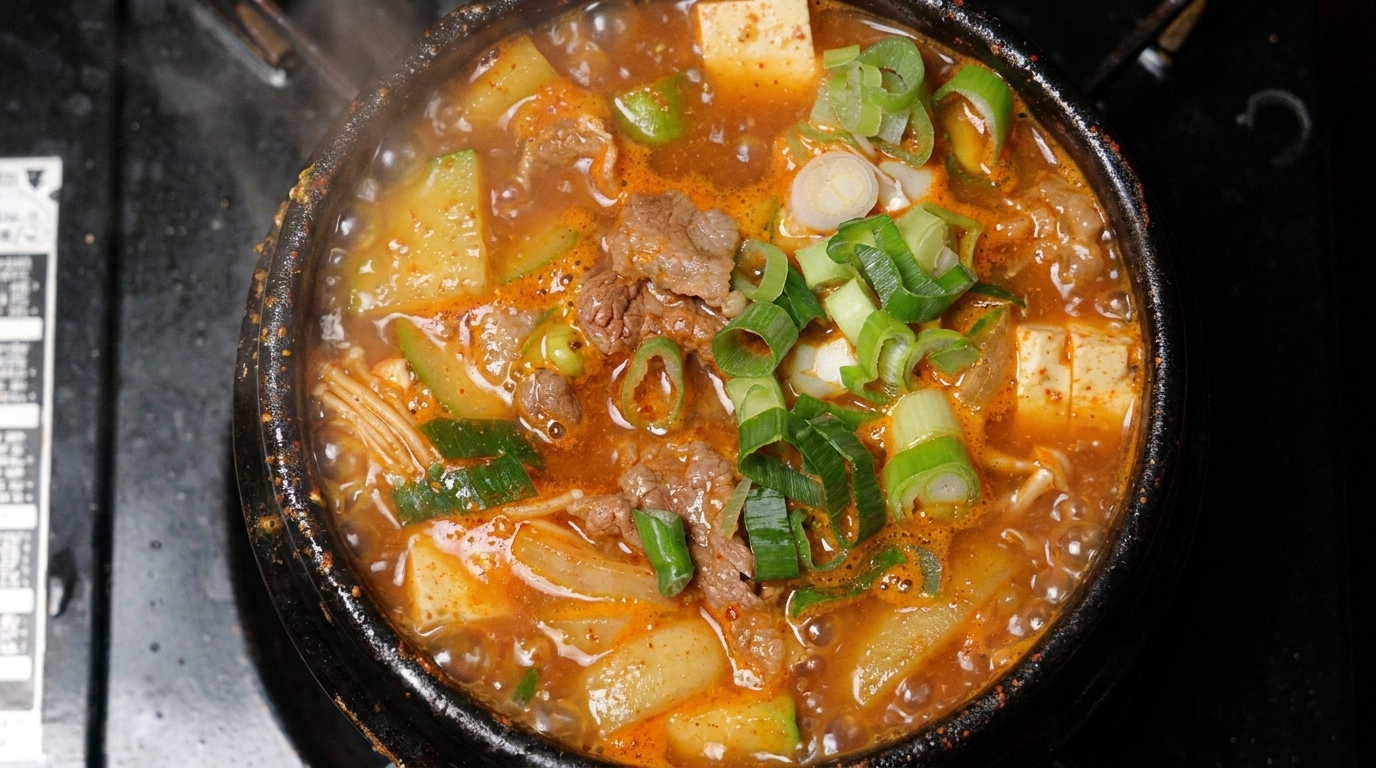
Authentic Korean Doenjang-jjigae (Soybean Paste Stew)
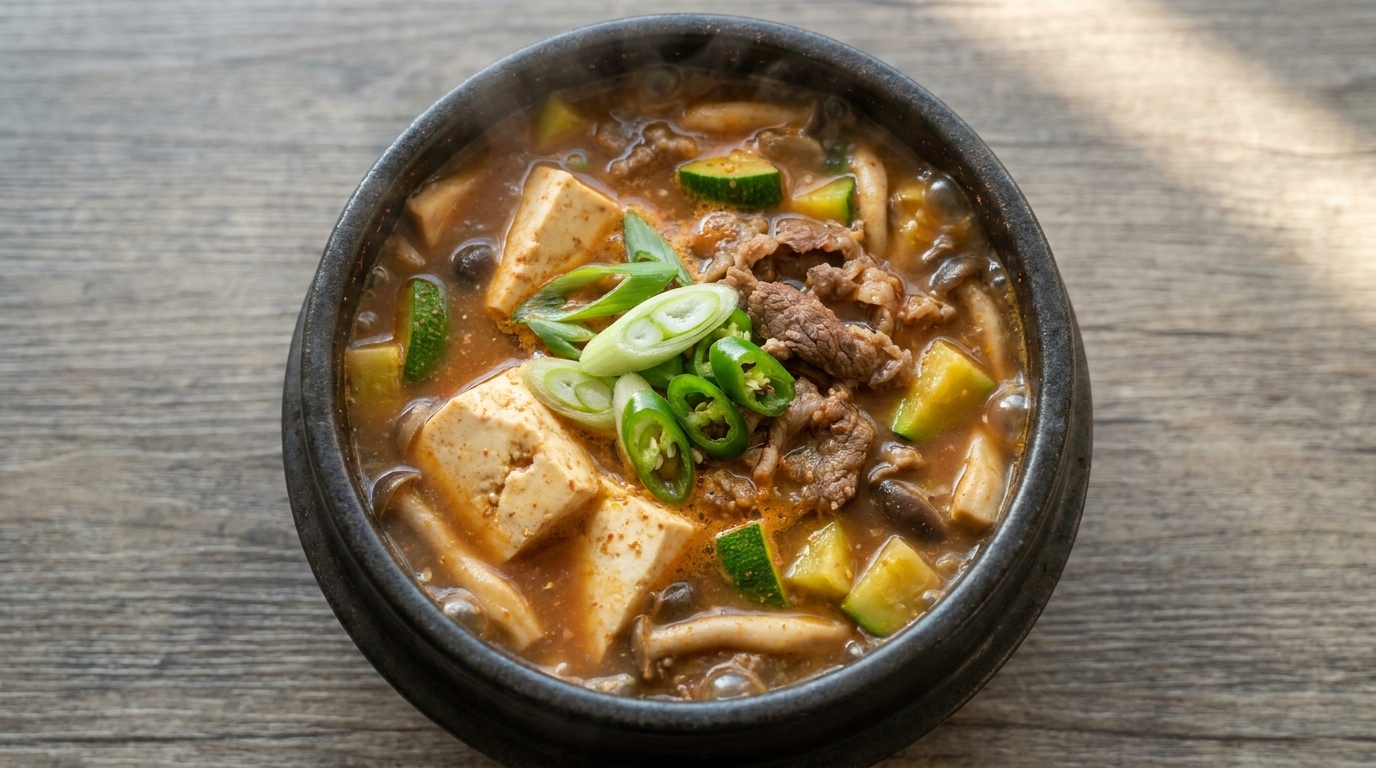
Experience the deep, savory comfort of traditional Doenjang-jjigae. This iron-pot stew combines tender fatty beef, earthy mushrooms, and fermented soybean paste.
Doenjang-jjigae is a cornerstone of Korean home cooking, prized for its complex, umami-rich broth and deeply comforting qualities. This recipe elevates the traditional stew by using rice water for a thicker, starchier base and incorporating both fresh and aged soybean pastes to achieve the signature depth found in famous Korean establishments. It is a hearty, nourishing dish that brings the authentic flavors of a Seoul kitchen directly to your dining table.
Ingredients
- 100 g fatty beef slices
- 200 g firm tofu
- 2 potatoes
- 1 zucchini
- 1 onion
- 4 shiitake mushrooms
- 1 cup baby bok choy
- 2 tbsp aged soybean paste
- 1 tbsp aged stinky soybean paste
- 1 tbsp chili powder
- 1/2 tbsp minced garlic
- 2 stalks green onions
- 2 green chili peppers
- 500 ml rice water
- 1 tbsp cooking oil
Instructions
- 1Prepare the potatoes
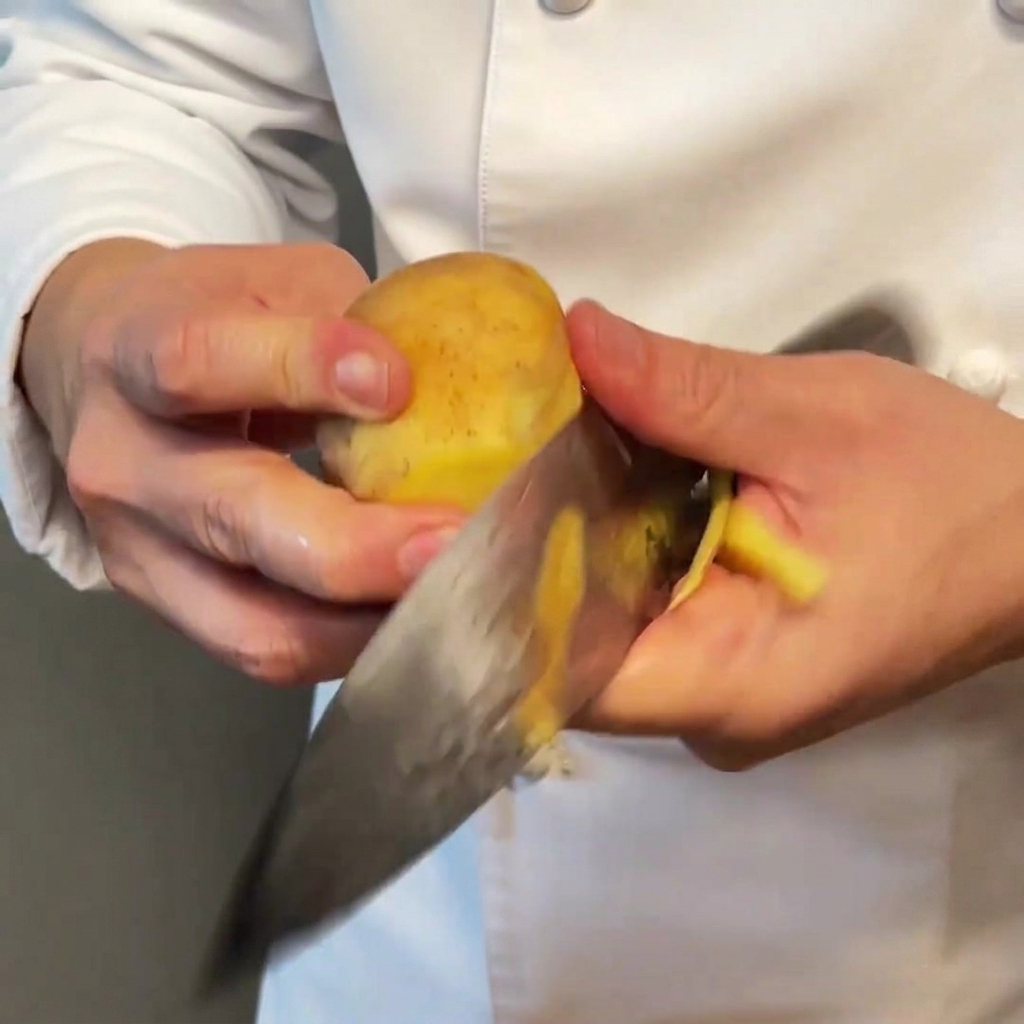
Peel the potatoes and cut them into bite-sized cubes. Potatoes are a foundational ingredient for this stew and require a bit more cooking time, so they are prepared first.
Tip: Keep the potato cubes uniform in size to ensure they cook evenly in the pot. - 2Sear the beef
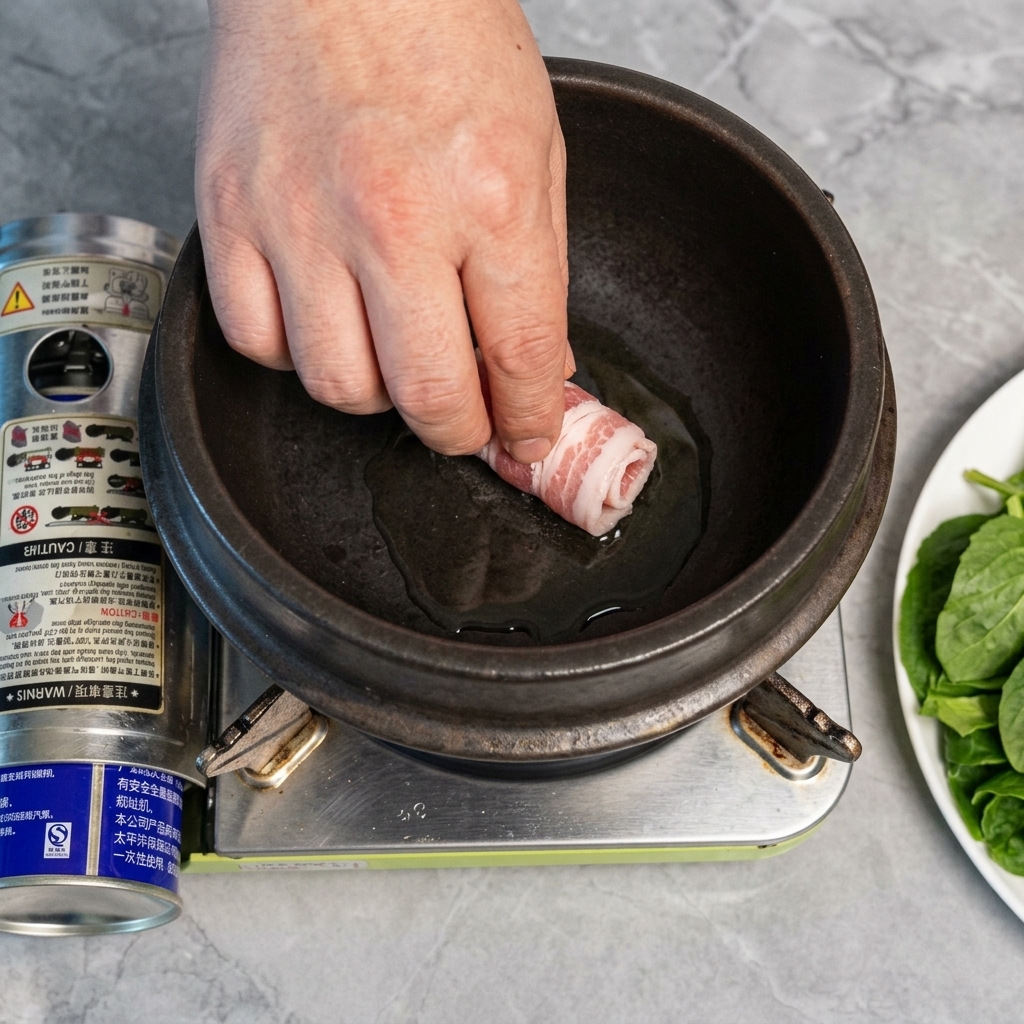
Heat a stone pot with a small amount of oil, then add the fatty beef slices. Searing the beef until the fat renders creates a rich, fragrant base for the soup.
Tip: Using fatty beef slices is recommended as the rendered fat adds deep flavor to the soybean paste. - 3Brown the meat
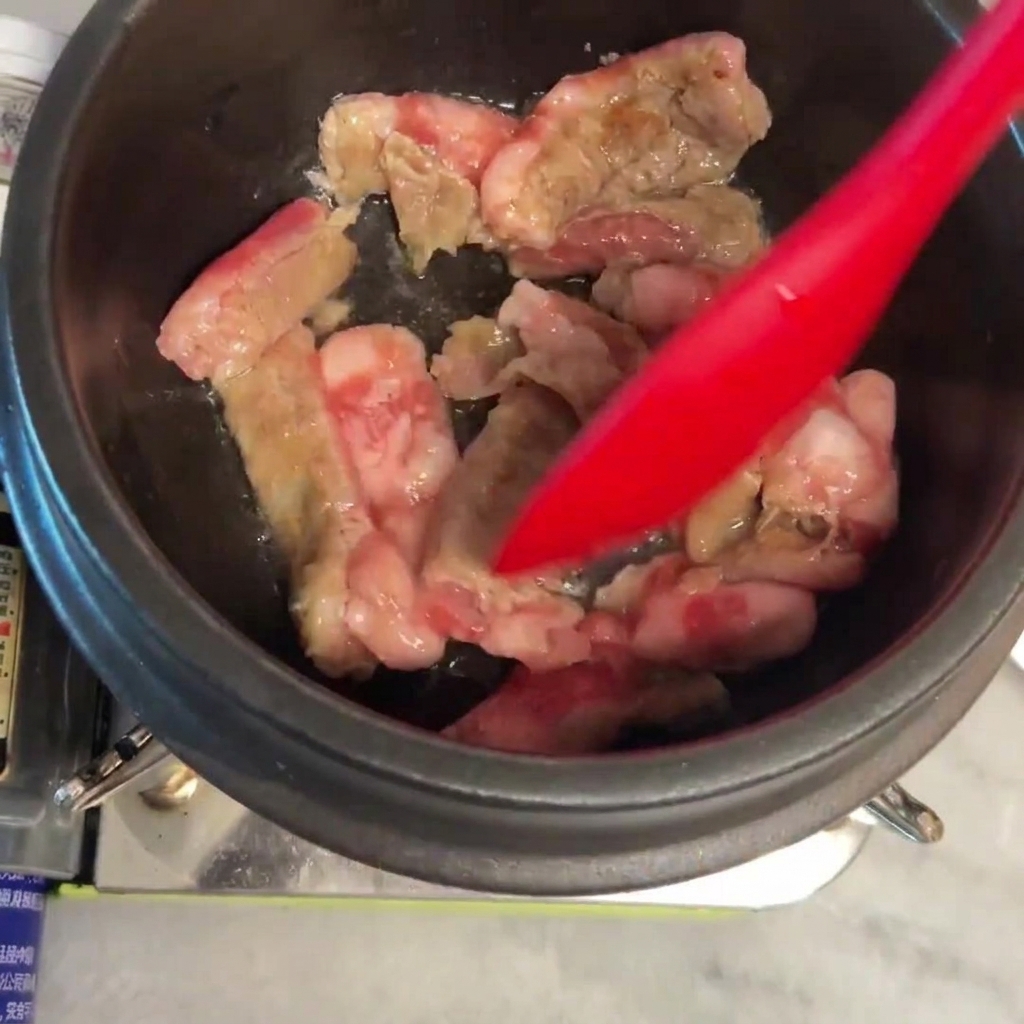
Stir the beef continuously with a spatula until it is browned and aromatic. This process helps release the juices and flavor from the meat into the pot.
Tip: Ensure the beef is fully browned to maximize the savory flavor profile before adding other ingredients. - 4Add potatoes
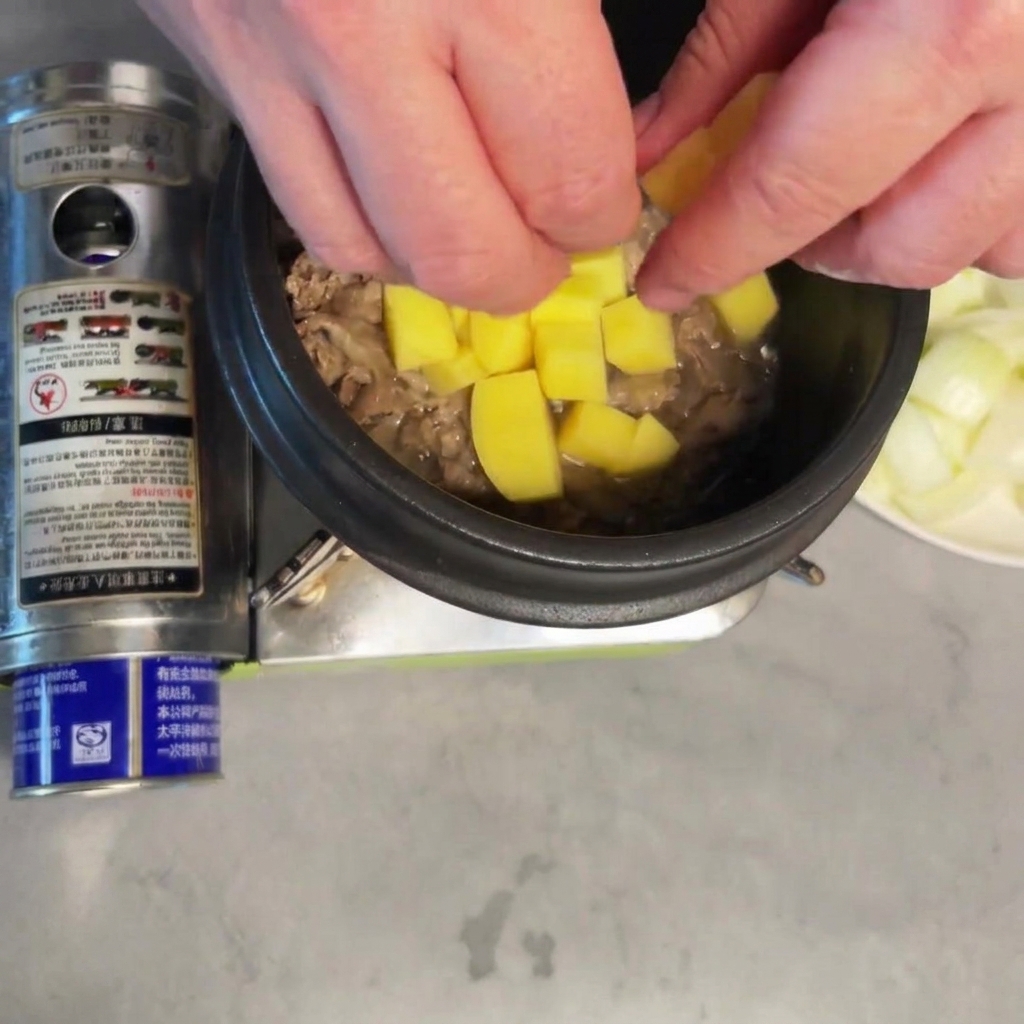
Add the prepared potato cubes to the pot with the browned beef. Since they take longer to cook than other vegetables, they should be added early in the process.
Tip: Stir the potatoes briefly with the beef to coat them in the rendered fat. - 5Pour in rice water
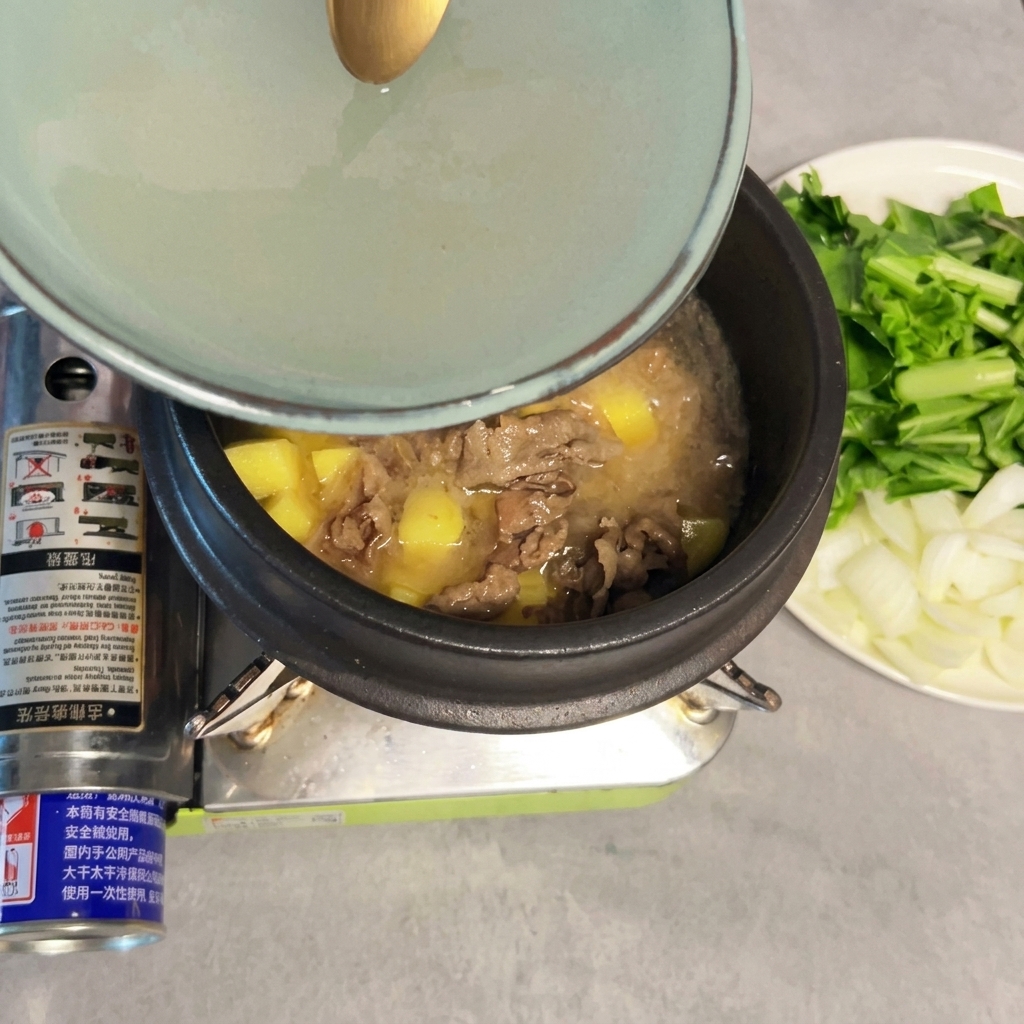
Pour rice water into the pot until the beef and potatoes are covered. Using rice water instead of plain water is a key secret to creating a thicker, more flavorful broth.
Tip: Rice water adds a subtle starchiness that helps the soybean paste bind better with the ingredients. - 6Add soybean paste
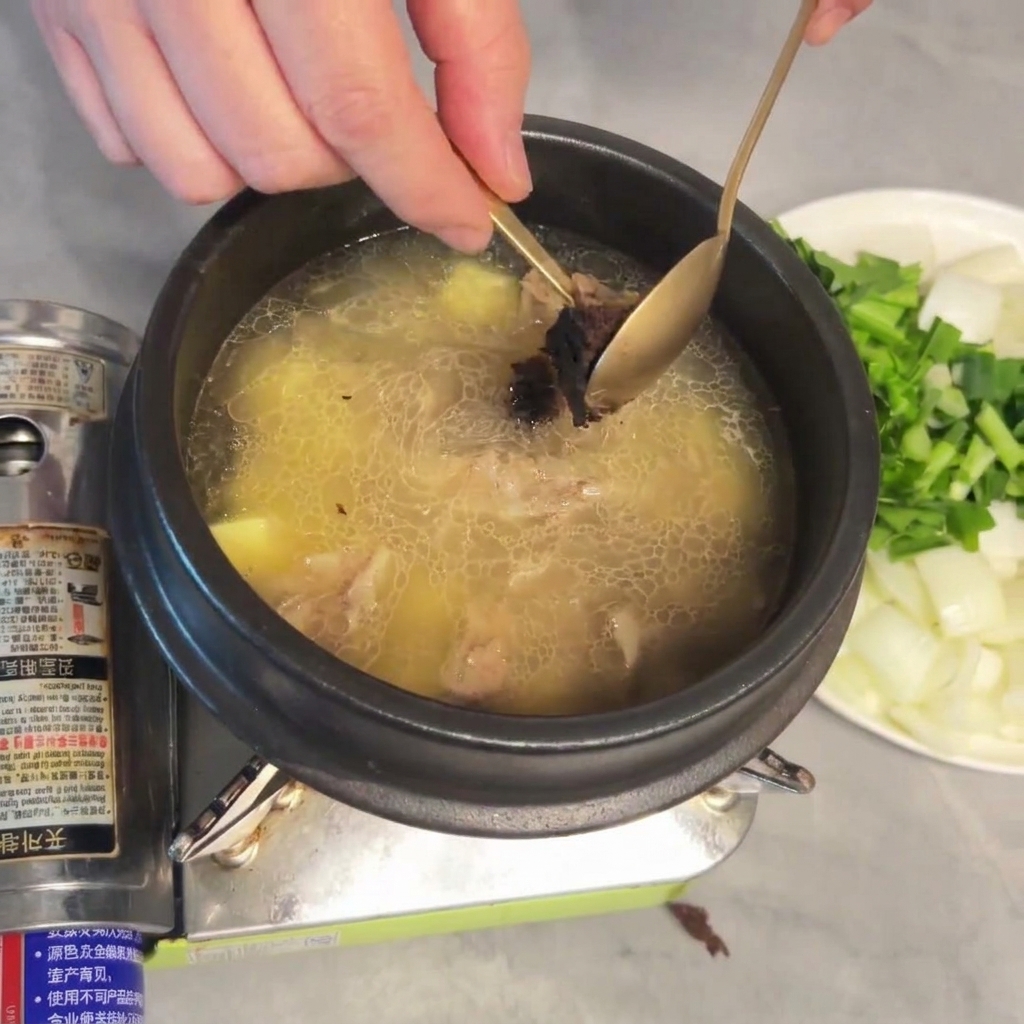
Add a spoonful of traditional aged soybean paste into the bubbling broth. Choosing high-quality, aged paste intended for soup is essential for an authentic flavor.
Tip: If the stew is not salty enough, adjust the taste by adding a little more soybean paste. - 7Add baby bok choy
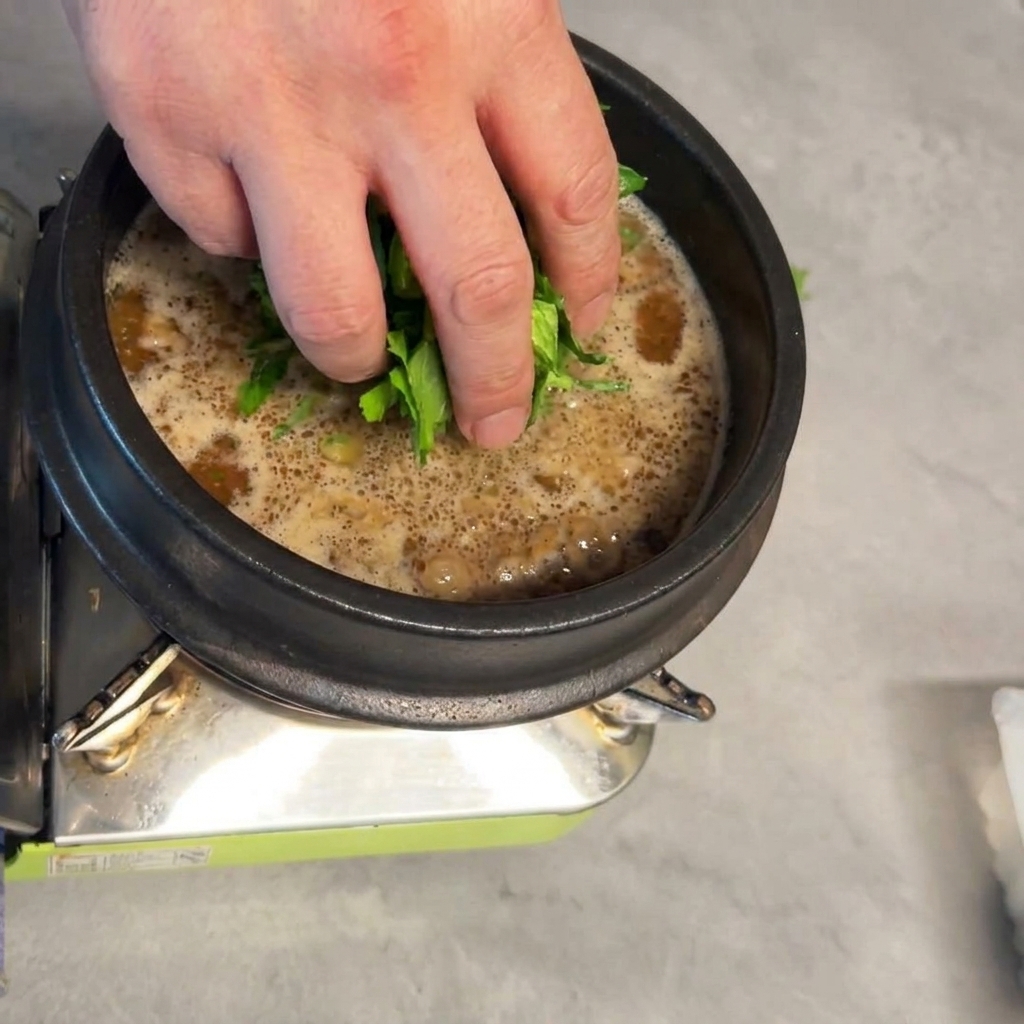
Add the fresh baby bok choy into the boiling pot to add a crisp, refreshing texture to the stew.
Tip: Keep the bok choy stalks relatively intact for a nice crunch. - 8Add shiitake mushrooms
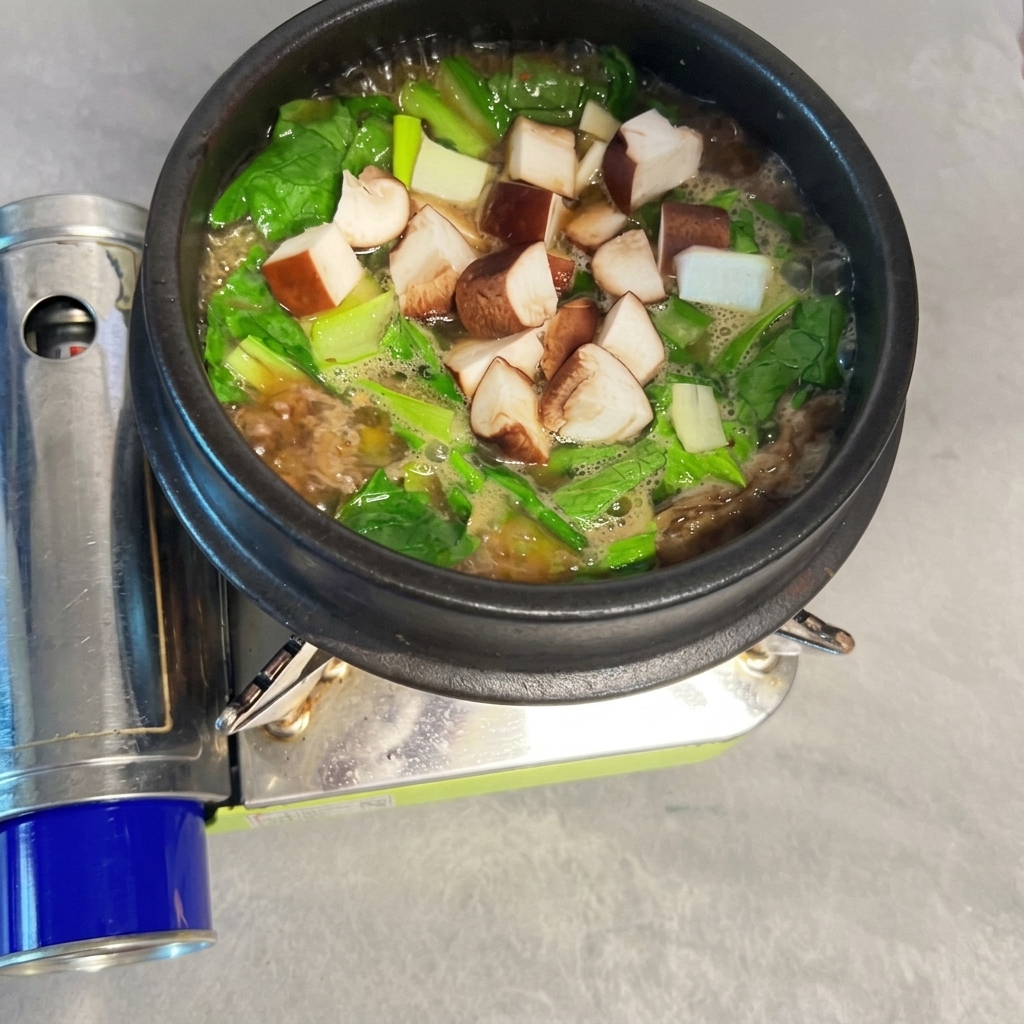
Add the diced shiitake mushrooms to the pot to incorporate their earthy, savory flavor into the broth.
Tip: Make sure to clean the mushrooms thoroughly before dicing. - 9Add onions
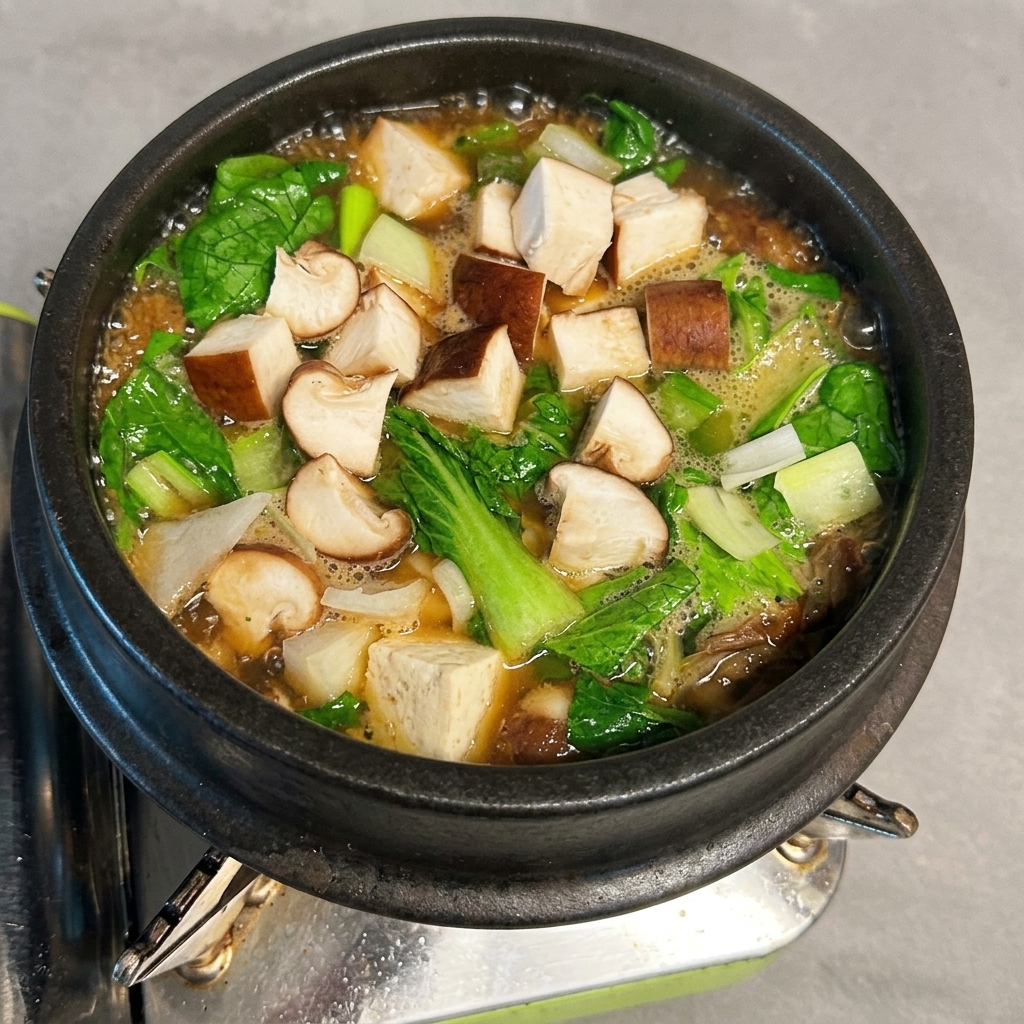
Add the diced onions to the stew to provide a subtle, natural sweetness that balances the savory fermented paste.
Tip: Dice the onions into uniform pieces to ensure even cooking. - 10Add aged soybean paste
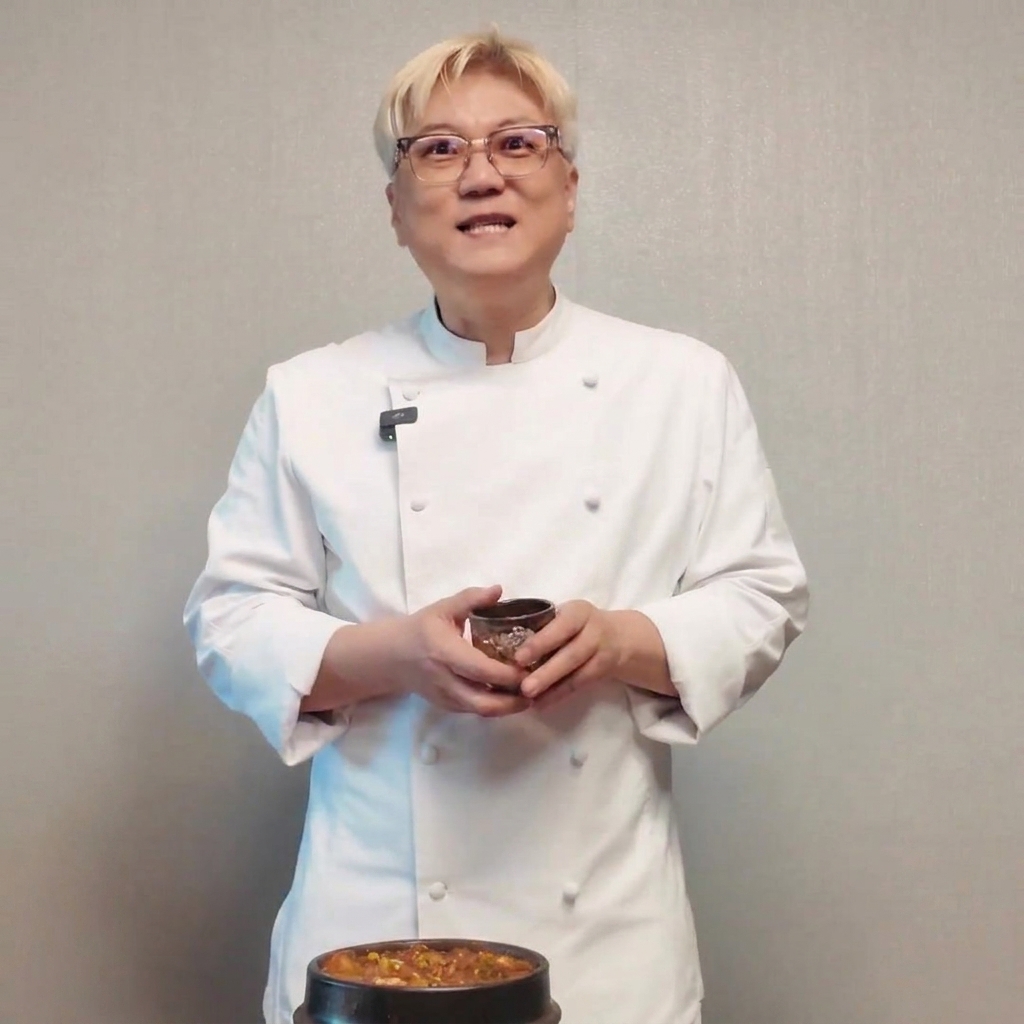
Add a small piece of aged, fermented soybean paste to the pot. This is the secret ingredient that gives the stew its characteristic, deeply fragrant, and complex stinky aroma found in famous Korean restaurants.
Tip: This aged paste is very potent, so a small amount goes a long way in building flavor depth.