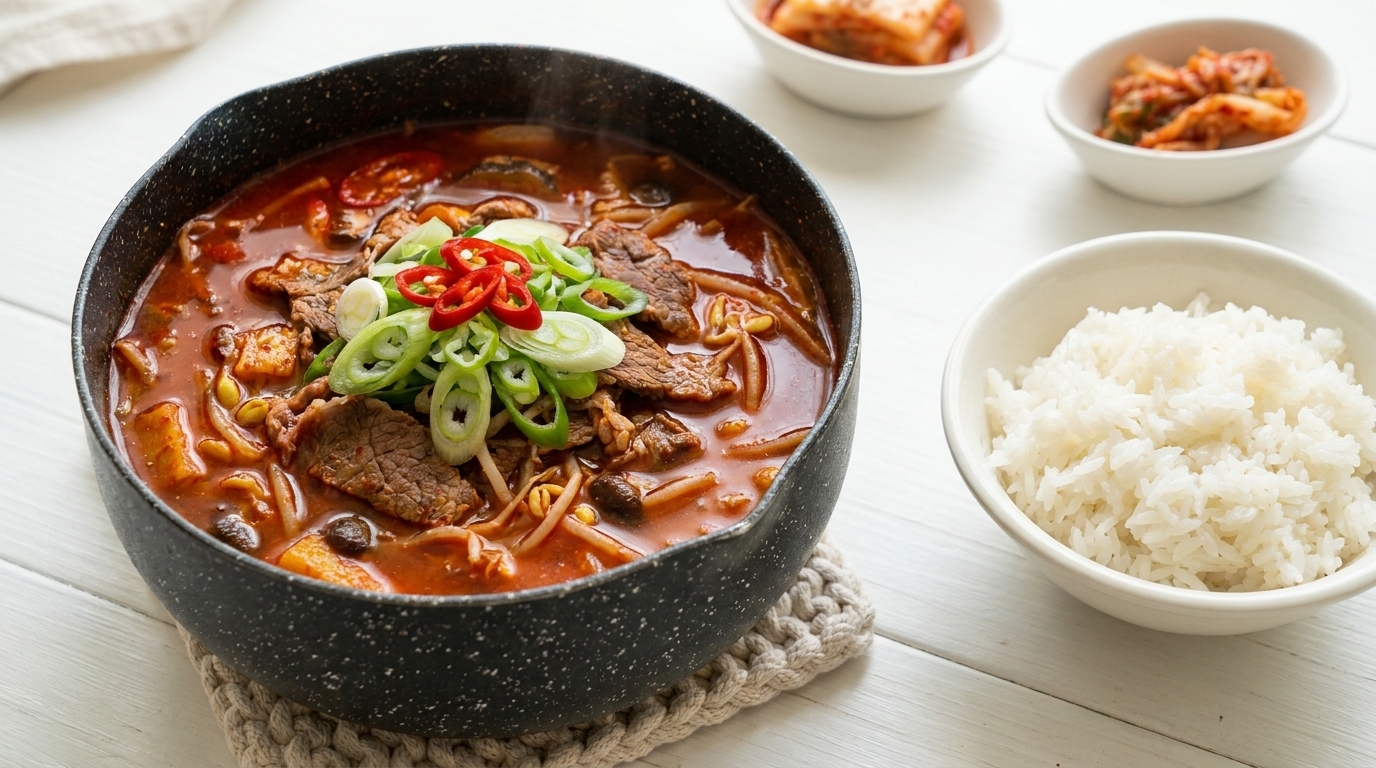
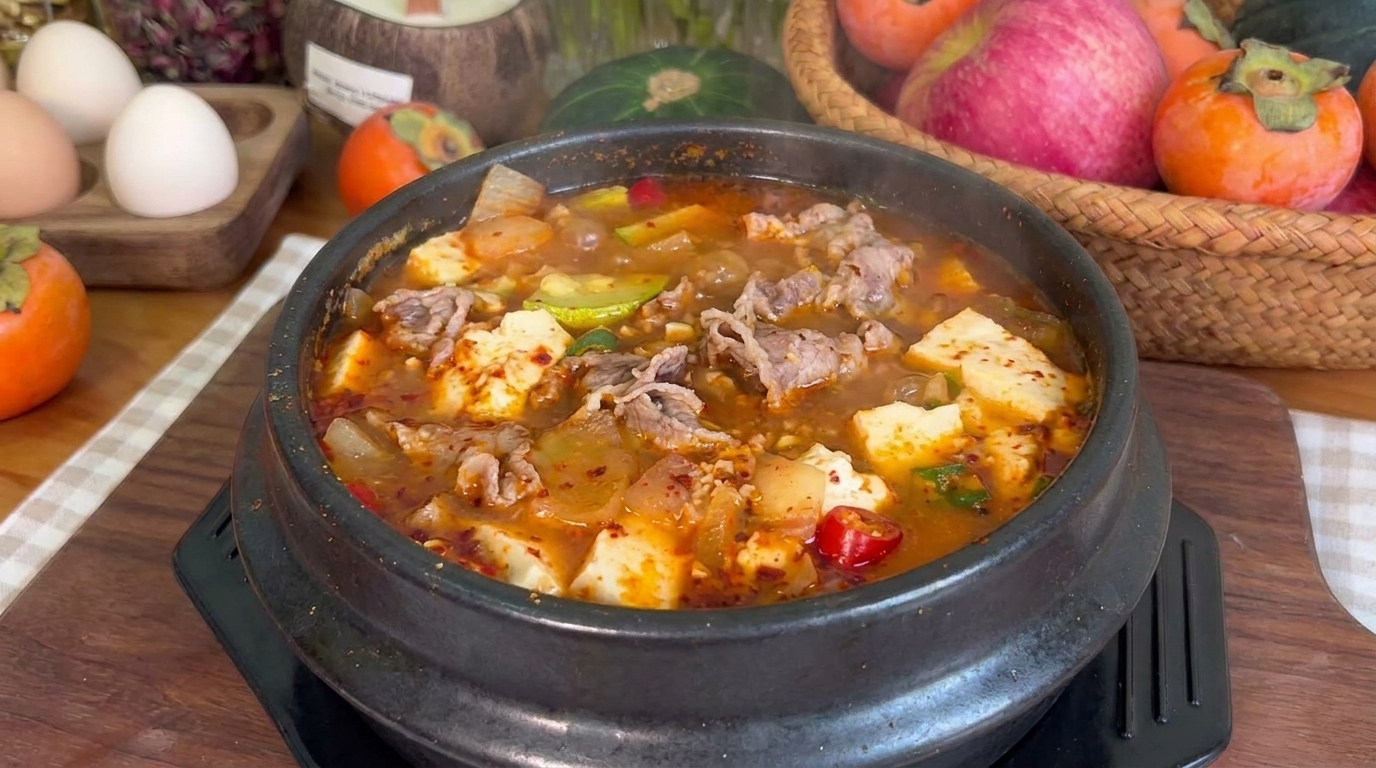
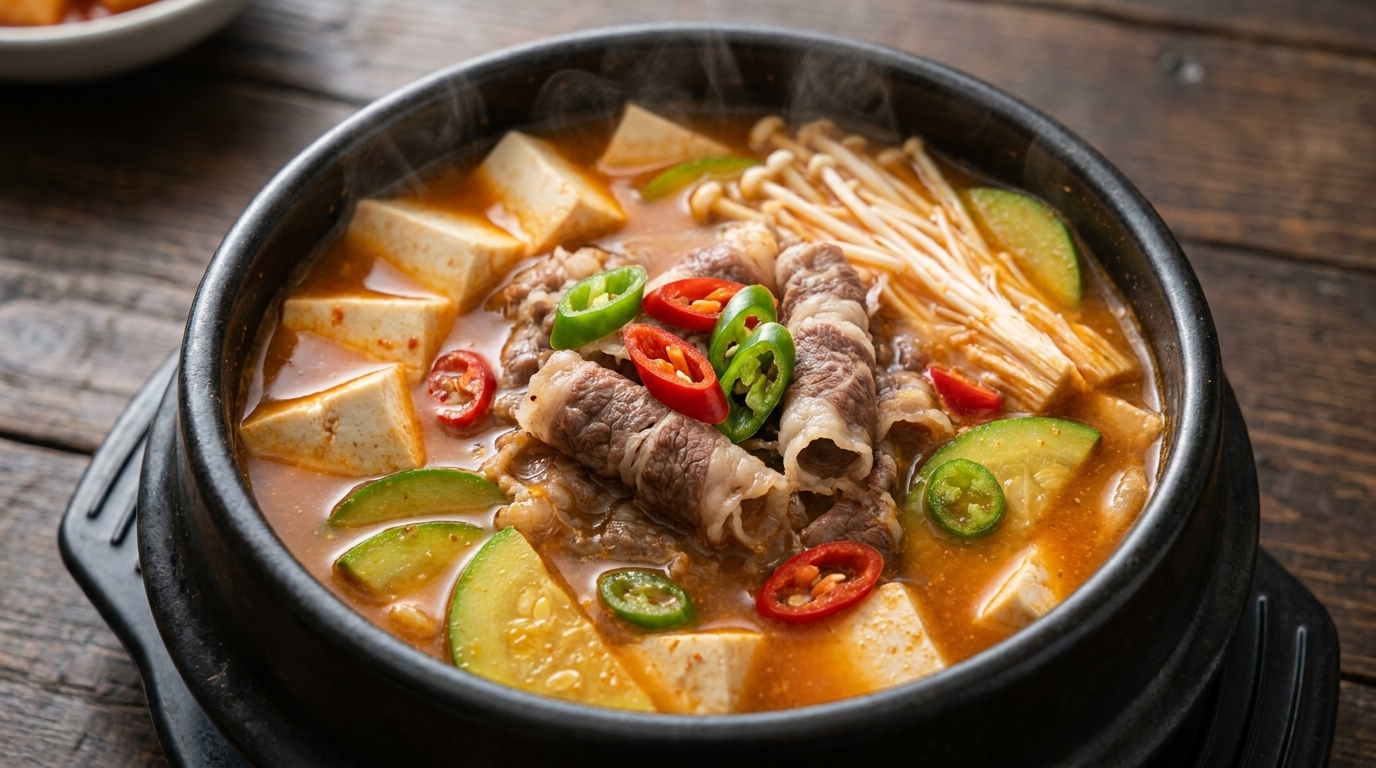
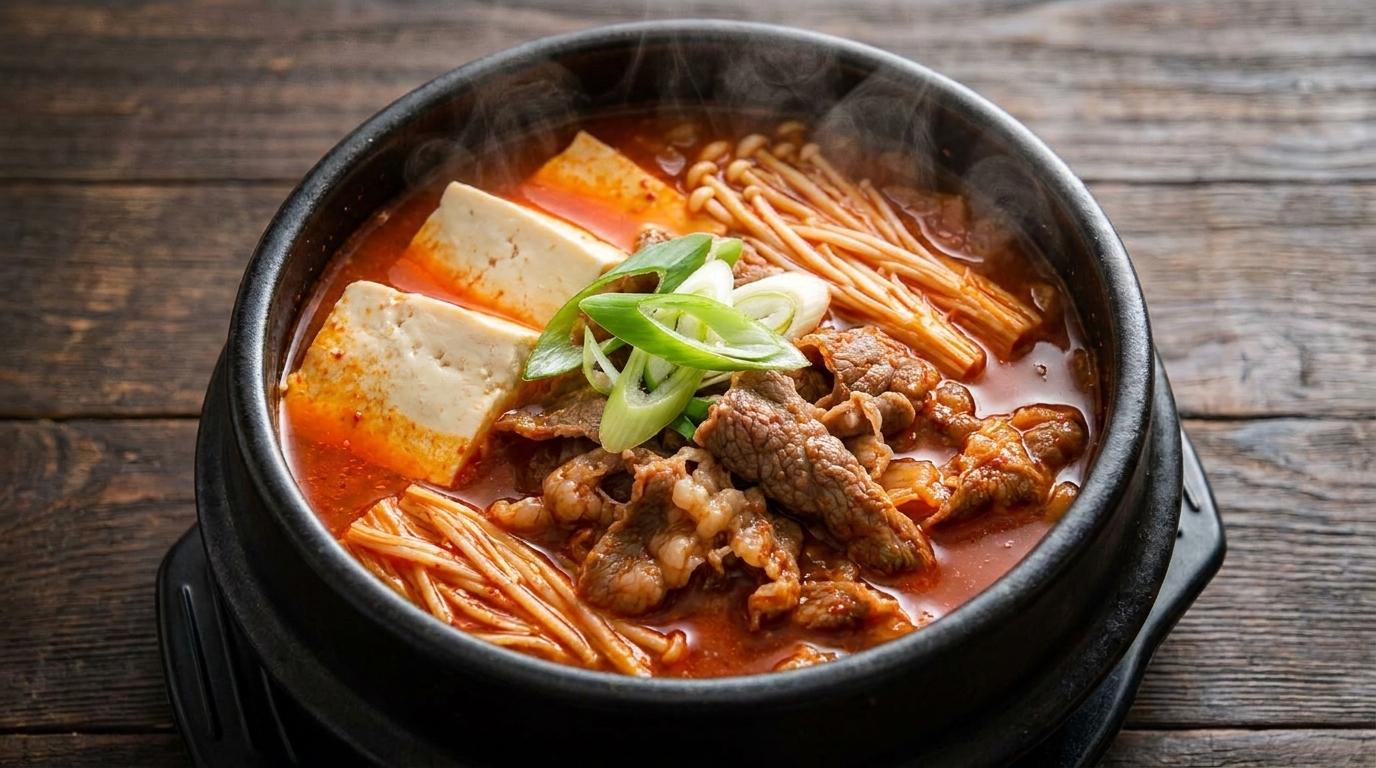
Quick Beef
Tofu Bean Paste Soup (Doenjang-jjigae)
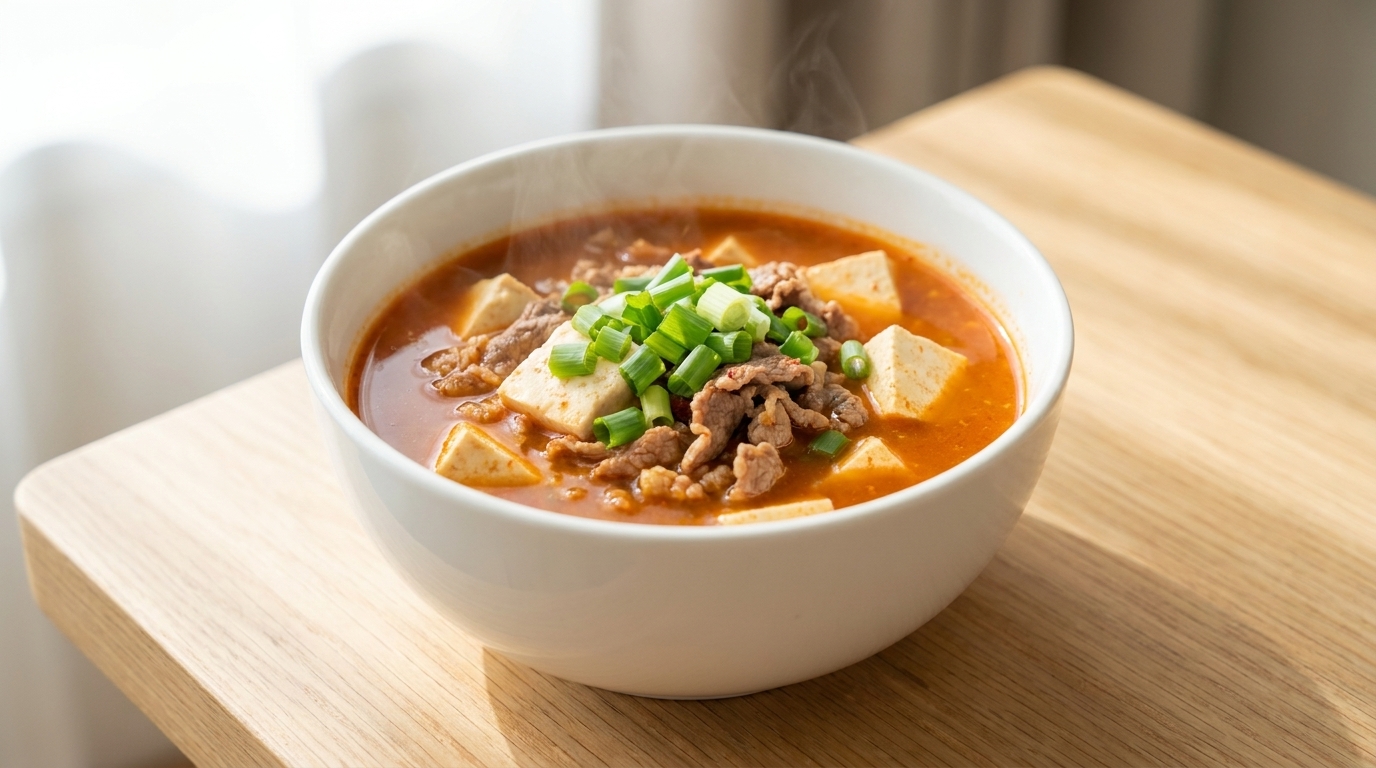
A savory protein-rich Korean-style stew featuring fried tofu and tender beef in a deeply aromatic fermented soybean broth that takes minutes to prepare.
This version of the classic Korean bean paste soup uses a clever frying technique to build depth quickly. By sauteing the fermented pastes with the tofu first you unlock a richer more complex aroma than traditional boiling methods allow. It is a hearty comforting staple that serves as a perfect base for endless vegetable variations.
Ingredients
- 1 block medium-firm tofu
- 200 g beef tenderloin, thinly sliced
- 1 tbsp soybean paste (doenjang)
- 1 tbsp chili sauce or gochujang
- 2 tbsp sweet potato starch
- 500 ml hot water
- 2 stalks large green onions
- 2 tbsp cooking oil
Instructions
- 1Preheat the wok and oil
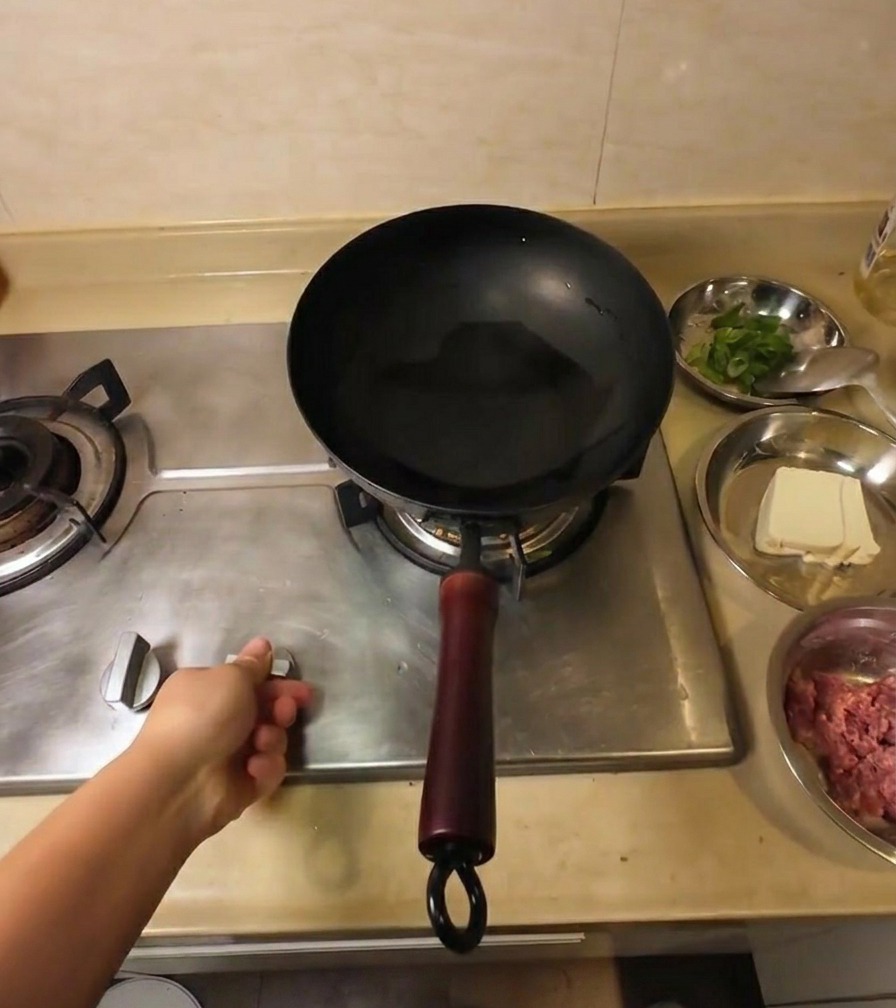
Place a black wok on the gas stove and add a clear cooking oil. Turn the burner to medium-high heat to preheat the oil. Ensuring the oil is hot before adding ingredients is crucial for a non-stick frying process and for developing the tofus texture.
Tip: You can test if the oil is ready by placing a wooden chopstick into it; if small bubbles form around the tip, its ready. - 2Add the tofu block
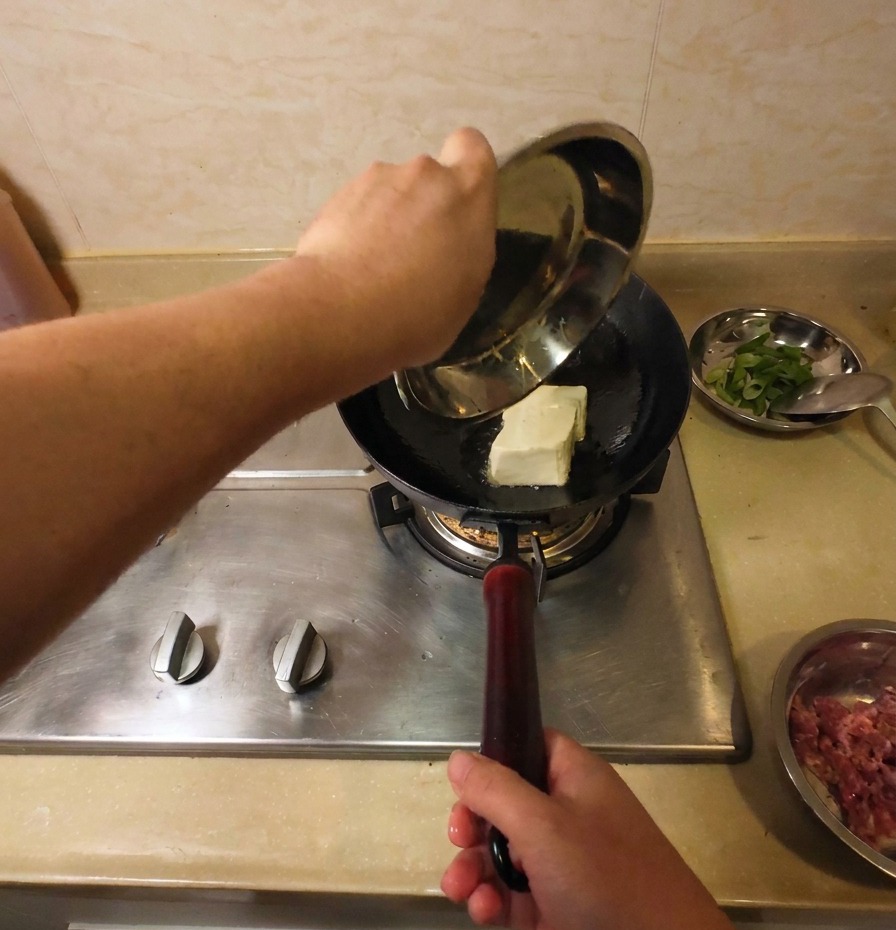
Once the oil is shimmering and hot, carefully place the entire block of white tofu into the wok. Use a medium-firm tofu for this recipe as it holds its shape well during the frying and breaking-down process.
Tip: Be careful of oil splatters when adding the tofu; you can gently slide it in from the edge of the wok to minimize splashing. - 3Break the tofu into pieces
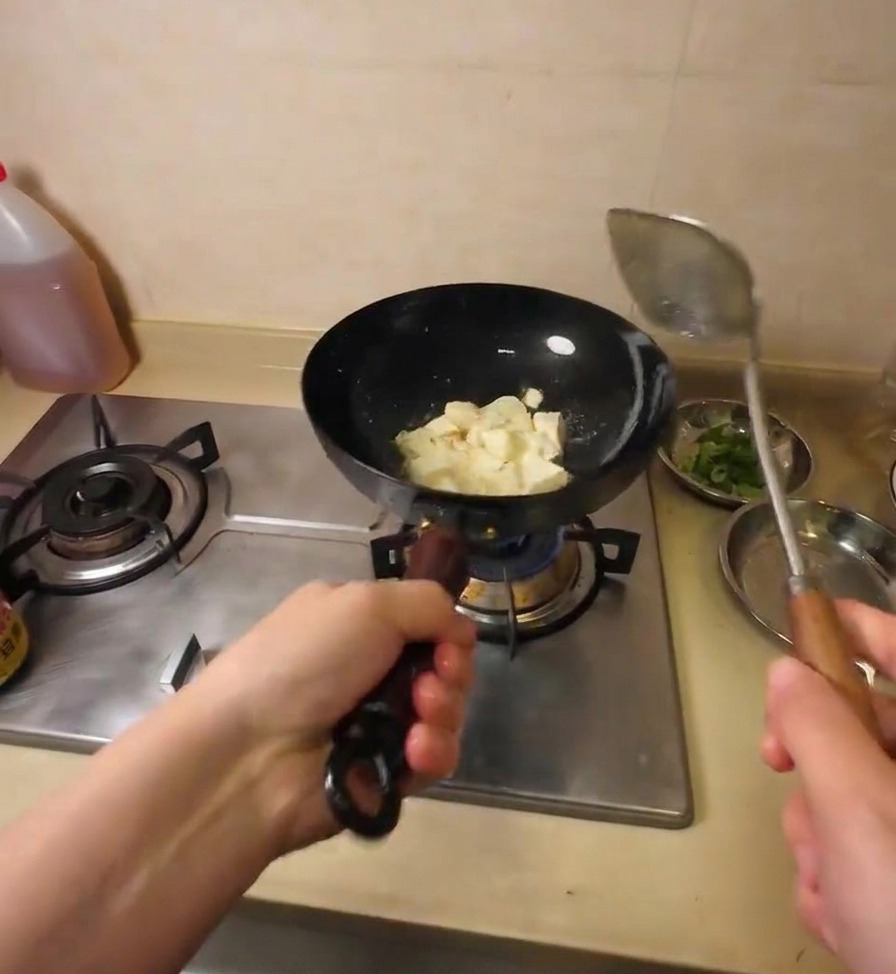
Using a metal spatula, press down on the tofu block to cut it into bite-sized, irregular pieces directly in the wok. Fry the pieces, stirring occasionally, until the edges are slightly crispy and have turned a light golden-brown.
Tip: Breaking the tofu manually creates more craggy edges that will catch and hold the flavorful sauces later. - 4Season with chili sauce
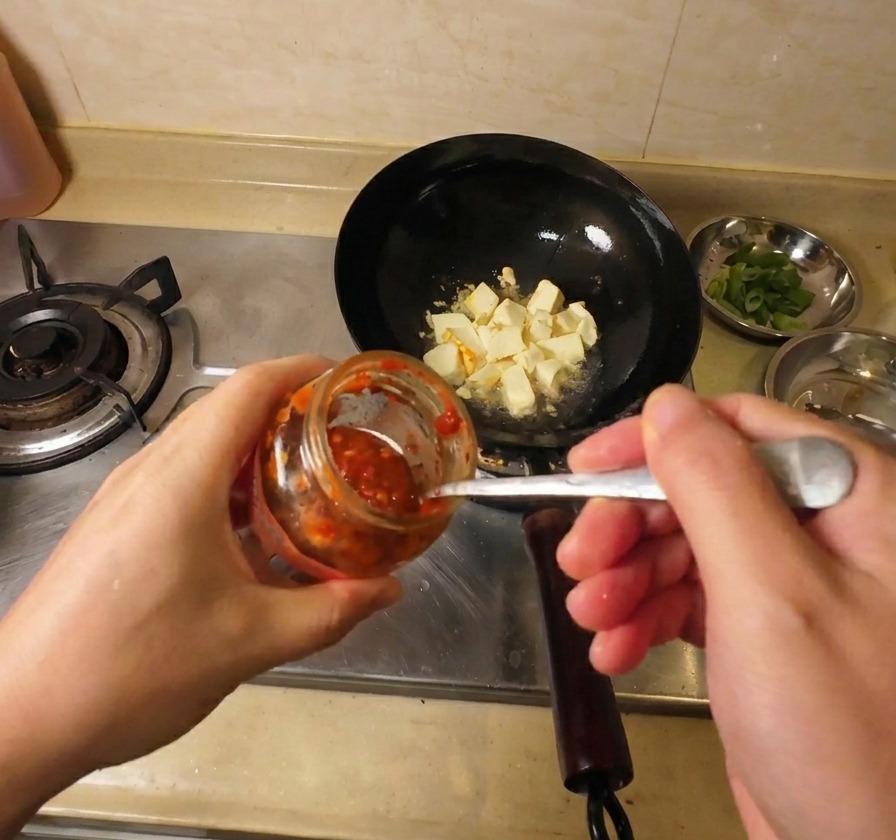
Add a spoonful of bright red chili sauce to the side of the pan with the fried tofu cubes. Sauté the sauce briefly in the hot oil to remove the raw taste and release its rich aroma before stirring it into the tofu. This technique ensures the spices are well-bloomed and the flavor is deeply integrated into the dish.
Tip: Frying the chili sauce in the oil for a few seconds before mixing it with other ingredients helps to mellow the raw heat and unlock a more complex, fragrant flavor profile. - 5Incorporate the soybean paste
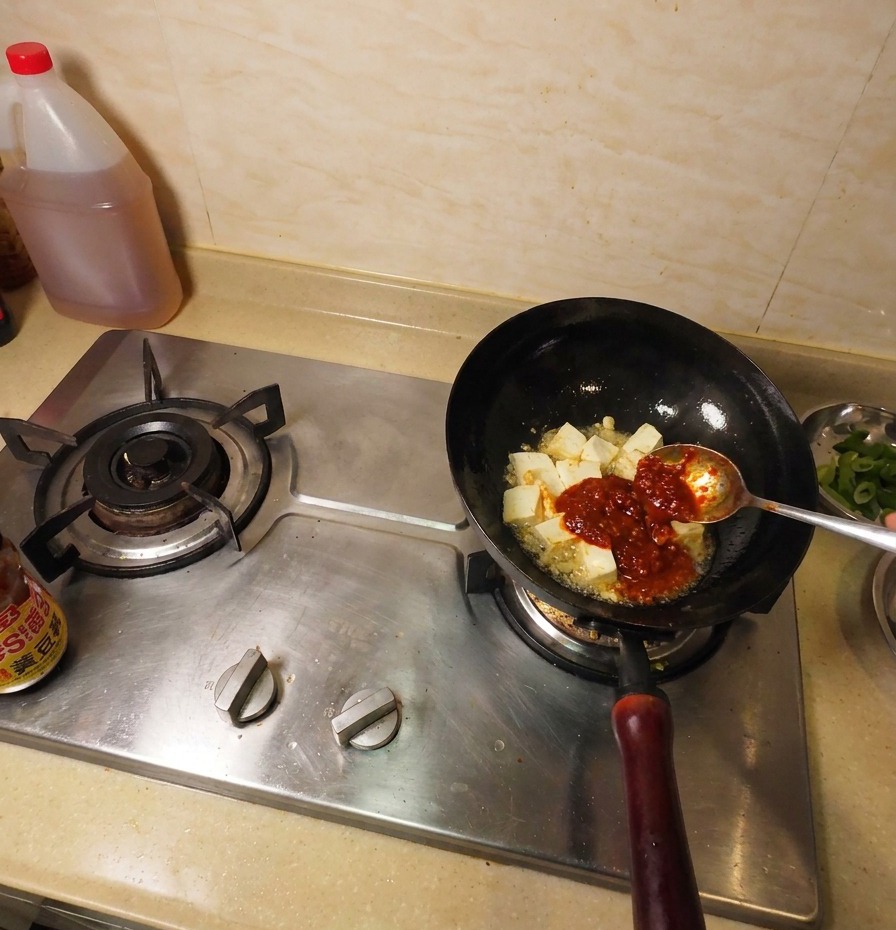
With the chili sauce already in the pan, add a spoonful of dark brown soybean paste. Push the tofu to one side and fry the paste in the oil for a few seconds to cook off the raw fermented smell and release its deep, savory essence.
Tip: Always fry fermented pastes in oil for a few seconds to awaken the flavors and release their full aromatic potential. - 6Coat the tofu in sauce
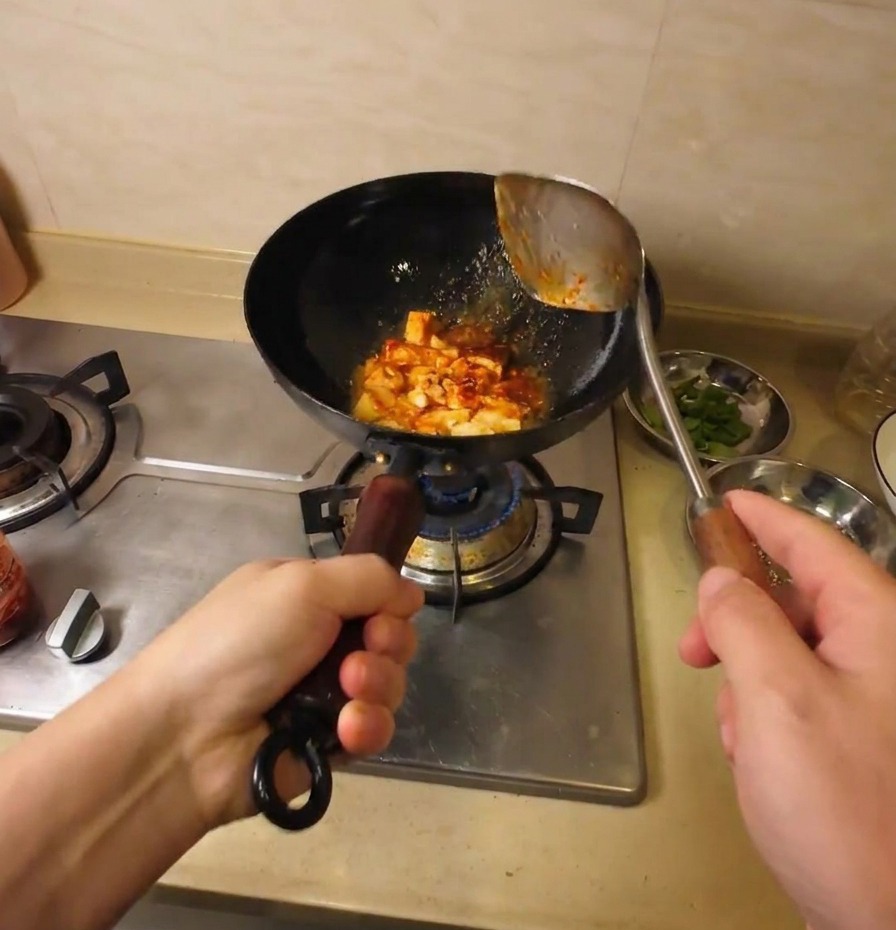
Stir-fry the tofu pieces vigorously to ensure each one is thoroughly coated with the mixture of chili sauce and soybean paste. The tofu should take on a vibrant reddish hue as it absorbs the heat and aroma of the combined seasonings.
Tip: Be gentle when stirring to avoid mashing the tofu pieces too much; you want them coated but still intact. - 7Add hot water for the soup base
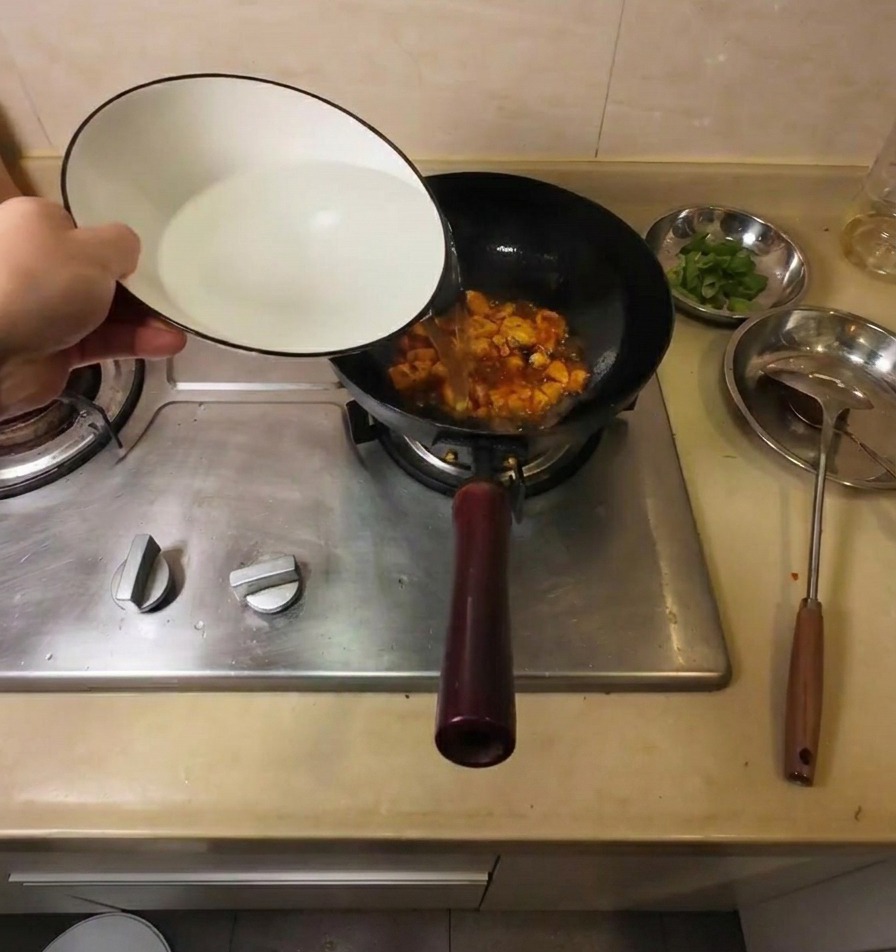
Once the chili sauce and soybean paste have been fried to release their rich aroma, pour hot water into the wok. This creates the savory liquid base for the soup while combining all the fried flavors together.
Tip: Always use hot water rather than cold; this maintains the temperature of the wok and prevents the tofu from becoming tough due to a sudden temperature drop. - 8Add the starch-coated beef
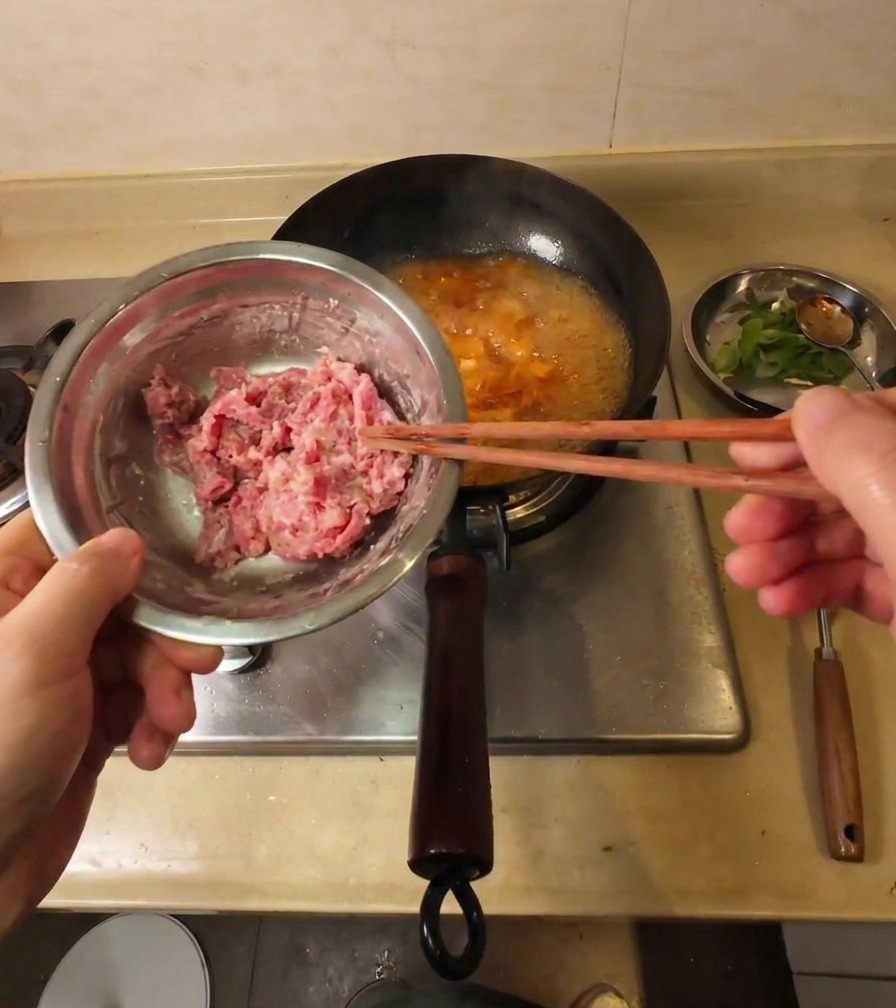
Bring the soup to a boil and carefully add the beef tenderloin slices. These slices should be coated in sweet potato starch beforehand. Drop them in piece by piece to ensure they remain separate and cook evenly.
Tip: The starch coating is essential as it creates a velvety barrier locking in the juices and ensuring the beef stays incredibly smooth and tender during the boiling process. - 9Thicken the soup broth
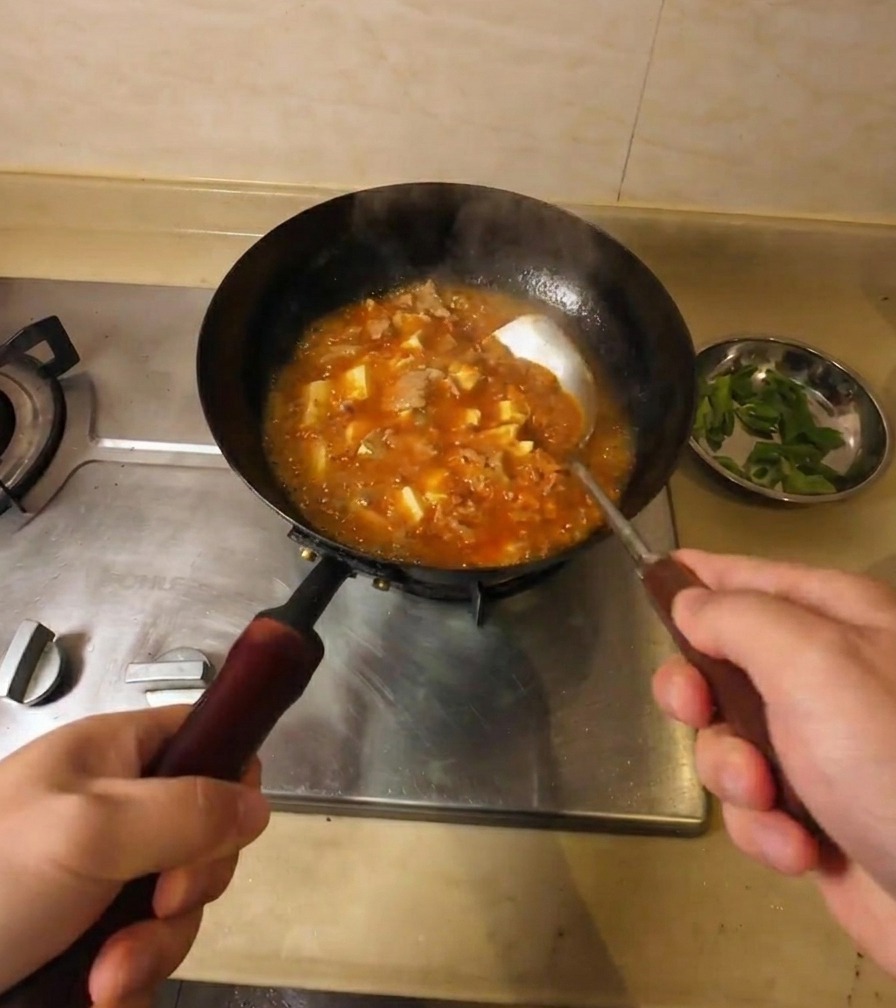
Keep the heat on high and stir the soup gently as the beef cooks. The starch from the beef coating will naturally release into the liquid, causing the broth to thicken into a rich, hearty consistency.
Tip: Wait a few seconds after adding the beef before stirring to allow the starch coating to set on the meat, ensuring it doesnt wash off completely into the broth. - 10Add green onions
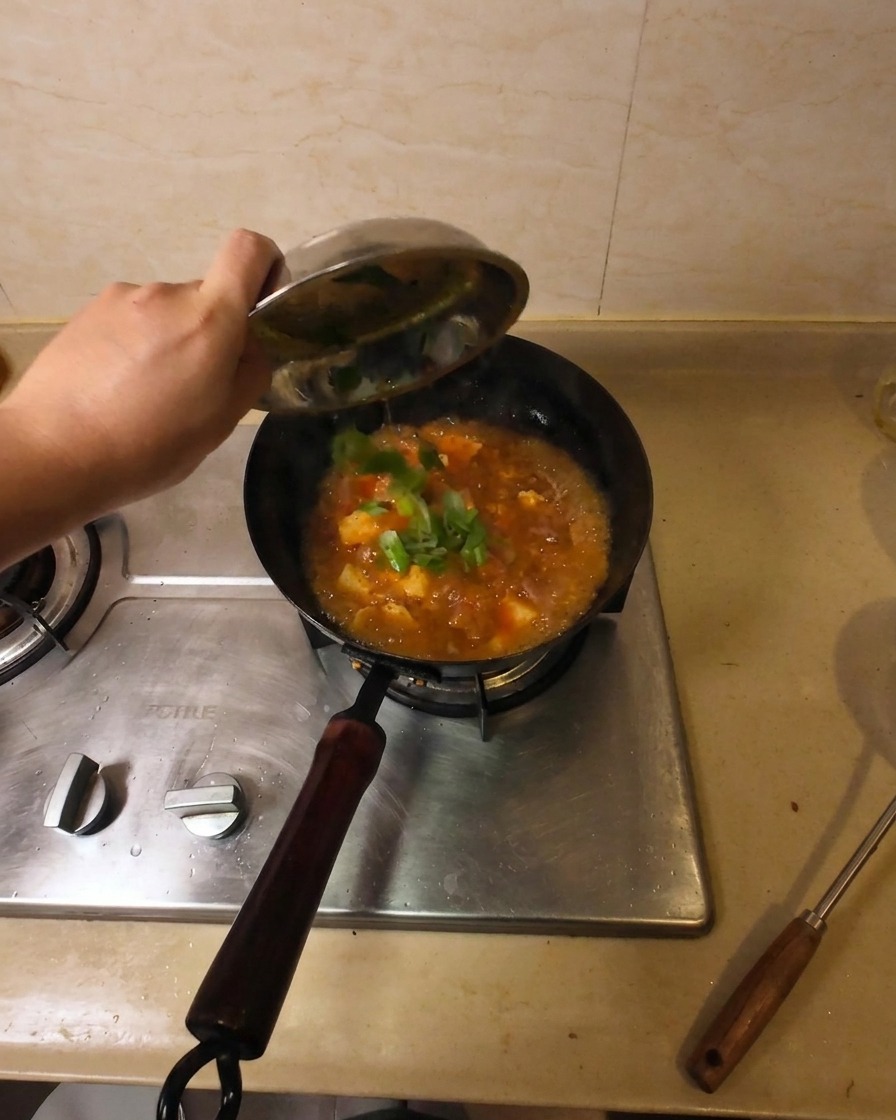
Pour the freshly chopped large green onion leaves directly into the bubbling soup. These aromatics are essential for lifting the rich, savory flavors of the broth and adding a vibrant touch right before serving.
Tip: Add the green onions at the very end of cooking so they maintain their fresh flavor and bright color. - 11Serve the Beef Tofu Soup
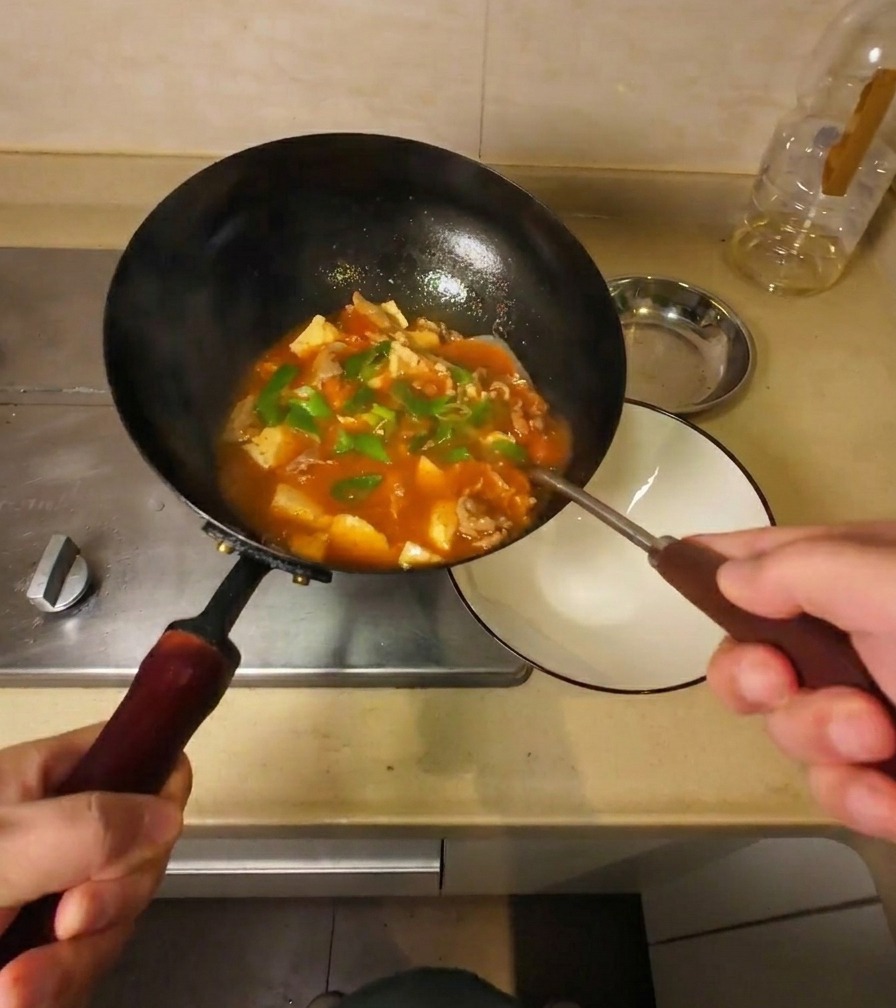
Once the broth is rich and the beef is tender, ladle the finished soup into a clean serving bowl. Make sure to include plenty of the tofu, beef slices, and fresh green onions in every serving.
Tip: This soup is best enjoyed immediately while steaming hot. The flavors are concentrated, so it pairs perfectly with a side of plain steamed rice.