Traditional Korean Doenjang Jjigae (Soybean Paste Stew)
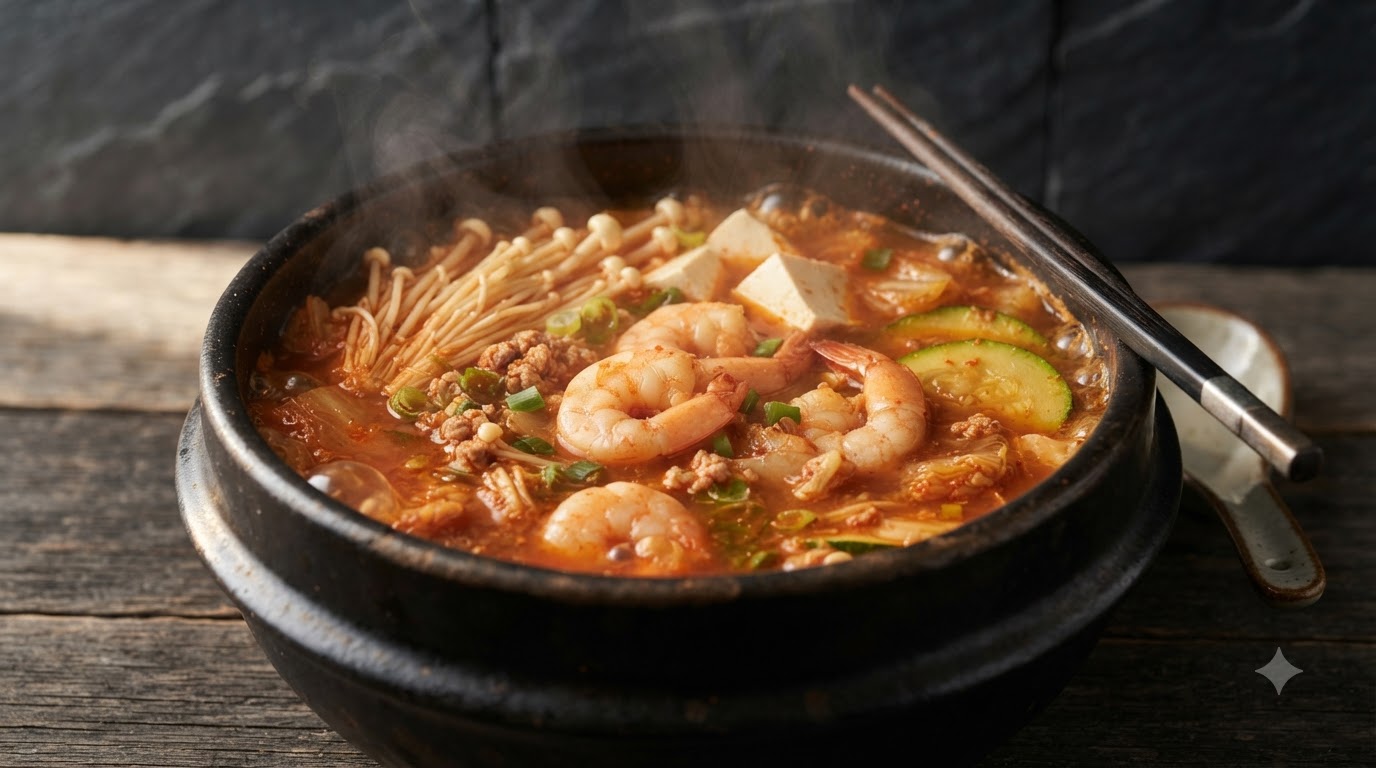
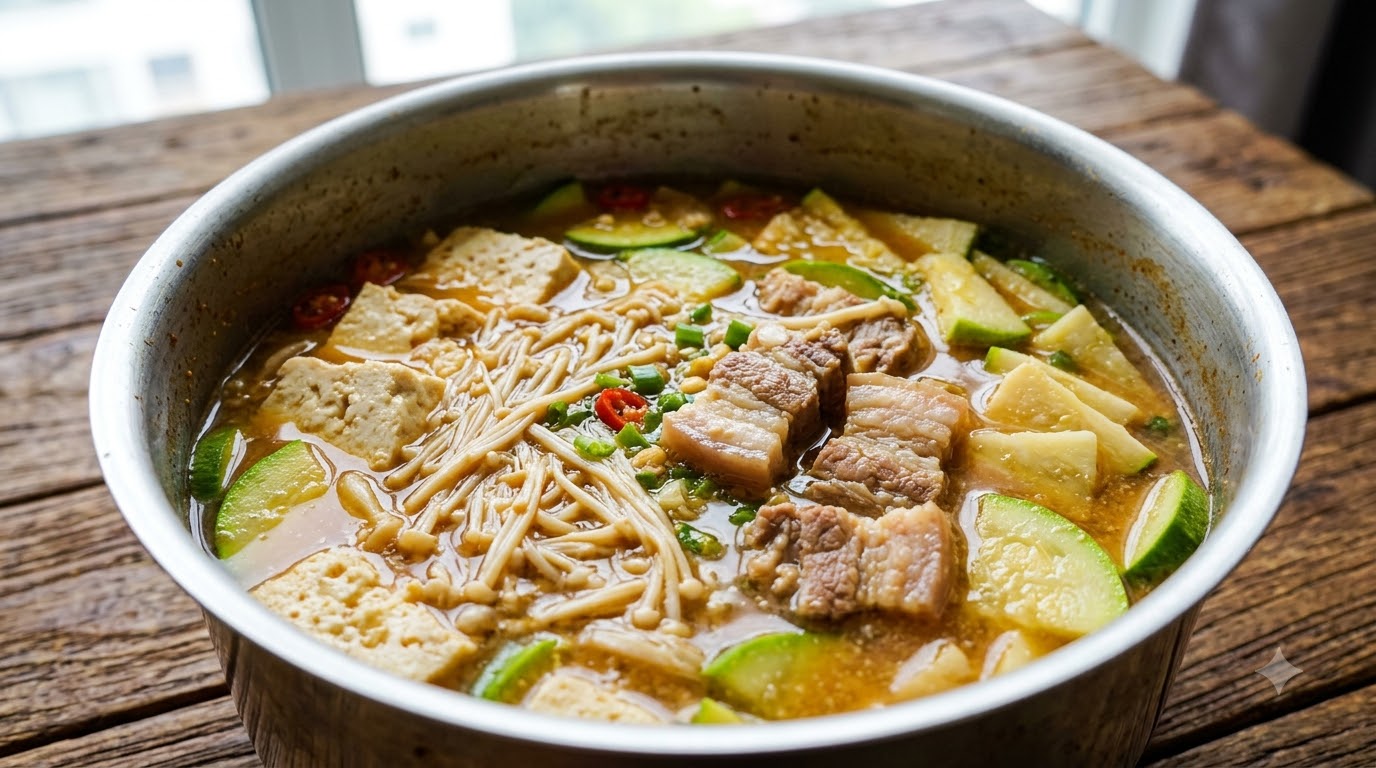
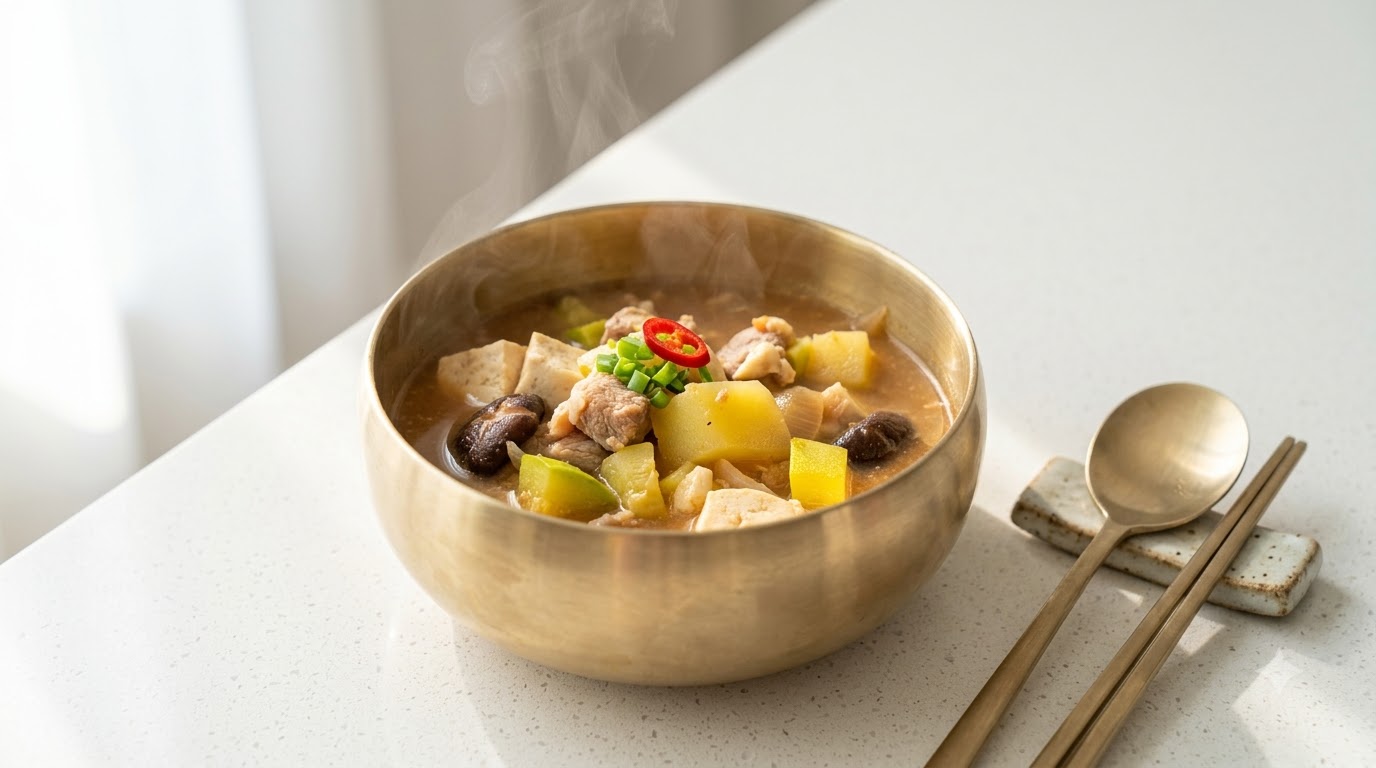
A deeply comforting and savory Korean staple, this hearty Doenjang Jjigae features a rich soybean paste broth filled with pork belly, fresh vegetables, and tofu.
Doenjang Jjigae is a quintessential Korean comfort food, cherished for its earthy, umami-rich flavor derived from fermented soybean paste. Often served bubbling hot, it perfectly balances the savory richness of pork belly with the fresh textures of zucchini, potatoes, and shiitake mushrooms. This soulful stew captures the essence of home cooking and is meant to be enjoyed spooned over a warm bowl of rice.
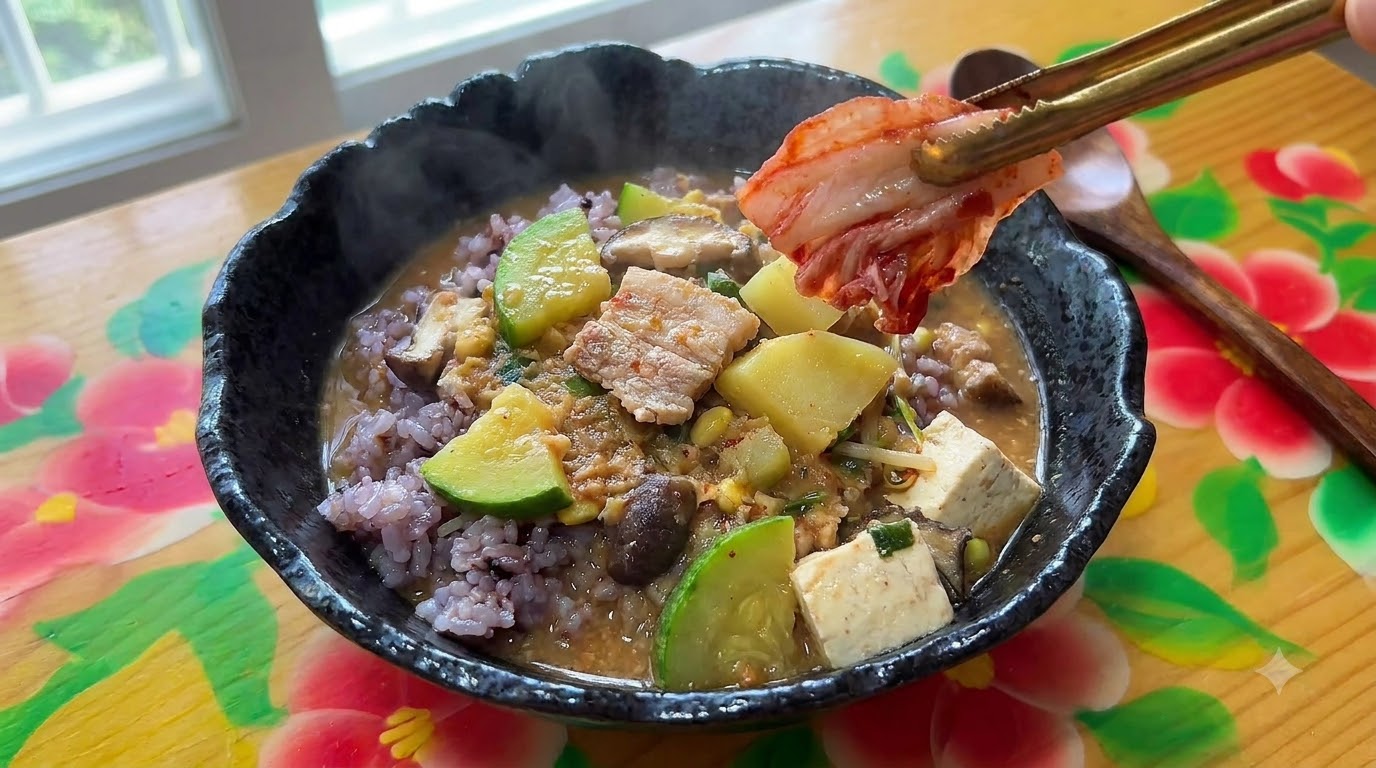
Ingredients
- 200 g pork belly
- 3–4 tbsp doenjang (Korean soybean paste)
- 1/2 green squash or Korean zucchini
- 1 medium potato
- 1/2 red onion
- 3–4 fresh shiitake mushrooms
- 1 block firm tofu
- 1 handful soybean sprouts
- 1–2 green chili peppers
- 1 handful fresh leafy greens
- 1–2 stalks green onions
- 1 tsp beef seasoning powder (dasida)
- 1 tbsp Korean chili powder (gochugaru)
- 4 cups water
Instructions
- 1Cut the pork belly
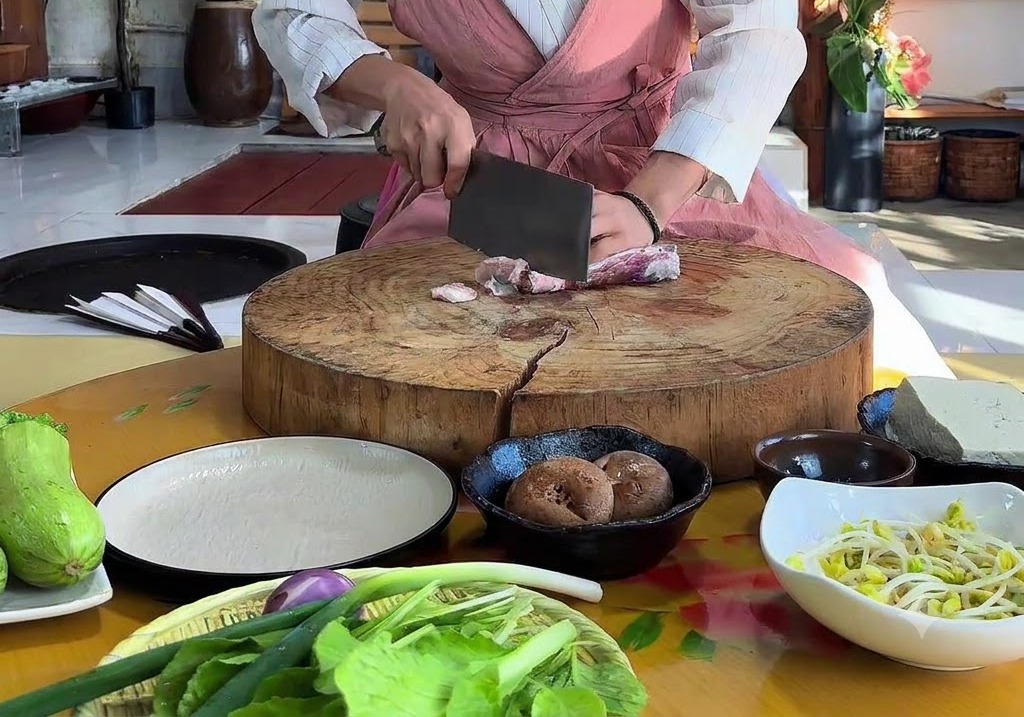
Place the pork belly on a sturdy wooden cutting board and slice it into bite-sized pieces using a sharp cleaver. The pork belly will render out its savory fats into the stew, adding an incredible depth of flavor to the base.
Tip: Partially freezing the pork belly for about 15 minutes before cutting can make slicing much easier and yield cleaner cuts. - 2Slice the shiitake mushrooms
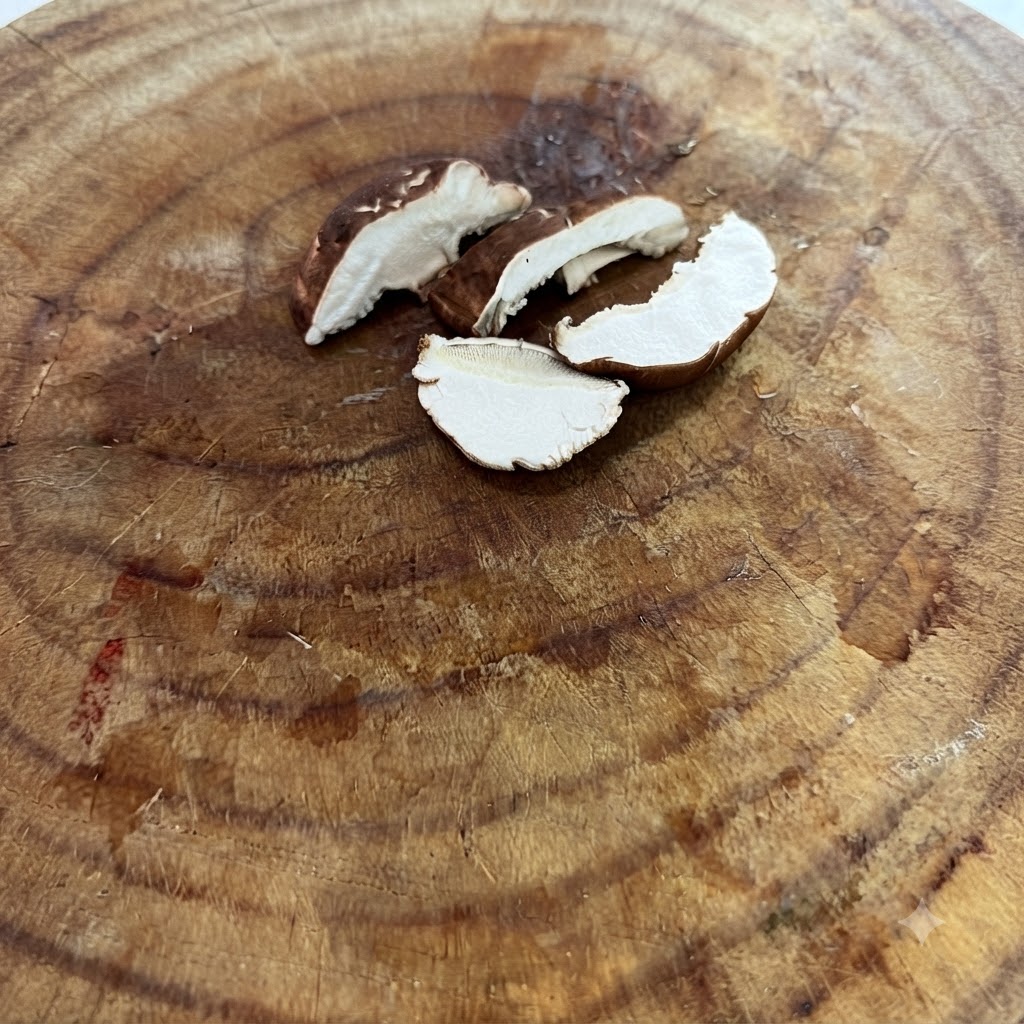
Take the fresh shiitake mushrooms and slice them evenly on the cutting board. Shiitake mushrooms will add a deep, earthy umami flavor and a pleasant chewy texture to the Doenjang Jigae broth.
Tip: If using dried shiitake mushrooms instead, ensure they are soaked in warm water until fully reconstituted before slicing. You can also save the soaking water to use as a flavor boost in the broth. - 3Chop the green squash
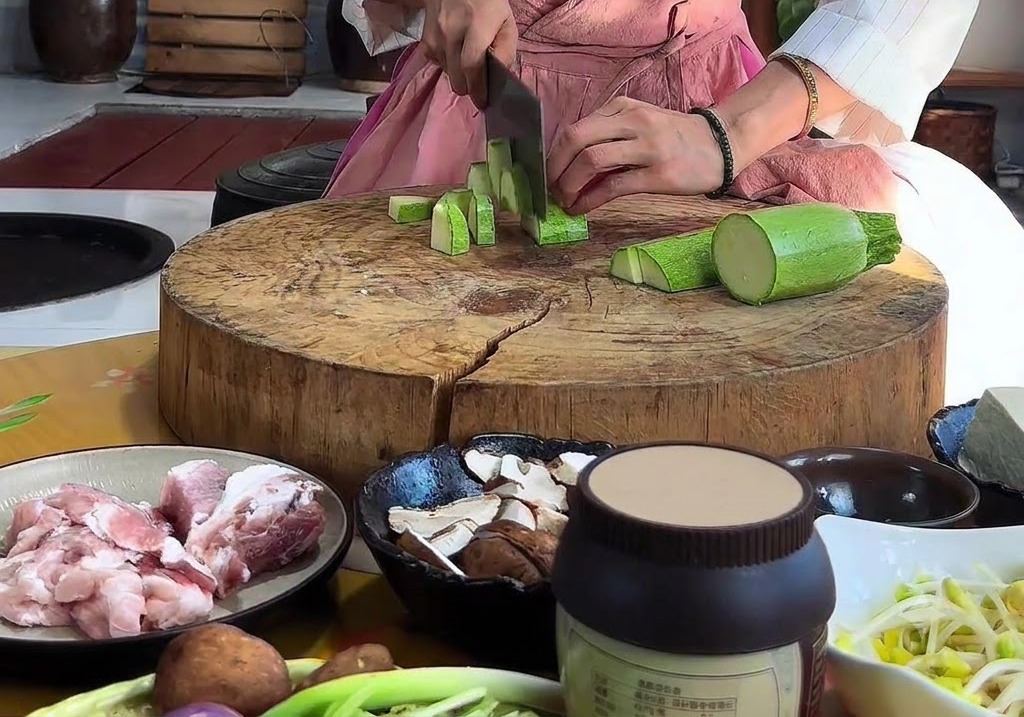
Prepare the green squash by cutting it into bite-sized triangular or semi-circular pieces. This shape allows the squash to cook quickly and evenly while still maintaining its texture in the simmering stew.
Tip: Korean zucchini (aehobak) is traditional for this dish, but standard green zucchini works perfectly as a substitute. - 4Dice the red onion
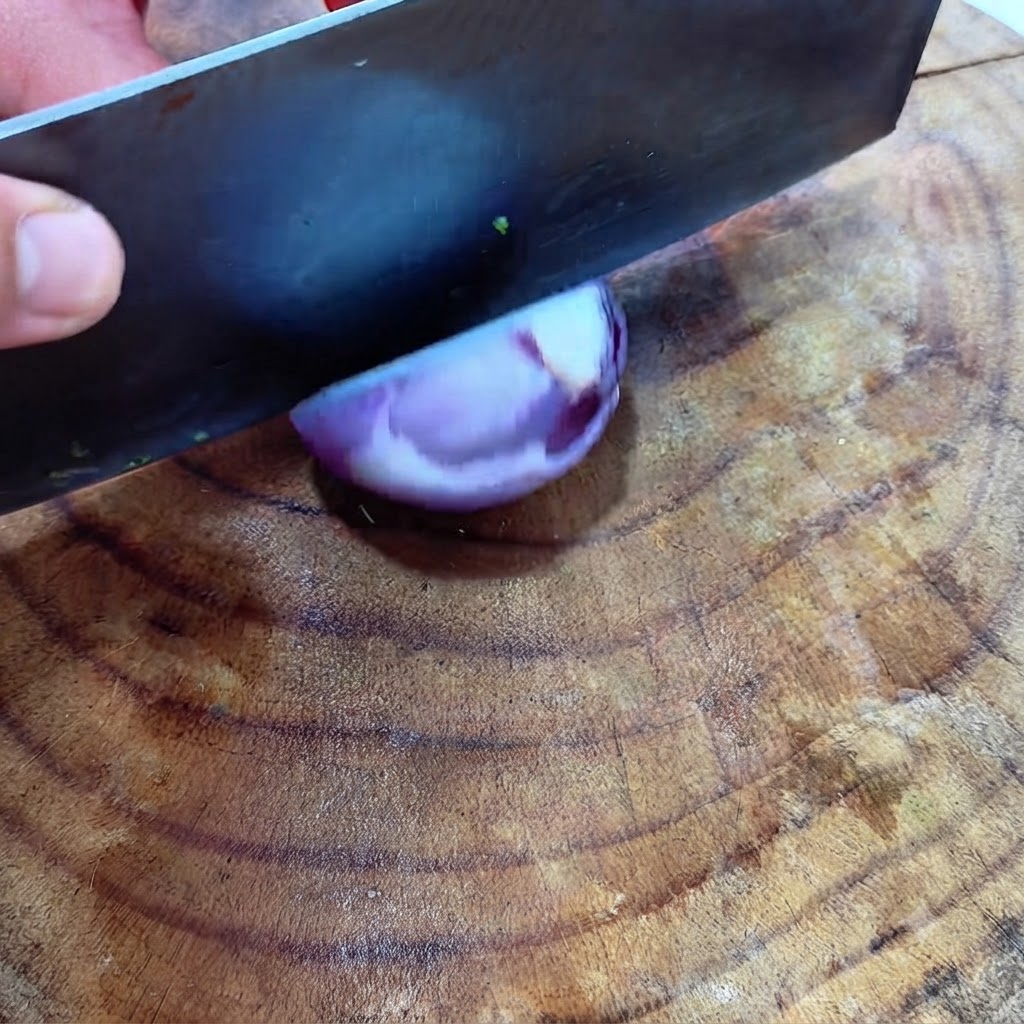
Peel the red onion and dice it into small, uniform pieces. As it cooks, the onion will break down and provide a subtle natural sweetness to help balance the salty and savory notes of the doenjang paste.
Tip: Leave the root end of the onion intact while dicing to keep the layers together, making it much easier to chop uniformly. - 5Cut the potato
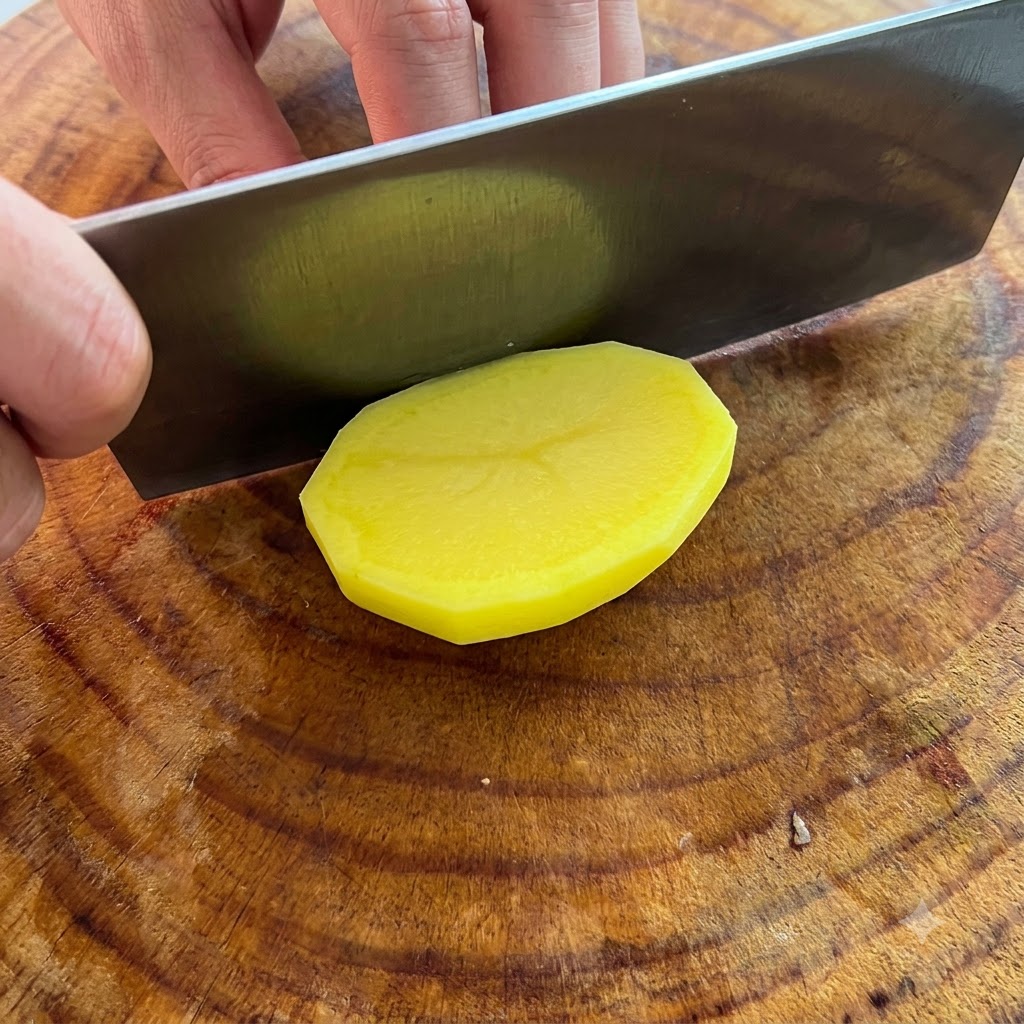
Peel a potato and cut it into thick wedges or bite-sized chunks. Potatoes add a comforting, hearty element to the stew, and their natural starches will help to slightly thicken the savory broth as they simmer.
Tip: Soak the cut potatoes in cold water for a few minutes to remove excess surface starch if you prefer a slightly clearer broth. - 6Cube the tofu
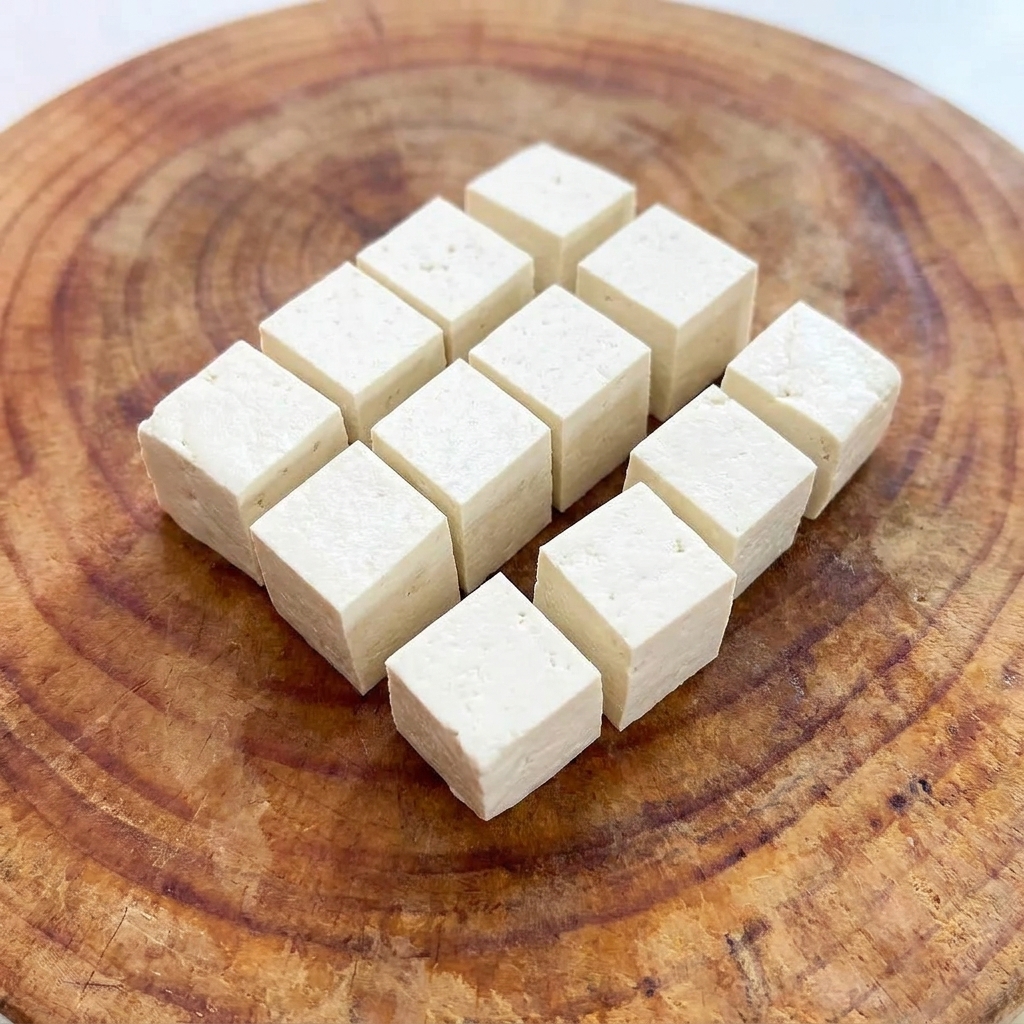
Take a block of firm tofu and slice it into even, bite-sized cubes. Firm tofu holds its shape very well when boiling in the jigae, absorbing all the rich and complex flavors of the soybean paste broth.
Tip: Drain the tofu well before cutting and gently pat it dry to prevent excess water from diluting your stew. - 7Slice green chili peppers
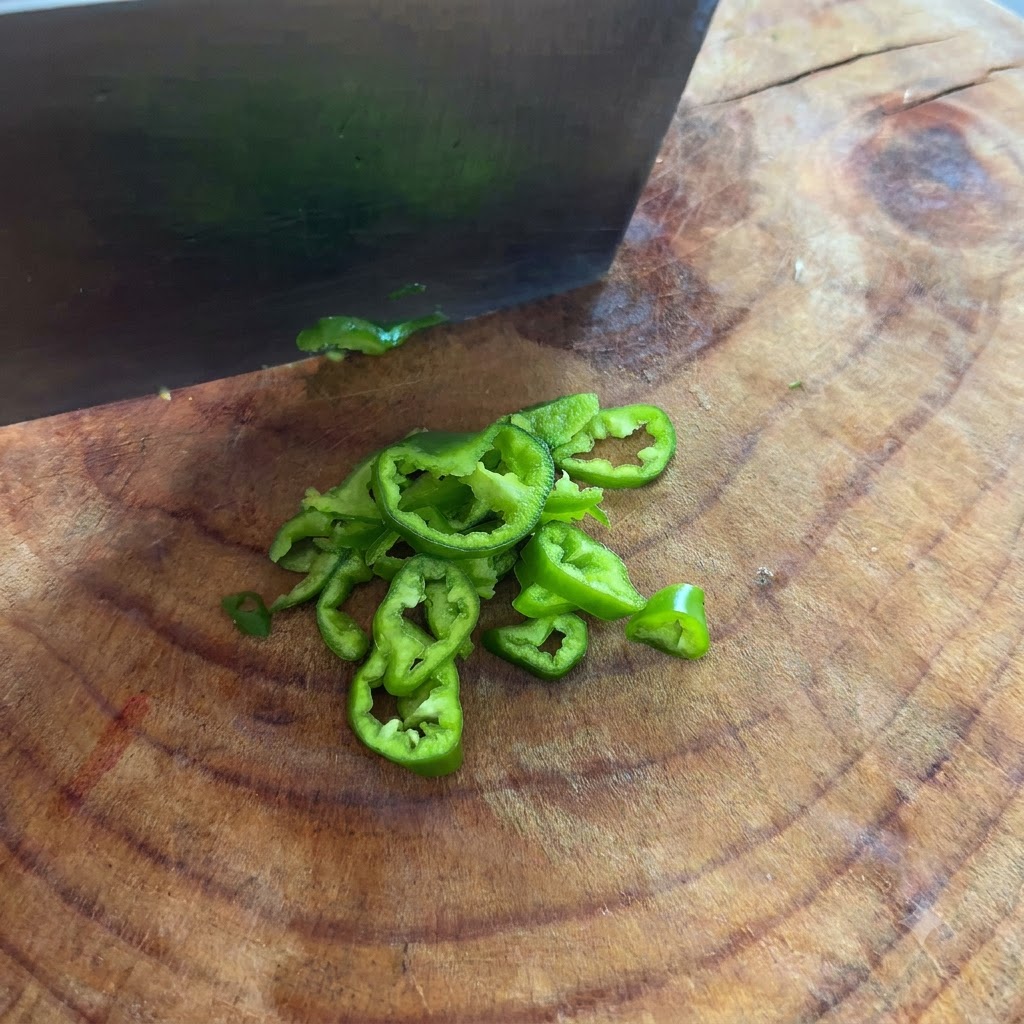
Take fresh green chili peppers and slice them neatly into small rings on a wooden cutting board using a cleaver.
Tip: Keep your fingers curled inward while slicing to protect them from the blade. - 8Boil pork with soybean paste
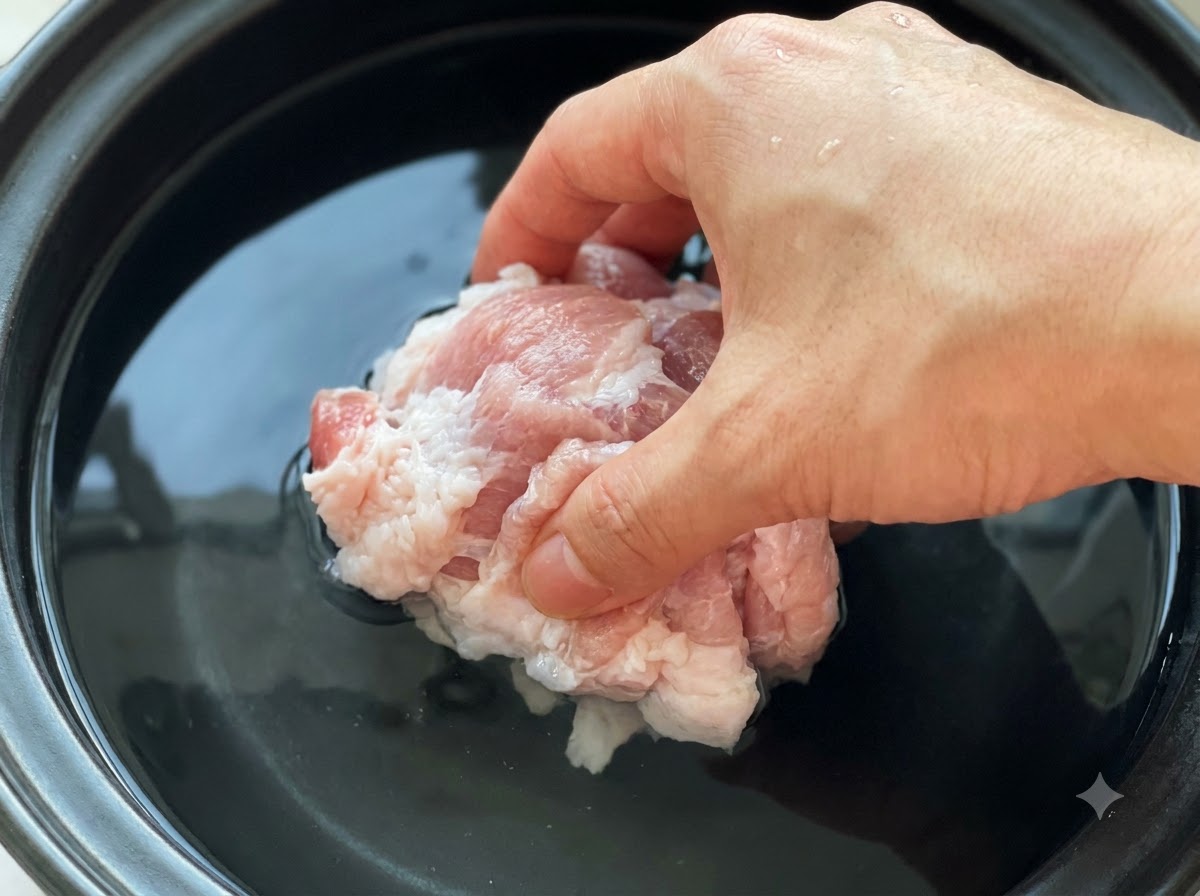
Place raw pork pieces into a pot of cold water combined with soybean paste, then bring everything to a boil.
Tip: Starting with cold water helps infuse the soybean paste flavor deeply into the meat as it heats up. - 9Add chopped vegetables and tofu
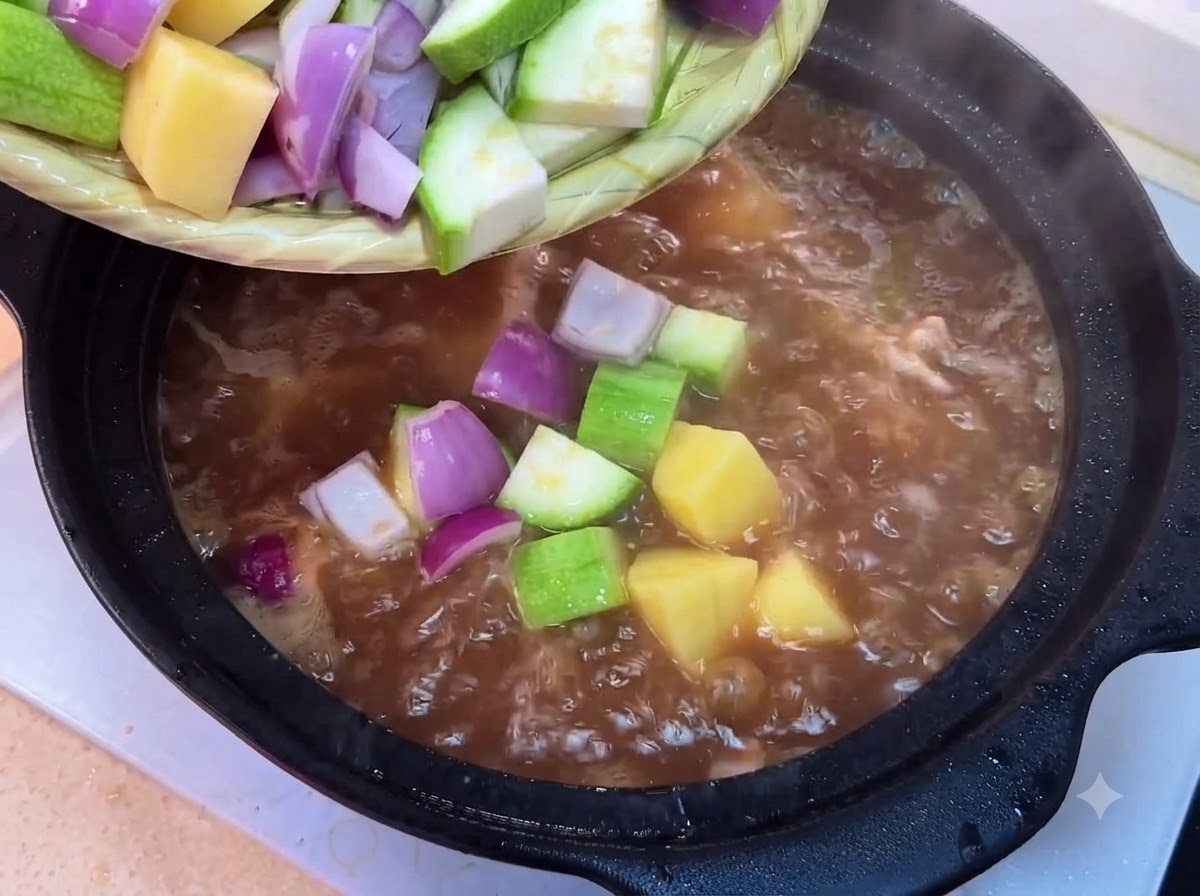
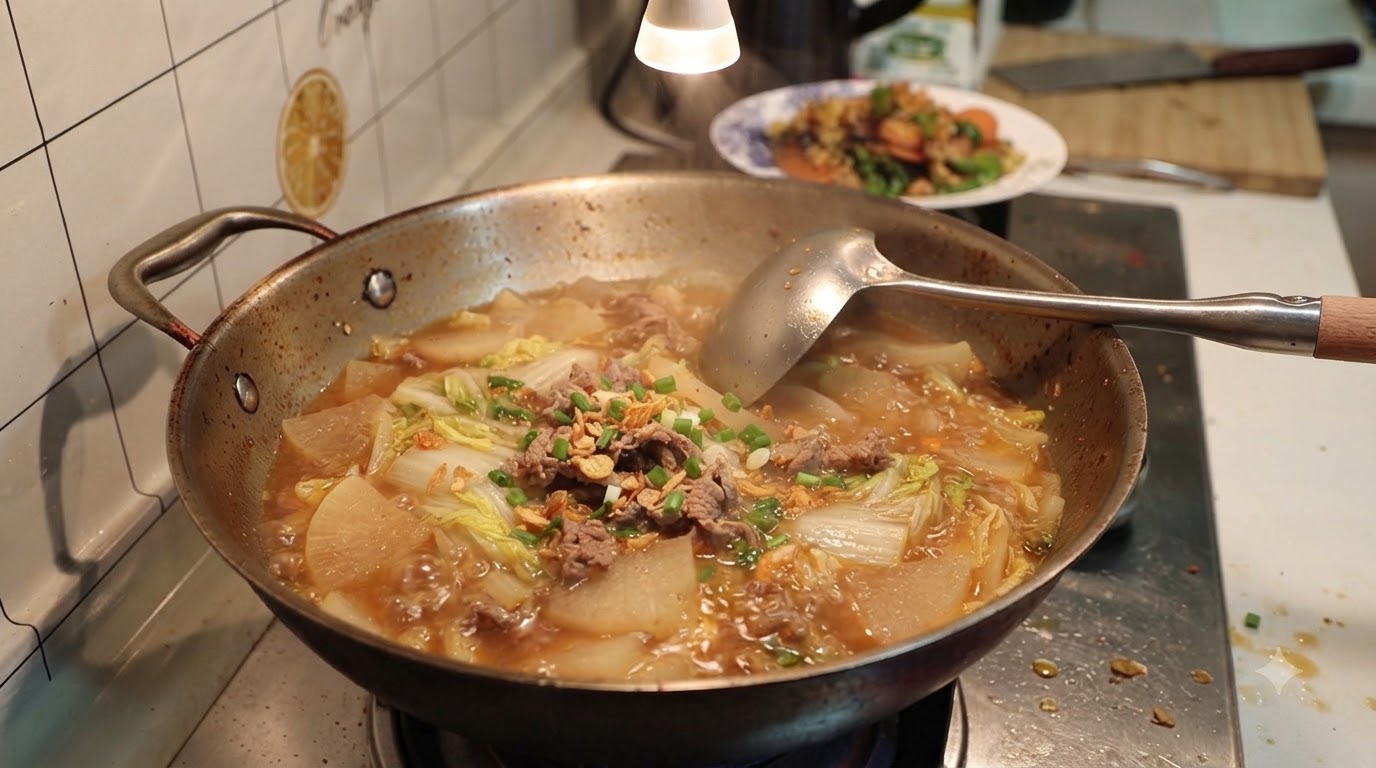
Carefully slide chopped squash, potatoes, onions, bean sprouts, mushrooms, and tofu from a tray directly into the simmering pot of stew.
Tip: Add harder root vegetables like potatoes and squash slightly earlier or together so they cook evenly with the rest of the ingredients. - 10Add leafy greens and chili
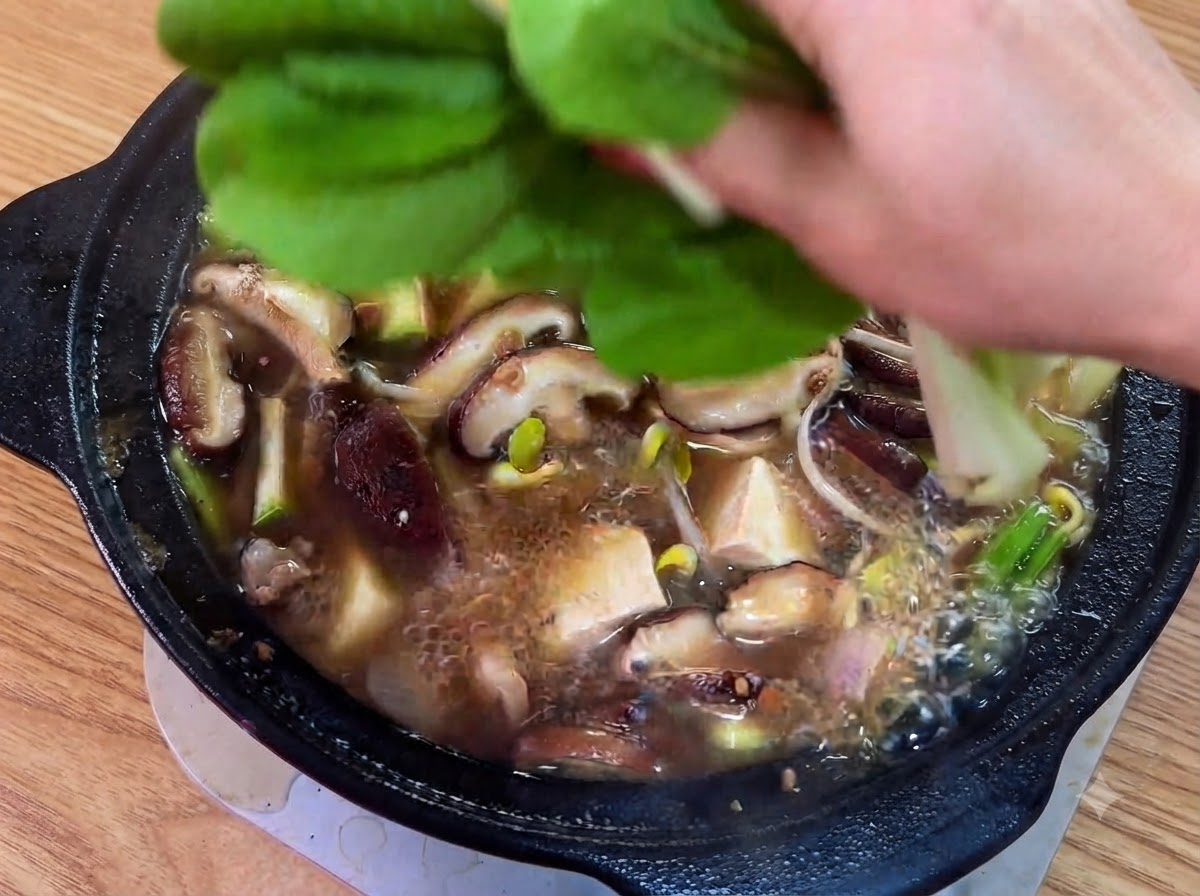
Layer fresh leafy greens and sliced green chili peppers on top of the bubbling, simmering stew to impart a fresh flavor and slight heat.
Tip: Add leafy greens toward the end so they retain a tender-crisp texture and vibrant green color. - 11Season the boiling stew
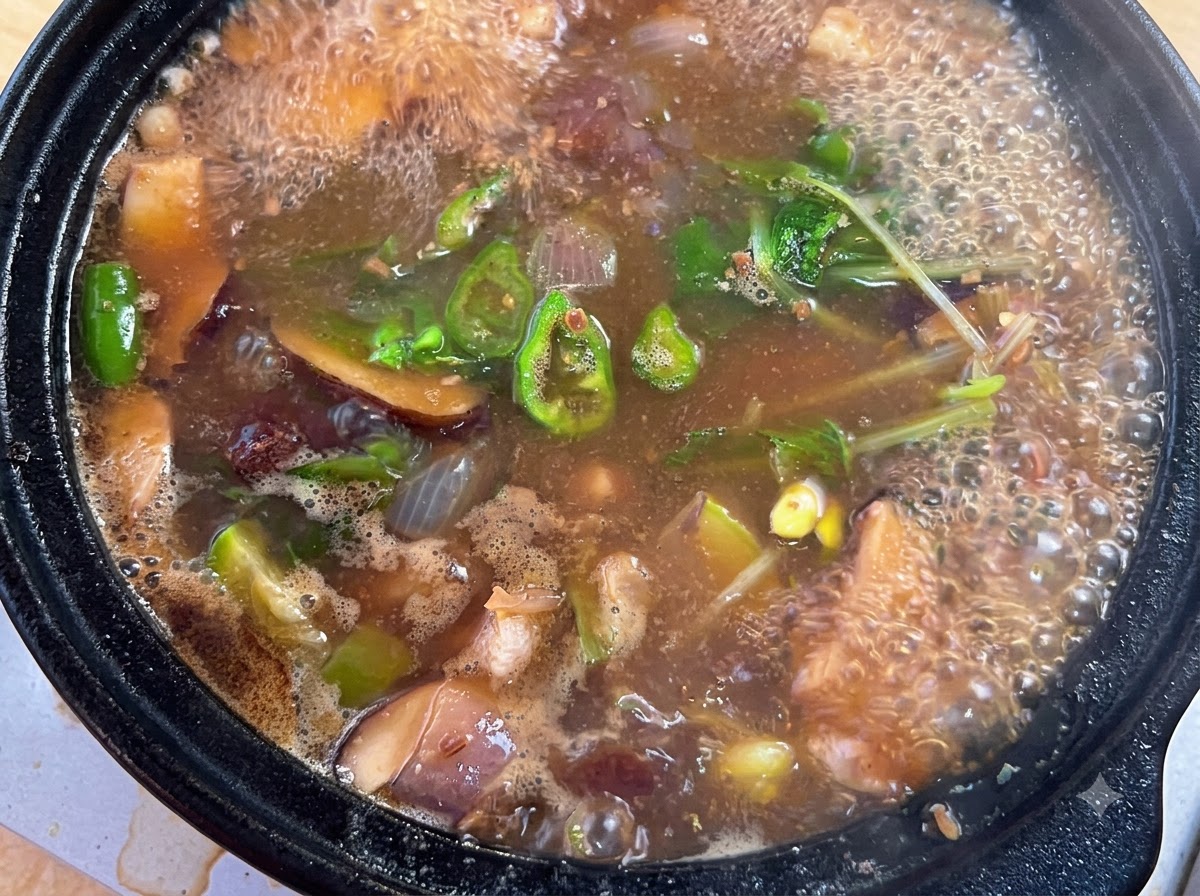
Sprinkle beef seasoning powder, chili powder, and chopped green onions into the boiling stew to enhance the overall flavor and aroma.
Tip: Adjust the amount of chili powder according to your preferred spice level.