Authentic Korean Soybean Paste Stew (Doenjang-jjigae)
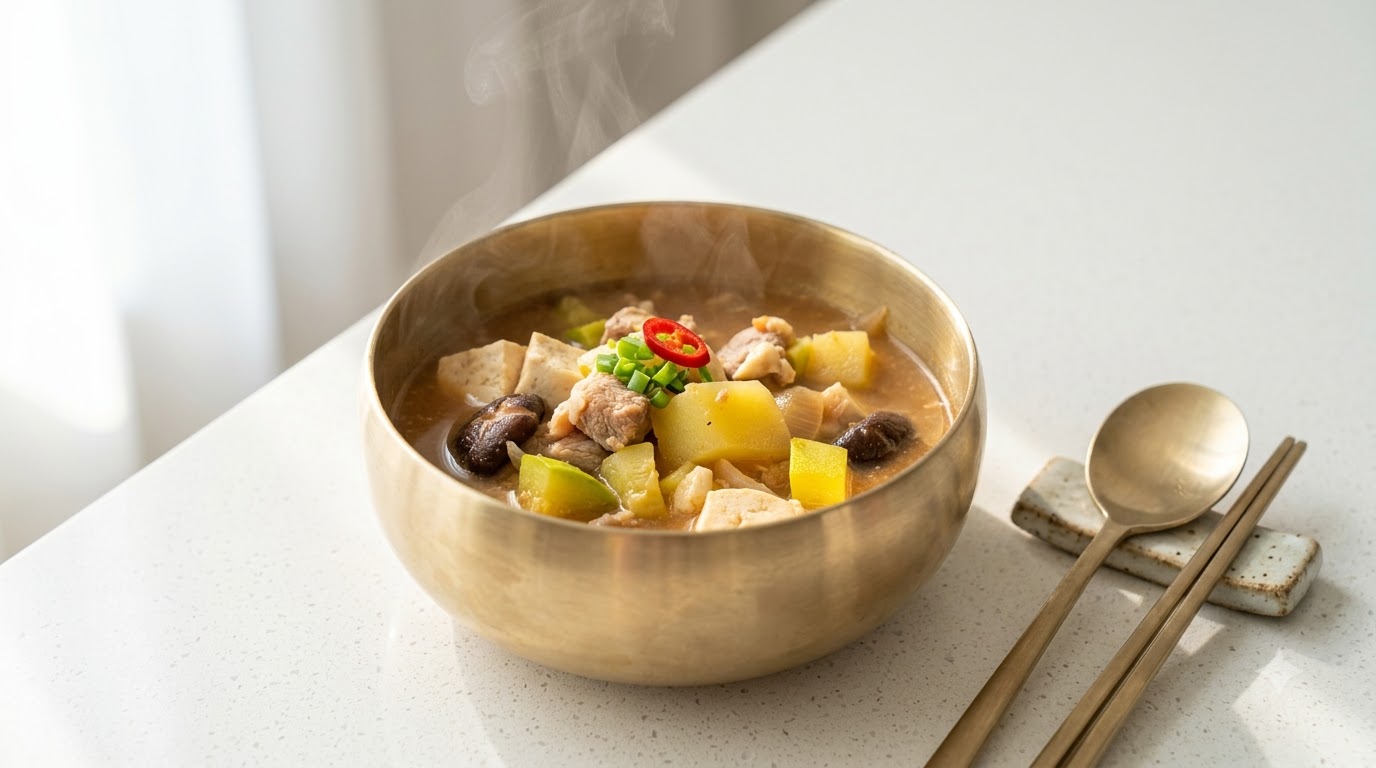
Make restaurant-quality Korean soybean paste stew at home with pork belly, tender potatoes, zucchini, enoki mushrooms, and rich doenjang broth.
Doenjang-jjigae is a staple comfort dish in Korean cuisine, celebrated for its deeply savory, earthy fermented bean broth. Often enjoyed at Korean barbecue restaurants, this hearty stew is surprisingly simple to make at home using fresh vegetables, sliced pork belly, and aromatic soybean paste.
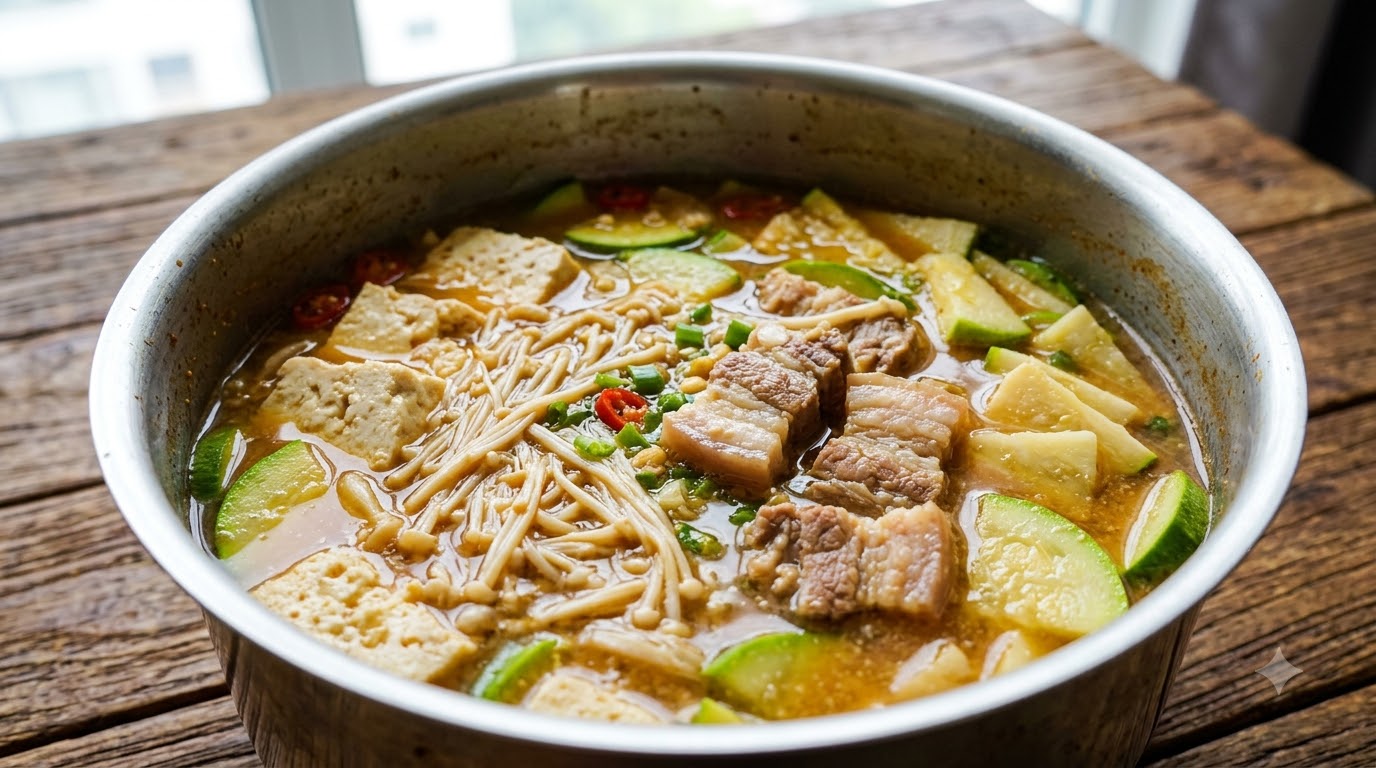
Ingredients
- 200 g pork belly
- 2 tbsp Korean soybean paste
- 1 tbsp Korean chili paste
- 1 zucchini
- 2 potatoes
- 1 block tofu
- 1 bunch enoki mushrooms
- to taste chili peppers
- to taste water
Instructions
- 1Slice the Zucchini

Prepare your fresh vegetables by washing them thoroughly. Take the green zucchini and slice it into small, bite-sized pieces on a wooden cutting board using a sharp kitchen knife.
Tip: Cut the vegetables into uniform pieces so they cook evenly together in the soup. - 2Slice the Tofu
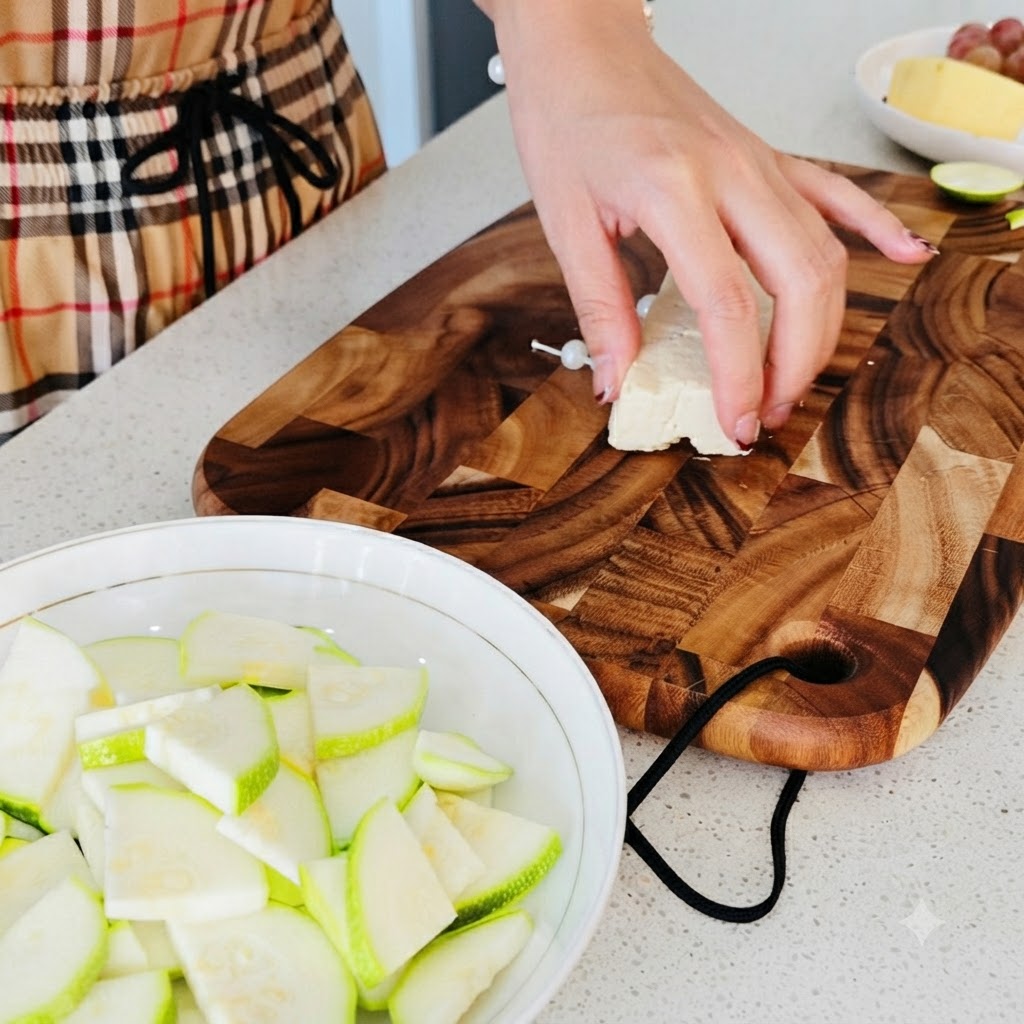
Take a block of white tofu and carefully slice it into small cubes on the wooden cutting board. Tofu adds a wonderfully soft texture that is essential for authentic Doenjang-jjigae.
Tip: Slice the tofu gently to prevent it from crumbling before it goes into the pot. - 3Cut the Potatoes
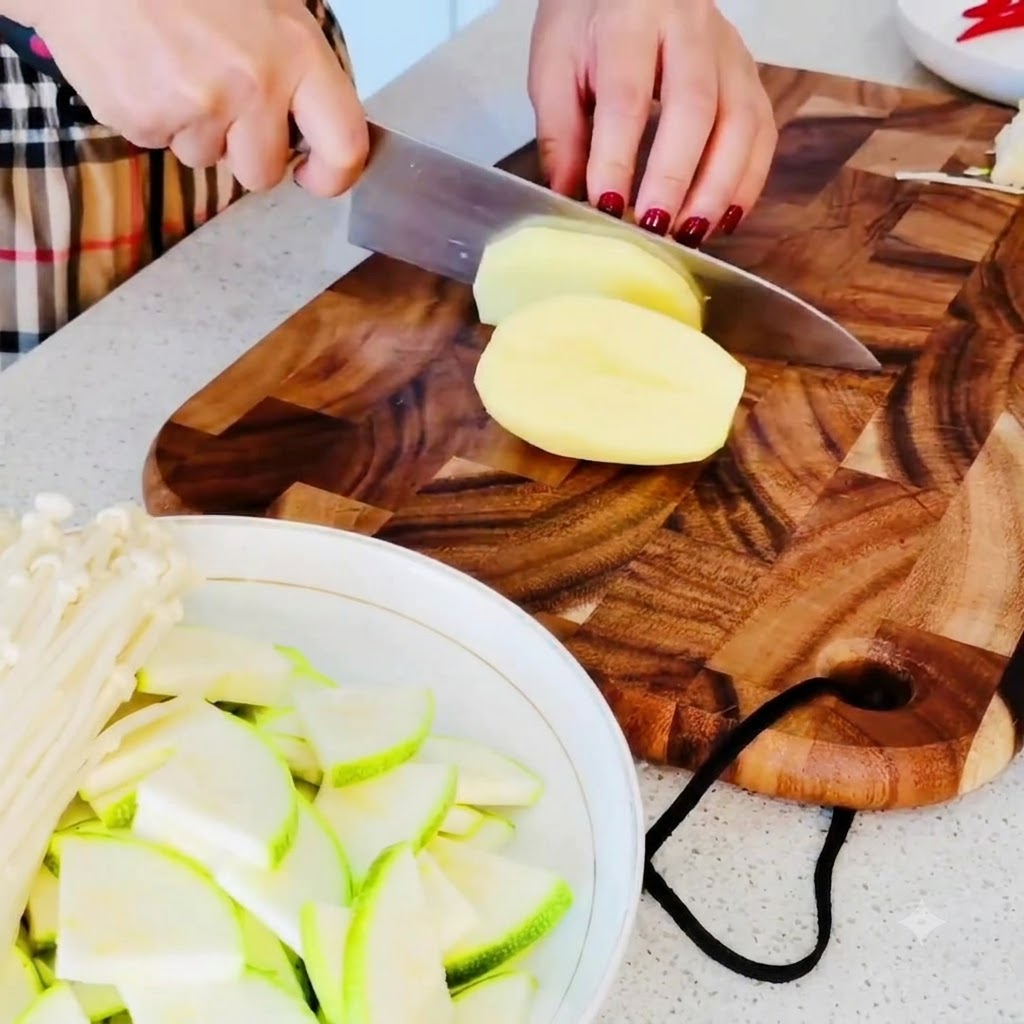
Peel the potatoes and cut them into small, bite-sized pieces on the wooden cutting board, placing them alongside your previously chopped vegetables.
Tip: Keep the potato pieces uniform in size with the zucchini so they finish boiling at the same time. - 4Chop the Chili Peppers
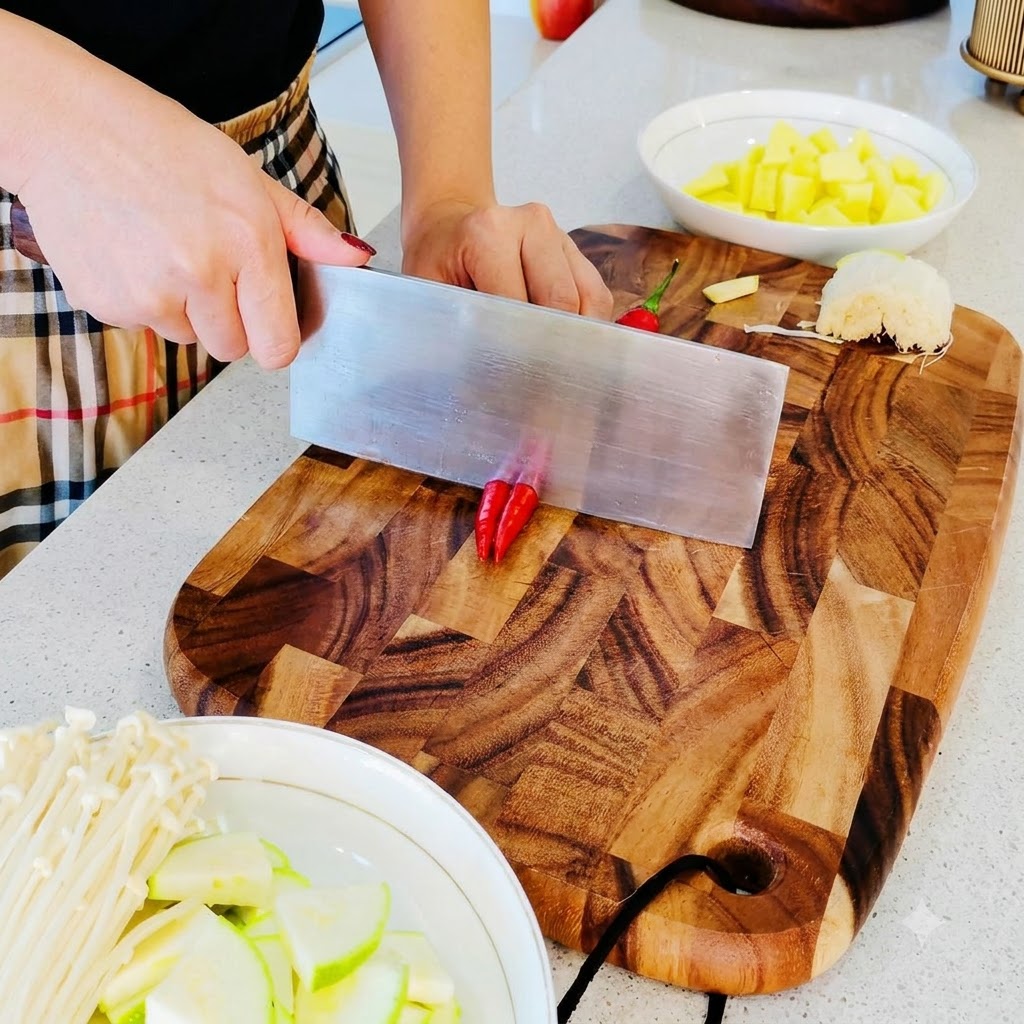
If you prefer a spicy kick to your stew, chop small red chili peppers into thin pieces on the cutting board to incorporate into the broth later.
Tip: Adjust the amount of chili peppers according to your personal spice preference. - 5Prepare Enoki Mushrooms
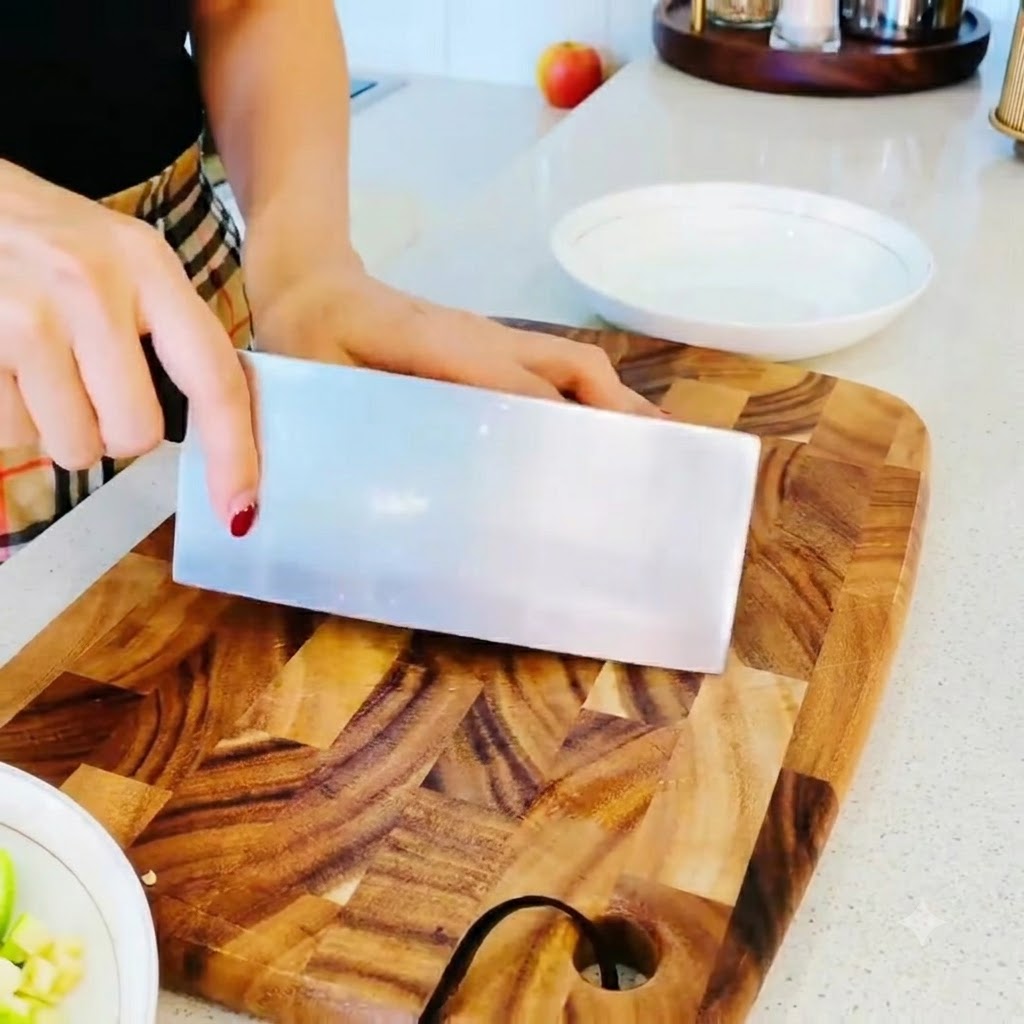
Take a bunch of fresh enoki mushrooms and trim off the root ends cleanly on the wooden cutting board before adding them to your vegetable selection.
Tip: Make sure to discard the tough root base completely before cooking. - 6Combine Pork Belly and Potatoes in Water
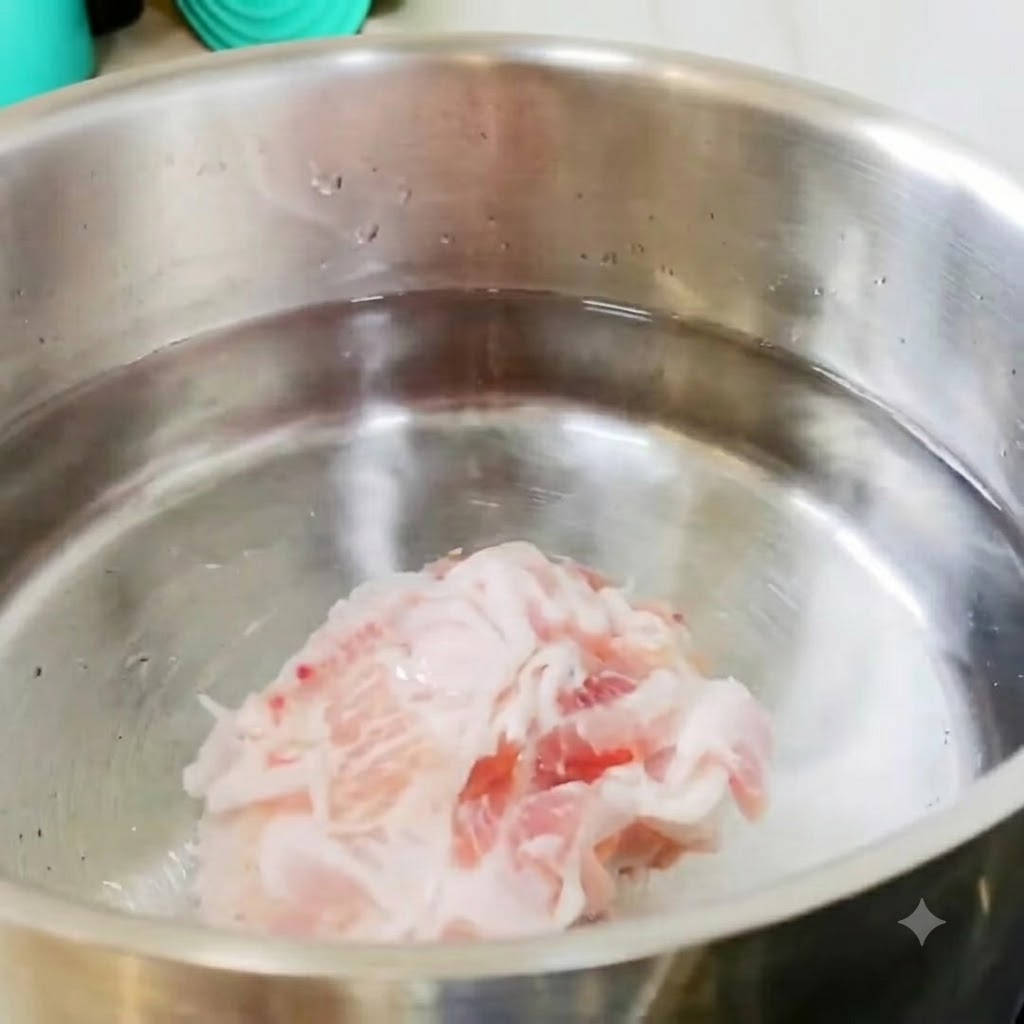
Place slices of pork belly and the prepared potato pieces into a pot filled with cold water on the stovecite: 1. Starting with cold water helps draw out rich flavors as it heats up.
Tip: Always start your stew base with cold water and meat to build a deeper broth flavor gradually. - 7Mix the Soybean Paste Sauce
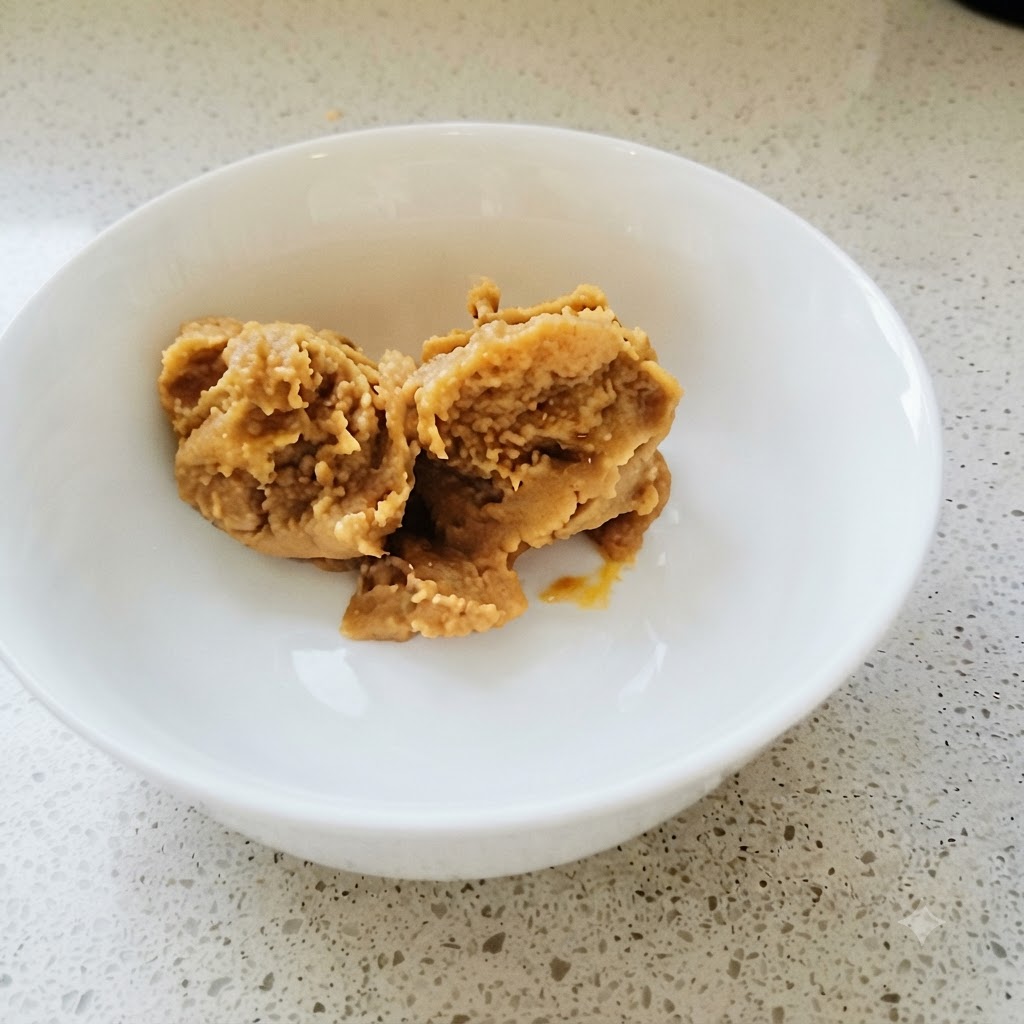
Take two spoons of Korean soybean paste and one spoon of chili paste into a small white bowl. Ladle a spoonful of hot soup from the pot to help dissolve and mix the pastes well together before adding them back to the soup.
Tip: Mixing the soybean paste with warm soup first ensures it dissolves smoothly without leaving lumps in the stew. - 8Add Soybean Paste to the Pot
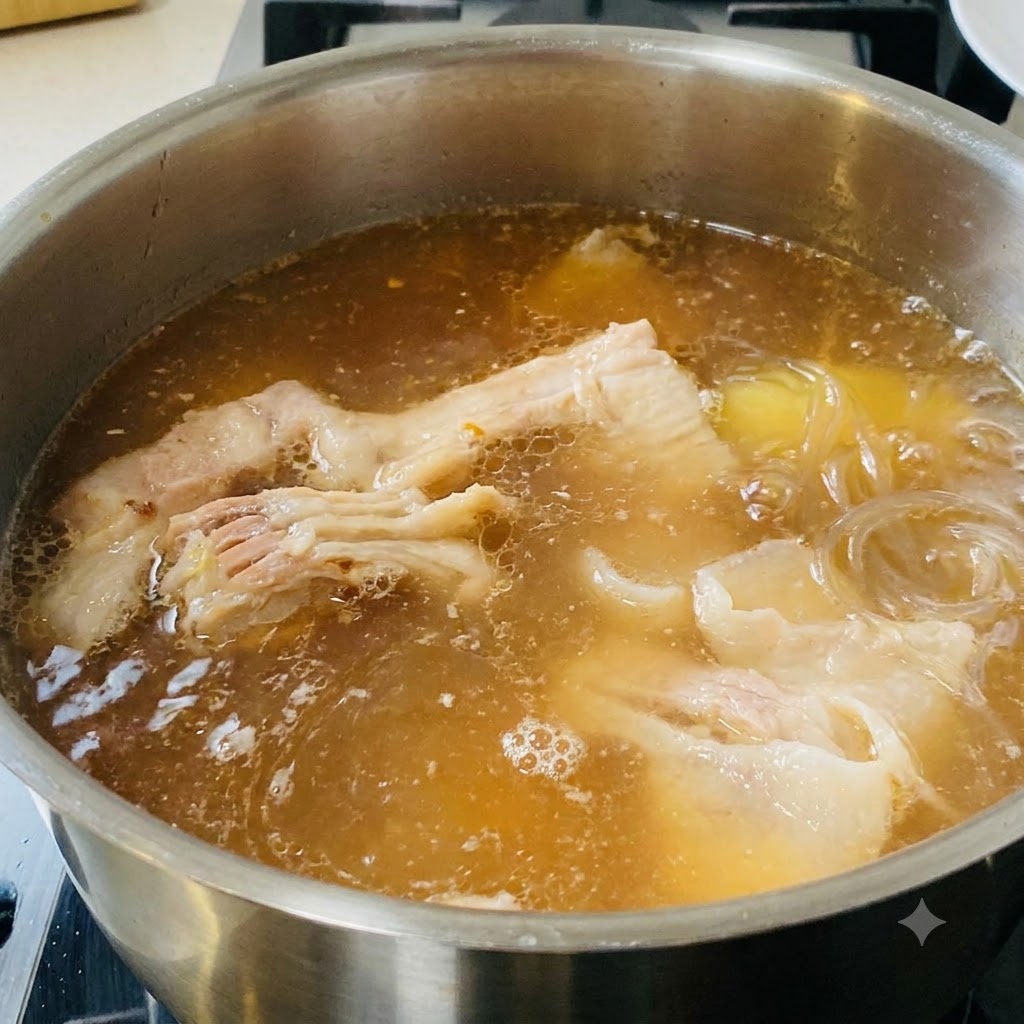
Pour the well-mixed soybean paste and chili paste sauce into the boiling pot containing the broth, pork belly, and potatoes. Adjust the amount of paste according to your preferred taste for richness.
Tip: Simmer the potatoes in the broth with the paste until they can be easily pierced with chopsticks before adding softer vegetables.