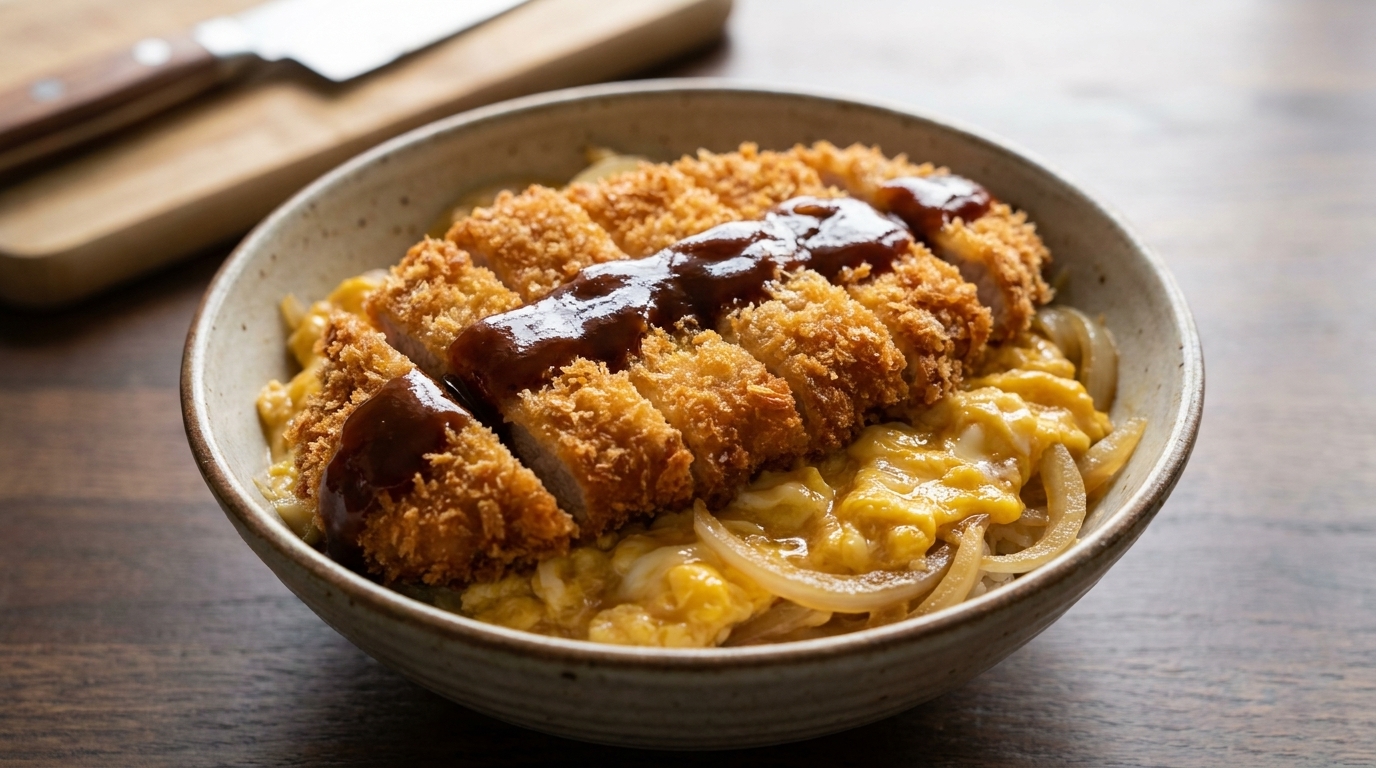
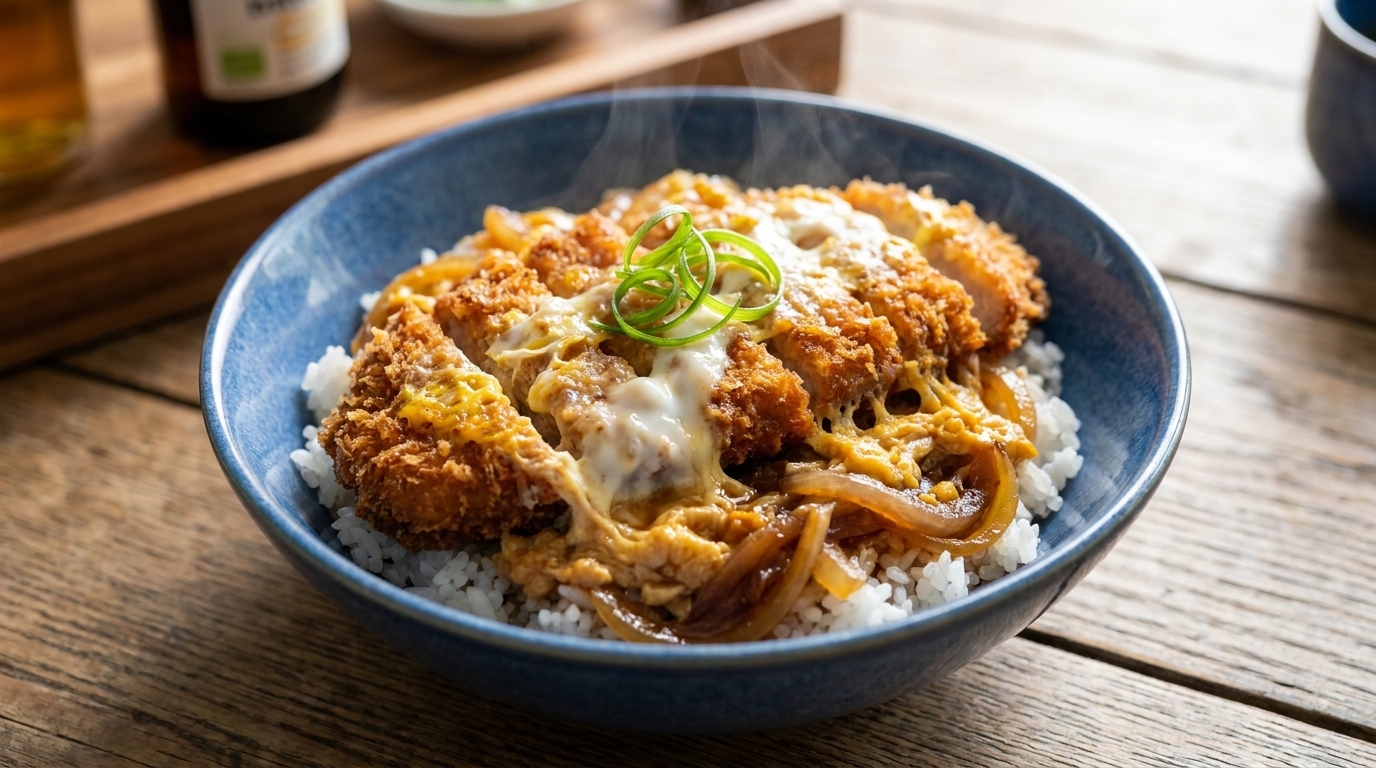
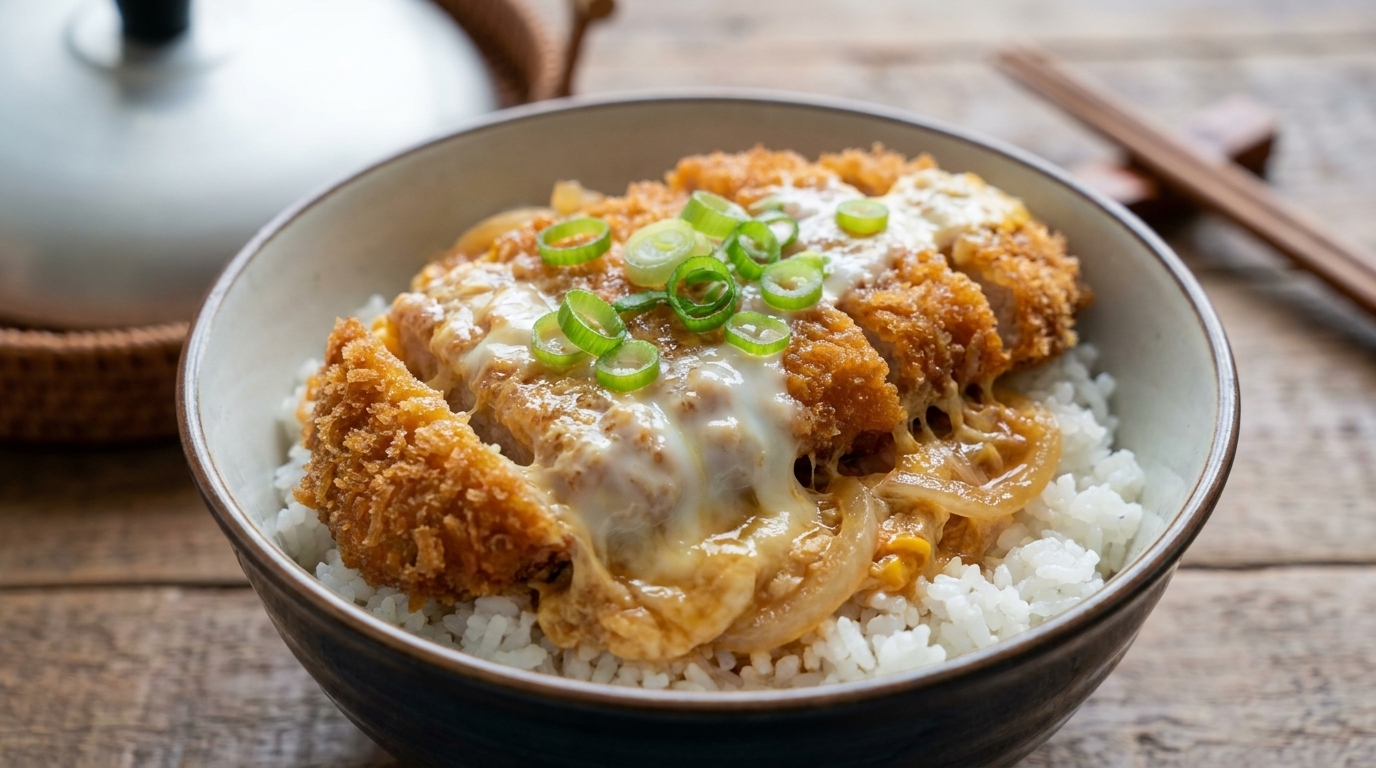
Japanese Baked Pork Katsudon
Silky Scrambled Eggs
A comforting Japanese classic featuring a crispy baked pork cutlet nestled in a bed of savory, soft-scrambled eggs and sweet simmered onions over fluffy rice.
Katsudon is the ultimate Japanese comfort food, traditionally served in a single donburi bowl to represent a complete, satisfying meal. This version uses an oven-baked technique to achieve a golden, crunchy panko crust with less oil while maintaining the signature silky egg texture. The name katsu sounds like the Japanese word for to win, making it a popular meal for students and athletes before big events.
Ingredients
- 300 g pork plum meat (collar or shoulder)
- 2 large eggs (for breading)
- 2 large eggs (for topping)
- 0.5 cup all-purpose flour
- 1 cup panko breadcrumbs
- 1 small red onion
- 2 tbsp light soy sauce
- 1 tbsp mirin
- 1 tbsp white sugar
- 0.5 bowl water
- 1 bowl steamed white rice
- to taste salt
- to taste black pepper
- optional white sesame seeds
- optional chopped green onions
Instructions
- 1Tenderize the pork
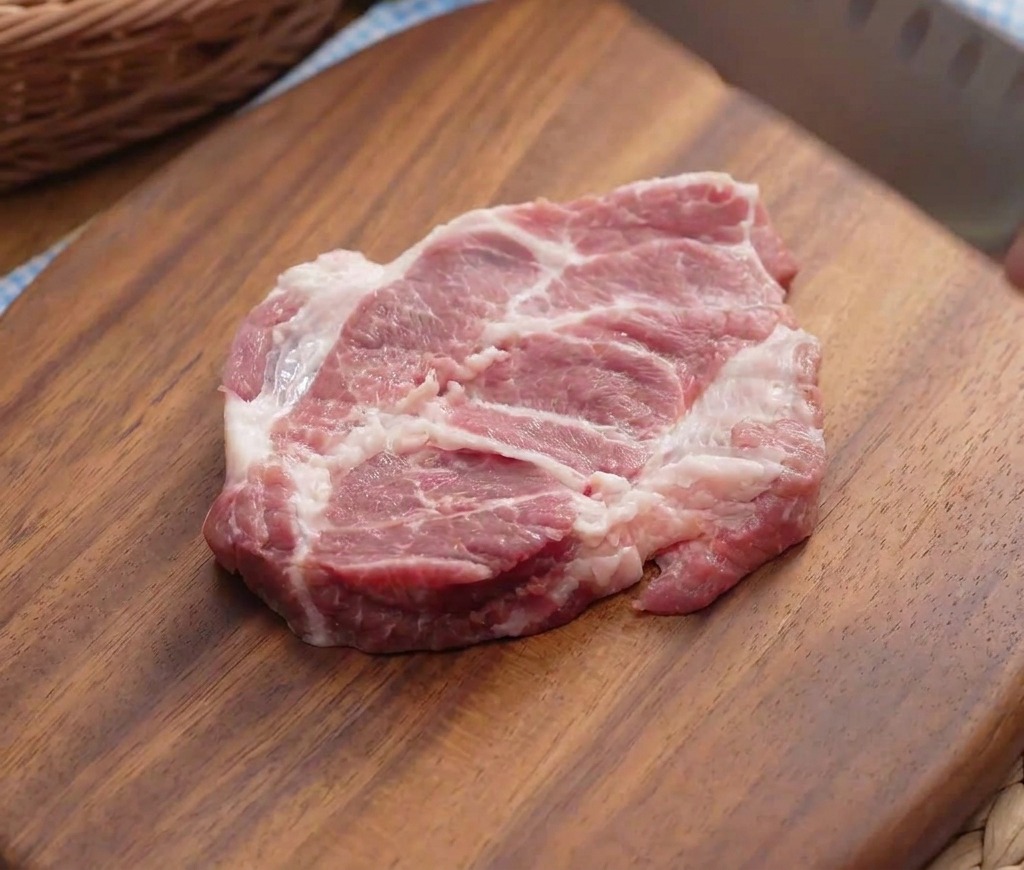
Place the pork plum meat on a wooden cutting board. Use the back of a heavy knife to gently pound the surface of the meat in a crosshatch pattern. This process breaks down tough muscle fibers to ensure a tender bite and prevents the meat from curling or shrinking during the cooking process.
Tip: Tenderizing also helps the pork cook more evenly. If you do not have a heavy knife, a meat mallet works just as well. - 2Season the meat
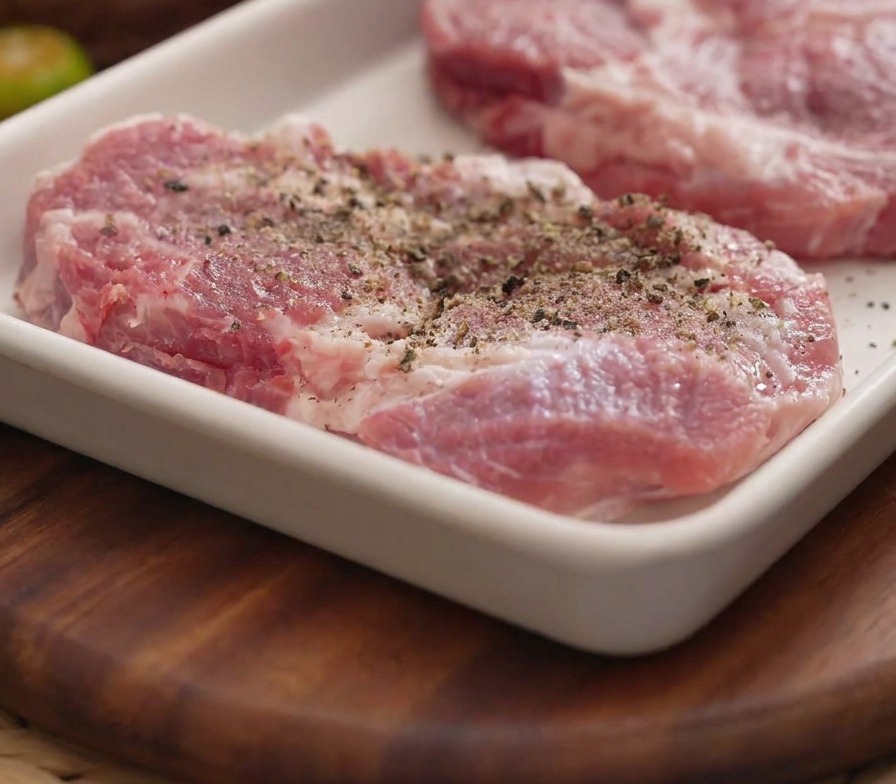
Place the tenderized pork chops into a flat tray and season generously with salt and freshly ground black pepper. Massage the seasoning into the meat to ensure every inch is covered. Flip the chops and repeat on the other side, then set aside to marinate for approximately 30 minutes to develop flavor.
Tip: Freshly ground black pepper provides a much more vibrant aroma than pre-ground pepper, which is essential for a high-quality cutlet. - 3Prepare the egg wash
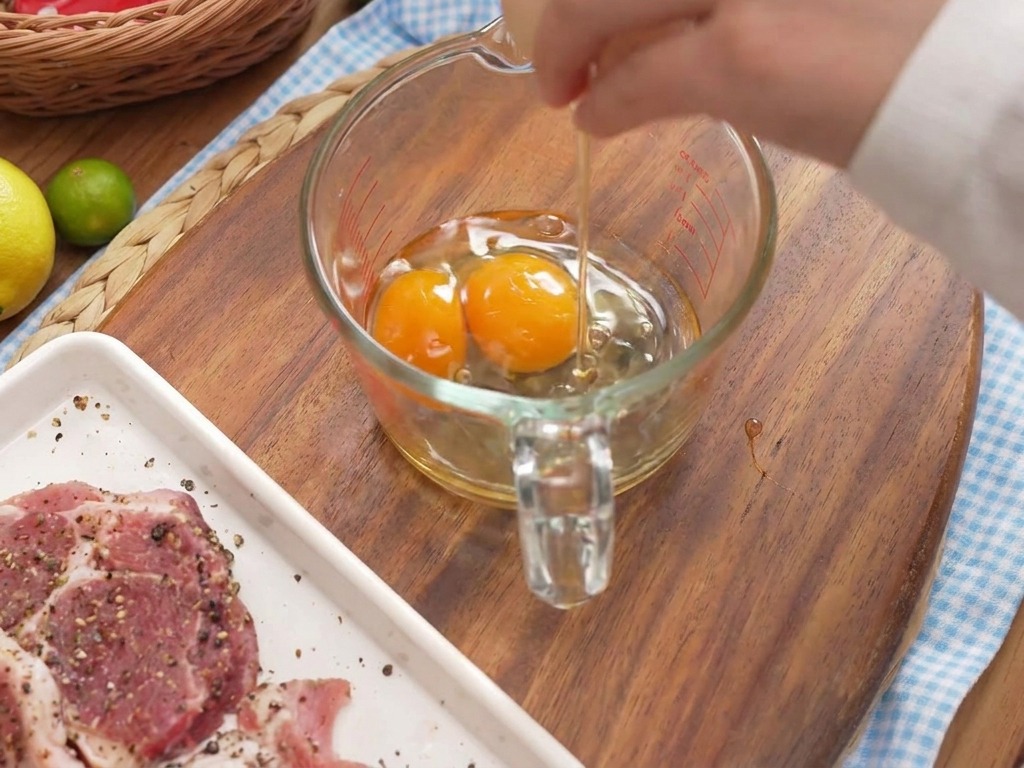
Crack two fresh eggs into a glass measuring cup or small bowl. Use a fork or a small whisk to beat them thoroughly until the yolks and whites are fully combined and no streaks remain. This smooth egg wash acts as a binder to hold the breadcrumbs onto the pork.
Tip: Add a teaspoon of water or oil to the eggs while whisking to make the egg wash slightly thinner and easier to coat. - 4Coat with flour
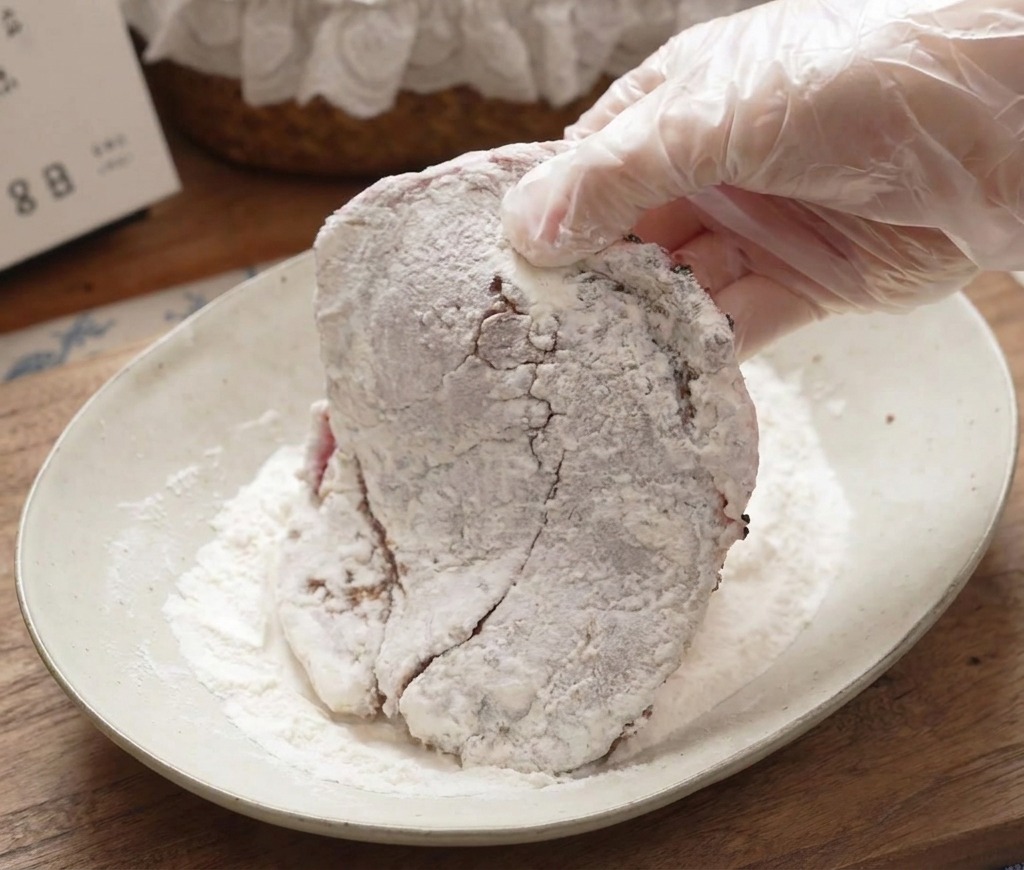
Take a piece of marinated pork and place it into a plate of all-purpose flour. Press down firmly to ensure the flour adheres to the surface, then flip to coat the other side. Shake off any excess flour; you want a thin, even layer that helps the egg wash stick better.
Tip: Make sure the meat is not too wet before dredging; if it is, pat it lightly with a paper towel first. - 5Dip in egg wash
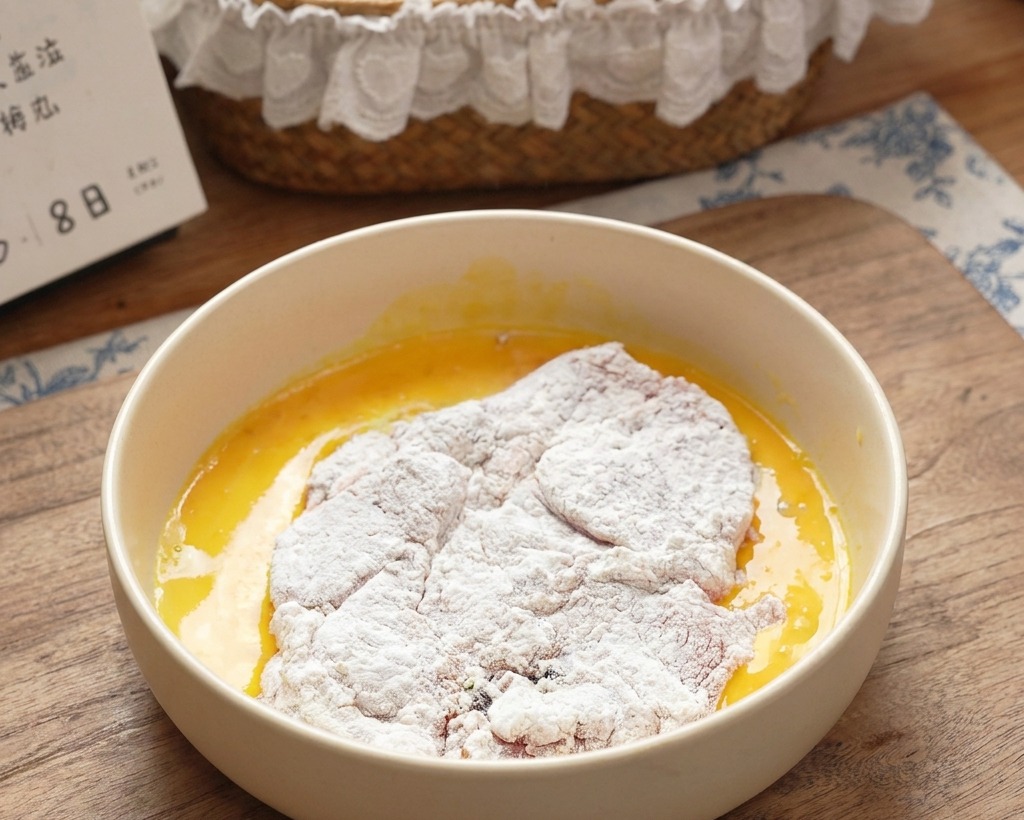
Transfer the floured pork chop into the bowl of beaten eggs. Submerge the meat completely, ensuring the egg wash covers every part of the flour coating. Lift the pork and let the excess egg drip off back into the bowl before moving to the next tray.
Tip: Use one hand for dry ingredients (flourbreadcrumbs) and the other for wet (egg) to keep your fingers clean. - 6Apply the breadcrumbs
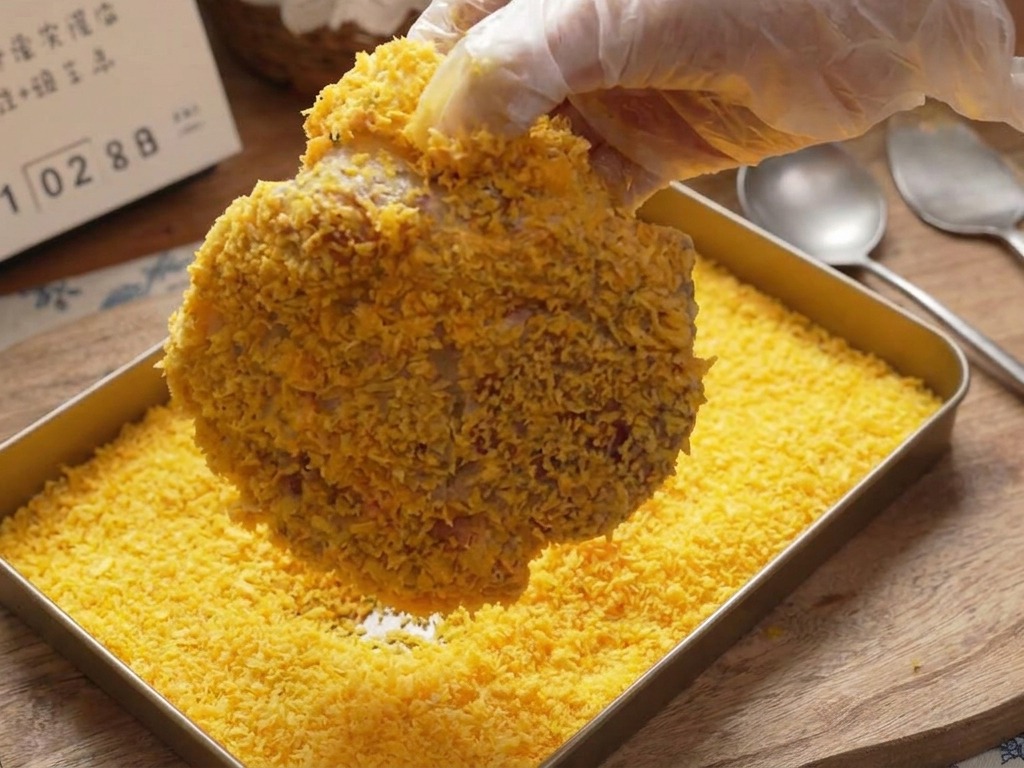
Place the egg-washed pork into a tray filled with golden Panko breadcrumbs. Press down firmly with your palm to embed the crumbs into the meat, then flip and repeat. Ensure a thick, even crust covers the entire chop, which will provide that signature crunch after cooking.
Tip: For an extra crispy result, you can do a double coating by dipping back into the egg and breadcrumbs a second time. - 7Bake the pork cutlet

Slide the baking tray with the prepared pork cutlet into the oven preheated to 200°C. Bake for approximately 20 minutes until the exterior achieves a golden, crispy texture and the meat is fully cooked. This baking method yields a crunchy finish with significantly less oil than deep-frying.
Tip: Ensure the oven is fully preheated before inserting the tray to help the breadcrumbs crisp up immediately. - 8Prepare the savory sauce
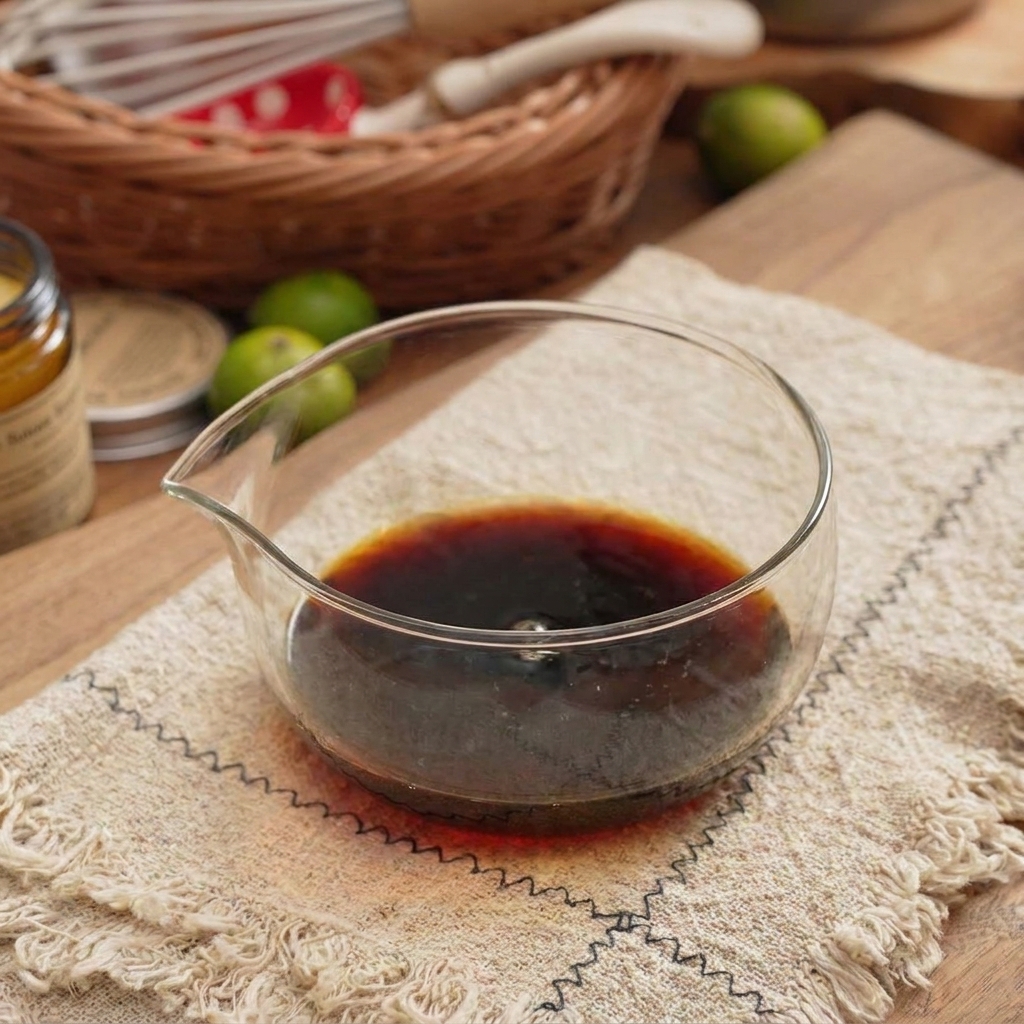
In a glass mixing bowl, combine two spoons of light soy sauce, one spoon of mirin, one spoon of white sugar, and half a bowl of water. Stir the ingredients thoroughly until the sugar is completely dissolved. This sauce provides the essential sweet and savory balance for the katsudon.
Tip: You can adjust the ratio of soy sauce and sugar at this stage to customize the saltiness and sweetness to your preference. - 9Simmer the red onions
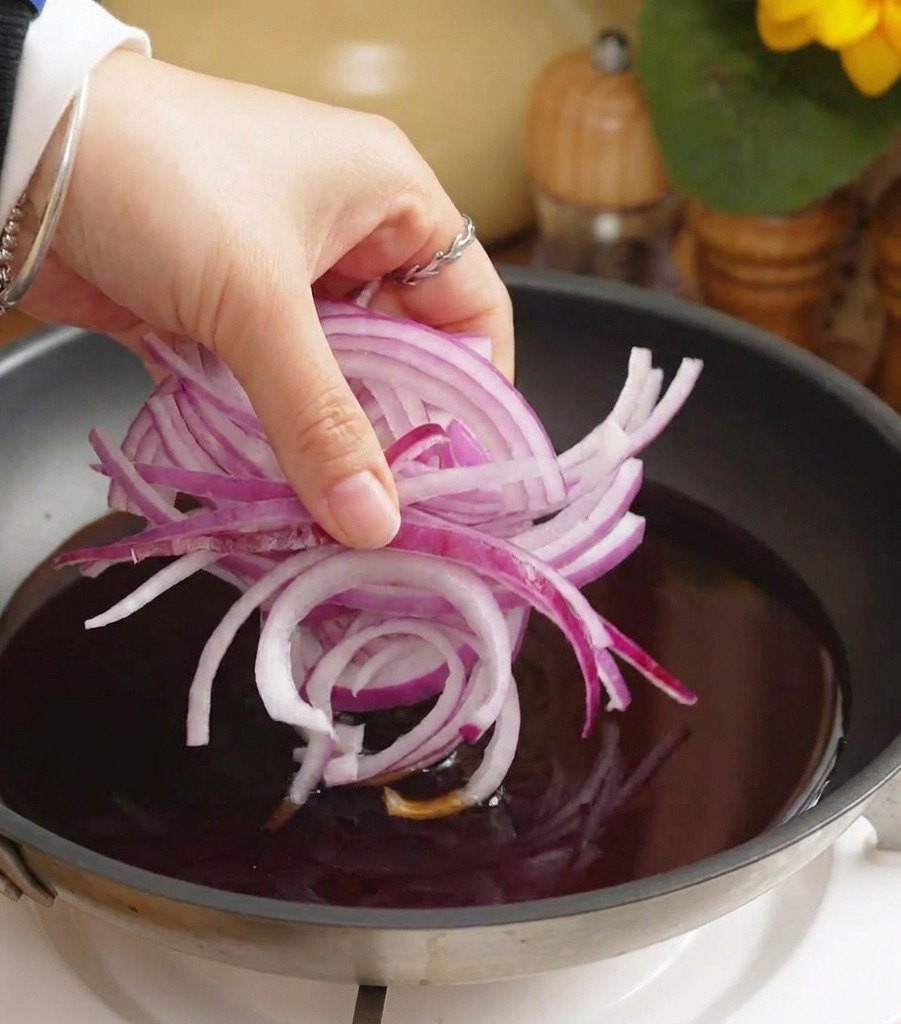
Pour the prepared sauce into a frying pan and add the sliced red onions. Simmer the mixture over medium-low heat until the onions become soft, translucent, and have thoroughly absorbed the dark, savory sauce.
Tip: Using red onions adds a mild sweetness and a pop of color to the finished dish compared to white onions. - 10Layer the pork onto the onions
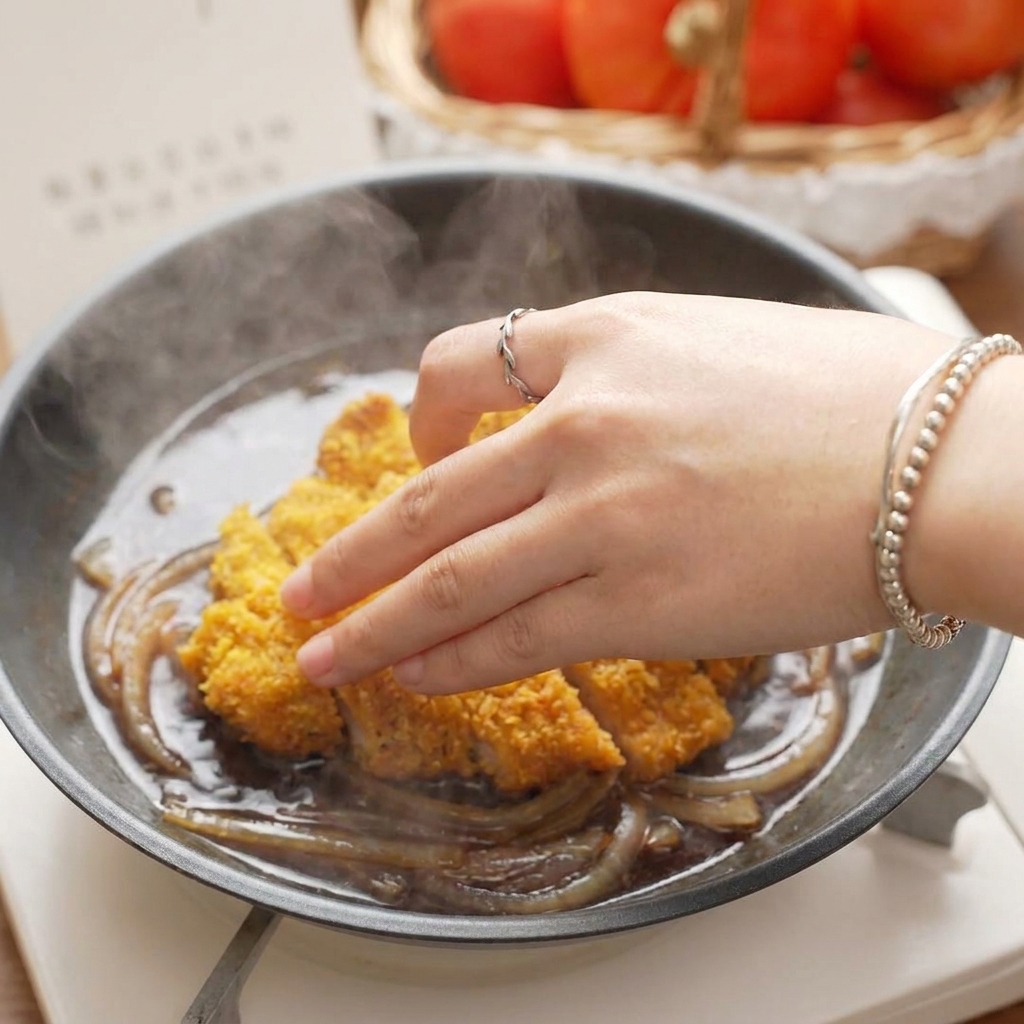
Once the onions are soft, carefully place the sliced, golden-brown pork cutlet on top of the onion layer in the pan. Arrange the pieces so they sit slightly above the sauce, allowing the bottom to soak up the flavor while the top remains crispy.
Tip: Slicing the cutlet before adding it to the pan ensures that the sauce can penetrate the edges of each piece for better flavor. - 11Add the beaten eggs
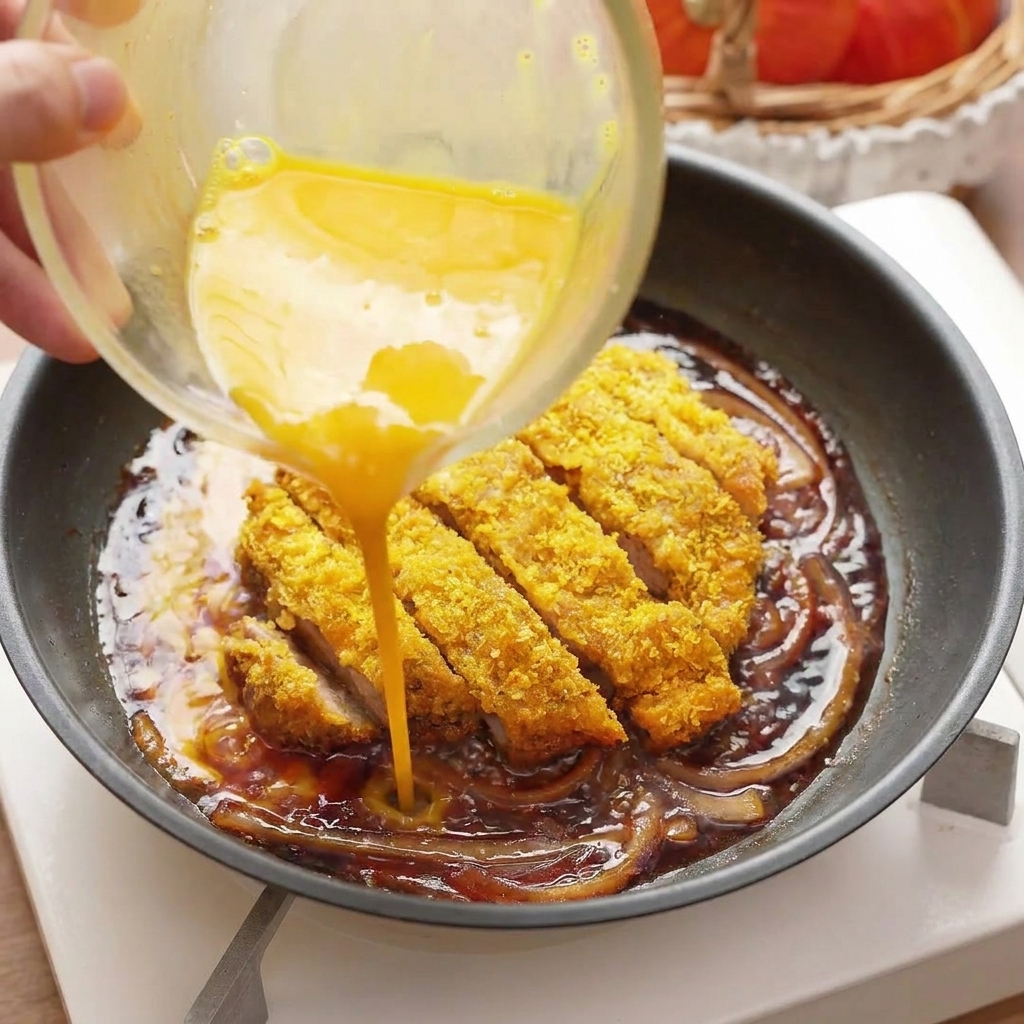
Gently pour the beaten eggs into the pan, swirling them around the pork cutlet rather than over the top. The eggs will cook in the hot savory sauce, creating a silky, soft-scrambled texture that binds the pork and onions together.
Tip: For a more authentic texture, do not over-mix the eggs; leaving some ribbons of white and yellow creates a better mouthfeel. - 12Garnish and serve
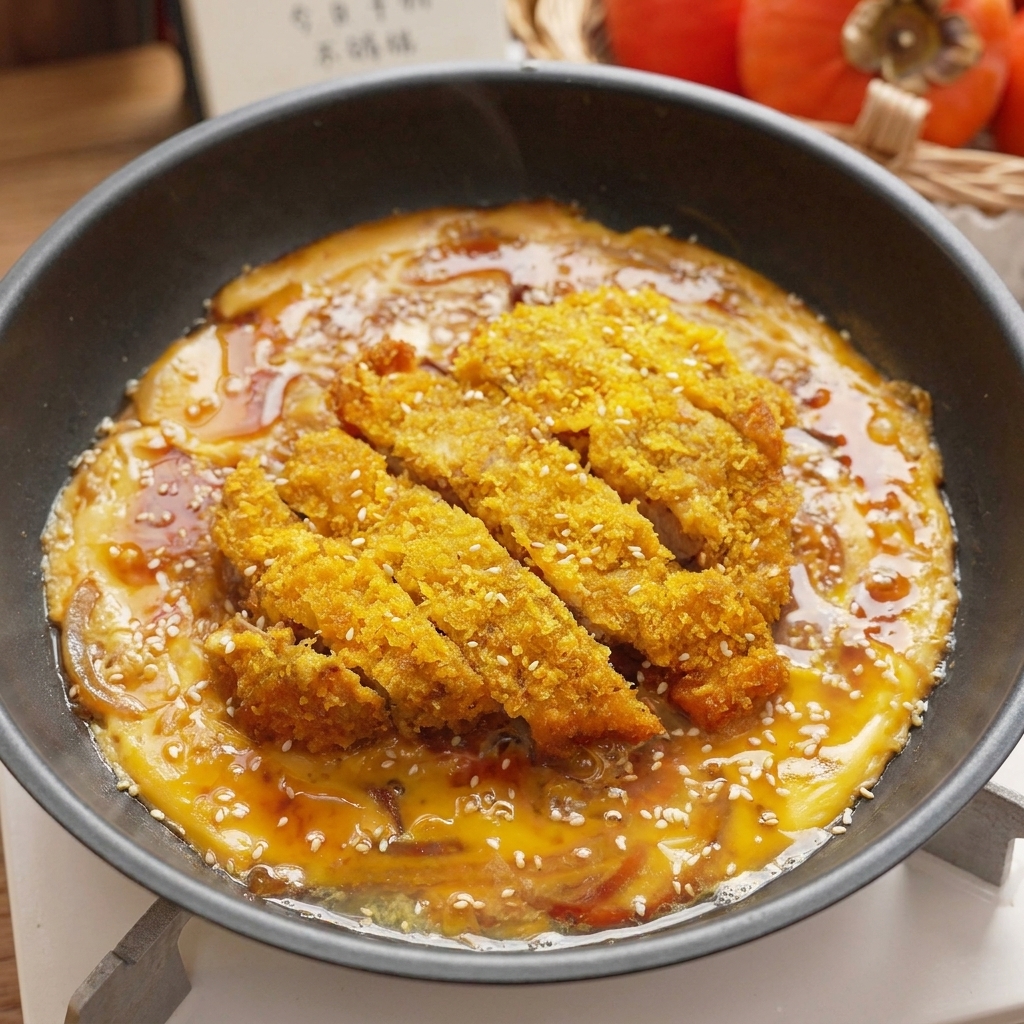
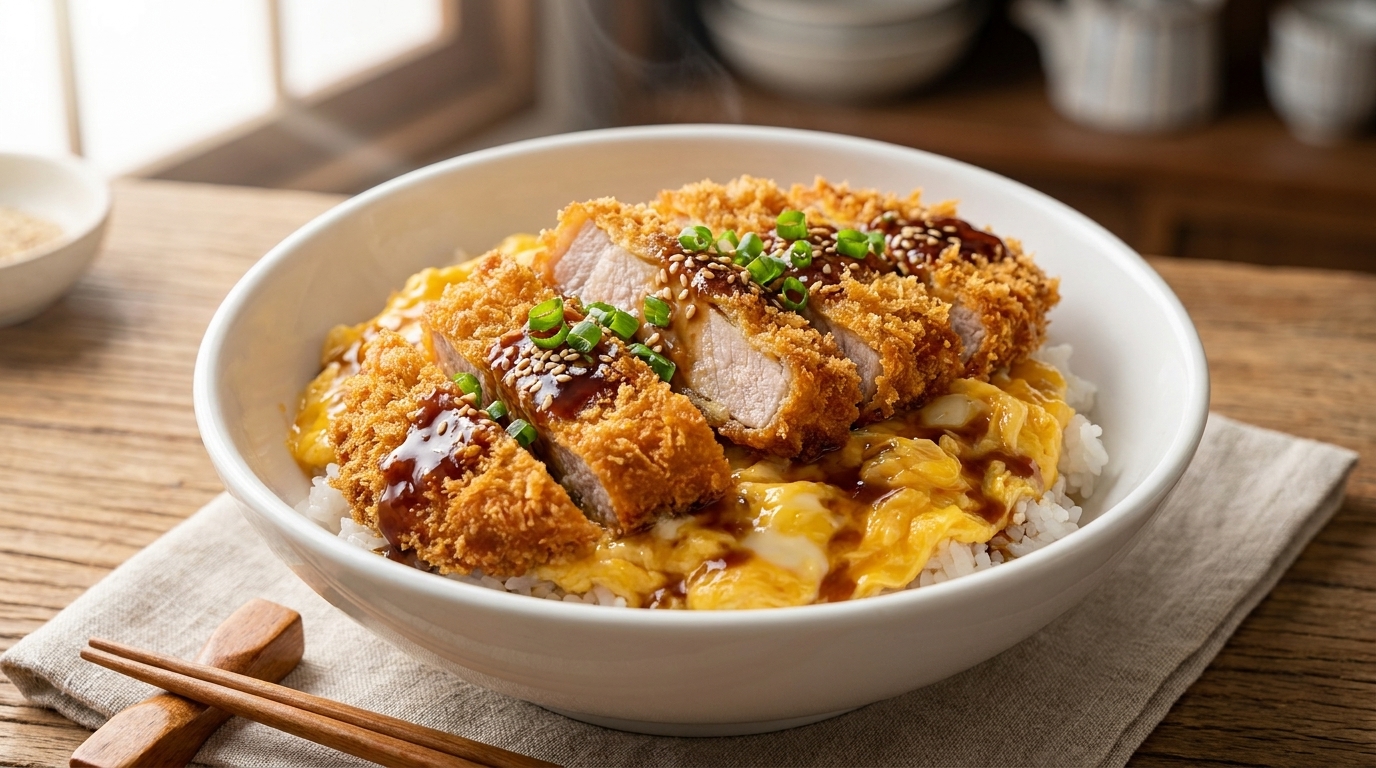
Sprinkle white sesame seeds and freshly chopped green onions over the dish. Cover the pan briefly to let the eggs reach your preferred consistency, then slide the entire mixture over a bowl of hot steamed rice. The rice will absorb any remaining savory sauce.
Tip: Covering the pan with a lid for 30 seconds helps the top of the egg set perfectly without overcooking the bottom.