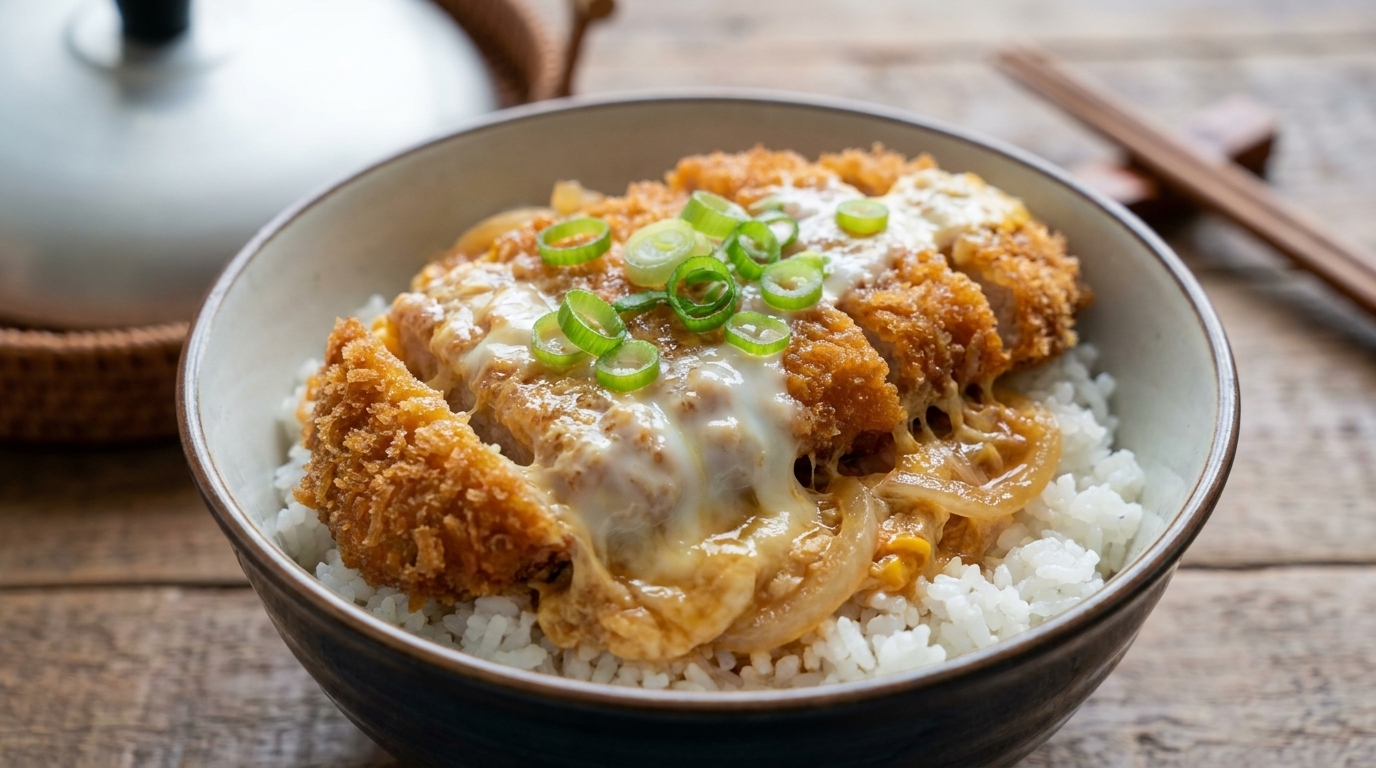
Authentic Japanese Katsudon (Silky Egg Pork Cutlet Bowl)
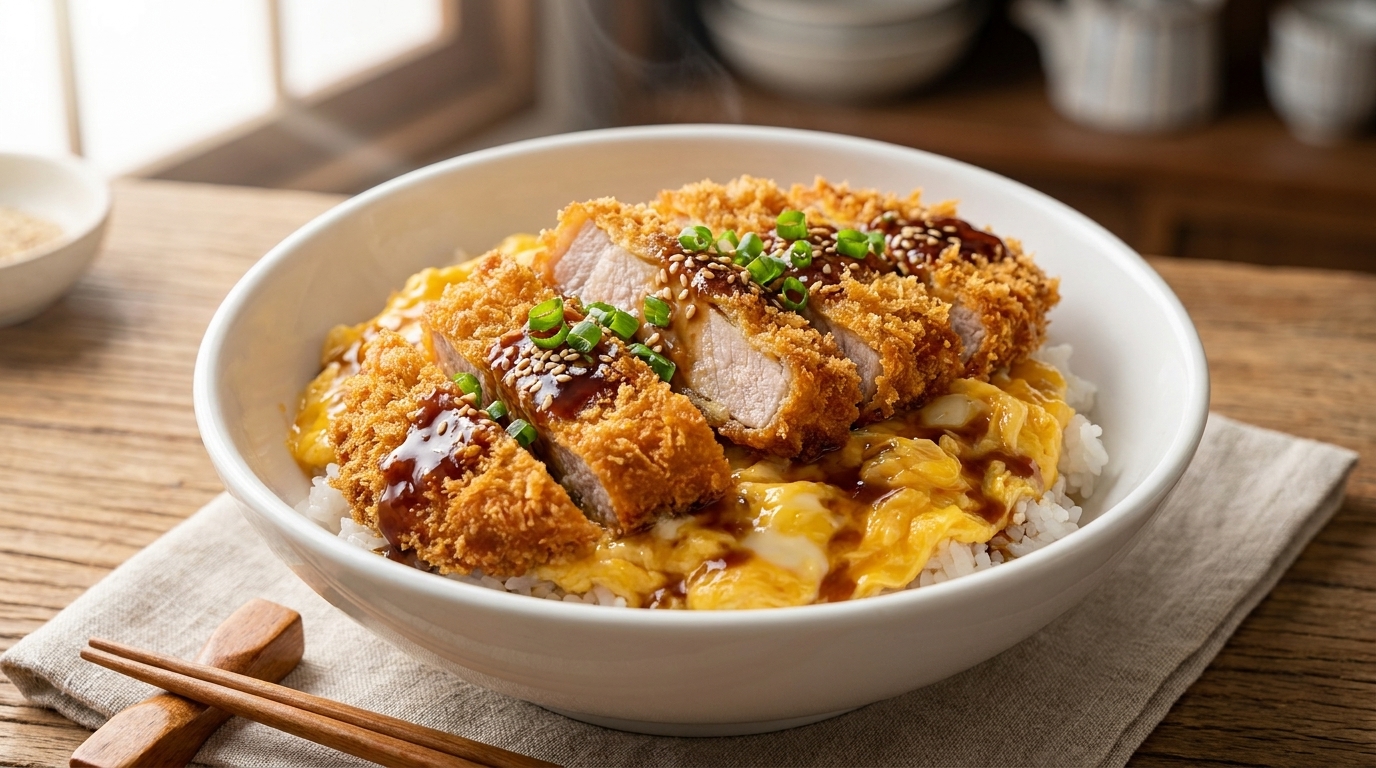
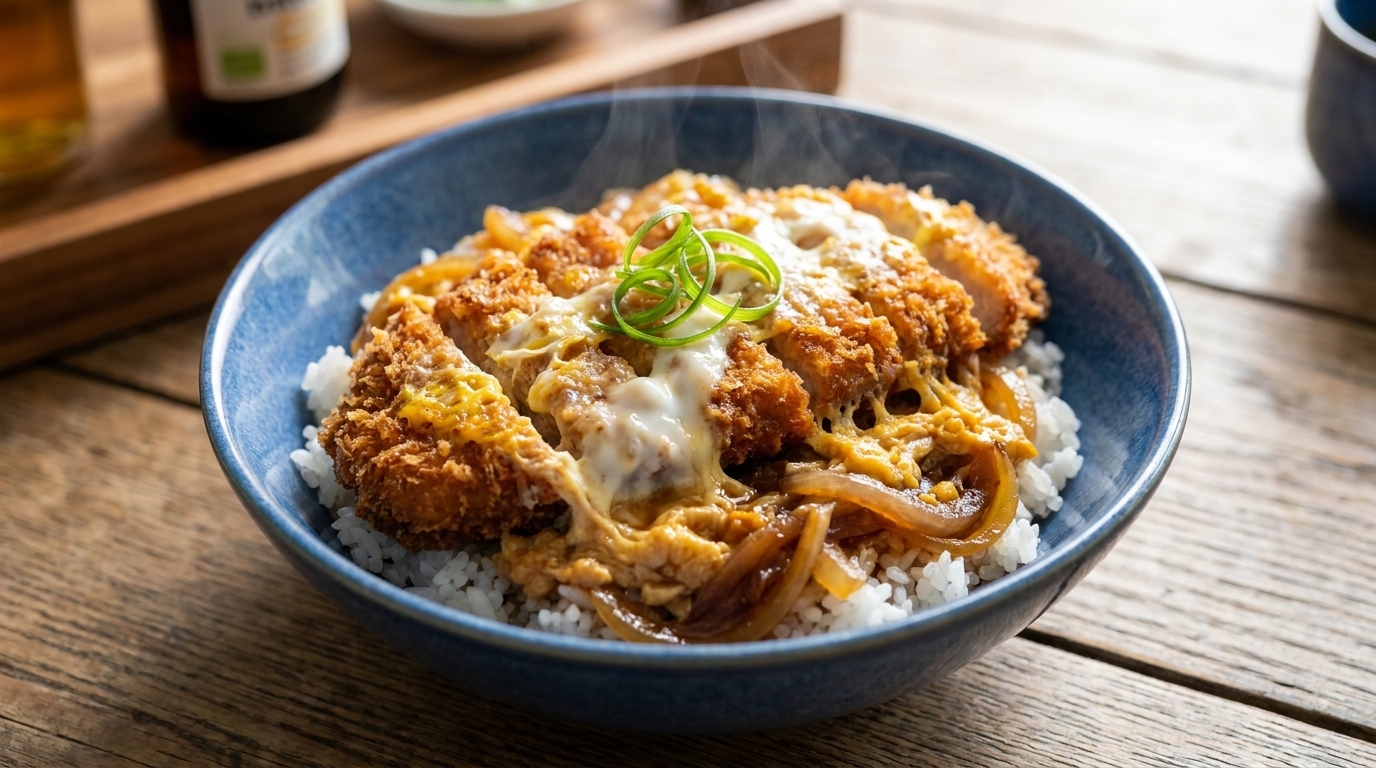
A soul-warming Japanese classic featuring a crispy panko-breaded pork collar cutlet simmered in a sweet-savory dashi sauce with soft onions and silky, marbled eggs.
Katsudon is the ultimate Japanese comfort food traditionally eaten by students and athletes for good luck before a big challenge. While many recipes use lean pork loin this version utilizes pork collar for its superior marbling ensuring every bite of the fried katsu remains incredibly tender and juicy. The magic lies in the savory sauce and the technique of barely beating the eggs to achieve a beautiful streaky texture that binds the dish together.
Ingredients
- 2 pieces pork collar
- 4 whole eggs
- 1 cup panko breadcrumbs
- 12 cup all-purpose flour or starch
- 12 white onion
- 2 tbsp soy sauce
- 3 tbsp mirin
- 1 tbsp sugar
- 4 tbsp water
- 1 tbsp sake
- 2 cups cooked white rice
- to taste salt and black pepper
- optional green onions
- as needed frying oil
Instructions
- 1Tenderize the pork collar
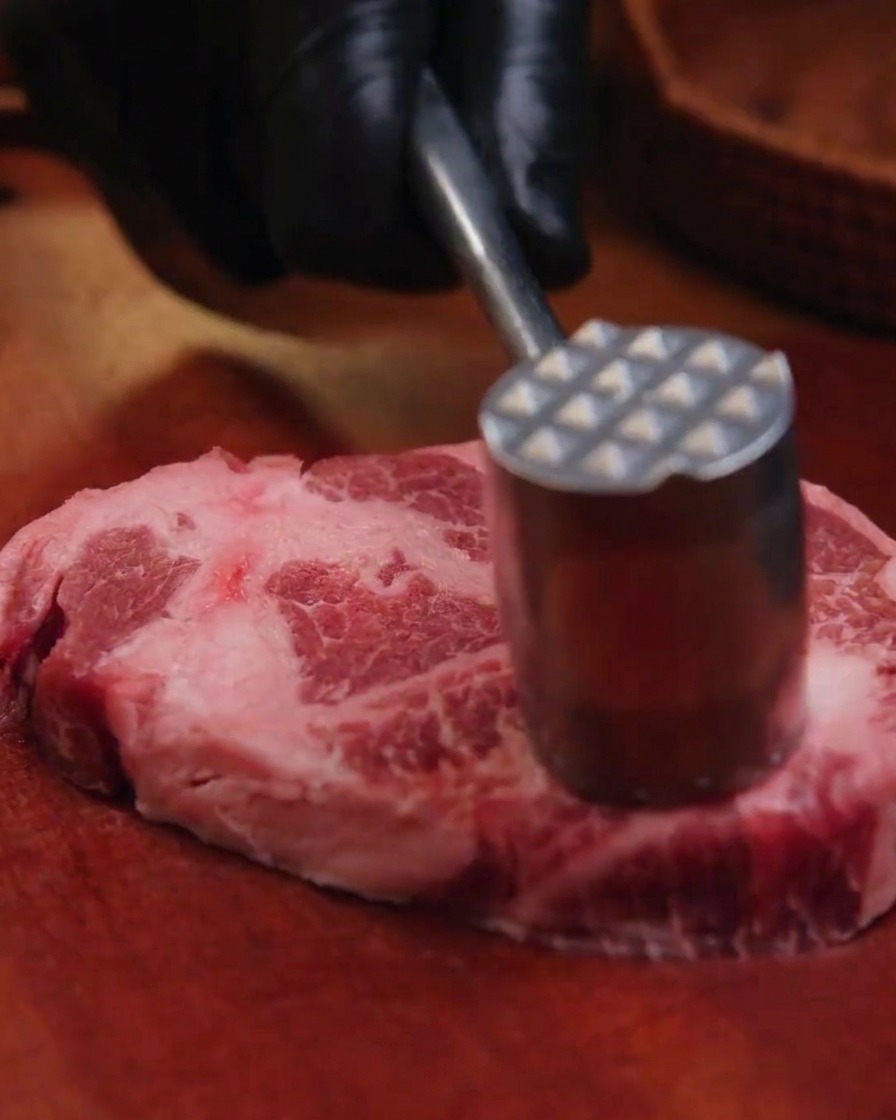
Place the raw pork collar meat on a wooden cutting board. Use a meat mallet to pound the surface of the meat evenly, which breaks down tough muscle fibers and ensures the cutlet remains tender after frying.
Tip: Using pork collar instead of loin provides better fat marbling, preventing the cutlet from becoming dry during the high-heat frying process. - 2Season the meat
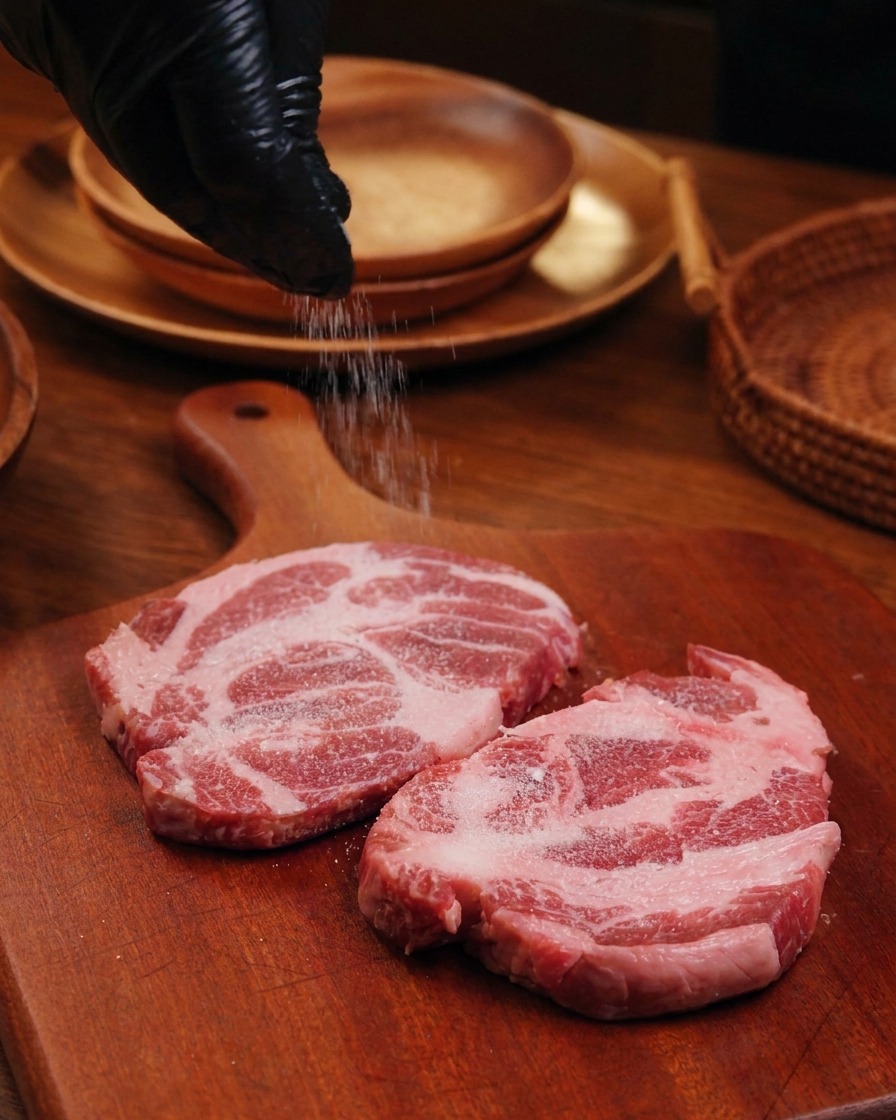
Generously sprinkle salt and black pepper over both sides of the pork slices. Simple seasoning at this stage allows the natural flavor of the pork to shine through once it is marinated and cooked.
Tip: Let the seasoned meat marinate for about 15 minutes before breading to allow the salt to penetrate the fibers. - 3Prepare the egg wash
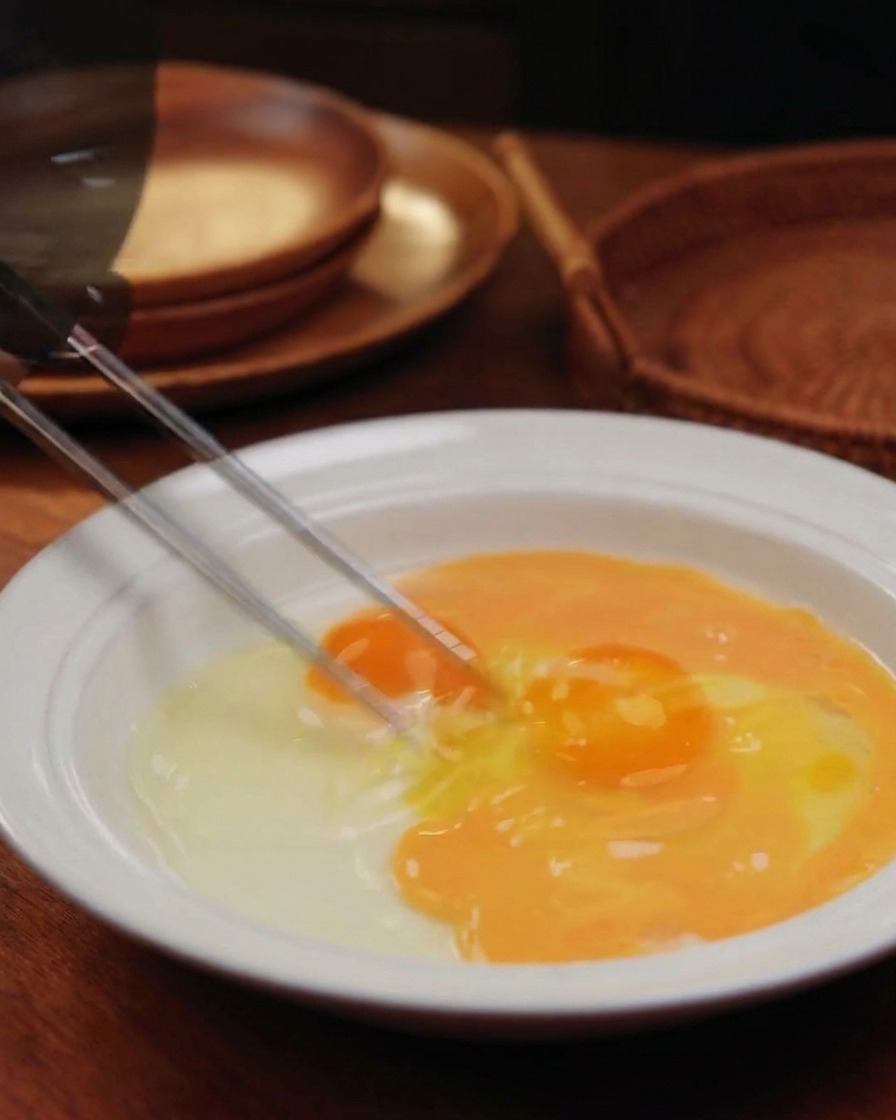
Crack two eggs into a shallow white dish. Use chopsticks to whisk them thoroughly until the yolks and whites are fully combined into a consistent yellow liquid for the breading station.
Tip: You can add a small splash of water to the eggs to make the wash thinner and easier to coat the meat evenly. - 4Dredge in flour
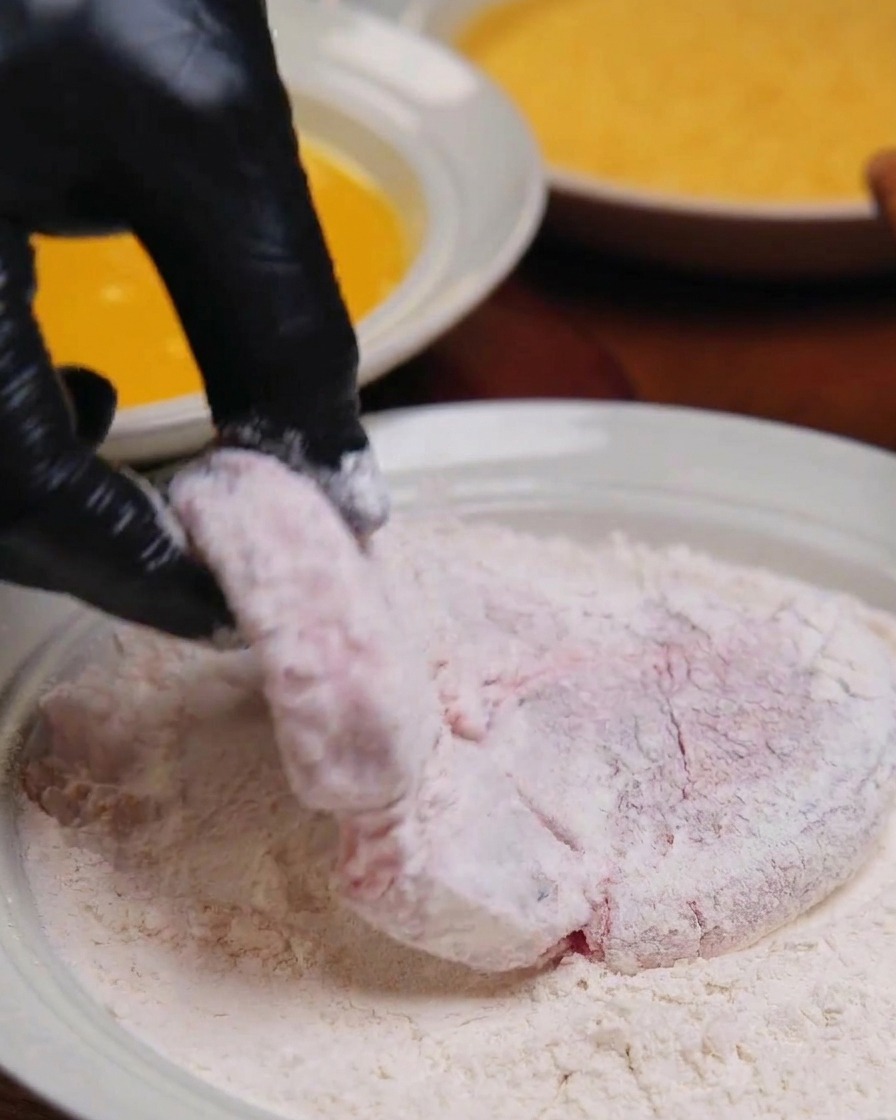
Coat the seasoned pork collar piece thoroughly in white flour or starch. Ensure all sides and edges are covered, then gently shake off any excess flour to create a thin, even base for the egg wash.
Tip: Removing excess flour is key; too much flour will cause the breading to slide off the meat during frying. - 5Coat the pork in egg wash
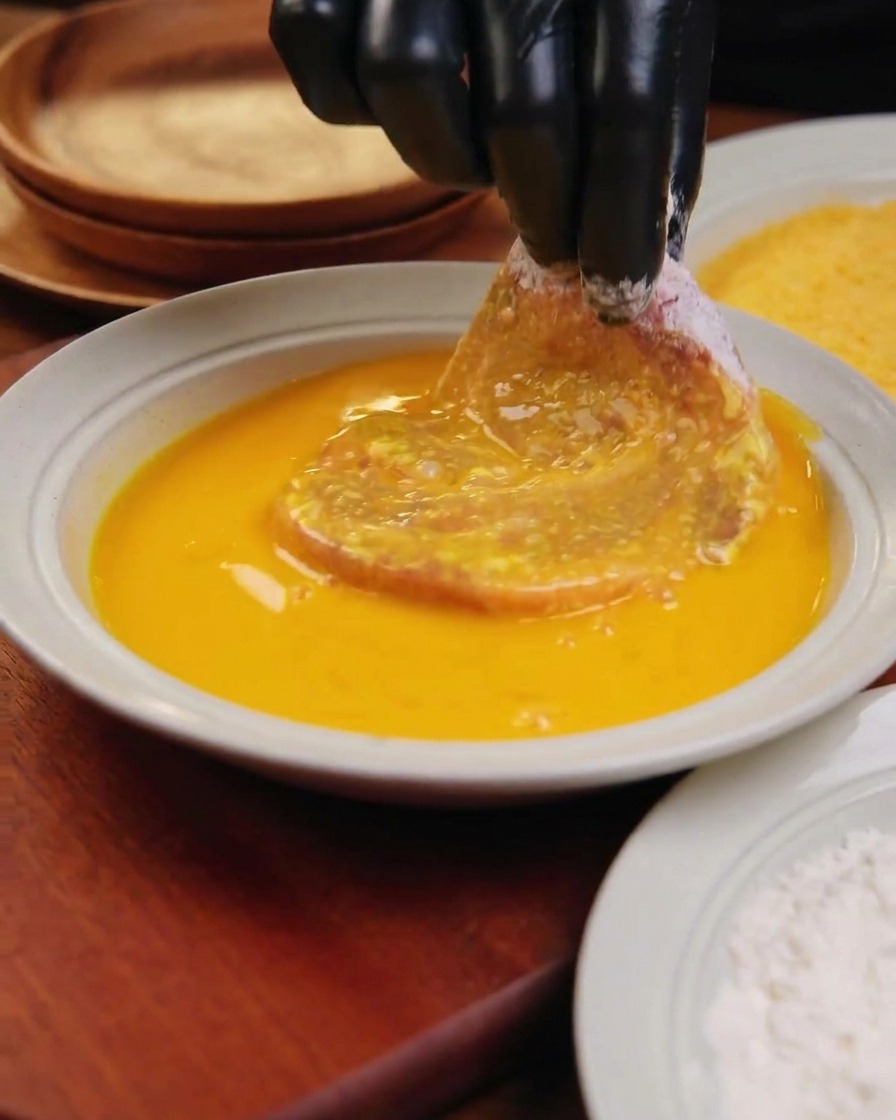
Take the pork collar slices that have been seasoned and dredged in starch or flour and dip them into the beaten egg wash. Ensure each piece is thoroughly coated on all sides; the egg acts as a binder that allows the panko breadcrumbs to adhere firmly in the next step.
Tip: Whisking a small amount of water or oil into the eggs can help the wash coat the meat more evenly without being too thick. - 6Coat with panko
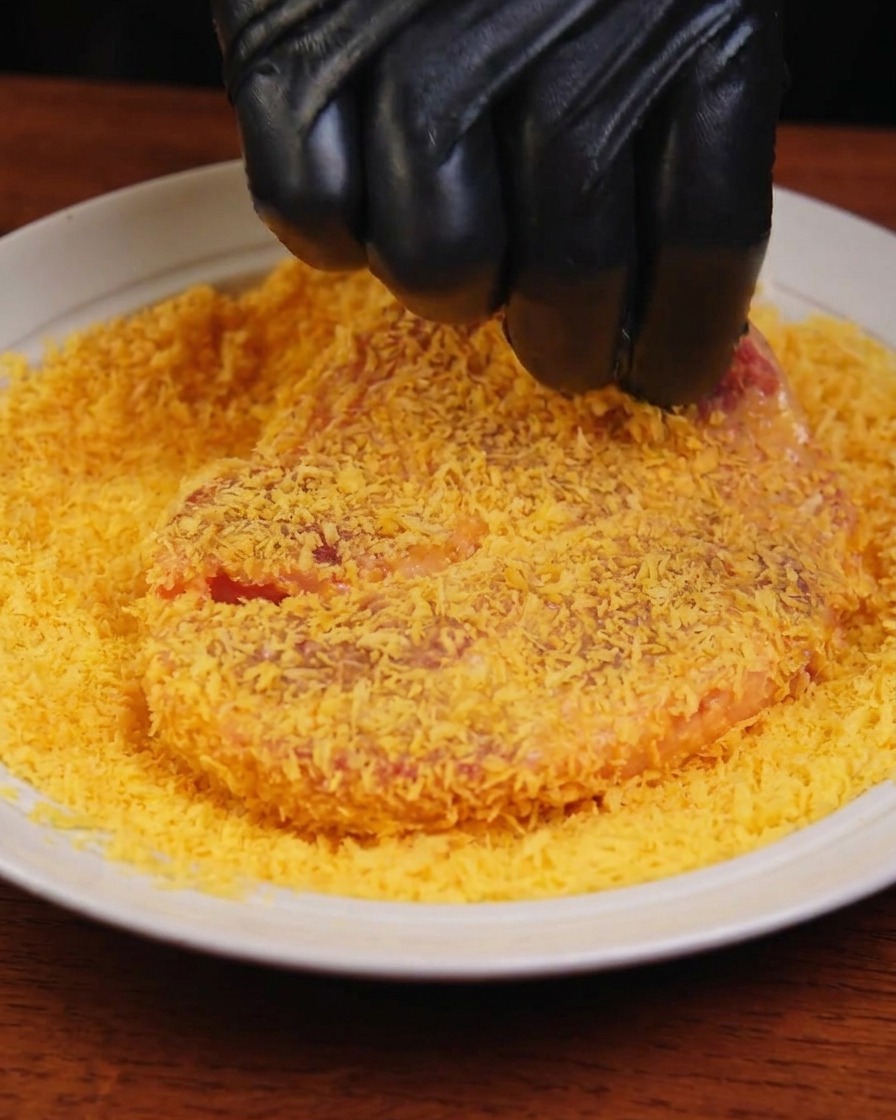
Transfer the egg-dipped pork into a plate of golden panko breadcrumbs. Press down firmly on the meat to ensure the crumbs adhere well, creating a thick and textured outer layer for maximum crunch.
Tip: Use your dry hand to scoop extra breadcrumbs over the top of the meat and press them in to keep your hands cleaner. - 7Deep fry the pork cutlets
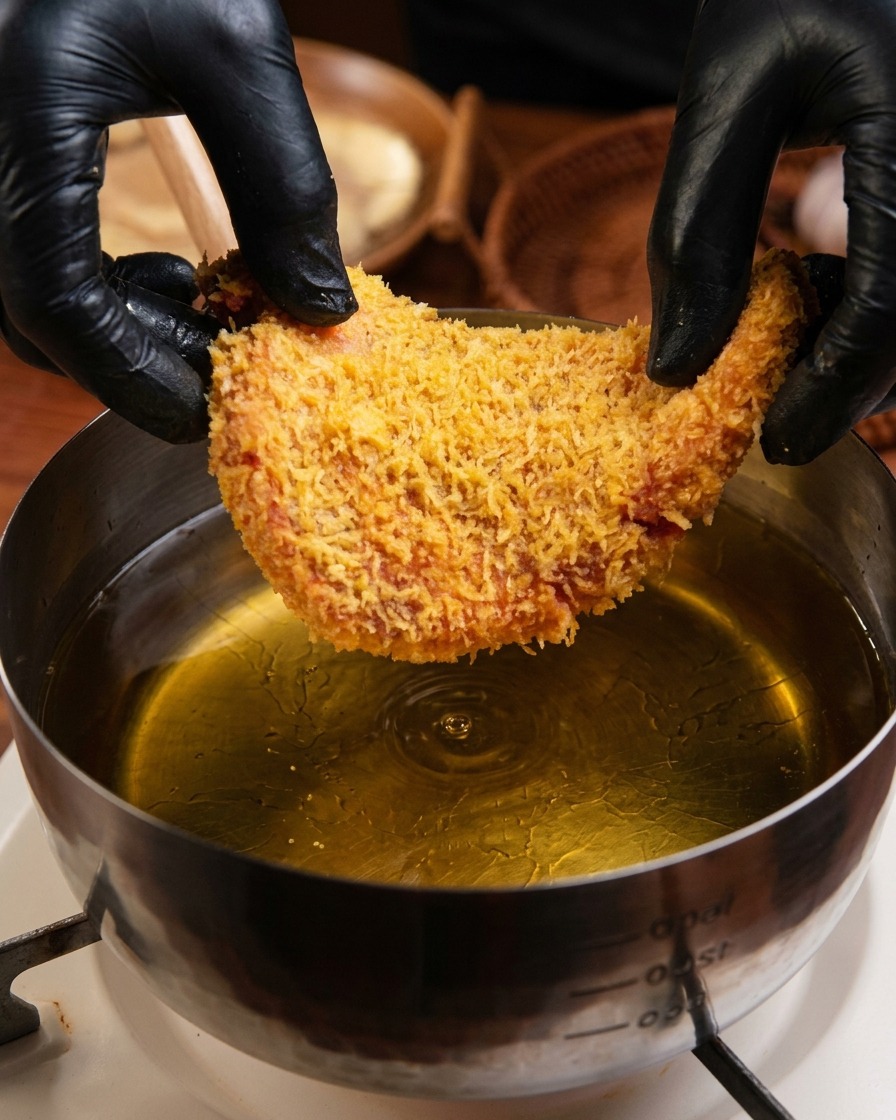
Heat your frying oil to 160°C, then carefully lower the breaded pork into the pot. Immediately turn the heat down to the lowest setting to ensure the meat cooks through without burning the crispy exterior. Gently move the pan or the meat to help it fry evenly.
Tip: Fry the pork for about two minutes per side until the breading turns a deep, rich golden brown. - 8Slice the crispy cutlets
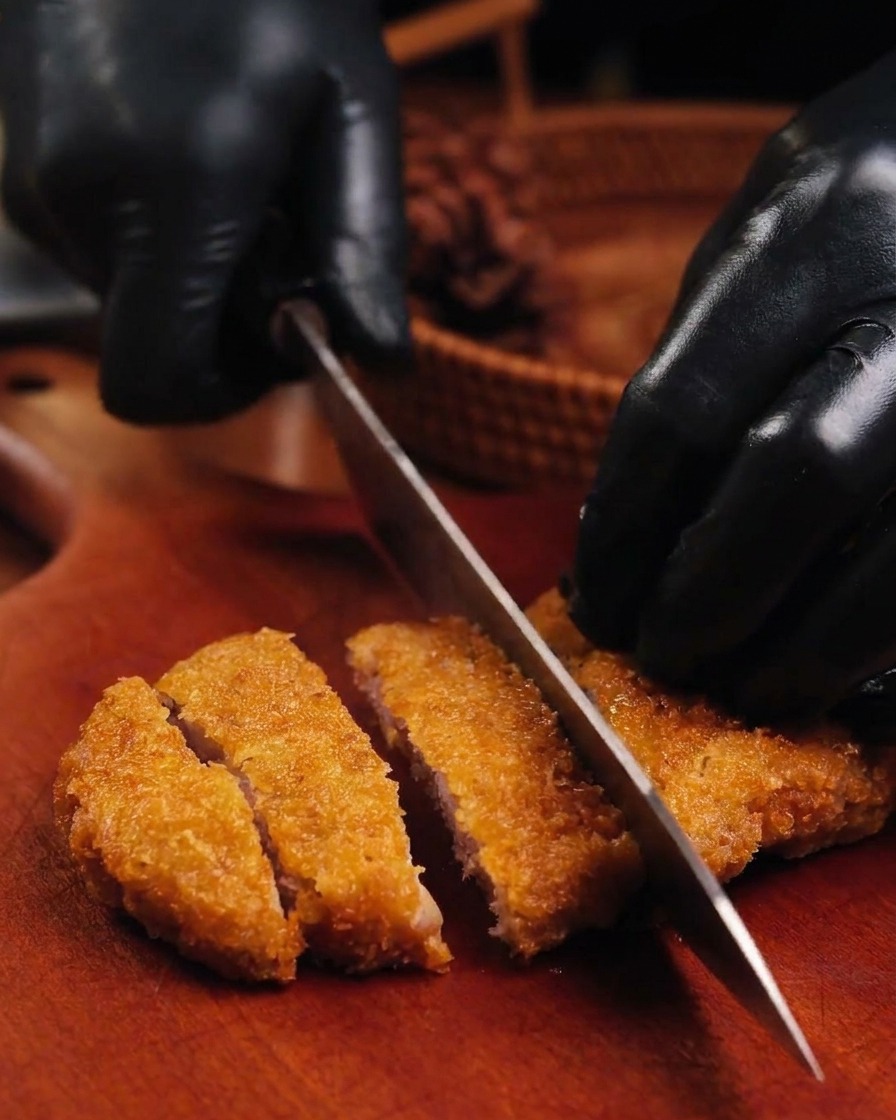
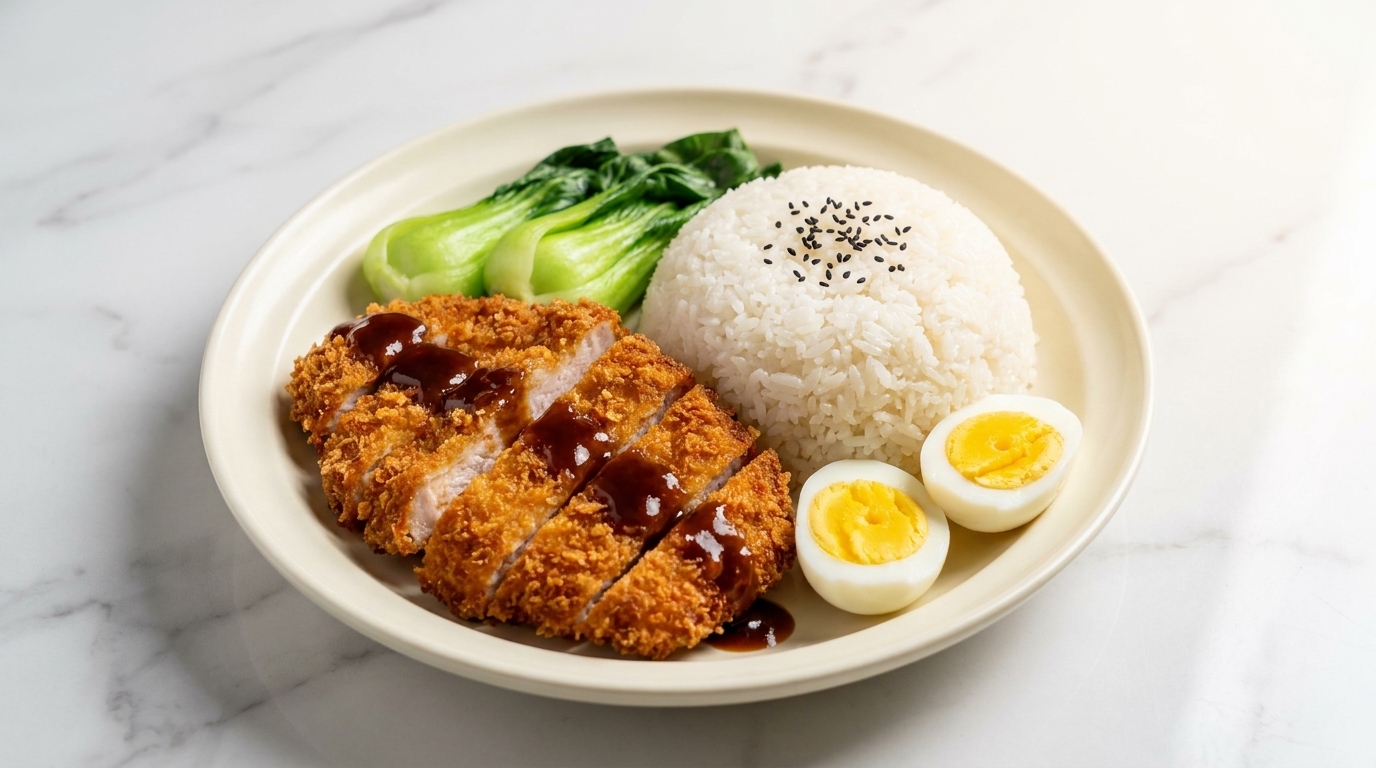
After removing the pork from the oil and letting it drain briefly place it on a wooden cutting board. Use a sharp knife to slice the cutlet into thick and even strips. Slicing the meat now allows it to better absorb the savory sauce during the final simmering stage.
Tip: Let the meat rest for a minute before slicing to keep the juices inside and ensure the breading stays attached to the meat. - 9Boil the katsudon sauce
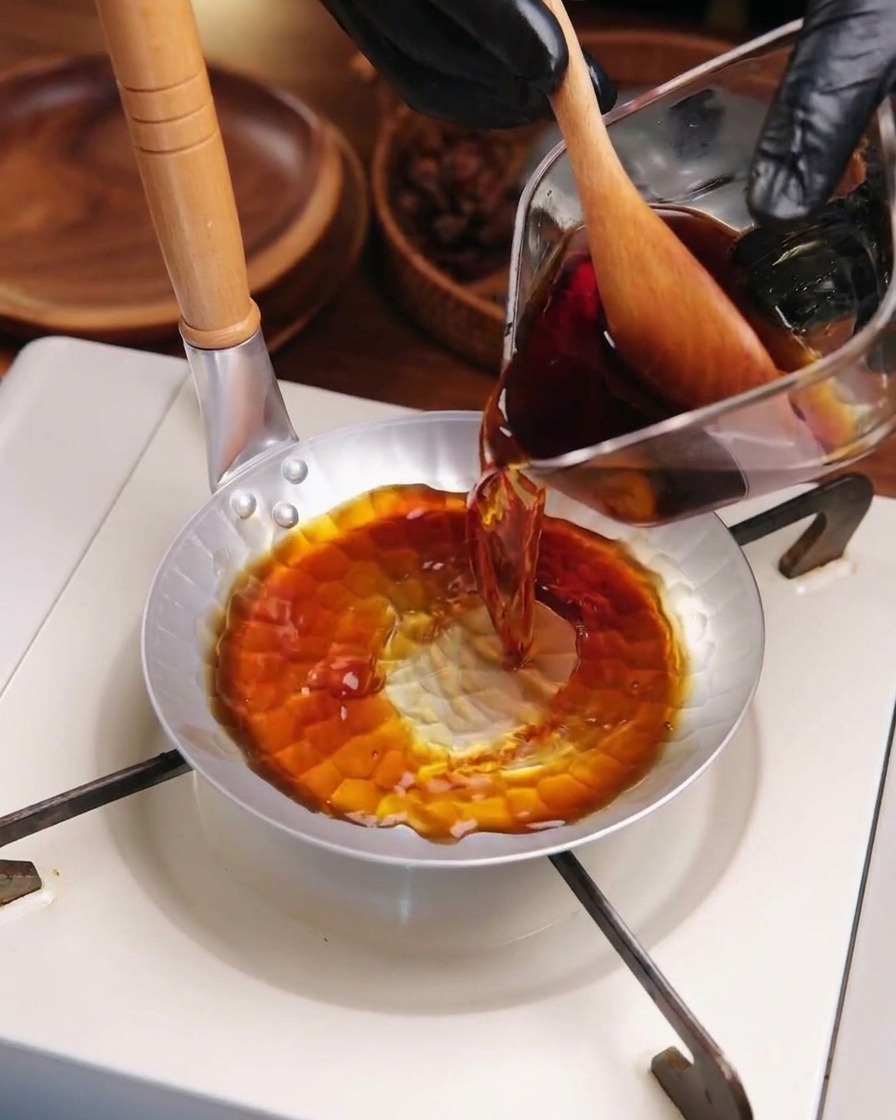
Pour the mixture of soy sauce and mirin and sugar and water into a small cooking pan. Turn the heat to high and bring the liquid to a vigorous boil. This signature sauce creates the essential sweet and savory flavor profile for the onions and pork to simmer in.
Tip: Using a traditional textured katsudon pan helps distribute heat evenly and makes it easier to slide the finished dish onto rice. - 10Add the white onions to the sauce
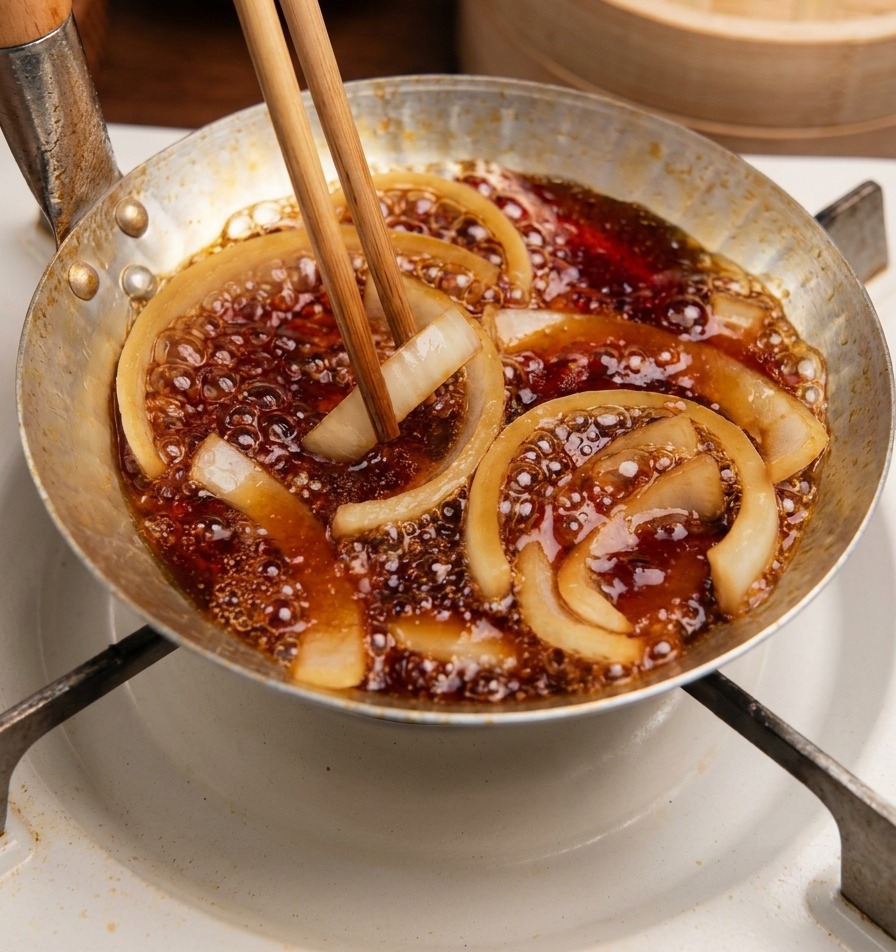
Add a handful of sliced white onions to the boiling sauce. Simmer them over high heat until they soften slightly and become translucent, absorbing the savory-sweet base. This creates the flavorful bed that the pork will rest on.
Tip: Do not overcook the onions at this stage; they should just begin to soften as they will continue to steam later once the pork and eggs are added. - 11Simmer the pork with onions
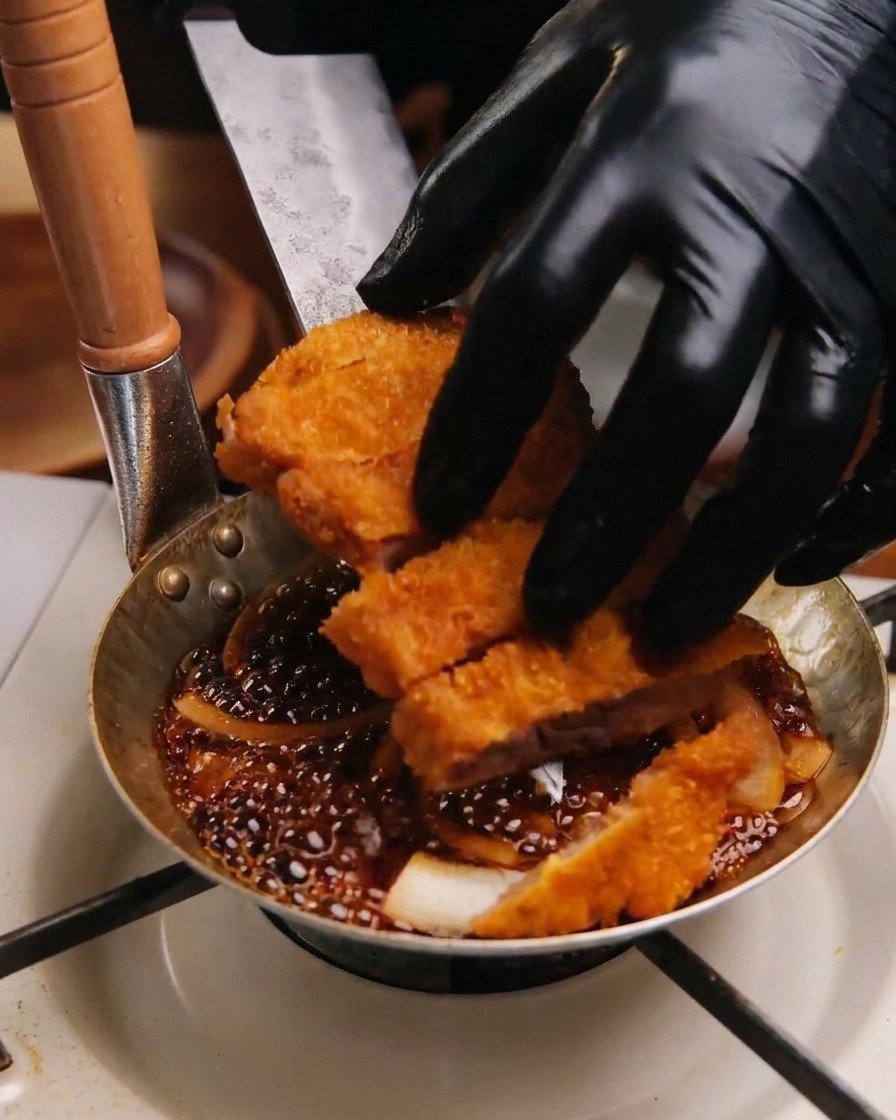
Once the onions have softened in the boiling sauce, reduce the heat to low and place the sliced pork cutlet pieces on top. The pork should rest on the bed of onions, allowing the bottom of the crispy breading to soak up the flavorful sauce while the top remains slightly crisp.
Tip: Distribute the onions evenly across the pan before adding the pork to create a stable layer for the meat. - 12Add the beaten eggs
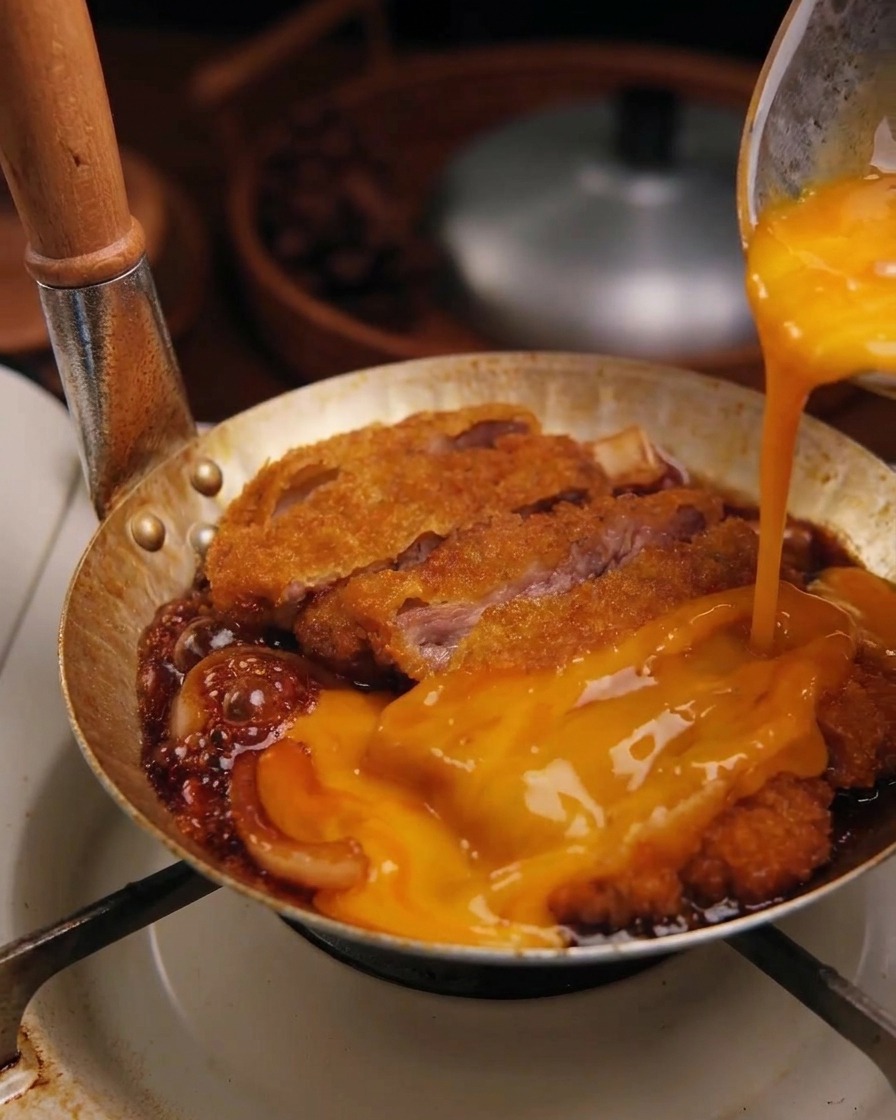
Lightly beat two eggs—about seven or eight stirs is sufficient to keep the whites and yolks distinct—and pour them directly over the pork cutlet and onions. The sauce should be bubbling gently to help the eggs set around the meat.
Tip: Do not overbeat the eggs if you want that classic silky, marbled texture found in authentic Japanese Katsudon. - 13Garnish with green onions
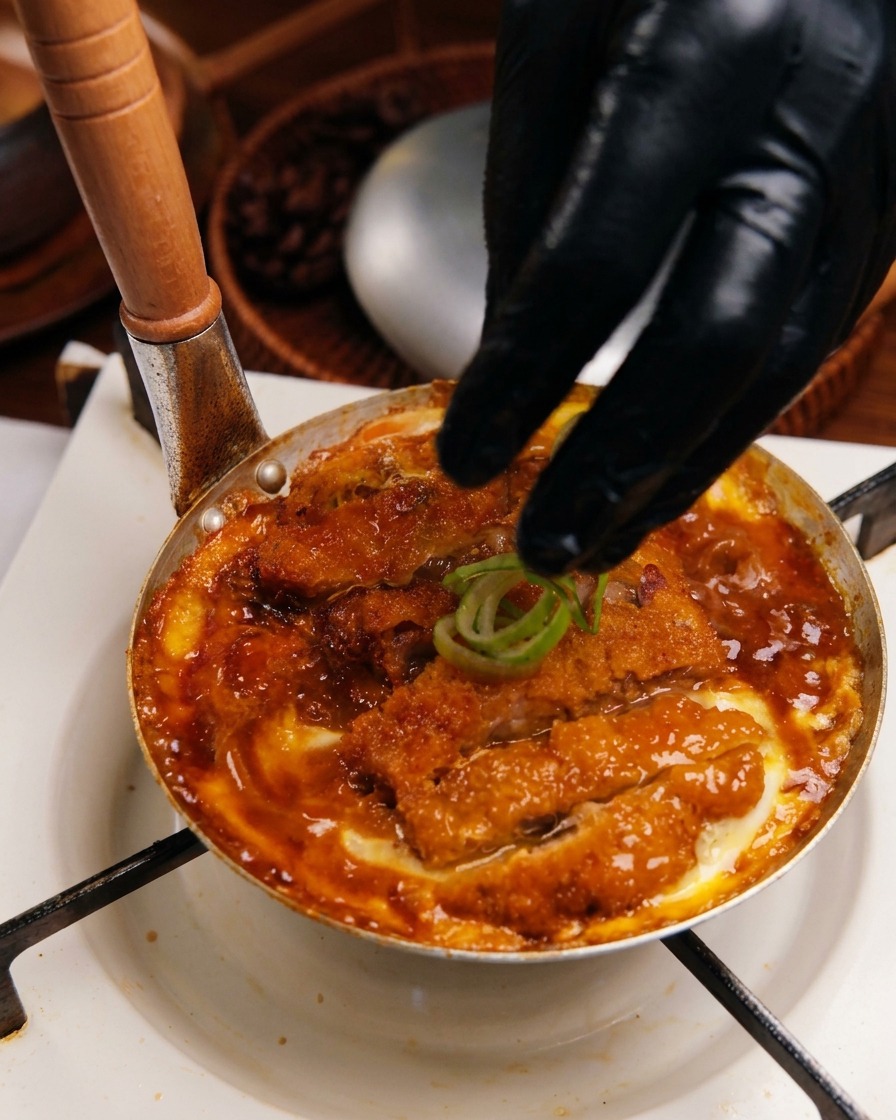
After steaming the dish with the lid on for five minutes to finish the eggs, remove the cover and sprinkle fresh green onion rings over the top. Turn the heat to high for one minute to slightly thicken the remaining sauce.
Tip: Adding the green onions at the very end preserves their vibrant color and sharp, fresh flavor. - 14Serve over rice
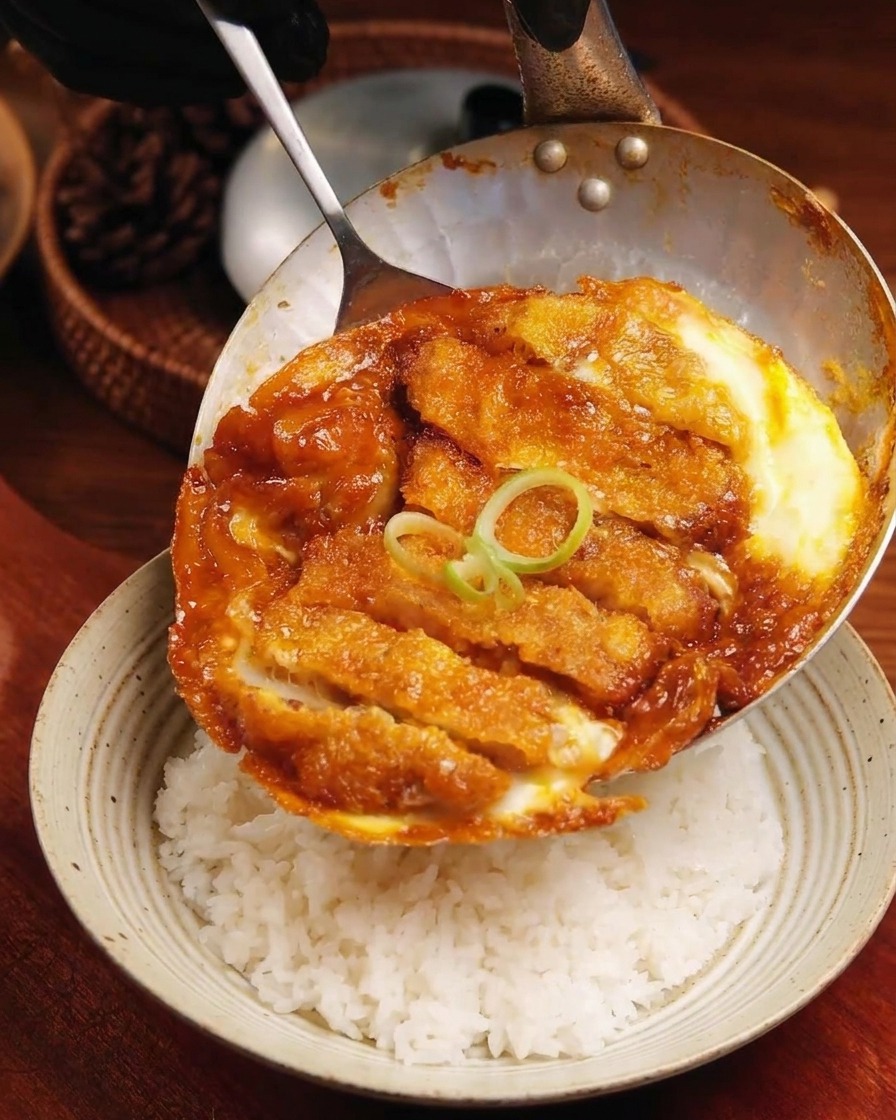
Carefully slide the entire pork cutlet and silky egg mixture from the pan onto a steaming bowl of white rice. Ensure the sauce coats the rice evenly for the best flavor.
Tip: Tilt the pan at a sharp angle and use a spoon or chopsticks to gently guide the katsu to keep the egg layer intact.