Korean Kimchi Rice Cake Soup
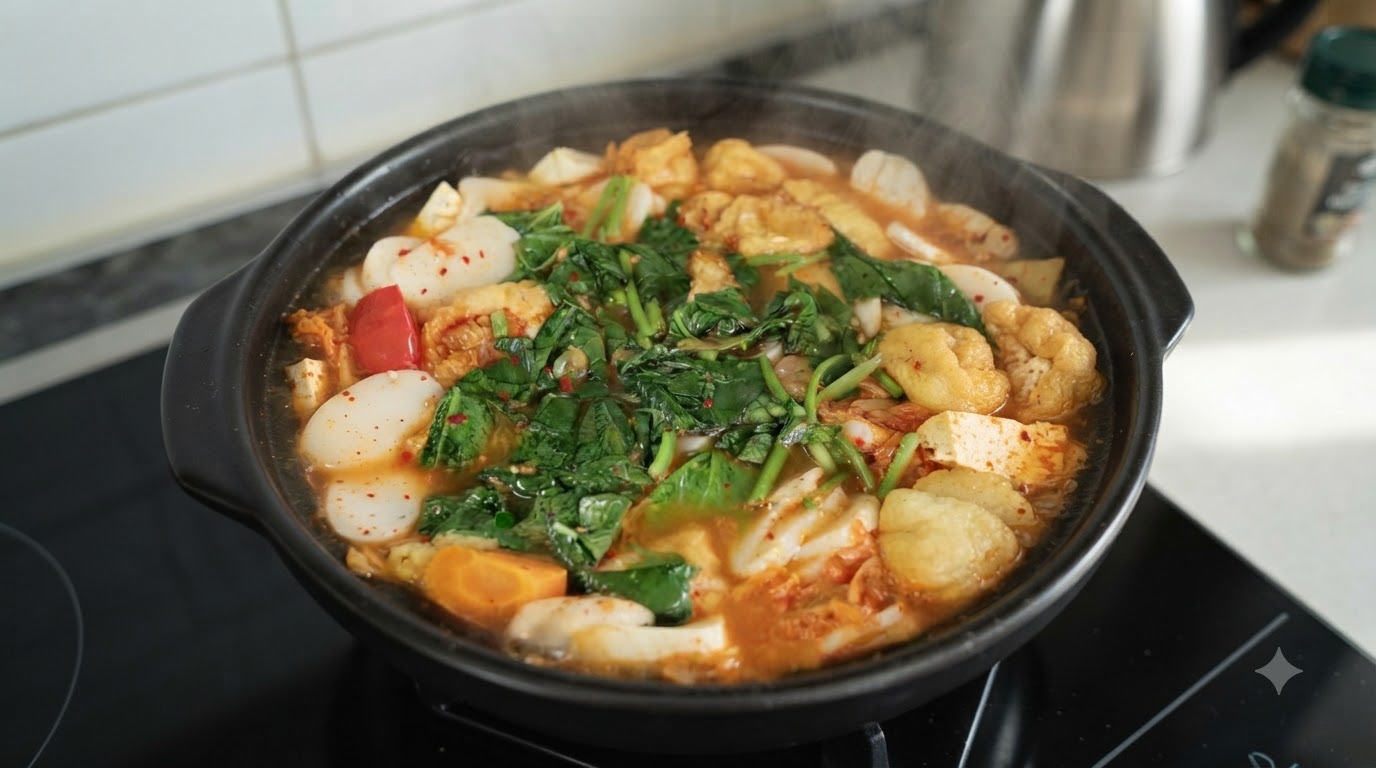
A steaming, vibrant pot of Korean kimchi rice cake soup featuring chewy rice cakes, tofu puffs, white tofu, and fresh leafy greens in a tangy, spicy broth.
Kimchi rice cake soup is a comforting staple in Korean home cooking, celebrated for its bold and invigorating flavors. The marriage of fermented kimchi with chewy rice cakes creates a deeply satisfying dish that balances sour, spicy, and savory notes. Perfect for warming up on a chilly day or whenever you crave a revitalizing bowl of soup.
Ingredients
- 2 cups chopped kimchi
- 300 g sliced rice cakes
- 150 g white tofu
- 100 g fried tofu puffs
- 1 carrot
- 2 tomatoes
- 2 cups fresh green leafy vegetables
- to taste black pepper
- to taste salt
- 4 cups water or vegetable broth
Instructions
- 1Add sliced carrots

Add the prepared sliced carrots directly into the pot of boiling water to begin building the soup base and infuse natural sweetness into the broth.
Tip: Add root vegetables early so they have time to soften properly while the soup simmers. - 2Add fried tofu puffs

Add the fried tofu puffs into the pot alongside the carrots, allowing them to absorb the flavors of the growing broth.
Tip: Tofu puffs act like sponges, soaking up all the delicious soup flavors. - 3Add white tofu cubes
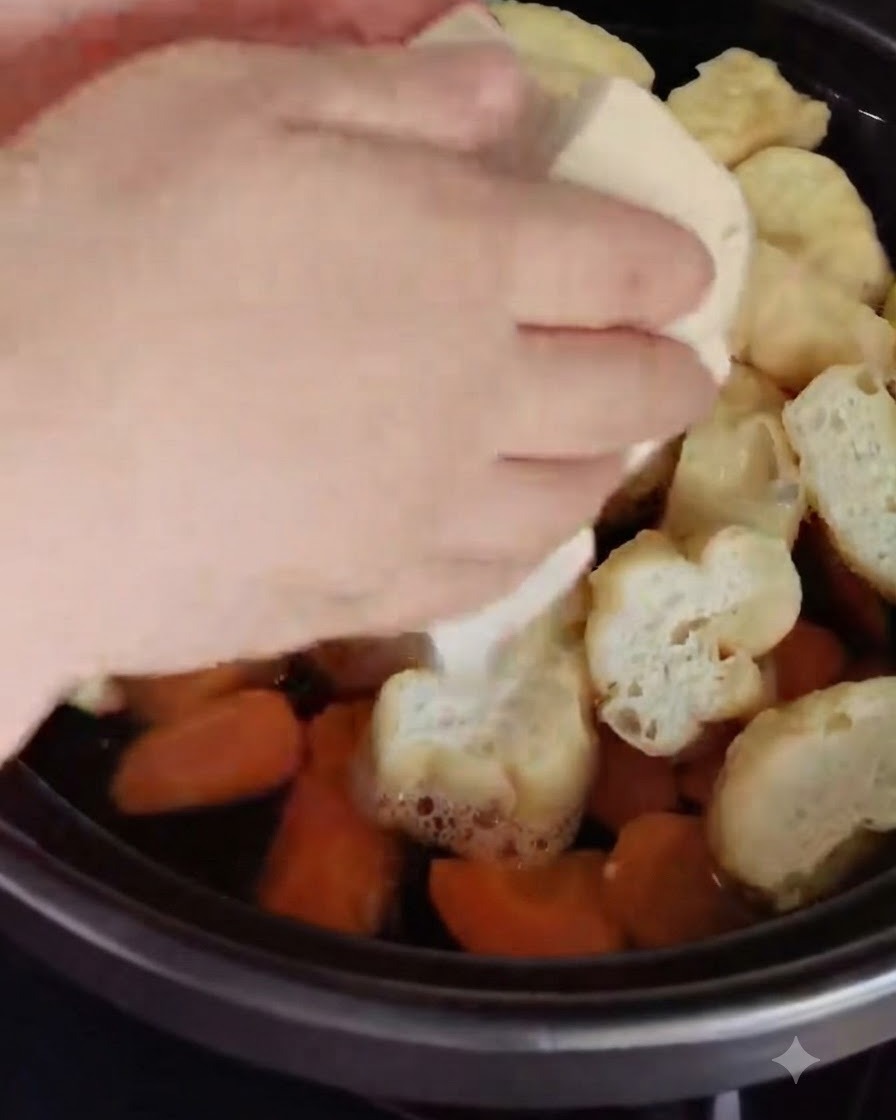
Gently place white tofu cubes into the pot alongside the existing ingredients, allowing them to absorb the rich flavors of the broth.
Tip: Add the tofu carefully to avoid breaking the soft cubes. - 4Add chopped tomatoes
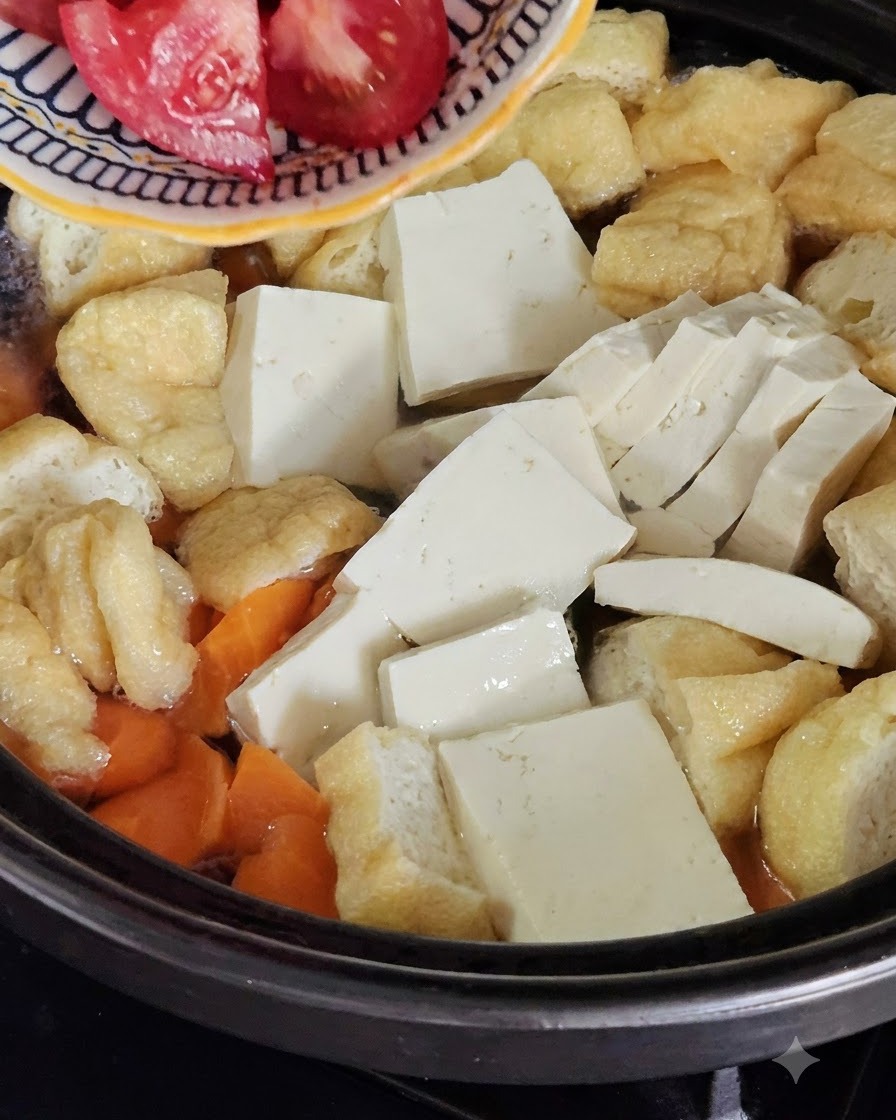
Toss in the freshly chopped tomatoes to introduce a bright, tangy element that balances the savory soup.
Tip: Tomatoes help release natural acids that enrich the depth of the broth. - 5Add and stir rice cakes
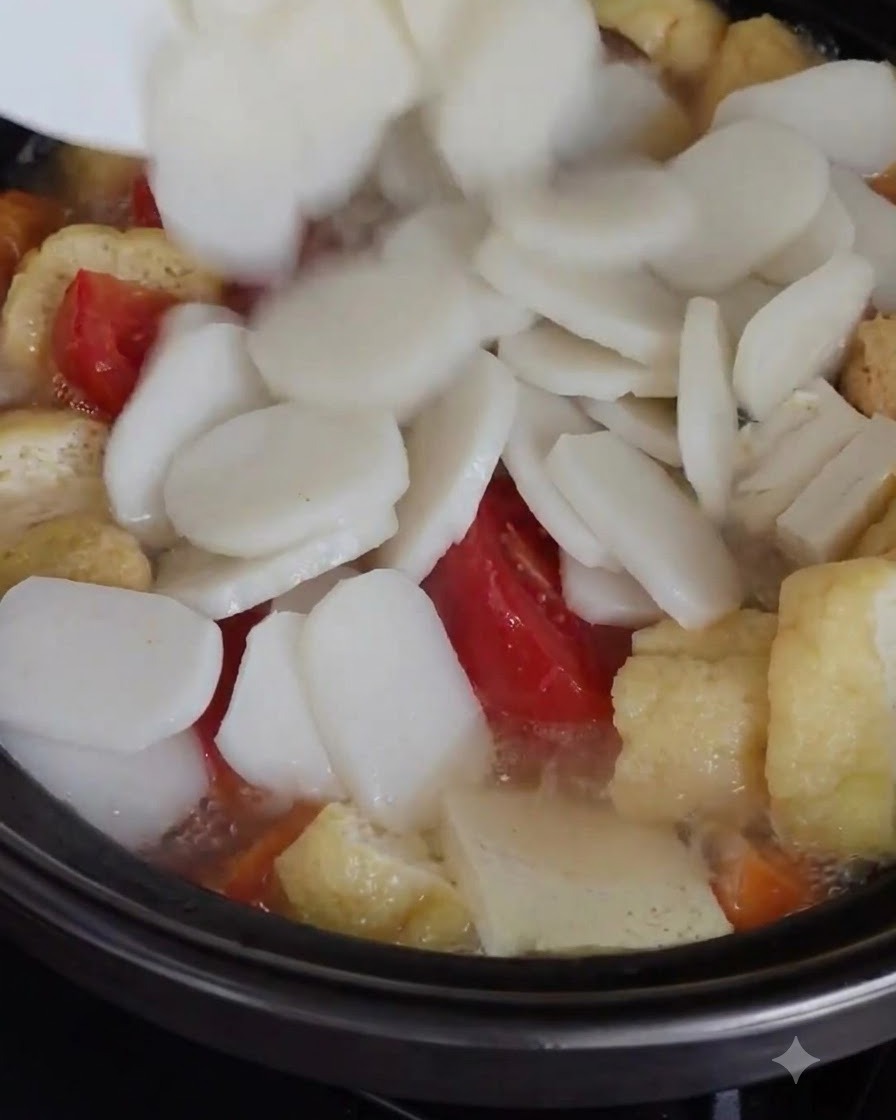
Add the sliced rice cakes into the simmering pot and use a ladle to stir them evenly through the mixture, ensuring they do not stick.
Tip: Stir frequently after adding rice cakes so they do not stick to the bottom of the pot. - 6Add chopped kimchi
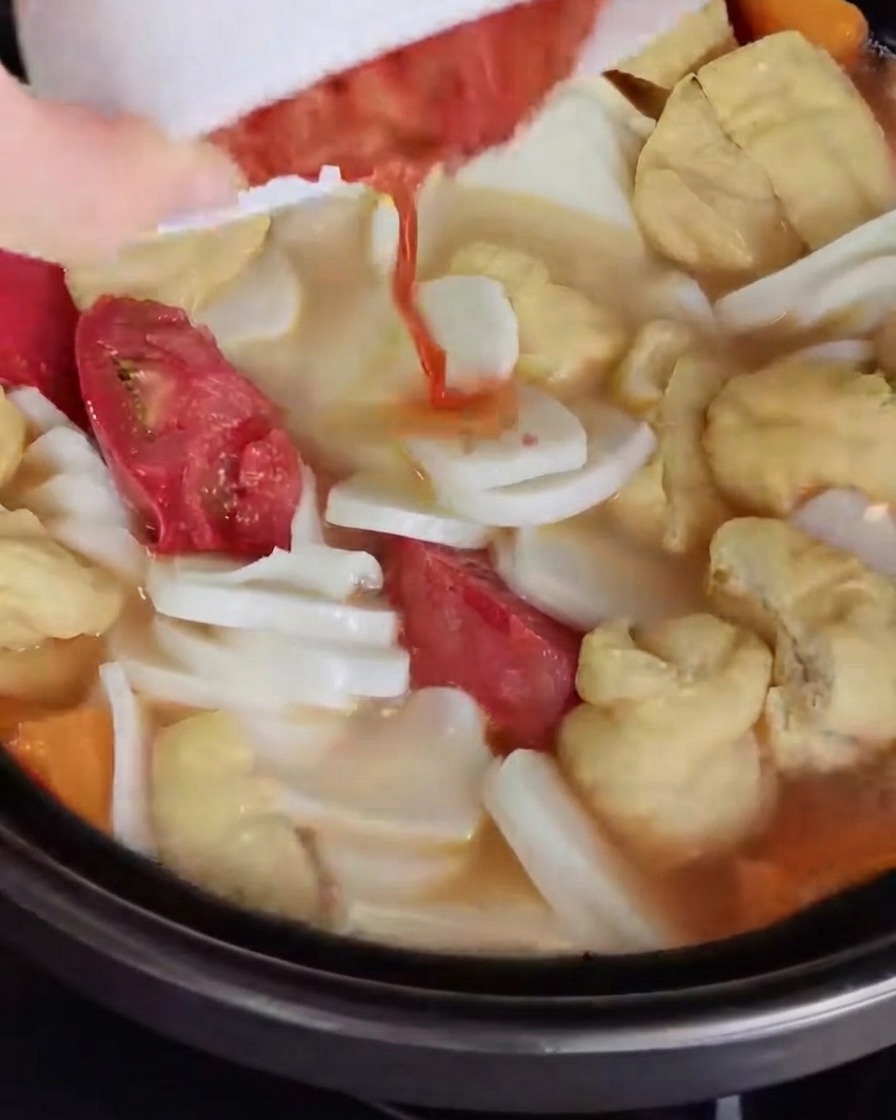
Pour a bowl of chopped kimchi directly into the pot and stir it thoroughly into the bubbling broth to develop the signature sour and savory flavor profile.
Tip: Kimchi provides the core sour and salty flavor profile characteristic of this dish. - 7Sprinkle black pepper
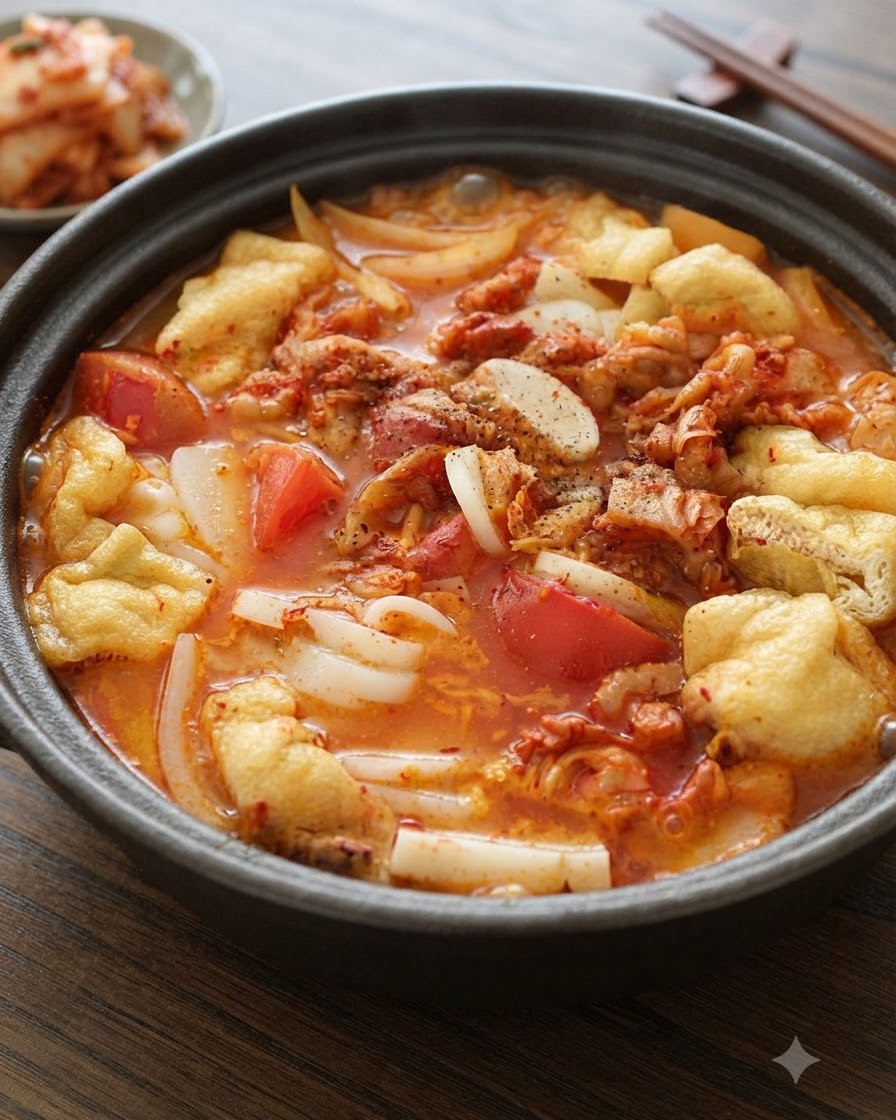
Sprinkle freshly ground black pepper evenly across the simmering soup to enhance its aromatic profile and add a subtle kick.
Tip: Freshly cracked black pepper yields the best aroma. - 8Season with salt
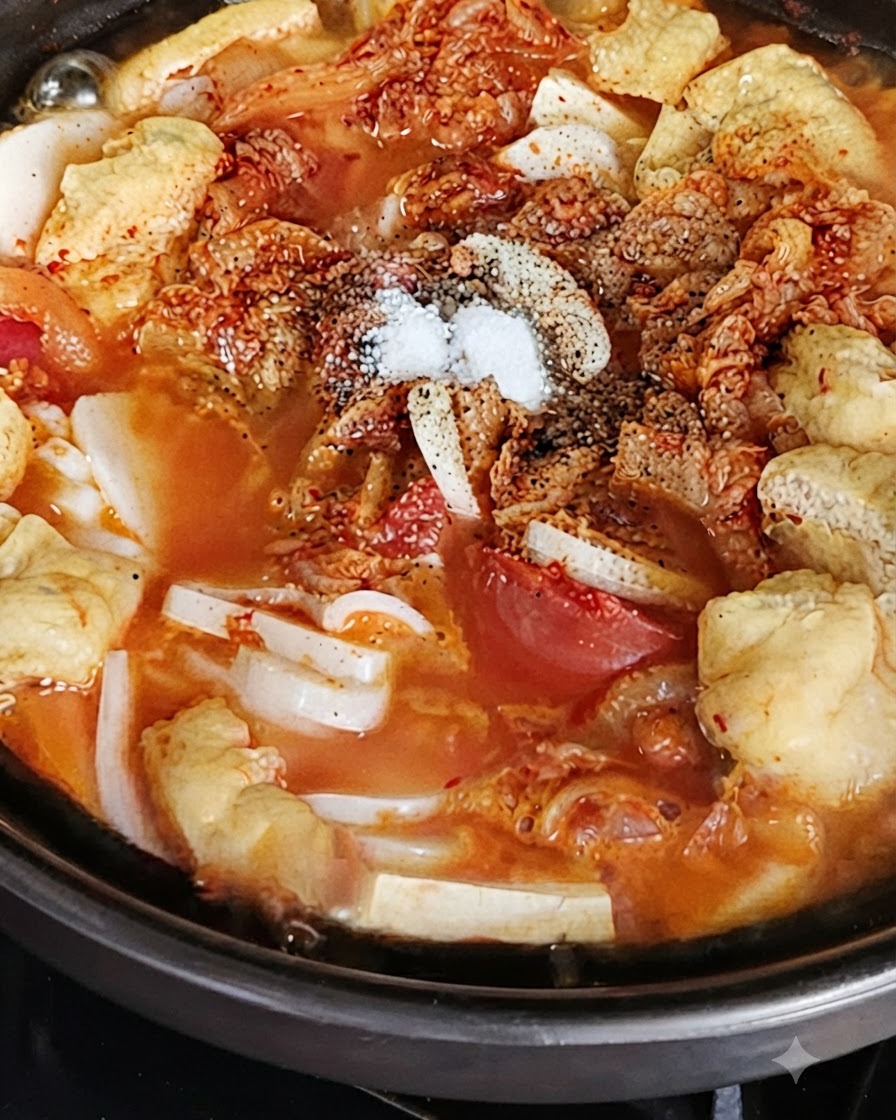
Add salt directly into the soup to adjust the overall seasoning and balance the flavors.
Tip: Season gradually and taste the broth before adding more salt.