Restaurant-Style Korean Kimchi Jjigae (Kimchi Stew)
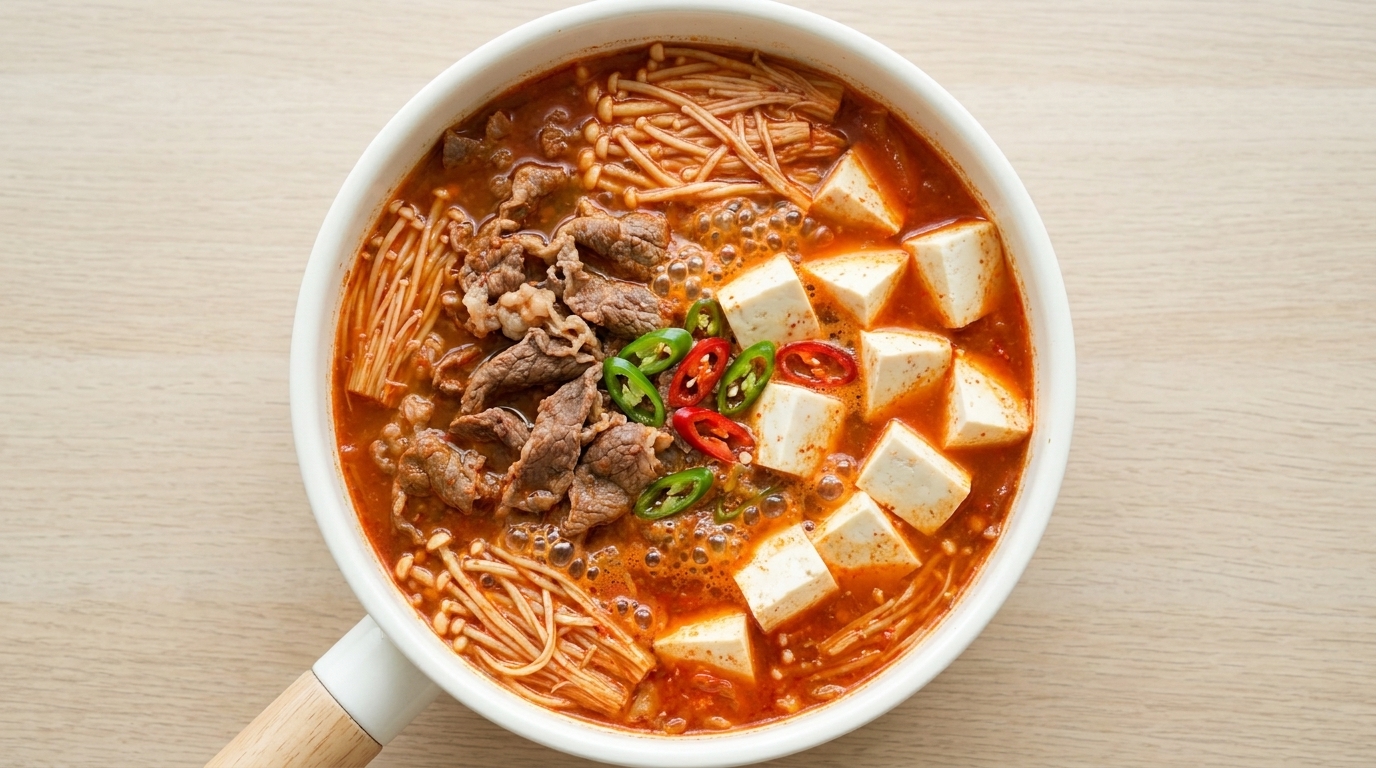
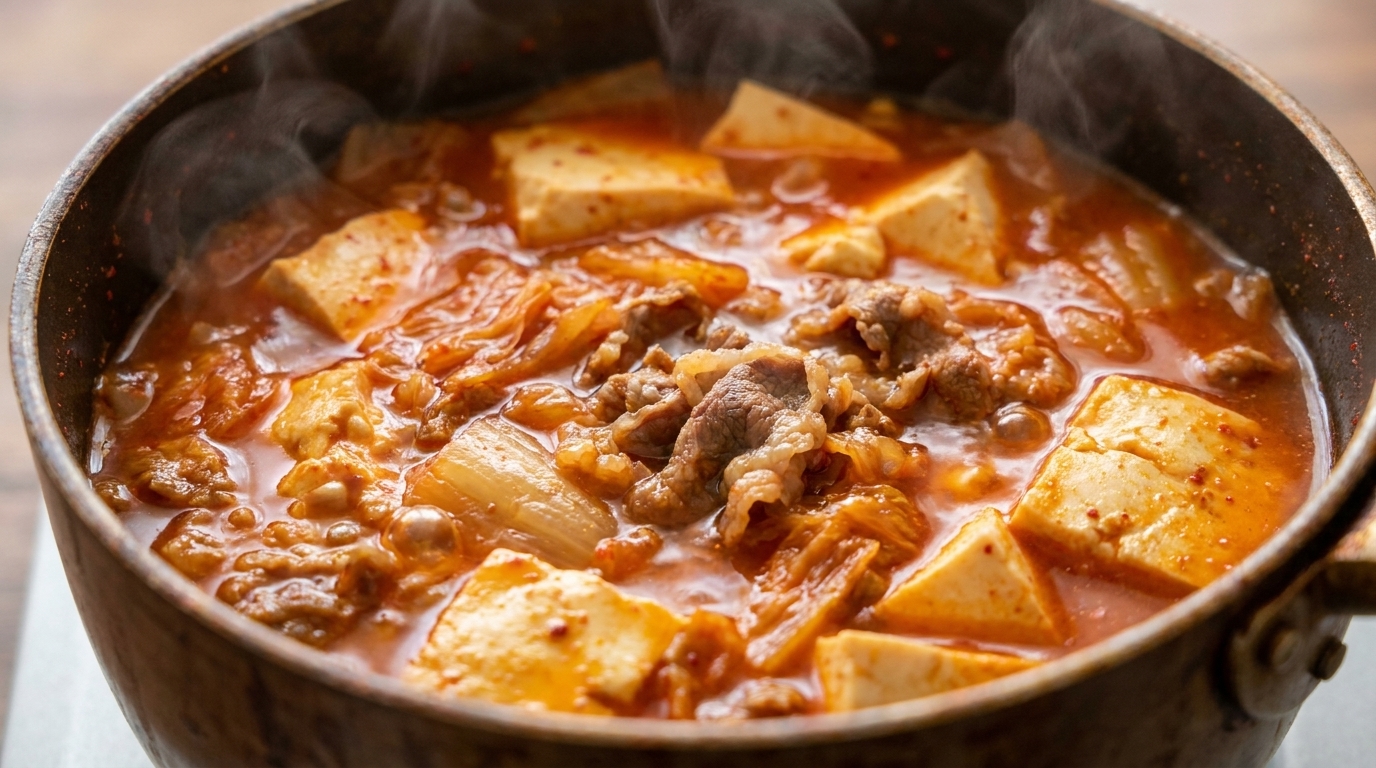
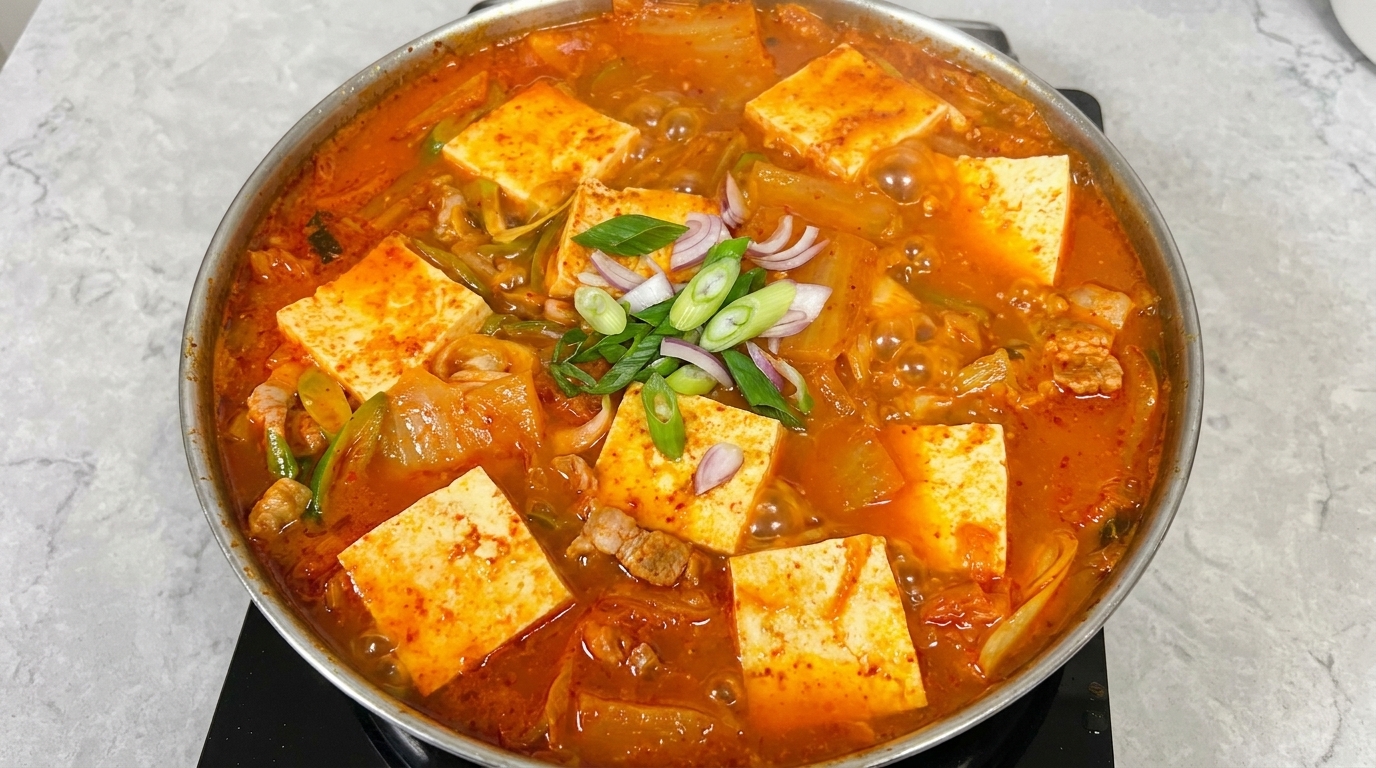
Master the ultimate Korean comfort food with this deeply flavorful Kimchi Jjigae. Featuring heavily fermented kimchi, rich pork belly, and secret umami additions, this hearty stew is bubbling with savory and tangy warmth.
Kimchi Jjigae is a cornerstone of Korean home cooking, celebrated for its robust, comforting flavors that transform aged, heavily fermented kimchi into a deeply savory broth. The secret to a truly great stew lies in the balance of the tangy kimchi rendered in rich pork fat, complemented by savory touches like soybean paste. Its traditionally served bubbling hot right at the table, meant to be shared with generous bowls of steamed rice and toasted seaweed.
Ingredients
- 1 tbsp cooking oil
- 200 g sliced pork belly
- 300 g well-fermented old kimchi
- 1 tbsp fine red chili powder
- 3 cups water
- 3 tbsp kimchi juice
- 12 red onion, sliced
- 1 green onion, sliced
- 1 tbsp minced garlic
- 1 block firm white tofu
- 5 ml hot pepper sauce (optional)
- 12 tbsp soybean paste
- 1 tbsp light soy sauce
- to taste salt or MSG
Instructions
- 1Heat the pan and add oil
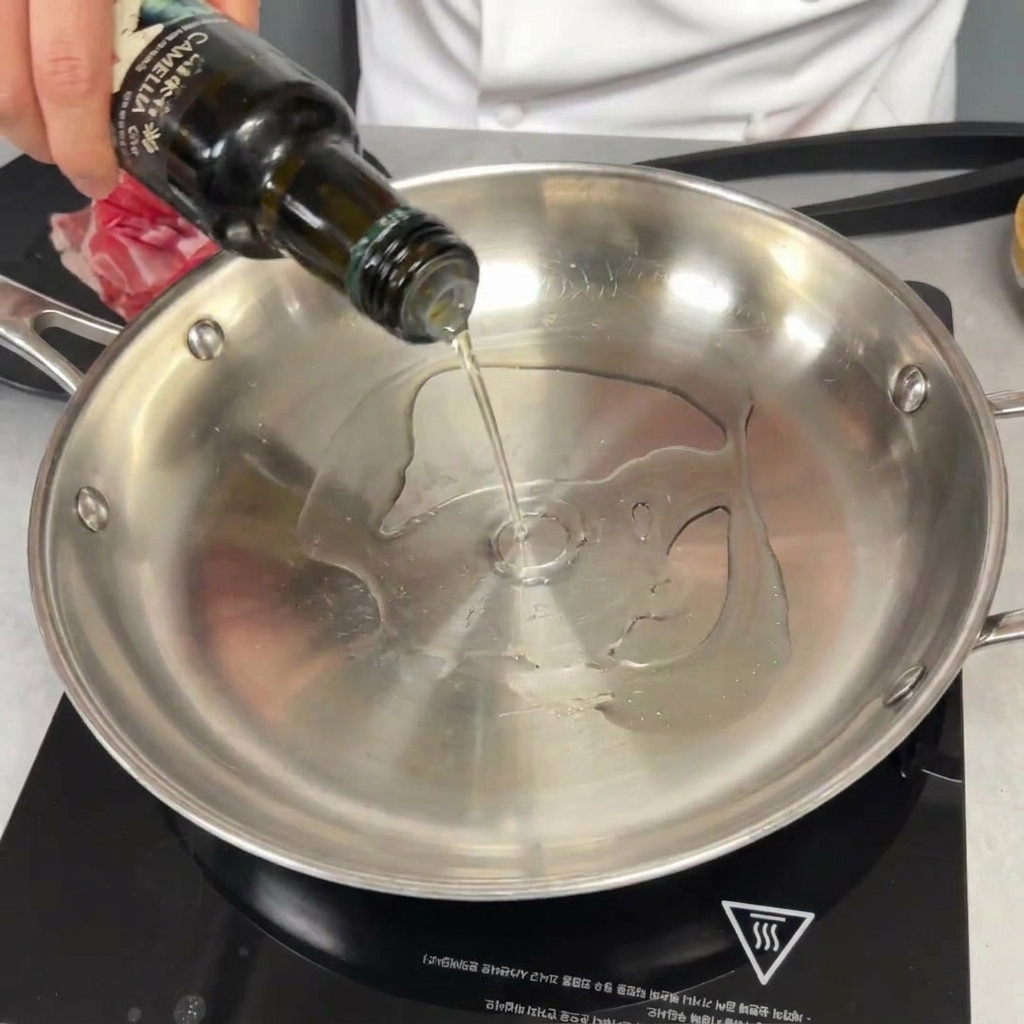
Begin by placing a clean stainless steel pan over the stove and turning on the heat. Once the pan is adequately heated, drizzle a small amount of cooking oil to coat the bottom. This initial layer of oil will help prevent the pork belly from sticking when it is added.
Tip: Do not add too much oil, as the pork belly will naturally release its own fat during the cooking process. - 2Fry the pork belly
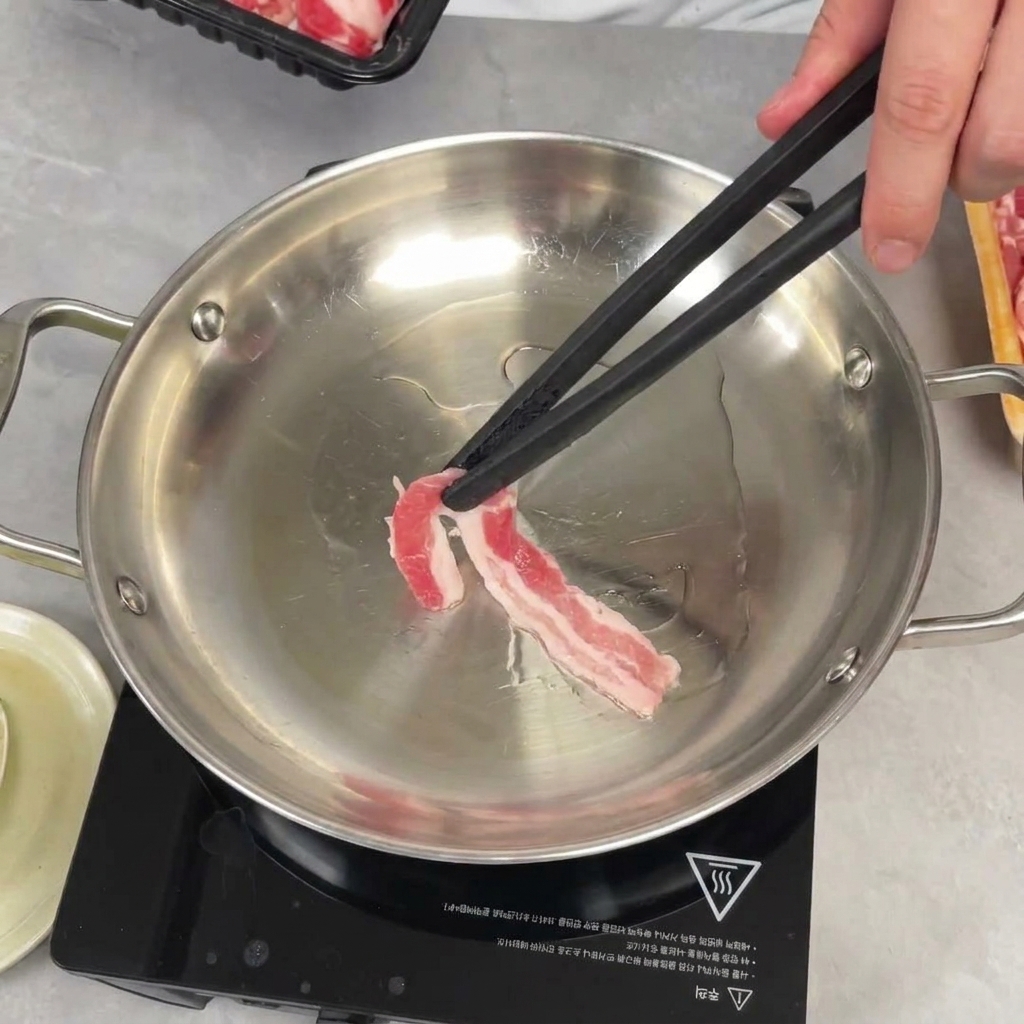
Drizzle a little oil into the heated pan and add the thin slices of pork belly. Fry the pork using chopsticks until it releases its natural oils and begins to brown. This will build a rich and savory base for the stew.
Tip: Frying the pork belly first to release its fat ensures a deeper, more robust flavor than boiling it directly. - 3Add the kimchi
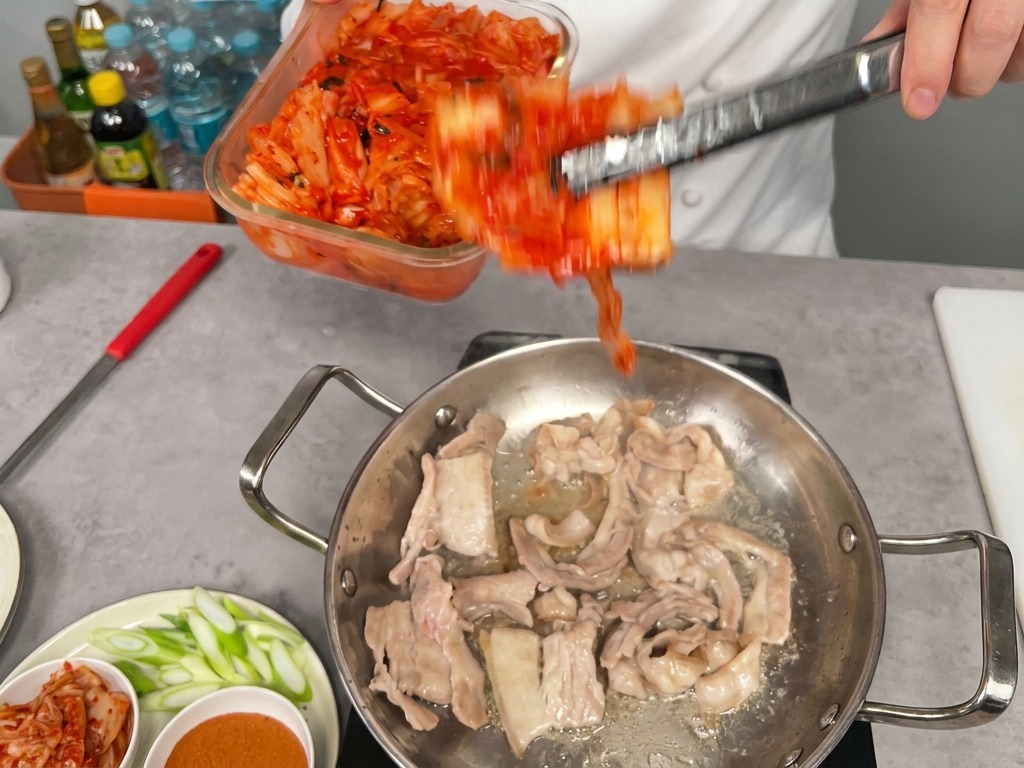
Once the pork is almost cooked add the well fermented kimchi to the pan and stir fry everything together. Ensure you use naturally fermented sour kimchi because it provides the best flavor for the stew.
Tip: Look for kimchi with a clean ingredient list. The thick cabbage parts are initially opaque but will gradually become translucent as you stir fry them in the hot pan. - 4Add chili powder
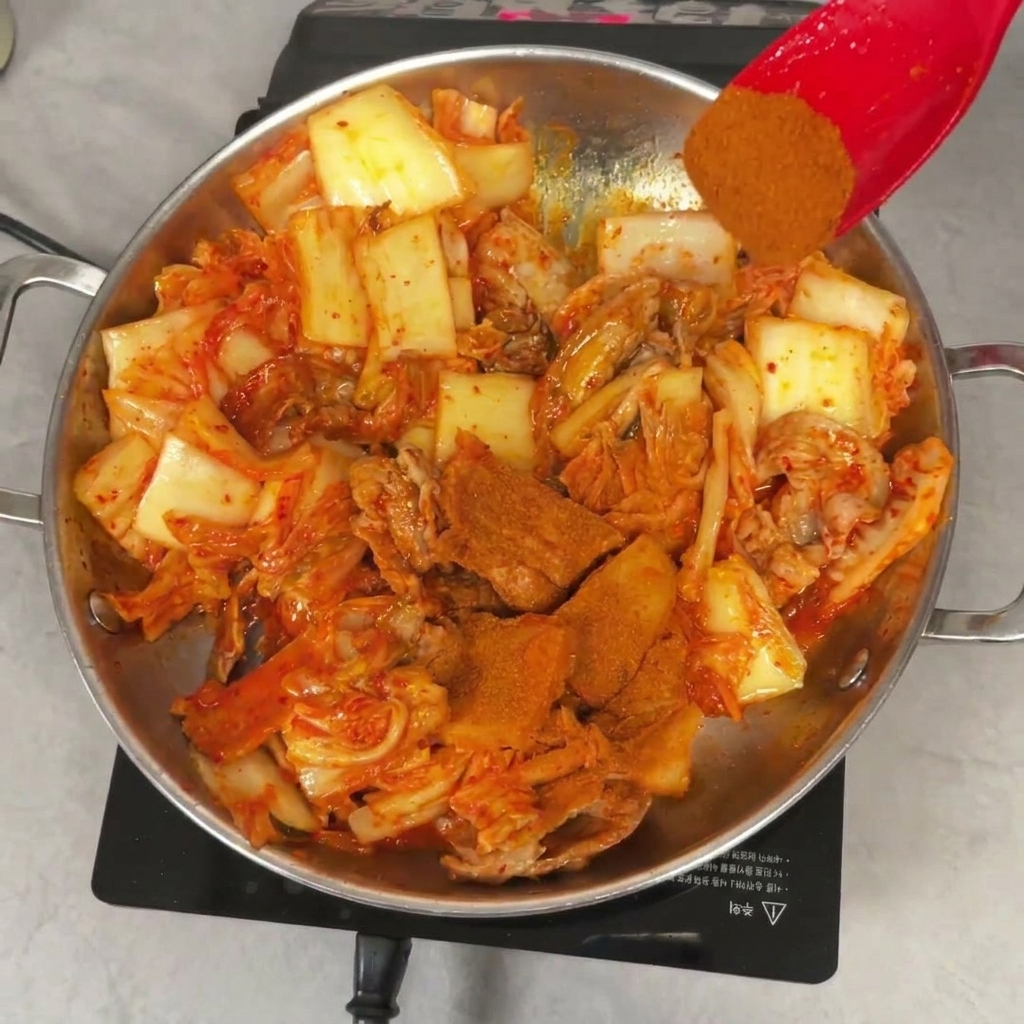
Once the pork is mostly cooked and the kimchi has turned slightly translucent, sprinkle a spoonful of fine red chili powder evenly over the mixture. Continuously stir-fry the ingredients together over medium-low heat. It is important to keep the heat moderate to prevent the chili powder from burning, which can make the stew bitter.
Tip: Stir-frying the chili powder in the rendered pork fat helps release its vibrant red color and deep, spicy flavor. - 5Add water and simmer
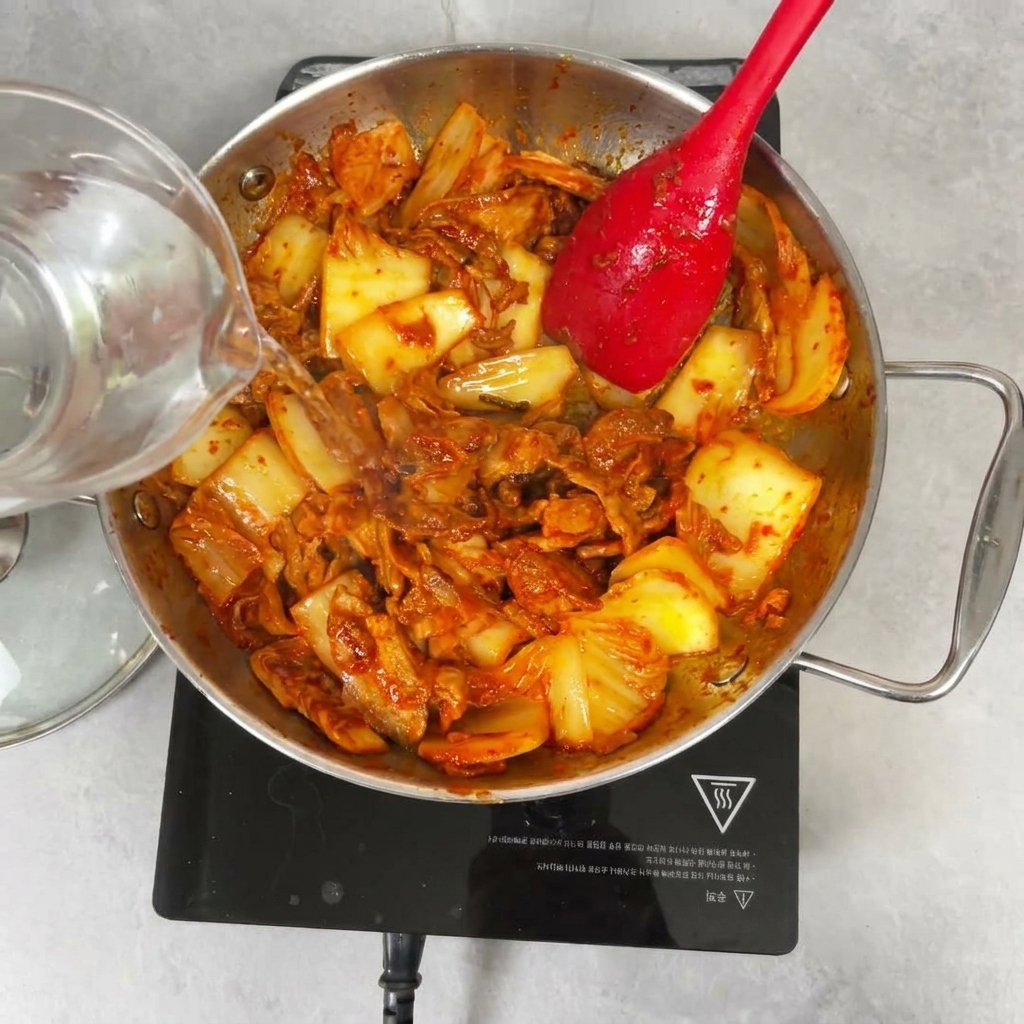
Once the color of the kimchi has changed, pour water into the pan, filling it to about four-fifths of the pots volume. Bring it to a slow simmer over medium heat to soften the cabbage and meld the flavors.
Tip: Stews taste much better when simmered thoroughly, so dont rush this step. Allow it to simmer until the cabbage is tender. - 6Add the aromatics
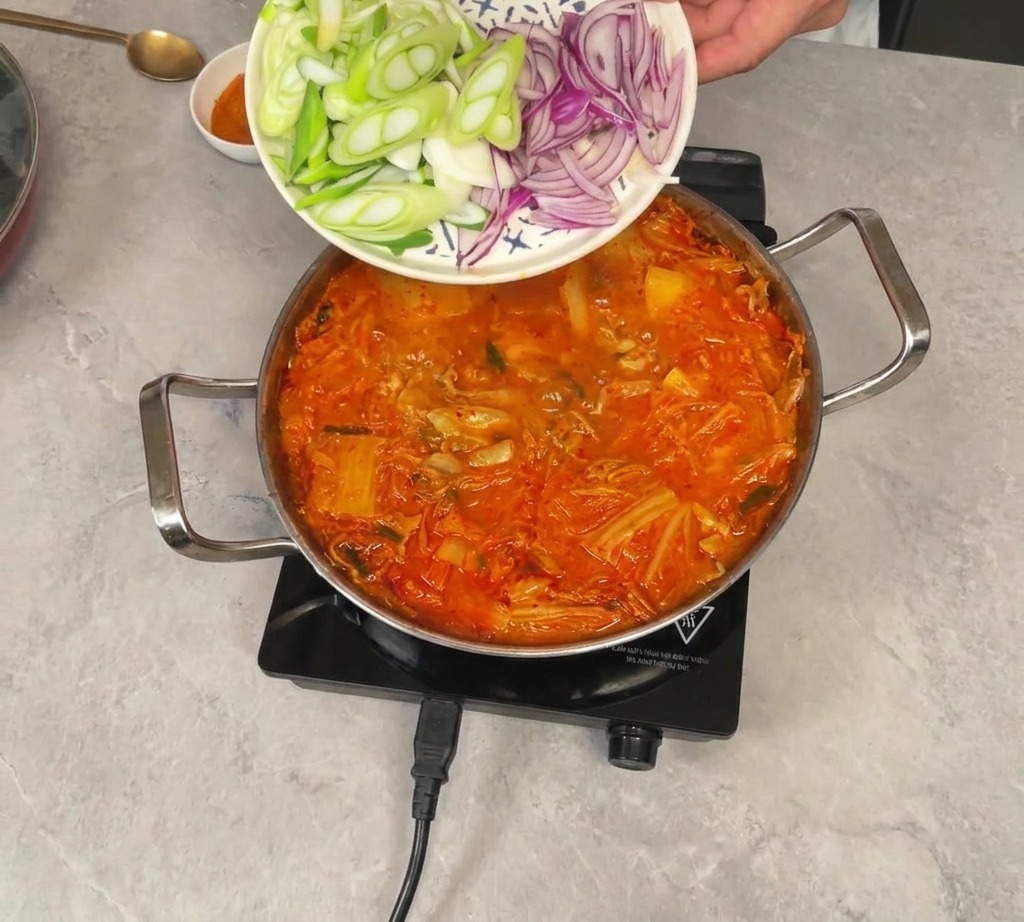
After the stew has simmered for a while, add three spoonfuls of kimchi juice for extra depth. Then, slide in half a sliced red onion and one sliced green onion from your prep plate. Simmering these together will release their natural sweetness into the broth.
Tip: The natural sweetness from the onions balances the sourness of the kimchi, so theres no need to add any white sugar. - 7Add minced garlic
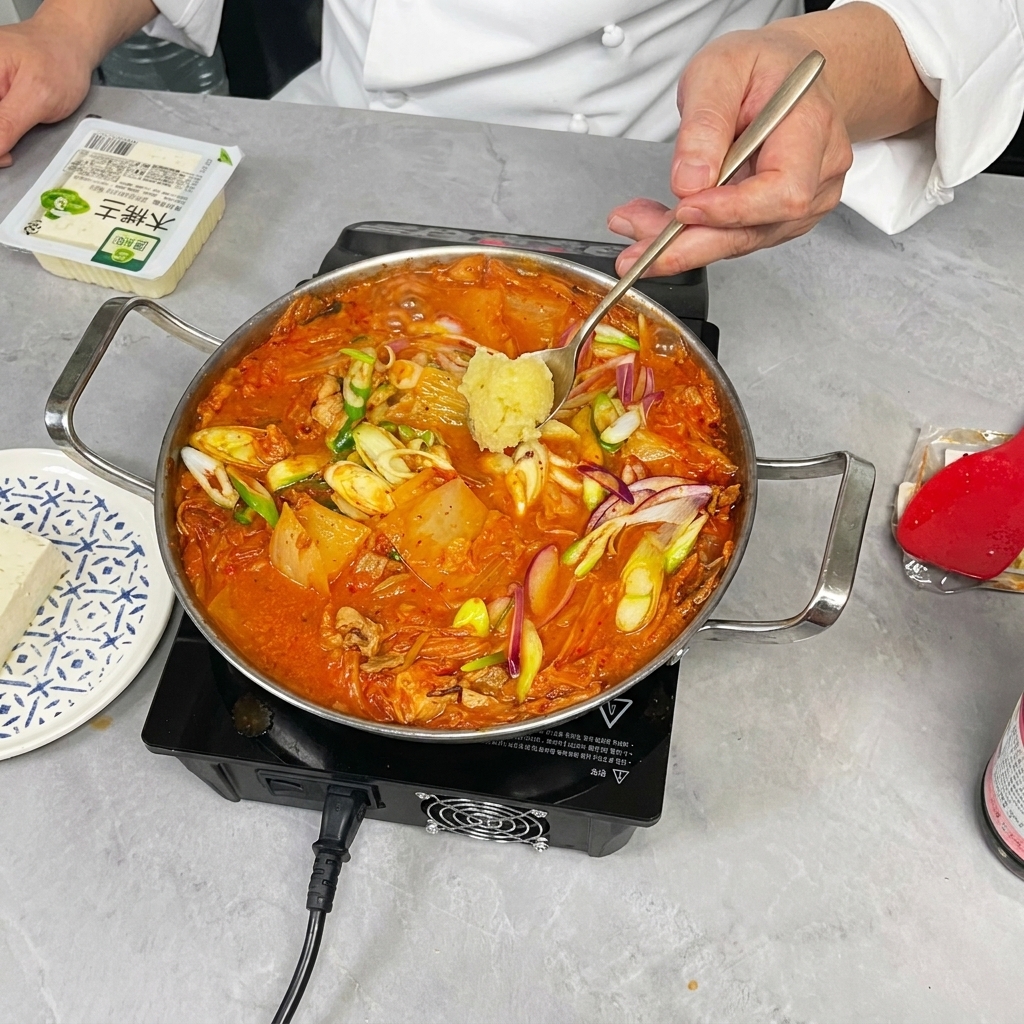
Once the kimchi and pork have simmered and the broth is bubbling, add a spoonful of minced garlic. This enhances the aroma and brings a layer of pungency to the rich, sour stew.
Tip: Adding the garlic later in the stewing process preserves its pungent flavor better than frying it at the beginning. - 8Add the tofu slices
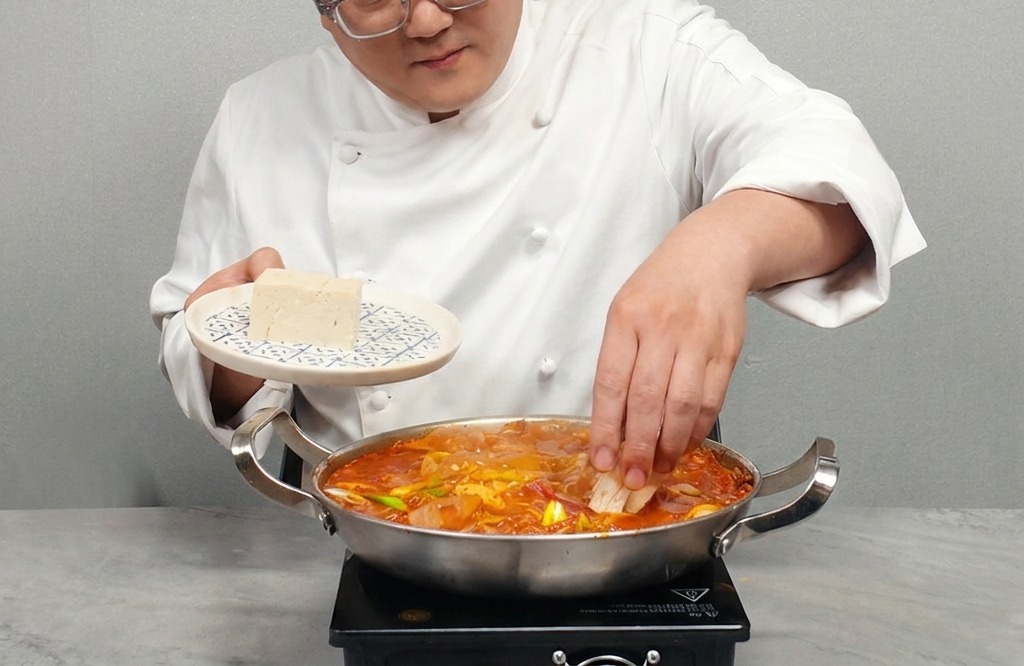
Carefully place thick, square slices of firm white tofu over the simmering red broth. Allow the tofu to absorb the savory and tangy flavors of the stew as it cooks.
Tip: Use firm tofu so it doesnt break apart easily while simmering in the bubbling broth. - 9Enhance the sourness
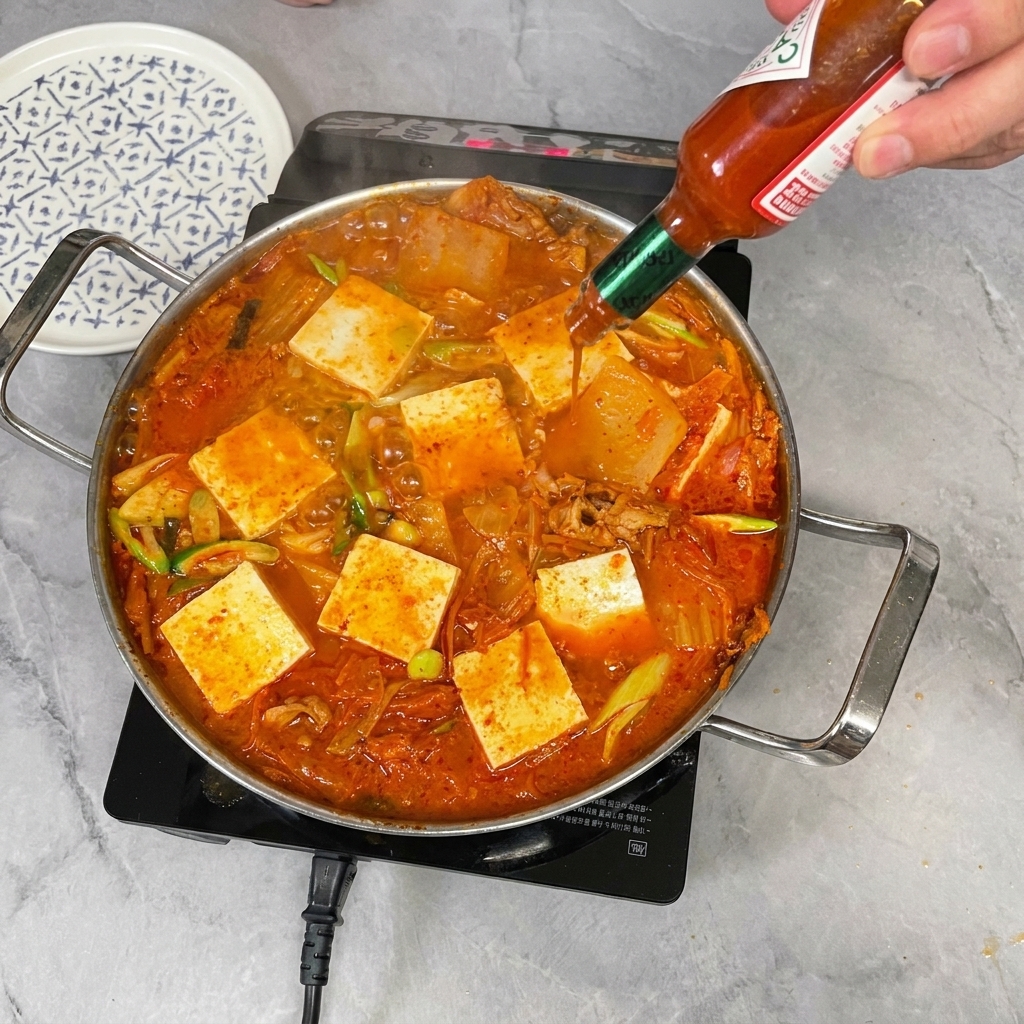
If your homemade kimchi isnt quite sour enough, dash a few drops of hot pepper sauce like Tabasco directly into the broth. This clever trick adds both a spicy kick and a much-needed tangy acidity to mimic the flavor of well-fermented old kimchi.
Tip: This is a great shortcut for achieving that authentic restaurant-quality sourness if you only have fresh kimchi on hand. - 10Stir in soybean paste
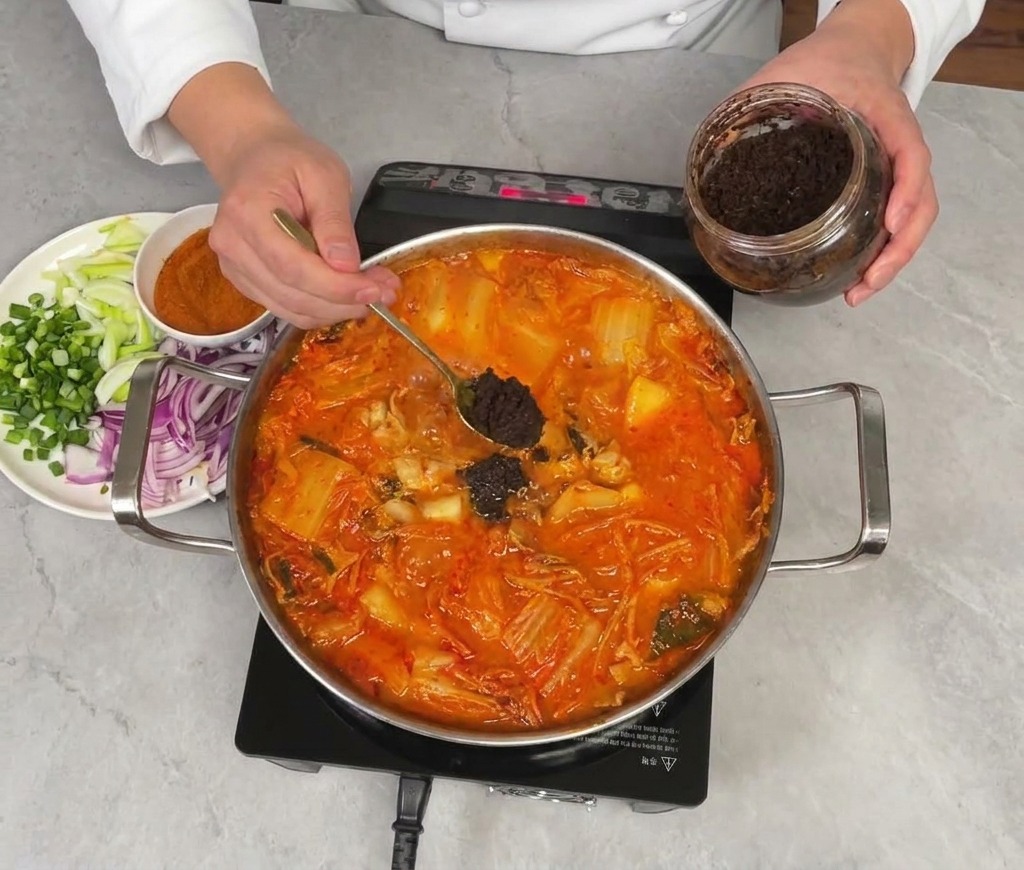
To deepen the flavor profile and add a rich, umami depth to the broth, stir in half a spoonful of soybean paste. Mix it gently until it completely dissolves into the hot stew.
Tip: Soybean paste acts as a secret ingredient that beautifully balances the sharp acidity of the kimchi with a savory earthiness. - 11Season with soy sauce
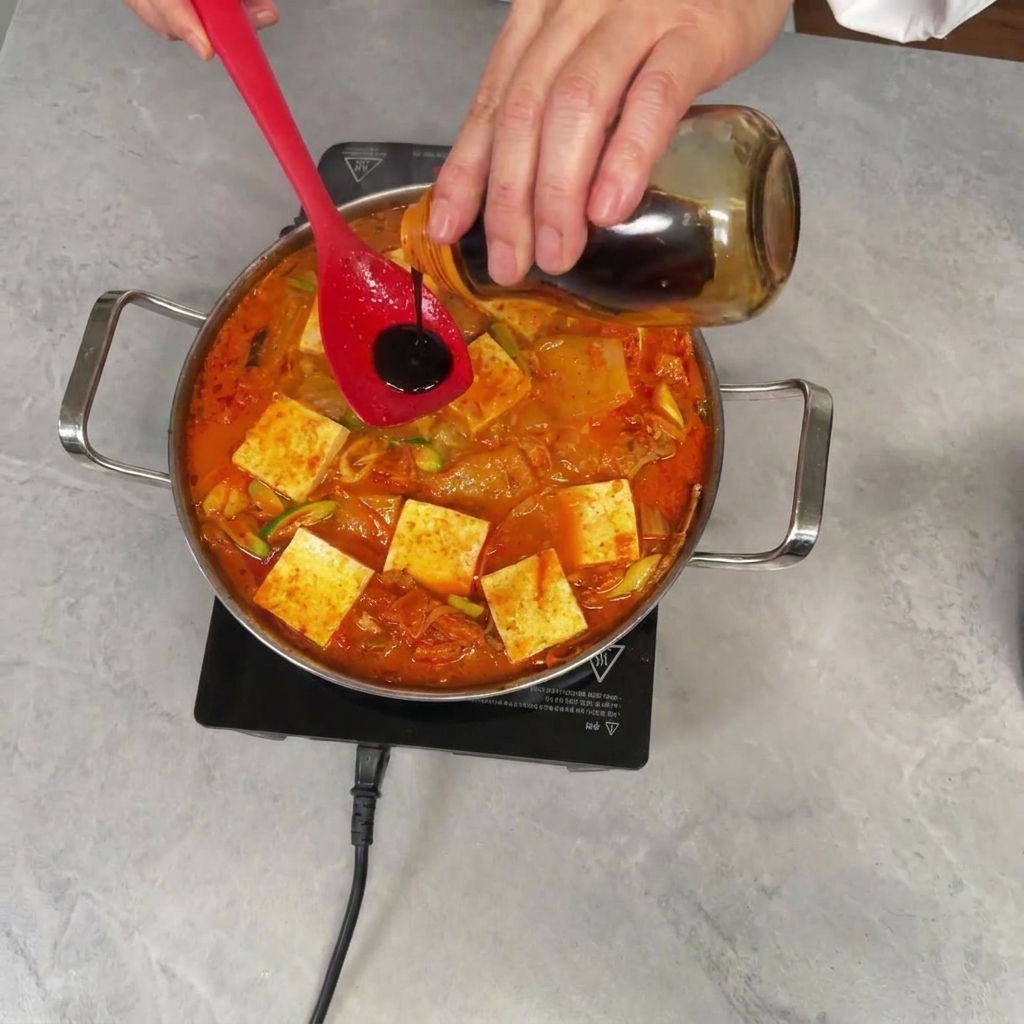
To finalize the seasoning and enhance the savory depth of the stew, add a spoonful of light soy sauce. Pour the soy sauce gently into the bubbling broth, taking care not to break apart the soft pieces of tofu. Stir lightly to ensure the seasoning is evenly distributed throughout the stew.
Tip: If you find the stew is still not salty enough after adding the soy sauce, you can adjust the taste with a pinch of salt or MSG.