Easy Kimchi Tofu Soup
Fatty Beef (Kimchi Jjigae)
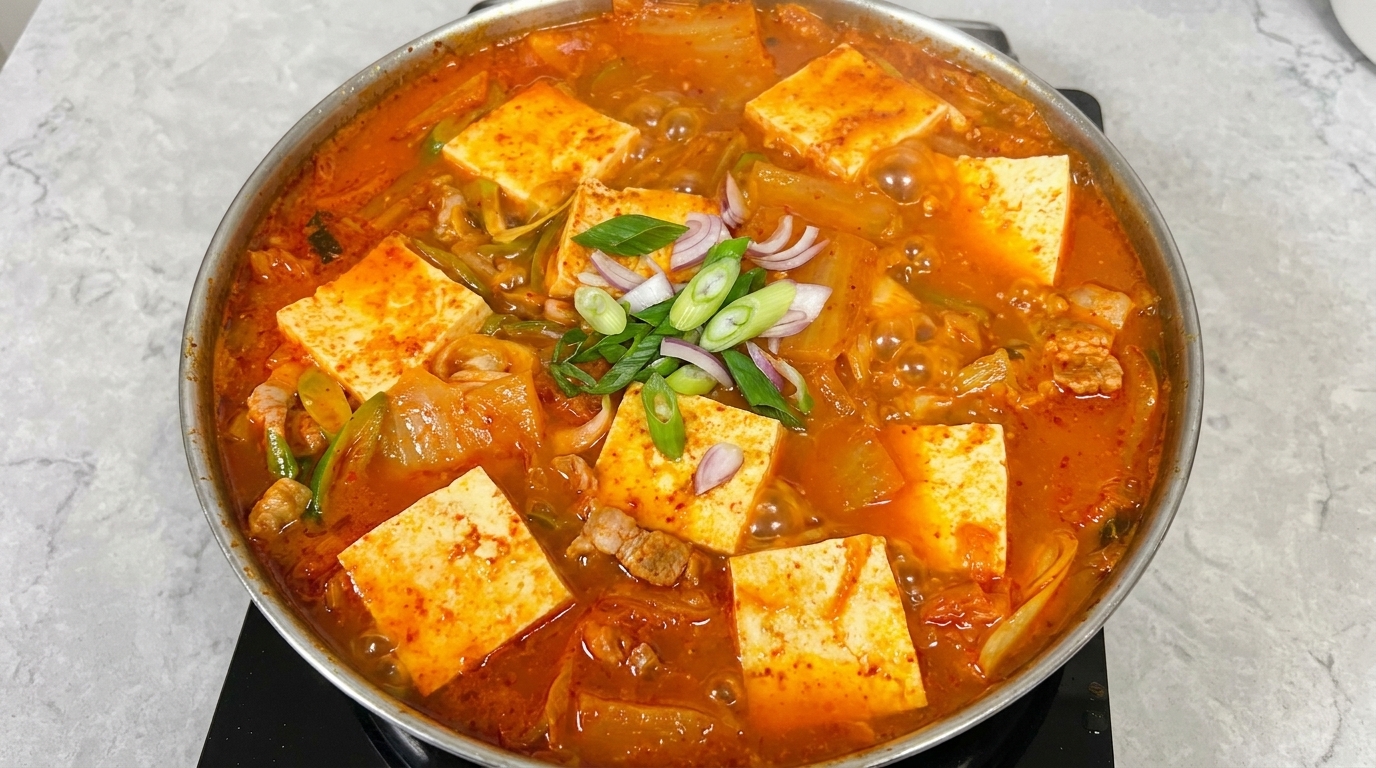
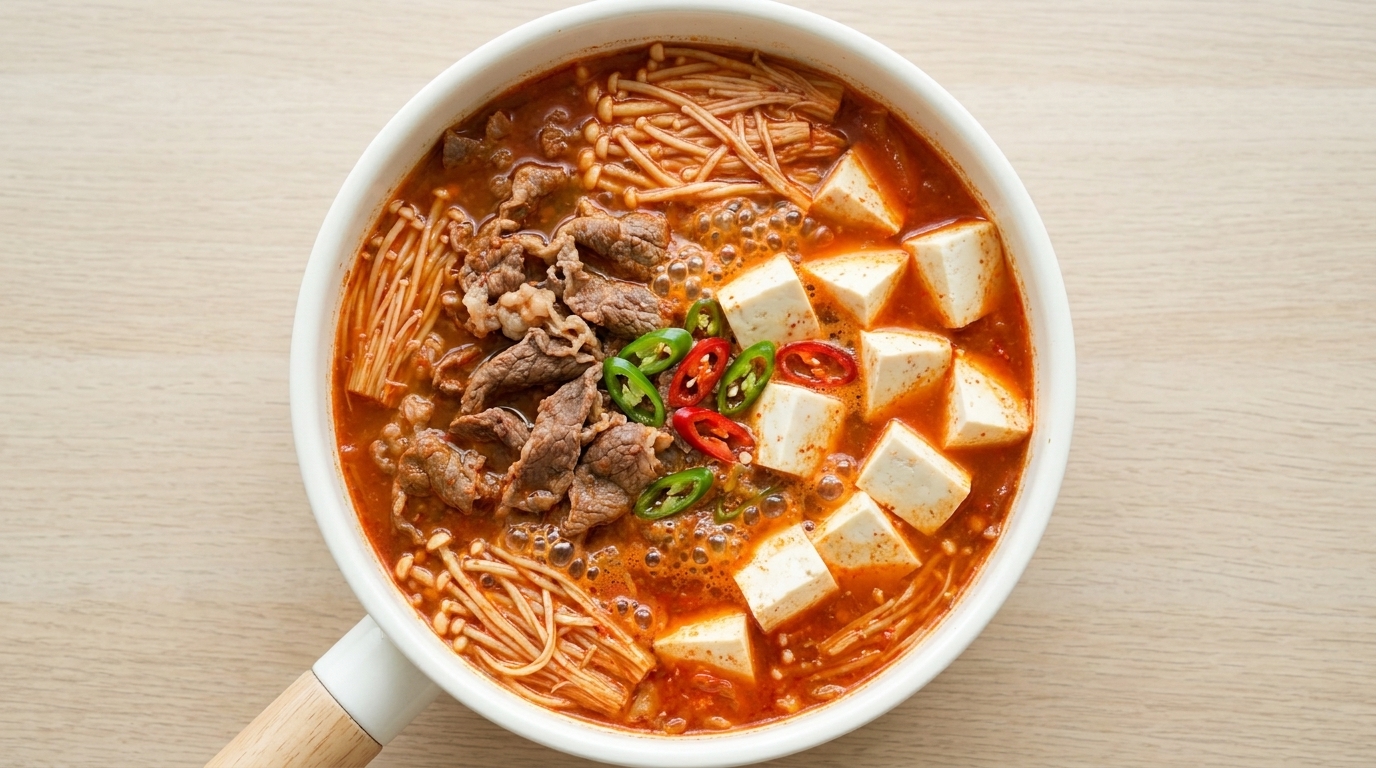
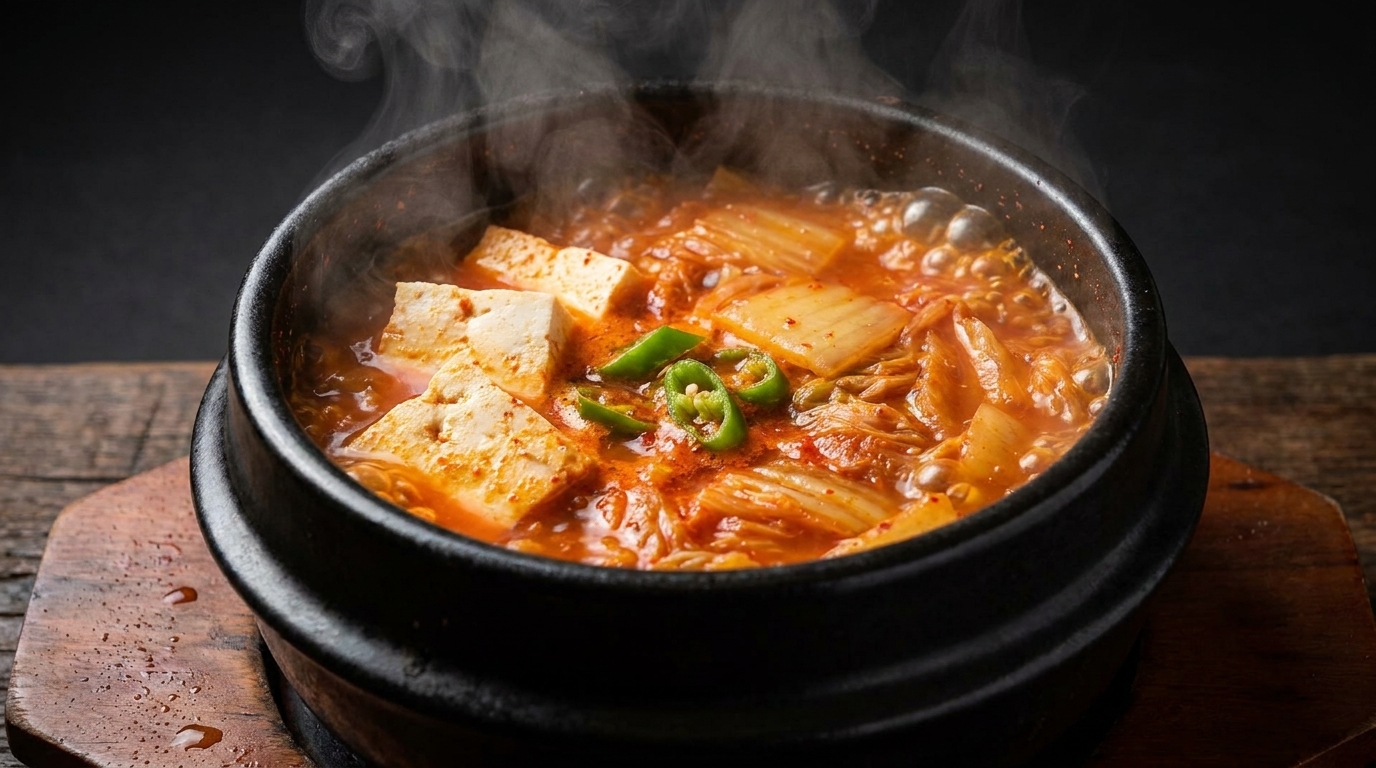
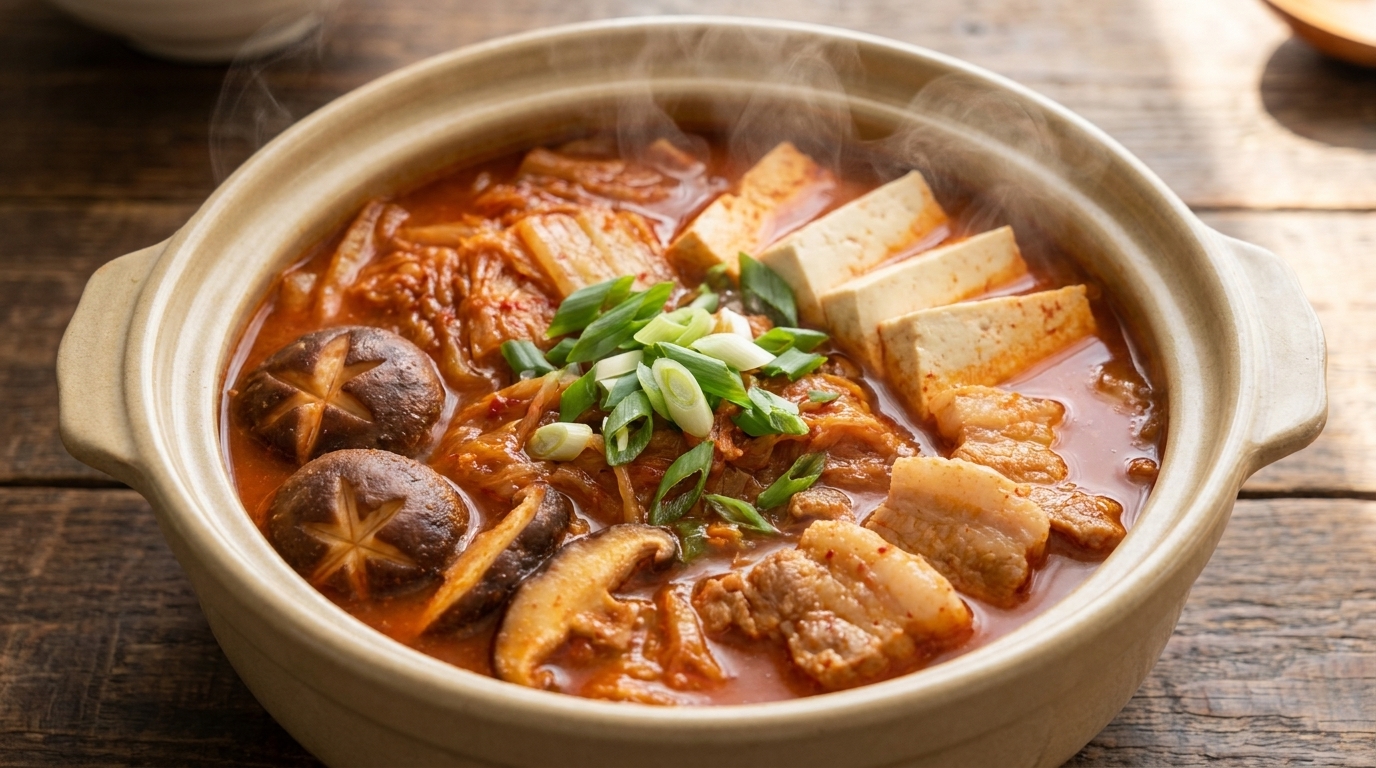
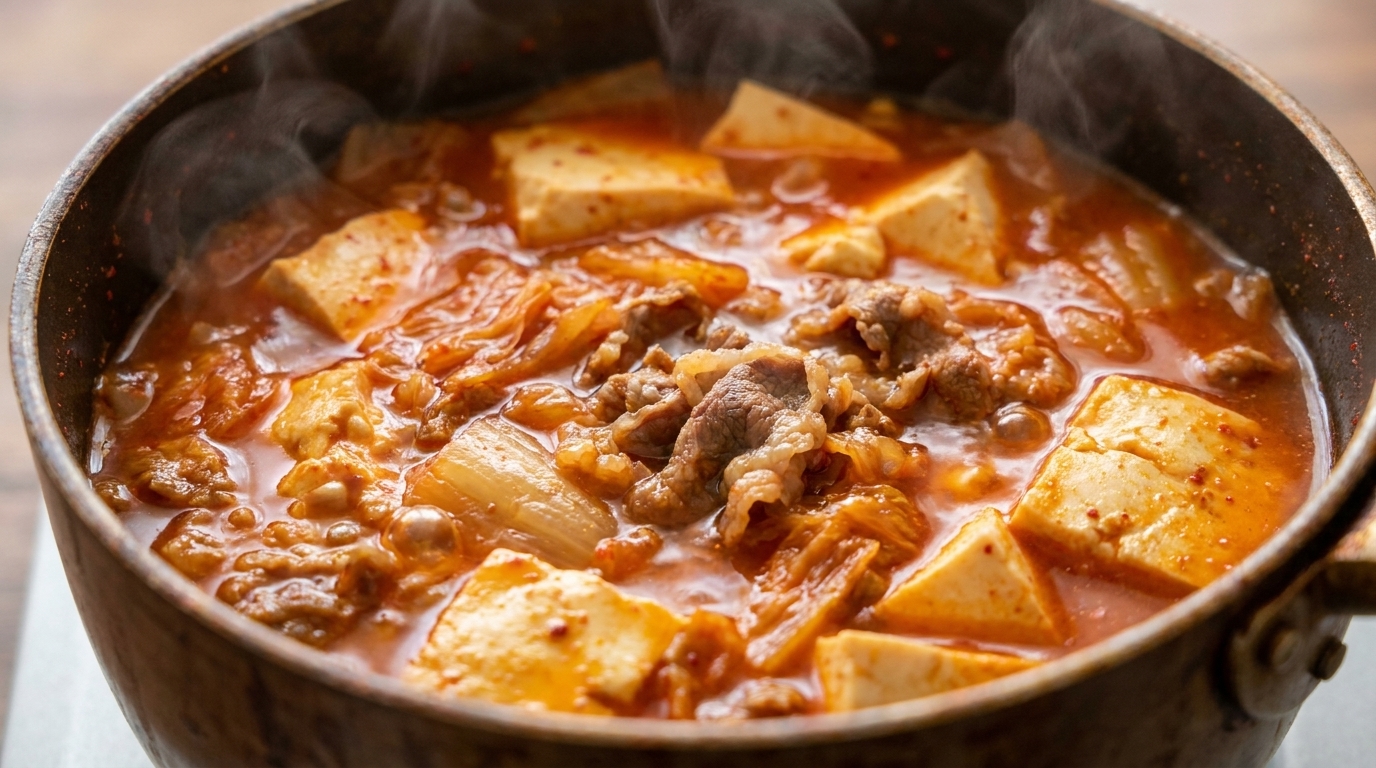
A soul-warming Korean classic made simple: silky soft tofu and marbled fatty beef simmered in a vibrant, savory broth of sautéed aged kimchi and spicy gochujang.
Kimchi jjigae is a staple of Korean home cooking, prized for its ability to transform humble pantry ingredients into a complex, fiery meal. While often made with pork belly, this version uses thin fatty beef rolls which cook instantly, making it an ideal choice for a quick yet deeply satisfying weeknight dinner.
Ingredients
- 200 g aged cabbage kimchi
- 1 box soft or silken tofu
- 150 g fatty beef rolls (shabu-shabu style)
- 1 egg
- 1 tbsp Korean chili paste (gochujang)
- 1 tbsp light soy sauce
- 500 ml boiling water
- optional sesame oil
- to taste scallions
Instructions
- 1Add kimchi to the pot
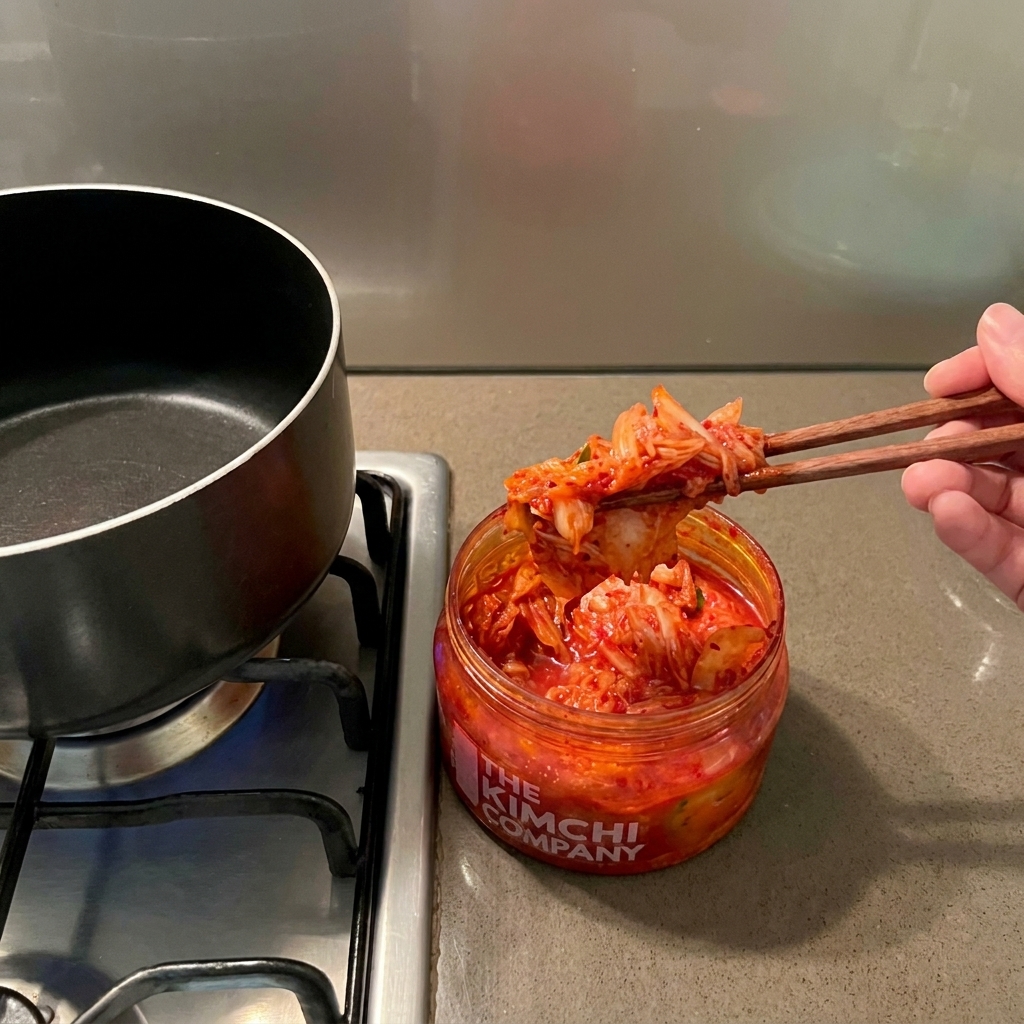
Begin by transferring pieces of red kimchi directly from the jar into your cooking pot. Use chopsticks to easily grab the cabbage pieces. This fermented kimchi will serve as the aromatic and savory foundation for the soup.
Tip: Using aged, well-fermented sour kimchi provides a much deeper and more authentic flavor for stews compared to freshly made kimchi. - 2Sauté the kimchi
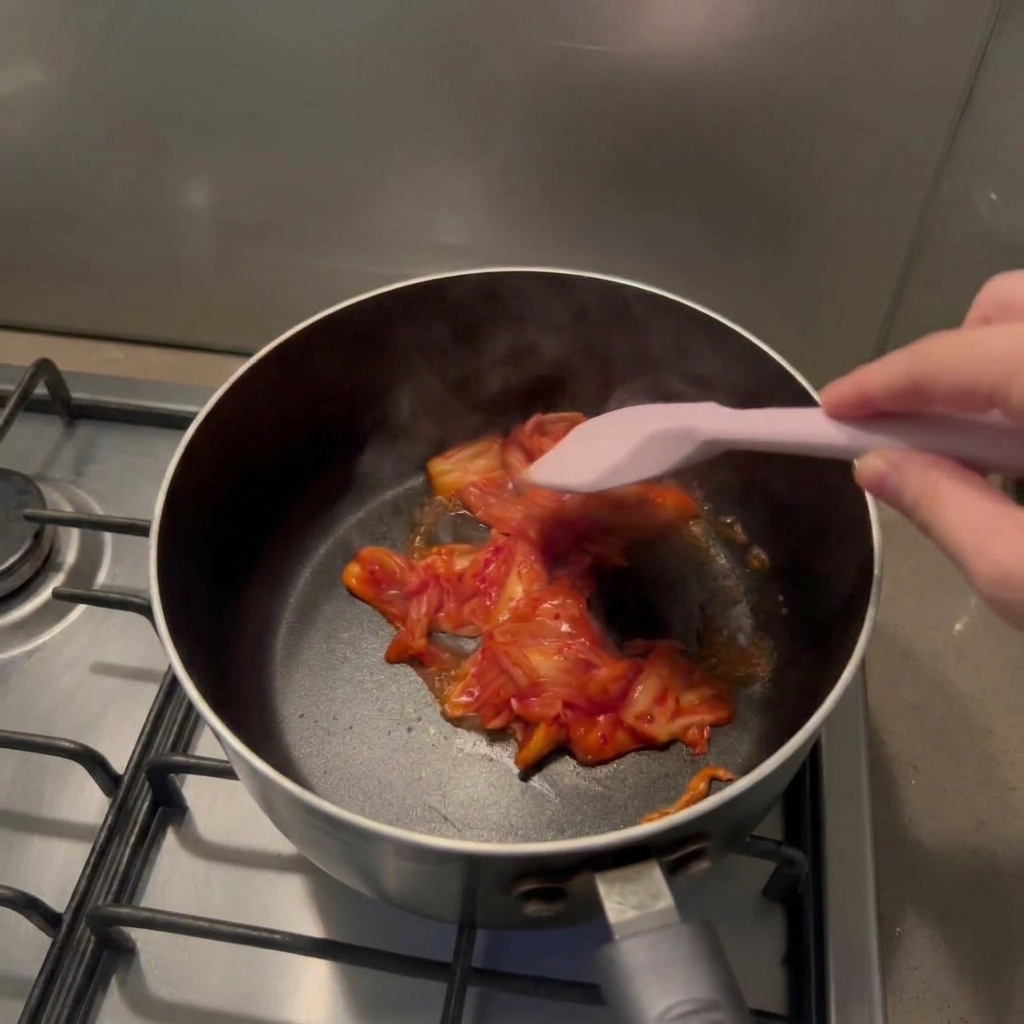
Turn on the heat and sauté the kimchi in the pot using a spatula. Cook and stir it continuously until the cabbage softens and becomes highly fragrant. Sautéing the kimchi first helps release its natural oils and caramelizes the edges slightly, intensifying the overall savory profile.
Tip: If your kimchi is quite dry, you can add a tiny splash of sesame oil to help it fry without sticking or burning to the pan. - 3Add the soft tofu
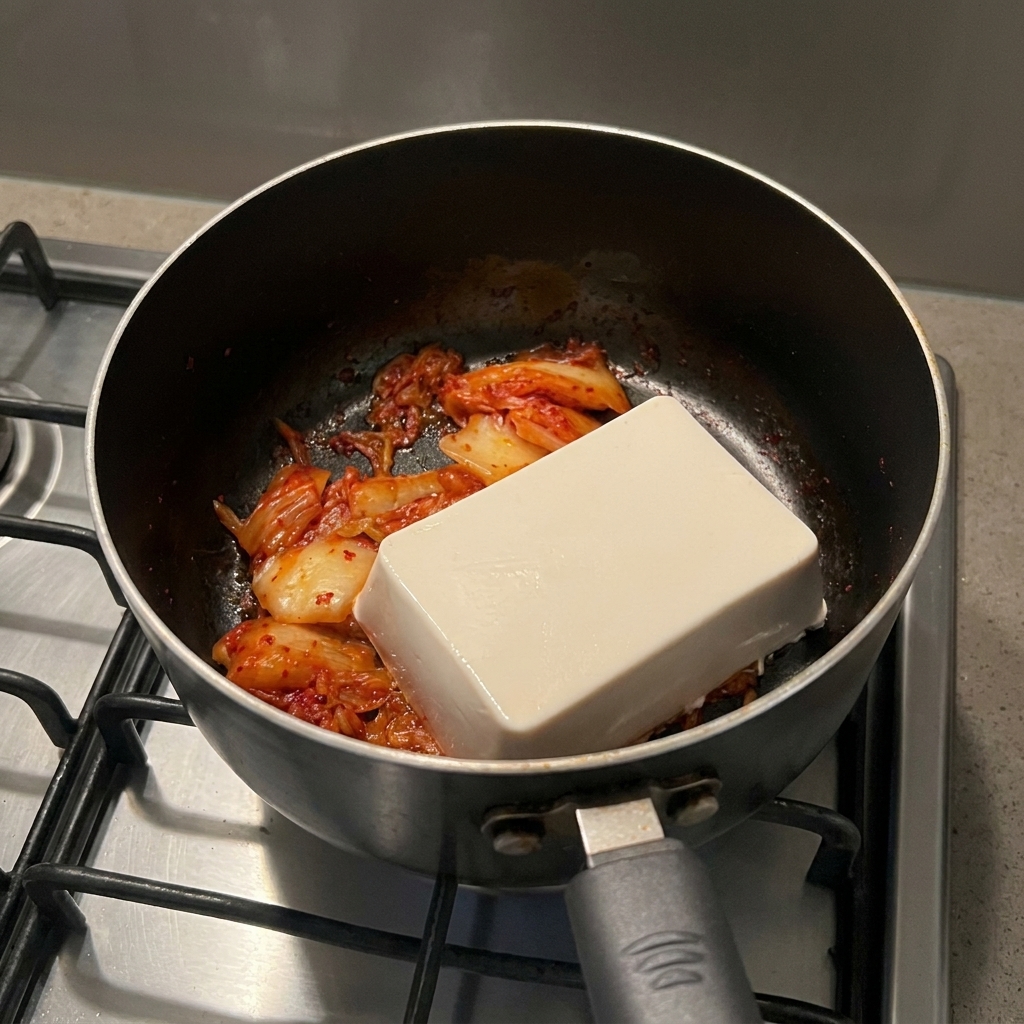
Once the kimchi is fragrant, carefully add a whole block of soft tofu directly into the pot, letting it rest right on top of the cooked kimchi base. Soft tofu is ideal for this soup as it provides a delicate, silky texture that contrasts perfectly with the chewiness of the fermented cabbage.
Tip: Drain any excess water from the tofu package before adding it to the pot so you dont dilute the sautéed flavors. - 4Break up the tofu
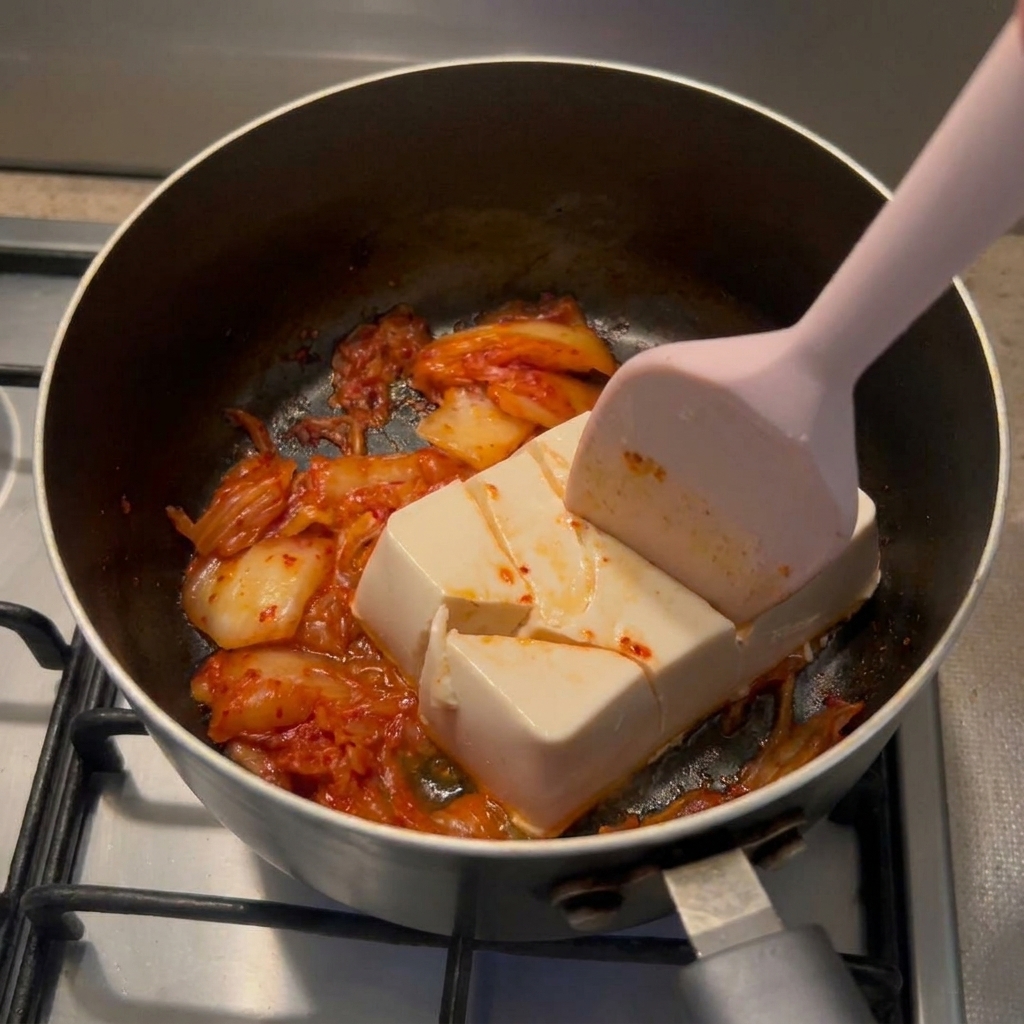
Use your spatula to gently press down into the tofu block, roughly breaking it apart into large, uneven chunks right in the pot. There is no need to dice it perfectly; the rustic, uneven pieces will hold onto the spicy broth beautifully and give the dish a comforting, home-style feel.
Tip: Avoid stirring too vigorously once the tofu is broken, as soft tofu is extremely fragile and can easily turn into mush. - 5Pour in hot water
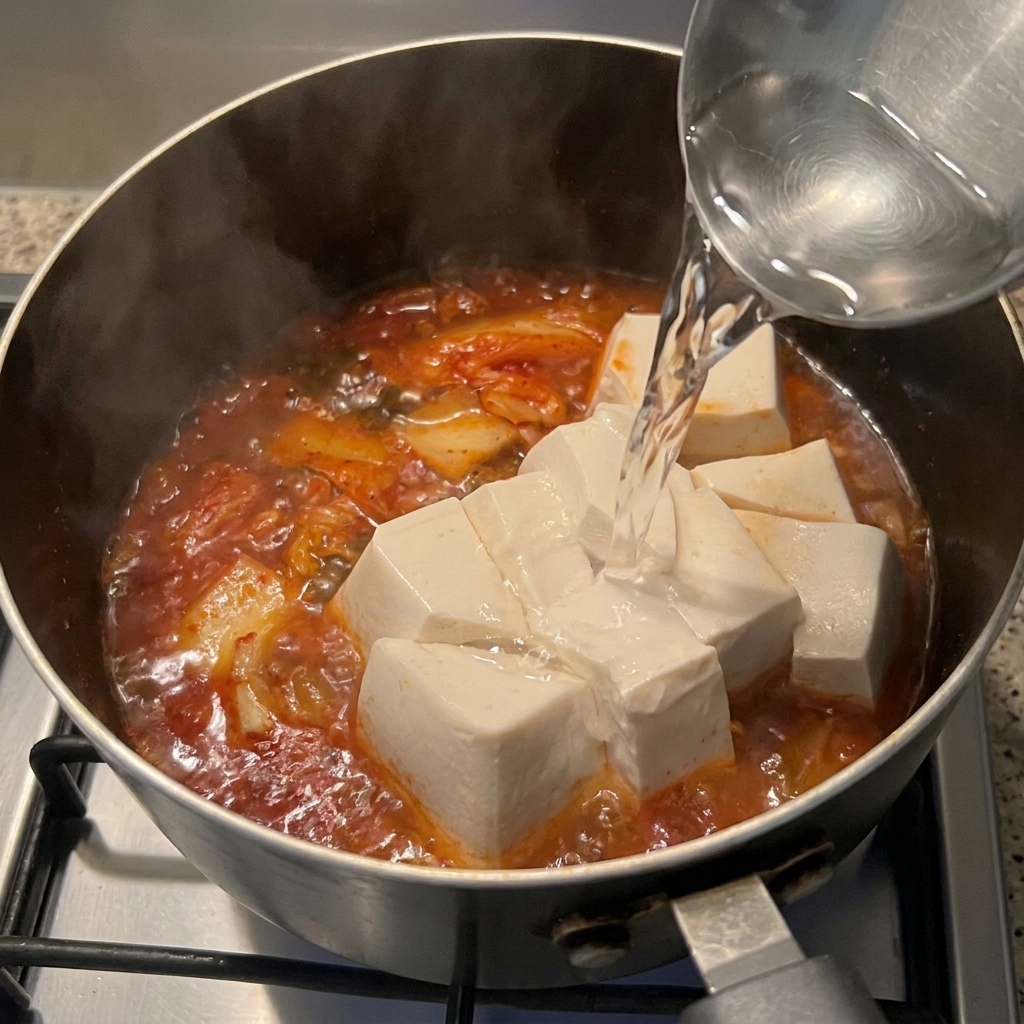
Carefully pour hot or boiling water into the pot until the tofu chunks and kimchi are nicely submerged. Using hot water rather than cold water helps bring the soup back to a boil quickly, maintaining an even cooking temperature and preserving the texture of the ingredients.
Tip: For an even richer depth of flavor, you can substitute the hot water with unsalted chicken stock or traditional anchovy-kelp broth. - 6Season the broth
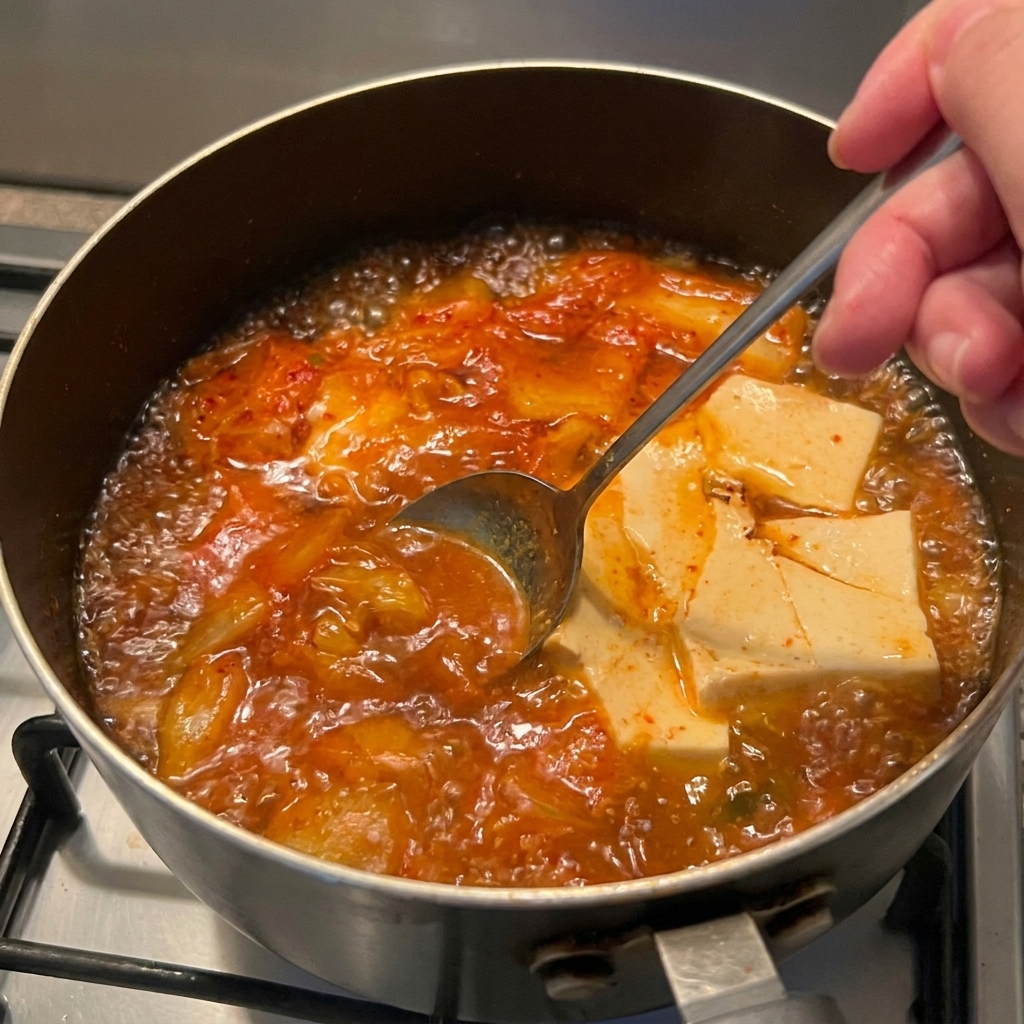
Once the liquid is gently bubbling, add a spoonful of Korean chili paste (gochujang) into the broth. Stir gently to dissolve the paste completely into the liquid. You can adjust the amount based on your personal spice preference, adding more for a fiercer heat or less for a milder soup.
Tip: Dissolve the chili paste directly into the bubbling liquid in an empty pocket of the pot rather than placing it on the tofu, ensuring an evenly flavored broth. - 7Incorporate seasonings
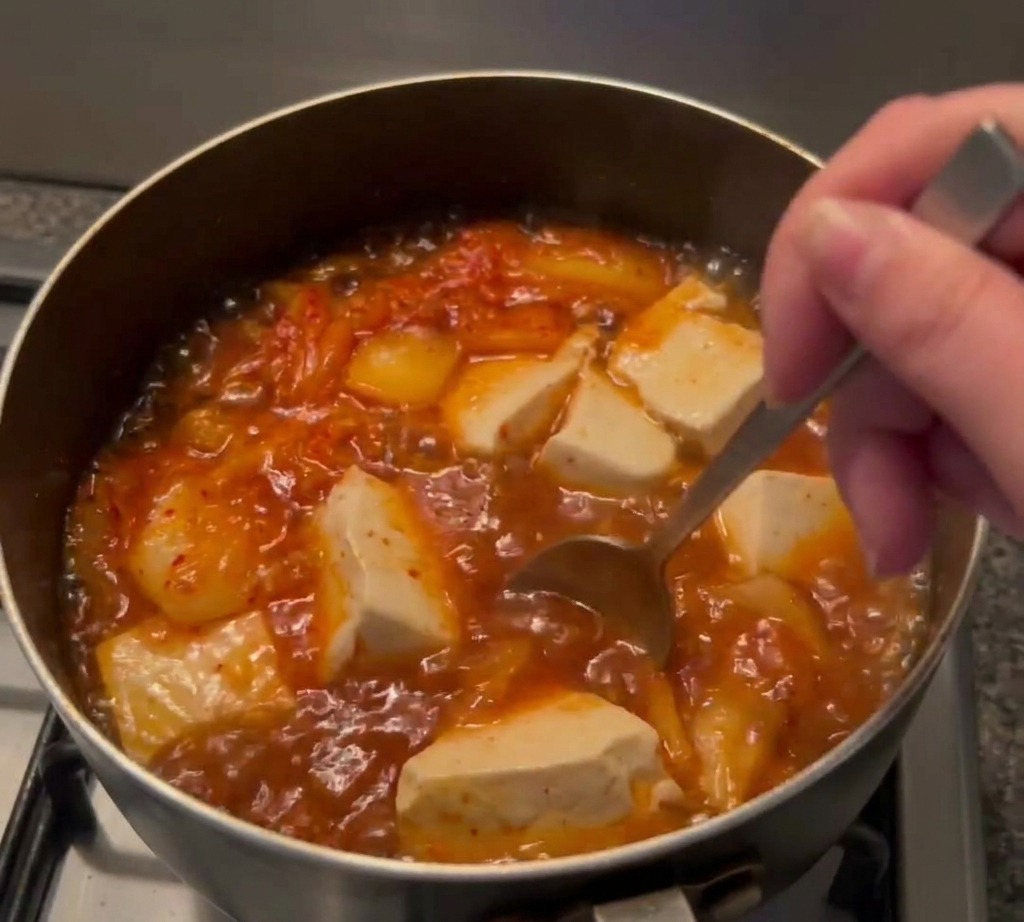
Add the light soy sauce to the pot. Stir gently with your spoon to ensure both the chili paste and soy sauce are perfectly integrated into the broth, creating a uniform, savory red-orange base.
Tip: Adjust the amount of chili paste based on your spice tolerance; start with half a spoonful if you prefer a milder heat. - 8Add the beef rolls
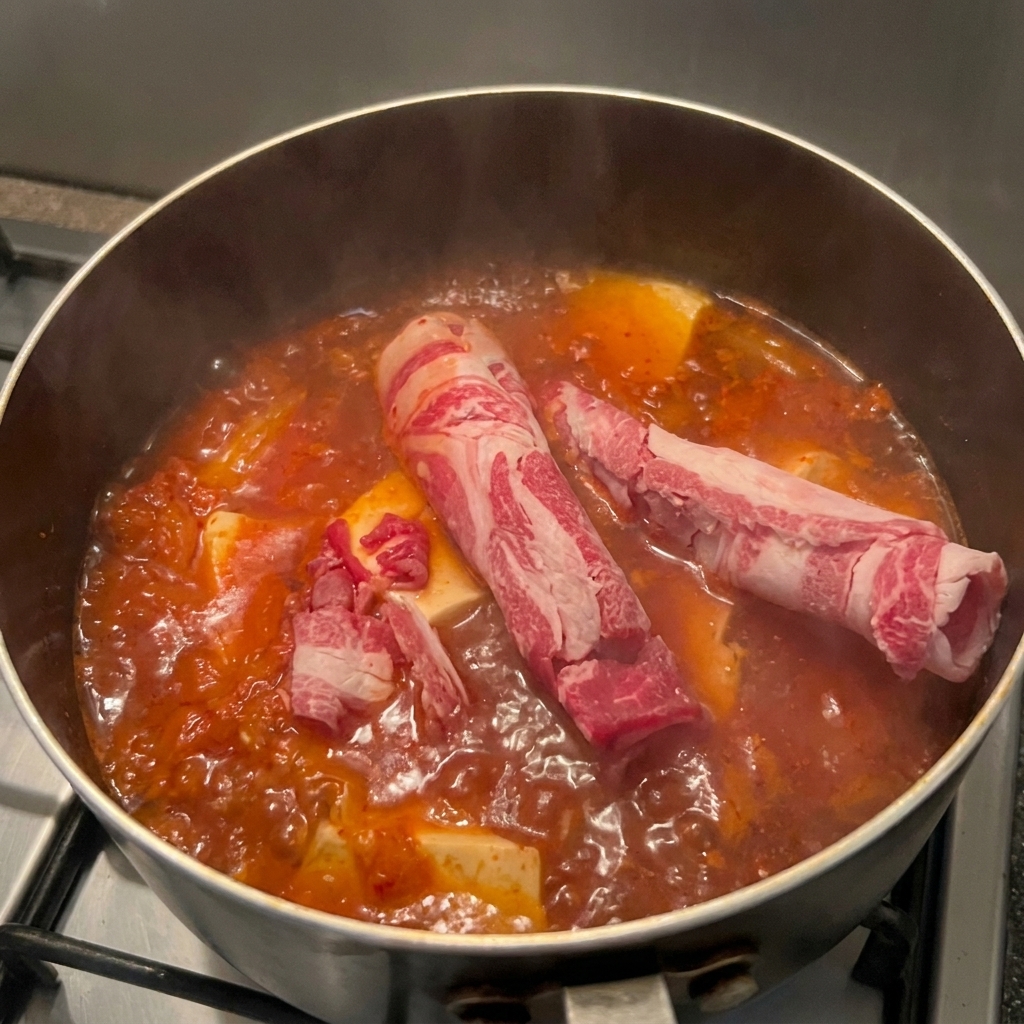
Carefully place the thinly sliced fatty beef rolls into the bubbling kimchi and tofu broth. The high heat of the soup will cook these thin marbled slices almost instantly, adding a rich, savory depth to the stew.
Tip: If you prefer seafood, you can swap the beef for shrimp or clams at this stage. - 9Cover and simmer
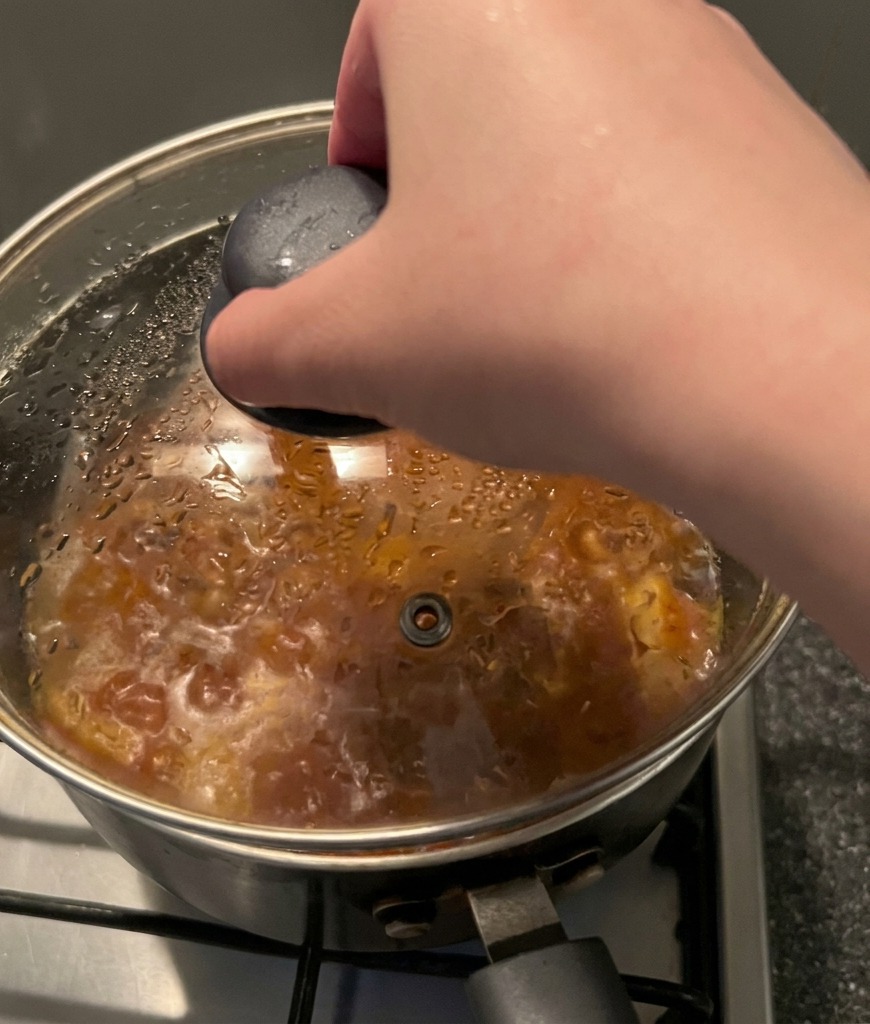
After adding the beef and an egg, place the lid on the pot. Reduce the heat slightly and let the stew simmer for about 3 to 5 minutes. This allows the flavors of the kimchi, tofu, and beef to meld together perfectly.
Tip: Keep the heat at a steady simmer rather than a violent boil once the lid is on to keep the tofu intact. - 10Uncover the finished stew
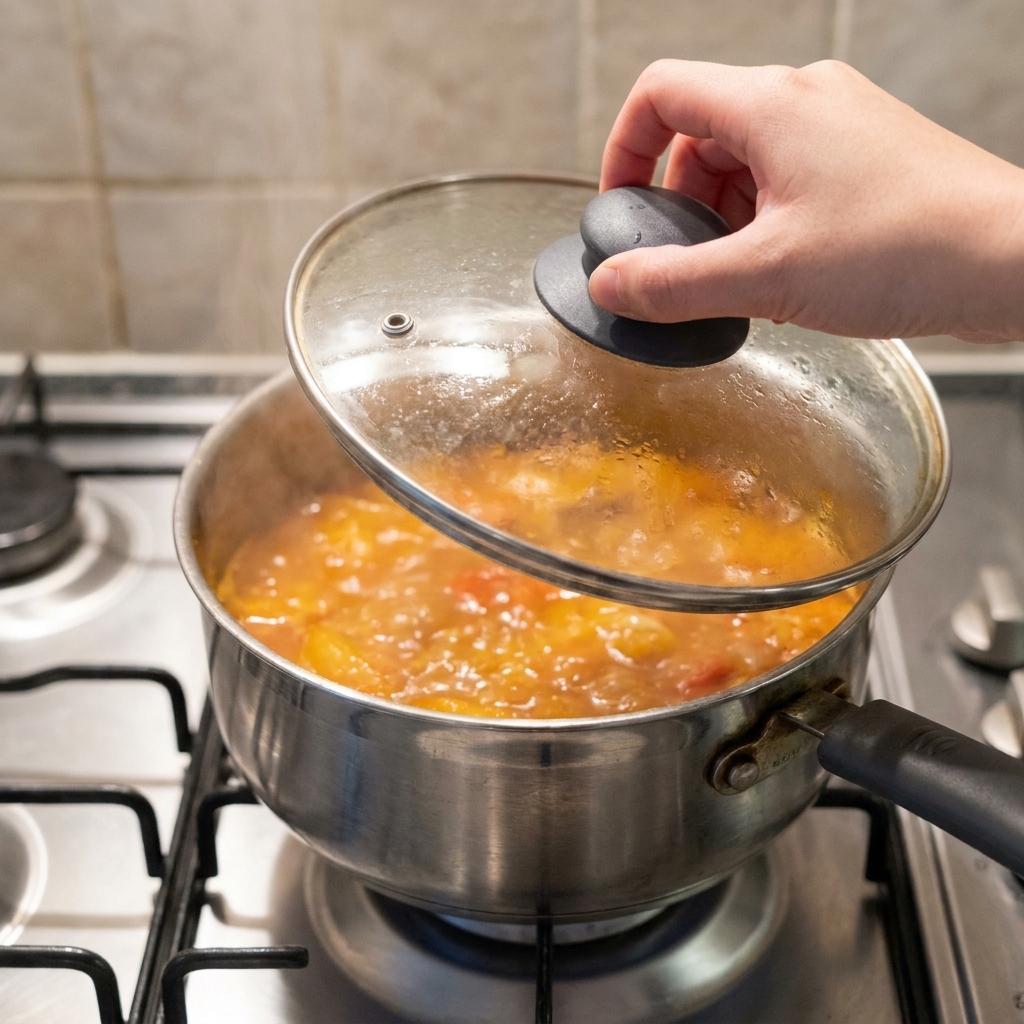
Carefully lift the glass lid to check on the soup. The beef should be fully cooked, the egg set to your liking, and the broth vigorously bubbling. The aroma of the fermented kimchi and savory beef should be quite strong now.
Tip: Watch out for the hot steam when lifting the lid; tilt it away from your face. - 11Final stir and serve
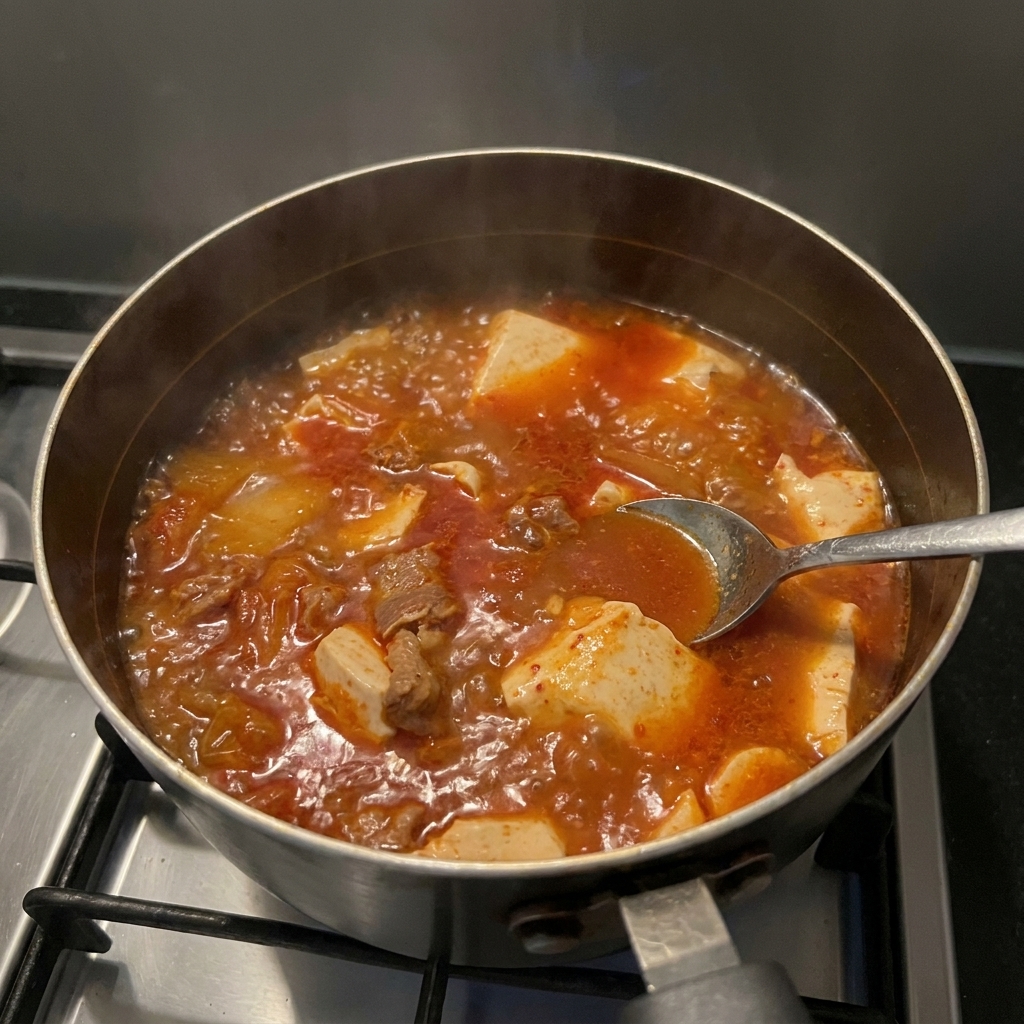
Give the stew one final gentle stir with a metal spoon to ensure everything is evenly distributed. The tofu should be soft and infused with the spicy broth, and the beef perfectly tender. Serve immediately while piping hot.
Tip: This soup is best enjoyed with a side of warm steamed white rice to balance the savory and spicy flavors.