Spicy Kimchi Beef Tofu Stew
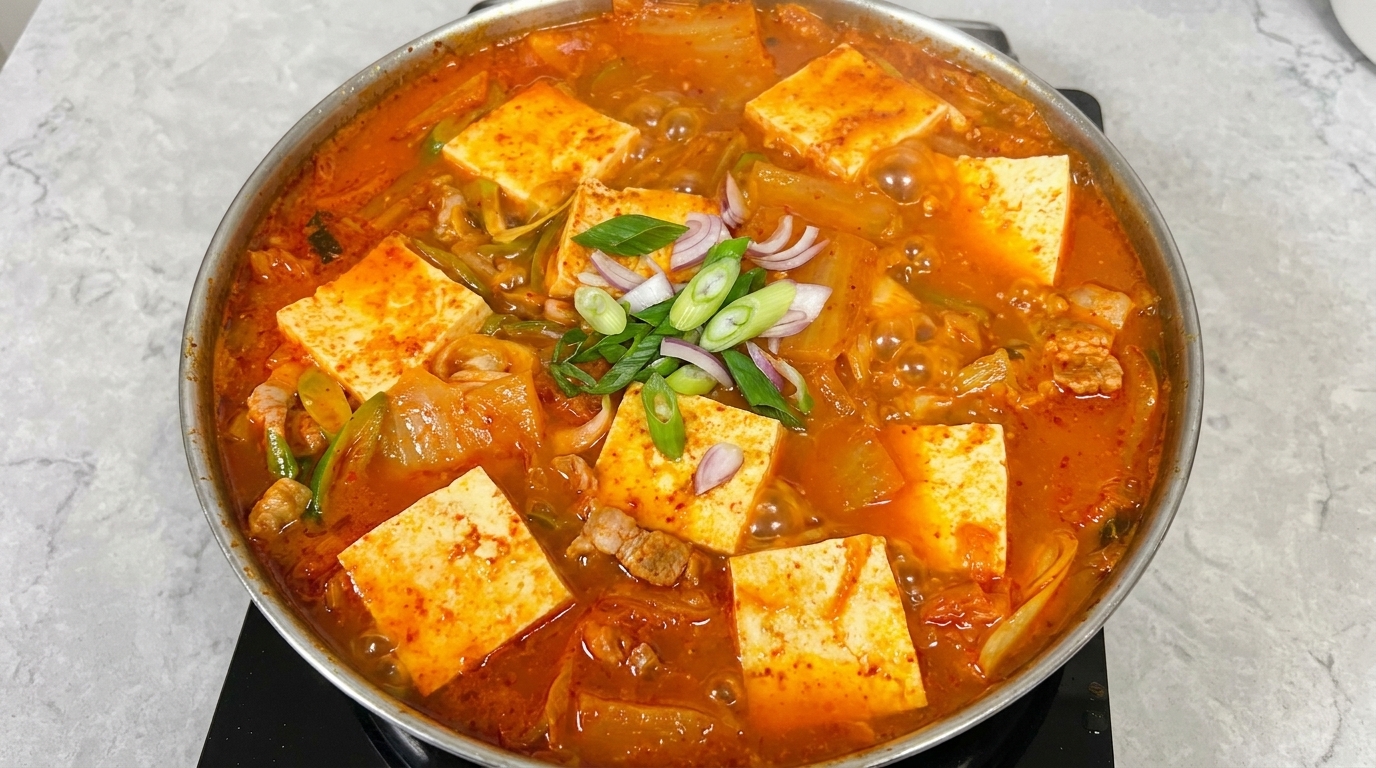
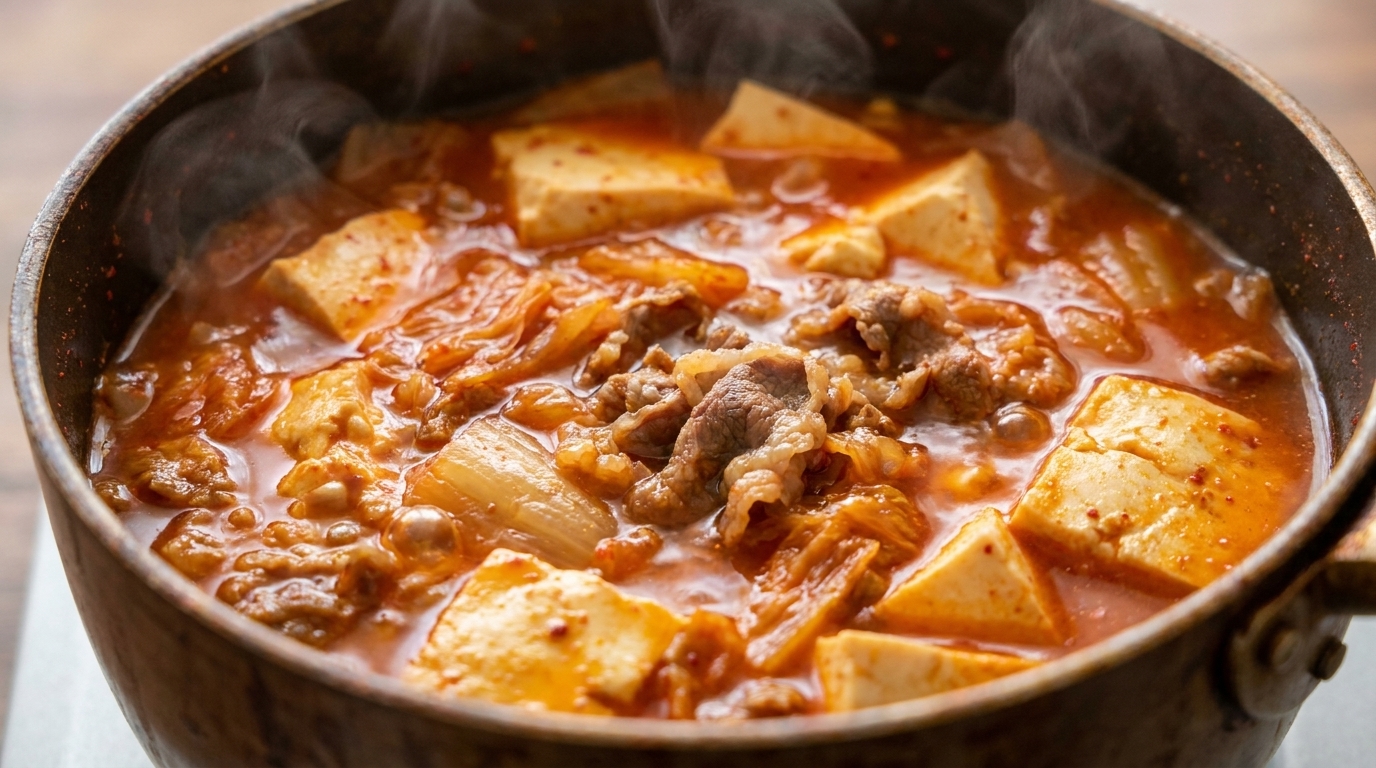
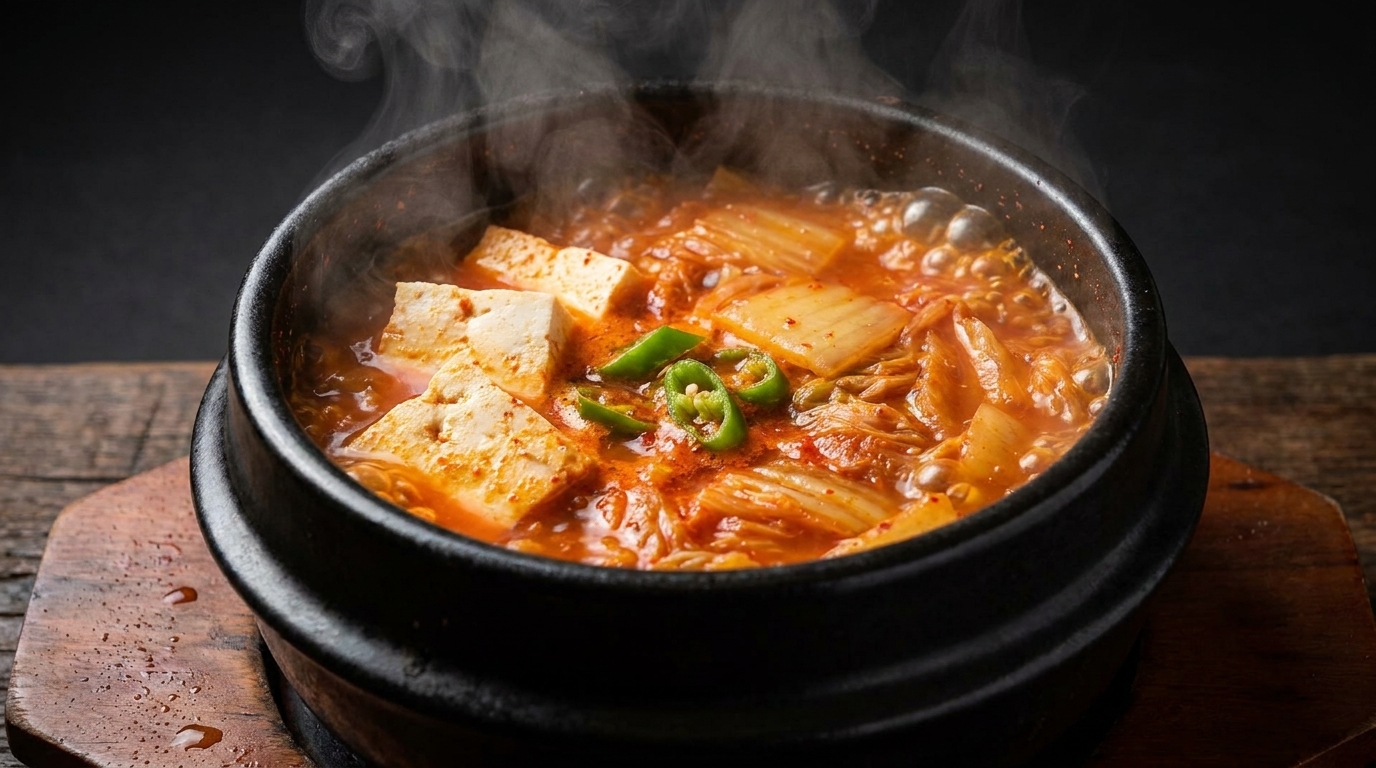
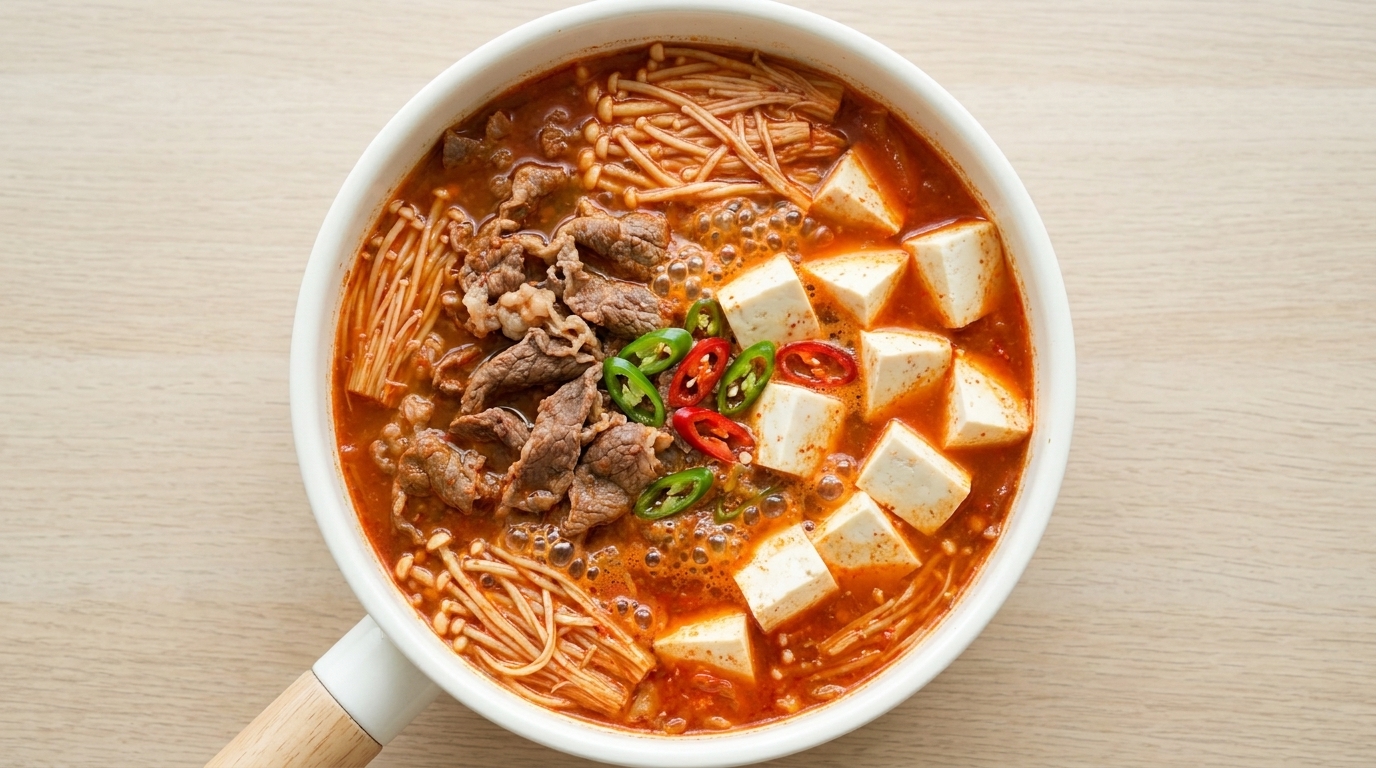
A comforting and fiery Korean-style stew packed with tender beef slices, silken tofu, and enoki mushrooms in a rich, deeply savory kimchi broth.
Rooted in the comforting traditions of Korean jjigae, this vibrant stew balances the sharp tang of aged kimchi with the delicate, custardy texture of soft tofu. Thinly sliced beef adds a rich savoriness to the fiery broth, while enoki mushrooms provide a satisfying bite. Best enjoyed bubbling hot straight from the stove, it embodies the bold, soul-warming flavors of Korean home cooking.
Ingredients
- 200 g thinly sliced beef
- 2 tbsp soy sauce
- 1 tbsp oyster sauce
- 1 tbsp cornstarch
- 2 tbsp cooking oil
- 2 tbsp gochujang (Korean chili paste)
- 1 tbsp Korean chili powder (gochugaru)
- 1 tsp sugar
- 2 cups water or dashi broth
- 12 red onion
- 1 cup well-fermented kimchi
- 1 bunch enoki mushrooms
- 1 block soft or silken tofu
- 1-2 fresh green and red chilies
Instructions
- 1Prepare the beef slices
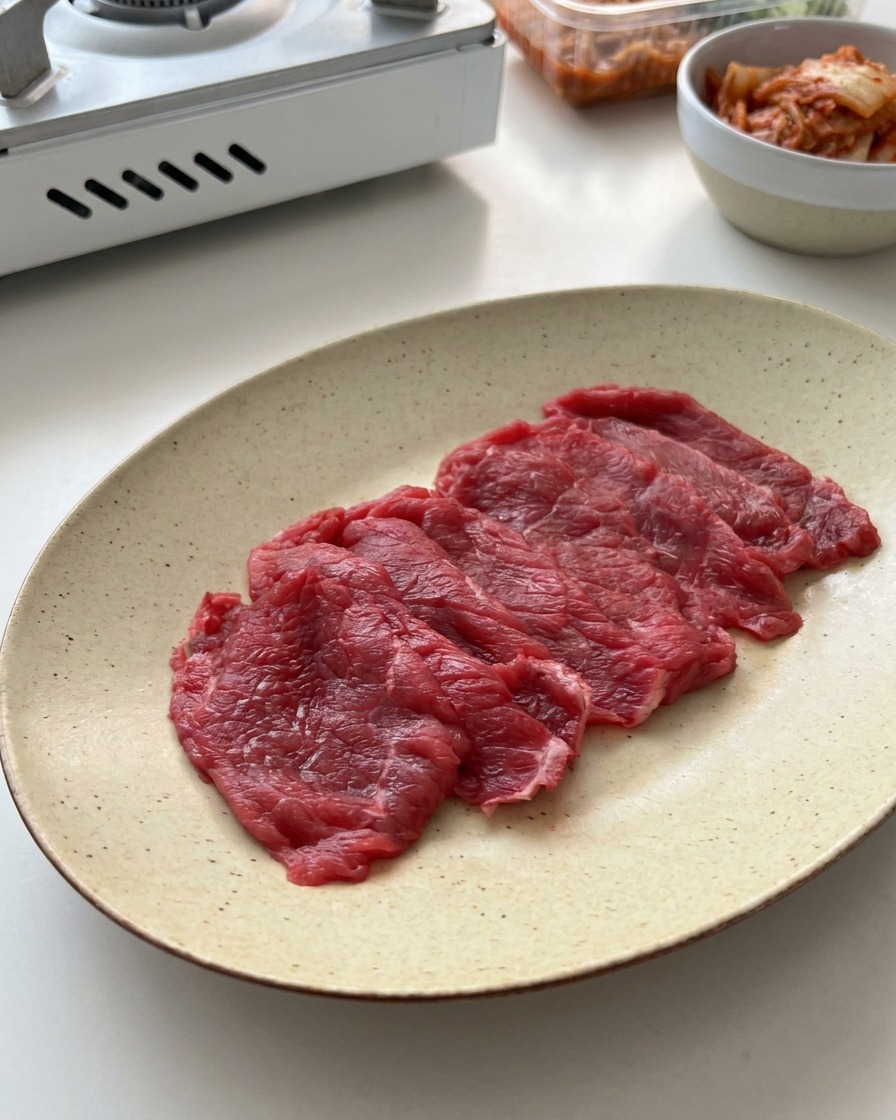
Begin by arranging the thinly sliced raw beef onto a clean plate or prep surface. Ensuring the meat is cut thinly helps it cook rapidly and remain tender during the stir-frying process.
Tip: For easier slicing, place the beef in the freezer for about 30 minutes before cutting. This firms up the meat and allows for uniform, thin cuts. - 2Add the marinade ingredients
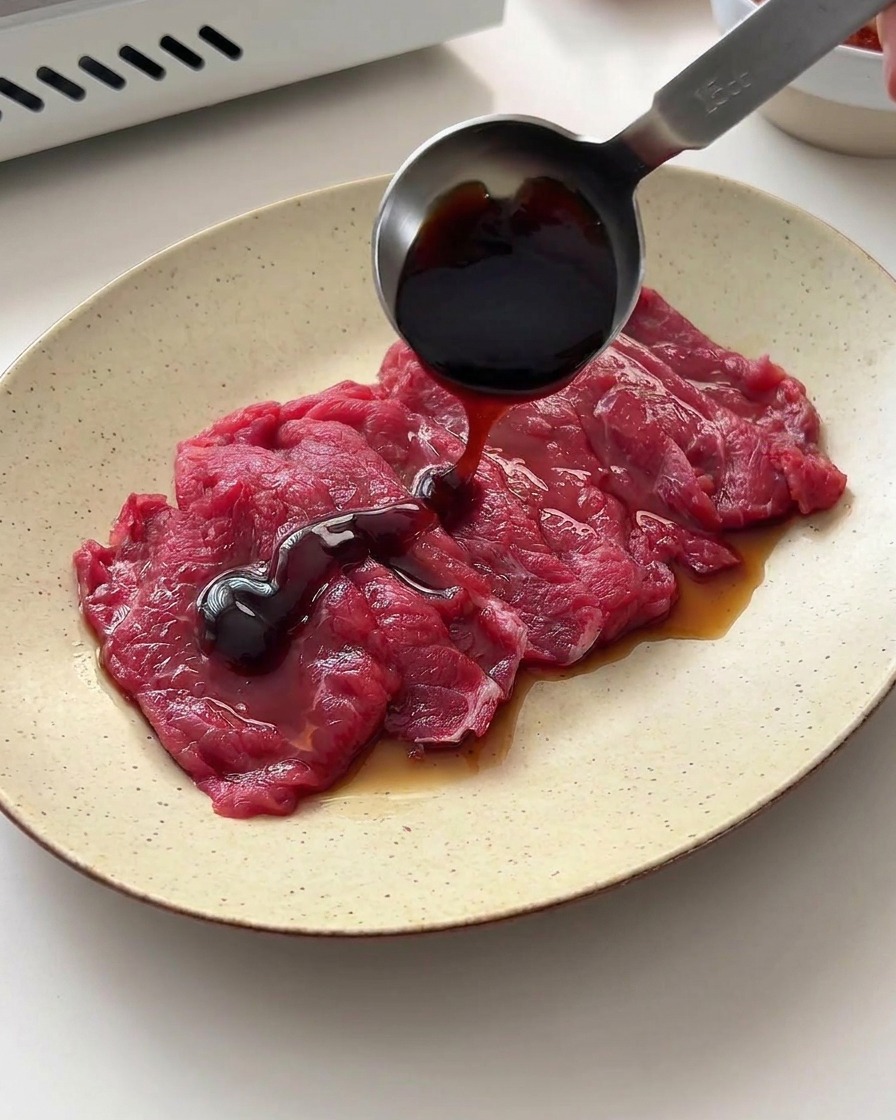
Measure out the soy sauce, oyster sauce, and cornstarch, pouring them directly over the raw beef slices. The combination of sauces provides a deep, savory umami flavor, while the cornstarch helps tenderize the meat.
Tip: The cornstarch creates a velvety coating on the beef, a classic technique known as velveting which protects the meat from drying out under high heat. - 3Mix the beef thoroughly
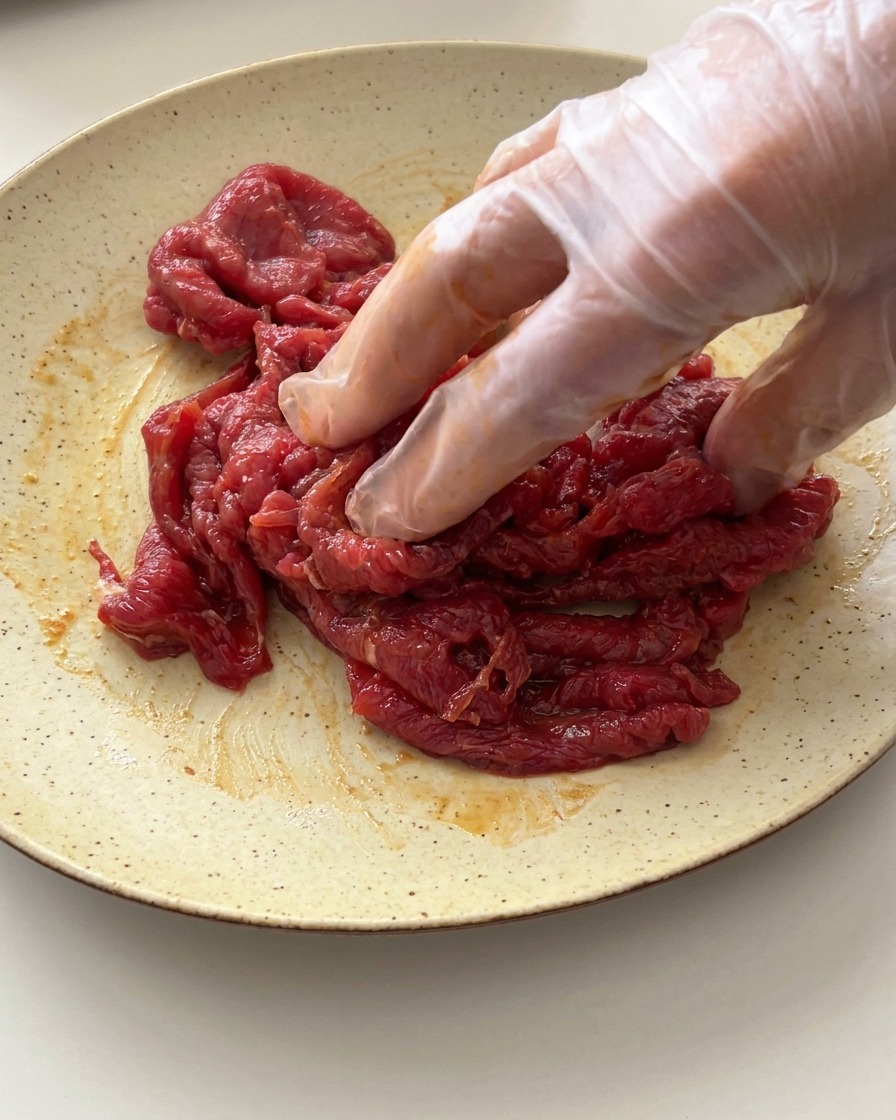
Using a gloved hand, gently massage the marinade into the beef slices. Make sure every piece of meat is thoroughly and evenly coated with the soy sauce and cornstarch mixture.
Tip: Massaging the meat not only distributes the flavors but also helps the protein fibers absorb the liquid, resulting in juicier beef. - 4Coat with cooking oil
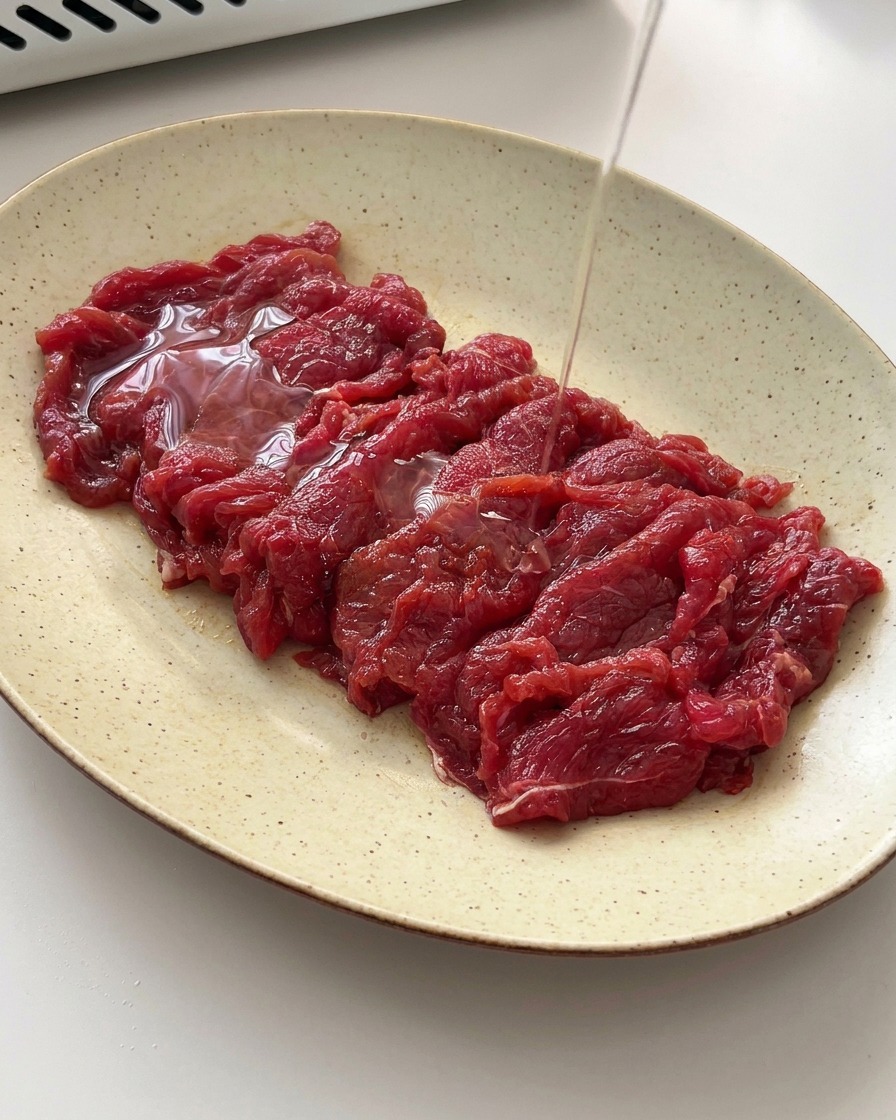
Drizzle a thin layer of clear cooking oil over the marinated beef slices. This seals in the moisture and marinade, and prevents the individual beef slices from sticking together once they hit the hot pan.
Tip: Let the marinated beef sit for 10 to 15 minutes after this step so the flavors can fully penetrate the meat. - 5Prepare the spicy red sauce
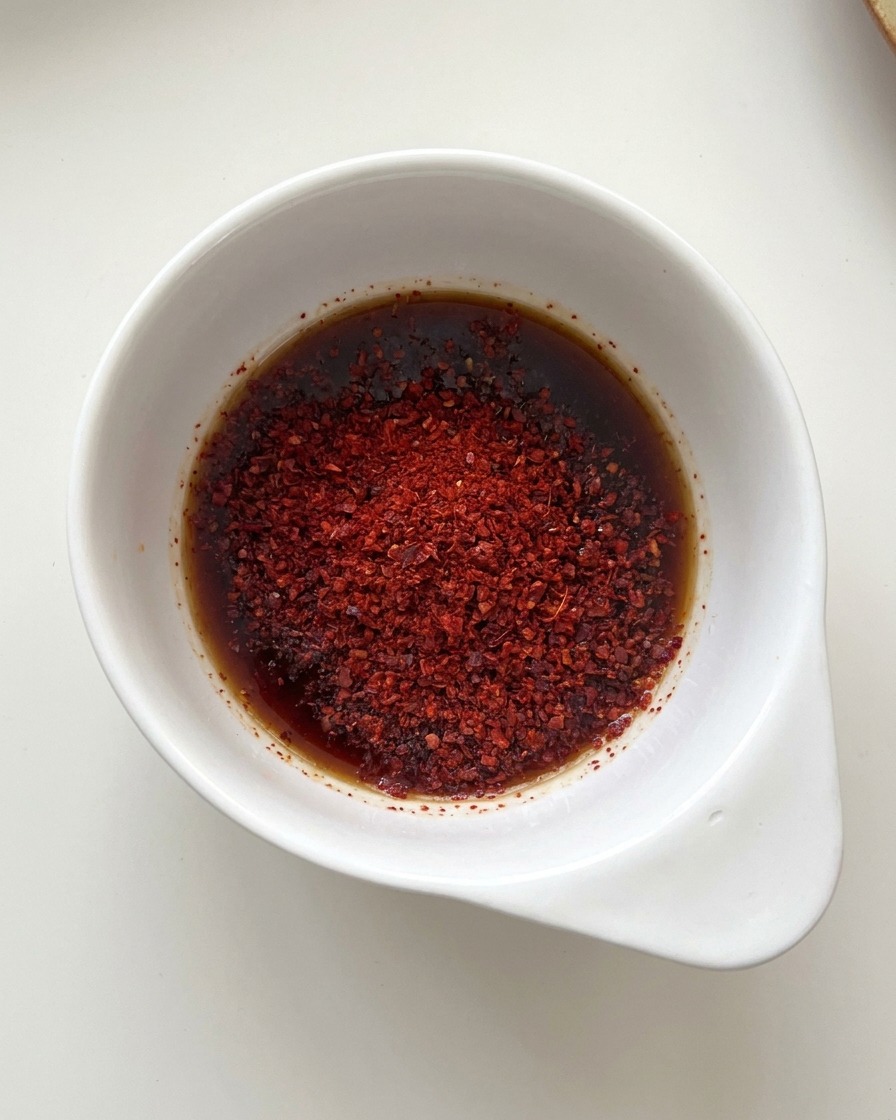
In a small bowl, combine the gochujang, chili powder, sugar, soy sauce, and a splash of water. Mix these ingredients thoroughly until the sugar is dissolved and the sauce reaches a smooth, cohesive consistency.
Tip: You can easily adjust the heat level of the dish by modifying the amount of chili powder added to this sauce base. - 6Stir-fry the red onions
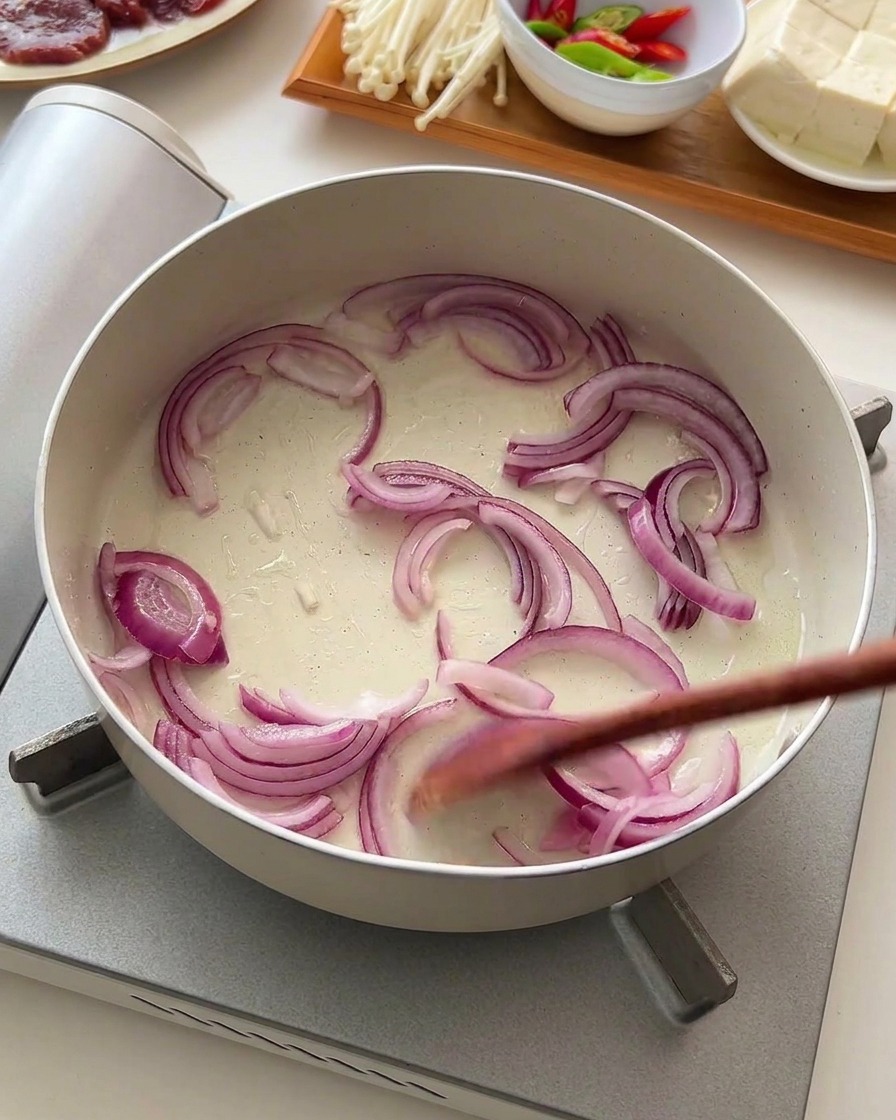
Heat a small amount of oil in a pan over medium heat, then add the sliced red onions. Stir-fry them gently until they just begin to soften and release their natural aromas.
Tip: Avoid overcooking the onions at this stage; retaining a slight crunch will add great texture to the finished dish. - 7Stir-fry kimchi with onions
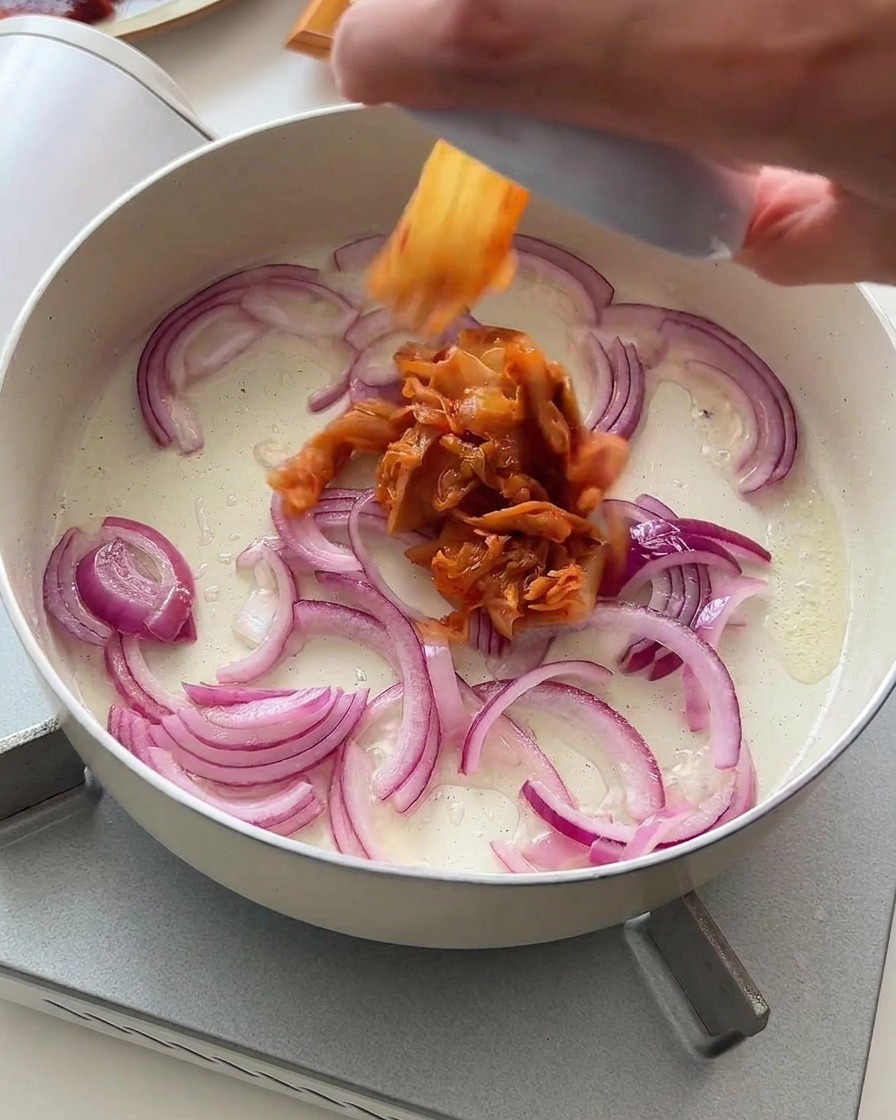
Add the chopped kimchi into the pan with the sliced red onions. Stir-fry them together in the oil over medium heat until the kimchi softens and releases its tangy aroma into the pan.
Tip: Using well-fermented, older kimchi works best for stews and stir-fries as it provides a much deeper, robust flavor profile compared to fresh kimchi. - 8Create the soup base
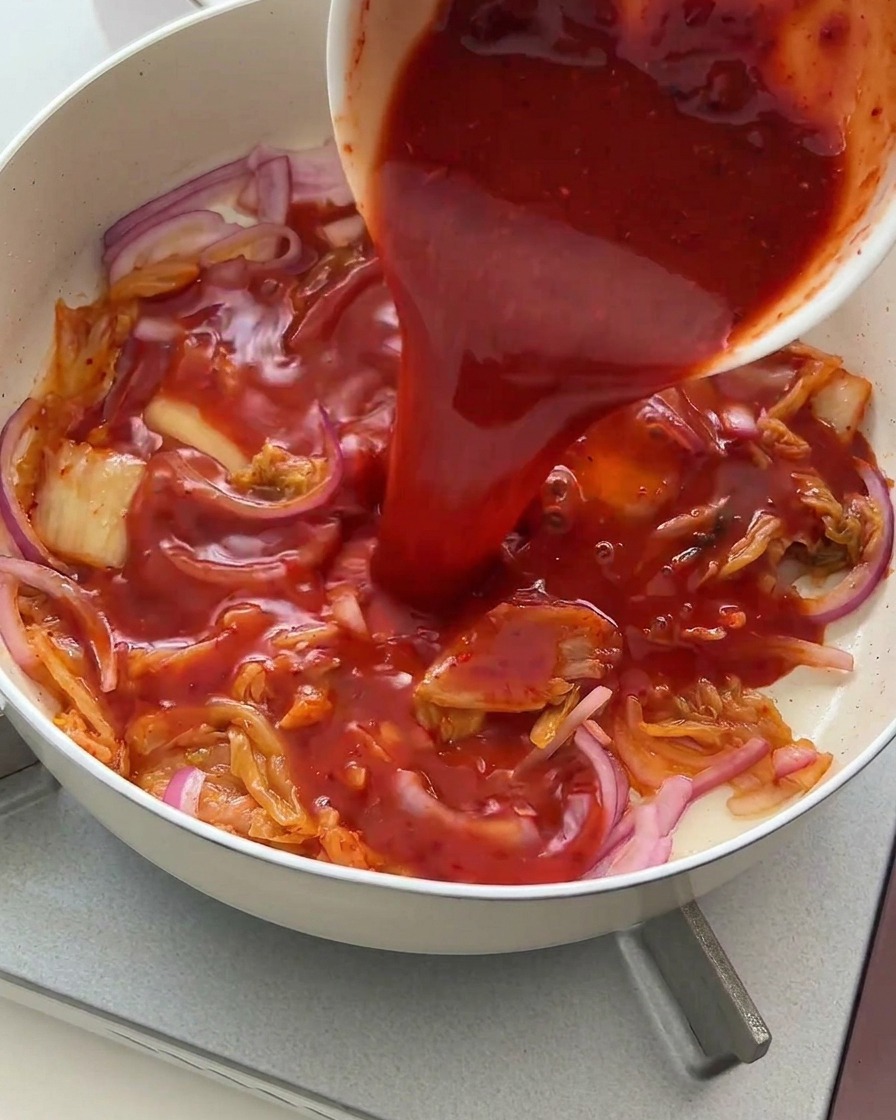
Pour the prepared red sauce mixture over the sautéed onions and kimchi, then add enough water or broth to fill the pan. Stir gently to combine all the ingredients and bring the vibrant red liquid to a bubbling simmer.
Tip: If the sauce mixture is too thick and sticks to the bowl, add a small splash of water or broth to rinse it out and get all the flavor into the pan. - 9Add the enoki mushrooms
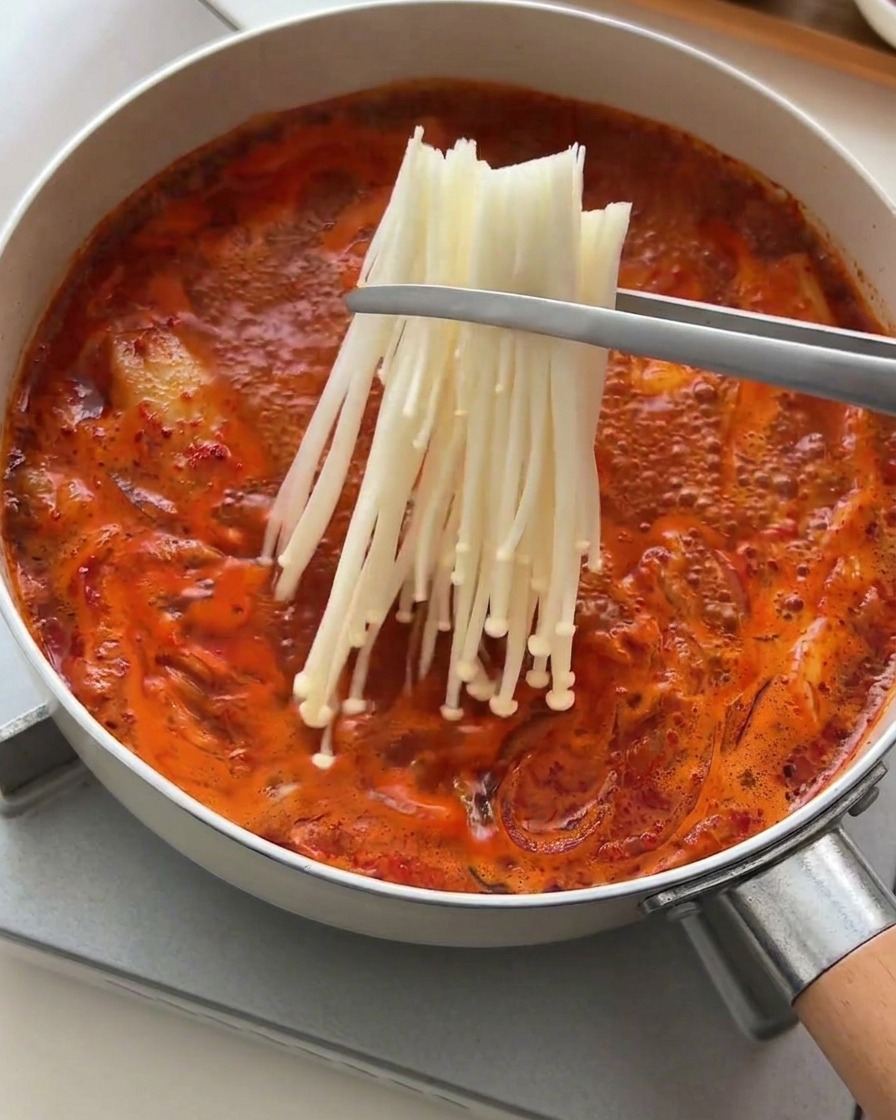
Once the soup base comes to a gentle boil, carefully add a bundle of fresh enoki mushrooms. Submerge the bottom half of the mushrooms in the broth so they begin to soften and absorb the flavors.
Tip: Enoki mushrooms cook very quickly. Adding them toward the end of the cooking process ensures they retain a satisfying, slight crunch. - 10Place the soft tofu
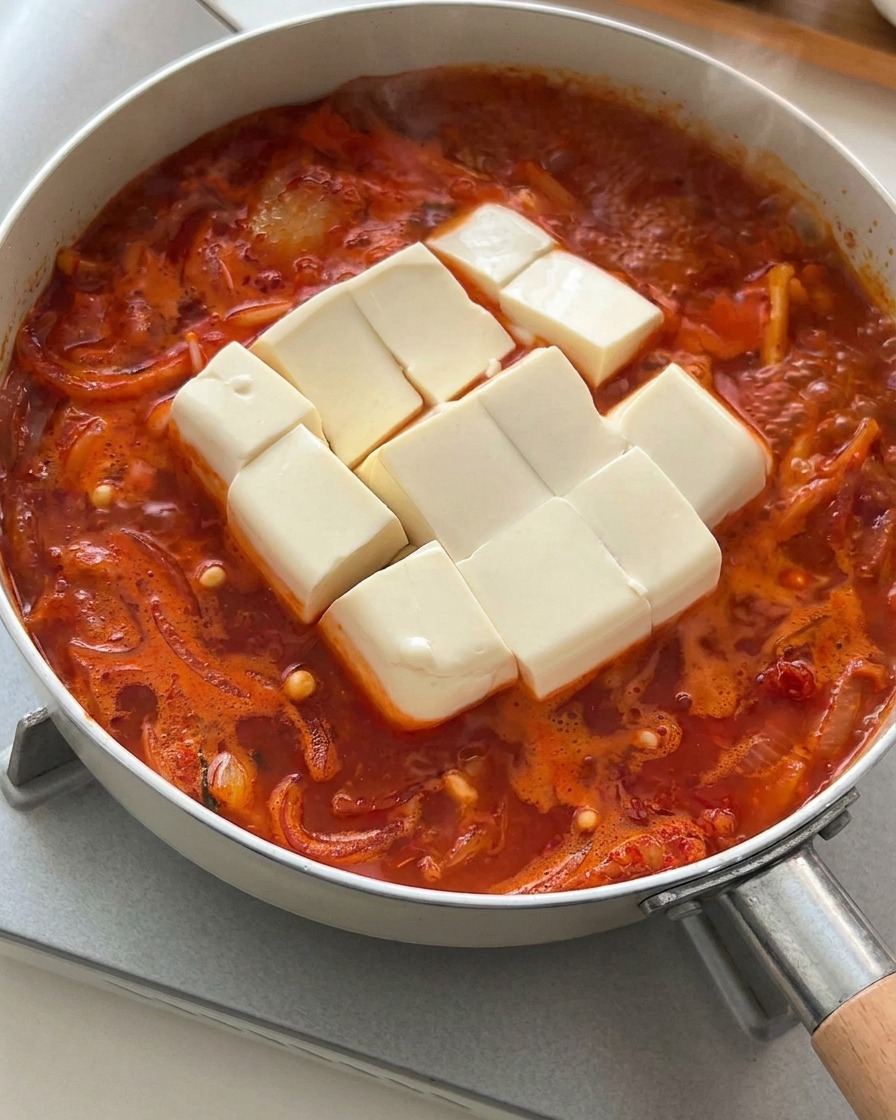
Carefully transfer the soft tofu, pre-cut into cubes, into the center of the bubbling soup. Gently press the pieces down slightly so the hot, spicy broth can seep between them without breaking the delicate curds apart.
Tip: Use soft or silken tofu for this type of stew; its delicate, custardy texture pairs perfectly with the bold and spicy broth. - 11Lay down the beef
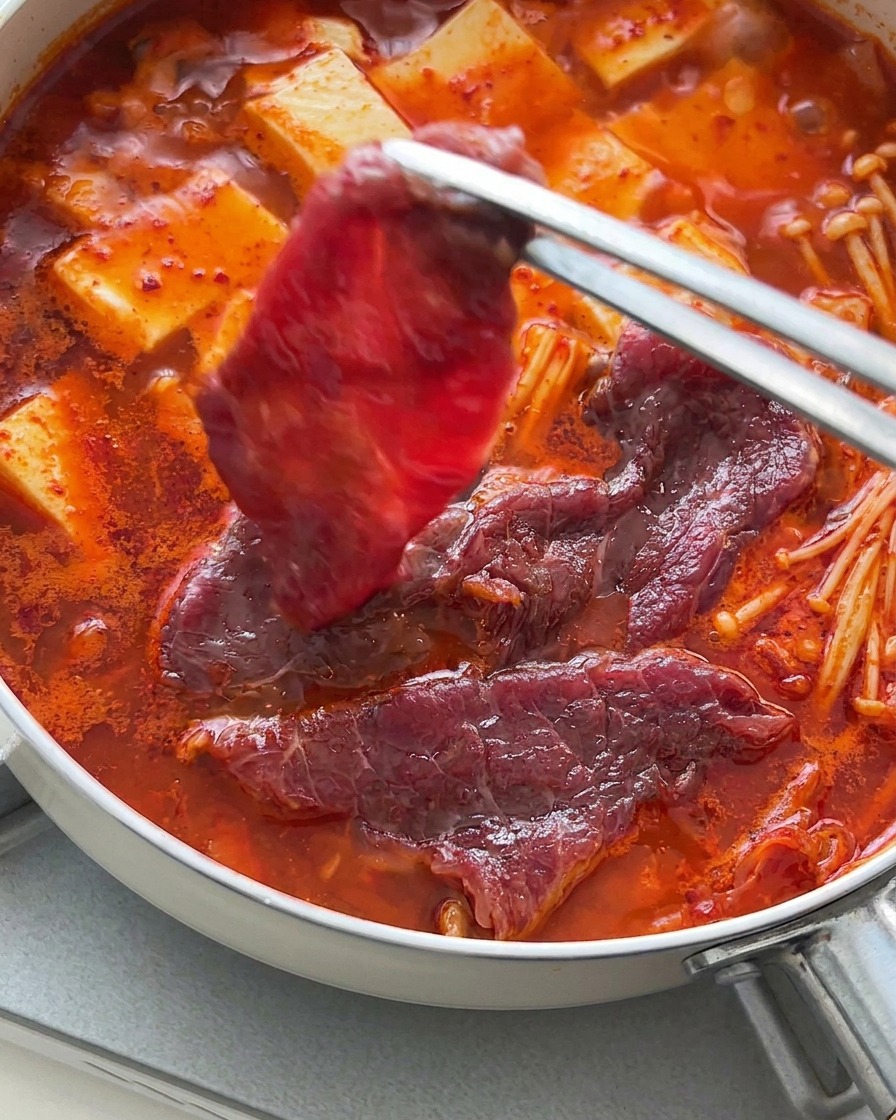
Using tongs or chopsticks, lay the thin slices of raw beef across the top of the hot, bubbling stew. Let the beef cook gently in the simmering liquid until the meat is no longer pink.
Tip: Thinly sliced beef cooks in just a matter of minutes. Avoid overcooking the meat to keep it tender and juicy. - 12Garnish with fresh chilies
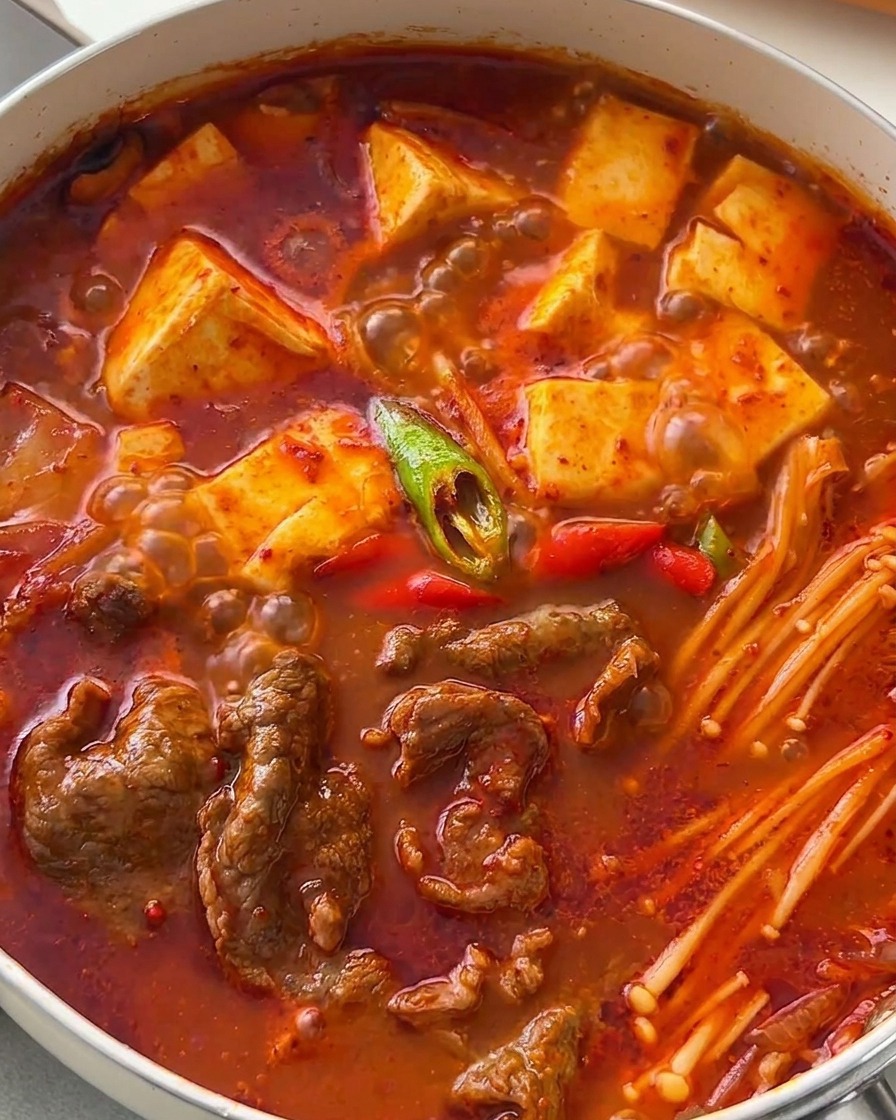
Finish the stew by scattering sliced green and red chili peppers over the top as a vibrant, spicy garnish. Allow the pan to bubble for another minute before serving the dish piping hot directly from the stove.
Tip: Adjust the amount of fresh chilies based on your personal spice tolerance, or omit them entirely for a milder finish.