Savory Tuna Kimchi Soup (Chamchi Kimchi Jjigae)
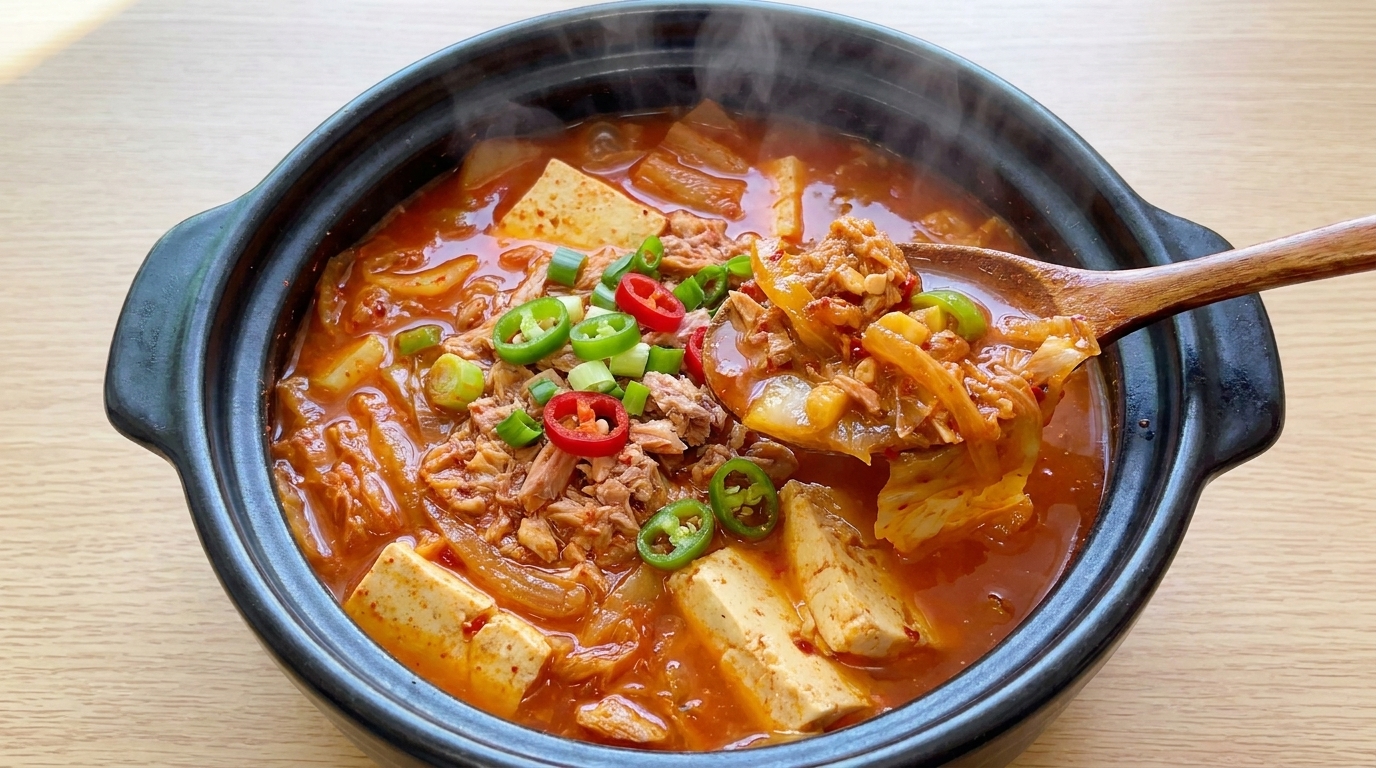
A comforting Korean staple featuring sour fermented kimchi, silky tofu, and savory tuna in a spicy, umami-rich broth that pairs perfectly with steamed rice.
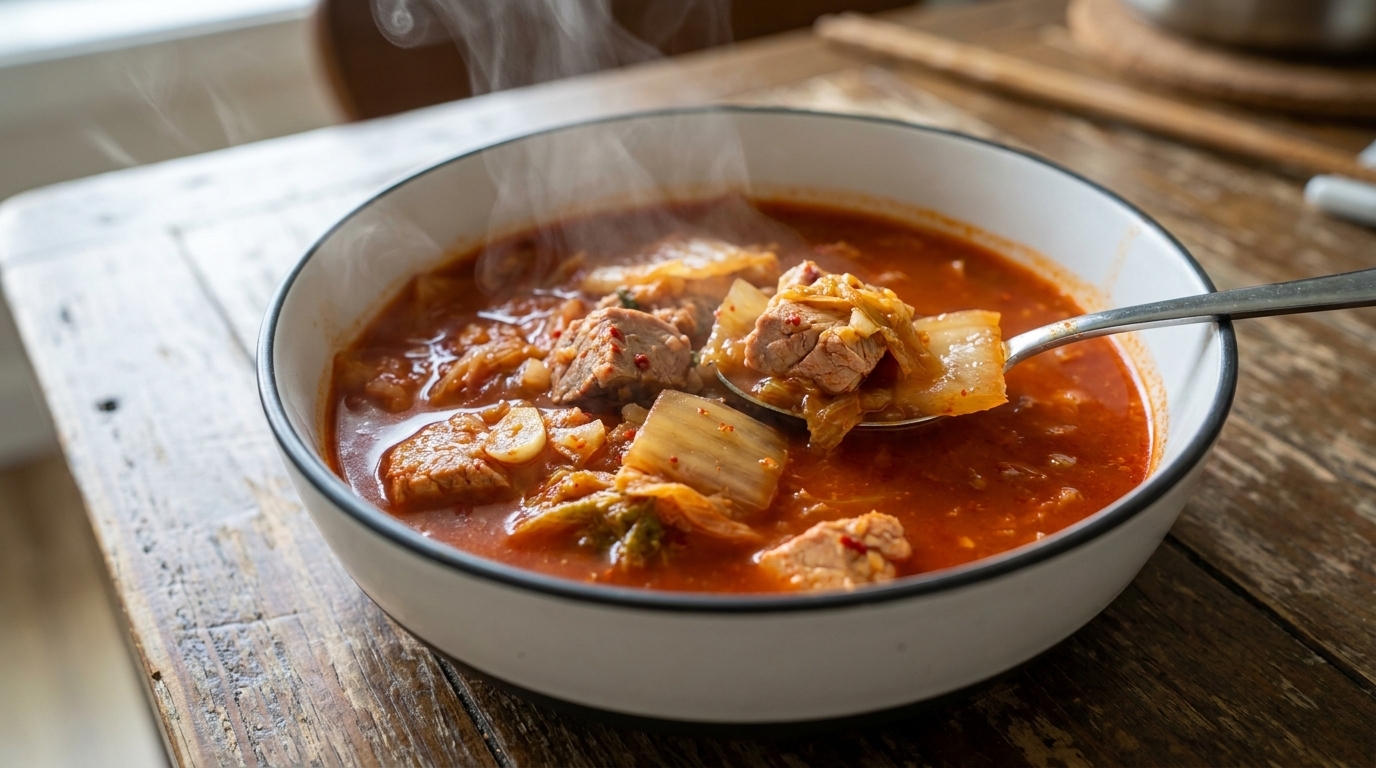
Chamchi Kimchi Jjigae is a beloved everyday stew in Korean households, valued for its simplicity and depth of flavor. While many stews traditionally use pork, this tuna version provides a lighter yet equally satisfying umami punch. It is the ultimate comfort food for a cold day or when you need a quick, soul-warming meal.
Ingredients
- 1 can tuna in oil or water
- 1 cup chopped sour cabbage kimchi
- 12 white onion
- 200 g tofu
- 1 tbsp sesame oil
- 2 cloves garlic
- 1 tbsp coarse red chili flakes (gochugaru)
- 1 tbsp fine red chili powder
- 400 ml water
- to taste salt
- 2 stalks green onions
- optional red and green chili peppers
Instructions
- 1Heat the pot with sesame oil
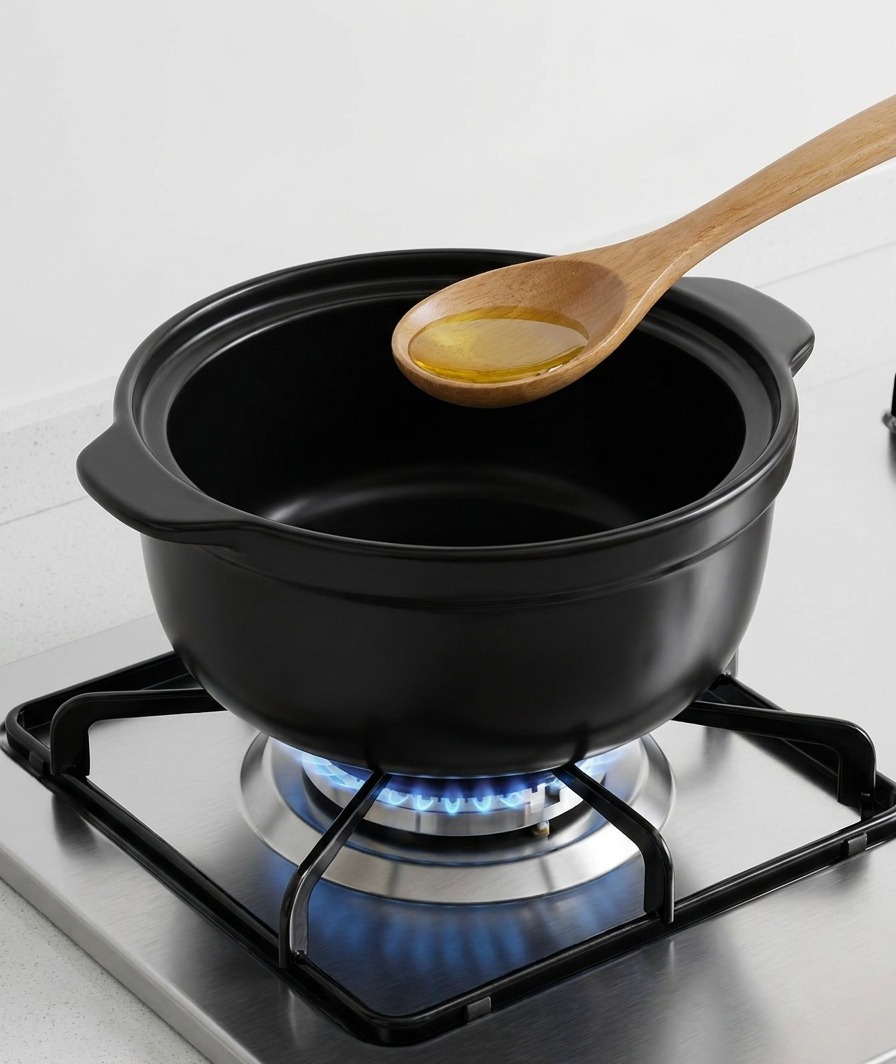
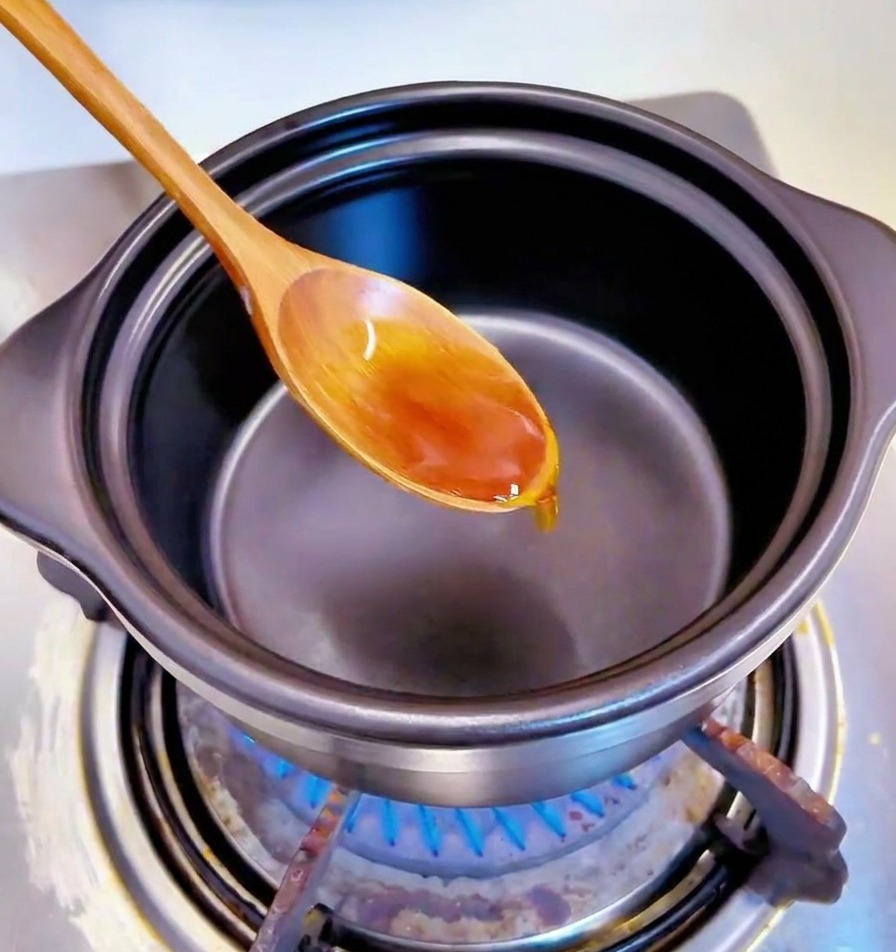
Place a black ceramic pot on the stove and turn on the heat. Once the pot is warm, add a spoonful of sesame oil, which will provide a rich, nutty base for sautéing the aromatics and kimchi.
Tip: Keep the heat at a medium level because sesame oil has a lower smoke point than vegetable oil and should not be allowed to smoke. - 2Sauté the minced garlic
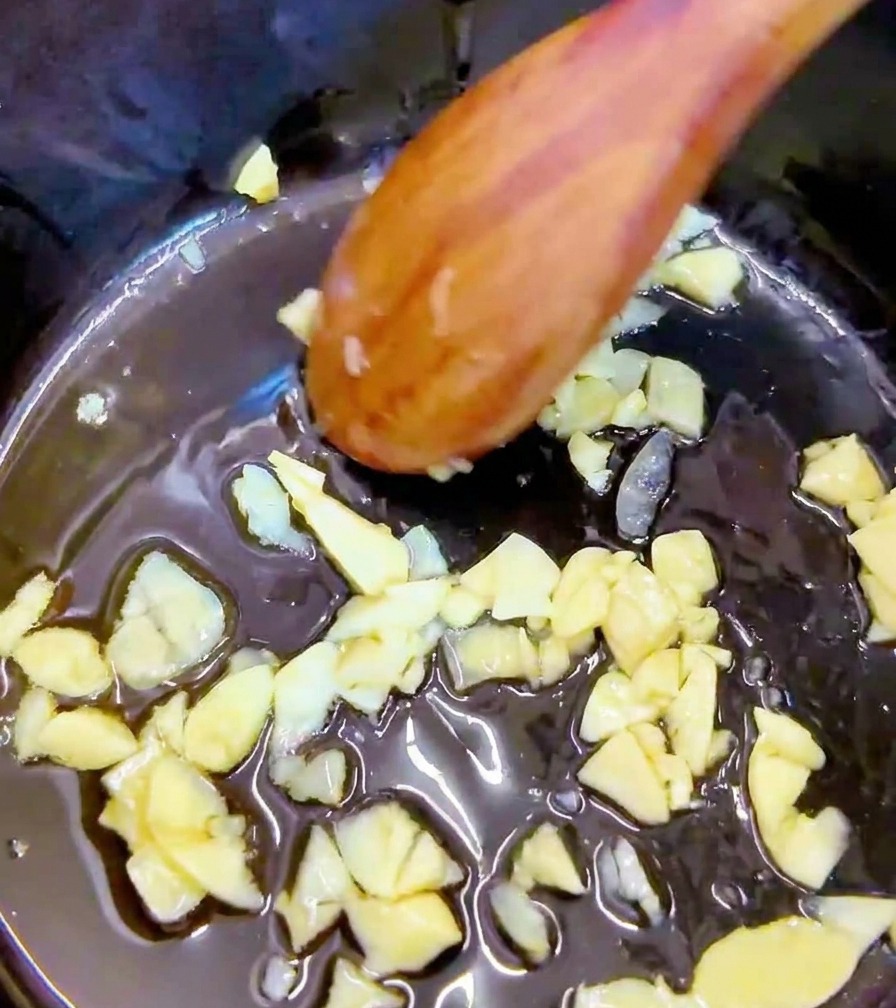
Add the minced garlic into the heated sesame oil. Use a wooden spoon to stir-fry the garlic briefly until it becomes fragrant while ensuring it does not brown too quickly.
Tip: Garlic burns easily and can turn bitter, so stir constantly and be ready to add the next ingredient as soon as you smell the aroma. - 3Add the chopped kimchi
Incorporate the chopped cabbage kimchi into the pot with the fragrant garlic. Stir-fry the mixture together to allow the flavors to meld and the kimchi to soften slightly.
Tip: Well-fermented, sour kimchi works best for this soup as it provides a deeper, more complex flavor profile. - 4Pour in the tuna liquid
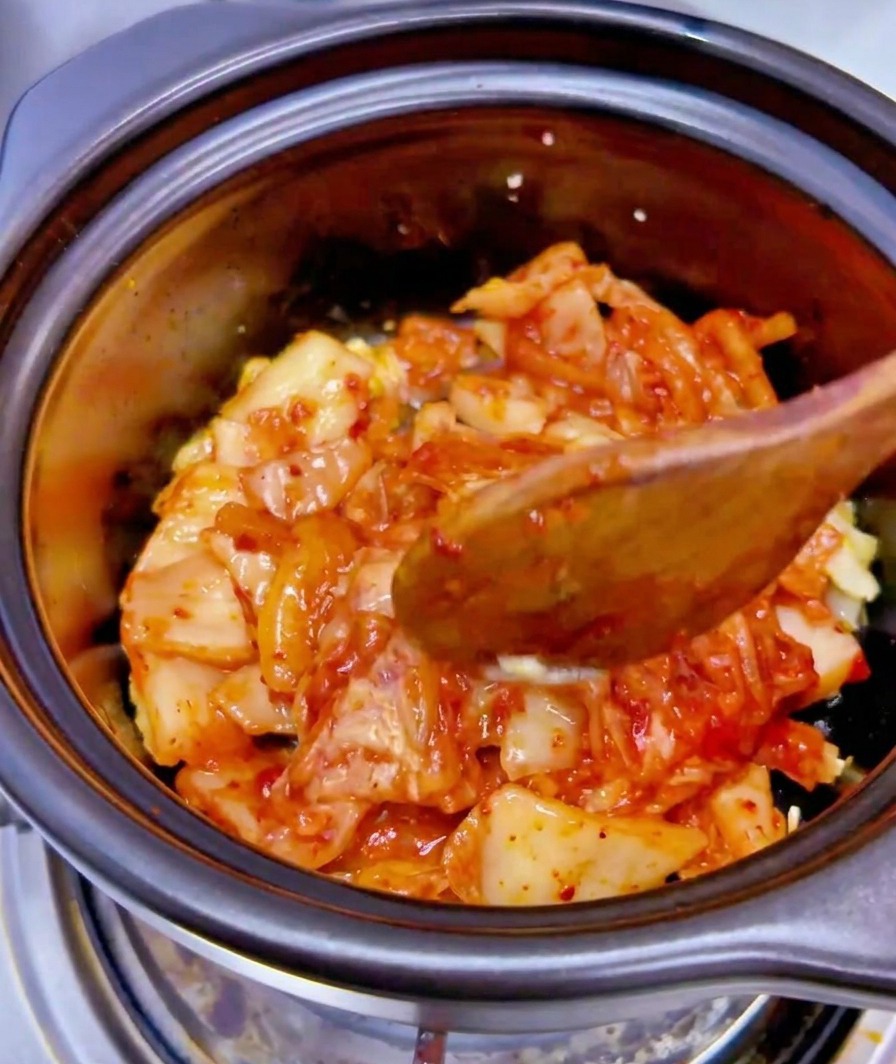
Take the liquid from the canned tuna and pour it directly over the kimchi in the pot. This liquid contains a lot of savory flavor that will enhance the base of your soup.
- 5Add onion slices
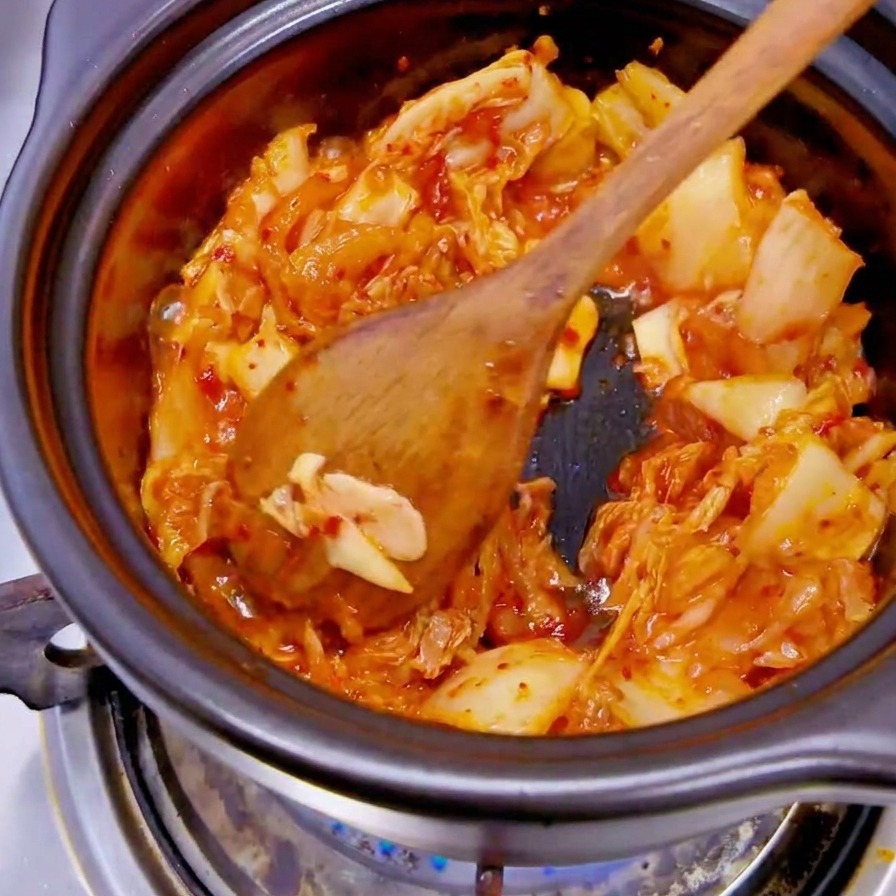
Add the sliced white onions to the kimchi and garlic mixture. Continue to stir-fry briefly so the onions can begin to soften and release their natural sweetness into the base.
Tip: If you prefer a milder onion flavor, you can sauté them a bit longer before adding the liquids. - 6Add coarse chili flakes

Add a generous spoonful of coarse red chili flakes (gochugaru) to the stir-fried kimchi. These flakes provide the signature texture and a balanced, smoky heat that is essential for a traditional Korean stew.
Tip: If you prefer a milder soup, start with a smaller amount and adjust to your spice tolerance later. - 7Incorporate fine chili powder

Add a spoonful of fine red chili powder to the pot. While the coarse flakes provide texture, the fine powder dissolves quickly into the liquids to create a deep, vibrant red color and a more immediate spicy kick.
Tip: Using both coarse flakes and fine powder creates a more complex flavor profile and professional-looking broth. - 8Pour in fresh water
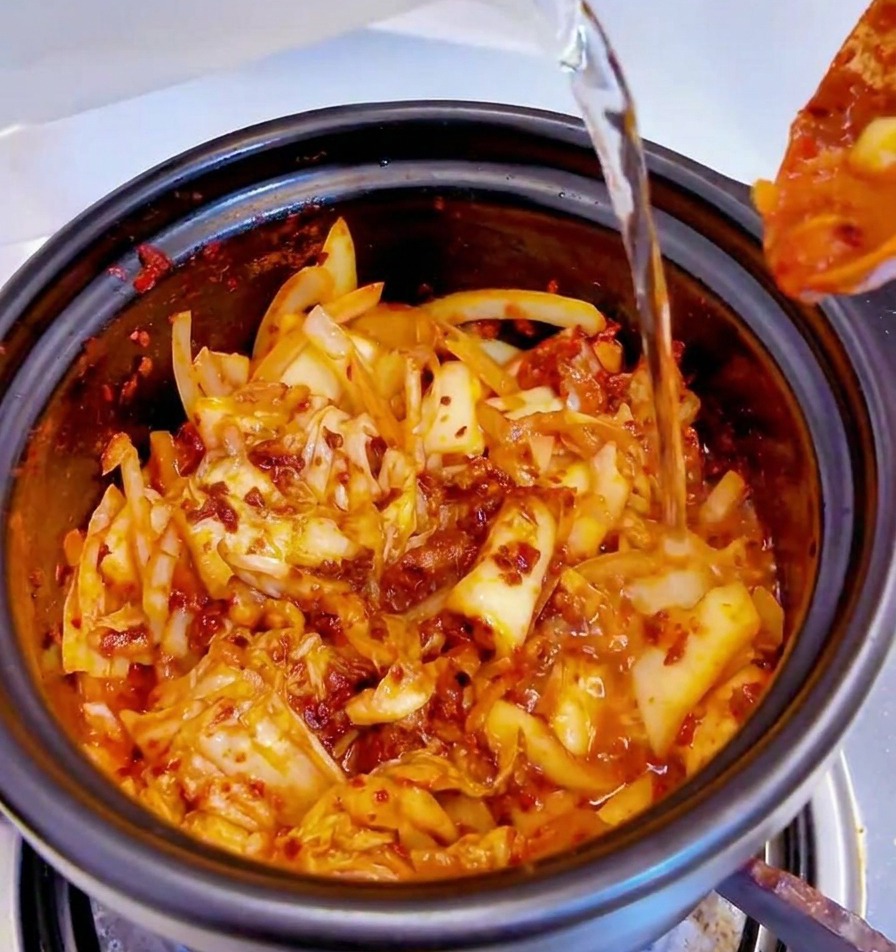
Pour 400ml of fresh water into the pot, ensuring it completely covers the seasoned kimchi and onion mixture. This will serve as the base for your spicy and savory broth.
Tip: You can use rice water (the water from washing rice) instead of plain water for a slightly thicker and more flavorful soup base. - 9Add the tofu cubes
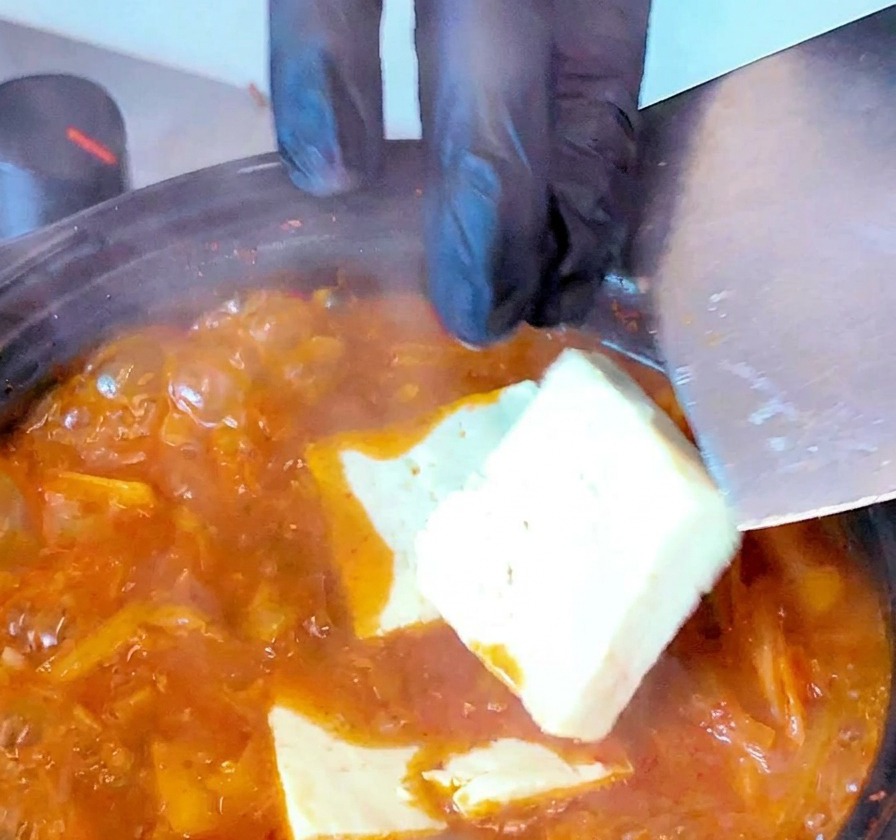
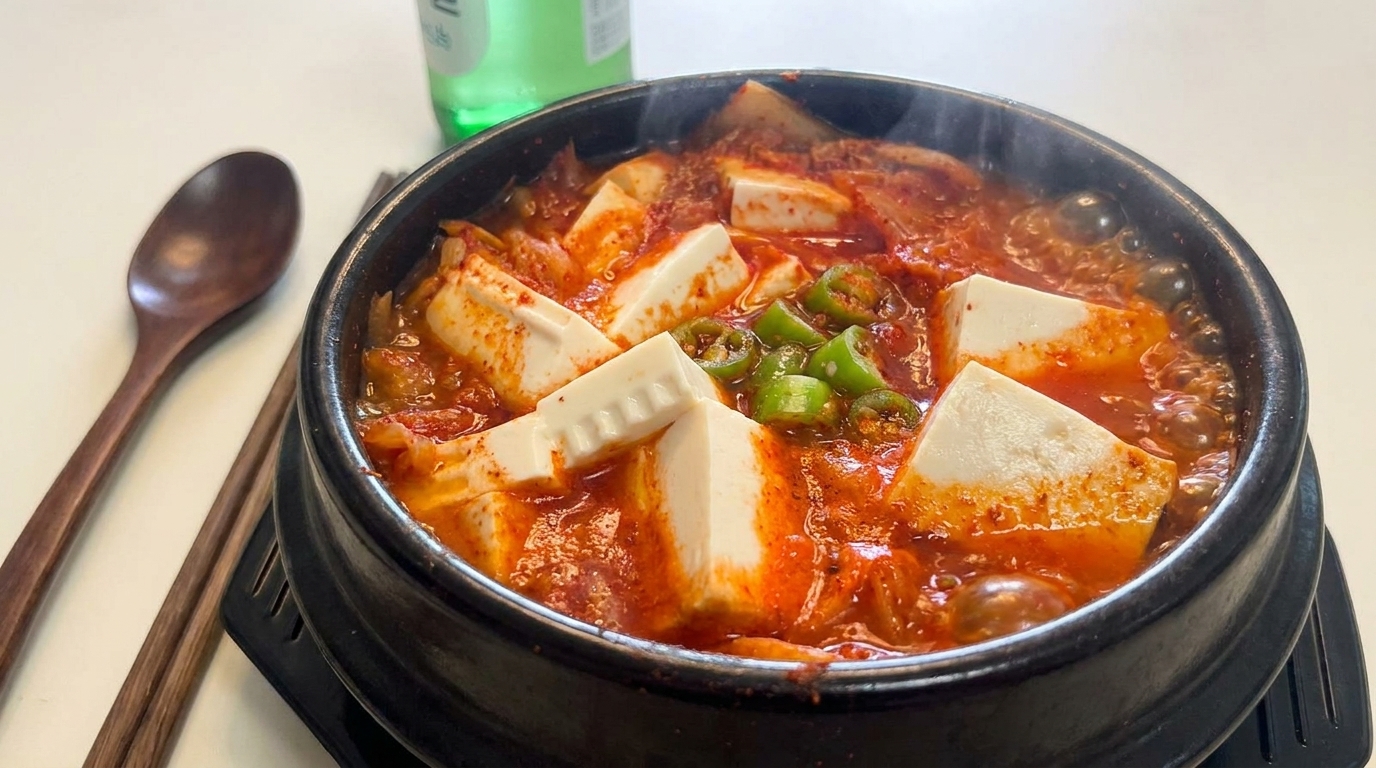
Carefully slide the squared slices of white tofu into the bubbling red soup. Tofu absorbs the spicy flavors of the broth while providing a soft, silky contrast to the crunchy kimchi.
Tip: Handle the tofu gently with a spatula to prevent the delicate cubes from breaking apart in the boiling liquid. - 10Add the canned tuna
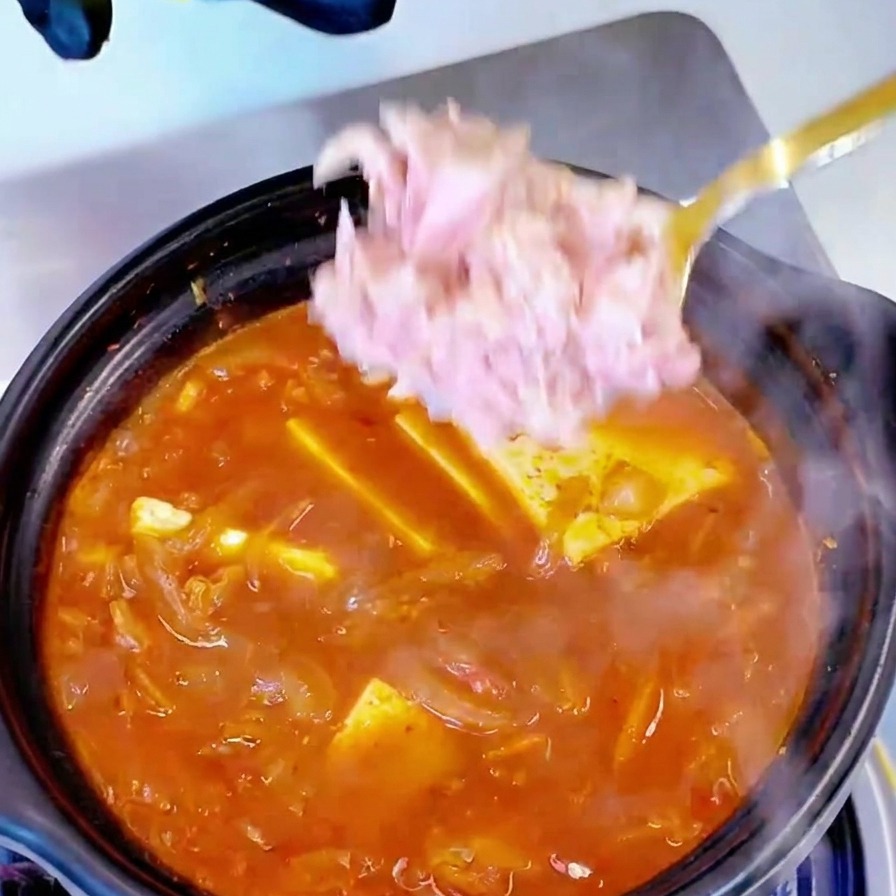
Spoon the solid chunks of canned tuna into the soup, placing them alongside the tofu. The tuna adds a rich, savory protein element that makes the soup incredibly satisfying.
Tip: Try not to stir too vigorously after adding the tuna if you prefer to keep larger, bite-sized chunks in your soup. - 11Season with salt
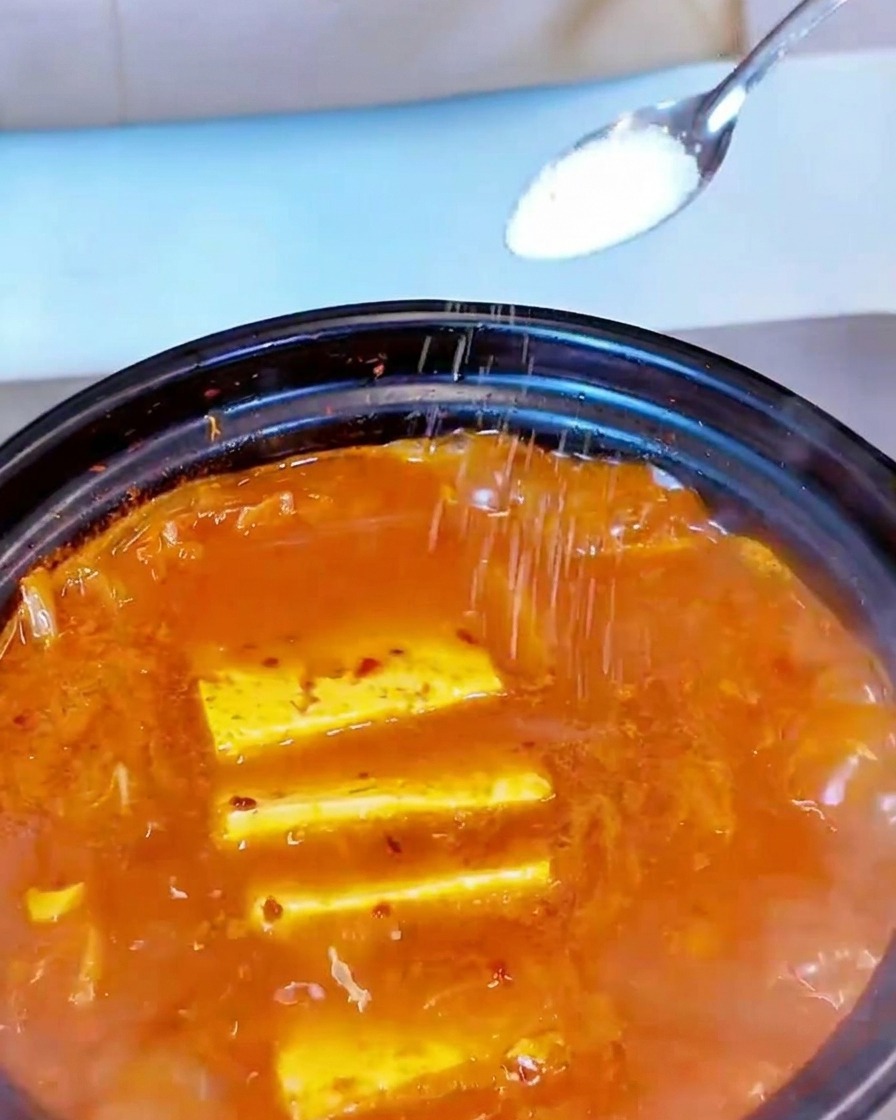
Sprinkle a spoonful of salt over the surface of the simmering soup to enhance all the flavors. This final seasoning step balances the acidity of the kimchi and the richness of the tuna.
Tip: Since kimchi and canned tuna can both be salty, always taste the broth before adding the full amount of salt. - 12Add the green onions
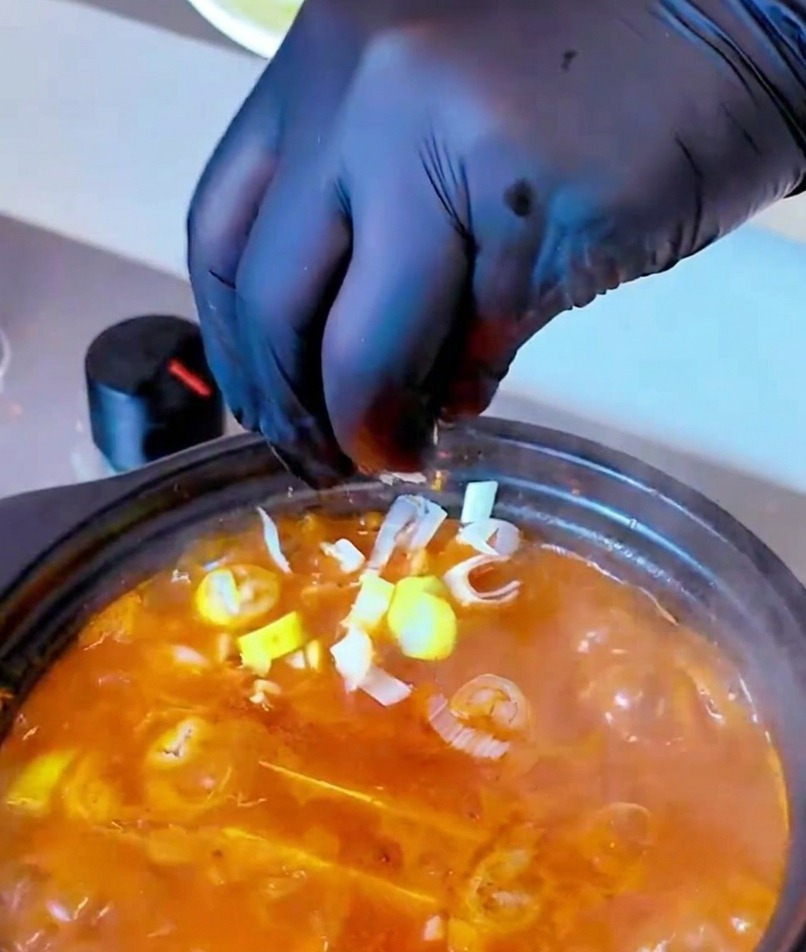
Once the soup has come to a second boil after incorporating the tofu and tuna, sprinkle a handful of freshly chopped green onions over the surface. These add a mild, fresh bite that balances the deep, fermented richness of the kimchi broth.
Tip: For the best flavor and presentation, use a mix of the pungent white parts and the vibrant green tops of the scallions. - 13Garnish with chili peppers
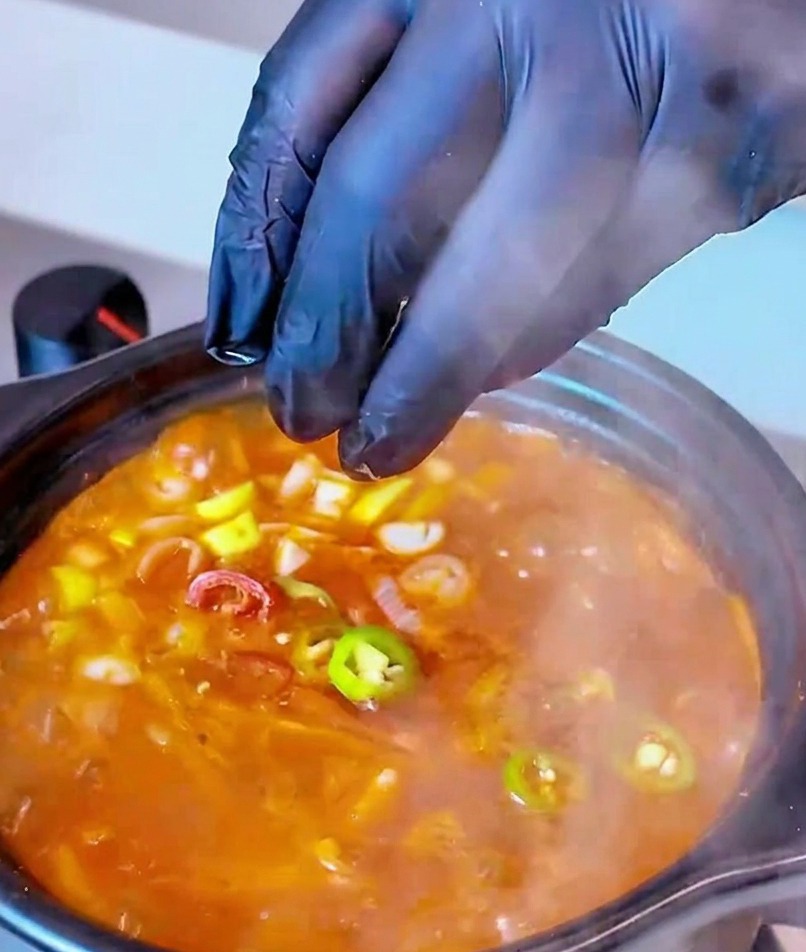
Finish the dish by adding freshly sliced green and red chili rounds to the bubbling pot. This final garnish provides an extra layer of heat and a pop of color. Let the soup simmer for just a few more seconds to let the flavors meld before turning off the heat.
Tip: If you prefer a milder soup, remove the seeds from the chili peppers before slicing them to reduce the spice level.