Korean Tuna Kimchi Stew
Savory Handmade Rice Balls (Chamchi Kimchi Jjigae)
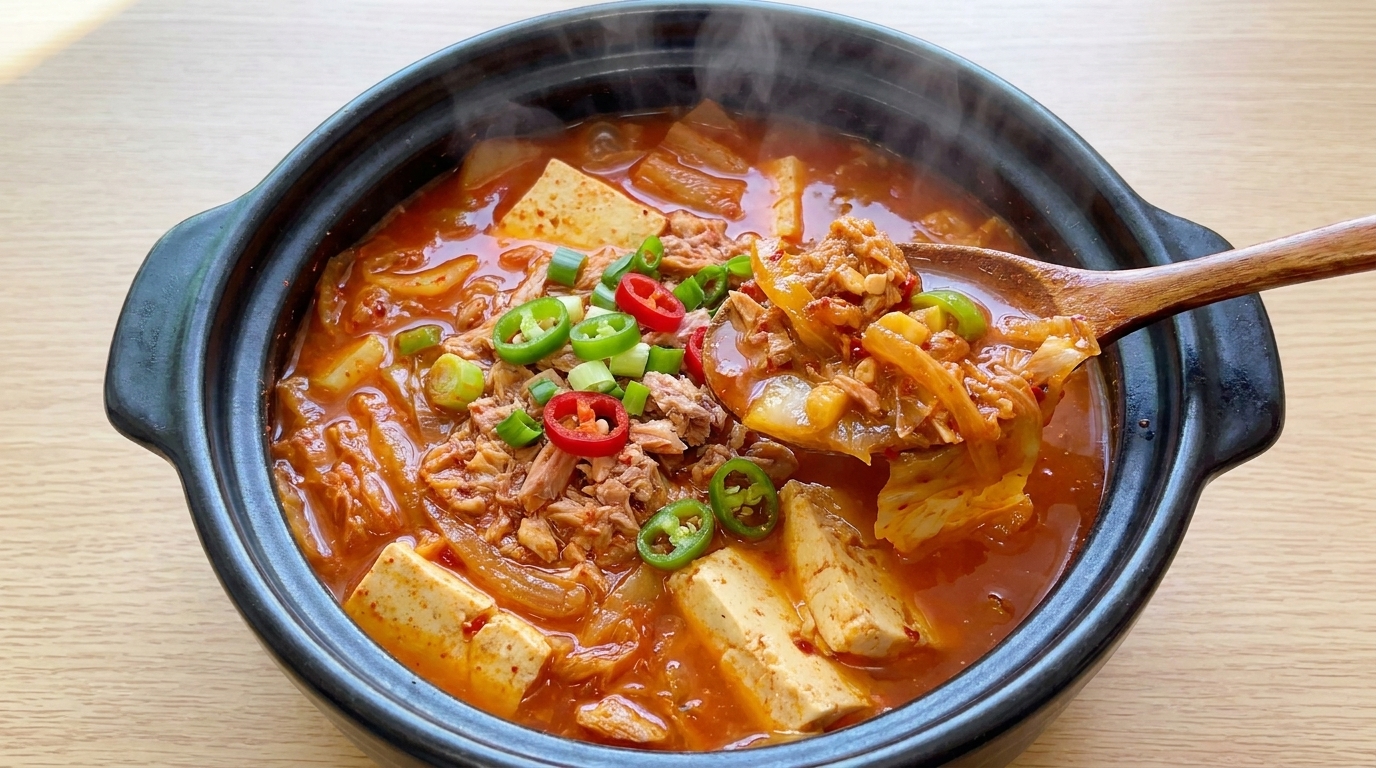
A comforting Korean duo featuring a tangy and rich Tuna Kimchi Stew paired with tender rice balls loaded with ham and toasted seaweed.
Tuna Kimchi Stew or Chamchi Kimchi Jjigae is the ultimate Korean comfort meal that proves how humble pantry staples can be transformed into something extraordinary. By utilizing the flavorful oil from the tuna can to sear the kimchi we develop a depth of flavor usually reserved for much longer cook times. When paired with these quick assembly rice balls you have a texturally satisfying meal that hits every note of salt and spicy satisfaction.
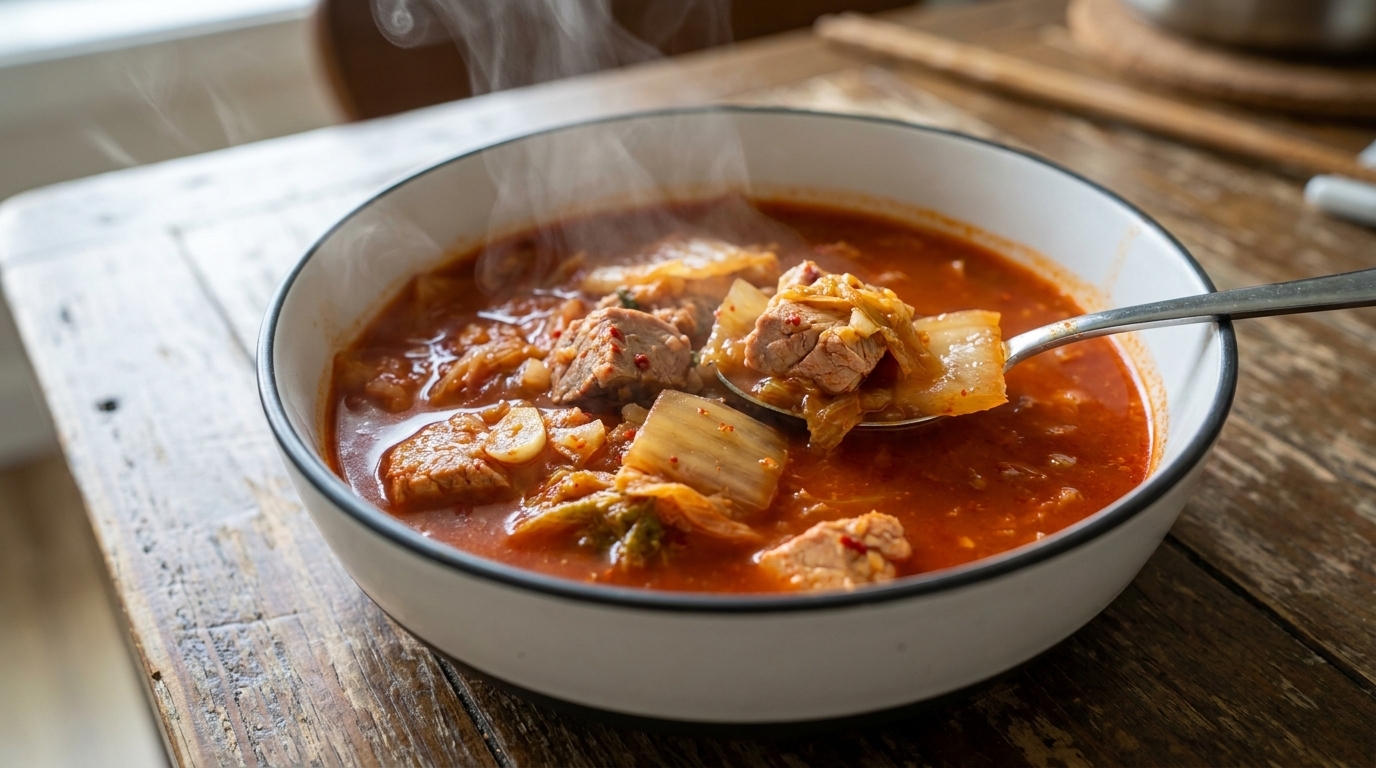
Ingredients
- 1 can tuna in oil
- 1 cup fermented Napa cabbage kimchi
- 14 cup kimchi juice
- 2 green onions
- 1 tsp dark soy sauce
- 2 cups water
- 2 eggs
- 2 slices ham
- 2 cups steamed white rice
- 12 cup crushed seasoned seaweed
- to taste salt and pepper
Instructions
- 1Start with tuna oil
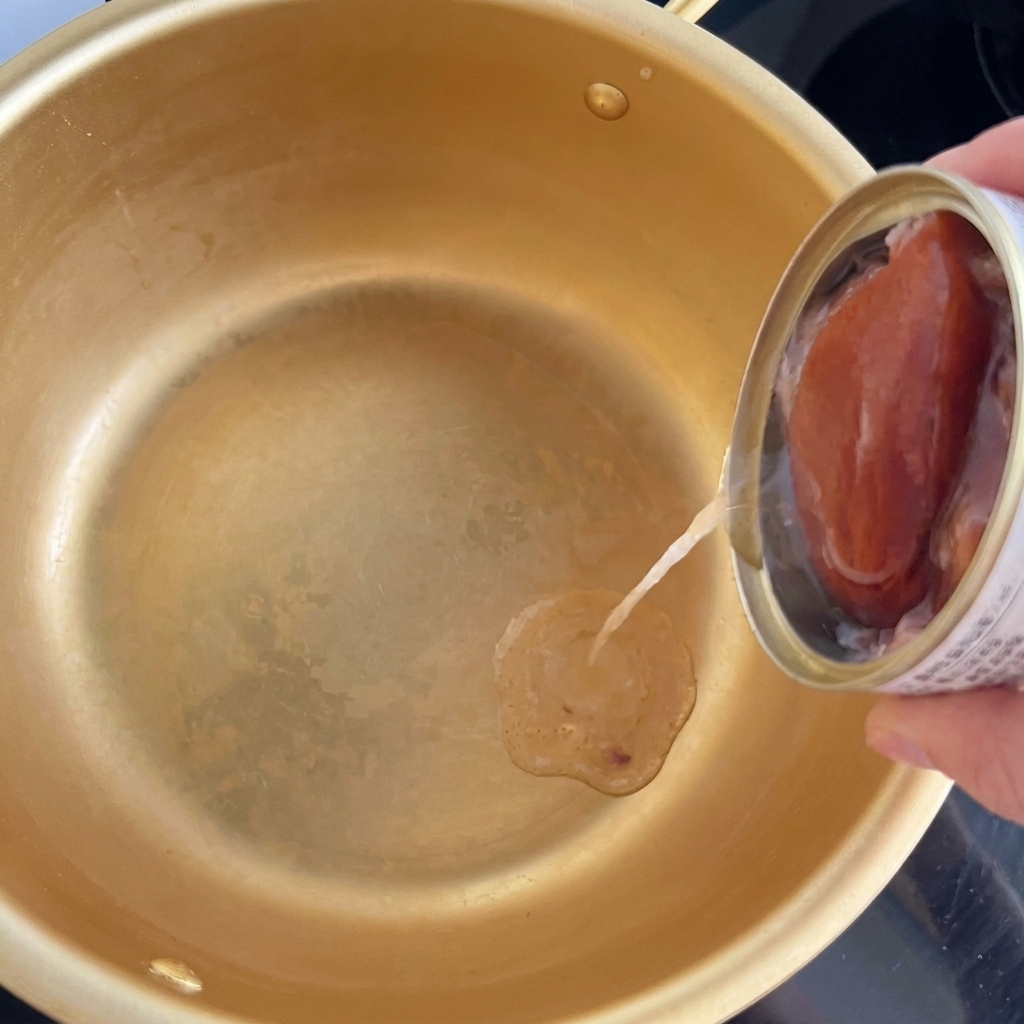
Place a gold-colored pot over low heat. Open a can of tuna and carefully pour only the oil into the pot. This oil is already infused with the flavor of the tuna and acts as a rich, aromatic base for stir-frying, eliminating the need for extra cooking oil.
Tip: Be sure to set the tuna chunks aside; they will be added toward the end of the cooking process so they stay intact. - 2Sauté the aromatics
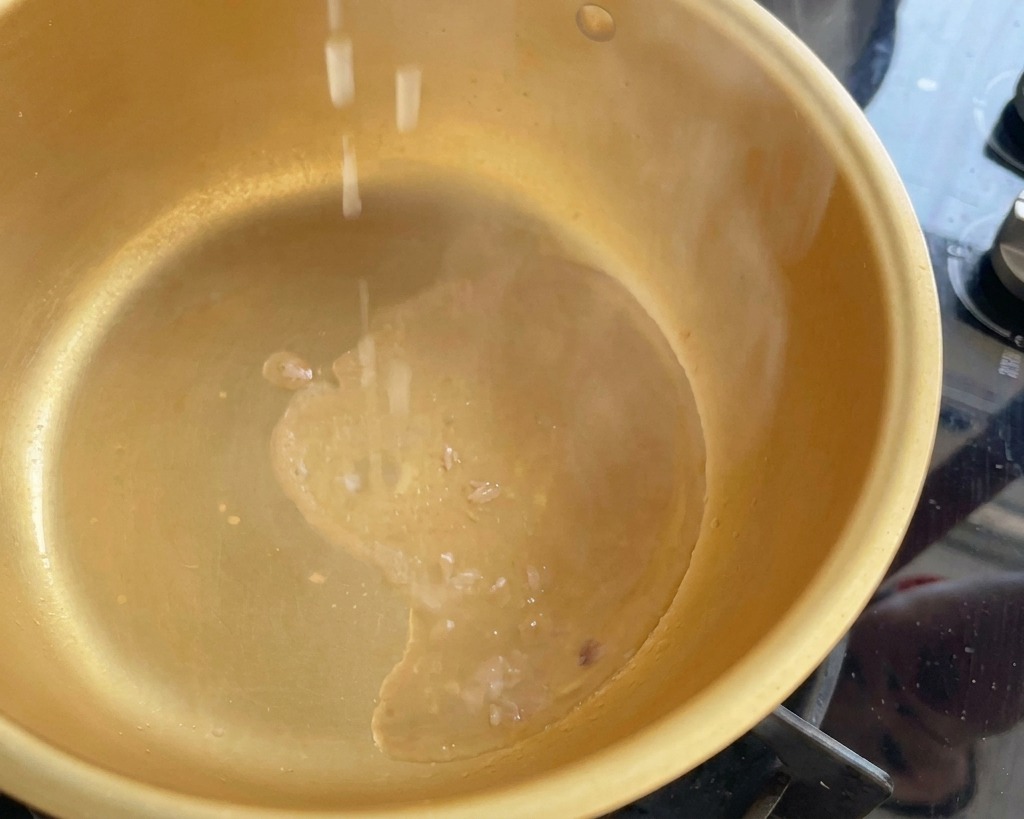
Once the tuna oil is heated, add the chopped green onions into the pot. Sauté them briefly until they become fragrant and begin to soften. You can also use white onions or minced garlic as aromatics depending on your preference.
Tip: Keep the heat on the lowest setting when adding the onions to prevent the tuna oil from smoking or burning. - 3Add the kimchi pieces
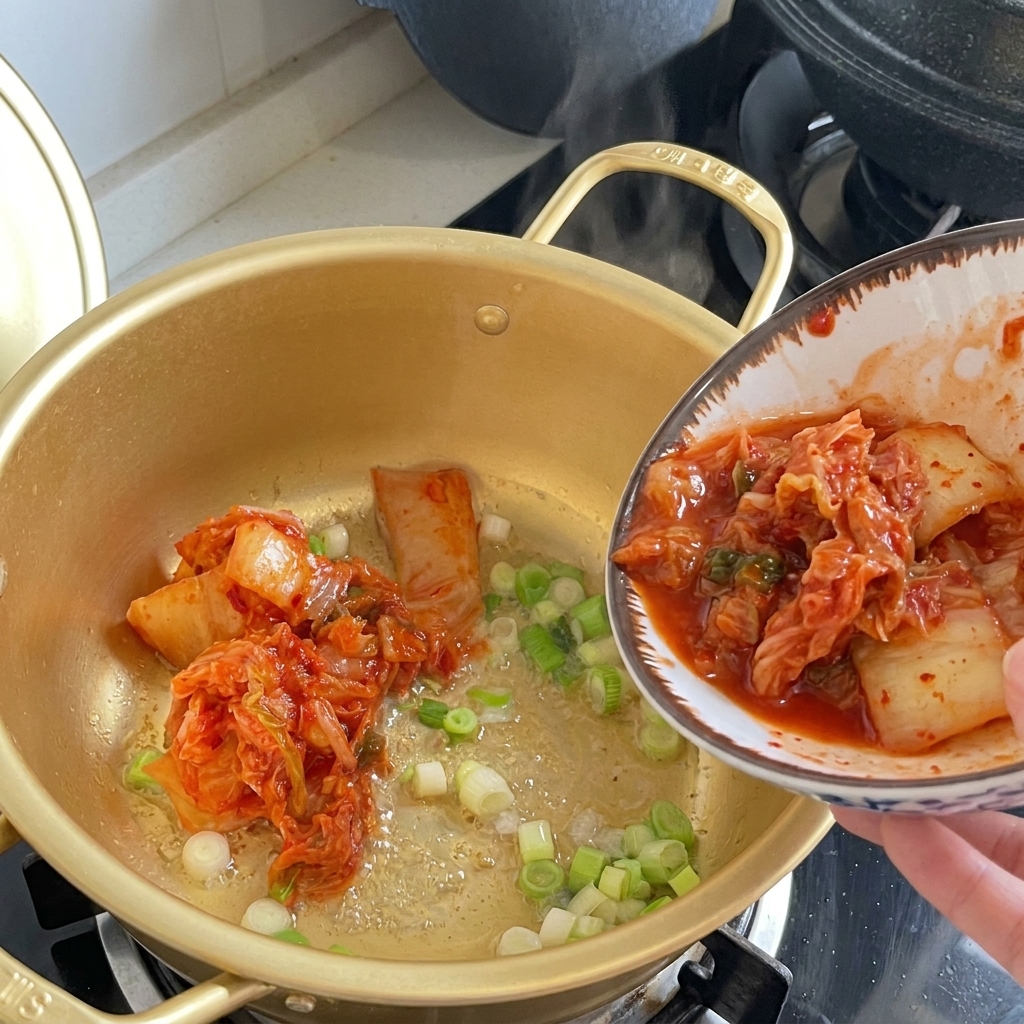
Use chopsticks to transfer pieces of fermented Napa cabbage kimchi into the pot with the sauteed onions. At this stage keep the kimchi juice in its bowl as it will be added later to build the broth.
Tip: For the best results use well fermented kimchi as its sourness provides the most authentic flavor for this stew. - 4Stir-fry the mixture
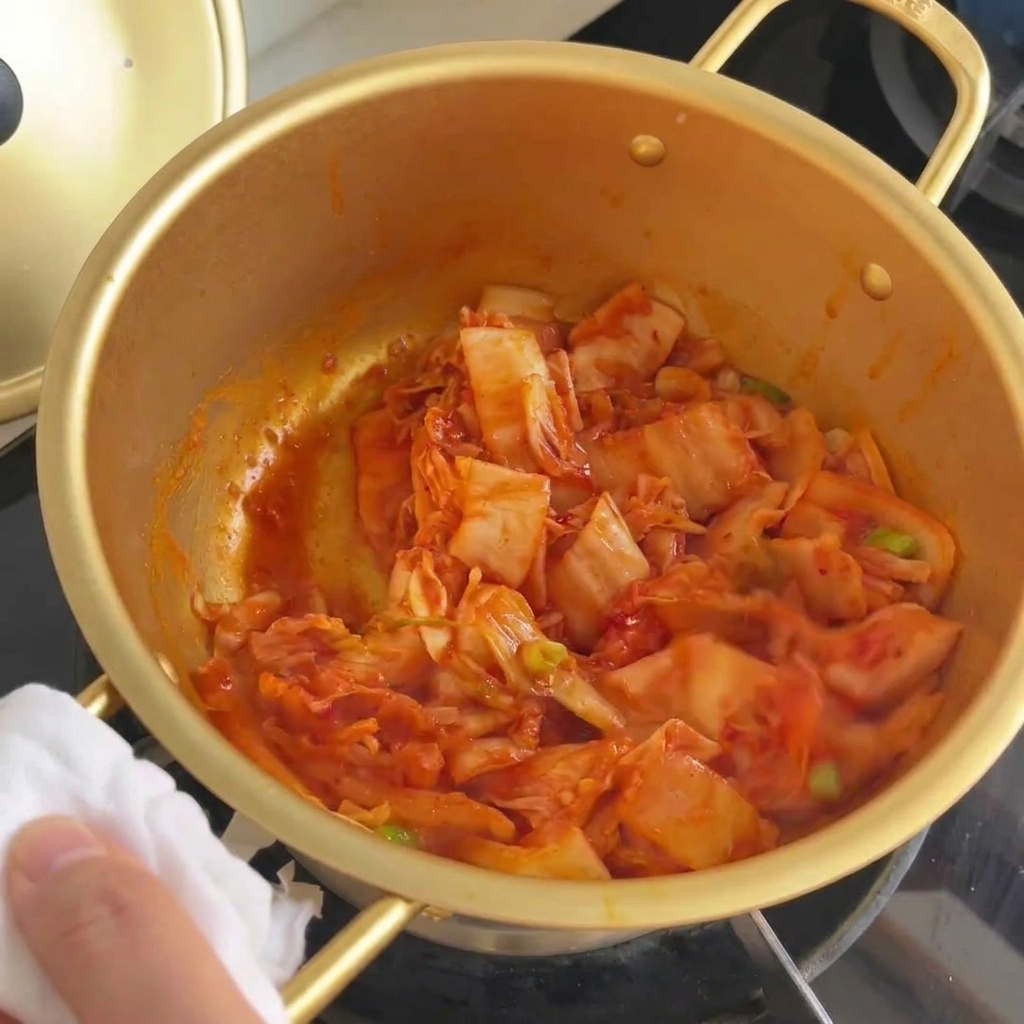
Turn the heat up slightly and stir-fry the kimchi thoroughly with the green onions. Continue stir-frying until the kimchi pieces appear softened and are well-coated in the flavorful tuna oil, which helps develop a deeper taste.
Tip: The stir-frying process mellows the sharp acidity of the kimchi and creates a more balanced stew base. - 5Season with soy sauce
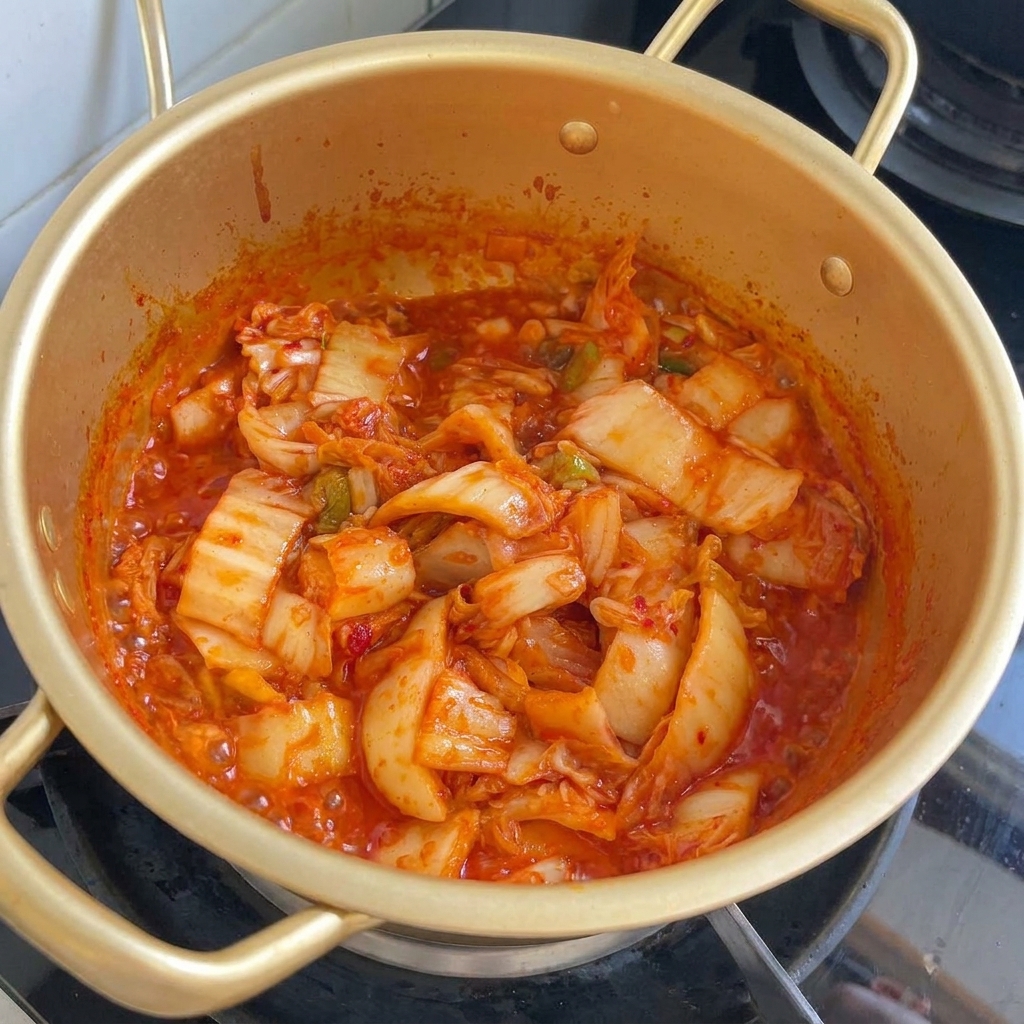
Pour a small amount of dark soy sauce over the simmering kimchi mixture in the pot. This seasoning adds a savory umami depth and enhances the rich, red color of the stew base.
Tip: Since kimchi and tuna are already salty, add the soy sauce sparingly and adjust later if needed. - 6Incorporate kimchi juice
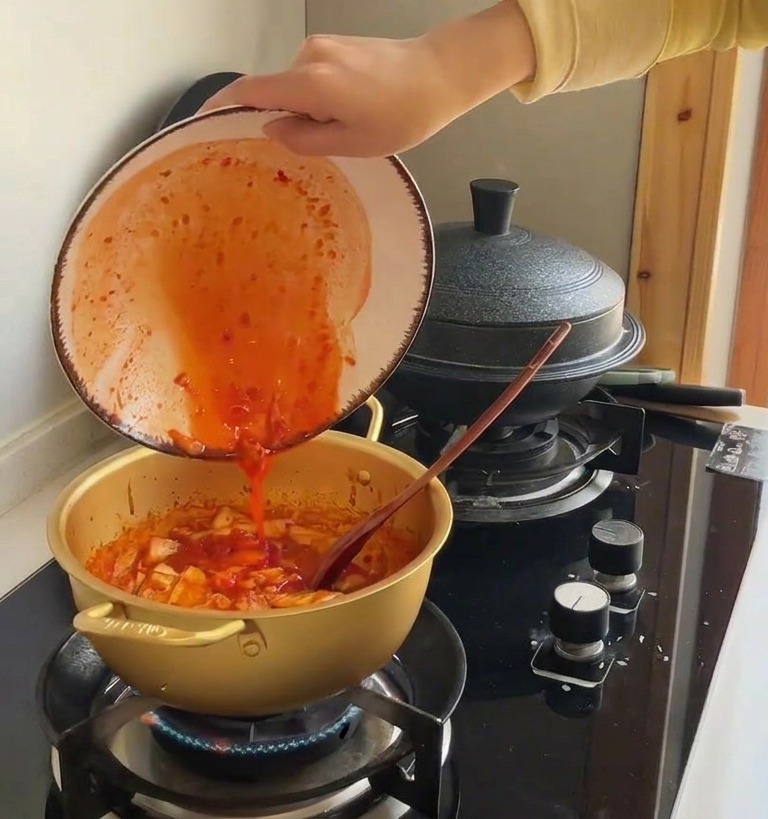
Pour all of the reserved red kimchi juice into the pot with the sautéed ingredients. This juice is packed with fermented flavor and provides the signature tanginess and spice essential for Tuna Kimchi Stew.
Tip: If the juice is particularly sour, a tiny pinch of sugar can be added later to balance the acidity of the broth. - 7Add water to the pot
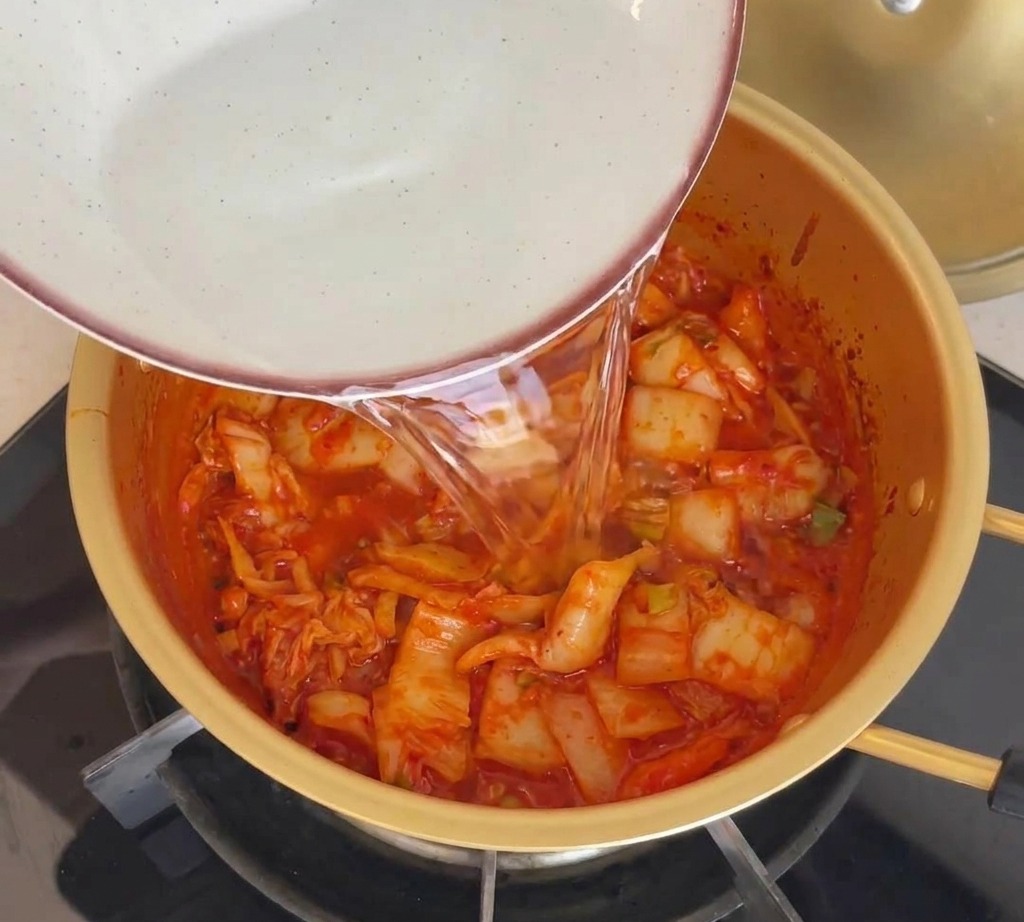
Pour enough water into the pot to fully submerge the ingredients. This forms the stew base and ensures there is enough liquid for the 20-minute simmering process without the pot boiling dry.
Tip: If you want a richer flavor, you can substitute the water with a light dashi or anchovy stock. - 8Scramble the eggs
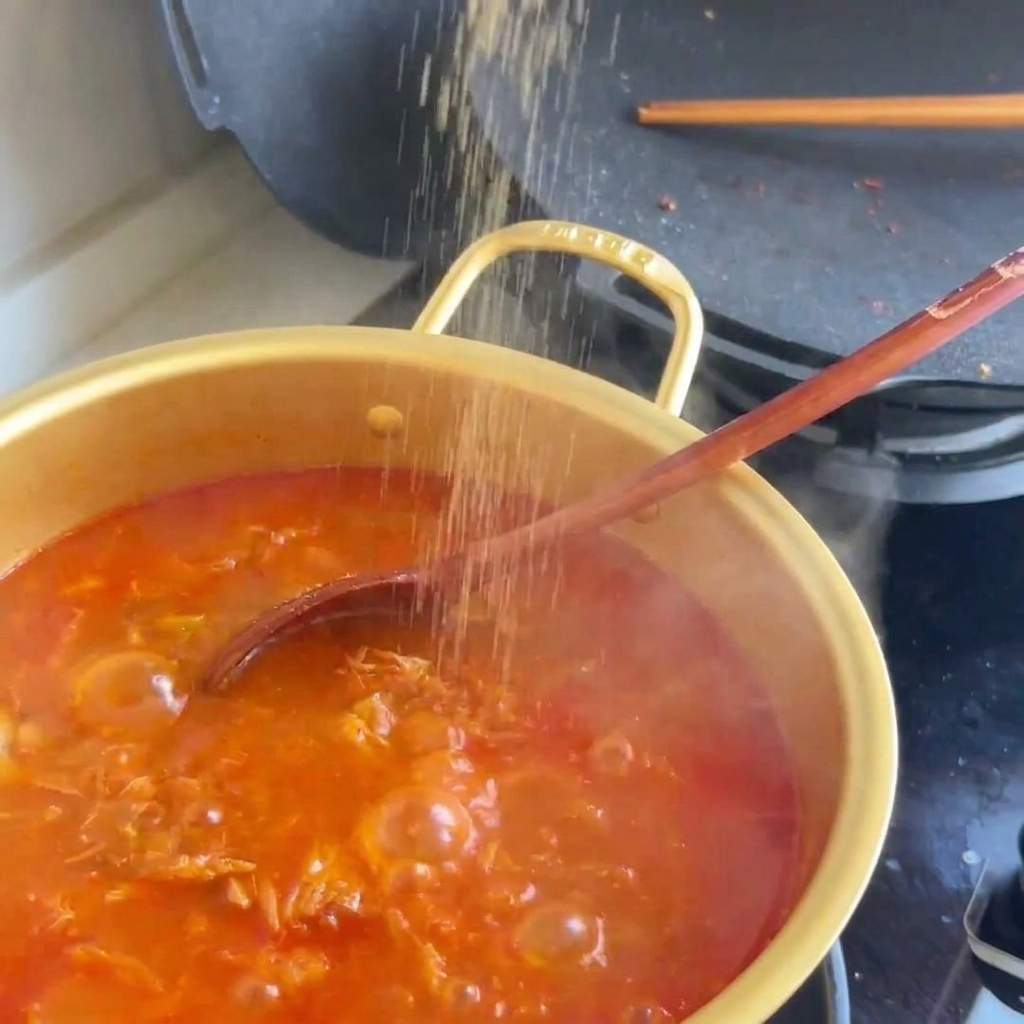
Crack your eggs into a bowl and whisk them well with a pinch of salt and pepper. Pour the egg mixture onto a heated flat griddle or pan and scramble them until they are just set but still tender. These eggs will add a soft rich texture to your rice balls.
Tip: Do not overcook the eggs because keeping them slightly soft ensures they mix better with the rice and stay moist. - 9Sauté the diced ham
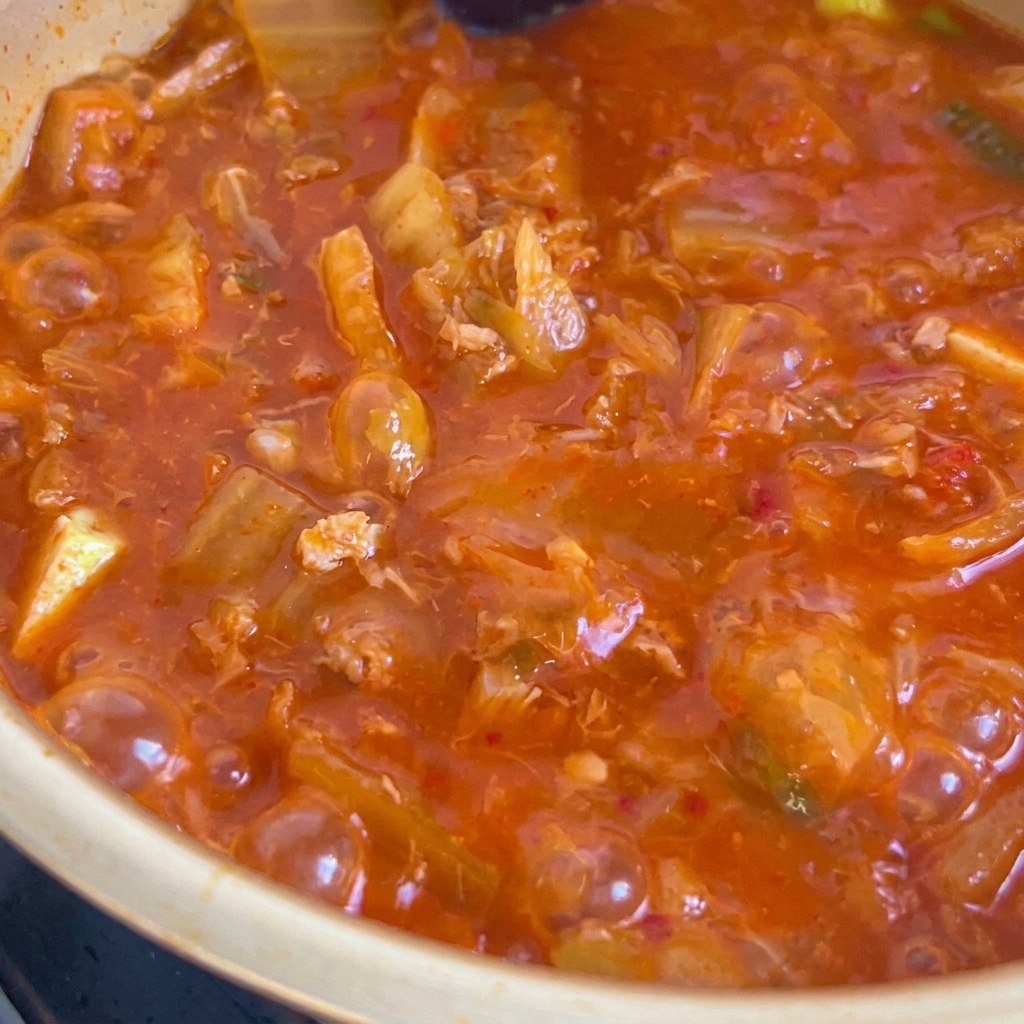
Dice two slices of ham into small, even cubes. Sauté them on the griddle until the edges are slightly browned and fragrant. Sautéing the ham beforehand develops a savory, smoky flavor that stands out in the final rice ball mixture.
Tip: You can use the same griddle used for the eggs to save on cleanup and let the ham pick up any residual seasoning. - 10Add the tuna to the stew
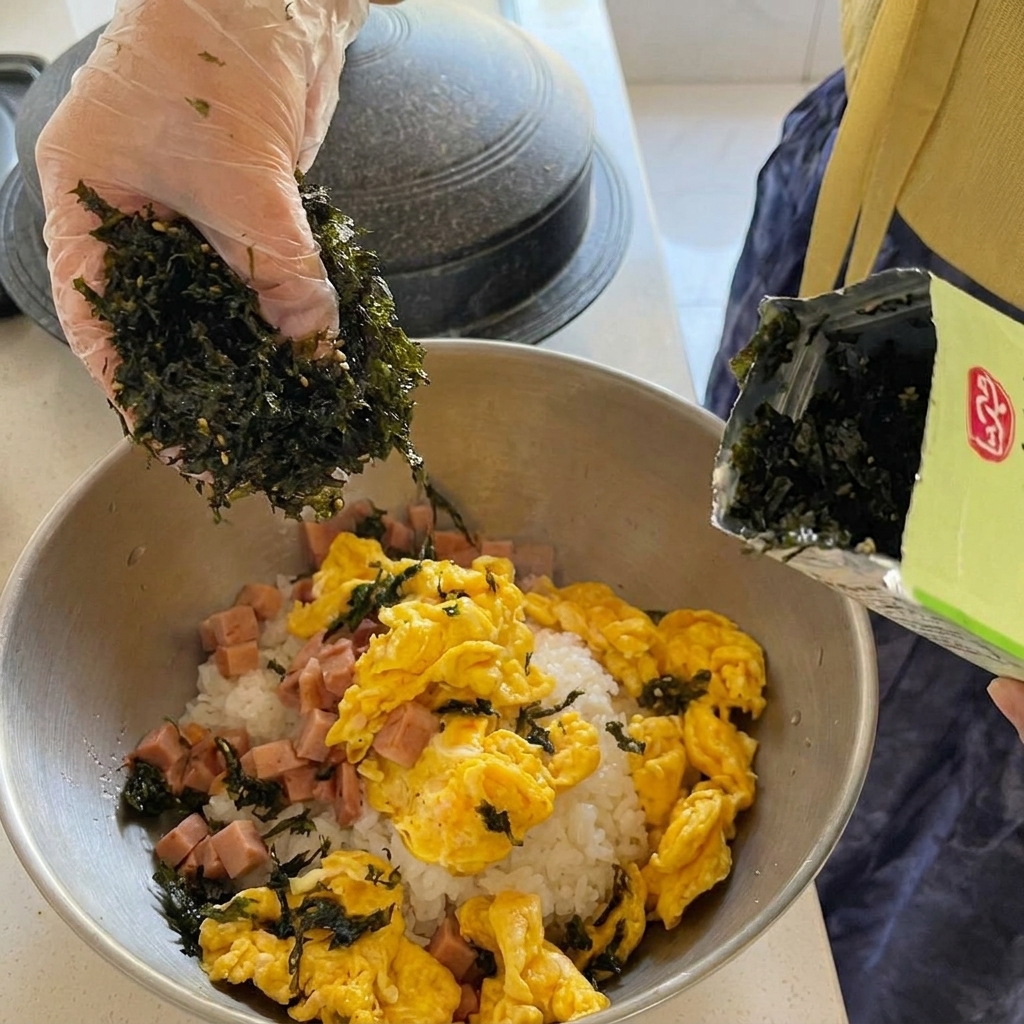
After the kimchi stew has simmered for 20 minutes and developed a deep flavor, add the chunks of tuna from the can. Adding the tuna toward the end of the cooking process prevents the fish from breaking down too much, keeping the chunks intact.
Tip: Since the tuna is already cooked, it only needs a few minutes in the pot to absorb the spicy broth. - 11Final garnish and seasoning
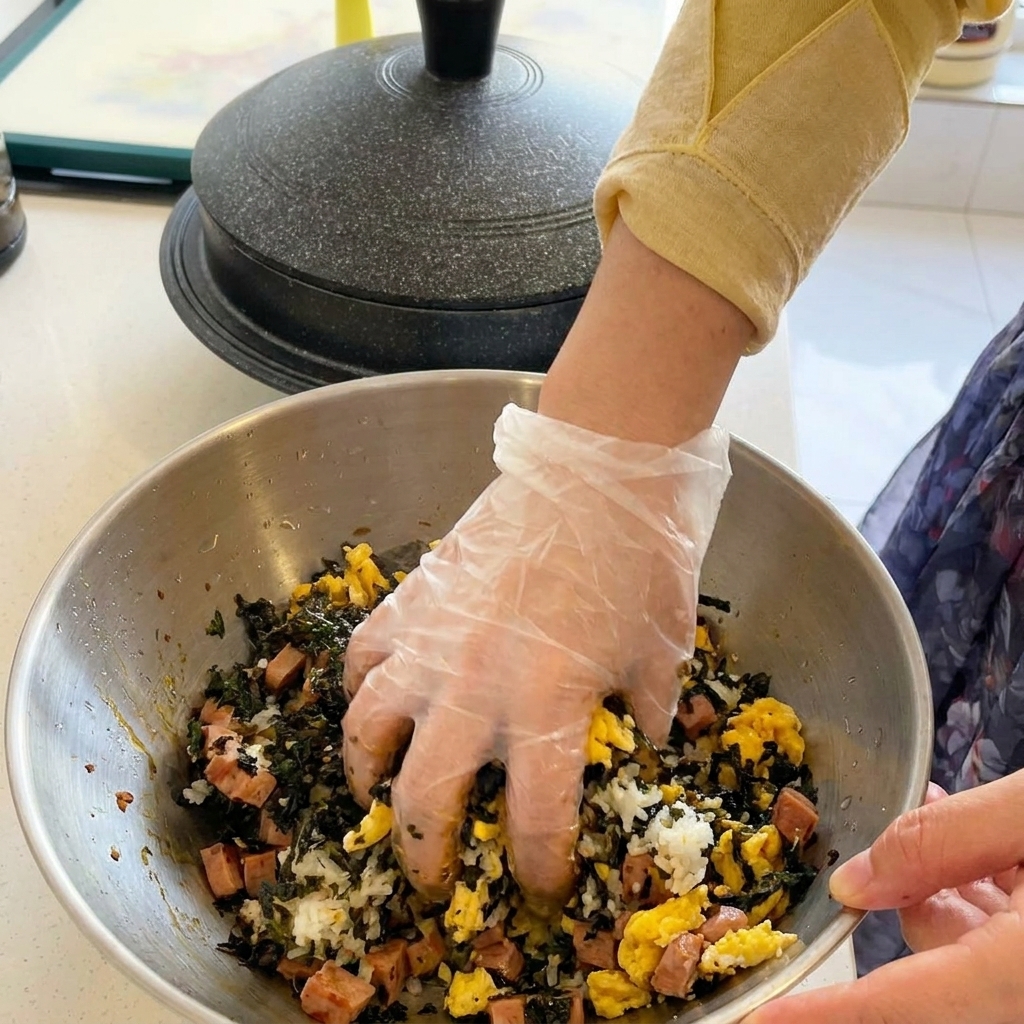
To finish the Tuna Kimchi Stew add a pinch of salt to enhance the freshness of the ingredients. Toss in a handful of fresh chopped green onions for a pop of color and a crisp sharp finish. Give it one last stir before serving hot.
Tip: Adjust the salt carefully at the end as the kimchi juice and soy sauce already provide a significant amount of sodium.