Easy Korean Tuna Kimchi Stew (Chamchi Kimchi Jjigae)
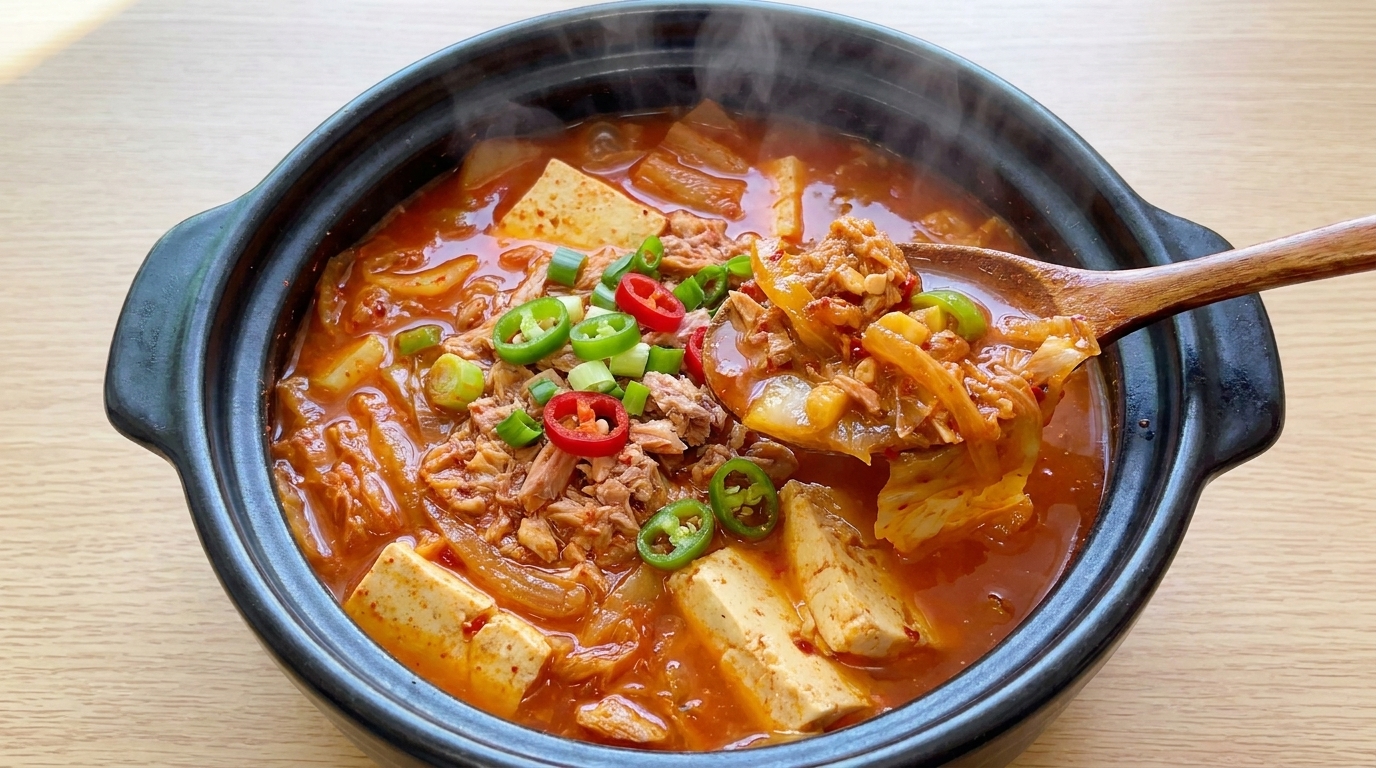
A pantry-staple powerhouse featuring fermented kimchi, savory canned tuna, and silky tofu. This recipe delivers a deep, umami-rich broth in under 30 minutes.
Chamchi Kimchi Jjigae is a modern favorite that offers a savory and convenient alternative to the classic pork-based version. By using canned tuna, you create a deep and seafood-infused broth that tastes like it simmered for hours in just a fraction of the time. This steaming bowl of comfort is a beloved staple for busy weeknights or whenever you need a hearty Korean meal on short notice.
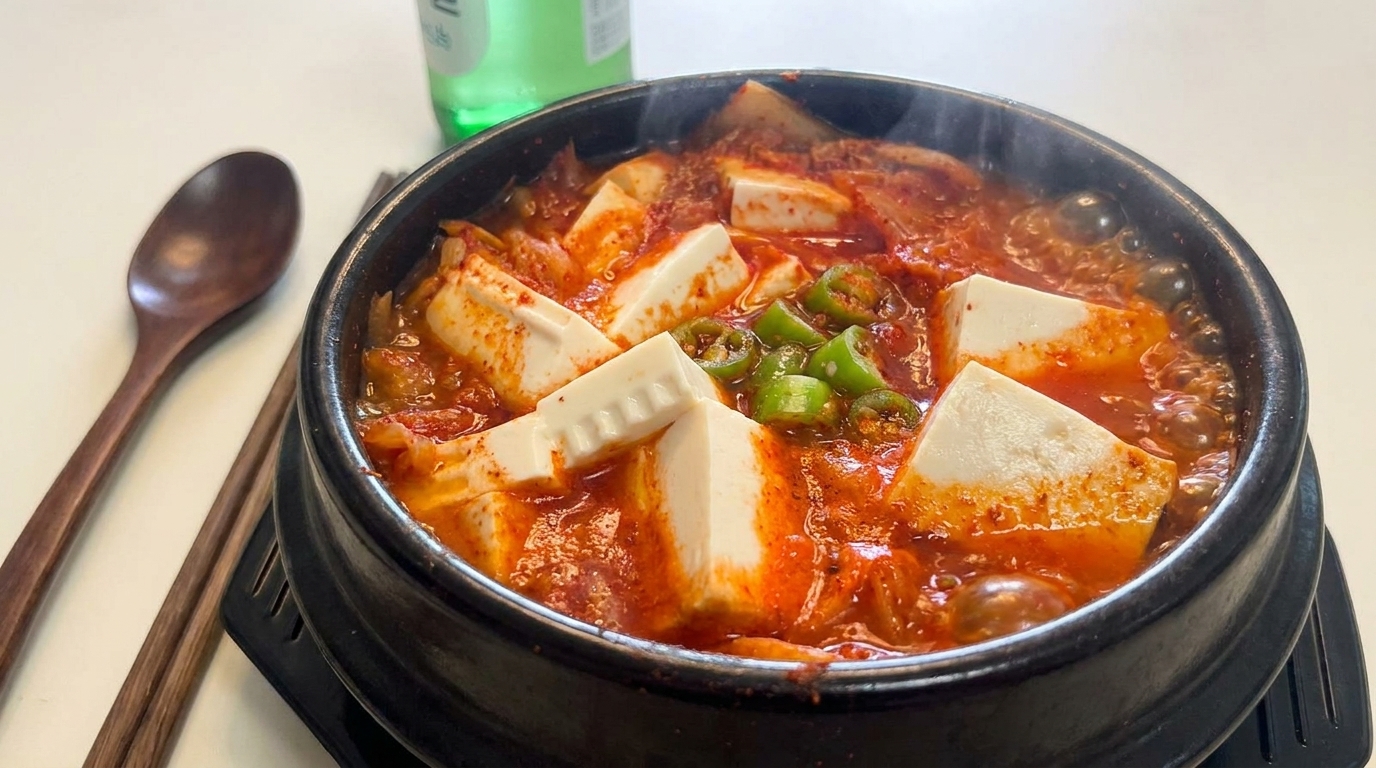
Ingredients
- 1 can (150 g) canned tuna in oil
- 1 cup fermented kimchi, chopped
- 12 white onion
- 2 stalks green onions
- 1 tbsp white sugar
- 1 tbsp soy sauce
- 2 tbsp Korean chili powder (Gochugaru)
- 1 tbsp minced garlic
- 200 g tofu
- 1–2 green chilies
- 500 ml water
Instructions
- 1Slice the white onion
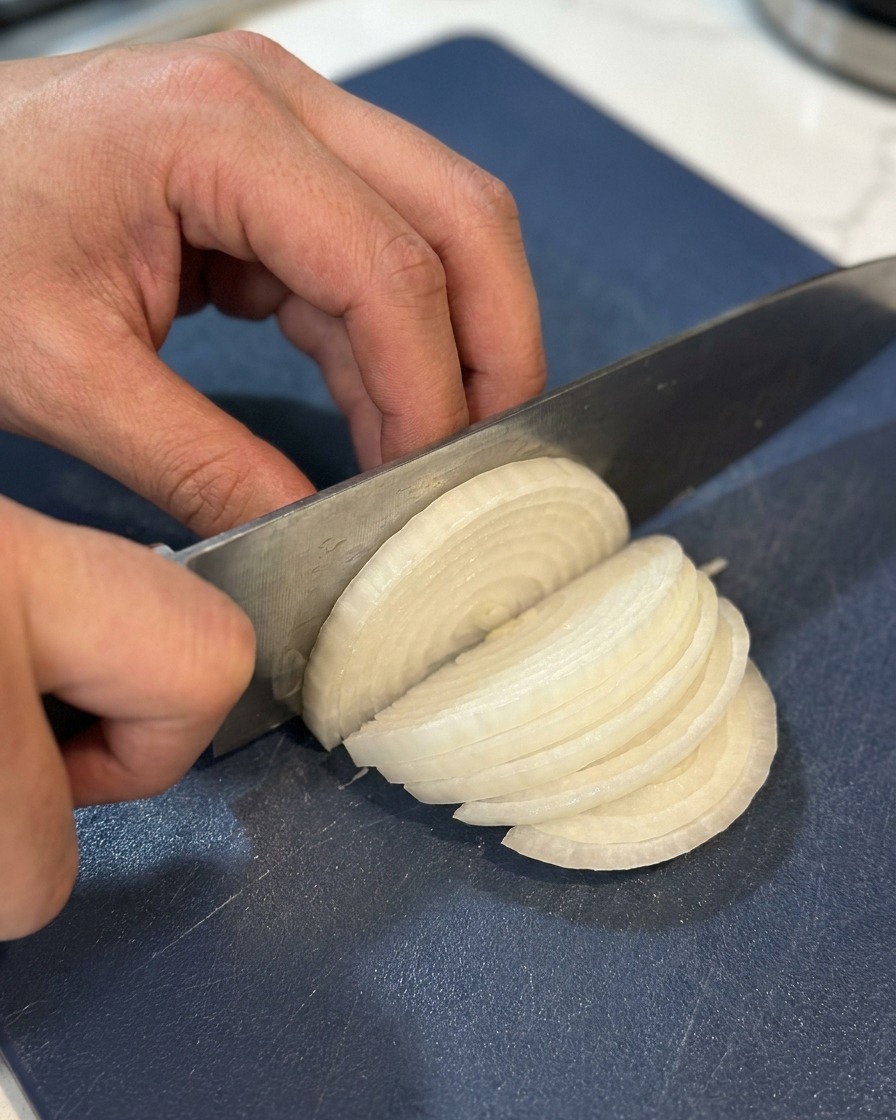
Prepare the aromatics by slicing a fresh white onion into thin, uniform strips. Slicing them evenly ensures they cook at the same rate and distribute their sweetness throughout the stew base during stir-frying.
Tip: To make slicing easier and keep the onion stable, cut the onion in half from root to stem first, then lay the flat side down on the board. - 2Extract the tuna oil
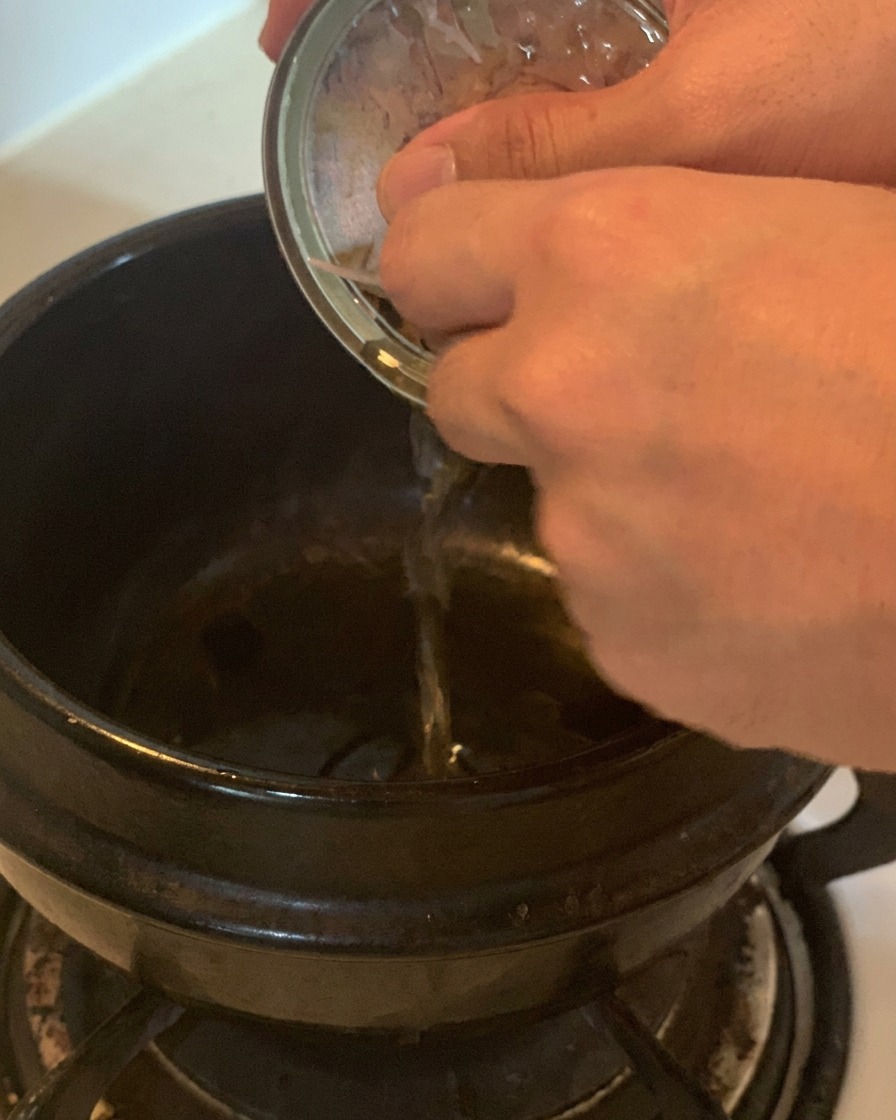
Open the canned tuna and carefully pour the oil from the can into the stone pot. This oil is highly concentrated with tuna flavor and provides a savory base for sautéing the vegetables.
Tip: Using the oil from the can is a key secret to a flavorful tuna kimchi stew—do not swap it for regular cooking oil unless necessary. - 3Add aromatics and sugar
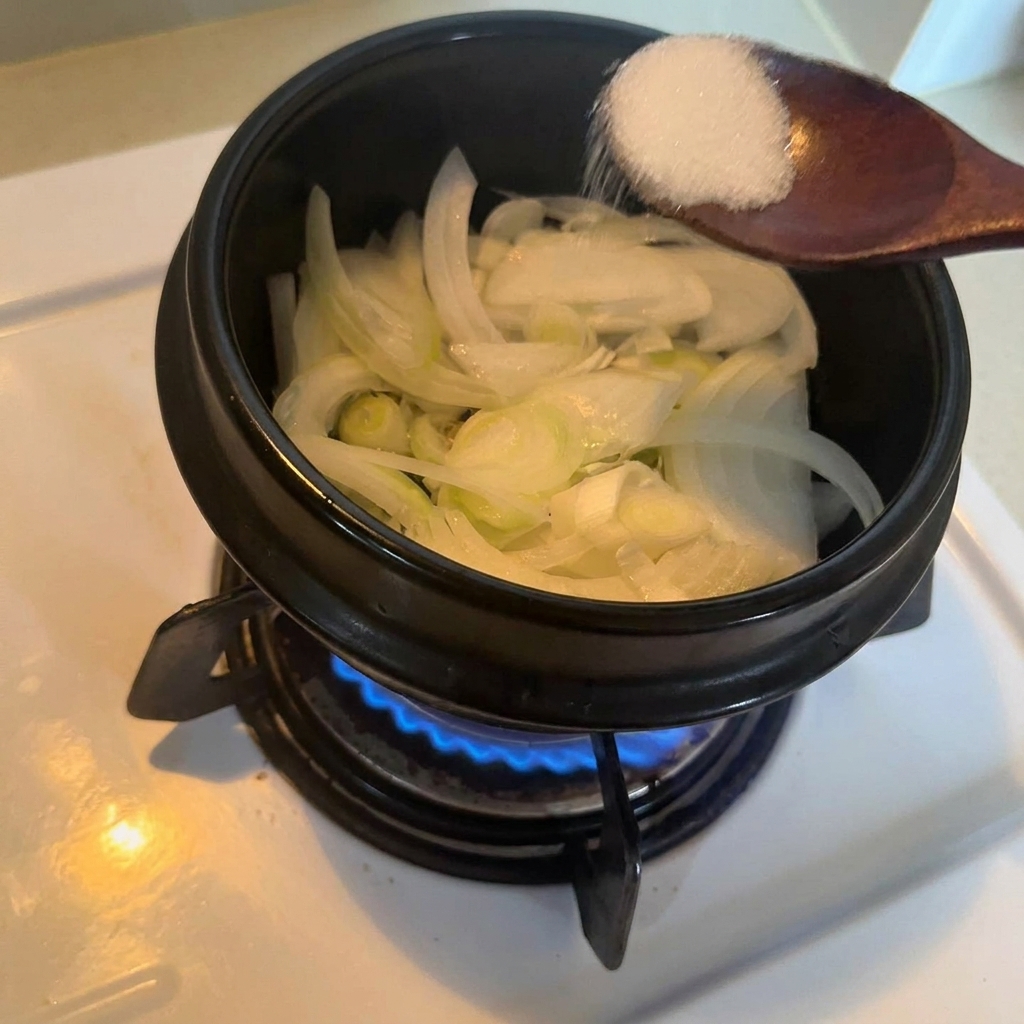
Place the sliced white onions and green onions into the pot with the tuna oil, then add a spoonful of white sugar. The sugar helps to balance the intense acidity and sourness of the fermented kimchi added later.
Tip: If your kimchi is particularly sour or aged, you can add a tiny bit more sugar to mellow the flavor profile. - 4Sauté until translucent
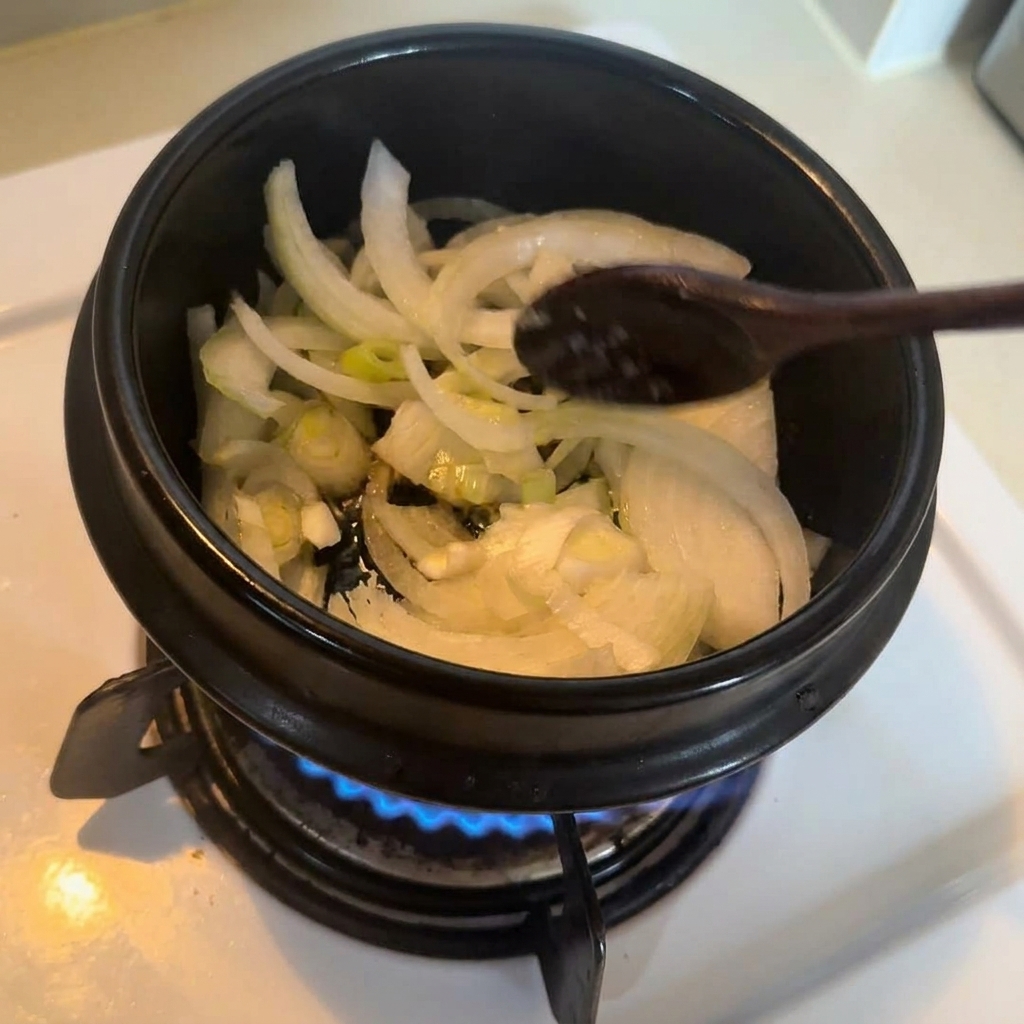
Stir-fry the onions, green onions, and sugar together in the tuna oil over medium heat using a wooden spoon. Continue cooking until the onions soften and become translucent, allowing the sugar to lightly caramelize.
Tip: Be careful not to use too high a heat, as the sugar can burn quickly; keep the ingredients moving in the pot. - 5Incorporate the kimchi
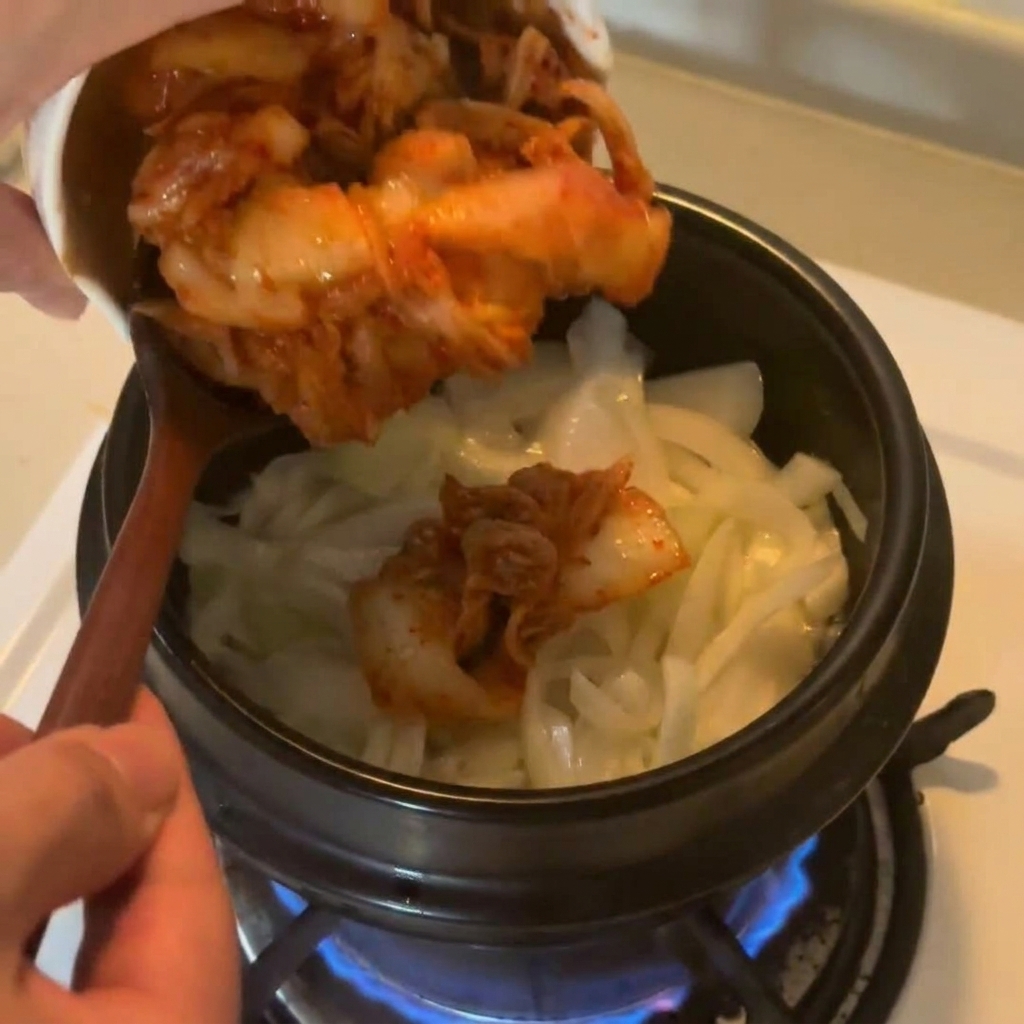
Add a bowl of chopped fermented kimchi into the pot with the sautéed onions. Stir well to combine, allowing the kimchi to cook in the flavored oil for a minute to release its juices and deepen the flavor.
Tip: For the best stew, use Mu-eun-ji or well-aged, sour kimchi rather than fresh kimchi. - 6Add the tuna
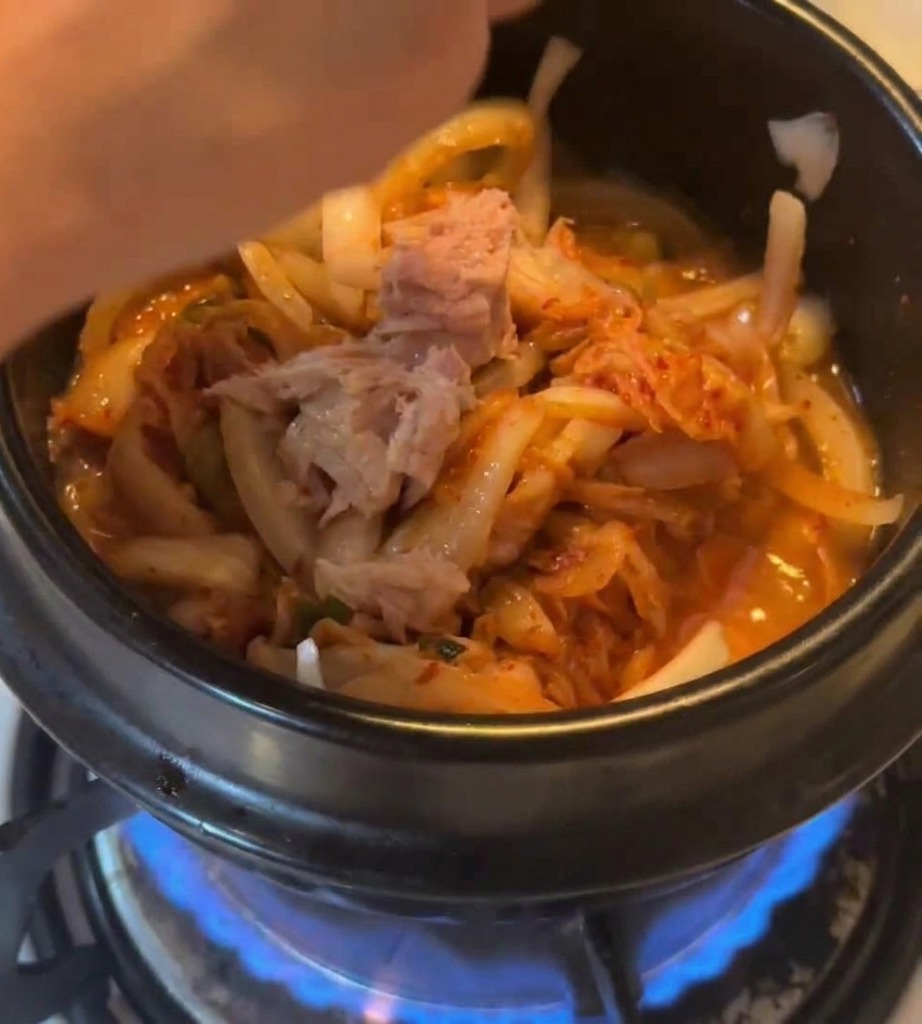
Add the canned tuna chunks into the pot with the stir-fried vegetables and kimchi. You can use tuna soaked in oil for extra richness, or water-packed tuna for a lighter version. Gently mix them in so the tuna retains some of its texture.
Tip: If you prefer larger chunks of tuna in your stew, dont over-stir once you add it to the pot. - 7Season with soy sauce
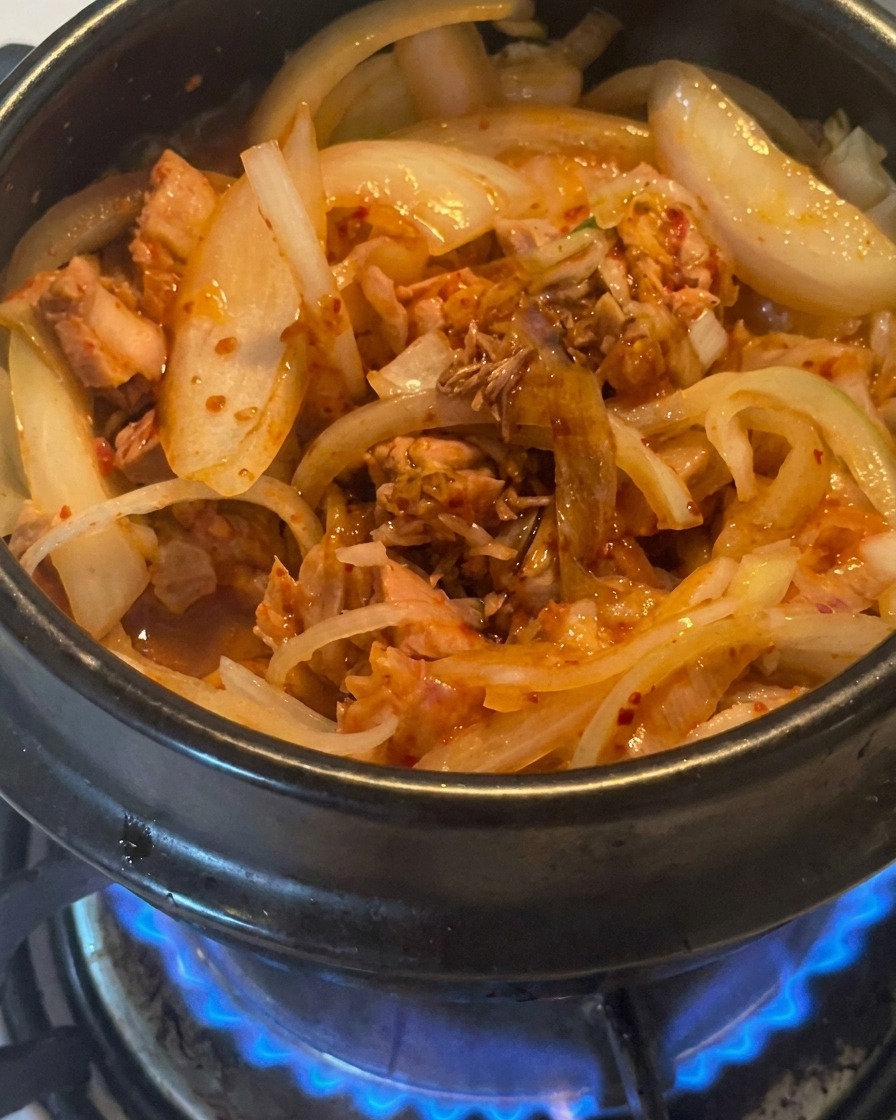
Pour one spoonful of soy sauce over the tuna and kimchi mixture. This adds a deep, savory umami layer to the base of the stew before the liquid is added, helping the flavors penetrate the ingredients.
Tip: Standard soy sauce works perfectly here, providing both saltiness and a rich color to the base. - 8Add the chili powder
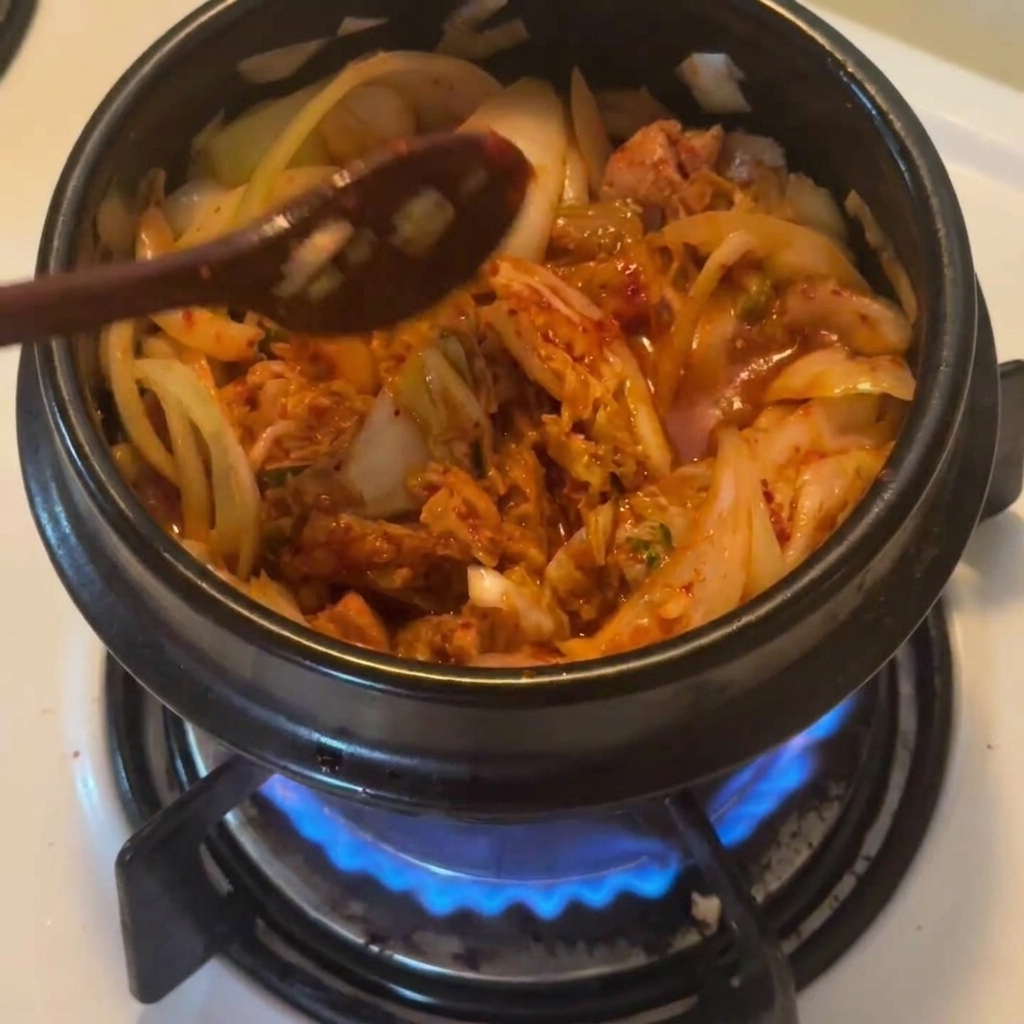
Add two spoonfuls of bright red chili powder (Gochugaru) to the pot. This provides the signature heat and vibrant red color essential for a classic Korean Kimchi stew.
Tip: Adjust the amount of chili powder based on your spice tolerance; two spoonfuls will provide a medium-high heat level. - 9Add water and simmer
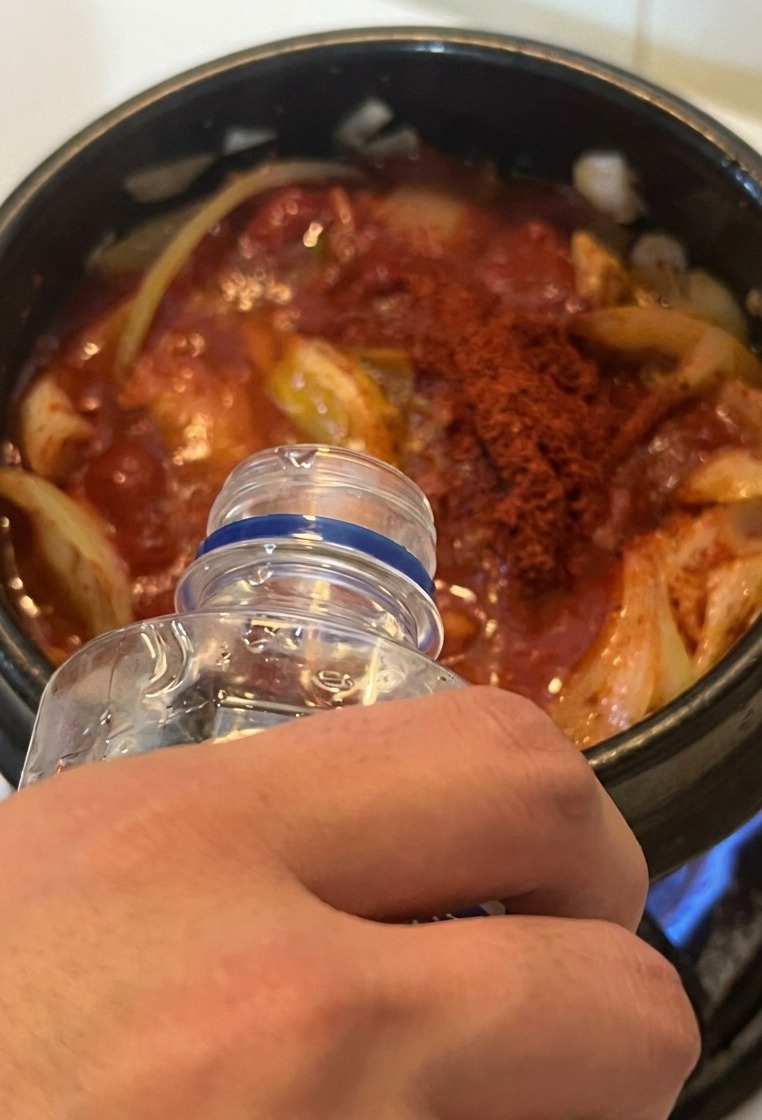
Pour water into the pot until all the ingredients are fully submerged. Bring the mixture to a vigorous, bubbling boil to allow the kimchi and tuna flavors to meld into a rich broth.
Tip: Using filtered water or a light dashi stock can further enhance the clarity and taste of the soup. - 10Incorporate minced garlic
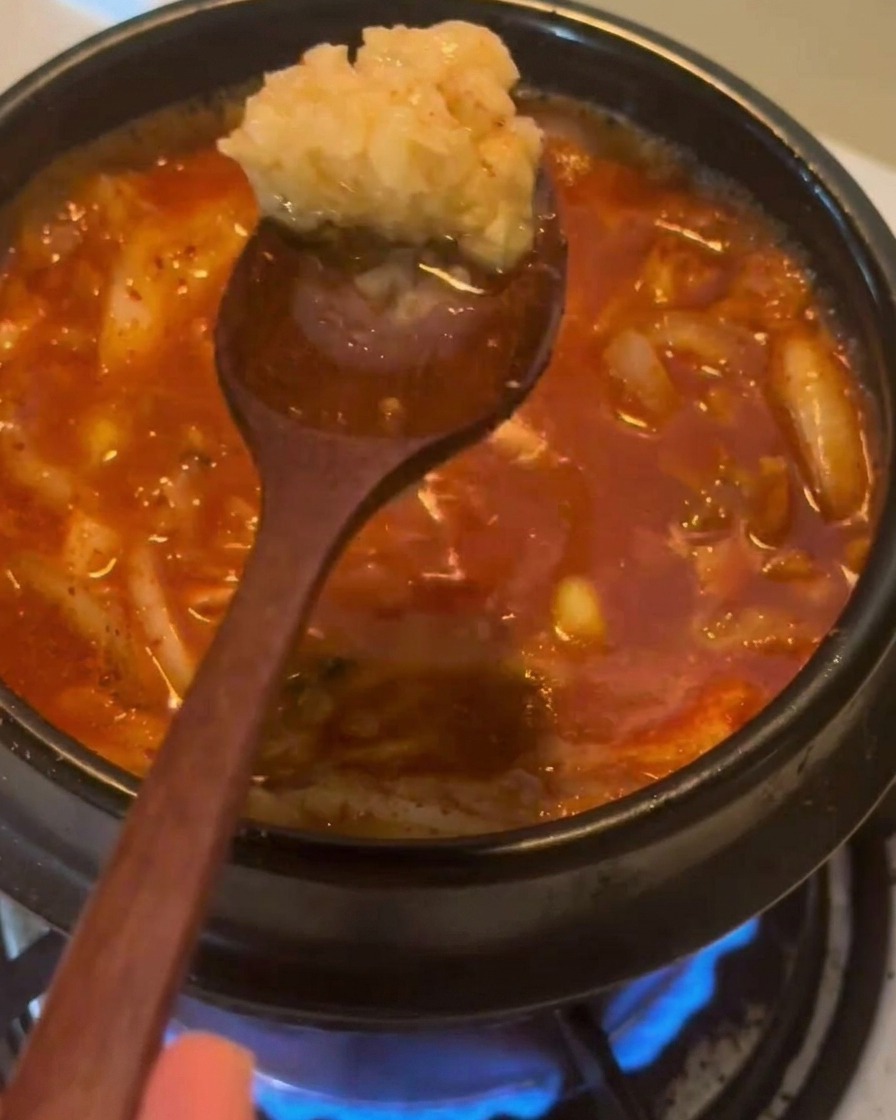
Once the stew reaches a boil, add a generous spoonful of minced garlic. Garlic is a foundational aromatic that rounds out the sharp acidity of the kimchi and the richness of the tuna.
Tip: Freshly minced garlic provides the strongest aroma and flavor compared to pre-packaged versions. - 11Add the tofu
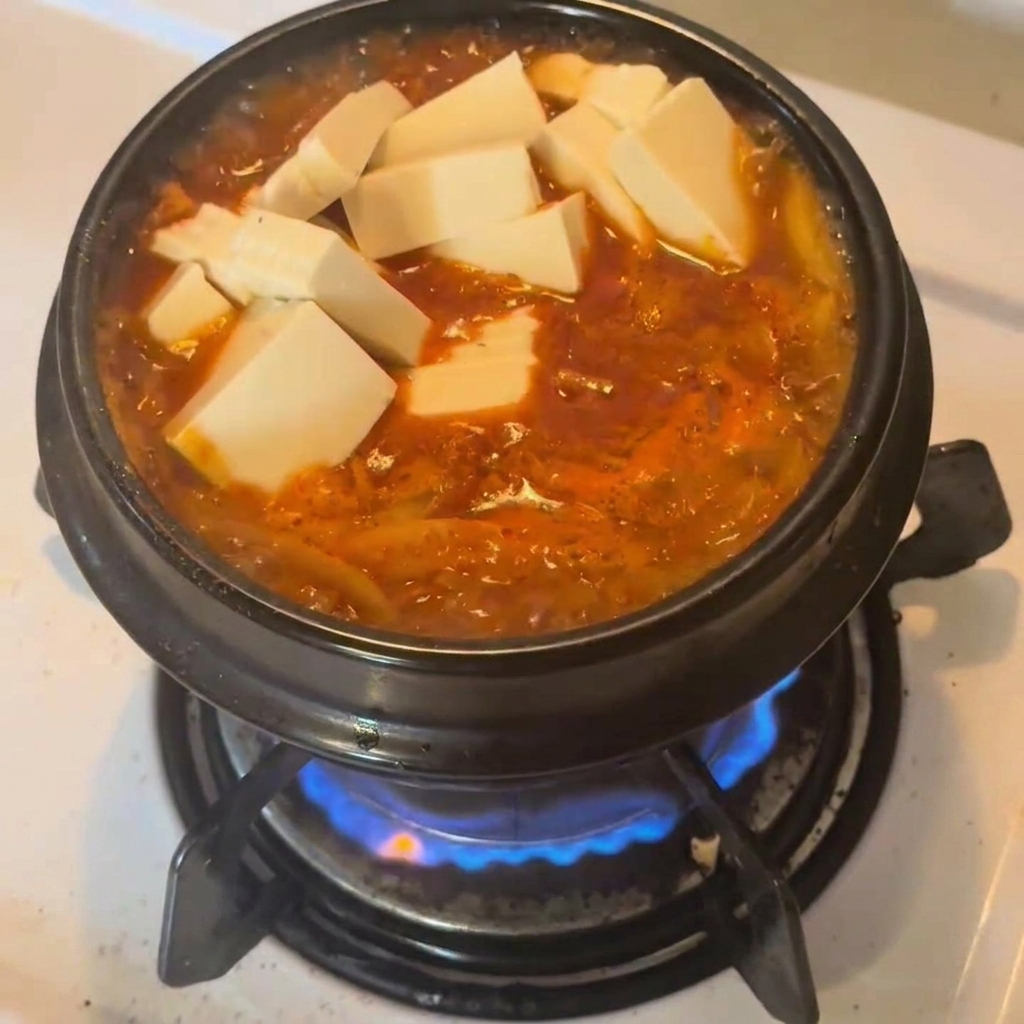
Carefully place the fresh tofu cubes into the boiling stew. Let them simmer briefly to absorb the spicy broth without breaking the delicate pieces.
Tip: Firm or extra-firm tofu holds its shape best in stews, while soft tofu provides a silkier texture. - 12Garnish with chilies
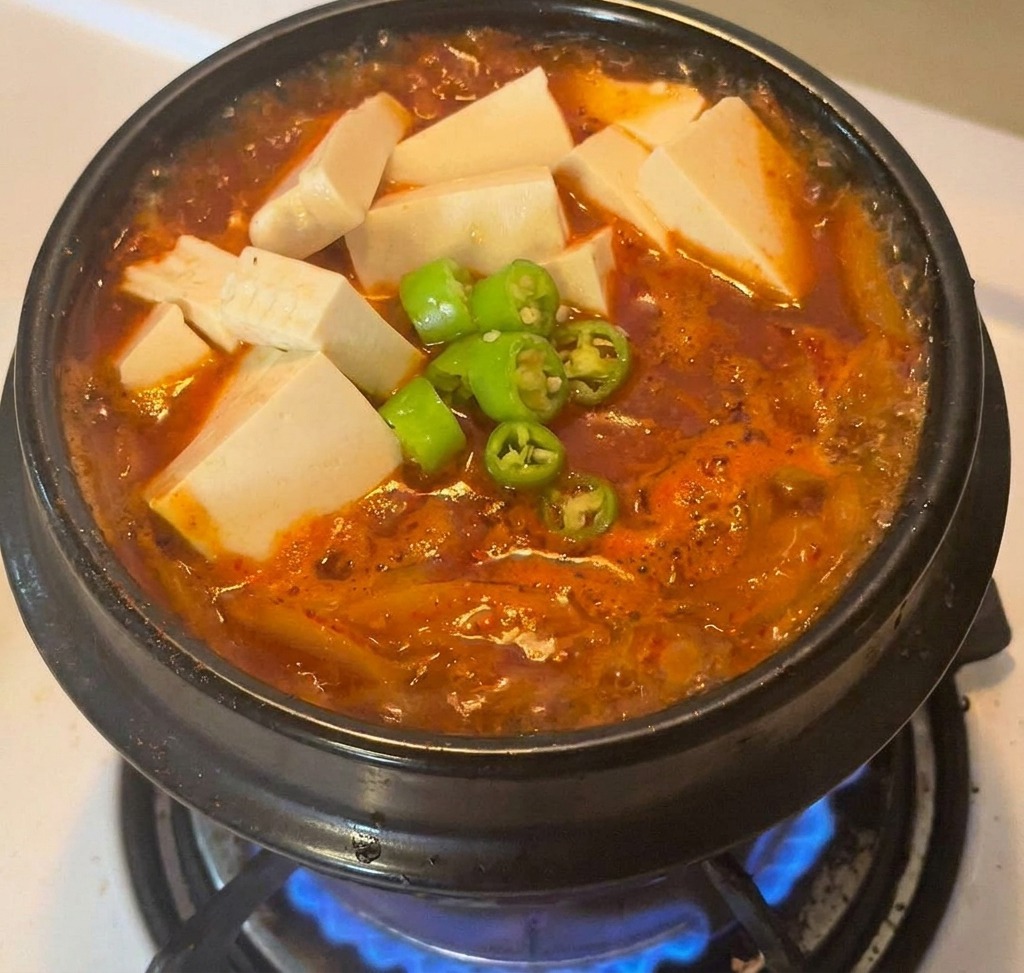
Top the stew with a handful of fresh green chili slices. Simmer for a final 30 seconds to allow the chilies to release their sharp aroma before serving.
Tip: Dont overcook the tofu; you want it to be silky and hot, not broken down by the boiling broth.