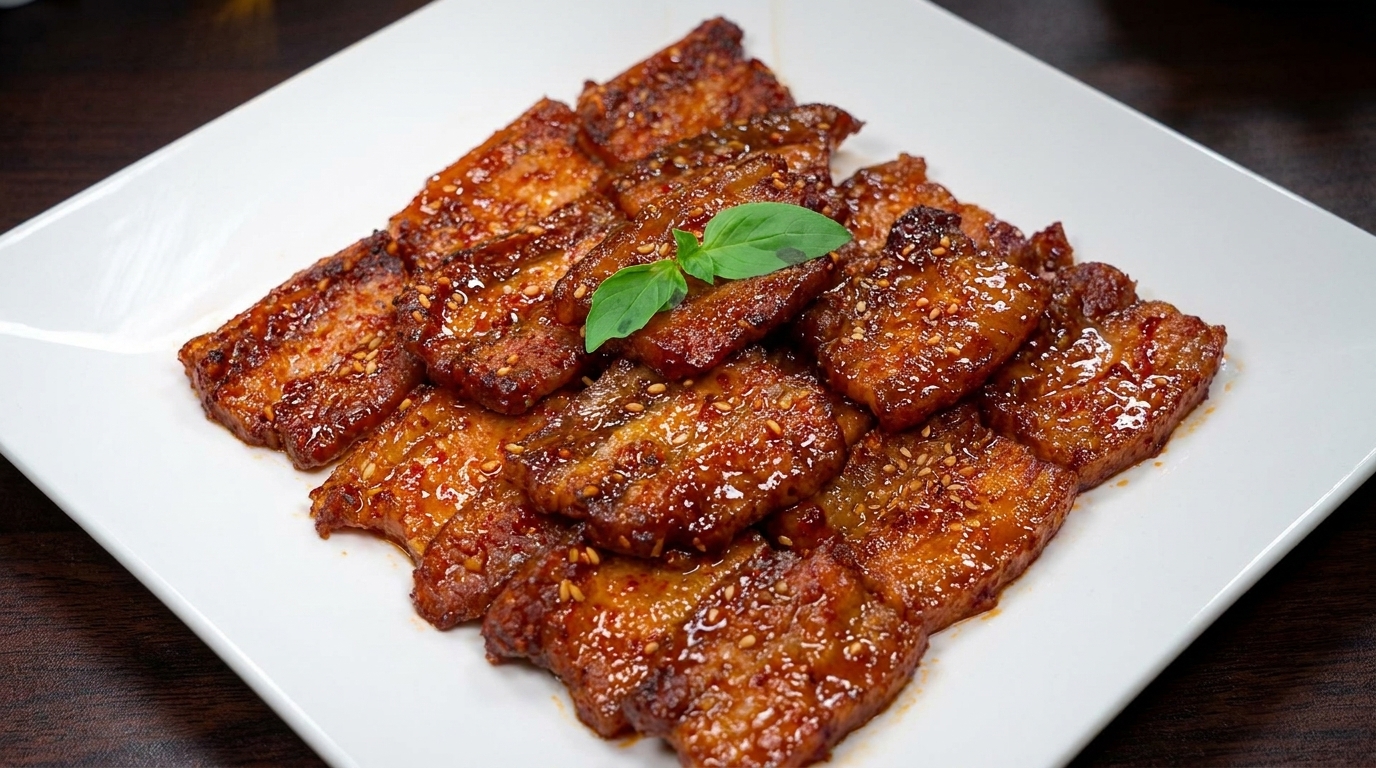
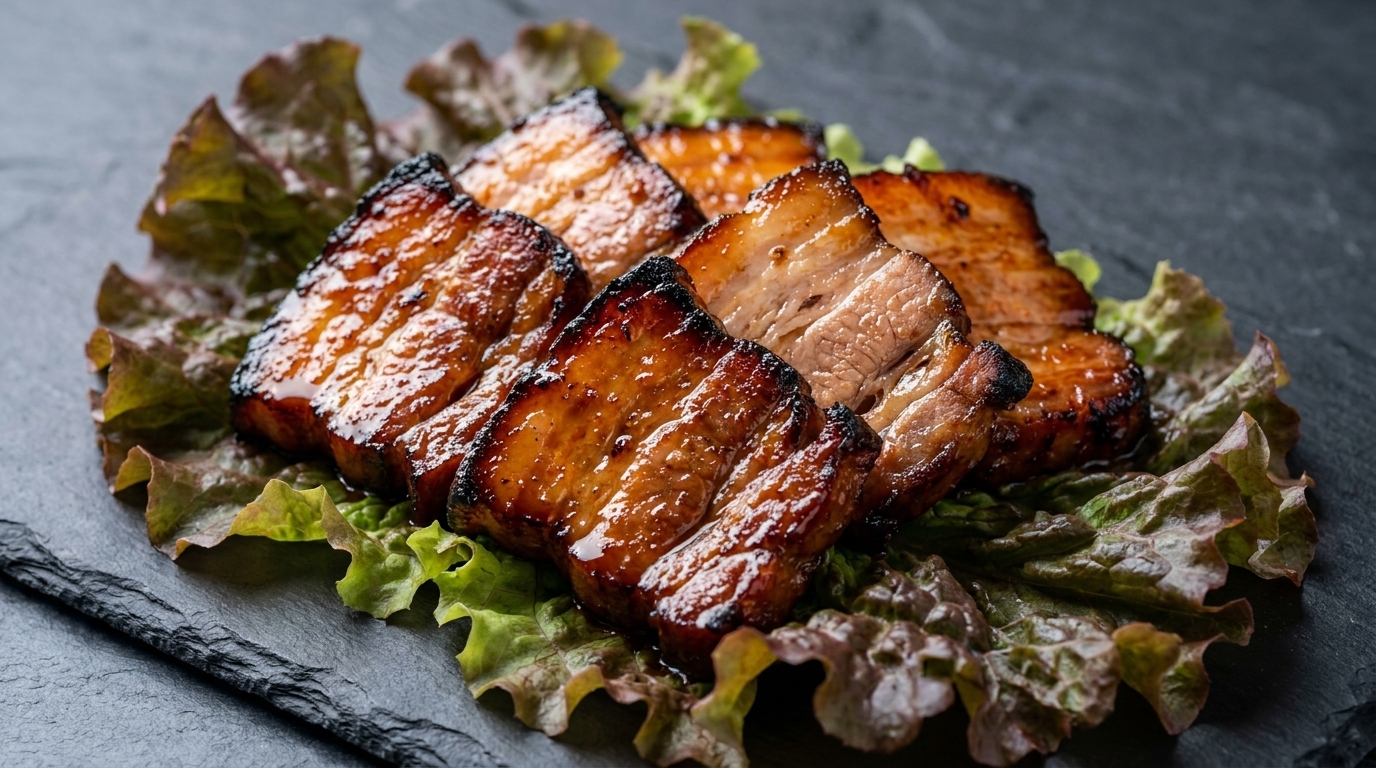
Tea-Infused Braised Pork Belly (Cha Xiang Rou)
Experience the delicate balance of rich, melt-in-the-mouth pork belly brightened by the aromatic infusion of green tea leaves.
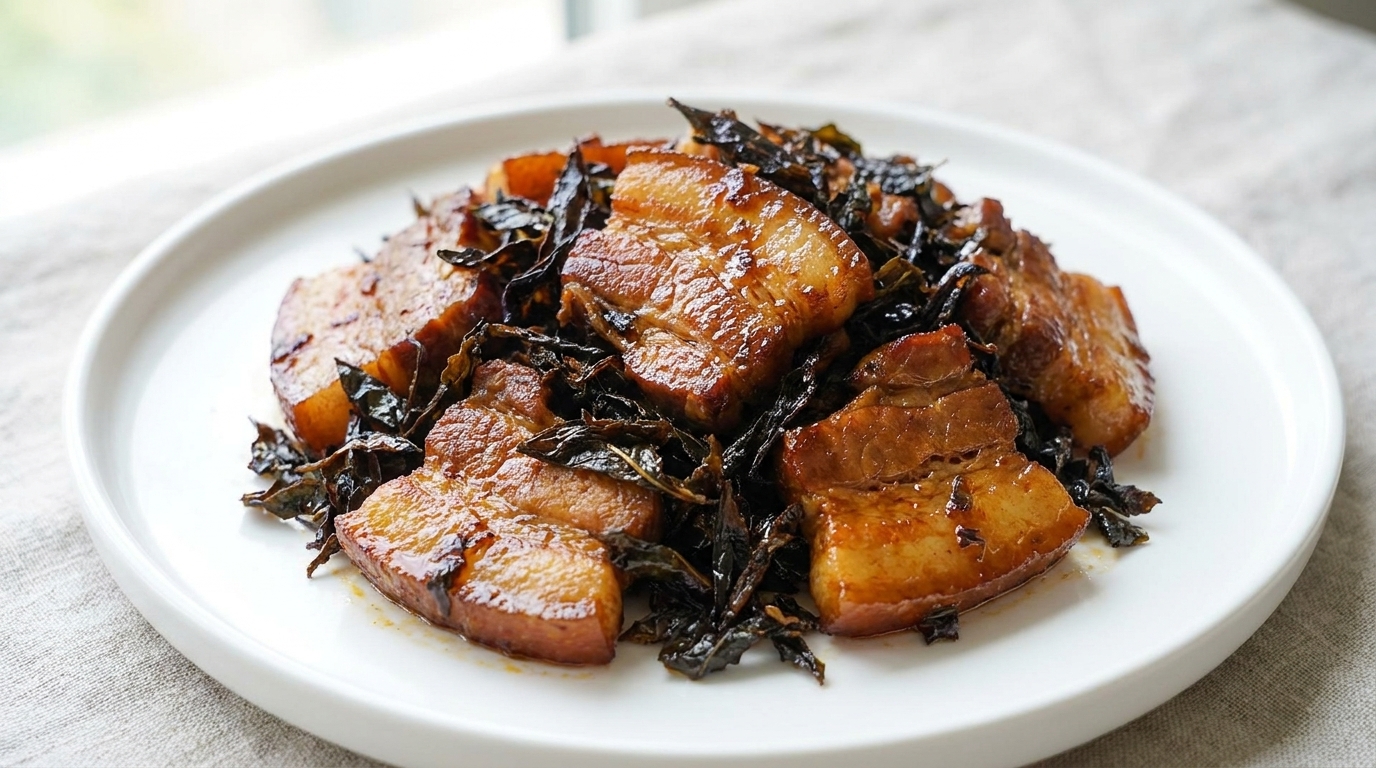
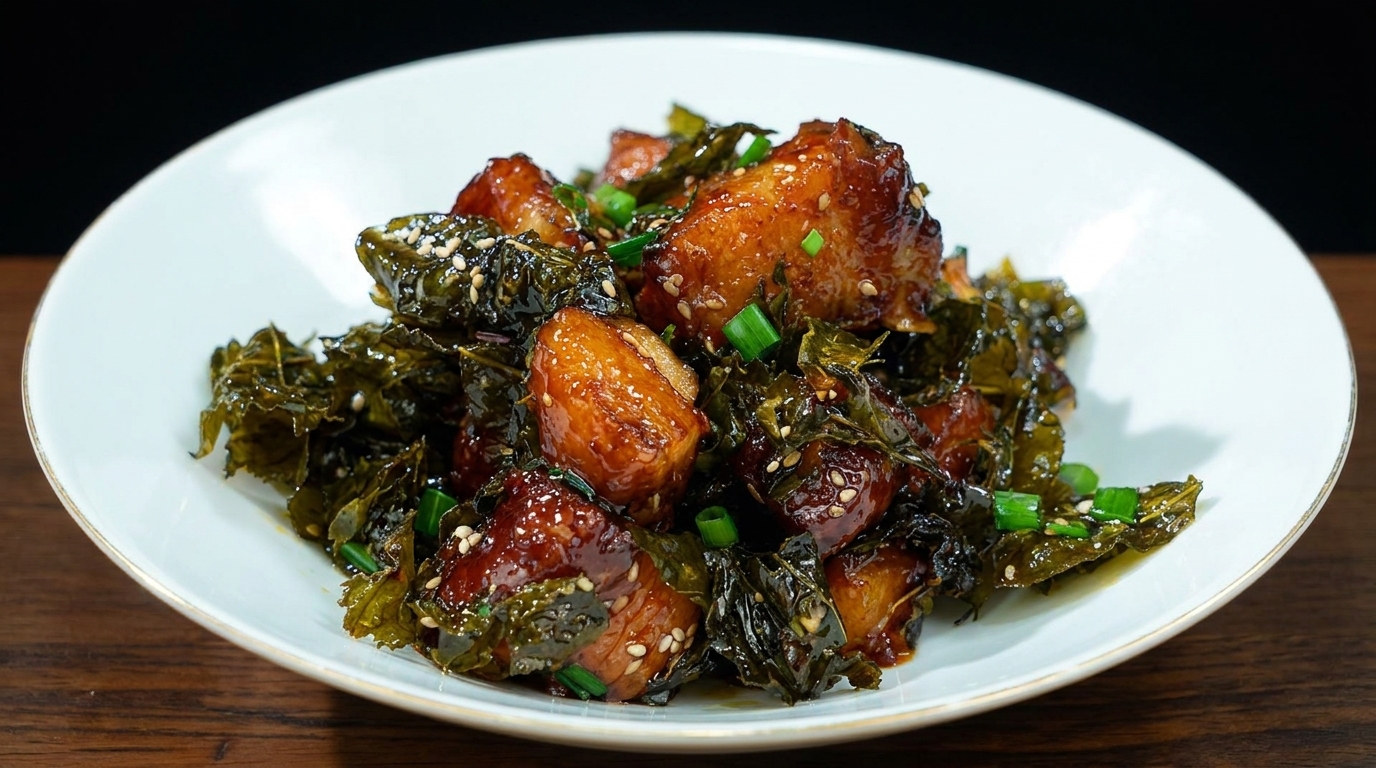
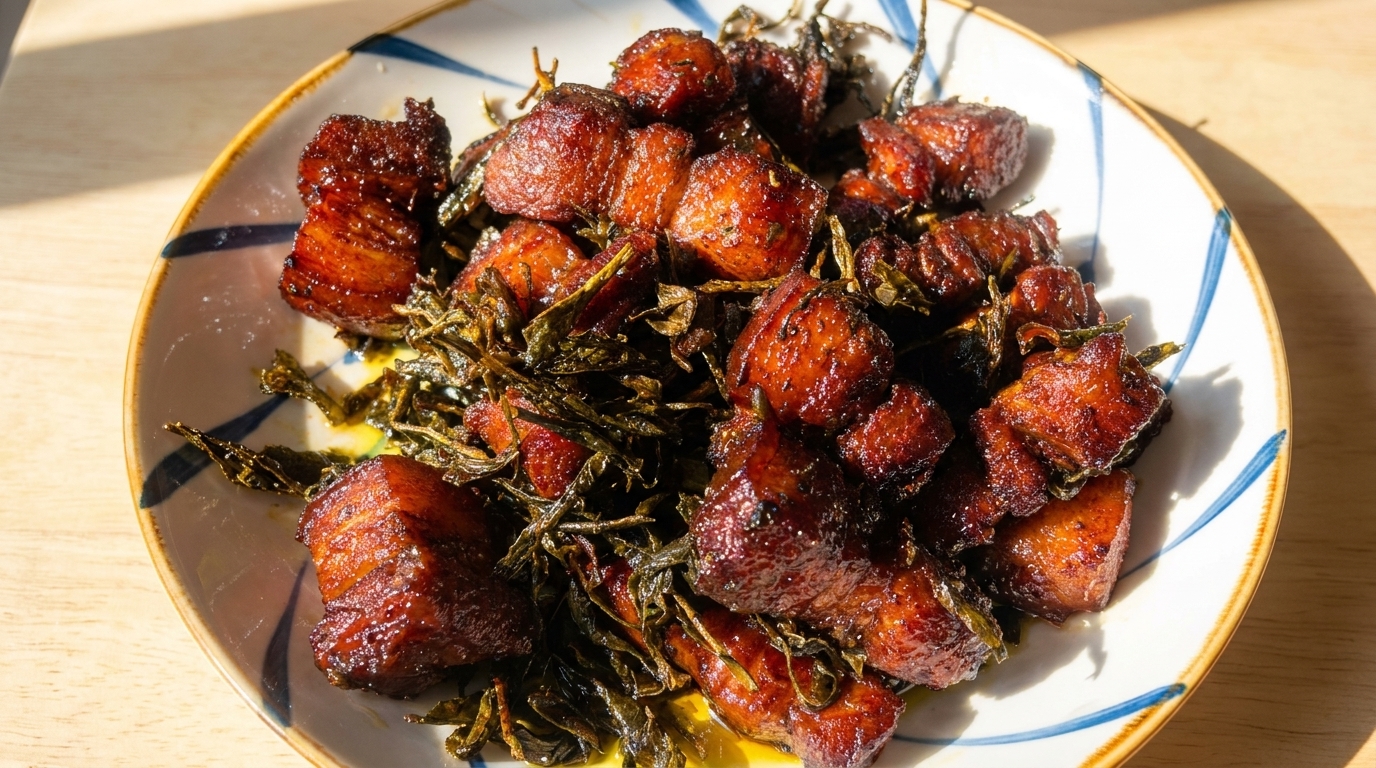
Tea-infused braised pork belly, or Cha Xiang Rou, is a sophisticated dish that masterfully balances the intense, savory richness of slow-cooked pork belly with the light, tannic properties of green tea. The tea acts as a natural palate cleanser, cutting through the fat and imparting a subtle, earthy fragrance that elevates the dish beyond standard braised preparations. This recipe uses a modern technique, combining traditional braising with a quick roast to achieve that coveted sticky, caramelized exterior.
Ingredients
- 500g pork belly
- 2 tbsp green tea leaves
- 2 slices ginger
- 2 tbsp cooking wine
- 2 tbsp light soy sauce
- 1 tbsp dark soy sauce
- 1 cup boiling water
- 2 tbsp cooking oil
Instructions
- 1Blanch the pork belly
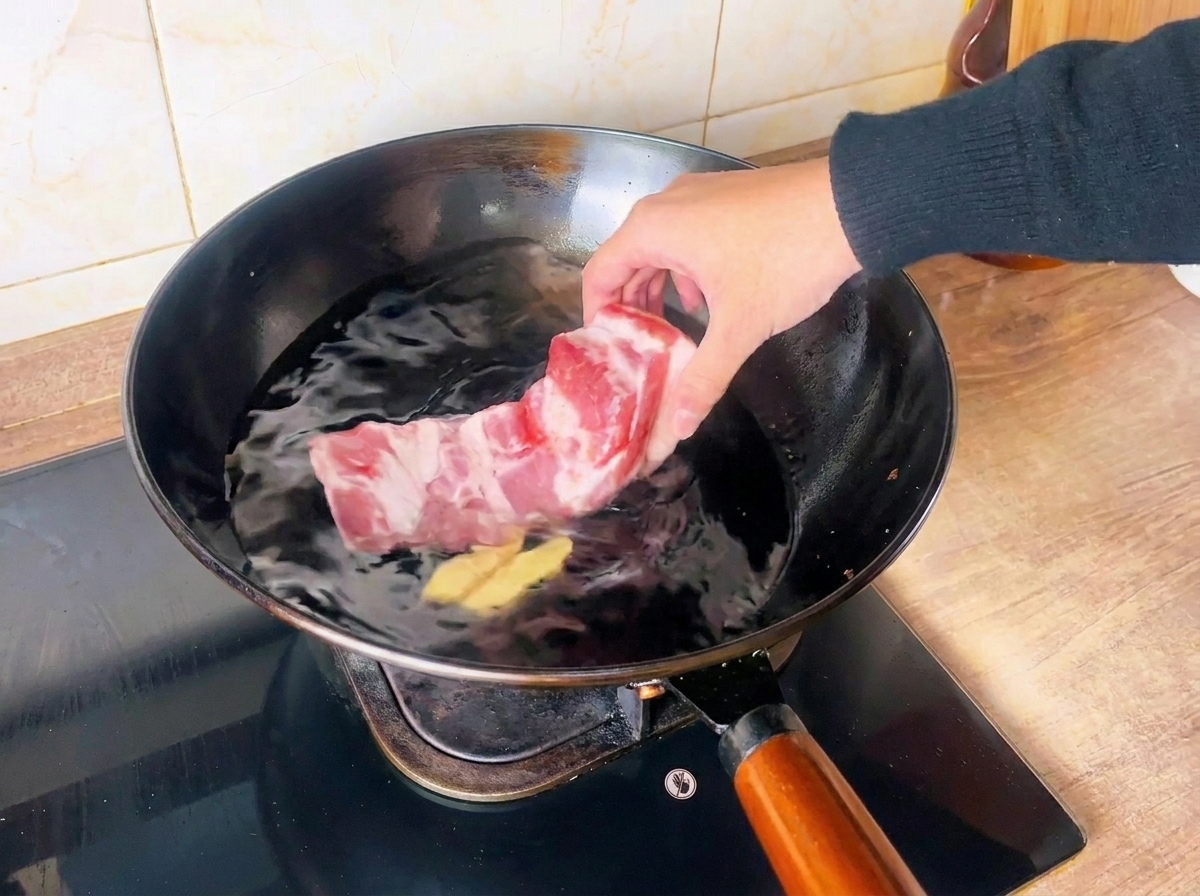
Place the block of raw pork belly into a wok filled with cold water, along with a few slices of ginger and a splash of cooking wine. Bring the water to a boil to blanch the meat, which helps to remove impurities and any raw odors.
Tip: Starting with cold water rather than boiling water is crucial, as it allows the impurities and blood to be drawn out gradually as the temperature rises. - 2Steep the green tea
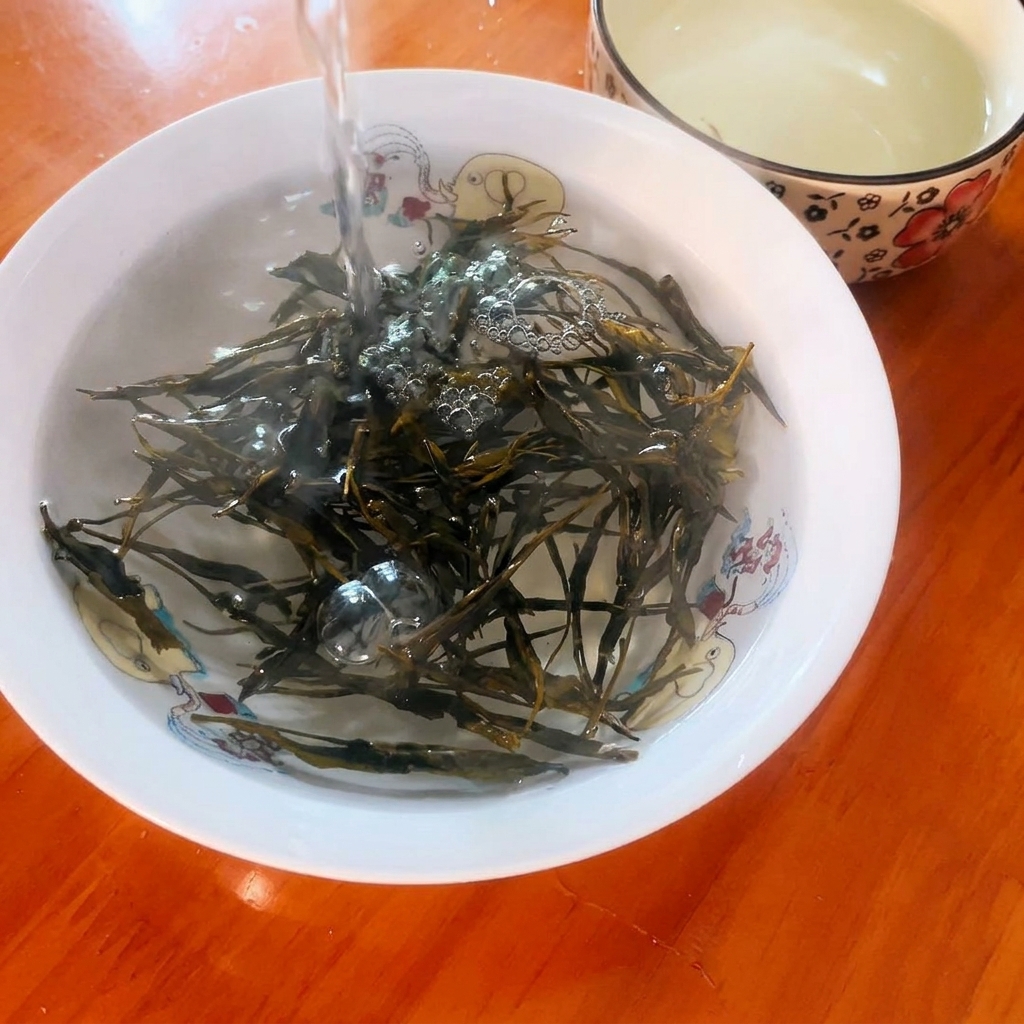
While the pork is blanching, prepare the tea component. Place dried green tea leaves into a small bowl and pour boiling water over them. Allow the tea to steep fully, as both the infused liquid and the rehydrated leaves will be utilized in the recipe.
Tip: Use a good quality green tea for the best floral aroma, taking care not to over-steep it so it doesnt become overly bitter. - 3Cube the blanched pork
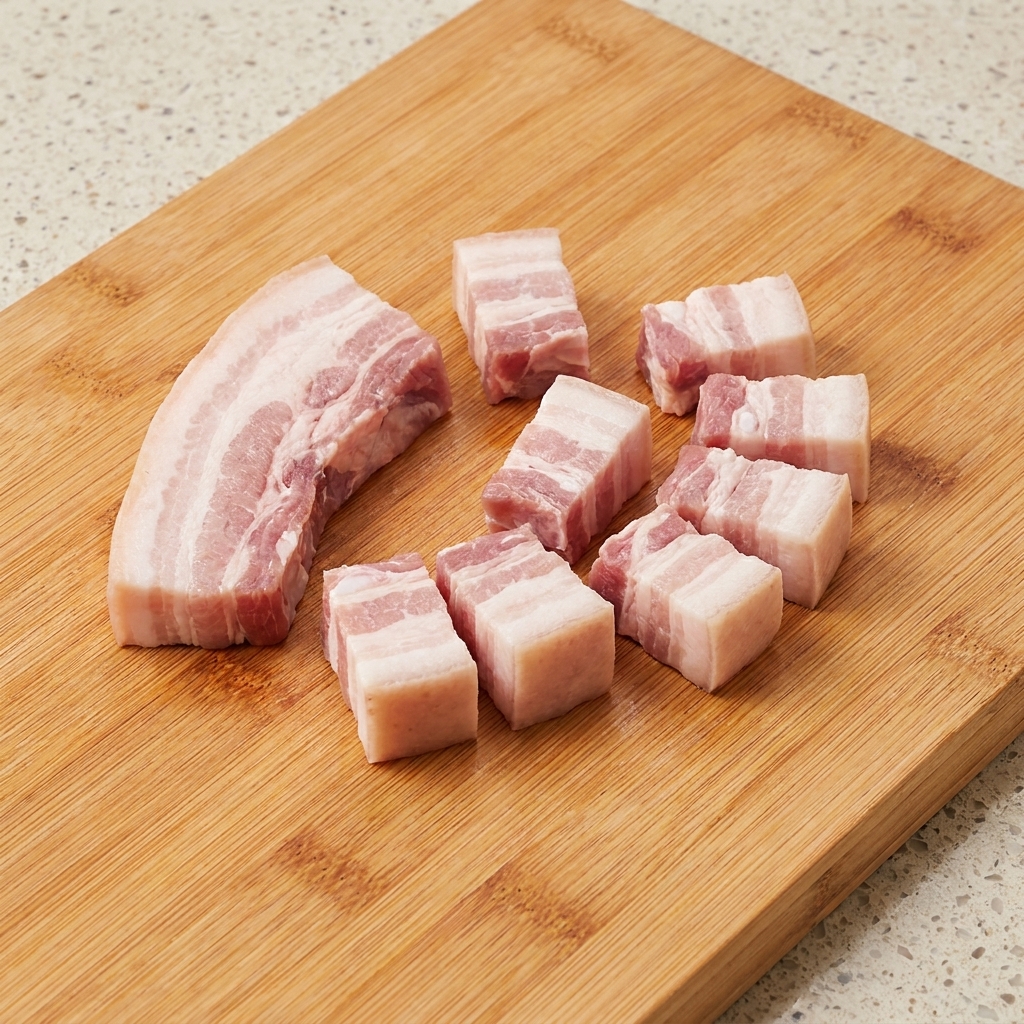
Once the pork belly has been thoroughly blanched, remove it from the water and allow it to cool slightly. Transfer the meat to a wooden cutting board and slice it into even, bite-sized cubes for stir-frying.
Tip: Cutting the pork into uniform pieces ensures that they will cook evenly and absorb the braising liquid at the same rate. - 4Stir-fry the pork cubes
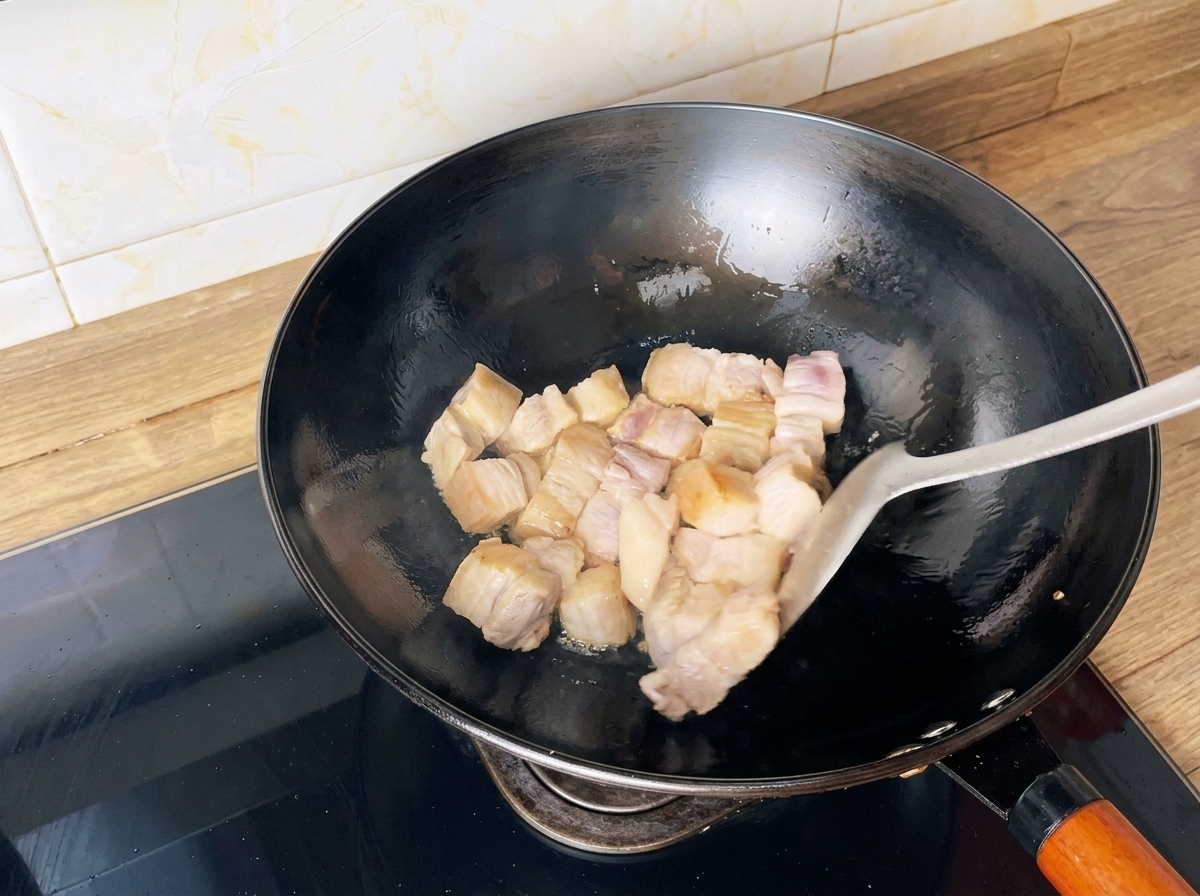
Heat a small amount of oil in a wok over medium heat and add the cubed pork belly. Stir-fry the meat continuously until the excess fat begins to render out and the surfaces of the cubes turn a light golden brown.
Tip: Rendering the fat during this stage is important to ensure the final dish has a rich texture without feeling overly greasy. - 5Season the meat
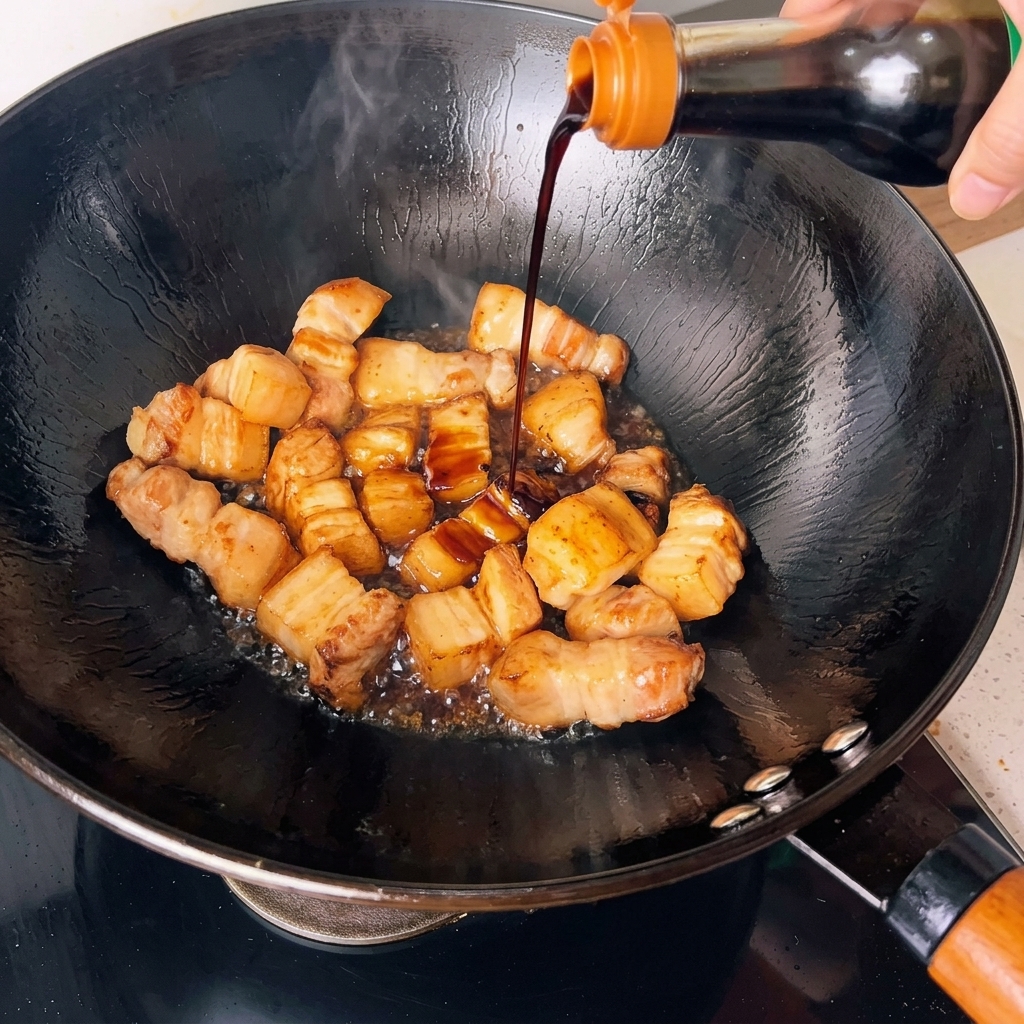
With the pork sufficiently browned, season the meat by adding cooking wine and light soy sauce for savory flavor. Follow this by pouring dark soy sauce directly over the pork cubes to give them a rich, deep color.
Tip: Toss the pork vigorously after adding the dark soy sauce to ensure every piece is evenly coated and caramelized. - 6Add the tea braising liquid
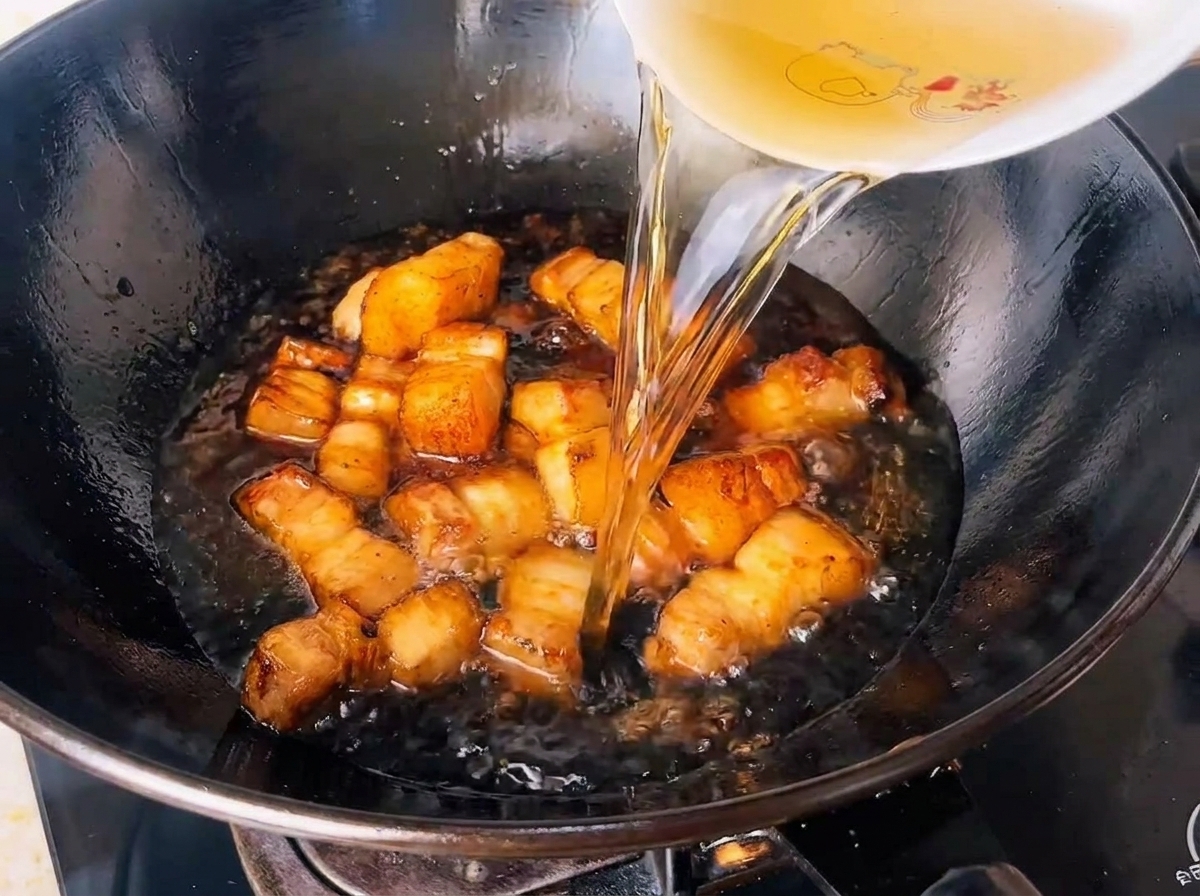
Carefully pour the brewed green tea water into the wok with the seasoned pork, making sure to reserve the steeped tea leaves in the bowl. The tea will act as the braising liquid, infusing the meat with a subtle aroma and cutting through the richness of the pork fat.
Tip: Set the leftover hydrated tea leaves aside to dry slightly, as they will be deep-fried later for a crispy garnish. - 7Simmer and reduce the sauce
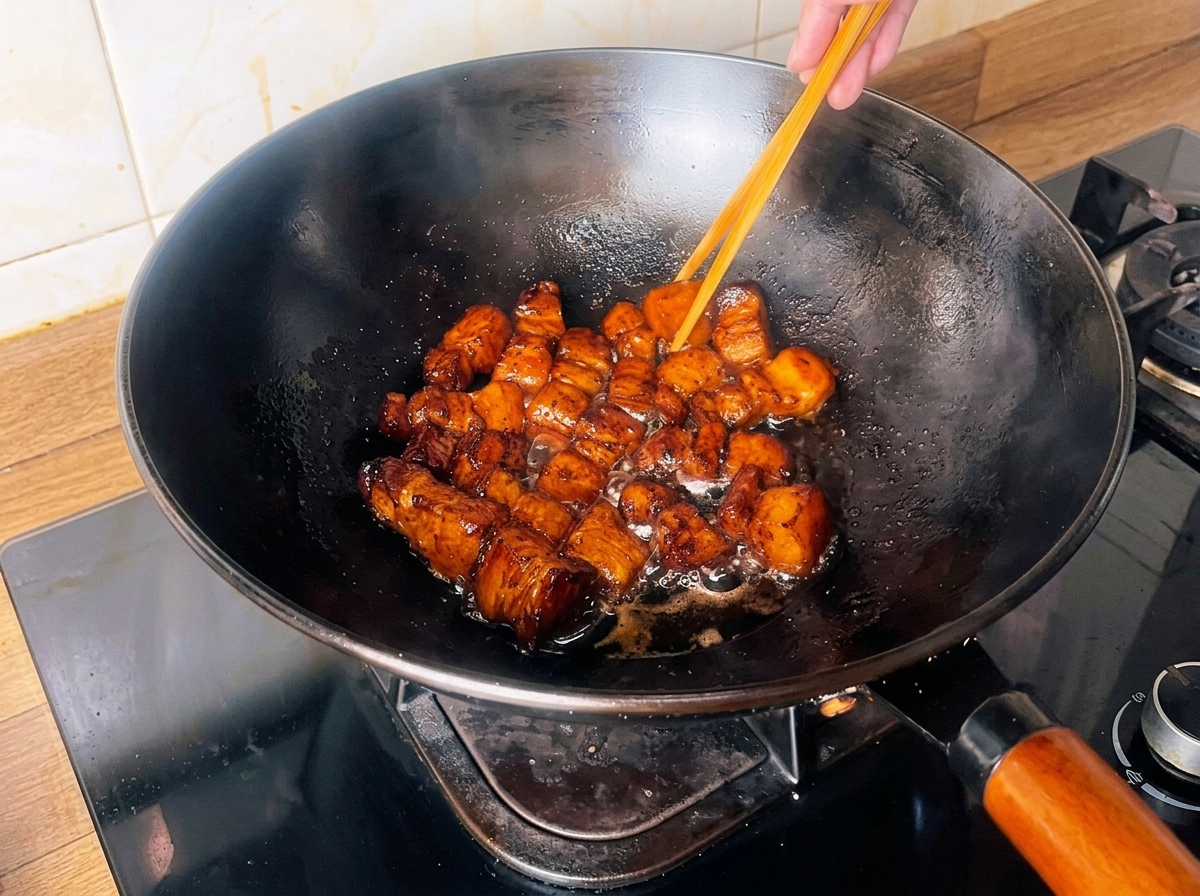
Once seasoned, pour the brewed green tea water into the wok with the pork. Simmer the mixture over medium heat, stirring occasionally, until the liquid reduces completely. The dark, glossy sauce should thoroughly coat each piece of meat.
Tip: Watch closely during the final minutes of reduction to prevent the sugars in the soy sauce from burning. - 8Air-fry the pork belly
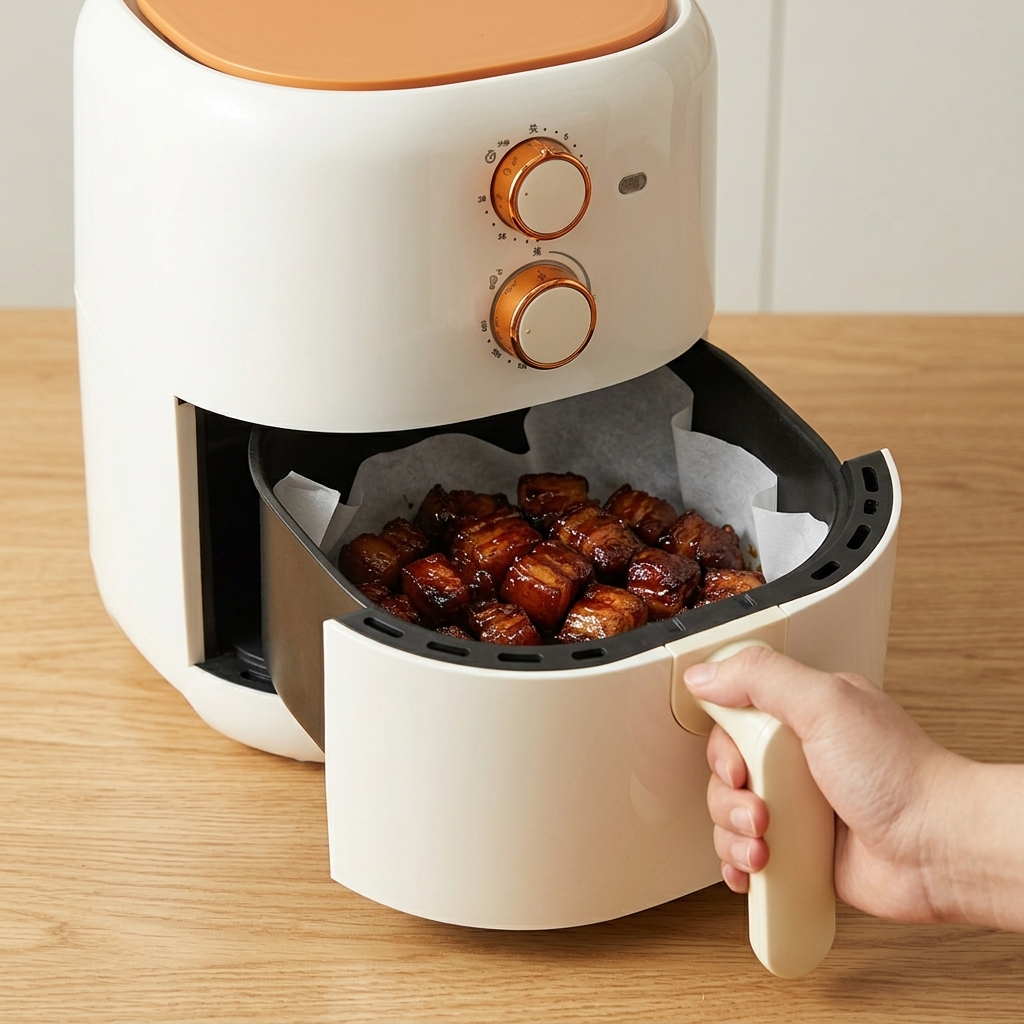
Transfer the braised pork belly cubes into the basket of an air fryer lined with parchment paper. Cook at 180 degrees Celsius for 5 minutes. This step helps render out excess fat and creates a slightly crisp exterior on the pork.
Tip: Arrange the pork pieces in a single even layer so they roast properly without steaming. - 9Crisp the tea leaves
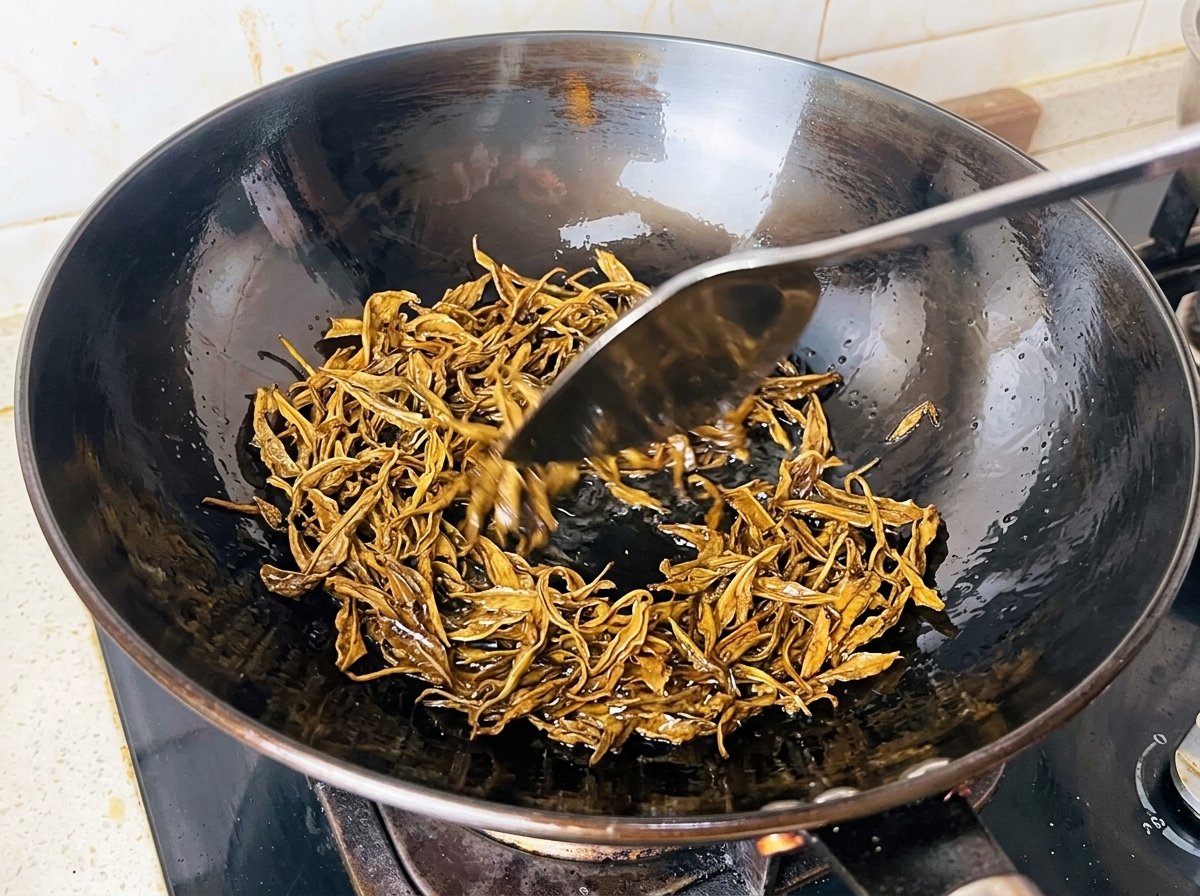
While the pork is roasting, take the green tea leaves previously used for steeping and add them to a wok with hot oil. Deep-fry them, stirring continuously, until they dry out, darken slightly, and become intensely fragrant and crispy.
Tip: Make sure to squeeze out as much excess moisture from the steeped tea leaves as possible before frying to avoid aggressive oil splatters. - 10Toss and serve
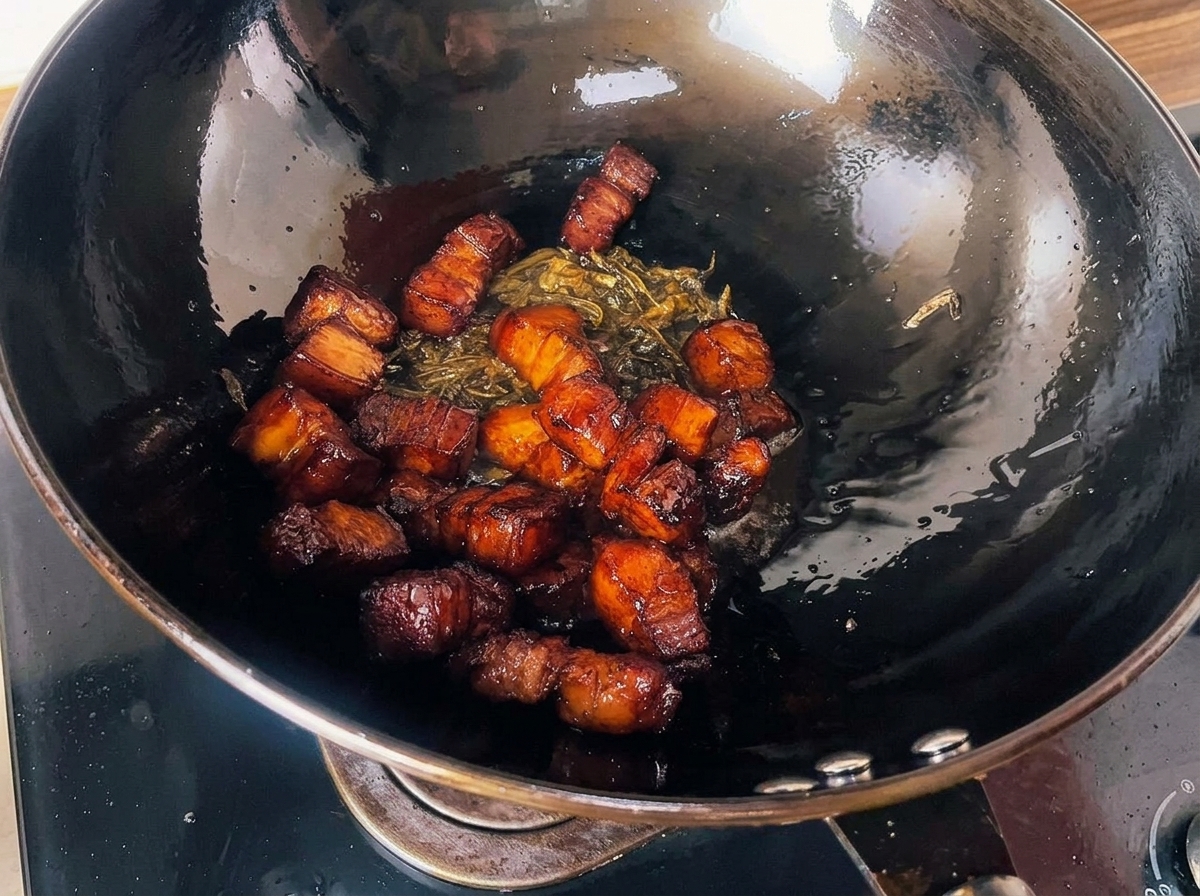
Remove the roasted pork belly from the air fryer and add it back into the wok with the crispy tea leaves. Toss everything together briefly over the residual heat until the meat and tea leaves are evenly combined, then serve immediately.
Tip: Toss quickly so the tea leaves retain their crisp texture against the sticky glazed pork.