Cold Mustard Noodles (Liangpi-Style)
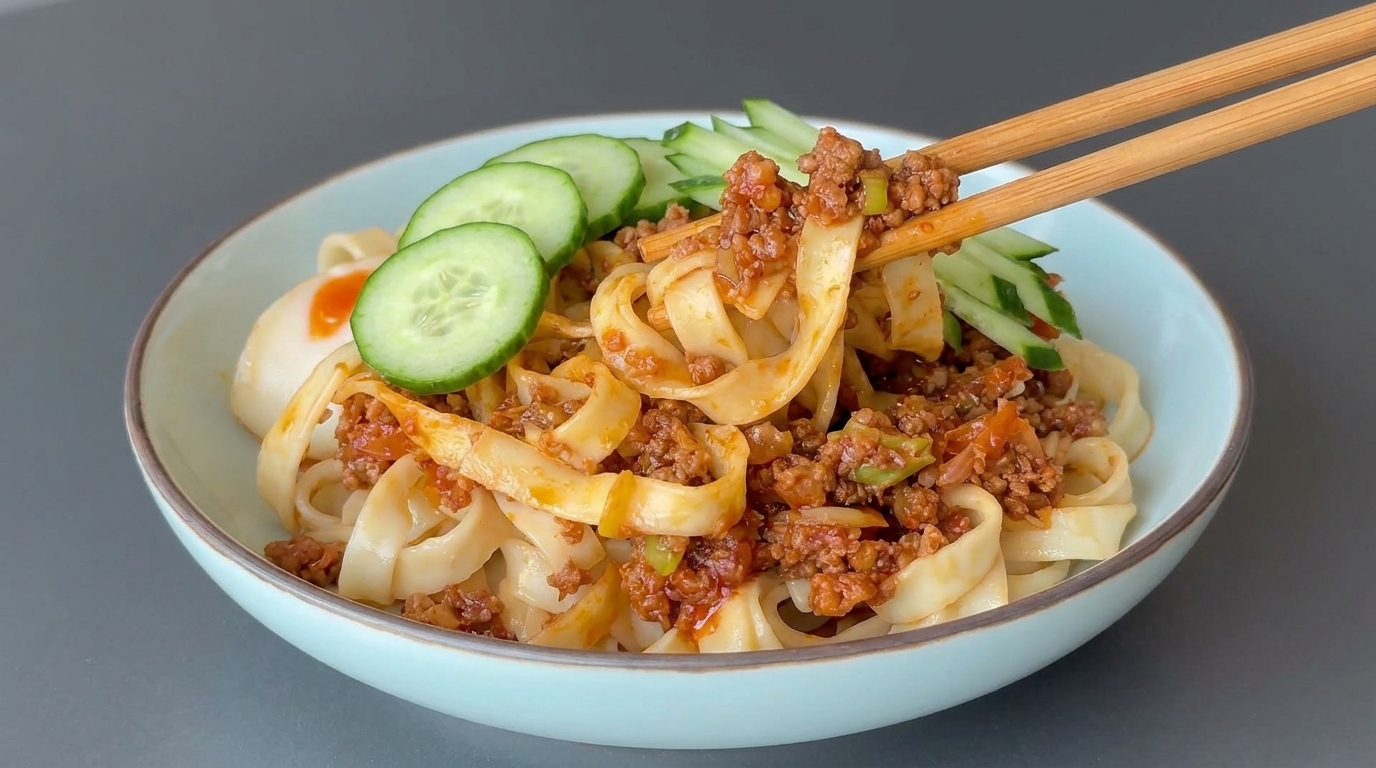
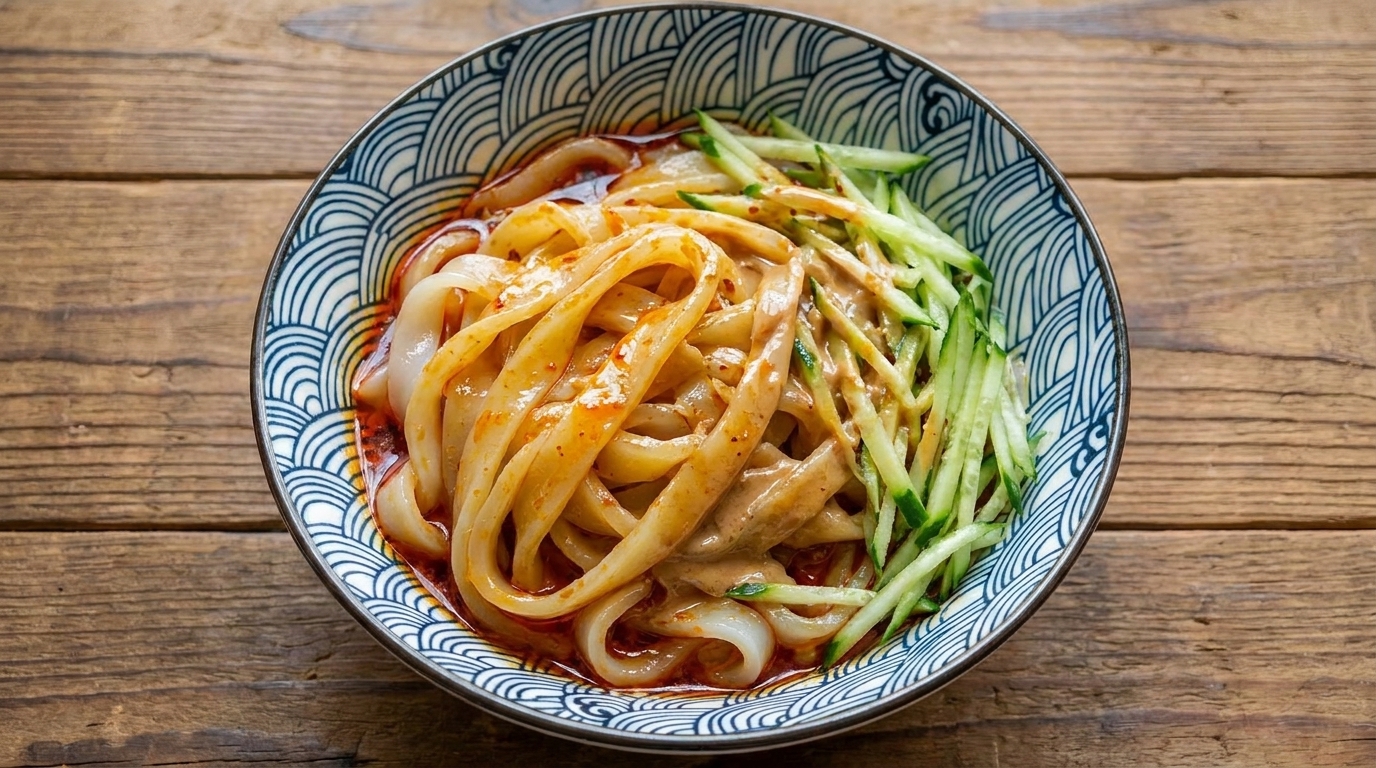
These chewy, elastic noodles are a refreshing take on traditional liangpi, featuring a pungent, creamy sauce of mustard, tahini, and vibrant chili oil.
Cold mustard noodles are a beloved street food staple, prized for their unique texture—a perfect balance of chewiness and elasticity. This dish relies on a special batter of high-gluten flour and pea starch, steamed into thin sheets and sliced into wide ribbons. The hallmark of the dish is the bold, aromatic sauce, which expertly balances the sharp, sinus-clearing heat of mustard with the nutty richness of tahini.
Ingredients
- 250 g high-gluten flour
- 30 g pea starch
- 5 g edible alkali
- 1 tbsp mustard powder
- 2 tbsp tahini
- 1 tbsp chili oil
- 1 clove garlic, minced
- 0.5 cup cucumber, julienned
- to taste warm water
- as needed vegetable oil
Instructions
- 1Mix flour and water
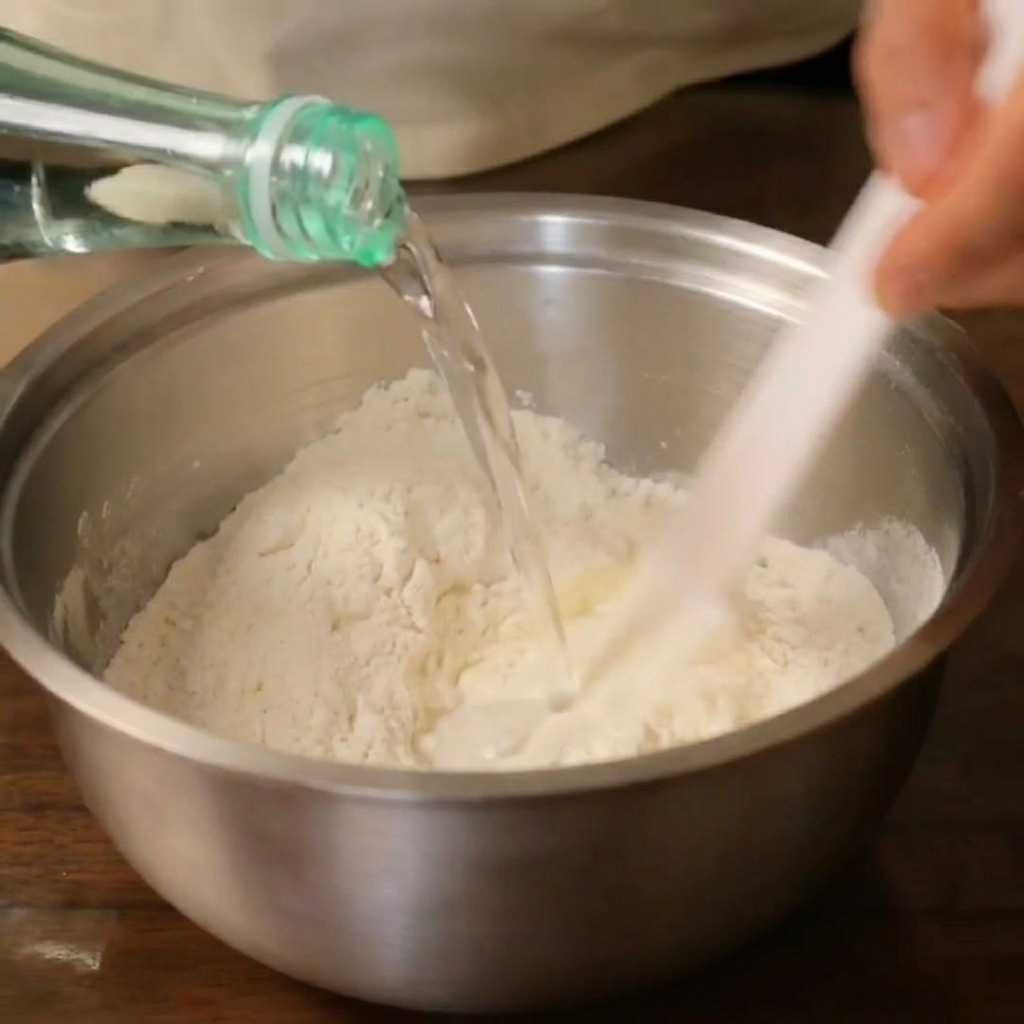
In a metal bowl, combine half a catty of high-gluten flour with half a bottle of water. Stir the mixture continuously until you achieve a thick, smooth paste. This will form the base of your dough for the steamed cold skin.
Tip: Add the water gradually while stirring to prevent lumps from forming in the flour. - 2Prepare the mustard water
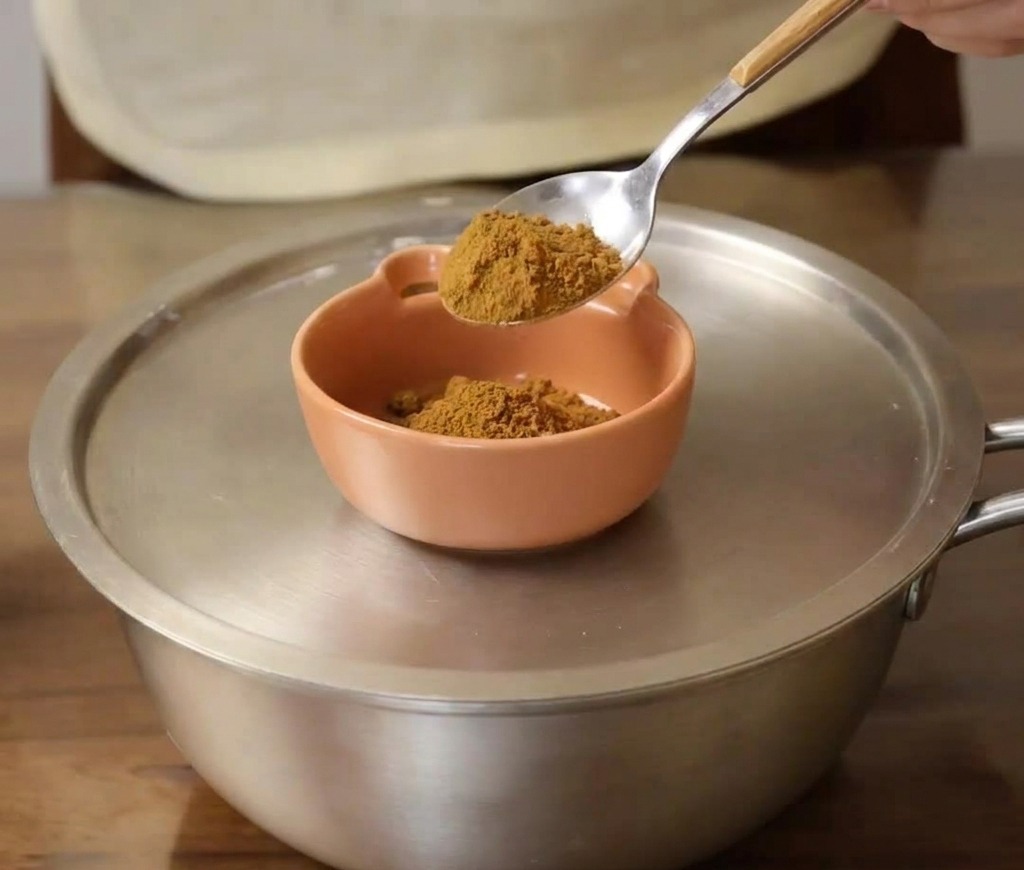
Place the mustard powder into a small ceramic bowl. Mix it with a small amount of water to activate its pungent flavor, then add a little warm water to create a smooth, pourable consistency.
Tip: Activating the mustard powder with a small splash of water first helps release its essential oils before diluting it further. - 3Dissolve the edible alkali
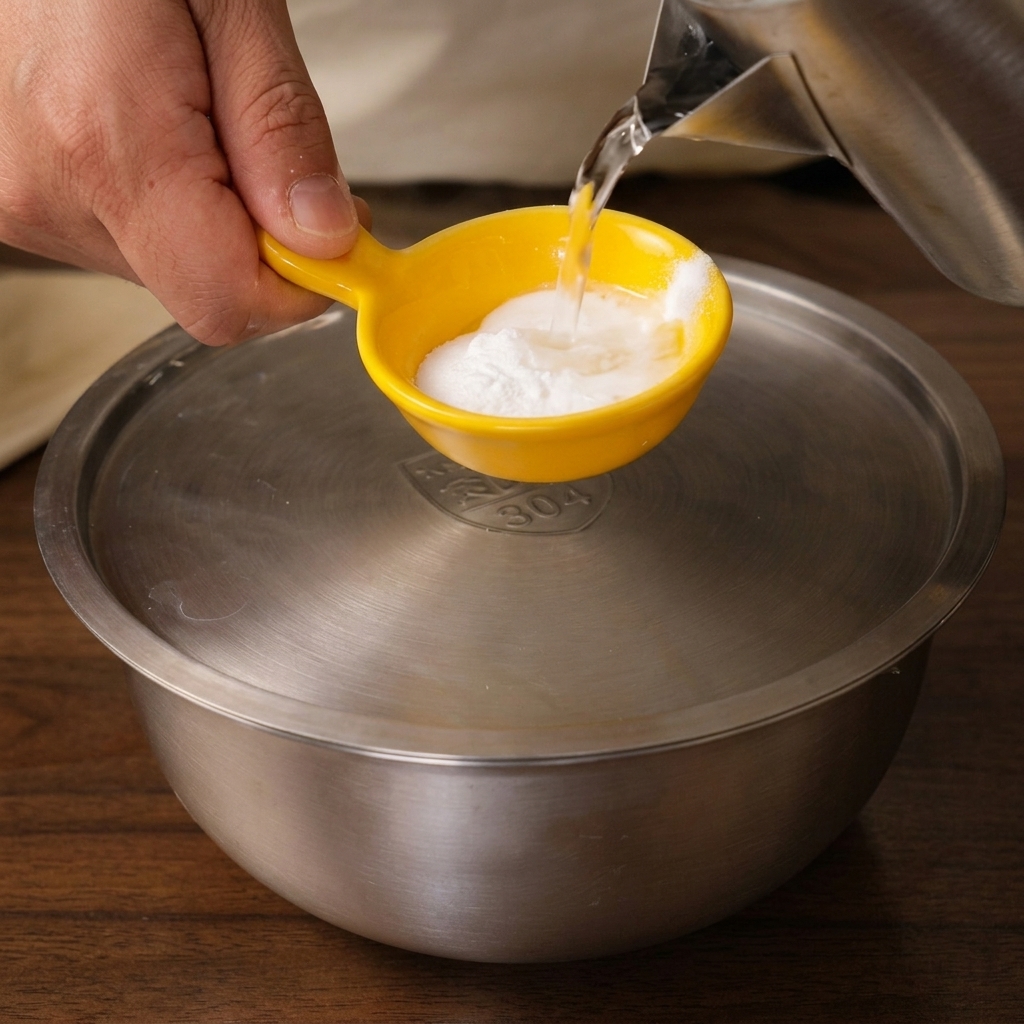
In a separate small container or measuring spoon, dissolve 5 grams of edible alkali in a splash of warm water. Ensuring it is fully dissolved prevents bitter pockets of alkali in the final dish.
Tip: Use warm water rather than cold water to help the edible alkali dissolve completely. - 4Thin out the batter
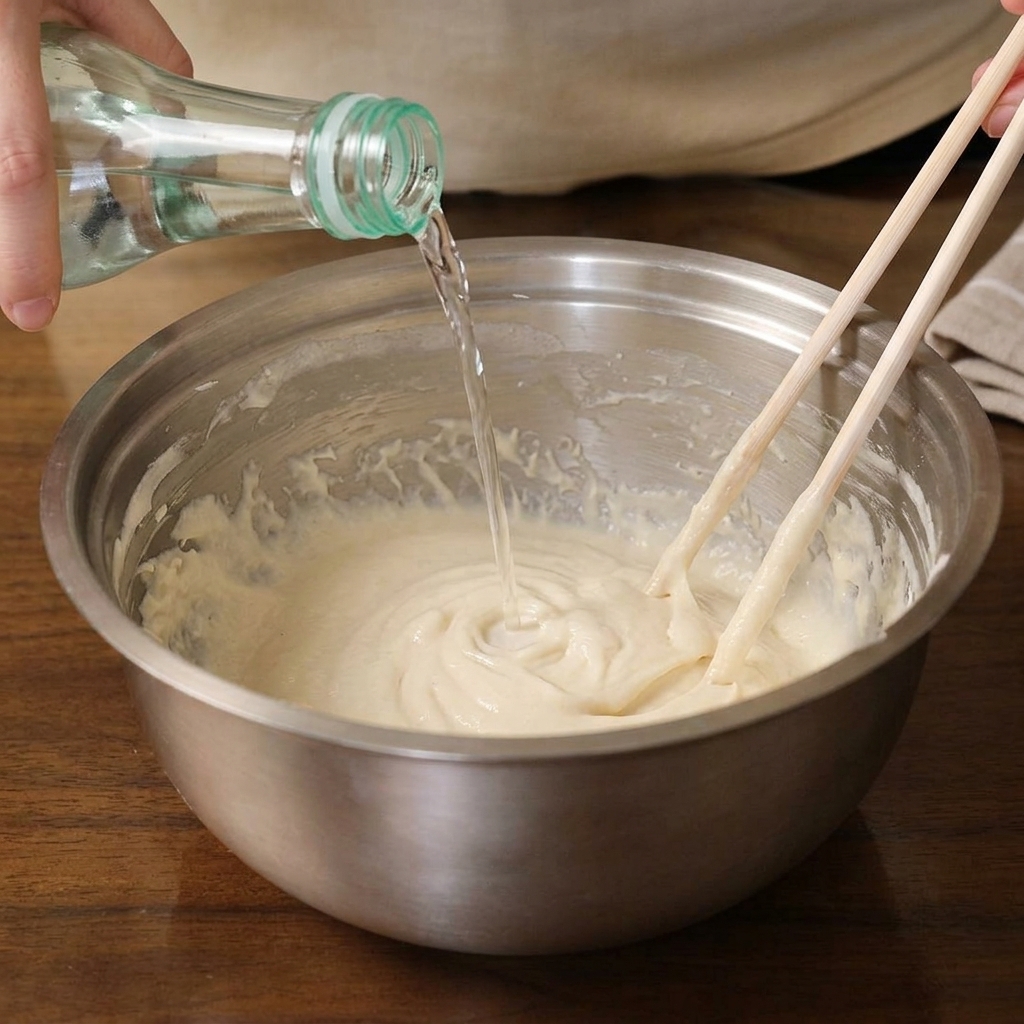
Once the dough paste has rested, add the remaining half-bottle of water to the bowl. Stir vigorously with chopsticks until the mixture is completely smooth and evenly combined, creating a thin, liquid batter.
Tip: Stir in one consistent direction to help the gluten network relax into the water. - 5Add pea starch
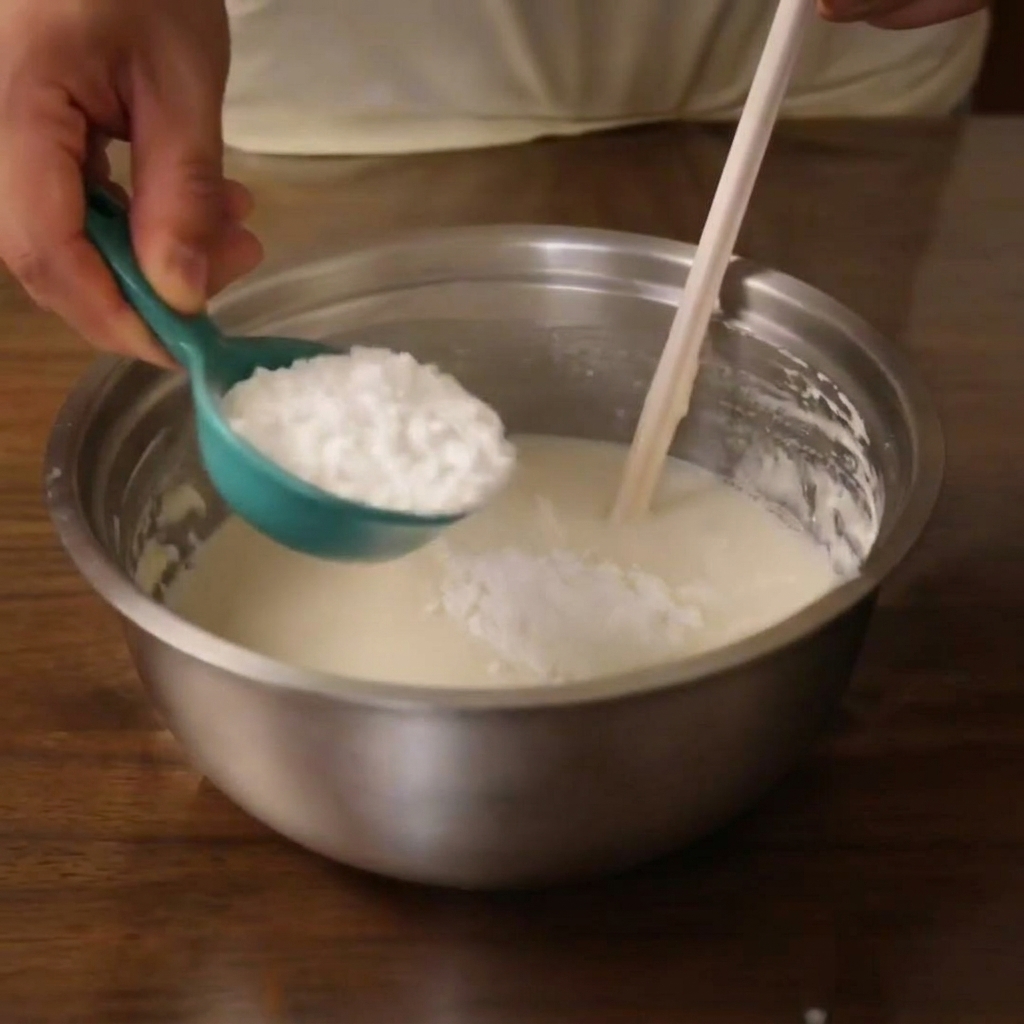
Incorporate 30 grams of pea starch into the thinned batter. Stir the mixture thoroughly to ensure the starch is fully dissolved without any clumps. The pea starch will give the final dough sheet its signature chewy and elastic texture.
Tip: Pea starch tends to settle at the bottom, so be sure to scrape the bottom of the bowl while stirring. - 6Add alkaline water
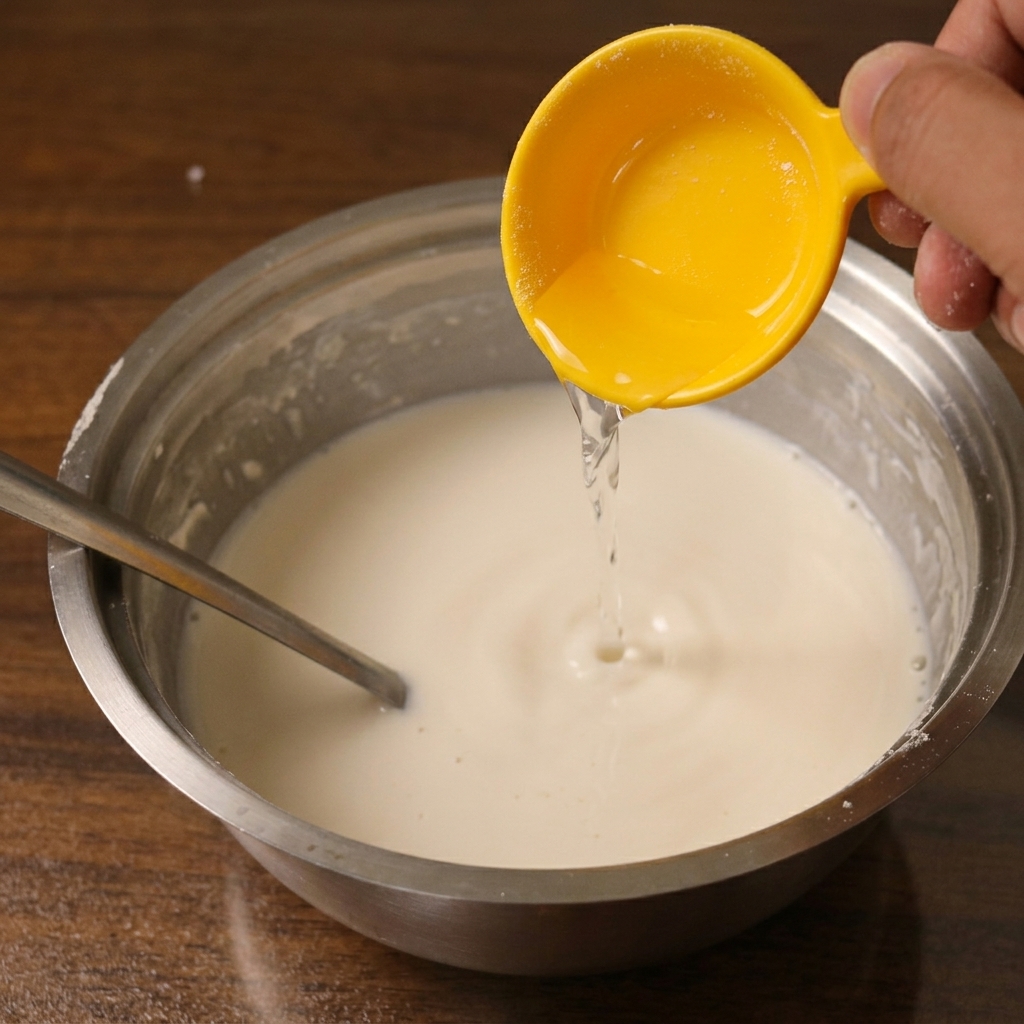
Pour the previously prepared alkaline water into the batter mixture. Give it a final stir to combine everything evenly. The alkaline water helps to improve the texture and gives the dough a slightly yellow tint.
Tip: Make sure the alkaline water is completely mixed in so that the dough cooks uniformly. - 7Ladle batter onto plate
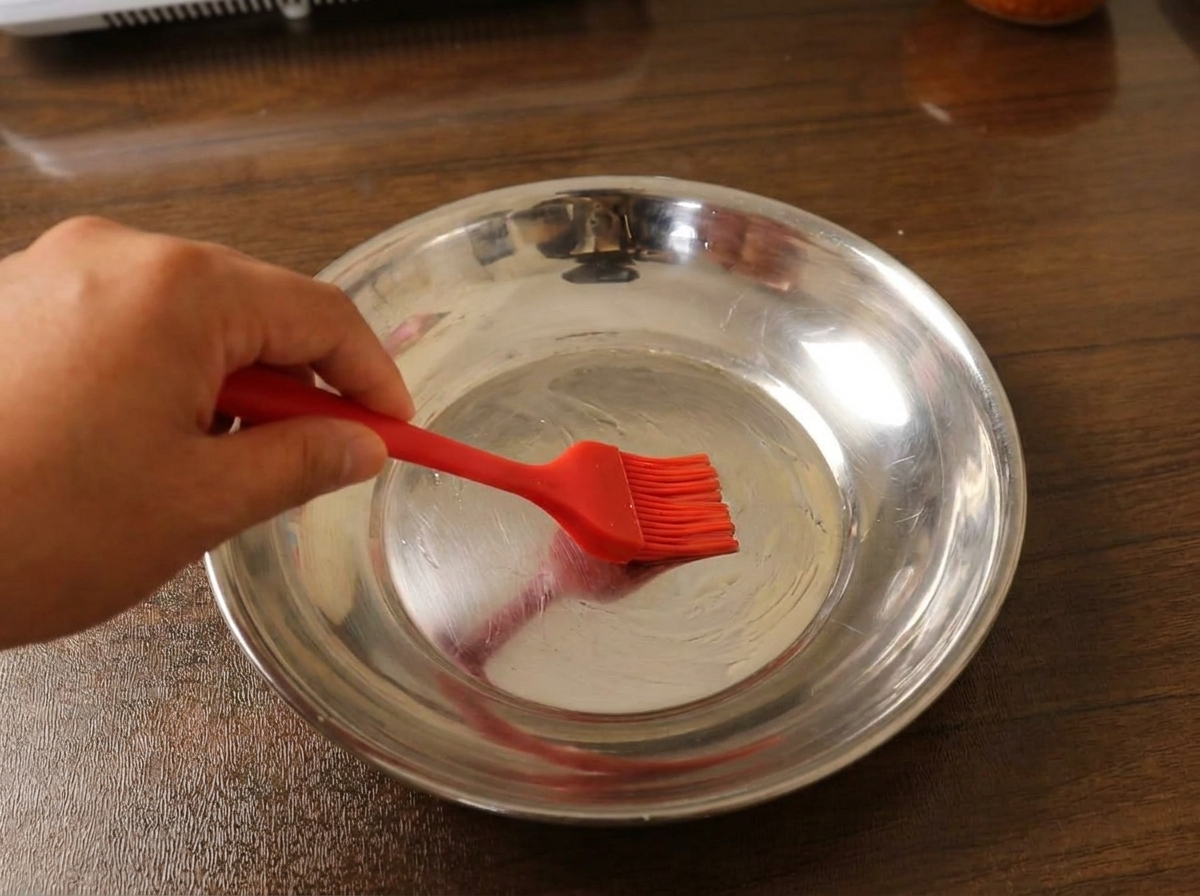
Ladle a portion of the prepared batter onto a metal plate that has been lightly brushed with oil to prevent sticking.
Tip: Ensure the plate is evenly greased with oil before adding the batter to make removing the cooked sheet much easier. - 8Steam the noodle sheet
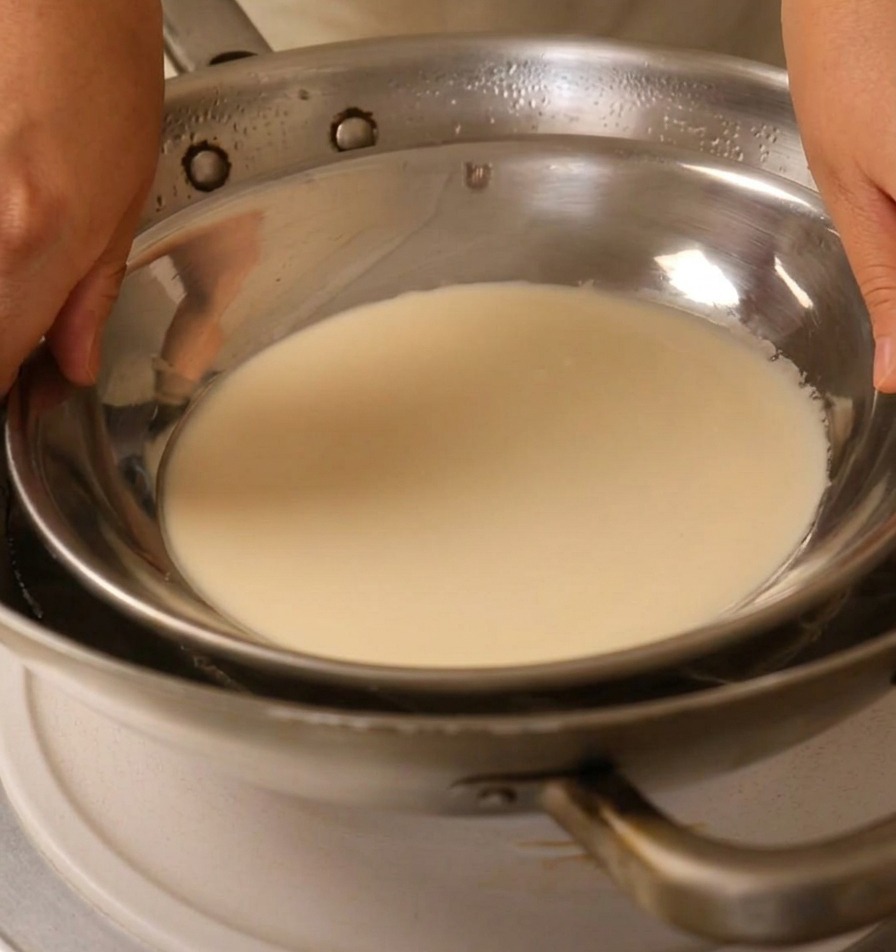
Carefully place the metal plate with the batter into a wok or steamer over boiling water. Cover and steam in a boiling water bath for about 4 minutes until the dough surface becomes cooked, translucent, and elastic.
Tip: Ensure the water is fully boiling before placing the plate in, so the batter sets quickly and evenly. - 9Cool the noodle sheet
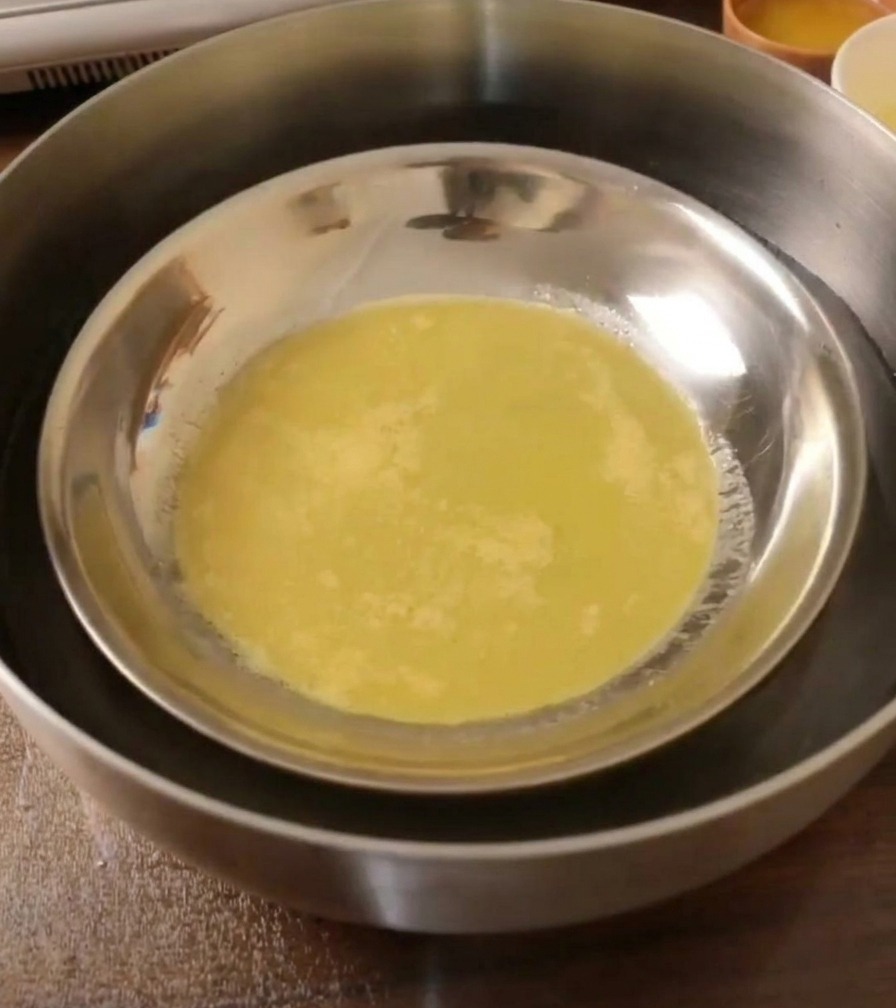
Once steamed, remove the metal plate and immediately float it in a basin of cold water to cool. This rapid cooling halts the cooking process and helps the noodle sheet detach cleanly from the pan.
Tip: Brush a thin layer of oil on the surface of the cooled sheet to prevent it from drying out or sticking to itself. - 10Slice into strips
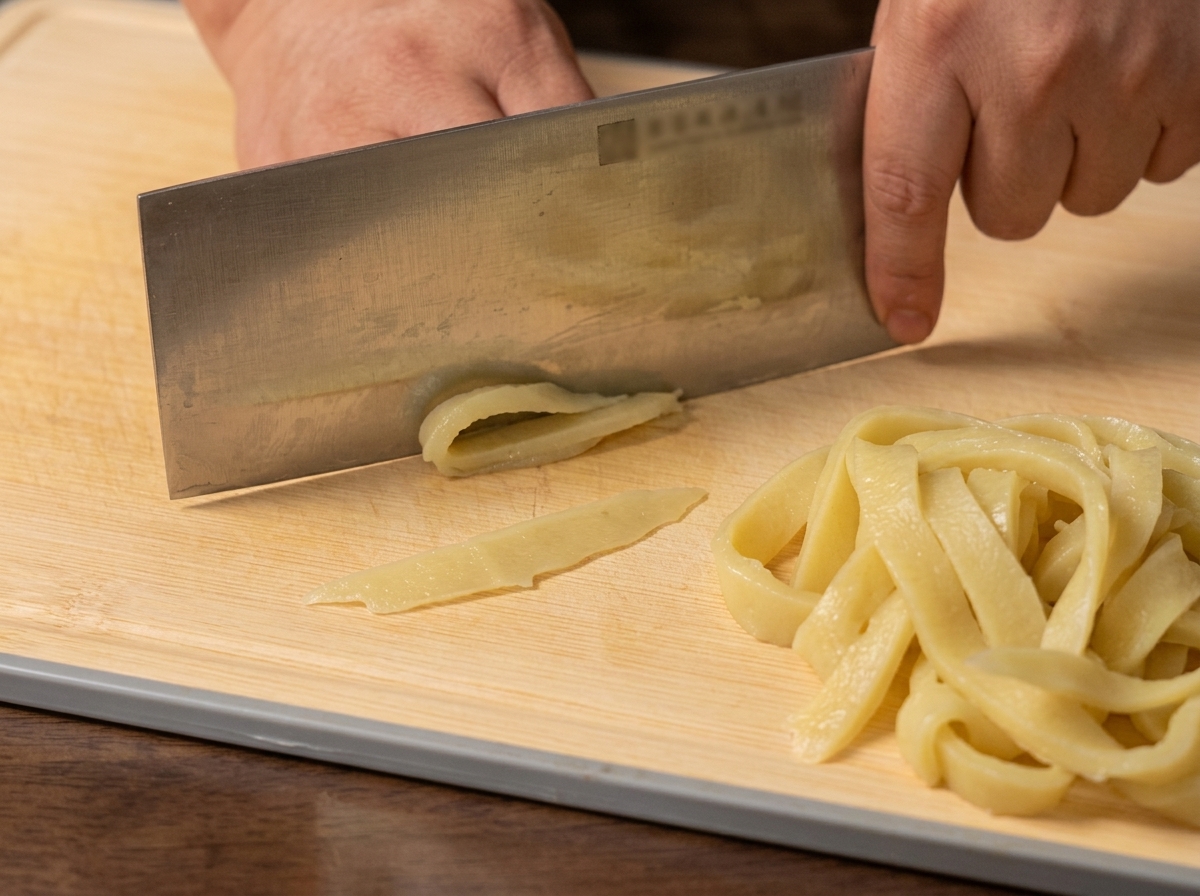
Transfer the cooled and oiled dough sheet onto a wooden cutting board. Using a sharp knife or cleaver, cut the sheet into wide, even strips to form the thick noodles.
Tip: Ensure your knife is slightly oiled or wet to prevent the starchy noodles from sticking to the blade as you slice. - 11Garnish and serve
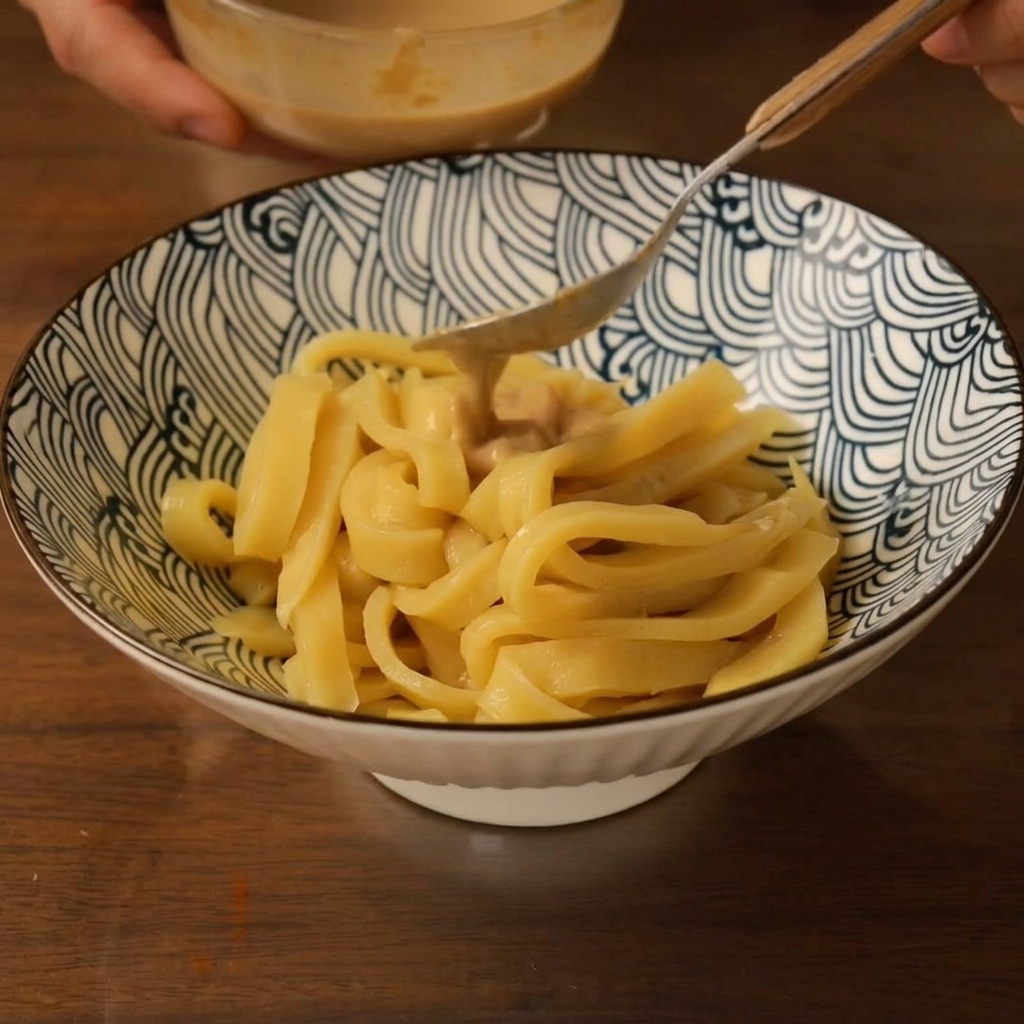
Place the freshly cut noodle strips into a serving bowl. Dress the noodles generously with the prepared mustard water, tahini, minced garlic, and chili sauce, adjusting the condiments to your preferred taste.
Tip: Toss the noodles thoroughly before eating so every strip is evenly coated with the rich and pungent sauce mixture.