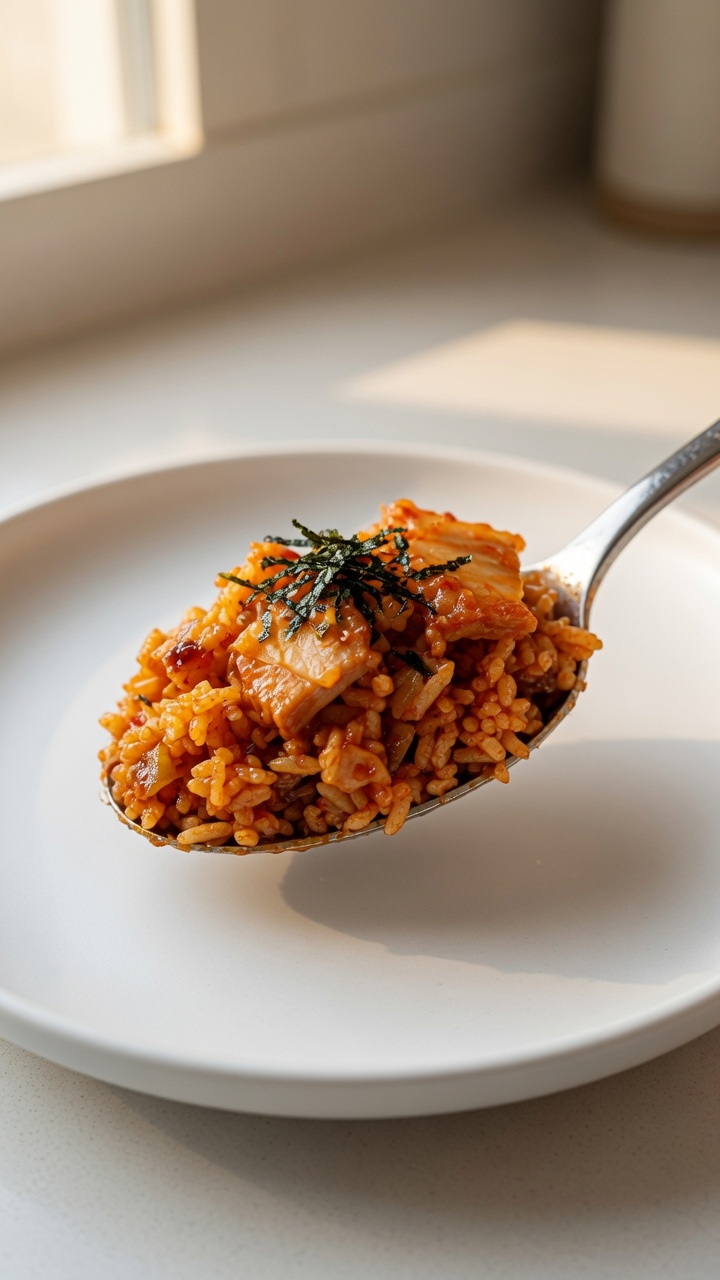
Classic Kimchi Fried Rice (Kimchi Bokkeumbap)
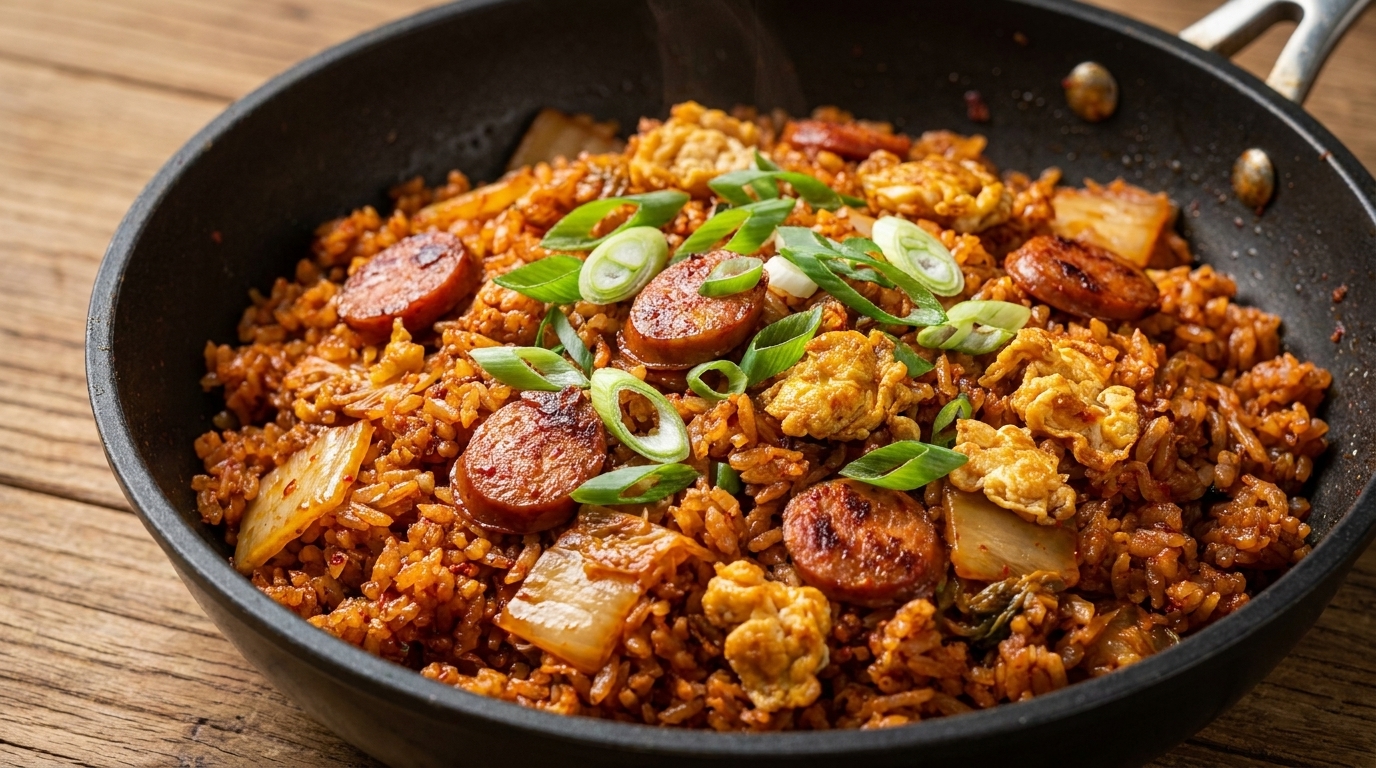
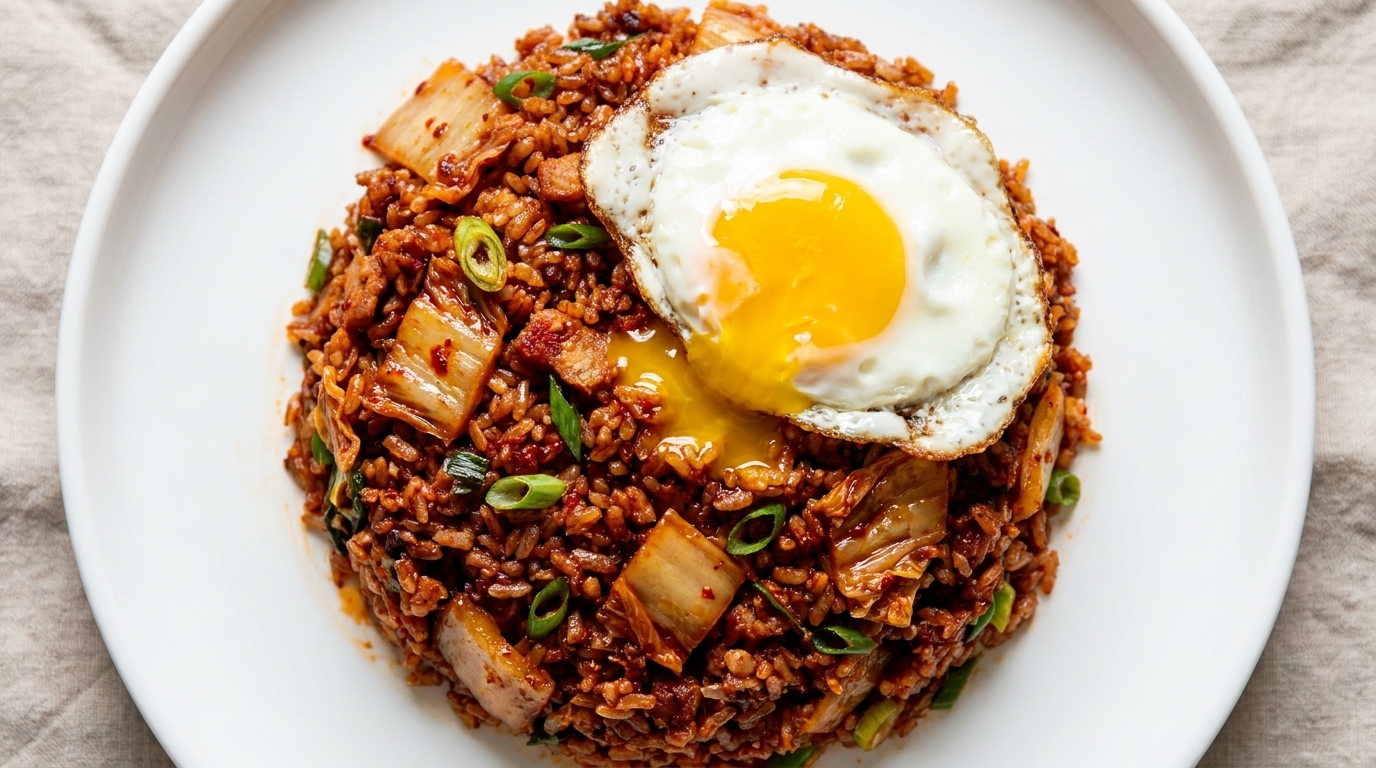
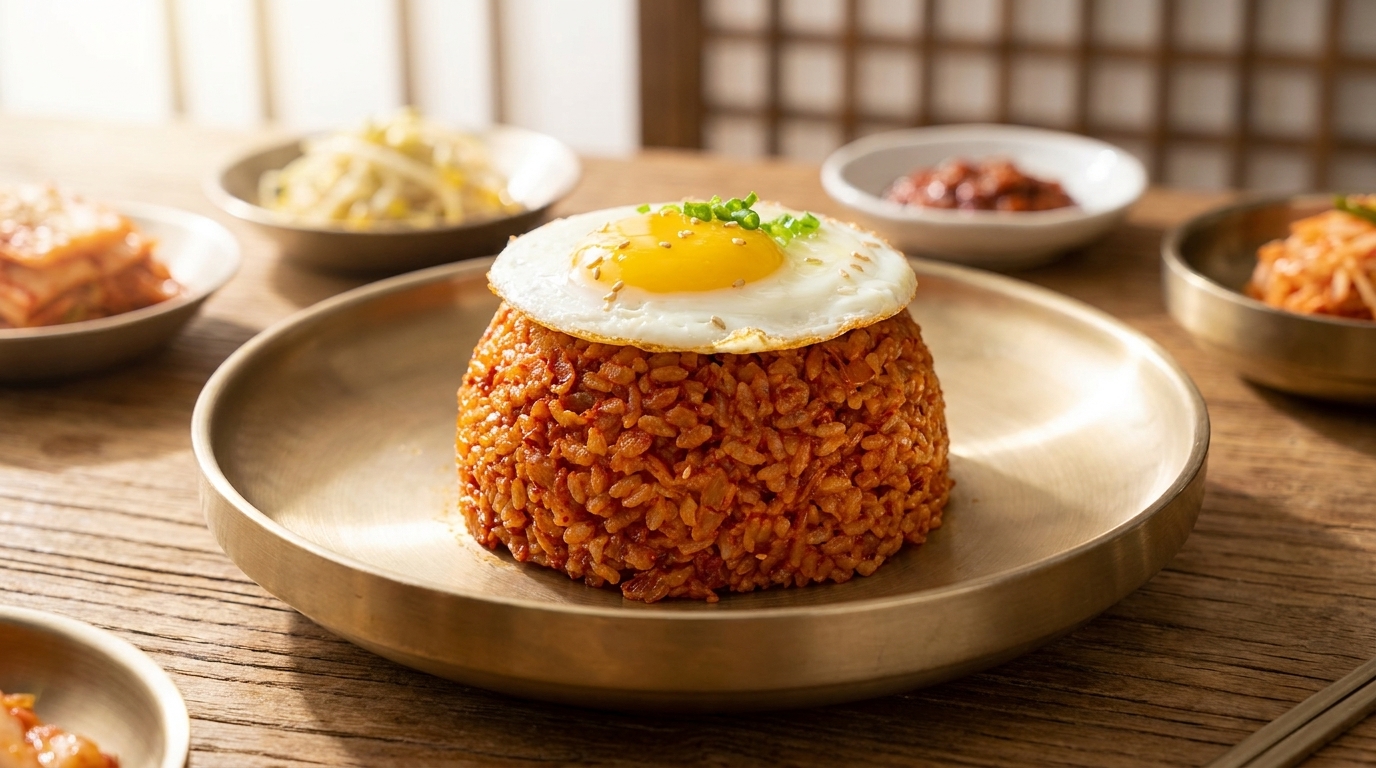
A savory, comforting classic, this kimchi fried rice uses tangy, fermented kimchi and tender pork belly for a perfectly balanced, deeply flavorful meal.
Kimchi fried rice is a beloved staple of Korean home cooking, celebrated for its ability to transform humble leftovers into a vibrant, satisfying dish. The key lies in using well-fermented, aged kimchi, which provides the essential sour depth that cuts through the richness of the pork belly. It is an incredibly versatile meal, perfect for a quick dinner or a restorative lunch, offering a delicious harmony of spicy, sour, and savory notes in every bite.
Ingredients
- 200 g leftover cooked white rice
- 100 g pork belly, sliced
- 150 g fermented kimchi, chopped
- 2 stalks scallions, chopped
- 2 cloves garlic, minced
- 1/4 onion, diced
- 1 tbsp light soy sauce
- 1 tbsp cooking wine
- 1 tbsp vegetable oil
- optional dried seaweed strips
Instructions
- 1Brown the pork belly
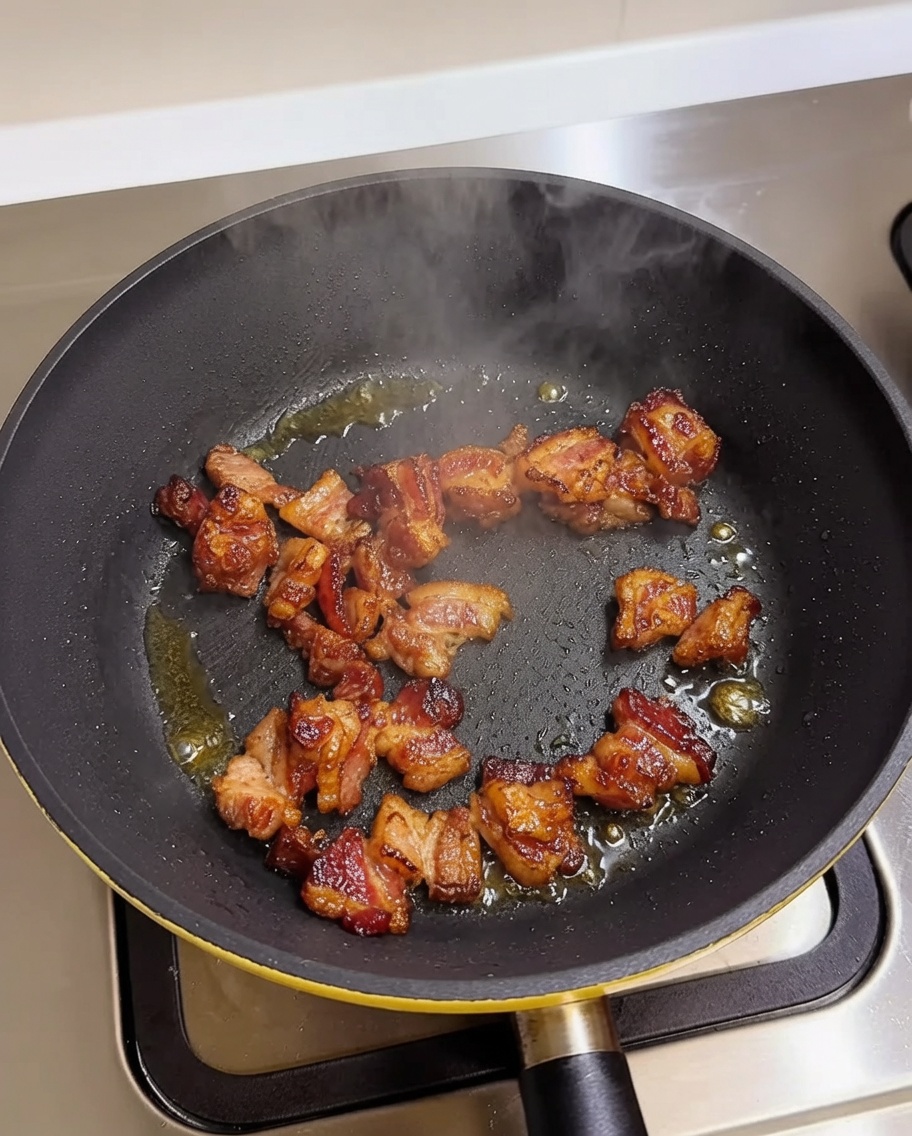
First, heat the pan with oil, add the pork belly, and stir-fry until the color changes and the meat is nicely browned.cite: 1
Tip: Stir-frying the meat a bit longer makes it more flavorful.cite: 1 - 2Add the aromatics
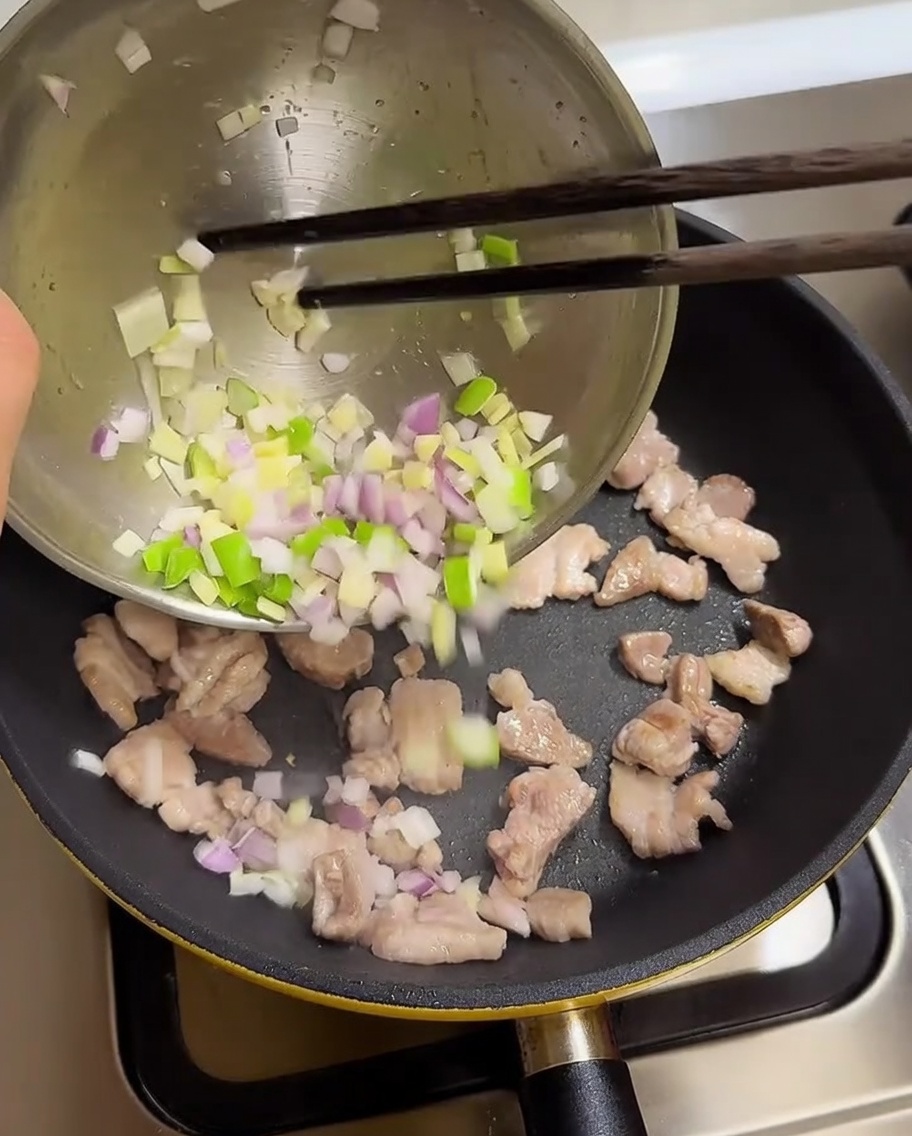
Once the pork is browned, add the chopped scallions, garlic, and onions into the pan and continue stir-frying to release their aromatics.cite: 1
Tip: Keep everything moving in the pan so the garlic and onions do not burn.cite: 1 - 3Season the pork and aromatics
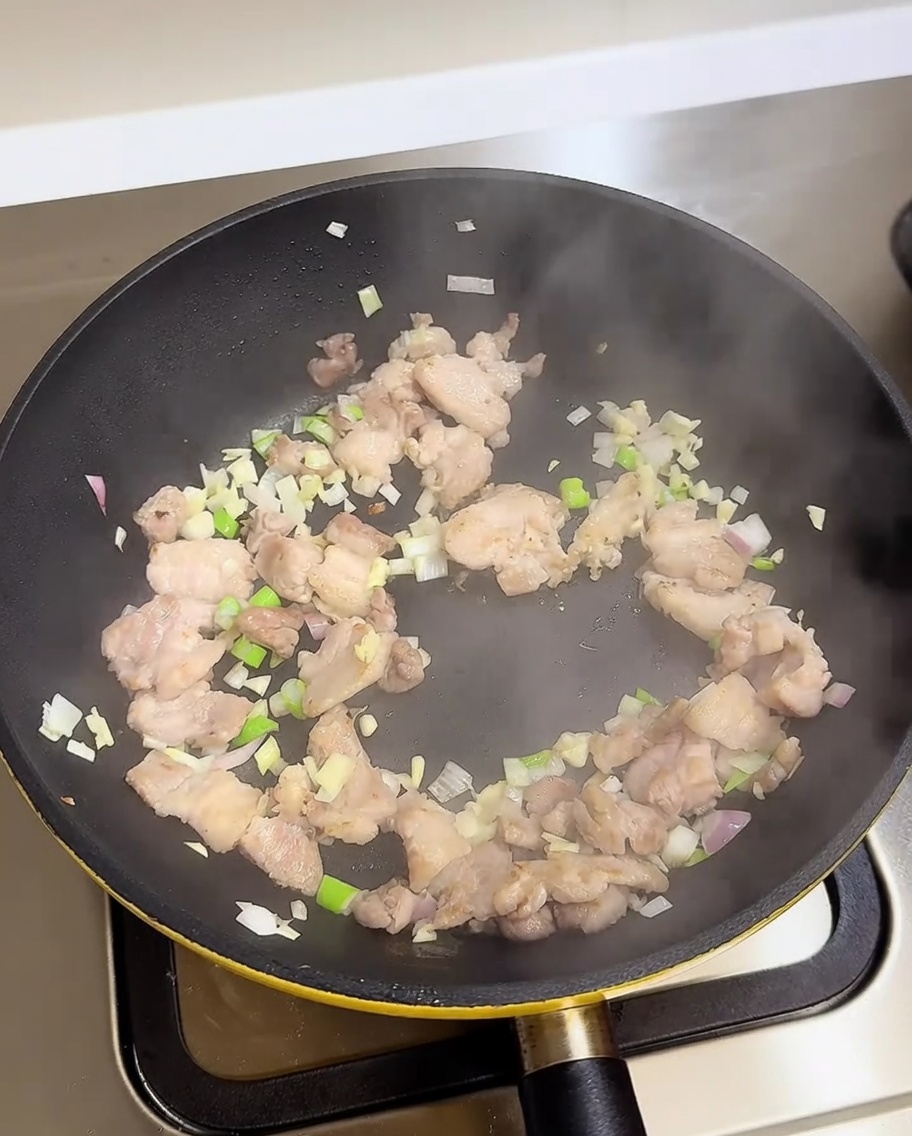
Add light soy sauce and cooking wine to the pan. Stir-fry the mixture thoroughly to ensure the pork is fully infused with the savory flavors from the soy sauce and cooking wine.
Tip: Stir-frying the pork longer helps develop a deeper and more flavorful base for the rice. - 4Stir-fry the kimchi
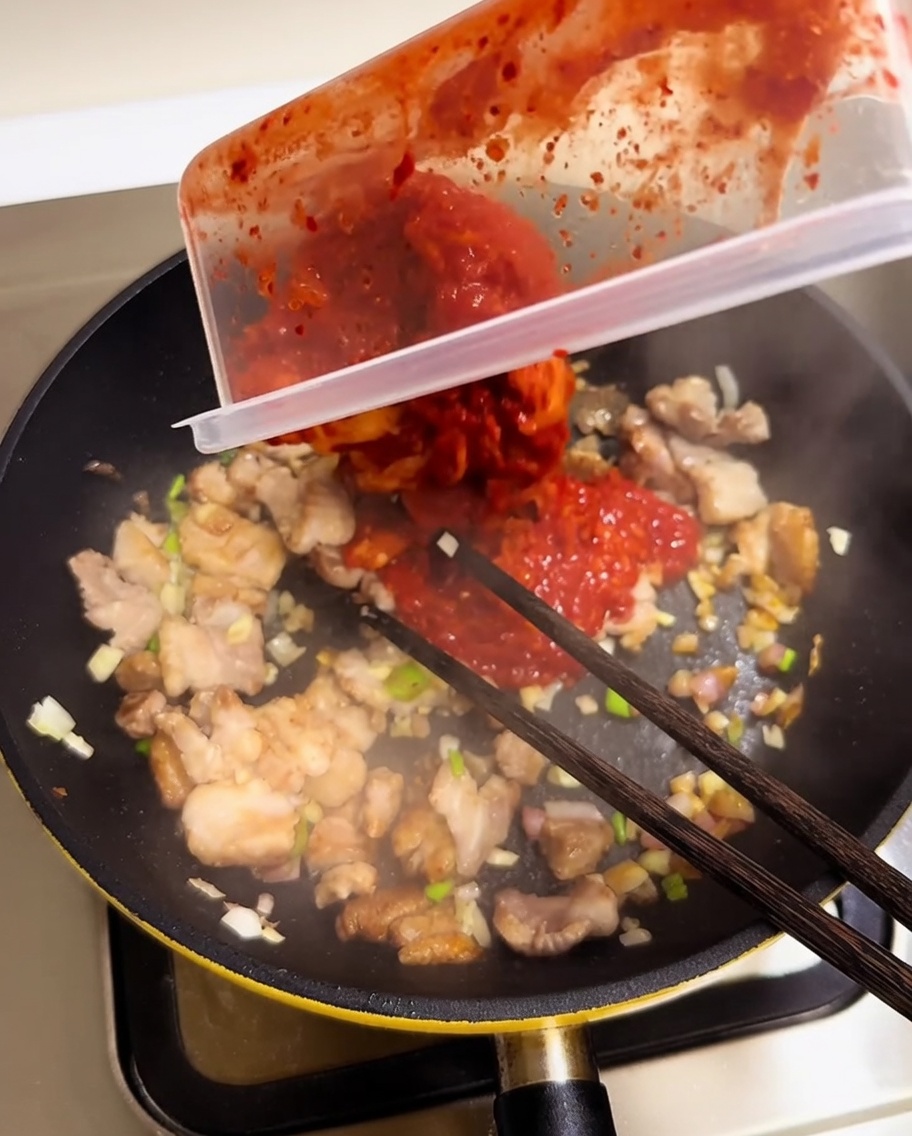
Now, add the chopped kimchi directly into the pan. Start stir-frying the kimchi and pork belly together until the high moisture content dries out and the liquid is reduced.cite: 1
Tip: If you dont like it sour, its better to stir-fry the kimchi and pork belly right after opening a new jar of kimchi rather than using aged, fermented kimchi.cite: 1 - 5Combine rice with kimchi base
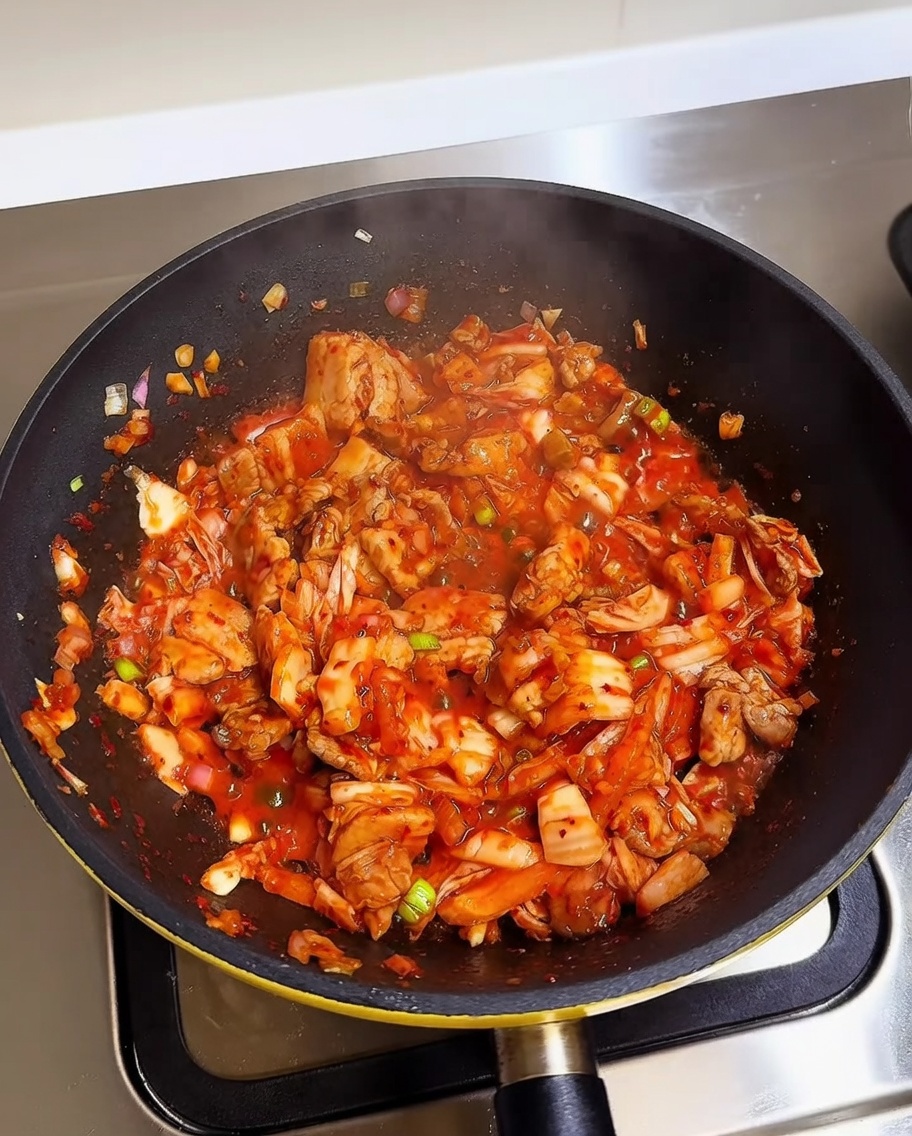
Once the kimchi and pork belly mixture has been stir-fried sufficiently to reduce moisture, add the cooked white rice to the pan. Stir everything together evenly until every grain of rice is thoroughly coated with the pork and kimchi mixture.
Tip: Ensure the liquid from the kimchi has reduced before adding the rice to prevent the fried rice from becoming soggy. - 6Incorporate the leftover rice
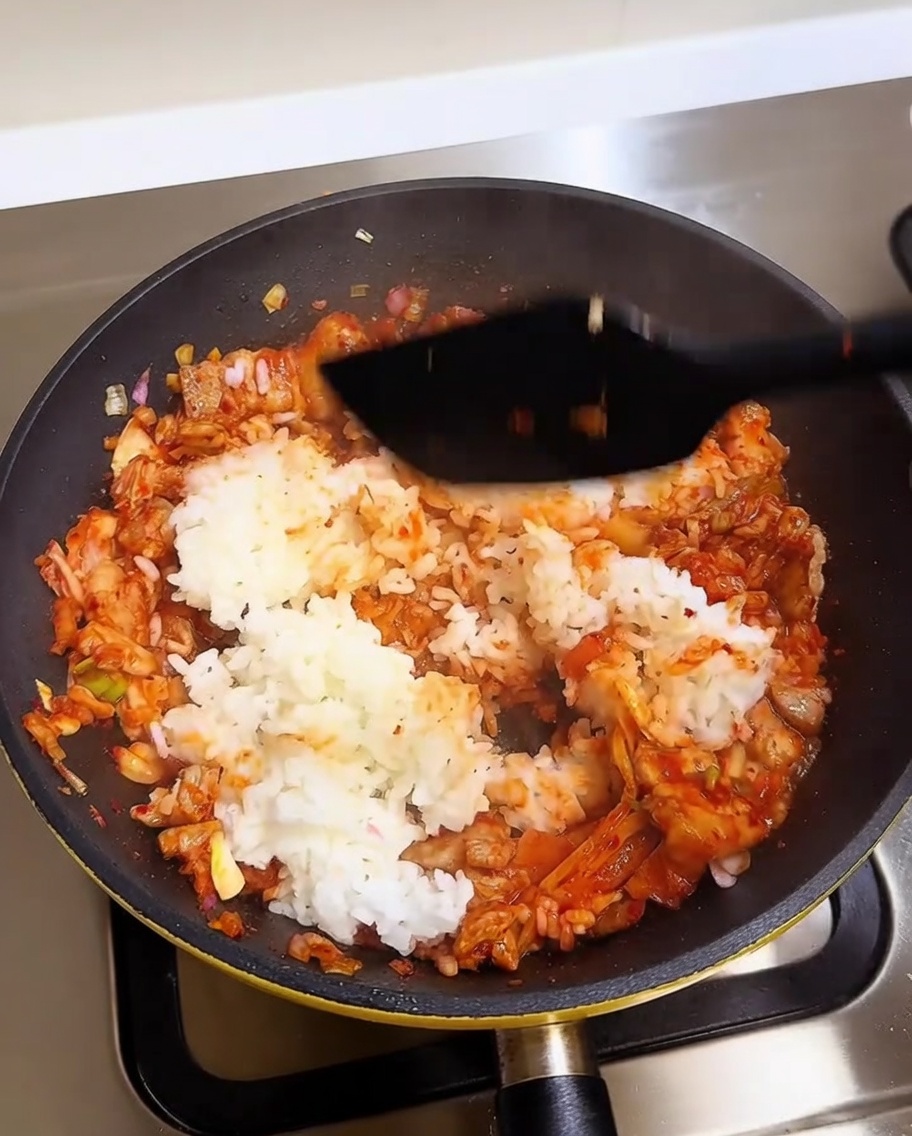
Once the liquid has reduced, add the leftover rice and stir-fry evenly, ensuring every grain of rice is coated with the pork and kimchi mixture.cite: 1
Tip: Using leftover rice is a prerequisite for good fried rice because it has less moisture and will separate better in the pan.cite: 1