Authentic Korean Kimchi Doenjang-jjigae
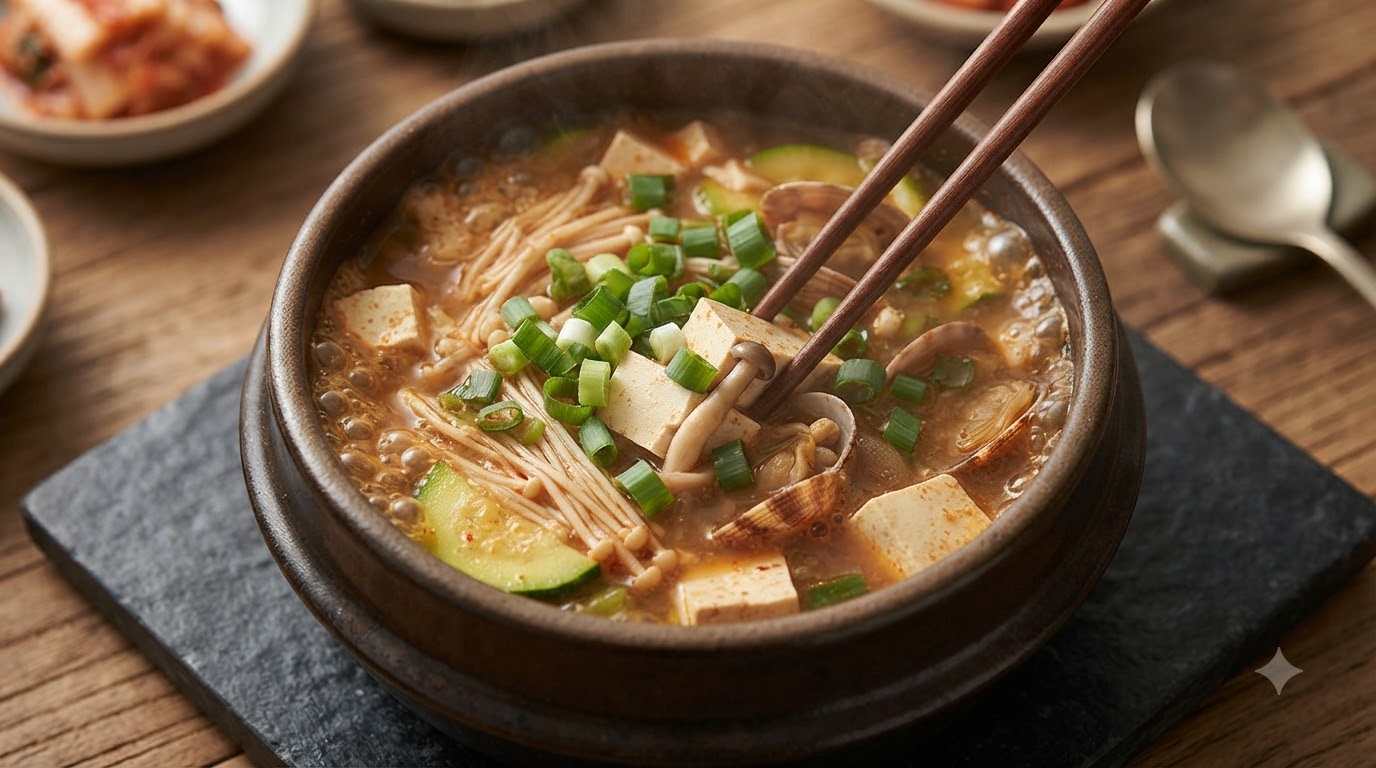
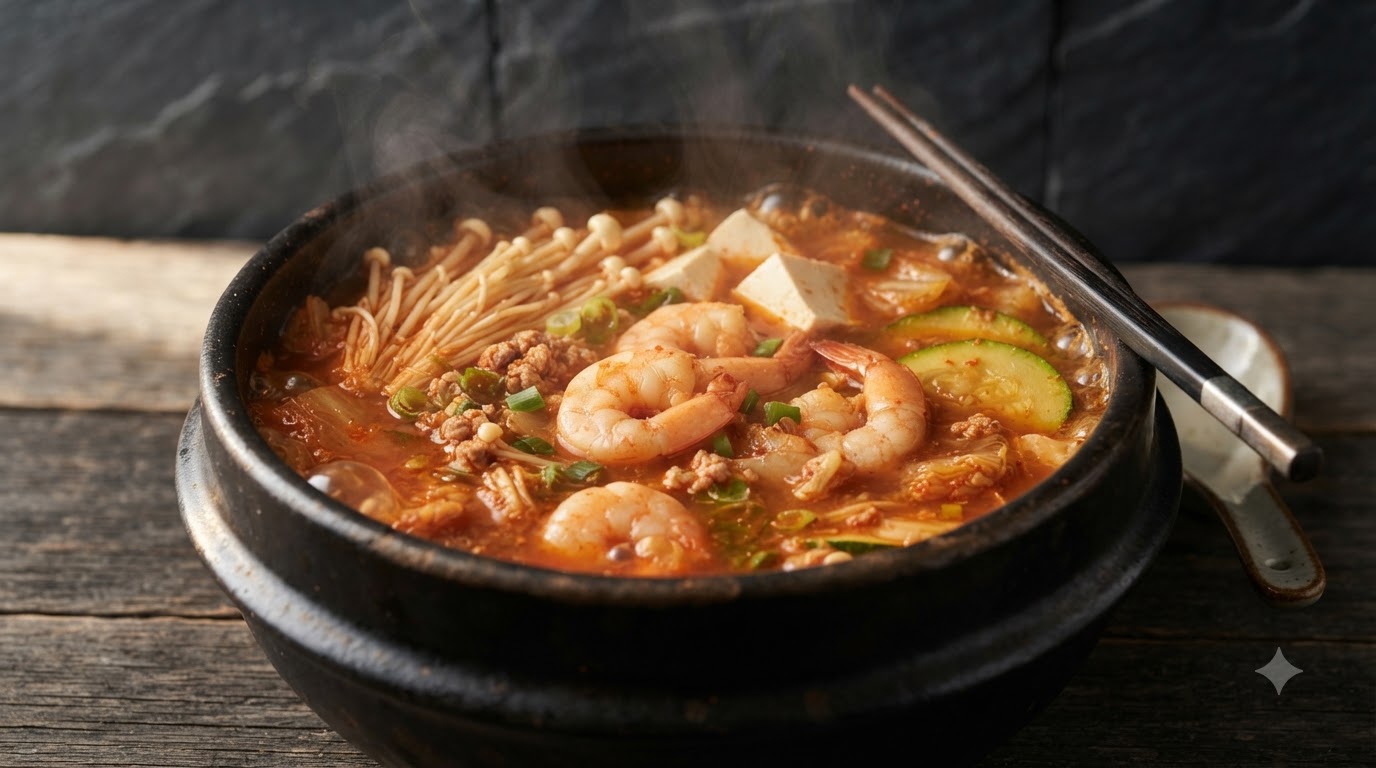
A rich and appetizing Korean soybean paste stew combining aged kimchi, savory natto, tofu, and beef powder simmered to perfection.
Passed down through generations, this authentic Korean soybean paste stew balances the deep, savory umami of fermented soybeans with the sharp, fiery kick of kimchi. Rice washing water is traditionally used as the base broth to impart a subtle starchiness and rich body to the soup.
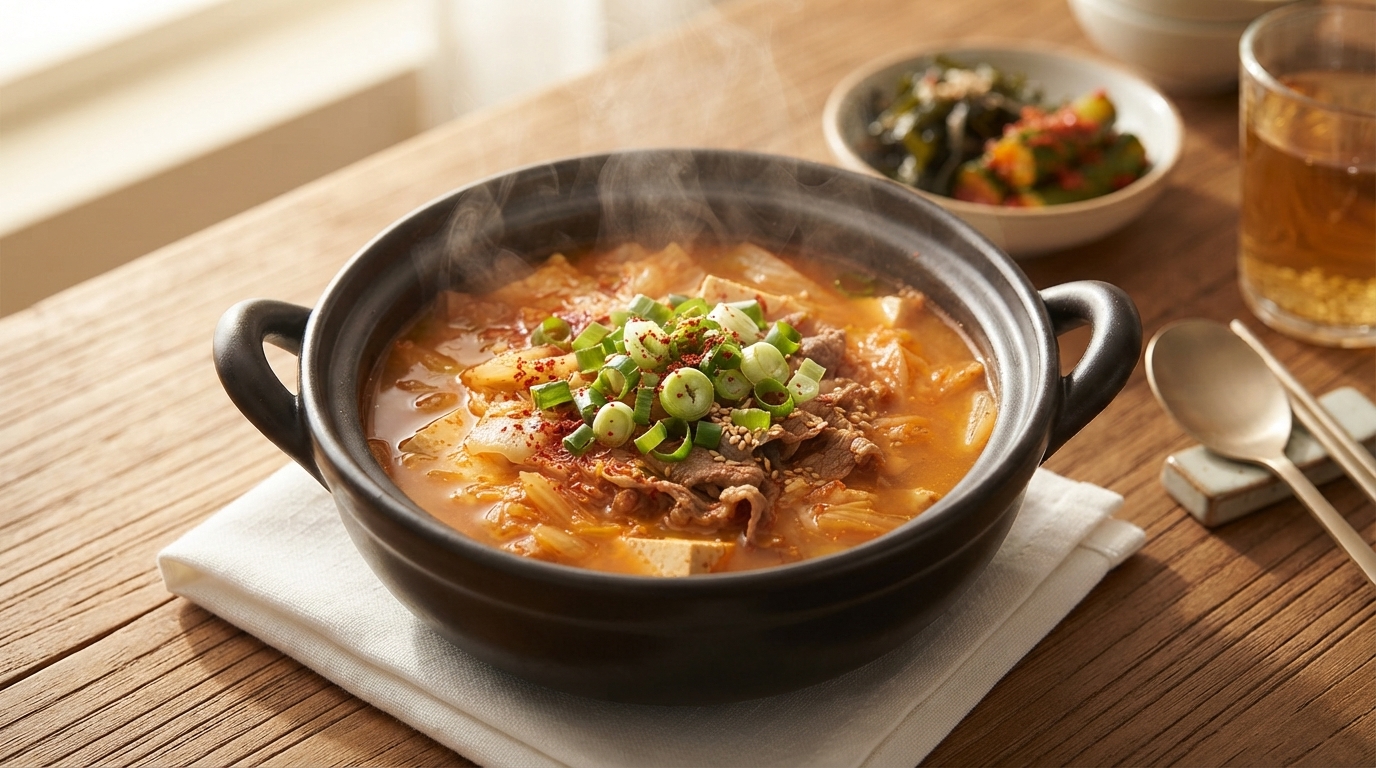
Ingredients
- 1 large piece spicy red kimchi
- 1 pack natto
- 1 block tofu
- 1 tbsp sesame oil
- 1 tbsp peanut oil
- 3 cups rice washing water
- 1 tsp beef powder
- 3 cloves minced garlic
- 1/2 tsp MSG
- to taste salt
- 1 tsp chili powder
- 1 green chili pepper
- 1 red chili pepper
- 2 stalks green onions
- to taste sesame seeds
Instructions
- 1Cut the Kimchi

Take a large piece of spicy red kimchi and use kitchen shears to cut it into smaller, manageable pieces directly over a bowl of sauce. This prepares the kimchi for even cooking and optimal flavor distribution in the soup.
Tip: Using kitchen shears makes this quick and keeps your cutting board clean. - 2Add Oils to the Pot
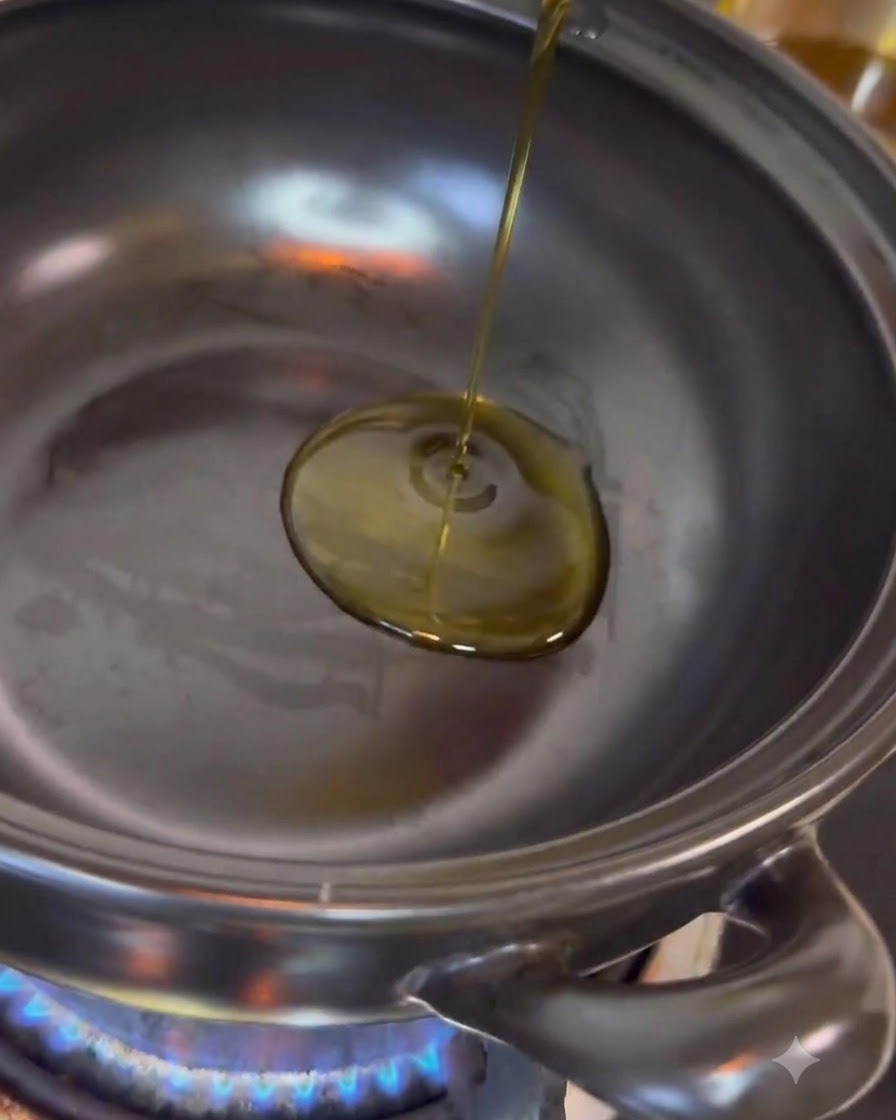
Place a dark cooking pot on the stovetop over heat and pour in a combination of two oils: sesame oil and peanut oil. This dual-oil blend provides both aromatic flavor and a high smoke point for stir-frying.
Tip: Combining sesame oil and peanut oil balances rich nutty fragrance with stable frying performance. - 3Stir-Fry the Kimchi
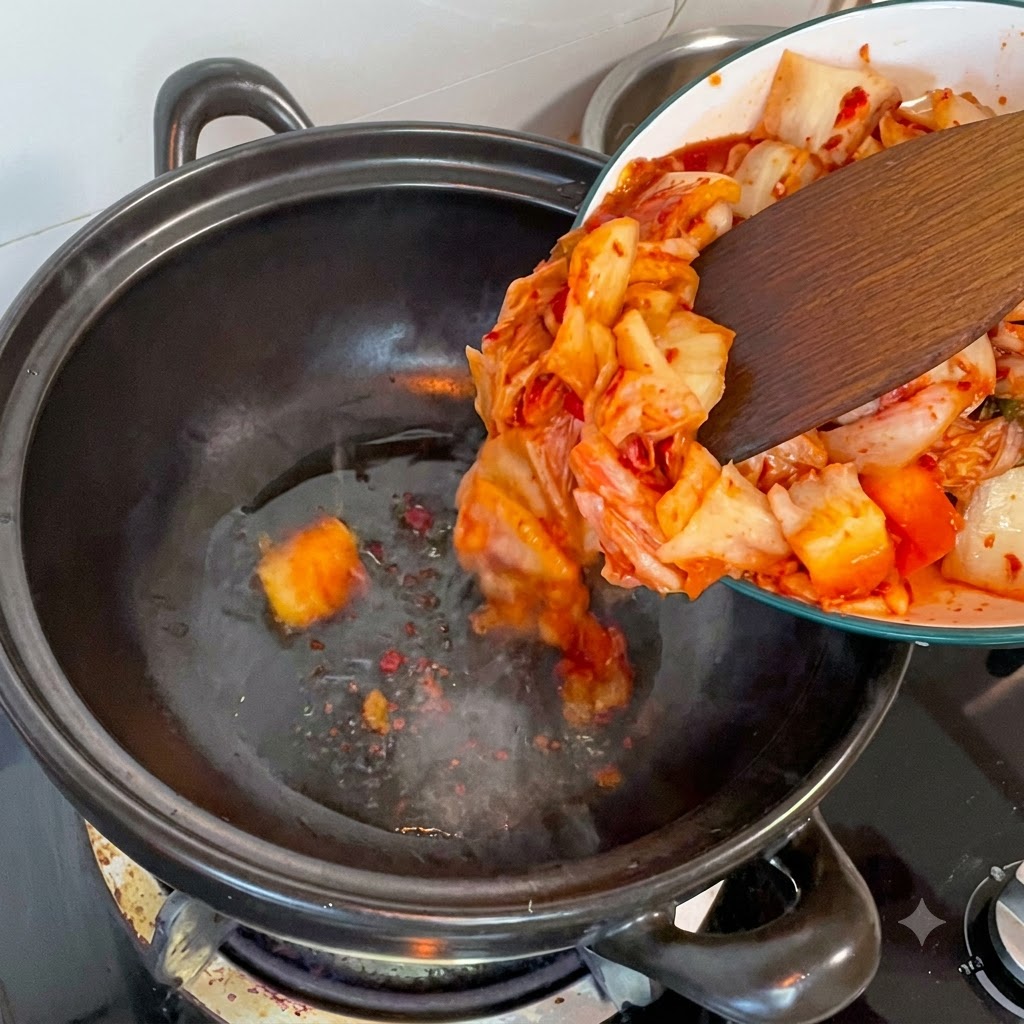
Transfer the cut pieces of spicy kimchi into the heated pot containing the oil. Use a wooden spatula to stir-fry the kimchi until it softens and releases its vibrant flavors into the oil.
Tip: Stir-frying the kimchi first unlocks its deep savory notes before adding liquids. - 4Add Natto
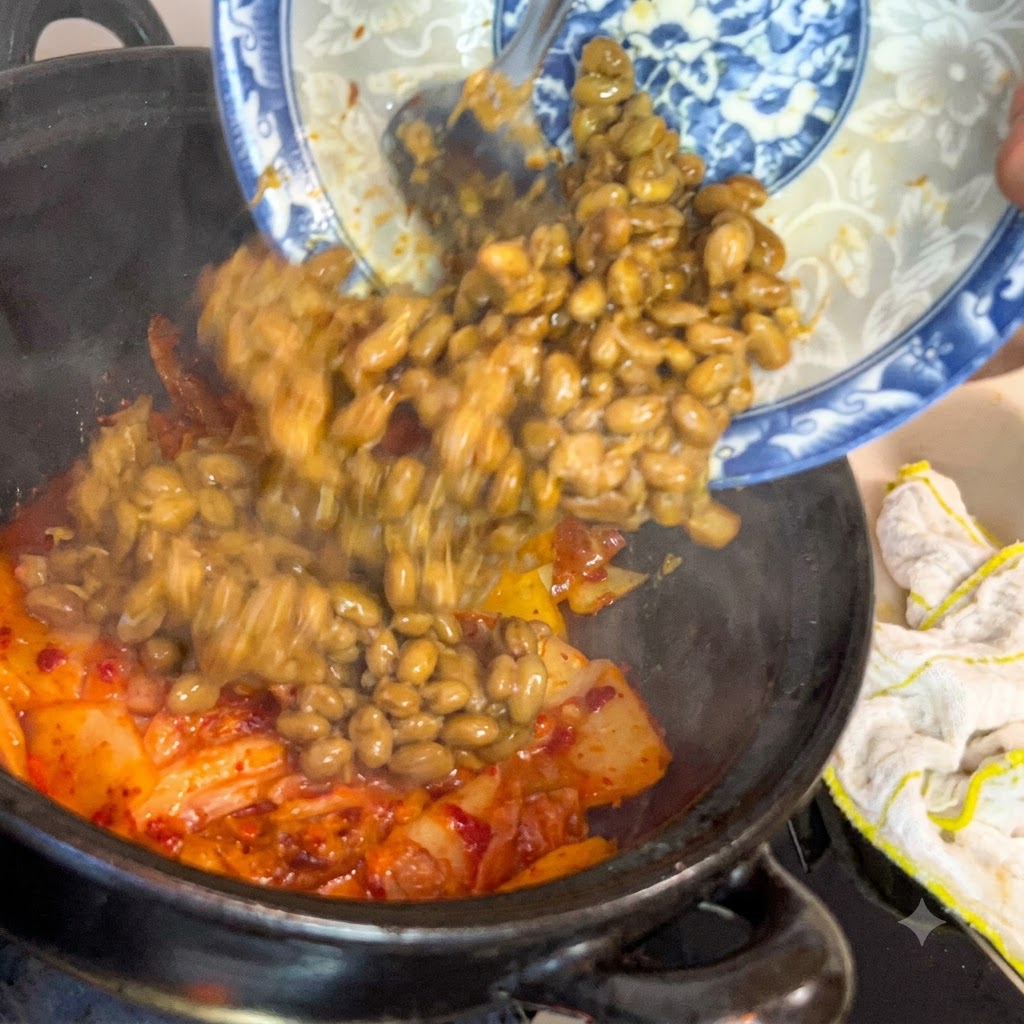
Take fermented soybeans, or natto, from a blue and white patterned plate and tip them directly into the pot with the stir-frying kimchi. The natto will lend a rich, authentic depth and umami flavor characteristic of traditional soybean paste soup.
Tip: Make sure to scrape all the fermented beans and their beneficial stickiness into the pot. - 5Pour Rice Washing Water
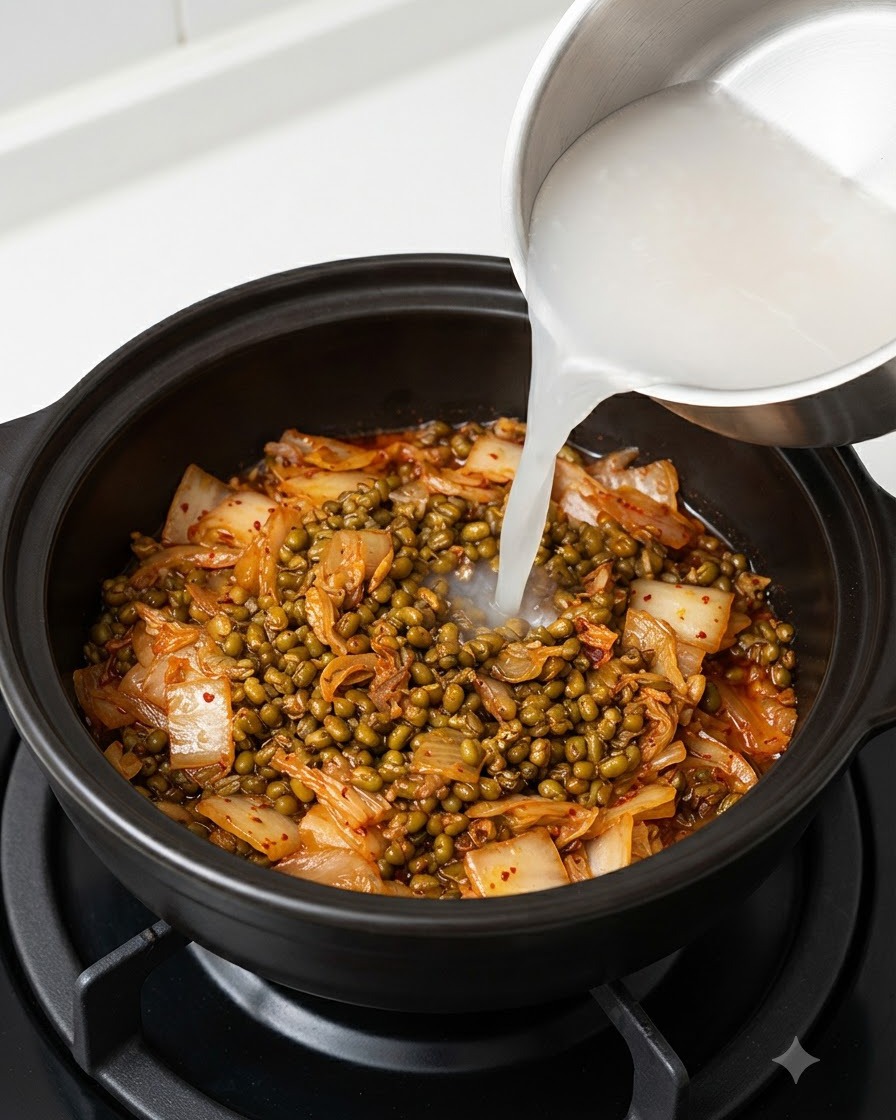
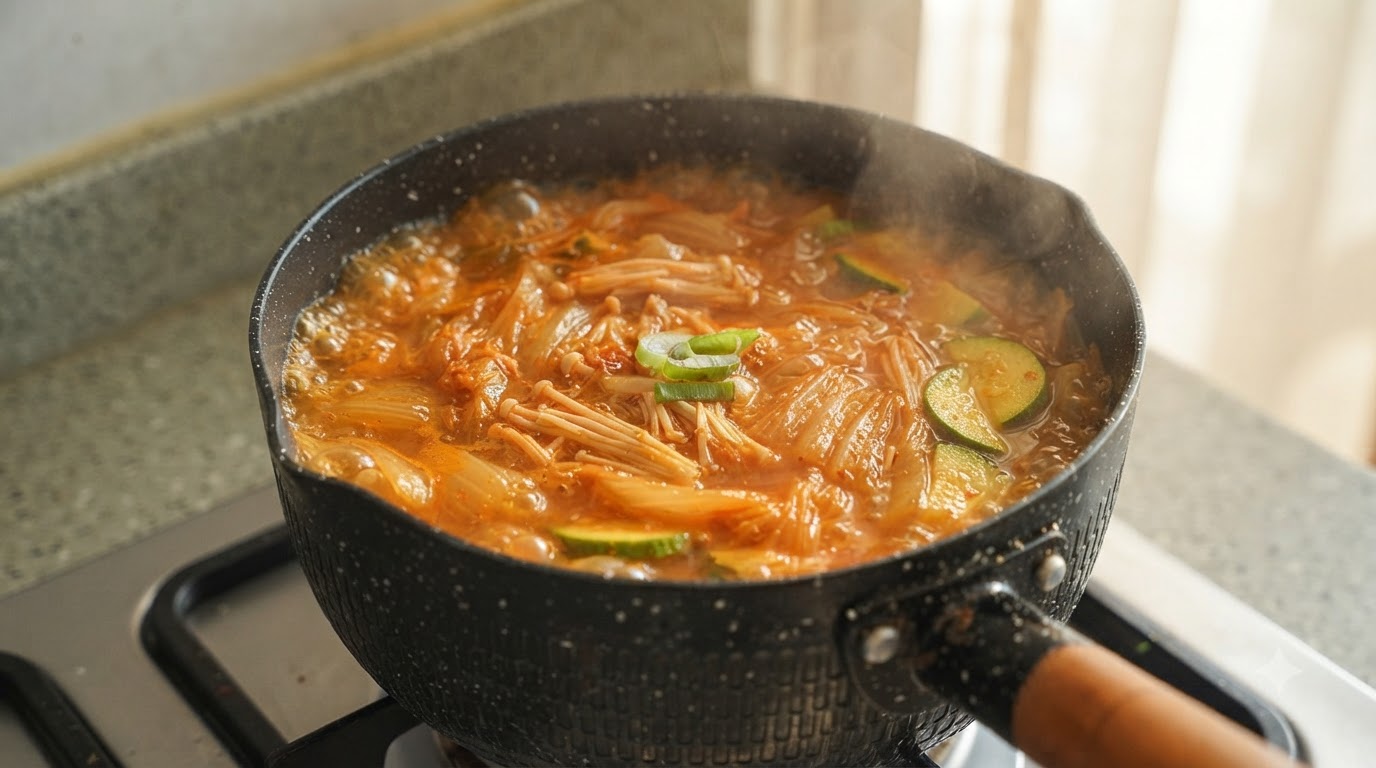
Pour cloudy rice washing water from a separate pot into the cooking pot over the mixture of kimchi and natto. Rice washing water adds body, thickness, and a subtle traditional starchiness to the soup broth.
Tip: Save the water from your second rice rinse for the best balance of cleanliness and starchy body. - 6Cut the Tofu
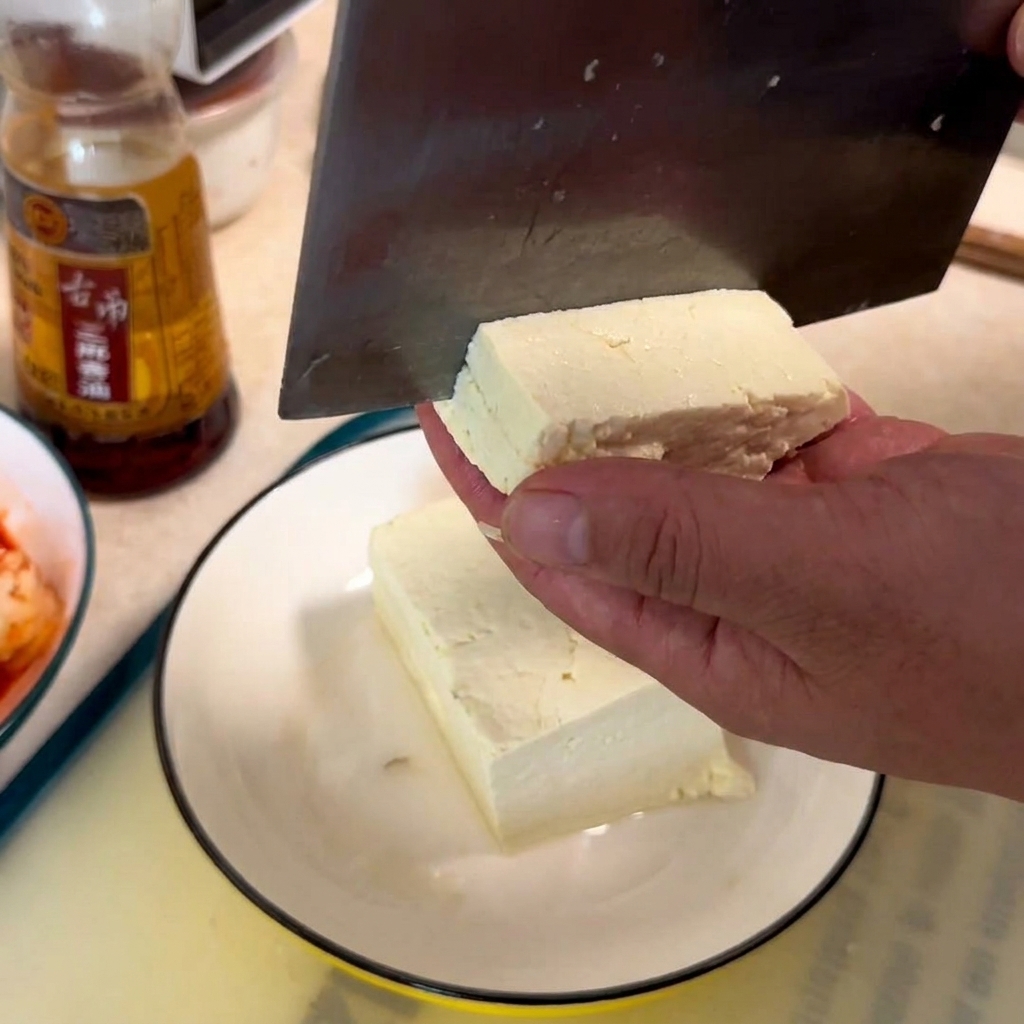
Place a solid block of white tofu on a white plate and use a heavy kitchen cleaver to slice it into small cubes. These bite-sized pieces will absorb the savory soup broth as it simmers.
Tip: Cut the tofu into uniform cubes so they cook evenly and hold their shape in the soup. - 7Add Beef Powder and Seasonings
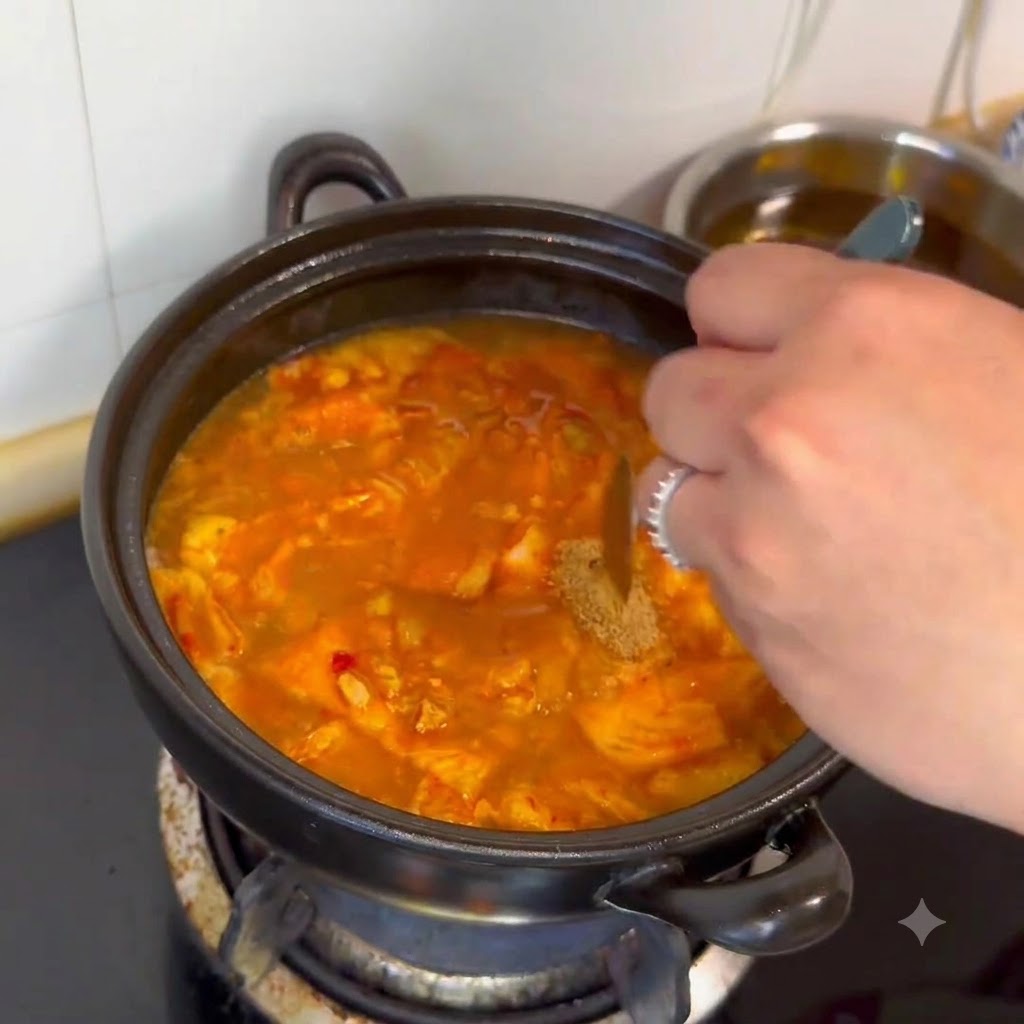
Scoop and add a little beef powder, minced garlic, MSG, and salt directly into the boiling soup to build the savory base flavor.
Tip: Add seasonings gradually and taste as you go to avoid over-salting the soup. - 8Add Minced Garlic
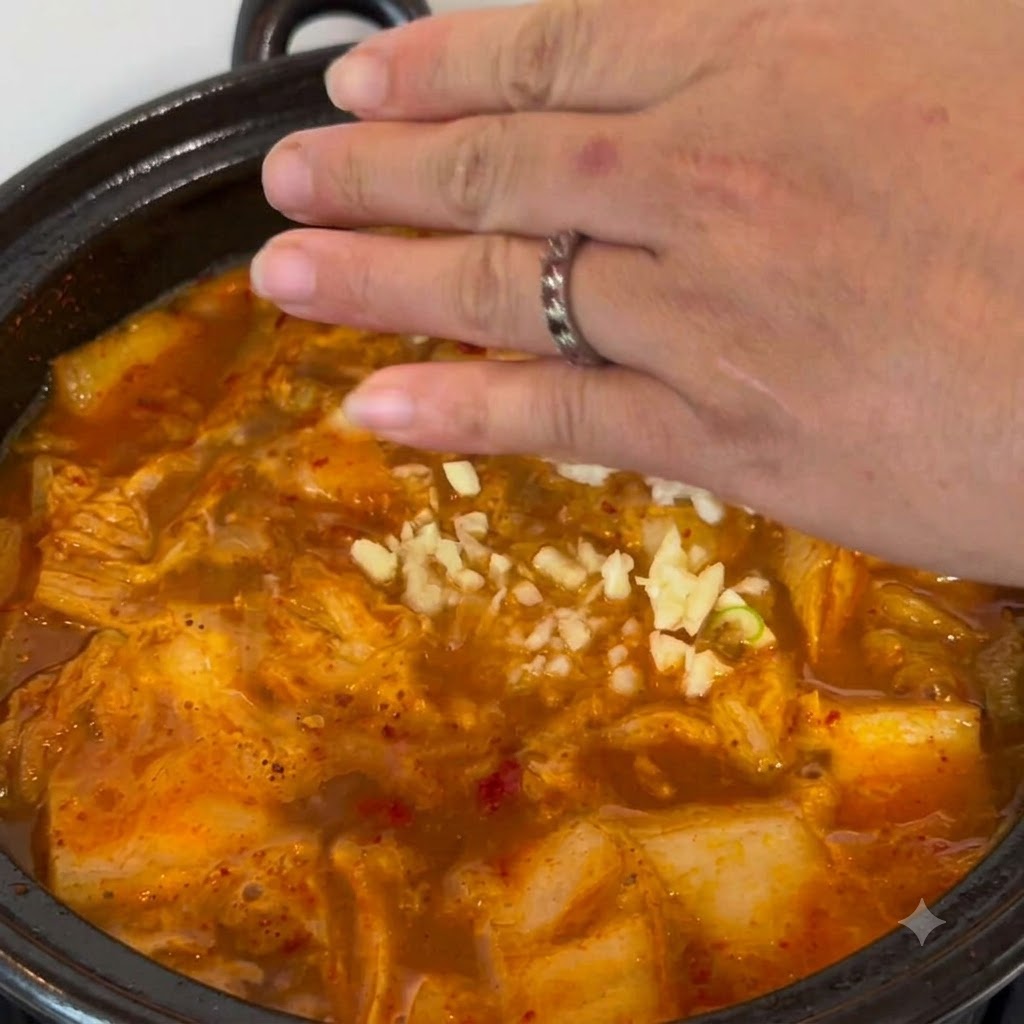
Sprinkle the freshly minced garlic directly into the simmering stew to infuse it with a rich, aromatic flavor.
Tip: Freshly minced garlic yields a much stronger and more fragrant aroma than pre-packaged garlic. - 9Add Tofu
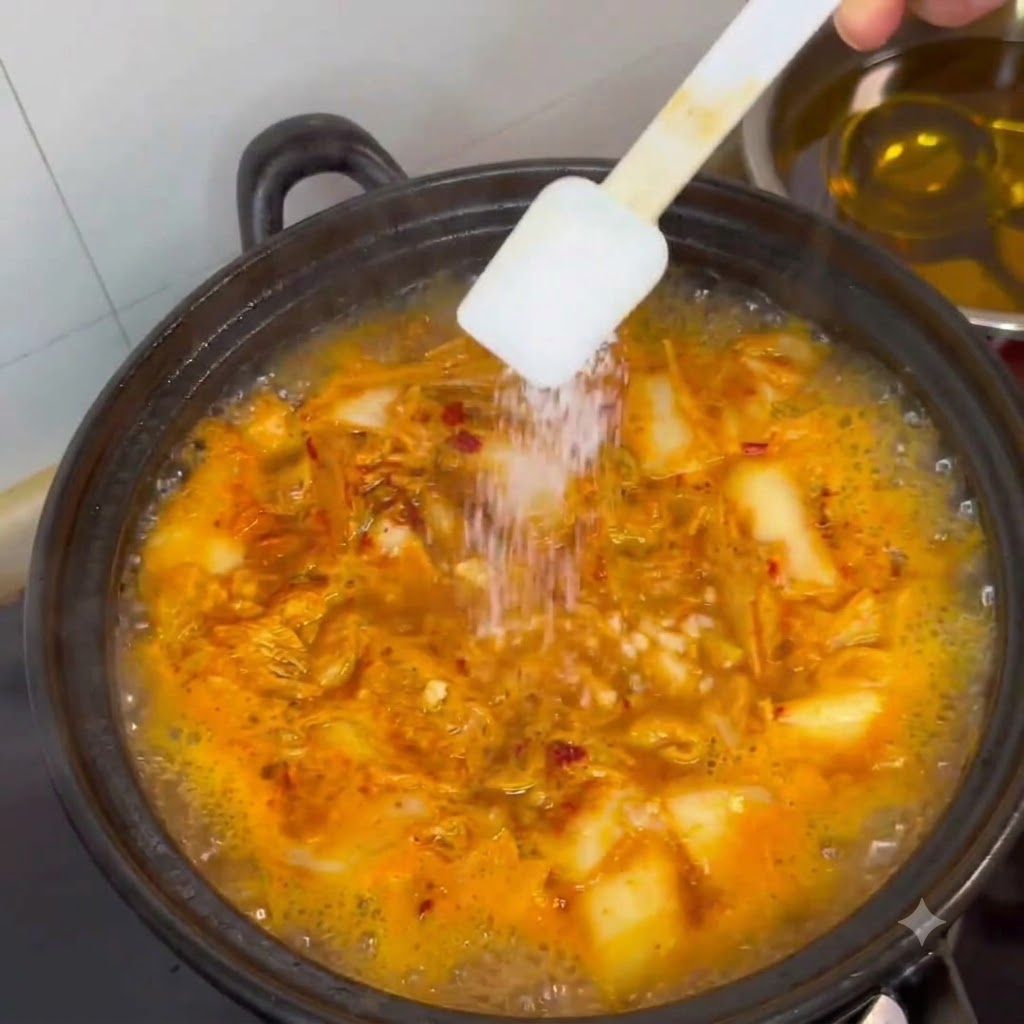
Carefully slide the cubed pieces of tofu from the plate into the simmering pot of stew so they can absorb the flavorful broth.
Tip: Cut the tofu into uniform pieces to ensure they cook evenly and hold their shape in the soup. - 10Add Chili Powder
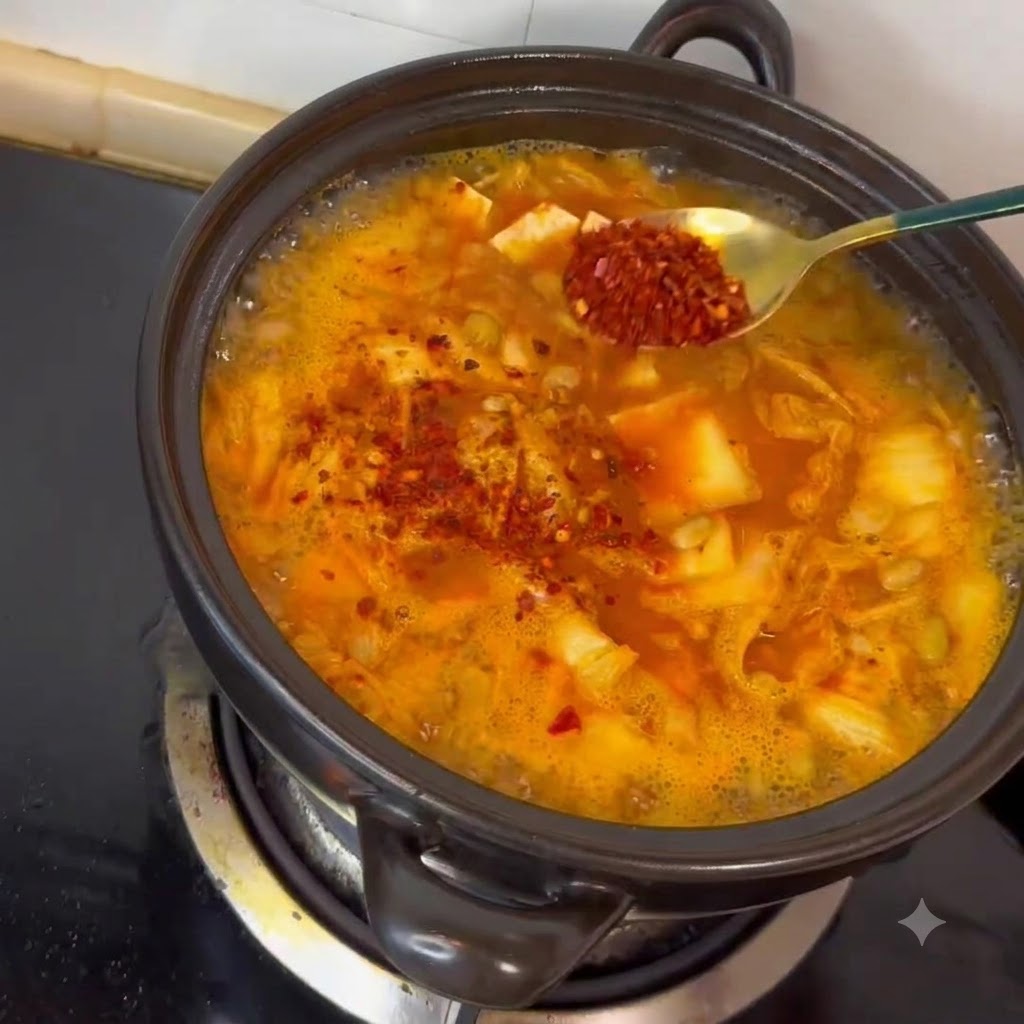
Add a little chili powder into the stew using a spoon, adjusting the amount according to your preference for heat.
Tip: If you prefer a milder taste, start with a small pinch and add more later if needed. - 11Add Chili Peppers and Onions
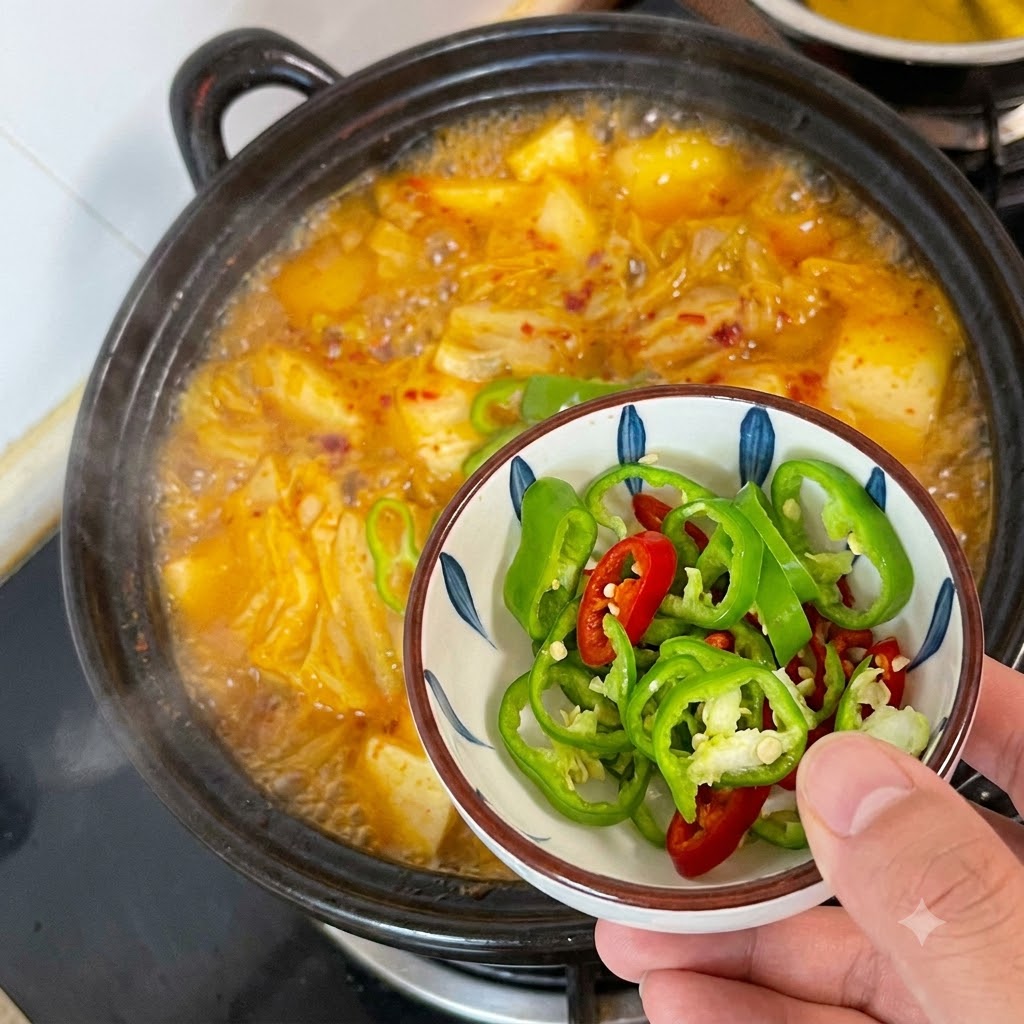
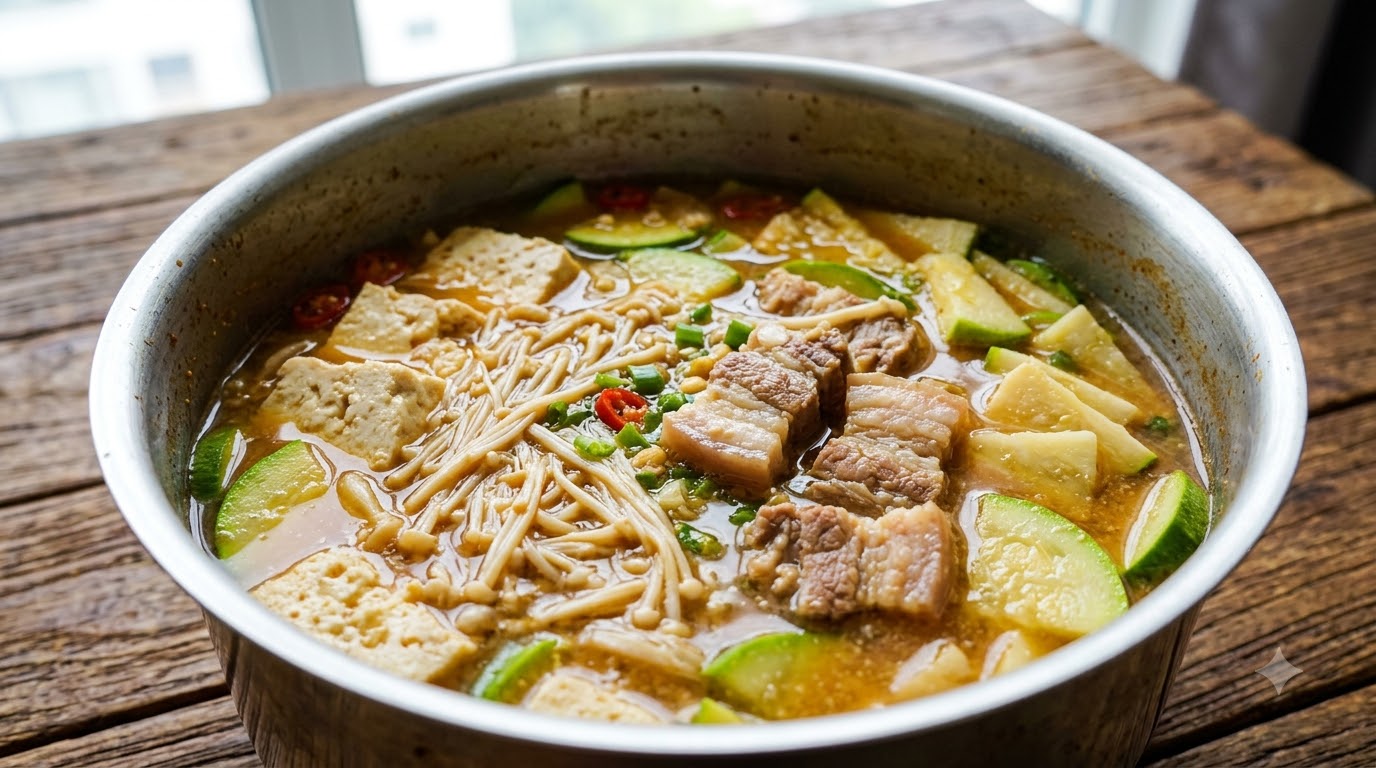
After boiling the soup on high heat for 30 minutes, add sliced green and red chili pepper rings along with green onions, then remove from the heat.
Tip: Adding the chili rings and green onions near the very end keeps their color vibrant and flavor fresh.