Authentic Korean Kimchi Stew (Kimchi Jjigae)
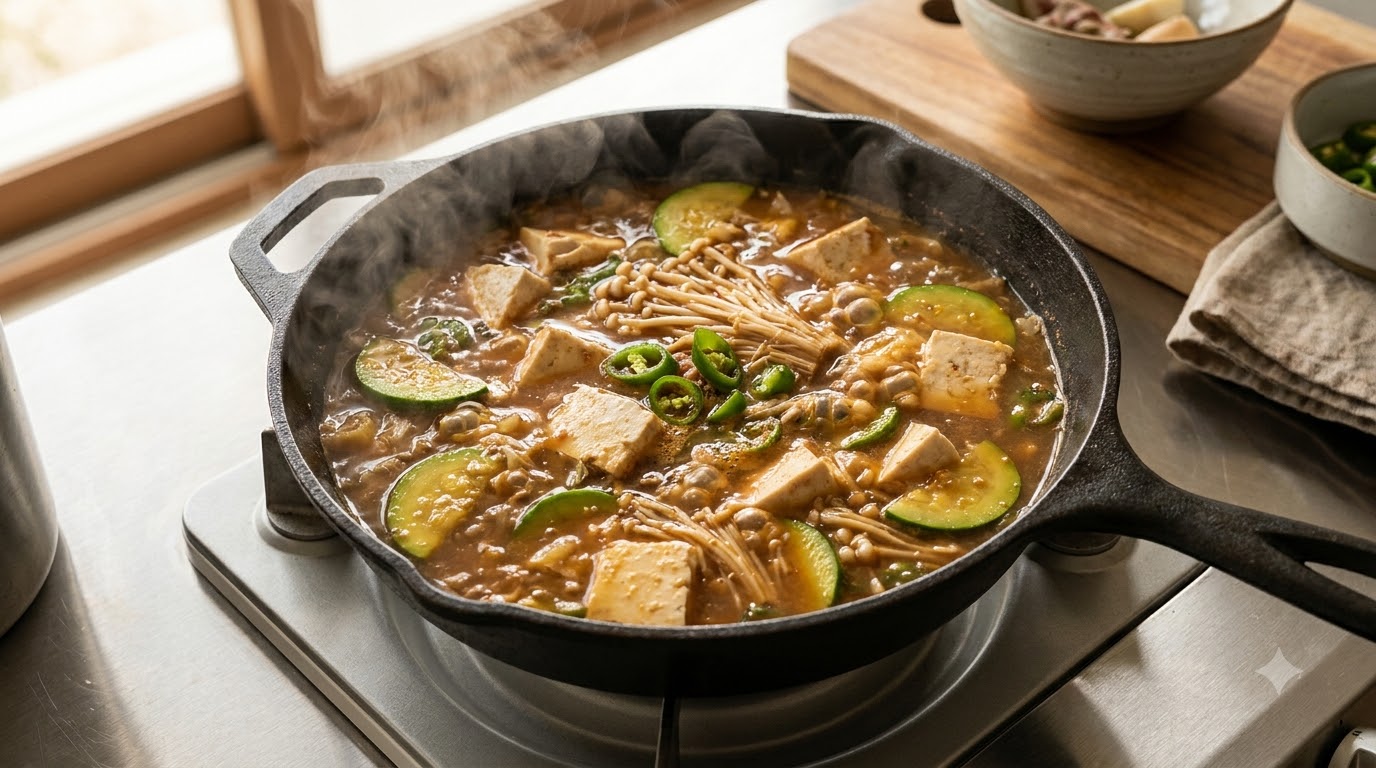
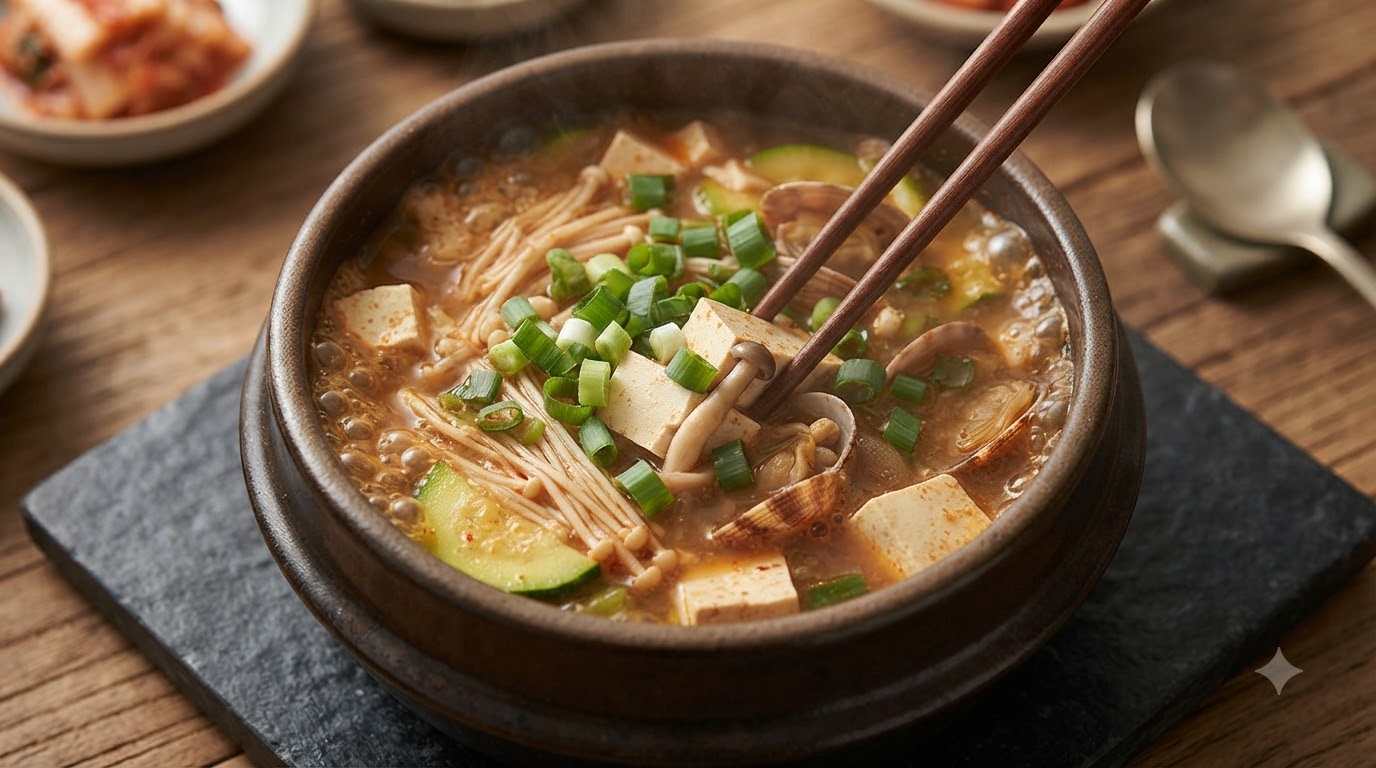
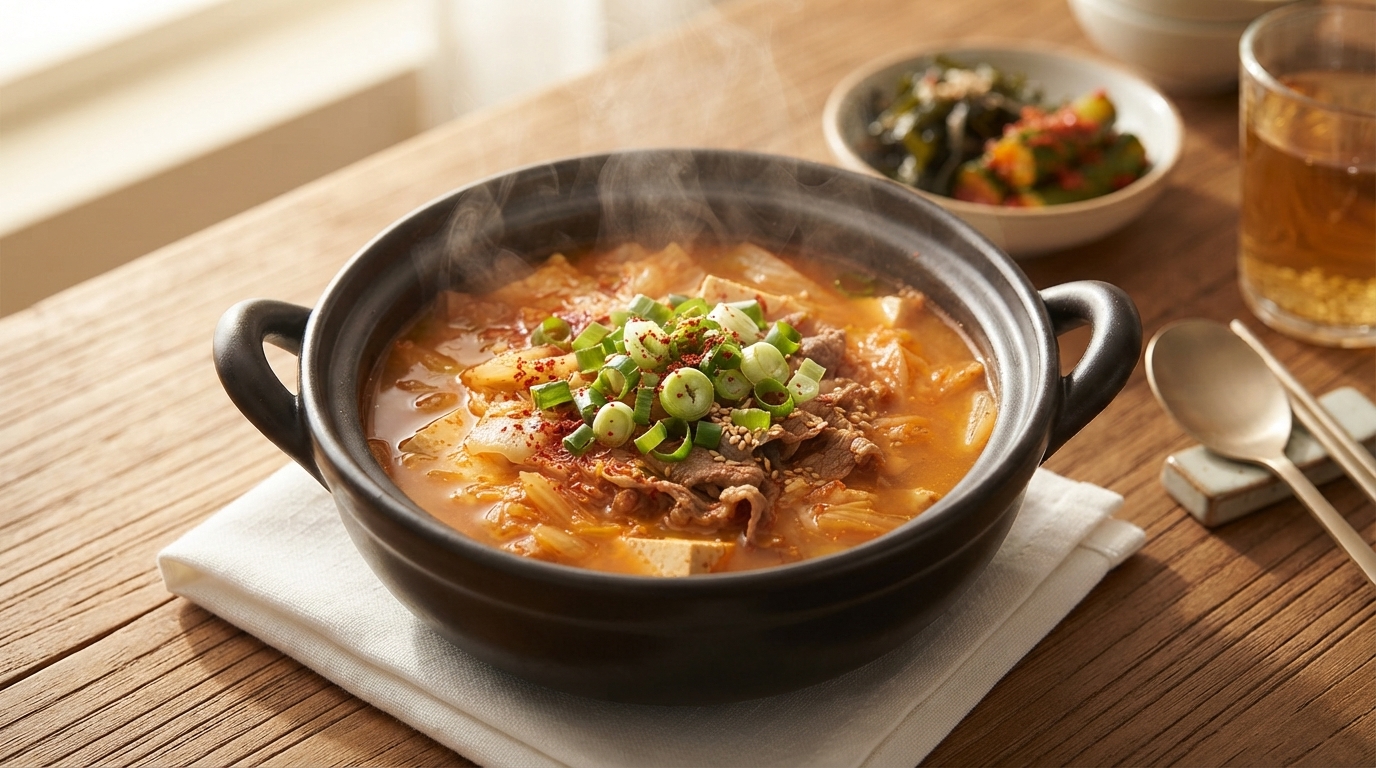
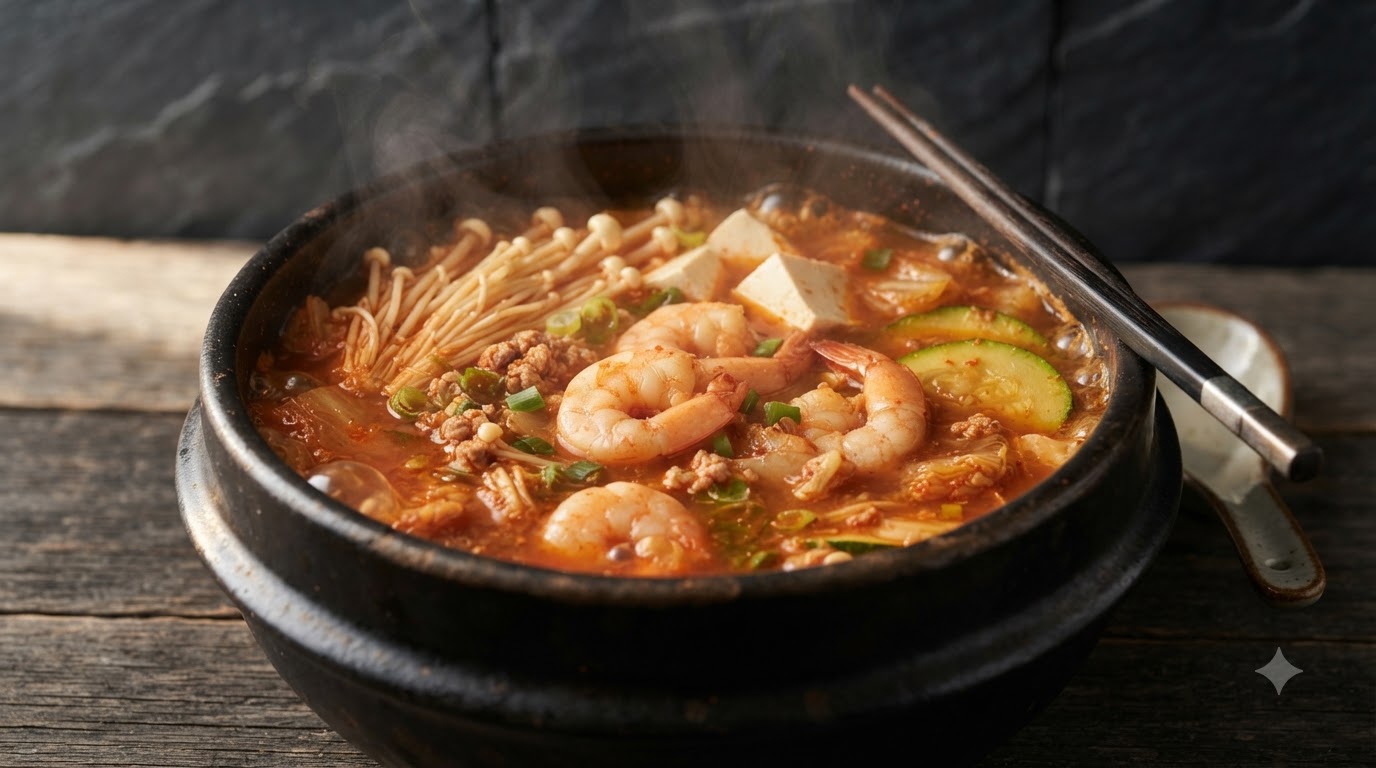
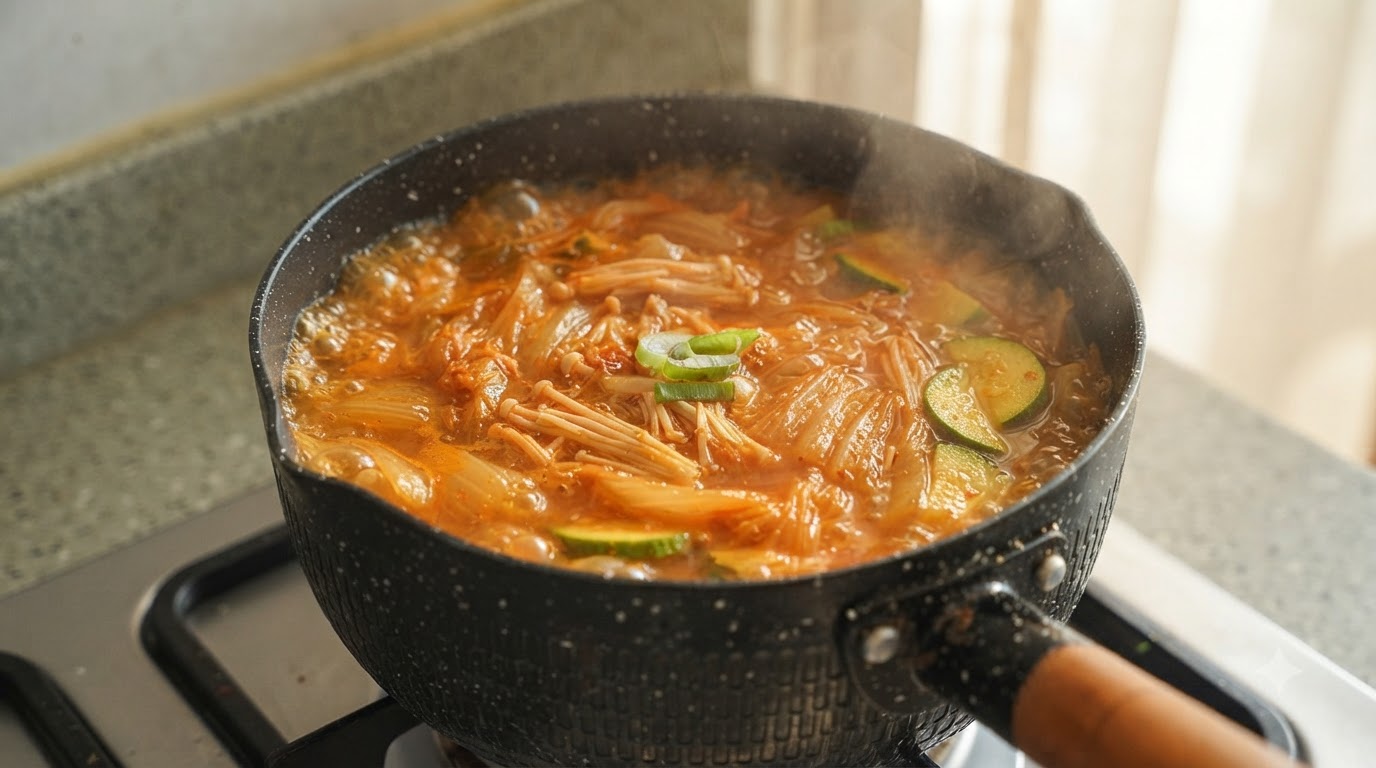
Experience the deeply comforting flavors of authentic Korean Kimchi Stew. This soul-warming jjigae features tender beef, savory doenjang, and vibrant vegetables simmering in a spicy broth.
Kimchi jjigae is a beloved staple in Korean households, traditionally made to utilize older, highly fermented kimchi that has developed a sharp, tangy profile. When combined with rich beef and earthy doenjang (soybean paste), the fermented flavors mellow into a deeply savory and satisfying comfort food, typically enjoyed bubbling hot right at the table.
Ingredients
- 1 tbsp cooking oil
- 2 cloves garlic, sliced
- 2 cups aged kimchi, chopped
- 200 g beef cubes
- 3 cups water
- 0.5 tbsp Korean soybean paste (doenjang)
- 1 cup enoki mushrooms
- 0.5 cup zucchini, sliced
- 0.5 block tofu, sliced (optional)
- 1 tbsp soy sauce
- 1 tsp sesame oil
- to taste salt
- 1 whole egg
Instructions
- 1Fry the garlic
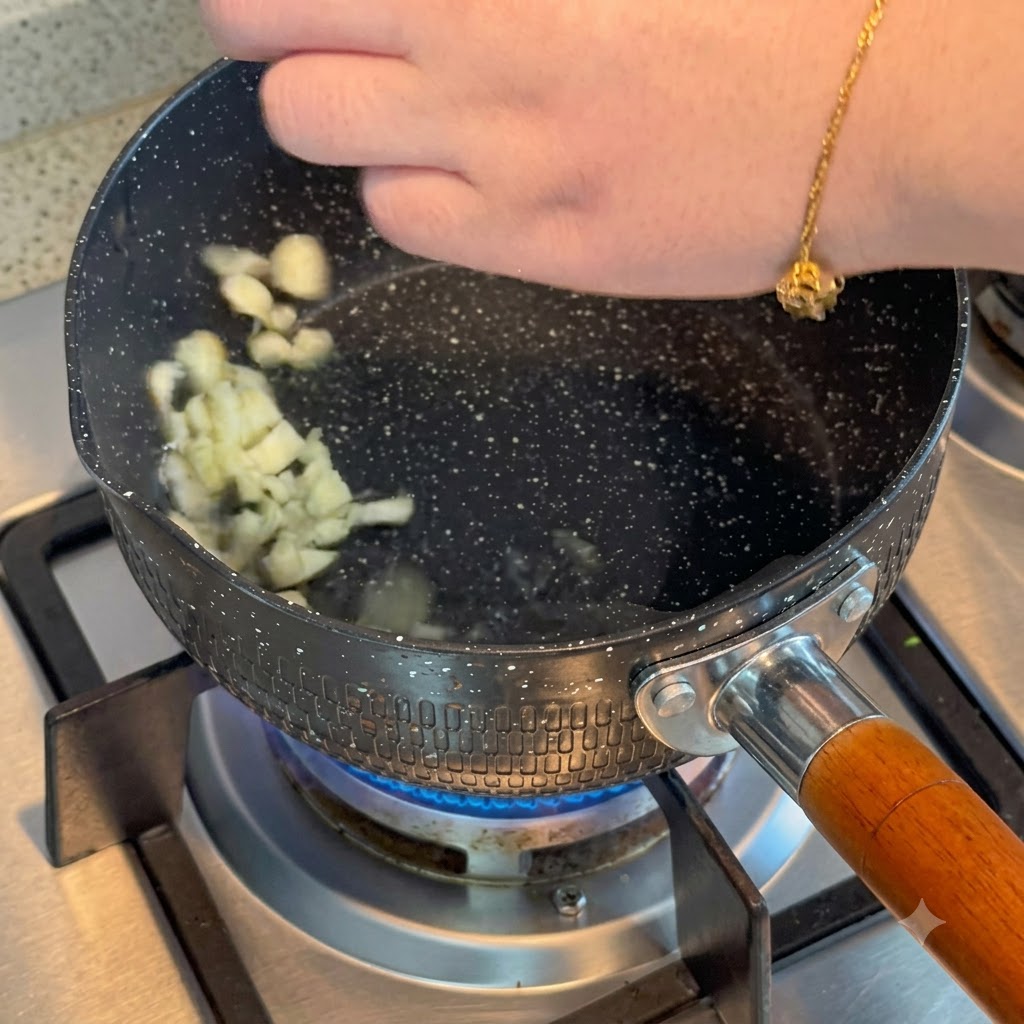
Heat oil in a pot over medium heat and add sliced garlic. Stir continuously until the garlic becomes fragrant and lightly golden.
Tip: Keep the heat at medium to avoid burning the garlic, which can make the base bitter. - 2Add and stir-fry kimchi
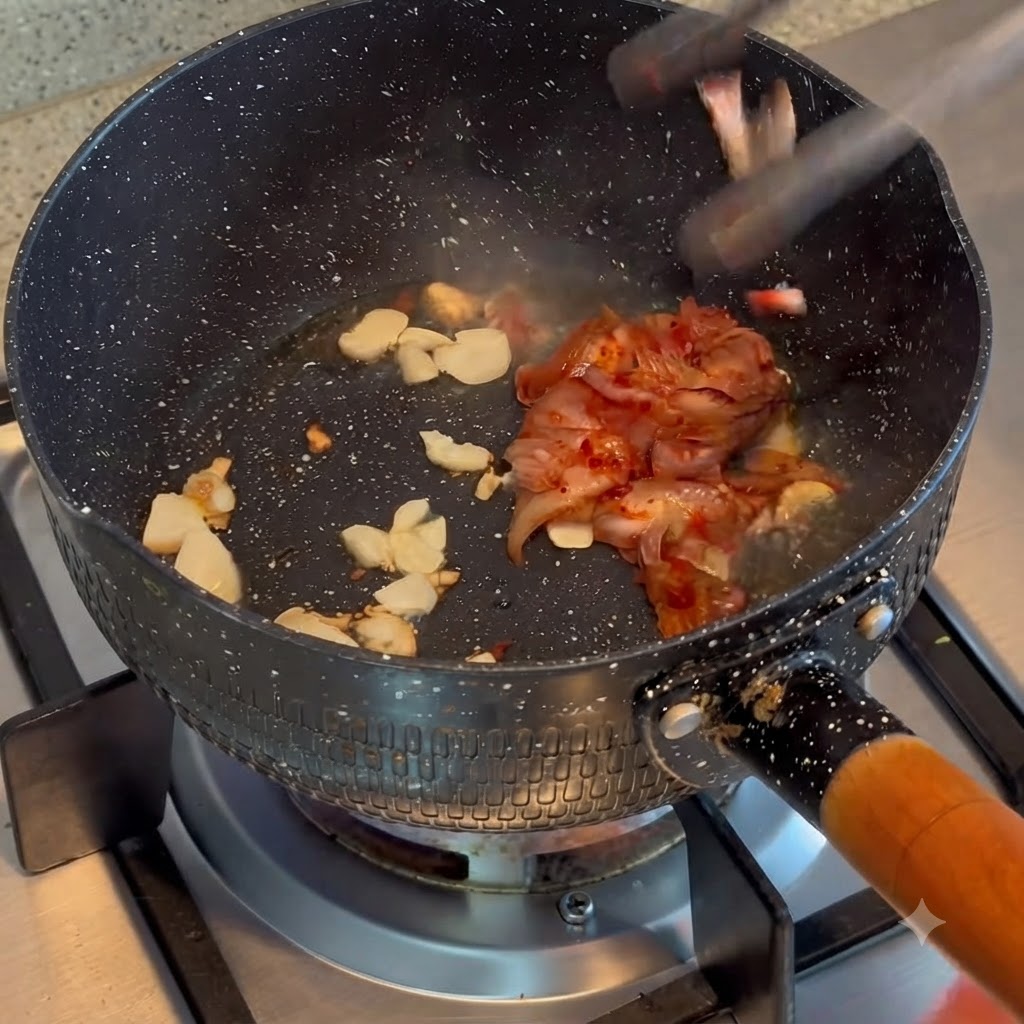
Add the kimchi into the pot with the aromatic fried garlic. Stir-fry together for about one minute until the kimchi softens and absorbs the flavors.
Tip: Stir-frying the kimchi beforehand enhances its depth and flavor profile in the stew. - 3Add beef cubes
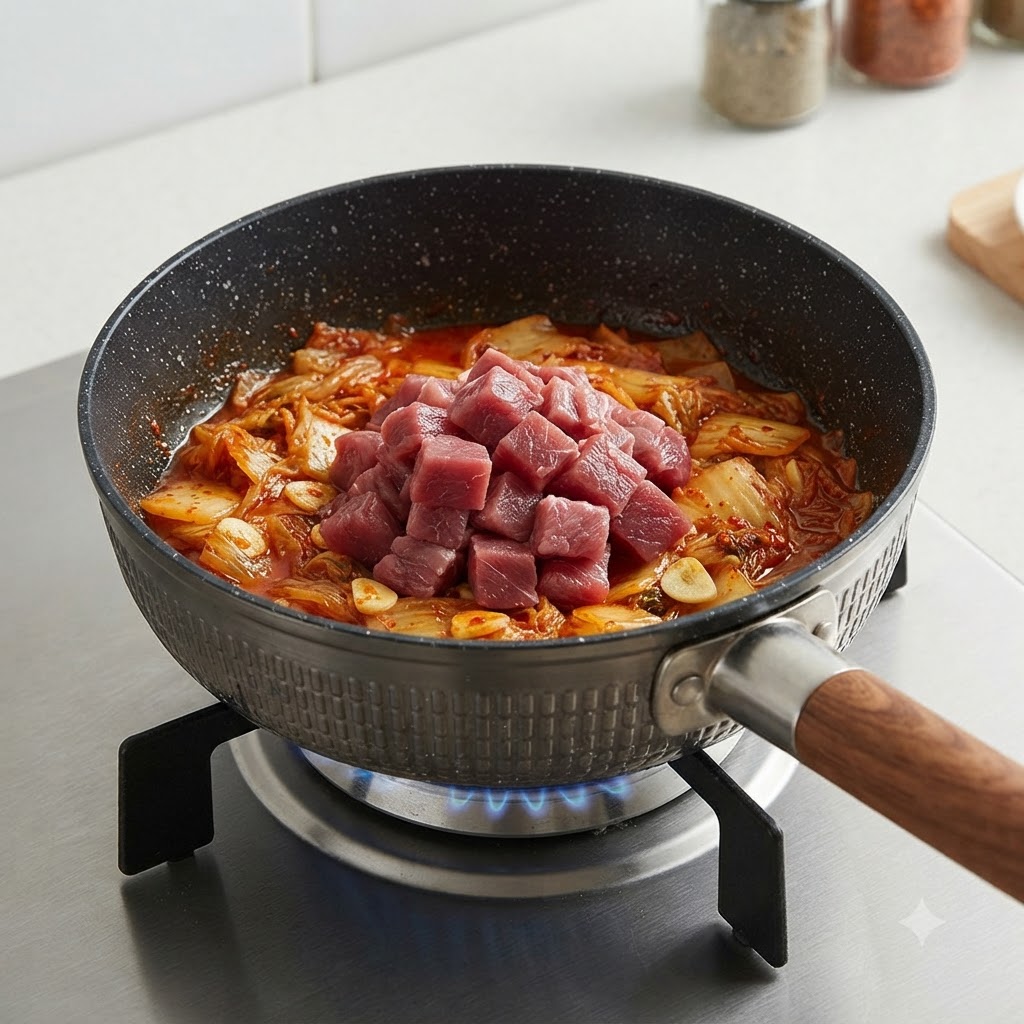
Add raw beef cubes directly into the pot with the stir-fried kimchi. Stir everything together until the beef pieces begin to change color on the outside.
Tip: Ensure the beef is evenly mixed with the kimchi so it absorbs the savory base right away. - 4Pour in water
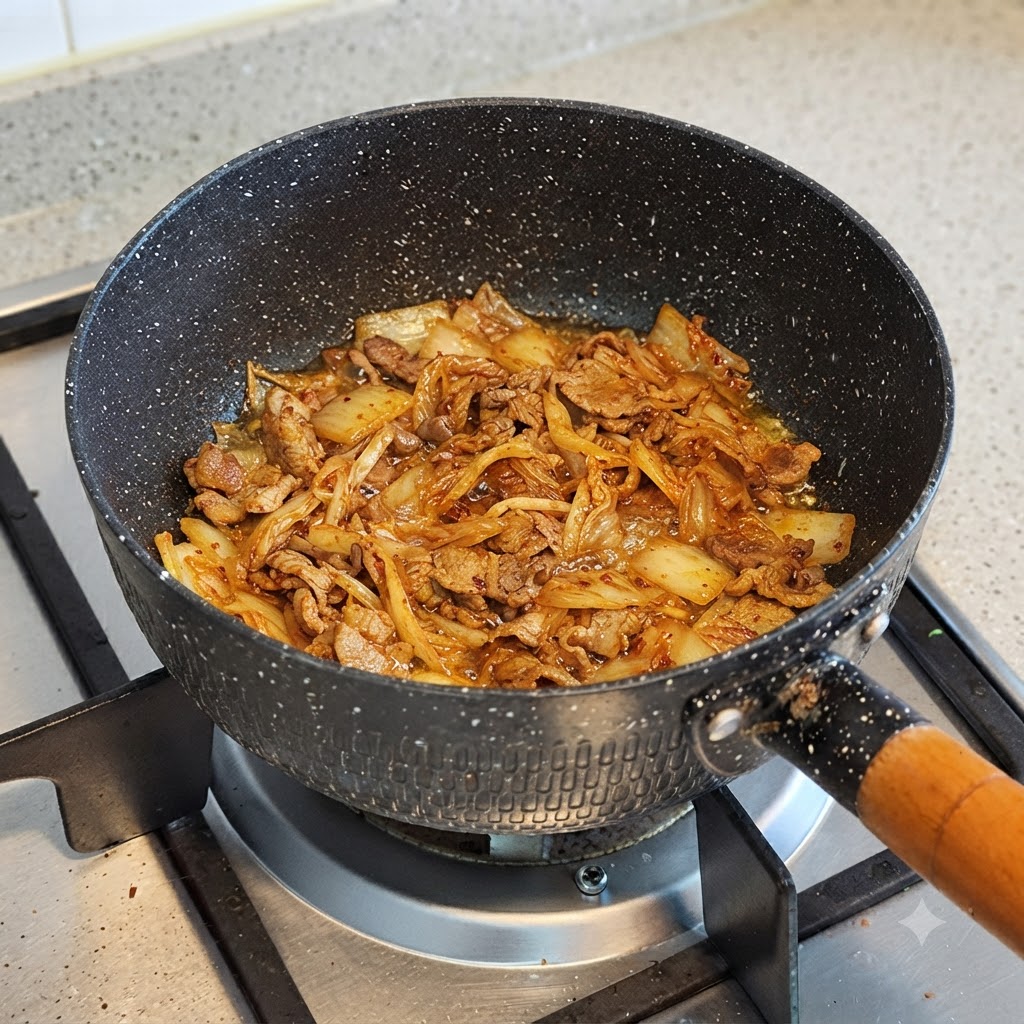
Pour an appropriate amount of water into the pot over the cooked kimchi and beef mixture. Prepare to bring the liquid to a boil.
Tip: Use warm or hot water to speed up the boiling process if desired. - 5Add soybean paste
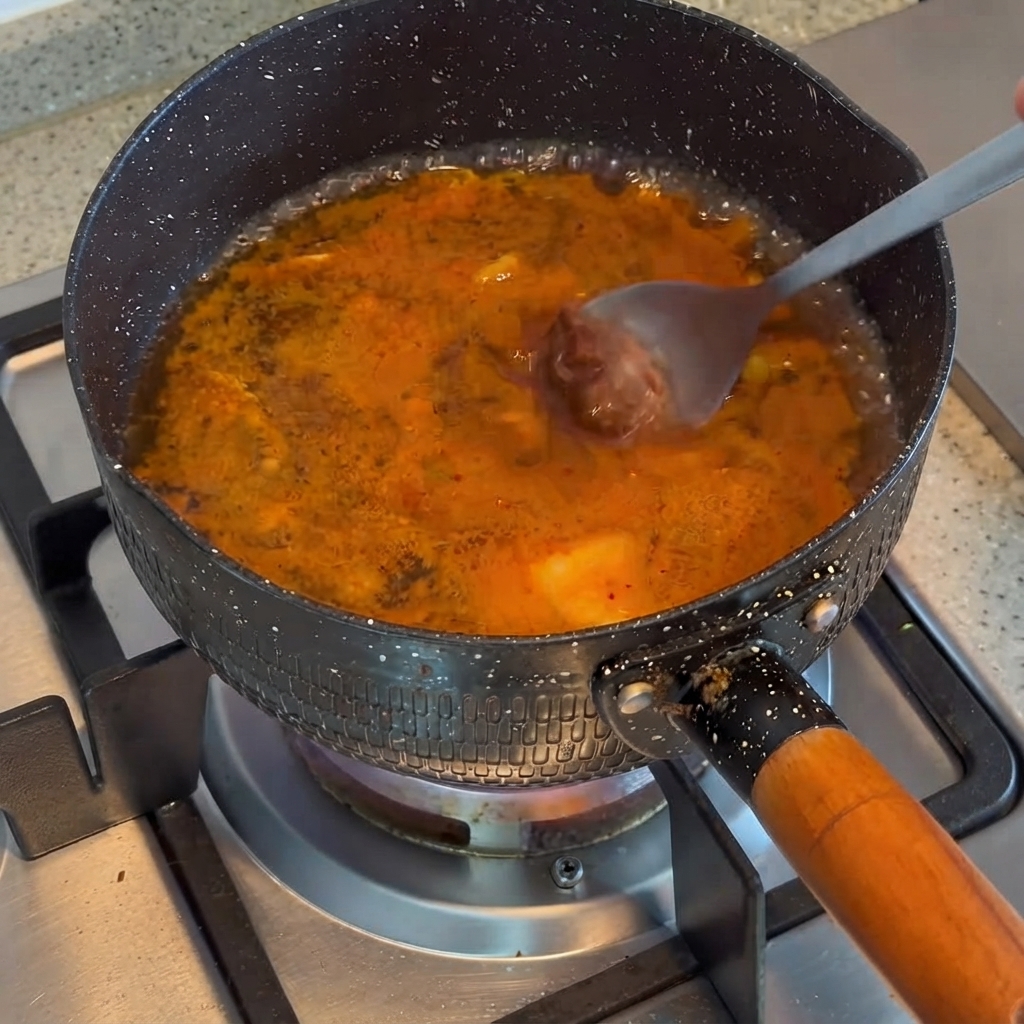
Add half a tablespoon of Korean soybean paste (doenjang) into the boiling broth using a spoon. Mix well until fully dissolved into the liquid.
Tip: Dissolve the paste thoroughly by stirring it against the spoon to prevent clumps in the soup. - 6Add vegetables and side ingredients
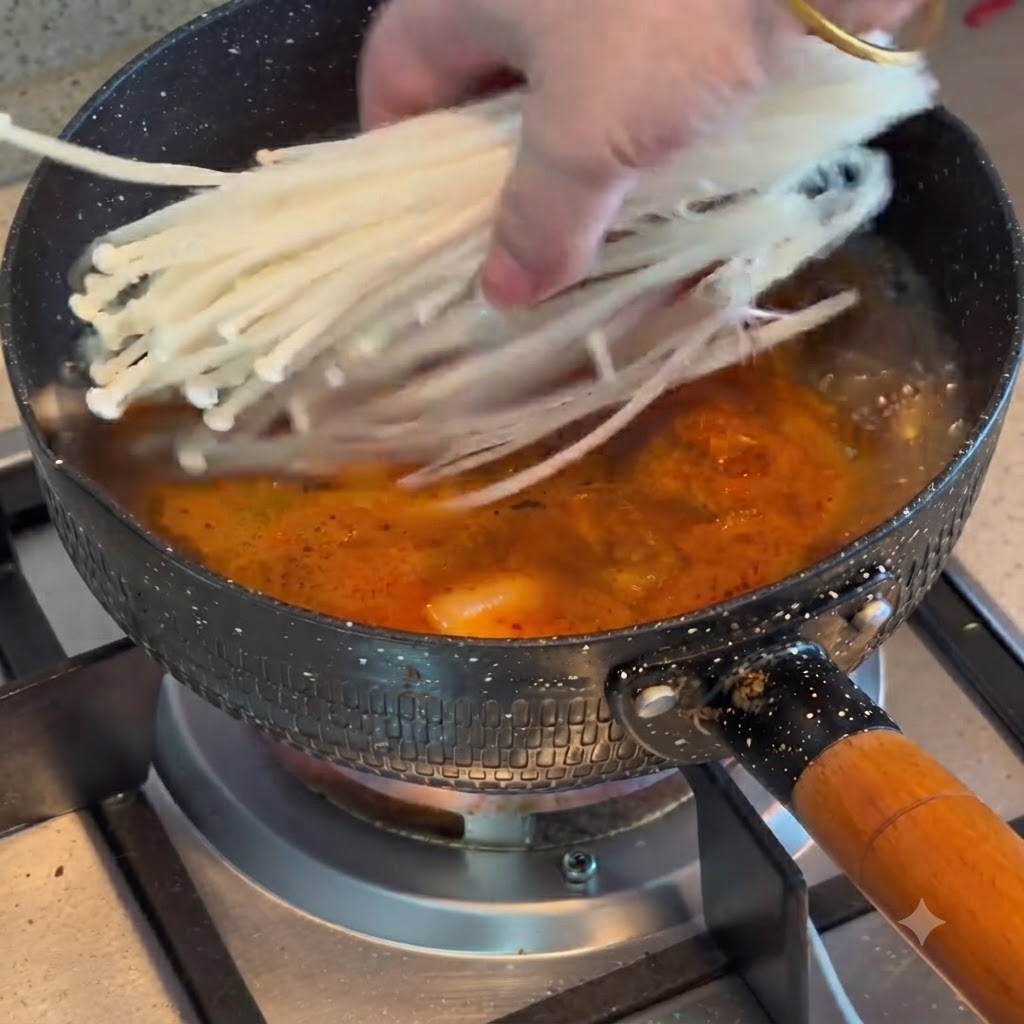
Add side ingredients such as enoki mushrooms and sliced zucchini into the boiling stew. Continue cooking until the vegetables begin to soften.
Tip: Add delicate vegetables like enoki mushrooms near the end so they retain a nice texture. - 7Season the Stew
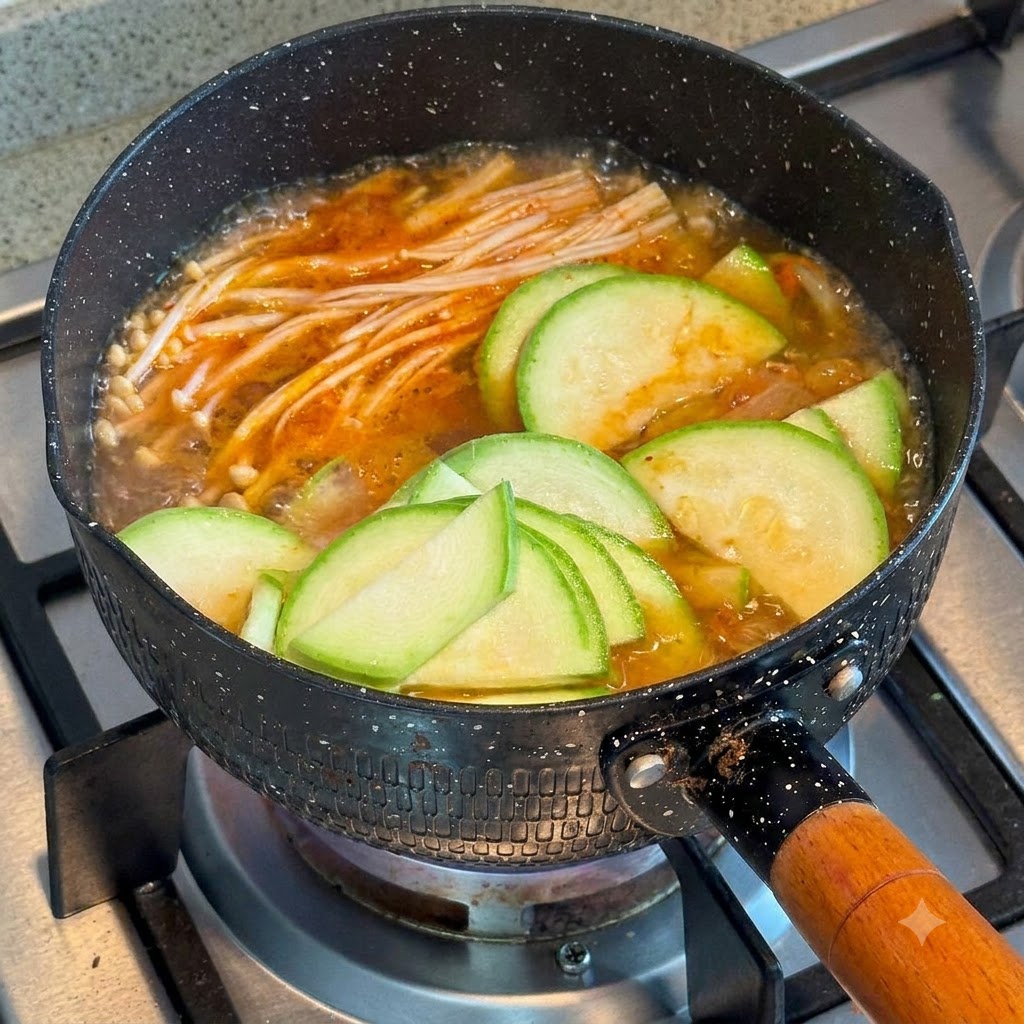
Pour soy sauce into the simmering pot of kimchi and vegetable stew to enhance the depth of flavor.
Tip: Add soy sauce gradually to avoid over-seasoning before tasting. - 8Add an egg
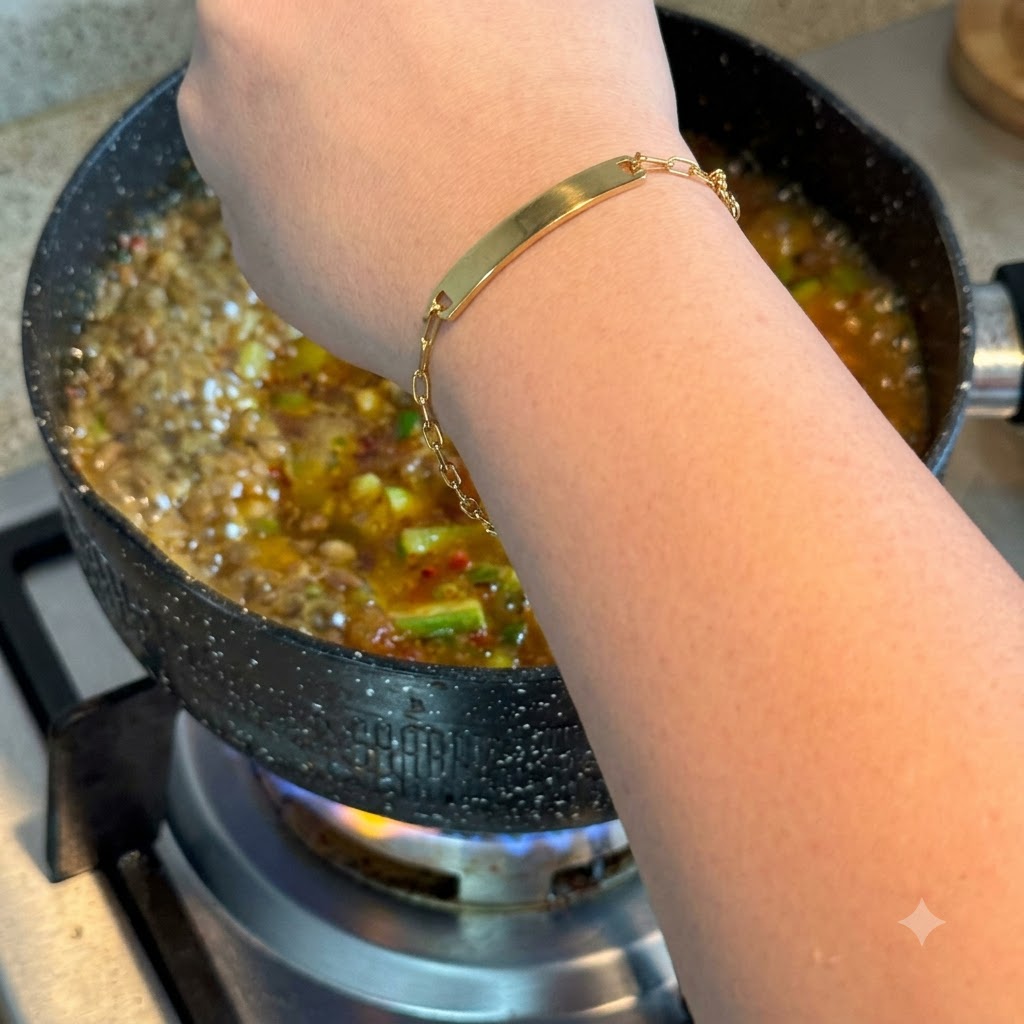
Crack an egg directly into the boiling stew, allowing it to poach gently in the flavorful broth without stirring immediately.
Tip: Do not stir the egg right away if you want it to stay intact and form a nice poached pocket in the soup. - 9Cover and simmer
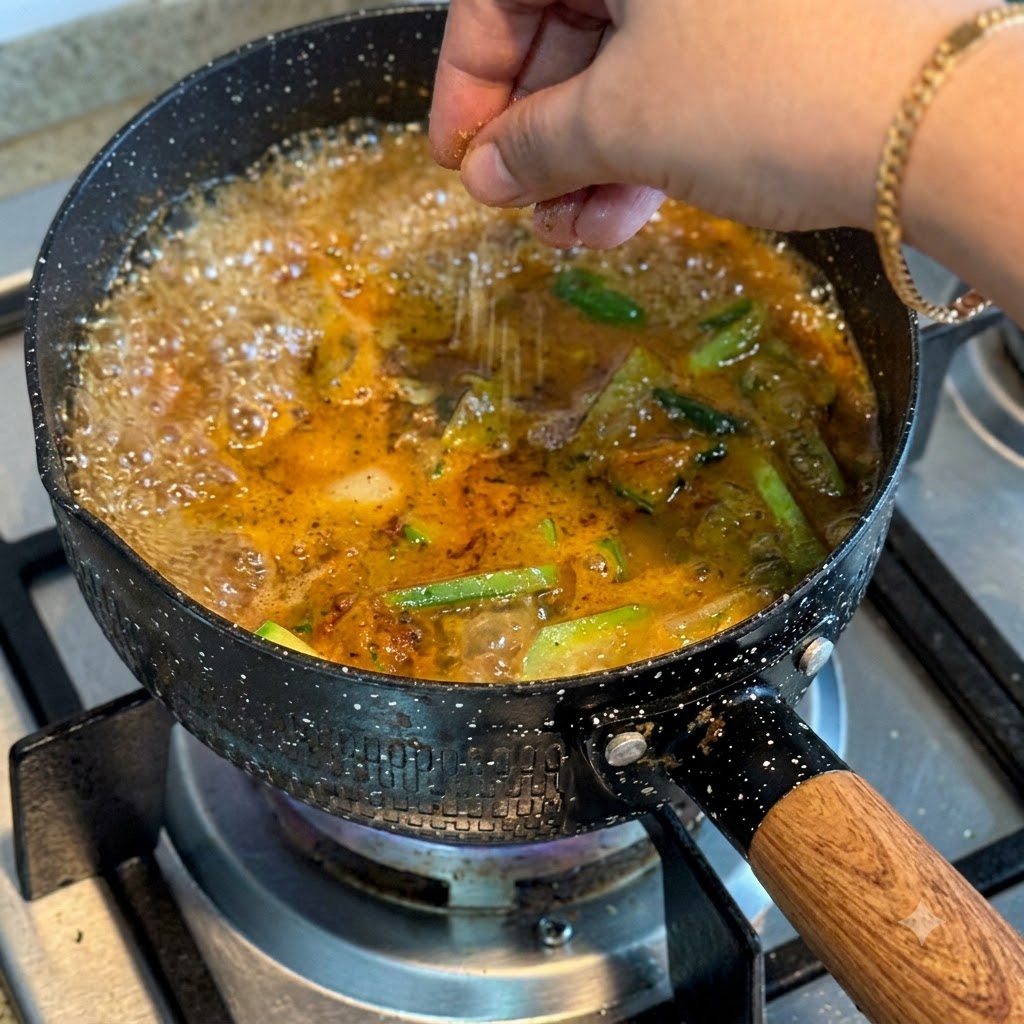
Place a glass lid securely over the pot to trap the heat and let all the fresh ingredients simmer until tender and fully cooked through.
Tip: A glass lid helps you monitor the boiling process without releasing valuable heat and steam.