Traditional Korean Soybean Paste Stew (Doenjang-jjigae)
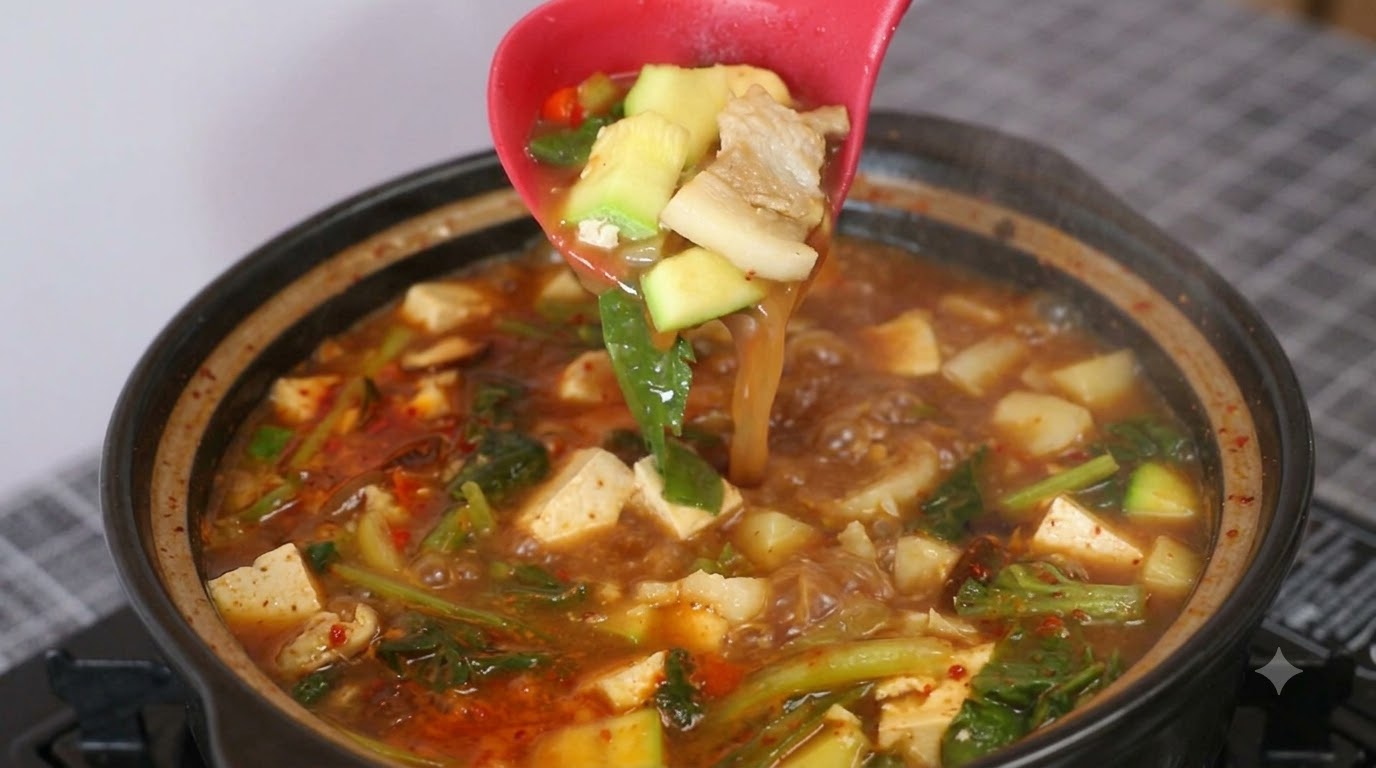
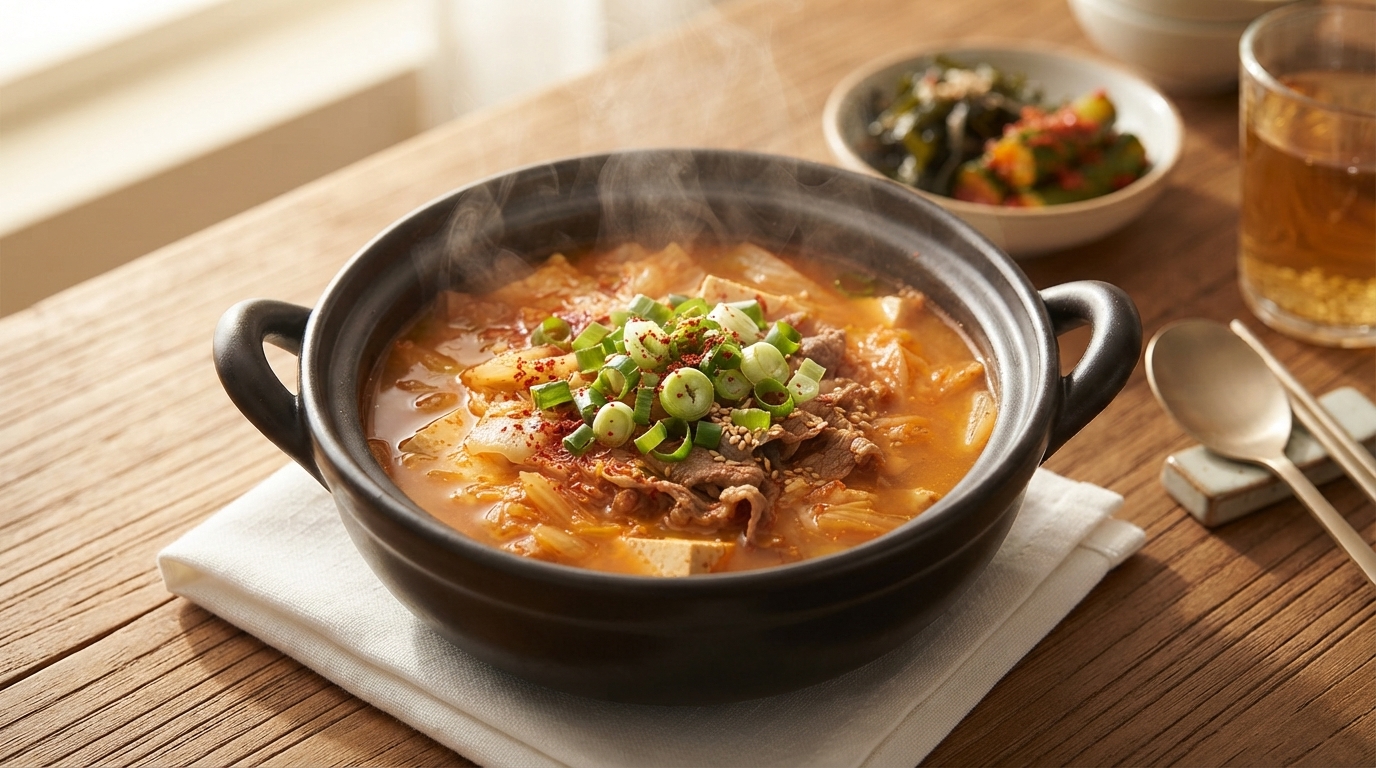
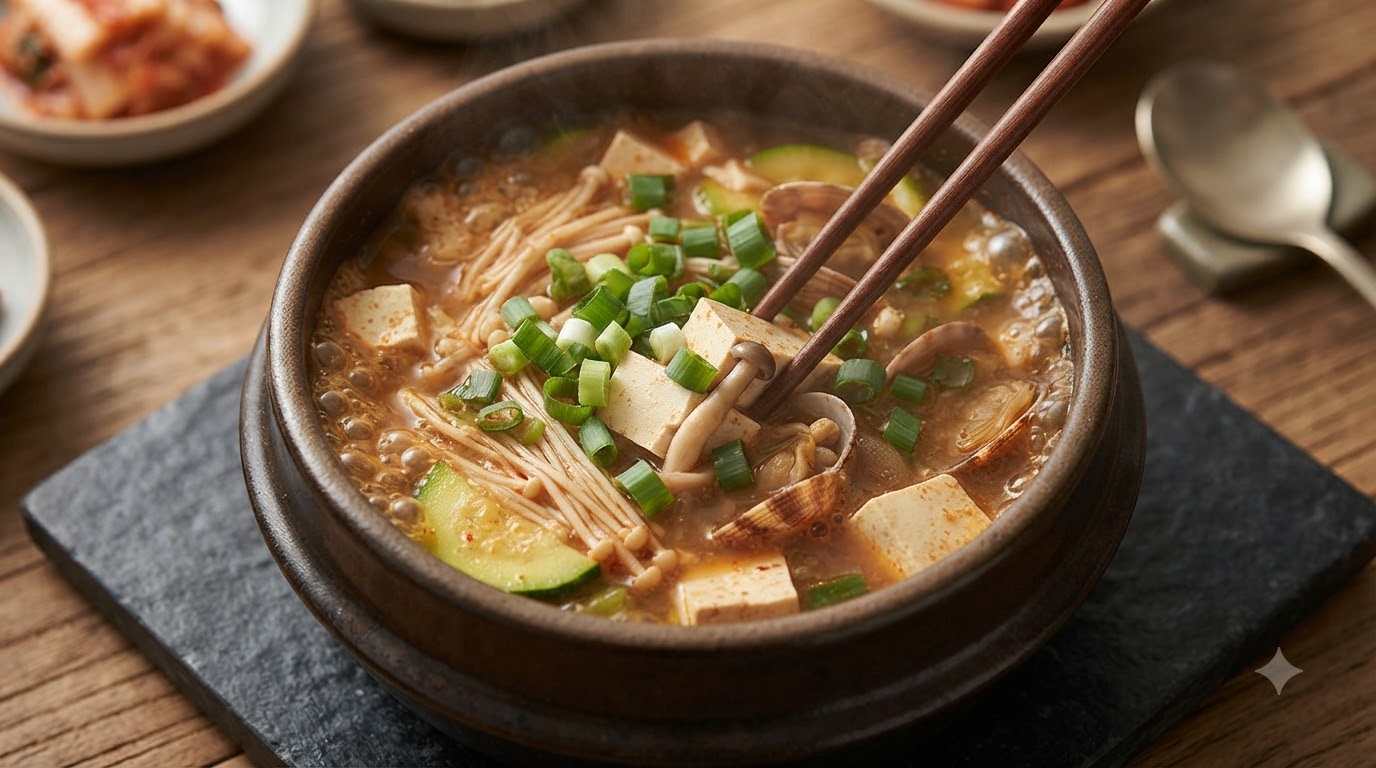
A hearty, rustic family-style Korean soybean paste stew packed with tender vegetables, soft tofu, savory clams, and earthy mushrooms.
Doenjang-jjigae is a foundational comfort food in Korean households, built on a rich and deeply savory fermented soybean paste base. Traditionally simmered in an earthenware pot that retains heat exceptionally well, this stew combines earthy vegetables, seafood, and tofu for a comforting and nourishing meal.
Ingredients
- 1 whole potato
- 1 whole zucchini
- 1 whole carrot
- 3 leaves lettuce
- 1/2 whole onion
- 1 whole green chili
- 1 block firm tofu
- 200 g clams
- 1 pack enoki mushrooms
- 1 pack shiitake mushrooms
- 100 g bean sprouts
- 3 tbsp Korean soybean paste
- 1 tbsp Korean chili paste
- 1/2 tsp chili powder
- 1/2 tsp beef powder
- 1 pinch MSG
- to taste chopped green onions
Instructions
- 1Slice the potato
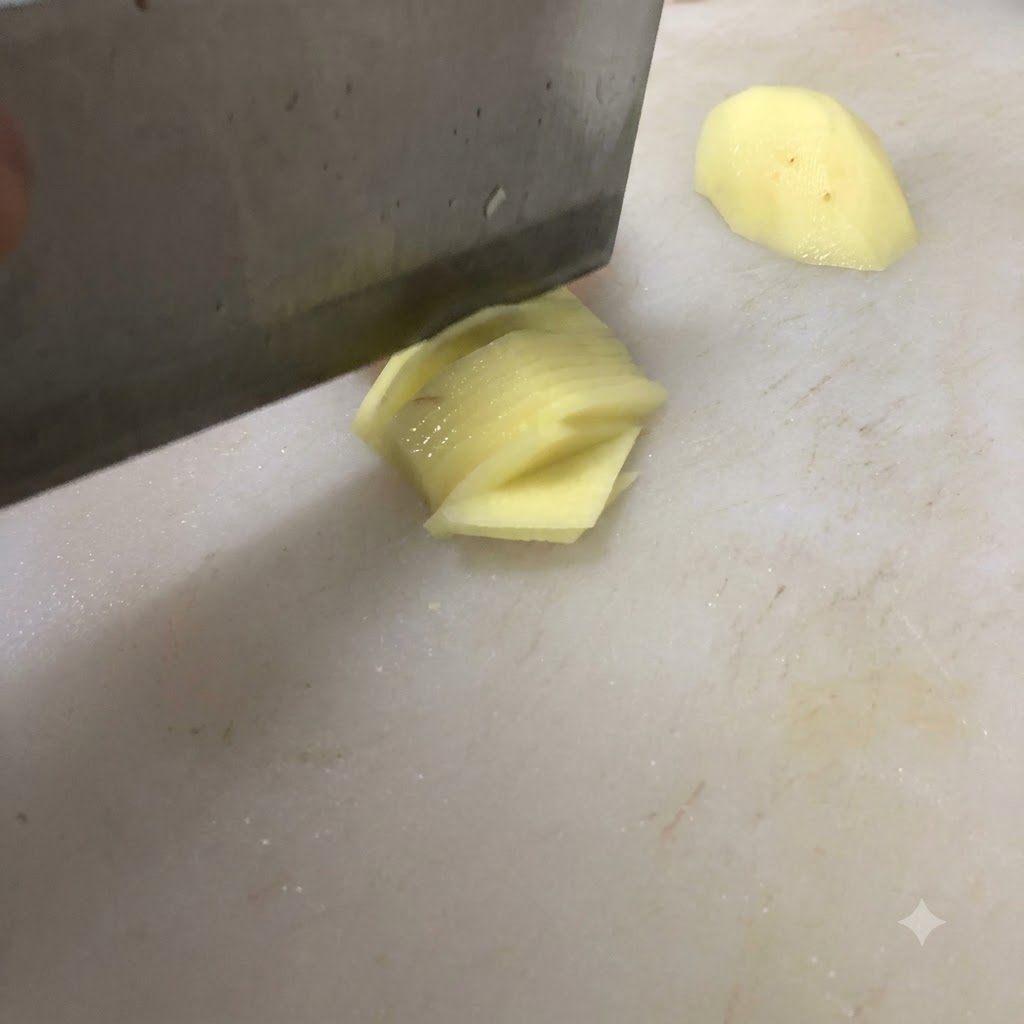
Take a peeled potato and cut it into thin slices on a cutting board.
Tip: Keep the slices uniform so they cook evenly in the stew. - 2Slice the zucchini
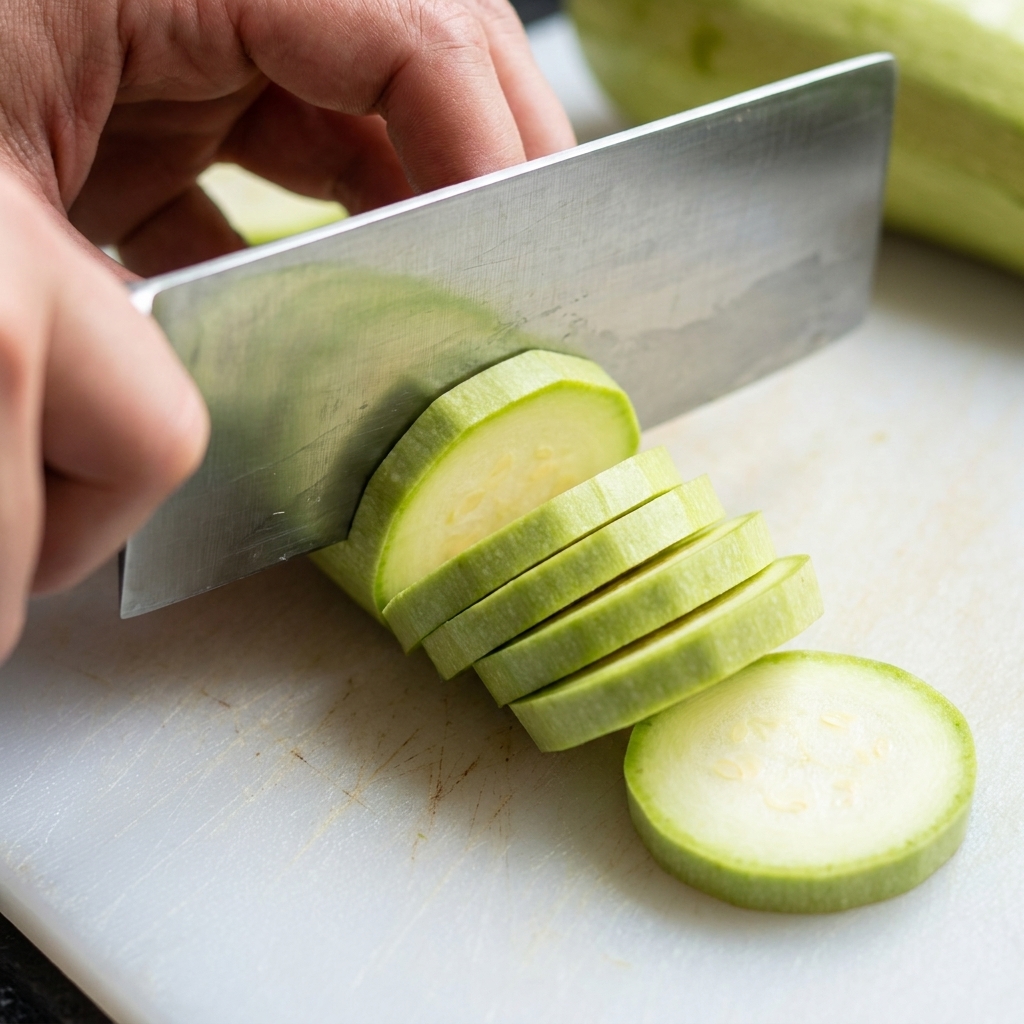
Place the zucchini on the cutting board and slice it into thin pieces.
- 3Slice the carrot
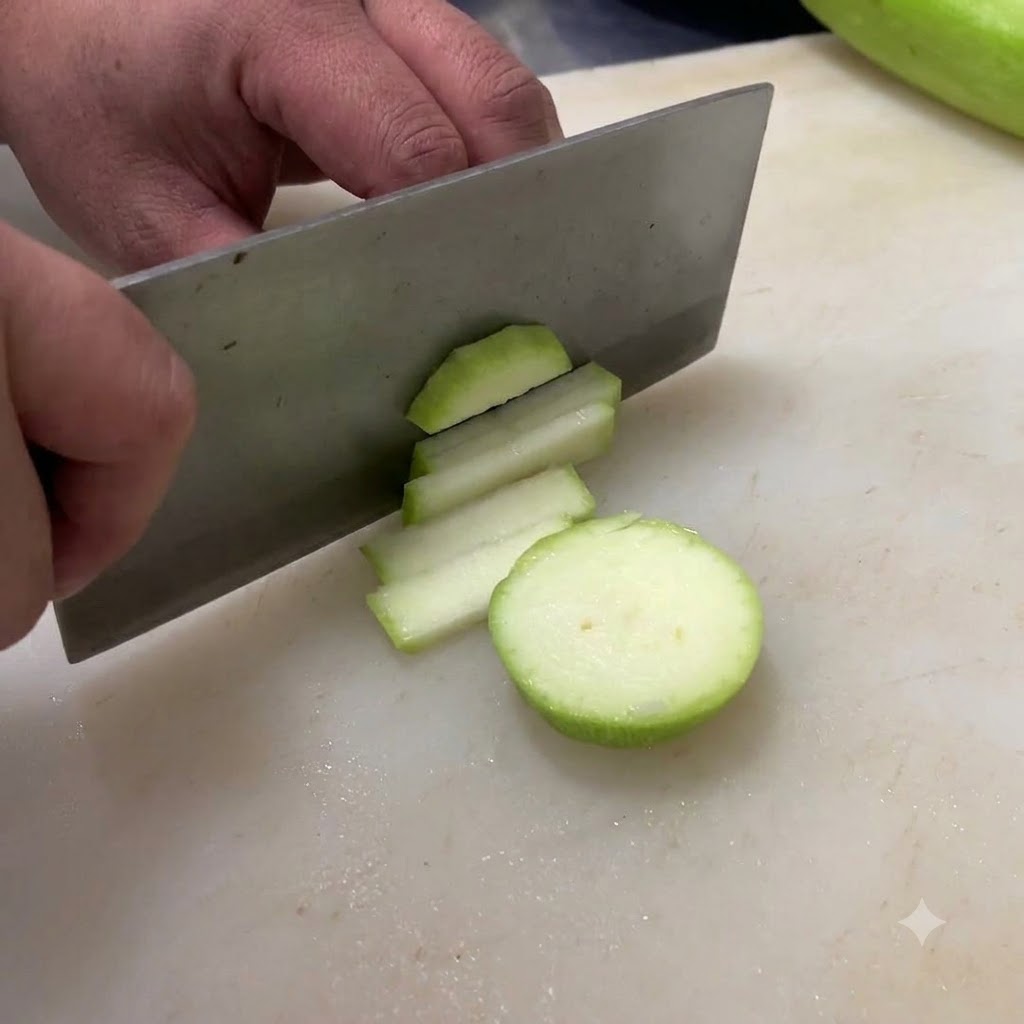
Take a clean carrot and slice it into thin pieces on the cutting board.
- 4Slice the green chili
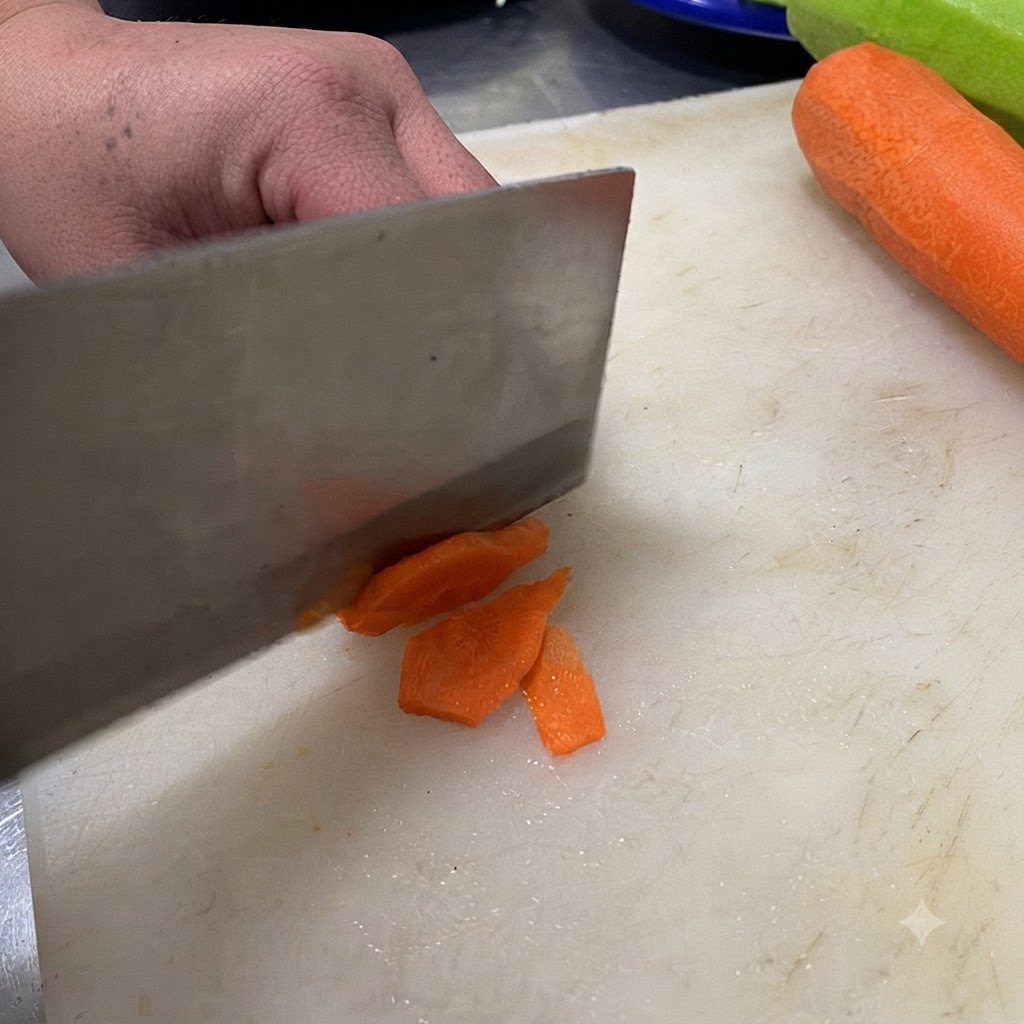
Slice the green chili into small pieces on the cutting board.
Tip: Adjust the amount of chili depending on your spice preference. - 5Cut the onion
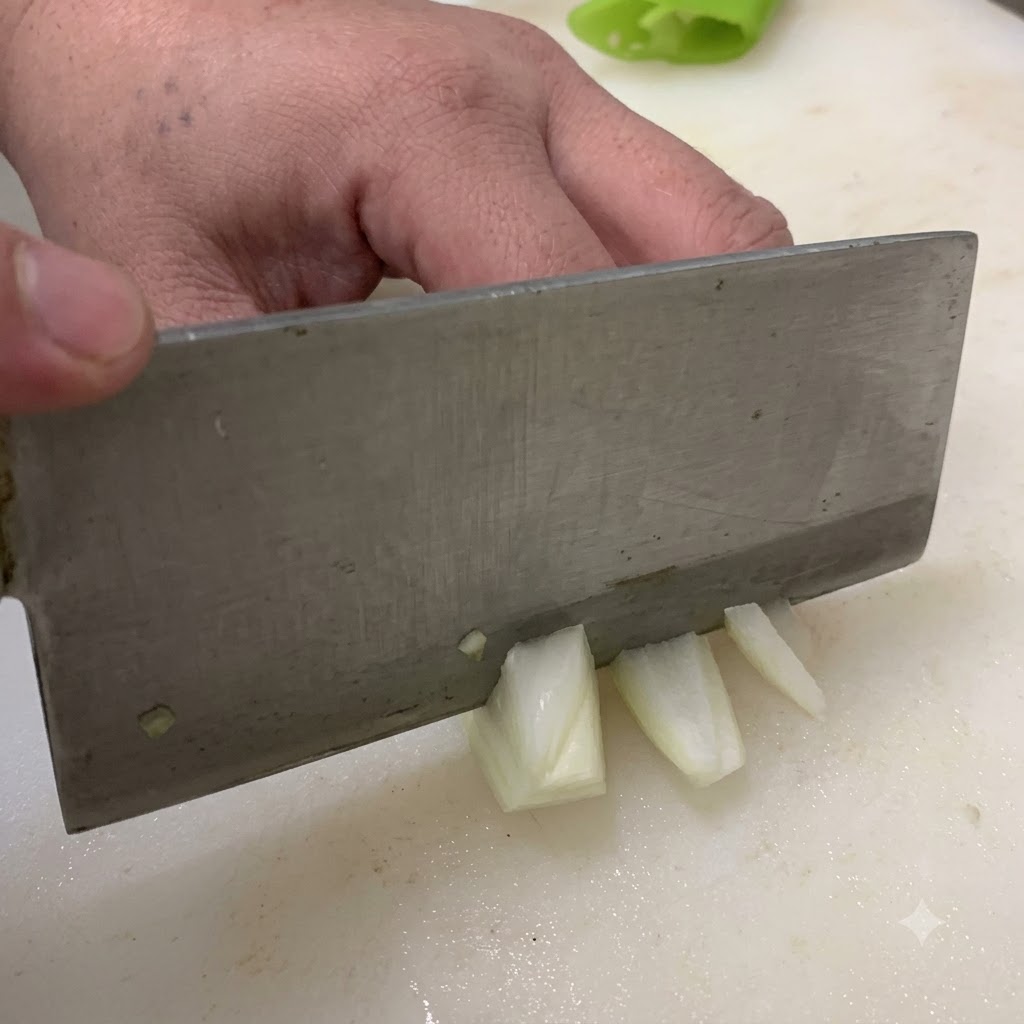
Cut the onion into bite-sized chunks on the cutting board.
- 6Cut the tofu
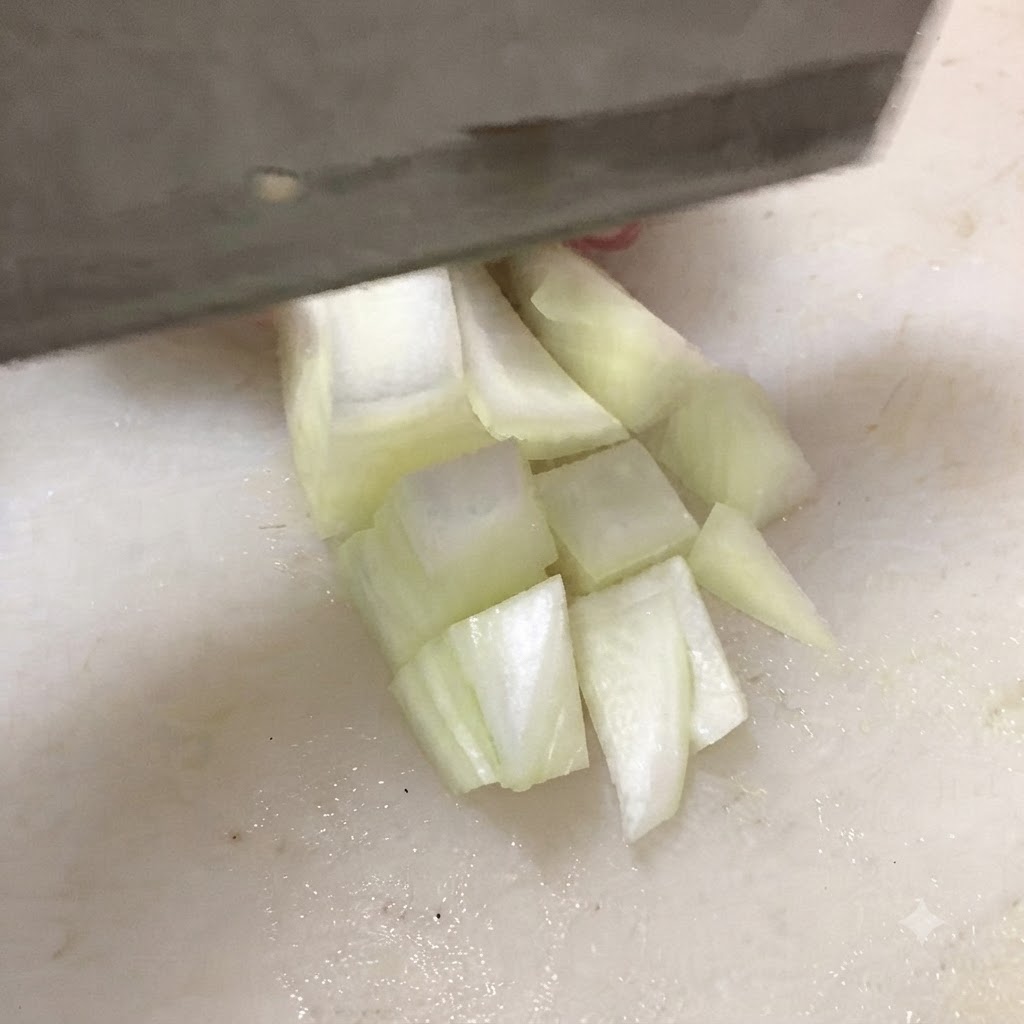
Slice the firm tofu into thick cubes on the cutting board.
Tip: Cutting thick pieces ensures the tofu holds its shape while simmering. - 7Add initial vegetables and tofu
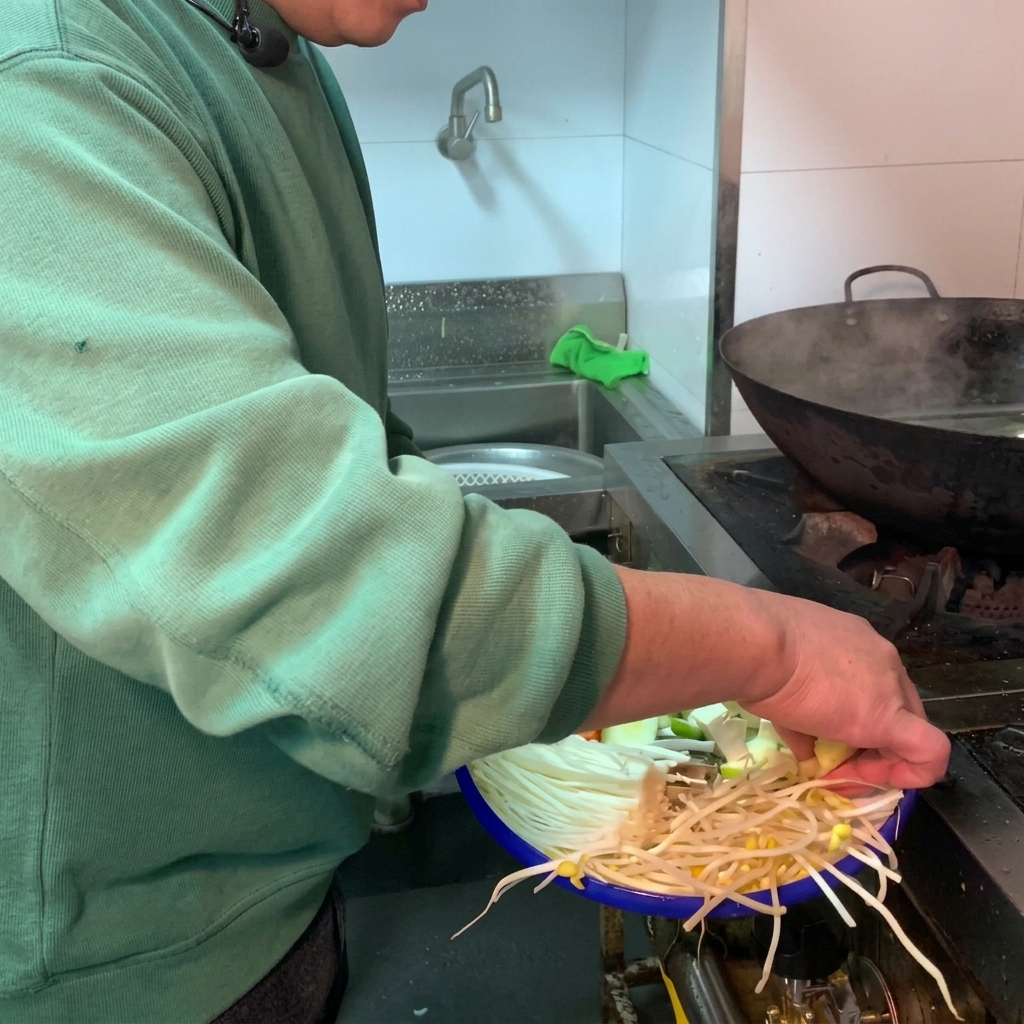
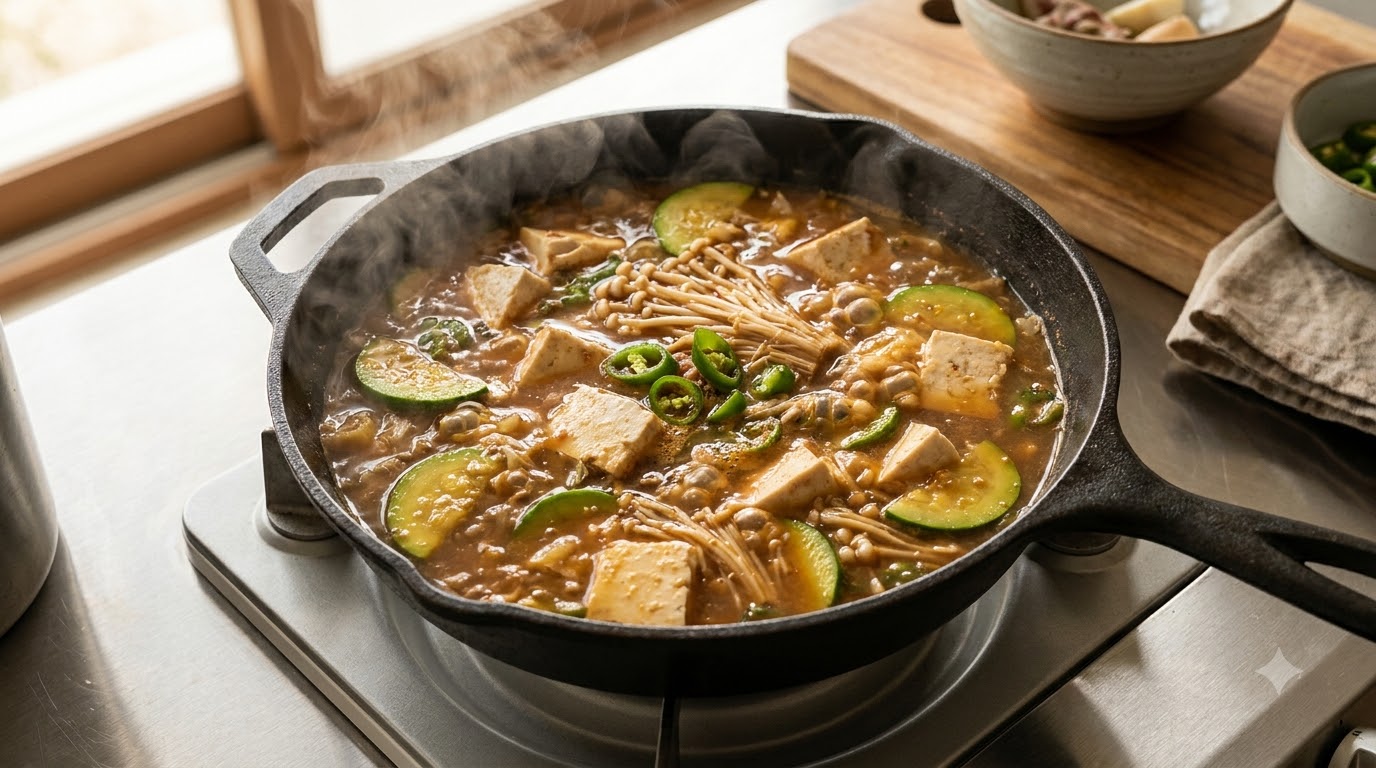
Place the sliced potato, zucchini, shiitake mushrooms, bean sprouts, tofu, and enoki mushrooms into an earthenware pot filled with water. Allow these ingredients to cook for a short while to build the base flavor of the stew.
Tip: Ensure the vegetables are cut into uniform sizes so they cook evenly together. - 8Season with soybean paste and chili paste
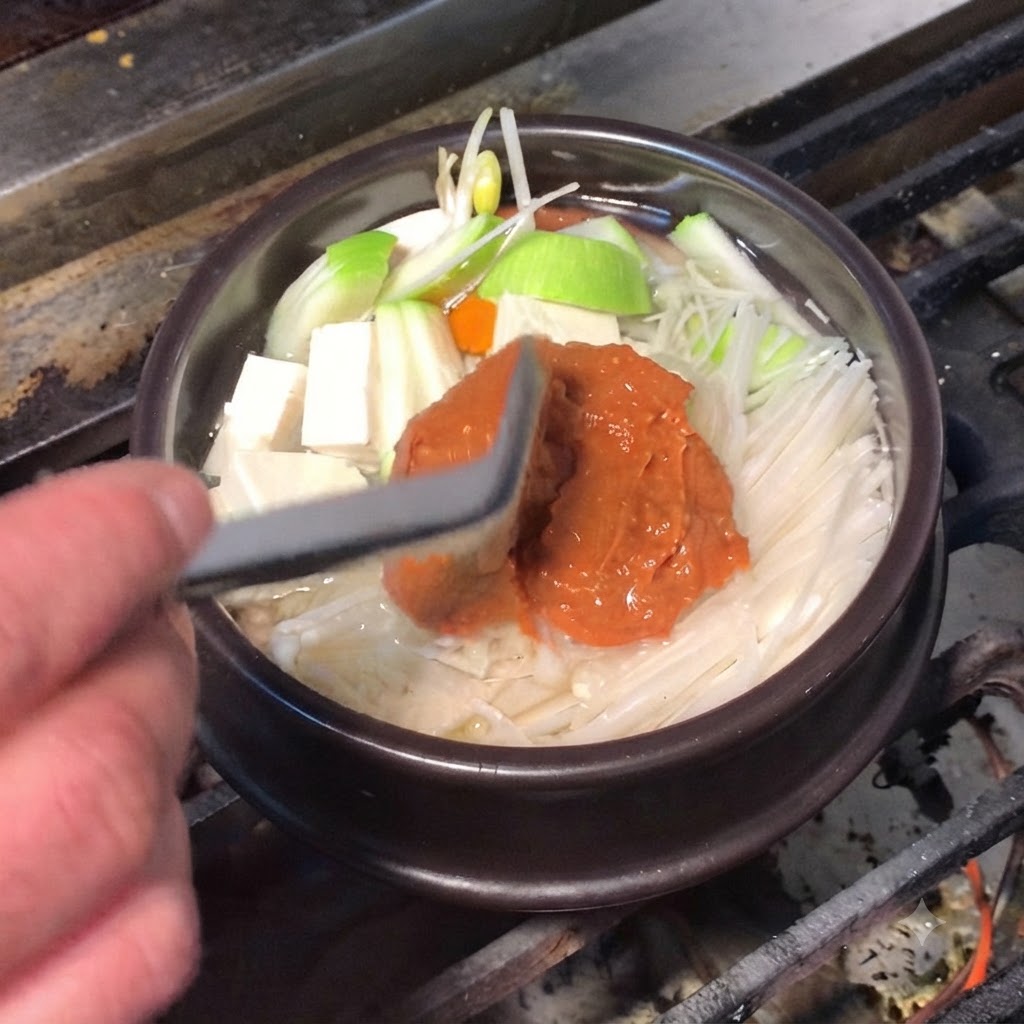
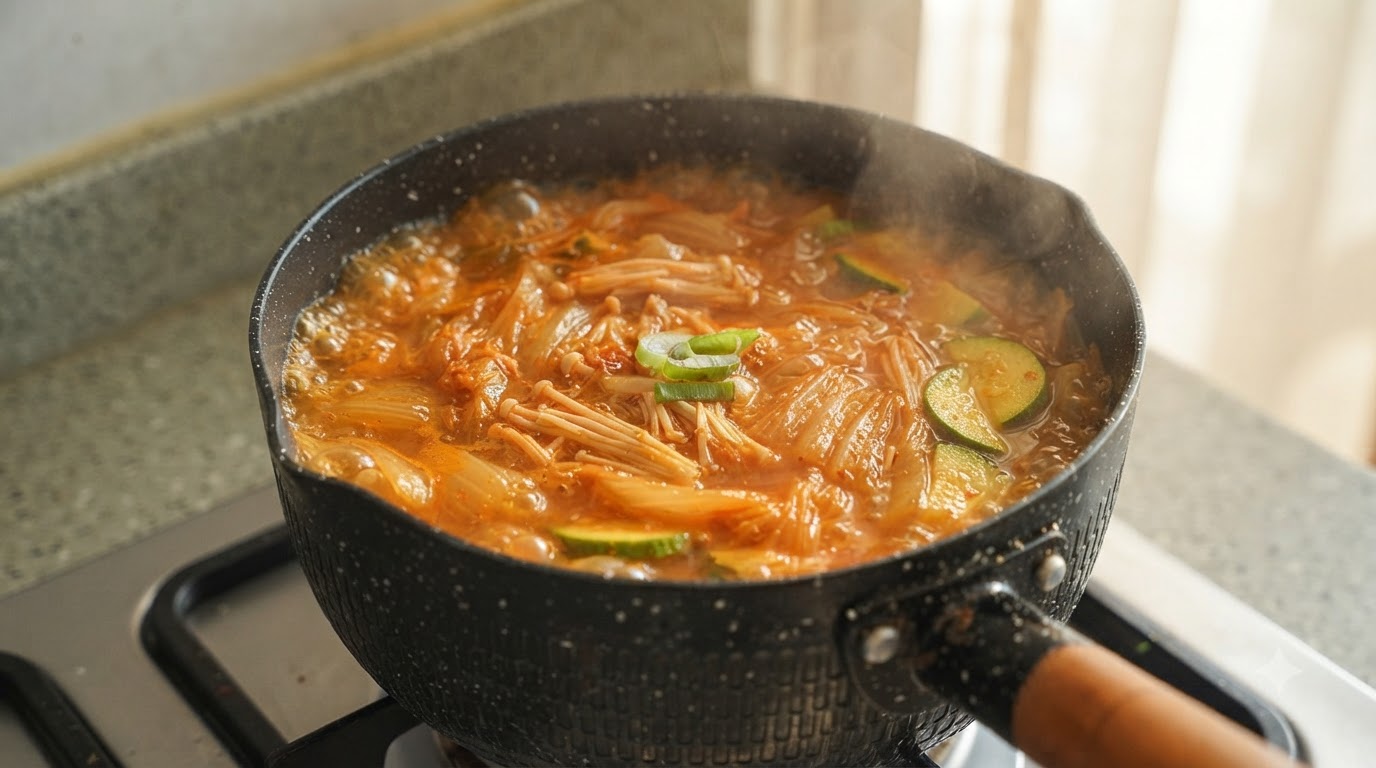
Add Korean soybean paste and Korean chili paste in a 3 to 1 ratio directly into the pot using a silicone spatula. Mix the pastes well into the broth.
Tip: Maintain the 3:1 ratio of soybean paste to chili paste for a balanced savory and spicy flavor profile. - 9Add chili powder and beef powder
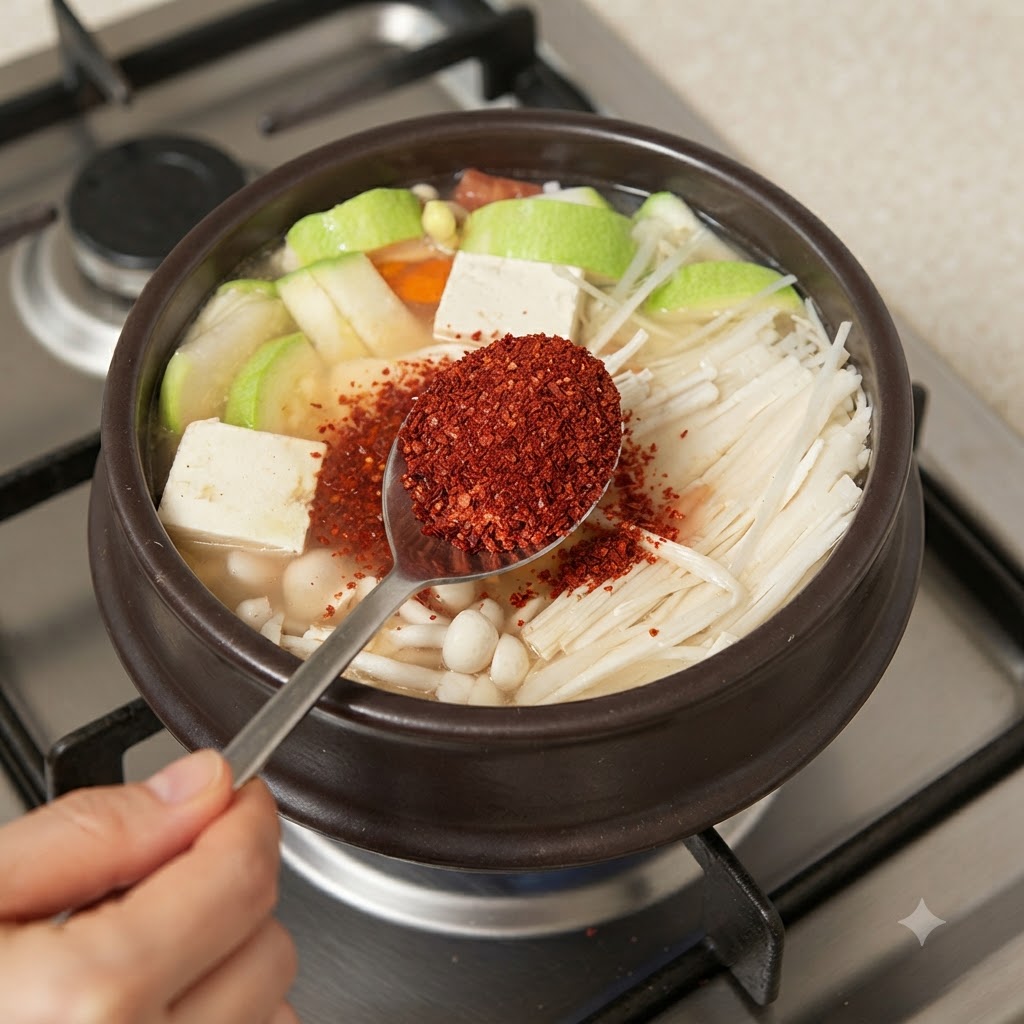
Add half a spoon of chili powder, half a spoon of beef powder, and a small amount of MSG into the stew to enhance depth and flavor, then let it simmer for two minutes.
Tip: Be careful with the amount of MSG, using just a pinch is enough to elevate the savory taste. - 10Simmer with seasonings
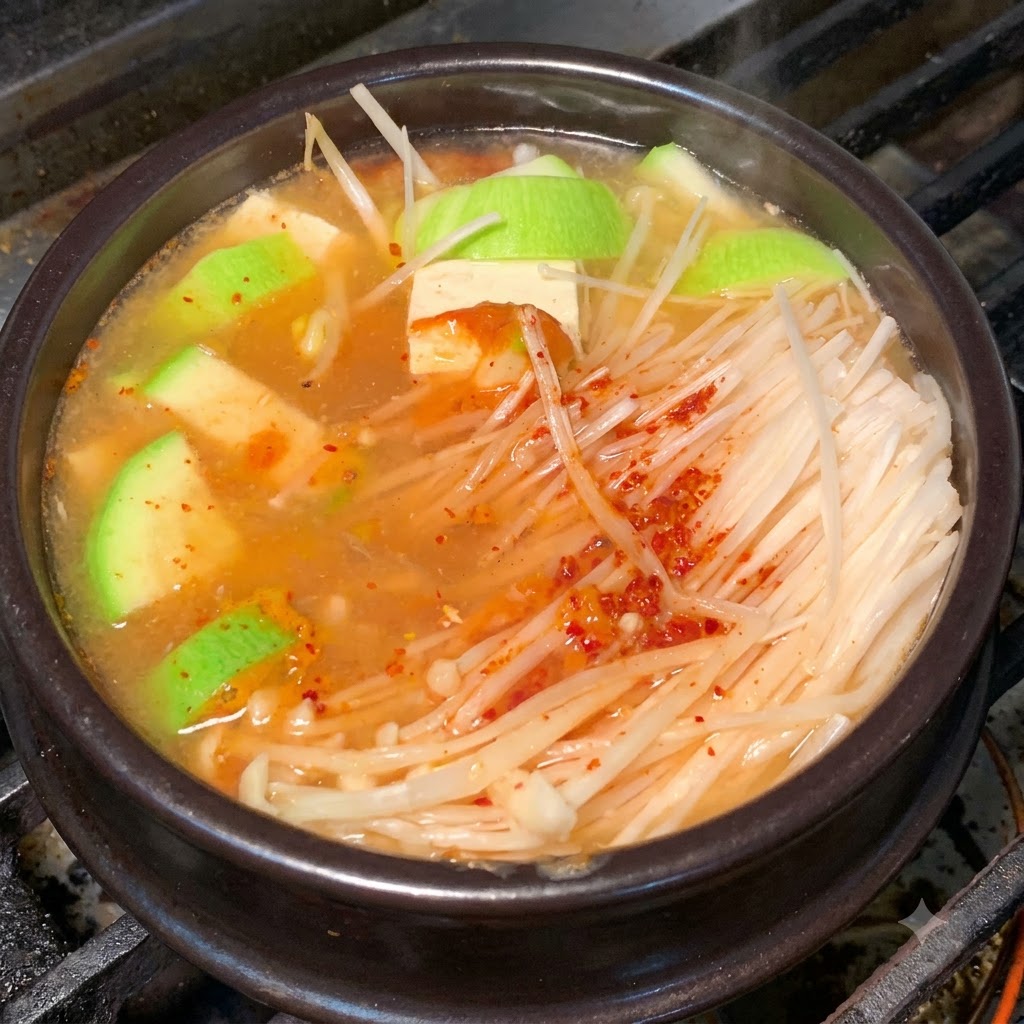
Let the soup simmer with the added seasonings for two minutes to allow all the flavors to blend thoroughly before adding seafood.
Tip: Keep the heat at a medium level so the broth develops rich flavor without boiling over. - 11Add Fresh Clams

After seasoning the broth and letting it simmer, add fresh clams directly into the pot.
Tip: Add clams after the seasoning has blended to allow them to infuse their natural sweetness into the broth. - 12Add onions, green chilies, and carrots
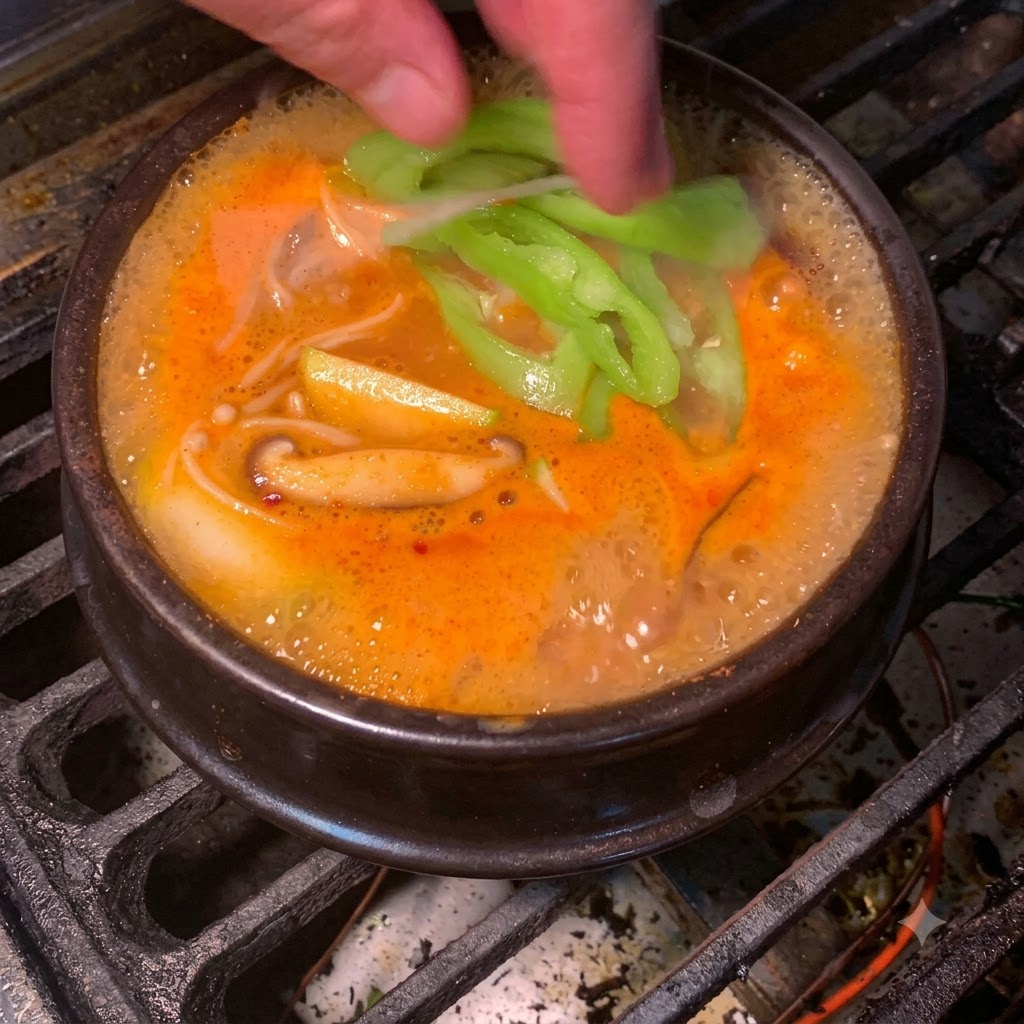
Once the stew comes back to a boil after adding the clams, add the sliced green chili, onion, and carrot. Let it simmer for another two minutes.
Tip: Adding the green chili and onion later keeps them crisp and adds a fresh aromatic kick. - 13Add Lettuce Leaves and Hearts
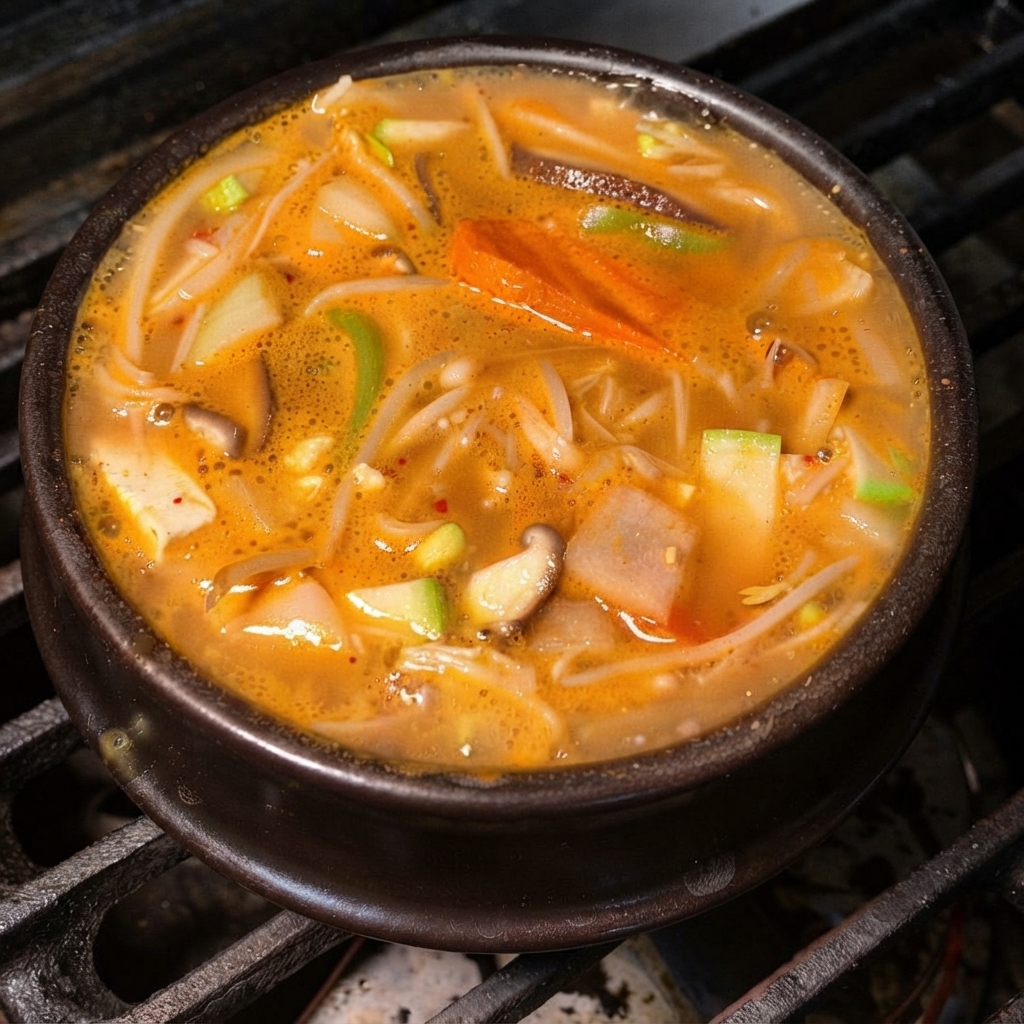
Drop fresh lettuce leaves and hearts into the boiling stew just near the end of cooking.
Tip: Do not overcook the lettuce so it maintains a slight crisp texture and fresh taste. - 14Garnish with Green Onions

Before turning off the heat, sprinkle freshly chopped green onions over the finished stew.
Tip: Add green onions at the very last moment to keep their vibrant color and sharp aroma.