Low-Calorie Beef Doenjang-Jjigae (Korean Soybean Paste Soup)
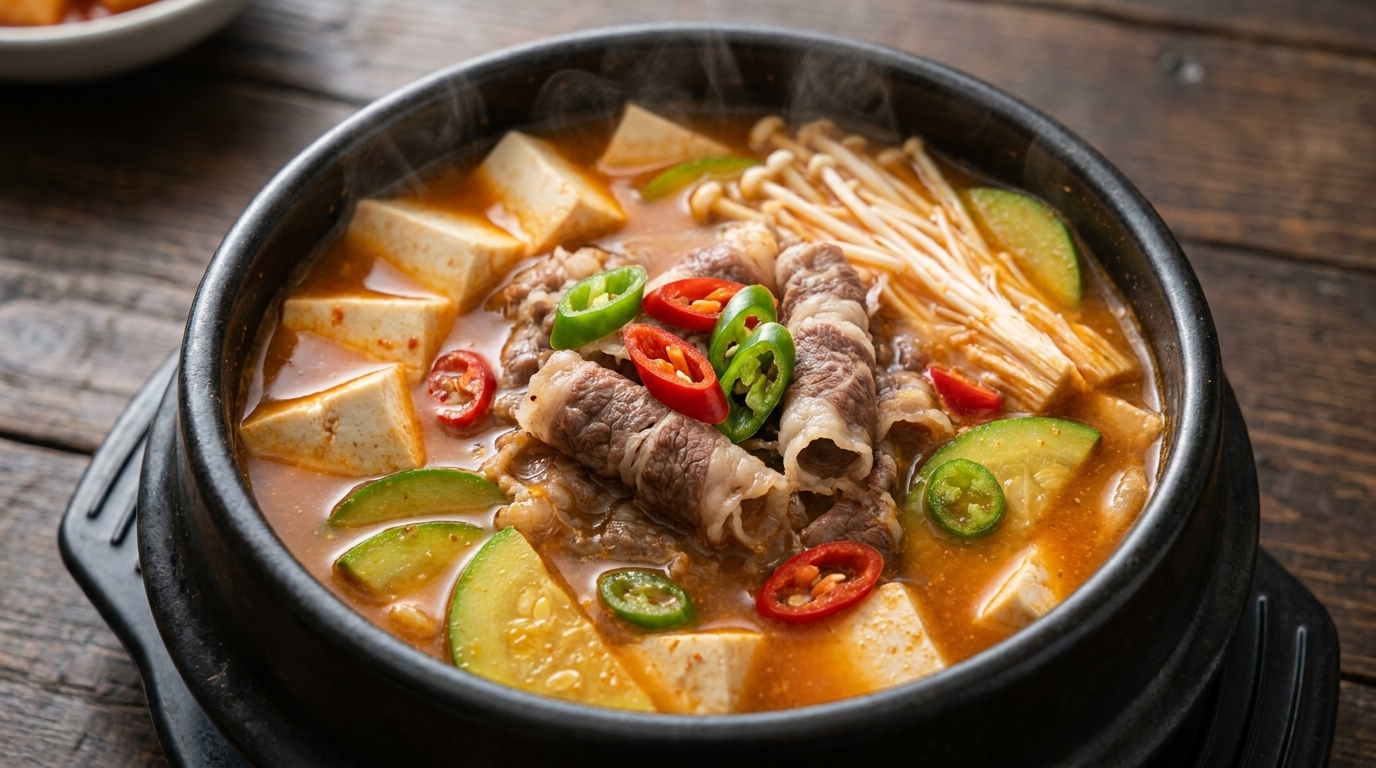
A deeply savory, metabolism-boosting Korean soybean paste stew packed with tender beef brisket, fresh vegetables, and silky tofu. This satisfying low-calorie bowl is the perfect comforting meal.
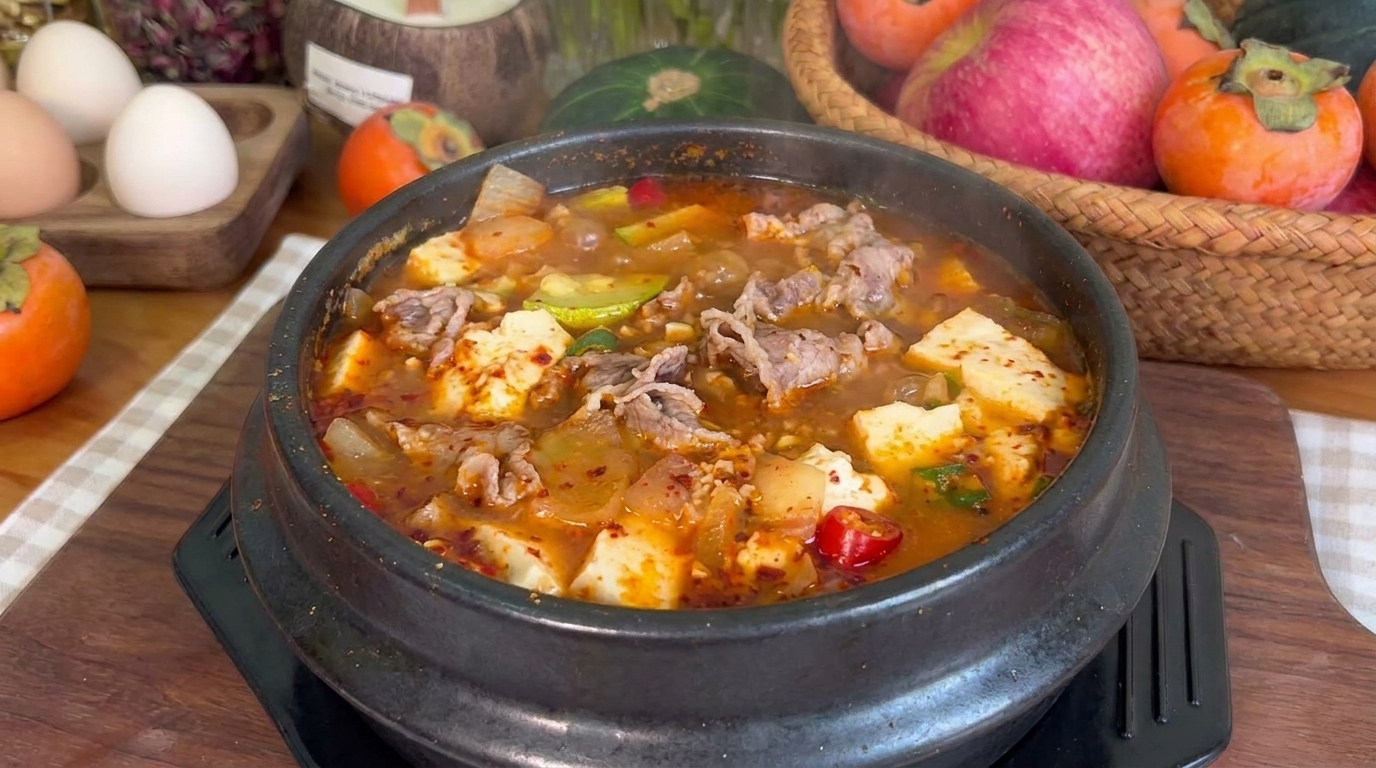
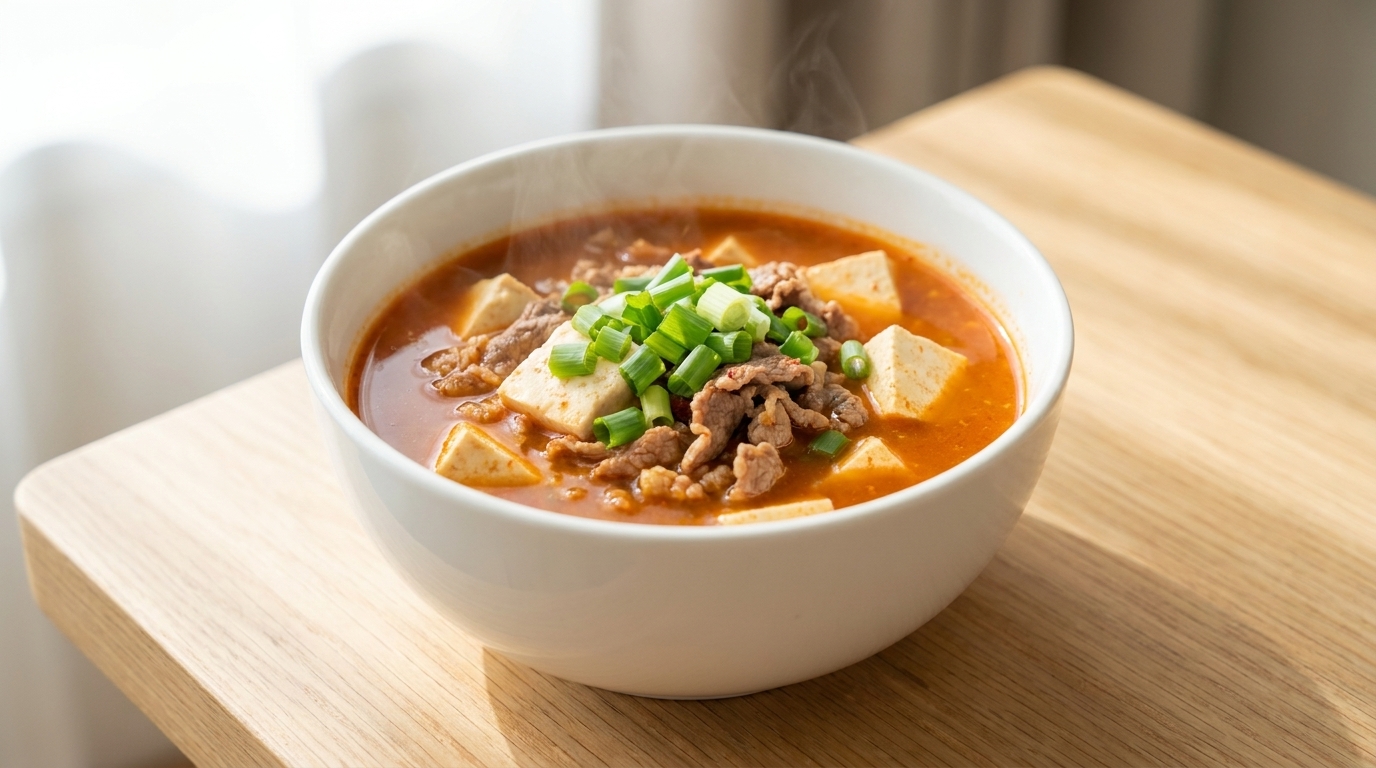
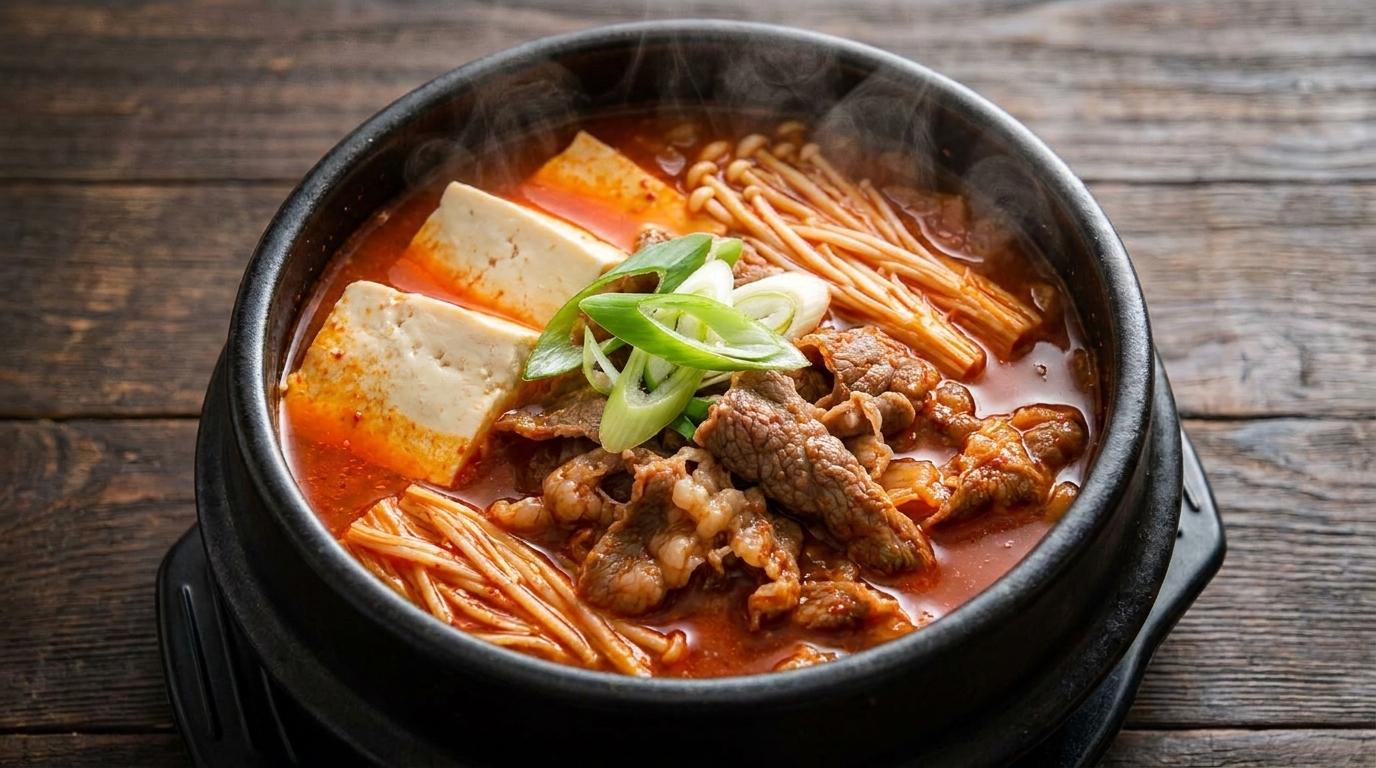
Doenjang-jjigae is a cornerstone of Korean home cooking, beloved for its complex, earthy flavor derived from fermented soybean paste. By carefully portioning the beef brisket and loading the broth with fresh zucchini, enoki mushrooms, and tofu, this version keeps the calorie count low without sacrificing any of the rich umami depth that makes the traditional stew so deeply satisfying. It is a prime example of how traditional fermentation can be both intensely flavorful and beneficial for digestion.
Ingredients
- 150 g thinly sliced beef brisket
- 1 tbsp traditionally fermented soybean paste (doenjang)
- 1 tsp chili paste (gochujang)
- 1 tsp red chili powder (gochugaru)
- 2 cups water
- 1 tbsp fish sauce
- 12 zucchini
- 12 block firm tofu
- 1 small bundle enoki mushrooms
- 14 white onion
- 1 tsp minced garlic
- 1 green onion
- 1-2 green and red chilies
Instructions
- 1Prepare the beef brisket

Begin by selecting thinly sliced beef brisket for your soup. Place the raw brisket slices into a cold, black non-stick pan. Using brisket ensures the meat remains tender and flavorful during the quick stir-frying process that follows.
Tip: Starting with a cold pan and thinly sliced meat allows you to better control the initial fat rendering and prevents the delicate brisket from sticking. - 2Add fermented seasonings
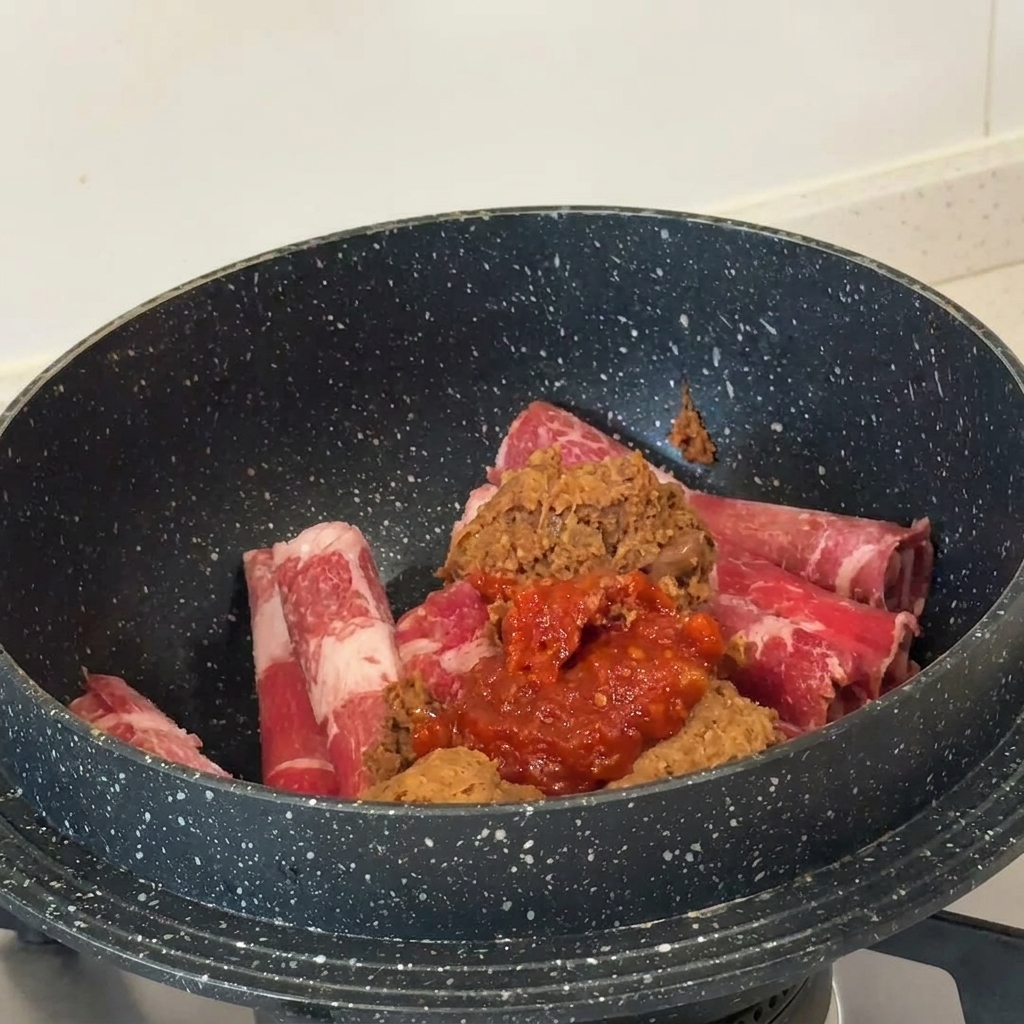
Add a generous spoonful of traditionally fermented soybean paste, along with chili paste and red chili powder, directly onto the beef. The fermented paste is the secret to a rich, savory depth that also helps boost metabolism while keeping the dish healthy.
Tip: Choose a traditionally fermented soybean paste rather than a processed one for a more authentic flavor and better health benefits. - 3Stir-fry the beef
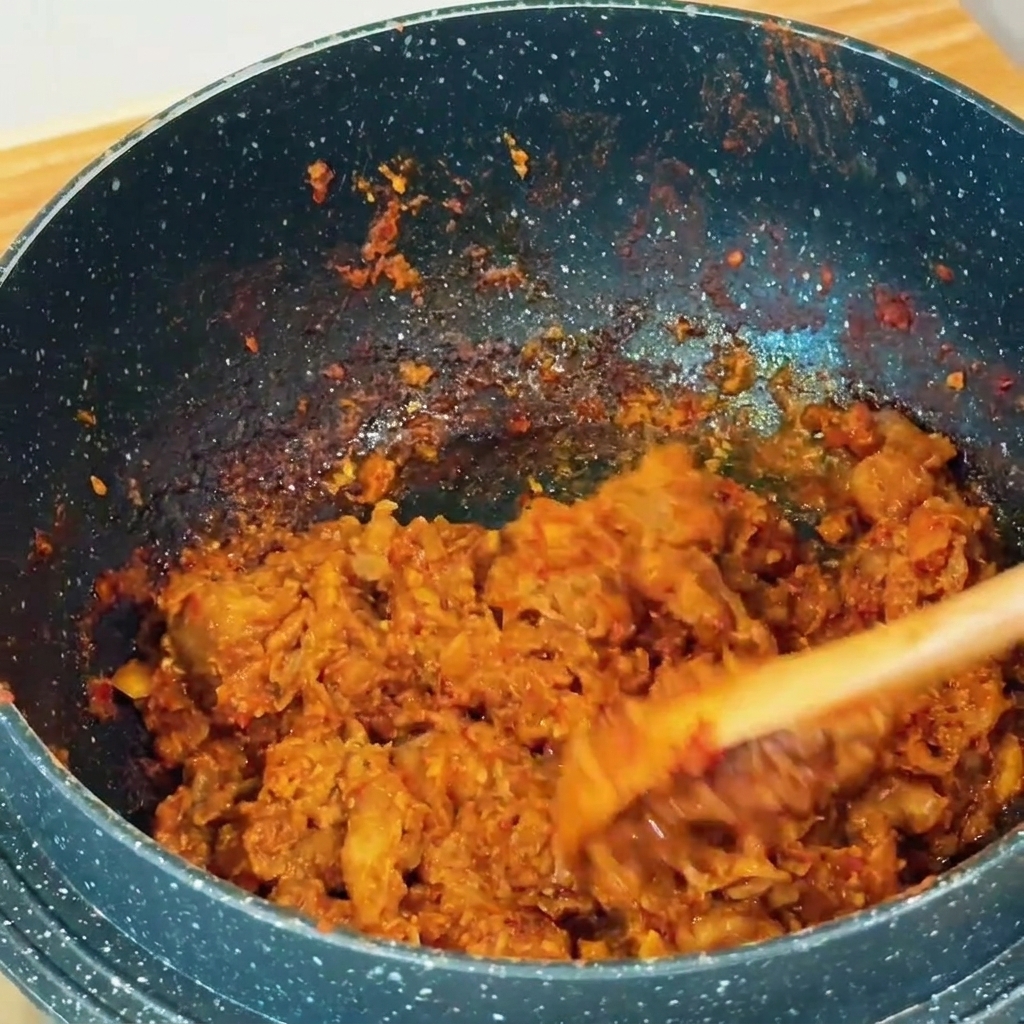
Sauté the thinly sliced beef brisket with fermented soybean paste over low heat. Stir continuously until the meat is halfway cooked and thoroughly coated in the savory paste, which creates a deep flavor base for the broth while helping to boost metabolism.
Tip: Use low heat to prevent the soybean paste from burning while the beef releases its juices. - 4Add the water
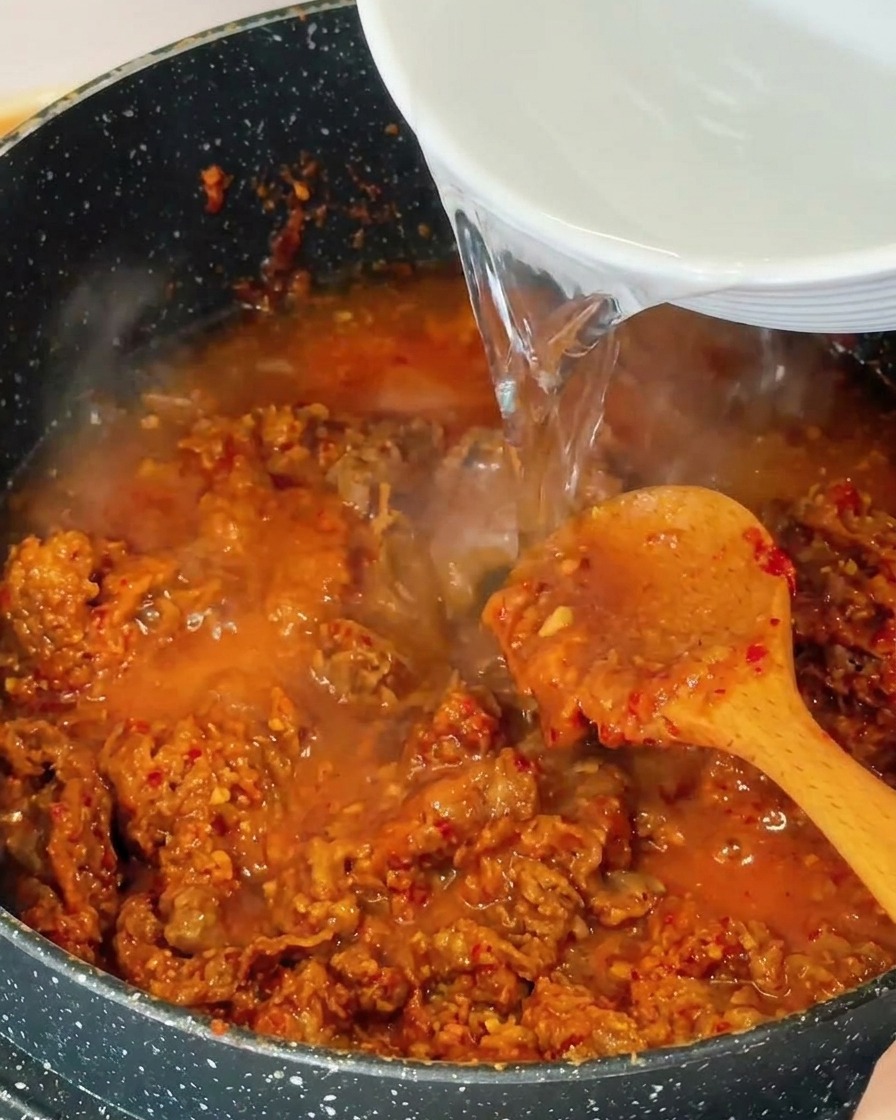
Once the beef is partially cooked and the aromatics are fragrant, pour in fresh water to create the soup base. This combines with the sautéed paste and beef juices to form a rich, savory broth that serves as the foundation for the healthy soup.
Tip: Adding water right after the beef is half-cooked ensures the meat remains tender during the boiling process. - 5Season with fish sauce
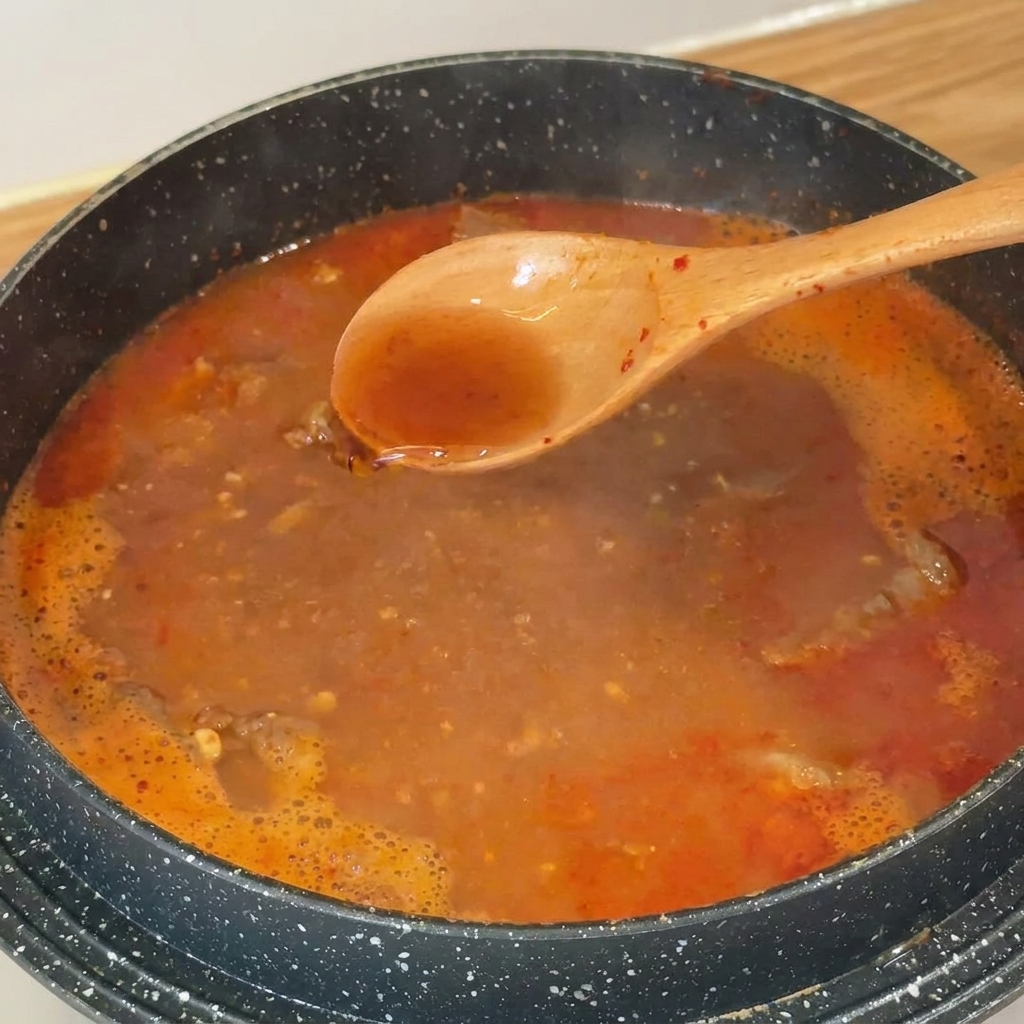
Bring the mixture to a boil. Once bubbling, add a spoonful of fish sauce to the red broth. This provides the necessary saltiness and an extra layer of umami that rounds out the flavors of the soybean paste.
Tip: Do not skip the fish sauce; it provides a bright salty note that balances the earthy richness of the soybean paste. - 6Add zucchini slices
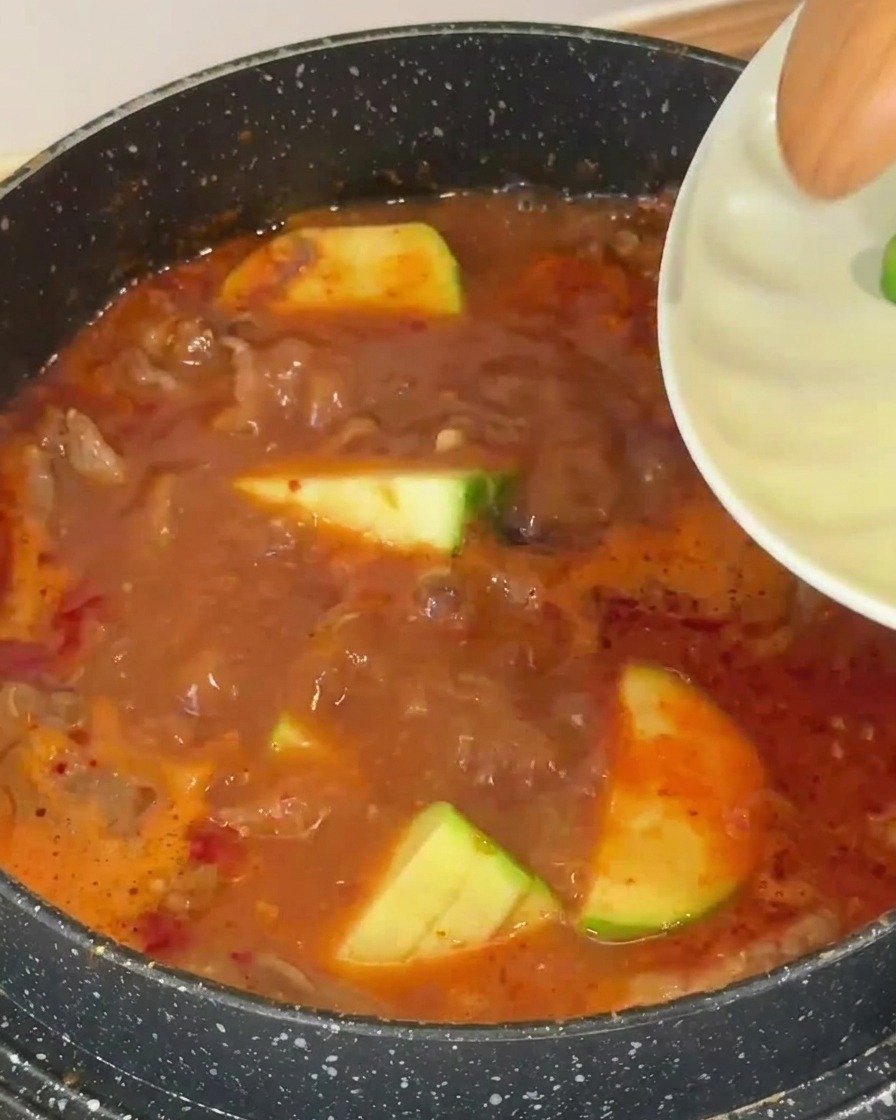
Carefully place fresh zucchini slices into the boiling broth. Zucchini adds a light, refreshing texture and essential nutrients to the soup while keeping the overall calorie count low, making it perfect for weight loss.
Tip: Slice the zucchini into uniform half-moons so they cook evenly with the other vegetables. - 7Incorporate the tofu
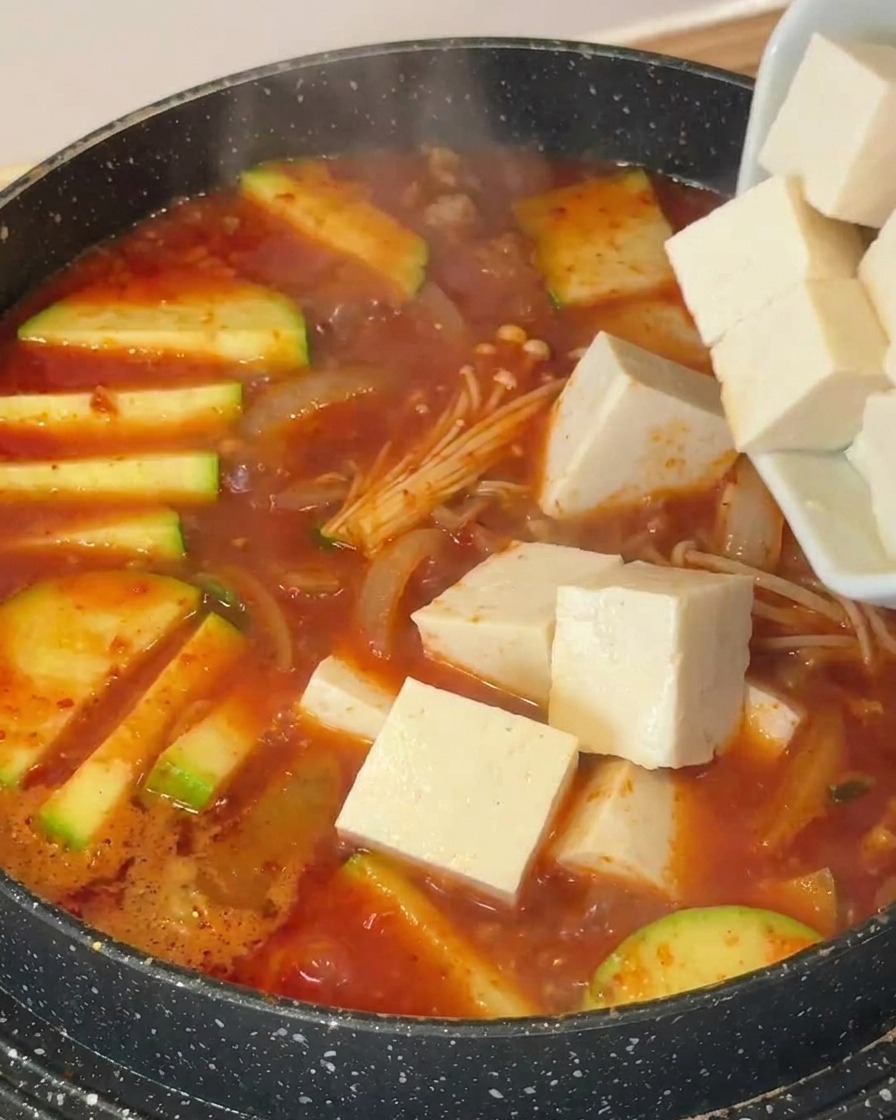
Slide cubes of white tofu into the pot. Tofu provides a great source of clean protein, making the soup more filling and satisfying without adding excessive calories to your meal.
Tip: Use firm or extra-firm tofu so the cubes maintain their shape while simmering in the hot broth. - 8Add mushrooms and onions
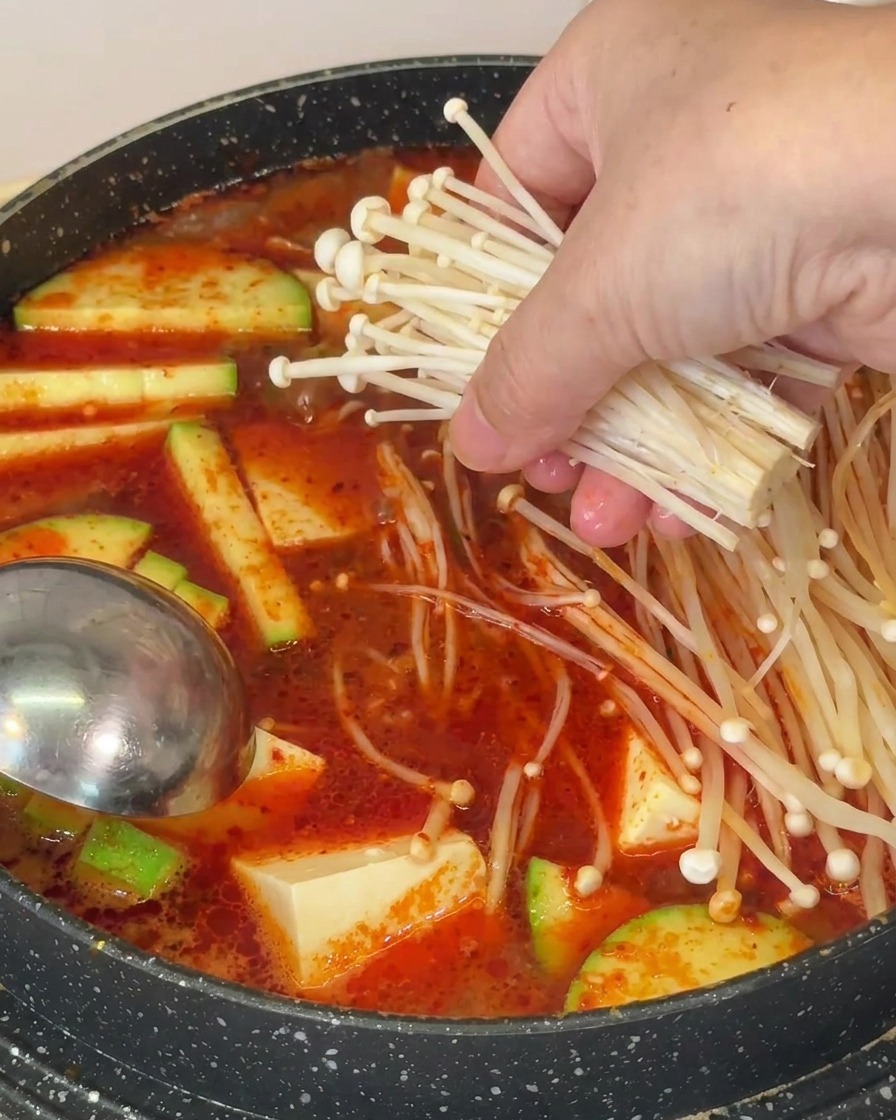
Add the enoki mushrooms and sliced white onions to the pot. These vegetables add depth of flavor, a satisfying crunch, and additional fiber to help keep you full throughout the day.
Tip: Trim the root ends of the enoki mushrooms and separate them into smaller bundles for easier eating. - 9Garnish and simmer
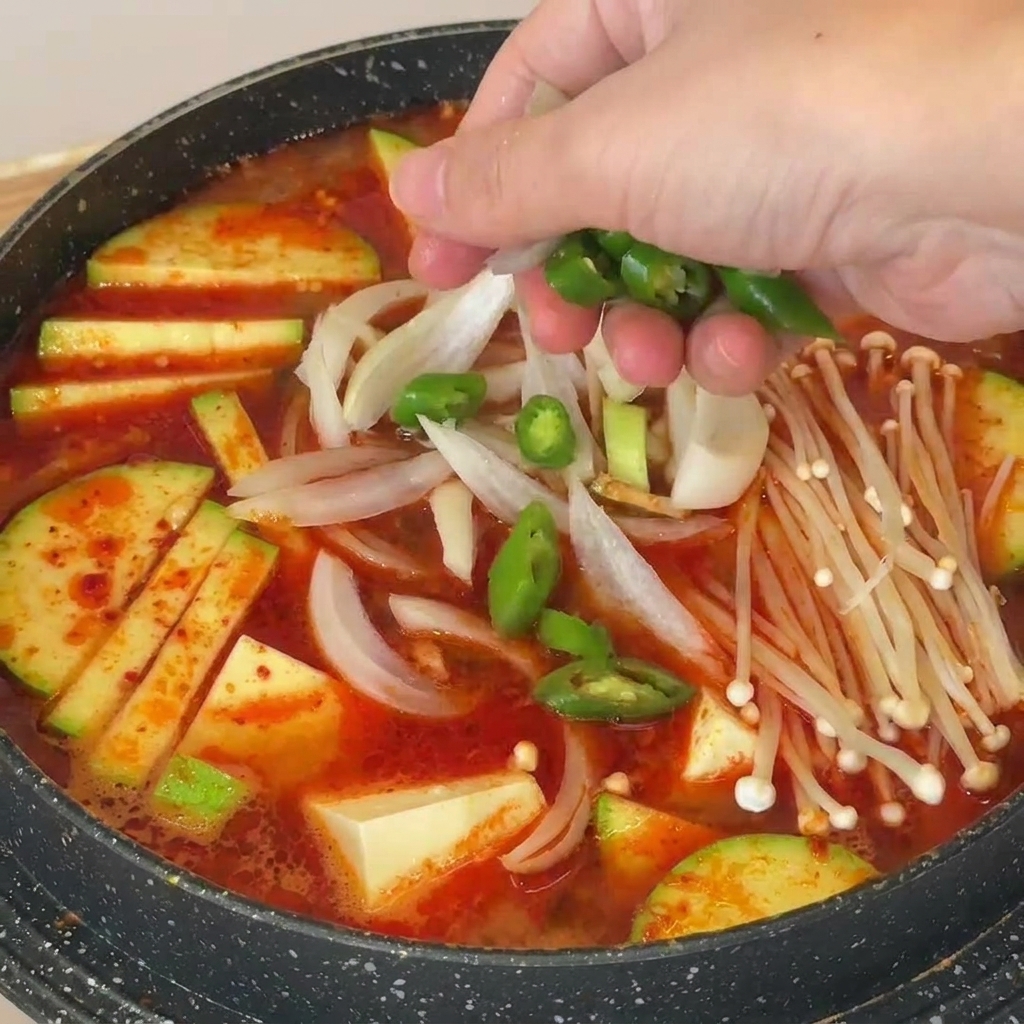
Toss in sliced green and red chilies as the final touch. Cover the pot and let the soup boil for about 8 minutes to meld the flavors together and fully cook the vegetables while maintaining a good texture.
Tip: Adjust the amount of chilies based on your spice preference; the capsaicin can further help kickstart your metabolism.