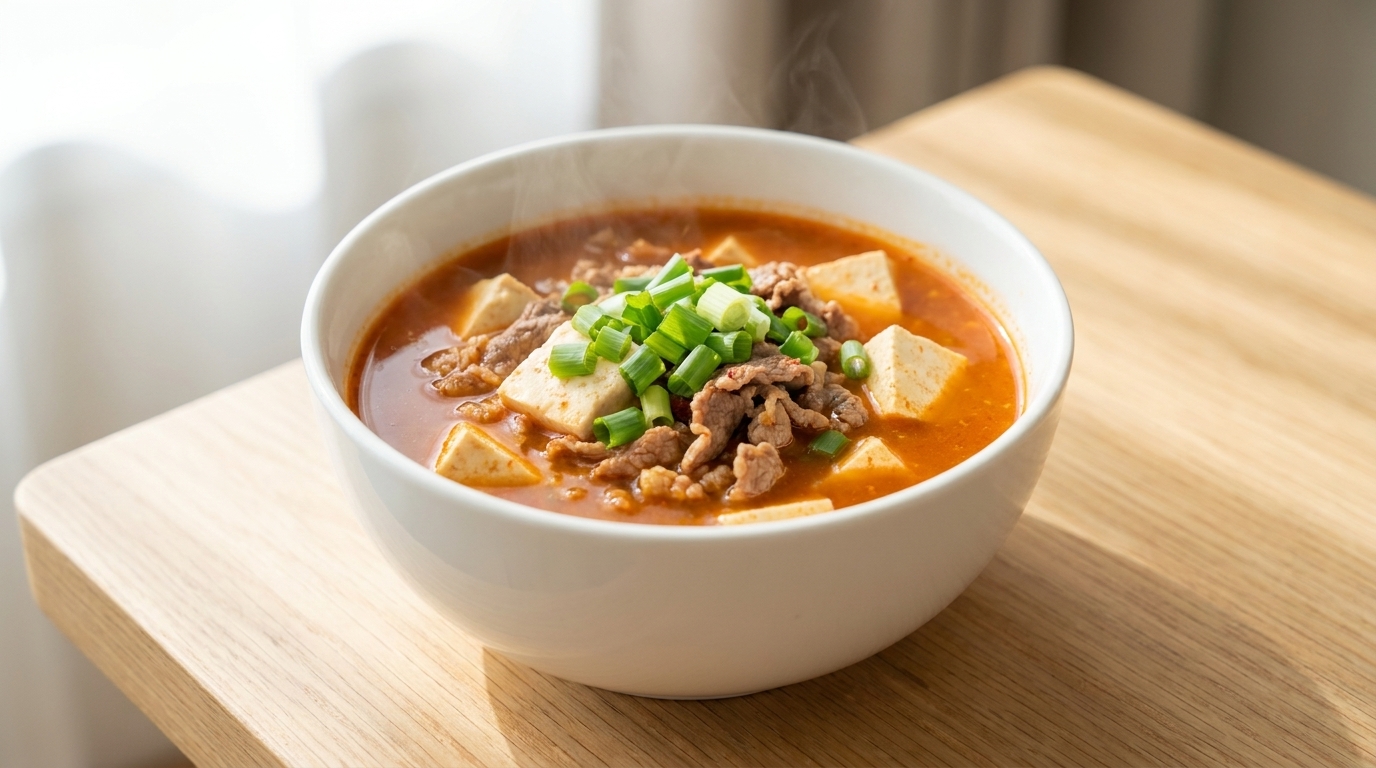
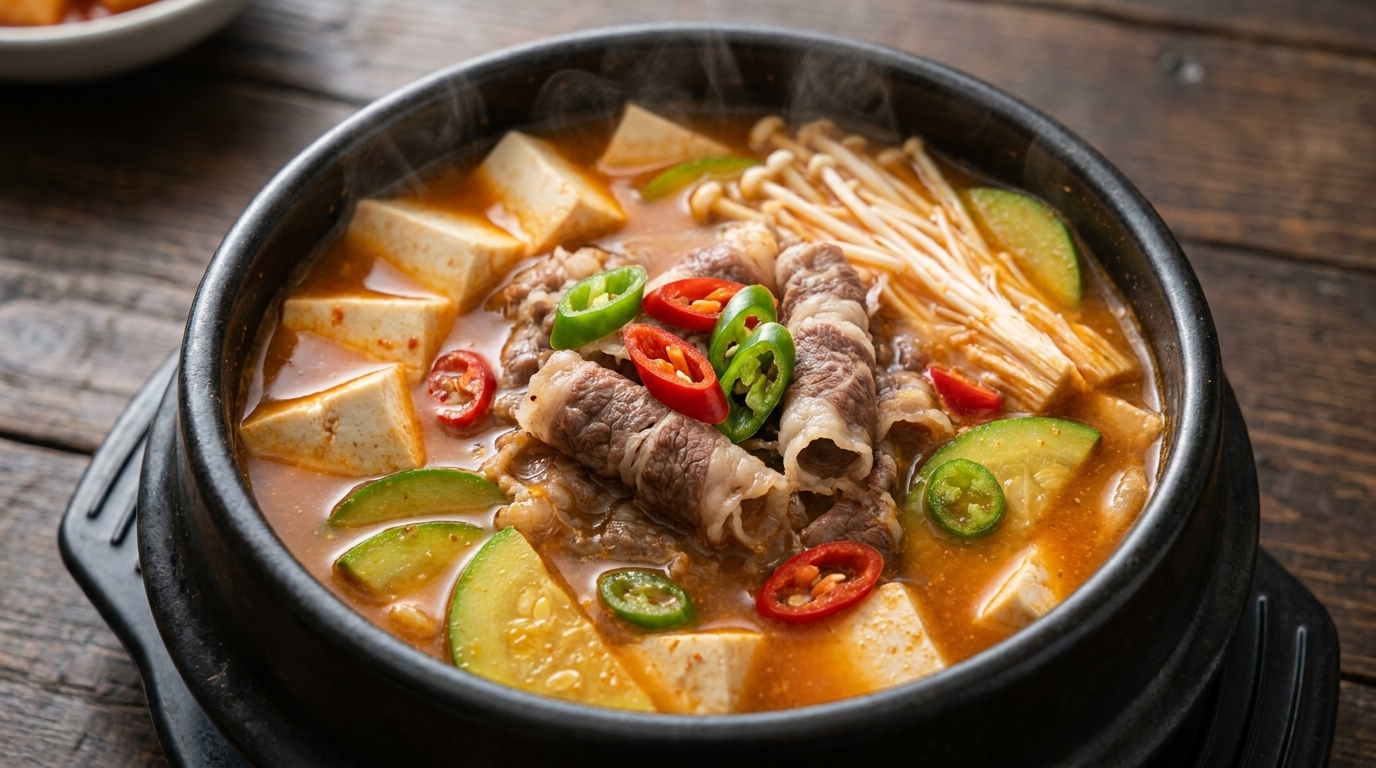
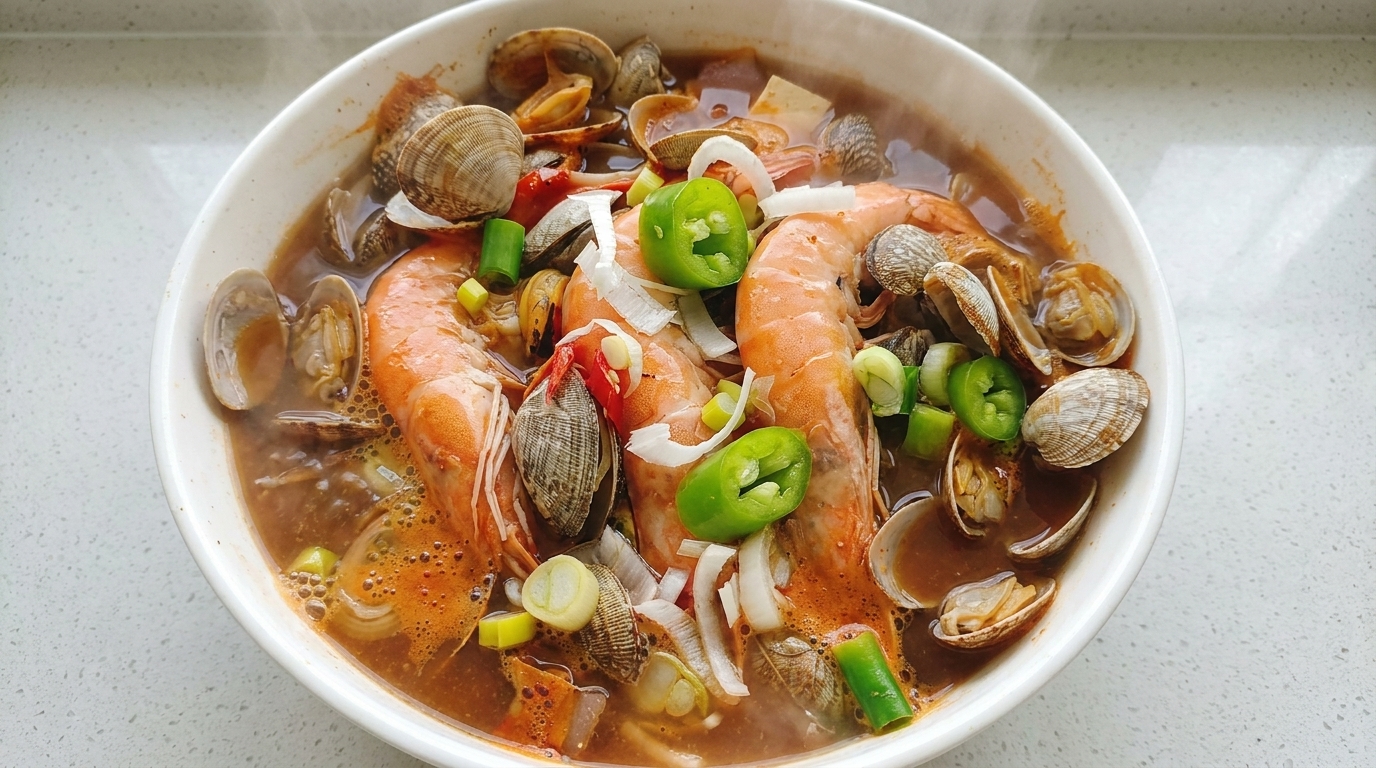
Korean Style Beef Kimchi Stew (Kimchi-jjigae)
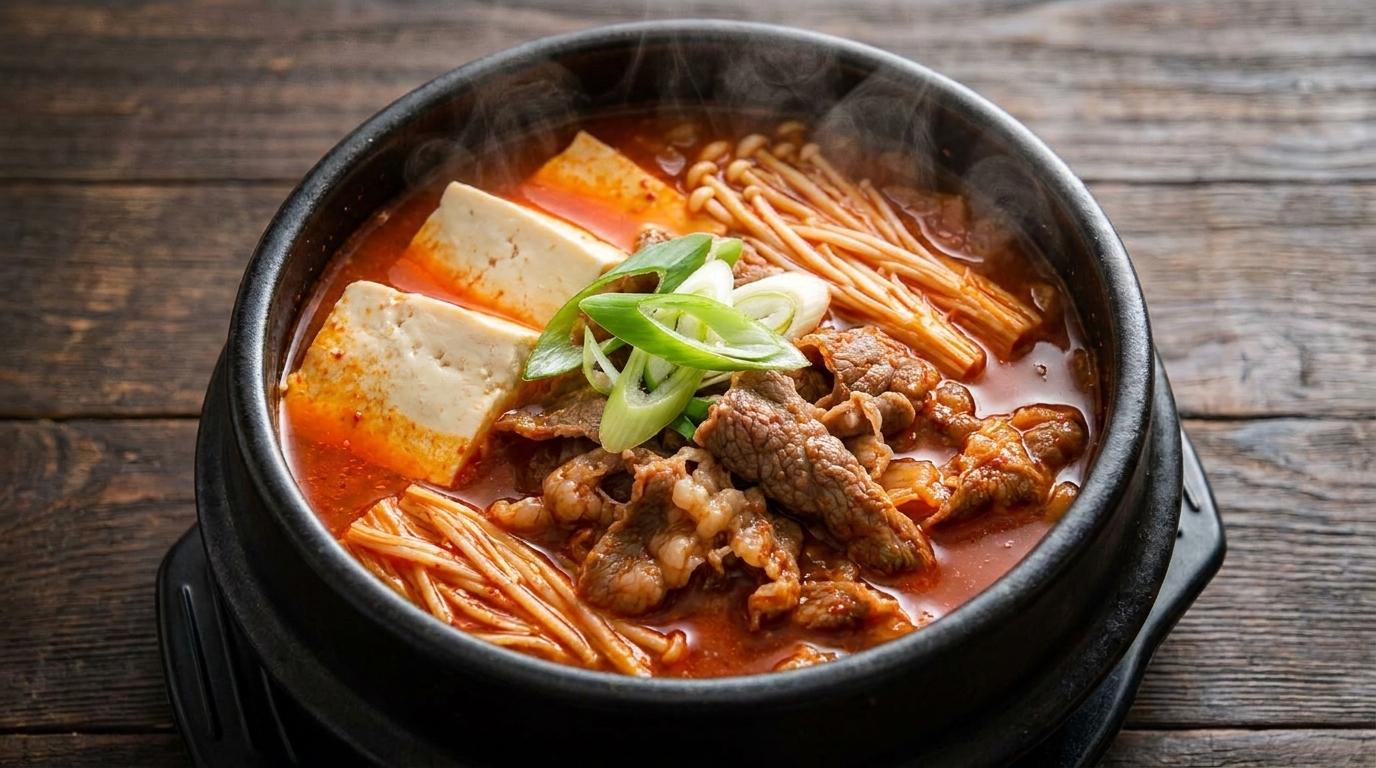
A comforting, spicy pot of Korean kimchi stew featuring tender marbled beef, fermented kimchi, and silky tofu simmered in a rich, vibrant broth.
Kimchi-jjigae is the quintessential Korean comfort food, beloved for its deep, tangy, and spicy profile. This version uses tender beef chuck to provide a savory richness that perfectly balances the fermented cabbage. Ready in just 20 minutes, it is the perfect soul-warming meal for a cold day.
Ingredients
- 200 g thinly sliced beef chuck eye roll
- 1 cup chopped fermented cabbage kimchi
- 1 block soft or silken tofu
- 1 head baby cabbage
- 12 red onion
- 2 stalks green onions
- 1 bundle enoki mushrooms
- 1 tbsp minced garlic
- 1 tbsp Korean chili powder (Gochugaru)
- 1 tbsp Korean chili paste (Gochujang)
- 1 tbsp sesame oil
- 1 tbsp light soy sauce
- 1 tsp sugar
- 500 ml boiling water
- 1 tbsp cooking oil
Instructions
- 1Season the beef
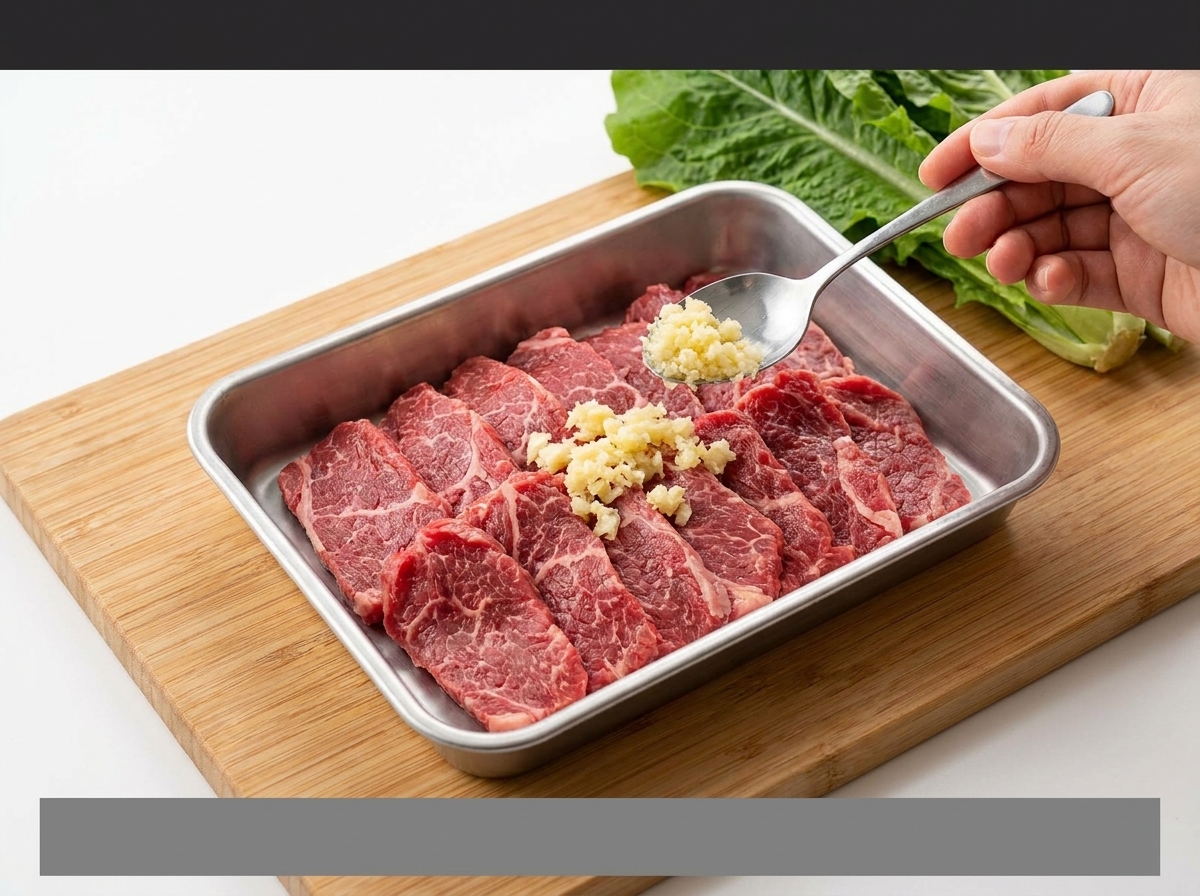
Place the thinly sliced beef chuck into a tray. Add the minced garlic, chili powder, and Korean chili paste to the meat to create a flavorful savory base for the stew.
Tip: Using beef with a small amount of fat helps keep the meat tender throughout the simmering process. - 2Mix the ingredients
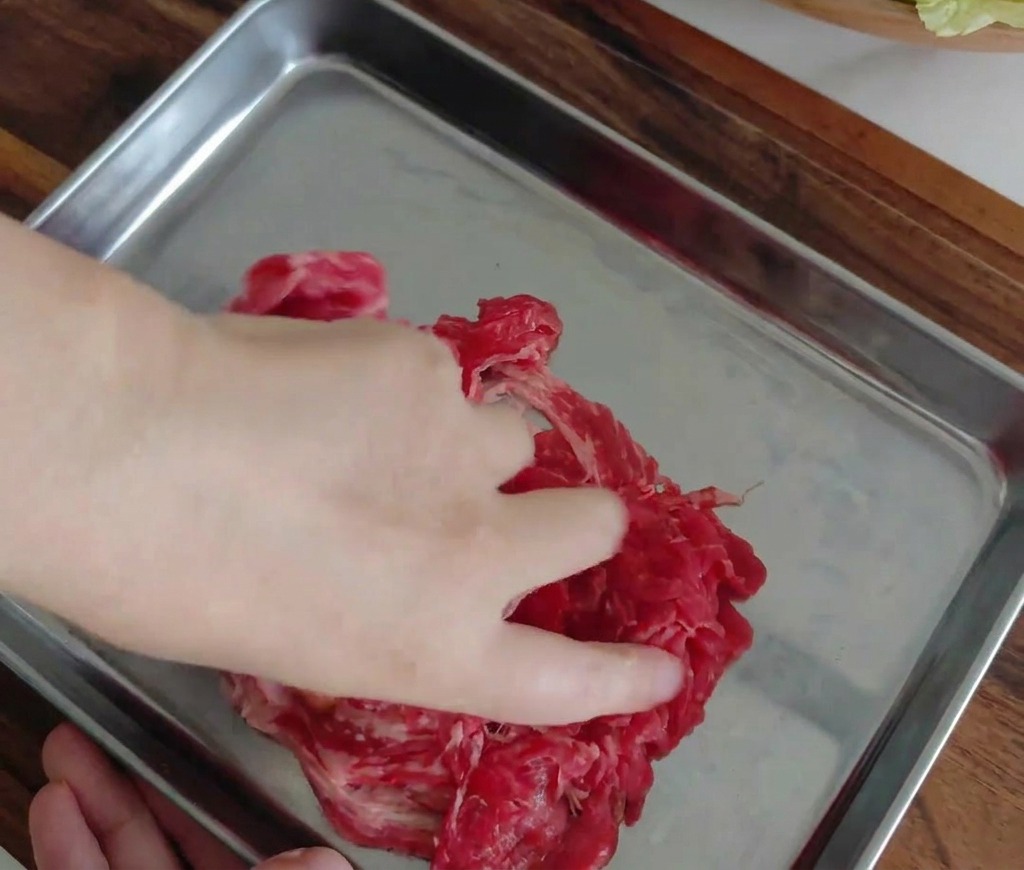
Use your hand to mix the spices and sesame oil into the beef slices. Ensure every piece is evenly coated with the marinade to maximize the flavor in every bite.
Tip: Letting the beef rest for ten minutes after mixing allows the seasoning to penetrate deeper into the meat. - 3Slice the cabbage
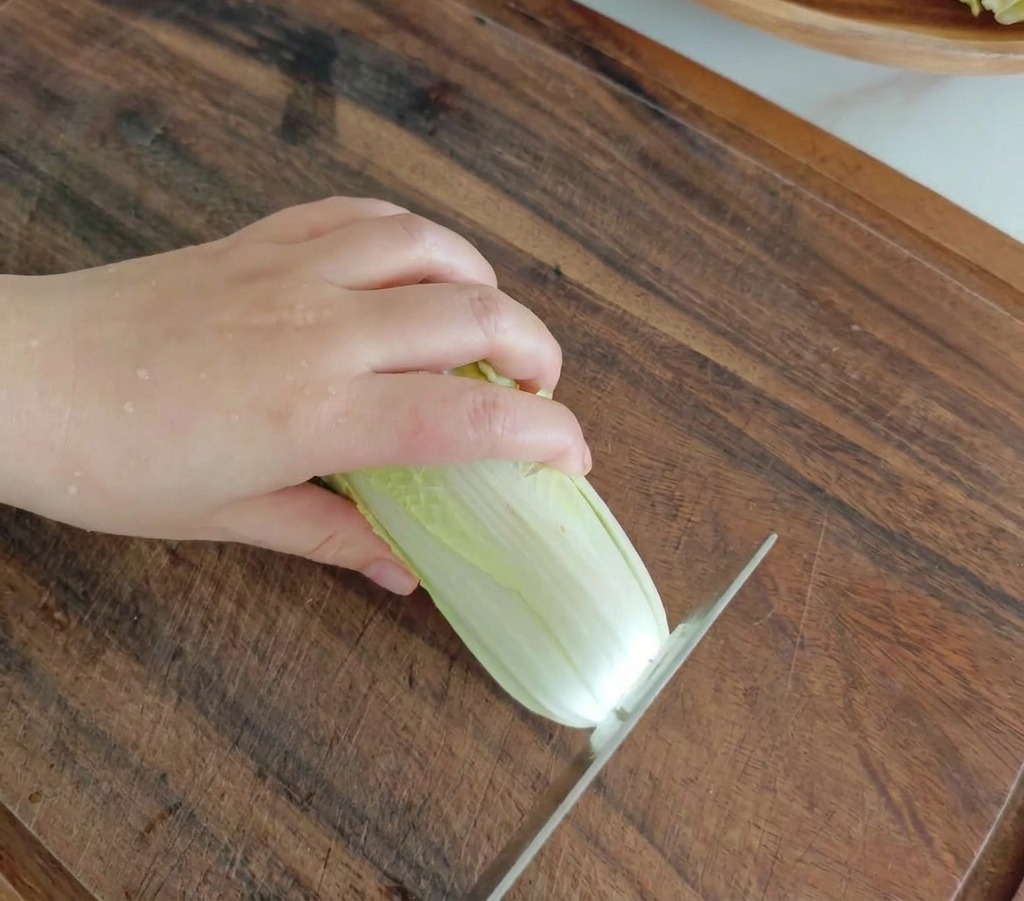
Place the fresh baby cabbage on a cutting board and slice it into manageable, bite-sized pieces. You can substitute this with napa cabbage depending on your personal preference or what you have available.
Tip: Uniformly sized pieces will cook at the same rate, ensuring the cabbage in your stew has a consistent texture. - 4Prepare the red onion
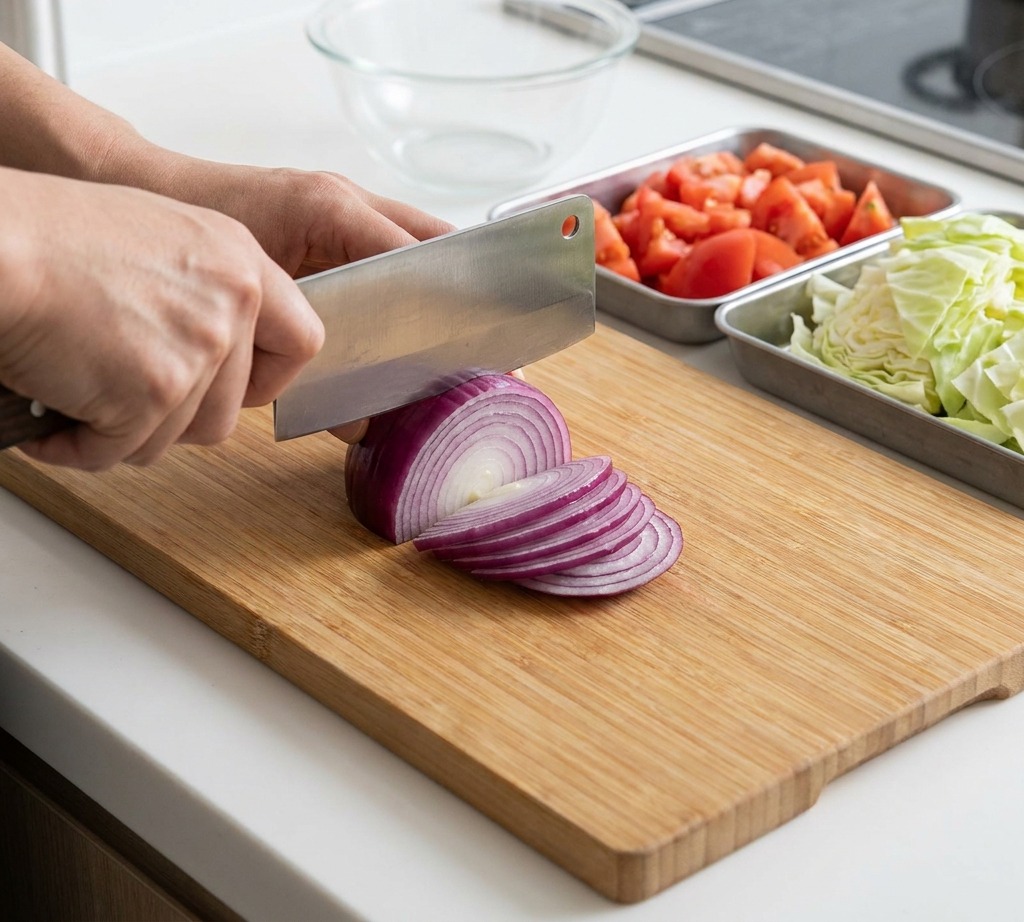
Peel the red onion and slice it into thick segments. These slices will form the aromatic base of the stew, providing a subtle sweetness that balances the spice of the kimchi.
Tip: Cutting the onions into thicker slices helps them retain some texture even after being sautéed and simmered in the broth. - 5Cut the green onions
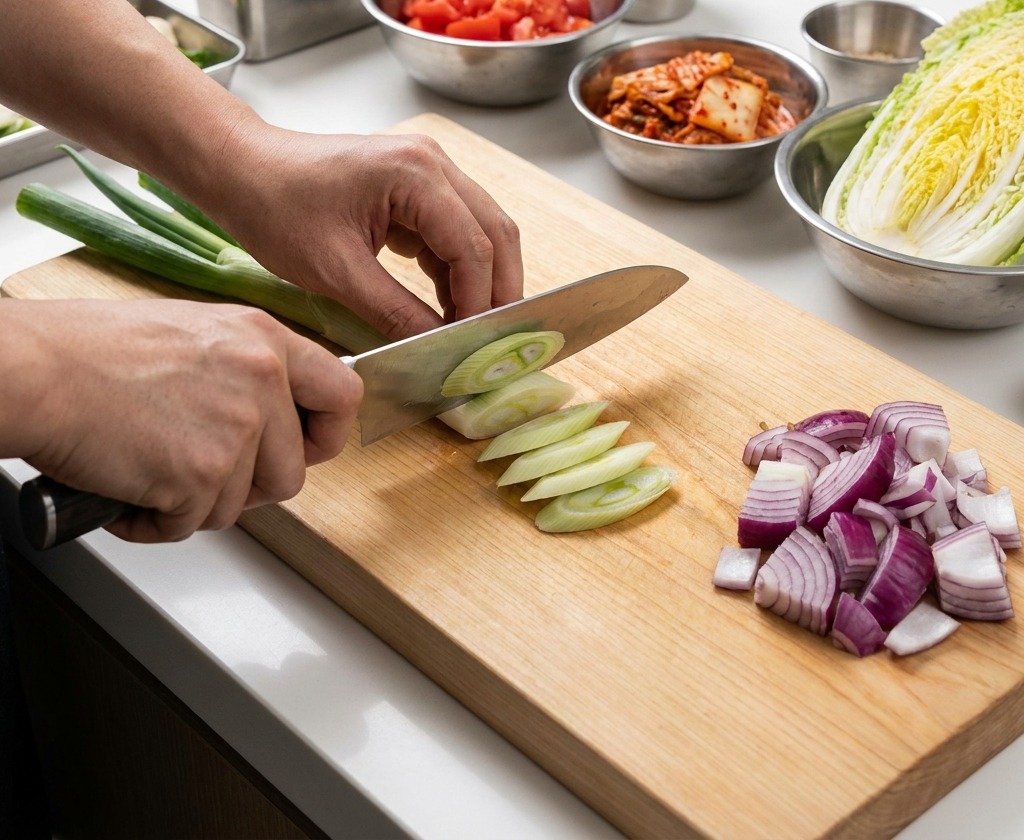
Slice the green onions diagonally into long, elegant pieces. Be sure to keep the white parts and the green parts separate as you prep them, as they will be added to the pot at different stages.
Tip: The white parts are great for sautéing at the start to build flavor, while the green parts are best added at the very end as a fresh garnish. - 6Sear the beef
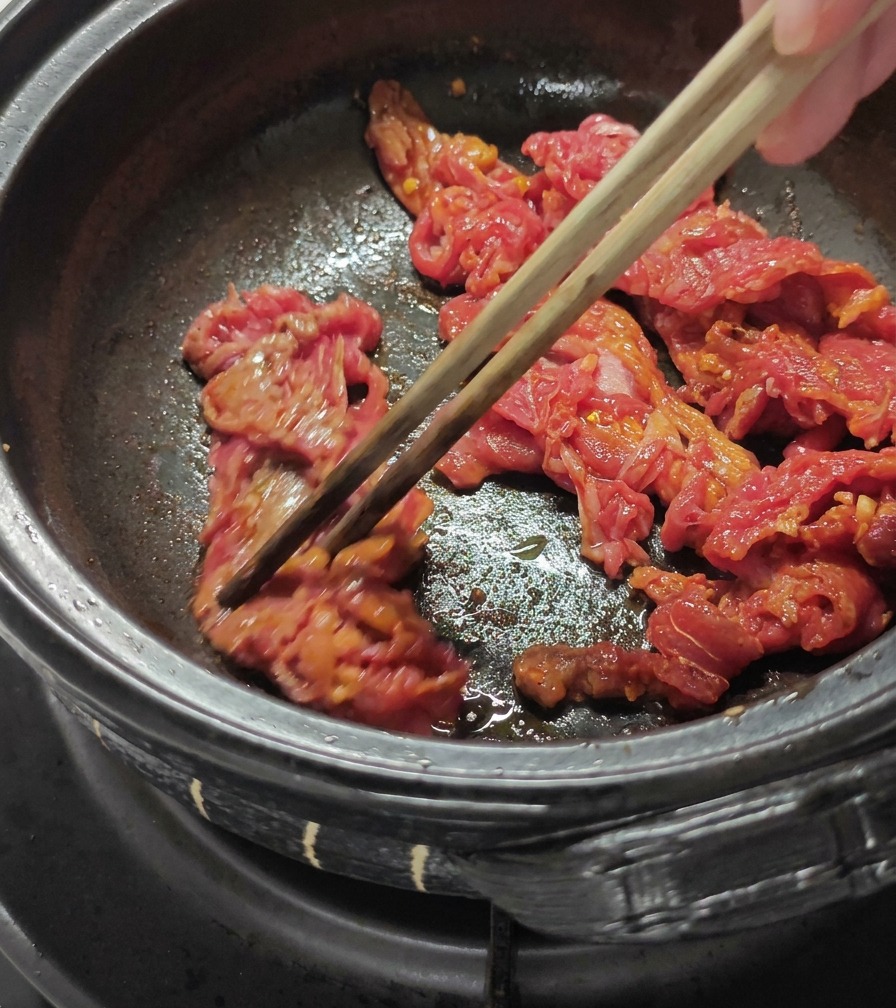
Heat a small amount of oil in the pot and add the marinated beef. Stir fry the slices until they are mostly cooked then remove them from the pot to keep the meat tender.
Tip: Removing the beef at this stage prevents it from becoming overcooked while you prepare the soup base. - 7Sauté the aromatics
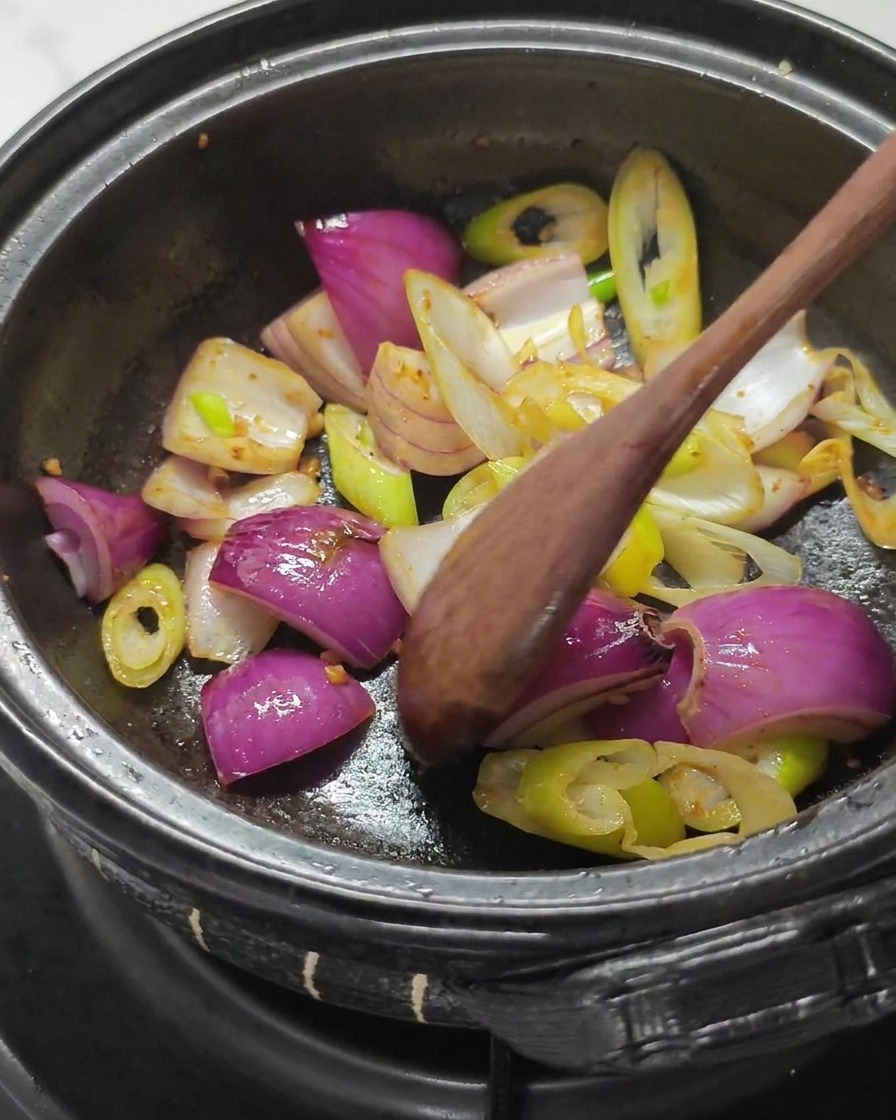
Heat a small amount of oil in the stone pot. Add the sliced red onions and the white parts of the green onions, sautéing them over medium heat until they become fragrant and slightly softened.
Tip: Sautéing the aromatics first builds a flavorful foundation for the stew and brings out the natural sweetness of the onions. - 8Stir-fry the Kimchi
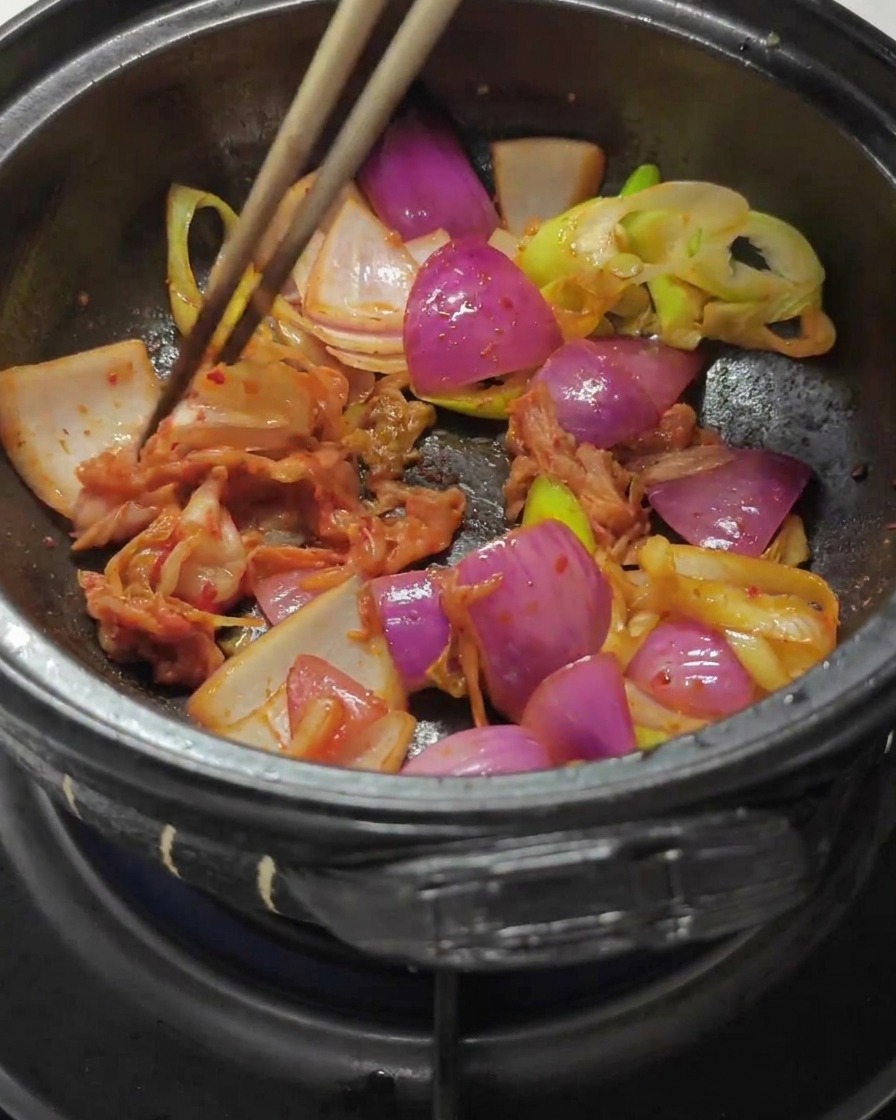
Once the onions are fragrant, add the chopped kimchi and Korean chili paste directly into the pot. Stir-fry everything together so the kimchi absorbs the aromatic oils and its flavors begin to concentrate.
Tip: Stir-frying the kimchi briefly before adding any liquids reduces its sharp acidity and enhances its savory depth. - 9Add boiling water
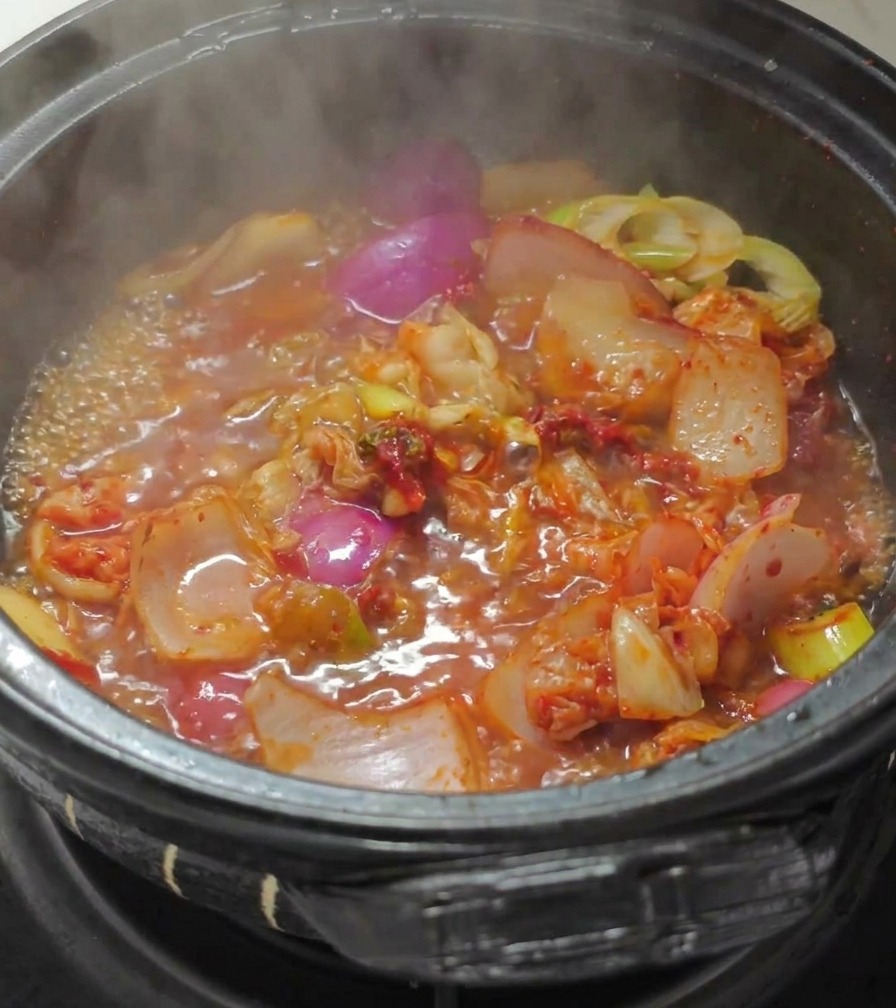
Pour boiling water into the pot over the stir-fried kimchi and aromatic onions. Stir the mixture to combine the flavors, then season the broth with light soy sauce and a touch of sugar to balance the acidity of the kimchi.
Tip: Using boiling water instead of cold water helps maintain the temperature of the pot and speeds up the cooking process while preserving the texture of the kimchi. - 10Add the baby cabbage
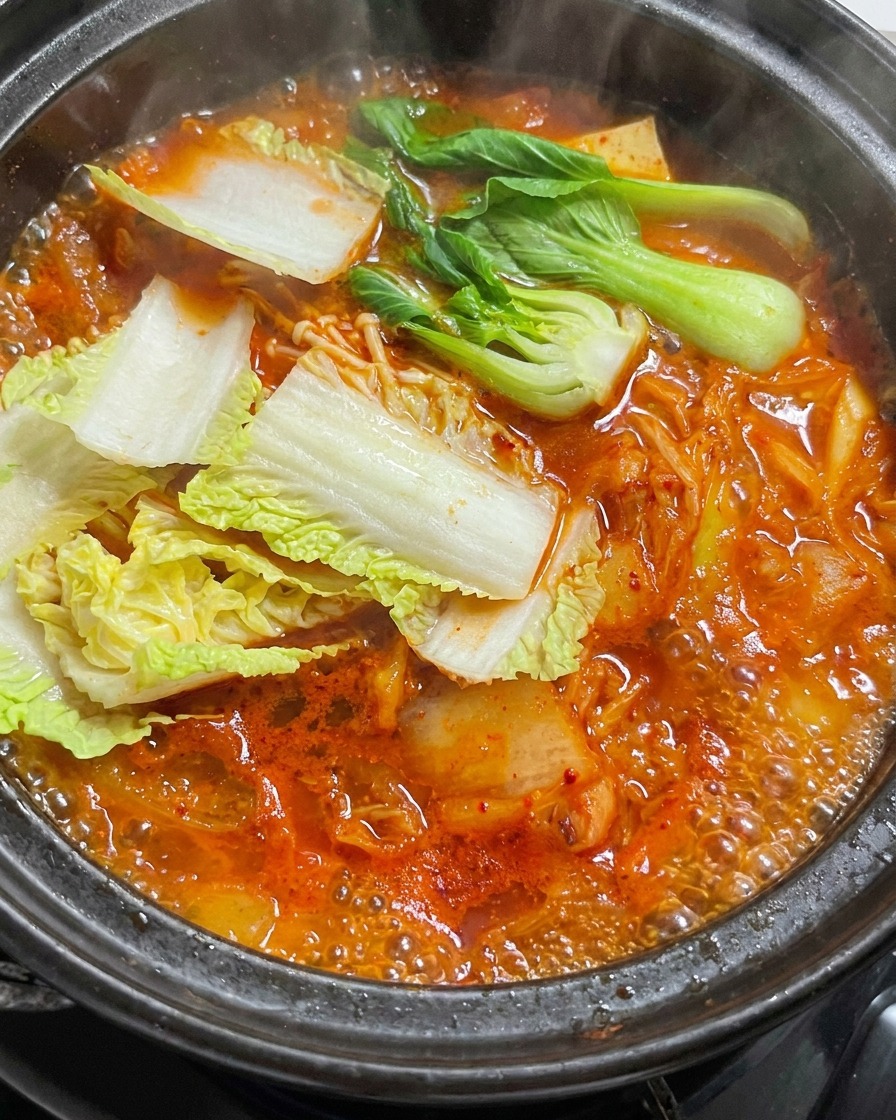
Gently place the sliced baby cabbage leaves into the boiling red soup. Stir the mixture slightly to ensure the leaves are submerged so they can soften and absorb the flavors of the broth.
Tip: You can substitute the baby cabbage with other leafy vegetables like napa cabbage or bok choy. - 11Add the Soft Tofu
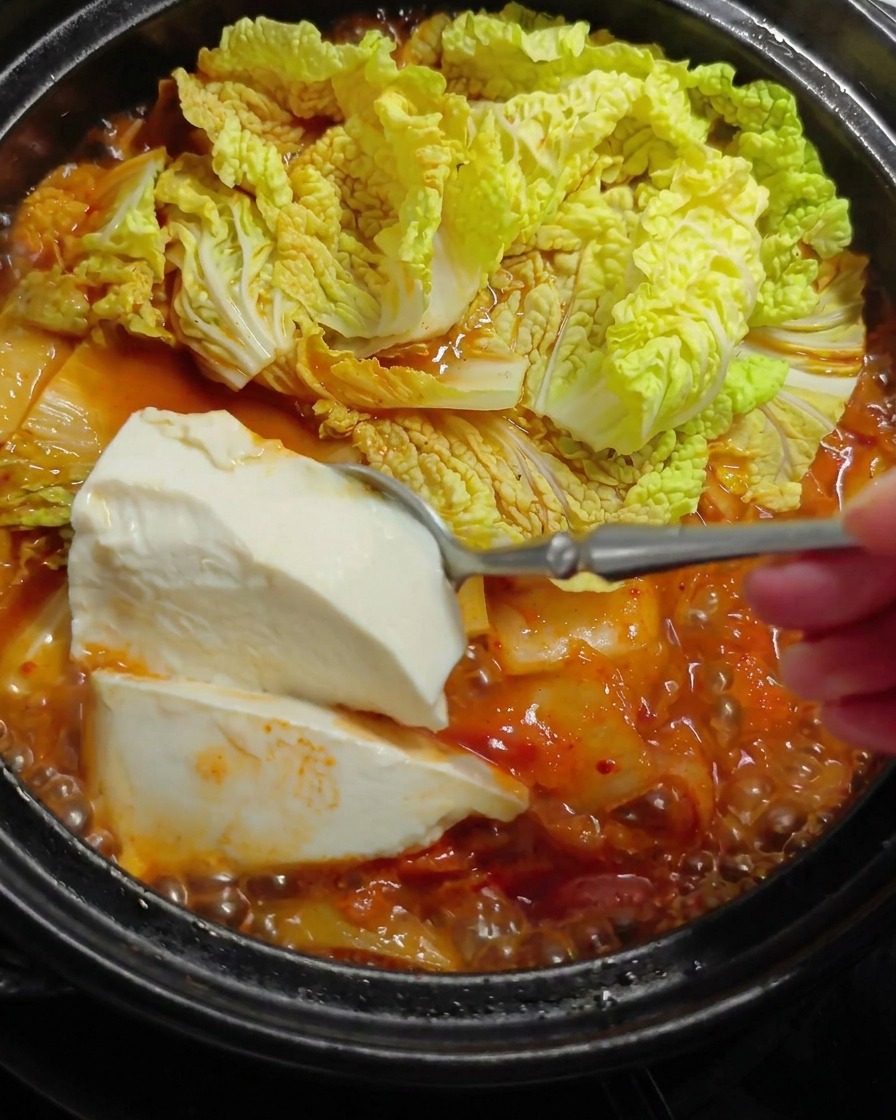
Using a large spoon, gently drop generous scoops of soft white tofu into the boiling stew. Allow the broth to continue simmering so the tofu can heat through and absorb the rich, spicy flavors.
Tip: Be gentle when adding and stirring the stew from this point forward so the delicate soft tofu doesnt break into small pieces. - 12Final assembly
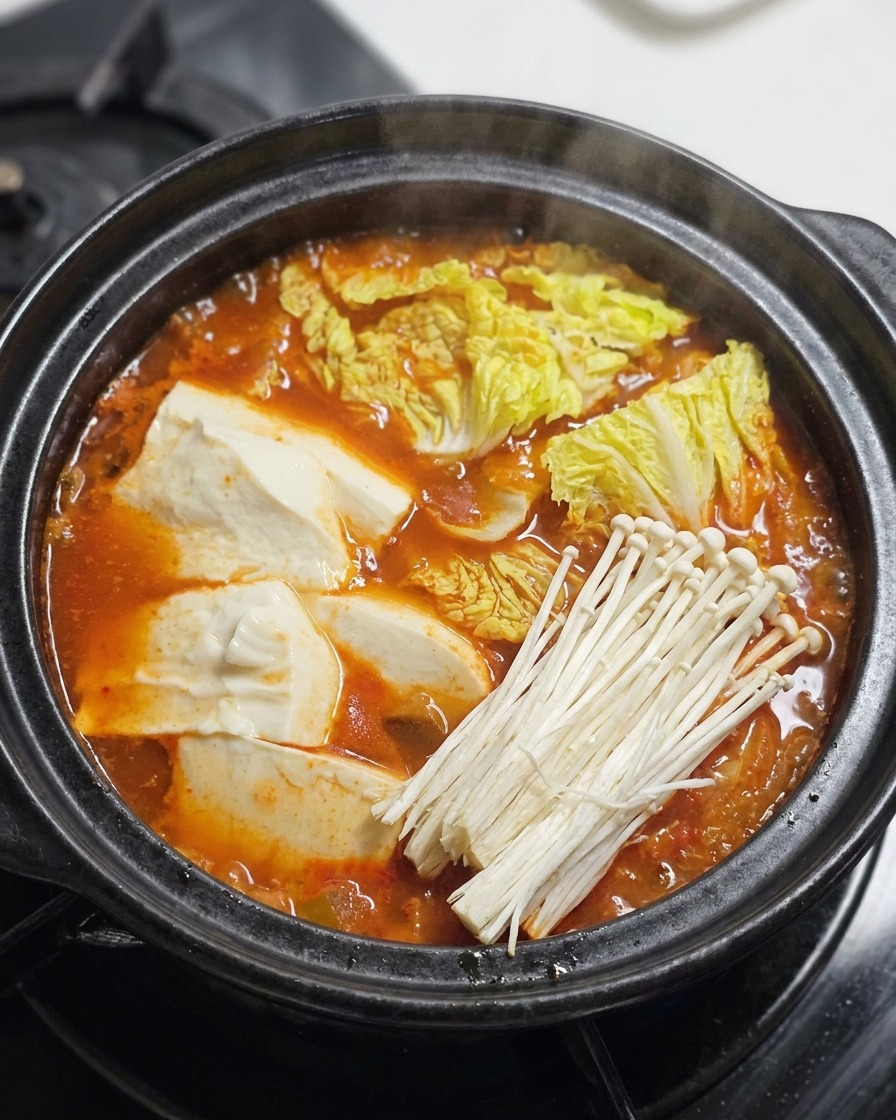
Add the enoki mushrooms, the seared beef slices, and the reserved green onion tops to the pot. Let the stew simmer for one last minute so all the components are heated through before serving.
Tip: Adding the beef back at the end ensures it remains tender and juicy rather than becoming tough from boiling.