Authentic Pork Belly Kimchi-jjigae (Korean Kimchi Stew)
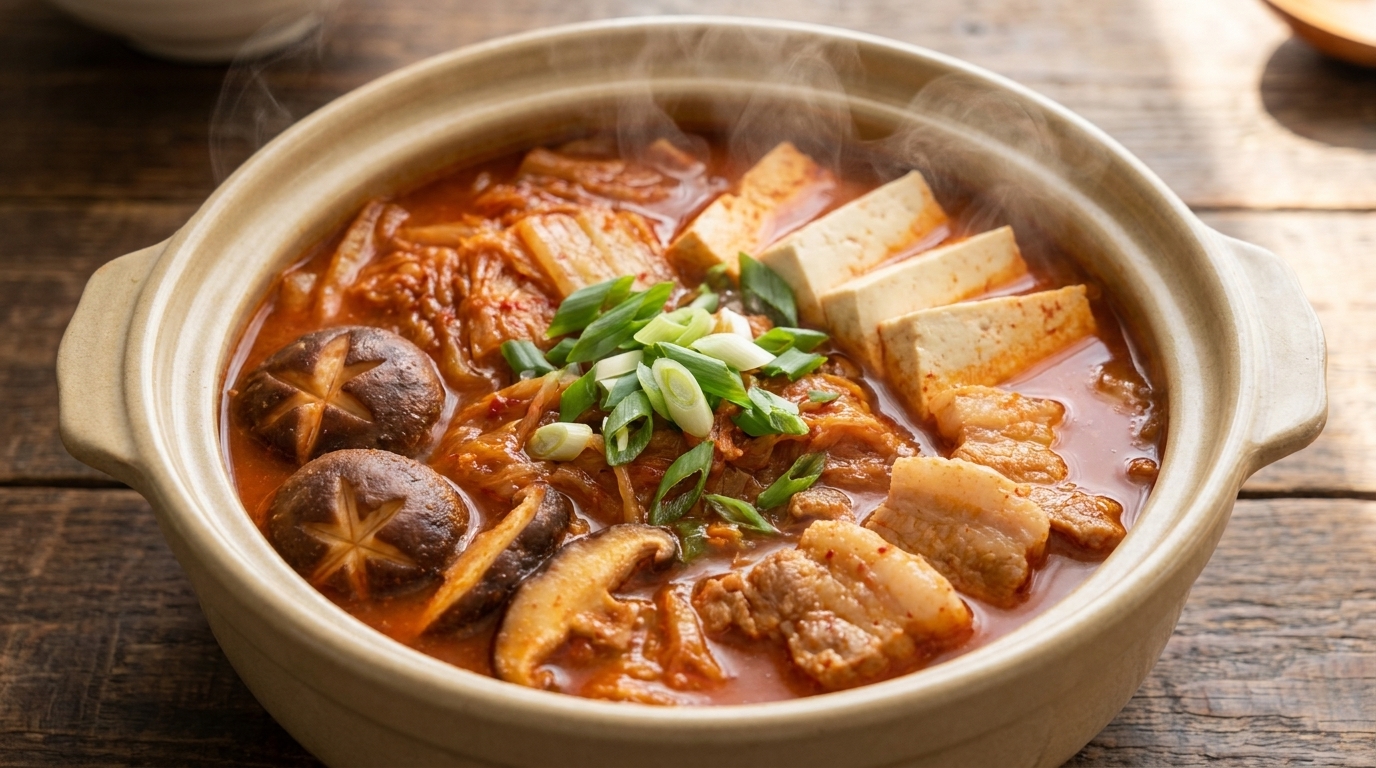
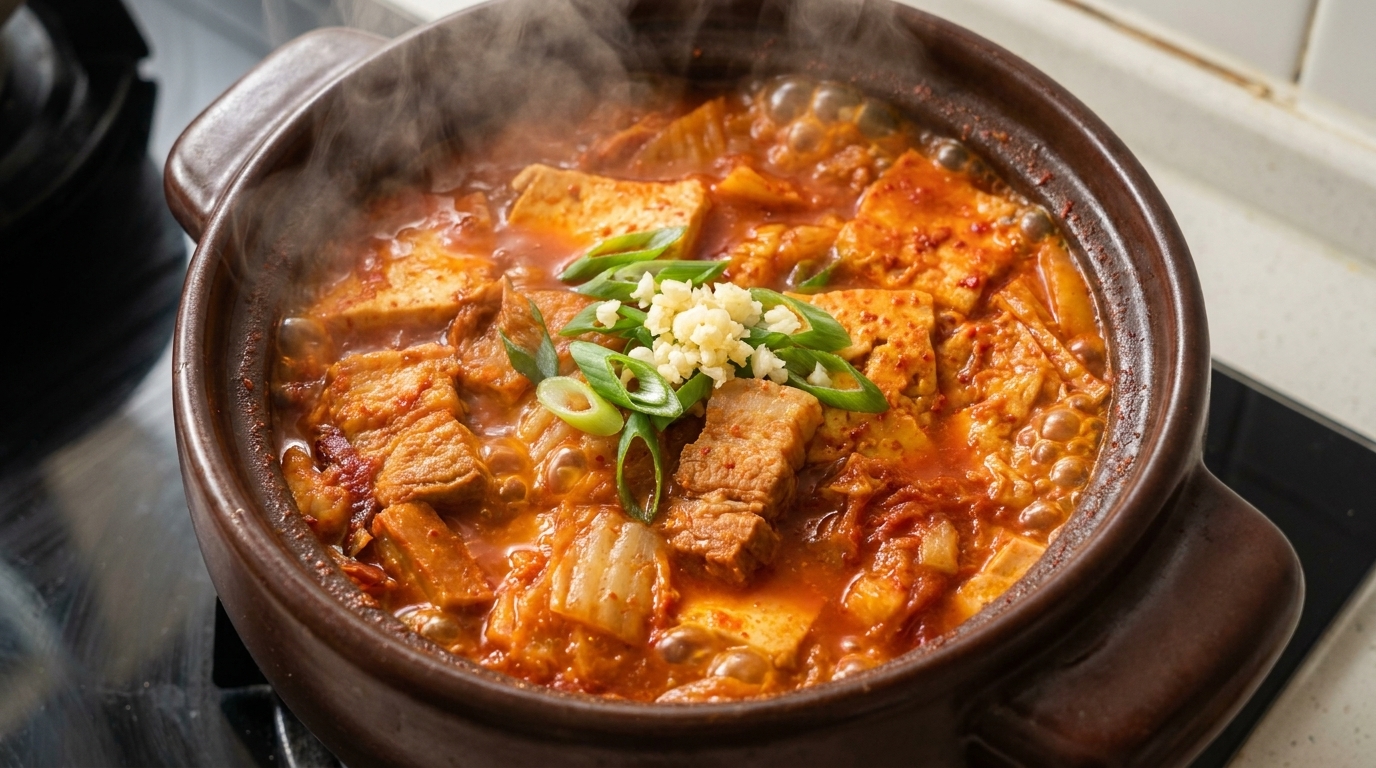
A soul-warming Korean classic featuring tender pork belly, aged kimchi, and silky tofu simmered into a rich, spicy broth using a traditional clay pot.
Kimchi-jjigae is the quintessential Korean comfort food, celebrated for its deep, complex flavors. This version uses succulent pork belly to balance the sharp acidity of well-fermented kimchi. Cooking in a clay pot, or ttukbaegi, ensures the stew remains bubbling hot, allowing the flavors to intensify with every minute of simmering.
Ingredients
- 500 g pork belly strips
- 300 g fermented kimchi
- 3 segments scallions
- 4 cloves garlic
- 200 g firm tofu
- 12 red onion
- 1 tbsp soy sauce
- 2 tbsp fine chili powder
- 1 tsp white sugar
- 500 ml boiling water
- optional chopped scallions for garnish
- to taste minced garlic for garnish
Instructions
- 1Sear the pork belly
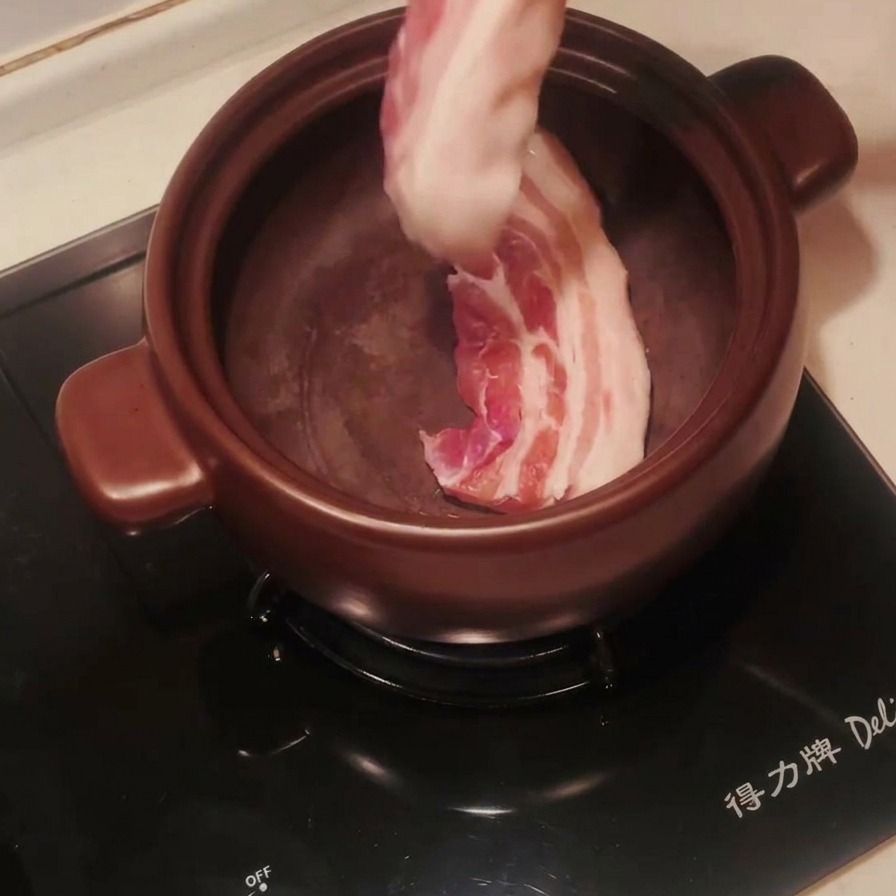
Heat a clay pot over medium heat and place the raw pork belly strips inside. Fry the meat until it starts to render fat and the surface turns a light golden color, creating a flavorful base for the stew.
Tip: Using a clay pot helps distribute heat evenly and retains moisture, making the meat more tender as it cooks. - 2Brown both sides
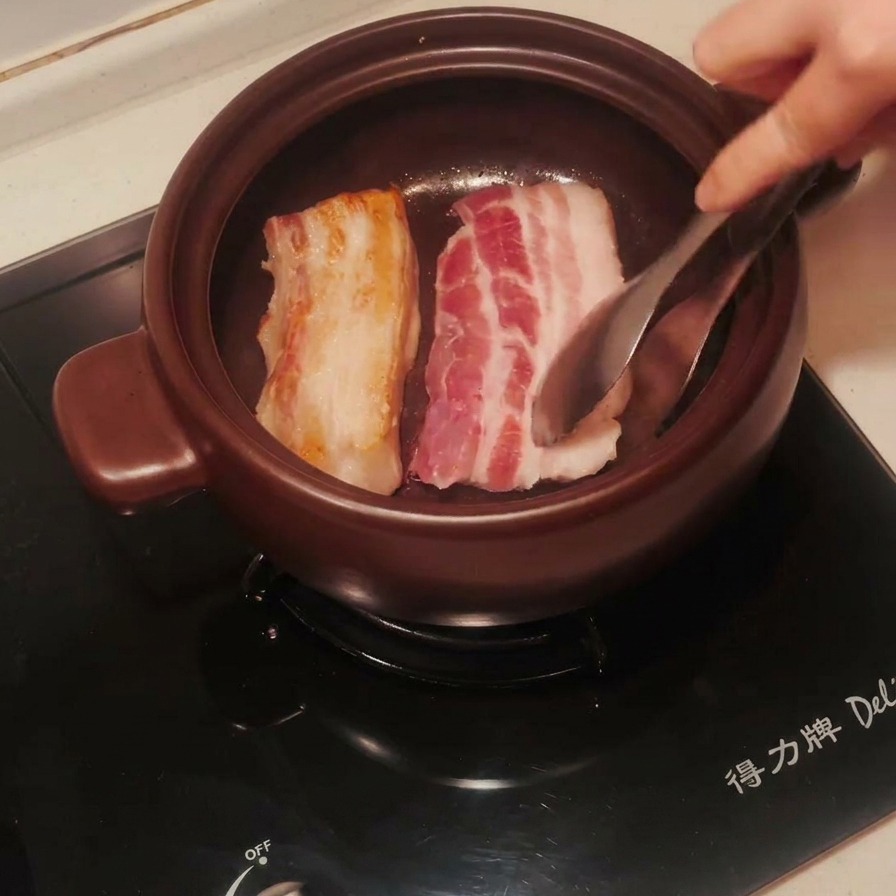
Continue frying the pork belly, flipping the strips to ensure even browning. Aim for a deep golden-brown crust on both sides to enhance the flavor through the Maillard reaction before slicing.
Tip: Adjust the heat to medium-low if the meat is browning too quickly to avoid burning the rendered fat. - 3Return sliced pork to pot
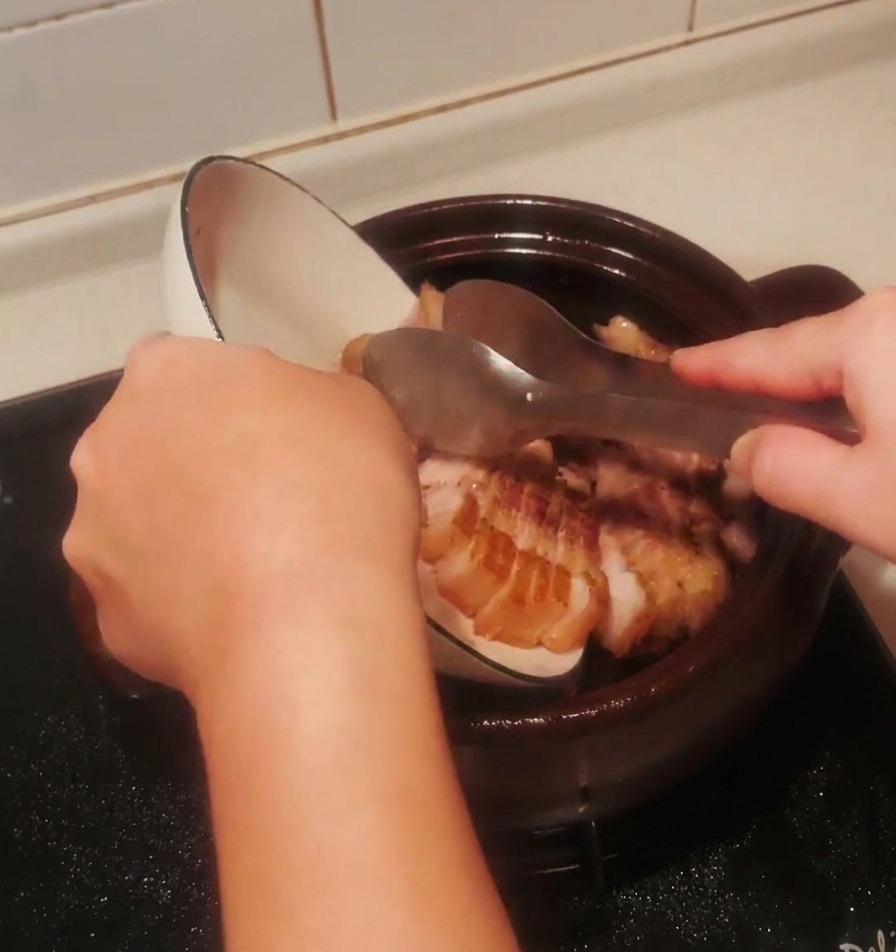
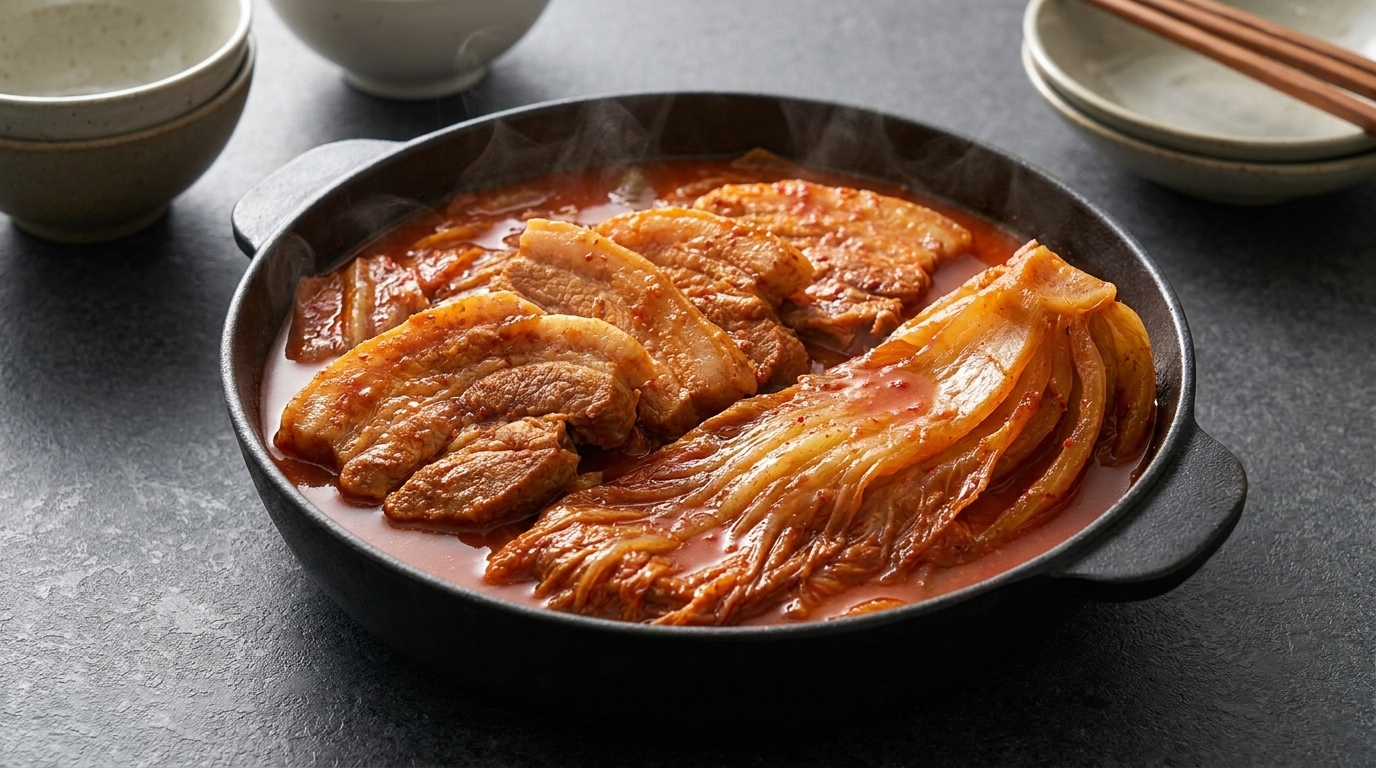
After browning, remove the pork belly from the pot and slice it into smaller pieces. Return these sliced pieces to the pot, spreading them out to create a savory foundation for the other ingredients.
Tip: Slicing the meat after searing keeps the interior moist while providing more surface area to absorb the stew flavors. - 4Add the kimchi
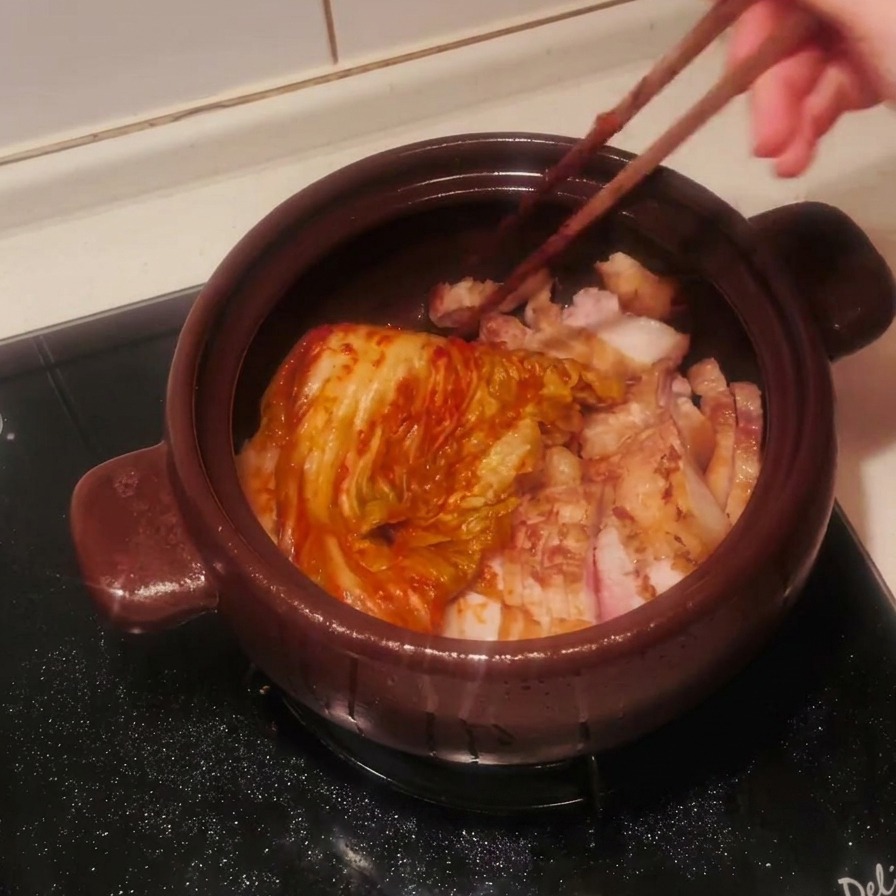
After slicing the browned pork into bite-sized pieces and returning them to the pot, add a generous amount of well-fermented kimchi. The acidity of the kimchi will balance the richness of the pork belly.
Tip: Older, more sour kimchi is ideal for this stew as it provides a deeper and more complex flavor profile. - 5Introduce aromatics
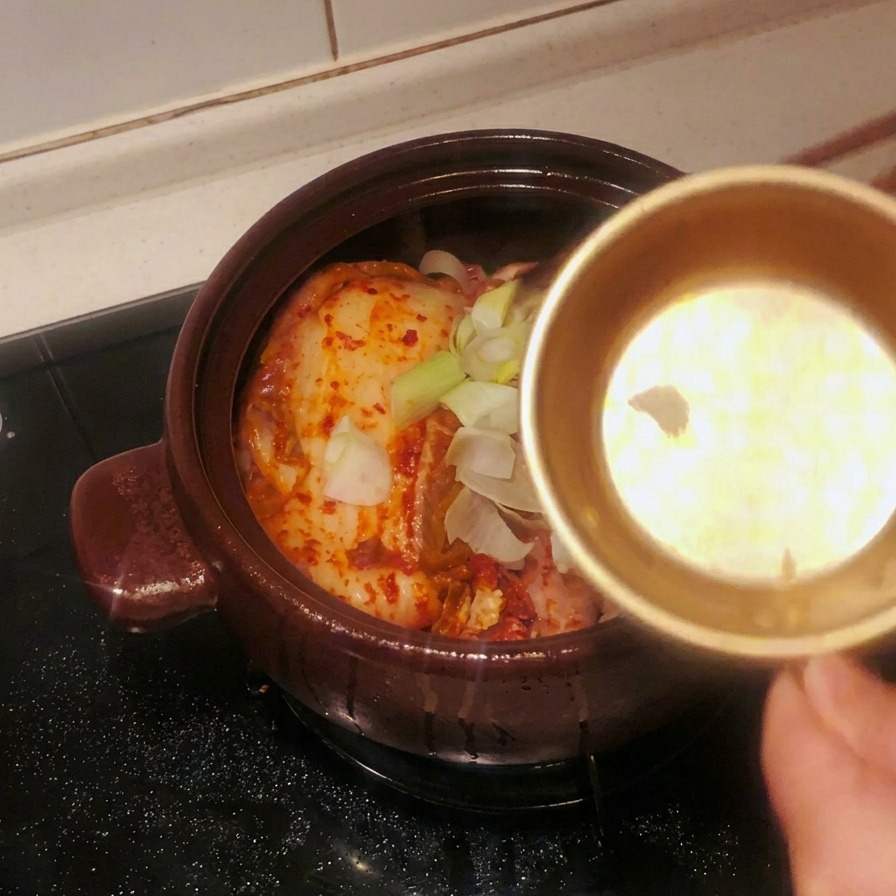
Add thick-cut green scallion segments and sliced garlic to the pot. These aromatics will infuse the base of the stew with a savory fragrance as the ingredients begin to simmer together.
Tip: Do not be shy with the garlic; it is a key component for achieving an authentic and robust Korean stew flavor. - 6Layer the tofu
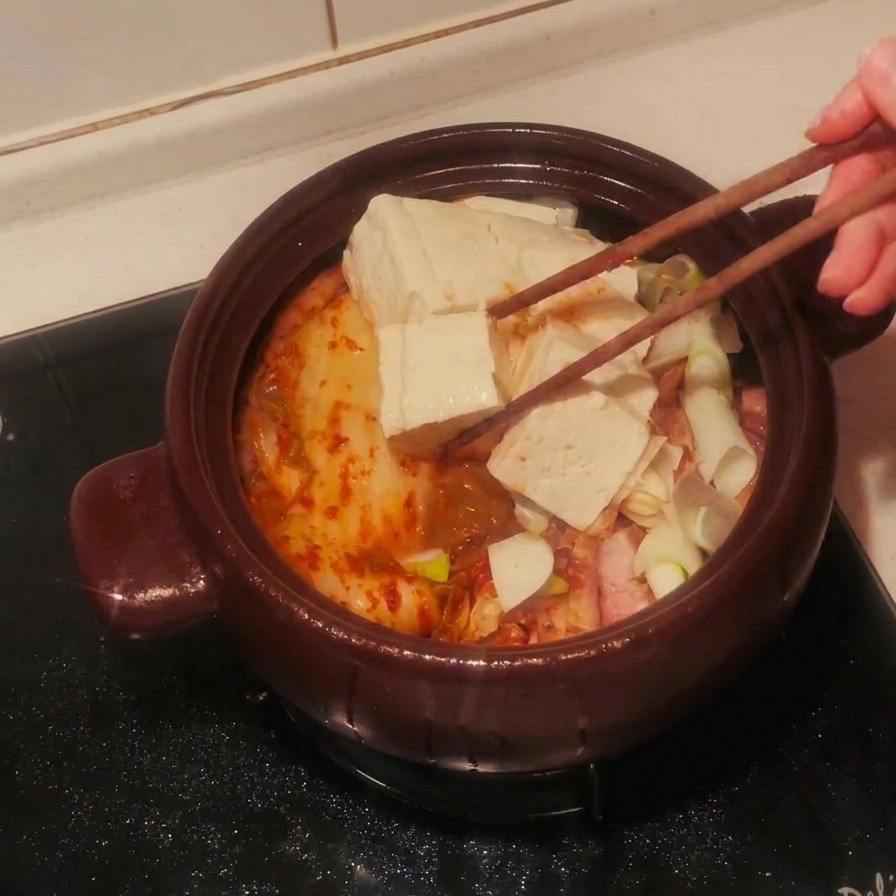
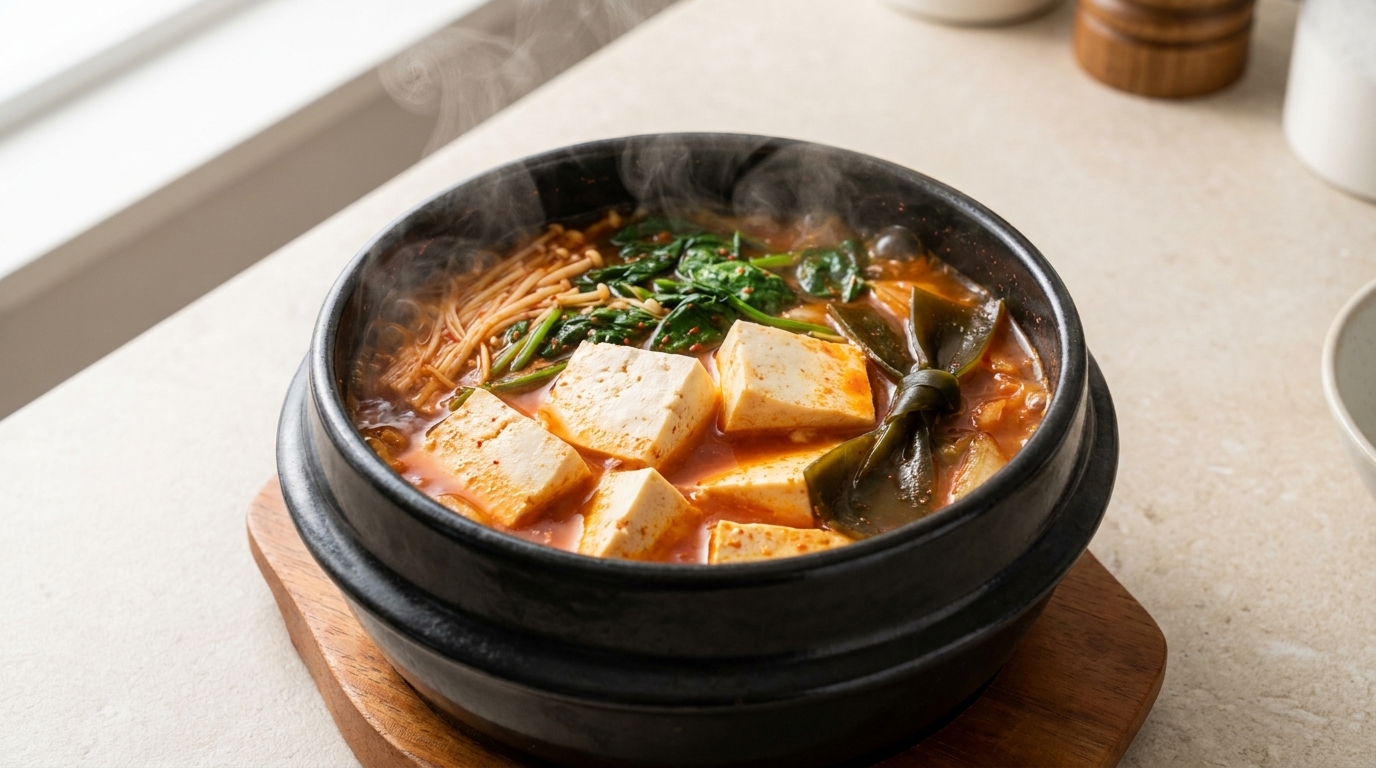
Gently arrange thick, square slices of white tofu over the kimchi and aromatics. The tofu will absorb the flavorful juices and broth as the stew simmers.
Tip: Use firm or medium-firm tofu so the slices hold their shape and do not break apart during the long simmering process. - 7Add red onions
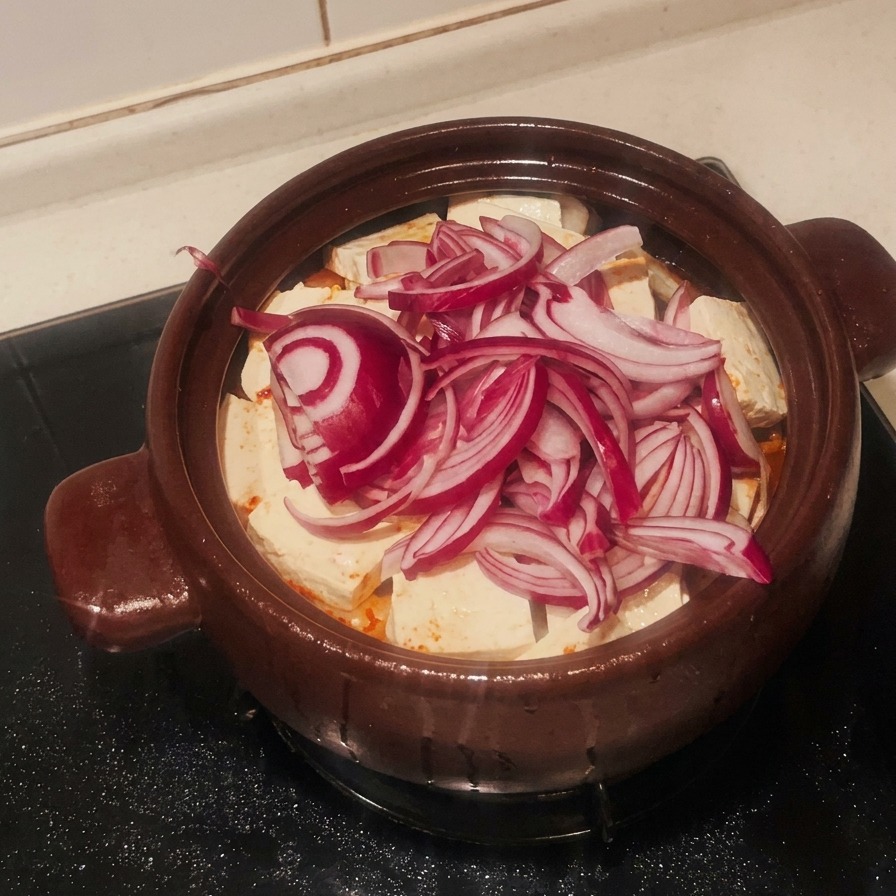
Place a layer of sliced red onions on top of the tofu. Red onions add a subtle sweetness and a vibrant pop of color to the dish as it cooks down.
Tip: Cutting the onions into thick slices prevents them from disintegrating completely during the simmering stage. - 8Season with soy sauce
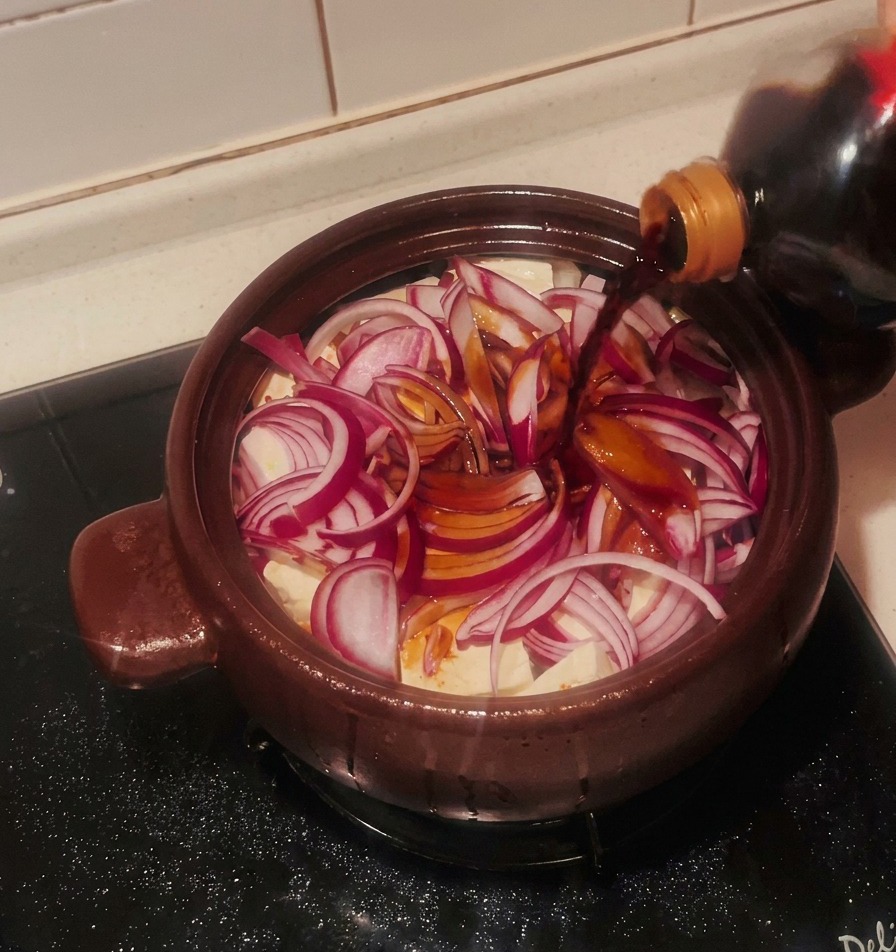
Drizzle the dark soy sauce directly over the layers of sliced red onions and firm tofu blocks in the clay pot. This adds a foundational savory saltiness that will season the ingredients as the stew begins to cook.
Tip: Pour the sauce evenly across the surface so that the tofu absorbs the flavor during the simmering process. - 9Add the chili powder
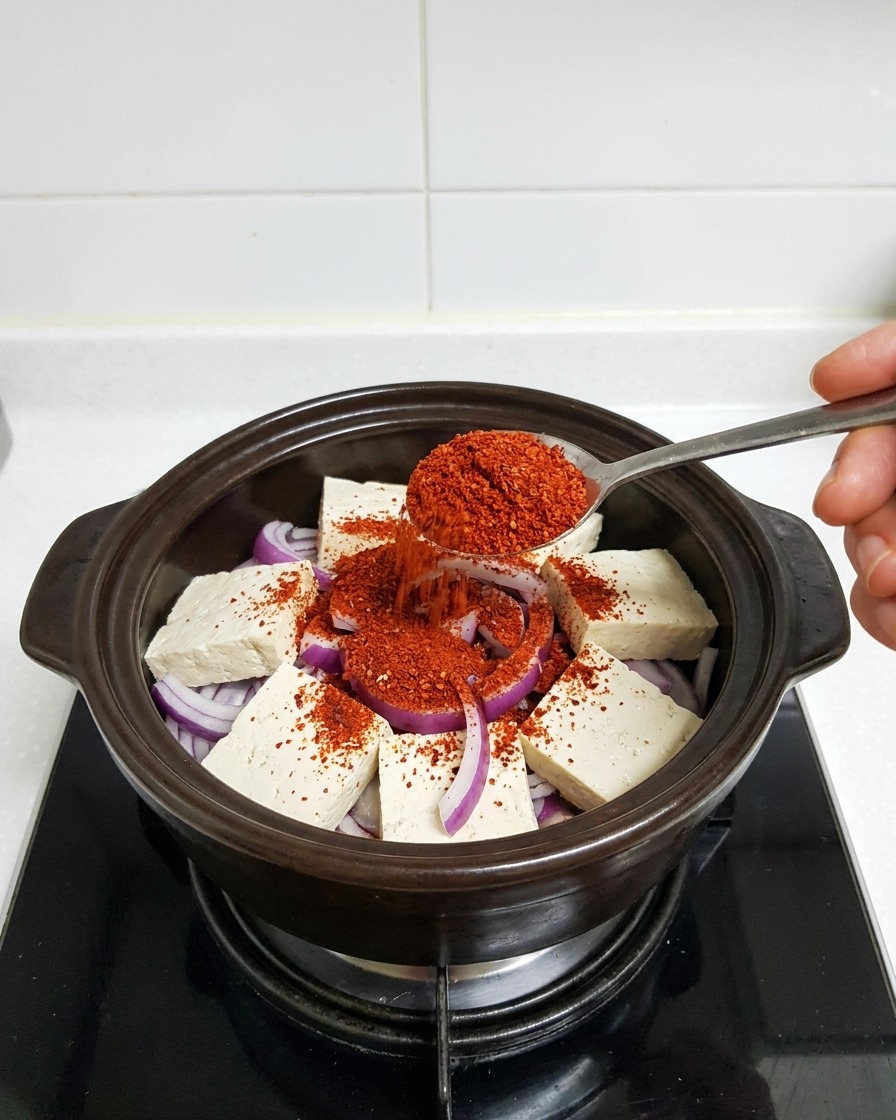
Add two generous spoons of fine red chili powder to the pot. This is the key ingredient that provides the signature heat and vibrant red color essential for a classic, rich kimchi stew.
Tip: Fine chili powder is preferred over flakes here for a smoother, more integrated texture in the final broth. - 10Season with sugar
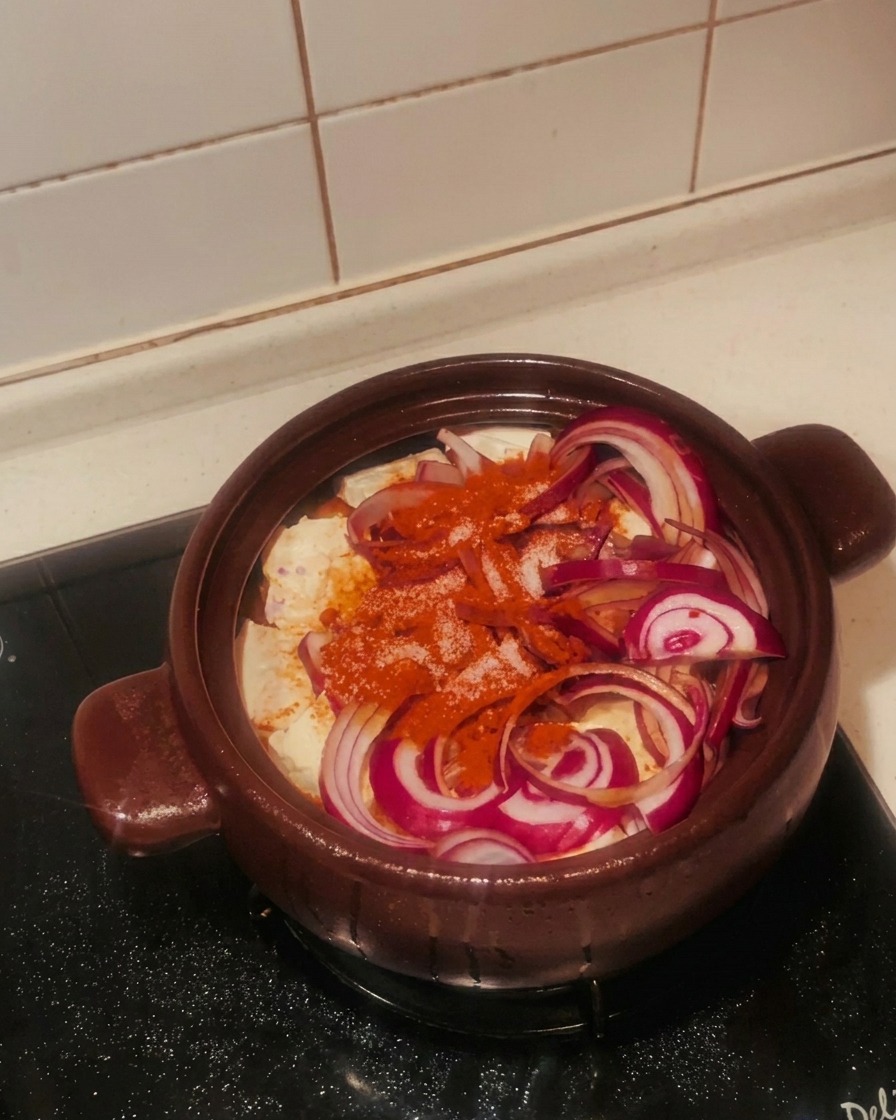
Add a small amount of white sugar to the pot. This helps balance the acidity of the kimchi and enhances the overall savory depth of the stew flavor profile.
Tip: If your kimchi is particularly sour, you can add a bit more sugar to mellow out the sharp tang. - 11Add boiling water and simmer
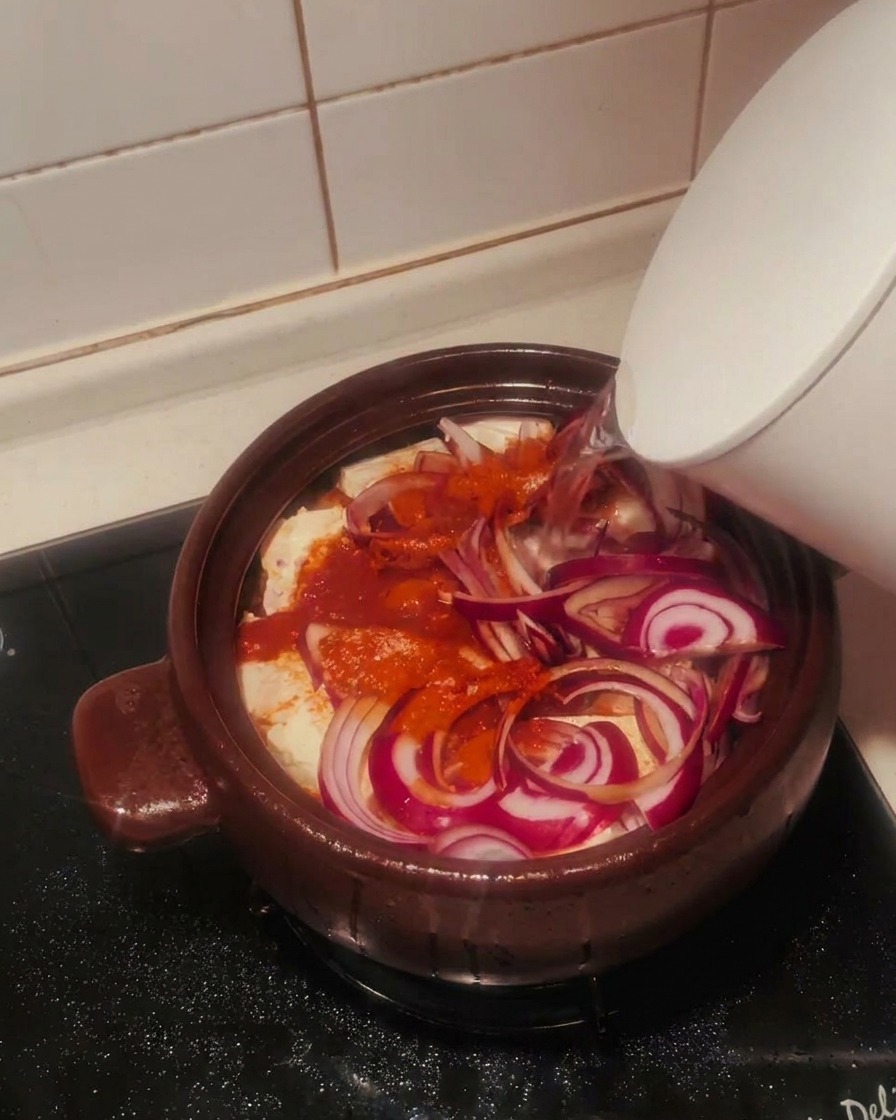
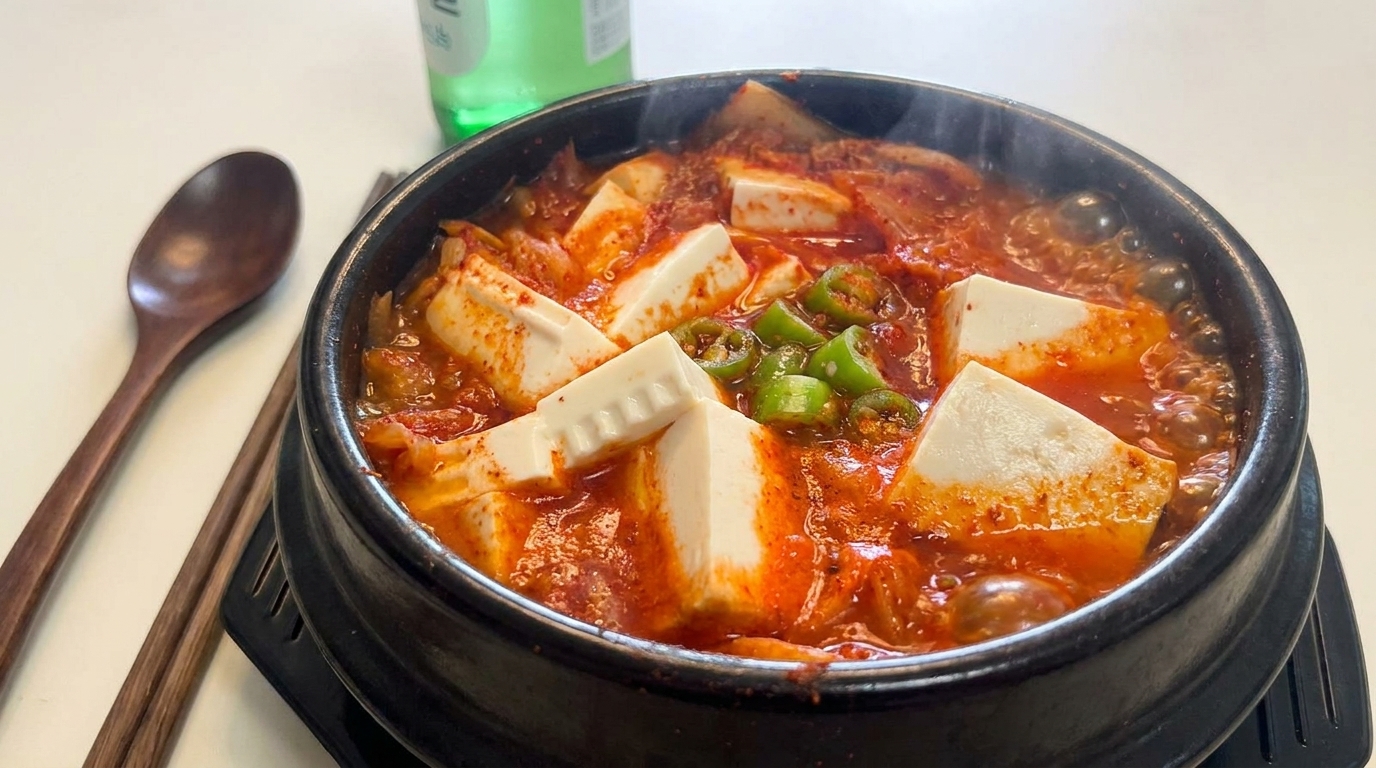
Pour clear boiling water into the clay pot until the ingredients are partially submerged. Bring the stew to a boil, then reduce the heat to medium-low and allow it to simmer for at least 40 minutes to develop a rich, concentrated broth.
Tip: Using boiling water instead of cold water keeps the cooking temperature consistent and prevents the tofu from breaking down too quickly. - 12Final simmer and garnish
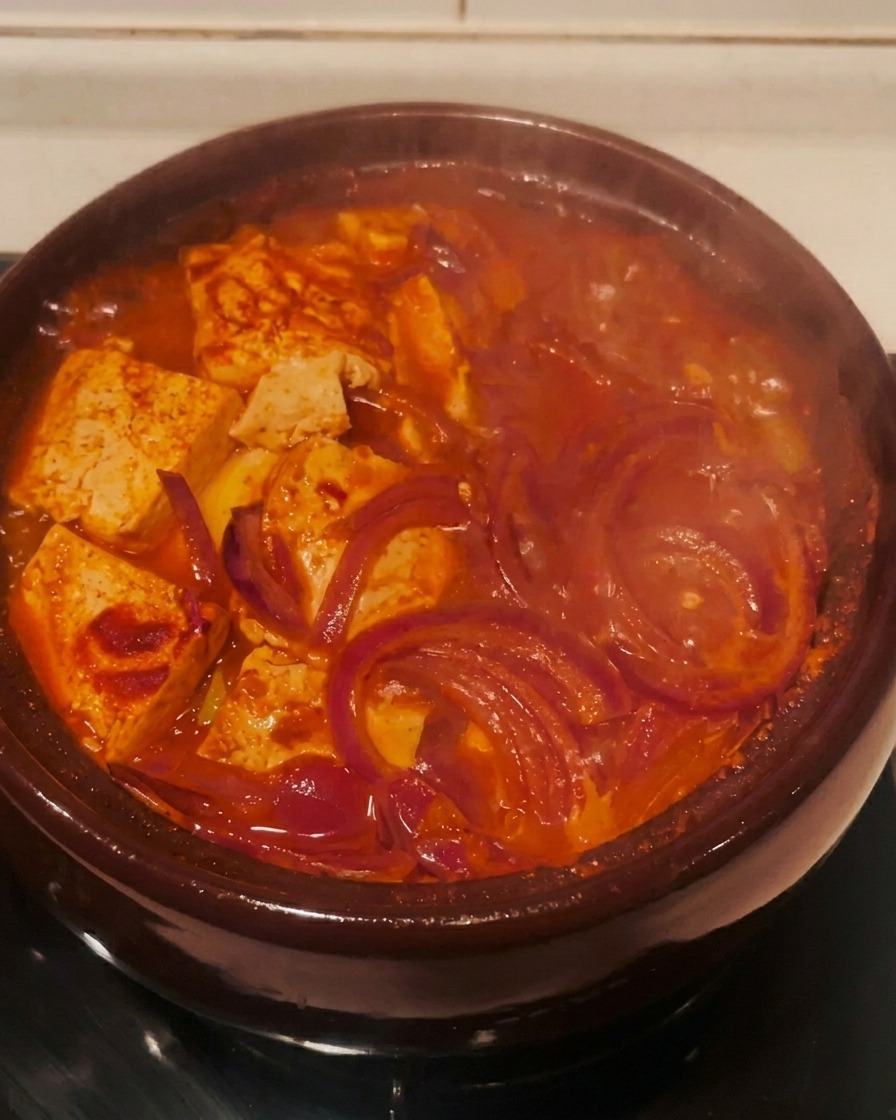
Reduce the heat to medium-low and let the stew simmer steadily for 40 minutes to develop a deep flavor. Just before serving, stir in a final handful of freshly chopped scallions and minced garlic to maximize the aromatic fragrance.
Tip: Maintain a gentle, active bubble; if the liquid reduces too quickly, you can add a splash more hot water.